Category Archives: Nature

Enveloped in nature

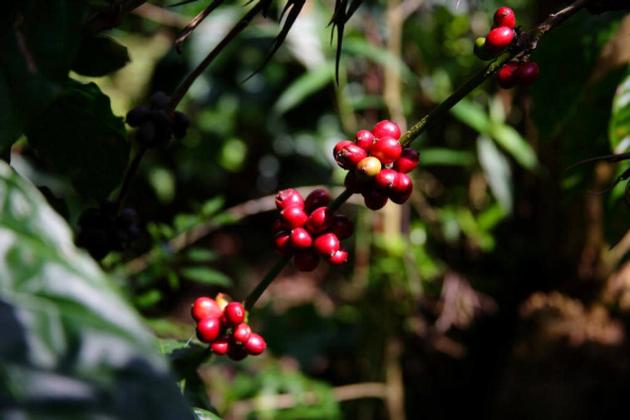
Coorg is all about coffee./ by Special Arrangement / The Hindu

Celebrating the bliss of Coorg with all its splendour

Kodaimelanadu or Kodagu or Coorg: the name itself conjures up images of verdure — gushing cascades, babbling brooks, green hills, gorgeous dales, gurgling rivers all together flaunting the munificence of Mother Nature. Oh! Add some coffee plantations. A compulsive coffee drinker like me cannot find a better place than Coorg for a sip of delight. After an hour’s drive from Mysore, our chauffer announces that we are entering Coorg.

The scenery is mesmerising. The winding roads take you through a maze of greenery. At every labyrinth, you meet a collage of colours which explode into shades of green, brown and yellow. The roads seem to have no particular destination. They just lead you from one part of paradise to another. As we squint though the green fabric, we pass plantations of coffee, cardamom and pepper which merge with forests, foliage and fauna. There are no villages, no people, no shops, and no cars. We deliberately slow down to take in the moment. It is an ode to nature. No wonder it has been attributed the sobriquet ‘Scotland of the East’.

Coorg is all about coffee with a fair amount of cardamom and pepper thrown in. As we drive in, the sylvan surroundings hit us. Our destination is Siddapur. After following the Orange County signage the car finally enters the resort. After a short break, we decide to take a tour of this secluded paradise. The whole district seems a tree shadowed coffee estate, dotted with a few market places with speedy bars, pork shops and elegant vegetable displays.

As we travel, we learn more about coffee: its history, its getting smuggled into India and the difference between arabica and robusta. There is an overwhelming feeling of seclusion. From a distance you can spot a coffee pod, but it is difficult to spot your immediate neighbour. All this time, I am in a clicking frenzy to capture the intricacies of nature.

Coorg is a paradise for bird-watchers and accounts for nearly 25 per cent of the avian population of the State. Our guide announces the names of each and every bird. At times he replies to their calls in a simulated tone. After spending a few hours, trying to know the avian diversity of Coorg, we head towards the splendid Abbey Falls. Tucked away between private coffee and spice estates, Abbey Falls offers a splendid backdrop for a weekend picnic. As one makes one’s way past stocky coffee bushes and tall trees entwined with pepper vines, the falls make a sudden and dramatic appearance as they cascade down into limpid pools to join the river Kaveri. A combination of unprecedented rain the previous night and the steep path make the trek difficult. An army of clouds envelopes the hill, a sight worth beholding.

I try out some Kodava food on my way back to the resort. The central dish of Kodava cuisine is meat, with a fine underpinning of rice. I taste the irresistible pandi curry, a subtle pork dish, cooked well by adding a local fruit, Kanchampali. This mouth-watering dish represents the specialness of Kadava dishes and is hard to find outside Coorg. The dry spices are roasted before grinding them, giving a toasty flavour to the thick curry. I return to my luxurious cottage after having a refreshing tour of the place. It is dark now, and the sky is clear. I step out of my room and walk towards the woods, on a stretch of road with no artificial light. The moon shines brightly and the trees are laden with millions of fireflies; the woods seem decked up for some fat Indian wedding.

This is my first trip to the Western Ghats, and I very enthusiastic to discover them. Next day, at six in the morning, I spring from my bed to go deeper into the mist laden, verdant hills. Murthy, our guide ushers us through a forest which abuts the resort. It is Dubare Reserve which encompasses an area of 50,000 acres — the home of the pachyderms. Majestic rosewood, teak and other hardwood tree species stand around us like sentinels. Giant parasitic vines (that uncannily resemble monstrous creatures) are swathed around large banyan and other trees in a macabre bond. The forest keeps getting thicker and more enchanting. Walking fearlessly in the forest, brushing against the small vines and lopping branches out of the way, eyes constantly hovering to spot any wild animal, marking the footmarks of the elephants — turns out to be the most enchanting leg of the trip.
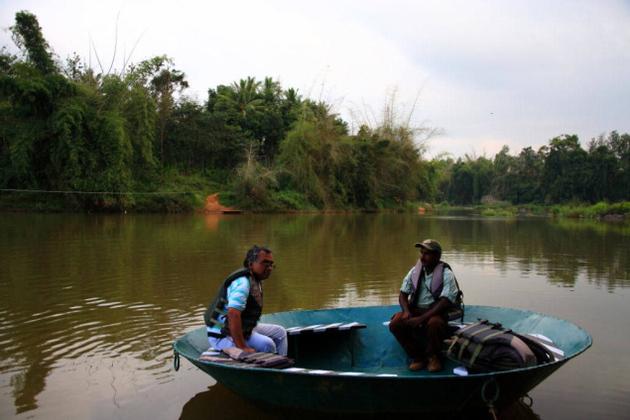
The coracle drifts on the green waters, gauging the moods of the river and the pristine surroundings. / by Special Arrangement / The Hindu

We walk down to the Kaveri, the river flowing unmindful of the inter-State row over her waters. We take our seats on a coracle, to drift on the green waters, gauging the moods of the river and the pristine surroundings. “Sir, apart from this beauty, Coorg is gifted with a very rich history,” says our guide, adding, “The British gifted coffee to Coorg. The first estate was established way back in the 1850s by an Englishman John Frawler. Along with coffee, pepper abounds here, growing as a vine allowed to climb the shade trees. Coorg pepper is considered to be the best in the world, sir.”

He then tells us about the invincible Kodava people. “Coorgis are said to be descendents of the Greeks. Neither Tipu Sultan, nor the British could conquer this land.”

Coorg has a long history of battles. The Madikeri Fort is a living testimony to that. Built first as a mud fort by Mudduraja in the last quarter of the 17th century, it was later rebuilt in granite by Tipu Sultan who named the site Jaffarabad. In the North-east corner at the entrance are two life size masonry elephants, while a church stands in the south-east corner. The fort offers panoramic views of the city from its walls. The centuries-old Madikeri Fort with its stone ramparts also houses a prison. Among the other architectural treasures that Coorg boasts is the Omkareshwara temple built by king Lingaraja in 1820, in a mosque-like style, with an impressive central dome and four minarets, which are surrounded by Basavas, or sacred bulls. On the top of the dome sits a gilded ball with a weathercock.

Another splendid place to see is the Raja’s seat. It is a small pavilion with a garden surrounding it, offering a view of the green valley below. As the legend goes, the kings of Coorg spent their evenings here along with their consorts. The spectacular view from here of the melting sun, parrot-green fields and the far stretching mountains will take one’s breath away. We return to the Orange County Resort, a little break from this oasis of tranquillity. The last Kodava dinner by the lake under the bright sky is waiting for us: a luxurious setting created by candles, stars and sounds of silence. The next day I insert a packet of aroma rich Coorg Coffee in my luggage. As for the greenery, it is etched in my thoughts, to recollect in the days to come.

source: http://www.thehindu.com / The Hindu / Home> Features> MetroPlus> Travel / by Aakash Mehrotra / Delhi – April 20th, 2014
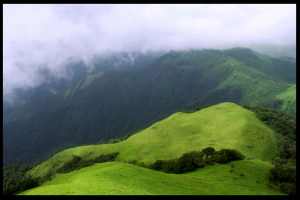
Travel Around the Southern Coorg Hills

coorgKF23apr2014

If you live in South India and want to get away for a weekend, or live in North India but have gone through all the hill stations close by (lucky you!) and want something different, Coorg is a very interesting option. Budget or luxury, you’ll have plenty of options if you want to spend a weekend in Coorg. So we did a test run for you, as it were, and here are the top tips to keep in mind.

First of all, if you like a road trip and don’t live too far away, drive down to Coorg. Be warned, though – it might seem very easy on Google maps, but it can get confusing and convoluted. Also, you have absolutely no sense of direction but a knack for planting the seeds of doubt in those who do, like yours truly, you should definitely keep quiet as you try to find your way to the highway exit from Bangalore. Your companion will thank you later, instead of fuming for hours.

If you live too far away for that, fly or take a train to Bangalore and hire a car for the weekend. Apart from the really nice drive, with conveniently located fast food places for rest room breaks and snacks, you’ll be glad to have your own transportation once you are in Coorg.

Now, for the luxurious among you, there are a few resorts in Coorg, the loveliest of which is probably the Taj Vivanta. It is quite steep, though, so it is much cheaper to opt for a home stay, then drive to the property for a day trip and enjoy the view from the lobby. It’s an excellent drive there, with countryside just begging to be described as ‘idyllic’, and the lobby deck will make you feel as if you’re standing on a cloud on a slightly overcast day. If you decide to splurge and stay there, you don’t need our help at all. They will take care of everything, and you will need a stupendous amount of will power to leave the property at all.

If you are more the home stay kind, there are plenty of really nice ones to choose from. Silver Brook Estate is one of the nicest, though you will have to book in advance. They’re one of the first choices for everybody, for a reason. Gowri Nivas is another one with most basic amenities, and Honey Pot Homes is set in a nice property and will give you some kind of a keepsake when you leave. We got a coffee mug with a nice honey bee logo on it. Whichever you choose, you can be assured that they will give you as much information as they have and help you with whatever they can.

Our top tip for packing if you’re a budget traveller: Take a few thin cotton towels that dry quickly. You will not get unlimited supply of linen, and with the humidity in Coorg, the lovely, fluffy ones will not dry in a day. Using damp towels for your evening shower when it gets quite bracing is not fun.

There are lots of places to see, most of which involve driving uphill and, in our case, deciding that taking our shoes off and getting our socks damp was too high a price to pay for a look inside a temple that, let’s face it, is probably not that different from the last temple you saw. But the tea and instant noodles at the little shops once you do reach these temples are quite worth the drive, not to mention the views. If you like touching clouds and walking through them, it’s quite the experience. Tala Cauveri and Raja’s Seat were our picks.

Abbi’s Falls is a popular attraction, but if you have to choose, we’d recommend you pick another one. A park that gets extremely crowded has been built around it. Ask at the home stay for the waterfall that will be the nicest spot at the time you’re there. They will be glad to tell you. Make sure you get a map and follow it carefully, though. You won’t find anybody to ask the way after a while, and when you do, they’re likely to be lost tourists too. Yes, that happened.

Pencil Bylekuppe, near Kushalanagar, into your itinerary. It’s one of the largest Tibetan settlements in the country and it’s absolutely gorgeous. Spend a few hours at the monasteries and the temples to find some real inner peace. If you like fake football junk, you’ll find plenty of shops around that sell them (unless you support Fulham or something, then you’d have to be very lucky to find anything). If you like cute clothes, you’ll be thrilled with the selections there, too – you can get a boutique look at a slight fraction of the price.

For the non-vegetarians, we recommend making time for a second trip to get a second helping of the food. Momos, authentic Chinese food, steamed buns – in fact, go on a diet before you set off. You’ll pile on a few pounds in a couple of days and they’ll be worth it. Stop at the market there and ask for some erma – you’ll get some potent, flavourful Sichuan pepper.

Before you leave Coorg, buy spices, honey and vanilla, and some coffee if you’re a caffiend (caffeine fiend, you know it if you are one). They’re of excellent quality, and as long as you store them properly, they’ll last you ages. Our last tip: on the drive back, don’t get lost again. Maps are your friends. Don’t judge us, you can benefit from our mistakes!

source: http://www.theindianrepublic.com / The Indian Republic / Home> The Indian Republic> Lifestyle> Travel / by Sarah Abraham / Thursday – April 17th, 2014

India offers a Tea-rrific escape

A dozen young women chatter as they furiously shear bright leaves from tea plants that stretch like a green carpet across the plantation.

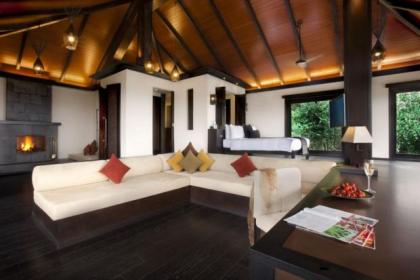
A room at Vivanta Hotels and Resorts By Taj, in Coorg, Karnataka, India

Their colourful saris and gold necklaces glisten in the sun as they fill huge brown sacks to be taken back to the on-site factory and weighed.

One lady even needs two burly men to help her lift the bag onto the scale, and I cannot help but gasp when the manager tells me that the sack weighs a whopping 80 kilograms.

In a time of technological advances, it’s hard to believe that such manual work goes into making a simple cup of tea.

But during a visit to the Glenlorna Tea Estate, in the heart of Coorg in southern India, I quickly discover that the old ways are definitely the best.

The fresh aroma of tea is overwhelming as I walk from room to room of the factory, where the tea leaves are dried, grounded and filtered ready for auction.

Tea plantations are a rare operation in Coorg, as production is mainly confined to the north of India because the weather conditions are better. But the importance of tea to Indian culture is evident no matter what part of the country you are in.

Visiting the nearby Cottabetta Bungalow, the first thing I am offered as I am greeted by the staff is a steaming pot of tea.

I have a new sense of appreciation for my brew after seeing the work that goes into my favourite beverage.

During a guided jeep tour of the plantations, I watch birds flutter between the 200-year-old trees that extend upwards from the dark coffee bushes that stretch for 1200 acres.

But it is a slight disappointment to learn from our guide that the luscious grounds cannot be explored on foot. He informs me that it’s for my own safety.

The region of Coorg is not the first choice for international tourists – particularly as it involves a treacherous seven-hour drive along heavily pot-holed roads from Bangalore airport.

But as I soak in the infinity pool at the Vivanta by Taj Hotel, I feel the knots in my muscles melt away while overlooking the rolling hills of the rainforest.

The resort has been open for less than a year and boasts 62 impressive cottages, which are dotted among the trees.

British rule in India may have ended in 1947 but its influences in the country have had a lasting impression – particularly with the introduction of tea as a popular choice of drink.

And after enjoying a fabulous stay in southern India, it’s safe to say the favour has been returned.

Knowing how much work and effort goes into creating the drink, I think I’ll appreciate my morning cuppa even more.

Cherry Wilson was a guest of Cox & Kings (www.coxandkings.co.uk) which has an 11-day/eight-night private trip to India priced from £1895 per person. This includes flights with BA, private transfers, a plantation and birdwatching tour, and accommodation with breakfast daily, including one night at the Taj Lands End, Mumbai, two nights at the Cottabetta Bungalow, three nights at the Vivanta by Taj Madikeri and one night at the Taj West End. For more info, visit www.tajhotels.com

source: http://www.eveningtimes.co.uk / Evening Times / Home> Lifestyle / Thursday – March 13th, 2014

Colours of Tibet in Bylakuppe

BylekuppeBF04apr2014
A serene Buddhist monastery, lush green forests and the river Cauvery seem to have charmed Chitra Ramaswamy. Join her on this placid journey.

Driving from Bangalore to Madikeri via Mysore, we digress a little at Kushalanagar, 40 km from Madikeri, to visit Bylakuppe, one of India’s oldest and largest Tibetan settlements, also known as Lugsung Samdupling when it was created in 1961.

As we turn off the dusty highway connecting Mysore to the lush hills of Coorg, we travel through narrow winding roads on undulating terrain flanked by paddy fields and come upon a mini Tibet, sans snow and the Himalayas. Burgundy-robed monks are everywhere about, on foot and bikes, laughing and chatting merrily in a little world of their own, far away from the humdrum of urban civilisation to which we city dwellers have become accustomed.

Despite the serene and spiritual atmosphere that prevails here, the residents of Bylakuppe remember the flutter created when tinsel town star Shah Rukh Khan arrived here in August 2001 before the October-release of his film Ashoka, to seek the blessings of the Dalai Lama.

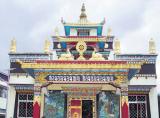
Divine sanctuaryThe foremost attraction of Bylakuppe, a compact world with its own value systems, is the massive Thekchog Namdrol Shedrub Dargye Ling or Namdroling Monastery as it is popularly known. The imposing golden spires of the monastery and the huge rainbow arch-like structure appear well before we actually come upon the edifice.

Namdroling is supposedly the largest teaching centre of the Nyingmapa lineage of Tibetan Buddhism in the world and was established in 1961 by Pema Norbu Rinpoche on land that the Indian Government had granted to Tibetan exiles. The story of the Tibetan settlement at Bylakuppe goes back to 1959 when the Dalai Lama fled to India, seeking political asylum. The monastery, according to the inhabitants of Bylakuppe, was consecrated and given its name by the Dalai Lama. While the village is home to about 50,000 Tibetans, the monastery itself houses nearly 5,000 monks and nuns whose living quarters circumscribe the golden temple. The architecture of Namdroling is a beautiful fusion of traditional Tibetan style built with modern materials.

The path to the monastery is flanked by well manicured lawns. 58 to 60 feet gold-plated idols of Guru Padmasambhava, Buddha Amitayus and Shakyamuni adorn the main sanctum sanctorum which is actually an expansive hall that contains smaller Buddha statues as well. Padmasambhava who was instrumental in spreading Buddhism to Tibet and Bhutan, we learn, is viewed as the Second Buddha while the Amitayus are celestial Buddhas.

Except for the sound from numerous shutterbugs, silence pervades as monks offer prayers and spin the large prayer wheels. The uniquely attractive Tibetan thanka paintings on the inner and outer walls of Namdroling, in bright bold colours narrate the life of the Buddhas.

The paintings, we learn, are based on mathematical calculations, exclusively a Tibetan cultural preserve. Further, the colours used in this art form are intense and the murals themselves represent various elements of Buddhist cosmology. Following several other tourists, we too rotate the several prayer wheels that line one end of the monastery, believing it would usher in good luck and prosperity.

While Namdroling in Camp 4 is the crowd puller, Bylakuppe is dotted with five distinct camps, each of them immaculately clean and housing several monasteries, temples and residential buildings.

The more popular of these include the Sera Mey and the Sera Jey Monastery, the latter having been modelled after the original Sera Monastery in Tibet, now in ruins.

Before we proceed to a couple of tourist spots neighbouring Kushalanagar, we visit Bylakuppe’s other big attraction, the Tibetan shopping complex with its array of colour ridden wares that include souveneirs, garments, handicrafts and artefacts, hand-made by Tibetans.

In addition, there are outlets selling freshly baked thupkas, the Tibetan bread and piping hot momos with a range of homemade Tibetan sauce.

Forest havenHaving deviated from our destination Madikeri, to visit Bylakuppe, we decide to digress a little more and hop over to Kaveri Nisargadhama, 3 km from Kushalanagar and the Harangi Dam, 8 km away.

We walk the rope bridge over the Kaveri River to enter the man-made, ecological island park of Nisargadhama, a picnic spot replete with facilities to entertain weekenders.

Verdant with bamboo, teak and sandalwood forests, and an orchidarium, the 64-acre sprawl is home to tree-top dwellings and guest houses operated by the forest department. We spot several families with children enjoying elephant rides and boating in the waters’ of the Kaveri.The ambience around Harangi is more mellow and calm with few picnickers strolling along designated paths.

The water deluge is refreshing and wonderful to watch as it constantly tumbles from a height of about 45 metres. Incidentally, the 846m long dam is believed to be the first dam built across the Kaveri River.

However, Bylakuppe remains the highlight of our trip and leaves us enchanted – with its pine trees, misty hills and tranquil environs, a distinctively Tibetan ambience and above all, its easy pace of life.

source: http://www.deccanherald.com / Deccan Herald / Home> Supplements> Spectrum / by Chitra Ramaswamy / March 25th, 2014

FARMER’S NOTEBOOK : A package of practices for profitable coffee, black pepper cultivation

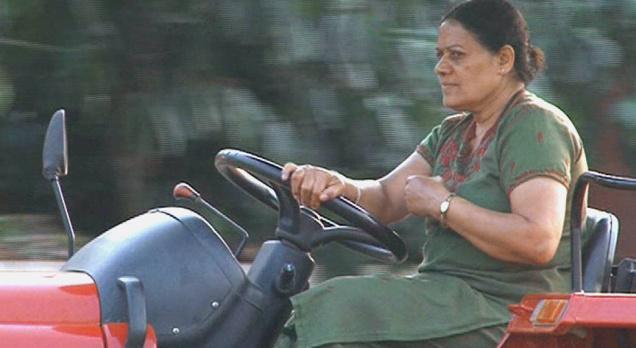
EMPOWERED: Attending one of the seminars organised by IISR’s Cardamom Research Centre (CRC) at Appangala in Kodagu on spices cultivation was a turning point in Mrs. Prema Ganesh’s life./ Special Arrangement / The Hindu

Agriculture is no more a male dominated sector, as many women have shown that they are second to none in this field. “Women can be successful agriculturists, if they are supported with timely technological interventions by scientists and encouragement from family”, says Dr. M. Anandaraj, Director of the Indian Institute of Spices Research (IISR), Kozhikode.
Mrs. Prema Ganesh from Maragodu village, Kodagu District, Karnataka is a role model for other women in this field.

Several problems

When she ventured to take over her coffee and black pepper plantation in 10 hectares a decade ago, several problems started surfacing, especially the low productivity of crops, making agriculture a non profitable enterprise.Keen to overcome them, she happened to attend one of the seminars organised by IISR’s Cardamom Research Centre (CRC) at Appangala in Kodagu on spices cultivation.“It was a turning point in my life,” recollects Ms Ganesh.

The scientists at CRC assured full technological support to her ventures. A team from CRC visited her plantation and identified some major production constraints such as high plant density per unit area, prevalence of diseases and pests, problems like spike shedding in black pepper etc.They provided a complete package of practices to be followed including thinning of excess plant growth to maintain optimum spacing among them, adoption of basin management techniques like application of organic manures, micronutrient application, earthing up and mulching for various crops.“In the case of black pepper, special recommendations like basin irrigation at the rate of 40-50 litres of water at 4-5 times per vine at an interval of 5-7 days during May-June in case of delayed monsoon, regulation of shade by pruning the support trees to provide minimum 50-60 per cent exposure to sunlight were suggested,” says Dr. S J Ankegowda, Head, CRC, AppangalaFor diseases and pests, spraying of two rounds of Bordeaux during June and August/September and one round of drenching with 0.2 per cent Copper Oxy Chloride (COC), and need based application of insecticides were also recommended.Trees like balangi, palawan and silver oak were planted at a spacing of 15×15 feet (random) to provide adequate shade to the crops.In addition she readied several rainwater harvesting pits of 10 feet length, 1.5 feet width and 1.5 feet depth between the coffee plants.These pits also serve as compost pits where all the farm wastes are dumped for two years to decompose after which they are removed and applied as organic manure to coffee and pepper, substantially reducing the cost on purchase of farm yard manure.

Composed husks

Ms. Ganesh makes use of composed coffee cherry husk, a by-product of coffee pulping, after mixing with cow dung as an additional source of organic manure.Annually she spends Rs. 35,000 per acre as operational cost and gets about Rs. 25 lakhs a year as net income from both black pepper and coffee. Reducing manual labour was an important initiative by her.“First thing they did was to lay motorable roads inside the plantation. This has reduced the strain in carrying the harvested produce in bags by labourers.Before the roads were laid, a labourer would take about 30 minutes to carry the bag to the main road for loading it on the lorries.“The physical strain was quite heavy. But now this has considerably reduced since the vehicles can come into the plantation,” says Dr. Ankegowda.

Underground irrigation

Another initiative was the underground pipe-lining for irrigation. Today the entire plantation has well connected irrigation line ready for irrigation all through the year.For more details readers can contact Mrs. Prema Ganesh, Prema Estate, Maragodu Village, Madikeri, Kodagu district- 571 201, Ph: 08272-241555, or Dr. S. J. Ankegowda, Head, IISR Cardamom Research Centre, Appangala, Madikeri-571201, Karnataka, mobile: 09663069241 and phone: 08272-245451.

source: http://www.thehindu.com / The Hindu / Home> News> S & T> Science / Farmers Notebook> Karnataka / by M.J.Prabu / February 26th, 2014

People of Karnataka, T.N. urged to join Save Kodagu campaign

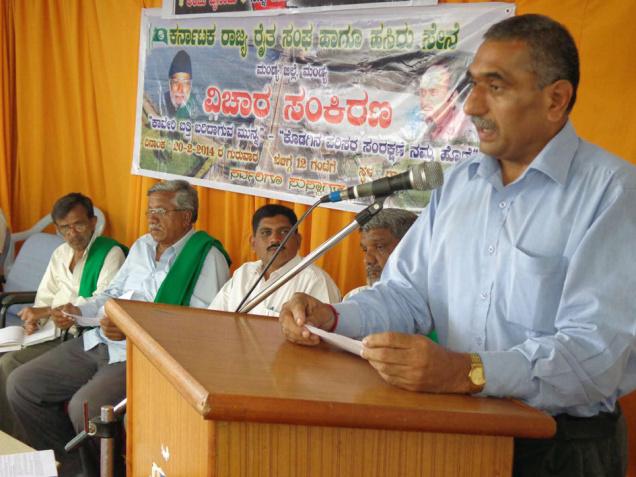
Making a point: Cauvery Sene leader B.C. Nanjappa speaking at a seminar in Mandya on Thursday./ The Hindu

K.A. Ravi Chengappa, principal convener of Cauvery Sene, was speaking at a seminar on ‘Save Cauvery’, organised by the Karnataka Rajya Raitha Sangha and Hasiru Sene at Gandhi Bhavan in Mandya.

Criticising Defence Minister A.K. Antony and State Home Minister K.J. George for their “anti-Kodagu” measures, K.A. Ravi Chengappa, principal convener of Cauvery Sene, on Thursday called upon the people of Karnataka and Tamil Nadu to participate in a Save Kodagu campaign, beginning on February 24.

He was speaking at a seminar on ‘Save Cauvery’, organised by the Karnataka Rajya Raitha Sangha and Hasiru Sene at Gandhi Bhavan here on Thursday.

Mr. Chengappa alleged that the two Ministers were supporting the 400 kV high-tension power line project from Mysore to Kozhikode in Kerala via Kodagu. He said that if work was taken up it would destroy the ecological system in Kodagu. Work had begun on the project amid protests. Nearly 1 lakh trees in the catchments of Lakshmanathirtha and a few rivulets of the Cauvery would have to be axed to make way for the transmission line. Already 50,000 trees worth Rs. 350 crore, around 150 years old, had been axed, he said.

The authorities could have considered the existing routes to reduce the damage to the forests, he said.

‘Disastrous’
Alleging that the timber and land mafia was destroying forests, Cauvery Sene leader B.C. Nanjappa, who inaugurated the seminar, said the project would be disastrous for the people and for Kodagu district.

Resorts, tourism projects, development projects and sand extraction along the Cauvery and its rivulets had had a devastating impact on the ecological system in Kodagu, he said.

KRRS leader K.S. Nanjunde Gowda also requested the authorities concerned to take measures to protect forests.

Sene activist Ravindra Karyappa, KRRS leaders Nandini Jayaram, Shanbhunahalli Suresh and Konasale Narasaraju and zilla panchayat member Kempoo Gowda were present.

source: http://www.thehindu.com / The Hindu / Home> News> National> Karnataka / by Staff Correspondent / Mandya – February 21st, 2014

Forest dept builds kraals to tame captured elephants

Four structures will be built at Dubare camp to accommodate eight jumbos.

Even as the forest department officials are preparing an action plan to capture 23 wild elephants that have turned out to be trouble makers in Kodagu-Hassan border area, preparations are made simultaneously for constructing kraal to tame elephants, at Dubare in Kodagu.

Dubare, surrounded by Cauvery river is well known for the elephant camp. Expert mahouts and kavadis tame and look after the elephants using the best of their abilities. As the land is surrounded by river, it is best suited for taming elephants.

The forest department has now planned to bring majority of the elephants that are captured in Kodagu-Hassan border areas, to Dubare for taming. Meanwhile, work on construction of kraal for taming elephants at Ranigate and Mathugodu camps are under progress and the department has plans to construct kraals at Bandipur in Mysore district and Sakrebail camp at Shimoga, said sources in the forest department.

Speaking to Deccan Herald mahout Dobi said that kraals are built using the tamed elephants in the camp. Wooden logs of eucalyptus available in Dubare forest are used in building the strong kraals, he said.

On the space availability at kraal, he said one kraal can accommodate two elephants, and the department has plans to construct four kraals in Dubare, enabling taming of eight elephants at a time. With expert mahouts and kavadis, a wild elephant can be tamed within four months.

Kodagu Circle Chief Conservator of Forest Brijesh Kumar Dixith said that people are largely facing problem from wild elephants at Shanivarasanthe in the border area of Kodagu district and Alur of Hassan district. The elephants which have at present taken shelter at Alur, might have created rampant in Shanivarasanthe. Therefore, officers from Kodagu circle too have been deployed in the operation to capture elephants, he said.

Speaking about the nature of elephants, he said elephants are emotional in nature. They share a strong bond between female, male and calves. They pass on the message to other elephants whenever they face danger. “As elephantas move in herds, there are all possibilities of one herd of elephants passing the message to other herds when they sense danger of humanbeings effort to catch them.

The department is studying all the possibilities and is planning to attack all the herds at a time in order to capture them. We are waiting for a right opportunity,” he said.

source: http://www.deccanherald.com / Deccan Herald / Home> District / by Srikanth Kallammanavar, Madikeri / DHNS – February 17th, 2014

`11.87 cr proposal to develop Raja Seat

It wil have puzzle garden, artificial caves, flowery clock, says DC Anurag Tiwari.

The Kodagu district administration has prepared a proposal of Rs 11.87 crore and submitted it to the State government, to beautify and develop Raja seat, a popular tourist destination in the city.

If the proposal receives the green signal from the government, then Raja Seat will perhaps become one of the most attractive gardens in the country. A large number of tourists visit Raja Seat to view the panoramic Western Ghat range and an enchanting sun set. But, the garden has been has been completely neglected, and stands as an eye sore. The musical fountain in the garden too is defunct. As a result, the number of visitors visiting Raja Seat has declined over a period of time.

Taking a note of this, the district administration has prepared a proposal to develop the garden. Maintenance of the garden will be handed over to the Horticulture department.

Speaking to Deccan Herald, Kodagu Deputy Commissioner Anurag Tiwari said that it has been planned to build a watch tower in the garden at a cost of Rs 1.12 crore. The proposed plan comprises of the construction of puzzle garden at a cost of Rs one crore, flowery clock, garden in Japan style, artificial caves, formation of waterfalls, glass house on the lines of the one in Lalbagh in Bangalore, snake ladder game at a cost of Rs four crore, construction of rope-way from Nehru Park to Raja Seat at a cost of Rs three crore, Bayalu Ranga Mandira at a cost of Rs 1.20 crore, and a tunnel aquarium.

A comfortable footpath, ponds, solar lights, garden lights, statues will be laid in the garden, if the government okays the proposal. With tourism being one of the major source of income in Kodagu after coffee business, measures will be taken to improve and explore tourism potential in the district, the DC said.

source: http://www.deccanherald.com / Deccan Herald / Home> District / by Srikanth Kallammanavar, Madikeri / DHNS – February 06th, 2014

Pigeon drops dead in Kodagu, 4,500km away from home

Madikeri :

No one made much of it when a pigeon was found dead recently in Kakkabbe village near Madikeri. But it was no ordinary bird: there was a ring on its claw which aroused the interest of KM Chinnappa, environmentalist and director of Wildlife First Trust. It bore the inscription ‘SRPC 1110 Selam-7’.

Chinnappa immediately got around to tracing the bird’s origins. Turns out, the pigeon was a visitor from the Philippines and belonged to the Santolan Racing Pigeon Club there. It was a racing pigeon and was capable of flying continuously for 1,000 miles, as per records about such birds in America.

“It’s a wonder the pigeon flew 4,500km from the Philippines to Kodagu,” says Chinnappa.

Pigeons have a special ability to return to their place of origin even after flying for days on end. But it’s possible the pigeon from the Philippines got confused and lost its bearings due to interference from cell phone towers, claims Chinnappa.

Sometimes, pigeons also fly off track while trying to escape eagles, he adds.

The ring found on the pigeon was sent for analysis to the Bombay Natural History Society through bird expert Kripakara of Mysore.

source: http://www.timesofindia.indiatimes.com / The Times of India / Home> City> Bangalore> Namma Metro / TNN / February 14th, 2014

Karnataka plans eco-sensitive zones in forests

The State government has drawn up plans to create 32 in the forests, especially in Kodagu, Shimoga, Udupi, Dakshina Kannada, Chikmagalur and Mysore districts, for protecting both the people residing within the forests and wild animals.

After the Cabinet Sub Committee on Forest discussed these issues, Law and Parliamentary Affairs Minister T.B. Jayachandra, who chaired the meeting, said that this would be tabled before the State Cabinet and then sent to the Union government for approval.

Mr. Jayachandra said that the Union government had, in its guidelines to the States, suggested that there should be a 10-km zone near each human habitat where big construction activity, power lines of more than 11 kVA, big resorts and industries could not be allowed to come up.

However, small constructions such as homestays could be allowed.

He said that the zones could be just one, two or three kilometres away from the habitats.

Asked whether these guidelines were binding on the State government, he said that there was no law to regulate such activities in the State.

He said that the State forest officers would discuss the issue with the Union government and convince it of the workable alternatives, based on specific reasons.

Wherever it was difficult to implement the guidelines, the State government would strive to get relief to the people, he said.

Objection

The committee also discussed the situation arising out of a case filed by the Goa Foundation before the Green Bench of the Supreme Court at Chennai.

The committee decided to file an objection within 10 days to the demand of the Goa Foundation that the Kasturirangan Committee report, which was notified by the Union government, be implemented.

Mr. Jayachandra said that the notification had adversely impacted development activities worth Rs. 25,000 crore in the Western Ghats. Works of the Indian Institute of Science, the DRDO and a unit for the manufacture of unmanned aerial vehicles in Challakere of Chitradurga district had been stopped due to public protests.

source: http://www.thehindu.com / The Hindu / Home> News> National> Karnataka / by T. S. Ranganna / Bangalore – February 03rd, 2014