Category Archives: Nature

Farmers to get 50 per cent subsidy for solar fencing

The government will provide 50 per cent subsidy to farmers to put up solar fences on their farms, said Minister for Forests B. Ramanath Rai on Thursday, as an obstacle against entry of wild animals and to reduce man-animal conflict

During his visit to the Karnataka Pradesh Congress Committee (KPCC) office here, the Minister told presspersons that the department had put up elephant-proof trenches and installed solar-powered fences around some stretches of the reserve forests and national parks. “This is part of the Karnataka Sustainable Forest Management and Bio-diversity Conservation Programme. However, if farmers want to get solar fences installed by private companies, we will grant them 50 per cent subsidy,” he said.

The Minister said his department was not against development. However, only such projects that will directly benefit people will be permitted. People who submit applications for land in deemed and reserve forests should keep in mind the various rules governing forests in the State.

The Minister said the process of resolving the confusion over the C and D categories of land (degraded forest land) had commenced. “According to the law, there is no provision to regularise encroachments on forest land after April 27, 1978. However, we have received over one lakh applications seeking regularisation of land. A Cabinet subcommittee has been formed to study the issue and take a decision,” he said.

Posts to be filled

He said 700 posts in the department would be filled shortly. “The department is also encouraging farmers to grow sandalwood. We are giving away saplings at Re. 1 and Rs. 2 each to farmers. These farmers will also get an incentive of Rs. 10, Rs. 15 and Rs. 20 for each sapling annually, in the first, second and third year respectively, to ensure its growth,” the Minister said.

source: http://www.thehindu.com / The Hindu / Home> News> National> Karnataka / by Special Correspondent / Bangalore – January 03rd, 2014

Bangaloreans head to forest, hill stations for new year’s eve

CoorgKF31dec2013
Bangalore:
With New Year round the corner, many Bangaloreans have finalised plans to head for nearby hill stations and jungle resorts, to be away from the city’s din and bustle, to usher in 2014. Madikeri, Coorg, Kodaikanal, Nagarhole and Bandipur are the hottest picks.

Bored with the same old ways to welcome new year, Bopanna K J, a city based HR professional, is all set to travel to Coorg this New Year’s Eve with few of his friends. He said “New Year Eve for me used to be either Goa or any of the pubs in Bangalore all these years.

But this year I just want to get out of this commercial buzz and corporate things and want to check out for something different. We have already made the bookings at a resort and are leaving on December 31 afternoon.”

Since Coorg is relatively closer to Bangalore, we need not take many days leave. It would be all green and we will have more time to spend amidst the nature, peace and tranquility, he further added.
Yet another city resident Shiv Shankar is driving to Coorg on December 31 morning, where he will be joined by 35 of his family members and relatives.

“The weather at Coorg is pleasant this time of the year and since it is not very from Bangalore, we chose that place to celebrate the New Year eve. Once we reach there we will also have ample time for the midnight preparation. We are just waiting for the day to enjoy the greenery and have a break.”

Meanwhile, a group of four young IT professionals are heading to Bandipur Tiger Reserve. Navin, one among them, said, “As per our plans we will be leaving Bangalore on December 31 afternoon for a day-long stay at the jungle lodge, which we have booked about months ago. Then we will head towards Cauvery Wildlife Sanctuary and return to city on January 1, 2014 night.”

Many city residents are also heading towards Kodaikanal. Neelesh Bothra is all excited to celebrate the New Year’s Eve with his family at Kodaikanal.

source: http://www.deccanchronicle.com / Deccan Chronicle / Home> News> Current Affairs / DC / by Luna Dewan / December 26th, 2013

‘Good potential for litchi cultivation in Kodagu’

Litchi grown in Kodagu during the off-season can be marketed across the country, says an expert.

Growers in Kodagu, faced with pest attacks on coffee and diseases in cardamom, orange, and banana crops, had something to look forward to during the Litchi Field Day organised by the Central Horticultural Experiment Station (CHES) at Chettalli in the district recently.

About 50 progressive growers attended the event. A field visit to litchi orchards of the CHES in Chettalli gave the growers exposure to cultivation methods. CHES scientists apprised the growers about the soil requirements, fruiting, flowering pattern, and yield of litchi.

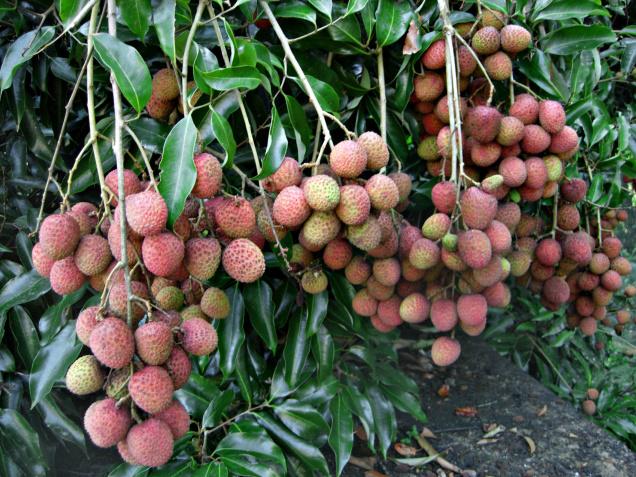
P.C. Tripathi, head of the CHES, made a presentation on the prospects of litchi cultivation in Kodagu. He said litchi matures in the off-season, during November-December period, in Kodagu, unlike in traditional cultivation areas in north India where it matures during May and June. As this was the off-season, the fruits were in demand in the market. He told The Hindu that litchi grown in Kodagu during the off-season could be marketed across the country.

The current price of litchi is around Rs. 150 a kg. Litchi cultivation had picked up in Kodagu in the last four years, he said. A grower had planted 900 plants in Chettalli area, he said.

Income from litchi cultivation could augment the annual income of growers who were left to fend for themselves due to the volatility of coffee and pepper prices, Dr. Tripathi said. A small litchi tree could yield between 30 to 50 kg of fruits while bigger ones could yield more than 2 quintals, he said. India is ranked second in the world in litchi production, after China. In India, litchi is grown on nearly 75,000 hectares with a yield of 4.83 lakh tonnes. Bihar, West Bengal, Uttar Pradesh, Jharkhand and Uttarakhand are the major litchi growing States in the country. At the programme, growers raised queries on profitability and feasibility of litchi cultivation.

Planters including N. Bose Mandanna, Col. Kumar (retd.), B.D. Manjunath, Vijay Devaiah and Shambhu Chengappa participated in the programme. Scientists of the CHES, Indian Institute of Spices Research, Appangala, near Madikeri; Coffee Board, Chettalli; and Krishi Vijnana Kendra, Gonicoppa, as well as government officials were present.

source: http://www.thehindu.com / The Hindu / Home> News> National> Karnataka / by K. Jeevan Chinnappa / Madikeri – December 26th, 2013

‘Huthari’, harvest festival observed across Kodagu

Celebration began at Igguthappa temple

‘Huthari’ festival was observed with grandeur and traditional fervour in Kodagu district on Sunday.

The Huthari celebrations began at the Igguthappa temple and ‘prasadam’ was distributed. Sheaves of paddy were taken from the temple to mark the beginning of the festival in the district.

Later, people in the district visited paddy fields in a procession in their traditional attire and harvested the crop after offering prayer. Before harvesting, they shouted slogans ‘Poli Polio deva’ and fired three times in the air and burst crackers.

Kolata

Members of Pandeera family, Kodava Samaja and Sri Omkareshwara temple organised ‘Huthari’ kolata as a part of Huthari festival at Old Fort premises in Madikeri on Monday.
Bettageri Pandeera family members presented Kolata and ‘Bolakat,’ on the occasion.

Speaking on the occasion, Pandeera family member Monnappa said that kolata has been performed from the time immemorial. There is a need to continue the tradition. Huthari festival brings all the family member together for celebrations. New year

Lt General (retd) B C Nanda said that Huthari festival is new year for the Kodavas.

Festivals play a vital role in conserving the culture and traditions of the region. Kodava Samaja president Moovera Subbaiah, Vice President Mandepanda Rathan Kuttaiah and others were present.

source: http://www.deccanherald.com / Deccan Herald / Home> District / Napoklu-Madikeri, DHNS , December 16th, 2013

‘Kodagu climate suitable for growing vegetables’

Scientist from Indian Horticulture Research Institute Dr A T Sadashiva has said that the climate in Kodagu is conducive for growing vegetables.

Speaking at a session held at agriculture technology week organised by Krishi Vigyan Kendra, Gonikpppa on Wednesday, he said that after the harvest of paddy, about 35,000 hectare of land will be left as it is. Vegetables can be cultivated in the paddy field after the harvest.

He further said that Indian Horticulture Research Institute has brought out sachets of improvised seeds of different varieties of vegetables.

Steps will be taken to make these seeds available at all places, he said and added that these vegetables could be grown in kitchen garden and also on earthen pots, he said.
Senior scientist T S Aghora said that 96 varieties have been developed in 23 vegetables. Best varieties are available in tomato, chilly, cucumber, pumpkin and beans.

A beans variety called ‘Arka Sharat’ is considered as the best variety. Vegetables like cabbage, red chilly and red carrots which are grown in Ooty can also be grown in Kodagu.

District Horticulture department Deputy Director S N Sudhindra said that the department will bear 50 per cent of the expenditure of the farmers for growing vegetables. A subsidy of Rs 13,000 per acre is available under Krishi Vikas Yojana, he said.

He further said that a subsidy of Rs 1,500 per bee hive wil be provided for the apiculturists.

A honey park will be developed at Bhagamandala to encourage apiculture.
Scientists Dr S S Hebbar, Dr Shrinivas Rao, Progressive farmer C P Sathish from Somwarpet, Gonikoppa Krishi Vigyan Kendra Director Dr P C Tripathi and others were present.

An exhibition on food products and agriculture equipment was held on the occasion.

source: http://www.deccanherald.com / Deccan Herald / Home> District / Gonikoppa – DHNS, December 11th, 2013

Apiculture park to come up in Kodagu

An apiculture park will be set up at Bhagamandala in Kodagu district to revive apiculture in Karnataka, Horticulture Minister Shamanur Shivashankarappa said on Thursday.

He told reporters here that the park would come up on six acres at Bhagamandala. The department would distribute 20,000 boxes to Jenu Kurubas, a tribe that has expertise in honey cultivation and extraction.

According to him, Rs. 60 lakh had been earmarked in the current fiscal to promote apiculture. “At present, the honey production is around 800 metric tonnes but it is possible to increase it to 8,000 metric tonnes per annum. Besides awareness, training would be imparted to the local tribe to promote apiculture. There is a lot of scope for promoting apiculture in Uttara Kannada, Dakshina Kannada and other Malnad districts,” he said.

Neera Policy

The minister said the department has submitted a proposal to the Finance Department to announce a policy on neera.

“An amendment to the State Excise Act is necessary to allow the tapping and selling of neera in the state. Already, steps have been taken to promote value-added products from the neera like palm syrup, palm jaggery and palm sugar. Now it is up to the Finance Department to table a bill in the State Legislature to pass the Neera Policy,” he said.

Proposal Submitted

He said the state government has submitted a proposal to the Union government seeking release of Rs. 100 crore to revive coconut plantations in several districts.

“Thirty per cent of the coconut plants have perished due to pests and failure of monsoon. The department is educating the farmers of rain-fed areas to go for alternative crops,” he said. According to him, the department has given Rs. 12,000 per acre to farmers for loss of coconut plants.

Auction Centres

Shamanur said two flower auction centres set up in Tumkur and Davangere would be inaugurated soon. The Department of Horticulture has provided the infrastructure but it would be managed by the Karnataka Agricultural Marketing Department.

“Floriculture is no longer a profitable venture following competitions from the African countries. In recent years, Kenya and Ethiopia have emerged as leading flower export countries after the European countries. Despite this, many flowers are being exported from Karnataka thanks to the department’s support. Fifty per cent subsidy is being given to entrepreneurs under the National Horticulture Mission to promote floriculture,” he said.

Census

He said the census of horticulture crops’ areas under cultivation and production were in progress in Bagalkot, Belgaum, Bellary, Chitradurga, Davangere, Gulbarga, Hassan, Kolar, Mysore, Shimoga and Tumkur districts. According to him, Rs. 5 crore had been earmarked for the purpose. “Nearly 50 per cent of the work has been completed,” he said.

source: http://www.newindianexpress.com / The New Indian Express / Home> States> Karnataka / by Express News Service – Bangalore / November 22nd, 2013

Govindappa Jayaram elected Karnataka Planters’ Association chairman

Bangalore :

Govindappa Jayaram from Kodagu district has been elected as Chairman and K Kurian from Chikmagalur district as Vice Chairman of Karnataka Planters’ Association.

Jayaram and Kurian got elected at the 55th Annual General Meeting of the Karnataka Planters’ Association.

The following have been elected to executive committee of KPA: Chikmagalur District – H.T. Pramod, Shirish Vijayendra, Mahesh Shashidhar.

Kodagu District – A.A. Ponappa, N. Bose Mandanna, M.A. Sampath (Corporate Seat).

Hassan District – V. Murali (Corporate Seat) and Baba P.S. Bedi.

Small Growers seat – Kodagu District – Dr M.M.Chengappa.

source: http://www.thehindubusinessline.com / Business Line / Home> Industry> Agri-Biz / by Anil Urs anil.u@thehindu.co.in / Bangalore – November 17th, 2013

Indian Woman Spins Fresh Honey Into Sweet Success

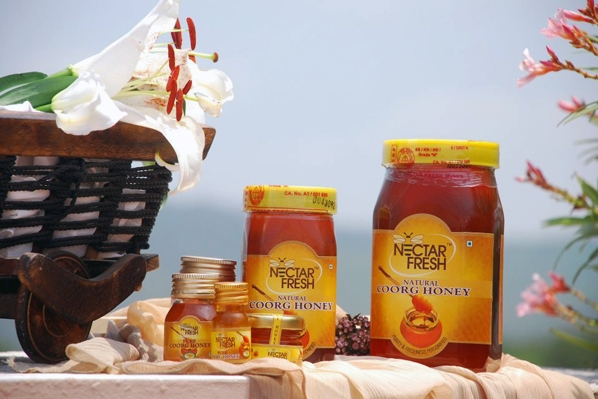
Nectar Fresh honey. Credit: Chayaa Nanjappa

Coorg (Kodagu) is a picturesque hill district along the verdant western Ghats Mountains in the state of Karnataka, South India, which is well known for its aromatic coffee, luscious oranges and fragrant spices. This landscape with steep hills, valleys and ravines with countless streams is home to forests of rosewood, teakwood, sandalwood and silver oak. In this setting, one entrepreneur is turning the region’s traditions of beekeeping and honey collecting into a global operation called Nectar Fresh honey.

Honey is an important part of the culture in Coorg, where bees are kept and honey is cultivated throughout the dense forests and on the many coffee plantations. At “A Cookery Year in Coorg,” Shalini Nanda Nagappa writes “at a Coorg child’s naming ceremony, a gold coin is dipped in honey, and touched to the infant’s lips, a symbolic wish and blessing for the child to live a life of sweetness and prosperity.”

Humble beginnings with a dream
In 2007, Chayaa Nanjappa, a young woman from Coorg, decided to leave her job in the hospitality industry to follow her dream of starting her own honey business. Her initial plan was to supply the purest quality honey from her hometown to the local markets in Bangalore.

To learn the ropes of the new business, she trained at the central Bee Research and Training Institute in Pune, Maharashtra. With a small loan from her mother and with the support of Khadi and Village Industries. she started her business Nectar Fresh honey in Bangalore.

Honey is collected directly from the source and filtered. It later undergoes moisture reduction and then again more filtration. It is then cooled and sent to settling tanks. Processed honey is meticulously tested for quality at the in-house laboratory. Initially the honey was processed and packaged for the pharmaceutical, ayurveda, and hospitality sectors. After serving solely as a supplier to other brands, Nectar Fresh began marketing honey and related products under its own label across India in 2007.

Three years later, Nanjappa relocated the flourishing business to Mysore. Kuppanda Rajappa, a well-known businessman of Coorg origin, with considerable experience in management of plantations and retail sector joined the company as partner. Nectar Fresh was initially sourcing honey only from Coorg. Today the company selectively sources raw honey from various honey-rich regions of India. The honey is collected from forests, certified apiaries, tribal societies and small farmers.

Growing Nectar Fresh honey’s export operation
Pure unadulterated Coorg honey is unique in flavor, aroma and color. These qualities vary depending on the nectar source, age and storage conditions of the honey. Honey extracted during different seasons and from various parts of Coorg carries the flavor of seasonal and regional flowers. Color ranges from dark to light amber: Pale honeys have a mild flavor, while the darker ones have more robust flavor.

Honey made primarily from the nectar of one type of flower is called mono-floral. They have high value in the market due to distinctive flavor. Darker honeys are used for large-scale commercial purposes while lighter honeys are marketed for direct consumption and demand a premium price over the darker counterparts. Most of Nectar Fresh honey is organic and the company also specializes in mono-floral honeys, including Coorg honey, eucalyptus honey, acacia honey, clover honey, mustard honey, sunflower honey, jamun honey, lychee honey and forest honey, which is sourced from dense forests where herbal plants known for their medicinal properties grow.

From the new processing plants in Mysore the company started marketing single-portion packs and 30-gram bottles under Nectar Fresh brand for sale in the hospitality industry. Soon Nectar fresh launched retail-portion package of jams and sauces. Nectar Fresh is one of the largest suppliers of bulk honey from south India, and today its products are exported through middlemen to United Arab Emirates, Malaysia and European Union markets. Recently Nectar Fresh met the stringent standards necessary for approval to export honey to Germany.

The company is awaiting the completion of a new processing plant with a much larger capacity, which would enable Nectar Fresh to produce even more honey. Another plant for processing fruit jams and tomato sauces and purées is expected to be operational by June. The company is in the process of introducing Nectar Fresh Coorg coffee. Plans are also in the works for marketing Coorg-grown pepper, cardamom and kokum.

Nanjappa is a member of the National Bee Board of India. From humble beginning of supplying quality honey to the local market, the company has evolved into one of the top five suppliers and exporter of bulk, raw honey as well as processed honey and the only one manufacturing different varieties of mono-floral honey.

source: http://www.zesterdaily.com / Zester Daily / Home> World / contributor Ammini Ramachandran, Texas based contributor / June 06th, 2013

Ancient microcontinent discovered in Coorg block

MicroContinentKF16nov2013
A team of scientists from four research institutions have reported the discovery of an ancient microcontinent in India.

Based on extensive investigations in the Coorg block comprising parts of Kerala and Karnataka, the scientists have confirmed the existence of a 3.1 billion-year-old exotic microcontinent that could have broken off from Madagascar or Africa and drifted across the ocean to get wedged into the Indian landmass.

Based on the geological formations that characterise the block, the researchers assume that it could have been part of the earliest ‘Ur’ supercontinent formed through microcontinent amalgamation.

The age data of the rock samples collected by the researchers showed that the peak of continental building in the exotic Coorg block occurred around 3.1 billion years ago. The studies indicated that the crust building might have also involved partial recycling of basement rocks as old as 3.8 billion years.

The team comprising M. Santosh from India, now working at the China University of Geosciences, Beijing, Q.Y. Yang from the same university, E. Shaji from the Department of Geology, University of Kerala, T. Tsunogae from Tsukuba University, Japan, and Ram Mohan and M. Satyanarayanan from the National Geophysical Research Institute, Hyderabad, has published the discovery in Gondwana Research, an international journal on earth science with particular focus on the origin and evolution of continents.

According to the paper, the Coorg block, a continental fragment sandwiched between the Dharwar craton (a craton is a piece of a continent that has been stable for over a billion years) in the North and several younger crustal blocks to the South, is composed dominantly of a suite of arc magmatic rocks.

“Considering the age of the rocks from the periphery of the Coorg block, the microcontinent could have got wedged with peninsular India around 1.2 billion years back in time,” says Dr. Santosh, the lead author.

“This exotic microcontinent could have come from any of the cores of the earliest supercontinent Ur. The possible sources are Madagascar or Africa.”

The study revealed that the Coorg block was unaffected by major tectonothermal (geological episodes that shape rock formations) events in the rest of southern India.

The team relied on Uranium-Lead dating and Lutetium-Hafnium analyses of zircons separated from the different rock types. They also carried out petrological and mineralogical studies and geochemical analyses of the rocks.

The study is significant in understanding the supercontinent cycle, the amalgamation of continents into large land masses and their disruption.

“The Early Earth was dominated by island arcs in an oceanic realm analogous to the modern Pacific region. The formation and collision of arcs gave rise to the birth of microcontinents,” explains Dr. Shaji.

The landmass arrangement on earth today is the culmination of a long history of continental movement. The Indian subcontinent is believed to be one among the several landmasses that emerged from the break up of the Gondwana supercontinent about 180 million years ago. The Coorg block covers an area of over 3,000 sq km and includes the whole of Kasaragod district in Kerala and parts of Kodagu district in Karnataka.

source: http://www.thehindu.com / The Hindu / Home> News> National> Kerala / by T. Nandakumar / Thiruvanathapuram – November 12th, 2013

Coorg: A Green Escape in Karnataka

If you find Ooty, Kodaikanal or Munnar a bit too touristy and crowded a destination in southern India, Coorg is that perfect holiday spot in Karnataka that is sure to please toddlers, youth and the old alike.
CoorgKF16nov2013
Not that this hill station needs to be chosen for a sojourn by eliminating other similar destinations in the vicinity. Just a three-hour drive from Mysore, 150 km away, Coorg district on its own has much to offer, beyond its coffee, cardamom, pepper and beetelnut estates.

There is much to see, admire and soak in at this hill station, which the locals call Kodagu, on the slopes of the Western Ghats, what with some pristine trekking trails, picnic spots, waterfalls, wildlife, woods, forests, valleys and some mouth-watering cuisine. Situated at a height of 1,525 metres, Madikeri or Mercara is the capital of Coorg, with a nice bazaar, quaint houses with red-roofs and liberal use of teakwood reapers for doors and furniture, so common among homes and clubhouses in Indian hill stations.

It may come as a surprise to some that Coorg has one of the largest settlements of Buddhists in India, just about 30 km away from Madikeri, with their own Namdroling Monastery built in 1963, which the locals call the Golden Temple. Once you enter the monastery, you feel transported into some other world in the Orient, packed as it is with some 5,000 monks in bright yellow and red robes, with some soothing Buddhist chants, smell of incense and breathtaking sights of pagodas.

After seeing those large golden statues of the Buddha and Tara, the intricate murals and Tangkha paintings, don’t forget to taste some authentic Tibetan food here, especially the delectable momos and the subtle thugkpa, their noodle soup. One is told it is the largest teaching centre of Nyingmapa – a major lineage of Tibetan Buddhism in the world – and the present Dalai Lama gave its shorter name, as opposed to Thegchog Namdrol Shedrub Dargyeling that this mesmerising place was called originally.

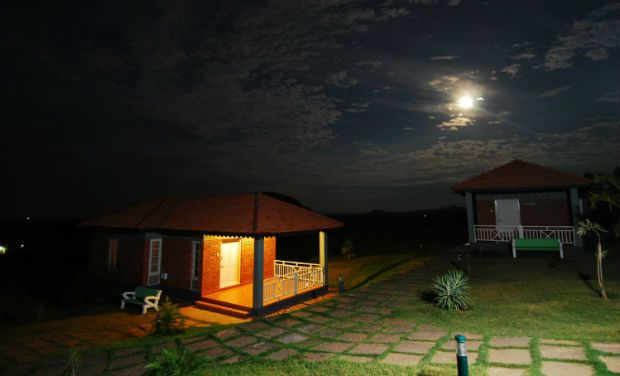
Before dwelling further, where to stay is a question that is bound to crop up. While there are plenty of hotels and resorts, including the Orange County, that can even set you back by as much as Rs.25,000 per day, it is best to opt for a home stay. There are some 35 of them in and around Medikeri in a range of Rs.1,000 to Rs.5,000 per day where one gets not just to retire but also taste authentic Coorgi food and take some refreshing strolls on their plantations that grow coffee and other cash crops.

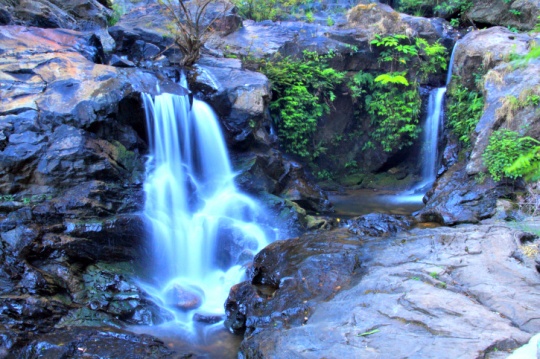
As far as the season goes, October to March — like most places in India — are the best months. The weather is pleasant with that welcome nip in the air. But Coorg during monsoons can be equally mesmerising and enchanting. There are also plenty of places one can go to. There is Abbey Falls, not far, where one has to make his or her way through some dense woods, dotted with coffee bushes, trees and creepers, to suddenly find a cascading gush of water.

Then about 80 km away is the Iruppu Falls, right next to the Rajiv Gandhi National Park, also called Nagarhole, which is famous for its elephants, with a lot of other game and some 50 species of birds. Children, especially, are certain to enjoy a visit to Dubare Forest, around an hour and a half from Medikeri. A ferry there takes you across to an elephant camp where one can see the pachyderms being bathed and fed, after which they are ready for a joy ride.

Talacauvery, around an hour away, is the source of the river Cauvery, with a temple to pay homage to this main source of water for some parts of Karnataka and Tamil Nadu. Not far is Bhagamandala, the confluence of three rivers: Cauvery, Kanika, and Sujyothi.

Another must-see is Tadiyendamol, which is the tallest peak in Kodagu and gives a breathtaking view of the entire Coorg, apart from the distant Arabian Sea. There is also the Naalkunaadu Palace built by Kodagu king Dodda Raja Veerendra in 1792. After all this exploring, a bungalow at the plantation is perhaps the best place to retire. Toddlers can chase butterflies, and a hammock and freshly brewed coffee are sure to be at hand!

How far: Around 150 km from Mysore and 260 km from Bangalore

How to reach: By bus or car from Mysore. Closest airport is in Bangalore; the airport in Coimbatore in neighbouring Tamil Nadu is another alternative.

Cost: Around 35-40 home stays in Coorg ranging Rs.1,000 to Rs.5,000 per day.

source: http://www.indiatimes.com / India Times / Home> Lifestyle> Travel / November 11th, 2013