Category Archives: Nature

‘Agri budget aimed at attracting youth to farming’

somwarpetKF04apr2013With more number of farmers drifting away from agriculture due to the lack of basic facilities, the government has presented a separate agriculture budget to retain farmers in the farming sector, said District-in-Charge Minister Appachu Ranjan.
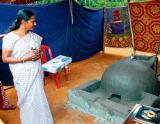
He was delivering presidential address at Krishi Utsav jointly organised by Krishi Utsava Management Committee, Taluk Panchayat, Pragathi Bandhu SHG, at Balagunda village near Somwarpet on Monday. He gave a call to the farmers to have knowledge of various government schemes that are exclusively designed for the welfare of farmers. The new generation youth lack interest in farming and are turning their faces towards the urban life. But the situation will change and the same youth will return to villages to take up agriculture, Appachu Ranjan hoped.

He said “the small farmers should cultivate crops that are suitable for the local climate. The crops should be grown and supplied based on the public demand.”

Inaugurating the Krishi Utsav, national award winning progressive farmer Nirmala Prakash expressed concern over the increased use of chemical fertilisers and pesticides in agriculture.

Understanding the impact of these harmful chemicals, the farmers should come forward to adopt organic farming, she said.

Zilla Panchayat President B Shivappa, Taluk Panchayat President G B Somaiah, Sri Kshetra Dharmastala Rural Development Project Director Radhakrishna Rao and others were present.

source: http://www.DeccanHerald.com / Home> District / Somwarpet, DHNS / March 18th, 2013

‘Demand for bamboo is on rise’

BambooKF30mar2013Bamboo cultivation will fetch good income for the growers, said Chief Conservator of Forest Keshavamurthy.

Speaking at a workshop on bamboo organised by the Bamboo Society of India, Kodagu Model Forest and Forest College, he said the bamboo can be grown inside the coffee estates as well. Bamboo is used in furnitures, as a fodder for animals and in preparations of medicine. The demand for bamboo is on rise in the international market.

He said that bamboo is grown on five lakh hectare land in the State. The demand for bamboo is 26.26 lakh tonne. Bamboo sticks are used in the preparation incense sticks. Along with growing ginger, farmers can also grow bamboo.

Forest College dean Dr N A Prakash also spoke. Additional Principal Chief Conservator of Forest (retd) Dr K Sundar Naik also spoke. Bamboo growers Dr L C Sona, Sanjeev, Ahammed and Sandeep spoke.

source: http://www.DeccanHerald.com / Home> District / Gonikoppa, DHNS / March 29th, 2013

‘Coffee has not affected environment’

MuthannaKF29mar2013Coorg Wildlife Society president Col (retd) C P Muthanna said, coffee cultivation, which is considered as the lifeline of the people of Kodagu, has not harmed the environment in any way. No restrictions should be imposed on farming practices, which are being followed for more than a century, he said.

Speaking to presspersons here recently, he said, in the wake of opposition to Dr Madhav Gadgil committee recommendations, the Centre had constituted a committee headed by Kasturirangan. “Members of the society met Kasturirangan committee members recently and raised objections against a few recommendations made in the Madhav Gadgil report, he said.

“We will accept a few recommendations made by Gadgil on the need for conserving rivers, flora and fauna on the Western Ghats. However, the point that horticulture crops, especially coffee, affects bio-diversity badly is unaccepted. Coffee is being grown under huge trees in Kodagu. Along with coffee, growers also plant fruit bearing trees,” Muthanna said.

He said: “We are opposed to the recommendation on restriction on use of pesticides. Without the use of pesticides, coffee cannot be grown. There is a need to create awareness on the ill-effects of excessive use of pesticides and convince growers to go for alternative methods to save the plants. However, the recommendation that there should not be a single-crop pattern on private lands in Western Ghats region has created fear in the minds of the farmers.”

Muthanna said, the society will welcome the recommendation to declare Kodagu as an eco-sensitive zone. Conversion of agriculture land for other use should be banned. It should clearly mention that farmland and coffee plantations should not be used for non-agriculture activities.

“We welcome the recommendations of the committee on giving forest rights to forest dwellers as per Forest Rights Act. Instead of allowing the forest dwellers to reside inside the forest, they should be allowed to reside on the periphery of the forest. If they are allowed to reside inside the forest, the authorities will not be able to provide basic facilities to forest dwellers,” he said.

Society vice-president B A Poonaccha, secretary Shyama Appanna and others were present.

source: http://www.DeccanHerald.com / Home> Dsitrict / Madikeri, DHNS / March 28th, 2013

Karnataka coffee belt gets good blossom showers

coffeeKF16mar2013
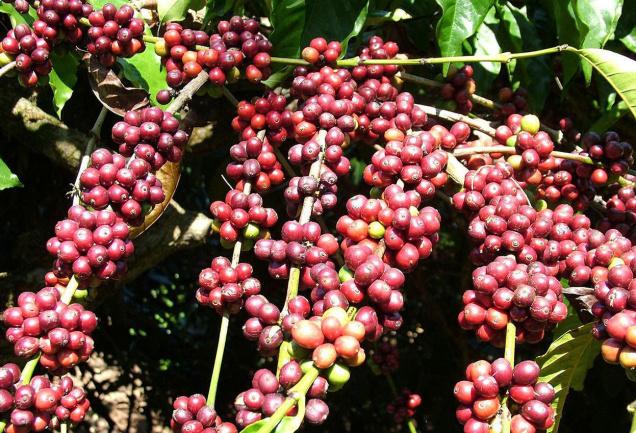
Bright outlook: Ripened coffee berries at a plantation in Karnataka. (a file picture.)

March rains have been well distributed

Bangalore , MARCH 15:
Coffee-growing regions of Kodagu, Chikmagalur and Hassan in Karnataka have received good blossom showers.

“Blossom shower in the coffee belt in Karnataka is very good this year. Very good for Arabica as compared to poor to patchy rains last year,” Bose Mandana, a senior coffee planter from Suntikoppa in Kodagu told Business Line.

MARCH SHOWERS

“Rain in February, especially during mid-harvest, was worrisome, but March shower has been heavy and this has made us comfortable for the next three to four weeks,” he added.

In Kodagu rains have been good in Napoklu zone comprising Murnad, Madikeri and Napoklu whereas Gonikoppal zone, which comprises Virajpet, Gonikoppal, Kutta and Balale, needs additional showers.

For robusta, south Kodagu got early showers in February and now has received moderate March showers.

In Chikmagalur and Hassan districts, March rains have been well distributed. “Due to timely showers and moisture status being good, many planters have begun applying manure in their estates. This year, they have been able to save on irrigation,” said Mandana.

According to Nishant Gurjer, Chairman, Karnataka Planters’ Association and a grower from Chikmagalur said “Early rains in February and subsequent rains in March have been good for overall crop production.”

“Rains in the last two months have been good for robusta. Stressed period for Arabica was cut short and there was initial apprehension among the growers over early rains. But March rains, however, have been beneficial,” he added.

Last crop year (2012-13), the Coffee Board had estimated the post-blossom estimate at 3,25,300 tonnes (arabica 1.04 tonnes and robusta at 2.21 tonnes).

As for the final crop forecast, the Board has estimated 3,15,500 tonnes, of which Arabica is 1,00,225 tonnes and robusta at 2,15,275 tonnes.

anil.u@thehindu.co.in

source: http://www.thehindubusinessline.com / Home> Industry> Agri-Biz / by Anil Urs / Bangalore, March 15th, 2013

Big bird day : Bird-watching event all over Kodagu

Mysore, Feb. 23 :

Big Bird Day (BBD), a major bird-watching event will take place across the length and breadth of Kodagu district tomorrow in which more than 25 teams of ornithology enthusiasts have enlisted to assimilate data about the winged creatures.

The “Big Bird Day” is an initiative that was initially started by the ‘Delhi Bird Watchers’ in 2004. The underlying concept of this initiative is “Bird Watching” for the entire day in order to accumulate the highest possible number of species in the region. This year it has become a Pan-India event for the first time. There are more than 200 enlisted teams, making this the largest BBD event for the first time. There are close to 1500 participants all over India. Birders go individually or in small groups, watch birds in certain areas and report the sightings by the end of the day, according to Dr. Bishan Monnappa, a well known orthopaedic in Virajpet and an avid photographer, who is BBD Co-ordinator for Kodagu.

“Despite Kodagu being a difficult terrain, a lot of volunteers have come forward to participate in this event. It will be an educative event which is non-competitive and non-commercial,” said Dr. Monnappa

This event will provide valuable scientific data regarding the rich avian life of India. Pending the success of this event, future plans are to be implemented to cover those areas with the assistance of the Forest Department. Contact Dr. Bishan Monnappa at bishancm@yahoo.com

source: http://www.StarofMysore.com / Home> General News / February 23rd, 2013

Nagesh Kukunoor at the wheel

The filmmaker will be on the lookout for locations for a road movie while driving through south India in March

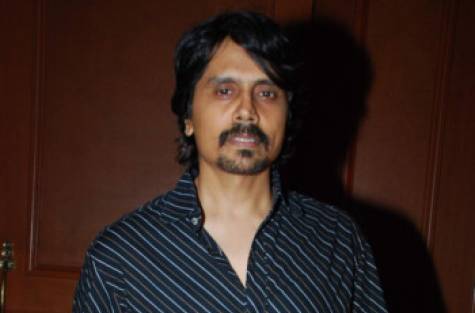
Image Credit: IANS / Nagesh Kukunoor will be part of ‘My Endeavour alterrain’ road trip through south India

Nagesh Kukunoor is ready to undertake a picturesque road journey to Coorg and Munnar and, while at it, he hopes to find the foundation of his new project — a road movie he has been wanting to make for a long time.

The acclaimed filmmaker and screenwriter, known for critically acclaimed movies such as Hyderabad Blues, Rockford and Iqbal, will undertake the journey as part of an adventure driving series, My Endeavour alterrain, by Ford India and National Geographic Channel.

“I want to use this journey as a foundation of a road movie that has been on my mind for a long time. I always wanted to do a road movie and I keep travelling a fair bit because of my work … you never know how stories get triggered,” Kukunoor said.

Is he going with a set story in mind?
“I have a specific thing, but I won’t tell you,” he said, flashing his dimpled smile.

“Well, I do have a loose story in mind and I want to see places that can work for that story. I want to see if I get something interesting … the thing with movies is that you plan something, and then something you absolutely didn’t plan takes shape. So you never know,” he added, hinting at a sense of uncertainty.

But excited he definitely is. Starting from Coorg to Coonoor to Palakkad to his final destination Munnar, Kukunoor is totally kicked about driving through scenic green terrains of the Western Ghats, replete with tea and coffee plantations, and waterfalls.

His companion? A camera crew!
“The camera is going to be my buddy.”
Uncomfortable will he be, then?
“It doesn’t make me uncomfortable because all these years, I have worked with the camera and fortunately or unfortunately, I have worked in front of the camera as well. So it doesn’t make me uncomfortable at all,” said Kukunoor, who has acted in some of his own directorials such as Rockford and Hyderabad Blues.
He is more excited about the trip, to start sometime in March, as when he first undertook it in 1995, he couldn’t complete it.

“I had once undertaken an extensive trip to south India, and Munnar and Coorg were on my map, but I gave up halfway to Coorg. That endeavour remains unfinished for me and this time I want to complete the journey,” he said.
Kukunoor, 45, remembers driving long stretches when he was a student in the United States.

“It has been a very long time that I personally drove long stretches. I have undertaken car journeys, but then you end up driving for a small section and hand over the wheels to someone else after a while. This is not going to be that — I am going to drive the entire stretch,” he said.

source: http://www.gulfnews.com / Tabloid / by IANS / February 25th, 2013

His name is F.M Khan


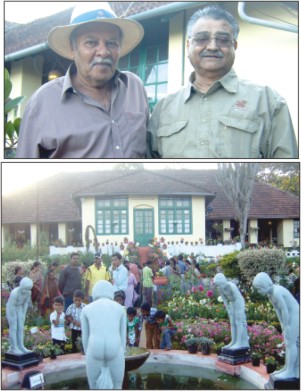
Caption: 1) F. M. Khan with SOM Editor-in-Chief K.B.Ganapathy 2) Garden in front of the house with a fountain.

It was a fortuitous visit. Being Sunday, I decided to drive to Kodagu with a couple of my friends with a double intent — visit the coffee estate, this being the coffee picking season and to enjoy God’s rest day Sunday with good food in one of those innumerable resorts and holiday homes. And on our way back via Madikeri, at Boikeri, about 8 kms on Mysore road, I saw a frayed, grayed wooden sign-post with the legend Balayatrie Estate with a colourful flex board announcing the flower show. Instantly, I knew what it was — the annual flower show conducted by the owner of the estate F.M. Khan, a former Congress Rajya Sabha member and a good friend of former Chief Minister of Karnataka R. Gundu Rao.

For courtesy, I asked my friends if we could visit the show even as I swerved the vehicle to the kachcha road into the estate. A few metres inside and there were nearly 20 cars parked in two parking lots. Men, women and children were there enjoying the flower garden in front of the house with a dysfunctional fountain surrounded by angelic figures (see picture). There were many burqa-clad ladies among others. I wondered if there would come a day in our country when a fatwa would be unleashed to prohibit growing of certain varieties of flowers, as it happened in Kashmir where a fatwa was issued prohibiting playing of certain kind of songs and music by an all-girls band!

Poor Rock Band girls and their families are in hiding now. What a secular country this. Sometimes, I wonder if secularism in this country is applicable only to Hindus and not to other religious groups. A re-look into the definition of this nebulous word ‘secular’ or ‘secularism’ is needed because this word finds a place in our Constitution following an amendment, which was not there otherwise. Let it be.

To revert to F.M. Khan’s flower show, I have nothing but admiration for his efforts, a labour of love. I learn he has been holding this private flower show since 1998 and people are enjoying it thoroughly, for, after all, who would not love flowers. Flower saplings too were there for sale but when I went much of it was sold. Khan’s youngest daughter, who obviously must have taken total responsibility for the show, too was there at the sales point with a receipt book and a visitors’ book.

The name F.M. Khan was as familiar in Karnataka as in Delhi in the late 80s — during the period of Emergency — like R. Gundu Rao then and Shah Rukh Khan today in Bollywood. F.M. Khan and Gundu Rao were two names the Congress (I) party members in Karnataka respected as much as feared for they really did matter in politics of the day — thanks to their intimacy to Sanjay Gandhi the Terrible of the Emergency days. In fact, these two from Karnataka were the blue-eyed boys of Sanjay Gandhi.

It was Gundu Rao who went to the Bangalore Race Club and ‘trapped’ photographs of a few IAS officers who should have been in the Vidhana Soudha. And it made all-India news. I was in Poona then.

As for F.M. Khan, he was like a young stallion, a rising star. Sadly, he faded into oblivion as fast as he rose in politics. If my memory serves me right, I think he was also the Treasurer of the party.

Mrs. Indira Gandhi had visited this house and stayed there after she lost power, post-Emergency and it was big news. I was looking for a plaque somewhere outside the house commemorating the visit of such a great leader but could not find one. I also forgot to ask Khan or his daughter about Indira Gandhi’s visit.

The house, a typical British bungalow with tiled roof, is rather old, may be a hundred-year-old and looked its age needing restoration. The surroundings with service buildings too looked as if in need of care and maintenance. As I strolled around, I was mentally visualising the old glory and the flamboyant life the family, including F.M. Khan, led in the past as one of the richest coffee planters of Kodagu.

Times have changed and the young, debonair F.M. Khan too has changed — has become old like me, but a senior.

In his heydays in politics, he was confident and assertive. Always on short fuse. But now he seemed to have mellowed. He still carries that aristocratic bearing on his feeble shoulders. Heard, he was once mortally sick, but has bounced back. As visitors were trooping into the garden, he was standing at the steps giving a gentle welcome smile with a twinkle in his eyes, apparently feeling happy and nice about what miracle he has done with the flower show spreading happiness and fragrance.

My friends did not know him though they had heard his name. As a courtesy, I acknowledged his presence and wished him simultaneously introducing myself. He seemed to have recognised me. “Would you mind if I took a picture with you?” He smiled in approval (see picture) and as I took leave of him he said, “I am extending the show by a day till tomorrow. Would you publish it in your Kannada paper Mysooru Mithra?” I kept my word, of course.

Yes, I met our own F.M. Khan and reminded myself how nature and time, together, ravage man and all his creations.

Tailpiece: If only R. Gundu Rao had not overplayed his role and got expelled from the party at a critical time after losing the State elec-tion, I am sure, both he and F.M. Khan would have risen in the party and F.M. Khan would be playing the role of another Khan from Karna-taka, the present Minister for Minority Affairs K. Rehman Khan in Congress. With the sudden tragic death of their Godfather Sanjay Gandhi, their political fortunes faded for ever. Sadly, Gundu Rao too died young.

e-mail: kbg@starofmysore.com

source: http://www.StarofMysore.com / Home> Abracadabra…. Abracadabra /by K. B. Ganapathy / February 09th, 2013

TOI Social Impact Awards: Wonder doctor’s success mantra

Mysore :
As a child M Jadeyegowda first saw Dr H Sudarshan dispense medicines to tribals at Biligiri Ranaga Hills near here. Initially, he stayed away from the doctor. Later, curiosity drew the tribal boy to the doctor. Dr Sudarshan and his Karuna Trust became the biggest influences on his life.

Other than providing medical help, Dr Sudarshan taught children in the tribal parts of Karnataka’s Chamarajnagar district. Jadeyegowda was a reluctant student. Today, he’s an assistant professor at Kodagu’s College of Forestry. “As a kid, I saw the doctor conduct surgeries with minimum facilities,” Jadeyegowda,43, says.

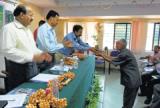
In October 2006, when the Vivekananda Girijana Kalyana Kendra (VGKK) — to which Karuna Trust is affiliated — celebrated silver jubilee, Jadeyegowda, MSc, shook hands with President Abdul Kalam. He was one of the six students who had attended the tribal school set up by the NGO 25 years back. Jadeye now heads VGKK and is a trustee of the Karuna Trust. “I’m more comfortable being recognised as a beneficiary,” he says. “Jadeye is a beneficiary of our health and education programmes. That helped him,” Dr Sudarshan says

source: http://www.timesofindia.indiatimes.com /Home> City> Mysore> TOI Social Impact Awards /by H M Aravind, TNN / February 01st, 2013

Karnataka to expand orange cultivation

Bangalore, Jan 03:
Karnataka is planning to expand area under orange cultivation by 50 per cent to 15,000 hectares in five years.

The horticulture department has identified Kodagu, Chikmagalur and Hassan districts for expansion of orange growing area.

“As per the plan prepared by us, about 1,000-hectare addition is planned annually till we achieve sizable production level,” S.V. Hittalmani, Additional Director, Karnataka Horticulture Department, told Business Line.

“Looking at the favourable agro-climatic conditions, the department is planning to expand annually 500 hectares in Kodagu and the rest in Chikmagalur and Hassan districts,” he added.

At present, 10,000 hectares are under orange cultivation, mainly grown as intercrop in coffee estates, though real fruit yield comes only from 5,000 to 6,000 hectares.

“After inclusion of orange under National Horticulture Mission (NHM) in the State seven years ago and also by offering Rs 15,000 per hectares as incentives to growers, we are seeing good quantity of oranges in the market,” said Hittalmani.

“Fairly good yield is being reported from Sidapura and Thitimati in Kodagu. Now we plan to replicate this in other districts where we plan to introduce the crop,” he added.

CURRENT YIELD

Current orange production (2012-13 crop year) in the State is estimated at 50,000 tonnes as against 45,000 tonnes last year (2011-12 crop year).

The department is also planning to give a boost to orange cultivation by encouraging fruit processing units in the growing regions. According to Hitalmani, at present a couple of processing units are operating under cooperative societies in Kushalnagar and Gonikoppa in Kodagu.

Hitalmani said the revival of orange in the State has led to steady demand. “Prices early in the season (November) average around Rs 60 a kg. Then it drops to Rs 45 a kg by the middle of the season (December/January) and later it quotes around Rs 50 to 60 as the season ends (February-March).

ORANGE MELA

As a step forward to develop farmer-centric business model, National Horticulture Board (NHB) and Karnataka Horticulture Department are holding an ‘Orange Mela’ in Bangalore from January 4 to 6, said Jagadeesha KG, Director of Horticulture.

For the mela, farmers from orange producing States such as Maharastra, Punjab, Rajasthan, a few States from North-East, West Bengal and Tamil Nadu are taking part.

anil.u@thehindu.co.in

source: http://www.TheHinduBusinessLine.com / Home> Industry / by Anil Urs / Bangalore, January 03rd, 2013

The hospitable heiress

Shruti Shibulal has invested in a business that’s a world apart from that of her father. But in her unassuming demeanour she’s kept to the Infosys tradition

Her 0.64 per cent stake in the company her father co-founded is worth close to Rs 900 crore at today’s prices. But 27-year-old Shruti Shibulal, promoter of the recently-launched luxury resort The Tamara, Coorg and daughter of Infosys Co-founder and CEO S D Shibulal, comes across as remarkably down-to-earth and, well, normal. “It’s something I’ve been asked about [the Rs 900 crore] but I don’t really wake up in the morning thinking ‘oh, I’m worth this much’,” says the young entrepreneur, whose casually bunched-up curly hair and black-rimmed glasses lend her an air more grad student than entrepreneur, though she has dressed for the interview in a fitted black cardigan, onion-pink silk blouse and black trousers. (The sole concession to luxury seems to be a sparkling diamond ring on her left hand, about which she will reveal only, with a smile, that “yes, it means something”.)

The down-to-earth demeanour could also have to do with the fact that she was not born with that most desirable of appendages, the proverbial silver spoon. “We had a very middle-class upbringing till the late ’90s. I grew up seeing my dad work obscenely hard and now he’s working harder than ever. We are extremely aware of the value of money,” she says.

My entry into the conference room a little earlier had interrupted a discussion between Shibulal and one of her employees about someone she has just met who was convinced that the building of resorts like hers spelt the beginning of the end for Coorg, a pristine part of Karnataka’s coffee country and the location of Shibulal’s resort. “If she just visited the resort, I’m sure she would be persuaded to think differently,” says Shibulal, with a confidence that is also unassuming. It is a confidence that might have something to do with the fact that she has already launched two popular fine-dining restaurants in Bangalore, the high-end Caperberry known for experimenting with molecular gastronomy and the like, and Faava, which serves Mediterranean cuisine.
Shibulal says she might not always have known she wanted to be in hospitality but she knew what she did not want to do, and one of those things was a career in IT. “Oh, that was decided after the tenth standard itself, when I dropped computer science,” she says. This steering off the IT path is in line with what the children of the other Infosys promoters such as Narayan Murthy and Nandan Nilekani have done. (Infosys also has in place a policy according to which the promoters’ children cannot join the company.)

College was in the US, at Haverford, where she majored in chemistry, with a minor in philosophy. “I was much better at doing things and dealing with people than academics,” she says. This and a determination to be in New York meant a stint with Merrill Lynch’s wealth management division in NYC which, while enjoyable, also made her feel she could do something more.

The foray into the restaurants business happened soon after she returned to India, and more or less by chance — she was looking around for an investment opportunity and chef Abhijit Saha, who was all ready with the blueprint for his restaurant, needed an investor. “I initially thought I’d be a passive investor because it was a business I knew nothing about, but then Abhijit convinced me to get involved,” she says. That involvement covered the entire gamut, from finance and management to taking orders, being the receptionist and spending the odd night in the restaurant. Everything that is, apart from cooking. “I wasn’t allowed to enter the kitchen,” she laughs. “They tried to teach me but I’m not a good cook.”

“When she came on board, she did not have any knowledge about the food and hospitality industry but she used this as a learning opportunity,” says Saha, who is an equal partner in the venture. Saha describes Shibulal as someone very calm and collected, who was also “a very very quick learner” and very easy to work with.

For Shibulal, the time spent in the restaurant business led to many realisations, the first of which was that starting a business in India is not easy. “It was a bit of a shock to realise you can’t get things done just because you want to, especially when you’re coming from the US, where you are used to things working.” It was a year before Caperberry could finally open, a frustratingly long period for any young and enthusiastic promoter, but a time she now views philosophically. “It took me through a lot of learning — you don’t usually have to go through so much disappointment that early in your career,” she says.

She also had to deal with the fact that at 23, she was much younger than most of the people she was working with, which meant it was that much harder to be taken seriously, even if you were one of the promoters. But there were also positives — like the instant gratification the restaurant business provides, unlike other sectors. “Within five minutes you’ll get to know whether the customer likes what you’ve served him. And that’s a bit of a high.”

Though she continues to be a promoter, her involvement in the restaurants had to take a backseat when she returned to the US, to study for her postgraduate degree in management from Columbia University. Meanwhile, The Tamara, Coorg (Tamara means lotus in Malayalam, Shibulal’s mother tongue) was already taking shape, with the land, a 170-acre coffee plantation, having been bought in 2005.

* * *

The resort, in which she is one of the three promoters, opened in April this year and, currently, that’s the business she is focusing on. With rooms starting at Rs 18,000 a night, it’s positioned at the top end of the segment, but for competition, it has to contend with the venerable Orange County and the newly opened Vivanta by Taj.

But Shibulal, who also heads corporate strategy, is unfazed. For one, she believes Coorg is nowhere near being a saturated market, even with the new Vivanta. And the Tamara, she feels, will stand out because of the kind of service it offers. “It’s a place where you can unwind completely while at the same time having the option to do that one hour of work, just in case you need to,” she says. The resort has a five-star rating on popular travel portal Trip Advisor with many ecstatic comments by guests, but then so does the competition.

In her role, Shibulal looks after the direction the company will take, including acquisitions — the next resort they are working on will be in Kodaikanal, a hill station in Tamil Nadu, and another in Alappuzha, Kerala’s backwater country, is also under consideration. She says she also has to ensure every decision the company takes is in line with its philosophy of “sustainable good living”, part of which meant getting more trees planted than were cut down during the construction of the resort, something attested to me earlier by a rival promoter.

Shibulal declines to reveal the exact investment on the grounds that it’s a privately-held company, and says only that they hope to break even in a few years.

Her family does not interfere in any of her business decisions, she says, though she does turn to her parents for advice, at times. “It’s always been that way, our professional lives are quite separate.” In fact, her father met her business partner, Saha, only six months after she had invested in the company. Neither do dinner-table conversations revolve around Infosys or, for that matter, Tamara. “There are so many other things to talk about,” she says.

Outside work, dancing used to be a passion. “I’ve been dancing from three and have learnt everything from ballet to bharatnatyam and have taught hip-hop while I was in university.” But an injury has put a stop to that.

Meanwhile, she has decided to try her hand at cooking again, though she says it’s particularly hard in a city like New York with its smorgasbord of dining options. (She divides her time between New York, where she looks after the family’s investments in the US, and Bangalore.)

The only indulgence she will confess to is travel, mostly to see her friends scattered around the globe. That and the “Tropical Iceberg” from Cafe Coffee Day a thoughtful employee suddenly enters the conference room with. “They know me well here,” she says with a smile.

source: http://www.Business-Standard.com / Home> Life & Leisure / by Indulekha Aravind / Bangalore, December 15th, 2012