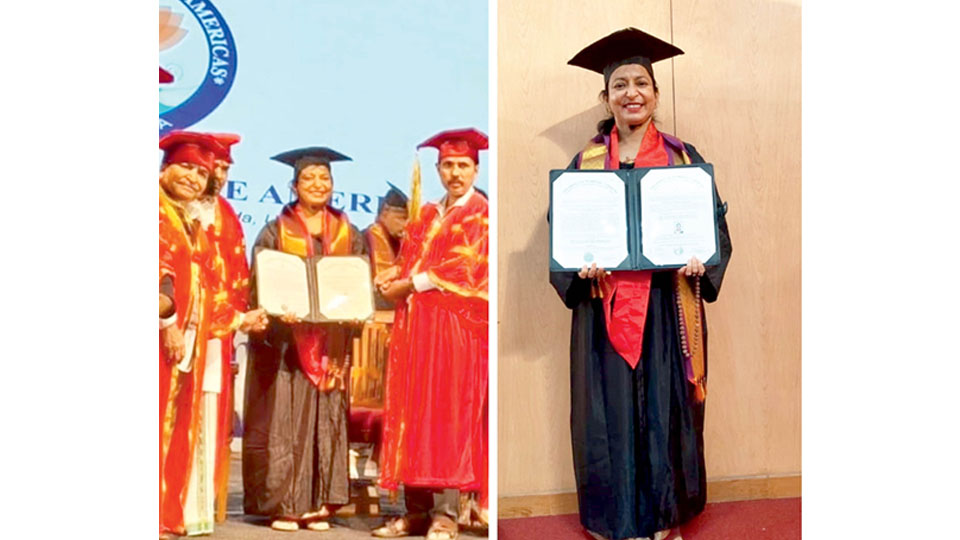
Theetharamada Dr. Devaki (Kollimada) has completed a prestigious Post-Doctoral Research Degree in Commerce from an institution in YUVA University Florida, USA.
She is the only lady from Kodagu to receive this honour in the field of Commerce.
Her post-doctoral study, titled ‘Impact of Yoga Practice on Stress Management Among Higher Secondary School Students in Mysore District,’ explored the effectiveness of structured yoga interventions in reducing stress levels among adolescents.
The research offers valuable insights for educators, policymakers and wellness practitioners, highlighting yoga as a powerful tool for enhancing student well-being.
source: http://www.starofmysore.com / Star of Mysore / Home> News / January 13th, 2025
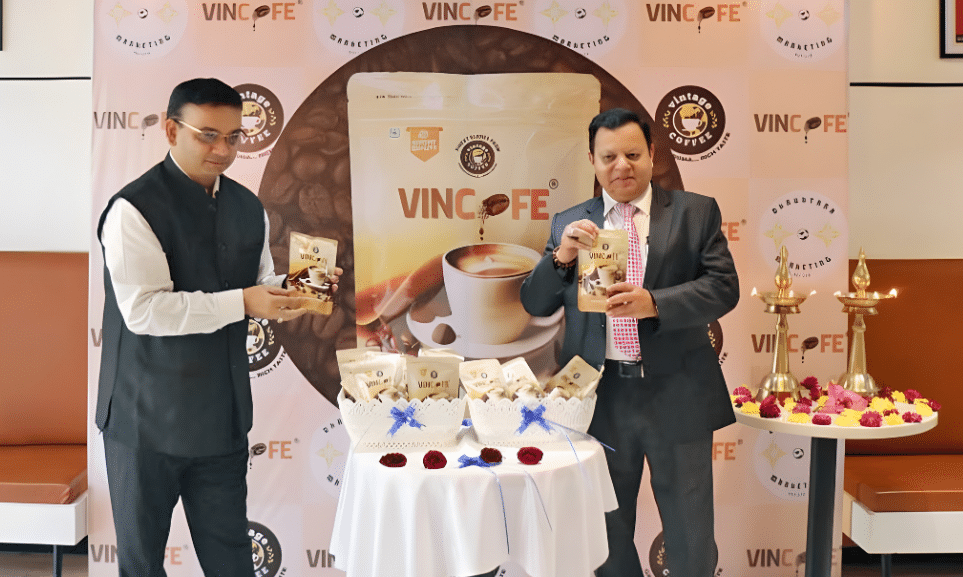
A new indulgent coffee experience crafted by Vintage Coffee for modern Indian consumers.
Vintage Coffee and Beverages is set to elevate daily coffeerituals with the launch of VINCOFE™ Instant Coffee Pure, a premium, 100% pure instant coffee designed for consumers who savour richness, aroma and a smooth, refined taste in every cup.
Building on Vintage Coffee’s growing legacy
After the warm reception of Vintage Coffee Café in Nerul, Navi Mumbai, and the success of its Roast & Ground offerings online, the brand now steps into the instant coffee category with a product that blends global sophistication with Indian flavour sensibilities.
Crafted from India’s finest coffee estates
Celebrating India’s renowned coffee-growing regions — Coorg, Chikmagalur and Hassan — VINCOFE™ Instant Coffee Pure is crafted from shade-grown beans, handpicked with care. Artisan roasting, precise extraction and modern agglomeration at VCBL’s advanced facility near Hyderabad ensure purity, consistency and a superior sensory experience.
A cup designed for modern lifestyles
Rich aroma, smooth texture and balanced flavour come together to create a premium coffee moment, whether at home, at work or on the go.
“As India’s coffee culture evolves, we are proud to introduce a blend loved in global markets,” said Balakrishna Tati , Chairman & Managing Director, VCBL. “VINCOFE™ Instant Coffee Pure is crafted for everyday indulgence — rich, smooth and perfect for modern lifestyles.”
source: http://www.hotelierindia.com / Hotelier India / Home> F & B / December 07th, 2025
Capital infusion to fuel café expansion, retail growth and production infrastructure.
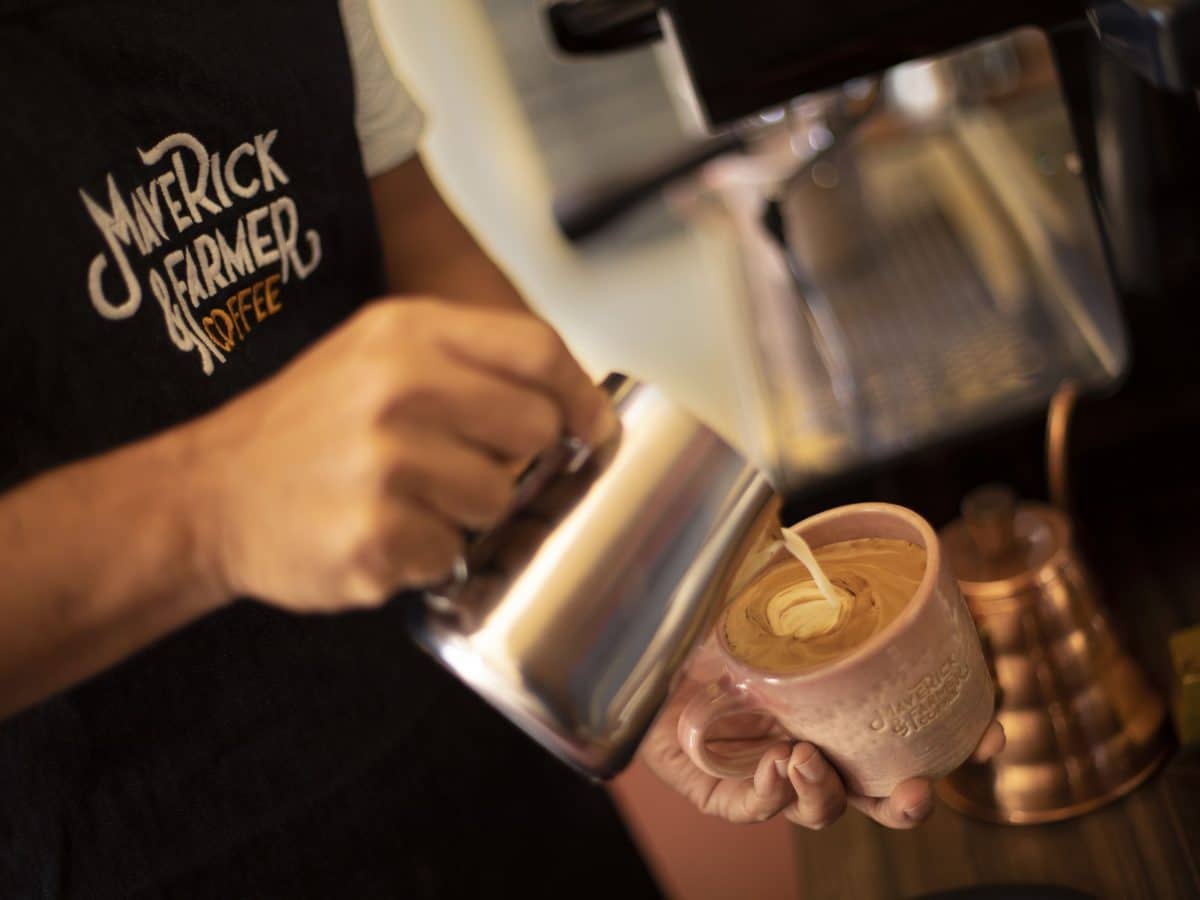
Good Farmer Food Concepts, the company that founded artisanal coffeebrand Maverick & Farmer Coffee and Square Burgers & Co., has raised $1.5 million in an ongoing Pre-Series A round. The company’s first external fundraising has been led by investment firm CreedCap with participation from Indian tennis star Rohan Bopanna and former Indian cricket team captain Rahul Dravid, along with Meraki Sport & Entertainment.
Planned use of funds
The company will utilize the fresh funds to expand its national presence with its cafes, invest in R&D and production infrastructure, and bolster and grow the brand’s retail vertical. The retail segment focuses on creating various SKUs of specialty coffee roasts and nurturing the home brewer experience by curating a variety of equipment. The brand’s new outlets in the pipeline are in Mumbai, Delhi NCR, Goa, and Bangalore. The company currently operates seven outlets in Bangalore and Goa and expects to reach ten by the end of the year.
Founders and brand philosophy
Founded by Ashish D’abreo, Sreeram Gangadharan, and Tej Thammaiah, Good Farmer Food Concepts is built on a product-first philosophy and a strong focus on quality and innovation. The company blends experimentation with coffee for retail, community-driven cafes, and a health-forward take on fast food. Maverick & Farmer is known for its experimental and maverick approach to Indian coffee, while Square Burgers & Co. continues to grow as a health-first food brand.
Co-founder’s perspective
“Before expanding, we first ensured that our people and operations were completely in order. Once that foundation was set, we began exploring funding and new locations. From the outset, we knew that each Maverick & Farmer Café should tell its own story and connect with a unique community. With Square Burgers, our vision was clear—we wanted to experiment with health-forward fast food. The current round of funding has enabled us to bring these ideas to life,” said Sreeram Gangadharan, Co-founder, Good Farmer Food Concepts.
Investor association and brand support
Bopanna has previously collaborated with the brand on a signature blend called the Rohan Bopanna Masterblend and has been closely associated with its evolution over the years. Dravid, who has long supported homegrown businesses built on strong fundamentals, joins the cap table for the first time.
“I’ve watched Maverick & Farmer grow from the very beginning and what’s always stood out to me is the honesty and intent behind the brand. Their commitment to quality, experimentation and staying true to their roots is rare. I’m proud to continue supporting their journey and excited to be part of what’s in store next,” said Rohan Bopanna.
source: http://www.hotelierindia.com / Hotelier India / Home> Operations / January 12th, 2026
With Chief of Army Staff General Upendra Dwivedi slated to hold an annual press conference ahead of Army Day, a look back at certain events that took place soon after General K M Cariappa took over as the Army chief.
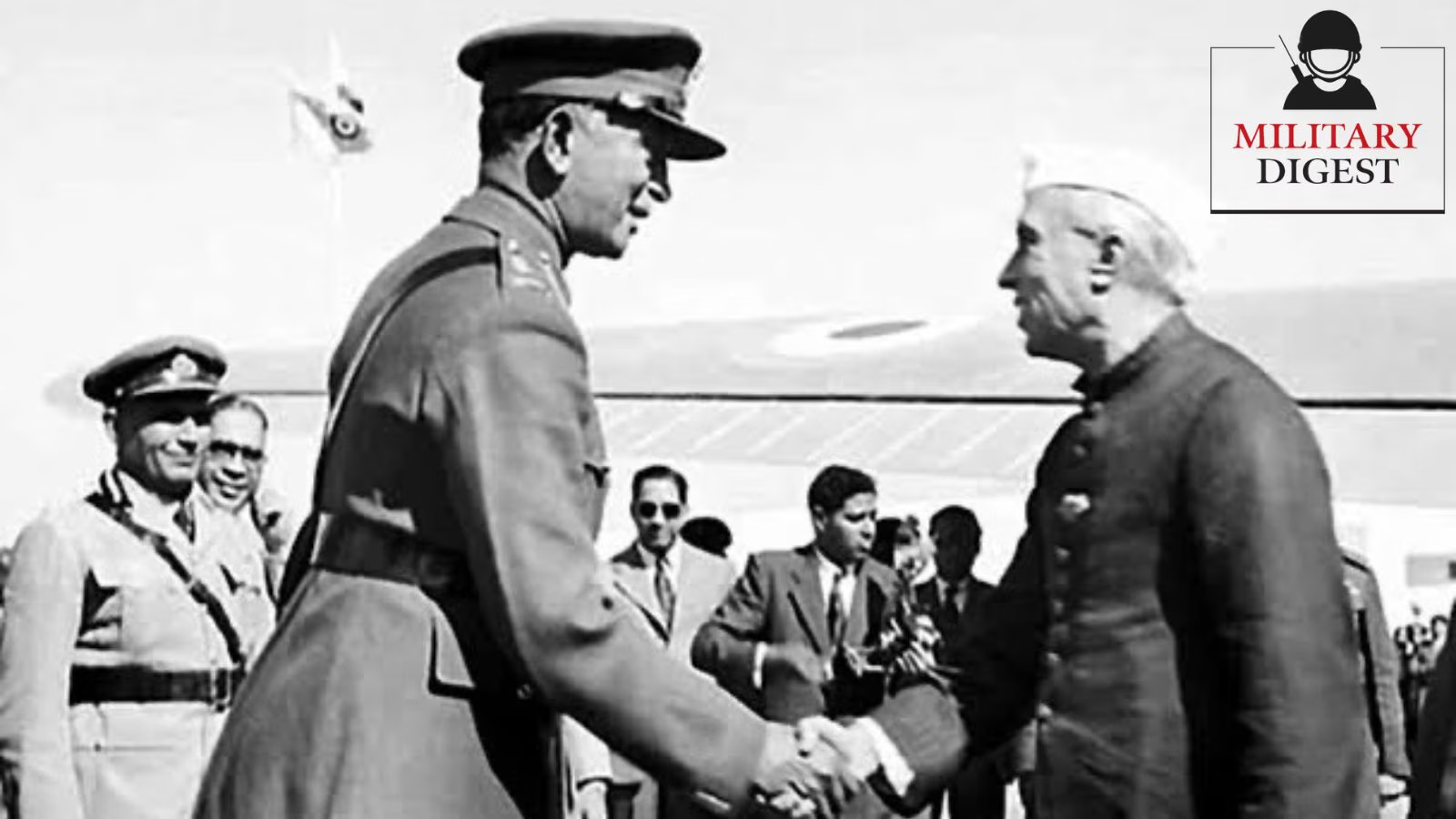
General KM Cariappa and Jawaharlal Nehru
Chief of Army Staff General Upendra Dwivedi will hold an annual press conference on January 13 ahead of Army Day, January 15. It was on January 15, 1949, that General K M Cariappa (later Field Marshal) took over as the commander-in-chief and chief of army staff of the Indian Army—the first Indian to do so.
It is an apt occasion to look back at certain events that took place soon after General Cariappa took over as the Army chief, setting the tone for an apolitical Army in Independent India. The then prime minister, Jawaharlal Nehru, chided General Cariappa for having publicly praised the Government saying that it should have been avoided and that military officers should not broach political subjects in public. A letter that he wrote to General Cariappa on May 24, 1949, forms part of the Nehru Archives.
In an interview at Dehradun on May 2, 1949, Cariappa remarked, “The achievement made by the country under Pandit Nehru’s leadership in so short a period has no parallel in history.” He added that “the last Commonwealth Conference in London, when seen in clear perspective, will be found to have been a great triumph for the prime minister”. He also said that the people had not clearly appreciated the all-round progress made by the leadership.
Nehru was not pleased about these remarks made by the Army chief and conveyed his displeasure to him in no uncertain terms. “About three weeks ago, you made a statement to the press in the course of which you congratulated me for my work at the Commonwealth Conference in London. You further drew attention to the all-round progress made by the present leadership in the country. I am grateful to you for what you said. But this raises an important point, and indeed the press has drawn attention to this. Should our officers, civil or military, even including the head of the Army, express any opinion in regard to political subjects in public,” he said.
Nehru questioned whether senior officers should speak in praise of the work of the Government.
“Indeed should they deliver public speeches at all except on matters strictly confined to their own work or some social or cultural subjects? What you said was harmless enough, but there is always a danger in touching upon political questions. Obviously, it would be highly improper for an officer to criticise Government, more especially on a political issue. If this is so, then praise of Government should also be avoided,” said Nehru.
‘Avoid public statements completely’
The then prime minister said he was drawing the Army chief’s attention to this matter as Cariappa set the tone for the Army, and Nehru did not want the Army to get mixed up in any way with politics. “You yourself have made this clear on many occasions. In the past I did not like the activities of some Sikh officers who indulged in communal politics. The safest course, therefore, is for all officers to avoid public speaking or public statements completely except on strictly limited topics. Sometimes an officer may not even know the exact political significance of some issue or some remarks he might inadvertently make,” he said.
Nehru noted that the Government had the largest political party and organisation at its back.
Nevertheless, there are other parties and groups, and they might object to the Army doing or saying something in praise or in criticism of political parties or ideologies, he said.
Nehru said Field Marshal Bernard Law Montgomery, a noted British military personality of World War II, is apt to let himself go in public. “He has been repeatedly asked by the British Government not to do so. Recently, I was in Switzerland, and some members of the Swiss Federal Government told me how they had been greatly embarrassed at a rather casual remark of Montgomery in Switzerland,” he said.
In fact, Nehru and Cariappa continued to spar on various issues even after the retirement of the latter as Army Chief.
Cariappa’s unhappiness over Himachal L-G appointment
In a letter written to the prime minister in 1958, General Cariappa expressed unhappiness over the report regarding the appointment of J K Bhonsle, who had been a member of the Indian National Army, as the Lieutenant Governor of Himachal Pradesh. Cariappa had written that Bhonsle, by serving in the INA, had shown disloyalty to the then Government and had also been disloyal to the traditions of the Army.
Cariappa had also expressed his disagreement with the military guard firing a ‘feu-de-joie’ (ceremonial rifle volley), sounding of the Last Post on bugles, and so on, as is done at military funerals, at Rajghat, the samadhi of Mahatma Gandhi, on January 30. He said he found it “out of place” in that atmosphere of “sanctity, purity and solemnity”.
Nehru responded by saying that the military honours at Rajghat were decided upon after careful consideration. On the issue of Bhonsle, Nehru said that whether he did right or not when he joined the INA under very peculiar circumstances in Malaya was a subject on which there might be differences of opinion.
“You know that we have not criticised our present army officers or men because they served the then British Government in India loyally. We have spoken highly of our army. But it is another matter for us to condemn for ever a person who, in a peculiar set of circumstances, thought it his duty to serve his country in another way. I do not know what I would have done if I had been in such a position,” he said.
Nehru commented that British army officers functioned with neither ability nor courage in Malaya. “Ultimately, they meekly surrendered, having made a mess of things. In India, conditions were very peculiar, and the country generally was opposed to the British. If a young Indian was affected by this widespread sentiment in India, I certainly am not prepared to blame him,” he said.
source: http://www.indianexpress.com / The Indian Express / Home> News> Cities> Chandigarh / by Man Aman Singh Chhina / January 11th, 2026
The MP highlighted the immediate need to prevent pollution to the river and sought fund allocation in the union budget for conservation, sanitation, waste management and riverbank protection works.
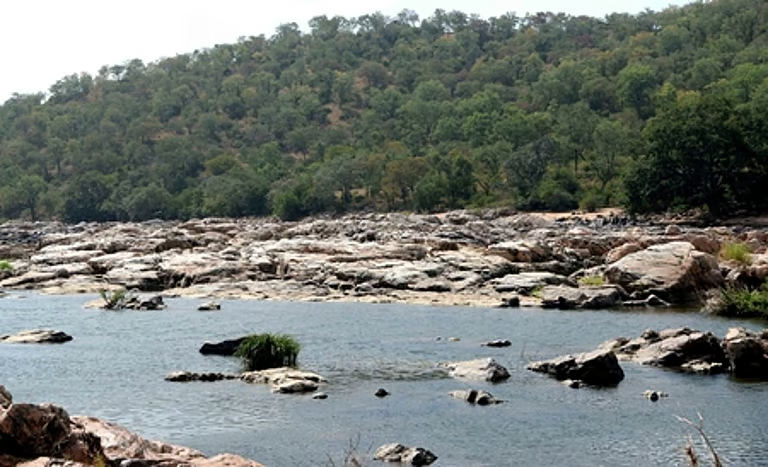
Cauvery River image used for representation purposes only.(File Photo | Express
Madikeri :
Mysuru–Kodagu MP Yaduveer Wadiyar has written to the Union Minister of Jal Shakti seeking central government support for the conservation of the River Cauvery in Kodagu.
The MP highlighted the immediate need to prevent pollution to the river and sought fund allocation in the union budget for Cauvery river conservation, sanitation, waste management and riverbank protection works.
The letter stressed on the immediate need for conservation and development of the riverbanks of Cauvery across the district. The MP also pointed out that the river has become a victim of increased pollution due to the flow of untreated wastewater from houses and commercial setups and from encroachments alongside the riverbanks.
“These issues are affecting water quality, public health, river ecology and the livelihoods of people dependent on the river,” the MP noted.
He urged the union minister to order a comprehensive survey of the boundaries of the River Cauvery in the district to enable eviction of the encroachments, followed by rehabilitation and systematic riverbank development in a planned manner.
The MP also highlighted the need to regulate activities along riverbanks in Madikeri, Virajpet and Kushalnagar taluks while also requesting the establishment of scientific sanitation and drainage facilities.
Wadiyar also sought a focused intervention to regulate tourist activities along the riverbanks and address recurring flood issues. He urged the need for eco-friendly riverfront development.
Mentioning the interstate importance of the River Cauvery, he urged the minister to formulate a central government-supported phased action plan for conservation and development of the Cauvery.
He has requested funds in the forthcoming budget for Cauvery river conservation, sanitation, waste management and riverbank protection works.
source: http://www.newindianexpress.com / The New Indian Express / Home> Karnataka / by Express News Service / January 09th, 2026
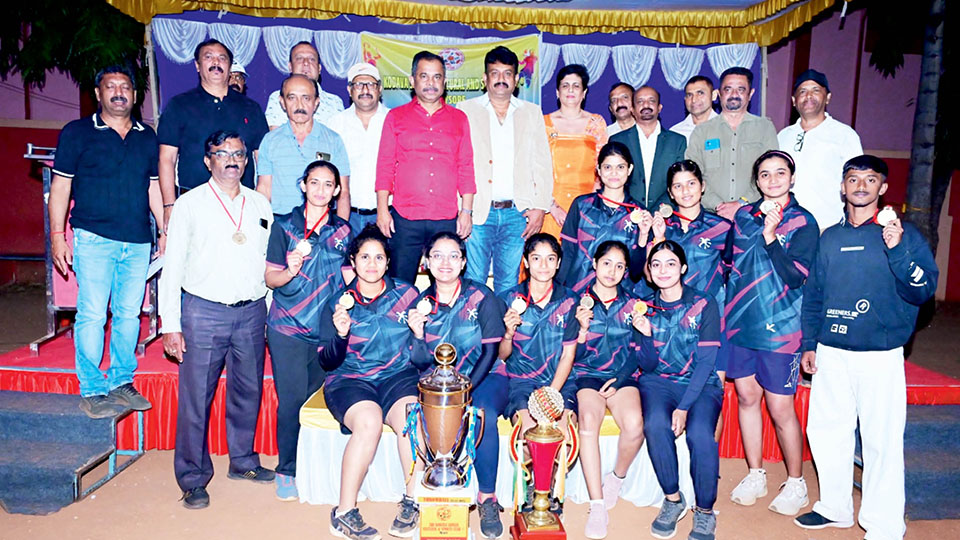
Picture shows the winning team with chief guest Jammada Preeth Aiyanna, Club Vice-President Machanda Prakash Beliappa, Club Special Invitee & Sponsor of the event Kuttimada D. Muthappa, Kodava Samaja Mysuru President Ponjanda Ganapathy, Sree Cauvery Educational Institutions Chairman Chottengada Chengappa, Club office-bearers and Directors.
The Annual Kodava Inter-Sangha Throwball Tournament for women, organised by Kodava Samaja Cultural and Sports Club, Mysuru, was inaugurated by city’s renowned Trekker and Kodava Vibhushana awardee Jammada Preeth Aiyanna.
Totally 9 teams participated and the winners were Sri Iguthappa Kshemabivirdhi Sangha, Hebbal.
source: http://www.starofmysore.com / Star of Mysore / Home> Sports / January 05th, 2026
A new species of damselfly, sporting vibrant sky-blue markings, has been discovered in the biodiversity hotspots of India’s Western Ghats. Named the Kodagu Shadowdamsel (Protosticta sooryaprakashi), this shade-loving insect was identified by a collaborative team of researchers who combined traditional field observations with modern DNA analysis to distinguish it from its closest relatives. The discovery highlights the hidden diversity remaining in the tropical forests of Karnataka.
The new species was identified during surveys along the banks of the Sampaje River in the Kodagu District and in the high-altitude forests of Agumbe. Researchers from institutions including Government Brennen College, Kannur; the Society for Odonate Studies, Kottayam; the National Centre for Biological Sciences, Bengaluru; and others initially noticed that these damselflies resembled a known species, Protosticta sanguinostigma. However, the team noticed that the new specimens were smaller, more delicate, and possessed distinct physical traits that did not match those in existing records. To confirm their suspicions, they utilised molecular analysis, sequencing the insects’ DNA to prove that the Kodagu Shadowdamsel was indeed a separate evolutionary lineage.
What sets Protosticta sooryaprakashi apart from its cousins is specific, unique physical characteristics. The males are distinguished by a prominent sky-blue marking on the prothorax—the neck-like segment behind the head—and a dark brown to black body, which differs from the crimson-colored thorax of its close relative. Under microscopic examination, the researchers found a peculiar feature: the tips of the male’s reproductive organ (the genital ligula) are shaped distinctly like a duck’s head, a trait not seen in other species of this group. In the wild, these damselflies were observed perching on shaded plants near streams, exhibiting a weaker, more fluttering flight than other damselflies in the region.
The species has been named in honour of the late Dr Sooryaprakash Shenoy, a renowned botanist who served as Head Scientist of the Botany Division at the Dr Shivaram Karanth Nisargadhama (biological park) in Pilikula, Karnataka. He was a researcher who dedicated his life to biodiversity conservation in the Western Ghats.
The researchers noted that finding such a distinct species in a relatively accessible area suggests that the Western Ghats, a global biodiversity hotspot, likely harbours many more cryptic or unknown species waiting to be discovered. They emphasised that protecting the shaded, riparian (river-based) habitats where the Kodagu Shadowdamsel thrives is essential for maintaining the ecological health of the region’s freshwater systems.
This article was written with the help of generative AI and edited by an editor at Research Matters.
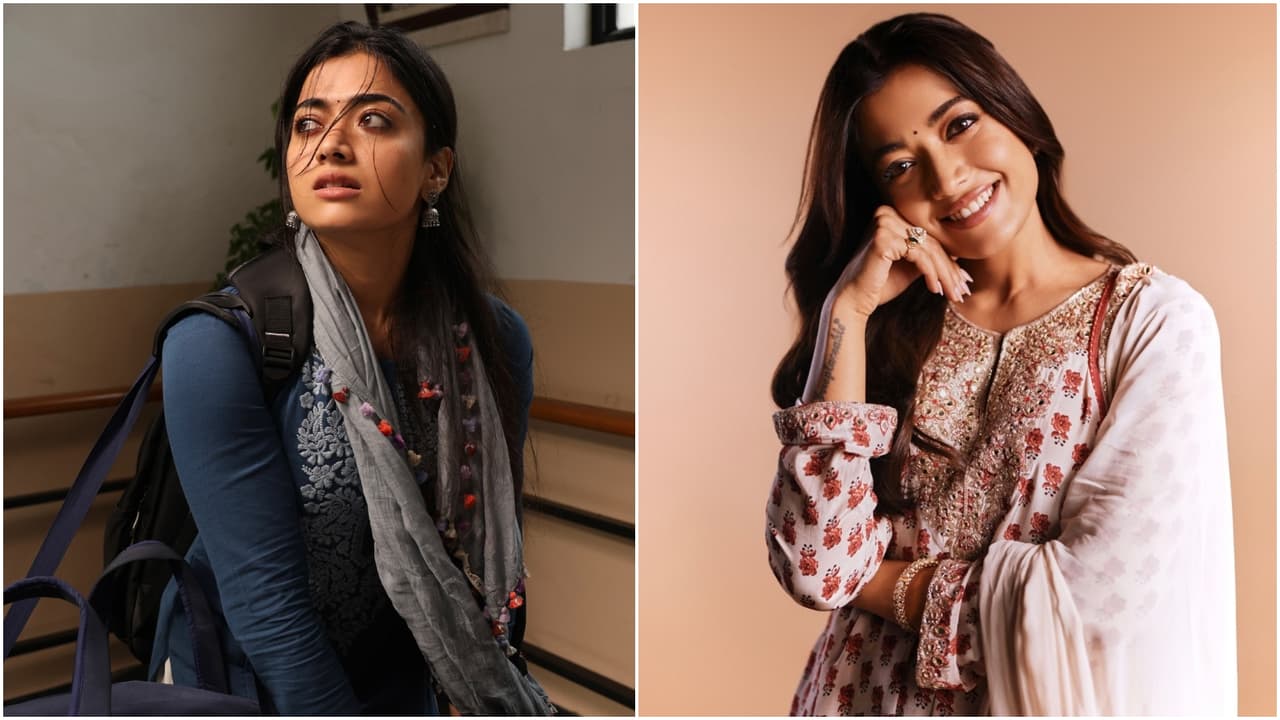
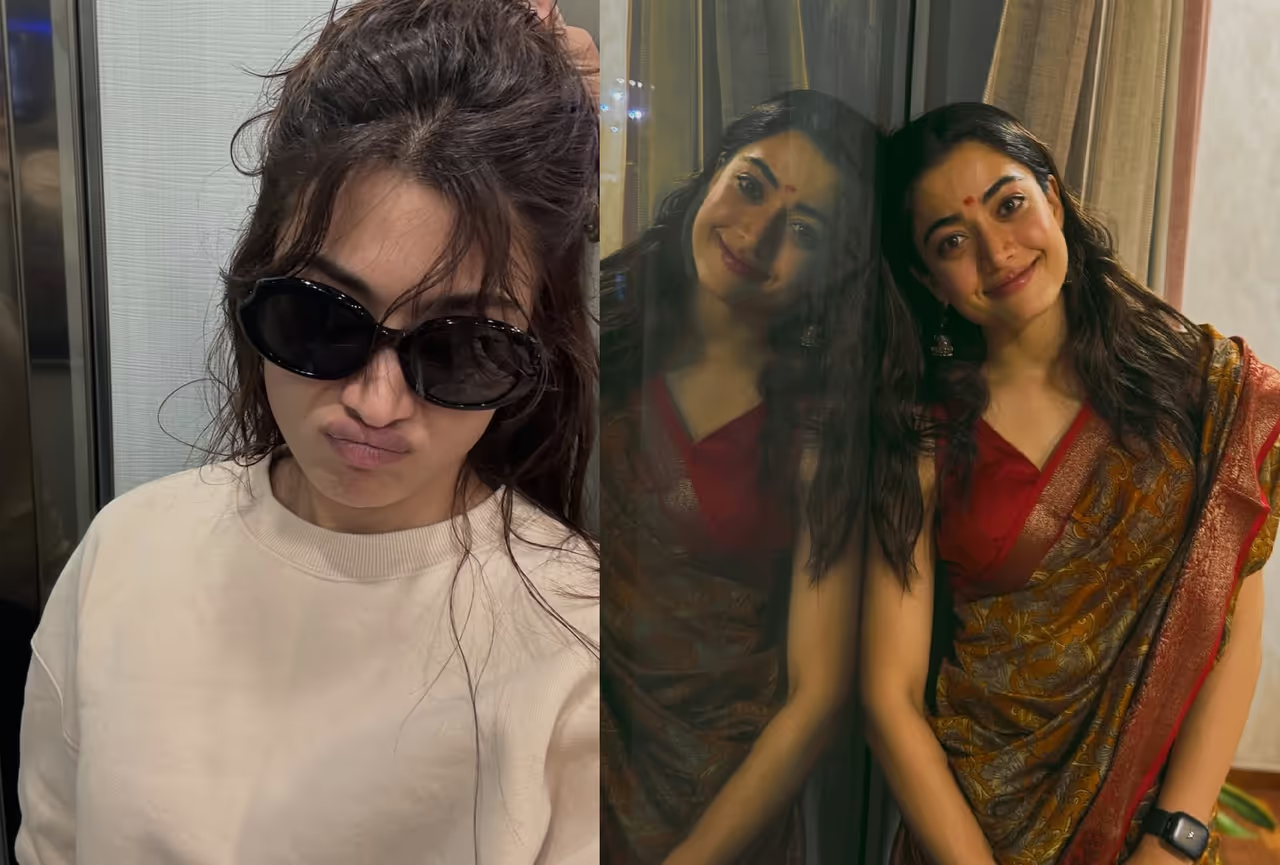
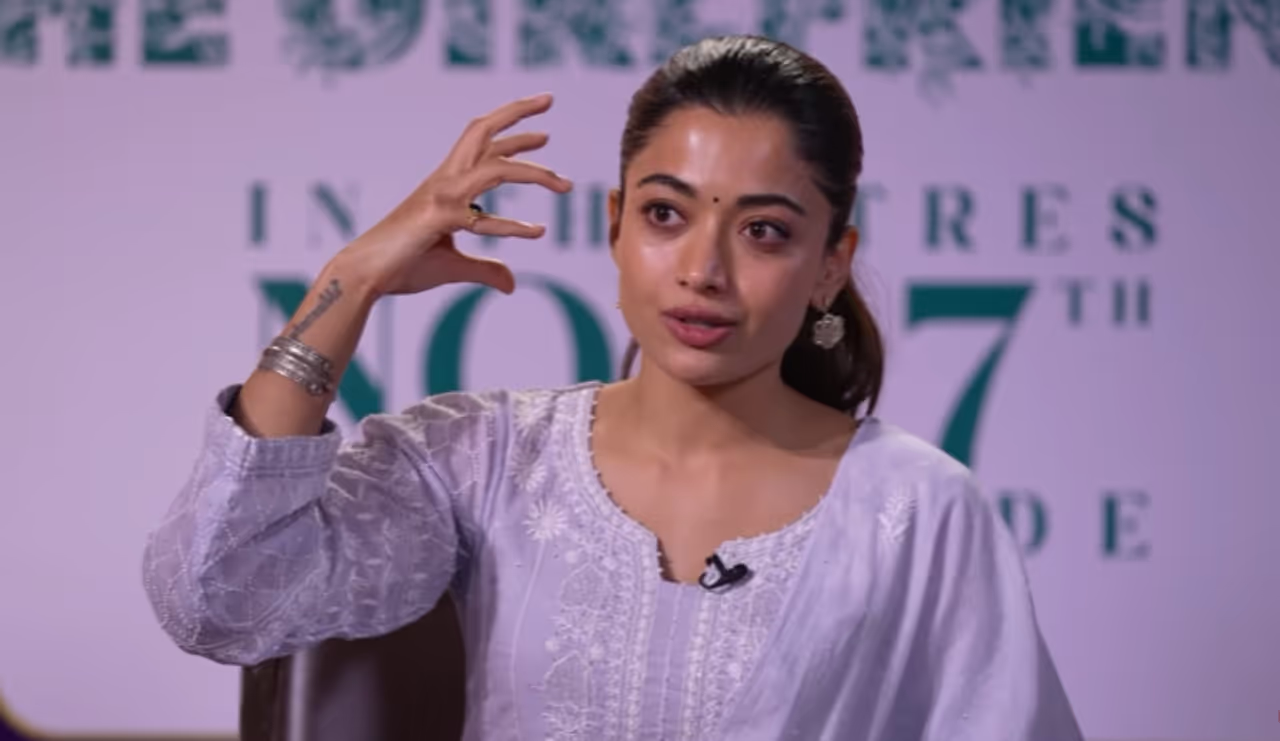
Rashmika Mandanna has added another remarkable achievement to her name by emerging as the highest taxpayer in Kodagu district, creating pride among locals and fans while proving her success goes far beyond the film industry.
From Kirik Party to National Stardom
Rashmika Mandanna, fondly called the “National Crush,” has come a long way since her breakthrough in the Kannada film Kirik Party. Today, she stands tall as one of India’s most successful actresses, making a strong impact in South cinema and Bollywood with consistent box office successes.
The Rise of a Box Office Queen
With multiple hit films across languages, Rashmika has earned the title of “Box Office Queen.” Her strong screen presence, versatility, and audience connect have made most of her films commercially successful, placing her among the most bankable stars in the Indian film industry today.
Pride of Kodagu District
Hailing from Virajpet in Kodagu district, Rashmika has become a source of immense pride for her hometown. Kodagu has produced several notable personalities, but Rashmika’s achievements have set her apart, elevating her status beyond cinema and making her a standout figure from the region.
Biggest Taxpayer in Kodagu
In a remarkable achievement, Rashmika Mandanna has emerged as the highest income taxpayer in Kodagu district. She has reportedly paid ₹4.69 crore in income tax for three quarters of the current financial year, securing the top position among all taxpayers in the district.
Marriage Buzz Continues
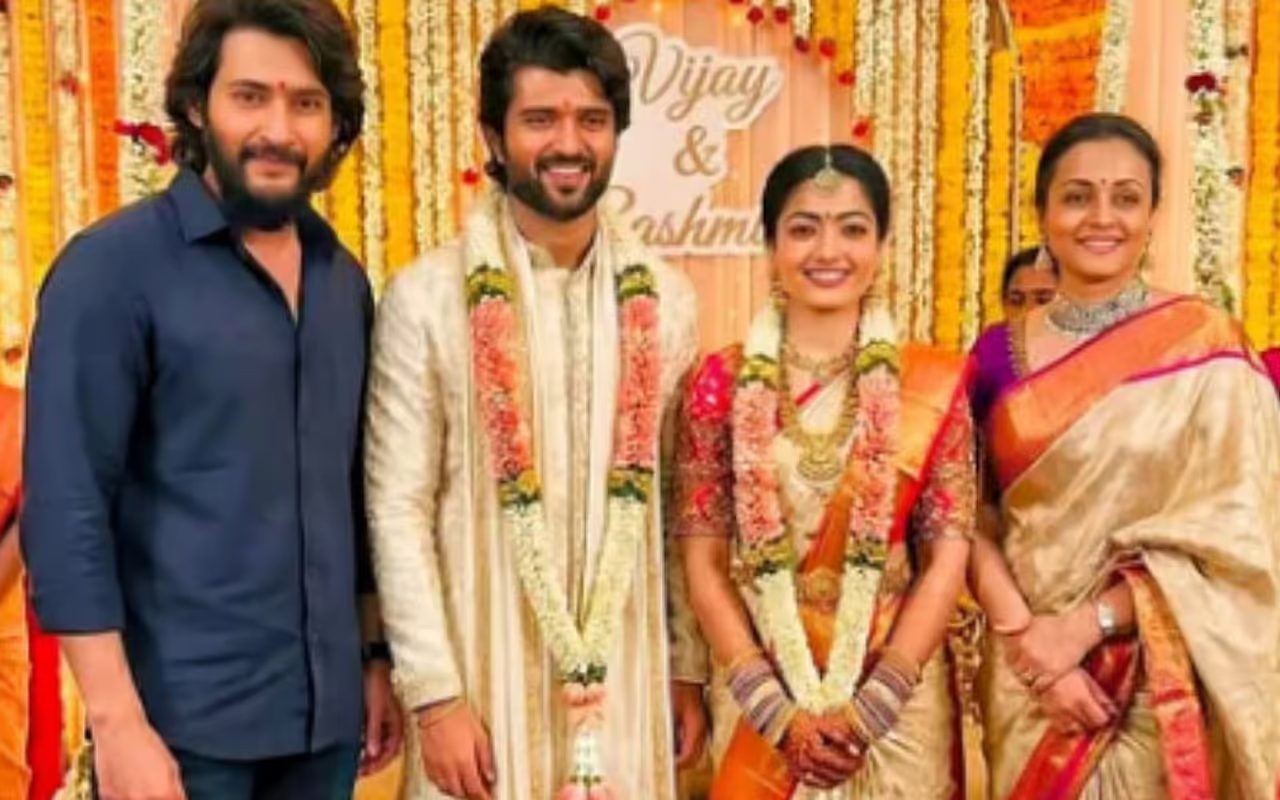
Apart from professional milestones, Rashmika is also in the news for personal reasons. Reports suggest she may soon marry actor Vijay Deverakonda, with rumors pointing to a February 26 wedding in Udaipur. However, no official confirmation has been made by either star yet.
source: http://www.newsable.asianetnews.com / Asianet News, English / Home> Entertainment / by Nancy Tiwari / January 07th, 2025
Queen Victoria, who ruled the British Empire for 64 years, died 125 years ago, marking the end of the Victorian Era and influencing India’s royal lineage.
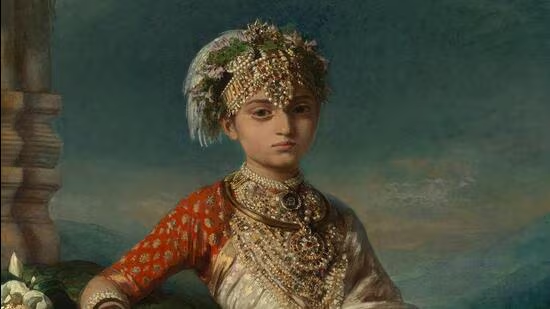
In 1864, just two years after she had given birth to her daughter, Edith, Gowramma succumbed to TB and was buried in London’s Brompton Cemetery. She was 22. (Princess Victoria Gouramma Portrait,(1854), by Franz Xaver Winterhalter/ Wikimedia Commons)
125 years ago this month, the queen who had lorded over the British empire for almost 64 years passed away at the age of 81. At her death in 1901, the “Empress of India”— Queen Victoria— had held sway over the destinies of close to a quarter of the earth’s population and a fifth of its surface. Her death marked the end of the so-called Victorian Era, a glorious period in British history which saw the invention of the telegraph, the bicycle and the internal combustion engine, alongside antiseptics and anaesthetics (the Queen herself requested chloroform at the birth of her eighth child in 1853, instantly making obstetric anaesthesia acceptable and bringing relief to countless expectant mothers), and the Empire expanded rapidly to the point where “the sun never set” on it.
In the Empire’s “jewel in the Crown”, India, Victoria’s passing saw a slew of her statues being installed as a tribute, both in British-ruled provinces and princely states. The latter had reason to be particularly grateful to the Queen – personally overseeing the drafting of the Government of India Act of 1858, which placed India under Crown Rule following the Indian Rebellion of 1857, she had insisted that a provision be included about being respectful to Indian rulers, honouring their religions, territorial boundaries, and chosen heirs. One of the biggest beneficiaries was Mysore – Maharaja Mummadi Krishnaraja Wadiyar, who did not have a son, adopted his grandson, Chamarajendra Wadiyar X, as his heir; the adoption was legitimized in 1866 via royal order, Chamarajendra crowned king, and Mysore, ruled by the East India Company since 1831, restored to the Wadiyars in 1881.
Tragically, the visionary Chamarajendra died of diphtheria in 1894, at only 31. When Queen Victoria died,his son, Nalvadi Krishnaraja, commissioned Thomas Brock, one of London’s most celebrated sculptors, who also designed and executed the Victoria Memorial outside the gates of Buckingham Palace, to create a marble likeness of the monarch. That beautifully crafted sculpture, inaugurated in 1906 by the queen’s grandson, George (later King George V), stands at the MG Road entrance of Cubbon Park.
Although the Queen never visited India, leave alone Mysore, the posthumous statue is not her only connection to our neck of the woods. A confirmed anti-racist, slave trade abolitionist, and humanitarian, the queen was wont to “adopt” the children of deposed Indian kings, bringing them to England, converting them to Christianity, and showering them with love. Unfortunately for the adoptees, this effectively took away their agency and independence, and alienated them from their land, language, religion and people.
The most famous of Victoria’s Indian godchildren was Duleep Singh, the last Maharaja of the Sikh empire, who was forced to “gift” the Koh-i-Noor to the queen after the second Anglo-Sikh war in 1849. Lesser known is Gowramma, a daughter of the last king of Kodagu (then known as Coorg), Chikaveera Rajendra (a cruel, licentious, complex despot whose story was immortalised in the Kannada novel of the same name by Jnanpith awardee Masti Venkatesh Iyengar), who was deposed in 1834. In 1852, Chikaveera travelled to London with 11-year-old Gowramma, both to deliver her to the queen’s care and to parley for the return of his kingdom.
Victoria took an instant fancy to the “poor little princess”, formally admitted her into the British aristocracy as her goddaughter, “Victoria Gowramma of Coorg”, and even tried to orchestrate a marriage between Duleep Singh and Gowramma. That did not work out, but the two Indian royals did end up sharing a warm friendship. Eventually, Duleep Singh arranged Gowramma’s marriage – to a British colonel 30 years older to her.
In 1864, just two years after she had given birth to her daughter, Edith, Gowramma succumbed to TB and was buried in London’s Brompton Cemetery. She was 22.
(Roopa Pai is a writer who has carried on a longtime love affair with her hometown Bengaluru)
source: http://www.hindustantimes.com / Hindustan Times / Home / by Roopa Pai / January 06th, 2025
With over 20,000 visitors expected, IICF 2026 is designed as a dynamic farm-to-cup experience.
Image for representational purpose only. Photo Courtesy: File pic
The India International Coffee Festival (IICF) returns in 2026 for its second edition, this time bigger, bolder, and crafted as a true celebration of India’s thriving coffee movement.
Presented by the Specialty Coffee Association of India with support from the Coffee Board, the gathering unites every part of the value chain: farmers and producers from coffee-growing regions, processors, exporters, equipment innovators, roasters, retailers, café owners, baristas, and passionate consumers, all under one roof in Bengaluru.
With over 20,000 visitors expected, IICF 2026 is designed as a dynamic farm-to-cup experience. It’s a place to explore where coffee begins, how it’s transformed, and the many hands and innovations that shape every sip, from estates to cafés to home brewers. Knowledge sharing, business opportunities, and hands-on discovery meet in a vibrant environment dedicated to advancing India’s specialty coffee culture.
The coffee trail
A curated pathway through the festival’s most engaging zones, featuring immersive farm-to-cup experiences, brewing workshops, tastings, sensory activities, and hands-on demos with experts across the value chain.
The national coffee championships
Six competitive categories, including Barista Championship, Brewers Cup, and a rapidly growing Coffee in Good Spirits segment. Finalists from the Mumbai, Bengaluru, and Delhi preliminaries battle for a chance to represent India on the world stage.
Latte art arena
Daily showcases from the country’s top latte artists, with opportunities for visitors to try their hand at pouring art.
The cupping exchange
Open cupping sessions hosted by leading Indian roasters, spotlighting rare lots, innovative processing, high-scoring regional coffees, and stories directly from producers and harvest teams.
Brew school
Practical sessions tailored for home brewers: pour-over fundamentals, espresso basics, grind science, flavour interpretation, and more.
The India innovation hub
Returning stronger for its second edition, this hub highlights Indian brands shaping the future of coffee tech. Discover working prototypes, new-to-market equipment, estate-level processing innovations, and conversations with engineering and design minds pushing standards forward across both farm and café.
Conversations, culture and community
Workshops and masterclasses led by industry leaders, both Indian and international, explore farming practices, post-harvest craft, brewing techniques, sensory development, sustainability, and the science of flavour. Live music, performances, and a Drum Jam by Roberto Narain add a cultural rhythm that keeps the festival buzzing. Stand-up comedy by Sonu Venugopal brings laughter into the mix, while Mysore Xpress takes the stage with electrifying live music, adding new rhythm to the coffee celebration.
IICF 2026 aims to be a meeting ground for everyone who cultivates, crafts, serves, studies, and loves coffee. It marks the next step for India’s coffee community: a place to taste, learn, innovate, connect, and be part of a culture that’s just getting started.
Where: Chamara Vajra, Marakata, Jayamahal Main Road, Bengaluru When: February 12 – February 14 / www.indiacoffeefestival.com