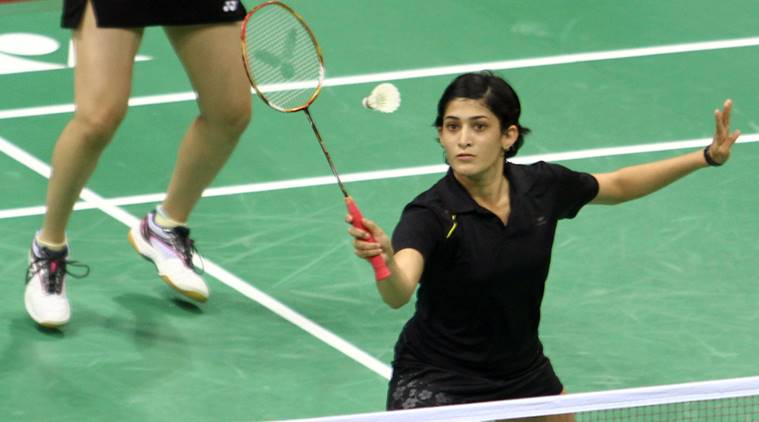
Life after Jwala: ‘Open-minded’ Ashwini Ponnappa reaping the benefits of experimentation

The 27-year-old says she has left the decision making about her partners to the coach and that has helped her performance in doubles and mixed
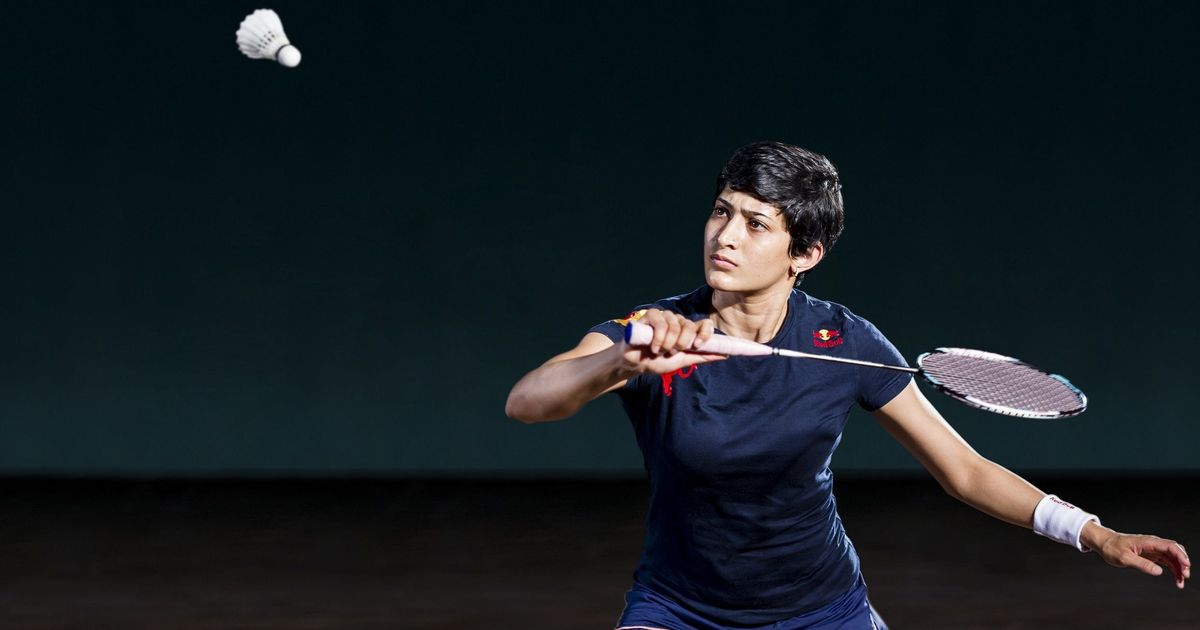
Photo: Red Bull
Photo: Red Bull

2016 was a milestone year for Ashwini Ponnappa. But it wasn’t memorable.

After recovering from a bout of dengue, she went to the Rio Olympics with longtime doubles partner Jwala Gutta hoping to better their performance from London 2012. Unfortunately, they ended up losing all their matches in the group stage. It was the last time India’s most successful doubles pairing played together.

A partnership lasted for nearly seven years and saw them win a bronze medal at the 2011 World Championship, a gold and a silver medal in the 2010 and 2014 Commonwealth Games respectively.

Ponnappa, in her own words, is a fiercely loyal person who did not like changing partners. She had struggled to find her mojo when Gutta had taken a break after the 2012 London Olympics and played with Pradnya Gadre for a while.

Now, physically and mentally, she was facing a challenge. Fast forward to June 2017, physically and mentally, she is at a good space.

“Life has changed a lot,” says a relaxed Ponnappa, in an interaction with Scroll.in at the Red Bull office in Mumbai. Her words carry an air of unmistakable satisfaction – the tone of an athlete who has endured a tough time and managed to break out of it. There is no hint of exaggeration and she speaks uninterrupted for a good few minutes, articulating the ups and downs of the past few months.
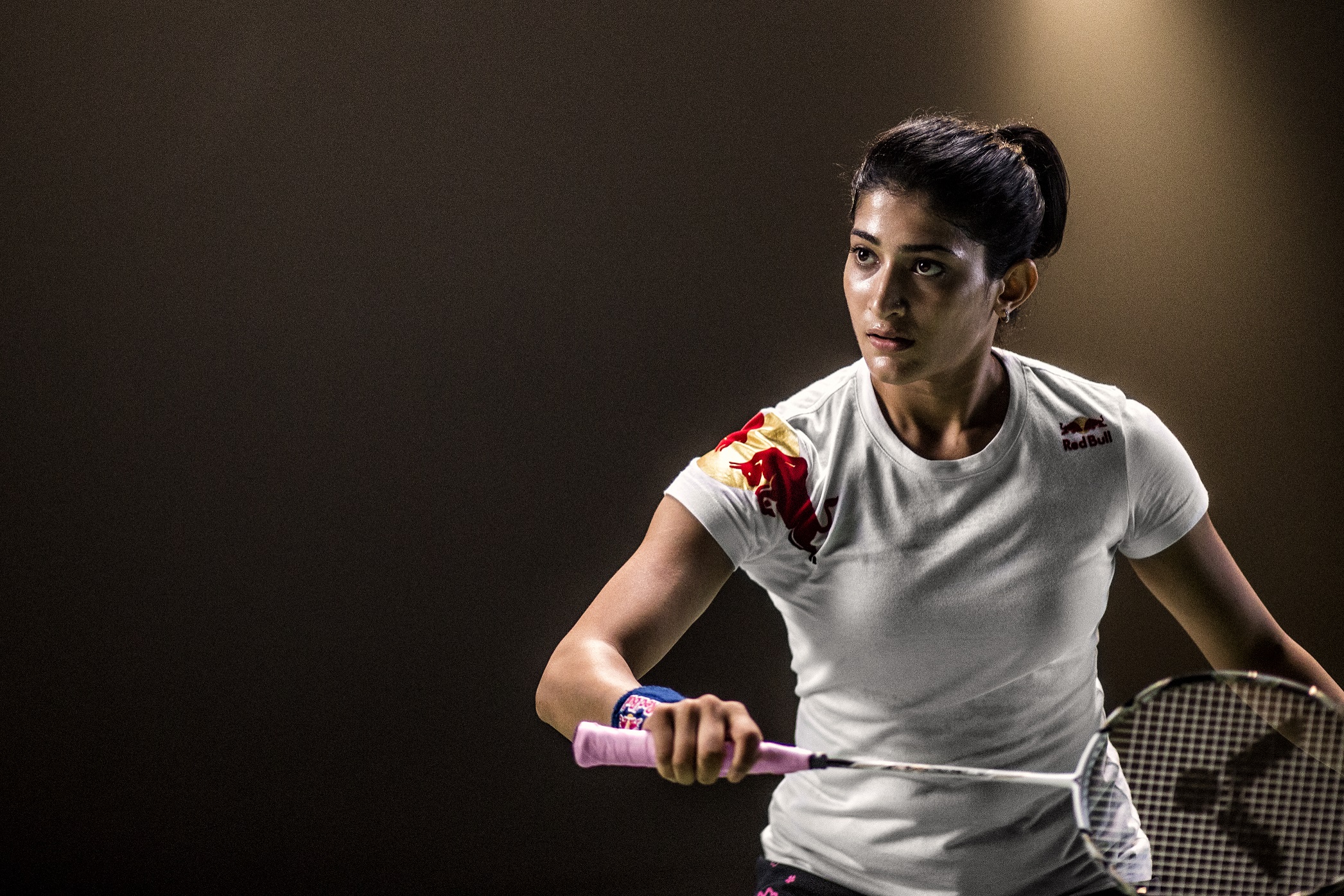
Photo courtesy: Red Bull
s, “Now the coaches decide and if there is a need to switch partners, we switch. It’s about how we are playing together, how the partnership is developing and if there is scope to develop. Now I am open to a lot of things that in the past I was closed to. I am open to suggestions that have helped me grow even more than I have grown in the last couple of years.”

“I have accepted that if things don’t work out in a particular partnership, it’s time to change. I am open to a lot of things now, not really narrow-minded in my approach towards the game,” she adds.

While Ponnappa’s current doubles partner, N Sikki Reddy, has been a constant, she has played with three different mixed doubles partners – K Nandagopal, B Sumeeth Reddy and Satwiksairaj.

Her partnership with Sikki has been constantly improving. The pair started playing in November last year and began 2017, ranked 110th in the world. Halfway through the season, the duo had breached the top 30 and are currently ranked 28th. A title has proved elusive, but they came close at Syed Modi GPG with a runner-up performance. Ponnappa’s excitement about her new partnership is evident.

“From having a set combination with Jwala, where I understood exactly what my role was, to playing with Sikki where I was not exactly sure about where I move, what I need to do, [it was a bit difficult initially],” says Ponnappa. “Sikki is an excellent mover. I came to realise she is essentially a back-court player too, like me. And both of us being good at the back helps us rotate, we can move in, we can mix it up. That’s helped a lot. We are finding out areas which are our strong points. With every tournament we are getting more confident with the rotation. That’s been important for me, it tells me we are in the right direction.”

Ponnappa, over the years, had developed the reputation of being the quieter one with Gutta known to be more vocal. Even their on-court chemistry gave the impression that Gutta was the dominant half of the pair, and Ponnappa was, for want of a better word, a follower. Mention that to her and she chuckles and says ‘Jwala used to listen to me as well!’ with a sheepish smile. But now, Ponnappa is the senior-most doubles player in the country and that comes with the responsibility of being a mentor – a role she is enjoying. And without any senior-junior segregation.

“It’s just a lot of fun,” she says. “I just like figuring out things – like how to play an opponent, watch videos. That helps me guide my partners. It doesn’t mean I am the senior partner and I should be the only one making calls. If they tell me, ‘Ashwini, you could move to the net here’, I am all ears. There is no such thing as I am the senior partner and the other is a junior partner. Once we are on court, we are one unit. My experience does help a bit, I can help them relax and calm their nerves in certain situations.”

While women’s doubles was always Ponnappa’s focus, she has found a new-found vigour to succeed in mixed doubles. While she has played mixed doubles often, she admits, until now, she never gave it her complete attention. If it was 100% focus on women’s doubles and about half of that for mixed earlier, now both are equal in her eyes.

She says venturing into mixed doubles seriously has added new facets to her game. Her agility has increased, she moves with ease and is starting to hold her own at the net as well.

So how difficult was it for her to adopt to this new system?

“It wasn’t easy,” she says. “That three-month break [after Olympics] was important, because physically I was not fit at all. I had dengue just before Olympics and that shattered my body. Even when I started training again, my body was not responding. In my head I knew I had no injury but my body did not listen. I kept asking ‘Why am I struggling to play? Why am I struggling to smash?’”

What followed was introspection as Ponnappa spent time on regaining, and more-importantly, redefining her physical fitness along with opening her mind to learning new things about her game. After a tough period in Indian doubles badminton, Ponnappa is excited about finding out where this new phase is headed.

“With this sort of mindset, I am enjoying doubles, enjoying mixed doubles, enjoying playing with Sikki, enjoying the rotation, enjoying the communication, enjoying moving to the net. It’s just been a whole lot of fun. There is never an end to learning, never an end to growing, if you are really excited about the game.”

We welcome your comments at letters@scroll.in.

source: http://www.thefield.scroll.in / Scroll.in / Home> The Field> Badminton / by Vinayak Mohanarangan / June 14th, 2017

Vijay Goel meets Rohan Bopanna, discusses ‘promotion of tennis’

Ace Indian tennis player Rohan Bopanna, who recently became the fourth Indian to win a grand slam after clinching the mixed doubles title at the French Open, on Wednesday, met Union Minister of Sports Vijay Goel to discuss the promotion of tennis among youth in the country.

Bopanna, playing alongside Canada’s Gabriela Dabrowski, clinched his maiden Grand Slam title at the Roland Garros last Thursday.

The seventh-seeded Indo-Canadian pair staged a comeback after losing the opening set and defeated Lena Groenefeld and Farah 6-2, 2-6, 12-10 in a summit clash that lasted for one hour and six minutes at Court Philippe Chatrier.

The Sports Minister shared the pictures of him meeting the 37-year-old tennis star on his official Twitter handle.

?Delighted to meet #FrenchOpen Mixed Doubles ’17 winner @rohanbopanna; discussed promotion of #tennis among #youth. Keep inspiring all Rohan!? wrote Goel.

Speaking to reporters after the meet, Goel said, ?I discussed about the promotion of tennis with Bopanna. He told me about his academy and I am happy that already there are around 70 students there? The government always encourages such private academies.?

?I wish he open his academies in the other parts of the country as well,? he added.

Meanwhile, Bopanna thanked Goel for taking out his time and said, ?It was really nice that he took out some time to meet me?I am really happy that he is encouraging sports a lot.?

?I think this is what is required in India for every aspect in our field, no matter what sport it is,? he added.

Bopanna became only the fourth Indian to win a Grand Slam title after Leander Paes, Mahesh Bhupathi and Sania Mirza.

The All India Tennis Association has also declared that they will recommend the tennis player from Bangalore for this year?s Arjuna Award.

Speaking about the same, Bopanna told ANI, ?We will know in a few months if I receive the award or not, if I do, I would be very grateful and very honoured.?

(This article has not been edited by DNA’s editorial team and is auto-generated from an agency feed.)

source: http://www.dnaindia.com / DNA / Home> India> News> Sports News / ANI / Wednesday – June 14th, 2017

Rohan Bopanna wins French Open mixed doubles title to clinch maiden Grand Slam

Rohan Bopanna clinched his maiden Grand Slam title when he won the French Open mixed doubles final with Canada’s Gabriela Dabrowski in Paris on Thursday.

Canada's Gabriela Dabrowski and India's Rohan Bopanna hold aloft the trophy after winning the French Open mixed doubles title in Paris on Thursday. The pair defeated Germany’s Anna-Lena Groenefeld and Colombian Robert Farah 2-6, 6-2 (12-10). (AP)
Canada’s Gabriela Dabrowski and India’s Rohan Bopanna hold aloft the trophy after winning the French Open mixed doubles title in Paris on Thursday. The pair defeated Germany’s Anna-Lena Groenefeld and Colombian Robert Farah 2-6, 6-2 (12-10). (AP)

Indian tennis ace Rohan Bopanna and Canadian partner Gabriela Dabrowski produced a fighting performance to beat their German-Colombian opponents Anna-Lena Groenefeld and Robert Farah in the final to clinch their maiden French Open mixed doubles title in Paris on Thursday.

Seeded seventh, Bopanna and Dabrowski took an hour and six minutes to win, saving two match points, as they overcame the unseeded Groenefeld and Farah 2-6, 6-2, 12-10 on Philippe-Chatrier Court.

Bopanna has become only the fourth Indian to win a Grand Slam crown, after Leander Paes, Mahesh Bhupathi and Sania Mirza. Indians have accounted for 20 Grand Slam mixed doubles titles. Two of those victories belong solely to India with Sania Mirza partnering Mahesh Bhupathi.

Bopanna entered the final of a Grand Slam tournament after a gap of seven years. He had also qualified for a Major final in 2010 when he and Pakistan partner Aisam-ul-haq Qureshi entered the title clash of the US Open.

The 16th seeds had then lost to American twins Bob and Mike Bryan in the final.

Bopanna is the also the fourth Indian to win a mixed doubles crown at the world’s premier clay court tournament. Bhupathi won India’s first Grand Slam title in 1997 when he partnered Japan’s Rika Hiraki to claim the French Open.

Bhupathi again won in 2012, this time with compatriot Sania Mirza.

Paes too had savoured glory on the red clay when he won in 2016 with Martina Hingis.

Bopanna and Dabrowski did not start well, losing the first set 2-6. The seventh seeds gave away as many as four breakpoint chances and Groenefeld and Farah converted two to take the lead in the match.

However, the Indian-Canadian combine fought back well to clinch the second set with the same scoreline.

Though they were broken once, Bopanna and Dabrowski converted three of the five breakpoint opportunities they got to push the match into a match tie-break (earlier known as Super Tie-Break).

The German-Colombian pair led throughout the tie-break, and held two match points at 9-7. However, Bopanna and Dabrowski somehow managed to save both.

Bopanna and Dabrowski had their first chance when they took the lead at 10-9. They lost the opportunity as scores were levelled at 10-all but the pair grabbed the next two points to seal victory at Roland Garros.

source: http://www.hindustantimes.com / Hindustan Times / Home> Tennis / HT Correspondent, Hindustan Times / June 08th, 2017

MLC Sunil Subrahmani visits villages in Madikeri

MlcKF06jun2017

Madikeri :

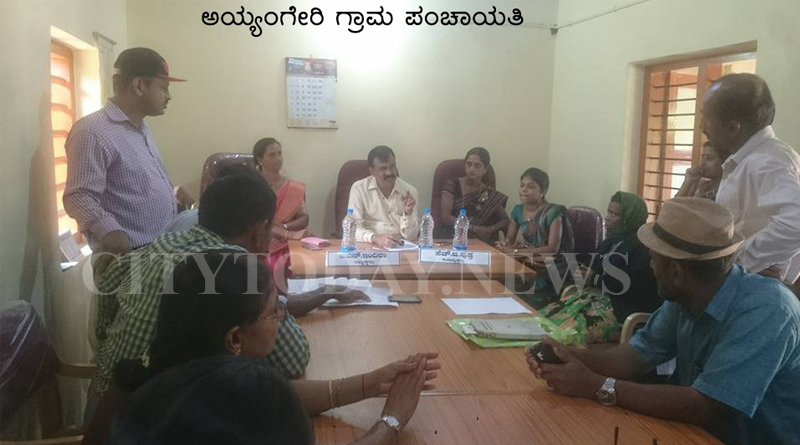
MLC Sunil Subrahmani visited villages in Madikeri taluk on Wednesday and enquired about the problems faced by the villagers.

He visited Bhagamandala, Bhagandeshwara temple and listened to the public about the prevailing problems and also visited the village panchayat. People requested him for a public hospital, college, bus stand and other basic amenities.

He later visited Aiyangeri village and visited the school which is on the brink of collapse. He assured that he would talk to the officials of education department and contact the minister to solve the problem. He also inspected drinking water project.

He visited Kundacheri village and received the requests from the public regarding society, electricity and other issues.

He assured them of solving the problems with the help and support of the public. He said that he would put pressure on the government to get the work done.

ZP member Kavita Prabhakar, taluk panchayat members Sandhya and Dabbadka Sridhar, Balachandra Nair and officials were present. (MR/KCI).

source: http://www.citytoday.news / City Today / Home> Mysore / CT Bureau / May 10th, 2017

Rs 67.18 lakh spent on Dasara Janotsava

The details of expenses of Madikeri Dasara Janotsava for the year 2016-17 were presented at the audit meeting at Kaveri Kalakshetra in the city on Thursday.

Committee general secretary Chummi Devaiah said Dasara Janotsava was organised at a cost of Rs 67.18 lakh.

He gave the following details: Rs 2 lakh was spent on Karaga, Rs 19 lakh on Dashamantapas, Rs 23 lakh for gallery and lighting arrangements, Rs 40,000 for city decoration and poets’ symposium, Rs 8 lakh for cultural programmes, Rs 4 lakh for medals and prizes, Rs 2.50 lakh for Rasasanje programme, Rs 1 lakh for Dasara Sports meet and Rs 1.20 lakh on food, lodging and travel.

The other expenses were: Rs 50,000 for flower arrangements, Rs 1.9 lakh for banking expenses, Rs 24,000 on travel expenses of the delegation to Bengaluru, Rs 25,000 on CCTV cameras, Rs 10,000 for website maintenance, Rs 20,000 on grill construction around pump lake, Rs 1.13 lakh for tender EMD repayments, Rs 35,000 on puja expenses, Rs 25,000 for parking fee repayments and Rs 20,000 for auditing costs.

Member Umesh Subramani said there is a need to introduce corrections to the Dasara Committee’s bylaw. Chummi Devaiah said the committee members had requested the government for more grants. Though it was assured that Rs 75 lakh will be sanctioned, only Rs 60 lakh was released later and Rs 2.31 lakh was collected from public.

Mahesh Jaini and Arun Kumar urged to make preparations three months in advance for Dasara this time. Committee president Kaveramma Somanna presided over the meeting. secretary Nandakumar and honourary secretary Prakash were present.

source: http://www.deccanherald.com / Deccan Herald / Home> District / DH News Service / Madikeri – June 02nd, 2017

Kodagu : Talacauvery sanctuary declared an eco-sensitive zone

No new hotels or resorts can take shape in the Talacauvery sanctuary

The government has declared the Talacauvery Wild Life Sanctuary spread across 105.59 sq km as an eco-sensitive zone. This comes after the Environment Ministry notification on the proposed ecologically sensitive areas (ESAs) in the Western Ghats. The state has about five national parks and 27 sanctuaries, seven conservation reserve and one community reserve. The draft notification was issued on May 25 last year and the final notification was issued on May 15.

Kodagu Chief Conservator of Forest Manoj Kumar told BM this is an eco-sensitive zone under the Environment Protection Act. As per the Act, the area around the protected area could be heritage sites and others and there has been a provision to declare them as sensitive zones. But this was not being done and the National Wildlife Board based on the Supreme Court direction had stated that it is about 10 km, if not declared. Hence, so far it used to be 10 km. “But we started rationalising the area and had sent a proposal. Each proposal is now being approved and the rest of the sanctuaries in the area around will soon be declared as sensitive zones. It is not the Kasturirangan report. It is a statutory requirement and the state government after discussion with the district administration and representatives had sent a proposal,” he said.

As per the notification the region around the sanctuary from 1-16 km has been declared as the eco-sensitive zone. No commercial activity such as mining can be conducted and no new industries can be set up here. It also prohibits extension of industries that cause pollution, major hydel power plants, saw mills as well as rearing of animals. This declaration is also likely to hamper the union government highway project from Bhagamandala to Kerala’s Panathoor.

source: http://www.bangaloremirror.indiatimes.com / Bangalore Mirror / Home> News> State / Bangalore Mirror Bureau / June 06th, 2017

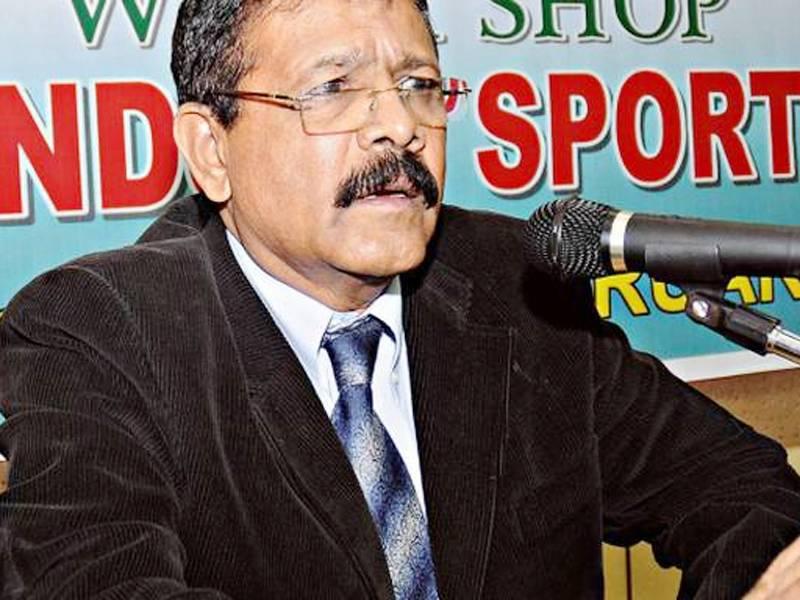
Olympian MP Ganesh to head National Hockey Academy in Delhi

Till now MP Ganesh was serving as the CEO of Karnataka State Cricket Association (Agency Photo)

_________________________________________________

Highlights

The National Hockey Academy is a joint venture of the Sports Authority of India and the sports ministry

The academy will be a residential project for 40 boys and an equal number of girls below the age of 18

Ganesh last played for India in 1974 before his career was cut short by a knee injury.

___________________________________________________

New Delhi :

Former captain and coach of the national team MP Ganesh on Thursday took charge as the High Performance Director and CEO of the National Hockey Academy to be based at the Major Dhyan Chand Stadium.

“Hockey Olympian MP Ganesh takes over as the High Performance Director & CEO of National Hockey Academy in New Delhi,” Hockey India confirmed the news on its official twitter handle.

Till now Ganesh was serving as the CEO of Karnataka State Cricket Association.

The National Hockey Academy in New Delhi is a joint venture of the Sports Authority of India and the sports ministry aimed at identifying junior hockey talent and facilitating their holistic development.

The National Hockey Academy, which took two years to be set up, will be a residential project for 40 boys and an equal number of girls below the age of 18.

About 70 players from each category have been shortlisted by Hockey India selectors from the sub-junior Nationals held recently. After a few weeks of trials, the numbers will be brought down to 40. There will be three coaches each for the boys and girls.

The 70-year-old Ganesh hails from the famous hockey belt of Kodagu, earlier known as Coorg, district of Karnataka.

An Arjuna awardee, Ganesh played for India at the 1972 Olympic Games in Munich, finishing third. He was one of the coaches of the Indian team that won a gold medal at the 1980 Olympic Games in Moscow.

He represented India in the Asian Games twice, first in 1970 in Bangkok and then in 1974 in Tehran. Both the times India returned home with a silver medal. He was also a part of the Indian team that won bronze at the first World Cup at Barcelona in 1971 and captained the team that won silver at the next World Cup in Amsterdam.

An Arjuna awardee, Ganesh played for India at the 1972 Olympic Games in Munich, finishing third. He was one of the coaches of the Indian team that won a gold medal at the 1980 Olympic Games in Moscow.

He represented India in the Asian Games twice, first in 1970 in Bangkok and then in 1974 in Tehran. Both the times India returned home with a silver medal. He was also a part of the Indian team that won bronze at the first World Cup at Barcelona in 1971 and captained the team that won silver at the next World Cup in Amsterdam.

source: http://www.timesofindia.indiatimes.com / The Times of India / News> Sports> Hockey / PTI / June 01st, 2017

Winning a Commonwealth Games medal an important target, says Ashwini Ponnappa

Ashwini Ponnappa said that although they are looking forward to the next tournament, their focus will be on winning a medal at the Commonwealth Games next year, which will remain as one of the important targets.

Ashwini Ponnappa won medals at the Commonwealth Games in 2010 and 2014. (Source: File photo)

Ashwini Ponnappa, who led India to the knockout stages of the Sudirman Cup last week, said that her target remains the Commonwealth Games, scheduled to take place next year.

In an interview to PTI, Ponnappa said that she was confident that their side would do well as soon as they found out the draw. “Ever since we came to know about the draw, I was confident we were good enough to beat them. Most of the players in the opposition team had top 5 players and when I knew I will have to play two matches, I had the belief that we could do well,” she said.

“Me and Satwik (Satwiksairaj Rankireddy) were training together just a few weeks ahead of the event as we had sent our entry for the Australian Open. So when we got a chance to play at the Sudirman Cup, we were excited as it was our first tournament together.”

The 27-year-old asserted that it was her coaches who decided her partners in various competitions and that she is looking forward to a new one. “Coaches have been the ones who have been deciding my partners after the Olympics and it is about trusting them. Me and Sumeeth had a good partnership. We are both similar players, we have played women’s doubles and men’s doubles respectively and now we are venturing into mixed doubles,” Ashwini said.

“So I am looking forward to the new partnership. Interestingly, I will be playing with Sumeeth at Indonesia and Satwik at Australia, so let’s see how it goes. After playing at the Sudirman Cup, I feel we can achieve much better results together,” she added.

Ponnappa said that winning a medal at the Commonwealth Games will be an important target. She said, “We are looking forward to the next tournament, doing better than what we have done. If we can reach a final of super series this year, that will be good and definitely winning a medal at the Commonwealth Games will be one of the important targets.”

The shuttler also said that she is enjoying the extra responsibility as a senior member.

source: http://www.indianexpress.com / The Indian Express / Home> Sports> Badminton / by Express Web Desk / June 01st, 2017

Camera Camaraderie : Gulshan Devaiah recalls working with the Late Om Puri

GulshanKF06jun2017

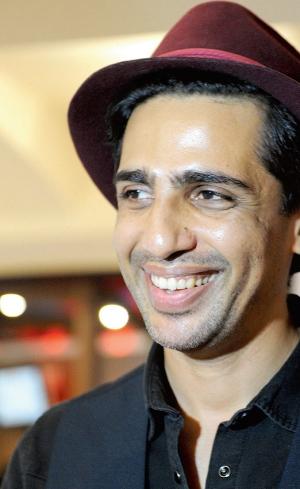
Fresh off his latest film, Gulshan Devaiah recalls working with the late Om Puri, and how actors respond to a ‘real’ location as opposed to a set

Wearing a knee brace and hobbling along on a crutch, Gulshan Devaiah still looks dapper in his hat and shorts when we meet at a at a screening of A Death in The Gunj, in the city. Politely obliging selfie requests, Devaiah tells us how he likes to challenge himself. In this film, (Konkona Sen Sharma’s directorial debut) that would have meant playing the part of Vikram – played by Ranvir Shorey. The rough and tumble alpha male who gets drunk and rides his bike, makes fun of everyone around him and talks with a cigarette in his mouth is nothing like Devaiah in real life. “That’s why, if I’d had the freedom to choose, I would have loved to play him,” he says, half-chuckling, half-regretfully.

He has no regrets, however, over his final turn in the film, what he calls, “the best movie I’ve been a part of”. A lot of it has to do with the stellar ensemble cast – from actors such as Kalki Koechlin, Vikrant Massey, Tillottama Shome and Shorey, to stalwarts such as Tanuja and the late Om Puri. But Devaiah admits that the biggest draw was the chance to be directed by Konkona. Turns out, she was a “sensitive director and a capable writer”.

Much of that comes from her years of experience in front of the camera, Devaiah believes. He recounts how she added little details – nuances and colour – to sequences that make a world of difference to the film and its characters. Such as when a friend lights two cigarettes at a time and offers one to his friend, who is driving the car they are in. “He doesn’t give him a cigarette and offer to light it for him – he lights it and gives it to him. These are things only actors will think of; they may not make sense in isolation. But visually, it makes such a difference – it gives you an insight into the nature of the friendship between the two,” Devaiah explains. It’s the sort of detail that he believes pervades the film, to the point that while watching it, he even “forgot” he was in it. “I’ve had more important roles; longer roles in films where I’ve been the protagonist. But I’ve never been as happy with a film as I am with this one.”

It’s high praise from someone who has worked with the likes of Sanjay Leela Bhansali in Ram Leela. Bhansali, Devaiah lets on, is “everything people say he is, but a whole lot more”. Fun, passionate, sensitive and supportive, Bhansali taught him a lot, he says. “He gave me the freedom to experiment. He takes a long time to shoot, and that can be testing for some people, but once you get going it’s fine. I always felt like I wanted to work more with him; I didn’t want the break that came after 10 days of shooting. He lives for his movies – unfortunately, he doesn’t always find people who share the same level of dedication and commitment.”

It’s been an interesting experience going from that kind of grandeur and opulence, to the realism and small budget of A Death In The Gunj. SLB’s sets can be overwhelming, he admits, so the more time you spend on them, the better it is for you, as you cease to be intimidated and become more comfortable. Plus, working on a set is very different from working in a real location, in that actors have to “tailor their process”, he explains. “Each experience is different. I had to make adjustments in the way I approached my craft. SLB’s movies – the visuals, the melodrama, the music – is all larger than life. You have to submit

yourself to that, and it can be difficult.” Calling filmmaking an “unnatural process”, he explains that shooting in real locations is a little easier. Everything from the way the wind blows to the “reality around you” influences you and subtlely enhances the way you play your character. “On a set you have to use your imagination. Here, you can use more impulse. That’s the basic difference.”

The film is also special to him because it marked one of the last projects for Om Puri, who tragically passed away before he could see the film, Devaiah rues. Still, he has fond memories of working with the thespian, who despite not feeling very well on the set, would light up the atmosphere like “a 5,000-watt bulb”. His craft, Devaiah says, has the ease of a hot knife through butter. As it is with Tanuja. He uses a football metaphor to explain: “When a striker hits a goal, he has people running around him and the goalie running at him, but he still scores. He can do that because there’s a calmness in his mind.” Watching Tanuja and Om Puri do their thing was just like that. “They approach a scene with such steadiness and composure. When the mind is calm it’s active, and when it’s active, it’s creative.” That, he feels, has been the biggest lesson from working with the stalwarts.

There are other lessons here too – like the film’s take on machismo and masculinity. It’s a conversation Devaiah agrees is important to have, given the charged atmosphere in the country regarding gender. He recounts how people in the film industry too submit to these unspoken prejudices, questioning everything from why a man is sitting cross legged to how he is holding his glass. The period film both establishes and questions these

concepts through the protagonist’s (played by Massey) struggle with machismo. In all, it’s been a fruitful experience for Devaiah, who is confident the film will communicate what it wanted to, beautifully.

source: http://www.bangaloremirror.indiatimes.com / Bangalore Mirror / Home> Columns> Sunday Read / by Sowmya Rajaram, Bangalore Mirror Bureau / June 03rd, 2017

Parjanya japa held at Talacauvery to propitiate rain god

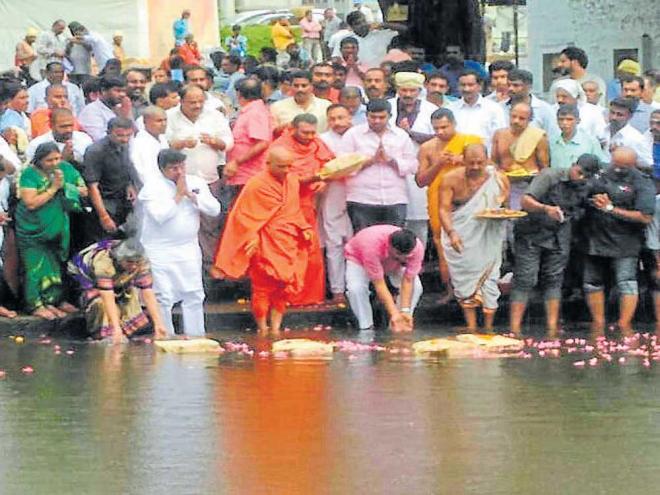
Water Resources Minister M B Patil, Adichunchanagiri mutt seer Nirmalanandanatha swami, MLA P M Narendraswamy offer baagina at Triveni Sangama in Bhagamandala, Madikeri taluk on Sunday.

To propitiate the rain gods, the officials of Cauvery Neeravari Nigama Ltd (CNNL) chanted Parjanya japa at Talacauvery, the birthplace of River Cauvery on Sunday.

As there was stiff opposition for conducting parjanyahoma using government funds, homa was not performed. Only Parjanya japa and special prayers were held. CNNL Executive Engineer Basavaraj and his wife took part in the special prayers held under the guidance of priest Prashanth Achar. Water Resources Minister M B Patil did not take part in the japa.

Patil, who arrived at Bhagamandala at 3 pm along with the Adichunchanagiri Mutt seer Nirmalanandanatha Swami, offered baagina at the Triveni Sangama in Bhagamandala. Later, he offered prayers at the Bhangadeshwara Temple and Talacauvery.

Speaking to reporters, the minister said “if offering prayers to motheris wrong and a superstititious belief, then I am ready to conduct such prayers several times. Some offer prayers to lifeless stones. Why should one oppose offering prayers to the river Cauvery, the lifeline of crores of people,” he asked.

“The Krishna and the Cauvery are the lifeline of the state. I have offered prayers to mother Cauvery for good rainfall. Offering prayers to rivers is part of our tradition,” he said.

“Chief Minister Siddaramaiah does not believe in Parjanya homa and japa and termed it a superstitious belief. Doesn’t his wife offer prayers at temples? Has he not benefited from it?” Patil retorted.

Though the visit was termed as private, the itinerary given to local elected representatives mentioned it as a government programme. MLA P M Narendraswamy, MLC Veena Acchaiah, Patil’s wife Asha Patil, Water Resources department principal secretary Rakesh Singh, officials Gurupadaswamy, Manjunath and Rangaswamy and Kodava Sahitya Academy President B S Thammaiah were present.

source: http://www.deccanherald.com / Deccan Herald / Home> State / DH News Service / Madikeri – June 05th, 2017