‘World’s biggest’ field hockey event returns after 4 years, and it’s a family affair

The Kodava community in the hilly district conducts the inter-family hockey tournament every year where players from over 200 families participate.
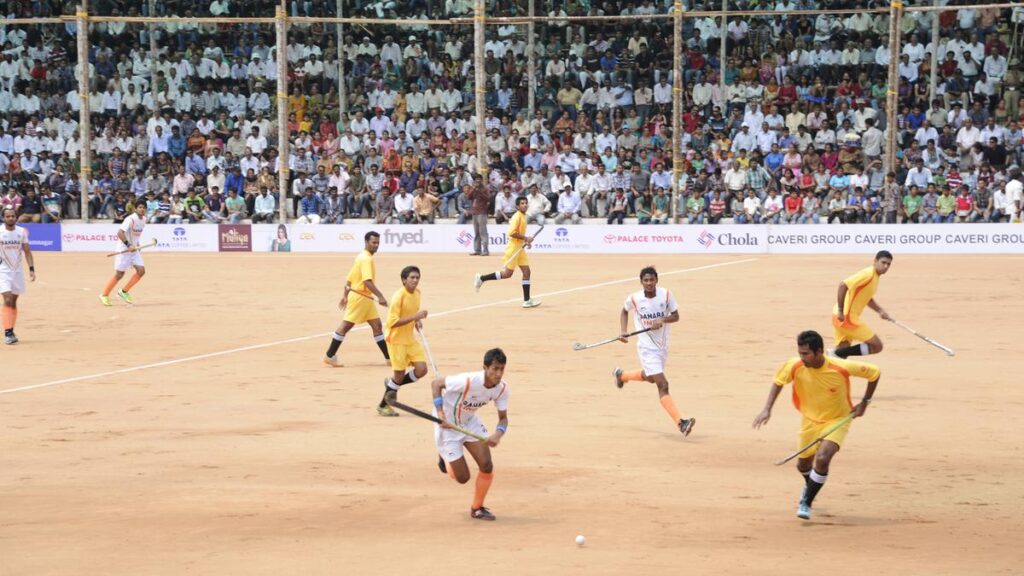
The annual Kodava hockey festival has no bar on age or gender. The only rule of forming a team is that all members must be from the same family.  | Photo Credit: File photo

Napoklu, a small town 21 km away from district headquarters Madikeri, is all set to host what is termed the world’s largest field-hockey tournament, as the annual Kodava hockey festival will be held from March 18 to April 9 after a four-year gap.

The town has only three mud grounds. On Thursday, workers were seen preparing the grounds for the tournament, while temporary bleachers were up on all sides of the ground where 30,000 spectators can be accommodated, said Navin, a member of the festival organising committee, while overseeing preparations at the Napoklu General Thimayya Ground.

“In all, three grounds will be utilised for the hockey tournament and they will also be used as a backup in case it rains,” he said. Multiple galleries, lighting, speakers, and display boards have been set up on the ground. An estimated ₹1.5 crore have been spent to organise the event by the family.

The Kodava community in the hilly district conducts the inter-family hockey tournament every year where Kodava players from over 200 families come together to play. From 2018, the hockey festival was not held due to large-scale devastation caused by heavy rainfall and the COVID-19 pandemic.

The sporting event has no bar on age or gender. The only rule of forming a team is that all members must be from the same family.

This year, the Appachettolanda family is organising the tournament under the aegis of Kodava Hockey Academy. “From every family, young boys and girls, men, women, and professionals, and former hockey players who have represented the State or country, will be part of the family team. Through this event, we are bringing all the Kodavas together. Most of the community members who are outside the district working in various professions come to Kodagu to be part of the sporting event like a festival,” said Appachettolanda Manu Muthappa, president of the Hockey Festival Committee.

The late Pandanda Kuttappa conceived the idea of the Kodava family hockey tournament, which morphed into a major sporting event and festival in the country. “Mr. Kuttappa started the Kodava Family Hockey Tournament in 1997 and was organised by the Pandanda family first in a belief that tapping the inherent love among the Kodavas for hockey could help bring the families and the community together,” Mr. Muthappa noted.

The tournament also emerged as a platform for the community members to discuss trade and business interests besides scouting for marital alliances, according to Maletira Srinivas, secretary of Kodava Hockey Academy. “In the first tournament which was held in 1997, nearly 60 teams took part. The format of the tournament was such that every year, one of the Kodava families had to host the event. Now, over 200 families participate where 3,000 players play hockey,” Mr. Srinivas said.

“Starting with the first tournament, the numbers have increased, reaching a high of 281 in 2003, where this event became the world’s largest hockey tournament. Lasting three weeks, it is a single-elimination tournament and concludes on April 9,” he added.

CM to inaugurate

The Kodava Hockey Namme (festival) is hosted by a different family each year and named after it. Families apply to the Kodava Hockey Academy expressing interest and are allotted the tournament after evaluation. There is no permanent venue; the festival has been held across the district in previous years.

On March 18, Chief Minister Basavaraj Bommai will inaugurate the festival, which will open with an exhibition match between India Junior XI and Karnataka Men’s XI. The organisers said the festival is held at an estimated cost of ₹ 1.5 crore all raised through funds. While the winning team of the festival this year will be given a cash prize of ₹3 lakh, the runners-up will get ₹2 lakh, and the second runner-up will get ₹1 lakh.

source: http://www.thehindu.com / The Hindu / Home> News> India> Karnataka / by Darshan Devaiah B P / March 17th, 2023
Empowering Women’s Health: Lopamudra Hospitals mark International Women’s Day

Empowering Women's Health: Lopamudra Hospitals mark International Women's Day

Gonikoppal (Karnataka) :

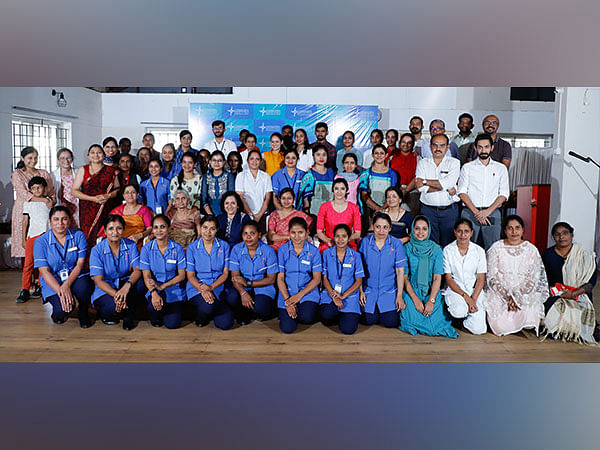
On the occasion of International Women’s Day, Lopamudra Hospitals, Gonikoppal organized a special event to celebrate women.

The event was graced by three renowned women from the region, Dr Gowramma Paruvangada, Consultant OBG at PNM hospitals, with five decades of practice in mother and child care, Dr. Fathima Kariappa, President of IMA Virajpet and Consultant OBG at Virajpet Nursing Home, and Uzma Jabeen, Panchayat Development Officer, the youngest in the district of Kodagu.

The event was presided over by the Managing Directors, Capt. Madappa M. A. and Dr Amrit Nanaiah M.M., a Consultant Physician at the Hospital. Dr Soumya Ganesh Nanaiah the Director of the Lopamudra Drishti Eye Hospital, a Cataract and Refractive Surgeon was present. She also emceed the event. Dr Sonia Mandappa, Consultant OBG, and Dr Trupthi Uthappa, Consultant ENT, were also present.

Speaking of their varied experiences, the Chief Guests enlightened the gathering on a multitude of topics.

Dr. Gowramma Paruvangada spoke about her long-standing commitment to serve women from rural parts of the country and her willingness to contribute more to the society at large. Dr Fathima Kariappa reminisced about how the babies she helped deliver were today doctors at the very Lopamudra Hospitals. She also emphasized the importance of women empowerment in today’s society and the role of family as an institution. Uzma Jabeen highlighted various government schemes available for women and how they could avail the benefits by contacting her.

The event was a sequel to a ‘Women’s Health Camp’ that saw more than 100 women availing the benefits of a health package curated to check overall well-being of women.

On the event of International Women’s Day, the hospital unveiled its new logo and a toll-free number for quick response. The hospital can now be reached at 1800 8333653. They also inaugurated the B Scan recently installed at the eye hospital. The B Scan is the first to be installed in Kodagu district. It can be used to assess the posterior segment of the eye in cases of media opacities and can be useful in cases of advanced cataracts

Dr Ruth Adhlaka, a Consultant Physician at the hospital, gave the vote of thanks, acknowledging the importance of such events and the hospital’s commitment to serving and empowering women.

www.lopamudrahospitals.com

This story has been provided by NewsReach. ANI will not be responsible in any way for the content of this article. (ANI/NewsReach)

This story is auto-generated from a syndicated feed. ThePrint holds no responsibility for its content.

source: http://www.theprint.in / The Print / Home> ANI Press Release / by ANI PR-News Reach / March 09th, 2023

The food we eat: Indian power foods from sattu to millets

Every part of our country has traditional ‘power foods’ that are simple, healthy and practical. Maize, bajra, jowar, dozens of varieties of millets and many more of rice.

Varagu Millet Tomato Pulao. Many of India's ‘power foods’ like bajra, jowar, maize and several varieties of millets are easier to cultivate than rice or wheat. (Photo courtesy Shradha Saraf)
Varagu Millet Tomato Pulao. Many of India’s ‘power foods’ like bajra, jowar, maize and several varieties of millets are easier to cultivate than rice or wheat. (Photo courtesy Shradha Saraf)

Having visited Bihar after many years, I was on my way to Patna airport to catch the return flight to Bangalore. Like most Biharis the driver was a talker, and a good one. After depleting our views on the political scene in the country and Bihar in particular, we were still two hours from Patna. Murari asked if I had eaten.

“No.”

“Aap Litti kayenge?”

“Hahn, kayenge.”

Litti roasted over hot coals on a chill morning in January is a treat not to be missed. It is like a wheat bun filled with a sattu, onion and jeera stuffing and traditionally eaten with a favourful tomato-rich baigan bartha cooked in mustard oil. We finished off with adrak ki chai and re-joined the commotion on the road. The hearty breakfast for two cost Rs 60.

The car sped forward and my thoughts lingered in reverse gear, dwelling on the years I spent as a surgeon in a busy mission hospital in Mokama, a hundred kilometers from Patna. In the post-operative phase after any abdominal surgery when a patient asked, “Can I eat sattu?” you knew he was on his way to recovery.

In Bihar sattu (roasted and powdered channa) is considered essential to wellbeing. It is vital for all Biharis; for those who have lived and worked there too it is a thumbs-up favorite. I used to drink sattu instead of the mid-morning tea during my years there. It is high in protein, easily digested and has a cooling effect in summer months. Patient-attenders always bring dry sattu for their use. Mixed with water and some salt, and eaten with green chillis and raw onion, it is also a convenience-food that can be carried on long journeys.

Every part of our country has traditional ‘power foods’ that are simple, healthy and practical. Maizebajrajowar, dozens of varieties of millets and many more of rice. However, our palates have got used to the monotonous taste of white rice and chappatis made from polished wheat. Their blandness demands highly spiced gravies thick with grease. Much worse are the maida-based snacks, breads, buns and sugary or deep-fried foods. Maida is refined wheat flour with all its nutrients removed, providing only the calories. It should not have a place in any kitchen cupboard or should be purchased only if necessary, for occasional use. In my childhood days it was popularly known as ‘Merkin Podi’ meaning ‘American Powder.’

Healthy eating is now increasingly common among upper class but upper class is only a small fraction in a country of 140 crore people. Most Indians cannot afford the luxury of eating the right foods. They are the daily-wage-earning labour in factories, construction, agriculture, domestic and hotel work; vendors, autorickshaw and bus drivers; the safai karmacharis, well- diggers, potters, plumbers, cowherds; their old and their young. Their main concerns regarding food are the cost of food, appeasement of hunger, cooking time and expense, and taste.

Until the early 1990s, an average family was satisfied with grains, pulses and locally grown vegetables, with meat, eggs, milk and fruit used sparingly. In my career I have seen how those who ate the most basic but natural food rarely suffered from heart disease, diabetes, obesity or high blood pressure. These diseases affected those who could eat processed foods with their high content of sugar, salt, fat and chemical preservatives –  namely the privileged classes.

With globalization, the floodgates of consumerism were opened and cheap, heavily processed food became affordable. It satisfied on all counts – Good to taste, economical, satiating and without the hassles or the expense of cooking. Result: A staggering number of our citizens belonging to all social strata began to suffer from the above ailments, plus others like recurring stomach disorders, reduced fertility, dental caries, anaemia and in children the attention deficit hyperactivity disorder or ADHD.

It is disturbing to acknowledge that our country is in the grip of a huge nutritional dilemma. India’s future will be shaped as much by the health of our people as by education, job availability and a more just distribution of wealth.

Every problem comes with a remedy. Here are some which will go a long way in ensuring good health for all our citizens.

As it is with most problems, one must go to the basics.

Many of the ‘power foods’ like bajra, jowar, maize and several varieties of millets (the pearl, the finger and the foxtail millet, to name a few) are easier to cultivate than rice or wheat. They need little water. It is possible to harvest two crops a year and in the intervening months, vegetables can be grown in the fields, thus promoting crop rotation. We should be replacing rice and wheat cultivation with these grains in a nationwide project. Rice and wheat can be grown in judiciously chosen water catchment areas. Thus, we can conserve millions of tonnes of water every year and bring remarkable improvement in the nutritional status countrywide. Children will have stronger bones, teeth and muscle and will no longer suffer from anaemia.

_____________________________

KAVERY NAMBISAN is an Indian surgeon and author of books like The Scent of Pepper, A Luxury Called Health: A Doctor’s Journey Through The Art, and Cherry Red, Cherry Black. Views expressed are personal.

___________________________

source: http://www.moneycontrol.com / Money Control / Home> News> Health & Fitness / by Kaveri Nambisan / March 05th, 2023

Mysuru briefly

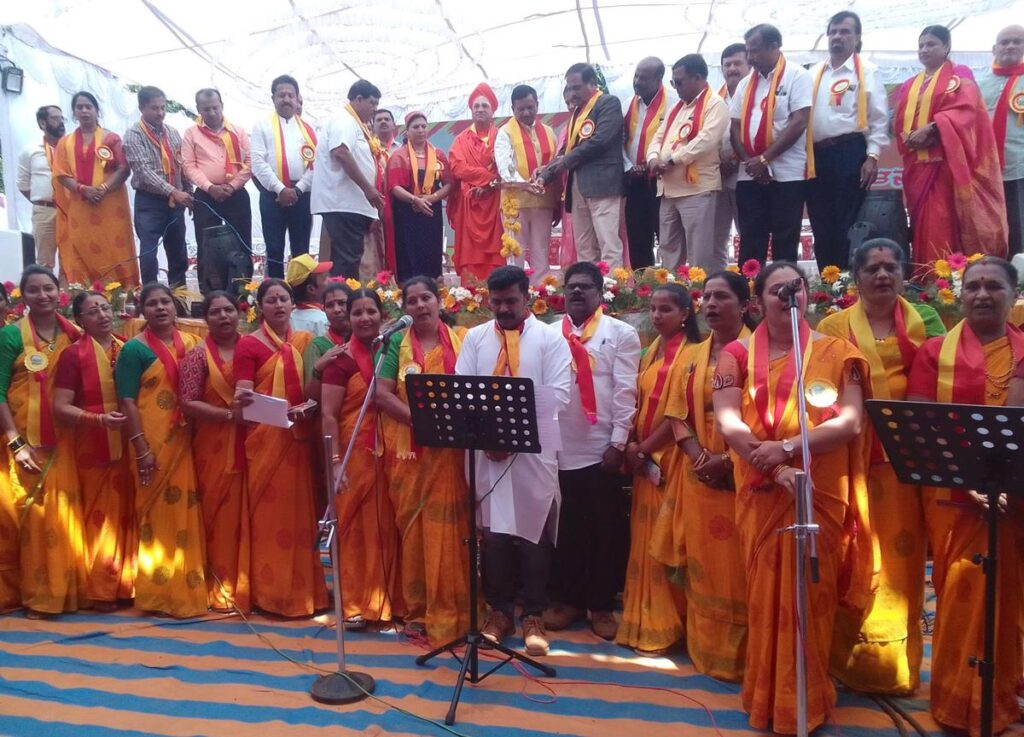
Participants in the 16th Kodagu district-level Kannada Sahitya Sammelana in Madikeri on Saturday. | Photo Credit: SPECIAL ARRANGEMENT


Foundation stone laid for court complexes

Chief Justice of High Court of Karnataka Justice Prasanna B. Varale and Justice A.S. Bopanna, Judge, Supreme Court, laid the foundation stone for court complexes at Kushalnagar and Virajpet in Kodagu districts on Saturday. They also laid the foundation stone for the Bar Association building in Somwarpet. Mr. Justice Bopanna said that in a democracy justice should be ensured for all and hoped that the court complexes will benefit the public in this cause.

‘’Accord priority to Kannada’’

The 16th Kodagu district Kannada Sahitya Sammelana was inaugurated in Madikeri on Saturday and K.G. Bopaiah, MLA, called for according greater priority for Kannada. He also called for spreading the Kodava culture and language and recalled the contribution of litteratteurs from Kodagu to the cause of Kannada. He said the government has taken measures to promote Kannada language and culture.

Manu Baligar, former president of Kannada Sahitya Parishat, said Kodagu has a unique culture and called for its documentation and study.

source: http://www.thehindu.com / The Hindu / Home> News> India> Karnataka / by The Hindu Bureau / March 04th, 2023

Badminton: Ashwini Ponnappa interview – ‘I’m starting from scratch, ground zero’

Ponnappa, 33-year-old former World Championship bronze medallist, has formed a new partnership in women’s doubles with 19-year-old Tanisha Crasto.

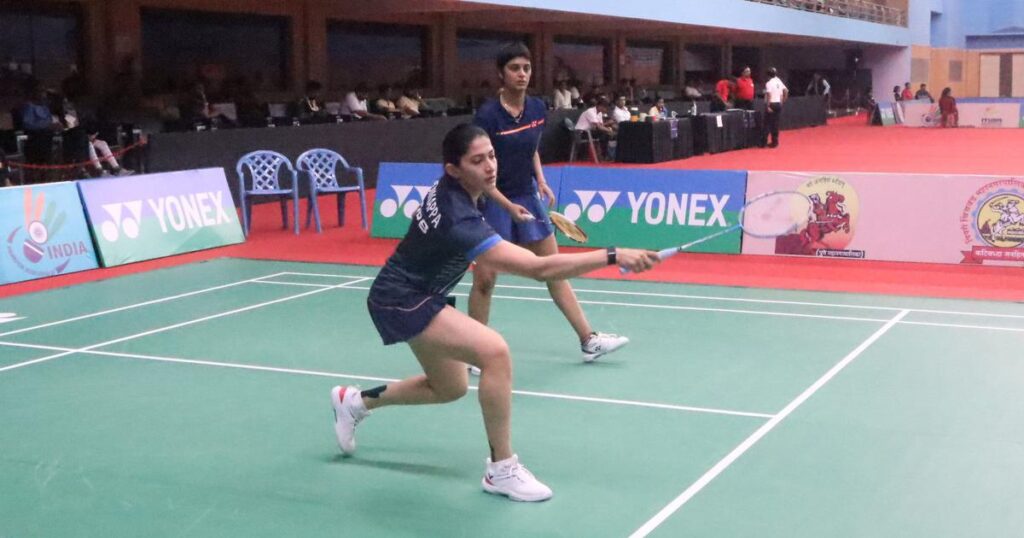
Ashwini Ponnappa along with her new partner Tanisha Crasto in Pune | Senior Badminton National Championships

Through the course of her career, Ashwini Ponnappa has been part of many firsts in women’s doubles for Indian badminton. Ponnappa and Jwala Gutta, became the first Indian women to win a badminton BWF World Championship medal (bronze in 2011). She has won gold, silver and bronze medals at the Commonwealth Games and also the women’s team bronze medal at the Incheon Asian Games in 2014. She has been part of Uber Cup bronze medal-winning squads.

But now the 33-year-old, a veteran of the sport in India, finds herself in the nascent stage of a women’s doubles partnership. In December, she made the decision to pair up with 19-year-old Tanisha Crasto for women’s doubles.

The change sees the once world No 10 women’s doubles player now find herself ranked 141 as a pair with Crasto, albeit they’ve played just two international competitions together – a quarterfinal finish at the Super 500 event in Indonesia in January, followed by a first round exit at the Thailand Open Super 300.

A third event was the quarterfinal finish at the 84th Senior National Championships, at the Balewadi Sports Complex in Pune on Sunday as they put up a good fight before losing against the in-form top-seed pairing of Gayatri Gopichand and Treesa Jolly.

It’s a long way back to the top, but in an interview with Scroll in Pune she asserted she’s looking forward to climbing back up the ladder, while also exploring a new role in commentary.

Excerpts from the interview:

How has the new partnership been working for you?

It’s good. Tanisha is young, she’s very energetic. It’s nice to play with that energy. We haven’t really had many tournaments together, we’ve played two and this is the third. But I’m excited to be here at the Nationals, it’s been a while since I played at this competition.

Earlier you had Jwala Gutta as a partner who was senior to you, then N Sikki Reddy who was not much dissimilar in terms of age. Now you have a partner who is 19. Are you also playing the role of mentor?

You could say that. I would say there’s a vast difference from when I started playing with Jwala to the youngsters now. They’ve all been playing international tournaments from when they were 17 or 18. They’ve all been there, done that. The doubles game has changed and the approach has changed. There’s not a lot of mentoring, she is good in mixed doubles and she’s done well there. Women’s doubles is a little different, but it’s good to have someone who moves into the net. She has that energy and speed on the court.

With age have you changed your approach to the game?

Of course. It’s inevitable for that to happen. I can’t be compared to a 19-year-old in terms of fitness and energy on court. I definitely have to be smarter on court towards the game in order to make sure that I can physically take the toll that badminton has on the body. I have to be very mindful of my training and how I approach the game.

Is it about the warmups and cooldowns getting longer now for you?

Yeah. Probably. But I’ve always been someone who had a longer duration for warmup. But cooldown definitely still needs to get better.

Recently we saw a different side to you – as a commentator. How was that experience?

I happened to be at the tournament and they asked me if I’d like to give it a shot. I felt no harm in doing that, although I feel that it’s not my cup of tea in terms of how I speak. I’d love to get better at it.

But I loved the experience. It was fun being on the other side of the TV. Watching players play you see things differently. You see patterns which you otherwise don’t look out for unless you’re getting ready for a match. That was interesting for me.

I sat for five matches during the Thailand Open, it was interesting for me to watch patterns match out of match. Like if one side was slower or faster, how players dealt with it. You understand that the player who is actually smarter on that day in dealing with the conditions has the upper hand. So that was very interesting that way.

Do you feel there were more expectations when you’re in the commentary box? Since people know here’s someone who has played at the highest level, is there an expectation for some insight which you’d not get otherwise?

Yeah, I am supposed to be the expert. The colour commentary part of it. It does get tricky because, that’s what I meant that it’s not my cup of tea. Not in a bad way, but being articulate about what I see, I’m not a journalist, I’m don’t have the lingo for it. So sometimes I feel, ‘what am I saying?’ Sometimes it’s so repetitive. But it was nice. Although I was a bit nervous, it was an enjoyable experience.

Is that something you’re looking to pursue later on?

Maybe later. Honestly, I don’t know. Right now, I’m definitely focusing on the game. But if I get these opportunities in between to commentate, I’ll definitely give it a shot.

What are the kind of things you and Tanisha have to do off-court just to get the chemistry going to gel on-court? And what are the targets?

This was our third tournament together. We’ve sent out entries for tournaments where we haven’t got an entry. But Tanisha will be playing in mixed doubles (with Ishaan Bhatnagar) in those tournaments. We haven’t had so much time in general to build the partnership because it is brand new, we just started. There’s still a long way to go, we still need that bonding time.

Is that, perhaps the target?

I would say the first target is to get an entry.

You mentioned the doubles game has changed. How?

Over the years the whole approach has changed. When Jwala and I were playing, we were kind of like the path-breakers in a way for doubles. There wasn’t a lot before us. Nobody we could look up to, nobody who had ever won. We had a lot of firsts together. But the game-changer has been that youngsters have been given a lot of exposure to tournaments. They’ve been playing tournaments since they are 17 – that was unheard of back then. We didn’t even have those tournaments in India.

Right now we have four international tournaments in India. You’re giving youngsters an opportunity to get that hunger at a very young age because you’re giving them a taste of what international badminton is. Also, everyone is going out, everyone is sponsored. That’s changed.

That’s why you see a lot of youngsters playing and taking it up. Otherwise, our generation, people in the past, they trained a lot, but never played tournaments. I wouldn’t say you didn’t have that talent back then, you just didn’t know. They were just training, they didn’t have the exposure, no push to go out. That has changed, and that’s why we see a rise in a lot of doubles players playing and doing well.

It’s because they’ve been pushed from a young age, getting out to participate, get that exposure, start training at a young age. These girls are 19. At that time, at 19, nobody was really encouraged to go out.

Yet you’ve remained relevant throughout this. What’s been the changes you’ve had to make in the way you approach the game to continue playing at the highest level?

I would say, I still need to get to the top. I have, in the past. But currently I’m starting from scratch. Ground zero. It’s challenging because you’ve been there and you’re coming back all the way down. It’s a reset.

source: http://www.scroll.in / Scroll.in / Home> Badminton / by Shahid Judge / February 27th, 2023