DK drenched, but rain plays truant in Kodagu

Monsoon gained momentum in Dakshina Kannada with the region receiving intermittent rains on Monday. In the last 24 hours, Sullia received the highest of 43.4 mm rainfall, followed by Mangalore—15.2 mm, Moodbidri—13.2 mm Bantwal—14.8 mm, Puttur—11.4 mm.

The rain brought the much-needed relief from the scorching heat for the people.
“If the region continues to receive rain, we can start agriculture activities,” said a farmer. The roof of a house collapsed at Kumpala Hanuman Nagara in Someshwara Gram Panchayat limits, following rain on Monday. The house belongs to Pushpa.

To invoke the blessings of rain god, seers from Karnataka, Tamil Nadu and Kerala conducted ‘parjanya japayajna,’ at Talacauvery (the birthplace of River Cauvery) in Kodagu district on Monday.

There was drizzling in Talacauvery, Madikeri, Napoklu, Gonikoppa, Virajpet and Kutta. The inflow of water to the Harangi reservoir was 221 cusecs. It was 8050 cusecs during the corresponding period last year.

In Shimoga

Parts of Shimoga district received moderate rain on Monday. In the past 24 hours, Shimoga received 2.2 mm of rain followed by Bhadravathi (1.8 mm), Thirthahalli (1.6 mm) and Sagar (0.6 mm).
DH News Service

source: http://www.deccanherald.com / Deccan Herald / Home> State / Mangalore – Madikeri, DHNS – July 08th, 2014

Ganapathy , IPS from Kodagu is PS to Union Home Minister

GanapathyKF08jul2014
Mysore :

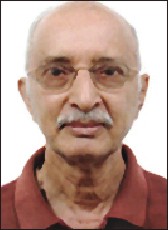
M.A. Ganapathy, a 1986 IPS batch officer, has been appointed the Personal Secretary (PS) to Union Home Minister Rajnath Singh.

Ganapathy, who had won the President’s Medal twice, had earlier served as the Spokesperson for the Union Home Ministry. He had also served as the Secretary to the Sectoral Magistrate. Ganapathy, son of Maneyapanda Appaiah and Premalatha, hails from Eachoor near Kunda in Kodagu.

source: http://www.starofmysore.com / Star of Mysore / Home> General News / July 03rd, 2014

Water from Kundamestri to flow to three water bodies

The ambitious Kundamestri drinking water project is all set to supply water to three keres (streams) in Madikeri. Deputy Commissioner Anurag Tiwari has given his nod for the laying of pipelines at an estimated cost of Rs 20 lakh to flow water Roshanara kere, Pampina kere and Kannandabane open well.

KundamestriKF07jul2014

There were no pipelines to flow water to these water bodies. Hence, barring these areas, water from Kundamestri was supplied to other areas. If the work on laying pipelines are complete, then water from Kundamestri project will reach entire Madikeri town.

Following delay in completion of work on Kundamestri project, the water was flowed to Kootuhole and later to filter house to be supplied to the residents.

Once the work on pipelines are complete, then water can be supplied to the residents directly from Kundamestri.

Normally, Kannandabane kere, Roshanara kere and Pampinakere goes dry during peak summer. The CMC was depending on tankers to supply water to the residents. If the project on supplying water from Kundamestri is success, then the CMC can save money.

The DC has given nod for an action plan of Rs 32.80 lakh for taking up 14 different works under second phase of SFC grant during 2013-14.

Kannandabane, Chaingate and surrounding areas, Raghavendra temple, Tyagaraja colony, Azad Nagara and Putani Nagar will be covered under Kundamestri water project.

The remaining 11 works include cleaning of borewells, installing pumps for borewells at Mangaladevi Nagara and Sudarshana Circle, deepening a borewell at Azad Nagara, drilling borewells at Dasavala Jayanagara and Chamundeshwari Nagara, sources said.

source: http://www.deccanherald.com / Deccan Herald / Home> District / by Srikanth Kallammanavar / DHNS-Madikeri, July 07th, 2014

CCTV cameras at Talacauvery, Bhagmandala

Deputy Commissioner Anurag Tiwari has said that CCTV cameras will be installed at religious centres of Talacauvery and Bhagmandala.

Chairing a meeting to discuss the second phase development works initiated in Sri Bhagandeshwara-Talacauvery temples, at Bhagamandala on Saturday, he said that there has been a rise in number of visitors visiting the temples. Hence, it was essential to install CCTV cameras for the security of the region.

The DC said that measures have been taken to construct a hall to serve meals for the devotees. He also directed the officials to identify land for the construction of Yatri Nivas.
He said that there was a need to ban use of plastics in and around the temple.

The use of leaves and taking bath in the river should also be banned. Measures should be taken to ensure that no waste water entered river Cauvery.

Temple committee and gram panchayat should identify space for parking vehicles at Bhagamandala Triveni Sangama and Talacauvery temple.

Temple development committee President Manu Muthappa said that there was need to improve basic facilities for the devotees and construct a hall to serve food for the devotees.

source: http://www.deccanherald.com / Deccan Herald / Home> District / Madikeri – DHNS, July 06th, 2014

Total deemed forest area in Kodagu may be ready soon

With the revenue, forest and land survey departments initiating the process of consolidating the land records of deemed forest in accordance with the survey number, a clear picture on the total area of deemed forest in Kodagu district is likely to be available in next 15 days.

According to sources, the decision to accumulate information on deemed forest has been taken in a district level meeting chaired by Deputy Commissioner Anurag Tiwari, based on the government’s order to re-examine deemed forest records.

Deemed forest is described as private land with features of the forest.

The government has already issued notification declaring various classifications of forests including reserve forest, protected/minor forest, sacred grove, Uruduve, sandal-teak reserve, village forest and Paisari. After collecting details about the already declared forest region, the officials are planning to examine private forest.

The deemed forest identified by the government in the past, comprised of Jamma Malai, Bane and C and D land.

The land records of these land was different with forest and revenue department documents, creating confusion not only among the public, but also in the government level.

In order to clear the confusion, the government has directed the district administration to specifically identify the notified forest and deemed forest.

It was based on this order, the deputy commissioner chaired a meeting to discuss the issue on Wednesday.

Additional Deputy Commissioner H Prasanna, Deputy Conservator of Forest Hnaumanthappa and Dhananjay, Land Records Deputy Director Mallikarjunaiah, tahsildars of Madikeri, Somwarpet and Virajpet and other officers were present in the meeting.

Background

In Godaverman case judgement, the Supreme Court had directed all the states to provide information about the forest land in their limits.

The court had specified to consider the word ‘forest’ as per its connotation in the dictionary.

According to the dictionary, forest implies a land spreading across at least 2.5 hectare with minimum 50 trees in it.

Accordingly, a large portion of private land in Kodagu district too comes under the purview of ‘forest’ as they are spread over 2.5 hectare land comprising more than 50 trees.

source: http://www.deccanherald.com / Deccan Herald / Home> District / by Shrikanth Kallammanavar / Madikeri – July 04th, 2014

Kodagu & Chikmagalur RCFs constituted to strengthen research on coffee

Bangalore :

The Coffee Board has included enterprising and eminent growers along with associations in its Regional Consultative Forums (RCFs) in order to strengthen research on coffee.

Jawaid Akhtar, Chairman, Coffee Board, told Business Line that these RCFs have been formed covering all the major coffee growing regions in the country.

Following have been nominated for regional consultative forum for Kodagu district of Karnataka.

Enterprising/ Eminent Coffee Growers – N Bose Mandanna, Subramanya Estate, Suntikoppa, Gautham Basappa, Madapura B Estate, Madapura, Sampath, Senior General Manager, Tata Coffee Ltd. Pollibetta, B.B.Chengappa, Palthope Estate, Srimangala, B.D.Manjunath, Manasavana Estate, Kumboor, Madapura post, S.B.Jayaraj, Panya Estate, Suntikoppa, N.M.Subbanna, Yelneergundi Estate, Sanivarasanthe, P.D.Khalista, Flora Estate, Abbur village, Somwarpet taluk, P.S.Subramani, Sajjan Estate, Kothur village and Post, Near Ponnampet, A Ponnappa, Group Manager, M/s BBTC Ltd., Sidapur.

Scientists/ Experts in the field of agriculture – Director, Central Horticulture experimentation station Chettalli, Associate Director, College of Forestry, Ponnampet, Deputy Director, Cardamom Research Station, IISR, Appangala and Joint Director (Horticulture), Govertment of Karnataka, Madikeri.

Growers Associations – president, Coorg Planters Association, Madikeri, Representative of KGF Kodagu District, President, Kodagu District Small Growers Association, Siddapur.

Invitees – Chairman, Coffee Board – Permanent Invitee, Board Members from Coorg district and Director of Research, CCRI

Convener and Deputy Director -Research, CRSS, Chettalli.

For the Regional Consultative Forum for Chikmagalur & Hassan districts following are the members nominated.

Enterprising / Eminent Coffee Growers – H.B.Rajagopal, Kerehucklu Estate, Balehonnur, H.M.Deepak, Kanachur Estate, Hanthur PO, Mudigere taluk, Dr Anand Titus Pereira, Kirehalli Estate, Sundakere post, Saklespur, H.T.Mohan Kumar, Dimbada Estate, Hurudi post, Saklespur taluk, Ashok Kurian, MD, Balanoor Plantations & Industries, Bangalore, Dr M S Sreenivasan, Advisor, M/s.ABC Plantations, Mudigere, The General Manager, IBC Group of Estates, Saklespur, B.M.Mohan Kumar, Malleswara Estate, Balupet, Saklespur taluk, Ajay Thippaiah, Kerehaklu Estate, Aldur, Tousif Ali, Coffee Planter, Aldur.

Representative of Growers Associations – Chairman, Karnataka Planters Association, Chikmagalur, President, Karnataka Growers Federation, Saklespur, President, Hassan District Planters Association, Saklespur

Scientists/ Experts in the field of Agriculture – Associate Director, Zonal Agril.Res.Stn. (UASH, Shimoga) Mudigere, Dy.Director, Regional Spice Res. Stn., Donigal, Saklespur, Jt.Director (Horticulture), Govt. of Karnataka, Chikmagalur,

Invitees – Chairman, Coffee Board – Permanent Invitee, Board Members of Chikmagalur & Hassan districts, Director of Research, CCRI

Convener, Joint Director (Research), CCRI and all Divisional Heads of Research Dept. and JDE, Hassan, DDE, Hassan & DDE, Chikmagalur will attend to the RCF meetings to be held at CCRI and make presentation of their findings.

source: http://www.thehindubusinessline.com / Business Line / Home> Markets> Commodities / by Anil Urs / Bangalore – July 03rd, 2014

Pages from history : Gandhiji’s visit to Coorg

by Prof. A.V. Narasimha Murthy, former Head, Department of Ancient History & Archaeology, University of Mysore

It is a matter of great joy to me that God has enabled me to come to this beautiful land of Coorg. Eversince I have come here, I have been simply drinking the natural beauty of this place; and I presume your hearts are as beautiful as your scenery. And yet there is lurking in my mind as to the beauty of your hearts; for I see that though there is not poisonous untouchability here that is found in plains; still there is some of it in your midst. For in your address you have said that temples are not open to Harijans. It is just like saying to some of his children ‘I give you food, clothing, housing but I won’t let you come to the sanctuary of my heart.’ Imagine what these children would feel. So long as you do not allow Harijans to enter the temples on the same terms as you do, I cannot say your hearts are beautiful. I wish therefore that you will take a lesson from nature and wash out that black spot from your hearts.” This is the first reaction of Gandhiji regarding the people of Coorg. A handsome compliment indeed!

Accidentally, I came across a book by Dr. G.A. Biradar and I was particularly impressed by a fine article regarding Gandhiji’s visit to Coorg in 1934. It is a well documented article and this narration is based on Biradar’s article.

Mahatma Gandhi was on a tour of Tamil Nadu and was camping at Madras in 1934. It was rumoured that Gandhiji would go to Bangalore and Mysore from there. P.I. Belliappa was a leading Congressman and was the editor of the newspaper Kodagu. He extended an invitation to Gandhiji to pay a visit to Coorg. Gandhiji readily agreed and accompanied by Harijan Sangha President Veerannagowda Patil and others, arrived at Gonikoppa in the evening of 22.2.1934 by car. Immediately he expressed a desire to visit the Harijan Colony. Then Gandhiji went to a village by name Kaikeri near Gonikoppa and saw the dwellings of the Harijans. Gandhiji addressed a meeting attended by about one thousand people, mostly women. A purse of Rs. 25 was presented to Gandhiji and the garland given to Gandhiji was auctioned for Rs. 3. Gandhiji spoke about the plight of the people in Bihar due to earthquake some days ago and requested people to contribute liberally for the relief fund. Then he made an appeal for the Harijan welfare fund, and requested the women to donate their gold jewellery and some ornaments were collected.

From there Gandhiji went to Ponnampet and visited Sarada Ashram and collected Rs. 22 and 1 anna. Then he went to Titimati and met some people and collected Rs. 39 and 9 annas as their contribution. Then he went to Hudikeri and addressed 800 people. The taluk Board Present Chendira Thammayya welcomed Gandhiji and presented a purse of Rs. 72 and 13 annas. The students of the local school did not lag behind and gave Rs. 2 and one anna collected amongst themselves. Gandhiji praised the Kodavas, which has been quoted in the beginning.

Then he returned to Ponnampet and stayed in the local Ramakrishna Ashram where Swami Shambavanandaji received him. He formed a Harijan Welfare Sangha. A purse of Rs. 220 was presented to Gandhiji. In his speech Gandhiji said that he is wedded to religion and he could not live for a single second without religion. His religion was based upon the equality of men and women without any distinction of caste or community. He further stated ‘I go further and say that every activity of man must be derived from religion, because religion means being bound to God and that is to say God rules every breath.’

Then he came to Virajpet and Muslims of that place met Gandhiji and presented an address in Urdu. Gandhiji was surprised to find a Urdu scholar in Coorg. Gandhiji stressed the need for Hindu-Muslim unity as most important. Then Gandhiji came to Basavanahalli in Somavarpet. On his way he stopped at Siddapur where a purse of Rs. 7 was given to him. At Jambur people gave him oranges and some cash. Then Gandhiji went to Manjunathayya’s house where two women removed their ornaments and gave them to Gandhiji. Another young woman removed her bangles and gave it to Gandhiji in the presence of her husband. Gandhiji asked the husband for his reaction. He said that the ornaments belong to her and she can take any decision regarding them. Gandhiji admired him and said you had acted wisely and asked his age. On learning that he was 30, Gandhiji said ‘at your age I did not act wisely; wisdom came later.’ Everybody had a hearty laughter. At Suntikoppa about 200 estate workers had gathered and Gandhiji addressed them and told them to work hard with sincerity and devotion and bring prosperity to the beautiful land.

Then Gandhiji reached Madikeri and went to Raja Seat. Knowing that Gandhiji would be visiting that place, about 4,000 people gathered there to have a glimpse of that great man about whom they had heard so much. He was presented with a purse of Rs. 760. Because of his appeal Gandhiji collected Rs. 82 towards Bihar fund. Gandhiji said that though the journey was strenuous it has given him happiness not because of the scenery of Coorg but because untouchability has a slight hold on the Kodavas.

The Harijans are slowly losing cultivable lands for various reasons. Hence, I call upon the Harijan Sevak Sangha to apply the necessary remedy in order to improve their economic condition. He also made a special mention of the Bihar earthquakes and requested people to donate liberally. He further said that Bihar is a sacred land because of the birth of Sita and Buddha. It would appear to me that God has selected that sacred land for removal of untouchability. Hence, I have asked my volunteers to approach you for contribution to Bihar relief fund. Amount is not important to me because it is a token of tangible sympathy to the suffering. Thus even a copper coin is valuable to me.

After finishing this programme at Raja Seat, Gandhiji went to the house of Smt. C.P. Nanjappa at Madikeri. Gandhiji and his entourage camped there for the night. Smt. Nanjappa presented Gandhiji with a silver cup and saucer and Belliappa gave a gold chain. A wooden tray was auctioned for Rs. 9. Gandhiji conducted a prayer meeting at her house and many Kodavas participated in it. Coorg Municipal President I.C. Subbayya announced that the total collection for the fund at Coorg was Rs. 2,000. Gandhiji slept for the night but got up at 2.45 am. Gandhiji wrote letters to Manilal and Sushila in which he wrote ‘we are in Coorg today. It is a small hilly tract below Mysore. It is a beautiful region, quite small in size. The population must be at the most 150 thousand. Now it is 6 am and at 7 am we will descend from the hilly tract and proceed to Mangalore.’

Some Congressmen tried to discuss the political situation of Coorg but Gandhiji avoided the issue. He said that he had come to Coorg to show his appreciation to the Kodavas because they are different from the entire country in matter of Harijan issue. Hence, I have come here for Harijan work and also seeing the beautiful land of nature and to meet the people of this land. Thus he refused to comment on the political condition of Coorg. For the Kodavas it was a great and memorable experience to see a person whom the entire country and even the world watched with respect and admiration. Thus, the leaders and people of Coorg felt sanctified by the visit of this great savant Gandhiji. Anyway this is a rare and memorable chapter in the modern history of Coorg.

source: http://www.starofmysore.com / Star of Mysore / Home> Feature Articles / June 28th, 2014

400 KV- HT line passing through Kodagu Reserve Forest

No justification to sacrifice natural forests

DrKodiraKF02jul2014

by Dr. Kodira A. Kushalapa, IFS (Retd.) and former RCCF, Bhopal under MoEF

Forests all over the world are being threatened with the rise of human population, leading to the increased level of Co2 in the atmosphere, global warming, climate change, submersion of low lying areas due to the rise of water levels in the oceans, disappearing forest areas and trees etc. Therefore, we have to take all possible measures to save natural forests, not only for our survival but also for the future generations to come.

The Central Government has added Article 48A and 51A (g) to our Constitution to protect and improve our environment, safeguard forests and wildlife and we citizens are obliged, duty-bound and responsible to save these natural resources. The common phrase is: think globally but act locally. This will apply in this case also while considering the route for High Tension (HT) line through natural reserve forests of Kodagu.

Fortunately, there are two or three alternate routes to draw the transmission line avoiding natural forests. Therefore, there is ample justification to avoid forests on a priority basis, to save and conserve forests locally. The value of forests cannot be just the timber and firewood value down to certain minimum girth of standing trees, for comparing the costs but should be the value of whole forest ecosystem called environmental values or ecological benefits, which will be lost permanently after clearing the forests.

These values include the absorption of Co2, production and release of oxygen by all plants existing, habitat for birds and wildlife, soil and water conservation, adding fertility to soil etc. These environmental values are far more than whatever the total cost of laying the linear line and is not comparable. Thus the question of shortest route through the forests for cost-cutting is ruled out in the interest of saving forests. The Power Grid Corporation can recover the extra cost by increasing the tariff per unit of electricity.

The HT line can go through the D-line between the erstwhile Coorg and Mysore States, which is now the D-line between Kodagu and Mysore districts, where due to the annual D-line clearances earlier, the trees are smaller in size and less in numbers. The proposed HT line is running almost parallel to the D-line and hence a more feasible alternate route.

The other route is by upgrading the present 220 KV line for which the necessary permission under the Forest Conservation Act 1980 has been already obtained to pass through the National park and requires the replacement of towers only. It is almost a straight line passing through H.D. Kote and D.B. Kuppe. The temporary problem of the PG Corporation is that during the progress of upgrading the 220 KV, they have to de-activate the present line and is left to them to solve by fast progress and using the other grid lines.

The third alternate is to take up the line through an underground tunnel which will be at an exorbitant cost and not feasible through forest areas with standing trees and their root systems.

The FC Act envisages to take up compensatory afforestation in new areas equal in extent of area (twice the extent in forest area) diverted for non-forestry purposes by the forest department at user’s cost. But the fact is that nobody can re-create a “natural forest,” which has by a series of succession over centuries, stabilised into a climax type of forests with rich biodiversity. But at the most we can create a “plantation forest” of few species only, if the new compensated area is good for growing trees. If such plantations are raised in semi-arid regions like Bijapur and Gulburga for want of land in Kodagu, there will be complete failure of the objectives of compensatory plantation. Similar type of areas only should be allotted for compensatory afforestation. It is therefore imperative and justifiable to protect and conserve the existing natural forests than going for compensatory plantations that too, when alternate routes are available for linear projects.

[e-mail: kodira1@hotmail.com/ Mob: 94480-58549]

source: http://www.starofmysore.com / Star of Mysore / Home> Feature Articles / Friday – June 27th, 2014

Nanaiah’s parting request: make Council mandatory in every State

M.C. Nanaiah
M.C. Nanaiah

This will facilitate threadbare discussions on all legislations, he says

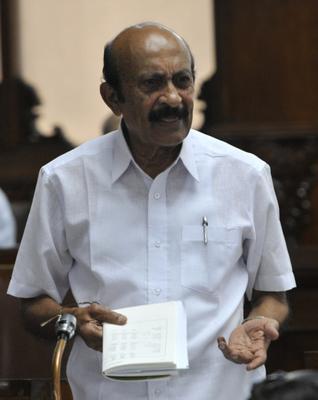
M.C. Nanaiah of the Janata Dal (Secular), on the day of his retirement on Monday, made an impassioned plea to Chairman of the Legislative Council D.H. Shankaramurthy in the Upper House to take up the issue of an amendment to the Constitution so asto have a Legislative Council in every State. This would facilitate threadbare discussions on all legislations.

Delivering his last speech as member of the House, Mr. Nanaiah said such an Act was necessary in view of the seriousness with which bills have to be discussed before their passage. He said that the Constituent Assembly had allowed Rajya Sabha to be a permanent House, while not extending the same facility to the Council in States. This lacuna must be corrected.

Giving a chronological history of the House, he said it came into existence in 1881 as Mysore Representative Assembly and became the Legislative Council in 1907. The Legislative Assembly came into being in 1952 after the first general elections. The Council is the oldest and has the natural right to continue, he said, arguing against the opinion of some who said the Upper House was not necessary.

He said Members of the Congress, Lower House, in the United States, used to say that “they pour the legislations into the senatorial saucer for cooling” and added that the American Congress members were of the view that the legislations vetted by the Senators were the only ones that could be considered as law.

He wanted Indian politicians to learn from such an observation.

Supporting M.V. Rajasekharan’s (Congress) criticism that moneybags were entering the portals of Parliament and State legislatures, Mr. Nanaiah reminded him that former Prime Minister A.B. Vajpayee had passed a remark before presspersons when they asked him about his government’s defeat by one vote in 1996: “There are commodities for sale in the market and brokers too, but I was not ready to purchase them.”

Mr. Rajasekharan (Congress), who also retired, expressed his happiness over his achievement as Union Minister of State for Planning during which he was instrumental in raising the plan outlay from around Rs.10,000 crore to Rs.13,000 crore.

The others who retired are S.R. Leela, Doddarange Gowda, M.R. Doreswamy, B.B. Shivappa, Bharati Shetty, K.V. Narayana Swamy, Siddaraju, K. Monappa Bhandari and A.H. Shivayogiswamy. Puttanna (JD-S) and K. Abdul Jabbar (Congress), who have been re-elected, have returned to the House.

source: http://www.thehindu.com / The Hindu / Home> News> National> Karnataka / by Special Correspondent / Banglaore – July 01st, 2014

Pera Museum invites art lovers for a ‘Coffee Break’

The Pera Museum in İstanbul has rearranged part of its permanent collection for the summer season, offering its visitors a fresh exhibition that focuses on Turkish coffee rituals and ceremonies from its vast collection of Kütahya ceramics and tiles.

“Coffee Break: The Adventure of Coffee in Kütahya Tiles and Ceramics” features 105 pieces from the museum’s Kütahya Tiles and Ceramics Collection. The collection dates back to the 1980s and originally consisted of over 800 artifacts representing various periods. A majority of the items in the collection are from the period between the 18th and 20th centuries.

The renewed concept of the show not only looks at routines and rituals centered on coffee, but also offers insight into Ottoman coffeehouses, which constituted an important element of the public sphere in Ottoman daily life. After the 16th century, coffeehouses increasingly functioned like the “social media” spaces of their times.

The Pera Museum is located on Meşrutiyet Caddesi, No. 65, in Tepebaşı. The museum is open 10 a.m.-7 p.m. Tuesday through Saturday and 12 p.m.-6 p.m. on Sundays. Admission is free from 6 p.m. to 10 p.m. every Friday. İstanbul Today’s Zaman .

source: http://www.todayszaman.com / Today’s Zaman / Home / Istanbul – Sunday, June 29th, 2014