Ancient microcontinent discovered in Coorg block

MicroContinentKF16nov2013
A team of scientists from four research institutions have reported the discovery of an ancient microcontinent in India.

Based on extensive investigations in the Coorg block comprising parts of Kerala and Karnataka, the scientists have confirmed the existence of a 3.1 billion-year-old exotic microcontinent that could have broken off from Madagascar or Africa and drifted across the ocean to get wedged into the Indian landmass.

Based on the geological formations that characterise the block, the researchers assume that it could have been part of the earliest ‘Ur’ supercontinent formed through microcontinent amalgamation.

The age data of the rock samples collected by the researchers showed that the peak of continental building in the exotic Coorg block occurred around 3.1 billion years ago. The studies indicated that the crust building might have also involved partial recycling of basement rocks as old as 3.8 billion years.

The team comprising M. Santosh from India, now working at the China University of Geosciences, Beijing, Q.Y. Yang from the same university, E. Shaji from the Department of Geology, University of Kerala, T. Tsunogae from Tsukuba University, Japan, and Ram Mohan and M. Satyanarayanan from the National Geophysical Research Institute, Hyderabad, has published the discovery in Gondwana Research, an international journal on earth science with particular focus on the origin and evolution of continents.

According to the paper, the Coorg block, a continental fragment sandwiched between the Dharwar craton (a craton is a piece of a continent that has been stable for over a billion years) in the North and several younger crustal blocks to the South, is composed dominantly of a suite of arc magmatic rocks.

“Considering the age of the rocks from the periphery of the Coorg block, the microcontinent could have got wedged with peninsular India around 1.2 billion years back in time,” says Dr. Santosh, the lead author.

“This exotic microcontinent could have come from any of the cores of the earliest supercontinent Ur. The possible sources are Madagascar or Africa.”

The study revealed that the Coorg block was unaffected by major tectonothermal (geological episodes that shape rock formations) events in the rest of southern India.

The team relied on Uranium-Lead dating and Lutetium-Hafnium analyses of zircons separated from the different rock types. They also carried out petrological and mineralogical studies and geochemical analyses of the rocks.

The study is significant in understanding the supercontinent cycle, the amalgamation of continents into large land masses and their disruption.

“The Early Earth was dominated by island arcs in an oceanic realm analogous to the modern Pacific region. The formation and collision of arcs gave rise to the birth of microcontinents,” explains Dr. Shaji.

The landmass arrangement on earth today is the culmination of a long history of continental movement. The Indian subcontinent is believed to be one among the several landmasses that emerged from the break up of the Gondwana supercontinent about 180 million years ago. The Coorg block covers an area of over 3,000 sq km and includes the whole of Kasaragod district in Kerala and parts of Kodagu district in Karnataka.

source: http://www.thehindu.com / The Hindu / Home> News> National> Kerala / by T. Nandakumar / Thiruvanathapuram – November 12th, 2013
Coorg: A Green Escape in Karnataka

If you find Ooty, Kodaikanal or Munnar a bit too touristy and crowded a destination in southern India, Coorg is that perfect holiday spot in Karnataka that is sure to please toddlers, youth and the old alike.
CoorgKF16nov2013
Not that this hill station needs to be chosen for a sojourn by eliminating other similar destinations in the vicinity. Just a three-hour drive from Mysore, 150 km away, Coorg district on its own has much to offer, beyond its coffee, cardamom, pepper and beetelnut estates.

There is much to see, admire and soak in at this hill station, which the locals call Kodagu, on the slopes of the Western Ghats, what with some pristine trekking trails, picnic spots, waterfalls, wildlife, woods, forests, valleys and some mouth-watering cuisine. Situated at a height of 1,525 metres, Madikeri or Mercara is the capital of Coorg, with a nice bazaar, quaint houses with red-roofs and liberal use of teakwood reapers for doors and furniture, so common among homes and clubhouses in Indian hill stations.

It may come as a surprise to some that Coorg has one of the largest settlements of Buddhists in India, just about 30 km away from Madikeri, with their own Namdroling Monastery built in 1963, which the locals call the Golden Temple. Once you enter the monastery, you feel transported into some other world in the Orient, packed as it is with some 5,000 monks in bright yellow and red robes, with some soothing Buddhist chants, smell of incense and breathtaking sights of pagodas.

After seeing those large golden statues of the Buddha and Tara, the intricate murals and Tangkha paintings, don’t forget to taste some authentic Tibetan food here, especially the delectable momos and the subtle thugkpa, their noodle soup. One is told it is the largest teaching centre of Nyingmapa – a major lineage of Tibetan Buddhism in the world – and the present Dalai Lama gave its shorter name, as opposed to Thegchog Namdrol Shedrub Dargyeling that this mesmerising place was called originally.

Before dwelling further, where to stay is a question that is bound to crop up. While there are plenty of hotels and resorts, including the Orange County, that can even set you back by as much as Rs.25,000 per day, it is best to opt for a home stay. There are some 35 of them in and around Medikeri in a range of Rs.1,000 to Rs.5,000 per day where one gets not just to retire but also taste authentic Coorgi food and take some refreshing strolls on their plantations that grow coffee and other cash crops.

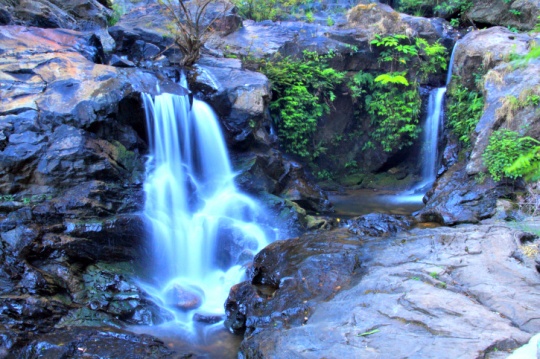
As far as the season goes, October to March — like most places in India — are the best months. The weather is pleasant with that welcome nip in the air. But Coorg during monsoons can be equally mesmerising and enchanting. There are also plenty of places one can go to. There is Abbey Falls, not far, where one has to make his or her way through some dense woods, dotted with coffee bushes, trees and creepers, to suddenly find a cascading gush of water.

Then about 80 km away is the Iruppu Falls, right next to the Rajiv Gandhi National Park, also called Nagarhole, which is famous for its elephants, with a lot of other game and some 50 species of birds. Children, especially, are certain to enjoy a visit to Dubare Forest, around an hour and a half from Medikeri. A ferry there takes you across to an elephant camp where one can see the pachyderms being bathed and fed, after which they are ready for a joy ride.

Talacauvery, around an hour away, is the source of the river Cauvery, with a temple to pay homage to this main source of water for some parts of Karnataka and Tamil Nadu. Not far is Bhagamandala, the confluence of three rivers: Cauvery, Kanika, and Sujyothi.

Another must-see is Tadiyendamol, which is the tallest peak in Kodagu and gives a breathtaking view of the entire Coorg, apart from the distant Arabian Sea. There is also the Naalkunaadu Palace built by Kodagu king Dodda Raja Veerendra in 1792. After all this exploring, a bungalow at the plantation is perhaps the best place to retire. Toddlers can chase butterflies, and a hammock and freshly brewed coffee are sure to be at hand!

How far: Around 150 km from Mysore and 260 km from Bangalore

How to reach: By bus or car from Mysore. Closest airport is in Bangalore; the airport in Coimbatore in neighbouring Tamil Nadu is another alternative.

Cost: Around 35-40 home stays in Coorg ranging Rs.1,000 to Rs.5,000 per day.

source: http://www.indiatimes.com / India Times / Home> Lifestyle> Travel / November 11th, 2013

Obituary : Lt. Col. (Retd.) M.C. Uthaiah

LtColKF14nov2013
Mysore :

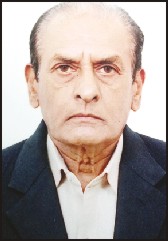
Lt. Col. (Retd.) M.C. Uthaiah (76), hailing from Munjandira family and a resident of Vijayanagar First Stage, passed away at the Jayachamaraja Wadiyar Golf Course here this morning.

He is survived by wife Chummi Uthaiah and a large number of relatives. Last rites took place at Chirashanthidhama in Gokulam this afternoon. Uthaiah was an ardent golfer and an active member of the Mysore Kodava Samaja.

source: http://www.starofmysore.com / Star of Mysore / Home> General News / November 08th, 2013

Five IAS officers transferred

The State government on Friday issued transfer orders to five IAS officers.

M V Savithri as been appointed the new Managing Director, Karnataka Public Lands Corporation Limited, and Priyanka Mary Francis is the new Managing Director for Karnataka Food and Civil Supplies Corporation.

The other officers are: V Srirama Reddy, MD, Managing Director for Karnataka State Beverages Corporation Limited; Dr D S Vishwanath, Deputy Commissioner, Ramanagara district, and P I Sreevidya, the Deputy Secretary, Zilla Panchayat, Kodagu — who has been given the additional responsibility of being the Chief Executive Officer, Zilla Panchayat, Kodagu.

Other officers

The government has also appointed V Umesh Kusuga, KAS, the new MD, North-Western Karnataka Road Transport Corporation, Hubli, and K B Anjanppa, CEO, Zilla Panchayat, Haveri.

source: http://www.deccanherald.com / Deccan Herald / Home> State / Bangalore – November 08th, 2013

Coffee growers spar over poly wrap method to curb white stem borer

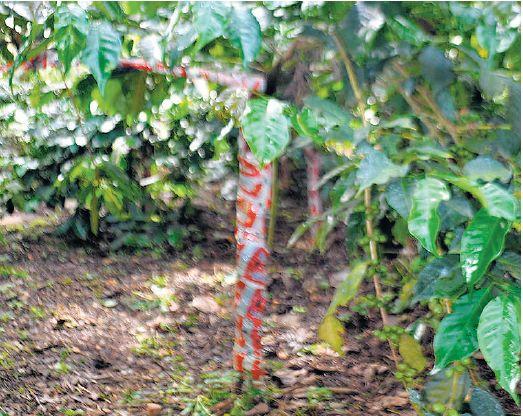
Better solution: An arabica plant stem wrapped with cellophane tapes to prevent it hosting the white stem borer on a coffee estate in Kodagu. / The Hindu

Results are good, says Coffee Board; some planters raise environmental concerns
An ingenious method has been found to control the ruinous white stem borer in coffee estates where the arabica variety is grown. But coffee planters are split over the effect of the solution with some even questioning its impact on the environment.

According to A.K. Bhandari, coffee planter and former President of the United Planters Association of Southern India, wrapping the stem of the arabica plant with cellophane, called poly wrap, helps in containing the borer menace. The wrap prevents the female beetle from laying eggs in cracks and crevices of the plant.

“We came across this solution some two-and-a-half years ago when some planters used old plastic to wrap the stems. It prevented the borer from laying eggs and controlled the spread of the pest,” he said.

Coffee white stem borer, Xylotrechus quadripes, is a pest found in arabica coffee causing huge yield loss. A blackish brown coloured beetle, it can also be found on rosewood, sandalwood and teak.

Ten to 12 days after the female beetle lays the eggs on the stem, the larvae enter the woody tissue and burrow up to the roots. This leaves the plant impaired and the only known solution is uprooting the plant totally and burning it.

“Poly wrap physically stops the insect from laying eggs on the plant. Growers had, at one point of time, wrapped plants with old fertiliser bags. Now, they have begun to use strip wraps and the results have been good,” said Jawaid Akhtar, Coffee Board Chairman.

History traces the borer menace to 1837 and the first reference was made in 1838 by H. Stokes, Mysore Commissioner. In 1868, the Madras Commissioner had reported the ravages of the borer in Mysore and Coorg.

YIELD LOSS

“We have been suffering from the borer menace for over a decade now. It has affected arabica production. In some estates, nearly 50 per cent of plants had to be uprooted,” said Bose Mandanna, a grower in Kodagu and former vice-chairman of Coffee Board.

The borer menace has resulted in arabica production stagnating around one lakh tonnes annually for almost a decade after rising to a record 1.21 lakh tonnes in 2001-02 (October-September) season. Its share in total coffee production (robusta makes up the rest) has decreased from over 50 per cent in the 1980s to around 30 per cent now.

This year, out of the estimated 3.47 lakh tonnes production, arabica output has been pegged at 1.11 lakh tonnes. However, growers expect it to be lower than 90,000 tonnes.

“The poly wrap seems to be working very well. Most of the growers have reported 99 per cent success. About 10 estates can be taken and the experiment tried for 2-3 years,” said Bhandari.

The Coffee Board had sent an advisory on the poly wrap but not much progress seems to have been made.

“Labour shortage is the reason why poly wrap has not picked up. Also, there was short-supply of wraps. That has ended now as supply is ample. Results are encouraging and the wrap does not affect the plant’s growth,” said Akhtar.

But, there are voices of dissent too.

“The poly wrap was tried in small pockets and it has not been successful when tried on a large-scale. It prevents plants from growing. The bark growth is stunted and we feel this is not a scientific solution,” said the Karnataka Planters’ Association Chairman, Nishant Gurjer.

Some of the corporates involved in growing coffee have now begun to experiment the method. “We have begun the poly wrap on Coffee Board’s suggestion and are assessing the results,” said an official of Tata Coffee at its Margolly estate in Kodagu.

However, concerns are being raised over its effect on the environment.

“When the poly wrap gets old, it could lead to environment problems since it won’t disintegrate easily,” said Mandanna.

Gurjer agrees. “Plastic will add to the mechanical damage to the plants,” he said.

Other growers say that until a better solution is found, the poly wrap method should continue.

source: http://www.thehindubusinessline.com / Business Line / Home> Industry> Agri-Biz / by M. R. Subramani subramani.mancombu@thehindu.co.in / November 07th, 2013

Tea Board of India Extends Support to “World Tea & Coffee Expo” 2014, India’s Only International Trade Show Dedicated to the Tea & Coffee Sectors

As a part of its commitment to promote the Tea sector, the Tea Board of India, set up under Ministry of Commerce & Industry has extended its support to the 2nd Edition of “World Tea & Coffee Expo”™ (www.worldteacoffeeexpo.com), India’s only International trade fair dedicated to the Tea & Coffee sectors. The event is to be held at Bombay Exhibition Centre, Mumbai, India from Thursday 6th Feb 2014 to Saturday 8th Feb 2014. Tea Board of India has always been at the forefront of promoting Tea and has always taken proactive steps to address issues related to the Hot Drinks sector in India. The Tea Board of India decided to support this trade event since it shares a common goal with the show viz. promoting Hot Drinks in India. This niche expo is organized by the Mumbai headquartered Sentinel Exhibitions Asia P Ltd, a company engaged in managing and organizing trade events.

Says Mitesh M Kapadia, Director, Sentinel Exhibitions Asia P Ltd, “Hot drinks are witnessing positive growth since the last few years thanks to intensive marketing campaigns by players, launch of innovative products, the emergence of upscale Cafes offering both convenience, affordability and quality and the trend of these cafes becoming a meeting ground for young consumers.”

In addition to showcasing brands, products, machinery, retail Chains, accessories & technologies, WTCE 2014 will have Dedicated Innovations Display Zone, Interactive Demo areas (featuring Exotic Tea Tasting / Brewing sessions, Latte Art championships, Recipes and a lot more) as also Seminars & Conferences by Global Industry leaders & Policy makers to determine future trends in the Hot Beverage segment. The seminars will analyse prime factors influencing the sector and identify the sectors driving growth.

With an anticipated turnout of over 6000 Business Visitors including International buying delegations, WTCE 2014 promises to offer huge potential for franchising, marketing alliances, appointing Distributors, bulk orders, joint ventures and overall branding.

WTCE 2014 is also endorsed by a number of National & International Trade Bodies and visitors to the event will get exposure to national and international Brands, manufacturing and packaging technology, storage technology, Flavored Beverages, hi-tech vending machines, retails chains as well as a variety of products from importers and exporters of Tea & Coffee. For further details log onto www.worldteacoffeeexpo.com or contact Mr Mitesh, Director on +91 22 28625131 / +91 98205 03876 or on mitesh@sentinelexhibitionsasia.com

source: http://www.teanewsdirect.com / Tea News Direct / by K. Priti, Sentinel Public Relations P Ltd / November 06th, 2013

Return of the bad guy

GulshanDevaiahKF10nov2013
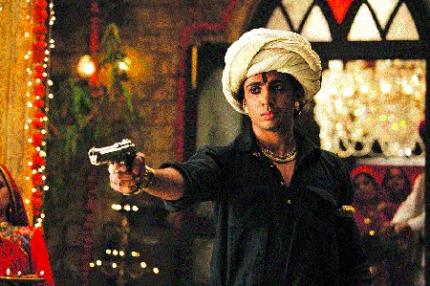
Gulshan Devaiah, who has featured in films like Hate Story and Shaitan, is all set to don his bad guy avatar again, this time for Sanjay Leela Bhansali’s Ram-Leela. The actor, who plays Deepika Padukone’s cousin in the film, says, “Casting director Shruti Mahajan spotted me. She arranged a meeting with Mr Bhansali who had not seen a single film of mine. He was looking at me with a director’s eye and by the end of the meeting he finalised me for the part. I didn’t have to audition for it.”

The actor reveals his first meeting with co-star Deepika Padukone was an interesting one too. He reveals, “I am good friends with my Shaitan co-star Kalki Koechlin. She was shooting for Yeh Jawaani Hai Deewani and invited me over to the sets. I went and sat near the monitor next to Deepika but was tongue-tied. I wanted to say something intelligent and didn’t want to make a fool of myself. My dilemma finally ended when she initiated the conversation and said hello. I then told her that I’m in Ram- Leela too.”
While the actor’s big break came with Shaitan he says filming it wasn’t an easy experience. He reveals, “The most horrifying moments were the underwater shots as I can barely swim. Bejoy would make us shoot at the deep end of the pool as you get the best camera angle there. Every time I would almost drown somebody would grab my hand. Once I almost drifted away and Kalki rescued me.”

While Gulshan is all set to be the new bad guy in Bollywood and shares his name with iconic villain Gulshan Grover, he tells us that he is often confused with the veteran actor. “He is definitely a legend and I respect him. I am often confused with him because of my name. When Yash Chopra passed away, from 8 am to midnight, I got calls asking for my reactions since Gulshan Grover had worked with him.”

The actor reveals he has had no formal training in acting but puts his theatre experience to use in his films as well. “I had no formal training and didn’t know how to put it across to my parents that I want to take up acting as a career. I started out by working with theatre practitioners in Bengaluru. I worked on a lot of different and breathtaking folk theatre where I had to learn art forms like Kalaripayattu and Kathakali and I still use a lot of that experience for my film characters.”

Theatre has also played another important role in the actor’s life with him meeting wife Kallirroi Tziafeta, through it. He says, “My wife is an actress too and I met her during a play in Lucknow. That day I was filling in for Neil Bhopalam who didn’t have dates for a play he was doing . My now wife knew some people connected to the play so she came to watch the show and that’s where someone introduced us. We kept in touch after that and after some time I proposed marriage.”

While Gulshan has been appreciated for his negative roles he says that Ram-Leela may just be his last film as a villain. He says, “I have no plans of sticking to my bad guy image. Ram- Leela is my last role as a villain. I have just completed film, which is a romantic comedy. I have signed two films with Pooja Bhatt and these parts are not negative roles either. I never thought I’d make something my niche. I aim to be different. I have four films coming up which are different from each other. There is a possibility of being typecast but I wish to break away from that.”

source: http://www.asianage.com / The Asian Age / Home> Life and Style / by Natasha Coutinho, The Asian Age / November 05th, 2013

I am comfortable doing Lovemaking scenes: Harshika Poonacha

It’s been five years since actress Harshika Poonacha has been in Sandalwood, playing roles ranging from supporting actress to being a part of multi-starrers. The actress, who not long ago made the transition to playing lead heroine, recently bagged her first-ever state award for Best Supporting Actress for her role in the Shivarajkumar-starrer Thamassu. And that, the actress says, has taken her career to the next level. “No more supporting roles. I’ve arrived as a solo actress,” she says. Excerpts from the interview:

(Harshika Poonacha )

Your fifth film Thamassu gort you a State Award. Is it beginner’s luck?
I started my career as a solo heroine with PUC, but it was a supporting character that got me a State Award. I wouldn’t say I got lucky, as I have worked hard for my role in Thamassu. I feel honoured to receive one of the most prestigious awards so early in my career. There will be pressure to choose good roles from now on. I am looking forward to doing solo female leads.

What are the challenges you faced in the industry?
In my five years in Sandalwood, I have maintained a decent track record. While my initial films saw me paired with newcomers, I wanted to work with top heroes like Puneeth Rajkumar and Shivarajkumar. I got to work with them, but as their sister. I have no complaints, though, as I was able to perform well in the roles that I got. I wanted to establish myself as a solo lead, as I was getting only roles to play the hero’s sister. In fact, I missed out on playing the female lead opposite Puneeth because I had played his sister in Jackie. It was a challenge to break free of that image.

You rarely make it to the gossip columns even though you are quite the party animal. But when you did, it was after a spat with Aviva Bidapa over who had the meatier role in Ale…
I don’t want to comment about it. Once the film released, it became clear just who had the better role. This is exactly why I don’t want to do multi-starrers. In fact, my upcoming films — B-3 and an upcoming Telugu film (which marks her Telugu debut) — will see me playing solo female lead. As for the partying bit, well, I have a group of friends who I am close to. I don’t party with people from the industry, but I am nice to people when I meet them at filmi events and share a cordial relationship with everyone. Jealousy comes when you know them too well. I’d like to party and stay close only with my friends.

Tell us about your role in B-3…
It is the most special film in my career. B-3 revolves around three characters — hero, heroine and one more character (which will be the suspense). Sriki (Srikanth) plays a psychopath and I play a college student. I fall in love with him and what happens then forms the crux of the story. Since Sriki’s character is mentally unstable, he gets physically abusive with me. Throughout the film, we compete against each other and both of us had a lot of scope to perform. In fact, Ghana Shyam ( director) didn’t even allow us to talk to each other. I also did a lot of stunts in the film, which is one of the highlights. I have just won a state award and this role will definitely elevate me to the next level. In fact, I am hoping to receive an award for my performance in B-3.


You have also done some intimate scenes in the film…

I have taken a lot of risk for this film and one among them is the intimate scene. I have kissed and even did lovemaking scenes for the first time. I asked Ghana if it was really required for the film and he convinced me that it is important. I just trusted him and went ahead with the scene. We shot for nearly half a day and the scene appears for just 15 seconds in the film. I was comfortable doing lovemaking scenes. Ghana showed me the edited version and I must say that it looks more romantic than vulgar.

source: http://www.articles.timesofindia.indiatimes.com / The Times of India / Home> Entertainment> Regional> Kannada / by Sharanya CR / November 02nd, 2013

Tata Coffee re-appoints Deepak Kumar

Bangalore :

Tata Coffee Ltd has re-appointed M. Deepak Kumar as Executive Director-Finance for a period of one year commencing from October 25, 2013.

The decision to re-appoint Deepak Kumar was taken at the board of directors of the company at its meeting held on October 18.

source: http://www.thehindubusinessline.com / Business Line / Home> Companies / by Anil Urs anil.u@thehindu.co.in / October 18th, 2013

Harshika Poonacha thanks Thamassu team for first State Award

Sandalwood actress Harshika Poonacha is on cloud nine. At the Karnataka State Film Awards announced for the year 2011, she was adjudged the Best Supporting Actress for her work in the Kannada film Thamassu. The film, directed by Agni Sridhar, had Shivarajkumar in the lead. In fact, Shivarajkumar had won a Filmfare Best Actor nod for this film. The actress, who is currently in Hyderabad, took to her social networking page to thank the team of Thamassu. “Thamassu” The film which made me feel special,Thnx to Agni Shridhar sir and The Hatrick hero Shivanna sir My first STATE AWARD is dedicated to you both coz I wudn have made it possible without you both:) Thnq so much for the support and blessings :)) Also I thank all my beloved frens for wishing me on calls,texts and social networking sites :)) Love u all,muaaaaahhhhh,” she wrote.

(Harshika Poonacha )

When TOI reached out to the actress, she sounded ecstatic. “I am overjoyed. In fact, I was sleeping when the award was announced and my phone was on mute. I missed a whole bunch of calls and messages. I am replying to everyone now,” she said, adding that the team of her new film was throwing a party for her this evening. “Right now, my award is the only thing on my mind,” she signed off.

source: http://www.articles.timesofindia.indiatimes.com / The Times of India / Home> Entertainment> Regional> Kannada> Filmfare / Pratibha Joy, TNN / October 25th, 2013