Yaduveer Krishnadatta Chamaraja Wadiyar, Mysuru–Kodagu MP, has emphasised the urgent need to strengthen telecommunication facilities in Kodagu district and requested Union Minister for Communications Jyotiraditya Scindia to fast-track the installation of battery sets for mobile towers.
During his meeting with the Minister in New Delhi on Friday, the MP also sought speedy processing of the proposal to allot 15 power plants for the region.
Recalling the recent heavy rains in Kodagu, Mr. Wadiyar said several poles had collapsed, severely disrupting communication networks and causing major inconvenience to the public. He added that he had earlier written to the Minister pushing for improvements to the district’s telecom infrastructure.
“Today, I met the Minister once again and requested him to expedite the process,” he said.
According to the MP, Mr. Scindia assured that the matter would be reviewed at the earliest and necessary action would be taken.
source: http://www.thehindu.com / The Hindu / Home> News> India> Karnataka / by The Hindu Bureau / December 12th, 2025
Resolves unique land ownership issues in Kodagu, introduces appellate mechanisms
Belagavi:
The Karnataka Assembly on Tuesday passed a Bill to amend the Karnataka Land Revenue Act, 1964, to resolve long-standing land ownership issues linked to the ‘Jamma Bane’ tenure system in Kodagu district.
The Bill, introduced in August to enable modern recognition of land rights under the traditional ‘Jamma Bane’ system, was earlier referred to a select committee on the advice of Virajpet MLA Ajjikuttira S. Ponnanna and Madikeri MLA Dr. Mantar Gowda.
It was reintroduced in the House yesterday by Revenue Minister Krishna Byre Gowda after the legislative sub-committee held five rounds of consultations to address concerns raised by landholders in Kodagu.
Explaining the rationale, Krishna Byre Gowda said the amendment accounts for the peculiar nature of ‘Jamma Bane’ lands, which were governed by the Coorg Land Revenue and Regulations Act, 1899, before the enactment of the Karnataka Land Revenue Act in 1964.
Some provisions of the 1899 law continued in practice despite not being explicitly incorporated in the later Act, leading to legal and administrative complications.
No clear entries in revenue records
According to the Statement of Objects and Reasons, ‘Jamma Bane’ tenure is a distinct form of landholding prevalent only in Kodagu, traditionally enjoyed by joint families based on customary rights, often without clear entries in revenue records.
The absence of explicit provisions to record the rights of joint family members has resulted in difficulties in mutation, registration, inheritance and alienation, triggering disputes and prolonged litigation.
The amendments seek to provide statutory recognition to the ‘Jamma Bane’ system by allowing the inclusion of joint family members’ particulars in mutation registers, mandating the reporting of acquisition of rights by joint family members, empowering revenue officials in Kodagu to recognise such rights and ensuring that details relating to family trees, survivorship, inheritance and associated privileges are recorded in land records.
‘Bhoomi’ complications resolved
The Bill also addresses the complications that arose after the introduction of the ‘Bhoomi’ land records software in 2000, when ‘pattedars’ were included under Form 9, leading to confusion over ownership, difficulty in land transactions, inter-generational transfers and an increase in court cases.
Krishna Byre Gowda said the present amendment is the outcome of nearly two years of consultations to resolve these issues.
Tahsildar Adalats
MLA Ponnanna told the House that the lack of clarity over ‘Jamma Bane’ ownership had adversely affected land sales, bank loan approvals and inheritance.
He stressed the need for careful implementation of the law and appropriate framing of rules to ensure the issue is effectively resolved.
Leader of the Opposition R. Ashok sought clarity on how the Government would deal with land records reflecting names of four to five generations of owners.
In response, Krishna Byre Gowda said local tahsildars would conduct adalats to hear objections before land records are modernised and finalised.
He added that the system would include an appellate mechanism to safeguard landowners’ rights.
source: http://www.starofmysore.com / Star of Mysore / Home / December 17th, 2025
Jayanagara Kodava Sangha President and Sports Committee has organised 6-A-side Kids Hockey Tournament to commemorate 100 glorious years of Indian Hockey on Dec. 21 at Turf City, Jp Nagar 7th Phase, Bengaluru.
The tournament will be inaugurated by chief guest V.R. Raghunath, Indian Hockey Player, Olympian and Arjuna Awardee, at 9 am.
source: http://www.starofmysore.com / Star of Mysore / Home> Sports / December 19th, 2025
17th Annual Day Celebrations, ‘Janapadha Loka- The World of Folk Culture’, M. Prakash, BEO Mysuru (Rural) and D.N. Geetha, BRC Co-ordinator, Mysore Taluk (Rural), chief guests, Naina Achappa, Principal, Shishya Play School, guest of honour, K.M Belliappa, President, Kodagu Model School, presides, school premises, Vidyashankara Layout, 3 pm.
source: http://www.starofmysore.com / Star of Mysore / Home> Events Tomorrow / December 19th, 2025
Poetry dialogue between Kodava poet Dr. Ravin Chengappa and Kodava Author Subbaiah Nuchimanyanda Muthanna, The Green Hotel, Chittaranjan Palace, Hunsur Road, 4.30 pm.
source: http://www.starofmysore.com / Star of Mysore / Home> Events Today / December 13th, 2025
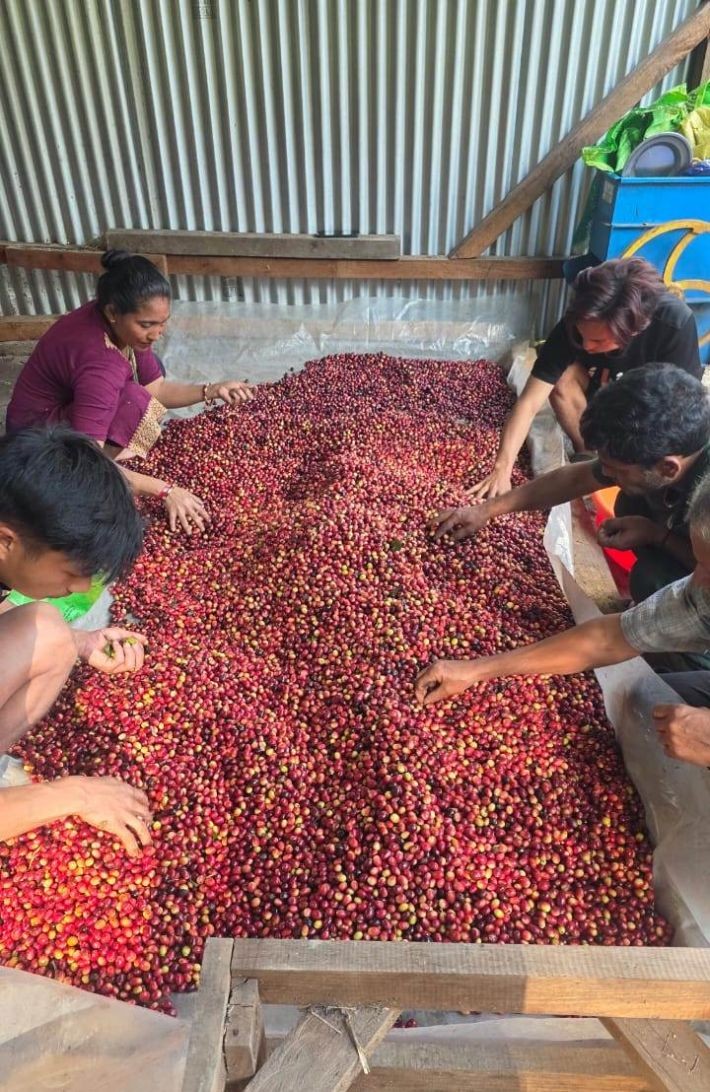
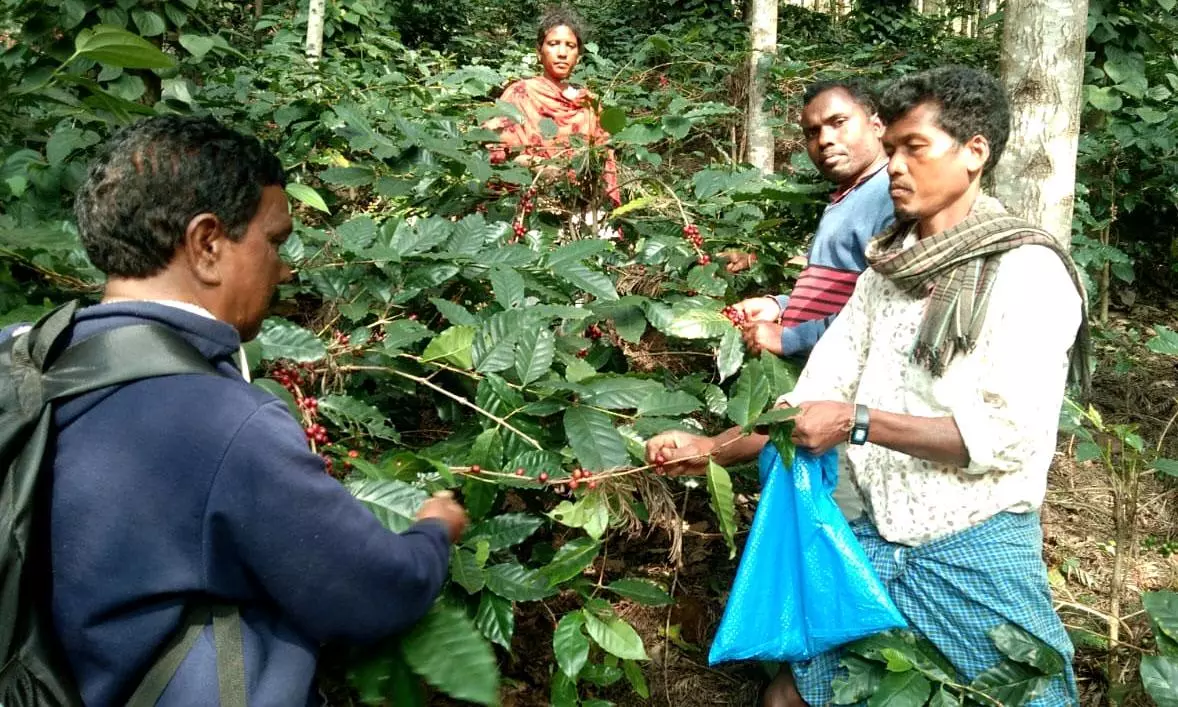
Coffee pickers at Tsiese Coffee Estate sort freshly harvested ripe cherries before fermentation
Tsiese Coffee Beans claims back-to-back titles at Coffee Board of India’s flagship competition.
For decades, India’s coffee landscape, both commercial and specialty, has been dominated by established estates from the South. But Nagaland’s Lhouvilie Yhor, proprietor of Tsiese Coffee Beans, is steadily altering the picture by placing the state on India’s specialty coffee map.
The self-taught grower from Tsiesema village, Kohima, who is an architect by profession, won at the Coffee Board of India’s Know Your Kaapi (KYK) competition this year, marking one of the most significant recognitions yet for a Northeastern coffee producer.
In a field traditionally led by plantations from Karnataka, Kerala and Tamil Nadu, Yhor emerged among the top performers, securing the Arabica Naturals title for his Tsiesema-grown beans. His 2025 win follows last year’s performance, when Tsiese Coffee Beans won the Arabica Washed category.
The KYK competition, held annually by the Coffee Board of India, evaluates entries across Arabica washed, naturals and experimental categories, as well as Robusta washed, naturals, experimental and alternative species. This event is regarded as the country’s most demanding cupping competition. Beans undergo multiple blind cupping rounds, scored for clarity, sweetness, complexity, processing discipline and consistency.
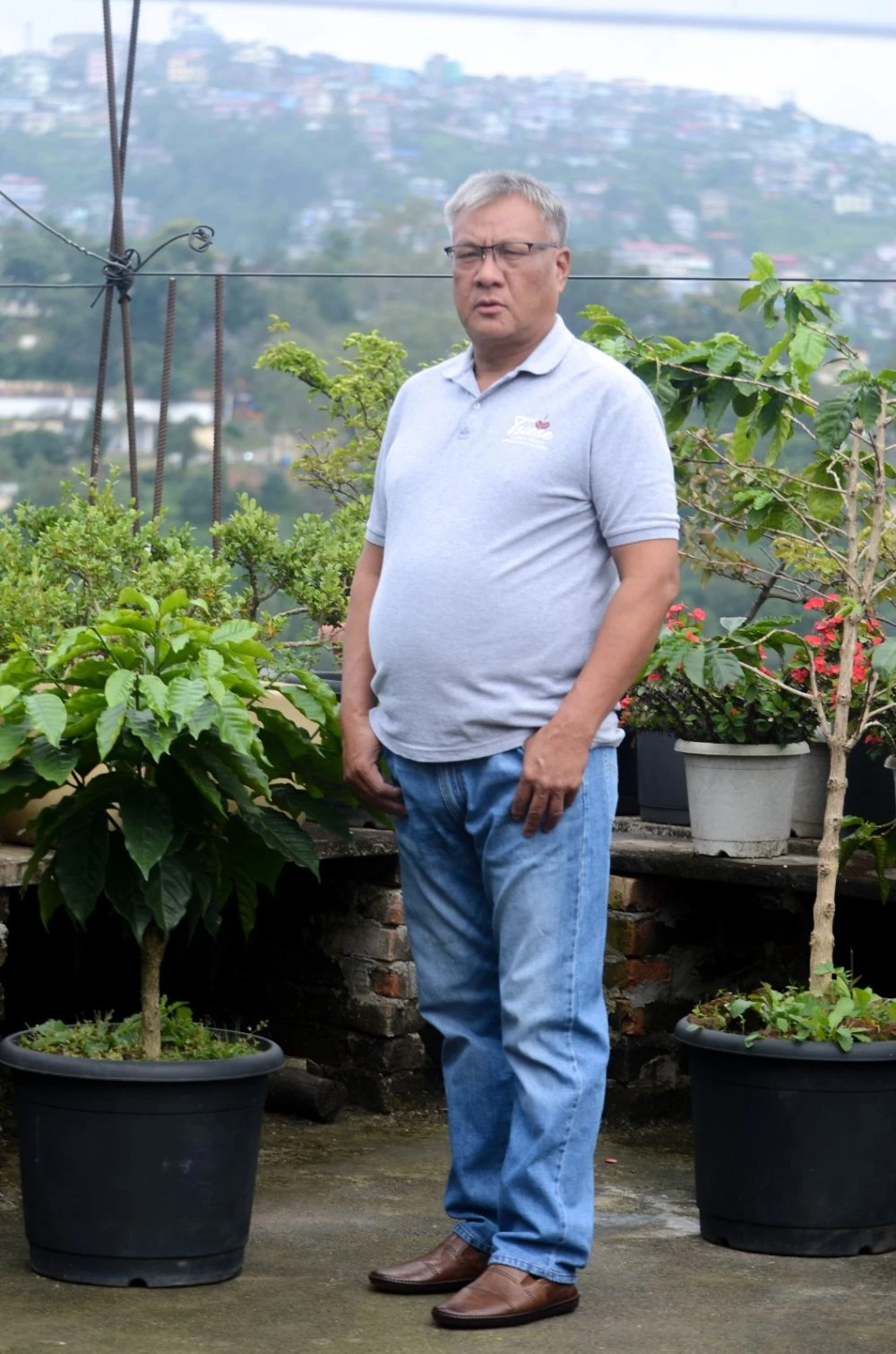
Lhouvilie Yhor, Proprietor of Tsiese Coffee Estate.
“Competing against century-old plantations from Karnataka and Kerala and still winning is a major achievement for a grower from the North-East,” Yhor said. “Recognition from the Coffee Board and the CCRI tells you your coffee meets the highest scientific standards in the country.”
Yhor began cultivating Arabica in 2015 with 10,000 saplings from the Nagaland Land Resources Department. Coffee cultivation in the state had failed in the 1980s, but he said government support, technical guidance from the Coffee Board of India and his persistence kept him going.
Yhor operates under the brand Tsiese Coffee Beans. Apart from his own estates in Tsiesema and Zhadima, he sources cherries from smallholders in Touphema, Chiechama, Nerhema, Tseminyu, VK Town (Zunheboto) and Yimchalu (Mokokchung). He trains partner farmers in each village to produce specialty-grade beans, emphasizing careful picking, fermentation and drying.
Nagaland’s high-altitude terrain and virgin soils naturally give beans an edge, Yhor said. “Our land gives 60 to 75 percent of the quality by default. With 20 to 25 percent sincere effort, the coffee becomes world-class.”
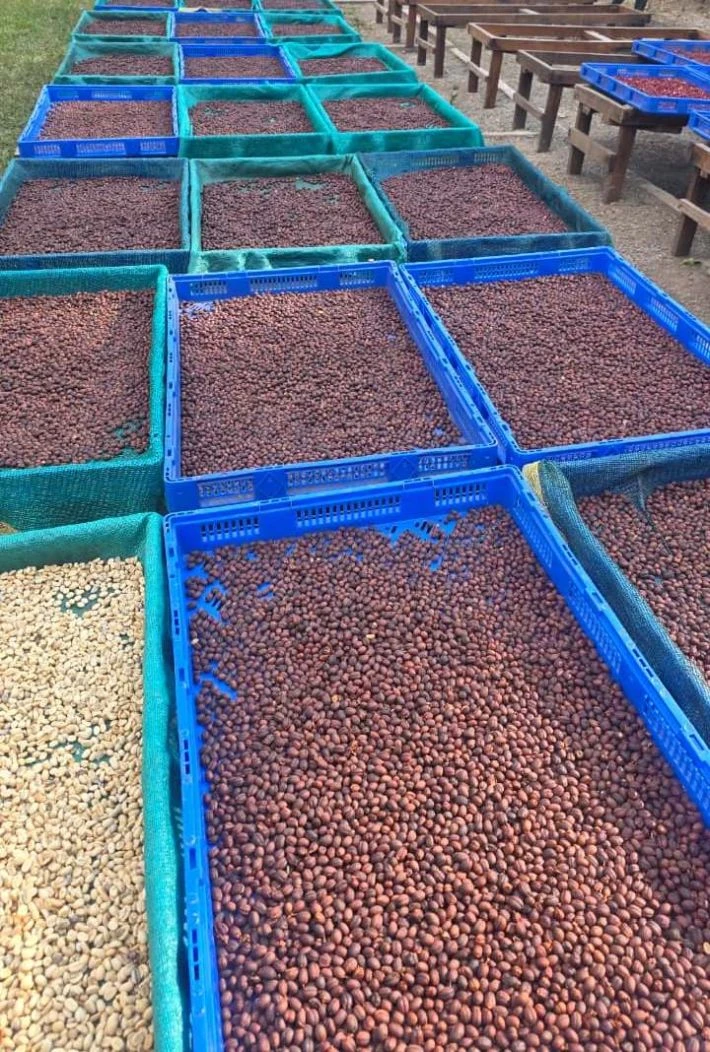
Naga traditional barrel fermentation While many producers rely on scientifically manufactured bacterial or yeast cultures and use stainless-steel or food-grade plastic tanks for controlled anaerobic fermentation, Yhor follows a method rooted in Naga tradition. He ferments his coffee in wooden log-drum barrels historically used for preparing thuthse, a local rice beer. These barrels contain naturally occurring bacteria and wild yeast that drive a slower, more complex fermentation.
“Commercial microbial cultures can sometimes make the coffee overly sweet. The wooden barrel gives a more balanced microbial environment,” he said, adding that the indigenous technique, now being replicated in Japan for liquor fermentation, originates from Naga food culture.
His anaerobic naturals involve continuous pH monitoring, round-the-clock checks, selective picking of fully ripe cherries, strict moisture control and extended resting periods. After processing, the beans are milled in Chennai and supplied to specialty roasters in India and Japan, which he regards as the most demanding market. “Once Japan accepts it, every other buyer will accept it,” he said.
Market at your doorstep Yhor describes coffee as one of the few sustainable, long-haul income sources for Nagaland’s geography. Unlike perishable crops, which suffer from poor market access and lack of cold storage, coffee attracts buyers directly to the farms and villages. “If you work hard for four years, by the fifth year you break even,” he said.
But Yhor acknowledges that the first four years are hard, requiring labour and patience. “People expect quick returns. Coffee does not work like that. It needs commitment,” he said.
One of the overlooked strengths of Naga coffee, Yhor pointed out is its market pull. Buyers travel directly to remote farms and villages to secure produce even before the harvest begins.
“In Nagaland, you don’t have to chase the market. The buyers come to your doorstep,” he said. Specialty buyers from across India and occasionally abroad, visit estates in places like Shamator, Noklak, Mon, Touphema and Tsiesema to negotiate advance purchases. Many of them arrive during the harvest season to assess cherries on the trees, taste previous lots and reserve entire micro-lots well ahead of processing. “That’s the beauty of coffee here–if the quality is good, the market will find you,” he added.
source: http://www.morungexpress.com / The Morung Express / Home> Morung Exclusive / by Imti Longchar / December 08th, 2025
The Centre said it cannot stop banks from auctioning defaulting coffee estates under SARFAESI, as plantations aren’t exempt as agricultural land, even as thousands of Karnataka growers face auctions.
A coffee plantation Photo | Special Arrangement
Shivamogga :
The Union government has clarified that it cannot intervene in banks’ recovery proceedings against defaulting coffee growers under the SARFAESI Act, calling it a commercial decision. It reiterated that coffee plantations are not treated as agricultural land for SARFAESI exemption and said affected borrowers can only seek relief through Debt Recovery Tribunals.
The Union government’s clarification comes at a time when thousands of planters in Karnataka are staring at the imminent auction of their plantations.
Replying to an unstarred question in the Lok Sabha, Minister of State for Finance Pankaj Chaudhary said that recovery action under the Securitisation and Reconstruction of Financial Assets and Enforcement of Security Interest (SARFAESI) Act is a commercial decision of banks and financial institutions, and the Centre does not interfere in such matter.
The reply came in response to a question by Udupi-Chikmagalur MP Kota Srinivasa Poojary, who sought details on whether public sector banks were auctioning coffee plantations of overdue borrowers and whether the government planned to stop online auctions, considering the distress faced by growers.
The Finance Ministry clarified that coffee plantations are not treated as ‘agricultural land’ for the purpose of exemption under Section 31(i) of the SARFAESI Act, based on a Karnataka High Court judgment. The court had ruled that plantation crops such as coffee, tea, rubber, pepper and cardamom do not fall under the definition of agricultural land for SARFAESI protection, thereby allowing banks to proceed with enforcement action.
The government further informed that recovery proceedings initiated earlier by Union Bank of India and Indian Bank against coffee estate owners were upheld by the Karnataka High Court in January 2021. While one of the affected borrowers later withdrew his Special Leave Petition before the Supreme Court in August 2023, another petition is still pending. However, there is no stay on the SARFAESI action, enabling banks to continue auctions.
On demands from growers to halt online auctions due to delayed repayments caused by market volatility and rising input costs, the Centre maintained that it does not intervene in individual recovery cases. “The government is not involved in commercial decisions or recovery proceedings of banks or financial institutions,” the minister said in his reply.
Addressing allegations that traders from Dubai were exploiting coffee plantations in Chikkamagaluru district by obtaining licences online, the government said the Coffee Board has not received any such information. As for relief to distressed growers, the Centre pointed out that the only remedy available to borrowers facing enforcement action is to approach the Debt Recovery Tribunal under Section 17 of the SARFAESI Act. No separate policy relief or auction moratorium has been announced for coffee growers.
The parliamentary reply comes as Karnataka’s coffee growers’ associations seek urgent government support amid shrinking margins, labour shortages and climate pressures. Karnataka remains India’s top producer, contributing 248,020 MT in 2022–23, ahead of Kerala and Tamil Nadu.
Karnataka Growers’ Federation president H Shivanna told the TNIE that coffee growers will meet Union Minister of Commerce and Industry Piyush Goyal, who is visiting Chikkamaluru district this month. “We will apprise him of the need to come to the rescue of growers to present our core demands,” he said.
source: http://www.newindianexpress.com / The New Indian Express / Home> Karnataka / by Marx Tejaswi / December 09th, 2025
Legal action would follow in cases of non-compliance. The quality of Araku coffee would not be compromised under any circumstances, he stressed. The administration would ensure stable pricing for Araku coffee and strengthen its presence in international markets.
With berry borer pest issues expected to surface in the Araku and Dumbriguda mandals, the collector advised farmers to take proper precautions during collection, pulping and drying.—DC
Visakhapatnam:
The ASR district administration is encouraging coffee farmers to sell their produce directly, without middlemen, and would set up coffee Rythu Bazaars to support the farmers. District collector Dinesh Kumar said farmers who join the initiative would receive machinery and equipment at a 30 per cent subsidy on the unit cost. He said, “All traders involved in the coffee business must hold a valid coffee trade registration certificate.”
Legal action would follow in cases of non-compliance. The quality of Araku coffee would not be compromised under any circumstances, he stressed. The administration would ensure stable pricing for Araku coffee and strengthen its presence in international markets. Directions to these effects were issued during an awareness and interaction programme held on Monday with coffee farmers, traders, FPOs, and NGOs.
The collector said, “If all coffee traders in the district form an association, it will be legalised, enabling them to conduct business collectively.” Such an association would help maintain stable pricing for quality produce, he said, and called for the supply of parchment that meets international standards. He stressed the need for high-quality practices from fruit collection to processing. With berry borer pest issues expected to surface in the Araku and Dumbriguda mandals, the collector advised farmers to take proper precautions during collection, pulping and drying. He directed the Coffee Board to share pest-control videos regularly.
Check posts, he said, will be set up to curb the movement of illegal crops. Agriculture staff, ITDA teams and revenue officials would conduct continuous monitoring. Government-issued permission documents are mandatory for transporting coffee crops.
He warned that consignments with out proper permissions would be seized.
The collector asked the Paderu ITDA project officer to install digital weighing machines in coordination with the GCC and ITDA to prevent fraud at markets and procurement centres. He asked the officer to complete the construction of two eco-pulping units in G Madugula and GK Veedhi mandals by next year.
A food processing park would be established in Chintapalli to support FPOs and interested enterprises. During the meeting, ITDA project officer Thirumana Sripooja said coffee fruits would be procured through the GCC. He urged farmers to approach the purchasing centres.
source: http://www.deccanchronicle.com / Deccan Chronicle / Home> Southern States> Andhra Pradesh / by DC Correspondent / December 09th, 2025
Joburg Super Kings: SA20 is preparing to enhance its renowned broadcast for Season 4, introducing a prestigious commentary team with leading figures in international cricket. Robin Uthappa, a highly regarded voice in Indian T20 cricket, rejoins the panel, joined by global cricket legends Dale Steyn and Eoin Morgan.
As SA20 prepares for another exciting season, audiences can expect expert analysis, compelling storytelling, and detailed insights from a team of analysts with decades of international experience in the commentary booth.
Adding Steyn, regarded as the top fast bowler of his era, and Morgan, the visionary leader behind England’s transformation in white-ball cricket, greatly enhances the analysis of all 34 matches. Their inclusion offers fans an unmatched perspective on fast-bowling techniques, leadership choices, team strategies, and crucial match moments.
Uthappa, who previously served on the broadcast panel, remains involved with SA20. His insights, developed through extensive experience in the IPL, international cricket, and various global T20 leagues, provide a valuable perspective during critical batting moments, pressure scenarios, and momentum swings.
Leading the global effort are prominent figures such as former England captain Kevin Pietersen, the skilful Indian batsman Robin Uthappa, and cricket voice Mark Nicholas. They are complemented by a legendary panel of Proteas icons who are deeply familiar with local conditions. At the forefront is AB de Villiers, widely recognised as one of the most potent and destructive T20 hitters ever. He is supported by JP Duminy’s strategic insight, Ashwell Prince’s batting skill, Chris Morris’s all-round ability, and Vernon Philander’s precise bowling.
Season 4 will once again showcase a mix of world cricket legends, popular South African stars, and experienced broadcasters, ensuring that every aspect of the game, from strategic insights to boundary-side energy, is presented with depth and style.
Keeping the action lively and full of energy are the likes of Natalie Germanos, Mpumelelo Mbangwa, Kass Naidoo, Mark Butcher, Nikhil Uttamchandani, Lesego Pooe, Motshidisi Mohono, and Kriya Gangiah.
Together, this vibrant and diverse line-up guarantees fans worldwide receive top-notch analysis, engaging stories, and unrivalled entertainment throughout the competition.
The SA20 continues to grow as one of the most thrilling T20 leagues globally, delivering elite cricket to fans across six vibrant host cities: Durban, Johannesburg, Cape Town, Paarl, Centurion, and Gqeberha.
The six competing teams will showcase their sporting skill and entertainment in a spectacular battle.
• Durban’s Super Giants
• Joburg Super Kings
• MI Cape Town (Season 3 – 2025 Champions)
• Paarl Royals
• Pretoria Capitals
• Paarl Royals
Fans in India can watch every moment of SA20 Season 4 live on JioHotstar and Star Sports Network, starting from December 26.
source: http://www.cricketnmore.com / CricketnMore / Home> Latest News / by IANS News / December 09th, 2025
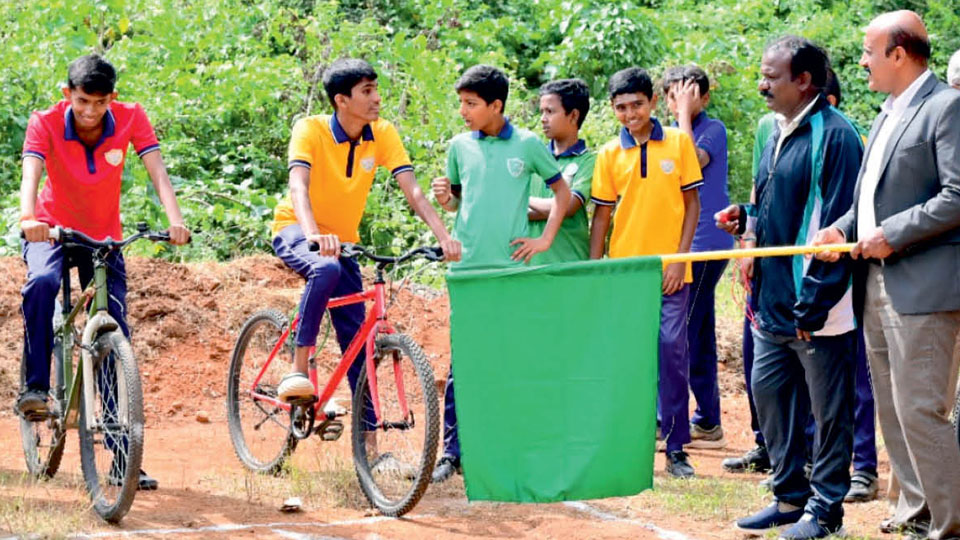
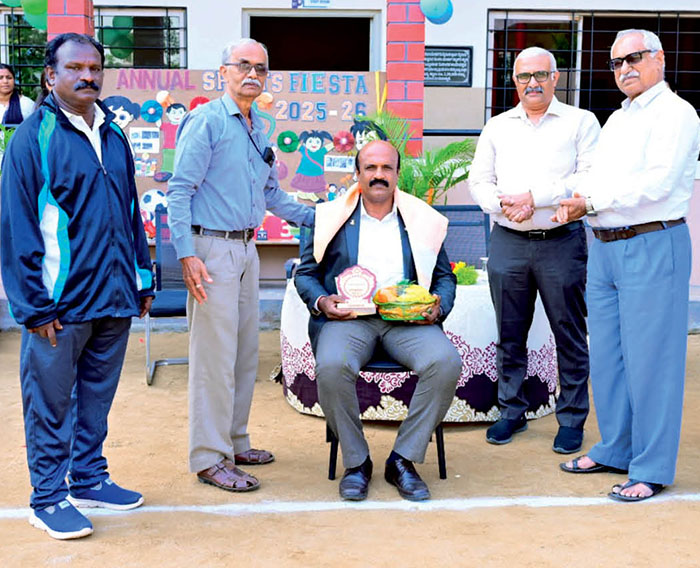
The Annual Sports Fiesta was held at Kodagu Model School on Kaveri Road in Vidyashankara Layout, Mysuru, recently.
Dr. C. Venkatesh, Chairman and Director, Department of Studies in Physical Education & Sports Sciences, Sports Pavilion, University of Mysore, inaugurated the meet by lighting the sports torch, followed by a symbolic cycle ride to officially open the sports events.
In his inaugural address, Dr. Venkatesh emphasised that sports not only promote physical fitness but also strengthen mental well-being.
He inspired the students by sharing the life journeys of sports icons such as Dhanraj Pillay, Arunima Sinha and many others. He motivated the young athletes with powerful messages such as “Don’t fail without trying,” “No gain without pain,” and “Strength is life; weakness is failure.”
He highlighted that both education and sports are essential for their overall growth and success.
Sri Kaveri Kodava Association, Mysuru East and School President K.M. Belliappa spoke about the importance of celebrating Sports Day to foster sportsmanship, teamwork and holistic development among students.
The two-day celebration concluded with a valedictory and prize distribution. Ajjikuttira C. Subbaiah, Management Member of Sri Kavery Kodava Association, Mysuru East, an Army veteran, a National-level sportsperson and a recipient of several medals in veteran category, was the chief guest. Secretary P. A. Devaiah presided.
source: http://www.starofmysore.com / Star of Mysore / Home> Sports / December 09th, 2025
WELCOME. If you like what you see "SUBSCRIBE via EMAIL" to receive FREE regular UPDATES.
Read More »