Down the royal memory lane

The Kodagu principality was ruled by the Haleri dynasty between 1600 and 1834.

During this time, a Havyaka family moved from Adamane in Shimoga to Palathadaka near Subrahmanya in Dakshina Kannada. Hence, they identify themselves as the Adamane Palathadaka (AP) family. Many AP family members were related to the officials who served under the Kodagu rulers.

A member of this generation, Dr A P Lalit Mohan, has their family tree.

The AP family claims their descent from Subbarasaya, who served as a karnika (treasurer) in Kodagu, as well as his brother Thimmarasaya. A number of Subbarasayas and Thimmarasayas can be found in the family tree.

Dr Mohan claims that two female members Mahadevamma, the wife of Dodda Vira Rajendra, and Gowramma, one of Chikka Vira Rajendra’s 13 queens, were born in the AP family.

Two missionaries, Hermann Friedrich Mögling in his Coorg Memoirs and Georg Richter in his Gazetteer Coorg narrated the story of the Rajas.

Linga Raja I died in 1780 while his three sons, Vira Raja, Appaji Raja and Linga Raja II, were still young. Hyder Ali became their guardian of the princes and took up the direct administration of Kodagu. He maintained that when they would come of age, the throne of Kodagu would be restored to them. In the meantime, he appointed Subbarasaya, from the AP family, as the amaldar of Kodagu.

In 1782, Kodagu rose in rebellion. The princes and their family members were moved to Gorur Fort in Hassan. After the death of Hyder Ali, his son, Tipu Sultan, succeeded as the ruler of Mysore. The Kodagu princely family was again moved to Periyapatna Fort. They were being held in confinement and were prevented from reaching their capital, Madikeri. Tipu marched through Kodagu in 1784. When Kodagu rebelled again, he returned.

Subbarasaya was succeeded as amaldar by his nephew Nagappayya. Nagappayya was charged with treason by Tipu Sultan and was condemned to death. He then fled to Wayanad and took asylum under Kote Raja in Kotangadi.

During 1788, two Kodagu leaders, Appaneravanda Achayya and Pattacheravanda Boluka, helped Vira Raja and his family escape. Most of the family members settled in Kurchi in Kodagu. From there, Vira Raja with Achayya, Boluka and his other men led a guerrilla war against Tipu Sultan.

Nostalgia

The Kote Raja sent bandits to Kurchi where they killed the family members, including Vira Raja’s first wife, looted the place and burnt it down. Despite this setback, by 1791, Vira Raja reclaimed Madikeri. In 1795, a new palace was built in Nalknad. Vira Raja had a daughter, Rajammaji, from his first marriage.

He desired to have a son. Hence, the following year, a mantapa (pavilion) was built in front of this palace where Vira Raja married Maha Devamma in a grand ceremony. Maha Devamma later came to be called as ‘Maha Deva Rani’. Vira Raja and Maha Deva Rani had four daughters: Devammaji, Muddammaji, Rajammaji and Mahadevammaji.
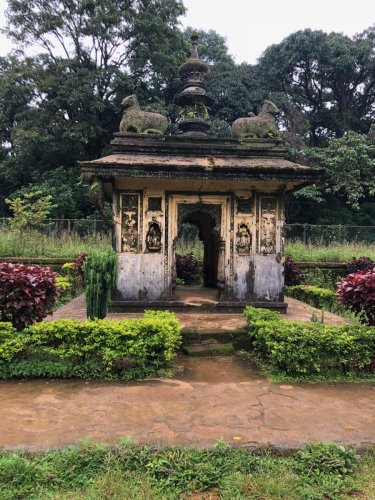
Remnant Kalyana Mantapa in front of Nalknad palace in Kodagu. Photo by author

Vira Raja had his will made before he died in 1809. Accordingly, Devammaji succeeded him to the throne. But two years later, her uncle Linga Raja forced her to abdicate the throne in his favour.

Linga Raja ruled from 1811 until his death in 1820. He got his four nieces married. Linga Raja’s son Chikka Vira Raja succeeded him. By 1826, Chikka Vira Raja got Muddammaji and her family members killed.

During the 1834 war between Kodagu and the British East India Company, Chikka Vira Raja surrendered to the British. After his exile, he went to London where he died in 1864. Karnika Thimmappayya, who was his brother-in-law, died in 1868.

source: http://www.deccanherald.com / Deccan Herald / Home> Spectrum> Spectrum Statesman / by Mookonda Kushalappa / March 10th, 2019
Smell the coffee and spirituality at Coorg

Jaggery coffee may not be your cup of tea but expect the brown brew to be presented as a welcome drink at a resort in the middle of a large coffee plantation, such as the Cottabetta bungalow in Pollibetta, Coorg, south Karnataka. Nearly 130 years old, this plantation resort was once the residence of British planters. Owned by the Tatas now, it consists of a Kerala-style house with the bedrooms around the inner courtyard, offering the old-world charm and comfort.

On the hillsides, a dense forest of short and stunted trees bearing this exotic berry, in the shadow of the taller trees on which pepper creepers climb high, abounds. The soil here is good for a host of other spices, too. That’s what the traders from the west came looking for, and then settled down to rule our country.

A tour of this particular plantation gives an insight into the process of producing coffee. According to a tour guide, Udhav, a coffee plant starts yielding berries after seven years, and then goes on doing it for over 75 years. Initially the berries are red, but turn brown once they go through several stages of drying, pulping, roasting and grinding before landing on our tables as the brew with a heady aroma. Robusta is the variety that grows here. It’s the favourite of the elephants, too. Most plantations are surrounded by an electric fence to protect them from pachyderms (animals like elephants, hippopotamus and rhinoceros) but, says Udhav, “sometimes they find out how to switch it off. Generally, it is the matriarch of the herd who knows how”!

DevaKF10mar2019

Monastery

In another direction from Madikeri, about five kilometres off the Bangalore road, lies a Buddhist monastery, Namdroling. This seminary imparts education in the Nyingmapa tradition of Buddhism. Over 3,000 students from the primary to postgraduate level, from the Himalayan regions and abroad, “chant and study, work and practice” here. His Holiness Penor Rinpoche set up this monastery in 1963.

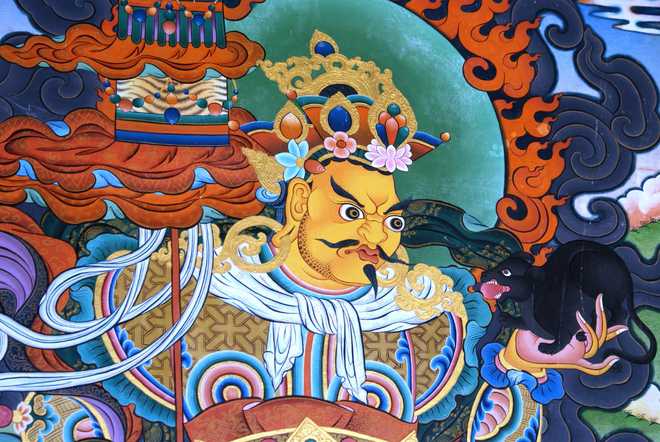
He “attained Mahaparinirvana” in 2009. The Dalai Lama consecrated it and christened it as Namdroling, though its full name is Thegchog Namdrol Shedrub Dargyeling (Land of increasing practice and teaching of the utmost yana that achieves spontaneous liberation). The centre is also known as the Golden Temple because of the three 40-feet high, gilded statues of the Buddhist icons. The entire complex has been elaborately decorated with the Tibetan-style paintings, murals and religious figures. Bylakuppe, a small town where this is located, is a far cry from Tibet in terms of climate and culture but it houses the second largest Tibetan settlement after Dharamsala.

Around 40km from Madikeri is Talakaveri, on the Brahmagiri hill, the source of the Kaveri river. A tank marks the source of the river, and a nearby temple is a popular place for pilgrimage. Not too far from Madikeri lies the Dubare elephant camp. It is located on the banks of Kaveri. Apart from watching big animals, one can do some still-river rafting close by. The best time to visit Coorg is soon after the rains when water cascades down the falls and mist rises up to shroud the mountains. Perhaps, that’s why it’s also known as the Scotland of India.

source: http://www.tribuneindia.com / The Tribune / Home> Spectrum> Travel / by Lalit Mohan / March 10th, 2019

Madikeri: Renovated sanctuary and altar blessed at St Michael’s Church

Madikeri :

St Michael’s Church Madikeri is the main Church of Kodagu deanary with almost 500 families. The renovation of the sanctuary and the altar of this church have added beauty and have created a better atmosphere for prayer and liturgical services.

The beautiful sanctuary was blessed by Fr K A William, bishop of diocese of Mysuru on March 5 during the Eucharistic celebration concelebrated by Fr Madalai Muthu, dean of Kodagu deanary, Fr Alfred John Mendonca, parish priest of St Michael’s Church, Fr Naveen Kumar, correspondent and the priests from different parishes of Mysuru diocese. The bishop blessed the sanctuary, cross, statues of Mother Mary and St Michael, Lectern, altar and tabernacle during the Eucharistic celebration.

The Eucharistic celebration was followed by a short felicitation programme mastered by Justin P J Fr Naveen Kumar, correspondent of St Michael’s Educational Institutions. He welcomed the dignitaries and the gathering.

Fr William K.A, bishop of Mysuru diocese, Walter Pinto, architect and designer of the renovated sanctuary and altar, and Fr Alfred John Mendonca, parish Priest of St Michael’s Church Madikeri were honored.

Charles D’Cunha, Sujay, Martin P J, and Stalin Philip were also given a memento each for their service towards the renovation of the sanctuary.

Fr Alfred John Mendonca, parish priest rendered the vote of thanks. He appreciated the selfless service of parish council secretary Johnson K A and all the parish council members, their cooperation and generous contribution by the parishioners and the service offered by the Sisters of the Congregations of St Joseph of Tarbes and Bethany. The beautiful ceremony concluded with a fellowship meal.

source: http://www.daijiworld.com / DaijiWorld.com / Home> Karnataka / Media Release / March 07th, 2019

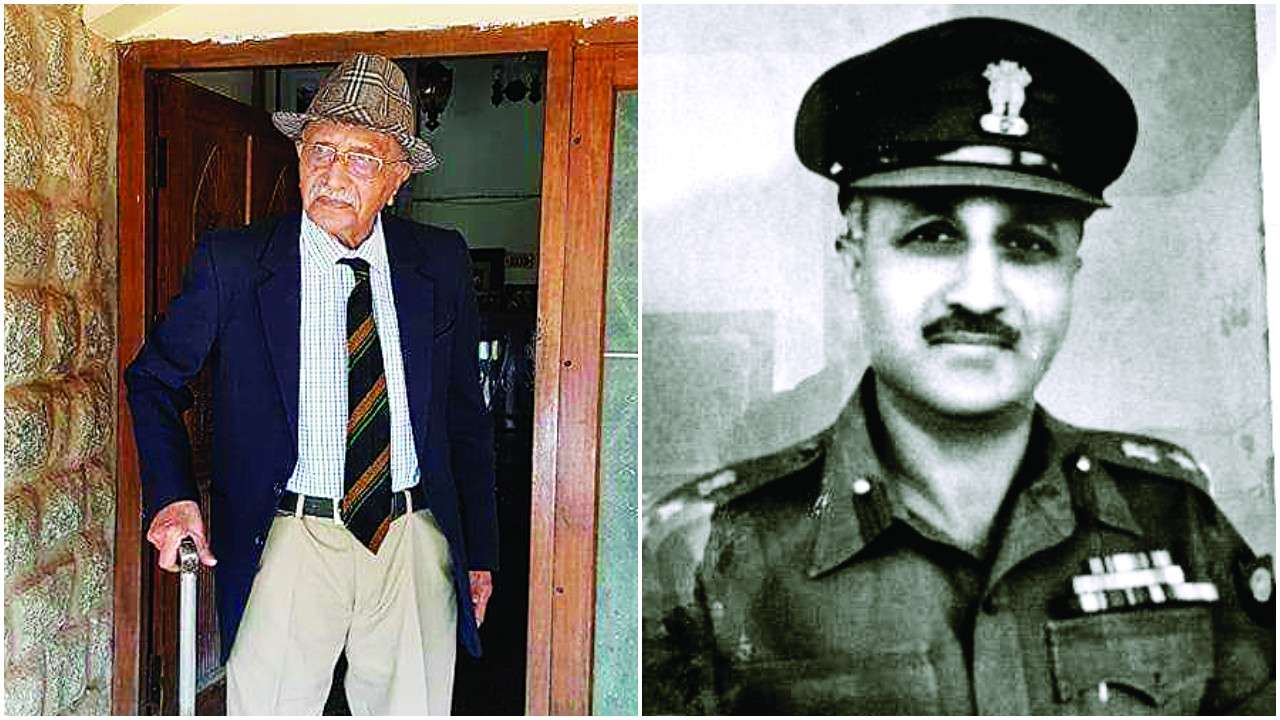
Soldier who saw action in World War II passes away at 102

Biddanda M Chengappa  THEN AND NOW: Second Lt Col Biddanda M Chengappa
Biddanda M Chengappa THEN AND NOW: Second Lt Col Biddanda M Chengappa

Col. Biddanda M Chengappa, 102, a soldier who saw action during WWII in Burma against the Japanese, passed away at his son’s home in Ahmedabad. His son BC Mandappa told DNA that the centenarian was not ailing. “He was very lucid in the morning and went on with his routine of having breakfast, reading newspapers, and tracking post-Pulwama attack etc. He had his lunch and went for an afternoon siesta.”

He further recounts how his father fondly recalled his time in Burma. “He was only 24 when he joined the Army in 1941, soon after being commissioned as a Second Lieutenant and packed off to battlefront during World War II. The war was at India’s doorsteps in Burma as the Japanese were advancing. Second Lt Chengappa was in the Indian brigade deployed to stop the Japanese.” Along with a dozen newly commissioned officers, he was sent with a shipload of soldiers to Rangoon where they lacked both equipment and experience to take on the fierce enemy, recalls the family.

“While the British superiors on the Eastern Front were a bunch of inefficient lot preoccupied with own comforts, Second Lt Chengappa and the other Indians were sent to the enemy line where before his own eyes he watched two fellow Coorgs fall to the Japanese followed in quick succession by Indians,” says Mandappa.

Within a week, only 20 survivors remained and were sent orders to retreat from the thick forests in northern Burma where they were stationed. “My father and 19 others somehow managed to hitch a ride on to a truck carrying kerosene supplies for some distance. As bullets flew around everybody prayed and hung on for dear life as even one small spark would have turned the truck into a flaming death trap,” he recalls.

Later the group began walking through the forest for Kohima in Nagaland. The lone Burmese army officer guided them through the forest, where away from the enemy at night the tired men fell asleep under the trees. “But Second Lt Chengappa’s troubles were far from over. He woke to a searing pain in his leg to find a snake had bitten him. All the men had was some first-aid and he thought he would breathe his last there,” recounts Mandappa.

Meanwhile, back in Palangala, Coorg (in today’s K’taka) his parents had been told their son was missing in action. “With no news for more than a month, they feared the worst.”

Soon promoted as Major, he served in Gaza during late 1950s as part of UN Peacekeeping Force. Married to Sheila from the Codanda family, he has three sons and retired as a Colonel and settled in Coorg.

A passionate golfer, he played well into his late 90s and was happy to drive his car till a few years later, they recall.

source: http://www.dnaindia.com / DNA / Home> India / by Yogesh Pawar / March 08th, 2019

When India’s First Army Chief Refused Pakistan’s Offer To Release His Son Captured As A PoW In 1965 War

The legend of Field Marshal KM Cariappa is well known as he was the first chief of the Indian Army after independence. But one anecdote from the life of the legend himself elevated him far above others who could rival his glory.

GENERAL AYUB KHAN AND FIELD MARSHAL KM CARIAAPPA, PIC COURTESY: AFP/WIKIPEDIA

Yes, the battle of 1965 where he refused the offer of Pakistan General Ayub Khan to release his son who was an IAF pilot and was captured and kept as Prisoner of War (PoW), the legend Field Marshal Cariappa not only refused General Ayub Khan’s offer but also asked to treat him at par with other PoWs.

Caught by Pak army when his plane was shot down
Sqn Ldr KC Cariappa was flying near the border and his plane was shot down. He had to eject and during the process of ejection and landing, the Sqn Ldr Cariappa ‘s spine was injured. Soon after the capture, like all other PoWs, the Sqn Ldr Cariappa told his name, rank and unit number. Like Wing Abhinandan, he also didn’t divulge any information.

News soon reached General Ayub Khan

REUTERS
REUTERS

Soon after his capture, the news reached General Ayub Khan that Pakistan army had captured son of India’s first army chief Field Marshal KM Cariappa, the General announced it on Radio Pakistan that his forces have captured Sq Ldr KC Cariappa, the son of legendary Indian Field Marshal.

When General offered Field Marshal to release his son
General Ayub Khan had served under Field Marshal Cariappa in the British Indian Army and always held him in high esteem. General Ayub Khan asked Pakistan High Commissioner in New Delhi to personally meet Field Marshall who in return politely refused General’s offer.

Field Marshal said other PoWs are also his sons

In his reply to the High Commissioner who had come on behalf of General Ayub Khan, Field Marshal Cariappa told him that he doesn’t want Pakistan to release his son but treat all PoWs well as all Indian soldiers are his sons.

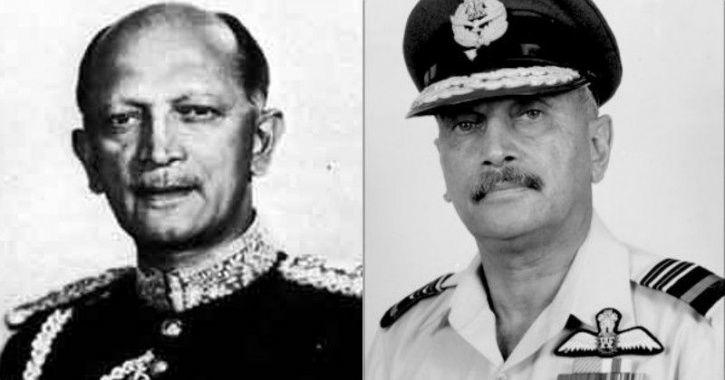
FIELD MARSHAL KM CARIAPPA AND HIS SON AIR MARSHAL KC CARIAPPA, PIC COURTESY: WIKIPEDIA/BHARAT RAKSHAK

Recently speaking to the media, Air Marshal KC “Nanda” Cariappa said “My dad was a man of high principles. For him, his son and all other soldiers were the same. Even though Ayub Khan was his junior and was close to him, he refused to get me released before the others. I was later released with all others”.

Air Marshal was quoted by the News18. Sq Ldr KC Cariappa was caught on last day of the war and when he came back, he commanded a helicopter unit of the IAF and retired as Air Marshal. He had also took part in 1971 war.

(With News18 inputs)

source: http://www.indiatimes.com / India Times / Home> News> India / by Maninder Dabas / March 06th, 2019

Time’s Shub for this beauty

The gorgeous and tall model-turned-actress is hoping to go from glam to character roles with ease.

Shubra Aiyappa
Shubra Aiyappa

After making her presence felt in Telugu and Tamil, she faced “no problem” in her debut venture in Kannada — Vajrakaya as well. She walked her way into success, featuring in one of the most popular songs of 2015, No Problem sung by Tamil actor Dhanush featuring alongside Century Star Shivarajkumar. A peppy number which celebrates the beauty and height of a pretty girl, the song has garnered more than 10 million views on various social media sites till now. The actress’s next film was John Seena directed by Simple Suni. Now, the model-turned-actress Shubra Aiyappa has signed her latest Kannada venture titled Ramana Avatara for which she will soon start shooting. She speaks to Bengaluru Chronicle on her new avatar and the ‘heights’ of opportunity coming her way, and more.

“Though I featured in just a song, and a couple of scenes in Vajrakaya, it has brought me immense fame and recognition. It was as good as a full-fledged debut in Kannada. Later, I kept getting similar opportunities to portray similar ‘glam doll’ roles where I was expected to just look glamorous. This is why I did not sign many of them. Eventually, John Seena directed by Simple Suni happened. It is ready, and for some reason, the release has been delayed. It has a great role that explores my full potential as an actress. I have also signed my next in Kannada film titled Ramana Avatara, and am thrilled about it,” says Shubra Aiyappa.

The actress does not want to take up movies just to add to her project list as it makes no sense to her. “For me, the film and role has to be relevant and exciting. What I look for, is quality of a script, the team and other crucial factors like casting before taking up a project. Thus, despite several opportunities, I have worked in only one movie after Vajrakaya. In John Seena, I play a girl’s character which has dual shades, similar to playing a dual role. It has an interesting plot and the change in appearance of my character along with its personality is the reel deal for me as an artist,” she shares, adding that unfortunately it is yet to release and once it does, the actress is confident that it will pave the way for more good roles rather than just being a glamour quotient on the silver screen.

In Ramana Avatara, she shares the screen space with Rishi, Raj B Shetty, Danish Sait, Pranitha Subhash and another actress. Directed by Vikas and Vinay Pampapathi, (brothers), it is going to be a fun filled venture.

She is also busy modelling, and recently shot for a prestigious annual calendar event. Shubra feel that modelling and films are two completely different worlds. “As a model, the focus is on looking good and to make sure I can add value to my endorsements. However, movies are about adding value to a character with emotions. I am no more walking the ramp for shows, and if I do, it is when I get the invites as a show stopper,” she says.

Shubra’s height has sometimes become an issue but that does not stop her in any way. “Yes, sometimes it is an issue. In fact, in Vajrakaya Shivanna who is way shorter than me celebrated my height in the song. I am different and it is the perspective on how one looks at it. However, if one looked at Deepika Padukone, and many more actresses who are taller, they have achieved success and that is the best way to look at their life, and not look at height as an issue.”

source: http://www.deccanchronicle.com / Deccan Chronicle / Home> Entertainment> Sandalwood / by Shashiprasad, Deccan Chronicle / March 06th, 2019

20-year-old student develops robot to monitor farms, forest fires

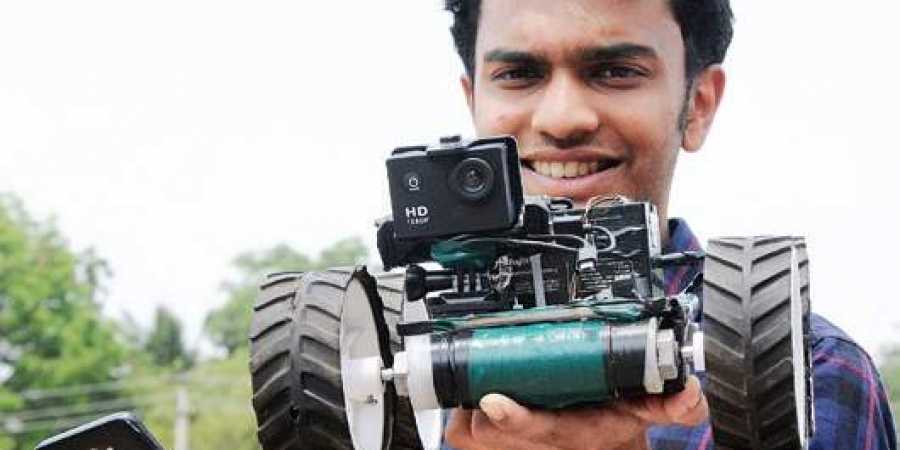
An unmanned ground vehicle, the size of a college bag, it sports four wheels to move around as well as a basic handset with a SIM and camera to record videos.

Sharan Poovaiah, a student of NIE, Mysuru, has designed the robot to help the farming community | udayashankar S

Bengaluru :

Twenty-year-old Shravan Poovaiah’s visit to his native Ammathi in Virajpet last year led him to design a machine which would help reduce his mother’s burden of not just monitoring several workers at their coffee estate on her own, but also receive alerts on wild animal movements and forest fires. Shravan, an engineering student studying BE (Mechanical) at National Institute of Engineering in Mysuru, comes from a family of farmers and designed the robot to help the community at large.

An unmanned ground vehicle, the size of a college bag, it sports four wheels to move around as well as a basic handset with a SIM and camera to record videos. Explaining how it works, Shravan said the prototype of the robot has a camera which can record all activities across the farm. The robot is designed to rotate 360 degrees to capture videos, and its owner can dial into the handset from anywhere in the world to connect to the robot.

Once connected, the owner can use the dial pad (numbers 2, 8, 4 and 6) to control the movement of the vehicle in four directions.“This is similar to games played on cell phones. The equipment hardly weighs 1kg and is very compact,” he said.

The robot prototype is designed in such a way it can move on any quality of surface. It is also suited to operate under any weather condition, including rains. It runs on solar power batteries.

“It is designed in a such a way that users can monitor the video recordings on their phones. The speed of the robot prototype is adjusted in such a way that recording can be watched with more clarity,’’ he said.

The cost of the equipment is Rs 3,000. Shravan, who worked on the prototype for six months, said it can also be used to check for wild animal movements and fires within the property and keep a track od workers.
Shravan recently demonstrated his prototype on National Science Day (February 28) at his college. His work, which was backed by his Physics professor Dr M V Deepa Urs, was met with applause.

Furthermore, former Director of the Karnataka State Open University, Prof B S Vishwanath, also assured Shravan to assist him further with the project.

source: http://www.newindianexpress.com / The New Indian Express / Home> Cities> Bengaluru / by Ashwin M. Sripad / Express News Service / March 04th, 2019

Urban Legend: O Captain! my Captain! ode to India’s war heroes

It’s not what you expect to see in the heart of the Western Ghats around the spot where the river Cauvery originates.

Mottana C. Ravi Kumar

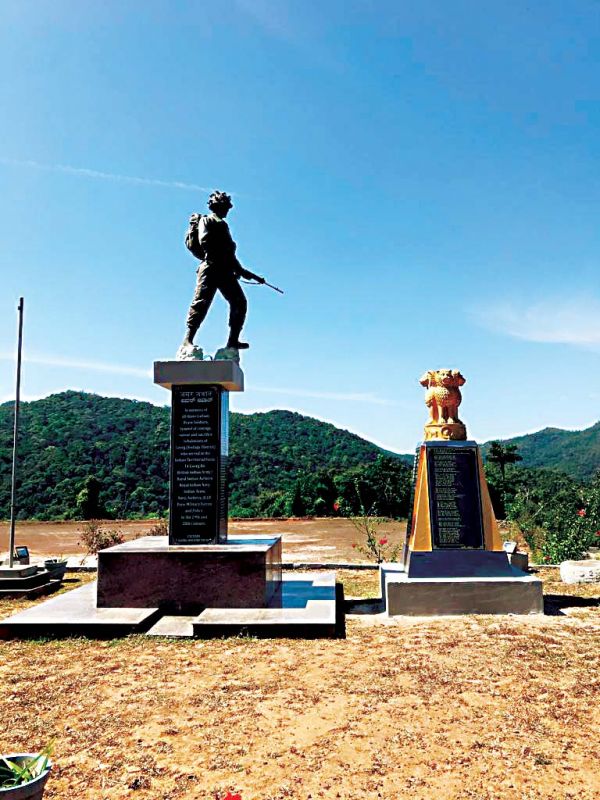
Nestled in the Western Ghats, where the river Cauvery originates, is a little-known memorial. On it are inscribed the names of 49 soldiers from a village nearby, who lost their lives in World Wars 1 and 2. It’s a heroic and elaborate effort by Mottana C. Ravi Kumar, an advocate and the son of an army man. Over the years, officers like Kargil war veteran Major Rakesh Sharma have visited the memorial, much to Kumar’s pride, writes Aksheev Thakur

It’s not what you expect to see in the heart of the Western Ghats around the spot where the river Cauvery originates. But venture deep into the green canopy of the ghats and you come across a war memorial inscribed with the names of 49 soldiers from a village here, who lost their lives in World Wars I and II.

MemorialKF04mar2019

Cherangala village in Kodagu has an advocate, Mottana C Ravi Kumar, the son of an army man, to thank for the memorial that pays tribute to its patriotic sons killed in the two wars.

It’s an elaborate memorial, the statute having come from Mohali. It nearly got a T-55 tank too, but the bridge in the village was not strong enough to carry it, forcing that plan to be abandoned . Next to the statue stands an Ashok Stambh with each side inscribed with Kavi Pradeep’s famous “Aye Mere Watan Ke Logon” Iqbal’s “Sare Jahan se Accha,” Rabindranath Tagore’s “Where the Mind is Without Fear” and Bankim Chandra Chattopadhyay’s “Vande Mataram. “

The songs and the memorial are meant to inspire the young of the village , the advocate tells you. “Soldiers serve in inhospitable conditions and this is my little ode to them,” he says.

Distinguished officers of the the country’s armed forces like Field Marshal K M Cariappa’s son, Air Marshal (retd) KC Cariappa, Lt. Gen. (retd.), G S Nanda, and Kargil war veteran, Major Rakesh Sharma have visited the memorial over the years, much to the pride of the villagers, who continue to honour the memory of the men they sent off to war.

The army man that he was, Mr Ravi Kumar’s father wanted him to join the armed forces too, but he insisted on becoming a doctor. “Ultimately, I did not become either a doctor or a soldier, but an advocate and moved to Bengaluru to practice,” he smiles.

But he did flirt with the idea of joining the army, spending some time at the Dholpur Military School near Agra as a young man. “Father joined the army in 1941. When I joined the military school, the 1962 Indo-China war erupted. The principal often gave five and six-year-old children news of their fathers achieving martyrdom on the battlefield and I saw them crying. The scene was repeated in the 1965 war and this drew me emotionally close to the armed forces,” he recalls.

But the idea of the memorial in the village was born quite by chance. Being an advocate, he once filed a writ petition in court on the lack of road connectivity to his village and the resulting disadvantage this placed its families in when it came to getting brides for their sons as parents were reluctant to send their daughters away to such a remote spot in the ghats. “ Children had to travel five miles to go to school. So when I became an advocate I filed a writ petition in the high court and it was passed by Justice Gopal Gowda,” he adds .

During one of their meetings, Justice Gowda pointed out to him that he had not invited him to the village after the road was built to connect it to the rest of the state. “It was then that the idea of the war memorial came up as I could not have invited him for just the road,” he says. And he went on to build it at the spot where it still stands in memory of the village’s bravehearts.

A strong believer in the words of Swami Vivekananda that, “They only live who live for others, rest are more dead than alive, “ the advocate has fought several cases of defence personnel too over the years.

But he has not stopped there. Unlike many in Kodagu, who run homestays, Mr Ravi Kumar runs an orphanage as he feels someone has to take care of children with no one to turn to.

“There over 25 million orphans in India according to the United Nations and of them 10 lakh sleep on the streets of Kolkata, Mumbai and Delhi. We have not even done an independent census of orphans although countries like Pakistan and Sri Lanka have. But if we take the statistics of the UN into account, they form 2 per cent of the population and are not receiving any attention. The SCs, STs and OBCs have reservation, what about the orphans, who don’t know what their religion or caste is?” he asks pertinently.

Mr Ravi Kumar takes care of the children not only till they turn 18, but till they make their own way in life. “At least they can then go on to become soldiers in the Indian Army, if not officers,” he concludes.

source: http://www.deccanchronicle.com / Deccan Chronicle / Home> Lifestyle, viral and trending / by Aksheev Thakur, Deccan Chronicle / March 02nd, 2019

‘Food 4 Cast’ features Lowcountry cafe’ with Indian flare

Mount Pleasant, S.C. (WCIV) :

Whether you’re looking for a hot cup of tea, some authentic Indian food, or a hard cocktail, you’ll find it at Coorg Indian Café in Mt. Pleasant.

Owners Preethi and Darshan Ayandra are both full time employees of Boeing, but their coffee concept has been percolating for a long time.

They are from the coffee-growing region of Coorg in India. Indian Coffee is primarily distributed to Europe and Russia, but hasn’t been served up in the United States before now, the owners say.

Eventually they’d like to sell the coffee by the bag!

Coffee isn’t the only thing brewing at this café. Food is also a shining star. You won’t find the standard Indian fare. Curry Chicken and Coorg Ribs are traditional recipes from their region.

All entrees are served with a variety of chutneys with different levels of heat. Feeling bold? Try the mint!

Coorg is closed on Monday and Tuesday. The owners would like to expand their staff, so if you’re interested in working for them, stop in!

source: http://www.abcnews4.com / ABC4 NEWS / Home> News / by Emiley Gracey / March 01st, 2019

12 New Taluks In State: Kodagu To Have Two More

With addition of Kushalnagar and Ponnampet, the hill district will now have five taluks

KumaraswamyKF02mar2019

Madikeri/ Mysuru:

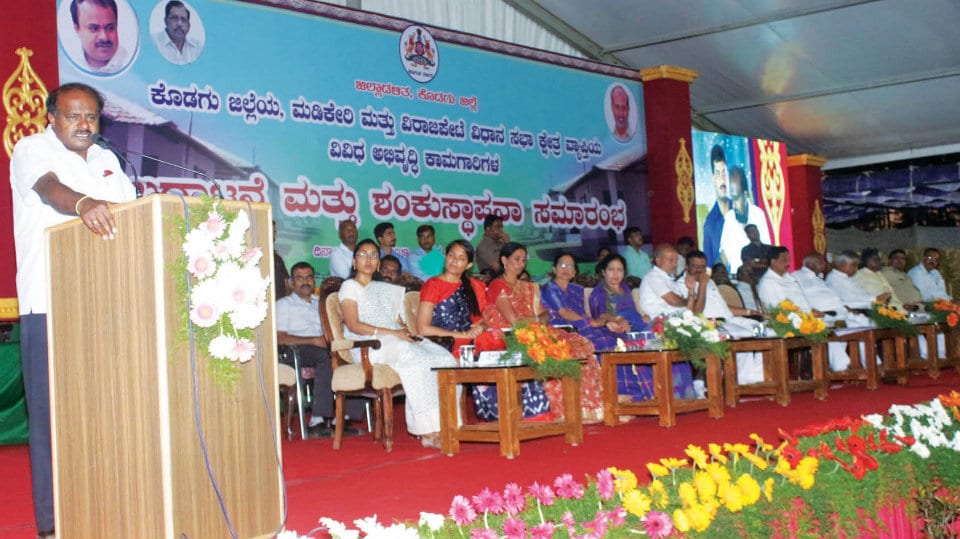
Chief Minister H.D. Kumaraswamy yesterday announced the formation of Kushalnagar and Ponnampet taluks in Kodagu following the Cabinet’s decision conceding the long-pending demand of the people of the hill district. The two new taluks carved out will be Cauvery Taluk from Kushalnagar and Ponnampet Taluk in the South.

With this, Kodagu will have five taluks, the other three being Madikeri, Virajpet and Somwarpet. The CM made this announcement at a programme organised for allotting houses to the displaced tribals of Diddahalli, at Basavanahalli, near Kushalnagar. He also launched a slew of development works at a cost of Rs. 2,146 crore.

House keys handed over to displaced tribals

A sum of Rs. 50 lakh would be released to each newly-formed taluk in the first stage for establishing basic infrastructure. On the occasion, the CM symbolically handed over keys of houses built for the displaced tribals of Diddahalli, who were evacuated from the Devamachi reserve forests.

Kumaraswamy said the people affected by last year’s floods and landslips need not worry as the government was committed to rehabilitating them. He directed the Deputy Commissioner to consult experts and explore precautionary steps to be taken in the wake partially collapsed hills before the onset of monsoon.

Kodagu District Minister S.R. Mahesh said the CM had visited Kodagu district six times since he assumed office and argued that the government was completely with the people of Kodagu.

Kodagu flood: Rs. 5 lakh to Manjula’s parents

On the occasion, the Chief Minister handed over a cheque for Rs. 5 lakh to the parents of Manjula, a student, who was feared dead in the landslips at Jodupala last year. MLAs K.G. Bopaiah, Appachu Ranjan and others were present.

About Ponnampet taluk

Ponnampet in South Kodagu is a main cultural centre in the district. Earlier, it was under the jurisdiction of Virajpet. Barring a Tahsildar’s office, all other taluk offices are situated at Ponnampet. The Court, Treasury, Taluk Panchayat Office, PWD Office, Offices of Social Welfare Department, Department of Backward Classes, Horticulture, Nada Kacheri and others are situated at Ponnampet.

Villagers from Balele, Nittoor, Karmadu, Kutta, Birunani, Parakatageri and Theralu had to travel 50-km to 60-km to reach taluk headquarters of Virajpet for any work. The proposed Ponnampet taluk will include Ponnampet Hobli, Balele, and Srimangala, Hudikeri Hobli, 21 Gram Panchayats and 49 villages. Ponnampet taluk will have 2,23,507 acres of geographical.

About Cauvery taluk

A new Cauvery Taluk will be carved out comprising Kushalnagar that was earlier under the Somwarpet Taluk. It was the dream of former Chief Minister late R. Gundu Rao to form Cauvery Taluk way back in 1993.

Kushalnagar has the offices of DySP, Circle Inspector, First Grade College, Polytechnic College, industrial layout at Kudlooru, Sports School at Koodige, DIET, Training Centre for Forest Officials, Offices of the Department of Agriculture, Sericulture and APMC. Recently, Court, Government Engineering College, Kodagu Sainik School, PG Centre of Mangalore University at Chikkaluvara and a Sub-Registrar’s Office was set up in Kushalnagar.

12 NEW TALUKS

1. Harohalli in Ramanagara

2. Cheluru in Chikkaballapura

3. Teradala in Bagalkot

4. Kalasa in Chikkamagalur

5. Ponnampet in Kodagu

6. Kushalnagar in Kodagu

7. Alamela in Vijayapura

8. Mulki in Dakshina Kannada

9. Ullal in Dakshina Kannada

10. Saligrama in Mysuru

11. Shantigrama in Hassan

12. Yaragatti in Belagavi

source: http://www.starofmysore.com / Star of Mysore / Home> News / March 02nd, 2019