Karnataka government to verify disputed land in Kodagu

Bengaluru :

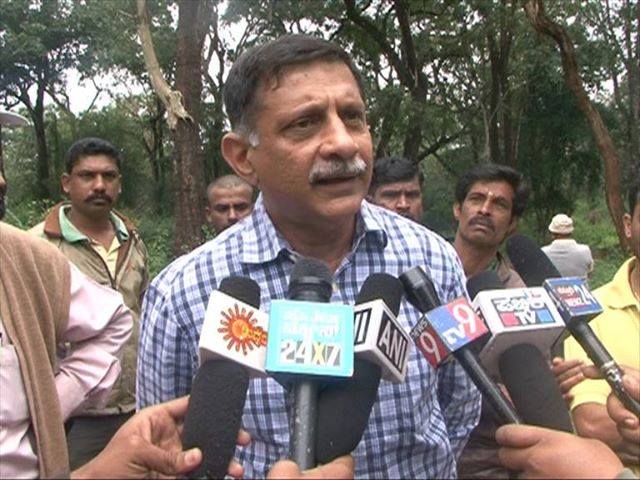
The state government on Tuesday took a decision to survey the disputed forest land, wherein the Jenu Kuruba tribals of Diddahalli had gone on an agitation, in Madikeri, Kodagu.

SiddaramaiahKF11apr2017

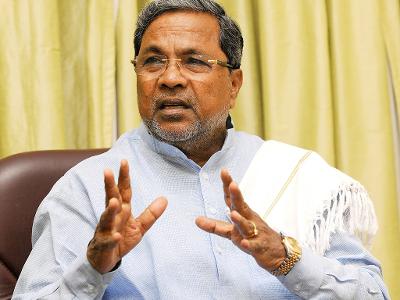
After an hour long meeting with chief minister Siddaramaiah, forest minister B Ramanath Rai, social welfare minister H Anjaneya, revenue minister Kagodu Thimmappa said the government has decided to verify the land records of Diddahalli before taking a final decision.

“After a detailed discussion, the government has decided to verify the land records of Diddahalli on whether the land is forest land or revenue land. If we verify the land records as being forest land, then we will make all efforts to provide them suitable rehabilitation area with amenities. But if the land records show that it is revenue land, then within eight days we will ensure that they have the title deeds for that land,” said Thimmappa.

The revenue minister said he will be personally camping in Kodagu on April 16 or 17 for resolving the issue.

Thimmappa said the deliberation was held with all stakeholders and that valuable inputs were shared on the case from all parties.
“The government is keen on resolving the issue and we will try to do it at the earliest,” he said.

In December 2016, the Jenu Kurubas of Madikeri who were working in the nearby coffee plantations had been agitating against the eviction by forest department and local police citing it was forest land.
Later that month, the Bettale Seve (nude protest) by a tribal woman in Diddahalli and the alleged insensitivity shown by cops in trying to disrupt the protest held by members of Jenu Kuruba (a tribe) had drawn sympathy from several quarters.

This being the last year before elections, this looter government will do anything to get the votes.

The Diddahalli faceoff had put the government in a spot, with members of civil society strongly criticizing the move.

On Monday, former MLC A K Subbaiah who spoke on behalf of the civil society, which has been seeking respite for the agitators, welcomed the government decision and expressed his hope that the state will give justice to the tribals.

source: http://www.timesofindia.indiatimes.com / The Times of India / News> City News> Bangalore News / by Sandeep Moudgal / TNN / April 11th, 2017

MTV Roadies Rising Episode 9th April 2017 Video, Nikhil Chinappa’s Gang Wins First Task

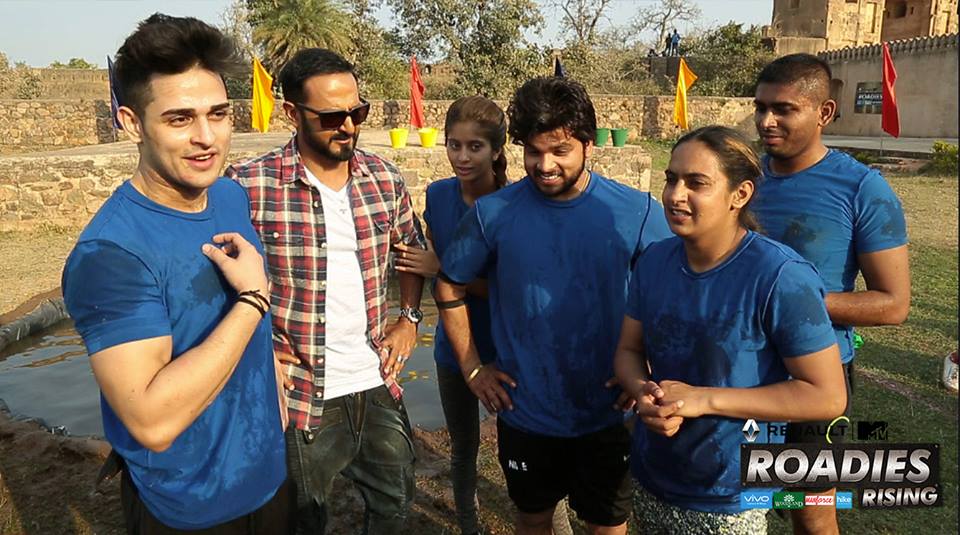
MTV Roadies Rising Episode 9th April 2017 Video, Nikhil Chinappa’s Gang Wins First Task :- The stunt based reality show MTV Roadies Rising journey kick-started from last week which is having good feedback from audiences. In the show, there are the gang leaders including, Rannvijay Singh Singha, Prince Narula, Neha Dhupia and Nikhil Chinappa and those stars are having rocking feedback at the show.

NikhilKF11apr2017

Now at the show, the gang leaders are having the new challenge in front of them to identify their warriors behind the masks. And all the warriors will be wearing the mask on their face so it is for the gang leaders it will be tough to search the warriors.

MTV Roadies Rising Episode 9th April 2017 Video
The gang leaders and the team are needed to use their brains only to defeat the teammates who were seen doing competition with them. The team also said that the other gang’s warrior is needed to search the perfect gang warriors and they need to compete with them in the task.

As the task started, the gang leaders were shocked to see the each of their, participates were using their brains and they were also seen defeating each of them. Nikhil identified the male dancing feet, Neha guessed the jersey number. Rannvijay guessed a gang and they were seen performing their task at the Goa.

Nikhil Chinappa’s Gang Wins First Task
After the participants’ perform the task, the final results were announced and the masks people were also got revealed. Prince made the most number of wrong guesses at the place of Jahangir so it was tough for his team to announce the gang leaders. So the task of the team announced and the teams got divided where there were two groups.

But now there is a big twist and as per this twist the winner of the challenge will announce who will rule the gang and the members who will perform well will get immunity too so that they won’t be evict either they will be coming at the bottom line.

The game started and the correctly guessed gang members the water comes out from a pipe with water from a pond using buckets. The team 2 had to stop them from successfully filling the pipes.

But when Divya from the Ranvijay’s team failed to perform well she got dumped which irked Ranvijay as he doesn’t want to lose someone from his team.

Prabjot leant against the barricades and it seems like advantage for them. 4 members performed for Nikhil’s team and the Nikhil’s team won the challenge. Due to Neha’s team did not perform well so she had an argument with Nikhil as Nikhil’s team perform well.

The performance of Neha’s gang was very disappointing also and Prince team also face disqualification as his team did not perform up to the mark. Nikhil’s gang won the game and he thanked Karan Kundra as it was actually Karan select them to be the perfect one.

Before the episode came to an end, a new twist was announced that now the gang leaders and their team won’t leave in the five-star hotels, rather they will be staying in the jungle at the tank as now the challenges of the Roadies will be the more difficult one.

source: http://www.dekhnews.com / Dekh News / Home / by Chitra Home Chowdhury / April 09th, 2017

Coffee farmer in Wokha is brewing a tasteful future

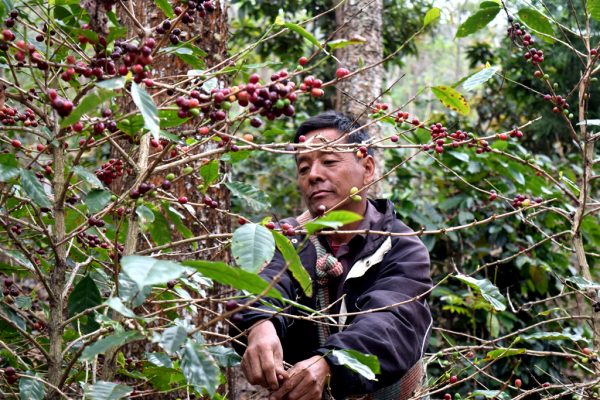
Phanbem Kithan, a coffee farmer from Wokha village, collects ripe coffee beans at his farm.

Kohima (EMN):

55-year-old Phanbem Kithan, a progressive farmer from Wokha village, in Wokha district, has been growing coffee for the past 15 years. He tried his hands at coffee plantation in 2002. Since then, he has devoted his life to growing the crop. The harvest from his crops has been increasing with each passing year.

The coffee kiosk set up by the Land Resources department at the Hornbill Festival in 2016 at Kisama, and one which was the main attraction of locals and tourists alike, was supplied by Kithan.

The farmer credits his success to the Coffee Board of India (CBI) which he said has been with him at every step of his journey in growing coffee. The journey had not been easy in the initial period of his venture. However, the logistic support and assistance rendered by the CBI has enabled him to extend his plantation every year.

Today, in an area of 6.5 hectares, Kithan has 30,000 coffee plants of Arabica coffee and Robusta coffee. He said to be expecting a harvest of 1, 000 kilograms of coffee this year; it will generate an income of possibly Rs. 1, 60, 000.

Kithan has undergone about 14 training events in various parts of India. He also won the ‘Best Nursery Maintenance’ award of the Coffee Board of India for 2014-2015; he was awarded with a certificate and a cash prize of Rs 20,000.

The CBI, he said, is highly appreciative of the coffee from Wokha as the ‘best quality and organic’ although some improvements are still required to improving the colour of the coffee. He said also that there was no problem in marketing–the produce is sent directly to the coffee board.

To encourage farmers to take up coffee plantation, Kithan has set up a nursery, since 2009, with the assistance from the CBI for maintenance. Saplings are distributed to interested farmers after inspection and after ‘analyzing’ their ‘dedication,’ he said.

Offering advice from his expertise, Kithan said that a good and healthy sapling with at least 5-12 leaves can last for about 100 years, which should begin from the nursery itself. He expressed confidence that Wokha would be covered by coffee plantations in a few years time, and that the district would be able to yield 2-3 truckloads of coffee every year.

Stating that there was no loss in growing coffee, Kithan hoped that the state of Nagaland would take up the crop. The land is blessed with highly favourable climatic conditions and the soil type is suited for production of coffee.

With the expertise that he has gained over the years, Phanbem Kithan is more than willing to assist and share his knowledge with anyone who is interested in taking up coffee plantation.

It was informed that the department of Land Resources had distributed 13.40 lakh coffee seedlings to farmers covering an area of 670 hectares. Coffee plantation in the state has been developed by the department in collaboration with the CBI. 920 hectares have been developed spreading over the eleven districts of the state.

The department has also prepared a five-year plan for development of coffee in Nagaland covering an area of 5000 hectares across the state by 2019-2020; 10,000 households have been identified for this plan and will be implemented in convergence with the board.

According to the plan, the land to be used for coffee plantation is 917 hectares during 2016-2017; 1190 hectares during 2017-2018; 1710 hectares during 2018-2019; 953 hectares during 2019-2020.

Taking advantage of tree species, including plantation crops developed through watershed programmes, coffee being a shade-loving crop has shown easy acceptance by the rural community as either main or subsidiary crop.

Unlike decades ago when farmers stopped coffee plantation due to lack of marketing avenues, it is hoped that the department working on marketing strategies will encourage more farmers to grow coffee. Another prospect is that Nagaland would emerge to produce quality organic coffee for export and local consumption.

During a visit to the state in 2016, Dr Pieter Vermuelen, a coffee expert from South Africa, commented that Nagaland had the potential to developing a sustainable economy through exporting coffee.

source: http://www.easternmirrornagaland.com / Eastern Mirror / Home> Top News> Current Article / by Akono Tsukru / April 04th, 2017

Robin Uthappa (Kolkata Knight Riders)

Robin Uthappa is known for his hard-hitting batting and his hunger for big sixes. He is a talented stroke-maker, an outstanding fielder, a reliable wicketkeeper and can even bowl slow medium pace.

About

DOB November 11, 1985
Batting style Right Handed
Bowling style Right-arm medium

Bio

Robin Venu Uthappa had a dream One Day International debut in final match of the English tour of India in April 2006. He scored a well compiled 86 as an opening batsman before being dismissed run out. Uthappa first grabbed eyeballs after a good show in the 2005 Challenger Series playing for India-B against India-A. He played an important role in India’s win at the 2007 ICC World Twenty20. He finished the 2014-15 Ranji Trophy season as the highest run scorer that season. Uthappa entered Indian Premier League in 2008 after being bought by Mumbai Indian. He later shifted to Royal Challengers Bangalore in 2009, Pune Warriors in 2011, and finally to Kolkata Knight Riders in 2014. He currently plays for Karnataka in domestic cricket and Kolkata Knight Riders in the IPL.

The Walking Assassin

Robin Uthappa has been nicknamed ‘The Walking Assassin’ for his tactic of charging the bowler. Uthappa, part of the Indian team that won the inaugural ICC World T20 in 2007, made hi ODI debut in 2006 but from July 2008 to June 2014 was not picked in the ODI team. In the IPL format, he has been playing for Kolkata Knight Riders since 2014 and has been a consistent run-getter for the team.

Batting Statistics

Matches 135
Innings 130
Not outs 15
Runs 3390
Average 29.47
Strike rate 128.65
Highest score 83* v Royal Challengers Bangalore
Hundreds 0
Fifties 17
Balls faced 2635
Fours 341
Sixes 104

Fielding Statistics

Catches 66
Stumpings 26
Run outs 7

source: http://www.timesofindia.indiatimes.com / The Times of India / Timesofindia.com / Home> Cricket> IPL> Player Profiles / Aoril 15th, 2017

Davis Cup: Leander Paes Dropped From India Squad, Rohan Bopanna To Play

The Indian Davis Cup team’s non-playing captain Mahesh Bhupathi dropped Leander Paes from the squad against Uzbekistan, opting for Rohan Bopanna instead.

Leander Paes’ glittering career as a Davis Cup player might be in its last stages after he was dropped from the Indian Davis Cup squad to play Asia-Oceania tie with Uzbekistan, to be played at the KSLTA Stadium in Bengaluru from April 7. Indian non-playing captain Mahesh Bhupathi went with Rohan Bopanna as the sole doubles specialist for the tie.Bhupathi had left both Paes and Bopanna out of the probables when he shortlisted names for the team a couple of days ago, and on Thursday, he opted for the latter.

Indian were already without the services of the injured Yuki Bhambri. He had been named in the original probable’s squad along with Ramkumar Ramanathan, Prajnesh Gunneswaran and Sriram Balaji.

Bopanna and Balaji will feature in the doubles match against Farrukh Dustov and Sanjar Fayziev. Bopanna is ranked 23rd in the world — 34 spots above Paes.

Ramkumar Ramanathan will now spearhead India’s singles challenge in place of injured Yuki Bhambri.

Ramanathan will face Temur Ismailov in the first singles rubber tomorrow. Prajnesh Gunneswaran, who replaced the injured Bhambri, will then take on Fayziev in the second singles rubber.

In the reverse singles on Sunday, Ramanathan will face Fayziev and Gunneswaran will play the final rubber against Ismai.

Paes, who made his Davis Cup debut against Japan in 1990 at Jaipur, has been dropped from the Davis Cup team on form for the first time in 27 years.

Paes is also in the cusp of creating a Davis Cup history. Paes is currently locked at 42 with Italian legend Nico Pietrangeli and is one win away from the record for most doubles wins in Davis Cup history.

(With inputs from Suprita Das and PTI)

source: http://www.sports.ndtv.com / NDTV / Sports Home> Tennis> News / edited by Jaideep Ghosh / April 06th, 2017

Army recruitment rally in Madikeri to be held from May 29 to June 2

Army recruitment rally will be held at the district stadium here from May 29 to June 2.
Addressing media here on Wednesday, Col Jaideep Sharma of recruitment division (Karnataka and Kerala), said, the rally is open for the eligible candidates from Kodagu, Mandya, Mysuru, Chamarajanagar, Hassan, Bengaluru Urban and Rural districts, Kolar, Tumakuru, Ramanagaram, Chikkaballapur, Ballari and Chitradurga districts. Those in the age-group of 17 years and six months and 23 years are eligible to take part.

During the rally, the candidates will be considered for the posts of soldier general duty, steno, storehouse keeper technical, soldier technical, attender, assistant, tradesman (dresser, decorator, steward and carpenter).Inerested candidates may enrol their names on www.joinindianarmy.nic.in and download the ID card 10 days ahead of the rally. The enrolment has started from March 30.

Explaining about the recruitment procedure, Sharma said, in the initial stage physical tests will be conducted where the candidates have to run a distance of 1,600 metres. It will be followed by pull-ups, medical examination. The doctors from Bengaluru will examine the candidates for any medical disorders. If the experts rule out any problems, the candidates will be allowed to take written exams to be conducted on the last Sunday in the month of July and August.

The candidates, belonging to the family of ex-servicemen and serving personnel, should submit a certificate that they had not obtained any facilities during recruitment rallies conducted in the past. The candidates from NCC background will get bonus marks during the written exams. No cellphones and wrist watches are allowed during exams. Food and water should not be taken inside the hall.

Those having natural moles below knee will be considered for the rally. The candidates wi-th tatoos on any part of the body are not allowed. The recruitment process will be conducted in a transparent manner.

In-charge Deputy Commissioner Charulata Somal,  Department of Sainik Welfare and Re-settlement Joint Director Geetha M Shetty were present.

source: http://www.deccanherald.com / Deccan Herald / Home> District / Madikeri – DHNS, April 06th, 2017

An Environmentalist Who is Nothing Short Of a Saviour!

Muthanna01KF05apr2017

We were born to help the world, not to destroy it… Then why we are destroying the very environment we live in?

Too much pollution, loss of biodiversity, not enough clean fresh water, soil contamination, deforestation, global warming are just some of the environmental issues we are facing today. We need to make some changes in our daily lives to live in a greener, more sustainable way.

Saving our planet, lifting people out of poverty, advancing economic growth… these are one and the same fight. We must connect the dots between climate change, water scarcity, energy shortages, global health and food security for the love of protection and preservation of the environment and wildlife.
Muthanna02KF05apr2017

The environment is being destroyed at an alarming rate. Fortunately, there are hard-core environmentalists who are nothing short of saviours that are working tirelessly and round the clock to save our habitat. One such person is the President of the Coorg Wildlife Society – Col C P Muthanna (Retd).

Col Muthanna was born in Coorg (now known as Kodagu) in 1953. His father, late Shri CM Poonacha, was an active freedom fighter and imprisoned a number of times and was once hung in chains for 15 days along with other freedom fighters of Kodagu. In the post-Independence era his father became the first Chief Minister of the erstwhile Coorg ‘Part C’ State, then the Chairman of the State Trading Corporation of India and subsequently the Cabinet Minister for Railway at the Centre. Later during the seventies he served as Governor of Madhya Pradesh and Orissa.

In spite of the political antecedents of his father, Col Muthanna chose the life of the uniform and joined the army in December 1972, commissioned into the 4th battalion of the Maratha Light Infantry. He moved out to a new Raising, 18 Maratha Light Infantry, which he subsequently commanded. On completion of his command tenure in April 1996, he took premature release. One of the reasons for leaving his checkered career from the army was his desire to serve the cause of protecting the environment.
Muthanna03KF05apr2017

After retirement, he founded the Environment and Health Foundation (EHF), India in 1998. The EHF has been working mainly on water related issues. He conducted a number of water management awareness programs and wrote a book in Kannada on rainwater harvesting for Malnad region. He has set up a number of rainwater harvesting structures for institutions and houses in Kodagu.

A conservationist and nature-lover at heart, he was President of the Coorg Wildlife Society from 2003 to 2009, and again from 2012 till date. In 2006, Col Muthanna received the Dr. APJ Abdul Kalam award for his work in the field of environment by the government of Karnataka. He has been nominated on three occasions as ‘Coorg Person of the Year’. He has also founded the Kodagu Boxing Association in order to tap the boxing potential in Kodagu and spot talent at a young age.

Under Col Muthanna, the Coorg Wildlife Society filed a PIL and prevented a hydroelectric project in the Evergreen Hill forests of Kodagu that would have inundated large areas of the Brahmagiri Wildlife Sanctuary in Kodagu. He has also helped a local village community in halting a large stone quarrying unit close to the sanctuary.

He has campaigned for over seven years against a High Tension Power Line through Kodagu which would result in the destruction of more than 54,000 trees. Due to his efforts the power line was realigned and thousands of trees have been saved.

Work on the power line had caused disturbance to wild elephants in the area and had increased attacks by elephants. Col Muthanna was instrumental in compelling the Power Grid Corporation of India to provide Rupees six crore to the Forest Department for mitigation of Human Elephant Conflict.

On behalf of the Coorg Wildlife Society, Col Muthanna has prepared a concept note on Management of Elephant habitat in South India. The primary habitat of elephants in South India is shared between the three States of Karnataka, Kerala and Tamil Nadu. These are known as Mysore Elephant Reserve, Waynad Elephant Reserve and Nilgiris Elephant Reserve respectively.

These three reserves represent a contiguous landscape spread across 12,587 square kilometres and with a population of over 10,000 elephants. It is the largest population of Asian Elephants in the wild. The pressures on the habitat have manifested in serious escalation of Human Elephant Conflict in this region over the past two decades.

Col Muthanna has highlighted the need for a coordinated approach by the three states with directions from the Ministry of Environment and Forests at the Centre so that there is a comprehensive and long term plan that can be implemented. He is in discussion with the Karnataka Forest Department on this very important subject. He has emphasized in his note that improvement of habitat for elephants will benefit all forms of wildlife.

The three elephant reserves also represent important river catchments and watersheds of South India and protection of these forests is vital for the water security of the region.

He is also working on a policy document for protecting the Kodagu landscape, which is the principal catchment for the Cauvery River. The Cauvery is the life line for South India and sustains 8 crore people and over 600 major Industries.

Col Muthanna often states that protection of the Kodagu landscape is in the ‘National Interest’. However, his efforts have met strong and often vicious opposition from local politicians backed by the timber lobby and land mafia. Col Muthanna jokes that the thick hide that the Army has provided him is more valuable than his Army pension!

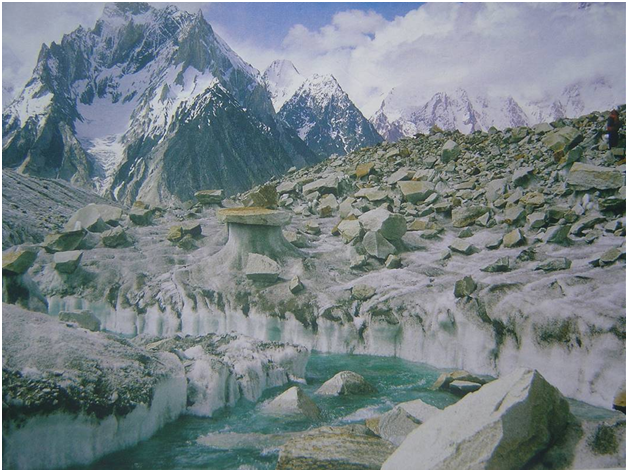
On behalf of the EHF, Col Muthanna has prepared a proposal termed as the HIMEK Alliance for Stabilization of Climate Change in the Himalayas and the Mekong Basin. The concept is to mitigate climate change through drastic reduction of Black Carbon emissions, which have a regional impact.

This is to be coupled with a massive program of Forest Land Restoration to regain the lost glory of the forests across the Himalayas and the Mekong basin. The proposal has obtained the approval of the International Union of Conservation of Nature and involves 11 countries including the Himalayan nations, Bangladesh and the countries of the Mekong Basin.

Through his coordination, a working group including resource persons from Bangladesh, Nepal, Thailand and India are working on the draft project document. The Rivers originating from the Himalayas and flowing through the Indian Subcontinent and Mekong Basin in South East Asia sustain one fifth of the world’s population. Therefore the HIMEK Alliance could be one of the largest regional initiatives on environment ever.

He is also in communication with the army on protecting the Himalayan ecology. The army is a major stake holder in the Himalayas and he has written an article on this subject which was published in the 2015 July to September edition of the Indian Defence Review. He has also prepared a draft document on Food, Water and Economic Security for India, based on the concept of sustainable development by zoning the country and protecting important catchment areas and food producing regions in India.

The snow fed rivers of the Himalayas sustain over one fifth of the human population. Col Muthanna stresses on the point that it is, therefore, a matter of deep concern to the entire global community and to the people of South Asia particularly that the Himalayan environment is under serious threat due to the effects of climate change. Lester Brown of the World Watch Institute in USA says that due to the effects of global warming, the pattern of precipitation in the Himalayas and the regions contiguous to the Himalayas will undergo a more drastic change in the years to come.

There is agreement that effective reduction of Short Life Climate Forces will enable the temperatures in these principal eco-regions to stabilize over a short period of time and supplement the on-going international agreements and action programs for long term reduction of CO2 levels.

The urgency of the situation has been highlighted by statements from climate scientists who say that the ‘tipping point’ may be a mere five years away. The formation of the HIMEK Alliance comes at an urgent time where the effects of climate change are critical and cannot wait.

We all have a duty to spread the word to Go Green! Dare to be a force of Nature. Each and every one of us has the power to make a difference.

~ Let us join hands to Save the Earth for future generations ~

source: http://www.thecitizen.in / The Citizen / Home> Life / by Rashmi Oberoi / Tuesday – April 04th, 2017
Shubra sports two contrasting looks in John Seena

ShubraKF05apr2017

Director Suni of Simpallag Ondu Love Story fame has quietly finished the talkie portion of his next film.

The film, titled John Seena, features supermodel-actress Shubra Aiyappa and newcomer Vidyut Chandra in lead roles.

What is interesting is that the super-glam Shubra is seen in a completely plain-Jane avatar, sporting braces and glasses. “The film sees Shubra in two contrasting looks.

The first half of the film has her as someone who is only bothered about her work and doesn’t cares about herself. She is someone who believes that everyone is beautiful from within, and has never given a thought to her appearance.

The hero and she fall in love unknowingly through circumstances and then you see a completely different transformation that stuns you.

This was one of the reasons I chose Shubra, because she could carry off the two contrasting looks,” says Suni.

Speaking about the film’s title, Suni explains that the film is about two people — John and Seena — who are fans of WWE wrestler John Cena.

source: http://www.timesofindia.indiatimes.com / The Times of India / News> Entertainment> Kannada> Movies> News / by Sunayana Suresh / TNN / April 05th, 2017

Halappa gears up for a new ‘test’

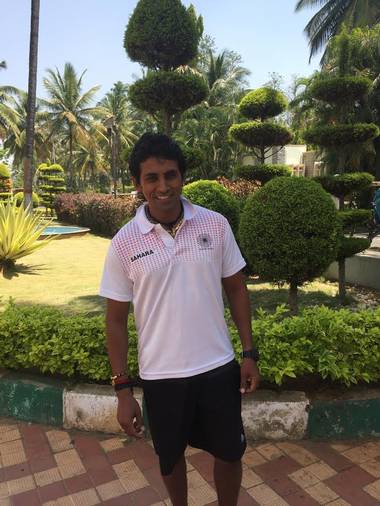
Five years after his last game for India, Arjun Halappa is back in the National camp. The former India captain and selector is now, alongside Jugraj Singh, part of the coaching set-up under Roelant Oltmans. It is a role he is only happy to perform. “It is a totally different test,” he said at the SAI in Bengaluru on Friday.

Arjun Halappa, who is now part of the coaching staff with the Indian senior men's hockey team, strikes a pose at the Sports Authority of India in Bengaluru on Friday.   -  SHREEDUTTA CHIDANANDA
Arjun Halappa, who is now part of the coaching staff with the Indian senior men’s hockey team, strikes a pose at the Sports Authority of India in Bengaluru on Friday. – SHREEDUTTA CHIDANANDA

“As a player, it was different for me. Even I used to give some comments or feedback to the coaches; there were some arguments. Now I get an idea of what it takes to be a coach. It’s a big learning experience for me.”

Halappa was approached for the role before, but he declined the opportunity each time, until he finally agreed to come on board earlier this month. “For the last four years, Roelant had been asking and I kept saying no. I was playing regularly on the domestic circuit (for Air India) and wanted to continue. I’m still playing. But you can’t keep on prolonging it. The main thing is I really wanted to give something back to hockey. I want to learn.”

India has begun a fresh Olympic cycle with a young group of ‘core probables’, calling up 11 of the 18 Junior World Cup winners. As a player, Halappa successfully made the transition from the Junior ranks—having starred in the Junior Asia Cup in 2000—to the senior, a year later. He hoped the current crop of youngsters could similarly meet expectations. “We have done really well at the junior level. But tournaments like the World Cup, the Olympics and the Champions Trophy are a completely different ball-game,” he said. “You can’t expect results overnight. It might take four or five years. Of course, we are hosting the 2018 World Cup; 2020 (Olympics) as a target is always there. But if we want good results from these guys, 2022 (World Cup) and 2024 (Olympics) will be really possible.”

Halappa was pleased he had not only Oltmans but also Harendra Singh—a coach he has known from his junior days—to lean on for support. “Everyone talks about how there are no good Indian coaches. But that has changed now with Harendra winning the Junior World Cup,” he said. “He’s professional enough and ready to adopt modern training methods. He’s the only Indian coach to have done the FIH Masters coaching programme. All this because he wanted to show the world that India can produce quality hockey coaches too. I want that trend to continue.”

A number of those in the current side—P. R. Sreejesh, Rupinder Pal Singh, S. V. Sunil and Sardar Singh—were teammates of Halappa’s once. But young or old, he had no trouble dealing with players, the 36-year-old stated. “We Indians have this tendency of wanting people to treat us as superiors when we’re in a position of power. I don’t want that,” he said. “I’m normal with the players. On the field, only they matter, not the coach.”

source: http://www.sportstarlive.com / Sport Star Live / Home> Hockey / by Shreedutta Chidananda / Bengaluru – March 24th, 2017

Broken up by man, killed by inbreeding

Inbreeding among trees and higher rates of offspring deaths may see some tree species in isolated forest patches die out slowly. In perhaps the first elaborate study of its kind in the Western Ghats, a team of researchers from across the globe has found that breaking up forests by even 200 metres can lead to the gradual death of tree species.

The results of the study — published recently in the journal New Phytologist — are disconcerting and show that less than 10% of germinated seeds survive in such patches owing to genetic faults, when compared to over 50% in contiguous forests.

Researchers from ETH Zurich in Switzerland, University of Aberdeen in the United Kingdom, and College of Forestry in Ponnampet, Kodagu, along with Ashoka Trust for Research in Ecology and the Environment (ATREE) and the University of Agricultural Sciences — both in Bengaluru — studied the seed dispersal patterns of Dysoxylum malabaricum (white cedar) which harbours the Malabar grey hornbill. More than 35 sacred groves of Kodagu, protected and worshipped by the local community, were studied across a 216 sq.km landscape where these forest patches are islands surrounded by paddy or coffee plantations.

The team used a combination of GPS and genotyping (DNA sequencing) to find out the lineage of the offspring in these isolated forests. Of the 321 trees that were sequenced, just 0.3% had emerged from “parents” that were in different patches. A staggering 267 trees (83%) had both their “parents” from the same forest patch.

“The seedlings are often mutated and completely devoid of chlorophyll (that is, their leaves have no colour), and these die out in a few months. This has affected forest regeneration,” said G. Ravikanth from ATREE.

The researchers also found that 95% of the seeds were dispersed within 200 m of the parent tree, but the sacred groves are usually situated at least 400 m and even 24.5 km apart; this leaves inbreeding as the only option. “The growth of areca and coffee plantations over three decades has isolated these forests and we are now seeing the effects of inbreeding depression. When the older trees die, we will start to see these forests disappear entirely,” said Mr. Ravikanth.

C.G. Kushalappa, Dean of the College of Forestry, said that while wind-dispersed species could perhaps overcome the gaps in forests, species that rely on birds or insects for pollination will struggle to get genetic diversity to survive.

Re-establishing tree corridors

The disappearance of plant species owing to inbreeding can be contained either through artificial dispersal of seeds or by setting up tree corridors, say researchers.

The research comes at a time when the lush forests of the Western Ghats are fragmented by reservoirs, hydroelectric projects, large highways, industries and plantations. At present, the team is researching on dispersal rates of wild nutmeg (an important tree for the hornbill population), the wild Amla tree in M.M. Hills and B.R.T. Reserve, and other plants in order to study the effect of fragmentation.

While the concept of corridors for elephants and tigers is well established in the country, the need for a similar approach to ensure constant gene flow for trees has been ignored. “We are trying to establish tree corridors to connect broken-up patches. Near Tiruchirappalli, we are restoring the connections of Myristica swamps. These corridors will provide genetic flow between forest patches,” said G. Ravikanth of the Ashoka Trust for Research in Ecology and the Environment.

In terms of conservation, the disappearance of plants and trees will have an adverse effect on animals that are symbiotically linked. For instance, hornbills and butterflies prefer only certain species of trees or shrubs.

source: http://www.thehindu.com / The Hindu / Home> News> States> Karnataka / by Mohit M Rao / Bengaluru – April 03rd, 2017