A lot can happen over hockey

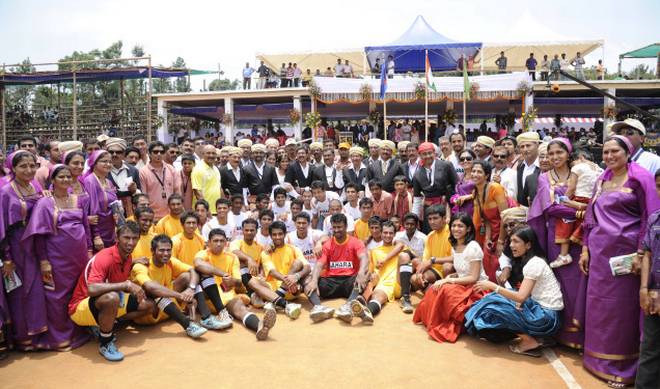
Uproarious: Kodava families with the India XI and Kodagu XI teams. Photo: K. Murali Kumar.

Once a year, Kodava families from around the world come together to participate in a unique hockey tournament in a sleepy town. Shreedutta Chidananda on the 16th edition of the festival, hosted by the Iychettira family this year, and its place in Coorg’s culture.

An hour northeast out of Gonikoppal, along one of the narrow, undulating roads typical of the region, Ammathi almost springs out of the country; an oversized clearing after endless acres of coffee plantation. Down here, in Coorg’s south, it is a searing 34° during the day; nothing like the popular postcard images of mountains and mist. Yet, ask locals and they will say their part of Coorg is just as beautiful as Madikeri or Kushalnagar, lacking only the tourists and the hype about the north.

Ammathi, the venue of this year’s Kodava hockey festival, is an unremarkable town. A dozen small stores share premium space around the bus stop with the Cauvery Recreation Club and the Titanic Hotel and Bar.

Preparations galore

On the eve of the Iychettira Hockey Cup, the 16th edition of Coorg’s annual hockey competition among its Kodava families (there are close to 800), there is no hint of the extraordinary influx that is to follow. Overseeing preparations at the Ammathi Government High School ground, Chairman of the Tournament Committee, Iychettira K. Anil is a fiendishly busy man. “I’ve had to charge my phone thrice today,” he says. “It just won’t stop ringing.”

Temporary bleachers are coming up on all sides while a few workers tend to the pitch.

“Organising a tournament of so many teams is a logistical headache,” Anil says as he stands inside the under-construction pavilion and surveys the ground. “Sending the draws out to all 217 teams is hard enough. Then you have to conduct 12 matches a day across two venues.”

Sixty-two families signed up for the inaugural edition in 1997. The numbers have since swollen, reaching a high of 281 in 2003, prompting claims of being the world’s largest hockey tournament. Lasting three weeks, it is a single-elimination tournament and concludes on May 13. “A Coorg has to hold a hockey stick,” says Anil. “Show me another tournament in India where so many teams turn up.”

In the weeks leading up to the competition, practice was held at the Middle and High School grounds but with work on the playing surface now on in full swing, the venues are off limits. Action has shifted, instead, to the Good Shepherd Convent on the town’s south-eastern fringes, just off the highway. It is an uproarious affair with boys, youth and men battering a tired ball about. A viewing gallery rises up sharply on one side of the field — above which the groundskeeper occasionally materialises as dusk falls to see if the gates can finally be locked — while the road falls away on the other.

The Uddapanda family’s U.S. Jagath, a genial, moustachioed middle-aged man, says that his team has been training for close to 20 days. “We take it seriously. Maybe not very seriously but we definitely don’t want to lose in the first round.” A centre-half on the Mysore University team in his youth, Jagath says most sides have three or four players of similar, if not better, pedigree. “The stronger ones even have former India internationals. The semi-finals and final can get quite feisty. If someone can’t play hockey here, he’s deemed a useless fellow. Our standards are pretty high.”

Ordinarily only the festival’s later stages draw significant crowds — the semi-finals and the final have been known to attract sometimes 30,000 spectators — but this time, there is a gushing anticipation about the inaugural day.

Those that have missed the billboards and the flyers will, perhaps, have noticed the rear ends of the district’s KSRTC buses. The Indian team will be in town, they proclaim, to play a “Coorg XI” in an exhibition game.

Gathering crowds

Anil predicts a traffic nightmare and he is not too far off the mark. On Saturday morning, the line of parked cars stretches over a kilometre from the ground; this after two prescribed lots run out of space. The local police are out in force, attempting to direct recalcitrant drivers elsewhere.

Local newspapers, meanwhile, dedicate large chunks of space to the Hockey Nammé. Andolana, a Kannada daily, offers up three pages. “Broken hearts, warring brothers, families rent by strife; they have all been united by the Nammé,” a piece by-lined “Hockey Lover” exults on the front page.

The ground is chockfull when the India team arrives. Men and women from the host Iychettira family line the grandstand in traditional Kodava attire; the purple of the saris an arresting sight. On the other sides, families clamber up the tiers in search of a vantage point. Boys and girls — in hats, shades, soft drink in one hand, cell-phone in the other — mill about casually. Kids flood the walkways below making their way around on the narrow planks with little difficulty. Every seat is taken, every inch of space occupied.

Head Coach Michael Nobbs is visibly stunned by the several thousands strong attendance. “I had some idea of what to expect but this is miles ahead of anything I’ve seen,” he confesses, capturing the crowds on his iPhone. “There’s just so many kids here. It blows me away.” Every goal is met with frenzied applause; the home side loses 3-1 but there’s no hint of disappointment.

Although the India XI is without most of its high-profile players, Nobbs has been careful to bring with him the ones hailing from Coorg. S.V. Sunil and V.R. Raghunath — though not Kodavas — draw the loudest cheers. “I cannot tell you enough how good a concept this is,” the latter says. “I wish I were a Coorg; I could have played too.”

The tournament proper begins after lunch that afternoon; the Codanda and Cheranda families feature in the first game. Although the crowds have largely melted away, both teams find vocal support in their women. “Trap the ball”… “Pass it to the left”…”He’s open”, they cry lustily applauding every interception, forward run, or shot.

All together

The match is an opportunity for the Codandas’ C.M. Somanna to share the pitch with his nine-year-old daughter who comes on with a few minutes to spare. The shorts may reach down to her shins and the stick resembles a spear in her hands, but Nila is visibly thrilled. The final whistle eventually blows and the Codandas manage to sneak a nervy one-nil win.

“We have only 100 members yet, earlier, we hardly met once a year,” says Swati Bopanna, a Codanda elder and President of the Women’s Hockey Association of Coorg. “People didn’t know each other’s names. Now we all are here.”

Somanna concurs. “This tournament is a blessing,” he says. “Someone is in Venezuela, someone in north India, someone is studying in Bengaluru or Mysore, someone running his plantation in a different part of the district. It has brought us all together. The concept has worked wonders within the families.”

After the victory, the Codanda family congregates in the car park. Sandwiches are handed out as players — father and daughter, uncle and nephew, far-flung cousins — joke and swap stories. Fifteen minutes spent observing their potential opponents in the second round and they’re all off, vowing to meet for practice during the coming week. The team has never progressed beyond the third round but results, Somanna insists, are secondary.

Although the euphoria of the neutral has largely dissipated since the opening day, the families themselves are champing at the bit. They arrive in buses, hired vans, bikes or plush cars, each with their own team jerseys.

The Mukkatiras of Devanageri (for there are other Mukkatira families, albeit unrelated) have designed a rather smart yellow and white kit, “DM” monogrammed on the front. Manager Nanda Pemmaya watches from one side as his team warms up. “We’ve been training together for three days; we’ll see how far we can go,” he says. “But, win or lose, we’re all meeting at the end of the game. We have lunch and then we split.”

From a freak goal down, the Mukkatiras recover strongly, hammering four past the Paruvangada goalkeeper. Their young outside-right scores two fine goals, while their 72-year-old forward nets one. Post the hugs and the congratulations, the Mukkatiras get into their cars and head for their wondrously well-maintained iyn mané (ancestral home), an undisturbed quarter hour’s drive away, a right turn off the road to Virajpet.

Hearty laughter rings out from the pyol as the assembly celebrates the triumph with a few beers. A tough second round fixture awaits his men in eight days’ time, but Pemmaya is not unduly concerned. “The hockey festival is all about bonding, you know,” he says as platefuls of pork are passed around. “It is literally a festival.”

How it began

The Kodava hockey festival was conceptualised by Pandanda Kuttappa, a former State league referee, in 1997 and is today run by the Kodava Hockey Academy. Concerned by what he saw as falling standards in hockey in the district, Kuttappa hit upon the idea of a tournament among the families that would encourage more youngsters to take up the sport.

Though the first edition had only 62 participants, with hockey’s popularity in Coorg and its past there, it was never going to be difficult to draw more families. The numbers grew, with a high of 281 teams in 2003. The 2012 edition has received 217 entries.

The Kootanda family remains the most successful team, having won four titles (one shared with Kullettira), while the Kullettira, Nellamakkada and Palanganda families have all triumphed thrice. The Kaliyanda, Mandepanda and Anjaparavanda families have won the competition once

.The Palanganda family, led by star forward Amar Aiyamma, has won the event in 2010 and 2011. The same names are expected to be frontrunners for the title again.

There is no permanent venue, something organisers are striving to achieve, and the festival has been held across the district in previous years. Ammathi, the site of the 2012 festival, is playing host for the third time

Beyond numbers or tangible benefits, though, the Kodava hockey festival has accomplished what perhaps nothing else could have: uniting distant families.

The hosts

The Kodava Hockey Nammé (festival) is hosted by a different family each year and named after it. A family may not host the event more than once. Families apply to the Kodava Hockey Academy expressing interest and are allotted the tournament after evaluation.

The Iychettira family, host of the current edition, was offered the chance eight years ago, says I.K. Anil. “But we weren’t ready then. This time, I told the family that we should conduct it. We requested to be allowed to be hosts. It is a matter of great pride and honour. There are over 750 Kodava families and we are the 16th family to be chosen.”

Anil estimates expenditure to cross a crore; the Government of Karnataka has promised Rs.30 lakh, with the Iychettira family and the event’s sponsors funding the rest.

source: http://www.thehindu.com / The Hindu / Home> Society / April 28th, 2012
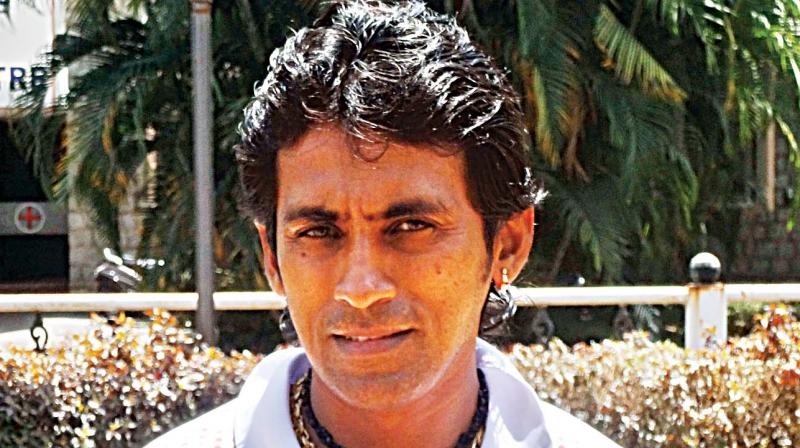
Hope juniors can make the transition: Arjun Halappa

Arjun Halappa backed the junior members of the 33-man squad to step up to the big-time in world hockey.

Arjun Halappa
Arjun Halappa

Bengaluru:

With a bustling hockey schedule starting with the Sultan Azlan Shah Cup around the corner for Team India, former national team captain and local favourite Arjun Halappa backed the junior members of the 33-man squad to step up to the big-time in world hockey. Speaking to media personnel at the ongoing training camp at the Sports Authority of India’s Southern Centre in the city on Friday, Halappa, who joined head coach Roelant Oltman’s support staff last week, recognised the challenges that lay ahead regardless of the depth of talent available in the Indian ranks.

“We’ve done really well at the junior level. The most important thing is for things to fall in to place at the senior level. Major tournaments like the World Cup, the Olympics and the Champions Trophy are a different ball game. To get the feeling of being a part of big matches and tournaments and to win these games is very important,” he quipped.

At a time of transition for the men’s side, Halappa believes the combination of experienced heads, former players behind the scenes and youthful exuberance can be a force in the future. “It’s very nice to get 11 juniors into one bunch for the senior group. I just hope that they can transition the result of winning the junior World Cup to the senior group. I can’t expect this to happen overnight. We’re hosting the 2018 World Cup and 2020 Olympics will also serve as good exposure,” the 36-year-old noted.

‘Thrilled with new role’

Halappa was evidently thrilled about his new role. “We’re building a new team and I had to take a call on the job as Roelant has (been) behind me to coach for a while. I really want to give back something to hockey. The learning aspect is crucial for Indian coaches, especially from experienced figures like Oltmans. I am very grateful to him and Hockey India for giving me this opportunity.”

The former attacking midfielder was optimistic about the dressing room chemistry and was quick to point out its effectiveness. “A lot of guys in the support staff started together. We hope that helps to contribute towards the success of this team. “At the end of the day, the players matter. The staff can lend feedback but execution holds key. The seniors have been pushing hard, and juniors are in turn pushing them for positions,” he surmised.

source: http://www.deccanchronicle.com / Deccan Chronicle / Home> Sports> In Other News / by Utkarsh Krishnan, Deccan Chronicle / March 25th, 2017

How this coffee startup founder is pursuing three diverse professions at once

“Boredom at work sets in soon nowadays. This is probably the reason why IT professionals opening restaurants is on the rise,“ says Ashish D’Abreo (40), on the logic driving him to pursue three diverse professions.

ashishKF22mar2017

“Boredom at work sets in soon nowadays. This is probably the reason why IT professionals opening restaurants is on the rise,“ says Ashish D’Abreo (40), on the logic driving him to pursue three diverse professions.

When not building brands as a creative director of an ad agency (Origami Creatives), D’Abreo is either blending barista for his artisanal coffee startup (The Flying Squirrel) or delivering dialogues on stage as a freelance theatre artist over weekends.

Mind you, this jack of all trades has met with enough success in each sphere. His 15-year-old ad agency has clients like Chai Point, Caratlane.com and Bluestone.com. After gaining foothold in the online space, his coffee company recently ventured into the offline market with a microroastery café.

The avid coffee drinker has been dabbling in theatre for over a decade. This weekend too, he is performing in a play called `Park’ at Ranga Shankara. “When I was with Rafiki Theatre, I would act in 2-3 productions. Since my plate is full today , I just invest in one production at a time with Sandbox Collective,“ says D’Abreo, an MBA graduate from St Jose ph’s Colle ge of Commerce.

Question is how did a copywriter arrive at this triangle of work in the first place? “Idea was that when we can ideate for other brands, why not our own,“ says D’Abreo, who launched his coffee startup in 2013.Little did he know that the hobby of selling gourmet coffee from his friend’s plantation in Coorg would scale up one day.

D’Abreo traces the roots of his success in being an ad-man. “At my ad agency, we played each other’s roles all the time -be it design, layout, press visits, photoshoots or menial desk work. All streams flowed into each other seamlessly . Brainstorming sessions, where we switched from vodka to jewellery brand in a split second, coached me to juggle efficiently,“ says D’Abreo.

Each chosen profession gets a fair share of his time every day. “My play rehearsals are usually in the morning. By midday, I start looking into the online coffee orders and the micro roastery. Post-lunch, I dedicate time to my creative agency,“ says D’Abreo, who advocates the joint venture entrepreneurship module for those who wish to add professions to their career repertoire.

The father of a six-year-old also lists communication, support from family and time-management as requisites. Of course, travel and cooking often for family add brownie points besides working as his stress-busters.

“One is constantly trying to wear different thinking hats. However, it’s in this challenge that your life runs like a well-oiled machine and becomes interesting. This juggle is nirvana for me,“ he notes.

source: http://www.tech.economictimes.indiatimes.com / ET Tech / Home> Technology News> Latest Technology News> People / by Smita Balram / ET Bureau / March 22nd, 2017

Oltmans ‘happy’ to have Halappa, Jugraj in coaching set-up

Oltmans believes Arjun Halappa has the personality to become a good coach.

Roelant Oltmans has welcomed the addition of former stars Arjun Halappa and Jugraj Singh to India’s coaching set-up. Halappa has begun working with the players at the national camp, which commenced here this week, while Jugraj is expected to arrive soon. The pair will be joined by a goal-keeping coach, with the three Indian coaches to work under Oltmans. “I had asked Arjun a number of times before to join us. So far he had said no because he wanted to play. But this time, he didn’t need more than five minutes to take his decision. I really believe he has the know-how and the personality to become a good coach. I’m really happy,” Oltmans said.

Jugraj’s expertise as a drag-flicker was important, he felt. “Arjun is more attacking while Jugraj has been a good defender and drag-flicker. We can use his experience in the area. Two very good Indian guys.”

Tushar Khandker, however, has left the coaching staff. “Tushar did a wonderful job for the period he was involved with us,” Oltmans said. “I can imagine that after such a stressful and tough year you need to spend some time with your family especially when you have young children. Because we are never at home, we are away all the time. Tushar got his deserved break. But I am sure he will come back somewhere in the system.”

source: http://www.sportstarlive.com / SportStar Live / Home / by Shreedutta Chidananda / Benglauru – March 16th, 2017

Gulshan Devaiah makes a ‘thrilling’ Marathi debut

GulshanKF17mar2017

After winning accolades for his portrayal in ‘Shaitan’ and ‘Hunterrr’, actor Gulshan Devaiah has turned his eyes towards the Marathi industry.

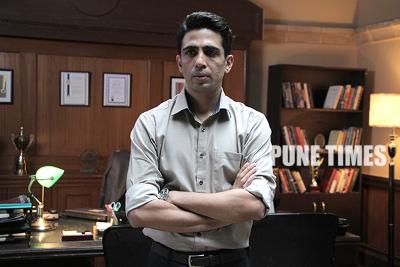
With the upcoming film ‘Daav’, Gulshan will make a foray into Marathi films, adding to the ever-growing list of Bollywood actors associating with the industry. Gulshan will be seen playing an investigative officer in this bilingual crime thriller (renamed ‘Haadsa’ in Hindi) directed by Kanishk Varma. And to get the portrayal right, he went the extra mile. “Although I played a Maharashtrian character in ‘Hunterrr’ and even had a couple of Marathi dialogues, I wasn’t fluent at the language,” says Gulshan.

For ‘Daav’, the actor underwent a month-long Marathi training programme. He adds, “The story of the film is so gripping that I didn’t want to let this role go to anyone else just because I didn’t know the language. So the month-long training was a great option for me.

Having stayed in Mumbai, I didn’t find it hard to pick up the language and I can converse in Marathi now.”

source: http://www.timesofindia.indiatimes.com / The Times of India / News> Entertainment> Marathi> Movies> News / by Mihir Bhanage / TNN / March 14th, 2017

Budget 2017: Kodagu to get airstrip, blood separation unit, prison

The budget by Chief Minister Siddaramaiah on Wednesday presented a few goodies to Kodagu district. Though the budget has not fulfilled major expectations of the people, it has not disappointed the people as well.

Though the budget announced formation of 49 new taluks, the people of the region have been disappointed that Kushalnagar in Somwarpet taluk and Ponnampet in Virajpet taluk haven’t made it to the list.

As Kodagu experiences heavy rainfall, the roads get damaged often. A total of Rs 50 crore has been earmarked as a special package for the development and widening of roads. The budget has announced development of airstrip at Madikeri. As a large number of VIPs arrive in Kodagu district for relaxation and to tour, they have to come to Kodagu via the road from Mysuru airport. The development of airstrip will boost tourism in the region. A 3D mini planetarium at a cost of Rs 5.75 crore has been announced for Madikeri. The budget has also promised to set up a prison at Virajpet.

In addition, a blood seperation unit has been sanctioned to district hospital in Madikeri, which was one of the long-pending demands of the region. Without a separation unit in Kodagu, the patients would travel to Mangaluru and Mysuru hospitals for treatment. The setting up of the unit will help the patients suffering from anaemia, said DHO Dr O R Srirangappa told DH.

In addition, the budget has set aside fund for the modernisation of canals of Harangi Reservoir in Kushalnagar. A sum of Rs 200 crore has been set aside for the development of Jenukuruba, Koraga, Soliga, Kadukuruba, Erava community members. The budget has announced framing of special rules for appointment of tribal communities living in forests and on the periphery of forest, to the posts of guard, watcher and other ‘D’ group posts, which is a welcome move, felt tribal leaders.

‘Disappointing’
The coffee planters who had availed loans from co-operative societies were expecting the chief minister to announce loan waiver. However, failure to announce loan waiver has disappointed the growers. No special package was announced to check human-elephant conflict in the region. The proposal on coffee museum and package for conserving river Cauvery has not found their place in the budget.

What they say
District JD(S) unit president M Sanketh Poovaiah termed the budget disappointing. There was no proposal on loan waiver. At a time when farmers have been ending their lives due to debts, the government should have announced loan waiver. No measures have been announced to arrest elephant menace in the district, he said.

DCC president T P Ramesh said the budget has announced welfare programmes for farmers, women and deprived class. Special emphasis has been given for the welfare of women. In addition, the honorarium for Asha workers have been hiked.

Stating that the budget is anti-farmer, district BJP unit president B B Bharathish said the state government should have announced loan waiver. “Though we were demanding an airport, the government has announced only a airstrip to Madikeri, which will benefit only the rich,” he said.

MLC Sunil Subramani said no special package was announced for the district. The burning issues in Kodagu did not find any place in the budget. He said the budget is disappointing.

Avinash, a software engineer in Madikeri, said there is a recognition at the national-level for coffee from Coorg. However, the demand for a coffee museum in Madikeri has not been materialised so far.

source: http://www.deccanherald.com / Deccan Herald / Home> District / by Aditya K A / DHNS- Madikeri, March 17th, 2017

Harshika Poonacha’s college-student act in her Tamil debut

HarshikaKF17mar2017

Sandalwood actress Harshika Poonacha was originally supposed to be making her Tamil debut in the 4K (Kanavil Kanda Kadhal Kavithai) that had Jai in the lead.

But director Hashim Marikar has pushed the filming of Jai’s project to later this year and has begun working on his next, which is said to be a thriller, in which she’s a part of.

Talking about the film, she says, “I play a college girl in this film. She’s both bold and bubbly. She stands up for the issues in her college and help it solve. She rides a sports motorbike and dresses up in a rather rugged style. She’s more of a charmer, I should say. While so many guys try to woo her, I have my eyes on only one.”

Malayalam actor Maqbool Salmaan plays her love interest in the film. “We shot most of our portions in a college in Kochi. We will be shooting some city portions in Chennai soon,” she adds.

The film also stars Sampath Kumar, Paoli Dam and Lena in the lead. “We all have different stories to tell, but all of them are somehow connected. It has been a fun shoot so far,” she reveals.

source: http://www.timesofindia.indiatimes.com / The Times of India / News> Entertainment> Tamil> Movies> News / by Sharanya CR / TNN / March 17th, 2017

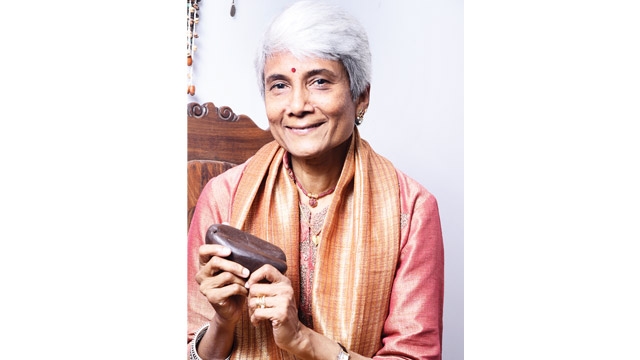
Bean there, done that: Meet Asia’s first female coffee expert, Sunalini Menon

Sunalini Menon started out as an assistant cup taster for the Coffee Board of India in 1971

The journey of Asia’s first female coffee expert, Sunalini Menon, is one of beating the odds while consuming copious amounts of coffee, says Phorum Dalal

“But she is a woman, and will be married off soon,” a panel argued.

The year was 1971, and the dilemma was whether to give the candidate a job of an assistant cup taster on the Coffee Board of India.

She had topped the written examination and oral tests, competing with PhDs and coffee experts, but the hesitation was due to her gender.

The person in question was Sunalini Menon, who spent the next 25 years, sipping, slurping and spitting coffee, identifying flavour notes, and determining the quality of the drink for coffee growers in India.

“The slurping is to expose the sip to oxygen and open its flavours, and spitting is to avoid consuming so much coffee,” the tiny figured lady explains with a broad smile when we meet her in Coorg.

Her melodious voice has us in rapt attention, as she excitedly spoke of Block no. 19, Tata Coffee’s micro lot from the Nullore estate, selected last year by Starbucks for sale under the Reserve Brand in USA.

Menon, who consults several traditional coffee growers, has carved a niche for herself. She closely worked on the micro lot (cream of the crop with artisanal properties, usually sold in small quantities for a higher price) that put Indian coffee on the global map.

The seed was sown in childhood. “In the summers, we would go to Polachi in Coimbatore and visit the tea plantation my uncle was posted at. Labourers picked tea and put it through steaming, drying and rolling processes. During tastings, the tea master would use a penny to weigh the tea. Tasters would slurp, sip and spit out the liquid,” says Menon.

Imitating them, the kids would take the leftover tea “gargle and make horrendous noises,” laughs Menon.

After a degree in dietetics, while applying for scholarships in New York Institute of Dietetics, Menon saw Coffee Board of India’s job ad for an assistant cup taster, and “memories of sipping, slurping and spitting came flooding back.” As no woman had ever held the post, she was sure she wouldn’t make it, but soon she completed the board’s two-member team.

The board sent her to Witnerthone near Zurich for a year-long intensive course in coffee tasting in 1976, followed by a six-month review training in 1982.

“My hosts exposed me to a lot of international coffees from Peru and Costa Rica, and also sent me to Germany. This was an eye opener, and palate too, because at the time, India didn’t have such exotic coffees. I learnt to identify characters and use my palate to decipher coffee”. When she returned, her boss had retired and she took over to become India’s first cup taster.

Friends and family would tease her, “Your job is to take coffee breaks. What fun’.

The sensorial method, though, involved a lot: focusing on fragrance, aroma, flavour, aftertaste, acidity, mouthful, sweetness, balance, uniformity, overall taste and cleanliness of the cup to determine the coffee’s quality.

“One that secures 80 or above is considered a speciality coffee,” explains Menon, adding that the science and chemistry behind the cup can also be evaluated individually to provide accurate results. “But so far, a holistic scientific value hasn’t been arrived at to conclude on the cup rating. Till it does, I guess we tasters will have a job,” says Menon.

After the market liberalised in 1996 and growers could sell their own coffee, the board shifted focus to research and training. Menon moved to Japan, where her husband was posted, but coffee growers coaxed her to return and continue independent quality checks and research on their plantation.

“Coffee has come a long way in India, primarily a tea growing country. The British introduced the coffee plant from Ethiopia. A drink for the elderly and usually consumed at home, it didn’t have a special aura. But the vision of grandmothers using the dabba filter to brew their cup has become a fad after Café Coffee Day (CCD) launched in Bengaluru in 1996,” recalls Menon.

That’s why, Block No 19 is special. Indian coffee being selected for a limited edition sale by an international company will encourage more plantations to work on micro lots. This milestone has opened a door to make artisanal Indian coffee a stand out,” says the woman who has paved way for women tasters in India. As for her poison, it’s “a blend of robusta and Arabica beans. Black please,” she signs off.

source: http://www.dnaindia.com / DNA India / Home> Lifestyle / DNA Sunday Team / Sunday – March 05th, 2017