How his mother’s search for the perfect cup of coffee led this entrepreneur to found a ‘filterless’ decoction business

Harold Pereira started TrueSouth in Mysuru after spending 16 years in R&D to brew the perfect cup of convenient instant coffee.
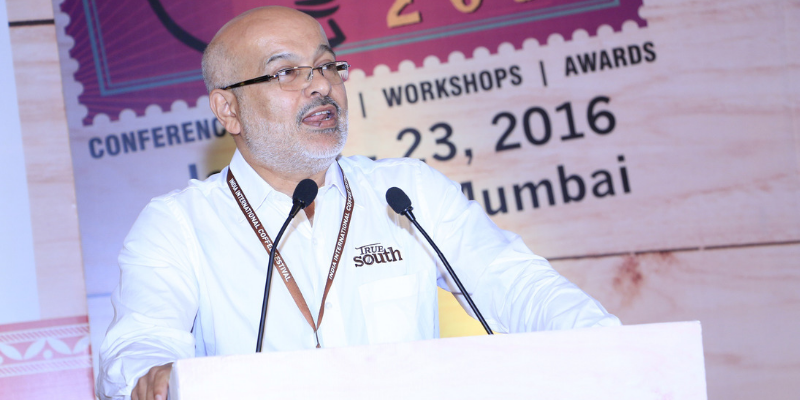
Harold Pereira, Founder, TrueSouth

As Terri Guillemets once said, “Coffee is the best thing to douse the sunrise with.” For many coffee lovers, the day does not begin without a hot cup of freshly brewed coffee. And if you are a coffee connoisseur, you would definitely look forward to the aroma of filter coffee wafting through your home.

But what if you did not have time to make a cup of filter coffee in the morning but wish to have coffee running through veins nevertheless? Understanding the time constraints of coffee lovers, Harold Pereira launched True South, an instant coffee decoction brand in Mysuru in July 2013.

While growing up, Harold had seen his mother preparing the coffee decoction before she went to bed every night. The first thing she did in the morning was to have her cup of coffee and head to church. And, at times, if she had forgotten to perform this activity at night, she would miss her coffee and her day just wouldn’t start right.

In this video interview with SMB Story Harold Pereira, Founder of TrueSouth, explains how his mother’s conundrum to brew the best decoction led him to start TrueSouth. Says,

video 01

I wondered why she did not just make the decoction in the morning? Little did I understand then, about the time, skill, and effort required to make a decoction. The freshly brewed decoction is always the best, as the profile changes within two to three hours, but households compromised and made it in the night to have the decoction ready in the morning.”

And, this got him thinking: why can’t filter coffee be filterless?

Harold then started experimenting by preparing instant filter coffee decoction without preservatives, which would taste similar to the freshly brewed filter coffee. It took him 16 long years to come up with the product, and today, TrueSouth is among the first brands to launch this first-of-its-kind product.

TrueSouth is a true farm-to-table organisation as it grows, roast, grinds, processes, and packages and sells the coffee decoction. The coffee is shade-grown, hand-picked, and sun-dried at Harold’s own farms. It is then carefully roasted and processed in the plant to ensure quality, consistency, and convenience. Quality is adhered to at every level of operations and the company complies with all the necessary FSSAI, HACCP, and halal regulations.

Struggle with the R&D

Talking about the tough phase of Research & Development of the instant coffee decoction, Harold says that he didn’t pour in a lot of money, but used the coffee beans from his own plantations in Chikmagalur and Coorg to come up with the right product. His team was doing the R&D under Hindustan Food and Beverages, which was formed in 1996.

Initially, they packed the decoction in bottles and within a day, they would bloat and explode. Then they added preservatives to the product to stabilise it but prominent coffee cuppers likened the taste of the coffee to that of cough syrups. He says,

“We have our own R&D team and multiple iterations and years of hard work led us to our product today, which is a boon for coffee lovers that makes the sip of their morning coffee easier without any hassle,” Harold adds.

Market reach

Harold first targeted the HoReCa (Hotel, Restaurant, and Cafe) segment. The chefs loved the decoction, and it was an instant hit; TrueSouth decoction is now available in ITC hotels, Leela chain, Lemon Tree chain, and more.

“We also make machines which make the decoction relevant in different environments like office spaces, cafes, etc. All the machines are designed and produced in-house. We also run five small outlets across Chennai and Bengaluru,” Harold explains.

The company is also exporting the brand and has managed to make inroads in the UAE and the UK market. TrueSouth is also available in multiple quick service restaurant (QSR) chains across the country and is listed on Amazon and Bigbasket too.

At present, TrueSouth records 28 percent YoY growth.

Future prospects

On future plans, Harold says that the company is focussed on R&D and soon will come up with a few more products. He is also planning to come up with a kiosk model, and expand to other parts of the country.

source: http://www.yourstory.com / Your Story / Home> SMB Story / by Palak Agarwal / June 03rd, 2019
Kodagu is safe, tourists need not panic: stakeholders

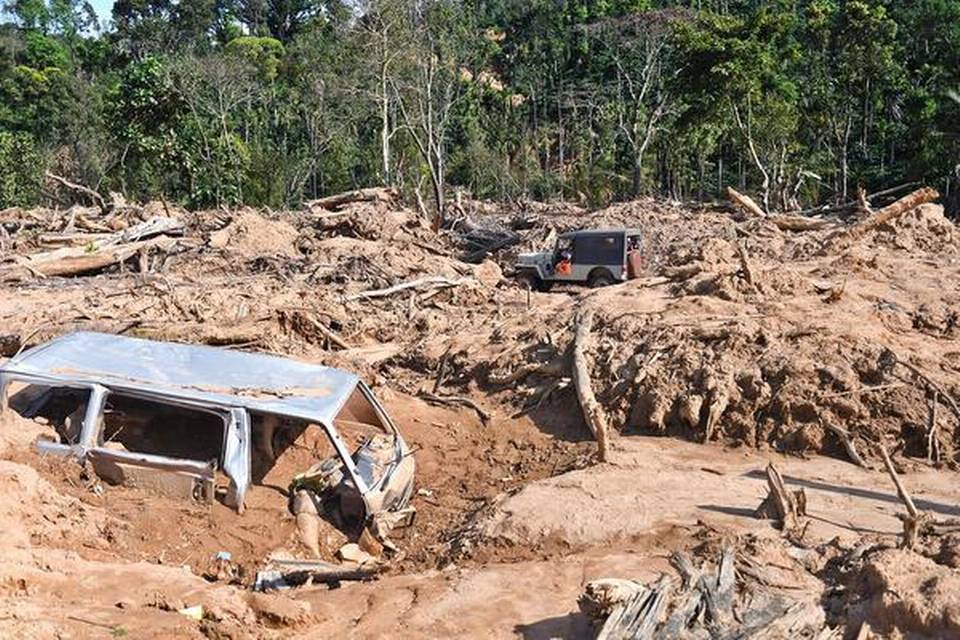
A scene from last year’s huge landslides in Kodagu.   | Photo Credit: File photo
A scene from last year’s huge landslides in Kodagu. | Photo Credit: File photo

Kodagu is safe and tourists can visit their favourite destination without any fear – is the message that the hospitality sector in the land of coffee is circulating in various platforms, including social media, after some tourists gave up the idea of holidaying in Kodagu following reports on travel advisory issued ahead of the monsoon.

The directive from a village panchayat for halting homestay bookings was restricted to one particular area and not to entire Kodagu. Yet, misinformation led to cancellation of bookings in other places, according to the stakeholders.

The directive from the PDO of Makkandur Gram Panchayat perturbed the stakeholders of tourism, which, after a gap of many months, is returning to normalcy. Tourism had taken a beating after the devastating floods and landslides last year.

Out of 13 “highly vulnerable” locations identified on the possibility of landslides during the monsoon, seven come under the limits of Makkandur GP. Therefore, as a precautionary measure, the owners of the homestays coming in the GP limits were asked not to take reservations for the next three months. The order applied only to homestays in Makkandur.

“But what was being projected is that the entire Kodagu is unsafe and therefore tourists must stay away from visiting the hill station. This misinformation affected the tourism industry as the occupancy rate in hotels and resorts decreased suddenly with unease among visitors,” said B.R. Nagendra Prasad, President, Kodagu Hotels, Resorts and Restaurants’ Association. The PDO’s order was misinterpreted. The directive is limited to the GP limits but it was being generalised and created a feeling that it is risky to visit Kodagu now, he told The Hindu.

Tourists cancel bookings
Mr. Prasad, who met Deputy Commissioner Annies Kanmani Joy along with other members of the association on Monday over problems plaguing the tourism sector, said many tourists cancelled their bookings and returned to their destinations apparently over the fear being spread over their safety in Kodagu.

“The occupancy in hotels and resorts which was around 80 per cent during weekdays and 100 per cent during the weekends since the second week of April went down suddenly. If negative propaganda about Kodagu continues, tourism will be badly affected,” he observed.

Mr. Prasad said “it took us many months to restore confidence in tourists and bring them back.If such negative campaigns continue, it will hit Kodagu’s economy.”

source: http://www.thehindu.com / The Hindu / Home> News> States> Karnataka / by Shankar Bennur / Mysuru – June 04th, 2019

‘Sinkholes to Stars’ Monday at GLMHC in Sanctuary Series

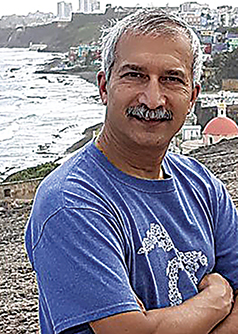
Professor Bopi Biddanda

On Monday from 7 to 8:30 p.m. is the next program in the Sanctuary Lecture Series, “Sinkholes to Stars: Diving into Lake Huron’s Sinkholes while Reaching for the Heavens.”

Doors open at 6:30 p.m. for this free program at Great Lakes Maritime Heritage Center, 500 West Fletcher St., Alpena.

Grand Valley State University Professor Bopi Biddanda will share the excitement of over a decade of exploration of life in Lake Huron’s sinkholes carried out in collaboration with Thunder Bay National Marine Sanctuary, and ponder the relevance of these findings to major issues of both scientific and societal interest such as Earth’s current biologic and physiologic diversity, oxygenation of early Earth in the distant past, and humanity’s ongoing search for extra-terrestrial life.

Biddanda is an aquatic microbial ecologist studying the movement of carbon driven by microbes at the Annis Water Resources Institute at GVSU. He grew up in the lush subtropical mountains of Southwest India, and came to the U.S. in the 1980s to obtain a Ph.D. in ecology from the University of Georgia. Subsequently, he went on research and teaching adventures at the Alfred Wegener Institute for Polar and Marine Research (Germany), National Institute of Oceanography (India), University of Texas Marine Science Institute, University of Rio Grande (Brazil) and University of Minnesota.

For the last decade and a half at GVSU, he has been studying the microbial cycling of elements in the Laurentian Great Lakes — exploring life in extreme environments such as Lake Huron’s sinkholes and operating a world-class time-series buoy observatory in Muskegon Lake.

Courtesy Photo A diver navigates a sink hole in Lake Huron.

He teaches classes in marine biology and aquatic ecology, and directs NASA’s Michigan Space Grant Consortium programs at GVSU. He hopes to continue to study Earth’s lakes — one of our most vital freshwater commons — as sentinels of change.

For more information, contact Stephanie Gandulla at steph.gandulla@noaa.gov or 989-884-6200.

source: http://www.thealpenanews.com / The Alpena News / Home> Life / June 06th, 2019

Kannur International Airport seeks to connect Mysuru and Kodagu with Flybus

The new Kannur International Airport which was opened in December 2018, serves passengers from Kannur, Kasaragod, Wayanad, Kozhikode in Kerala and Kodagu and Mysuru in Karnataka.

The Kannur International Airport authorities in Mattanur, Kerala has written to Karnataka State Road Transport Corporation(KSRTC) to provide its ‘Flybus’ services to the Kannur Airport from Mysuru, Kodagu districts in Karnataka.

The new Kannur International Airport which was opened in December 2018, serves passengers from Kannur, Kasaragod, Wayanad, Kozhikode in Kerala and Kodagu and Mysuru in Karnataka. The airport is set to a boon for the tourism industry in south-west Karnataka. Tourism in the area is likely to get a boost as top destinations like Mysuru and Kodagu (Coorg) are within easy reach from Kannur.

The airport which is up on 1,900 acres and is just 58 km from Virajpet, about 90 km from Madikeri and 158 km from Mysuru. Earlier the flyers from Mysuru and Kodagu were using Kempegowda International Airport in Bengaluru. The regular flyers especially those going to Gulf countries from Mysuru and Kodagu are now heading to Kannur Airport and fly to destinations like Abu Dhabi, Kuwait, Dammam, Doha, Bahrain, Riyadh, Sharjah and Muscat.

To get the flyers from these districts in Karnataka the Kannur airport authorities have written a letter to KSRTC recently. Confirming this development, BT Prabhakar Reddy, Divisional Controller, Bengaluru Central Division, KSRTC, told Indianexpress.com, “ We have received a request from the Kannur airport authorities to have Flybus service to the airport from Mysuru and Kodagu districts. The KSRTC is doing a survey in this route to see how it works out.”

source: http://www.indianexpress.com / The Indian Express / Home> Cities / by Darshan Devaiah BP / Bengaluru, Kannur (Kerala) / June 03rd, 2019

Coffee Board takes tech route to help growers boost yield

App-solutely smart: In the case of white stem borer, growers and the Board have validated 90% accuracy.   | Photo Credit: Reuters
App-solutely smart: In the case of white stem borer, growers and the Board have validated 90% accuracy. | Photo Credit: Reuters

Apps fed with data help forecast weather, predict leaf rust

For the 3.5 lakh coffee growers in India, 98% of whom are small-scale, challenges affecting production include labour shortage, climate change and pest attacks.

One way to manage these is by adopting technology, which the Coffee Board is trying to bring about for the growers.

Last year, Eka Software Solutions took up a pilot project for the Coffee Board of India on machine-learning based applications. According to Shuchi Nijhawan, vice president – agri business for Eka Software, the Board and the company took up three areas to try machine learning based apps. One was addressing the white stem borer problem, another was weather forecasting, and the third, predicting leaf rust.

Machine-learning

“Based on the data, photos provided, we created a machine learning algorithm to forecast each of these issues (for a grower). We worked with 20 liaison officers of the Board and they coordinated with the growers.

“The success of the app depends on the data fed in. In the case of white stem borer, the growers and the Board have validated 90% accuracy,” she says. Eka’s digital platform for agriculture aggregates data from different sources and applies the algorithm to provide insight to the coffee growers.

Srivatsa Krishna, chairman of the Coffee Board, adds that though there is no exact data, it is learnt that in the last 10 to 15 years white stem borer would have brought down Arabica production by 25-30%. “The growers do need solutions for such issues.”

“Despite the Coffee Act having been around for more than seven decades, farmers have zero technology. The only way to increase productivity is by bringing in technology,” he says. Even before smartphones became popular, coffee growers had checked prices on the London and New York exchanges almost on a daily basis.

Hence, adopting technology should not be difficult for them. The Board has plans to scale up the analytics technology for adoption by more farmers.

Currently, 90% of the estates depend on labourers for most of the work and there is not much technology adoption among coffee growers in cultivation or to increase production.

“If someone is ready to do it [technology] for us, we will adopt it. It will help increase yield,” says Sundar Subramanium, executive director of Mother Mirra Coffee Plantations. Ms. Nijhawan says the company is exploring partnerships for other crops too. “Indian farmers want such technology services. There are several agriculture institutes and cooperatives in the country that have a lot of data. I see a huge potential for these technologies.”

source: http://www.thehindu.com / The Hindu / Home> Business> Industry> Green Shoots / by M Soundariya Preetha / June 02nd, 2019

Diddahalli tribals get new abode as 338 houses are ready

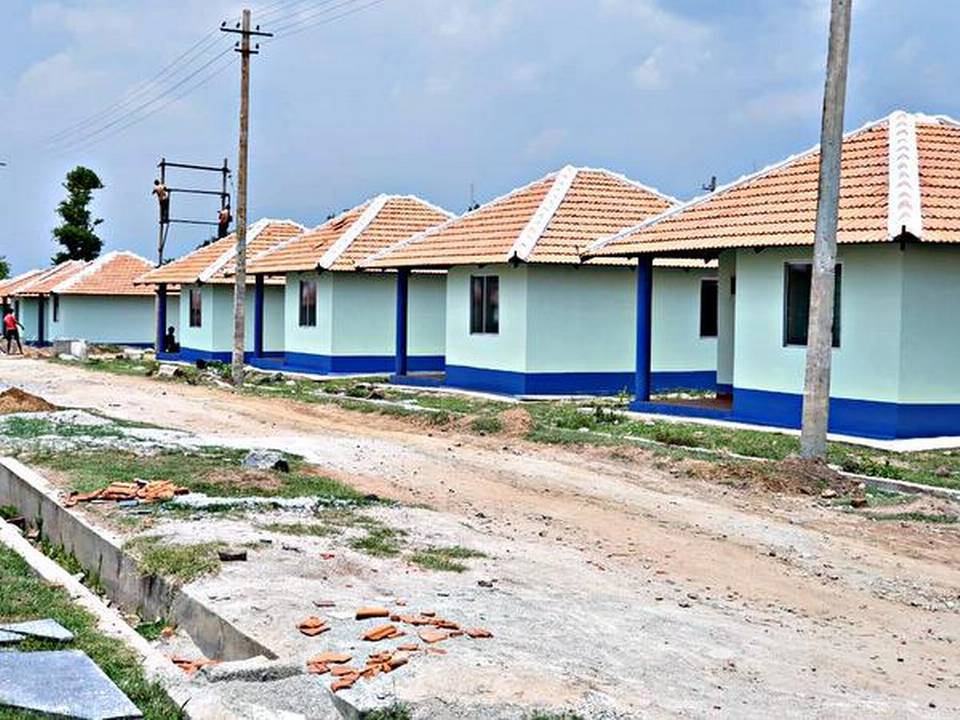
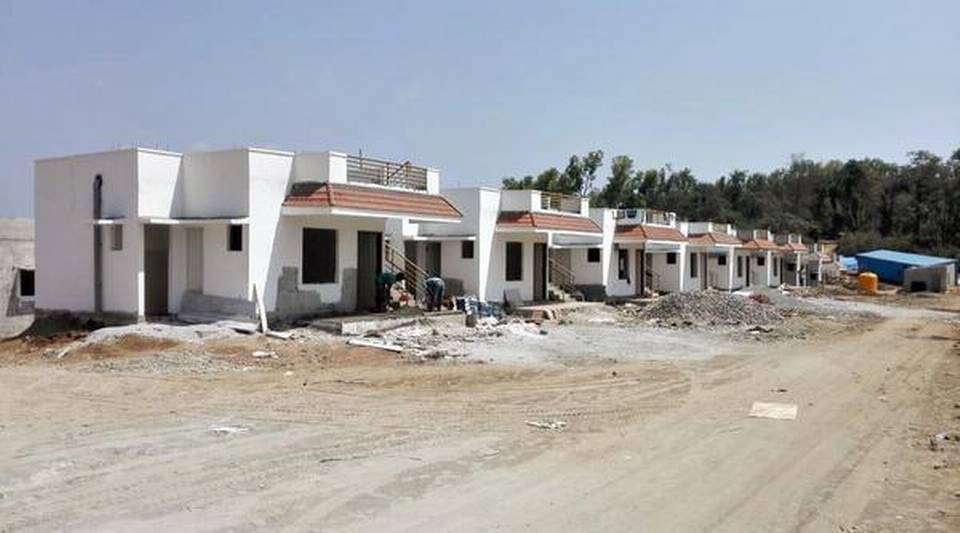
New beginnings: The houses built for the displaced tribal people of Diddahalli forest in Kodagu district.

Each house has been built on a 30×40 sq. ft plot at a cost of ₹4.70 lakh; total cost of the project is ₹39.27 crore

Residential colonies coming up in Kodagu for displaced tribals of Diddahalli forests are being developed as ‘model settlements’, putting across facilities usually found in layouts developed in cities, such as well-laid roads, piped water supply, and CCTV surveillance.

The tribals relocated from Diddahalli forests in Virajpet taluk in the district have been provided shelter in the newly-constructed settlements at Basavanahalli and Byadagotta villages in Somawarpet taluk, with the State government coming forward to build individual houses for the families. Each house has been built on 30×40 sq.ft. plot and the project is nearing completion with only a few houses remaining to be built besides establishing essential facilities.

Out of 528 houses proposed for construction, 338 houses had been completed and some families have already shifted to their new dwelling. The construction began two years ago, according to C. Shivakumar, Project Coordinator, Integrated Tribal Development Project (ITDP).

Kodagu Nirmithi Kendra has built each house at a cost of ₹4.70 lakh. The total cost of the project is ₹39.27 crore. So far, ₹21.76 crore had been released to the Nirmithi Kendra for having completed the construction of 338 houses, he told The Hindu.

The Nirmithi Kendra has taken up works like the installation of water tanks for each house, laying of pipelines, covering drainages with stone slabs, construction of parks and fencing, and installation of surveillance cameras at a cost of ₹2.72 crore.

At both Basavanahalli and Byadagotta, a sum of ₹8 crore was being spent on construction of roads, drainages, septic tanks, UGD lines, culverts, overhead tank, and anganwadi kendras besides establishing electricity connection and water distribution lines to every house.

Out of 174 houses in Basavanahalli, 138 houses had been completed. Byadagotta will have about 354 houses. There are about 84 temporary dwellings which will be making way for the construction of permanent houses consisting of a living room, a bedroom, kitchen, bathroom and other facilities.

Survey identifies 3,000 tribal families

A joint survey by the authorities of various departments in Kodagu has identified around 3,000 tribal families, mostly Yeravas and Jenukurubas, living in various plantations in the district.

The survey was done to collate information on the number of tribal families living outside the forests and working in plantations, which are in need of dwelling.

The survey was done by a committee comprising representatives from the Departments of Revenue, Police, Labour, Tribal Welfare and Public Instruction.

Children admitted to residential schools

Away from the accustomed schooling in government-run ashram schools, tribal children in Kodagu have an opportunity to pursue an education in government-run residential schools – Morarji Desai Residential School and Jawahar Navodaya Vidyalaya.

The authorities of Integrated Tribal Development Project (ITDP) persuaded the tribal families in the district and their children appeared for the entrance examination to these schools.

As many as 53 tribal children have been selected for Morarji Desai Schools in Madikeri, Somwarpet and Virajpet areas. Two children from tribal settlements have made it to the Jawahar Navodaya Vidyalaya in Madikeri.

“This is perhaps the first time that tribal children from the areas wrote the entrance examination and a few of them got selected. Now the challenge is to persuade their parents to complete the admission process since many are reluctant to send their wards to schools outside their settlement,” said C. Shivakumar, Project Coordinator, ITDP.

Most of the children selected for the residential schools belong to the primitive tribes. There are 11 ashram schools in the district.

source: http://www.thehindu.com / The Hindu / Home> News> States> Karnataka / by Special Correspondent / Mysuru – June 02nd, 2019

University of Hyderabad professor awarded

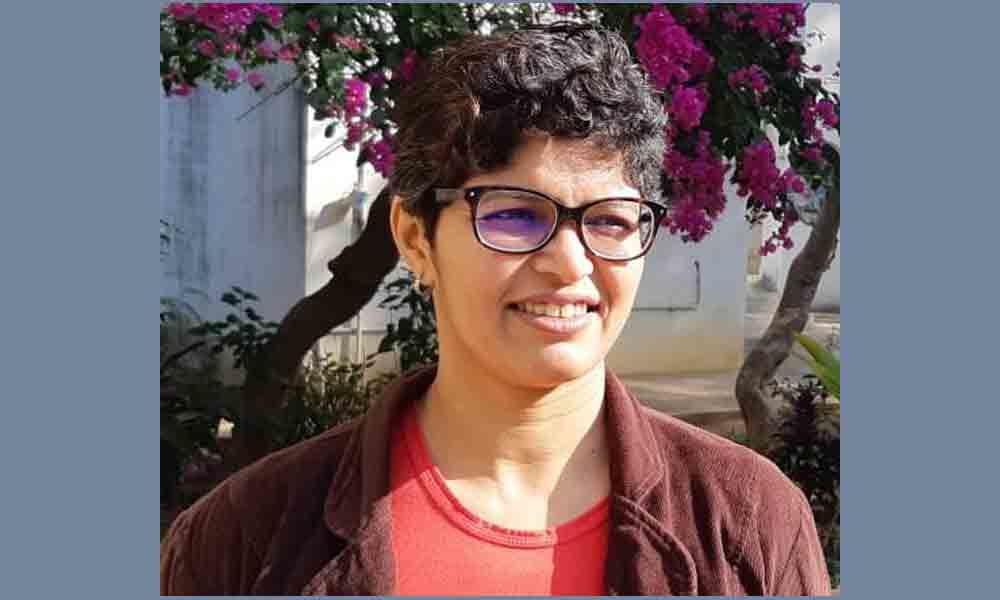
Dr Sowmya Dechamma
Dr Sowmya Dechamma

HIGHLIGHTS
Dr Sowmya Dechamma C C, Associate Professor at the centre for comparative literature, University of Hyderabad (UoH) has been awarded the Fulbright-Nehru Academic and Professional Excellence Fellowship for the year 2019-2020.

Hyderabad:

Dr Sowmya Dechamma C C, Associate Professor at the centre for comparative literature, University of Hyderabad (UoH) has been awarded the Fulbright-Nehru Academic and Professional Excellence Fellowship for the year 2019-2020.

She will be hosted by the Department of Comparative Literature, Queens College, The City University of New York where she will teach a course on “Modern Indian Literary Cultures” and work on her research project “Understanding the Modern: Of Oralities and Languages”.

Dr Sowmya Dechamma’s Fulbright proposal aims to look at how and in what ways issues concerning languages spill-over and charge other spheres of our lives. By foregrounding minority languages (specifically Kodava language) and its relationships with major languages (Kannada and English), the project seeks to understand the nature of modern for speakers of minority languages.

Emerging from this concern around the modern is the course she plans to teach – “Modern Indian Literary Cultures”. Her research and teaching aim to investigate the notions of modern that emerge through these texts; the manner in which they are connected to ideas of community and of region, nation; Ways in which texts engage with the constant presence of oralities in their own cultures; and what acts of writing tell us about the cultures written about.

source: http://www.thehansindia.com / The Hans India / Home> Hans> Young Hans / by Hans News Service / May 31st, 2019

Check safety parameters before construction, residents told

A file photo of the houses being constructed in Kodagu as part of the rehabilitation efforts. Some families are keen to build houses at their place of choice or the original site.   | Photo Credit: SpecialArrangement
A file photo of the houses being constructed in Kodagu as part of the rehabilitation efforts. Some families are keen to build houses at their place of choice or the original site. | Photo Credit: SpecialArrangement

Kodagu administration holds interaction with families that are not keen to move into houses being built by government.

Residents, whose houses were destroyed in last year’s landslips in Kodagu and are keen to reconstruct on the original site or a place of their choice, have been advised to ascertain if the place is safe for reconstruction.

The Kodagu district administration on Thursday held an interactive meeting with 54 such families who were not keen to move into the houses constructed by the government as part of its rehabilitation efforts.

The families were keen to build the houses at their place of choice or the original site. The government is chipping in with ₹9.85 lakh per house which is also the cost of each unit constructed by the government.

Additional Deputy Commissioner P. Shivaraj said many families had lost their houses during the calamity last year, all of whom were being rehabilitated. “But there are 54 families who wanted to build the houses on their own for which ₹2 lakh per family had been released in the first phase.”

He said the construction should be as per the specifications of the government and the beneficiaries should first ascertain if the site was suitable for construction. The balance amount would be released in a phase-wise manner based on the progress of work.

Assistant Commissioner T. Javare Gowda said the house should be at least 5.75 squares and the plot should be in the name of the beneficiary. He said the construction should follow the specified quality norms and clearance from the respective gram panchayats would be procured within a week.

However, the residents seeking to construct their own houses categorically stated that it would not be possible to complete the construction within the next four months as sought by the officials. With the onset of monsoon just a week away construction work was bound to be affected and hence the residents sought additional time for completing the construction.

source: http://www.thehindu.com / The Hindu / Home> News> States> Karnataka / by Special Corrrespondent / Mysuru – May 31st, 2019

Anxiety is a positive emotion before any tournament, says Robin Uthappa

UthappaKF31may2019

Robin Uthappa, who endured a tough season with Kolkata Knight Riders in the recently concluded IPL, said that anxiety acts as a motivator ahead of the start of any major tournament. KKR failed to make the play-off stage this season as they lost their do-or-die encounter against Mumbai Indians.

The recent Indian Premier League (IPL) ended with Mumbai Indians picking up their fourth title as they beat Chennai Super Kings in the final by one run. Rohit Sharma-led Mumbai made their way to the final after they beat Kolkata Knight Riders in their final league match at the Wankhede Stadium. However, things would have been different for Dinesh Karthik & Co. had they beaten Mumbai in that match. Had they done so, it would have been them who secured the fourth spot instead of Sunrisers Hyderabad who made the cut.

KKR’s Robin Uthappa, who had a tough outing with the Kolkata-based side this year, said that anxiety has an important role to play before the start of any tournament.

“Before the last game… I got to be honest, I did feel pretty anxious, (but) it’s quite a good feeling. It’s got to be anxiety. If you are nervous, then may be you are not prepared well enough. If it is anxiety, then it’s a positive emotion that precedes a tournament,” Uthappa said in a recent interview with The Telegraph.

The former Indian middle-order batsman further opened up about his preparation phase before the start of a typical IPL season.

“All of that becomes a lifestyle, honestly. I pretty much work out every day. The hours depend on how the body is feeling. We don’t go crazy working hard. Working smart is also a critical thing, understanding your body, how much recovery is required… all these aspects play a huge role in training.

“You are a cognisant of all these aspects and you train accordingly. Sometimes you train for an hour and hour-and-a-half, sometimes it goes on for a few hours and sometimes just 45 minutes, just a top-up on all that you have done. Sometimes you are feeling good, but you are also sore. So, you pop in and out of the gym for a 20-minute-half-an-hour session.

“Primarily, it is a combination of speed, endurance and strength. Cricket is a start-stop kind of sport. Today the sport is moving towards the power aspect of the game. You want to keep in mind those aspects as well,” Uthappa added.

source: http://www.sportscafe.com / SportsCafe / Home> Cricket> National> News / by SportsCafe Desk / May 22nd, 2019

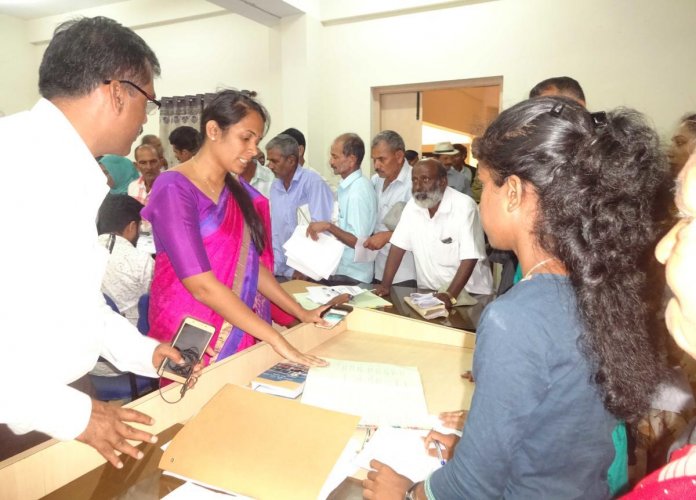
Hundreds submit pleas at Parihara Adalat

Kodagu Deputy Commissioner Annies Kanmani Joy checks the applications received during the Parihara Adalat in Madikeri on Monday.

Hundreds of people affected by the natural calamity in Kodagu last year took part in the Parihara Adalat and submitted their pleas to the district administration on Monday.

The Parihara Adalat was organised by the district administration to respond to the grievances of natural calamity victims.

The adalat will be held for three days on the second floor of the assistant commissioner’s office auditorium in the district administration complex in Madikeri.

On Monday, hundreds of people enrolled their names.

Deputy Commissioner Annies Kanmani Joy said that the district administration has dispensed 90% compensation to those who have lost their livestock, crops and homes. If anyone is left out, they will be provided with the compensation through the adalat.

The details of compensation have been put up on the website http://parihara.karnataka.gov.in

If the compensation amount has not reached the beneficiaries, such people may furnish their grievances to the district administration during the adalat to be held till May 29.

Many fields and plantations were filled with silt as a result of the natural calamity. A large number of crops were also damaged. Owners of the fields can also claim compensation during the Parihara Adalat.

The compensation amount provided by the government will be credited to the bank accounts of the beneficiaries. The owners of the houses which were completely damaged were added in the first list and the names of those whose houses are found in vulnerable areas were added in the second list, the DC said and added that the rent allowance for the victims who lost their houses, from November 2018 has been directly credited to the bank accounts of the victims.

Assistant Commissioner T Jawaregowda and Tahsildar Natesh were present.

source: http://www.deccanherald.com / Deccan Herald / Home> State> Mangaluru / by Adithya K A / DH News Service, Madikeri / May 27th, 2019