Coffee needs a boost from the government

Guest Column: Harish bijoor, brand expert
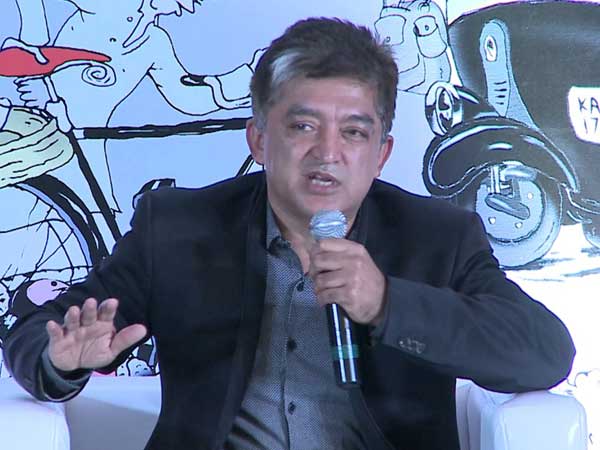
HarishBijoorKF31jul2018

Typically, coffee in India has been a beverage that has had a deeper connect in the south of the country, with literally no, or anecdotal connect in the north of the Vindhyas. This was the story of the past. Then came the liberalisation wave, the early 90s, when the free sale quota for individual planters came by. Earlier, coffee was a controlled commodity and growers could sell their beans only through a pooling system via the Coffee Board. The free system opened up the markets in the country and across the globe. Planters were now free to market their produce anywhere they wanted. And they did. A few did a brilliant brand game in the market, and the leader of the pack was VG Siddhartha, the founder and owner of country’s home-grown cafe chain Cafe Coffee Day. Others followed.

Instant coffee players such as Nestle and HUL had always been at the cutting edge of creating consumption in non-traditional markets. They continued in the game. Brands such as Nescafe, Bru and Sunrise criss-crossed consumption patterns in all regions of the country. However, till the mid-90s, coffee consumption was largely in solid form, in the form of packaged filter or instant coffee. Tata Coffee, Nestle and HUL were pioneers in the respective spaces of pure filter, chicory mixed filter, pure instant and mixed instant coffees.

With serial entrepreneur Siddhartha from Karnataka starting off Cafe Coffee Day with its first outlet on Brigade Road (which celebrates 22 years this month), Indian coffee was moving into its LIQUID era. And this has been the single most dominant strategic shift that Indian coffee saw in years. Cafe Coffee Day was pioneering the concept of the cafe style, which Starbucks had revolutionised in the US and in parts of Europe. With this, Indian coffee had two avatars: the SOLID in packet form and the LIQUID in the cafe at the corner form.

Coffee Cafes

That was the start point. Cafe Coffee Day started the cafe revolution in India in 1996. I remember being there at the first cafe on Day 1 which was really a Cyber-Cafe for a start with spanking new desktops and coupons of Rs 30 per hour being sold. I remember buying a T-shirt which I still possess and wear. It says proudly, “do Caffeine”!

Coffee today is about both solid and liquid. The liquid form is available at cafes of every kind all across the country and the solid form has a demand that is better, thanks to the liquid evangelist cafes doing their job quietly, but surely!

Yes, consumption of coffee in India is still small, and just no match for tea, but we have travelled long distances in these 22 years!

There is a lot of love for coffee in this country and that’s only growing. But coffee is an island drink. In an ocean of tea-consumers, coffee occupies a small fraction of space. Coffee was and is therefore a niche drink. A special drink even. Tea is easy to make, coffee is that much more difficult. Coffee was shared when special guests came home. Coffee meant bonding that was different. Young people embraced coffee as the most fashionable and happening drink to be seen with. It suddenly became young, from being fuddy-duddy. The environment of swanky cafes added zing and fizz to it all.

There are many more elements helping the South Indian brew to go mainstream from the staid and dull environs of Indian coffee houses to vibrant and buzzing coffee restos. Private players added big value. The Indian Coffee House of the Coffee Board had become more like a buzzing canteen where the middle-aged and the old congregated. The cafe to that extent adopted the avatar of the pub for the young. The coffee pub even! This added hangout value, fashion-tinges and more. Differentiation of the drink, niche-value, multiple flavours served etc brought in uncommon value and more takers for the Indian cuppa.

Big Challenge

Having said all this, domestic consumption still is a big challenge for India. The country is failing in promoting coffee as a beverage. There is a need for institutional involvement in this space. Instant coffee itself has big potential. The Government of India needs to adopt coffee as a drink of the future. The Coffee Board is a nodal body. I have been a member on it for five years and know the kind of work the board does in terms of plantation work, R&D and maintenance. The board needs to get a lot more front-ended in its work than it is today. It needs to adopt coffee promotion at the front end of consumption as its primary role.

The government, Coffee Board and the industry should not forget the fact that coffee growing is a tough job and growers need to be acknowledged for their hard work and their contribution to the economy. Karnataka alone accounts for almost 80 per cent of the country’s entire coffee production. Over 200,000 growers are involved in coffee and each grower faces every problem there is to pick. Costs are going

up while realisations are not. In fact, prices are only falling. Labour is getting to be expensive and maintenance of estates is a big-cost exercise. Cost of production overall is on the rise. Coffee goes through cycles of prosperity in terms of prices and doom in terms of prices as well. But, we hope to see domestic consumption increasing and cafe culture catching up, not just across metros and tier-I and II cities but also in tier-III cities, smaller towns and villages across the country. As of now, almost 85 per cent of our coffee is exported, a forex earning of around $10 billion per annum. Only a strong domestic market can insulate Indian bean from the price volatilities and related pressures in the global markets.

The author is the founder of Harish Bijoor Consults Inc, formerly head of Consolidated Coffee (Currently Tata Coffee) and a former Coffee Board member)

source: http://www.mydigitalfc.com / Financial Chronicle – Mydigitalfc.com / by Guest Column : Harish Bijoor, Brand Expert / Julyu 2018
Chasing the Cauvery

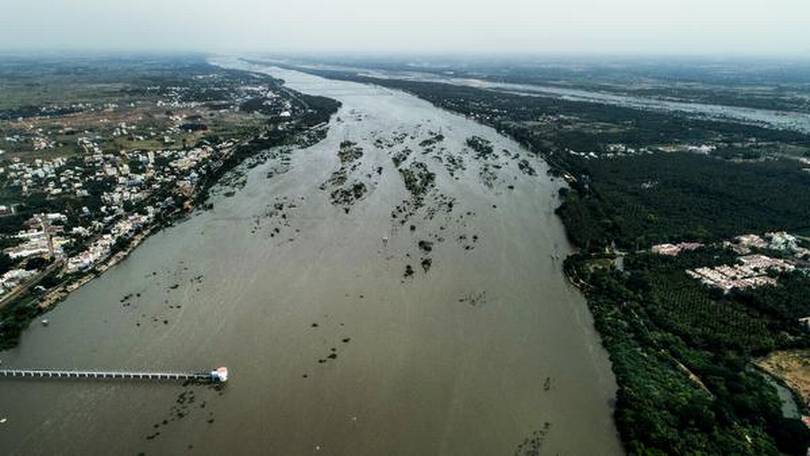
Side by side: The Cauvery (left) and the Kollidam at the Kambarasampettai check dam near Srirangam in Tiruchi. PHOTO: M. MOORTHY
Side by side: The Cauvery (left) and the Kollidam at the Kambarasampettai check dam near Srirangam in Tiruchi.
PHOTO: M. MOORTHY

Broad, menacing and gushing, the river has gained new life aided by a generous southwest monsoon

Originating as a small spring at Talacauvery in the Brahmagiri Hills of Kodagu district in Karnataka and through its 802-km journey before emptying into the Bay of Bengal at Poompuhar on the Coromandel coast, the Cauvery evokes strong emotions, both sublime and mundane. The generous monsoon this year has infused new life into the river. All the major dams in Karnataka (Krishnaraja Sagar, Hemavathi, Kabini and Harangi) are brimming over. With the combined rate of outflow from the reservoirs being 75,000 cusecs to 1,00,000 cusecs, the Cauvery, barely visible in summer, is now a river in spate.

Among the more popular sights on its course is the Abbey Falls in Madikeri, where a few natural streams jump off the cliff and join the river downstream. The Lakshmantirtha, a bigger tributary originating from Brahmagiri, jumps down the cliffs in a series of rapid falls from a height of nearly 170 feet to form the Iruppu Falls and snakes through the Nagarahole tiger reserve before merging with the Cauvery at the Krishnaraja Sagar. Meandering and gliding along through the rough and rocky terrain, the Cauvery splits into two and forms the riverine island of Shivanasamudra and presents the breathtaking sight of the Gaganachukki and Bharachukki segmented falls, plummeting from a height of 320 feet (and almost a 1,000 feet wide) with a deafening roar before hitting the rocky gorge below releasing clouds of vapour and foam.

It is at the Hogenakkal falls that the river tumbles down, after traversing for 64 km along the inter-State boundary. The river spreads into the Mettur Dam in Salem district, the largest in Tamil Nadu with a capacity of 93.47 thousand million cubic feet. From Mettur, the river proceeds south and turns eastward.

At the Upper Anicut, or Mukkombu (which is about 15 km above Tiruchi), the Cauvery splits into two, with the southern branch retaining the original name and the other, known as Coleroon (Kollidam in Tamil), and drains into the sea near Portonovo (Parangipettai) in Cuddalore district.

Text by R. Krishnakumar and T. Ramakrishnan

source: http://www.thehindu.com / The Hindu / Home> News> States> Tamil Nadu / July 29th, 2018

Book On Sri Ramakrishna In Kodava Language Released

SriRamakrishnaKF31jul2018

Ponnampet:

Guru Poornima was celebrated in a grand manner at Sri Ramakrishna Sharada Ashrama Ponnampet in South Kodagu. A series of programmes have been organised since yesterday at the Ashrama premises at Ponnampet and several other places including Kushalnagar and Madikeri.

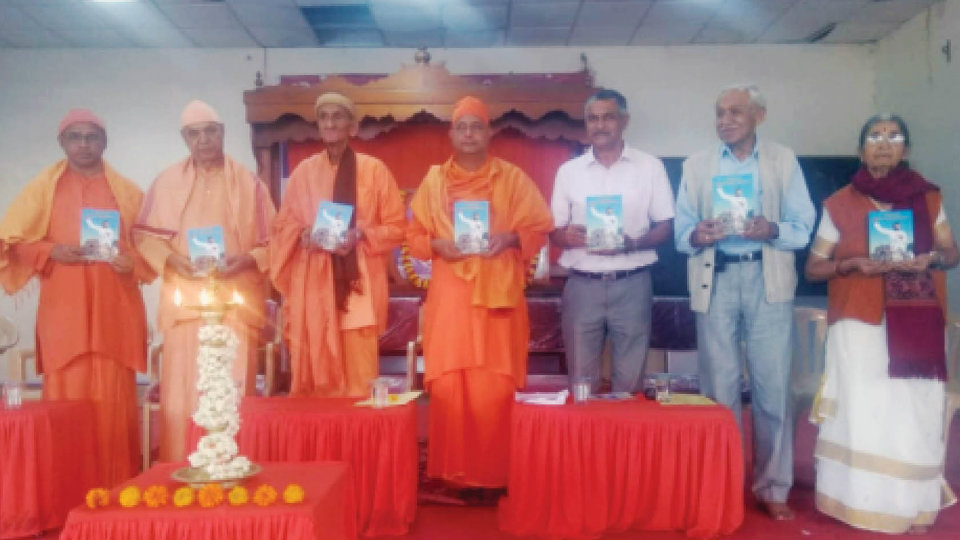
At the event held at Ponnampet this morning, Swami Mukthidanandaji Maharaj, President of Advaitha Ashrama Mayavati, Uttarakhand and Kolkata, released a book “Karunasindhu Sri Ramakrishna Paramahamsa’ written in Kodava language by Hottengada Sundari Medappa of Vivekananda Jnanavahini Kendra Aruvathokkalu.

The book has been written by the author to cater to the population of Kodavas. According to the author, while many books have been written on Sri Ramakrishna Paramahamsa and his teachings in various languages, there was no book on the Saint in Kodava language. She said that she was tremendously influenced by the Sri Ramakrishna Mission and its noble works to the society.

According to Swamy Bodhaswaroopananda Maharaj, President of Sri Ramakrishna Sharada Ashrama Ponnampet, Hottengada Sundari Medappa, through Vivekananda Jnanavahini Kendra, has done the work of a preacher. The book in Kodava language is special as the teachings of Sri Ramakrishna will reach more homes in Kodagu.President of Federation of Kodava Samajas K. Vishnu Cariappa, President of Kodagu Education Fund K.C. Uthappa, Swami Jagadatmanandaji Maharaj and Dharmathmanandaji Maharaj were present.

source: http://www.starofmysore.com / Star of Mysore / Home> News / July 27th, 2018

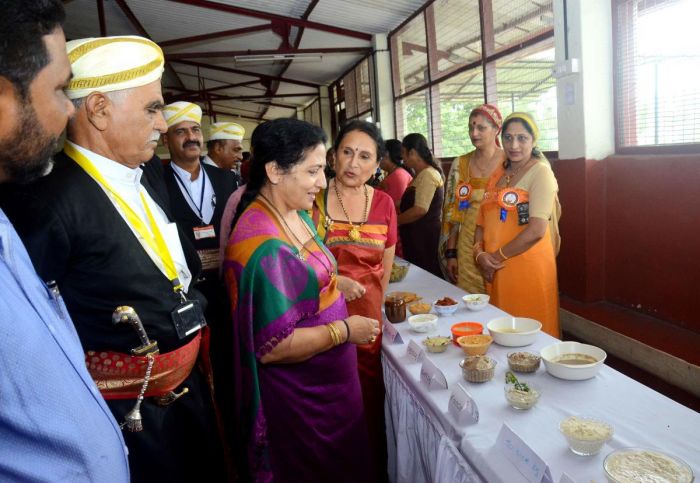
‘Kodava Theeni Namme’ brings out delicacies of Kodavas

MLC Veena Acchaiah and others look at the delicacies during ‘Kodava Theeni Namme’ at Kodava Samaja on Sunday.

The Kodava Sahitya Academy in association with Kodava Samaja Pommakkada Kooda organised “Kodava Theeni Namme” to highlight the Kodava culture, at Kodava Samaja on Sunday.

Traditional delicacies of Kodavas — “Kadabuttu,” “Pandikari,” “Mange Pajji,” “Kurukari,” “Kumabalakari,” “Kembukari,” “Kaad mange,” “Koile meen,” “Thoppukari,” “Karjikai”, “Marakembu puttu,” “Berambuttu,” “Chitaniputt,” “Adikeputt,” “Book kajjaya,” “Sunti pajji,” “Bembalekari,” “Panakandekari,” “Kakkale,” “Kembukarri,” “Kaipuli chutney,” “Kenjarisuli,” “Ambatepara,” “Chorange para,” and others — were exhibited.

MLC Veena Acchaiah said, ‘Kodava Theeni Namme’ reminded her of the rich traditional mouth-watering delicacies. It is a good effort to create awareness on the delicacies among the younger generation, she added.

Stating that Kodavas are known for their hospitality, she added that the Kodavas are also known for their unique attire, tradition and culture.

Kodava Samaja Pommakkada Koota President Kannanda Kavitha Bollappa and Kodava Sahithya Academy President Pemmanda K Ponnappa were also present.

source: http://www.deccanherald.com / Deccan Herald / Home> States> Districts / by DH News Service – Madikeri / July 29th, 2018

A stylish ode to anti-air pollution

Bengaluru-based designer has collaborated with fashion guru Prasad Bidapa and a top-knotch IT company and has created a fashion collection.

City models sporting a piece from Tahera’s latest collection.

Indeed, collective effort is what brings about a herculean change. But, there’s also no denying how it is those little acts of thoughtfulness and kindness that go on to make a world of difference. For, Bengaluru designer Tahera Peeran, landing a lofty yet creatively fulfilling collaboration with two tech companies and Prasad Bidapa is what has kept her busy and beaming in the recent past. Her latest collection oozes sparks of sustainability and the bespoke aura of all things handmade while focusing on an ingenious ink innovation by Dell. In a candid chat, she shares the inside track…

“I believe corporate social responsibility and giving back to the community improves the quality of our lives, creates sustainability and promotes a better and brighter future,” begins Tahera, who describes her collection best as, ‘Handmade, environment friendly.’ It’s done specifically to promote anti-air pollution, and to promote handmade, hand-looms and hand-weaves. Speaking of which, she elucidates, “I have worked with pure handlooms and Khadi to create a Japanese minimalist look with classic, relaxed and layered silhouettes.”

But team effort is what takes the cake.” This has been a collaboration of many people from varied strata. It was amazing to see how it came together and everybody contributed and the end results were remarkable,” shares the 37 year old.

The NIFT graduate, who’s label mixes quirky and contemporary designs with comfort and functionality, didn’t always knew this was her calling. “I dont think I always wanted to become a designer. It took me a while and the support of my family to help me zero in on design as a professional pursuit. I wanted to become a writer, so I grew up reading a lot of books. I was always interested in art. And, from there, I got interested in design — graphics, architecture. I remember sketching a lot of girls in my notebooks, with dresses and different clothes.”

She loves to juggle too many things at a time, so it doesn’t come as much of a surprise to see her indulge in a tonne of activities whenever time permits. On how her typical day looks like, she says, “I love to go out for a way. I need that time in the morning, I like to spend time around greenery. It leaves me feeling energized. I have a little daughter, and we get into the DIY projects. I also love watching old English movies and world cinema as well. Right now, I’m reading Rupi Kaur.”

The current collaboration is yet to become commercial. But, Tahera has all her hopes pinned on its success. “It’s a great step towards being sustainable, it needs to be developed further. I see a lot of potential in it. I’m hoping it will be commercial and accessible soon. It’s a way to move forward. People need to get together more and do collaborations like this. It takes a group of people to come together and work an idea like.That aside, I’ll be flaunting my free fall collection next. It’s a black and white line. I’m excited for the time ahead.”

source: http://www.asianage.com / The Asian Age / Home> Life> Fashion / The Asian Age / Pooja Prabban / July 23rd, 2018

Mother Mirra’s Coffee’s 100-year legacy

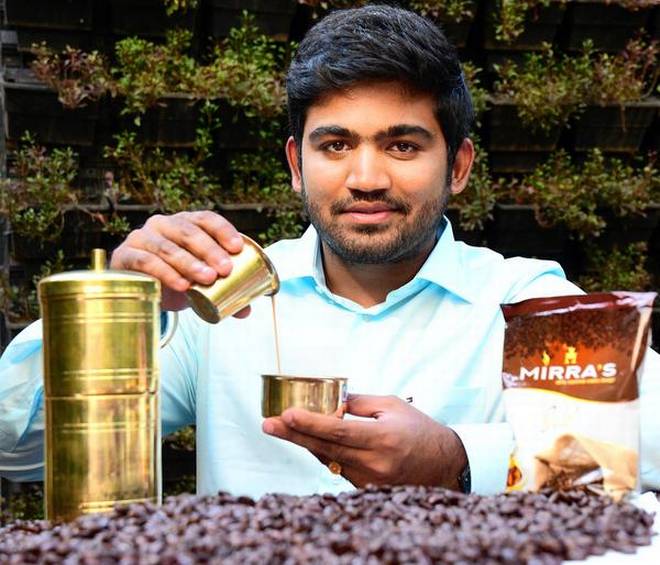
Chasing the perfect brew Sundar Subramaniam, Executive Director of Mirra's Coffee   | Photo Credit: S_SIVA SARAVANAN
Chasing the perfect brew Sundar Subramaniam, Executive Director of Mirra’s Coffee | Photo Credit: S_SIVA SARAVANAN

As Mirra’s Idhu Namma Veetu Kaapi now steps into the new age with its latest filter coffee variants, we look back at the company’s 100-year-old legacy.

“I promise, you will keep coming back for more,” declares Sundar Subramaniam with a confident smile. The executive director of Mother Mirra Group of Companies offers me a fragrant brew, made with coffee powder from Mirra’s Idhu Namma Veetu Kaapi brand. The group recently launched three variants of filter coffee. It’s limited to retail in Tamil Nadu and Puducherry for now, but Sundar is bursting with plans.

“We are marketing Mirra’s Coffee with the line ‘I want you to buy my coffee once’… we plan to give away free brass coffee davara sets with every packet soon. And, there will soon be wet sampling at malls and stores.”

Mother Mirra’s Coffee has a 100-year-old legacy. It comes from the house of the first Asian planter, PPR Subramaniam (Sundar’s great-grandfather) and his Virakesari Plantations. PPR was an entrepreneur and journalist from Avanipatti village, in the Sivagangai district of Tamil Nadu. He also started Virakesari, the first Tamil newspaper in Sri Lanka in the 1930s, to give a voice to the rights of plantation workers.

“Back home, our community was often associated with the money-lending business. My great-grandfather set a new path. He moved to Sri Lanka at a time when plantations were still owned only by the British and the Scottish,” Sundar says with pride.

Later, PPR moved to Malaysia, where he bought more plantations. “My grandfather Sundarakesari continued the tradition and owned plantations in Coorg. My father S Subramanian followed suit,” says Sundar, now settled in Coimbatore.

Today, their plantation AA — or Premium Arabica — variety of beans is exported to countries within Asia and beyond. They also have a line-up of Arabica and Robusta with varying ratios of chicory content in them.

“Our wholesale market is thriving. We also sell online on Amazon, Flipkart, Paytm, and Big Basket, something I introduced after I took over in the last six months. My focus is on digital marketing. We are getting a good response from our active social media pages too.” The group has also branched into budget homes and service apartments.

“I did my masters in business marketing at Cornell University in New Zealand. I wanted to work abroad, but my father had other plans. He met me at Singapore and handed me my return ticket to Coimbatore,” laughs Sundar.

What followed was the launch of the retail brand. They added more German machineries to the factory at Coorg and introduced three new products — pure coffee (100% premium Arabica), premium filter coffee (with 15% chicory) and Gold (with 47% chicory). A network of 350 dealers ensures that the filter coffee reaches stores in Coimbatore, Madurai, Chennai and Puducherry. “In a couple of months, we want to start exporting to Singapore and New Zealand.” They also plan to enter the Sri Lankan market, from where it all began. A particular street in Colombo, from where Virakesari was born, still goes by the name Chettiar Street, to honour his great-grandfather.

Among new products, a green coffee is in the offing. Sundar also plans coffee counters at airports: where one can sow coffee, roast, grind and brew a perfect davara.

source: http://www.thehindu.com / The Hindu / Home> Life & Style> Food / by K Jeshi / July 20th, 2018

A Professor Remembers His Days In Kodagu

ProfessorKodaguKF25jul2018

Voice of the Reader:

Sir,

Apropos the letter titled ‘A Mysurean’s tryst with Kodagu’ published in Star of Mysore dated July 11, I want to narrate my experience of staying in Kodagu from 1962 to 1966 being a former native of Hunsur.

In 1962, I was directed to a school in South Kodagu by my College Professor whom I happened to meet on Sayyaji Rao Road, Mysuru. Since Kodagu is adjacent to Hunsur, I thought, as a fresher, that I can go and work there and teach English to students.

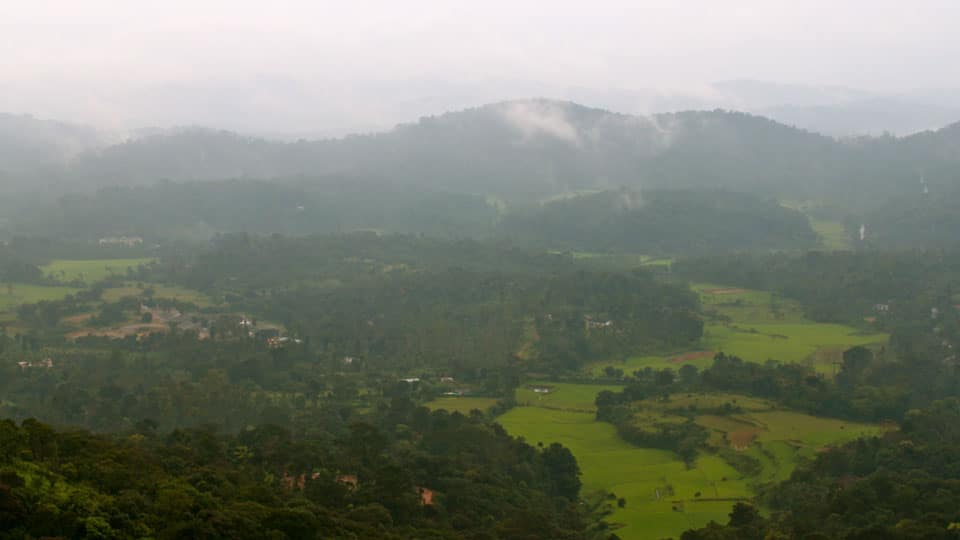
When I landed at Balele in Kodagu, I was mesmerised by the beauty of nature around the school which was situated amidst a coffee plantation dotted by orange trees. There wasn’t any other building near the school except an asphalted road on which buses used to ply from Gonikoppal to Balele – four or five buses used to ply on this road every day. It was a rare sight for us to see the buses so clean and punctual. The crew of the bus was so co-operative and social, that the passengers used to feel that all of them were the members of the same family.

There was a valley near the school and down below, there was a stretch of land which belonged to the school just like a part of the coffee plantation around the school. It was used to cultivate paddy and rain water was the only source of irrigation. The valley was so beautiful that we used to stand at the rim and enjoy the beauty especially during rainy season and winter amidst thick mist. There was an old house at the rim of the valley and from there we used to enjoy the beauty of the rising sun over a cup of piping-hot Coorg coffee.

Boys playing hockey was a feast to the eyes at the school field which was close to the valley. But that side rim was covered by trees and other vegetation.

This year’s rainfall reminds me of the continuous rain in Kodagu for about five days which locked us up in the school building which was our residence too. We spent our days playing carom, chess, hearing radio. There was no electricity and tap water during that time. I have gone to that place many a time even after leaving that place about 52 years ago to recapitulate the memory.

– Dr. Hunsur S. Raghavendra Rao, Retired Professor, J.P. Nagar, 12.7.2018

You can also mail us your views, opinions, and stories to voice@starofmysore.com

source: http://www.starofmysore.com / Star of Mysore / Home> Voice of the Reader / July 15th, 2018