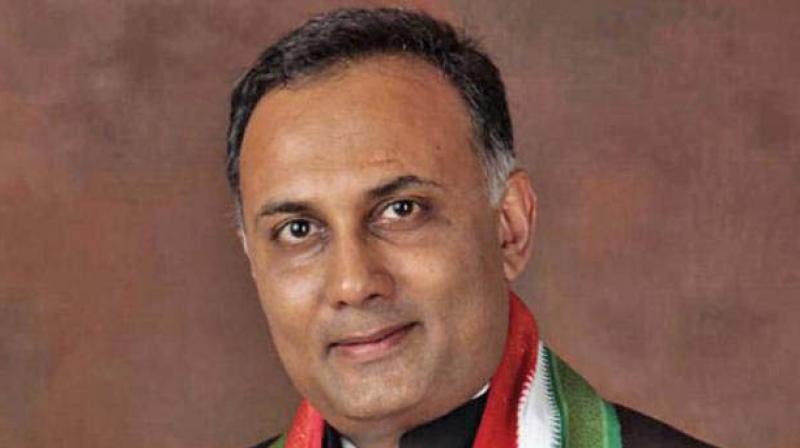
Mega show for Dinesh Gundurao’s swearing in today

Dr G will hand over the party’s baton to Mr Rao.

 Dinesh Gundurao
Dinesh Gundurao

Bengaluru:

Congress leader and MLA, Dinesh Gundurao, who has been appointed president of the Karnataka Pradesh Congress Committee (KPCC) will take charge on Wednesday at a function organised at the Palace Grounds here.

Along with Mr Rao, a prominent Lingayat leader Eshwar B. Khandre who represents Bhalki in the assembly, will assume office as the working president of the KPCC.

Besides MPs from Karnataka and state Congress leaders, a large number of party workers are expected to participate in the event.

Deputy Chief Minister Dr G. Parameshwar, who has been serving as the president of KPCC, will hand over the party’s baton to Mr Rao, while Mr Rao will hand over charge to Mr Khandre.Mr Rao, a five-time MLA representing Gandhinagar constituency in Bengaluru, is the son of late chief minister R. Gundurao. He was a national spokesperson for the AICC and has been elevated from working president, a post he held since 2016. Rao pipped several contenders for the post, including former Union minister K.H. Muniyappa ,state ministers H.K. Patil and M.B. Patil besides D.K. Shivakumar, and B.K. Hariprasad.

This programme is unique as Mr Rao who is perhaps the youngest PCC president, will be taking charge from the longest serving president, Dr Parameshwar on Wednesday. Dr Parameshwar has been at the helm of party affairs for eight long years, which in itself is a record.

Meanwhile, addressing a joint press conference at the Tripuravasini centre at Palace Grounds, after monitoring the arrangements, party leaders V.S. Ugrappa, V.R. Sudarshan and H.M. Revanna said that they were happy to see Mr Rao and Mr Khandre taking charge. “This is a joyous moment for all of us as a young leader will be taking charge from the longest serving KPCC president,” the leaders explained.

The leaders added that youngsters at the helm of the party will surely attract youngsters to the party and it will start getting new ideas to counter the BJP’s aggressive campaign across the country.

source: http://www.deccanchronicle.com / Deccan Chronicle / Home> Nation> Current Affairs / Deccan Chronicle / July 11th,2018

Tree Lovers Club Plants 700 Saplings At Vijayanagar

Urban greening initiative…

TreeLoversKF14jul2018

Mysuru:

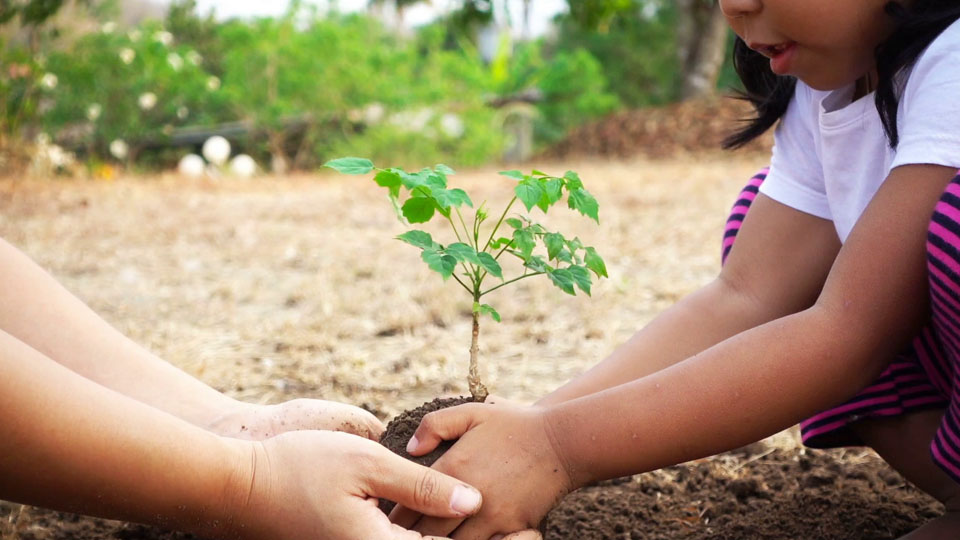
The newly-floated Tree Lovers Club, Vijayanagar, planted around 700 saplings including fruit-bearing indigenous trees in Vijayanagar 3rd Stage on Sunday last.

The Club, an offshoot of Vekare Ex-Servicemen Trust (VKET), will take up urban greening and promote it by example and through public campaigns.

Speaking to SOM, VKET and Tree Lovers Club President Mandetira N. Subramani said that it is the responsibility of every citizen to take care of the ecology and environment around their neighbourhood, first by planting a couple of fruit-bearing saplings in places wherever it is feasible. Subsequently, it should be the individual’s responsibility to nurture them after their maintenance for five years till they grow at least 15 feet in height.

He said, it is the collective responsibility of the residents and NGOs to take the initiative to impress upon the Forest Department to plant more saplings.

He further mentioned that the Tree Lovers Club will accomplish its mission of apprising the Chief Conservator of Forests in Mysuru to plant over 5,000 different species of saplings including fruit-bearing trees in Vijayanagar 1st, 2nd, 3rd & 4th Stages.

Vice-President Shakunthala Subramani, Gen. Secretary A.B. Bojappa, Jt. Secretary Poornima Raghu, Treasurer S. Somashekara and Hon. Advisor P.S. Bose Subramani led the morning walkers and residents of Vijayanagar 3rd Stage, numbering over 150, in planting the saplings.

Addressing the gathering after planting over 25 fruit-bearing trees in the Park opposite Heritage Club, the Tree Lovers Club President thanked the participants, members of Brahmagiri Kodava Association and Heritage Club for giving moral support to the Club in accomplishing the greening initiative. Tree Lovers Club intends to adopt the Park in Vijayanagar 3rd Stage for development and maintenance after obtaining the consent of authorities concerned.

Speaking on the occasion, A.B. Bojappa said that the Club would form a Committee of Tree Lovers to look after the saplings already planted in Vijayanagar 3rd Stage in the past one week.

The Secretary also requested those present to give their suggestions to improve the ecology of Vijayanagar 3rd Stage via e-mail: tree.lovers@yahoo.com or infowicket@gmail.com

source: http://www.starofmysore.com / Star of Mysore / Home> News / July 10th, 2018

Free Medical Camp By Kaveri Mahila Sangha On July 15

Mysuru:

Shree Kaveri Kodagu Mahila Sangha, Mysuru, has organised its annual free medical camp at Mahaveer Vidya Mandir, C-A/2, LIC Colony, 2nd Stage, Srirampura, on July 15 from 10.30 am to 4 pm.

Dr. Mathanda Aiyappa will inaugurate the camp on Sunday. Sangha President Jerry Ponnappa will preside.

Physician Dr. Latha Muthanna, Dermatologists Dr. P.A. Kushalappa and Dr. Poovamma, Urologists Dr. Madappa and Dr. Somanna, Orthopaedician Dr. Devaiah, Paediatrician Dr. Rajeshwari Madappa, Dr. Aiyappa (General Medicine), Dr. Aiyanna (Ayurveda), Gynaecologists Dr. Poovamma and Dr. Sonia Mandappa, Dr. Padmini Kaverappa, Dentist Dr. Shruthi Somaiah, Nephrologist Dr. Vipin Kaverappa and Dr. Sonam Bopanna (Speech & Hearing Pathologist) will take part in the camp along with representatives from Sigma Multi-speciality Hospital and Nethradhama Super-speciality Eye Hospital.

For details, interested public may contact President Jerry Ponnappa on Mob: 99015-36733 or Secretary Kavya Kuttappa on Mob: 99642-36284.

NOTE: The general public attending the camp must compulsorily bring the old medical records, if any.

source: http://www.starofmysore.com / Star of Mysore / Home> News / July 11th, 2018

Voice of The Reader : A Mysurean’s Tryst With Kodagu

KodaguKF12jul2018

Sir,

I should consider it treason on my part if I don’t respond now to KBG’s Abracadabra titled “Will Kodagu, heaven on earth, cease to exist ?” (SOM dated June 23). Yes, I consider Kodagu my second homeland, if KBG calls Mysuru his homeland.

Ever since KBG advised me to go to Tadiyandamol in 1984 to enjoy a good trekking experience, my tryst with the land has been, probably, more significant than that of anybody else living outside Kodagu. During the first six years thereon (1984), one could find me wandering around seldom tread remotest and wildest paths of the district, along with my students. During 1990 and 1995 people could very regularly find me around Talacauvery, measuring rainfall and monitoring flows in small streams, including Cauvery and Kannike at their origin, and developing theories on ‘Pipeflow’ for my Ph.D.

Later, for about a decade, one could find my students working on data we collected from the region and me coming out with significant publications telling the world about the thrills of my work in the Western Ghats. Ever since I was awarded a Funded Project by ISRO in 2006, my association with Kodagu started expanding in multiples. Innumerable number of our (NIE) students started getting benefited from the project, and enjoyed working in the wet areas of the Watershed of Kumaradhara, which originates on the eastern slopes of Pushpagiri.

We instrumented streams, installed rain gauges and collected precious data. The project culminated in me setting up a very unique “Field Hydrological Laboratory” which now caters to teaching PG students of NIE practical Hydrology. The Annual Survey Camp for UG students was also being held for a few years in Garwale, exposing students to real-life problems.

Recently, I have got funds to the tune of Rs. 30 lakh from MoES, for continuing my work in Kodagu — this means I can work with freedom in the Ghats till my retirement from service at NIE. I hope, people will understand how formidable my emotional attachment with Kodagu is.

For this very reason, I oppose all forces working towards the fall of Kodagu. I assure you that my ‘alilu seve’ continues to be available for purposes that will do good to Kodagu. To add to my earlier write-ups, I now have a point to emphasise on.

During the over seven decades of independence and democratic rule in the country, very sadly, Kodagu has had the opportunity of sending only one of its own sons to the Parliament. People of Kodagu have cast votes 16 times and have seen their representative (C.M. Poonacha) becoming an MP only once. During the last four decades, which I have seen, no MP has ever done anything favourable to Kodagu, except for shedding crocodile tears. Hence, I strongly feel that the people of Kodagu take up the challenge of installing their own representative.

A true representative of the people is of utmost importance in shaping political decisions and a strong lobby which alone can bear fruits. No doubt that a long-lasting battle is required to achieve this goal.

– Prof. Yadupathi Putty, Krishnamurthypuram, 1.7.2018

You can also mail us your views, opinions, and stories to voice@starofmysore.com

source: http://www.starofmysore.com / Star of Mysore / Home> Voice of the Reader / July 11th, 2018

Mulled and brewed at home

Bottled Goodness

WineKODAGU11jul2018

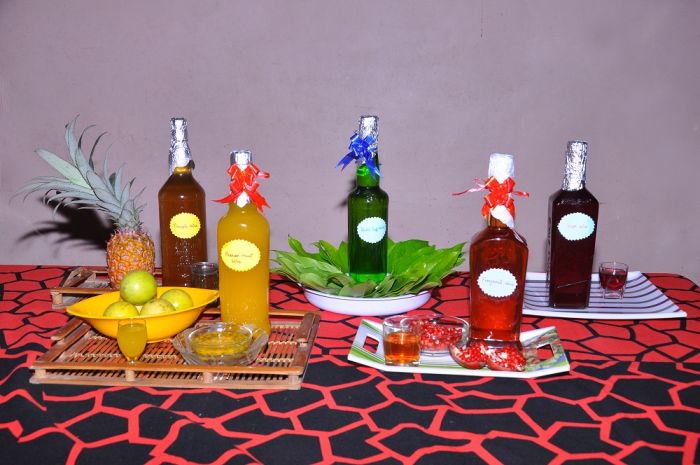
It is common to think of grapes when we talk about wines. But women of Chikkamagaluru, Kodagu and Hassan districts have shown that there’s more to wine than just grapes. Here, wine is made from a wide range of locally grown fruits and spices like jamun, ginger, pepper, betel leaf, gooseberry, orange, cashew apple, rice, banana, coffee, etc. These wines, traditionally mulled and brewed in the coffee estates of the State, are being perfected to be sold in domestic and international markets. Women entrepreneurs, who are at the helm of winemaking, ferment different flavours of wines as well.

In these districts, it is a custom to serve a cup of freshly brewed coffee to guests. In addition to coffee, homemade wine is now offered as a welcome drink at weddings and other joyous gatherings. It is also presented as a gift to relatives and friends. Not just that, it has become a good addition to the various products that travellers look for in these places.

Wine heritage

Amongst the three districts, Kodagu holds a prominent place as the producer of wine. The district has a uniformly distributed wet climate. The British have left their cultural footprints here, which reflects in the culture and lifestyle of the Kodavas. The wine has historically been a part of the Kodava diet and heritage and has been bettered through generations.

With the tourism sector experiencing a steady growth in the district, more than 1,000 women are now engaged in winemaking. While many of them brew for home consumption, the number of women taking it up as an income-generating activity is also on the rise. Winemakers say that since they produce wine in small quantities, they don’t have to register with the Wine Board.

Wine is made throughout the year and the ingredients change with the season. This art of perfecting homemade wine has seen higher success rates with the involvement of self-help groups. One such group is Rajarajeshwari Self-Help Group(RSHG) established by the women of Kargunda village in Madikeri taluk. For the past 16 years, the members of this group have been selecting the best quality fruits grown in their coffee plantations and blending them with various other locally sourced ingredients to make homemade wine.

RSHG is one of the first such groups to be formed by the Coffee Board of India. With 18 women entrepreneurs in its fold, two women work every day to ensure continuous production. “The health benefits of these wines are significant. For instance, black plum has positive effects on controlling diabetes and ginger has several medicinal effects,” says Jarina Uthappa, president of RSHG. Members Saroja Kalappa, Girija Chermanna and Gowramma Kaverappa say that over the years, there is an increase in tourist footfall to their shop, which is located on the route from Madikeri to Bhagamandala. And, many consider this outlet as a must-stop place for tourists.

The process

Sugar and the fruit of choice are added to boiled water and stirred at regular intervals for a period of five days. Then it is kept for 25 days, after which the fruit and sugar mixture is filtered into a bottle without any traces of the pulp being mixed. In order to separate the pulp from the liquid, Muslin cloth is used in the filtration process.

Only good quality fruits are used in winemaking. They do not use alcohol, yeast or any other form of preservatives during preparation. Of late, sugarless wine is also prepared. Customers can buy their products after tasting samples. The wine wine has a shelf life of up to two years. However, due to the natural process of fermentation, as years go by, the wine acquires five to 10% of alcohol content in it. It is safe to consume wine up to 60 ml after which it leads to intoxication. They sell about 150 to 200 bottles in a month and one bottle costs Rs 200.

Another successful self-help group, Coorg Wine Association(CWA) in Suntikoppa, is also a known name in wine production. Manu, a member, states that Kodavas have a cultural association with wine and it is seen as an energy drink here. At CWA, the process of fermentation is carried on for 90 days. Along with fruits, they also use pudina(mint), Bermuda grass and mulberry. At CWA, the filtration process takes place after 50 days and the wine is sold at Rs 250 to 300 per bottle.

Distinctive methods

Though the wine culture is not as widespread as Kodagu, the concept of homemade wine is catching up in Chikkamagaluru and Hassan districts, mainly because of the demand created by the tourists. “It has also become a source of regular income for women entrepreneurs,” states winemaker Divya Uday of Kitthagalale estate in Sakaleshpura.

Every winemaker follows a distinct method and even the ingredients vary. For one kilogram of fruit, Divya Uday adds one handful of rice, wheat flour, cloves, cinnamon, a pinch of yeast and little black pepper. The wine is sold at homestays in and around Sakaleshpura. She adds that beauty parlours are now placing orders for grape wine, which is used in facial cleansing.

I then interacted with two innovative entrepreneurs, Geeta Sunil and Sumitha Raghudev, in Chikkamagaluru. They have created a niche for themselves in the field with a wide variety of wines such as cashew wine, rose wine, passion fruit wine, pomegranate wine, pineapple wine and betel leaf wine. They have been supplying these unique flavours to homestays located in the region.

Bhagya Lakshman, an experienced winemaker in Mudigere taluk, remembers that in her childhood, after a day of hard labour, to de-stress from the physical and mental strain endured, people used to consume a primitive form of wine before dinner. The ingredients were mainly fruits and berries picked from surrounding community forests and plantations. The fruits were blended with jaggery, sprouts, ginger, black pepper and rice.

Over the years, there has been a lot of changes in the preparation and consumption practices, reflecting the evolution of customs, traditions and culture. And the change is for the better, she feels. She says that many Ayurvedic practitioners recommend consumption of one spoon of betel leaf wine or ginger wine on a daily basis to maintain good health.

It is very fashionable these days to serve wine as a welcome drink in the social gatherings that women organise. It is always served in limited quantities. Wine must always be stored in glass bottles and must never be refrigerated. Wine, when preserved for more than seven years, gives the same intoxicating feeling as whiskey.

So, when you visit this part of the State next time, don’t forget to try these fruity flavours.

source: http://www.deccanheral.com / Deccan Herald / Home> Spectrum> Spectrum Top Stories / by Poornima Kanahalli / July 07th, 2018
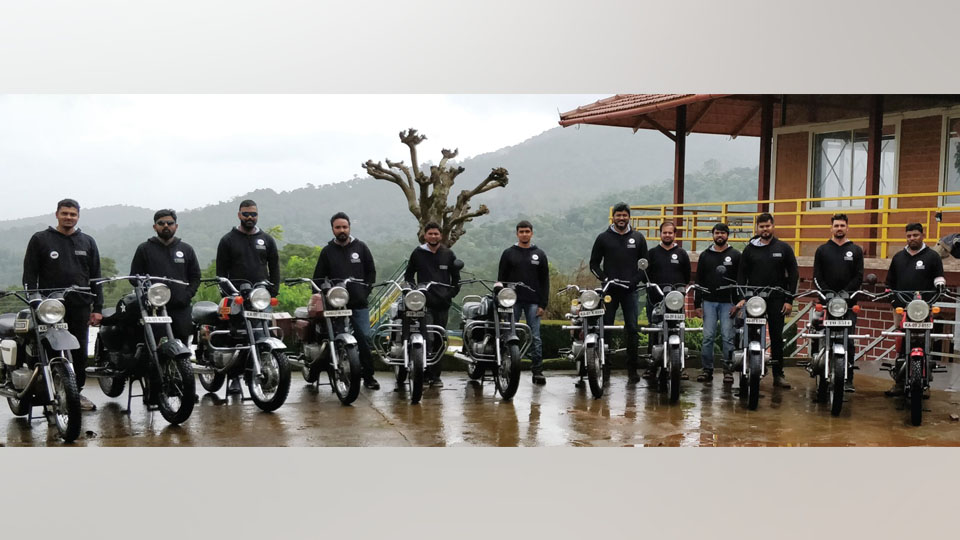
Jawa Lovers Hit Rainy Roads Of Kodagu

A group of youths from Mysuru, who took out a ride to celebrate International Jawa Day, are seen at Kakkabe village near Thadiyandamol Mountain in Kodagu.

JawaKF10jul2018

12 Jawa enthusiasts — (from left) Balakrishna, Yashwanth, Sachin, Pradeep, Prasanna, Vikas, Nithyanand, Mohan, Pruthvi, Ravi, Ruthvik and Harsha — embarked on the journey from Mysuru last evening.

Sharing their experience, the youths said that it is raining heavily in Kodagu and riding the most-loved vehicle in biting cold and water splashing on faces was a thrilling experience.

source: http://www.starofmysore.com / Star of Mysore / Home> Gallery> Photo News / July 08th, 2018

Booktalk: New Book On Kodava Death Rituals

KodavaRitualsKF09jul2018

Title: Kodavara Saavu Paddathi

Author: Nellamakkada B. Kaverappa

Pages: 52 /Price: Rs. 50 / Publisher: Akshara Prakashana, Mysuru

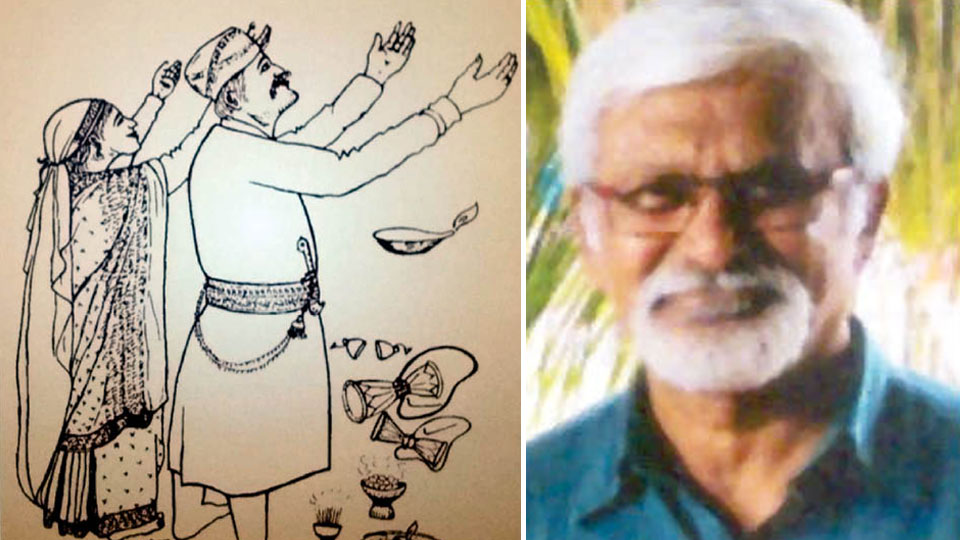
Noted artist Nellamakkada B. Kaverappa has written a book titled “Kodavara Saavu Paddathi” which deals with the death rituals involving Kodavas. The book was recently released to mark the 150th birth anniversary of Kodava poet and dramatist Haradasa Appaneravanda Appacha Kavi.

It is a unique book on the death-related rituals of Kodavas to be followed by Kodavas living outside Kodagu in cities like Mysuru and Bengaluru. The book explains customs and traditions to be followed after a person dies.

According to the author, Kodavas living in other towns and cities are finding it very difficult to follow all the rituals connected to death as is being followed in Kodagu. Many rituals are being left out and many are being performed wrongly. The book has been written after a year-long research.

The book is in two parts — from the time of death till cremation and after cremation till the completion of Deeksha. The author says there is no need for any priests as the rituals will be conducted by a Kodava “Aruva”. The book is written in Kannada with Kodava names of all rituals and it is a must-read for a Kodava.

About the author

Born in Kodagu on Jan.1, 1950 to Nellamakkada Bopaiah and Nanjamma, Kaverappa served as a teacher and also the judicial department. Since childhood, he was interested in art and writing and he studied art from M.T.V. Acharya who was a painter, illustrator and art educator, most famous for his work for the popular Indian children’s magazine Chandamama.

In 1994, Kaverappa established Bharani Art Gallery, the first private art gallery of Mysuru. This is the only private gallery that is given free for artists along with a guest room. So far, Bharani has conducted more than 100 exhibitions. He has also written a book in Kannada on the life and sculptures of artist Kiran Subbaiah. He has translated two books for Lalitha Kala Akademi.

Copies of the book are available at Mysuru and Bengaluru Kodava Samajas. The author can be contacted on Mob: 94485-54221. – OSR

source: http://www.starofmysore.com / Star of Mysore / Home> Feature Articles / July 08th, 2018

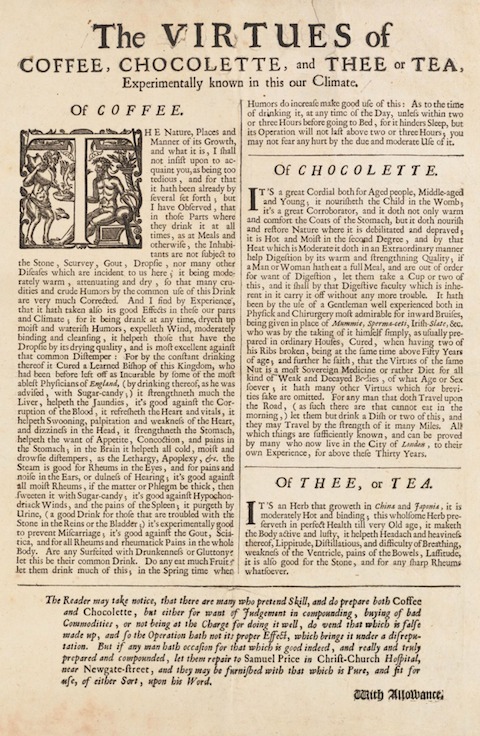
“The Virtues of Coffee” Explained in 1690 Ad: The Cure for Lethargy, Scurvy, Dropsy, Gout & More

CoffeeKF09july2018

According to many historians, the English Enlightenment may never have happened were it not for coffeehouses, the public sphere where poets, critics, philosophers, legal minds, and other intellectual gadflies regularly met to chatter about the pressing concerns of the day. And yet, writes scholar Bonnie Calhoun, “it was not for the taste of coffee that people flocked to these establishments.”

Indeed, one irate pamphleteer defined coffee, which was at this time without cream or sugar and usually watered down, as “puddle-water, and so ugly in colour and taste [sic].”

No syrupy, high-dollar Macchiatos or smooth, creamy lattes kept them coming back. Rather than the beverage, “it was the nature of the institution that caused its popularity to skyrocket during the seventeenth and eighteenth centuries.”

How, then, were proprietors to achieve economic growth? Like the owner of the first English coffee-shop did in 1652, London merchant Samuel Price deployed the time-honored tactics of the mountebank, using advertising to make all sorts of claims for coffee’s many “virtues” in order to convince consumers to drink the stuff at home. In the 1690 broadside above, writes Rebecca Onion at Slate, Price made a “litany of claims for coffee’s health benefits,” some of which “we’d recognize today and others that seem far-fetched.” In the latter category are assertions that “coffee-drinking populations didn’t get common diseases” like kidney stones or “Scurvey, Gout, Dropsie.” Coffee could also, Price claimed, improve hearing and “swooning” and was “experimentally good to prevent Miscarriage.”

Among these spurious medical benefits is listed a genuine effect of coffee—its relief of “lethargy.” Price’s other beverages—“Chocolette, and Thee or Tea”—receive much less emphasis since they didn’t require a hard sell. No one needs to be convinced of the benefits of coffee these days—indeed many of us can’t function without it. But as we sit in corporate chain cafes, glued to smartphones and laptop screens and mostly ignoring each other, our coffeehouses have become somewhat pale imitations of those vibrant Enlightenment-era establishments where, writes Calhoun, “men [though rarely women] were encouraged to engage in both verbal and written discourse with regard for wit over rank.”

via Slate
Josh Jones is a writer and musician based in Durham, NC. Follow him at @jdmagness.

source: http://www.openculture.com / Open Culture / Home> Food & Drink History / December 03rd, 2014

Starbucks introduces coffee brewed with nitrogen for first time in India

Cold coffee which will be called–Nitro Cold Brew marks Starbucks next chapter of coffee innovation through the newest take on its signature cold brew.

Tata Global Bev
Tata Global Bev

Tata Starbucks, a 50-50 joint venture between the US-based Starbucks Coffee Company and Tata Global Beverages has been on an innovation spree of its products.

Starbucks today introduced a new generation of coffee for the first time in India infused with nitrogen.

Cold coffee which will be called–Nitro Cold Brew marks Starbucks’ next chapter of coffee innovation through the take on its signature cold brew.

Starbucks Nitro Cold brew is made after handcrafting the cold brew coffee and then infused with nitrogen. It is also available with vanilla flavour– vanilla sweet cream cold brew.

Starbucks cold brew will be available across all outlets in India, while Starbucks nitro cold brew is currently available in 5 stores across India namely–Mumbai-Kamala Mills, Bangalore-Jaya Nagar, Delhi-Green Park, Noida-DLF Mall of India, Kolkata, Park Mansions.

The company achieved a topline growth of 28 percent last year, supported by better in-store performance and growth through new stores.

Tata Starbucks recently made its maiden foray into Kolkata, the seventh city for the company in India. It plans three more stores there.

source: http://www.moneycontrol.com / MoneyControl.com / Home> News> Business / July 04th, 2018

Dinesh Gundu Rao Becomes New Karnataka Congress Chief

Dinesh Gundu Rao replaces G Parameshwara, who has since become the deputy chief minister in the new coalition government.

New Delhi :

The Congress on Wednesday appointed Dinesh Gundu Rao as the chief of its Karnataka unit, replacing G Parameshwara, who has since become the deputy chief minister in the new coalition government in the state.
48-year-old Gundu Rao was earlier the working president of the Karnataka Congress under Parameshwara. The five-time MLA from the Gandhinagar constituency in Bengaluru was the food and civil supplies minister in the previous Congress government in the southern state.

Congress president Rahul Gandhi also appointed Easwar Khandre, an MLA, as the new working president of the party’s Karnataka unit.

All India Congress Committee (AICC) general secretary Ashok Gehlot made the announcements in a statement.

“The Congress party appreciates the hard work done by G Parameshwara, who successfully led the party for the last eight years and is stepping down from his responsibility,” the statement added.

The changes in the Karnataka Congress were in the offing after the Congress-JD(S) coalition government was formed in the state in May.

The changes are also part of Gandhi’s efforts to bring in a new team of young leaders to steer the party at the central and state levels.

source:http://www.ndtv.com / NDTV / Home> Sections> Karnataka / by Press Trust of India / July 04th, 2018