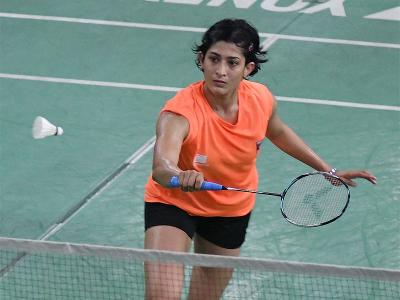
Specialist doubles shuttler Ashwini Ponnappa, who moved on from long-time playing partner Jwala Gutta last year to pair up with Sikki Reddy, suggested that her game was a lot more dynamic now.
“It’s good although it’s just been a few months,” said Ashwini, who reached the final of the Syed Modi international champion ship with the Hyderabadi early this year, after the pair finished runners-up in the Welsh Open late last year.
“It’s different because the two of us have similar games and like playing from the back. Neither of us like rushing to the net because we had partners who played well there. But with the realization that one of us had to take charge, we decided that if I move in, she moves back and vice versa,” the 27-year-old said on the sidelines of the 38th Petroleum Sports Promotion Board championship.
Ashwini, who also reached the mixed doubles final of the Lucknow event, said that partnering Sumeeth Reddy had sharpened her skills. “Playing mixed doubles was a confidence booster. I have been training for it in the past couple of months and I can see the difference it’s made to my net game. I have a better idea of where the shuttle is going to come from and where it has to be played. In the past, I never got into that area of thinking because Jwala was so good. It’s been a learning process combining with these players,” she said.
Ashwini said she was targeting improved performances in the Sudirman Cup (May 2128) and Super Series events in Indonesia (June 12-18) and Australia (June 20-25) before setting her sights on next year’s Commonwealth Games and world championships. She said the efforts of doubles coach Tan Kim Her – which included pushing her out of her comfort zone by switching her partners – had made her more determined.
“It’s important to have a doubles coach who knows his craft. I trust in him,” she said.
source: http://www.timeofindia.indiatimes.com / The Times of India / News> Sports> Badminton / May 10th, 2017
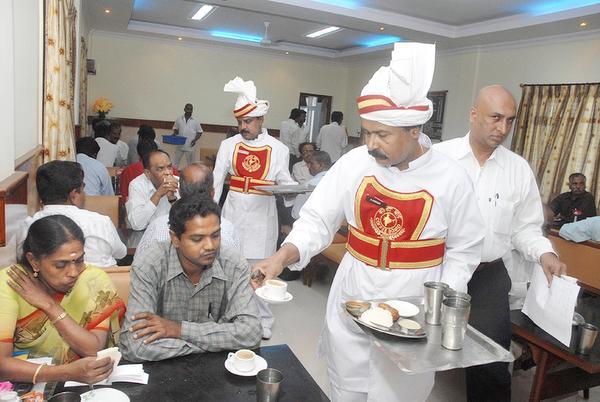
Coffee Board seeks inputs from private players on new business modelA file photo of India Coffee House in Bengaluru
Bengaluru / Kochi :
The iconic India Coffee House is set for a makeover.
The state-run Coffee Board, which operates some 12 India Coffee House outlets in various locations including Parliament House, is exploring options to revamp and expand as part of its efforts to leverage the brand and promote coffee consumption across the country.
The board intends to go in for a revenue-sharing model and on a minimum investment basis for the proposed expansion.
It has initiated consultations with private players and has sought estimates on the capital expenditure and operational expenses for running a 1,000-1,500 sq feet store and smaller format kiosks of around 200-300 sq ft in 75-100 cities.
Pre-bid discussions
Confirming the development, Srivatsa Krishna, Secretary, Coffee Board, said the pre-bid discussions were still in the initial stages.
“We have two more rounds of consultations to go,” Krishna said, stating that clarity on the concept would emerge sometime in July.
Long before the advent of the café culture led by chains such as Coffee Day, Baristas, Costas and Starbucks, India Coffee House was synonymous with the growth of the coffee culture in the country. ICH has a significant brand recall, especially among the 40-plus generation. Red turbaned staff in white uniforms serving coffees and snacks at reasonably prices is a hallmark of ICH outlets.
ICH used to be a favourite hangout or adda for political activists, writers, government employees, small-time lawyers, sales executives and the unemployed: in other words, a curious mix of the eclectic and the mundane.
Its old-world and unpretentious ambience is welcoming of everyone, not least because of the affordable coffees. The impact of liberalisation, which brought about a change in the coffee marketing system in the mid-1990s, led to a downsizing of the Coffee Board workforce and the closure of a number of loss-making India Coffee Houses.
“Some of the outlets were taken over by co-operatives formed by the retireed employees of the Coffee Board and continue to be run by them,” said N Bose Mandanna, former vice-chairman of Coffee Board.
A welcome sign
Industry stakeholders see the renewed effort to revamp the ICH by roping in private players as a positive development.
“We welcome any efforts to promote coffee. The Board should look at the right vehicle to expand the ICH,” said Anil Bhandari, President, India Coffee Trust.
Interestingly, the Board, which started India Coffee House in the early 1940s, had shut down several coffee houses in the mid-50s in various cities and dismissed many employees. Following this, Communist leader AK Gopalan took over the leadership of the retrenched employees and organised societies under the name of India Coffee Board Workers Cooperative Society. The first society was formed in Bangalore in 1957; it opened the first Indian Coffee House in Delhi on December 27, 1957.
The Indian Coffee House, as distinct from the Board-run India Coffee House, is completely owned and managed by its employees.
The society now has a chain with over 51 outlets and associate canteens operating in all major towns and in government establishments, particularly in Kerala.
source: http://www.thehindubusinessline.com / Business Line / Home> News / by Vishwanath Kulkarni – V. Sajeev Kumar / Bengaluru-Kochi – May 10th, 2017
What do you do when you have a long weekend at hand and you wish to escape from the hustle and bustle of the IT capital? Driving to Coorg, the ‘Scotland of India’, is definitely not a bad option. That’s precisely what we did on one such weekend that had a public holiday attached. We decided to make the most of it by driving to that part of the world, where one can be at peace at the Buddhist Monastery, be one with nature at the vast coffee estates sipping a hot cup of filter ‘kaapi’, play Peeping Tom to bathing elephants and relish some delicious local delicacies.
How did we go?
The drive from Bengaluru (Whitefield) can take around six hours with a couple of breaks, so we decided to leave office early post lunch on a Friday with the intention of beating the weekend traffic that piles up on Mysore Road. The drive from Whitefield until the Mysore Road exit can be taxing and no sooner had we entered Bidadi that we started our countdown to the restaurant. We regularly halted on Mysore Road for some nice ‘thatte idli’ and filter coffee. Post our refreshment break, we drove non-stop until we reached Aishwarya Suites (at New Bamboo Bazaar Road, Mysuru City) for our overnight stay. On day two, we got off at around 7 am and headed towards Coorg.
The stay
We stayed at the Leisure Vacation’s Brook Stone Villas at Thalatmane village on the Mysuru-Mangaluru highway. The location is around six km from Gen Thimmaiah Circle as one turns towards Mangaluru. One has to traverse through acres of coffee estates on a ‘kuccha’ road, giving the driver a semi off-roading experience.
What did we do?
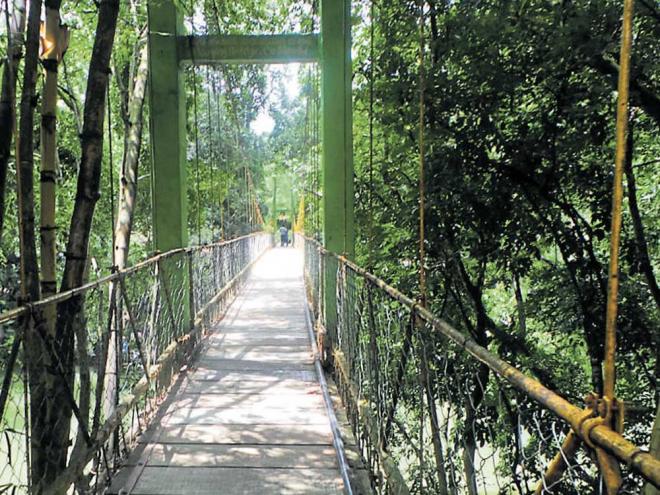
Driving through the scenic road flanked by tobacco farms, we visited the Buddhist Golden Temple. After paying homage at the temple, our next port of call was Nisargadhama Island on the Kaveri river. Here one can visit the island via a hanging bridge, suspended over the river. Later in the day, we visited Abbey Falls and called it a day after visiting Raja’s Seat — a picnic spot that offers a West facing beautiful valley and sunset view, a nice flower garden and a musical fountain treat.We covered Talakad on the second day. At Talakad, one can visit the temple and the higher altitude offers some good sights of the valley beneath. On day three, post breakfast, we headed back to Bengaluru albeit with lots of lovely memories.
(The author can be contacted at srikanthmenon@yahoo.com)
source: http://www.deccanherald.com / Deccan Herald / Home> Supplements> MetroLife / by Srikanth Venugopal / May 11th, 2017
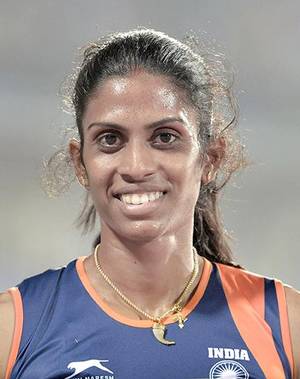
M.R. Poovamma clocked 52.66 seconds as she beat Jisna Mathew by one hundredth of a second for the women’s 400 metres gold in the second Indian Grand Prix athletics at the Nehru Stadium here on Thursday.
Arokia Rajiv won the men’s 400m, which was run in three different parts, with a time of 46.94. He was nowhere near the 45.50 mark to meet the qualification standard for the World Championships in August.
World junior champion and record holder Neeraj Kumar threw the javelin to 80.49m for the gold, comfortably ahead of Abhishek Singh (74.65). The first throw was his best as Neeraj followed up with 75.84, 77.81, 79.29, 79.93 and 79.01.
Devender Singh, who had clinched the World Championship berth at Patiala with 84.57m, did not compete.
Kannada medium schools in the district have been doing Kannada implementation in an appreciable manner, said Kannada Development Authority chairperson Prof S G Siddaramaiah.
“The implementation has been carried out by running the schools in spite of lack of student strength, maintenance of libraries and conducting Kannada programmes,” he said.
Siddaramaiah was chairing the review meeting at the deputy commissioner’s office in connection with Kannada implementation. The Department of Public Instruction of Kodagu has used novel measures, which are examples for other districts, said the chairperson. He said that he will go on a tour of the district and visit Kannada schools in this regard during the reopening.
Many new programmes have been mentioned in the report submitted by the Department of Public Instruction. Even though 114 schools are running short of students, the schools are being run.
Malliswamy, acting deputy director of the Department, said that the students of 12 schools that were closed, have not got admitted to private schools, but have joined the nearby government schools.
Siddaramaiah said that the block education officers should carry out sudden visits to schools to assess the quality of Kannada teaching. Kannada should be introduced as the first or the second language in CBSE schools as per the government circulars.
“The website of the Kodagu district administration is in Kannada. The website is designed using Unicode. Other districts should follow the same. The nameplates and notifications of government departments in the state should be in Kannada,” Siddaramaiah suggested.
Kannada Sahitya Parishat district unit president Lokesh Sagar that Malayalam nameplates dominate in Virajpet, Kutta and Makutta regions. Discussions related to Kannada language are taken up in the last part of Zilla Panchayat meetings. The Authority chairperson directed Deputy Commissioner Richard Vincent D’Souza to take action in this regard.
“Only 550 Kannadigas are employed in the 138 industries of the district. Instead, 100% of C and D grade jobs should be given to Kannadigas, while 50% and 80% of reservation should be provided in A and B grade jobs,” he said.
Superintendent of Police P Rajendra Prasad and Authority secretary Muralidhar were present.
source: http://www.deccanherald.com / Deccan Herald / Home> District / DH News Service – Madikeri, May 12th, 2017
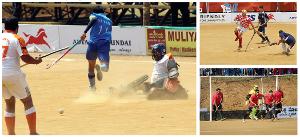
Around 4,800 players will participate in Kodava community’s event
The Kodava community’s craze for hockey is as legendary as their participation in the Indian army.
This love for the sport is celebrated by the people of Kodagu with an annual hockey festival, where family teams from the community get together to test each other’s dribbling skills.
This year’s festival will have a special resonance as the organisers are making a bid to enter the Guinness World Records for the most number of participants at a hockey event.
The festival which started in 1996 with 60 teams will see the participation of 306 hockey family teams this year.
Speaking to Bangalore Mirror, Ramesh, the organizer of the festival, said, “This year, we have more than 300 teams, which means that 4800 players will be articipating. Theirs is a Guinness Record for 4000 players taking part in a tournament. This event will break that record.”
Ramesh also said that they have already entered the Limca Book of Records in 2004 for participation of more than 281 teams in the festival.
Speaking about the significance of the event, Ramesh said that it has become a cultural festival for the Kodavas.
“We never call it a hockey tournament, but we call it a hockey festival. It is the 21st year of the celebrations and it has become a cultural milestone for the Kodavas,” he said.
About the festival
* The hockey festival in Kodagu was started by Pandanda Kuttappa and Kashi Brothers at Karada in 1996.
* Kuttappa and Kashi Brothers also founded the Kodava Hockey Academy in 1997 and continuing to be the founder president for the academy till now.
* The festival follows the international rules for hockey.
* It also encourages the participation of women and senior members in the hockey team.
source: http://www.bangaloremirror.indiatimes.com / Bangalore Mirror / Home> News> States / by Bangalore Mirror Bureau / May 12th, 2017
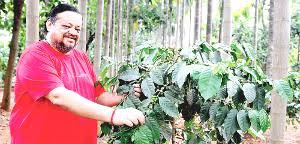
Arjun Belmar owns 34 acres in T Dasarahalli, off Tumkur Road
For close to 30 years, Arjun Belmar hasn’t spent a penny on buying coffee. He lives in the city and grows his own coffee. Yes, you read that right. He does. Belmar and his family offer proof that coffee is not only grown in Chikkamagaluru and Kodagu, but also right here in our city.
The businessman has been growing coffee in the face of scorching summers or water scarcity. “Bengaluru is 900mt above sea level and the land can be utilised for coffee. But one needs to grow it properly in the shade,” he explains.
When Bangalore Mirror visited his 3,000 sq ft coffee plantation, it felt like a forest in the middle of the concrete hub.
“Years ago, T Dasarahalli was away from the city. Just about 100 people lived here and we had only one bus to our house from City Market. My father used to love plants and we grew everything on our land. Not just variety of trees and plants, we also had many cows which used to give us 200-300 lt of milk. We used to share it with whoever came to our home,” Belmar says.
The grand old times are gone, but the family continues its green tradition. They keep bees and harvest honey too on their property.
However, Belmar, remembers a time when they just had to dig up to half a foot to find water. “That is how we were able to grow ginger, grapes, vegetables, paddy, wheat, sugarcane, betel, pepper and other plants,” he said.
On how they started growing coffee, Belmar’s explanation is simple – Everyone in the family loves coffee and wanted to taste the authentic thing. “We used to have our own cows and buffaloes for milk and grow sugarcane for jaggery and sugar. Why then, can we not have our own coffee plants, we thought. Then we went to
Chikkamagaluru in search of the plants.”
Though they were unsure if coffee plants can survive in Bengaluru, they kept going with their plan. “Today we have around 50 plants,” he says. “We had other bigger trees on the land. Coffee grows in semi-shade so we put them between these big trees. We watered the plants continuously and saw the first flowers on the plants,” he says.
He recalls that his father had tears in his eyes when he saw the coffee plant flowering at last.
“Each coffee plant gives around 2-3kg of coffee fruit. In a year, we get close to 50 kg. We pluck the fruit and clean it and keep it for drying. Once it has dried properly, we give it for processing and get it done in a customised manner. We tell them whether we want it with or without chicory,” he said.
His friends and family, who visit the farm, are in awe of the plantation. “My friends used to ask me if I were living in Madikeri or Bengaluru. They love the coffee we give them in packets. People who visit us from abroad wait to visit again to refill their stock,” he said.
Belmar also grows the cocoa plant. He has close to 150 cocoa plants, the seeds of which he sends to Mangaluru for processing.
“We drink premium coffee personally handled by us. It is better than the coffee grown in Chikkamagaluru,” he says, with a hint of pride.
It’s all about the honey
Belmar says they started keeping bees as his grandfather was one of the founders of the Bee-keepers Association in the city. “We have been harvesting honey on our land for the past 40-50 years. Keeping bees easy here because of the rich bio-diversity.”
Bee-keeping in the city dates to the times the British were here. Belmar says, “It was during the British rule that the Bee-keepers Association began. These days, people are trained to keep bees and harvest honey.”
He has one special information about the honey. “When the Neem tree is flowering, the honey tastes best and it is clear. In the mango season, the honey is quite reddish and very sweet. When the tamarind tree is flowering, honey is a little sour. For each season, we have a different flavour of honey.”
source: http://www.bangaloremirror.indiatimes.com / Bangalore Mirror / Home> Bangalore> Others / by Kumaran P, Bangalore Mirror Bureau / May 10th, 2017
Thalooru side recorded a 16-run win against Parlakoti XI in the finals of Paikera Cup cricket tournament, organised by Kodagu Gowda Yuva Vedike at Gen K S Thimayya Stadium on Sunday.
Opting to bat first, Thalooru scored 89/7 in 10 overs. In reply, Parlakoti could manage to score only 73 runs in their stipulated overs. The champion Thalooru won cash prize of Rs 50,000 along with a trophy. The runner up Parlakoti won Rs 35,000 along with a trophy. Uluvarana and Dambekodi teams managed to finish third and fourt respectively. They were given a cash prize of Rs 15,000 for featuring in semifinals. Sajan of Parlakoti was adjudged Man of the Series. Vikki of Thalooru won Best Batsman award while Mokshith of Uluvarana team won Best Bowler award. Jithu of Thalooru bagged Best All-rounder award. Gagan of Paikera was given a special award for hitting maximum sixes. A total of 210 family teams had taken part in the tournament.
Arebhashe Sahitya Academy had organised a variety of cultural programmes during the concluding ceremony. Mysuru Anand and team performed “Hasya lahari” and Mysuru Savan team performed rock music programme.
The Centre for Information Education Development Studies (CIEDS) Collective will soon organise a memorial event to pay tributes to Chalam Bennurkar, a pioneer of documentary film making in Karnataka, who passed away recently.
Film societies are also planning to hold a festival of documentaries made by him. The 62-year-old filmmaker was found dead at a pond in Bagur, Chitradurga district.
He had gone missing for a few days and his wife Kalpana had filed a missing person complaint.
Chalam’s Kutty Japanin Kuzhandaigal (Children of Mini Japan), a Tamil documentary on labour conditions in Sivakashi, had won Golden Dove award at International Leipzig Festival of Documentary and Animation Film (Germany) and Citizen’s Prize and Prize of Encouragement at Yamagata International Documentary Film Festival Japan in in 1991. “Through this documentary Chalam took images of land to different platforms across the world. He brought value to the serious documentary films in Karnataka,” says Kesari Harvoo, filmmaker.
Chalam had taken up various social issues, especially about women, through his films. He was instrumental in organising film festival on women’s issues in Bengaluru Film societies in 70s.
He was also known as the voice of trangenders because of his documentary All About Our Famila.
He also worked with Amitabh Chakraborty for Bishar Blues about Bengali Fakirs which undertakes a journey to understand Marfat, indigenous form of Islam in Sufi tradition.
He also made documentary on Kunde Habba, a unique festival of the tribal people in Kodagu and Naave Yeravara on the Yerava community.
source: http://www.thehindu.com / The Hindu / Home> News> Cities> Bengaluru / by Special Correspondent / Bengaluru – May 08th, 2017
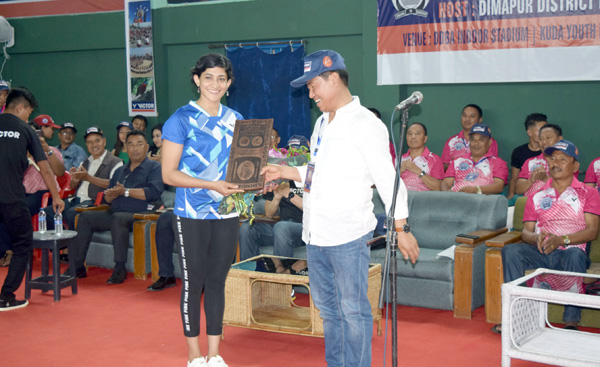
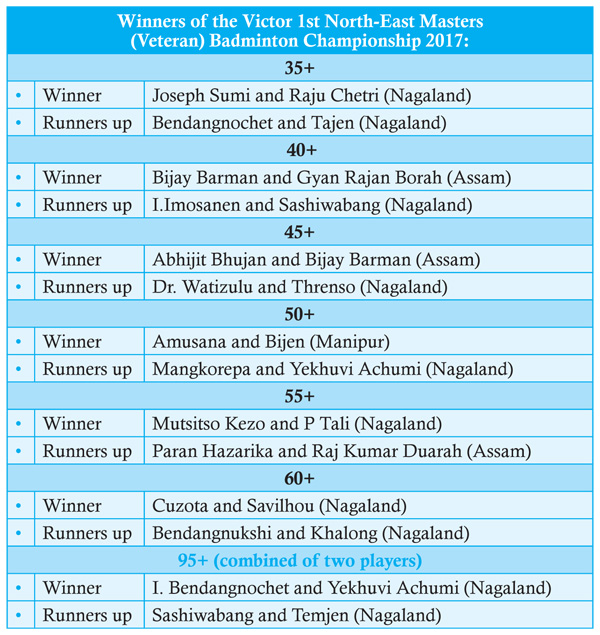
Nagaland Badminton Association President and Minister for Road and Bridges Y. Vikheho Swu presenting a memento to shuttle star Ashwini Ponnappa at the closing ceremony of Victor 1st North-East Masters (Veteran) Badminton Championship 2017.
Dimapur (EMN):
Indian badminton star Ashwini Ponnappa says she wants to return to Nagaland and the northeast to impart lessons in the game.
‘I will definitely come back to Nagaland to conduct two to three days badminton course for the sport enthusiast and share my experience with badminton,’ assured Ashwini Ponnappa to the cheering crowd at the closing ceremony of Victor 1st North East Masters (Veteran) Badminton Championship at the Dimapur District Badminton Association Indoor Stadium in Dimapur on Saturday.
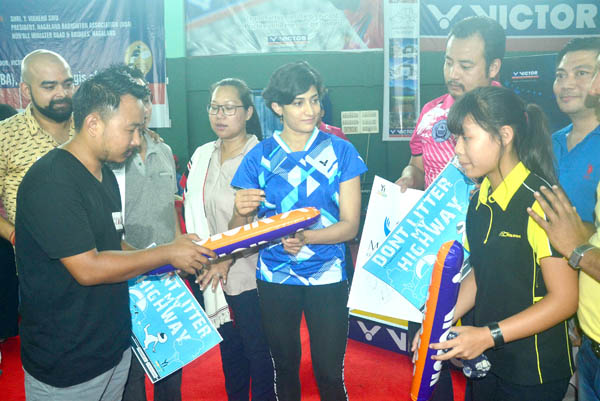
Ashwini Ponnappa, Indian Badminton player sign an autograph for her fans at the closing ceremony of the 1st Victor North East (Veteran) Badminton Championship 2017 at Dimapur, Nagaland on Saturday, May 06, 2017. Photo by Caisii Mao
Ponnappa is also the brand ambassador for Victor. She is a recipient of the Arjuna Award. The star called badminton a wonderful sport. “It is great to see badminton being played in every corner of the country and Victor Company will do anything to support badminton in Nagaland and will do the best the make this game popular,” said Ponnappa who attended the closing ceremony as a special guest.
The Nagaland Badminton Association’s president, also Minister for Road and Bridges Y Vikheho Swu, was the guest of honour for the event. He suggested to the north-eastern representatives to form a common badminton association for the region. He said such an association would be ‘feasible’ and the initiative will not only expand the prospect of the players but strengthen the bonds of the entire northeast region too.
Lauding the DDBA for associating with Victor Company and organising a successful event in Dimapur to ‘develop friendship through badminton,’ Swu remarked that the affiliation with Victor will promote badminton in the region.
Swu conveyed gratitude to Victor for their vision in delivering high quality sports equipments. He maintained that the NBA has been doing well so far in promoting the game. There are more badminton tournaments in the state compared to other sports, he said.
source: http://www.easternmirrornagaland.com / Eastern Mirror / Home> Sports> Nagaland Sports> Current Article / by Abhijit Mirror / May 07th, 2017
WELCOME. If you like what you see "SUBSCRIBE via EMAIL" to receive FREE regular UPDATES.
Read More »