Indian Oil looked the better team in the initial stages, earning two quick penalty corners before Gurjinder took the lead off one. S.V. Sunil was in the thick of things by creating good moves.
Kolkata :
Indian Oil won their fifth All India Beighton Cup title by edging past Bharat Petroleum Corporation Limited (BPCL) 5-3 in the final at the SAI training centre here on Tuesday.
India defender Gurjinder Singh scored a first half brace with S.K.Uthappa with the veteran duo of captain Deepak Thakur and Prabhjot Singh also finding the net.
Indian Oil led by three unanswered goals at halftime. Bharat Petroleum, led by Sukhwinder Singh, tried to stage a comeback in the early stages of the second half through Amir Khan and Varun Kumar who sounded the boards after a flurry of penalty corners. But Deepak and Prabhjyot sealed the deal by scoring two more goals with Harmanpreet Singh getting on the scoresheet for the runners-up with a late consolation goal.
Indian Oil looked the better team in the initial stages, earning two quick penalty corners before Gurjinder took the lead off one. S.V. Sunil was in the thick of things by creating good moves. Prabhjyot made a solo run, almost doubling the lead, before Uthappa pulled the trigger to make it 2-0 from a V.R. Raghunath pass.
Gurjinder doubled his tally from another penalty corner as Indian Oil made the most of their opportunities while Bharat Petroleum failed to do so. The eventual winners also saw their goalkeeper Devesh Chauhan on top of his game pulling off a string of good saves. After the breather, Amir scored a field goal to make it 3-1 with Varun finally converting a penalty corner for Bharat Petroleum.
Deepak and Prabhjyot though dashed any hopes of a fightback by netting goals in quick succession. Harmanpreet finished off the goal glut with a consolation strike in the dying minutes of the match. “We wanted them to press the panic button first,” Deepak, who was part of all five Indian Oil wins in the oldest domestic tournament, told reporters later.
“They were younger and faster than us. We had quite a few veterans in the side so we could not match up to their pace. We played the Asian style of hockey while they stuck to the European style which the national team also plays. I am happy as captain that we prevailed eventually,” he added.
Indian Oil’s Kothajit Singh was adjudged the man of the tournament. “I take inspiration from Mary Kom (boxer),” the Manipuri said. “She and Sarita Devi (boxer) have inspired me a lot,” added the 24-year old India international.
source: http://www.india.com / India.com / Home> Business / by Indo-Asian News Service / December 27th, 2016
As Karnataka roils over the Kaveri water dispute, the underlying cause is lowered climate resilience of the agro-forestry ecosystem in Kodagu’s coffee plantations
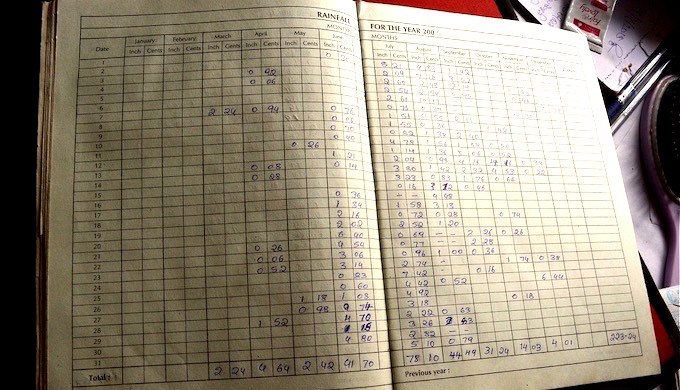
Coffee farmer B. B. Thammaiah’s rainfall record (Photo by S. Gopikrishna Warrier)
Coffee planters in the hill district of Kodagu in Karnataka are meticulous in keeping rainfall records in their estates. For some, the data goes back for decades. Their numbers tell the story of changing rainfall patterns, an indicator of climate change. The changing patterns also have an impact on the way they grow coffee, which has an effect on climate resilience in the hills and the plains.
Due to the presence of this decentralised network of rainfall measuring stations, it is easier to obtain a nuanced picture of the precipitation trends for Kodagu, earlier known as Coorg, than in other parts of India. The average annual rainfall varies from above 5,000 mm in the western edge of the district to 1,200 mm in the east.
This data was used as part of the baseline survey by an international collaborative project to study the unique coffee agro-forestry system of Kodagu district. The College of Forestry at Ponnampet in Kodagu, as a participant in the Coffee Agro-forestry Network (CAFNET) project, has analysed the rainfall data of over 60 years from 116 coffee farms.
“Keeping meticulous rainfall data is part of the culture we inherited from the British,” said C.G. Kushalappa, university head for forestry and environment sciences at the College of Forestry.
The CAFNET report noted that the length of the rainy season had decreased by 14 days over the past 35 years. It also noticed a strong fluctuation in annual rainfall with an apparent cycle of 12 to 14 years.
Low rainfall in coffee land
Whether it is due to being the lowest point in this cycle or an El Nino changing rainfall patterns, 2015 and 2016 have been years of low rainfall in Kodagu. This is the second year of deficit rainfall in Kodagu. During 2015, it was deficient by 19%. As a result, the storage in the Krishna Raja Sagara dam reservoir, built across the Kaveri River immediately downstream of Kodagu district, has a 31% deficit this year.
On the ground measurements by coffee grower K.K. Naren in Kunda village near Ponnampet confirms this. “Our normal rainfall is 90 to 100 inches (2,200 to 2,500 mm). This year we have got 38 inches, whereas by this time we should have received 70% of the year’s rain.”
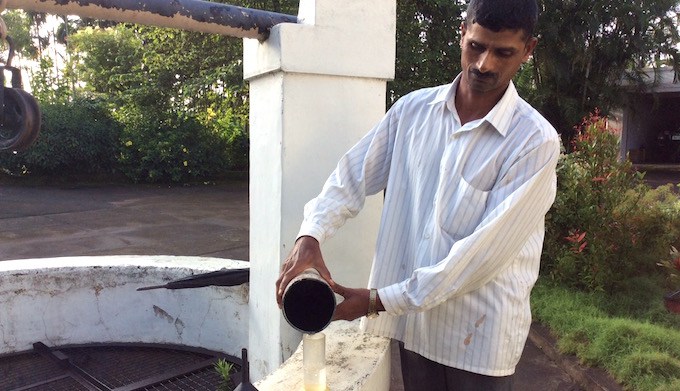
A farm worker measures rainfall in K. K. Naren’s coffee farm. (Photo by K. K. Naren)
Coffee planters are confused by the erratic rainfall of recent years. “Rain and weather patterns have become increasingly unpredictable in recent years,” said M.B. Ganapathy, head of plantations for Tata Coffee. “Even though the quantum does not seem to have changed, the rainfall is not well distributed any longer. There are long dry periods followed by heavy rain and high-velocity winds. This has made farm management difficult for us.”
Blossom showers affected
According to coffee farmer B.B. Thammaiah of Kolagadalu village, the erratic rainfall has meant that blossom showers, which usually take place between February and April, are missing in some years. This has an impact on coffee production, since this helps coffee flowers to blossom, ensuring good yields later in the year.
There is an ecological impact of this, according to Kushalappa. When the blossom showers became erratic, coffee farmers started irrigating during these months. For traditional coffee cultivation, it was a combination of mixed-shade trees plus blossom showers that gave a good yield. When the blossom showers were replaced by irrigation, the shade from the trees did not matter. The farmers’ dependence on the native trees decreased, resulting in their proclivity for letting the native trees die. These trees are being replaced by silver oak.
See: Bringing coffee back into the shade
There is also an issue of ownership that is leading to the clearing of forests. Thammaiah’s farm is in Kolagadalu village, not far from the western crest of the plateau deep in a forested valley. His farm receives more than 5,000 mm of rainfall every year. While in the valley floor he continues to grow rice as his forefathers did, he cultivates coffee in the shade of the forest trees. Though the forest may not be as thick as it was during his grandfather’s time, he plans to conserve it.
The landscape of Thammaiah’s farm is typical of what the people of Kodagu inherited. While historically joint families cultivated the rice paddies where they owned the land, they used the forest for collecting mulch and firewood and grazing cattle. The families do not have property rights over the trees, which belong to the government.
Economics of silver oak
Silver oak, on the other hand, can be planted, cut and sold. M.C. Cushalappa, a coffee farmer from Siddhapura, said that silver oak yields a two-fold benefit to coffee farmers. One, it can supplement the family’s income in times of need. Two, its straight trunk can be used as a support for pepper vines, which bring more additional income. With no ownership and no economic stake on the native trees, farmers do not have an incentive to keep them alive.
Cushalappa’s family has paid the price of the native trees to the government and obtained ownership over them. “This encourages me to maintain the native tree species in my farm, unlike most of the other farmers in Kodagu.”
The coffee agro-forestry system of Kodagu is of immense importance ecologically; not only does it provide climate resilience to the hill communities but provides water to millions downstream through the Kaveri. The current acrimony over the waters of the Kaveri between Karnataka and Tamil Nadu have led to violent protests.
There is a problem though. Unlike in other parts of the country where the forests are fully under the control of the forest department, in Kodagu they are under the combined control of the department and thousands of coffee farmers. It means that it is difficult to give them a protected status. It is not as if the forest department it always the best protector; but uniformity in control has the potential to improve conservation practices.
Geographical location of coffee farms where rainfall data has been collected for 70 years and a map of rainfall distribution generated with these data points as an exmple for the year 2002. ( Image by College of Forestry, Ponnampet)
“The majority of forests in Kodagu are not notified and hence for their upkeep thousands of coffee farmers have to be incentivised,” a forest department official said, speaking on condition of anonymity. “About 90% of the catchment of the Kaveri river before the Krishna Raja Sagara reservoir is in Kodagu. There is need for a mindset change so that the farmers conserve the native trees and biodiversity.”
Through the CAFNET study, the ecosystem services could be quantified. “We looked at the role of native trees and silver oak to study their hydrological impact. Our team studied how much of the rain was intercepted, how much came through the stem, how much got run off, and how much got recharged,” noted Kushalappa.
The magic of native trees
The study found that increasing the proportion of exotic species such as silver oak in the shade cover composition had little impact on rainfall interception since trees intercept less (1% to 6%) than coffee plants (9% to 22%). Although there are lower quantities of water from native tree plots going to rivers than from the exotic tree plots, the higher contribution of evaporated and transpired water from native trees have a positive impact on the microclimate. Further, large canopy and deep-rooted systems of the native species help in the percolation of water to deeper aquifers, mainly during the monsoon.
Thus, native trees held the rainwater as it fell torrentially, and released it gradually into the rivers. At the same time they created a climate-resilient environment in the farms.
The mixed agro-forestry systems also helped in sequestering carbon. The CAFNET studies showed that Arabica coffee grown under the shade of mixed species sequestered more than the reference forests. Arabica coffee grown under silver oak sequesters marginally less than Robusta grown under native trees. Robusta grown under silver oak sequesters substantially less than the other combinations.
The missing blossom showers could be adding to the reasons for coffee farmers opening their canopies. On the flip side, the farmers’ actions could result in more carbon in the atmosphere, making rainfall more erratic in Kodagu.
source: http://www.indiaclimatedialogue.net / India Climate Dialogue / Home> Impacts / by S. Gopikrishna Warrier / December 27th, 2016
Sprinter HM Jyothi and golfer S Chikkarangappa are in the list of 16 sportspersons who will receive the Karnataka Olympic Association (KOA) awards this year.
Other notable winners include young table tennis star Archana Kamath, swimmer Damini K Gowda, top-ranked girls’ badminton player Shikha Gautam and Indian hockey team midfielder SK Uthappa.
Press photographer G Mohan and sports promoter Vinaya Hegde will also receive the honour while in the veteran category, B J Kariappa will be the recipient, KOA President K Govindaraj told a press conference.
Sharana Gouda Beleri (wrestling) will receive the award in the coach’s category.
The awards will be presented on Monday by Chief Minister Siddaramaiah in a ceremony to be held at Yavanika, State Youth Centre.
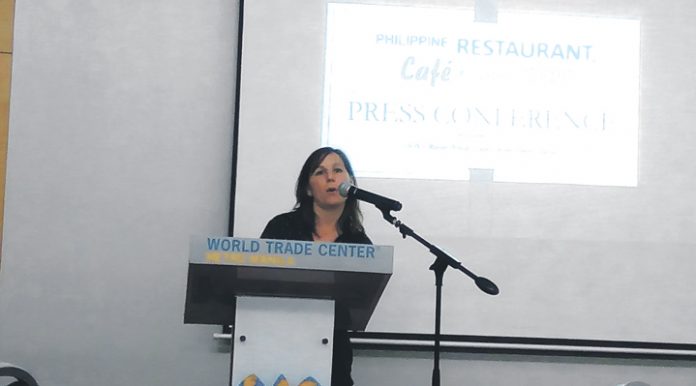
In Photo: World Coffee Events Creative Director Amy Ball
Despite the strong growth of coffee shops in the Philippines, the Filipino brand of coffee has yet to have a wider presence in the international market.
World Coffee Events, a group that is part of the Specialty Coffee Association of America and Speciality Coffee Association of Europe, said the world has yet to be fully aware of the Filipino coffee beans.
“In the United States I know there is an awareness of coffees in the Philippines, but it is not common to see beans from the Philippines in specialty cafés. But I know they are always looking for quality coffees everywhere, and I know there is interest in developing more of a sort of a specialty commodities market here,” World Coffee Events Creative Director Amy Ball said.
However, Ball said the Philippines is slowly gaining a name for itself in the world’s coffee industry through its representatives who have continued to rank high in the annual Word Barista Championships.
Ball commended the progress the Philippines is making in its bid to professionalize the country’s coffee shops.
“There is a difference now in food-and-beverage training, and they understand the specific skills of the job, and that is a really cool thing to standardize and professionalize, so that shows there is some traction and some progress,” Ball said.
Meanwhile, Philippine Asia Conferences and Exhibitions President May Juan said there is now a boom in coffee shops across the country, noting that the number of independent coffee players has exceeded those from popular franchises.
“According to research that we have seen, there are more independent cafés and coffee shops compared to franchises. But, of course, these franchises are still strong in marketing. This is also the case for restaurants. Not that we want to kill the franchises, but it is good to see that there are more independent players. This will show that our country is indeed progressing. You have to create a balance,” Juan said.
Juan, whose company will be handling the Philippine Restaurant, Café and Bar (Philresca) Expo in March, said there are now also more companies supplying equipment for café businesses.
Philresca will be the first trade event focusing on restaurants, cafés and bars. It will also host the Philippine National Barista Championship and Philippine National Latte Art Championship, where the winners will represent the Philippines at the world championship in South Korea in November next year.
Outside of coffee shops, Juan noted that full-service restaurants and fine-dining centers in the country are now revisiting Filipino cuisines.
“Mostly the food here is modernized, so the authenticity is a bit lost. If you go to Thailand or Vietnam, they have some sort of ownership of their food. Here in the Philippines, adobo alone has different versions,” Juan said. “So there is a debate. When you talk of adobo or sinigang, we have to know its history. Is it really a Filipino or a Spanish dish?”
Juan said they will be working with institutions like Culinary Generals & Razor Chef Philippines in a discussion of traditional Filipino food, and how there can be a single identity that can be presented to the international market.
source: http://www.businessmirror.com.ph / Business Mirror / Home> Envoys & Expats> Features / by Danielle Gabriel / December 24th, 2016
The Ponnampet Kodava Samaja organised Kodava Samskrithika Dina and ‘Puthari Kolmand Namme,’ at Ponnampet on Monday.
The members, irrespective of age, participated actively in ‘Bolakat,’ ‘Ummathat,’ ‘Puthari Kolat,’ ‘Pareyakali,’ and ‘Valagathat’ cultural programmes. The event saw shooting coconuts, musical chair competitions for men and women, skit by T Shettigeri Schoolchildren and Puthari dance ballet by the students of Ponnampet Appacchakavi Vidyalaya.
The winners in various competitions are as follows:
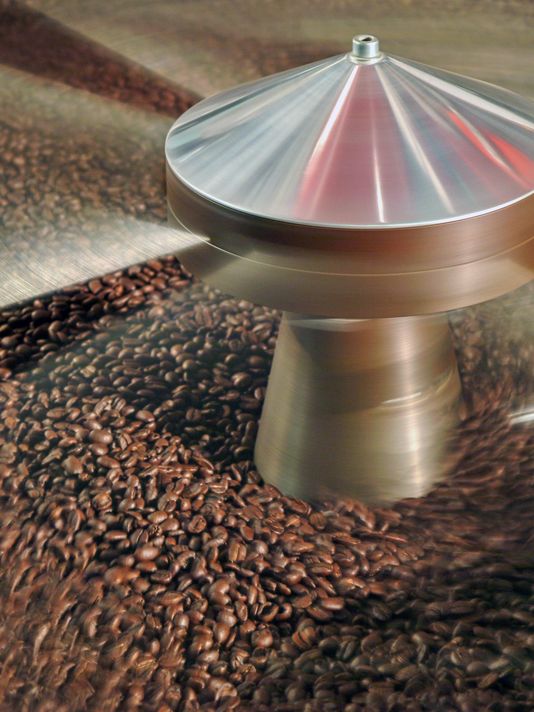
Coffee beans cool after being dark roasted at Vermont Artisan Coffee & Tea in Waterbury (Photo: Courtesy Vermont Artisan Coffee & Tea)
Coffee drinkers are growing up. So is their beverage of choice.
Baby boomers and seniors are the biggest coffee consumers in the United States, according to the National Coffee Association.
An increasing number of Vermont companies are hoping that baby boomers’ desire for locavore products will lead them to purchase coffee that is roasted close to home. They import their beans from a variety of sources and provide high-end coffee for those who have cultivated a taste for their caffeinated beverage of choice.
As is the case with craft beers and craft spirits, Vermonters are showing an affinity for locally roasted, small batch coffees. For some, the country of origin is the most important selling point. Others search for esoteric flavoring or the recognition that the coffee beans are Fair Trade or organic..
Mané Alves of Vermont Artisan Coffee and Tea in Waterbury said while some people drink coffee only for the caffeine, many others are developing a more sophisticated palate for the beverage.
“The previous generations may not have cared that much,” he said, “but I think that has evolved. We’re not at the wine model yet, but we’re moving toward it. … In a restaurant, you’re likely to ask for a cabernet or pinot, rather than just a red wine. People are starting to order coffee based on the varietal or country of origin.”
Vermont Artisan Coffee and Tea is among a growing number of Vermont companies dedicated to coffee roasting, some of which are doing very inventive things like infusing cold coffee with nitrogen or using coffee for meat rubs.
Alves, a native of Portugal, worked in the wine industry in California, but moved into the world of coffee when he followed his future wife to Vermont. Sensing a void in the field of coffee education, he said, he founded Coffee Lab International in 1995.
“I was lucky because I came from wine country and had the sensory background which could be applied to the coffee industry,” Alves said. “At that time, there was no place people could go to learn, but these days, the Specialty Coffee Association of America and other organizations in Europe have established a curriculum where we can teach about brewing, cupping, roasting, and being a barista. It’s almost like professional development classes.”
Alves is putting the finishing touches on a new building, which is tentatively scheduled to open in early January. It will include a larger space for teaching and a coffee bar. It will be the first fully certified facility on the East Coast.
“We only roast coffee when we have an order, so people have to order ahead,” he said. “This way, I can sell by the cup.”
The cupping and tasting classes Alves will offer will follow the curriculum of the nonprofit Coffee Quality Institute, while the roasting classes will be of his own design.
Alves has developed a new product line, Caff-Draft; a nitrogen-infused cold coffee. The product is poured from a tap and resembles a dark ale, but tastes like coffee.
“It’s very refreshing,” he said “and we’ll have different types that we’ll put on the market seasonally.”
The new café will have two or three different spigots for Caff-Draft. Additionally, Alves is planning some mixed coffee drinks using local brewed alcohol.
Customer loyalty matters
Like Alves, Sandy Riggen came to the world of coffee via a circuitous route. A former caterer and private chef, Riggen bought Brown and Jenkins Coffee 10 years ago with her husband, Rich Williams. The company is one of the state’s older coffee roasters, dating back to 1984.
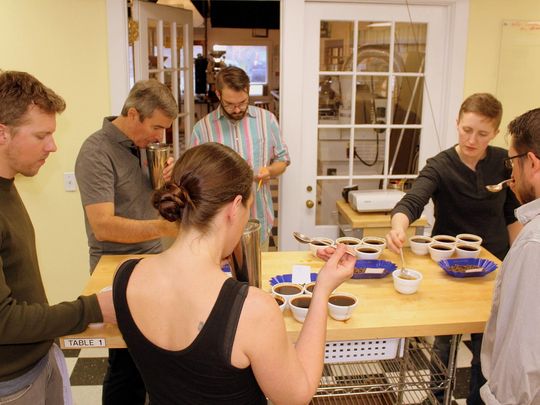
The sensory team at Vermont Artisan Coffee & Tea cups a production roast. (Photo: Courtesy Vermont Artisan Coffee & Tea)
Riggen said baby boomers continue to favor percolated coffee over more modern single-serve options. The majority of her sales are online, with a subscription business of nearly 2,000 people. The company also has commercial and personal accounts and sells its coffee at the Vermont Maple Outlet on Route 15.
“Our demographic is over 50, well-traveled, well-educated and worldly,” Riggen said. “I know a lot about my customers and they tend to be more loyal than millennials.”
Baby boomers are interested in learning more about what they drink, Riggen said, so she has begun providing more background material about her coffee on the company’s website.
Brown and Jenkins has 72 different types of coffee, including 14 single origin beans, a designation which indicates that all the beans come from the same location.
Riggen said coffee can be used in a variety of foods and she offers coffee rubs as part of her product line. It was only after she had purchased the company that she learned one of the secret ingredients in her grandmother’s signature gravy was coffee.
Boomers want better coffee
A relative newcomer to the field of gourmet coffee is Tony Basiliere, the 63-year-old owner of Earthback Coffee Roasters in South Burlington. Basiliere said he thinks baby boomers are drinking less coffee than they did in their youth, but are gravitating to better coffee.
“They are enjoying coffee more for its flavor attributes,” he said, noting that young people are following suit. “Being into coffee as a young person is a hip thing, which I think is fantastic.”
Earthback Coffee can be purchased online and at locations in Washington and Chittenden counties. It is the exclusive coffee served at Tight Squeeze in Burlington.
Baby boomers and their millennial counterparts are part of what is known as the third wave of coffee, Basiliere said, a movement which considers coffee to be an artisanal product similar to wine rather than being treated as a commodity.
But Basiliere said he thinks, in some cases, that wave is being pushed a bit too far by those who make coffee overly light in order to accentuate the flavor characteristics, but lose body as a result.
Basiliere has been in business since 2011 and his beans are certified by the Rainforest Alliance, Fair Trade or USDA Organic. He said baby boomers are particularly interested in the organic label for health reasons.
“We’ve beaten ourselves up and we want to take better care of ourselves now,” he said, “but the reality is that specialty grade coffees, even those without an organic certification, don’t have anything bad in them.”
The name Earthback comes from Basiliere’s commitment to a healthy ecosystem.
“My philosophy in business,” he said “is awareness of the environment, constantly seeking ways to lessen the impact or footprint.”
Basiliere makes his deliveries with recycled banana boxes and only a tiny percentage of the company’s waste goes to a landfill. He recently purchased a Loring coffee roaster which he described as the most energy efficient on the market, using one-fourth the energy of a conventional roaster with no emissions.
After years of medical warnings about the effects of coffee, Riggen said she is pleased that current studies show that there are benefits to drinking it.
“Coffee is universal,” she said. “It connects the world.”
Check them out
Vermont Artisan Coffee & Tea Company
Mahindra is on the verge of converting Goa into the next off-roading destination, as they conclude the 2nd edition of the Thar Club Challenge on August 5-6, at Dona Paula, Goa. Alongside the Club Challenge, Mahindra Adventure also kicked off the 1st edition of the Thar Fest, which aimed at bringing together the off-roading and the 4×4 community at one place.
Now what is the point of having a Thar and not making full use of its off-roading credibility? Mahindra had something similar in mind when they started with the Thar Club Challenge in 2015, which saw Bangalore Off-road Development Authority (B.O.D.A) take the glory. This year was no different, as 10 well-reputed off-road clubs battled it out to lift the coveted cup. However, the only thing that changed was the difficulty level and of course the winning team. Let’s talk about the five gruelling challenges first.
Day 1 kicked off with the Thar Fest, which included the scrutiny of the vehicles. After the scrutiny, all the Thars rallied to the track venue. After reaching the site, the 10 teams were briefed about the tasks before them. With each team consisting of three vehicle entries in the Stock, Modified and Pro-Modified category, the Club Challenge was about to begin.
Club Challenge 1
The first challenge was called ‘Pass the Baton’ which was a night event. In this, the teams had to sync all three Thars to pull a bundle of logs tied together with chains through rutted trenches and slush-pit, uphill climb negotiating sharp corners.
Now, as simple as this may sound, with the constant down-pour from the rain-gods, the muddy ground made sure that the participants had to really work their way to start the competition on a winning note. The Gerrari Off-roaders emerged victorious as the other teams were left tasting the mud behind.
Club Challenge 2
‘Trench Trouble’ was the second obstacle which was highly technical in terms of team involvement in dismantling all four wheels and putting the vehicle on stands. Carrying the tyre to the top of the trench in four different direction with the second team collecting it and putting it back on the vehicle and recovering themselves from the trench. With a second win in their pocket, the Gerrari Off-Roaders took a commendable lead in the front. But there was more to come and the others had not given up as yet.
Club Challenge 3
Day 2 began with an event that was my personal favourite. Why you ask? Because the 3rd challenge involved Thars and a ball. Yes, You read it right. The third obstacle was Goalll!!!, where the competitors were put in a slushy field with a ball with the aim to play football with his Thar and score a goal using his vehicle tyres and bumpers in the minimum time. This time, it were the defending champs, B.O.D.A who got the most points.
Club Challenge 4
The fourth challenge was unique as well and called Trench Trouble 2. The teams had to negotiate cones and various other obstacles and collect flags en-route. The more the number of flags the more the points. Surely this technical stage was challenging and the experienced V5 Coorg Off-Roaders took top trumps.
Club Challenge 5
The last and most interesting obstacle was the ‘Bus Stop’. In this obstacle the teams had to work together with props like ladder and spare tyres to negotiate a laid vehicle carnage which including climbing over a bus, water tanker and other vehicle debris.
Being the most difficult of all the obstacles, the teams showed unspoiled teamwork and devotion. There was a lot of screaming, pressure, fretting and energy, but it was only to win the title of the best off-roading club in the country.
Although, the Gerrari Off-roaders took a flying start to the event, it were the V5 Off-Roaders from Coorg who won the title in the end.
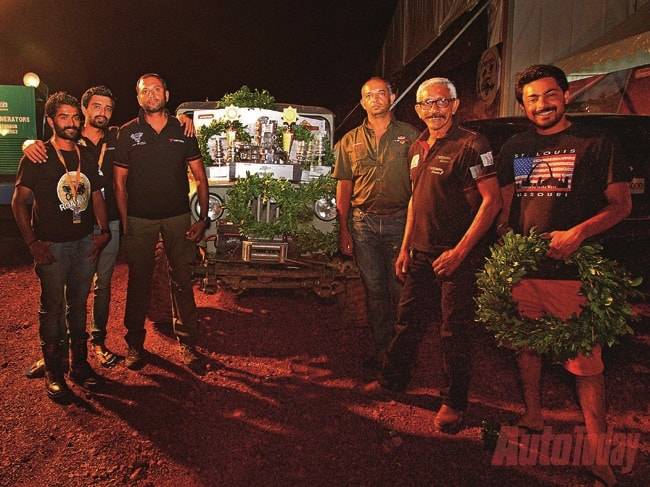
After a gruelling battle of over two days and 5 challenges, the defending champs B.O.D.A passed on the winning trophy to V5 Off-Roaders from Coorg, closely followed by Gerrari Off-Roaders from Chandigarh. The 2nd runner up title was won by Team Flywheel from Kerala, thus ending the Mahindra Thar Club Challenge on a high note.
source: http://www.indiatoday.intoday.in / Auto Today / IndiaToday.in / Auto> From the Magazine / by Pratik Rakshit / New Delhi, December 08th, 2016
Metallic bikinis are a must-have as you head for your next beach vacation in 2017. Kingfisher Calendar 2017 girl Dayana Erappa shows you just the right way to sizzle in metallic bikins.
As we bid goodbye to 2016, the new year 2017 promises to be an exciting year for fashion and style. The much talked-about Kingfisher Calendar for the coming year has already created a buzz. Just like the preceding editions, the new edition and is a sizzling melange of aesthetically shot jaw-dropping pictures of five bikini-clad models: Alliny Gomes, Dayana Erappa, Kanishtha Dhankar, Nora Fatehi and Vartika Singh. The maverick behind these insanely hot pictures, Atul Kasbekar recently took to Instagram to share yet another ridiculously sexy image of the ethereal Dayana Erappa. Wondering what are we gushing about? Read more to be amazed.
Amidst a black woven hammock lying in the sand, Dayana looks drop-dead gorgeous in a metallic bikini. The bikini is replete with a black and copper coloured detailing. What’s more, you may wonder? Look closely and you will see a zingy choker necked detail completing the bikini and lending it its hot vibe. What’s hotter? Dayana posing sexily in the metallic one-piece and showing exactly why Gold Is the New Bold.
Slaying us with yet another metallic daze, Dayana donned a silver two piece that comprised one-shouldered top and paired it with towering silver stilettos. Quirking it up with a seriously amazing hairdo of silver cornrows and braids. The maverick behind this insanely hot hairstyling is the international makeup and hair stylist Marianna Mukuchyan.
source: http://www.india.com / India.com / Home> Lifestyle / by Nirupama Chaudhary / December 26th, 2016
Packaged Coffee & Cafe Chain India Market Segmentation and Major Players Analysis and Forecast to 2021
Pune, India :
This report gives an in-depth analysis of coffee industry in India.
Coffee as a segment has steadily gained share of total consumer spending on beverages over the last many years.
Coffee serves as the first rung on the ladder for young consumers in India, while it reflect growing demand among consumers looking for convenient, decent-quality coffee at home and in the workplace.
Opportunities for coffee to gain more popularity among new consumers, as well as reclaim those exiting the category, lies in continued modernism, both in terms of developing new flavours and improving quality.
Request a sample report @ https://www.wiseguyreports.com/sample-request/744788-india-packaged-coffee-cafe-chain-market-outlook-2021
According to “India Coffee Market Outlook, 2021”, packaged coffee market is expected to grow at a CAGR of around 12% over next five years.
Coffee market consists two categories, such as packaged coffee and coffee shops & cafe market.
Instant coffee is creating a huge demand in packaged coffee segment. The convenience, versatility of flavour and format, and branded experience provided by instant coffee enable it to be positioned as a premium hot drink option, particularly for new coffee drinkers in predominantly lower income tea drinking markets. The easy preparation of instant coffee, as well as its aptitude to be tailored to local taste preferences has made it the “coffee of choice” in most markets in India. Instant coffee has propelled brands like Nestle, HUL and Tata Coffee in its category. However filter coffee is also expanding its presence among Indian consumers.
The market for filter coffee is predominantly southern India where the competition from local/regional player is significant.
The RTD market for coffee based beverages is likely to grow, although it is currently at a very nascent stage However, it benefited from a range of new product launches towards the end of the review period.
These products are mainly consumed by young and middle-aged demographics and tend to be consumed in the mornings as an energy booster. T
The channel which contributes most to the sales of packaged coffee is traditional retail channels, whereas modern retail is currently in the moderate stage.
The growth of cafe chains over the last decade also boosted the visibility and per capita consumption of coffee among Indian consumers.
Cafe Coffee Day, Barista and Tata Starbucks are some of the leading players in cafe market.
Coffee consumption is higher among southern part of the country. However other regions are expected to increase in term of coffee consumption during forecast period.
Robusta coffee production is much higher than Arabica in India, which is anticipated to increase much higher in the future years.
Key points in table of content
1. Executive Summary
2. Global Coffee Market Outlook
2.1. Market Size By Value
2.2. Market Size By Volume
2.2.1. Overall Market
2.2.2. Europe Coffee Market
2.2.3. Asia & Oceania Coffee Market
2.2.4. North America Coffee Market
2.2.5. South America Coffee Market
2.2.6. Africa Coffee Market
2.2.7. Central America & Mexico Coffee Market
2.3. Market Share
2.3.1. By Region
2.3.2. By Country
2.4. Production
3. India Coffee Market Outlook
3.1. Market Size By Value
3.2. Market Share By Category
3.3. India Packaged Coffee Market Outlook
3.3.1. Market Size By Value
3.3.1.1. Overall Market
3.3.1.2. Instant Coffee Market
3.3.1.3. Filter (Roast & Ground) Coffee Market
3.3.1.4. Ready-To-Drink Coffee Market
3.3.2. Market Share
3.3.2.1. By Company (Instant Coffee)
3.3.2.2. By Type
3.3.2.3. By Sales Channel
3.4. India Coffee Shops and Cafe Market Outlook
3.4.1. Market Size By Value
3.4.2. Market Share By Company
3.5. Production
3.6. Product, Price & Variant Analysis
4. India Economic Snapshot
5. Raw Material
6. Manufacturing Process
7. Market Penetration
8. PEST Analysis
9. Policy & Regulatory Landscape
10. Trade Dynamics
10.1. Import
10.2. Export
11. Channel Partner Analysis
12. India Coffee Market Dynamics
12.1. Key Drivers
12.2. Key Challenges
13. Market Trends & Developments
13.1. Increasing Superiority of Coffee Shops and Baristas
13.2. Chilled Addiction among Young Consumers Drives the Popularity of Cold Brew Coffee
13.3. The Indulgence Trend Drives the Preference for Premium Coffee
13.4. Coffee has Turned out to be a Trendy Beverage for the Young Consumers
13.5. Focus on Innovation of Food & Localize Menu
14. Competitive Landscape
14.1. Porters Five Forces
14.2. Company Profiles
14.2.1. Carnation Hospitality Private Limited (Barista Cafe)
14.2.2. Coffee Day Global Limited (Cafe Coffee Day)
14.2.3. Devyani International Limited (Costa Coffee)
14.2.4. Hindustan Unilever Limited
14.2.5. Jubilant FoodWorks Limited (Dunkin Donuts)
14.2.6. Nestle India Limited
14.2.7. Pan India Food Solutions Pvt. Ltd. (The Coffee Beans &Tea Leaf)
14.2.8. TATA Coffee Limited
14.2.9. Tata Starbucks Private Limited
15. Strategic Recommendations
16. Disclaimer
Get this report @ https://www.wiseguyreports.com/checkout?currency=one_user-USD&report_id=744788
source: http://www.einnews.com / EINnews / Menu> All News Topics> Press Release by Industry Channel / EIN Presswire.com / Pune India – December 20th, 2016
Tata Coffee, part of the $100-billion salt-to-software Tata conglomerate, announced post-market hours on Monday that it would set up a green field instant coffee facility of 5,000 MT capacity in Vietnam at a cost of $50 million (about Rs 350 crore).
source: http://www.profit.ndtv.com / NDTV PROFIT / Home> Markets / by Sandeep Singh / December 20th, 2016
WELCOME. If you like what you see "SUBSCRIBE via EMAIL" to receive FREE regular UPDATES.
Read More »