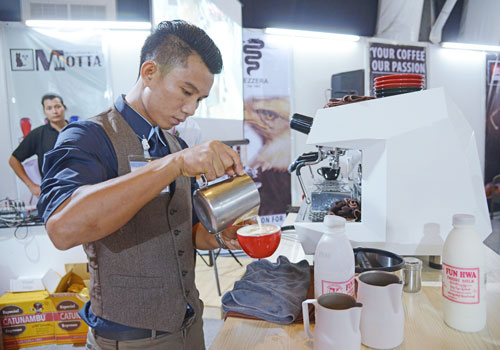
Thousands witness Theerthodbhava at Talacauvery

Thousands of devotees witnessed the Cauvery Theerthodbhava at Talacauvery, the birth place of River Cauvery on Monday.

A slew of rituals were performed, near the Cauvery Brahmakundike where the river originates, from the morning by a group of priests led by K P Gopalarishna Achar.

The Brahmakundike was decked up with gold and silver ornaments worth Rs 60 lakh. The priests performed ‘Mahasankalpa Puje,’ ‘Rudrabhisheka’, ‘Kumkumarchane’ and ‘Mahamangalarathi’ before the water sprang from the Brahmakundike.

They sprinkled holy water on devotees, soon after Theerthodbhava. The devotees had arrived with cans, pots, tins and bottles to fetch the holy water to their places.

The devotees believe that river Cauvery makes her presence felt in the form of ‘Theertharoopini’ once in a year and that the holy water is helpful in curing the diseases and bring peace in the land.

The devotees started the day with a divine bath at the holy confluence of Cauvery, Kannike, and Sujyoti at Bhagamandala. Some of them also climbed Brahma Bagiri Betta later in the day.

Simha, Ramya attend
MP Prathap Simha, MLA Appachu Ranjan, former Mandya MP Ramya made it to Cauvery jatre while District Minister M R Seetharam, Kodagu District-in-charge Secretary Kalpana, DC Richard Vincent D’Souza gave the event a skip.

MP Prathap Simha said rainfall is decreasing in Kodagu with each passing year. Let the Goddess Cauvery ward off drought and bring peace and prosperity to the farmers and the citizens, he added. Ramya told reporters that she prayed for an early solution to the Cauvery dispute.

Elaborate security
The district administration had made elaborate security arrangements. CCTV cameras had been installed at strategic locations in and around Talacauvery. More than 500 police personnel, including those from District Armed Reserve (DAR) and Karnataka State Reserve Police (KSRP) had been deployed.

Though a large number of devotees visited Talacauvery for Theerthodbhava, the number of devotees from Tamil Nadu had declined drastically, this year. Only a few vehicles bearing the registration of Tamil Nadu were seen parked near Triveni Sangama at Bhagamandala.

A large number of devotees from Kerala took part in the festivities. “Though the turnout is good, it appears to be less than the previous year,” said a local.

Meals served

As part of Cauvery Jatre, the members of Kodagu Ekikarana Trust and Cauvery Theerthotsava Anna Santharpana Trust served meals to over 15,000 devotees.

The meals will be served for the next 30 days for free. Farmers from Mandya had sent 10,000 laddus to be distributed among devotees, 30 quintal rice, 1,500 coconuts, jaggery and vegetables for the preparation of meals to be served in the next 30 days.

Kodagu Ekikarana Trust and Cauvery Theerthotsava Anna Santharpana Trust members served Uppittu, Idli, Chutney, and carrot halwa for morning breakfast.

Cultural programmes

As part of the Theerthodbhava, the Kannada and Culture Department had organised cultural
programmes. The Health and Family Welfare Department had set up a temporary clinic for the conveniece of the devotees.

The members of Kodava Makkada Okkoota-Madikeri, Hindu Agnidala-Virajpet, Kodagu Hakku Samrakshana Samithi of Palooru, V Friends of Virajpet, Malma Yuvaka Sangha, Yuvashakti Yuvaka Sangha of Ponnampete and Bharavi Kaveri Sangha of Kushalnagar collected theertha in cans and to be distributed among households at their respective towns.

Devapat CD released

MLC K T Srikante Gowda said the people of Mandya have a great respect for the people of Kodagu. He was speaking after releasing Devapat, a CD brought out by Karnataka Kodava Sahitya Academy at Talacauvery. Gowda appealed to the people to protect Western Ghats and also help in the preservation of River Cauvery.

MLC Appaji Gowda said there is a close relationship between the people of Kodagu and Mandya. River Cauvery is the lifeline of the people of Mandya, he observed. MLCs Sunil Subramani, Veena Acchaiah, Karnataka Kodava Sahitya Academy President Biddatanda S Thammaiah also spoke.

source: http://www.deccanherald.com / Deccan Herald / Home / K A Aditya / Talacaurvery (Kodagu District) / DHNS – October 18th, 2016
Increase allocation of coffee seeds to Nagaland: Govt says

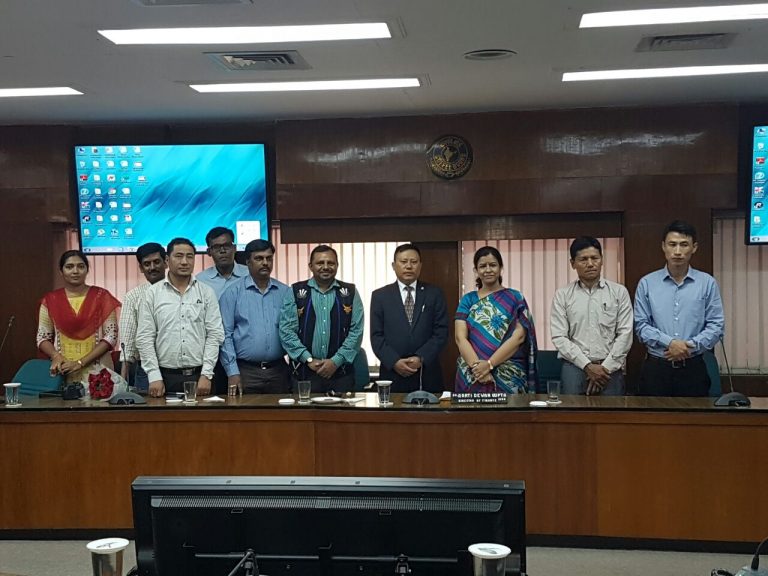
Officials of Land Resources Department, Nagaland and Coffee Board of India after a meeting in Bangalore on Monday

Citing feasibility and viability of coffee plantation in the state, the Nagaland State Department of Land Resources has requested the Coffee Board of India (CBI), Bangalore to enhance the allocation of coffee seeds to the state.

This request was made by a team of department officials led by its Secretary, Y. Kikheto Sema IAS and five other officers during a meeting with officials of the CBI, Bangalore at the latter’s office on Monday.

Speaking at the meeting, Kikheto said that there was vast coffee plantation in the state during the 1980s, however, it became a failed crop owing to lack of awareness, marketing and management problem. He said the farmers began to cut down coffee plants in desperation and that around 40 hectares remained now.

Kikheto said that a research conducted out of that 40 hectares, it was found that Arabica species coffee grown in the state was one of the best.

It may be mentioned that the state government on September 2016 had made the Department of Land Resources as the nodal department for revival of coffee plantation.

He said that the CBI had allocated 300 kgs coffee seeds during 2015-2016 but ran short since the demand was high in the state. Kikheto requested the CBI to allocate at least 4000 kgs seeds to cover 4000 hectares and added that the payment would be prompt. Responding to this request, Director of Finance, CBI, Dr. Arati Devan Gupta assured the Department officials of looking into the matter for enhancing coffee seeds allocation.

Kikheto said that the department was targeting coffee plantation coverage of about 50, 000 hectares by 2030.
He also said that the department during 2015-16 had developed 230 hectares of coffee plantation and plans to cover 600 hectares this year.

Pointing out that coffee harvesting takes about four years after planting, Kikheto asked the CBI for possible assistance to coffee farmers during the initial years of plantation and also for maintenance of nurseries.

He also made a request for establishing Arabica Coffee Research Centre in Nagaland, since the state is planning for coffee plantation on a large scale and constant research is required.

Kiheto said that the day was significant for the department since a group of three different officers’ team were attending important meetings. One team led by Additional Director, Renbenthung Jami is attending the annual rubber conference organized by Association of Natural Rubber Producing Countries at Guwahati where a new clone developed by Rubber Board of India exclusively for planting in NE was being released. Another team led by Director, Hoto Yepthomi was at Mokokchung for Springshed training programme.

The Secretary was accompanied by Deputy Director, C. Vanchamo Ngullie, Officer incharge Coffee and four District Project Officers.

This information was provided to The Morung Express over the phone by Secretary, Land Resources, Y. Kikheto Sema IAS.

source: http://www.morungexpress.com / The Morung Express / Home / by Morung Express News / Dimapur – October 17th, 2016(posted October 18th, 2016)

Coffee growers pitch for renewed thrust on research to boost yields

Karnataka planters’ body favours separate body on the lines of Upasi Tea Research Foundation

coffeekf16oct2016

Bengaluru :

Concerned over low and stagnating productivity levels, and dwindling area under the Arabicas, coffee growers in Karnataka — the largest producing State — are seeking a renewed thrust in research activity to boost yields.

Seeking to play an active role in such research, the Karnataka Planters Association (KPA), the apex body of coffee growers, has mooted a proposal to set up a separate body in the state on the lines of UPASI Tea Research Foundation.

“We want to have a separate research body for coffee in Karnataka like the UPASI TRF. We have approached the State government for funding such an initiative,” said Baba PS Bedi, Chairman, KPA. Karnataka accounts for 70 per cent of the 3.48 lakh tonnes of coffee produced in the country.

Speaking ahead of KPA’s annual conference, Bedi said the State-run Central Coffee Research Institute (CCRI) has not been able to meet the growers’ requirement of clonal planting material nor had come up with new high yielding or disease resistant varieties in the recent past. “In the current year, the CCRI distributed only 10,000 Robusta Clones in Chikmagalur and Hassan districts, which amounts to 20 acres of plant material and is grossly inadequate … It is quite apparent that CCRI does not have the means at its disposal to propagate large number of clones/tissue culture plant material. Therefore, it is imperative that this research is outsourced as productivity levels are low, costs of production cannot be met and Arabica plantations are dwindling in number,” Bedi said.

KPA and UPASI have already made a proposal to the Karnataka government on setting up a facility for clonal propagation and tissue culture planting material at the latter’s research station in Koppa, Chikmagalur. Global majors such as Nestle, that have a major interest in coffee, would also be involved in the research efforts, Bedi added.

Backing KPA’s proposal on a separate research facility, Upasi President D Vinod Shivappa said a renewed thrust on research efforts was required to make coffee production sustainable.

Further, Bedi also said that KPA was concerned about dwindling Arabica plantations due to the high incidence of white stem borer, leaf rust and low productivity.

He said CCRI should consider import of Arabica varieties that are resistant to white stem borer, leaf rust and genetically proven to be high-yielders under the multi collaborative research project co-ordinated by the World Coffee Research organisation.

Exempt from GST
On the proposed GST regime, Bedi said if coffee is made taxable under GST, the input tax paid by the grower or agriculturist on inputs used or consumed by the agriculturist in growing this product should be allowed to be set-off.

The entire process of coffee growing up to the stage of its curing should be considered as an ‘intermediary stage’ of coffee production and exempted from the provisions of GST, the KPA chairman said.

‘Coffee’ seeds cannot be consumed till they are roasted and ground. Therefore, taxable event under GST should commence from the stage of its value addition that is when coffee is roasted and ground. “If a grower or agriculturist is not allowed to avail input tax credit, then there should be an exemption from GST on all inputs including fertilisers and chemicals used by an ‘agriculturist’,” Bedi added.

source: http://www.thehindubusinessline.com / Business Line / Home> Economy> Agri Business / The Hindu Bureau / Bengaluru – October 13th, 2016

India makes bid to host 2020 ICO world conference

Bengaluru :

India has made a pitch to host the International Coffee Organisation’s (ICO) fifth World Coffee Conference in the country’s coffee capital Bengaluru in 2020.

ICO, the main inter-governmental organisation for the coffee producing and consuming countries, is keen that India host the next conference.

A formal decision from the apex body of the coffee producing and consuming nations is likely to be expected in March 2017, said MK Shanmuga Sundaram, Chairman, Coffee Board, confirming India’s bid to host the global meet.

Every four years, ICO holds the high-level World Coffee Conference to enable discussion around critical topics for the global coffee sector. Previously the conferences have been held in England in 2001, Brazil in 2005, Guatemala in 2010 and in Ethiopia in 2016.

ICO, which is working to strengthen the global coffee sector and promote its sustainable expansion in a market-based environment, has member governments representing 98 per cent of the world coffee production and 83 per cent of world consumption.

source: http://www.thehindubusinessline.com / Business Line / Home> Economy> Agri Business / The Hindu Bureau / Bengaluru – October 14th, 2016

Watch Star Suvarna Mahotsava on Sunday at 6pm

Star Suvarna channel will air Suvarna Mahotsava on Sunday at 6pm.

starsuvarnakf14oct2016

On the occasion, the channel has honoured women achievers like Ashwini Ponnappa, B Sarojadevi, Saalu Marada Thimakka, Umashree, Manjula Gururaj, Padmini Prakash, Mayuri Upadhya, Amulya and Hema Chaudhary.

The event is hosted by Niranjan Deshpande, who is currently in the Bigg Boss house .

Small screen actors who have acted in the serials aired by Star Suvarna have performed in the glittering evening.

Sandalwood director S Narayan, actor and director Prakash Raj and singer Raghu Dixit have graced the occasion.

source: http://www.timesofindia.indiatimes.com / The Times of India / News Home> TV> News / Kannada / TNN / October 13th, 2016

What Is A Coffee Tonic, Anyway?

Left to right: a coffee tonic gets made by Kimhak Em at Peixoto Coffee in Downtown Chandler. / Kimhak Em

Maybe you got too caught up in colorful cans of LaCroix to notice, but over the summer, at cafes al over the country, Instagram snaps of what might have otherwise have been latte art were replaced, now and again, by some … bubbly, layered beverage in a plastic cup.

Yeah, what were those? Tan and foamy on top, mysteriously dark in the middle, clear and effervescent on bottom.

We saw it at Cartel. We saw it at Futuro. We saw it at Kream and at Peixoto.

These were clearly no boring cups of cold brew.

As the name suggests, it’s simple: a “coffee tonic;” iced, sparkling tonic water with a shot of espresso layered — not splashed — over top. You have to do it slowly; the copper-colored layer of bubbles sitting on the espresso, called “crema,” is volatile CO2 and since too much friction with fizzy water can result in quite a mess, baristas take it slow.

If you can consider a soda a soft drink that’s been carbonated, flavored, sweetened, and served cold, then you can view the coffee tonic for what it is: a coffee soda, albeit a freshly made one. Given the prominent role that the concentrated coffee plays in the beverage, this drink has really only gotten popular within the specialty coffee sector, where shops tend to pay a greater attention to the flavor of espresso.

Tonic water is pretty sweet, thanks to a good amount of added sugar, but it’s there to balance the beverage’s bittering agent, called quinine; the same stuff that lends pleasant bitter quality to your Italian liqueurs.

Some shops like Futuro put their tonic trust in a proven brand. In that shop’s case, Fever Tree, the standard bearer as of now for the tonic industry — if you asked for a gin and tonic at a craft cocktail bar, they’re probably using Fever Tree. A few widely distributed craft brands like Q are now available as well. Either way, most brands will deliver a neutral flavor that lets the complex flavors in a quality, nicely pulled shot of espresso shine, just as it would let an interesting and nuanced gin. There’s a locally made tonic mixer, too, made by Iconic Cocktail Co, which is flavored with kaffir lime.

Cartel flavored theirs, when they had it (it’s not currently on the menu; it may come back). It was simply tonic water, espresso, with a smidge of vanilla bean paste dotted in.

“We felt the vanilla bean paste helped to make it a bit rounder and accentuate the complex character of the espresso,” says Amanda Cohen, Cartel Coffee Lab’s director of education and quality control. Kream coffee, by contrast, squeezes citrus in theirs to amplify the acidity already present in espresso and the tangy flavor of the quinine.

The most from-scratch end of the coffee tonic spectrum is represented by the folks over at Peixoto, in Chandler. They make their own tonic syrup from start to finish, and add in flavors they feel will compliment the type of espresso. A formula of quinine, citric acid, and sweeter can turn into, for instance, a tonic syrup flavored with ginger and lime, and sweetened with agave. The shop currently offers this variety. They add soda water to the syrup and float the espresso atop. This approach appeals to Kimhak Em, who develops recipes and oversees quality control at the shop and has a background in culinary school. He wanted to put a culinary spin on a drink that’s been trending in coffee shops around the nation.

“I think the first time I had an espresso tonic was at one of the shops that I frequented in the Bay Area,” Em says. That was close to two years ago.

The drink hasn’t existed all that long — it began at a very prominent coffee shop and roaster in Sweden called Koppi. When a coffee shop called Saint Frank opened in San Francisco in late 2013, they paid homage to Koppi’s drink, making their own version — still just Fever Tree tonic, ice, and espresso — called the Kaffe Tonic (kaffe being the Swedish word for coffee). As Saint Frank rose to prominence in eyes of coffee professionals across the country, shops began adopting their own version, some sticking to the drink’s paired down roots, and others opting to personalize.

Three years later, it looks like the drink has stuck.

Editor’s Note: Shelby Moore works with Futuro in various capacities.

source: http://www.phoenixnewstimes.com / Phoenix News Times / Home / by Shelby Moore / Tuesday – October 11th, 2016

Fiction: Good Hope Road by Sarita Mandanna

Good Hope Road by Sarita Mandanna

There’s a road called Good Hope Road in Washington, D.C. and many of the events in Sarita Mandanna’s second novel occur around Good Hope Road in 1932, as America’s WWI veterans march for the passing of the Bonus Bill, legislation entitling war veterans to a decent income and health care. Vietnam and Afghanistan veterans still have these same issues today.

But this is not a political novel, rather it is a tale of how WW1 affected a rich New England heir and his unlikely best friend, a dirt-poor young black man from Louisiana.

James and Obadaiah are in Paris when war breaks out, and both decide to join the French Foreign Legion. Had they known the horrors that lay ahead, they might have just gone home.

Years later, they have lost contact and James is practically estranged from his adult son Jim. When Jim meets an actress from Boston, Madeleine, things change. Madeleine is determined to mend the rift between father and son.

With much persuasion, James Senior eventually decides to do something about his post-war embitterment and so lobbies the press about furthering the veterans’ Bonus Bill. What starts out as a letter of complaint leads to a national movement, and a new lease of life for James Senior.

The story sweeps from one World War to the next, as Mandanna explores themes of family, friendship, race, civil rights and the utter futility of war.

Epic in its scope, yet beautifully intimate and poetic in its style, it’s a keeper.

Sunday Indo Living

source: http://www.independent.ie / Independent.ie / Home> Entertainment Newsletter / by Anne Cunningham / October 10th, 2016

Madikeri: Women’s Dasara celebrated with enthusiasm in Gonikoppal

Madikeri :

“Society can develop only with clean thinking and fair-mindedness. Do not mix politics in Dasara celebrations. When I came during last Dasara celebrations, I was the president of Handicraft Corporation. I have come now as the president of the Parishat. The Almighty has bestowed high positions on me,” said member of vidhana parishat, Shantheyanda Veena Achaiah. She was speaking after inaugurating the third year’s women’s Dasara held in Mangala Vihara auditorium, Gonikoppal on Monday, October 10.

Meanwhile, member of the legislative council, Veena Achaiah, who is identified as the best women’s Dasara performer, felicitated the former grama panchayat president and president of the third year’s women’s Dasara , Kulletira Pravimonnappa.

Rekha Sridar and Sharina Sukumar sang the prayer song. Grama panchayat member, women’s Dasara treasurer Prabhavathi welcomed the gathering. Sheela Bopanna compered the programme and chief secretary M Manjula proposed the vote of thanks.

Gonikoppa, traditional attire, flower designing, mehendi competition, cooking without fire competition, group dances, janapada songs and pick and act competitions were held at the occasion.

Pravimonnappa, president of the programme, gave a keynote address.

Meals were served at the occasion.

source: http://www.daijiworld.com / DaijiWorld.com / Home> Karnataka / From our Special Correspondent / Daijiworld Media Network – Madikeri (EP) / Tuesday – October 11th, 2016

Myanmar moves to jump start coffee cultivation

Demand for coffee is booming in an increasingly caffeinated world, and although Myanmar is capable of producing international-quality product it has neglected the crop for years. But agricultural ministry officials are hoping to develop a coordinated strategy to ramp up production and connect cultivators with world markets.

A barista competes in the Myanmar Latte Art Competition in Yangon in June. Photo: Aung Htay Hlaing / The Myanmar Times

Myanmar has been growing coffee for years but in relatively small amounts. An itinerant Scotsman brought a strain of arabica to the Mandalay hill town Pyin Oo Lwin in the 1930s, and it is still grown today, U Myint Swe, director of the coffee crop branch under the ministry’s agriculture department, told The Myanmar Times.

But the agricultural sector’s overwhelming focus has been on an industrial approach to growing crops like rice and beans for domestic consumption and export, said U Tin Htut from the Ministry of Agriculture, Livestock and Irrigation.

“Coffee was previously a neglected crop,” he said during a ministry research workshop on coffee growing in Myanmar on September 28. But U Tin Htut is hoping that ministry workshops can help produce a strategy to boost coffee production and tap into a strong global market.

The annual growth rate in global coffee consumption has averaged 2 percent since 2011, and the world consumed the equivalent of 152.2 million 60kg bags in 2015, according to the intergovernmental International Coffee Organisation.

US demand is higher than ever, and two shipments of coffee beans to the US in August represented Myanmar’s first commercial-scale exports to that country in over 15 years, according to Reuters. The US recently announced it was lifting almost all remaining sanctions against Myanmar, and would reinstate generalised system of preferences (GSP) benefits on November 13.

Myanmar is well placed to take advantage of the global thirst and improving economic relations with the US. At a US coffee expo in June 2015, Myanmar-produced strains of arabica and catimor coffees were deemed world-standard in a quality test – receiving higher marks than most other coffees shown at the event, U Myint Swe said.

“The strains have also been tested in Germany, and they also sent a report saying the quality was world- standard,” he added.

Local firms have taken advantage of Myanmar’s climate and regional demand. Yangon-based firm Coffee Genius, owned by Ko Ngwe Tun, has exported its Shan highlands coffee to Singapore and also enjoyed high marks from the Specialty Coffee Association of America.

But although Myanmar’s local industry can produce exceptional quality, it also faces production and marketing problems that have made it hard to reach international markets, U Myint Swe said.

Strains like the arabica have been grown for over 80 years, but a lack of finance has seen little in the way of progress.

“Crop yields have decreased steadily, although the quality has not,” U Myint Swe said. The useful life of a coffee plant, depending on growing conditions, is 20 to 30 years. “In other countries, once a coffee plant reaches 30 years old it is cut down and new ones planted,” he said. “But in our country we don’t cut them down, we make existing plants produce new shoots and branches.”

Although the international market is booming – driven mainly by rising consumption in developed economies – Myanmar’s local market for coffee is poor and cultivators are producing less in response, U Zaw Tun Myint, director general of the Agriculture Department, told The Myanmar Times.

The ministry wants to see coffee planted and grown according to international-standard practice, but in order to get cultivators onside the ministry has to improve the market, he added.

“We need to cooperate with the department and expand the market for growers,” he said. “Right now profits [in the local market] are low, so growers lower inputs, which lowers quality, which lowers prices and pushes profits down further. We need to reverse this vicious cycle.”

The acreage given to coffee plantations in Myanmar is shrinking and is now less than 50,000 acres – down from over 60,000 acres at the peak of production many years ago, he said.

U Tin Htut from the agriculture department’s coffee branch said collaboration between agricultural experts, exporters and planters is crucial to remedy the slump in production. He is helping work on a strategy paper for coffee development in Myanmar.

“Now is the time to really perform,” he said. Myanmar has the human resources and skills, but needs to improve the agricultural system in order to catch up with regional competitors, he added.

The coffee strategy should include targets for the next 10 years, and cover market research, finance, technical assistance, farmer training and which strains should be planted more widely, he said. The plan will be sent to a parliamentary economic committee, which includes the vice president and officials from the finance and commerce ministries, he said.

U Myint Swe said the plan will take around six months to draw up, and should involve assistance from experts from the agriculture department, USAID, the Myanmar Coffee Planting Association and other coffee experts.

But industry interest bodes well. At the ministry workshop on coffee growing last month over 40 members of the Coffee Planting Association and the private sector attended the meeting, joined by over 100 experts and officials from government departments, U Zaw Myint Tun said.

“It was the first big meeting on coffee in the last five years,” he said. “It’s a very encouraging situation. We held meetings in the past, but there wasn’t as much freedom as there is now.”

Translation by Win Thaw Tar and Khine Thazin Han

source: http://www.mmtimes.com / Myanmar Times / Home> Business / by Htoo Thant / Wednesday – October 05th, 2016

Kodagu district to get folk museum soon

Janapada Parishat district president B G Anantashayana said that the Parishat museum and the office will soon be set up in the district.

He said this addressing the gathering at Grameena Janapadotsava folk festival in
Devanagiri in Virajpet taluk recently.

Rural art and games like Balopatt, Ummattatt, Kolata, Naropooda, Ajjappa, Tayavva, Kola, Dolpatt, Valagathatt, Ajjappa Kola, Buguri ata and Chilki were organised as part of the Janapadotsava, under the aegis of Kodagu Janapada Parishat Virajpet taluk unit, at Bairanadu Chembebeliyuru High School grounds atDevanagiri in Virajpet on Thursday.

B C High School chairman Sunil Nanaiah inaugurated the festival. Karnataka Janapada Parishat honorary secretary H R Rajegowda said that more such festivals should be held to preserve local folk art and culture.

Patron of folk art Puggera Poovamma Karumbaiah was felicitated on the occasion.

Kodava Sahitya Academy president Biddatanda S Thammaiah, Parishat district convener Meriyanda Sanket Poovaiah, Akhila Kodava Samaja president Matanda C Monnappa, Zilla Panchayat Health and Education standing committee president Mookonda Shashi Subramani were present.

source: http://www.deccanherald.com / Deccan Herald / Home> District / Virajpet – DHNS, October 10th, 2016