The no-nonsense town

In the hills of Coorg in Karnataka lies Madikeri, the town that gives a military feel & charms with its orderliness
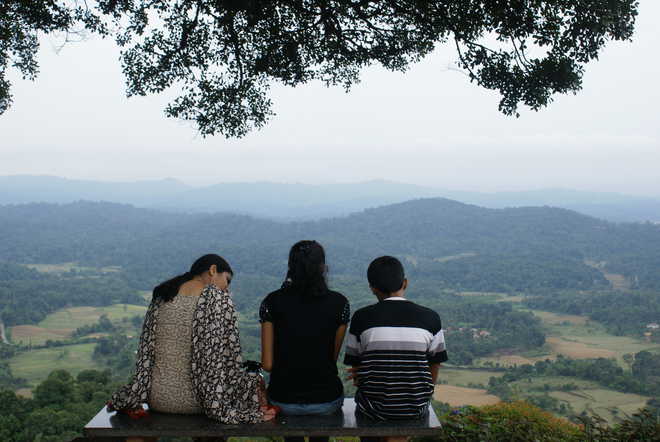
Where order prevails: View from the Raja’s Seat garden; The church in the Fort, now an ASI Museum; Two of the Royal Tombs; The Sri Omkaresvara Siva Temple Photos by the writers

Hugh and Colleen Gantzer

At first glance, Madikeri looks as precise and orderly as a cantonment. In a way, that’s what it is. According to a coffee-planter, “If you throw a stone in Madikeri, you’ll hit a General. If you throw two stones, you’ll probably get a brace of Colonels, bristly moustaches and all!” This could account for the military look of this cottage-dotted town in the hills of Coorg in Karnataka. Madikeri’s narrow, winding roads were meant for brisk walkers and horses. We felt this when we drove through the town to the Palace Fort.

It certainly is a Fort, with thick walls and deep gates. At the far end of its grounds, next to two enormous effigies of elephants is a board that proclaims:

“Mercara was founded by Prince Mudduraja of the Haleri dynasty in 1681 and named after him as Muddurajanakeri. This later became Madikeri by the locals. The British called it Mercara.”

At one corner is a steepled building, now a museum with hero-stones standing erect in the yard. We walked across this former Anglican Church. The light streaming in through its beautiful stained glass windows added to its meditative ambience, ideal for a museum. And, in a fitting tribute to India’s revered Field Marshal Cariappa, the former little vestry had been dedicated to the memory of this unforgettable army chief. He was a Coorgi, a Kodava.

From such shrines to the past, we drove down into town and parked at the gate of a living shrine: the impressive Sri Omkaresvara Temple.
Officially this is a Siva temple of the Lingayats but there are distinctly Islamic idioms in its eclectic architecture. It has a central dome with minarets at the four corners, surmounted by their own, smaller, domes. It is possible that the influence of Tipu Sultan had a lasting impact on the architects of this temple. It was built by Lingaraja II in 1820, just 21 years after Tipu Sultan died in Srirangapatna. We saw the Islamic influence even in other Lingayat monuments crowning a green hill referred to as Gaddige. A plaque installed at the foot of one of the plinths read ‘Royal Tombs’. Built in the Indo-Sarcenic (sic!) style, these monuments with domes and minarets, hold the mortal remains of Kodava Royalty and court dignitaries.

The central tomb is of Dodaveerarajendra and his queen. To the right is the tomb of Lingarajendra built by his son Chikkaveerarajendra in AD 1820. To the left is the tomb of the royal priest Rudrappa, built in 1834.

Nearby are buried two royal officials, Biddanda Bopu, who died fighting Tipu Sultan, and his son Biddanda Somaieh. Clearly these warrior people opposed anyone who tried to cub their freedom to decide their own future.

Our immediate future, however, was constrained by the weather. We looked up at the roiling clouds above us. These were threatening but it hadn’t rained. We decided to rush down to Abbi Falls before a storm boxed us in.

Abbi was spectacular. Even though the water was not gushing in its roaring monsoon fury. it foamed and cascaded over rocks, frothing and surging before pouring into a large pool, and then flowing under a suspension bridge. The falls are well worth visiting but do treat that forest path with a great deal of respect.

It was almost sunset when we reached Raja’s Seat, a popular public garden with horizon-stretching views of the plains. Had the ancestors of the Coorgis battled across those lowlands? We began to think about the origin of the Kodavas.

Their traditional masculine dress of a turban, long coat, sash and curved dagger points strongly to a Middle Eastern connection. The Kodavas have no temples or pujaris, they conduct all their religious or social ceremonies themselves, and revere their ancestors. The Kurds of the Zagros and Taurus mountains of Turkey, Iran and Iraq are also known for their proud and independent nature. Were they the ancestors of the Kodavas? ‘Kurd’ and ‘Kodava’ have a certain similar ring. A popular theory claims that they are the descendants of people who were part of the army of Alexander the Great.

That could explain the very no-nonsense character of their mountain home, Madikeri.

source: http://www.tribuneindia.com / The Tribune / Home> Spectrum> Travel / October 23rd, 2016
Creative spirit


A month-long festival of words, performance and visual art, all inspired by the ghost story is taking over the Leeds Library. Yvette Huddleston reports.

There’s a bit of a chill in the air at Leeds Library this month when it hosts a programme of events and interventions entitled The Haunting: Ghosts of Every Shade.

The Haunting is presented by Alchemy – a Leeds-based arts organisation which aims to connect people through the arts and open doors to new ideas through shared cultural experience – working in collaboration with the Library, Leeds International Film Festival and Ilkley Literature Festival.

The Library itself, on Commercial Street in the heart of Leeds, was founded in 1768 and is the oldest surviving example of the ‘proprietary subscription library’ in Britain. It is also rumoured to be haunted by a former librarian from the 19th century, so it is the perfect 
venue for the month-long programme.

“The space is very evocative – it lends itself to all kinds of interventions,” says Nima Poovaya-Smith, curator and director of Alchemy. “It is an inspirational source of stories through its diverse collections and in putting the programme together we have worked with the rhythm and ambience of the library.”

Pulling together a variety of different art-forms which complement and repsond to each other, visitors are in for a treat. Internationally acclaimed writers Simon Armitage, Imtiaz Dharker, Rommi Smith and John Siddique explore not only the thrills and chills but also the more reflective and provocative aspects of ghosts and hauntings through poetry, performance, short stories.

There are enigmatic installations from artist Zareena Bano and others, plus soundscape, dance, vocals and film with around sixteen new commissions as well as performances, masterclasses, workshops and ghostly trails.

And it’s a wide brief that’s open to all sorts of interesting interpretations. “The project grew out of my own love and passion for ghost stories, particularly the stories of M R James and Edith Wharton, but we are not just looking at haunting in the supernatural sense,” says Poovaya-Smith. “People are haunted in all kinds of ways; haunting can be metaphorical not just literal so we have a great depth with what the artists have done.”

Our fascination with ghost stories is long-standing and complex – on the most profound level they are a reminder of our own mortality – and it is a tradition that crosses cultures and continents.

“I think there are many reasons for our interest in them,” says Poovaya-Smith. “But I think one element is the concept of being ‘safely scared’ – it’s a thrill. And there is such a rich tradition of demonology and dark forces. Then there is our curiosity about the possibility of an afterlife, especially if we have lost somebody.”

A highlight of the programme is artist Steve Manthorp’s exquisitely detailed and mildly discomfiting The Haunted Doll’s House, based on MR James’ classic ghost story of the same name.

“Steve shares my passion for MR James’ work and he told me that he has been wanting to make a Haunted Doll’s House for about thirty years,” says Poovaya-Smith. “It was an idea that haunted him.”

Other highlights include ceramicist Adele Howitt’s installation which responds to Edith Wharton’s psychologically unsettling story Pomegranate Seed and a late night walk through Ilkley with Literature Festival apprentice poet in residence Mark Pajak sharing scary stories and poetry that reveal the macabre folklore and history associated with some of the town’s landmarks.

Across the month there will be numerous workshops and masterclasses including poetry masterclasses by Simon Armitage and Rommi Smith and a spooky Halloween workshop.

“None of the artists have done anything obvious, everyone has produced exquisite work, they have outdone themselves,” says Poovaya-Smith. “In the library itself we have several interventions. We have put objects in bookshelves for people to discover, so around every corner you encounter something interesting.” She adds, smiling: “All these things came together, one might say, in an almost supernatural way.”

The Haunting: Ghosts of Every Shade runs until November 7. For the full programme details visit www.alchemyanew.co.uk

source: http://www.yorkshirepost.co.uk / The Yourshire Post / Home> LifeStyle> Books / by Yvette Huddleston / Friday – October 14th, 2016

The better halves !

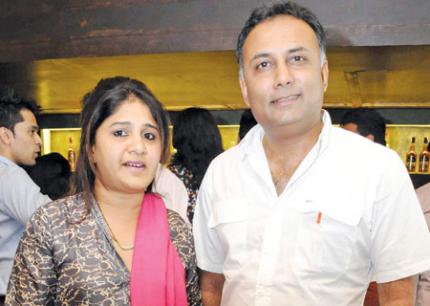
Tabu and Dinesh Gundu Rao

Celebrity couples are going all out to give partners the support they require during special moments

It’s all about the balancing act and these prominent couples are doing to nurture their relationships. With so many modern day marriages falling apart, there are quite a few prominent married couples that are standing together through thick and thin. There are also that many strong relationships that have survived the test of time, despite alluring temptations. Bollywood star Kajol has accompanied her actor/director husband Ajay Devgn for all national promotions of Shivaay. Kiran Rao, who was spearheading the 18th MAMI Festival in Mumbai received tremendous support from her star hubby Aamir Khan. Actor Akshay Kumar regularly tweets about Twinkle Khanna’s columns and is clearly proud of her accomplishments. What does it take to prioritise family over career and complementing each other’s personality?

South Indian actress Sumalatha, who is married to actor-politician, Ambareesh says, “My priorities were always clear — family first. Had my husband objected then, there was no question of me going against it, but he respected me enough to never stand in my way. This was a big step, and I wouldn’t have been able return to the profession, I have always loved and which has given me everything, without his consent and cooperation, it wouldn’t have been possible. Today, I look around and realise that my whole identity would have been submerged and lost, but for his understanding and support. Truly, he’s the reason that I can peacefully work and handle my domestic responsibilities too.”

Tabu Rao, wife of Dinesh Gundu Rao, president of Karnataka Pradesh Congress Committee adds that there has to be respect and faith in every marriage, “I get involved in every family matter and never crib as I love doing it all. I’m also involved in the matters of the constituency and totally clued into social media and politics. I even handle my husband’s Facebook account and those who find it tough to get in touch with him go through me and I always help them out. He’s given me all the freedom without any restrictions and we always stand by each other.”

source: http://www.asianage.com / The Asian Age / Home> Life and Style / by Namita Gupta / October 26th, 2016

NGO Credit-I launches programmes to mark its 10th anniversary

Mysuru :

V R Raghunath, hockey player from Kodagu district who has represented Karnataka at national and international tournaments, was conferred Karnataka Kanmani State Award by Centre for Rural, Education Development and Innovative Technologies of India (Credit-I) recently.

Credit-I, the NGO, honoured the national player as part of its 10th anniversary celebrations at Jaganmohan Palace here. Raghunath has played in over 200 tournaments.

The organization also conducted various programmes to mark its anniversary over two days. On October 22, it conducted an inter-collegiate folk song singing contest, wherein students from 54 colleges in Mysuru, Mandya, Hassan and Chamarajanagar vied for honours.

On the occasion, environmentalist Vasanth Kumar Mysoremath launched the four programmes — ‘Spandana’ for the welfare of senior citizens, ‘Nele’ and ‘Paraspara’ to impart skills among youths so they can become entrepreneurships. The NGO has also adopted Malara, a drought-hit village in HD Kote taluk, to develop it into a model village in the 10 years.

Trinetra Mahantha Shivayogi, seer of Chandravana Ashram, industrialist Umesh K Shenoy and retired professor H M Vasanthamma attended the programme.

source: http://www.timesofindia.indiatimes.com / The Times of India / News Home> City News> Mysore / TNN / October 26th, 2016

Bengaluru Round-Up

RASHMY TO LEAD

Nithin Thimmaiah and P.P. Rashmy will lead Karnataka’s teams at the inaugural Hockey India five-a-side national championships in Pune from October 26 to 30.

The teams: Men: Nithin Thimmaiah (Capt.), Jagdeep Dayal, D.S. Darshan, M.B. Aiyappa, Pradhan Somaiah, Rathan Muthanna, G. Shreyas, Abharan, and Pruthviraj.

Women: P.P. Rashmy (Capt.), M.P. Rohini, H.P. Sandya, Komala, Tanushree, Bhagyashree, Vishma, Kruthika and Niha.

RAVINDRA WINS

Ravindra Kumar and M. Sagar won round two of the South Zone MRF FMSCI INTSD Rally Championship here on Sunday. V. Santhosh Kumar and T. Nagarajan were second with A. Vinodh and D. Raghuraman third.

Other results: Ladies: 1. Malathi Bhavani (Sunitha Suresh), 2. Geetha Shetty (Bhargavi Shetty), 3. Asma Ashfaq (Julie James).

AKSHAY SHINES

Akshay (31 points) helped Bharath Sports Union to a 62-29 win over Viveks SC in the State under-16 basketball championship.

The results (semifinal league): Boys: Bharath SU 62 (Akshay 31) bt Viveks SC 29 (Pattu 12); YMMA 69 (Prashant 23) bt VNSC 49 (Vishal 14). Girls: Alva’s 38 (Nisarga 16) bt DYES Mandya 22 (Rakshitha 12); DYES Vidyanagar 31 (Harshitha 11) bt Beagles BC 18 (Sanjana 10).

source: http://www.thehindu.com / The Hindu / Home> Sports / October 26th, 2016

KPA urges centre to amend Rule 7B of Income Tax Act

The Karnataka Planters Association (KPA) on Thursday urged the Centre for an amendment in Rule 7B of Income Tax Rules.

kpakf27oct2016

According to KPA Chairman Baba P S Bedi, “In Rule 7B of Income Tax Rules, they consider ‘Coffee Curing’ as value-addition. If you cure coffee, you can’t drink it. However, you can drink it, only once it is roasted and powdered. How can they treat it as value-addition?”

KPA will submit a memorandum routed through The United Planters’ Association of Southern India (UPASI) to the central government to amend Rule 7B R/w Section 2 (1A) of Income Tax Act so as to give effect to the changes in the ruling to cover ‘Coffee Curing’ is within the meaning of ‘Coffee Grown’.

The Government of India is keen to introduce the Goods and Services Tax (GST) from April 1, 2017. Bedi said, “If coffee is made taxable under GST, input tax paid by the agriculturist on inputs used or consumed by the agriculturist in growing this product should be allowed to be set off.”

Appointment of chairman

A full-term chairman of Coffee Board has not been appointed yet.

“We have requested the Ministry of Commerce and Industry to appoint a full-time chairman to the board. The former chairman Jawaid Akthar’s tenure came to an end on May 11, 2015,” a statement from KPA said.

However, Leena Nair, a 1982 batch IAS officer from Tamil Nadu cadre, was given the additional charge of Chairman, Coffee Board.

Currently, the 1997 batch IAS officer of Uttar Pradesh cadre, M K Shanmuga Sundaram, has been accorded with the additional charge of the post of Chairman in the Coffee Board, Bengaluru, under the Department of Commerce.

source: http://www.deccanherald.com / Deccan Herald / Home> Business / DHNS – Bengaluru, October 14th, 2016

Kodagu’s Cauvery – A River In Trouble

Kodagu, in Karnataka, is the main catchment area of the river Cauvery – and the environmental health of this district has a direct impact on the river itself. As the battle between states continues over the sharing of Cauvery waters, we visit the source of the river to see the ecological challenges at the birthplace of this precious river.

Kodagu’s Cauvery – A River In Trouble
PUBLISHED ON: OCTOBER 6, 2016 | DURATION: 18 MIN, 49 SEC
04:12 / 18:48

source: http://www.youtube.com

http://www.ndtv.com/video/shows/ndtv-special-ndtv-24×7/kodagu-s-cauvery-a-river-in-trouble-434019

CCRI to depute coffee experts to Nagaland

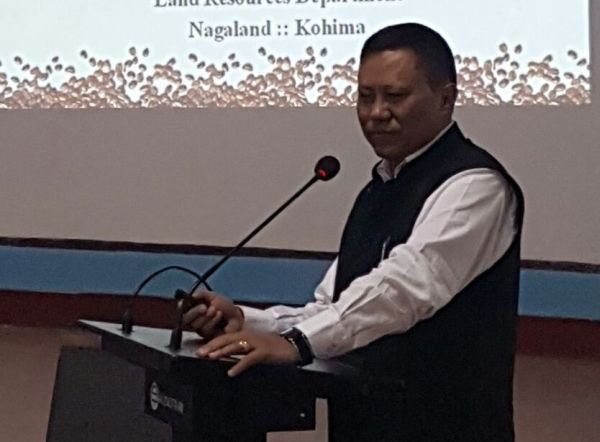
Secretary, Land Resources, Y. Kikheto Sema IAS sharing prospects of coffee plantation in Nagaland at CCRI Chikkmagalur, Karnataka.  (Morung Photo)
Secretary, Land Resources, Y. Kikheto Sema IAS sharing prospects of coffee plantation in Nagaland at CCRI Chikkmagalur, Karnataka. (Morung Photo)

Assuring all possible guidance and assistance to the state Land Resources Department for coffee plantation, the Central Coffee Research Institute, Chikkmagalur, Karnataka has agreed to depute scientists and technical experts to the state to study the climatic condition and feasibility of coffee plantations.

Speaking to The Morung Express over the phone from Bangalore, Secretary, Land Resources, Y Kikheto Sema IAS said that the Director CCRI, Dr. Raguramulu expressed happiness over the Nagaland team’s visit and agreed to depute coffee experts to Nagaland and also to provide whatever coffee seeds were required by the state.

Kikheto said that the climatic conditions of Karnataka and Nagaland were similar and expressed optimism that the state would see a landmark growth in coffee plantation with technical experts providing their valuable expertise after examining the feasibility.

He said Dr. Raguramulu recalled about the establishment of Coffee Demonstration Farm at Kiruphema in the past, which could not take off effectively owing to frequent landslides and volatile situation in the state. However, Kikheto apprised the CCRI Director that Nagaland was relatively peaceful now and assured of all government support for establishing Coffee (Arabica) Research Centre in the state.

CCRI officials, scientists and State Land Resources Department officers held a joint meeting on Wednesday at the former’s office, where Kikheto presented a power point presentation on the status of coffee in Nagaland.

He said Coffee plantation has an edge over rubber and tea since it could be intercropped with other crops such as banana, orange, citrus, pepper etc, while mixed cropping was not possible for the latter two crops. He said that the Land Resources Department was yet to receive funds even as it has been declared as the nodal department for revival of coffee plantation in the state.

Kikheto informed that the state LRD team were taken on a coffee farm visit by the officials and famers and also taken to Chikkmagalur coffee laboratory.

The LRD officials also visited the Coffee Sub Research Centre, Coorg on Thursday with CBI officials on Thursday.
“We have learned a lot from the field and laboratory visits about coffee plantation and we will accordingly train our farmers back home with proper guidance and assistance from the CCRI,” Kikheto said.

He informed that 70% of coffee production in the country was from Karnataka. Kikheto extended gratitude to the CBI Bangalore, CCRI Chikkmagalur and Coffee Sub Research Centre, Coorg for their support and cooperation.

source: http://www.morungexpress.com / The Morung Express / Home / by Morung Express News / Dimapur – October 20th, 2016(posted October 21st, 2016)

Mushrooming enclaves hit Cauvery flow

Bengaluru :

Near Ponnapet in Virajpet taluk, Kodagu district, the sight that greets the visitor is one of lush paddy fields extending till the very edge of the horizon. However, a wide stretch of land leaden with construction material with a tiny makeshift office, is a blemish on Kodagu’s otherwise pristine landscape.

White boards reading Converted Site For Sale and pointing, rather ironically, towards verdant green fields is a common sight across the district. Interestingly, some of these plots cost more than a flat in the heart of Bengaluru.

Reflecting on the sharp spurt in the price of land in the district in the past decade, president of the Coorg Wildlife Society, Colonel CP Muthanna said, “Ten years ago, an acre cost Rs 7 lakh. Now, it is almost Rs 1 crore, and many layouts have cropped up in the last five years.” The many residential enclaves that have cropped up, mostly on wetlands and agricultural fields, might have resulted in the land prices shoot up, but they have had a disastrous effect on the flow of rain water into the many streams and brooks that feed the Cauvery River, which originates in the district. A school built on paddy fields near Gonikoppa in Virajpet is faced with the problem of flooding almost annually.

However, it is those who practise agriculture who have to bear the brunt of these ill-thought out development projects. Gopakumar M, who has been studying otters in the Cauvery River, said, “Paddy was the primary crop that was grown by farmers here. Now, cultivation has come down by 50%, since many have abandoned it because of labour costs, irregular rainfall pattern and lack of business.”

However, Muthanna laid the blame at the government’s feet, for its failure to encourage cultivation of indigenous varieties of paddy. “Sellers are saying that they are giving up because of high labour costs and rainfall patterns; they aren’t good enough reasons. Most sell them for the money,” he said.

source: http://www.timesofindia.indiatimes.com / The Times of India / News Home> City News> Bangalore / Aditi Sequeira / TNN / October 15th, 2016

From the lap of nature

walkingstickskf21oct2016

In 2014, when a Coorgi village tribal gave Bheemaiah K K a rattan vine stick for his off-road activities, he contemplated starting a venture selling ‘all-purpose’ sticks. “That was in June-July, the beginning of my journey,” says the founder of Bheem Styx, now with a store on Indiranagar’s 12th Main. After three months of driving between Coorg, his hometown, and Bengaluru, where he lives, with the stick in his vehicle, he decided to act on the idea.

“I often travelled through forests and coffee estates,” says Bheemaiah — Bheem for short — from a family of coffee growers. “I realised then it didn’t make sense to ‘climb a tree to cut a branch’, and that sticks were strewn across roads and paths. You only had to see them and pick them up.” So every summer he goes hunting for sticks, fallen branches and trees, even keeps a look out for landslides along the Western Ghats. “Now that people know what I do, they alert me about fallen trees or about the civic bodies pruning trees,” he says.

He also makes the most of monsoon tree-felling gusts of wind in the city and elephants that uproot trees in the forests and, in all, about 400 sticks find their way into the drying room at his Coorg homestead, where they remain for a few months to a year.

“I seal the ends with wires to prevent cracking. Even so, some crack, some others are already eaten by insects or are rotten from inside,” he admits. But except for these 80 to 100, the rest, he says, turn out strong.

“They are mostly from hardwood trees whose names I know only in Kodava,” says the journalism graduate who moved to the city in 1997 for his schooling. “Some of these, my father tells me, are said to last for 80 to 100 years.” Others sticks come from boughs and branches of coffee plants or fruit trees, also grown abundantly in the Kodagu belt.

Once dried and hardened, these sticks are cleaned, sandpapered and transported to the garage store in the city, where they are painted. Bheem has dipped into his friends circle for this. “Some are artists, but most are students, entrepreneurs in their own right or art enthusiasts with day jobs,” he adds.

From deep-river-walking sticks and hook sticks, which can be used to pull down branches, and catapult sticks, whose ‘Y’ can either fling stones at fruits or work as an armrest, to home decor, fashion and city-walking sticks, there are several options on offer. Smaller bits of wood become keychains. They are priced between Rs 500 and Rs 12,000, with customised ones selling for not less than Rs 6,000.

Bheem reasons: “Collecting sticks is a sweaty, dirty job. I’ve got bitten by leeches, and once by a snake, though it wasn’t venomous. Caterpillars and thorns abound the wooded areas, so you hardly come back without a scratch or rash.”

The going is slow too, he adds. “At a time, one person can’t carry more than four to six sticks, given that often there are no walkways,” he explains. “Some are heavier than the rest, like the jungle palm felled by elephants. Carrying one five-foot-long, half-foot-wide piece of those is a difficult task.” But passion keeps him going back year after year, he muses.

source: http://www.deccanherald.com / Deccan Herald / Home> Supplements> MetroLife / Chetana Divya Vasudev / DHNS – October 18th, 2016