Gulshan Devaiah Birthday: Did You Know The Actor Worked In Fashion Industry?

Happy Birthday Gulshan Devaiah: With dreams in his eyes, Devaiah came to Mumbai in 2008 and marked his Bollywood debut with Anurag Kashyap’s That Girl in Yellow Boots in 2010.

Happy Birthday Gulshan Devaiah: The actor will turn 47 on May 28, 2025. (Image: Instagram/gulshandevaiah78)

Happy Birthday Gulshan Devaiah: Bollywood actor Gulshan Devaiah will be celebrating his 47th birthday on May 28. Known for his unwavering dedication, willingness to experiment, and ability to breathe life into diverse characters, the actor has carved a niche for himself by continuously pushing the bar with his film choices. From his roles ranging from a four-cut Atmaram in Guns and Gulaabs to a serious cop in Dahaad, he has always kept the audience hooked with his impeccable acting skills across different genres.

The actor graduated from the National Institute of Fashion Technology (NIFT) and worked for ten years in the fashion industry. His passion for acting began with minor roles at an English theatre in Bengaluru. He honed his skills by performing in various dramas before taking the plunge into the vast world of Bollywood. With dreams in his eyes, Devaiah came to Mumbai in 2008 and marked his Bollywood debut with Anurag Kashyap’s neo-noir thriller named That Girl in Yellow Boots in 2010.

Now, as he turns a year older, let’s go down memory lane and check some of his top web series that prove his versatility and learn more about his upcoming projects:

Gulshan Devaiah Birthday: Top Web Series

  1. Guns and Gulaabs (2023): This has to be in Gulshan Devaiah’s top web series repertoire. The comedy crime thriller was one of the biggest hits of the actor’s career, and we can’t agree more. Created and directed by Raj and DK, the series is based on the 90s world of crime and violence. The show follows three characters — an honest police officer, a reluctant kingpin and a lovelorn mechanic — who get tangled up in a major drug racket. Guns & Gulaabs also stars talented actors like Dulquer Salmaan, Adarsh Gourav, Satish Kaushik, Rajkummar Rao, Goutam Sharma, TJ Bhanu, Gourav Sharma and Sanchay Goswami in lead roles.
  1. Duranga (2022): The series is an official adaptation of the South Korean suspense melodrama TV show, Flower of Evil. Co-starring Drashti Dhami, the 9-part series is a suspense thriller with many twists and turns. The ZEE5 Original Series, directed by Pradeep Sarkar and Aijaz Khan and produced by Goldie Behl, also stars Abhijit Khandkekar, Barkha Sengupta, Rajesh Khattar, Divya Seth and Zakir Hussain.

  1. Dahaad (2023): While this gritty web series was billed as a Sonakshi Sinha show, Gulshan Devaiah was the uncrowned king in Dahaad. The film, directed by Ruchika Oberoi and Reema Kagti, is inspired by serial killer Mohan Kumar, also known as Cyanide Mohan, who preyed on women in the hopes of marrying them. In the gripping crime thriller, he aced his role as Inspector Devilal Singh, a cop who is chasing a serial killer. Dahaad also featured Vijay Varma and Sohum Shah in key roles.
  1. Bad Cop (2024): Anurag Kashyap and Gulshan Devaiah teamed up for Disney+ Hotstar’s series Bad Cop. This web series is an adaptation of RTL’s 2017 German show Bad Cop: Kriminell Gut. Penned by Rensil D’Silva and directed by Aditya Datt, the Indian version shows Anurag portray the role of a villain, Kazbe, while Gulshan Devaiah takes on the challenging role of Karan, an intense cop determined to arrest Kazbe. The cast also features Saurabh Sachdeva, Harleen Sethi, and Aishwarya Sushmita in pivotal roles.

  1. Afsos (2020): Another must-watch web series of the actor is Afsos. This dark comedy, written by Anirban Dasgupta, Dibya Chatterjee and Sourav Ghosh, chronicles the journey of Nakul (Gulshan Devaiah), a struggling writer. After all his attempts to die by suicide are somehow thwarted, he decides to hire an assassin to end his life. But when he realises he is nearing his death, he has a change of mind. However, the assassin has a rule: he never leaves his job undone.

Gulshan Devaiah Birthday: Upcoming Projects

  • Guns & Gulaabs Season 2: Buckle up, as the Netflix series Guns and Gulaabs is going to make a much-anticipated return soon. The makers have earlier announced the exciting news of the upcoming second season through social media platforms. Netflix shared a distinctive teaser in the platform’s signature style. The clip introduced the actors reprising their roles – Rajkummar Rao as Paana Tipu, Dulquer Salmaan as Arjun Varma, Adarsh Gourav as Jugnu and Gulshan Devaiah as Cut Atmaram, along with other actors from Season 1.
  • The Nexus: Shadows of Destiny: Next, the actor has this thriller drama in his pipeline. Starring Ishaan Khatter, Vicky Kaushal and Sharvari, the film shows how interconnected strangers’ lives get intertwined through their choices and secrets, unknowingly impacting one another. It leads to unexpected revelations and narrative twists that reshape their destinies in surprising ways. The film also features Sharad Kelkar and Vijay Raaz in significant roles.

  • Golmaal Gharana: Helmed by Amardeep Gulati, this quirky and hilarious film is about an eccentric joint family living in an ancestral haveli in Lucknow. The story, featuring Nana Patekar, Vijay Raaz and Barkha Bisht in lead roles, revolves around their madcap schemes to save their home from being taken over by a greedy builder while dealing with their hilarious misunderstandings and personal quirks.
  • Therapy Sherapy: Gulshan also has this OTT series, Therapy Sherapy, which explores mental health and human relationships based on a nuclear family. The Palak Bhambri show features an ensemble cast including Neha Dhupia, Gulshan Devaiah, Manoj Pahwa and others.

source: http://www.news18.com / News18 / Home> Showsha> English Edition / by Bhaswati Sengupta / May 28th, 2025

Rains in Kodagu: District administration initiates precautionary measures, sets up helpline

The district administration in Kodagu has set up helpline 08272-221077 to enable the public and officials to share information pertaining to heavy rains following the onset of monsoon.

In a review meeting conducted in Madikeri on Tuesday, the district in-charge secretary, N.V. Prasad, said that, in addition to the helpline, a WhatsApp number 8550001077 has also been enabled to facilitate the public and officials to share information related to disasters caused by heavy rains.

In addition to the above, disaster management helpline centers have been opened at various taluks — the numbers are Madikeri – 08272-228396; Virajpet – 08274-257328; Somwarpet– 08276-282045; Kushalnagar– 08276-200198; Ponnampet – 08274-249700.

To ensure greater coordination and efficiency among officials, instructions were issued to form WhatsApp groups for officials at the taluk level involving tahsildars, taluk panchayat executive officers, PDOs, gram panchayat secretaries, public works department, panchayat raj engineers, police, fire department, village assistants, and home guards. The nodal officers, already appointed at the district level, will coordinate with taluk-level officials to ensure effective disaster management, Mr. Prasad said.

Instructions were issued to ensure the immediate clearing of the roads and removal of the fallen trees, electricity poles, restoration of power supply, etc. If required, the local authorities should also open temporary relief centres and people living in vulnerable areas should be asked to relocate in case of intensification of rains, according to Mr. Prasad.

Deputy Commissioner Venkataraja said that there was no dearth of funds to take up relief measures, and the district administration had Rs 40 crore for managing natural disasters.

He pointed out that due to strong winds, trees have fallen on houses resulting in the death of two persons while 23 houses have suffered damaged. Relief was being paid as per government guidelines, said Mr. Venkataraja.

The DC said that areas prone to landslides and floods, have been identified by the Geological Survey of India and the fire department, police rescue teams, and home guards were on a standby to deal with any exigency. In all, 43 flood-prone and 44 landslide-prone areas have been identified, said the Deputy Commissioner.

Attention of the officials was also drawn to the condition of school and college buildings and they were instructed to bring any issues related to structural instability etc, to the higher authorities. The district in charge secretary called for proper implementation of the midday meal schools and ksheera bhagya and called for re-enrolment of children who have dropped out.

The health department officials were instructed to open care centres in every GP limits and ensure availability of essential medicines in areas prone to disaster. In addition, emphasis should also be on tackling infectious diseases common during the monsoon season, the officials were told.

The meeting was attended by senior officials of the district administration from various departments.

source: http://www.thehindu.com / The Hindu / Home> News> India> Karnataka / by The Hindu Bureau / May 27th, 2025

Devika Cariapa conferred with the Times of India Author Award

Codanda Devika Cariapa was recently conferred the prestigious Times of India About Her Award for the Best Children’s Author (Non-Fiction) 2024 at a grand ceremony in New Delhi.

She won the award for her book, ‘A Children’s History of India in 100 Objects’ published by Penguin Random House India. The award sees over seven thousand entries across five categories with only four books making it to the final shortlist.

The book is a compilation of information and depictions of 100 objects that have significant relevance in Indian history from prehistoric times to modern-day India. The emphasis has been to capture India’s diversity through concise and descriptive texts and beautiful illustrations. 

Devika Cariapa has been the recipient of multiple literary awards for Children’s Literature including the Sahitya Akademi Bal Sahitya Puraskar, the Neev Book Award and The Hindu-Young World Award.

She is the daughter of Lt Gen Biddanda Chengappa Nanda and Mrs Leela Nanda and wife of  Gp Capt Codanda Chitrajit Cariapa.

source: http://www.clnews.in / CoffeeLand News / Home> General / by CLN News Desk / April 12th, 2024

Genetic studies show Kodavas of Coorg have a complex, unique past

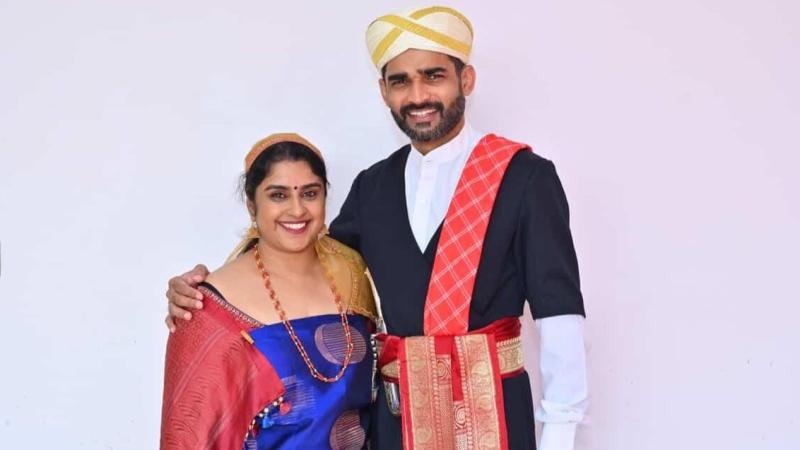
Couple in traditional Kodava attire. Credits: Manshi Devaiah

India is home to many distinct groups, often living close together but with unique cultures and histories. One such group is the people of Coorg in Karnataka, also called Kodavas or Coorgs. They are an indigenous populace nestled in the Western Ghats in Kodagu district of Karnataka. Their culture, which includes a history of agriculture and martial traditions, and their social practices, like marrying outside their immediate family but within the larger Coorg community, set them apart from their neighbours. Their origins, however, have long been a puzzle. Are they ancient inhabitants of the region, or did they arrive from somewhere else, perhaps even linked to armies or groups from far-off lands like Greece or Central Asia, as some stories suggest?  

Researchers from the University of Delhi and CSIR-Centre for Cellular and Molecular Biology (CCMB), Hyderabad, are studying the genetic code of the Kodava people to uncover their past. They collected DNA samples from 144 individuals of Kodava descent. Next, they looked at different types of genetic markers, which are fingerprints in our DNA that identify our ancestry.

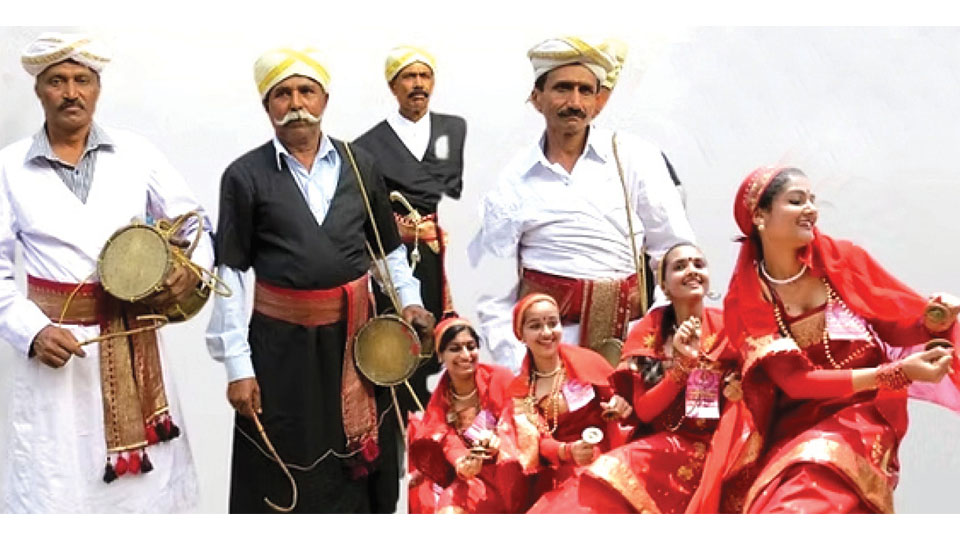
Did You Know? Kodavas have distinctive dresses. The men wear wraparound robes called the Kupya (now only seen at ceremonial occasions), and the women with a distinctive style of wearing the sari. The men also have many distinctive practices such as carrying ceremonial knives, and martial war dances.

The team looked at autosomal DNA, the genetic code inherited from both parents. They also used uniparental markers, like mitochondrial DNA (mtDNA) passed down from mothers and Y-chromosome DNA passed down only from fathers. By analysing these markers and comparing them to DNA from many other populations across India and the world, they could start piecing together the Coorg story.

They found that instead of one single, uniform group, the genetic data revealed that the present-day Coorg population comprises contributions from three distinct ancient groups, which the researchers labelled Coorg1, Coorg2, and Coorg3. Using computational and statistical methods, the researchers could see how these three genetic groups relate to each other and other populations. When they looked at the overall genetic picture using a technique called PCA (Principal Component Analysis), the Coorg individuals didn’t just form one blob; they separated into three distinct clusters.

Coorg1 individuals tended to cluster closer to some tribal groups from Southern India, like the Palliyar, who are thought to have a lot of ancestry from the earliest people in South Asia called Ancient Ancestral South Indians(ASI). Coorg2 individuals were positioned somewhere in between, showing connections to groups with more ancestry from people who migrated from the north, called Ancestral North Indians (ANI), including some Indo-European caste groups. However, Coorg3 was unique; it didn’t neatly cluster with any modern Eurasian or South Asian population that the scientists compared it to.

Further analysis using ADMIXTURE, which estimates the proportion of different ancestral components in a population, confirmed this. Coorg3 showed a distinct genetic component that wasn’t found in other groups in the same way. Coorg2 looked like a mix, sharing ancestry with Indo-European-like groups and a bit of that unique Coorg3 component. Coorg1 was rich in the South Asian ancestry component, similar to tribal groups, and had very little of the unique Coorg3 component. Interestingly, all three Coorg groups shared some level of the Coorg3 component, suggesting it played a role in their overall history.

The scientists then used different methods to determine when these groups formed and mixed. They found evidence that Coorg1 is an older population that experienced a founder event around 40 generations ago, roughly 1000-1200 years ago, assuming about 25-30 years per generation. A founder event happens when a new population is started by a small number of individuals, leading to reduced genetic diversity and increased relatedness within the group. This explains why Coorg1 showed signs of long-term isolation and higher levels of relatedness compared to many other groups. Their analysis suggested Coorg1’s ancestry could be traced back to a mix involving groups like the Palliyar and Mala, consistent with a link to ancient South Asian populations.

Coorg3 has a different, perhaps even earlier, history in the region. While it shows ancestry from the Indian cline (ANI-ASI mix), the data suggests a more recent pulse of admixture, around 23 generations ago (roughly 600-700 years ago), with a group related to present-day Sikh Jatt people from Northwest India, who represent an ANI-like population. Moreover, some analyses hinted at the possibility of an additional, as-yet-unknown ancient lineage contributing to Coorg3’s genetic makeup. This group also showed signs of significant genetic drift, a phenomenon where random changes in gene frequencies become more pronounced in small or isolated populations. Still, unlike Coorg1, this drift seemed more related to long-term isolation than a single strong founder event.

The genetic story of Coorg2 appears to be the most recent chapter. The research indicates that Coorg2 was formed by the mixing of the older Coorg1 and Coorg3 groups around 11 generations ago (roughly 300-350 years ago). This mixing event likely contributed to the cultural and social similarities observed among Coorgs today, even though their genetic roots are distinct. The Y-chromosome DNA analysis added another layer, suggesting male-mediated migrations from Eurasian and Middle Eastern groups into the region over time, with these men eventually mixing with local South Asian women, whose maternal lineages (seen in mtDNA) are predominantly South Asian.

The research significantly improves our understanding of the history of the Kodavas by providing the first detailed genetic evidence of their population structure and history. Previous ideas about their origins were mainly based on stories or limited historical accounts, lacking scientific backing. This study uses genomic techniques to reveal a complex, multi-layered history that wasn’t previously known. However, the study also highlights a limitation: the genetic findings, particularly the specific ancient origins and mixing events identified, don’t directly match the oral histories or traditional beliefs about Coorg ancestry, such as links to Alexander’s army. Additionally, the suggestion of an unknown ancient lineage in Coorg3 means there are still pieces of the puzzle missing, requiring further research.

Understanding the genetic history of groups like the Coorgs adds crucial detail to the broader picture of human migration and population dynamics in India and globally. It shows how isolation, migration, and mixing events shape the genetic diversity we see today. For the Coorg community itself, this research provides a scientific perspective on their unique identity, showing that their distinctiveness is rooted in a fascinating and complex genetic past. While it doesn’t validate specific historical legends, it offers a new, evidence-based narrative about their deep ancestry, celebrating the diverse threads that weave together to form their unique genetic tapestry. It also underscores the importance of studying isolated populations, as they can hold unique clues about ancient human movements and the processes of genetic change


This article has been edited to correct a typo in the Did You Know section. The error is regretted.


This research article was written with the help of generative AI and edited by an editor at Research Matters.


Source

Unique demographic history and population substructure among the Coorgs of Sout…

source: http://www.researchmatters.in / Research Matters / Home / by Research Matters Staff (Writers), New Delhi / May 23rd, 2025

In their farm with five pet dogs, Booker winner Deepa Bhasthi’s husband celebrates in Kodagu

While the literary world applauded in London, back home in Kodagu, her win was met with joy, disbelief, and a bit of solitude.

Deepa Bhasthi won the  International Booker Prize for her translation of Kannada author Banu Mushtaq’s Heart Lamp short story collection, in London on May 20, 2025. | Photo Credit: Deepa Bhasthi/Instagram

While Karnataka’s Kodagu-born writer Deepa Bhasthi celebrates a historic International Booker Prize win in London, her husband Chettira Sujan Nanaiah is celebrating in his own quiet way — on a farm, with five pet dogs, and congratulatory phone calls at their peaceful home in Madikeri.

On Tuesday night, Ms. Bhasthi, along with writer-activist Banu Mushtaq, was awarded the prestigious GBP 50,000 International Booker Prize for her translation of the latter’s short story collection, Heart Lamp. While the literary world applauded her in London, back home in Kodagu, the win was met with joy, disbelief, and a bit of solitude.

Speaking to The Hindu over the phone on Wednesday morning, Sujan Nanaiah — an artist-turned-farmer — shared his happiness. “She’s still in shock and joy. We spoke briefly in the morning. I couldn’t be there with her due to other commitments, but I’m extremely happy and proud,” he said.

Quiet life in Madikeri

The couple, who moved to their native Madikeri during the COVID-19 pandemic, have been living a quiet life on their farm surrounded by lush greenery. “It’s a simple life. We grow our own food, look after our pets, and enjoy being close to nature,” he said.

Mr. Nanaiah, who studied fine arts at Karnataka Chitrakala Parishath in Bengaluru, first met Ms. Bhasthi seven years ago at an art exhibition where he was a participant. What began as a friendship evolved into marriage and a shared life in Kodagu.

As calls poured in from family and friends, Mr. Nanaiah was busy tending to farm duties and looking after their pets. “I didn’t expect her to win, but I’m thrilled for her and the recognition it brings to Kannada literature,” he said, adding that he was the one who shared the good news with Bhasthi’s parents on May 21 morning. “They were emotional and proud. It’s a big moment for our family,” he added.

Born and raised in Madikeri, Ms. Bhasthi studied at Kodagu Vidyalaya before moving to Mangaluru for a degree in Mass Communication. She worked with print publications in Bengaluru before transitioning to freelance writing and literary translation.

Mr. Nanaiah said that Deepa’s return to Kodagu is expected around May 26, though her schedule is still uncertain. For now, as she enjoys her moment on the international stage, her immensely proud husband continues to hold fort at their serene Madikeri farmhouse.

source: http://www.thehindu.com / The Hindu / Home> News> Karnataka / by Darshan Devaiah B P / May 22nd, 2025

Hundreds of tribes take part in ‘Bodu Namme’ celebration in Karnataka

Demons, gods, public figures, mythological characters, disco dancers, and figures smeared in mud and ash, it resembled a chaotic yet enthralling fashion parade of tribal creativity.

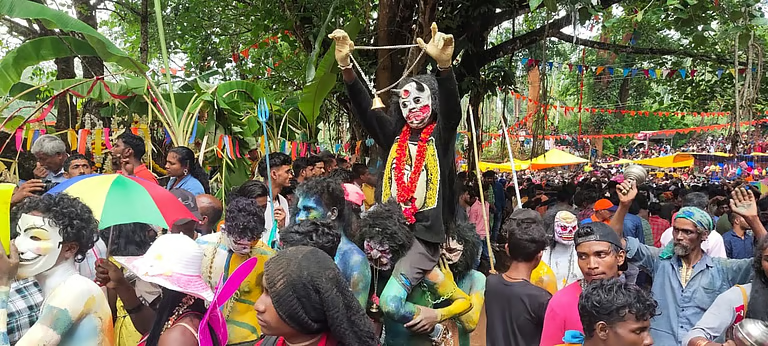
The tribes dressed in eccentric costumes march towards Devarapura to offer exvoto. (Photo | Express)

Madikeri :

It was a vibrant and eccentric day out for the tribal communities of Kodagu as the unique ‘Bodu Namme’ celebrations concluded on a grand note. Tribes from across the district, and a few from neighbouring regions, gathered at the Devarapura Aiyappa Temple to offer prayers, unlike any other, in the form of abuses directed at the deity.

Dressed in eccentric costumes, hundreds of tribal devotees marched through the streets before reaching Devarapura.

Demons, gods, public figures, mythological characters, disco dancers, and figures smeared in mud and ash, it resembled a chaotic yet enthralling fashion parade of tribal creativity.

The rhythmic beats of their improvised instruments, crafted from plastic bottles and drums, echoed through the village as they hurled verbal tirades at the deity, seeking divine blessings for their community’s welfare.

“This is a unique festival of the tribal community in the district. Goddess Bhadrakali and Lord Aiyappa are hurled abuses at by the tribal devotees and they believe that the deities bless the villagers. They dress up in various weird costumes, hurl abuses to the god, and this is a form of ex-voto offering to the deity,” shared Bopanna, a resident of Thithimathi.

While most of the tribal participants are daily wage labourers working in plantations and estates, they take two days off work to participate in the celebration. During this ‘Bedu Habba’, the tribes are accorded special and equal status in society.

“While majority of the times that tribes face exploitation, the two days of the festivity extend them complete freedom to hurl abuses and show their anguish. This ritual has been practised from ancestral times and it is respected by all the communities in the district,” he added.

Over these two days, tribal members momentarily put aside their struggles and challenges, uniting in their tradition of hurling abuses as an act of worship to their indigenous deities.

source: http://www.newindianexpress.com / The New Indian Express / Home> ePaper> Karnataka / by Express News Service / May 22nd, 2025

Kodava roots trace back 3,000 years, but origins still a mystery

Mysuru:

A genetic study has traced the ancestry of the Kodavas, the culturally distinct community from Karnataka’s Kodagu district, to nearly 3,000 years ago. Yet, the mystery of their precise origins remains unsolved.

This is the first scientific attempt to explore the genetic makeup of the Kodavas. Conducted by researchers from the University of Delhi South Campus and Hyderabad’s Centre for Cellular and Molecular Biology, the study was published in Communications Biology.

Using genomic data from 144 Kodava individuals, scientists identified three genetically distinct lineages within the community. They named it: Coorg-1, Coorg-2 and Coorg-3.

Coorg-3 emerged as the most ancient lineage, dating back 98 generations, about 3,000 years. Coorg-1 diverged around 1,920 years ago and Coorg-2, the youngest lineage, appeared roughly 330 years ago from a mix of Coorg-1 and Coorg-3.

Interestingly, mitochondrial DNA passed down from mothers showed that around 40% of maternal lineages in the community are South Asian.

In contrast, Y-chromosome data revealed genetic signatures from Eurasian, Middle Eastern and India-specific male lines. This suggests a pattern of male-dominated migration followed by           local assimilation.

Despite numerous theories about the Kodavas’ origin, including links to Alexander the Great’s Indo-Greek army, pre-Muslim Kurds, pre-Christian Georgians or Indo-Scythian Sakas, concrete evidence of origin has remained elusive.

Even in this study, while Coorg-3 stands out as the most genetically distinct group and ancient, its original ancestral source remains unidentified.  [Sourced]

source: http://www.starofmysore.com / Star of Mysore / Home> News / May 19th, 2025

June 2025 Weekend Plan: Coorg – Nature’s Gift Near Bangalore

Looking for a peaceful escape from the busy city life of Bangalore? June is the perfect time to take a weekend trip and enjoy the calm beauty of South India. One of the best weekend getaways near Bangalore in June 2025 is Coorg. Also known as Kodagu, Coorg is often called the “Scotland of India” because of its green hills, coffee plantations, cool weather, and peaceful atmosphere. It’s just around 250 km from Bangalore and is ideal for a short break with family, friends, or even solo.

Let’s explore why Coorg is the perfect weekend getaway this June.

Green landscapes and fresh air In June, Coorg becomes even more beautiful. The monsoon begins, and the rains make everything green and fresh. The smell of wet soil, the sound of birds, and the misty hills create a peaceful mood. If you are someone who loves nature, you will enjoy every moment here. The scenic drives through winding roads covered with thick forests and coffee plantations are a treat to the eyes. You can stop at many places on the way for pictures or just to breathe in the clean air.

Popular places to visit in Coorg

Coorg has something for everyone. Here are some must-visit spots:

Abbey Falls – A stunning waterfall hidden in the forest, Abbey Falls is a great place for nature lovers and photographers. The short walk through coffee plantations to reach the falls is a lovely experience.

Raja’s Seat – This viewpoint offers a beautiful view of the hills and valleys, especially at sunset. It’s a peaceful place to sit and enjoy the fresh breeze.

Madikeri Fort – For history lovers, Madikeri Fort gives a glimpse into Coorg’s past. It also has a museum inside with interesting displays.

Dubare Elephant Camp – If you’re traveling with kids or love animals, this camp is a fun place. You can watch elephants being bathed and fed and even take part in some activities.

Talacauvery – This is the birthplace of the river Cauvery. It is also a holy site and offers beautiful views from the hilltop.

Local food and coffee Coorg is also known for its tasty local food. Try dishes like Pandi Curry (pork curry), Kadumbuttu (rice dumplings), and Noolputtu (rice noodles). These are full of local flavors and are best enjoyed at homestays or small local restaurants.

And of course, don’t miss the coffee. Coorg produces some of the best coffee in India. You can visit a coffee plantation, learn how coffee is grown, and sip a fresh cup while enjoying the cool weather.

Where to stay

Coorg has many options for all kinds of travelers. From budget hotels to luxury resorts, and cozy homestays in the middle of coffee plantations, you will find a place that suits your needs. Staying in a homestay will also give you a chance to talk to locals, learn about their culture, and eat home-cooked food.

Perfect weekend itinerary

Here is a sample weekend plan for June 2025:

Day 1 (Saturday)

Leave Bangalore early in the morning

Reach Coorg by noon and check into your hotel or homestay

After lunch, visit Abbey Falls and Raja’s Seat Enjoy local dinner and relax

Day 2 (Sunday)

Visit Dubare Elephant Camp early in the morning

Head to Talacauvery and Madikeri Fort Try local food for lunch

Leave for Bangalore by late afternoon

Tips for travel in June

Carry an umbrella or raincoat, as it may rain suddenly

Wear comfortable walking shoes for sightseeing

Book your stay in advance as Coorg is popular during weekends

Try to leave early from Bangalore to avoid traffic

Why Coorg is perfect for June

June is the start of the rainy season, and Coorg looks like a green paradise. The weather is cool and perfect for walks, sightseeing, or simply relaxing with a hot cup of coffee. It’s close to Bangalore and easy to reach by road, which makes it a great weekend choice.

Whether you’re looking for nature, adventure, food, or just a peaceful time, Coorg gives you all. So, pack your bags and make your June weekend refreshing and unforgettable with a short trip to Coorg.

Get best deals on travel, receive travel tips and travel stories instantly Subscribe to Nativeplanet.

source: http://www.nativeplanet.com / Native Planet / Home> Travel Guide / by Neha Choubey / May 23rd, 2025

Coorgs’ roots go back 3,000 years: Study sparks intrigue over Karnataka community’s ancestry

The study is the first to probe the genetics of the Coorgs, a community with a distinct socio-cultural identity whose ancestry has long been debated with competing theories linking them to Alexander’s armies, Eurasian settlers, or ancient south Indian people.

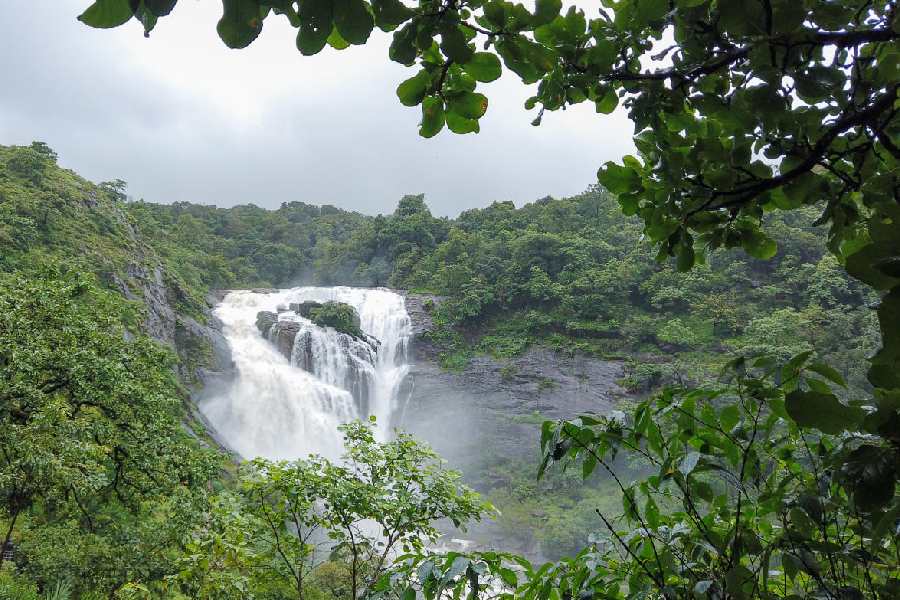
A charming waterfall named Malalli flows gracefully in the idyllic locales of Coorg hill station in Karnataka, India. Sourced by the Telegraph

A new genetic study has traced the roots of the Coorgs to nearly 3,000 years ago, offering fresh insights and deepening the intrigue around the ancestry of this close-knit population in Karnataka’s western ghats.

The study is the first to probe the genetics of the Coorgs, a community with a distinct socio-cultural identity whose ancestry has long been debated with competing theories linking them to Alexander’s armies, Eurasian settlers, or ancient south Indian people.

The Coorgs, also known as the Kodavas, are a small, tradition-rich community with a distinct martial heritage, customs, and a strong sense of clan-based identity, living in the hilly, forested, and picturesque Kodagu district.

Scientists at the University of Delhi South Campus and the Centre for Cellular and Molecular Biology, Hyderabad, analysed genomic signatures in a sample of 144 Coorgs to determine their genetic distances and affinities to other populations.

Their study has revealed that the Coorgs consist of three distinct lineages — classified as Coorg-1, Coorg-2, and Coorg-3. Coorg-3 is the oldest, dating back 98 generations, or nearly 3,000 years ago. Coorg-1 diverged 64 generations ago, around 1,920 years ago. The third group, Coorg-2, emerged more recently — about 330 years ago — from the admixture of Coorg-1 and Coorg-3.

Among the three groups, Coorg-3 stands out as the most distinct. However, the identity of its ancestral source population from 3,000 years ago remains unresolved. The analysis did reveal more recent genetic mixing between Coorg-3 and northwest Indian populations about 23 generations ago, or roughly 690 years ago.

The study, published in Communications Biology, also found that Coorg-1 and Coorg-2 are genetically distinct from other ethnolinguistic groups in Karnataka such as the Kannadigas, Konkanis and Tuluvas.

Members of Coorg-1 show the highest genetic similarity to a hunter-gatherer tribal group called the Palliyars, found in the southern Western Ghats.

The admixture between Coorg-1 and Coorg-3 appears to have begun around 11 generations ago, or 330 years ago, giving rise to Coorg-2.

Practices such as family exogamy and caste endogamy have likely helped preserve the genetic separation of these three lineages over centuries, Delhi University geneticist B.K. Thelma and her co-authors K. Thangaraj, Anirban Mukhopadhyay, Loumos Kumar and Kiran Sran said in their study.

Earlier genetic research has shown that contemporary Indian populations arose from a mix of two ancestral groups — ancestral North Indians and ancestral South Indians — between roughly 1,900 and 4,200 years ago.

But the ancestry of the Coorgs has remained elusive. Scholars have variously proposed links to Alexander’s army during his 4th-century BCE campaign in northwestern India, to Indo-Scythians or Sakas who moved from Central Asia into northwest India in the 2nd century BCE, or to prehistoric inhabitants of the southern Western Ghats.

Analysis of mitochondrial DNA — passed down through mothers — has revealed that about 40 per cent of Coorg maternal lineages are South Asian. Y-chromosome data points to Eurasian, Middle Eastern and India-specificsignatures. These results suggest male-dominated migrations from Eurasian and Middle Eastern regions and subsequent assimilation with local women.

source: http://www.telegraphindia.com / The Telegraph Online / Home> Science-Tech / by G S Mudur / May 15th, 2025

‘I have never had a Plan B, hockey has always been my top priority’: Poovanna aims to make India debut after recovering from serious injury 

 Poovanna suffered a facial injury during the Hero Hockey India League 2024/25 

Bengaluru :

After a brief stint with the Indian junior team in 2023, Poovanna Chandura Boby is now training with the senior core group ahead of European leg of the FIH Hockey Pro League leg. The 22-year-old is currently part of the senior national camp at the Sports Authority of India (SAI) Centre in Bengaluru and has made it into the 40-member core group.

With the junior team, Poovanna had a fruitful spell winning the Gold and Bronze medals at the 2022 and 2023 Sultan of Johar Cup respectively. He was also part of India’s Men’s Junior Asia Cup winning squad in 2023 and made it to the senior national camp in August 2024. 

About his experience training in the camp, Poovanna said, “I’ve played for junior team in 2023 and now training with the senior players, I see a lot of differences between them and us. There’s a lot of work we need to put in to get to that level. It doesn’t matter how fit you are, you need to get much better to compete against European teams. We are getting gassed out every session, but we need to push hard to keep up. It has been a brilliant journey so far.”

Poovanna played the Hero Hockey India League 2024/25 for champions Shrachi Rarh Bengal Tigers, however, he couldn’t play the complete tournament due to an unfortunate injury. In their seventh match against JSW Soorma Hockey Club, Poovanna suffered a facial injury while defending a penalty corner.

“It was a penalty corner and I generally don’t rush third, so I didn’t have my face mask on. Harmanpreet Singh fired a shot and it deflected off my teammate’s stick and hit my upper cheek. So, I was rushed off the field and I had to get my surgery done right away. I couldn’t play the rest of the tournament,” he explained.

He also revealed that he could have made his senior team debut during the home leg of the FIH Hockey Pro League 2024-25 in Bhubaneswar but missed out on the opportunity due to his injury. “Thankfully we won the HIL but the coach told me that I was called up for the Pro League squad but I couldn’t go because of my injury. Hence, I joined the camp early, worked with the physio in order to get in good shape for the training camp in March,” he added.

Hailing from Kodagu, formerly known as Coorg, Poovana comes from a family where hockey is a proud tradition. The Kodava hockey festival is renowned worldwide for being one of the world’s largest hockey tournaments, with hundreds of families participating in the event as tradition. 

“When I was a kid I used to watch those games and I always wanted to wear my family jersey, so that inspired me to start playing in school and I got naturally good at it. Playing for my family team was a dream come true for me after which I pursued the sport professionally. I have never had a Plan B, hockey has always been my top priority.”

Talking about the dynamic he shares with the other senior players of the squad, Poovanna shared, “The seniors are very easy to talk to and we youngsters learn a lot from them since they have been playing for a lot of years and have much better experience than us. We need to learn from them because we need to carry forward their legacy ahead in the coming years.”

“I look up to Manpreet Singh and Hardik Singh a lot because they play the position I play in midfield. I like how calm and composed they are when they get the ball and progress the game ahead. Some things that they do on the field are truly inspiring.”

Poovanna also spoke about his experience training under coach Craig Fulton. “I’m training under him right now and he’s really good. He’s easy to approach and you can ask him whatever you want and he gives you clear answers. Whenever we train, if someone does something wrong, he stops the game and he teaches them, which helps us a lot and gives a very valuable perspective.”

After missing out the opportunity in February, Poovanna is determined to make his Indian senior team debut and solidify his position in the squad during the European leg of the FIH Pro League. “The upcoming tournament is crucial for me and I will ensure I work on my shortcomings tirelessly and do my best with whatever chances I get,” he concluded on a strong note.

source: http://www.hockeyindia.org / Hockey India / Home / May 16th, 2025