Tag Archives: Abbey Falls

Coorg and the bean talk

There’s more to Coorg than the coffee plantations, resorts and mountains shrouded in mist.

There are no Café Coffee Days or Baristas in the coffee county. Instead, vistas of stumped coffee plants growing in the shade of benevolent native trees stretch through silence broken by whistling wind and falling yet uplifting waterfalls. Wild elephants meander in the plantations in the day and fireflies fly in the plantations at night. Coorg is a country painted on a canvas and brought to life.

When you travel within India, you feel the truth of the cliché you’ve heard since childhood — India is many countries into one. How different are the people, their attires, aspirations, lives and even histories and humanities.

The bumpy, washed out road from Mangalore to Coorg changes its rough character drastically the moment it enters the Coorg district.

Perched on the Western Ghats of Karnataka, Coorg or Kodagu has gained its popularity in India in the recent years. She has claimed her place as a coffee plantation hill station, like her near and distant tea plantation cousins Kodaikanal, Ooty and Darjeeling. And with this claim numerous new resorts in the region have burgeoned, many of them located inside the coffee estates.

According to popular belief, coffee in India is rooted in a mystical beginning in the 17th century. The Muslim saint Baba Budan, returning from a pilgrimage, clandestinely brought along seven coffee seeds from Yemen (from where it was forbidden to take coffee seeds) and planted them in Chandragiri hills in Karnataka. These hills are now known as Baba Budan Giri. Like the seven skies and the seven rounds of Kabaa, the holy significance of number seven led him to carry seven seeds.

Kodavas are the main ethnic group of Coorg, carrying a rich farming and militia history. It is a culture that thrives on Nature, not industry. Paddy fields in the foothills and coffee plantations on the slopes, mainly around the district headquarter Madikeri, are the traditional and main source of livelihood.

What is different about the coffee country is not just the coffee, but guns. The Kodavas, being warriors in ancient times, worship arms. Guns are an important part of the festivals of this region. “Most families carry two or three guns,” says Biju, the co-owner of a coffee plantation that spreads over 400 acres. He continues with a glint in his eyes, talking about his passion, i.e., guns. “And yet it is one of the safest places to live in. The crime against women is quite rare and they are the main decision makers in many families.”

That is indeed reflected in the sex ratio where the number of females exceeds the number of males.

There are other ethnic communities and forest-dwelling hunter and gatherer tribes as well. Water is aplenty and the main river of the region is Cauvery. Coffee makes Coorg one of the richest districts of India. Sunil, the co-owner of a coffee plantation and The Porcupine Castle resort answers with a knowing grunt, when we inquire where we can find good coffee, “The coffee that you’re used to , is a mixture of different varieties of coffees.

And each one has a secret formulation, which the company doesn’t disclose. They just buy the raw coffee variety from us like Robusta and Arabica and process and mix it themselves.”

Nonetheless, the Indian coffee is supposed to be one of the finest in the world, grown fully in the shade of eucalyptus, vanilla and native evergreen and leguminous trees. The shade giving trees not only protect the coffee plants but also enrich the soil and prevent erosion. The exotic, full-bodied taste and aroma finds its way to your cup through intense labour and extraordinary care.

The coffee plantations are as multicultural and inclusive as the medley that is India. Pepper, cardamom, vanilla, a local variety of orange and bananas share the same home, drawing their daily supply of nutrients from the shared pool of coffee plantations.

The homesick British, who once inhabited the cool climes of Coorg, named it the Scotland of India. British architecture still stands strong in Madikeri and many tourists visit the same. Around 5 km away from Madikeri is Abbey Falls, a sight to behold, provided it’s not a public holiday.

There is Iruppu Falls too where you can actually go inside the water. An elephant camp of the forest department at Dubare is another tourist attraction and so is Nisargadhama, an island in Cauvery. For the religious, there is Talacauvery, the origin of Cauvery, with a Lord Brahma temple on the bank. For the adventurous, there are the Nagarhole National Park, and Brahmagiri, Talacauvery and Pushpagiri Wildlife Sanctuaries. You can hope to catch a glimpse of a tiger, gaur, dhole (wild dog), leopard or elephant that magnanimously let you pass through the privacy of their living space.

Ever wondered what we would do if a tiger or a guar or a dhole or a leopard enters the privacy of our home or our garden or our street or even our city?

But the Kodavas and the other ethnic groups and tribals of Coorg don’t mind them coming in to their plantations and passing by their villages.

They know better than us that the mountains and fields belong as much to a lonely elephant or a pack of dholes. If I were to settle in the coffee country, it won’t be only for the lush landscape or healthy sex ratio or rich culture; it will be for the forgotten pleasures of experiencing synergy with nature.

source: http://www.thehindu.com / The Hindu / Home> Todays Pages> Features> Metroplus / by Arefa Tehsin / May 18th, 2016
Karnataka’s Kodagu district records over 95 lakh tourists in last two years

More than 95 lakh tourists visited the hilly district of Kodagu during the last two and a half years.

According to information provided by officials of the Tourism Department at a recent meeting of the Kodagu District Tourism Development Committee, the district had recorded 43.69 lakh tourists in 2023 and 45.72 lakh in 2024.

Sharing these numbers, Anita Bhaskar, Deputy Director of Tourism, Madikeri, said that Kodagu accounted for 23 out of the 778 tourist destinations identified under the Karnataka Tourism Policy 2020-26.

The tourist destinations in Kodagu included Raja Seat, Madikeri Fort, Abbey Falls, Mandalpatti, Harangi Reservoir, Mallalli Falls, Iruppu Falls, Dubare, Chikkahole, General Thimmayya Museum, and Nagarhole National Park among others.

A request had been made to shift the Talacauvery-Bhagamandala temples from the list of tourist sites to the list of spiritual destinations, the official said.

A total of 2,300 homestays in Kodagu district had been registered online and certified. This is in addition to the 150 hotels and resorts operational in the district, out of which 53 are officially registered on the Tourism Department’s portal.

Mandalpatti

The scenic peaks of Mandalpatti have been selected for development through Public Private Partnership (PPP) under the One District One Destination scheme.

The Galibeedu Gram Panchayat had approved the infrastructure development at Mandalpatti with an allocation of ₹50 lakh. However, as Mandalpatti falls under the Forest Department, cooperation of the Department has been sought for the repair of roads and other related works, the official said.

Referring to Chief Minister Siddaramaiah’s announcement on development of water sports and adventure tourism in his Budget speech of 2024-25 , the official said that Harangi reservoir will be open for such activities under Jungle Lodges and Resorts (JLR), while rafting licenses had been granted for Dubare in Kushalnagar and Barpuhole in Ponnampet.

Ms. Bhaskar said that the Tourism Department had sought approval from the Lake Development Authority to float tenders for rafting, kayaking, canoeing, wind surfing, jet skiing, and water zorbing at Honnamana Kere, a tourist destination in Somwarpet taluk of Kodagu district, which already has attractions like hills and caves.

Children’s mini train

Meanwhile, Deputy Commissioner of Kodagu Venkat Raja, who presided over the meeting, said steps will be taken to start a children’s mini train at Raja Seat after receiving a report from the engineers of South Western Railways.

He said that engineers from the Railways had already inspected the site and gathered details with regard to the proposal to start a children’s mini train.

source: http://www.thehindu.com / The Hindu / Home> News> India> Karnataka / by The Hindu Bureau / July 31st, 2025

Rain, gusty winds continue to batter Kodagu, coast

And there is no respite from inclement weather as the IMD has forecast heavy showers for next two days and sounded red alert for three coastal districts and as many Malnad districts.

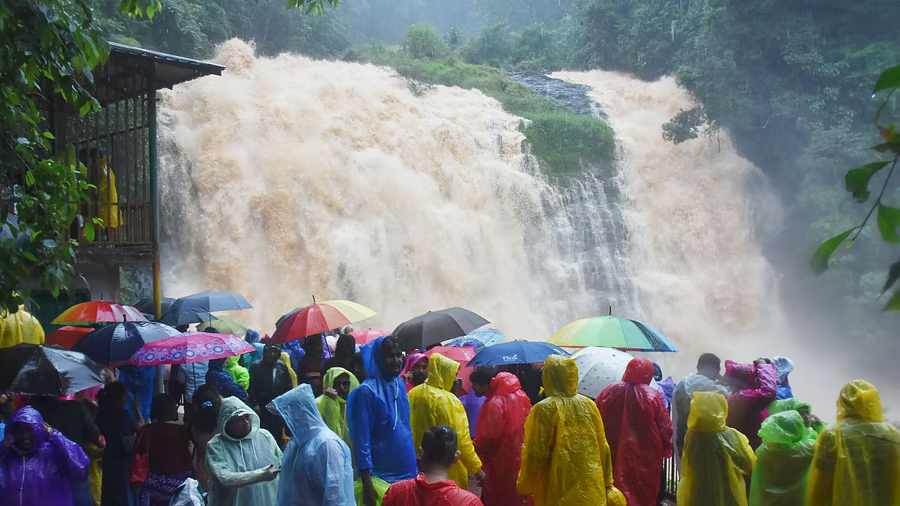
Scores of visitors flock to Abbey Falls in Kodagu district following heavy rain. Credit: Dh photo

Heavy rain continued unabated, damaging houses, roads and power infrastructure and triggering flash floods in  coastal districts and Malnad region.

And there is no respite from inclement weather as the IMD has forecast heavy showers for next two days and sounded red alert for three coastal districts and as many Malnad districts.

Two people died in rain-related incidents in Dakshina Kannada. Lily D’Souza (52), a native of Iruvailu near Moodbidri, was electrocuted when she stepped on to an electric wire snapped due to gusty winds, near her house on Wednesday morning.

Suryanarayan (49), a professional photographer from Kasargod, died after his car plunged into an overflowing stormwater drain at Kodikal in Mangaluru.

Three people travelling in a car escaped with minor injuries after a tree fell on the vehicle at Mulki.

Two houses were completely destroyed while several of them suffered a partial damage in the incessant rain that’s lashing Dakshina Kannada for the past few days. As many as 225 electricity poles were uprooted while 13 transformers and eight bridges suffered damages.

In Udupi and Karwar, intense erosion along the coast is posing a threat to people living close to it. At several places, boulders dumped to prevent sea erosion have been washed away due to strong currents. Udupi district, including Udupi town, continued to see heavy rainfall on Wednesday.

Kodagu is shivering under heavy downpour, coupled with strong winds. Several residential areas in Madikeri are forced to spend nights in darkness due to power outages.

The Kodagu administration has declared holiday for schools and colleges for next two days. With Cauvery river flowing in full steam, the forest department has barred visitors to Dubare elephant camp.

However, hundreds of tourists and locals, braving chill weather, visited the Abbey Falls near Madikeri to catch the glimpse of the cascading waterfall.

The water level in Harangi reservoir has reached 2,841.93 feet, just 15 feet short of reaching its maximum level. Meanwhile, Hemavathi dam at Goruru in Hassan clocked 22,000 cusec inflow on Wednesday. It is only 18 feet short of reaching full reservoir level. Yagachi dam in Belur taluk is full to the brim. Excess water is being released downstream.

Vehicular movement to Kukke Subrahmanya was hit following a tree fall on Bisle ghat road in Sakleshpur taluk.

Relentless showers have left the paddy growers in Shivamogga worried. Ready to harvest paddy cultivated on vast tracts lying on farms due to inclement weather even as the grains are sprouting.

Agumbe in Thirthahalli taluk has recorded 150 mm of rain in the last 24 hours while Maani in Hosanagar taluk registered 130 mm.

Up north, Manjra and Bhima rivers are flowing above the danger mark in Bidar and Kalaburagi districts, courtesy heavy rain in Kalyana Karnataka districts and upstream in Maharashtra. Kamalnagar (Bidar), Shahpur (Yadgir) and Raichur city experienced heavy rain intermittently on Wednesday, posing hardships to the people living in low-lying areas.

In the last 24 hours (ending 8.30 am), Almatti dam in Bagalkot district received a massive 4.88 tmcft of water. The reservoir has been receiving heavy inflows due to unyielding showers in the Western Ghats of Maharashtra. The dam, as on May 28,has 40.787 tmcft of water.

Many parts of north and south interior Karnataka received light to moderate spells of rain on Wednesday. The weather department has predicted more widespread rain for the state in the next few days.  

source: http://www.deccanherald.com / Deccan Herald / Home> India> Karnataka / by DHNS / May 29th, 2025

June 2025 Weekend Plan: Coorg – Nature’s Gift Near Bangalore

Looking for a peaceful escape from the busy city life of Bangalore? June is the perfect time to take a weekend trip and enjoy the calm beauty of South India. One of the best weekend getaways near Bangalore in June 2025 is Coorg. Also known as Kodagu, Coorg is often called the “Scotland of India” because of its green hills, coffee plantations, cool weather, and peaceful atmosphere. It’s just around 250 km from Bangalore and is ideal for a short break with family, friends, or even solo.

Let’s explore why Coorg is the perfect weekend getaway this June.

Green landscapes and fresh air In June, Coorg becomes even more beautiful. The monsoon begins, and the rains make everything green and fresh. The smell of wet soil, the sound of birds, and the misty hills create a peaceful mood. If you are someone who loves nature, you will enjoy every moment here. The scenic drives through winding roads covered with thick forests and coffee plantations are a treat to the eyes. You can stop at many places on the way for pictures or just to breathe in the clean air.

Popular places to visit in Coorg

Coorg has something for everyone. Here are some must-visit spots:

Abbey Falls – A stunning waterfall hidden in the forest, Abbey Falls is a great place for nature lovers and photographers. The short walk through coffee plantations to reach the falls is a lovely experience.

Raja’s Seat – This viewpoint offers a beautiful view of the hills and valleys, especially at sunset. It’s a peaceful place to sit and enjoy the fresh breeze.

Madikeri Fort – For history lovers, Madikeri Fort gives a glimpse into Coorg’s past. It also has a museum inside with interesting displays.

Dubare Elephant Camp – If you’re traveling with kids or love animals, this camp is a fun place. You can watch elephants being bathed and fed and even take part in some activities.

Talacauvery – This is the birthplace of the river Cauvery. It is also a holy site and offers beautiful views from the hilltop.

Local food and coffee Coorg is also known for its tasty local food. Try dishes like Pandi Curry (pork curry), Kadumbuttu (rice dumplings), and Noolputtu (rice noodles). These are full of local flavors and are best enjoyed at homestays or small local restaurants.

And of course, don’t miss the coffee. Coorg produces some of the best coffee in India. You can visit a coffee plantation, learn how coffee is grown, and sip a fresh cup while enjoying the cool weather.

Where to stay

Coorg has many options for all kinds of travelers. From budget hotels to luxury resorts, and cozy homestays in the middle of coffee plantations, you will find a place that suits your needs. Staying in a homestay will also give you a chance to talk to locals, learn about their culture, and eat home-cooked food.

Perfect weekend itinerary

Here is a sample weekend plan for June 2025:

Day 1 (Saturday)

Leave Bangalore early in the morning

Reach Coorg by noon and check into your hotel or homestay

After lunch, visit Abbey Falls and Raja’s Seat Enjoy local dinner and relax

Day 2 (Sunday)

Visit Dubare Elephant Camp early in the morning

Head to Talacauvery and Madikeri Fort Try local food for lunch

Leave for Bangalore by late afternoon

Tips for travel in June

Carry an umbrella or raincoat, as it may rain suddenly

Wear comfortable walking shoes for sightseeing

Book your stay in advance as Coorg is popular during weekends

Try to leave early from Bangalore to avoid traffic

Why Coorg is perfect for June

June is the start of the rainy season, and Coorg looks like a green paradise. The weather is cool and perfect for walks, sightseeing, or simply relaxing with a hot cup of coffee. It’s close to Bangalore and easy to reach by road, which makes it a great weekend choice.

Whether you’re looking for nature, adventure, food, or just a peaceful time, Coorg gives you all. So, pack your bags and make your June weekend refreshing and unforgettable with a short trip to Coorg.

Get best deals on travel, receive travel tips and travel stories instantly Subscribe to Nativeplanet.

source: http://www.nativeplanet.com / Native Planet / Home> Travel Guide / by Neha Choubey / May 23rd, 2025

Coorg: Where coffee culture meets aspirational avocados

Coorg’s lush landscapes are evolving, with century-old coffee plantations now sharing space with thriving rows of avocado trees, writes GYANESHWAR DAYAL

As I pack my bags in Delhi the AQI is reading staggering 430, the smog has dawned on the city and there is heaviness in the air, eyes burning, breathing is an effort to be undertaken. The touchdown in Kempegowda International Airport Bengaluru is smooth the temperature is almost at par with Delhi but air is breathable. The five hours journey to Coorg is tiring but relaxing scenery changes from rocky to green to lush green, on the way you get to see the Gabbar Singh’s den, the place where Sholay film was shot some 40 years back. On the way we have elephant family waiting for us by the roadside and snake crosses the road as drives pushes the brakes. Yes, all of us have right to live, even snakes!

It is night already and the day is done without much fuss as we retire in 140-year-old property a British bungalow now a tata property -Taneerhulla in ama coffee trail. The morning view from the window is fascinating, Delhi smog has given way to Coorg fog, and AQI has dropped to 43! I take a deep breath, as if to store this purity and carry it back home.

Coorg, or Kodagu as it is known in Kannad is nestled in the heart of the Western Ghats, has a fascinating history shaped by its strategic location, natural resources, and the allure of its spices. This region has been a magnet for traders, rulers, and explorers, each drawn by its bounty and beauty.

The history of Coorg dates back to ancient times, with its mention in early Indian texts like the Sangam literature. The region was originally home to indigenous tribes like the Kodavas, who developed a rich culture centered around nature and agriculture. Kodavas are known for their martial traditions, unique customs, and close-knit community life, which continue to define Coorg’s identity today. Over centuries, Coorg saw the rise and fall of several South Indian dynasties, including the Cholas, Gangas, Hoysalas, and Kadambas. These rulers left their imprint through temples and forts, which stand as silent witnesses to the region’s historical significance.

By the 15th and 16th centuries, the fame of the Western Ghats and their riches spread beyond India’s borders. The spice trade was the primary lure, as Coorg, along with other parts of the Western Ghats, became a significant source of black pepper, cardamom, and other exotic spices. The Portuguese were among the first Europeans to set sail for India, with Vasco da Gama’s arrival in 1498 marking a new era of trade and conquest. Soon, Dutch, French, and British traders followed, vying for control of spice routes. Coorg, though a landlocked region, became an integral part of these trade networks due to its fertile hills and spice plantations.

In the early 19th century, the British annexed Coorg after defeating the local ruler, Chikka Veerarajendra, in 1834. Recognising Coorg’s agricultural potential, the British transformed its economy by introducing coffee cultivation alongside spices. This was the beginning of coffee plantation on commercial scale in Coorg and has stayed that way since. Coffee thrived in the region’s climate, and Coorg became one of India’s premier coffee-producing areas. The planters were of course the British who lived near their plantations. Their Bungalows dot the place and the one we stayed was of course belonged to a British. The British also admired Coorg’s natural beauty. Coorg is often referred to as the “Scotland of India” for its rolling hills, misty valleys, and temperate weather. Under British influence, the Kodavas were granted special privileges, including exemption from the Arms Act, which allowed them to retain their traditional firearms-a legacy still continues.

The Western Ghats, a UNESCO World Heritage Site, are among the most biodiverse regions on the planet. Stretching over 1,600 kilometers from Gujarat to Kerala, these ancient mountains are home to an astonishing variety of flora and fauna.

In Coorg, the Western Ghats reveal their most enchanting side. Dense forests, gurgling streams, and cascading waterfalls dominate the landscape, making it a paradise for nature enthusiasts. The forests host an incredible range of plant species, from ancient trees to medicinal herbs. They are especially known for sandalwood, teak, and bamboo. The Western Ghats are a haven for wildlife, including tigers, elephants, gaurs, and numerous endemic species like the Lion-tailed Macaque and Malabar Civet. The Ghats are also critical for the region’s agriculture, providing a fertile environment for growing coffee, spices, and now avocados.

Coorg’s history is a blend of ancient traditions and modern influences. Its spice heritage continues to thrive alongside its renowned coffee plantations. Now, with the introduction of avocado cultivation by Westfalia Fruit, Coorg is stepping into a new chapter of agricultural innovation.

Tourists visiting Coorg can trace its history through ancient temples, forts, and colonial-era bungalows, all while enjoying its natural beauty and rich culinary traditions. The intertwining of the Western Ghats’ biodiversity with the cultural tapestry of Coorg makes it one of India’s most enchanting destinations.

Coorg’s identity is deeply intertwined with its coffee plantations, which have been the backbone of its economy for decades. Introduced by Baba Budan in the 17th century, coffee found an ideal home in Coorg’s rich soil and temperate climate. Today, the district is one of India’s leading coffee-producing regions, renowned for its Arabica and Robusta beans.

The plantations, often set against misty hillsides, not only produce world-class coffee but also create picturesque landscapes that attract tourists. Coffee estate tours allow visitors to learn about the journey of coffee beans from farm to cup, making them an integral part of the Coorg experience.

Located in southwestern Karnataka, Coorg is a verdant hill station known for its cool climate, scenic views, and pristine environment. It is part of the UNESCO -listed Western Ghats, one of the world’s biodiversity hotspots. The region’s dense forests, cascading waterfalls and diverse wildlife make it a haven for eco-tourism and outdoor activities such as trekking, birdwatching, and nature photography.

Some must-visit spots include the Abbey Falls, Raja’s Seat, Dubare Elephant Camp, and the Brahmagiri Wildlife Sanctuary. The Kaveri River, originating from Talakaveri in Coorg, adds to the district’s charm, serving as a lifeline for the southern states of India.

While coffee remains Coorg’s hallmark, the region is now witnessing a burgeoning avocado revolution, led by Westfalia Fruit, a global leader in avocado production. Recognising Coorg’s favourable climate for cultivation, Westfalia has established a state-of-the-art avocado nursery in collaboration with Sam Agri and Dvori-Or Nursery. The initiative focuses on growing high-quality Hass and other commercial avocado varieties.

The saying, “Where tea and coffee grow, avocados can grow better,” perfectly describes Coorg’s potential. Its tropical climate, high elevation, and fertile soil make it an excellent location for avocado farming. Westfalia’s meticulous approach to planting, nurturing, and harvesting ensures that the avocados meet global quality standards.

Westfalia has already contributed to planting over 500 acres of avocado farms across India, with a target to exceed 1,000 acres by 2026. The Coorg nursery plays a critical role in supplying premium rootstock and planting material, ensuring sustainable practices and high yields. For coffee farmers, avocados offer a promising diversification crop, creating additional income streams and contributing to rural development.

Westfalia, in partnership with the World Avocado Organisation (WAO), is driving efforts to educate Indian consumers about the health benefits and culinary versatility of avocados.

Campaigns like “Avocado Ki Paatshaala,” led by celebrity chef Sanjeev Kapoor, have been instrumental in popularising the fruit.

We get hands on lessons on avocado grafting and cloning the techniques Westfalia is introducing in Coorg for avocado plantation sooner than later Coorg avocados would be available across the country. Avocados is one of the healthy diet options which can served in several avatars from avocado-on-toast to guacamole and even avocado shake and ice cream. This is going to benefit the local farmers as well as they can four to five times the amount they make on coffee.

Coorg’s transformation from a coffee giant to a hub for avocados signifies its adaptability and progressive approach to agriculture. Visitors to Coorg can now enjoy not only a cup of freshly brewed coffee but also a taste of locally grown avocados, blending wellness with indulgence.

Whether you’re exploring its lush landscapes, learning about coffee cultivation, or witnessing the avocado revolution, Coorg offers a unique journey through nature and innovation. This jewel of Karnataka remains a must-visit destination for travellers and a shining example of India’s agricultural potential.

As the time to leave draws near, I find myself reflecting on the air of Delhi and take one last, deep breath of Coorg’s pure, refreshing atmosphere. The aroma of spices beckons us to the local market, where we gather handfuls of fragrant treasures and, naturally, Coorg’s signature Arabica and Robusta coffee. With our bags filled with spices, coffee, and the newfound delight of avocados, we bid farewell to this enchanting land and set out on the highway to Bengaluru. As we journey home, our hearts are brimming with memories that promise to call us back. Coorg is a place one longs to return to-sooner rather than later.

source: http://www.dailypioneer.com / The Pioneer / Home> Sunday Edition> Agenda> Travel / by Gyaneshwar Dayal / December 01st, 2024