Sanjay Leela Bhansali impressed with Gulshan Devaiah

Sanjay Leela Bhansali’s Goliyon Ki Raasleela: Ram-leela has surprised everyone, the movie is a resounding hit and the looking at the box office collections of the opening week, the movie has worked its magic on the audiences. The entire star casts were spot on with their performance, even the talented Sanjal Leela Bhansali was impressed by Gulshan Devaiah’s performance.

Gulshan Devaiah who essays the character of Bhavani, is also the chief antagonist of the film. Gulshan is also the surprise element of the film. The actor not only impressed the audiences and fans, but the talented actor also impressed the director. Sources close to Bhansali said, “The director is very pleased to have cast Gulshan for the character Bhavani, and the actor has impressed the director immensely.” The source further added, “Bhansali was also seen telling his friends about how well and subtly Gulshan has essayed the role of Bhavani and how he is one of the surprise packages of the film.”

Ever since the movie has released Gulshan has been receiving praises for his performance. Gulshan will be seen in an all new avatar in Phantom’s next “Hunter”, the actor has also signed a two movie deal with Pooja Bhatt. After such a performance the actor has a great year ahead.

source: http://www.bollyspice.com / Bolly Spice / Home / by Press Release / November 23rd, 2013

From the sidelines to the spotlight

by: Nirmala Ravindran

He was one of the few guys in Bangalore that could carry off a pair of pink shoes with panache. National Institute of Fashion Technology graduate turned theatre actor, Gulshan Devaiah (Gullu to friends) was always gifted with an innate sense of style that his friends in the theatre circles relied on to help them shop for ‘cool’ clothes that didn’t cost the earth.

But that was four years ago. Today, he’s shooting the daylights out of people as the dangerous bad guy Bhavani, in Sanjay Leela Bhansali’s magnum opus Goliyon Ki Rasleela Ram-Leela wearing what looks like a prize-winning ensemble in fancy dress competition. Ask him if the edgy, hard hitting actor of films like Shaitan has made a smooth transition to the XL big budget film and he responds with, “The opus this time is in the super premium magnum league for sure. And it’s going to take a week for it to sink in, at least for a fringe guy like me.” As for being swathed in silk and satin, he’s not complaining. “Except those damn earrings that made me really miserable. They were too heavy and gave me headaches. I really loved the look that Maxima Basu designed for me. And I looked forward to dressing in those clothes, particularly the embroidered dhotis!”

His short but illustrious career graph has seen him winning accolades for films such as That Girl in Yellow Boots and Peddlers (both of which were screened at Cannes), Dum Maro Dum, Shaitan and Hate Story. Even when some of the films were panned, Devaiah managed to garner praise, award nominations and rave reviews for his performances. Not that he’s personally thrilled with any of his past performances. “I really aspire to be the best in my business, I’m not happy with being just good,” he says critically, with no touch of false modesty.

Devaiah has slowly but surely made his way from the edge of the fringe to land in the middle of mainstream Hollywood, first, with SLB’s film, and then with a two-film deal as main lead to be directed by Pooja Bhat. “I really made the best of what came my way, and one thing led to another and, then another. I firmly believe that the real challenge is making the right choices from what is offered to you,” he says.

Unlike Deepika Padukone (his co-star in Goliyon Ki Rasleela Ram-Leela) who made her debut in a Kannada film, before moving to planet Bollywood, Gullu is yet to do a film down South. “It’s really never about the language, it’s only about good cinema for me. If the script and the project are right for me, I’ll definitely do it,” he says.

Kannada cinema reminds him of Bangalore, a city he misses. “I miss a lot of things, but mostly my parents, and some nice hot benne masala dosa.” Coming back to Padukone — also a Bangalore girl — he can’t help but admire her work ethic. “She’s a bonafide star and has made it on her own, like Sridevi and Madhuri in the past. She’s very professional and really easy to work with,” he adds of their time together with SLB’s film.

Even as things change around him on a daily basis, life remains largely unchanged for Devaiah who says he’s “really happy with Kallirroi, my beautiful loving companion (his wife, also an actor), a family of three cats, and commuting by rickshaws and taxis.” He adds, “There is a little bit of attention, but it’s totally manageable and yes, I would like my own home someday soon, but real estate is criminally expensive in Mumbai,” he sighs. Does he still have the pink shoes? “‘Well, there is some pink in my running shoes, so I guess…. the answer is yes, and no.”

source: http://www.bangaloremirror.com / Bangalore Mirror / Home> Columns> Sunday Read / Bangalore Mirror Bureau / by Nirmala Ravindran / November 24th, 2013

Kodagu plans to regularise homestays

HomeStaysKF26nov2013
Mysore:

With homestays mushrooming rapidly of late, many of them unauthorisedly, the Kodagu district administration on Thursday came up with a plan to regularise them.

The action comes weeks after MLC and senior Janata Dal (Secular) leader, M.C. Nanaiah alleged that unauthorised homestays were being used for imm­oral activity and appealed for a crackdown on them.

Deputy Commissioner Anurag Tewari, who chaired a meeting on Thursday to discuss strategies on ways to regularise the unauthorised homestays without hampering promotion of tourism, said a detailed action plan had been prepared to tackle the problem.

While only 216 homestays are registered with the authorities, Tewari explained the rest could not be termed illegal. “Under Karnataka’s tour­ism policy we can’t penalise the owners of homestays for not registering. It’s more of a voluntary thing.

However, under the proposed new tourism policy, which is likely to come up for approval during the winter assembly session, a more detailed methodology has been worked out to prevent unauthorised tourism facilities from coming up in the district.

Until then we will have to work with the present tools,” he said, adding that directions had been issued to Chesscom, the commercial tax and city municipality to ensure the homestays followed the guidelines laid down under civil laws.

The issue will be discussed at the District Tourism Council meeting in December as well.

Tewari also directed the superintendent of police to keep a check on the increasing number of unauthorised adventure camps in Kodagu and warned that recreation clubs that didn’t comply with the new set of guidelines issued by the state government would be closed down.

source: http://www.deccanchronicle.com / Deccan Chronicle / Home> News> Current Affairs / DC / by S.V.Krishna Chaityanya / November 22nd, 2013

‘Manam’ To Shoot In Coorg From The 1st December

ManamKF26nov2013
Manam’, the first 3G (three generation) film in Telugu casting the legendary actor Dr. ANR, his son Nagarjuna and grandson Naga Chaitanya will resume shoot from the 1st December in Coorg, a hill station in Karnataka.

Director Vikram Kumar said ‘The schedule will be on for 15 days in which we will film some key sequences between Nagarjuna, Sriya, Naga Chaitanya and Samantha. I wish our hero Chaitanya a happy birthday’

Chaitanya said ‘This will forever be the most memorable film in my career coz it has the thrilling experience of acting alongside Dad and Granddad. Vikram is carving a beautiful family entertainer and this will be my third with Samantha after YMC and ANS’

ANR, Nagarjuna and Naga Chaitanya are the male leads in the film with Samantha and Sriya as the female leads. Brahmanandam, Tanikella Bharani, MS Narayana, Jaya Prakash Reddy, Posani, Nagineedu, Saranya, Kasi Vishwanath, Ravi Babu, Vennela Kishore and Melkote are playing the other key roles.

The crew: Dialogues: Harsha Vardhan; Lyrics: Chandra Bose, Vanamali; Dance: Brinda; Fights: Vijay; Costumes: Nalini Sriram; Cinematography: PS Vinod; Music: Anup Rubens; Art: Rajivan; Editing: Praveen Pudi; Executive Producer: Y Supriya; Presented By: Akkineni Annapurna; Produced By: Akkineni Nagarjuna; Story, Screenplay & Direction: Vikram K Kumar

source: http://www.indiaglitz.com / IndiaGlitz / Home> IndiaGlitz Telugu / Saturday – November 23rd, 2013

Coffee board eyes tea country to grow beans

PHOTO: Reuters
PHOTO: Reuters

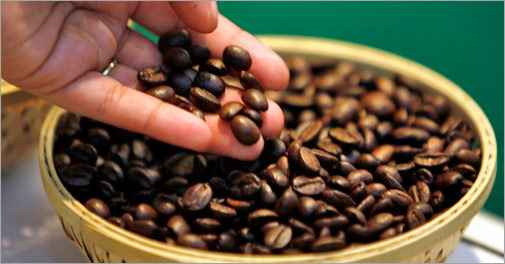
The Coffee Board will take up growing coffee, on a pilot basis, in Darjeeling, where it has found some areas to be good for coffee cultivation.

The Board will grow coffee in an area of 500 hectares, and is in discussions with the West Bengal government for this.

“Darjeeling is a very suitable area for coffee,” Board Chairman Jawaid Akhtar told BUSINESS TODAY. The Board’s survey last year has also found a few pockets of Himachal Pradesh suitable for growing coffee.

The areas under coffee cultivation were expanding with about 3500-4000 hectares coming under coffee in Andhra Pradesh every year. “We have also identified some new places in the traditional areas of Karnataka, Kerala and Tamil Nadu for expanding coffee,” Akhtar said.

The Board, meanwhile, is building capacity in the Indian coffee industry to ensure the coffee beans exported into the European market met the highest standards for the espresso coffee.

“Most of our coffee goes to Italy, where more than 90 per cent of people drink Espresso. Hence, we are educating the coffee community on the finer aspects from harvesting to processing so that our beans are of the highest standards and buyers overseas are satisfied,” Akhtar said.

In the global markets, he said, the Board was positioning Indian coffee a high quality coffee grown in sustainable environment. The coffee grown in Western Ghats was of superior quality as the beans from this region have a distinct aroma and taste. He appealed to coffee growers in this region not to shift from Arabica to Robusta to overcome short-term hardships.

“India grows both Arabica and Robusta, and our Robusta gets 40 per cent premium over the average international price for Robusta. If we grow only Robusta, this premium will be hurt.”

The planters, Akhtar said, were growing coffee under tough conditions, and he appealed to them to follow the best practices as recommended by the Coffee Board. Instead of looking at only coffee for income, they should also grow fruits and spices, and maximise the estate income.

The post blossom forecast for 2013-14 had estimated coffee production to be at 3.47 lakh tonnes. However, the production in the ensuing harvest season is likely to drop by about 10 per cent due to drought in March-April followed by heavy rains from May to August.

The Coffee Board, meanwhile, is also pushing for increase in domestic consumption which is about one lakh tonnes now.

(*The headline of an earlier version of this story was changed to better reflect the copy.)

source: http://www.businesstoday.intoday.com / Business Today / Home> Sectors> Agriculture> Story / by K.R. Balasubramanyam / Bangalore – November 23rd, 2013

Judges for The Hindu Prize 2013

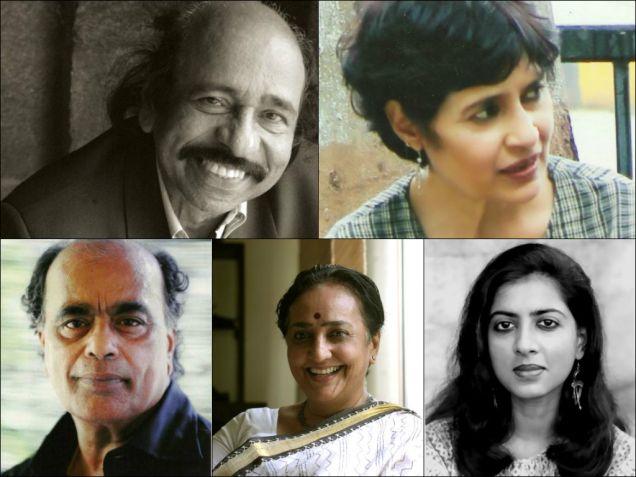
Clockwise from top: K. Satchidanandan, Kavery Nambisan, Arundhathi Subramaniam, Geeta Doctor and Timeri N. Murari. / The Hindu

Meet the panel of distinguished judges has selected the five books from which the winner of The Hindu Prize for Best Fiction 2013 will finally be chosen.

The panel comprised Malayalam poet, author and critic K. Satchidanandan, poet and writer Arundhathi Subramaniam, author Timeri N. Murari, surgeon and novelist Kavery Nambisan and writer and critic Geeta Doctor.

K. Satchidanandan is perhaps the most translated of contemporary Indian poets, having 23 collections of translation in 19 languages. He writes poetry in Malayalam and prose in Malayalam and English. His book While I Write: New and Selected Poems (Harper Collins) came out in 2011. He has lectured and read his poetry across the world. He was a professor of English, and later the chief executive of the Indian National Academy of Literature (Sahitya Akademi) and the Director of the School of Translation Studies, IGNOU, Delhi. He has won 27 literary awards including the Sahitya Akademi, Kerala Sahitya Akademi award (five times), Kusumagraj National Award, NTR National award, Bharateey Bhasha Parishad Award, Knighthood of the Order of Merit from the Government of Italy and India-Poland Friendship Medal from the Government of Poland.

Arundhathi Subramaniam is a poet and writer who has worked as curator, critic and poetry editor. As poet, she is the author of three books of poetry, most recently Where I Live: New and Selected Poems. As editor, her books include Another Country: An Anthology of Post-Independence Indian Poetry in English; an anthology on sacred journeys, Pilgrim’s India; and a co-edited anthology on contemporary love poems, Confronting Love. As prose writer, her books include the bestselling biography of a contemporary mystic, Sadhguru: More Than A Life and The Book of Buddha.

She is the recipient of the Raza Award for Poetry, the Homi Bhabha fellowship, the Charles Wallace Fellowship and the Visiting Arts Fellowship. She has been Editor of the India domain of the Poetry international Web for several years, as well as Head of Chauraha (an interactive arts forum) and Indian Dance at the NCPA, Bombay.

Timeri N. Murari was for many years a journalist writing for The Guardian, The Sunday Times and Observer in London before he moved to New York, where he made documentary films for British television. He has written 18 books of fiction and non-fiction. His bestselling Taj: A Story of Mughal India has been translated into 25 languages. He is also the writer and producer of The Square Circle one of Time’s “ten best films of the year” in 1997. He adapted it for the stage and directed it as the Leicester Haymarket theatre with Parminder Nagra in the lead role. In 2002, he was presented with the R.K.Narayanan Award for his his contributions to writing, cinema and theatre. Aleph will publish his new novel, Chanakya Returns, later this year.

Kavery Nambisan is a surgeon and novelist. She has spent most of her professional life in rural areas and her fiction is strongly coloured by this experience. Currently, she runs a rural hospital in Kodagu district in Karnataka. She has written six novels, all of which are published by Penguin India. Her last novel, The Story That Must Not Be Told, was shortlisted for the Man Asian Literary Prize and the DSC South Asian Literary Prize. Her next novel, A Town Like Ours, will be published in April 2014 by Aleph Publications.

Geeta Doctor is a journalist and writer. She is also a noted reviewer of literature. She has written extensively on art and architecture; on food and travel; as well as children’s stories. She describes herself as a journalist whose commentaries on life, literature and society have always sought to be incisive and insightful. She received the Angarag lifetime achievement award 2008 for her contribution to journalism. She published a volume of poems in 2013 entitled What We Leave Behind. Geeta lives in Chennai.

Visit the new website: www.thehindulfl.com
Like us on Facebook: www.facebook.com/TheHinduLitForLife
Follow us on Twitter @hindulitforlife
YouTube: www.thne.ws/playlist-lfl

source: http://www.thehindu.com / The Hindu / Home> Books / Chennai – November 21st, 2013

Starbucks arrives in namma Bangalore

Planning to open two more stores in the city by year-end. Coorg coffee on menu.

StarbucksKF24nov2013
Coorg and Chikmagalur will soon find a mention in Starbucks stores worldwide.

The US coffee chain is planning to sell arabica coffee sourced from the estates of Coorg and Chikmagalur in its global stores.

Called India Estates Blend, this medium roast coffee was launched last month to be sold in packages of 250 gms at the 30 Starbucks stores in Mumbai, Pune, NCR and Bangalore.
It is sourced, roasted and packaged in India.

John Culver, group president, Starbucks China and Asia Pacific, channel development and emerging brands, says the company would “take this Indian coffee to our 17,000 stores globally.”

Explaining that Starbucks is evaluating plans to make India Estates Blend available globally, Culver says they source coffee from 30 countries.

“Over the last year, we discovered there is very high quality arabica available in India. So it will be good to take India coffee, blend it with other coffees, and sell in the global stores.”

Operational through a 50:50 joint venture between Tata Global Beverages and Seattle-based Starbucks Corporation, Tata Starbucks has also set up a coffee roasting and packaging plant at Kushalnagar in Coorg with a capacity to produce 375 metric tonnes.

India Estates Blend is the second blend brought out by the firm after the India Espresso Roast, that is sold at their outlets across India.

Culver wants India to be one of the top 5 markets for Starbucks globally. Speaking during the launch of the group’s flagship outlet in Bangalore, Culver says Bangalore reflects “our commitment to expand across India.”

Entering India in October 2012, the company operates 29 other stores across NCR, Mumbai and Pune.

Starbucks is planning two more stores in Bangalore before December-end, at Phoenix Market City and Orion Mall. The management believes they can build a ritual of Starbucks in the daily lives of Indians.

Brand consultants feel despite the cluttering in the market in Bangalore, which is the home for Cafe Coffee Day, Starbucks will establish its niche, simply on the basis of its image.

A cuppa numbers
India is a leading exporter of coffee. In the coffee year October 2012-September 2013, India exported 3 lakh tonnes of coffee, as per the Coffee Board. The US and EU are main markets for Indian coffee.

The per capita consumption of coffee in India is low, at 90 grams. In Brazil, another leading coffee exporter, per capita consumption is 6 kg, as per data by Care Research.

The organised cafe market across India boasted sales of Rs 1,246 crore in 2012, and is expected to touch Rs 2, 222 crore by 2017, as per consulting firm Technopak.

The number of cafes in the country will grow from 1,950 last year, to 2,900 by 2017.

Price of coffee minus taxes, can range from Rs 70-80 for a simple cappuccino or latte, to over Rs 180-200 for flavours like hazelnut, or cinnamon, or caramel.

Currently, Cafe Coffee Day is the leading player with 1,498 outlets across India. It has plans of reaching 2,000 outlets by 2015.

source: http://www.dnaindia.com / DNA / Home> Bangalore> Report / by DNA Correspondent, Place:Bangalore, Agency:DNA / Saturday, November 23rd, 2013

Hearty, meaty meal

FoodKF24nov2013
Coorg is the smallest district of Karnataka but the cuisine is considered to be one of the most delicious among the South Indian ones and the Kodavas (natives of the area), who claim to be descendants of Alexander the Great, are pure non-vegetarians. No wonder then that the cuisine is heavily dependent on pork, lamb and fish. The change in palate has also brought in chicken variations.

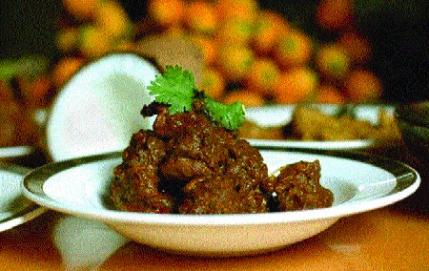
“Coorgi pork curry (pandi curry) is one of the most famous dishes from the area. The people there are a proud race and believe that nobody apart from them can make a good pork curry in the country,” says chef Prem Kumar of The Imperial that recently concluded a week-long Coorgi food festival at their restaurant, Daniell’s Tavern. Although, there aren’t many restaurants in the capital that serve it as a part of their standard menu, there are festivals organised from time to time.

Coorgi food is entirely different in taste, flavour and texture. Chef Velu Murugan P of Dakshin, WelcomHotel Sheraton says, “An elaborate dinner on Puththari (the harvest festival) is celebrated with pandi curry eaten with akki ooti (rice roti) or kadambuttu (rice dumplings). Another popular pork dish is chilkana pandi and is prepared using pork marinated in local spices, vinegar and tossed with onion and green chillies.”

For vegetarians, dishes are prepared using yam, pinto beans and even mushrooms. “Though not many people there like eating vegetarian food, they do cook yam, potato, beans and mushrooms. Yam fry with curry leaves and loads of pepper, red chilli and coriander tastes outstanding,” says chef Kumar. To this chef Murugan adds, “Koombu kanni is an interesting option for mushroom-lovers. The dish is prepared using mushroom infused with coconut milk and a tinge of spices. Koomu barthad is prepared using stir-fried whole mushrooms with finely chopped onions and loads of masala.”

Among spices cloves, mace and chillies in all forms are heavily used to induce heat since Coorg is relatively colder than other parts of South India. “A special souring agent called kachampuli, a local vinegar extracted from fruit is extensively used in Coorgi cooking. Tamarind is used in other parts of south as it is a cooling agent. But since Coorg is cold, people like eating hot and spicy food,” says chef KP Shivam of Kaustubh, DLF Place Saket, that soon plans to introduce the cuisine in their menu.

“Khaima unde or minced mutton balls cooked in spices, mutton chops marinated in coriander-chilli paste and freshly ground pepper, prawn curry in coconut milk and red hot chicken fry served with ghee bhaat (rice) are my other favourites from the region,” puts forth chef Kumar.

Although Coorgis do not like having desserts, they have options like mangai rasayana. “Mangai rasayana is like a mango kheer with freshly chopped mangoes and a big bang of cardamom. Dumroot halwa is also mouth-watering halwa prepared using white pumpkin simmered in pure ghee and milk,” says chef Murugan P.

The Coorgis’ fondness for good food (kadi) and liquor (kudi) is legendary. Go to their festivals and their weddings to see them enjoy their kadi and kudi while they regale themselves with their dance and songs. “For non-vegetarians, it is a cuisine not to be missed!” concludes chef Shivam.

source: http://www.asianage.com / The Asian Age / Home> Life and Style> Dining / by Papia Lahiri and Aditi Pancholi, Age Correspondent / November 21st, 2013

Amid the glitz, a glaring disparity among artistes

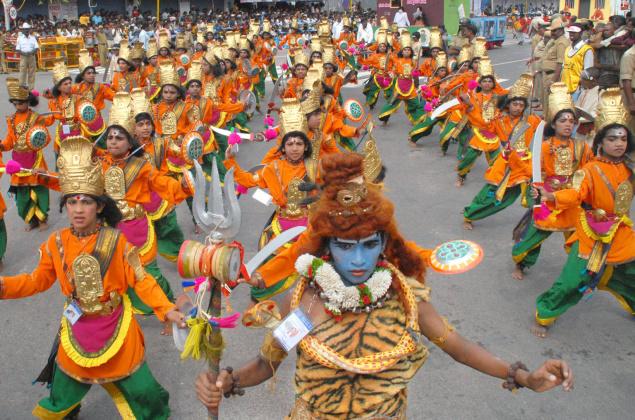
Dance and bear it: Dancers, percussionists and flautists who perform at the Dasara finale have traditionally got a raw deal in terms of the daily wage they receive. / File Photo: M.A. Sriram / The Hindu

Mysore’s folk artistes lament the ‘ínsulting’ wages they earn when compared to Bollywood stars
Behind the very luminous facade of Mysore’s glitzy cultural extravaganza is a disparity that is as old as it is stark. Every other artiste you meet will tell you they are forced to grin and bear it because an opportunity to perform at the prestigious Naada Habba (State festival) cannot be missed. But how long do they expect us to come and perform for this pittance, asks Siddappa, a percussion folk artiste from Madikeri.

He says dancers, percussionists and flautists who perform at the Dasara finale have traditionally got a raw deal. “It almost feels like on the festival day, we are being reminded that we are lesser mortals,” says Siddaraju. The daily wage of Rs. 750, hiked from Rs. 500 last year, is an “insult” to the very art and culture that this festival claims to celebrate and promote, artistes say. “They say Dasara is the most well-preserved tradition we have. What they have also managed to preserve is the disregard shown historically to us, mainly because we don’t belong to the privileged castes.”

Another dancer, who has been performing for 14 years in a row, pointed out that while their ancestors may have performed for free, the State cannot expect them to claim anything less than a fair wage for the work they put in. “What bothers me is that big artistes are brought to perform from around the world. We know they are paid in lakhs of rupees some times; can they not spare us a few thousands? This is not private money to be spent without a sense of right and wrong,” the 45-year-old dancer says. Earlier this month, a group of folk musicians and artistes had publicly threatened to boycott the Jamboo Savari, and walk backwards from Banimantap if their wages were not revised.

Other artistes too

Similar disparities exist also in the remuneration given to other artistes who perform at the cultural programmes held across the city for 10 days in the run-up to Dasara. While they get better accommodation and are given travel money, they feel there is clearly some sort of a ‘two-tumbler’ rule in place. While they are okay with ‘A-category’ performers being paid more, they say that the process of fixing pay is arbitrary and it is as if performing here itself is a reward.

Adivappa Kariyawar (63), a Janapada artiste from Haveri, says that the government must actively try to promote lesser-known artistes and art forms that are dying due to lack of exposure. “We are performing at a park here; so yes, naturally, the ones performing on the bigger stages will get better audience. While it is natural to categorise artistes, the larger picture, which is to promote lesser-known arts, must not be forgotten.”

Another Janapada artiste, who did not wish to be named, said that the government has no business spending money to bring Bollywood stars to perform, alluding to the concert by pop music artiste Mika Singh here. “We say that the real arts don’t have a young audience. But they are never going to see our performances because all the attention and money is where these big performers are.”

source: http://www.thehindu.com / The Hindu / Home> News> National> Karnataka / by Deepa Kurup / Mysore – October 13th, 2013

Fashion stakes differ for men

Where often battles must be waged to ensure better life opportunities for women, in the world of glamour, the high heels seem to be winning. Male models in Bangalore must often contend with fewer assignments and lower pays.

Fashion guru Prasad Bidapa who has groomed many a model’s career says, the inequality in the industry is known and accepted. “It’s just the way the market works. Only 10 per cent of designers work on men’s clothing, the rest focus on women as their target clientele. It’s only natural that female models will be in greater demand,” he says.

Where estimates place the remuneration for top female models at ` 20 to 25,000 per fashion show, the figures hinge at ` 15 to 18,000 for their male counterparts.

“Efforts put in by male and female models may be the same, but there’s a lot more that female models have to do during a show, starting from the long make-up sessions. They have about five changes (of clothes) but men average one or two. It’s only logical then that they are paid more,” says Zoheb Yusuf who started modelling in 2003 and now heads Prasad Bidapa Model Management.

Yusuf’s standing advise to aspiring male models has been to always keep another profession going. “Modelling has to be a hobby. Of course, there are those who made it bigger going on from their modelling days like Arjun Rampal, Dino Morea and John Abraham. But if you want to make it big just as a model, then it requires moving to Mumbai or working through an agency that pushes you ahead to bigger assignments even abroad. Even then it’s best to have something else to back you up, ” he says.

Bangalore boasts of more than 50 top women models, some full-time, but nearly all 35 to 40 top male models are either students or working.

That’s not to say the industry is all unforgiving to men. “Male models have a lot of work to look forward to in television and print ad campaigns and for well-established models the pay is on par,” says Roshan Issac who has been modelling for ten years now and works as a techie at Bosch.

Things are changing. Bidapa points to designers like Sanchita who give equal importance to their menswear line. Isaac feels there’s a lot to explore as actors for male models. He says, “Chennai offers a lot of work in TV for male models, especially with the rising number of grooming products aimed at men, there’s increasing scope there. There are movies that one can graduate to, a place where we know that the (fee) scale instantly reverses.”

source: http://www.newindianexpress.com / The New Indian Express / Home> Cities> Bangalore / by Aparna Chandra – Bangalore / October 15th, 2013