With the traditional coffee growing area in the country almost reaching its saturation point, new and non-traditional areas are coming up.
Currently, the three southern states Karnataka, Kerala and Tamil Nadu dominate coffee production. However, Andhra Pradesh and Odisha are also joining the group.
According to the Coffee Board of India, the three southern states account for about 92 per cent of the total coffee growing areas in the country.
While Karnataka leads the pack in terms of coffee growing with an area of about 53 per cent, Kerala accounts for 28 per cent followed by Tamil Nadu with 11 per cent. Now the governments in Andhra Pradesh and Odisha are showing keen interest to popularaise the coffee production.
“In both the states, coffee plantation is expected to come up in an additional area of over 10,000 hectares by the end of the 12th plan period,” a senior officer from Coffee Board told Express. People living in hilly areas like Munumuluru, Chintapalli (E), Chintapally (W) and Arakuvalley in Andhra Pradesh and Koraput in Odisha have taken to coffee plantation.
At present, the number of coffee producers in Andhra Pradesh stand at about 115,877 and about 45,715 in the neighbouring. According to the Coffee Board officials, the total post blossom estimate of coffee production for 2013-14 was pegged at about 3.47 lakh metric tonnes.
Both the states are expected to contribute about 6,230 metric tonnes. At present, the total planted area accounts for about 58,131 hectares in AP and about 3,835 hectares in Odisha. Vijayan Rajesh of United Planters Association of South India, however, said the attempt to popularaise coffee growing in AP and Odisha, was only of ‘social interest rather than any commercial interest.’
source: http://www.newindianexpress.com / The New Indian Express / Home> States> Karnataka / by M Venkatesh – ENS – Bangalore / October 17th, 2013
An apiculture park will be set up at Bhagamandala in Kodagu district to revive apiculture in Karnataka, Horticulture Minister Shamanur Shivashankarappa said on Thursday.
He told reporters here that the park would come up on six acres at Bhagamandala. The department would distribute 20,000 boxes to Jenu Kurubas, a tribe that has expertise in honey cultivation and extraction.
According to him, Rs. 60 lakh had been earmarked in the current fiscal to promote apiculture. “At present, the honey production is around 800 metric tonnes but it is possible to increase it to 8,000 metric tonnes per annum. Besides awareness, training would be imparted to the local tribe to promote apiculture. There is a lot of scope for promoting apiculture in Uttara Kannada, Dakshina Kannada and other Malnad districts,” he said.
Neera Policy
The minister said the department has submitted a proposal to the Finance Department to announce a policy on neera.
“An amendment to the State Excise Act is necessary to allow the tapping and selling of neera in the state. Already, steps have been taken to promote value-added products from the neera like palm syrup, palm jaggery and palm sugar. Now it is up to the Finance Department to table a bill in the State Legislature to pass the Neera Policy,” he said.
Proposal Submitted
He said the state government has submitted a proposal to the Union government seeking release of Rs. 100 crore to revive coconut plantations in several districts.
“Thirty per cent of the coconut plants have perished due to pests and failure of monsoon. The department is educating the farmers of rain-fed areas to go for alternative crops,” he said. According to him, the department has given Rs. 12,000 per acre to farmers for loss of coconut plants.
Auction Centres
Shamanur said two flower auction centres set up in Tumkur and Davangere would be inaugurated soon. The Department of Horticulture has provided the infrastructure but it would be managed by the Karnataka Agricultural Marketing Department.
“Floriculture is no longer a profitable venture following competitions from the African countries. In recent years, Kenya and Ethiopia have emerged as leading flower export countries after the European countries. Despite this, many flowers are being exported from Karnataka thanks to the department’s support. Fifty per cent subsidy is being given to entrepreneurs under the National Horticulture Mission to promote floriculture,” he said.
Census
He said the census of horticulture crops’ areas under cultivation and production were in progress in Bagalkot, Belgaum, Bellary, Chitradurga, Davangere, Gulbarga, Hassan, Kolar, Mysore, Shimoga and Tumkur districts. According to him, Rs. 5 crore had been earmarked for the purpose. “Nearly 50 per cent of the work has been completed,” he said.
source: http://www.newindianexpress.com / The New Indian Express / Home> States> Karnataka / by Express News Service – Bangalore / November 22nd, 2013
Robin Uthappa is known for his aggressive acts at the crease with a hefty willow in hand, but what he showed last season for Karnataka was anything but that.
Under Praveen Amre’s tutoring, the opener opted to build his innings brick by brick rather than blast his way and in the process lost out on forcing the issue which had made him popular with his fans.
This season, however, the right-hander promises a return to his former self, having missed the first two of Karnataka’s Group ‘A’ Ranji Trophy encounters due a hamstring injury. “I had a hamstring in my leading leg. It was a problem that I have had to bear with since the beginning of IPL (Indian Premier League),” said the opener ahead of his first Ranji match this season. “I took cortisol injections three days before the match against New Zealand ‘A’ (where he scored a century) and I expected that to keep me going for a few months but because of the hot and humid conditions in Visakhapatnam, I was done at the end of that match. I needed to give my body the break it required.”
He further explained: “I am a lot more mature now and I realise that I need to listen to my body more. I am very disappointed that I had to go for the treatment when I was so close to making the Indian team once again but in retrospect, I had to get it done now before it became worse,” the 28-year-old remarked.
The return of Uthappa, while brilliant for the team’s chances of resuscitating their campaign, creates a few problems for Karnataka. His arrival forces Mayank Agarwal, who has been in good form, to play down the order. “I guess the team missed me,” Uthappa said in jest when asked about the teams batting performances so far.
Further explaining his state of mind last season, Uthappa said: “I was also low on confidence last season since I had changed my style and I think it was all very mental. After my injury (during the recovery period), I had time to work on the mental aspect of my game and now I can say that the Robin of the old is back. I am raring to go.”
Perhaps, Uthappa should consider adding a ‘HERE’ at the end of the ‘I AM’ tattoo he has inked on his right forearm.
source: http://www.deccanherald.com / Deccan Herald / Home> Sports / by DHNS / Nagpur – November 20th, 2013
International Hockey Player Mallamaada Ponnamma inaugurated a five-day South Zone Inter-university Hockey Tournament 2013-14 for women, jointly organised by the Mangalore University and Field Marshal K M Cariappa College at Sai Stadium in Madikeri, on Tuesday.
Speaking on the occasion, MLA Appachu Ranjan said that students should show interest in sports, especially in ruaral sports like hockey and should try their level best to represent State and nation. There are good sportsmen in Kodagu, but they have to try to reach higher levels, he said. Mangalore University Physical Education Department Director Dr H Nagalingappa said that hockey players from 18 universities in five States of South India have participated in the tournament and four more teams are expected.
Comfortable win on day 1
Teams from Thiruchanapalli Bharathidasan University, Madras University, Kannur University and Calicut University have begun their journey with comfortable victories on day 1.
In the inaugural match, Thiruchanapalli Bharathidasan University registered a huge victory against Pondicherry University team by 7-0 goals. A Vijitra of Bharathidasan team achieved a hatrick by reaching the ball into goal post thrice at 11th, 12th and 29th minute of the match. She got good support from R Sridevi who hit 2 goals and from P Anita and M Malini with one goal each.
Madras University team proved better against Kerala University by 2-1 goals. For Madras University team, S Kansimezi shined with 2 goals- in 18th and 41st minute of the match.
Mexina T Mathew hit the lone goal for Kerala team. The first day of the tourney witnessed another one-sided match where Kannur University beat Ananthpur GNT University by 6-0. N K Princi of Kannur team achieved second hatrick by hitting goals at 4th, 36th and 38th minutes of the match. V Shalini, C V Varsha and P Neeta hit one goal each.
Calicut University pulled Thirunelveli University team into floors as it registered an easy victory by 5-0 goals. For Calicut, Meghana hit 2 goals and Nimmi Rajendra and T J Siji registered one goal each, while another goal was through goal group.
source: http://www.deccanherald.com / Deccan Herald / Home> District / Madikeri – DHNS / November 19th, 2013
Fit-again Robin Uthappa will return to the Karnataka Ranji Trophy squad for their away matches against Vidharba (at Nagpur from Nov 21-24) and Odisha (at Cuttack, Nov 28 to Dec 1).
The opening batsman, who missed Karnataka’s first two outings owing to a tender hamstring injury, comes in for Stuart Binny, who injured his right knee during the game against Gujarat last week at the Chinnaswamy stadium.
The all-rounder is expected to be out for two games. Also missing from the squad is original skipper Vinay Kumar, who has been called up for India duty.
Wicketkeeper-batsman CM Gautam will lead the squad in Vinay’s absence. Medium-pacer Ronit More has been selected as Vinay’s replacement.
The squad: CM Gautam (captain & wk), Mayank Agarwal, Robin Uthappa, Rahul KL, Kunal Kapoor, Manish Pandey, Ganesh Satish, A Mithun, Sharath HS, S Aravind, Appanna KP, Karun Nair, Samarth R, Abrar Kazi, Ronit More.
Batting coach: J Arun Kumar. Bowling coach: Mansur Ali Khan.
source: http://www.articles.timesofindia.indiatimes.com / The Times of India / Home> Sports> Domestic Cricket> Kunal Kapoor / by Sunil Subbaiah, TNN / November 18th, 2013
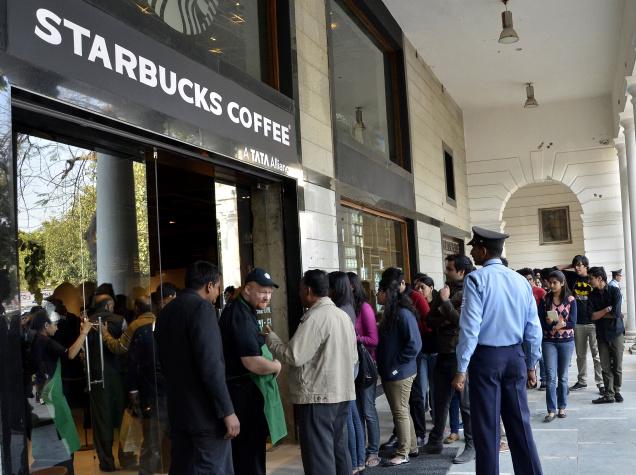
India is the only major market in the world where Starbucks has been able to source and roast coffee beans locally. New York :
Starbucks CEO Howard Schultz has voiced his admiration for industrialist Ratan Tata’s “grace” and wisdom, saying he was moved by the business icon’s words during the launch of the coffee chain’s flagship store in Mumbai last year.
“At the celebratory dinner the night of the Mumbai (store’s) opening, Ratan Tata offered a toast that really moved me,” Schultz writes in an essay in the book ‘Reimagining India: Unlocking The Potential of Asia’s Next Superpower’, edited by global consulting firm McKinsey.
Schultz recalls that while describing Starbucks’ India launch and Tata’s remarks at the celebrations later to a gathering of his company officials in the US, he even began to cry and was overpowered by emotion.
“A few weeks after returning from the opening of our Mumbai store, we held one of our big open forum meetings where we get the entire company together. And as I tried to describe that moment for everyone, something came over me. I started to cry. It just hit me emotionally.
“In India, we’d had a chance to do something extraordinary, something truly world class. And I am excited that we have a chance to grow and give back in a land where so much opportunity lies ahead and to contribute to making it a little better place than the one we found,” Schultz said.
Tata’s remarks on the night of the Mumbai opening were “perfect and so heartfelt,” Schultz said in the essay, adding that he considers Tata to be a “man with so much grace.
“I could sit and listen to Ratan Tata for days on end. He has so much wisdom and insight not only about India but about the world,” he said.
The book is a compilation of over 60 essays on India’s challenges and opportunities written by CEOs, academicians, economists and historians, including Wipro chief Azim Premji, Microsoft founder Bill Gates and India’s chess legend Viswanathan Anand.
In his toast, Tata had said in his “dry, understated way” that the Tata group has had a bit of success in the various endeavours it has undertaken over the years.
“We have partnered with some good global companies. But I have never had the kind of recognition I have received from this relationship with Starbucks. People I have never met stop me on the street just to congratulate me.
“And what I have learnt from this relationship is that Starbucks is far more than just a company that sells coffee,” Tata had said.
Schultz said his company has developed an “incredible relationship” with the Tata organisation and he cannot imagine bringing Starbucks to India without the assistance it has received from Tata.
Schultz also said India is the only major market in the world where Starbucks has been able to source and roast coffee beans locally.
The company worked with Tata officials on an India-only espresso roast designed specifically for the Indian market.
Schultz said people in Starbucks’ coffee department were not “exactly thrilled” when he told them he was looking at a different approach to sourcing coffee and roasting process under the partnership with Tata for India.
“They were more sceptical when I said we want to create a different blend of coffee for India,” he said, adding that his team was incredulous when he said the India blend was not going to be roasted by the Starbucks team, a first in Starbucks’ 42-year history.
Schultz said to get the blend he wanted for India, “we’d have to share with Tata some of the family jewels — roasting secrets we’ve perfected over four decades and guarded very closely.
“It was a real test of our trust in our new partner,” he said, adding that teaming with Tata to come up with an Indian roast was a huge step for Starbucks.
source: http://www.thehindubusinessline.com / Business Line / Home> Companies / by PTI / New York – November 19th, 2013
Govindappa Jayaram from Kodagu district has been elected as Chairman and K Kurian from Chikmagalur district as Vice Chairman of Karnataka Planters’ Association.
Jayaram and Kurian got elected at the 55th Annual General Meeting of the Karnataka Planters’ Association.
The following have been elected to executive committee of KPA: Chikmagalur District – H.T. Pramod, Shirish Vijayendra, Mahesh Shashidhar.
Kodagu District – A.A. Ponappa, N. Bose Mandanna, M.A. Sampath (Corporate Seat).
Hassan District – V. Murali (Corporate Seat) and Baba P.S. Bedi.
Small Growers seat – Kodagu District – Dr M.M.Chengappa.
source: http://www.thehindubusinessline.com / Business Line / Home> Industry> Agri-Biz / by Anil Urs anil.u@thehindu.co.in / Bangalore – November 17th, 2013
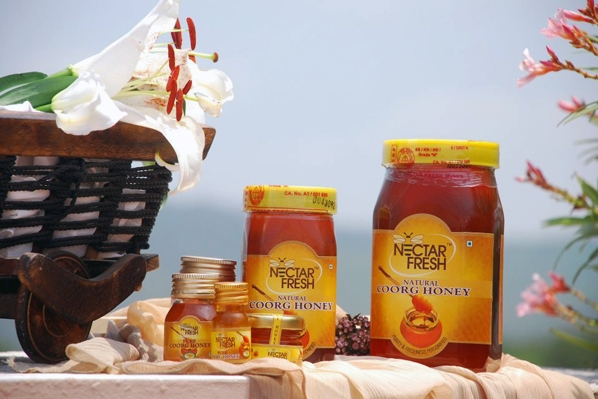
Nectar Fresh honey. Credit: Chayaa Nanjappa
Coorg (Kodagu) is a picturesque hill district along the verdant western Ghats Mountains in the state of Karnataka, South India, which is well known for its aromatic coffee, luscious oranges and fragrant spices. This landscape with steep hills, valleys and ravines with countless streams is home to forests of rosewood, teakwood, sandalwood and silver oak. In this setting, one entrepreneur is turning the region’s traditions of beekeeping and honey collecting into a global operation called Nectar Fresh honey.
Honey is an important part of the culture in Coorg, where bees are kept and honey is cultivated throughout the dense forests and on the many coffee plantations. At “A Cookery Year in Coorg,” Shalini Nanda Nagappa writes “at a Coorg child’s naming ceremony, a gold coin is dipped in honey, and touched to the infant’s lips, a symbolic wish and blessing for the child to live a life of sweetness and prosperity.”
Humble beginnings with a dream
In 2007, Chayaa Nanjappa, a young woman from Coorg, decided to leave her job in the hospitality industry to follow her dream of starting her own honey business. Her initial plan was to supply the purest quality honey from her hometown to the local markets in Bangalore.
To learn the ropes of the new business, she trained at the central Bee Research and Training Institute in Pune, Maharashtra. With a small loan from her mother and with the support of Khadi and Village Industries. she started her business Nectar Fresh honey in Bangalore.
Honey is collected directly from the source and filtered. It later undergoes moisture reduction and then again more filtration. It is then cooled and sent to settling tanks. Processed honey is meticulously tested for quality at the in-house laboratory. Initially the honey was processed and packaged for the pharmaceutical, ayurveda, and hospitality sectors. After serving solely as a supplier to other brands, Nectar Fresh began marketing honey and related products under its own label across India in 2007.
Three years later, Nanjappa relocated the flourishing business to Mysore. Kuppanda Rajappa, a well-known businessman of Coorg origin, with considerable experience in management of plantations and retail sector joined the company as partner. Nectar Fresh was initially sourcing honey only from Coorg. Today the company selectively sources raw honey from various honey-rich regions of India. The honey is collected from forests, certified apiaries, tribal societies and small farmers.
Growing Nectar Fresh honey’s export operation
Pure unadulterated Coorg honey is unique in flavor, aroma and color. These qualities vary depending on the nectar source, age and storage conditions of the honey. Honey extracted during different seasons and from various parts of Coorg carries the flavor of seasonal and regional flowers. Color ranges from dark to light amber: Pale honeys have a mild flavor, while the darker ones have more robust flavor.
Honey made primarily from the nectar of one type of flower is called mono-floral. They have high value in the market due to distinctive flavor. Darker honeys are used for large-scale commercial purposes while lighter honeys are marketed for direct consumption and demand a premium price over the darker counterparts. Most of Nectar Fresh honey is organic and the company also specializes in mono-floral honeys, including Coorg honey, eucalyptus honey, acacia honey, clover honey, mustard honey, sunflower honey, jamun honey, lychee honey and forest honey, which is sourced from dense forests where herbal plants known for their medicinal properties grow.
From the new processing plants in Mysore the company started marketing single-portion packs and 30-gram bottles under Nectar Fresh brand for sale in the hospitality industry. Soon Nectar fresh launched retail-portion package of jams and sauces. Nectar Fresh is one of the largest suppliers of bulk honey from south India, and today its products are exported through middlemen to United Arab Emirates, Malaysia and European Union markets. Recently Nectar Fresh met the stringent standards necessary for approval to export honey to Germany.
The company is awaiting the completion of a new processing plant with a much larger capacity, which would enable Nectar Fresh to produce even more honey. Another plant for processing fruit jams and tomato sauces and purées is expected to be operational by June. The company is in the process of introducing Nectar Fresh Coorg coffee. Plans are also in the works for marketing Coorg-grown pepper, cardamom and kokum.
Nanjappa is a member of the National Bee Board of India. From humble beginning of supplying quality honey to the local market, the company has evolved into one of the top five suppliers and exporter of bulk, raw honey as well as processed honey and the only one manufacturing different varieties of mono-floral honey.
source: http://www.zesterdaily.com / Zester Daily / Home> World / contributor Ammini Ramachandran, Texas based contributor / June 06th, 2013
Interview with Chairman, Coffee Board Jawaid Akhtar
After coffee producers in Brazil and Vietnam used mechanisation and genetically improved plants to increase crop yields, Indian coffee growers are trying to replicate their success. However, many allege the Indian government has not provided adequate incentives to increase crop yields or protect these from diseases such as the white stem borer. On the sidelines of the UPASI-KPA Coffee conference in Bangalore, Jawaid Akhtar, chairman of the Coffee Board, spoke to Antonita Madonna on these allegations and on the focus of the commerce ministry. Edited excerpts:
Growers allege, unlike their counterparts in Brazil, they have not been provided adequate incentives. How would the Coffee Board address that?
Brazil and India cannot be compared so easily. The methods used by them cannot be correlated with India’s, as the plantations in the two are very different. In Brazil, the higher crop yield is not as much the result of incentivisation as of the use of new varieties, new agronomical practices, etc. Production in India is increasing, but at a very slow pace due to several constraints. The drastic difference between the progress in India and in Vietnam and Brazil is because the soil is less conducive here. Vietnam and Brazil have volcanic soil. In India, coffee is not grown under direct sun, but under the cover of trees. So, productivity suffers, but quality increases.
Second, coffee growers have to show more dynamism. They have to put in more effort and use better inputs. What it requires is more water, more use of agrochemicals, etc. The Board is regularly working on research. We also disseminate the findings of these studies among growers. It is an ongoing programme.
What research and development is the Board doing?
We are working on finding new varieties that are high-yielding, pest- and drought-resistant.
Some three-four varieties are in the pipeline on the arabica side, as problems, including the white stem borer, are more prevalent in arabica. We had also introduced a variety of arabica coffee four years before. Robusta, on the other hand, is yielding in some places even after 80 years.
To replicate the success in Brazil here, growers have been seeking the Board’s help in research and tools. Is the Board working on that, too?
The mechanisation in Brazil cannot be correlated with that in India because in Brazil, there is no shade. Also, unlike the undulating terrain of the Western Ghats in India, the land in Brazil is plain.
The 20-ft high harvester they use in Brazil cannot be used in India, as coffee does not grow in the open here. Our plantations are different.
How is the Coffee Board encouraging more acreage for coffee?
We have seen production rising in non-traditional areas, but in traditional areas (Kerala, Karnataka and Tamil Nadu), it is not. Now, we have identified more areas where coffee production can be increased and are trying to include that in the 12th Plan.
With a depreciating rupee, is the board planning to increase exports?
There are schemes for exports already. But you can export more only if there is more production. We export 70 per cent of whatever is produced. But we offer incentives for areas to which much coffee doesn’t find its way, despite these being good markets for coffee. For instance, in the 11th Plan, we had five countries—the US, Canada, Australia, New Zealand and Japan. Now, in the next Plan, we will include other markets such as South Korea and two other countries. We are in discussions with other countries as well.
We are also trying to promote brand-building. So, we’ll give incentives to export value-added coffee in retail packs. The value-add maybe anything from roasting green beans or making instant coffee. Our instant coffee market is very robust. Almost all the value-added coffee that goes from India is instant coffee. Now, we’re the second-largest producer of instant coffee, after Brazil.
Any plan to introduce the Coffee Board’s own brands?
No, there is no such plan. All these plans were shelved 20 years ago and there are no plans to revive those. Now, it is a free market and we encourage private businesses. That is why we have introduced so many programmes to train manpower and tasters so that private people can run businesses.
Is the Coffee Board working on increasing awareness or building brand equity for Indian coffee?
We are, of course, working on positioning Indian coffee better in the international market. We participate in international trade fairs, advertise, get media coverage, arrange Indian coffee tasting sessions in international locations, invite roasters, make them taste Indian coffee, etc. All these efforts are already reaping rewards. Our average price of robusta is about 40 per cent higher than the international average. There is a very large international market for this premium Indian coffee.
source: http://www.business-standard.com / Business Standard / Home> Companies> Q & A> by Antonita Madonna / Bangalore – November 14th, 2013
When many people wake up in the morning, They head to the coffee pot.
But have you ever thought about where your coffee comes from?
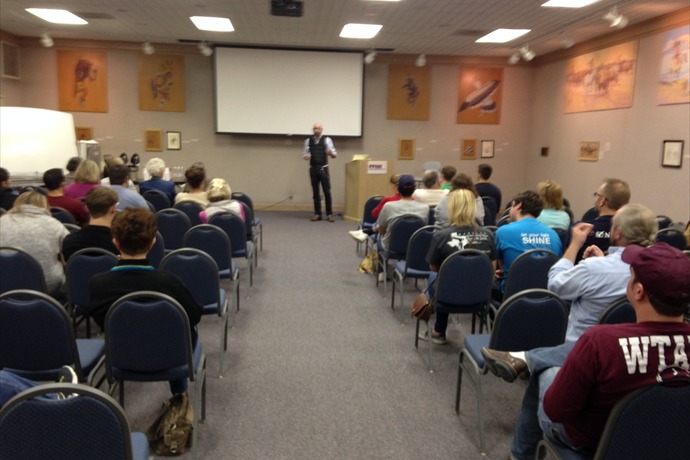
Stephanie Price from Panhandle-Plains Historical Museum says, “coffee talk is about the history of coffee from the first cup that started in Ethiopia, to how it made it’s way to America and how it’s brewed today.”
Panhandle Plains Historical Museum, Palace Coffee, and Evocation Coffee teamed up to make coffee talk.
The owner of Palace Coffee tells us what the event means to him.
Patrick Burns says, “it’s not just how to make a cup of coffee, but really the whole story of coffee. The history of it from conception all the way to the farmers that we use and why we choose to use the coffee that we do.”
Stepanie Price says, “I can’t start my day some dayswithout a cup of coffee. So it’s a very important part of the economy of the world, but also the local economy here. Coffee is a big deal.”
From the very first cup of coffee, to cowboy coffee, no coffee been was left behind in this chat.
Patrick says cowboy coffee won the heart of the west, because to be able to caffeinate like a cowboy, you’ve got to love a cup of Joe.
He tells us, “cowboys would make their coffee strong so they could travel long distances and keep an eye on their herd.”
Around 50 people showed up sharing their love for lattes.
“How long coffee has been around. I think he said 800 AD.”
Burns tells us he doesn’t think the drink that thousands of folks in our area call necessary to start their day, will be going anyhwere anytime soon.
“500 billion cups of coffee are drank evey year here in the world and 25 millions people are tied directly to the coffee industry,” he says.
Coffee may have originated in Ethiopia, but Burns says about 50% of all coffee comes from Brazil.
We have one more fun fact for you.
Coffee beans are actually the pit of a berry, which makes them a fruit.
A cherry to be exact.
It is called a bean because of the resemblance to true beans.
source: http://www.myhighplains.com / MyHighPlains.com / Home / by Veronica Dietrich / November 09th, 2013
WELCOME. If you like what you see "SUBSCRIBE via EMAIL" to receive FREE regular UPDATES.
Read More »