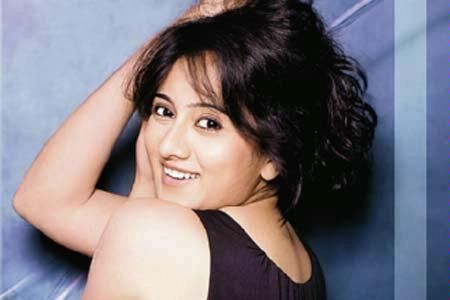
Gulshan Devaiah, Radhika Apte in Vasu

Mumbai :

Gulshan Devaiah, who is known for his grey roles in Shaitan, That Girl In Yellow Boots and Hate Story will now be seen in a comic avatar.

The actor has just wrapped shooting for debutant director Harshvardhan Kulkarni’s Vasu where he plays a Konkani character. Devaiah informs, “I play Mandar Ponkshe, who is a very ordinary man but who has special ways with women. It is a full-blown commercial comedy where I am paired opposite Radhika Apte.”

Interestingly, his character ages from 19 years to 36 years through the course of the film. “It was difficult to pull off the parts where I had to play a 19- year-old teenager because that is much younger than my age. I have played older characters before, so playing someone in his 30s was not very difficult,” he says. Shot entirely in Pune, the film will release sometime this year.

Meanwhile, Devaiah is currently shooting for Sanjay Leela Bhansali’s magnum opus Ram Leela where he plays a character with grey shades, and is also awaiting the release of Vasan Bala’s Peddlers.

source: http://www.expressindia.indianexpress.com / ExpressIndia.com / Home> Story / by Krutika Behrawala / April 18th, 2013

Adventure camp at Kodagu

The National Adventure Foundation (NAF) Karnataka 2 chapter will conduct a three-day adventure camp at Kodagu from April 28 to 30 for children aged 8 to 17.

They will experience parasailing, trekking, and rappelling as well as team-building games. For registration, call 9448354648 or email almanacadventure@yahoo.co.in.

The last date for registration is April 26.

source: http://www.thehindu.com / The Hindu / Home> National> Karnataka / by Special Correspondent / Mysore, April 18th, 2013

In Coorg, ‘jumping japak’ when there’s a goooal!

Photo Caption
E.R. RAMACHANDRAN writes: At a time when Hockey India (HI) and the Indian Hockey Federation (IHF) are at each other’s throats and dragging Indian hockey down the drain by filing cases against each other, in an idyllic part of the world 225 hockey-mad families are participating in the biggest tournament of its kind.

The idyll is Coorg.

In the cradle of Karnataka hockey nay Indian hockey, the 17th edition of the inter-family hockey tournament, which has entered the record book, quietly got underway near Virajpet on Sunday. And, despite IPL being on everybody’s lips, the passion for hockey remains high.

Some of the most popular names of Indian hockey, M.P. Ganesh, B.P. Govinda, M.M. Somaiya, Poonacha and Arjun Halappa have come from the hilly, coffee-country. If hockey has to have resurgence, is it time hockey is moved to Kodagu than be a part of Delhi where they play hooky with hockey and are mostly busy with court cases?

Photograph:
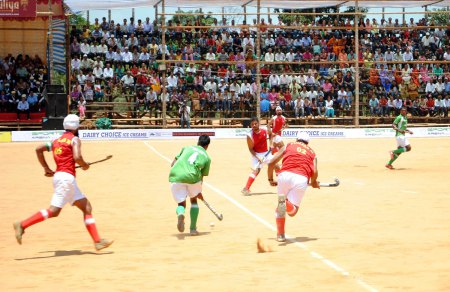
Members of a visiting Punjab team in a duel with a local Kodava team at the inter-family hockey tournament at Balugodu Kodava cultural centre, near Virajpet in Kodagu district on Sunday (Karnataka Photo News)

source: http://www.churmuri.wordpress.com

Coffee and the selfish gene

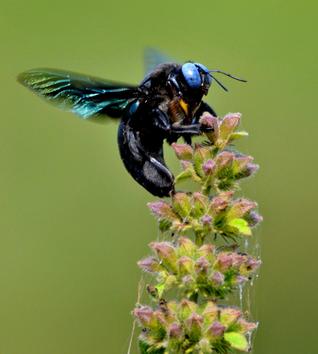
Caffeine in nectar hooks bees. / The Hindu

How did coffee become more popular in south India and tea in the north? History appears to give the reason. Legend has it that in the late 16th century while Haji Baba Budan was returning from Haj through Yemen, he found people boiling coffee beans in water and enjoying the “decoction”. He then smuggled a handful of the (forbidden to export) beans with him and planted them on the Chikamagalur hills in Karnataka and the locals took to it with elan. Soon, coffee plantations appeared in Kodagu and the Nilgiris, and we all were hooked on to the morning coffee. Tea, on the other hand, was introduced later (early 19 century) by the colonial British who copied it from the Chinese and planted it in Assam and Darjeeling. This colonial drink soon became popular among the subjects in the plains as well. Coffee and tea are thus external entrants into the Indian taste buds.

But why are we hooked on to coffee and tea? The answer comes from science, which tells us that they both contain the mood- altering and addictive drug caffeine. While this is a proximal answer, the ultimate question is why at all do these plants go to the trouble of making the molecule in the first place. After all, it takes metabolic energy to do so. The answer appears to be “to deter herbivores”, or as a defence chemical. Note that the raw bean or leaf is bitter to taste, and the animal would shy away, leaving the plant alone to grow and flourish.

Recent findings add another dimension to the tale. It has been found the caffeine is found not only in the bean or the leaves but also in the nectar that the plant produces and packs a drop or two in its flowers. And why it would do so and what this stored caffeine does in the flower nectar has been investigated by a group of researchers from U.K. and published in the March 8, 2013 issue of Science.

They note that while plant-derived drugs like caffeine and nicotine (the drug in the tobacco plant) are lethal in high doses, they do generate pleasant effects when taken in very low doses. But then why in the floral nectar? Is it in order to “hook on” bees and other pollinating insects? To understand this, the researchers first measured the levels of caffeine in the nectar of three plants, Coffee arabica, C. liberica and C. canephora, to which bees make a bee-line for (pardon the pun), and found the amounts to be less than a thousand-fold that of the sugar present in the bean — just a teasing touch.

They hypothesised that the caffeine in the nectar could affect the learning and memory of the foraging pollinators. Could it be that they would come to these flowers, enjoy the nectar and in the process take away and dispense the pollen, thus breeding these plants in preference to those that do not store caffeine in their nectar? In order to test this, the researchers took the trouble of training individual bees to associate a floral scent with sugar reward. In one set the bees would go to the containers with sugar solution, and in another set the sugar solution spiked with a bit of caffeine. And they found that the bees would consistently return to the caffeine sugar scent even three days later. In other words, caffeine acted as a memory enhancer. The bees were hooked onto caffeine.

The researchers went further ahead and investigated the biological mechanisms behind the mode of action of the caffeine. The bee brain contains what are called projection neurons or nerve cells that have a protein surface (a receptor) that normally binds to the molecule adenosine. When these nerve cells are adenosine-bound, the behaviour of the bee is one of quiet and calm. However when caffeine is brought in, it kicks out the adenosine and attaches itself to the receptors at the end of the sensory neurons. The effect is to stimulate the neurons, increase memory, and wake up and excite the insect.

In effect then, caffeine has two roles in the plant. One is defence against the predator goats and cows, while the other is to entice the pollinating insect by drugging it and tweaking its memory so that it pollinates this plant in preference to other pants that do not pack the drug in their nectar. The researchers conclude by stating that “our experiments suggest that by affecting a pollinator’s memory, plants reap the reproductive benefits arising from enhanced pollinator fidelity”.

In plainer English, one can say that the trick the coffee plants play is another example of the ‘selfish gene’ idea, namely, use any ruse to help propagate my genes over other competitors, and do so for generations; and if it takes caffeine to entice and tweak the memory of the pollinator, so be it.

source: http://www.thehindu.com / The Hindu / Home> S&T> Science / by D. Balasubramanian / April 17th, 2013

Karnataka coffee belt gets good blossom showers

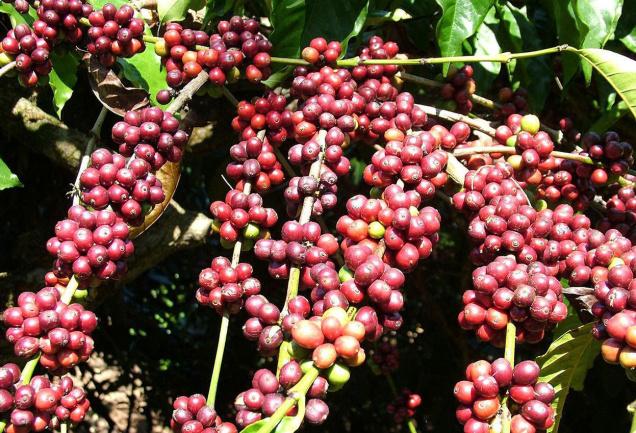
Bright outlook: Ripened coffee berries at a plantation in Karnataka. /.  (a file picture.) / The Hindu
Bright outlook: Ripened coffee berries at a plantation in Karnataka. /. (a file picture.) / The Hindu


Bangalore :

Coffee-growing regions of Kodagu, Chikmagalur and Hassan in Karnataka have received good blossom showers.

“Blossom shower in the coffee belt in Karnataka is very good this year. Very good for Arabica as compared to poor to patchy rains last year,” Bose Mandana, a senior coffee planter from Suntikoppa in Kodagu told Business Line.

MARCH SHOWERS

“Rain in February, especially during mid-harvest, was worrisome, but March shower has been heavy and this has made us comfortable for the next three to four weeks,” he added.

In Kodagu rains have been good in Napoklu zone comprising Murnad, Madikeri and Napoklu whereas Gonikoppal zone, which comprises Virajpet, Gonikoppal, Kutta and Balale, needs additional showers.

For robusta, south Kodagu got early showers in February and now has received moderate March showers.

In Chikmagalur and Hassan districts, March rains have been well distributed. “Due to timely showers and moisture status being good, many planters have begun applying manure in their estates. This year, they have been able to save on irrigation,” said Mandana.

According to Nishant Gurjer, Chairman, Karnataka Planters’ Association and a grower from Chikmagalur said “Early rains in February and subsequent rains in March have been good for overall crop production.”

“Rains in the last two months have been good for robusta. Stressed period for Arabica was cut short and there was initial apprehension among the growers over early rains. But March rains, however, have been beneficial,” he added.

Last crop year (2012-13), the Coffee Board had estimated the post-blossom estimate at 3,25,300 tonnes (arabica 1.04 tonnes and robusta at 2.21 tonnes).

As for the final crop forecast, the Board has estimated 3,15,500 tonnes, of which Arabica is 1,00,225 tonnes and robusta at 2,15,275 tonnes.

source: http://www.thehindu.com / The Hindu / Home> Industry> Agri-Biz / by Anil Urs anil.u@thehindu.co.in / Bangalore, March 15th, 2013

A fine performance by Pooavamma

The qualification marks for the World Athletics Championships continued to be elusive, but M.R. Poovamma lit up the evening with a fine performance in the women’s 400 metres in the second Asian Grand Prix at the NIS Complex in Patiala on Saturday.

With a battery of technical officials in operation, and manual timings as a back-up, the meet was a smooth affair, even as triple jumper Renjith Maheswary and Om Prakash in shot put improved their performances, in promising a better fare in the Federation Cup to be staged at the same venue after a fortnight.

Returning to competition after a bout of typhoid, the 22-year-old Poovamma clocked 53.59 seconds in outclassing a weak field. Pleased with her strong start for the season despite having trained for a few days only, she expressed confidence about improving her time in the meets ahead.

Having won two titles in the Asian Grand Prix last year, Poovamma felt that better competition would help her improve on her best time of 52.94.

Coach N. Ramesh was also confident that Poovamma would improve quickly and go under the qualification mark of 52.35. Of course, the athletes have the chance to win the Asian championship and become automatic ‘A’ standard qualifiers for the World Championship, but the question mark about the event coming off continued to dangle despite attempts to host it in Jharkhand.

Renjith had only two good jumps but managed to reach 16.78 metres, better than his mark of 16.67 last week. He said that the delayed start, by about an hour on the jumping pit, had spoilt his preparation, and he could not strike any rhythm.

However, that did not stop him from competing in long jump as well, and bagging a bonus bronze.

In shot put, the other Olympian in the fray, Om Prakash won with a throw of 18.65 metres. He had two other throws of 18.19, and 18.54 — better than his last week’s effort of 18.12. However, the qualification mark was a bit away at 20.10.

Arokia Rajiv continued to shine as he won the 400 metres ahead of Kunhu Mohammed and S.K. Mortaja, with an improved time of 47.22 seconds. He also won the silver in the 200 metres, and felt that it had taken a bit of sting away from him for the 400 metres.

Coach Mohd. Kunhu who trains all the three at the Army base in Pune assured that Rajiv would go under 46.5 soon.

With the third Grand Prix having been postponed owing to the Annual General Meeting of the Athletics Federation of India (AFI), the athletes will next assemble at the same venue on April 23 for the Federation Cup.

The results: Men: 200m: 1. Bhartinder Singh 21.66; 2. Arokia Rajiv 21.72; 3. Bala Murugan 22.19.

400m: 1. Arokia Rajiv 47.22; 2. Kunhi Mohammed 47.44; 3. S.K. Mortaja 47.69.

800m: 1. Manjit Singh 1:52.55; 2. Pranjal Gogol 1:52.97; 3. Vikash Latyeya 1:53.59.

3000m: 1. Kheta Ram 8:06.33; 2. P. Suresh Kumar 8:06.43; 3. V. L. Dangi 8:18.27.

400m hurdles: 1. Jithin Paul 51.72; 2. Binu Aquito 53.14; 3. Gurinder Singh 59.21.

Long jump: 1. Arshad 7.56; 2. Bhartinder Singh 7.54; 3. Renjith Maheswary 7.27.

Triple jump: 1. Renjith Maheswary 16.78; 2. Arpinder Singh 16.46; 3. Rakesh Babu 15.89.

Shot put: 1. Om Prakash 18.65; 2. Jasdeep Singh 17.95; 3. Satyender Singh 17.50.

Javelin throw: 1. Devender Singh 76.77; 2. Dinesh Kumar 73.44; 3. Samarjit Singh 72.71.

Women: 200m: 1. Asha Roy 24.23; 2. Merlin K. Joseph 24.83; 3. Sini S. 25.13.

400m: 1. M.R. Poovamma 53.59; 2. Anju Thomas 55.27; 3. Saraswati Chan 55.70.

800m: 1. M. Gomathi 2:11.99; 2. Jhuma Khatun 2:12.66; 3. Fulan Khatun 2:16.62.

3000m: 1. O.P. Jaisha 9:37.49; 2. Swati Gadke 10:13.87; 3. Kiran Rani 10:23.36.

Long jump: 1. V. Neena 5.95; 2. Amitha Baby 5.57; 3. Niksy Joseph 5.50.

source: http://www.thehindu.com / The Hindu / Home> Sports> Athletics / by Kamesh Srinivasan / Patiala, April 07th, 2013
Ale team apologizes to Harshika Poonacha

(Harshika )
(Harshika )

The female cast of the upcoming Kannada film found themselves in the midst of a controversy recently, when lead actress Harshika Poonacha took offence to promotional material that prominently featured Aviva Bidapa, who is only doing a cameo in the film. Harshika, in fact, voiced her disappointment when she saw Aviva’s pictures showcased in such fashion. Sources say that Harshika refused to associate herself with the film since then.

However, a clarification note recently issued by the film’s team seems to have put things in the right perspective, as far as Harshika is concerned. “Harshika Poonacha is the only female lead in our film. All the other characters appear either in guest or supporting roles,” states the notice issued by the production house. “Some of the initial posters did feature Aviva, but that led to unnecessary misunderstandings which we have rectified now,” confirms filmmaker Kiran Kumar Reddy.

The actress herself, seems a lot more relaxed after the team issued a public clarification. “A film’s poster should have the heroine, not someone who appears in a cameo. I don’t think it is fair if a film unit does otherwise. I just insisted they do the right thing. The team has apologized and we have now put behind all our differences,” says Harshika. Kiran also tells us, “We will not be using any of Aviva’s photographs or stills from the film anymore. She will only be seen as part of the movie, playing her cameo.”

source: http://www.articles.timesofindia.indiatimes.com / The Times of India / Home> Entertainment> Regional / by Kavya Christopher, TNN / April 14th, 2013

Kodava Hockey Festival begins

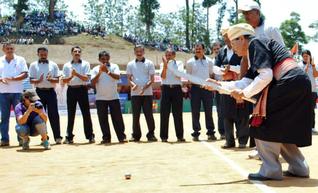
Founder of the festival Pandanda Kuttappa formally inaugurating the Kodava Hockey Festival in Mysore on Sunday./ The Hindu

Madanda Cup-2013’, the 17th edition of the annual Kodava Hockey Festival, being organised by the Madanda family, got off to a colourful start at Balugodu near Virajpet in Kodagu on Sunday. The festival is meant exclusively for Kodava families.

The founder of the festival, Pandanda Kuttappa (Kuttani) hit a silver hockey ball with a silver hockey stick on the field to formally inaugurate the fest on the Kodava Sports and Cultural Centre grounds, amidst applause by a large crowd. As many as 225 Kodava family teams are participating in the 24-day hockey festival.

Earlier, guests and senior members of the Madanda family were brought in a procession from the main entrance of the centre to the grounds. Madanda family members unfurled the family flag while Mr. Kuttappa unfurled the flag of the Kodava Hockey Academy, under whose aegis the festival is being held. Olympian Anjaparavanda B. Subbaiah, who was conferred doctorate by the Mangalore University recently, was felicitated.

President of the Federation of Kodava Samaja, Mallengada N. Belliappa, the chief guest, and appealed to the members of the Kodava community to come up with contributions to help complete the Kodava Sports and Cultural Centre and make it a model for the entire State.

It was estimated to cost Rs. 12 crore. Works to the tune of Rs. 3.5 crore have already been taken up at the centre, which includes contributions from the State government, he said. Donors had contributed Rs. 1.2 crore, Mr. Belliappa said, recalling the help from political leaders in Kodagu for the purpose.

Mr. Kuttappa said the Kodava Hockey Festival was conceived by him and his brother 16 years ago to foster friendship and camaraderie among Kodava families. Besides, cementing relationships among families, the festivals had helped identify hockey talent at the State and the national level, Mr. Kuttappa said.

Jaggaranda M. Appachu, Joint Director, the Department of Youth Services and Sports, spoke. Madanda S. Poovaiah, welcomed.

Students of the Ninada School, artistes from the Cauvery Kodava Koota and Cauvery College, Virajpet, presented cultural shows. An exhibition match held between Punjab XI and Coorg XI ended in a 1-1 draw later.

source: http://www.thehindu.com / The Hindu / Home> National> Karnataka / by Special Correspondent / Mysore, April 15th, 2013

Coorg by birth, Chennaiite at heart

There are only a handful of Kodava families in Chennai; at any point in time, their numbers were between 150 and 200 families. With a diverse culture and beliefs that bear little resemblance to any other community in India, the Kodavas of Chennai have made their mark in every possible field right from government services to sports.

P M Belliappa IAS (Retd), MBE says, “You could trace the beginning of the shift from Coorg to Madras in the 1930s. Many came here to study at Madras Christian College and since the city was also a centre for administration, they eventually got jobs here and settled down,” he says.

Belliappa, who has lived in many cities across India during his service in the Indian Administration Service, zeroed in on Chennai to settle down post-retirement. “The city has always been hospitable to everyone,” he adds.

Kodavas or Coorgs as they are referred to are Hindu-Kshatriyas (the warrior clan). However, they are known for being non-ritualistic and believe in ancestor worship.

Pravin Aiana, the president of Coorg Association of Madras and an architect by profession, explains, “Every Coorg name consists of a family name followed by the father’s name and the person’s name. The language we speak (Coorgi) is a mix of South Indian languages including Kannada, Malayalam and a little bit of Tamil. Coorgi is a dialect and we use the Kannada script for writing.”

With a dominant presence in government services, armed forces and sports, especially hockey among others, there has been a significant art connect as well. Rani Pooviah, one of the prominent names in the world of art, taught at the Government College of Fine Arts in the 50s.

Pooviah made a huge contribution to the Madras Movement spearheaded by KCS Panicker, who founded the Cholamandal Artists’ Village in the 60s. Noticing the absence of any of her works in Panicker museum, Belliappa and the Coorg Association of Madras donated one of her works to the museum last month.

It is a fact that Coorgs and hockey are inseparable. Aiana says, “Yes, of course. We are in the book of records for producing the largest number of hockey teams. Back in Coorg, every year there is a tournament between families who compete against each other in hockey matches. The winner gets to host the next year’s event.” There has been a Coorg and cricket connect in Chennai, much before Robin Uthappa wrote history in the annals of Coorg, after being selected for the Indian cricket team in 2006. P K Belliappa led the Tamil Nadu cricket team in the 60s.

In the recent times, another name that has made a mark in sports (squash) is city-based Joshna Chinappa. She says that she owes her sport achievements to her family. “I guess it runs in my family and I cannot imagine being anything else but a sports person,” she adds. Ask her if she has had a stint with hockey too, she laughs, “Yes, I have held the hockey stick and tried playing, but it is way too intense a game.”

People like Pratika Appaiah have had the best of the both worlds, as they put it. “I have lived in Chennai all my life and it is very dear to me, but I will always be a Coorg at heart! If it wasn’t for studying in Chennai, I wouldn’t have had the drive to pursue my studies,” she says.

Another highlight of the Coorg culture is their cuisine that is replete with dishes made of pork, bamboo shoots and rice. “The variety in Coorg food even for vegetarians is amazing. There are so many dishes with rice as base and probably this is one of the few Indian cuisines that uses bamboo shoots. Our love for pork is a known fact. But, personally, we here in Chennai love the dosas and idlis so much that we can even have them for lunch,” says Priya Aiana, an architect.

Vilma Appaiah, who has been in the city for the last 30 years, sums up, “When in Rome be a Roman is the belief we follow. Through the association we meet quite often and connect with things related to our culture,” she says. Vilma is all set to attend the Hockey tournament in Coorg this month.

source: http://www.newindianexpress.com / The New Indian Express / Home> Cities> Chennai / by Janani Sampath / ENS – Chennai / April 15th, 2013

Gunning for their birthright

Joshna Chinappa | EPS

When you hear that possessing arms is a privilege that a person in the Kodava community is born with, you cannot help but look at them in wonder. However, for them it is a way of life, something that is a part and parcel of their existence and culture.

It is a special license that was bestowed upon them by the British, who exempted the community from the Arms Act. Today, the Kodavas or the Coorgs are among the few communities in India who can possess weapons without having to go through the formal procedure of obtaining a license. Under Section 3 and Section 4 of the Indian Arms Act, 1959, Kodava people who come under the categories ‘Coorg by race’ enjoy the privilege.

Squash champion Joshna Chinappa explains, “I have held the weapon, but never fired it. Having been raised in a family of army people, I have been aware of the privilege that Kodavas are entitled to. But we also know that the privilege comes with a lot of responsibility.”

Interestingly, the community also has a festival to celebrate the significance of weapons in their life. Kailpold, which is similar to Ayudha puja, involves festivities including shooting competitions.

Chennai-based Vilma Appaiah explains the ubiquitous role of arms in the life of a Kodava. “When a male child is born, the family fires in the air to announce the news. Arms are like heirlooms; every family displays the weapons they own in the hall.”

Zarina Uthappa, who originally hails from Ooty and has settled in Chennai for the last 12 years, acknowledges that she has never fancied firing, adding, “Everybody who comes home wants to know the make and the features of the arms that we have at our place. Invariably, the conversation is about single-barrel, double-barrel, pistol and revolver. However, for any Coorg household it is a legacy that we pass on to the next generation.”

source: http://www.newindianexpress.com / The New Indian Express / Home> Cities> Chennai / by Janani Sampath / ENS – Chennai / April 15th, 2013