‘Cindrella of Anthuriums’ steals the show

Madikeri :

AnthuriumsKF14apr2013The three-day flower show, organised annually by the Horticulture Department of Kodagu district, began at the Raja Seat here yesterday. The show has on display fruits and vegetables, carvings on fruits and vegetables, along with flower arrangements.

In view of the model code of conduct in force, the annual show is conducted without much fanfare. Around 4000 varieties of flowers in pots and another 10,000 plants of different kinds of flowers too have been displayed.

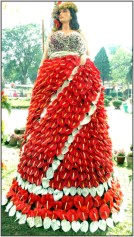
A Barbie doll of anthurium flowers named Cinderella, a canopy (mantap) of banana stems and leaves, bonsai plants and sand sculptures are other attractions at the show. The Raja Seat mantap, located on a hillock, from where a picturesque scenery can be seen, has been decorated with flowers. The show ends tomorrow.

Raja Seat, once, was the crematorium of the British. It is said that the coffins were later transferred to some other place and the area was developed as a beautiful garden. King Chikkaveeraraja, along with his queen, would visit the place in the evening and view the sunset. The place where Raja used to relax later was named as Raja Seat.

source: http://www.starofmysore.com / Star of Mysore / Home> General News / April 14th, 2013

17th Kodava hockey fest begins

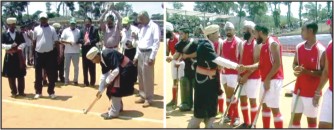
Kodava Hockey Academy President Pandanda Kuttappa is seen inaugurating the 17th Kodava Families’ Hockey Festival hosted by Madanda family by pushing the ball with a silver stick at Balugodu Kodava Cultural Centre near Virajpet town this morning. Picture right shows Kuttappa greeting the Punjab XI team members before the start of the inaugural match.

Virajpet :

The 17th edition of Kodava Families’ Hockey Namme (festival) began at the Balugodu Kodava Cultural, Heritage and Sports Centre near here today, under the aegis of Madanda family.

Kodava Hockey Academy President Pandanda Kuttappa, who founded the Kodava Families’ Hockey Tournament in 1997, inaugurated the fest by pushing the ball with a silver stick. The inaugural match was played between Kodagu XI and Punjab XI, with 1-1 goals tie when we went to Press.

The Madanda Hockey Namme has 225 Kodava family teams participating and the finals will be held on May 12.

Federation of Kodava Samajas President M.N. Belliappa, speaking as the chief guest, recalled that the Kodava Cultural Centre at Balugodu village was the result of a discussion with his friend K.B. Ganapathy, Editor-in-Chief of Star of Mysore, about 13 years ago. “I discussed with my friend Ganapathy about the need to set up a museum-like cultural centre in Kodagu and thanks to the then Chief Minister S.M. Krishna and former Minister M.C. Nanaiah, we could purchase the land in Balugodu,” said Belliappa and added that the government has granted Rs. 2 crore for the project.

Federation of Kodava Samajas Secretary C.K. Kashiyappa, sports person J. Appachu, Olympian Dr. A.B. Subbaiah, Madanda Sports Committee President M.S. Poovaiah, Akhila Kodava Samaja President Mathanda C. Monnappa and others were present.

The Kodava Cultural Centre at Balugodu is a picturesque land of 15 acres located 6 kms from Virajpet town. Various programmes showcasing Kodava culture and heritage will be held at this venue. Cost of the project is estimated at Rs. 12 crore. A huge auditoium-cum hall, with a capacity of 1500 people is under construction. It has a museum where traditional household articles and antiques are displayed.

source: http://www.starofmysore.com / Star of Mysore / Home> General News / April 14th, 2013

A 1960’s Coorg artiste works find a place in Chennai

Chennai :

It’s been years since he chatted about art and life while eating Coorg food with his friend, the late painter Rani Nanjappa, but artist S G Vasudev remembers it as clearly as if it was yesterday. “My late wife Arnawaz and I spent most of our evenings at her house. We were extraordinarily close,” he says.

On Thursday, he will be returning to those years during a function organised by the Coorg Association of Madras to remember one of the few women painters of Madras of the 1960s. Former IAS officer P M Belliappa will donate one of Nanjappa’s paintings to the museum at Cholamandal Artists’ Village.

“Coorg has few artists of repute and I felt it was a glaring omission that Rani’s work was not in the museum, which traces the Madras movement she was part of,” says Belliappa, who knew Nanjappa as a child. Belliappa bought two of her works recently and decided to donate a figurative canvas from 1962 to the museum, while retaining the abstract she did later in her life.

Born Rani Pooviah in the early 1940s, she studied art in Chennai at Stella Maris and College of Arts and Crafts. She was one of principal K C S Paniker’s favourite students and taught at the college later. “She was vivacious and well-read with a wonderful sense of humour and brilliant organisational skills,” says Vasudev.

Her student, sculptor S Nandagopal, remembers her as vivacious and striking personality who made art fun. “I was a physics student and never planned to be an artist,” he says. “But Rani was so passionate about art and could spot talent and inspire people.” Nanjappa moved to the US in the 1970s after she got married and continued to hold shows there. “She wanted to return. Looking back to India can be problematic for an artist,” says Vasudev. In March 1982, she went into a coma following a serious car accident, from which she never recovered.

Nanjappa’s work is described as being balanced and contemplative yet full of energy and colour. She drew inspiration from large kolams and colourful rangolis. Writing for Illinois Art Council in Chicago, she said, “The complex geometric patterns of kolam in white, pure and strong and the colour contrast in the rangoli helped me discover geometric forms in Indian dance and music. For example, in Bharatanatyam, besides the graceful rhythm, there are strong angular movements, giving ideas of geometrical patterns traced in the air. These are my inspiration.”

source: http://www.articles.timesofindia.indiatimes.com / Home> City> Chennai> Art and Life / by Shalini Umachandran, TNN / March 21st, 2013

Cariappa library open only three days in a week!

K M Cariappa’s ancestral house which houses a public library is not much use to the public. How many of students and general public are benefited from it is a big question. Teachers and students have expressed displeasure as the library remain open only on a few days.

cariappaLibraryKF13apr2013
It was former Chief Minister J H Patel who inaugurated the library in 1999.

Prior to the library, the building was functioning as a Nada Kacheri. It was the ancestral house of first commander in chief of Indian army Field Marshal Cariappa.
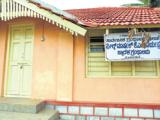
The board which is hung outside the building reads as Field Marshal K M Cariappa Memorial building.

The board reminds us that the house was the place where Cariappa was born. A few wants the building to remain as a library. However, a few wants to install a bust in front of the house.

If the library continue to function, then it will help the public, said teachers.
There are over 10,000 books in the library. The library has 281 members. The membership fee is Rs 30. There is one librarian. The library purchases newspapers.
However, it remains closed throughout the day. It will be open only on three days in a week till 12.30 pm.

The public said it would be better if the library is kept open in the evening.
Rangubai Vittalrao, member of the library said “there are good books available in the library. However, many in the town do not have habit of reading. The timings of the library is not suitable for the general public. It should remain open on all the days in a week after 2 pm.”

R K Narayana, a member of K M Cariappa memorial library for the last 15 years said “the library has not been much use to the public. Out of 281 members, only 50 visit the library regularly.”

source: http://www.deccanherald.com / Deccan Herald / Home> District / Shanivarasanthe, DHNS – March 19th, 2013

Badlapur Boys

Credits

Director: A Muthu
Cast: Nishan Nanaiah, Saranya Mohan, Annu Kapoor, Aman Verma, Kishore Sahani, Pooja Gupta, Ankit Sharma, Boloram Das Shashant Udapurkar, Sushant Khandiya ,Shashi Chaturvedi Nitin Jadhav, Mazar Khan , Preet Saluja, Varun Kashyap Banner: Karrm Entertainment Producer: A. Muthu, Salim Tanvar Story, Screenplay: Shailesh Verma Background Music: Monty Sharma Music: Sachin Gupta, Sameer Tandon, Raju Sardar Lyricist: Sameer Anjan Choreographer: Vickas Sharma Costume: Supraba Jain Editor: A Muthu Cinematographer: Sanket Shah Action: Parvez Khan Art: Nitin Wable Genre: Social, Family Drama, Sports

( Badlapur Boys )
( Badlapur Boys )

Synopsis

Film ‘Veenila Kabadi’, a Tamil super hit film which was directed by Susindran in 2009 is
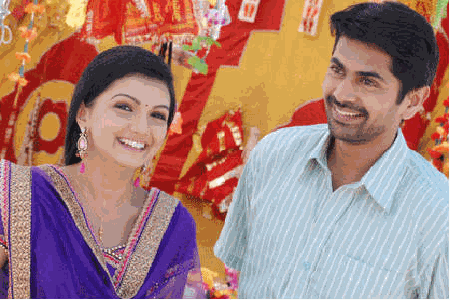
now being remade in bollywood and it will be called ‘Badlapur Boys’. Bollywood editor A Muthu who has edited more than 50 films like Sadak, Deewana, Balwan, Raja Babu, Judwa, Ziddi, Haseena Maan Jayegi has taken the remake rights of film ‘Veenila Kabadi’ and turns producer with this film.

Badlapur Boys deals with a plot of social family romantic drama with sports as a backdrop and the lead hero Nishan states it’s a very simple film and people who have dreams of being successful will surely connect with the subject.

source: http://www.articles.timesofindia.indiatimes.com / Home> Entertainment> Previews / TNN / April 01st, 2013

Eagle eye on birds of prey

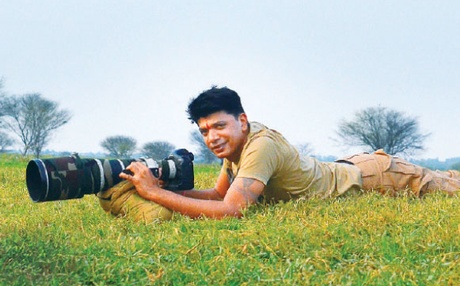
Kiran Pooncha.
Kiran Pooncha.

From sketching to photography could be considered a natural transition, but switching from land acquisition to bird photography and conservation is a paradigm shift. Kiran Poonacha from Bangalore has not only made that shift but also crowned it with international laurels and appreciation from the world’s best bird photographers.

Known as the raptor man of India, Pooncha is a born conservationist, rescuing and carrying out documentation work on raptors, especially eagles in various corners of India. It also gives him an opportunity to capture the majestic birds in action. Says Pooncha, “I love their temperament, their style, their enormous power and majesticity. I want to share my moments with these powerful yet graceful birds with everybody.”

Unlike visualisation by other photographers, his image of the winged wonders stands out because they are captured when in action and that is what gives life to the pictures. The birds taking off, flying, diving, swooping, hunting, feeding, nurturing, he has caught all these with the right background and foreground, surreal lighting, great precision and artistic imagery. “Capturing birds in flight is technically very challenging but it is such rare movements that interest people and also stays in their memory. I’m also pursuing my passion in my hometown Coorg. This is a tribute to what I have been exposed to during my early years while growing up in Madikeri. I sincerely hope my photographs will help influence people conserve birds by restoring their natural habitat,” says Pooncha with a smile.

Hailing from a family of nature lovers and born and bred in the hill district of Coorg, a place abounding with rare and beautiful species of birds, Pooncha was inspired to start birding at the tender age of seven. Chikkaballapur, where he did his schooling and a nearby place called Gudibande with rocky terrain and scrub forests that support a variety of avians, played an important role in igniting his interest. Midway for 15 years, he missed nurturing these winged wonders in their habitat as he was busy with his education and professional duties but now nothing seems to stop him in his pursuit.

“I patiently bided for the time when I could go back to the world of birds. In 2006, Neeta, my wife and birding partner, gifted me a camera and that is when my passion for capturing my love for birds began. Coinciding with this, I met a couple of people through a social networking website who shared similar interests. These incidents gave me a second chance to pursue my passion to visualise birds in a permanent frame,” says Pooncha.

Pooncha became a member of India Nature Watch that supports well-known photographers from across the country for sharing their work on their website. This exposure played an important role in helping him to improve his photographic skills. He purchased his first DSLR camera in 2007 and his dear friend and boss Kumar Babu gifted a zoom lens and that is when he started concentrating on his chosen hobby, bird photography.

“I have done extensive studies on birds since childhood. I have raised pigeons, kites, parakeets, and sparrows, looked after injured birds, tending to their broken wings and spoon-fed them. Not all survived, however, one injured black kite would not part from me even after two years,” says the raptor man. Pooncha proudly adds, “I can tell you the spots where ea gles can be found, where they hunt, breed and Bangalore is filled with raptors—tawny eagles, snake eagles, boneless eagles, Indian spotted eagles and many more species.”

Now, every holiday and weekend is taken up by trips to scrub forests and wetlands around Bangalore in search of eagles. His favourite haunts on the outskirts of the city include Hessarghatta, T G Halli, Bannerghatta forests, Gudibande and Hoskote.

Over the years, his portfolio on raptors has attracted international attention and awards as some of the images are pretty rare, hitherto never captured on camera. Dedicated to studying these birds, Pooncha says, “My social life is a big zero as all my time is taken up either following them through thorny jungles or standing in slimy wetlands for days together, hoping for the best shot.”

Recollecting his experiences, he says, “Once I was following a Bar Headed Geese near Talkad near Mysore when a snake wound up around my leg. My position was so treacherous that neither could I leave my subject nor ignore the reptile. But fortunately, after two hours, the snake slinked away. Another time, I had to sit in the water for hours together to get a Little Grebe in action. Some images like two snakes fighting for territory at Hessarghatta, a snake eagle hovering between death and new life and falcons at Kolar for whom I waited for three years are still fresh in my mind.”

Pooncha’s dream project, a birding resort on a 30-acre land surrounded by Pushpagiri Hills near Madikeri will soon be a reality. He is hoping to bring renowned experts like Arthur Morris, popularly called “father of bird photography”, Doug Brown and others for workshops on bird photography apart from giving an opportunity to youngsters to know more about birds.

Decrying the nation’s obsession with big mammals, Pooncha appeals, “Birds need our help. They play a very important role in the food chain, pollination and of course, they are the natural scavengers of the earth. We have to look beyond tigers and elephants as India has thousands of species that needs protection at all levels. If I can convince hundred people to conserve nature in and around Bangalore, it will be a small beginning to save these helpless avians.”

source: http://www.newindianexpress.com / The New Indian Express / Home> Magazine / by Meera Bhardwaj / March 31st, 2013

We, the voices of love

We, the Voices of Love, assert:

The true beauty and vision of a language stem less from the quantity of its speakers and more from the quality of its openness to growth of varying worldviews, other linguistic traditions and its own hybrid development.

Languages inspire imaginations beyond constructed demarcations of religion, caste, class, political boundaries and forms of chauvinism. Hence, the more languages we know, the more we can work to build a better tomorrow.

Within the political confines of Karnataka, we have a rich legacy of syncretism, secularism and Ahimsa. Various identities have not only co-existed but coalesced, strengthening our peoples.

Languages, like human beings, are combinations of multiple linguistic, religious and other identities. Hence, like our languages, we are all inter-connected, making us one and the same.

Within the political boundaries of Karnataka, history and art reveal that all religious and community affiliations have contributed to the growth of Kannada.

Our common theme of love and equality is exemplified through artists and icons such as the following: Gururajalu Naidu, Ferdinand Kittel, Pampa, AK Ramanujan, Kanaka Dasa, Shishunaala Shareef, DV Gundappa, Nisar Ahmed’s translations of Pablo Neruda, Poorna Chandra Tejaswi, Vachanagaras, and several others.

Such unity in diversity has made all our languages a model for the entire globe.

Languages offer an inclusive way of overcoming our shared histories of colonial suffocation. During colonialism, monolithic linguistic identities were forged among our people via the English language and others. The only way to regain our pluralistic strength is to reject static linguistic traditions entrenched by the English language (and other colonial forms) and develop our vernaculars in abundance.

In other words, our lingua franca(s) must always be diverse and complex if we are to grow as unified peoples. If we settle for a static, colonial option like English (or any other) as the primary lingua franca, we limit our imaginative capabilities and perpetuate the dominance and violence of imperial rule once again.

That doesn’t mean the colonial linguistic option should be rejected completely. Instead, it should be learnt as a means to overcome the histories of subjugation we have faced by those languages of colonial descent. Learning must be a form of taking pride in our heterogeneity and marginalisation and never a need to emulate or display proficiency which more deeply entrenches hierarchies in the public spheres.

Accents of all kinds are equally valid, and we should work to promote our indigenous accents within the framework of learning the colonial language(s).

We must be aware of our interactions on a daily basis. It is positive growth when we speak to one another in our local languages even without complete knowledge of the others’ languages (either spoken and/or written), as we are actually helping our minds grow creatively. Also, by communicating in one another’s vernaculars, we are engendering new(er), hybrid languages, recognising our shared histories, undermining modern-day vestiges of imperialism, and hence, strengthening our peoples even further.

According to many scholars, children can readily learn 5 to 6 languages at a stretch. We ask that men and women raising children keep this in mind for long-term betterment and promote the learning of and interaction with several languages along with the tenants of Ahimsa, love, equality and ubiquitous respect.

People without conventional verbal linguistic skills should also be treated as equals and their languages of sign and other methods recognised as equal linguistic traditions.

For the information of all, languages of our peoples outlined within the political boundaries of Karnataka are described in detail below:

The medieval Deccan has been a major repository of Urdu cultural maturation. The Adil Shahis of Bijapur enhanced the aesthetics of Urdu (Dakhani) and even patronised the growth of Sanskrit, Marathi and Kannada, giving credence to the inclusiveness of the Sufi traditions. Partition Urdu literature by Ishmat Chughtai, Hasan Sadat Manto, and others along with ghazals, shairis and kawalis remain inspirations of goodness, compassion and love for all of us today.

The Qutub Shahis of Golkonda (and Hyderabad) also engendered heterodoxy within the political confines of today’s Andhra Pradesh. The Qutub Shahis championed non-violence, demilitarisation and the growth of Indo/Persian synthesis. Also, the kingdom of Vijayanagar exemplifies the splendour of Telugu-Kannada interdependence and friendship. Today’s Hyderabad-Karnataka region (and Bengaluru) not only has speakers of both languages but has created linguistic amalgams that combine the historicity of Kannada with the lyricality of Telugu. Also, the poetry of Telugu has inspired many to question the injustices of society, making social reformers like Guruzada Venkata Apparao and Srirangam Srinivasa Rao relevant today.

The Tamil Bhakti movements of inclusivity and resistance, Ramaswamy Periyar’s idealism and the reformation poet Subramanya Bharati reside in all our hearts even today. Tamil has had an organic presence in our capital Bengaluru ever since the Chola period. Today, those who trace lineage to the age-old migrations from Tamil Nadu-such as litterateur Masti Venkatesh Iyengar and others-have produced wonderful works of art and literature in our local languages.

The theatre movements of Kannada have gained much from the vibrant stage traditions of Marathi (along with Bengali and Parsi dramaturgy movements) via talented stalwarts like Pandit Deenanath Mangeshkar. Marati speakers from Belgaum, Bidar and Bengaluru have provided strong governance dating back to Hyder Ali. Writers such as Da. Ra. Bendre remain sources of strength for today’s Kannada literary harmony. Vijay Tendulkar’s plays in Marathi have been recognised globally and we appreciate his hybrid Konkani legacy.

Konkani, Tulu, Beary Bashe, and languages of the coast reveal a history of global interactions and innate hybridity. For example, the Paddanas of Tulu describe empowered femininity. The positive growth of the Tulu film industry is also a sign of progress and we support its creativity. Konkani and Beary epitomise diverse linguistic traditions. Konkani’s transnational-ness is evident in its influences from Arab, Turkish and Gujarati sources. Beary Bashe’s folk music, ghazals and literatures highlight an artistic fortitude stretching beyond political boundaries into today’s Kerala.

Malayalam has speakers throughout Dakshin Kannad, Mangalore and Bengaluru. Malayalam speakers’ attempts at overwhelming religious, social and educational egalitarianism in Kerala are acknowledgements that all communities and occupations have contributed in building a more inclusive society. We hope Malayalam speakers continue their robust cinema traditions, literary movements and political thoughts as exemplified by the likes of Asan, Ulloor and Vallathol as well as EMS Namboodiripad.

The often-overlooked tribal languages are the ones that present a highly unique, potent and inclusive force of imagination. Kodava has made strides in developing a new script and we support such creative efforts by the Mendale Takka and Kiggaati Takka. We also ask that Kodavas take a leadership position and help grow other tribal languages within our political confines as the Kodavas have benefited much in our society when compared to other tribal languages.

The speakers of our tribal languages such as Sholiga, Jenu Kuruba, Bettad Kuruba are the pride of our peoples. Their languages and belief systems possess enabling oral traditions, innate spirituality, and tenants of equality and justice that should be recognised and fostered for the benefit of the self-esteem of the speakers and an all-encompassing inclusive consciousness.

The people of Karnataka have a legacy of kindness and respect for those of all linguistic and cultural backgrounds both within the political confines of India and across the globe regardless of race, gender, class, community, religion or any other constructed affiliations. From Tipu Sultan who was fluent in six lanaguages, including Urdu, Persian, Arabic, Kannada, English and French, to Kengal Hanumanthiah who laid the foundations of social service and architecture via “Government’s Work is God’s Work” motto, to Nijalingappa who provided land for Tibetan refugees in Bylakuppe/ Mundgod/Kollegal/Gurupura, our peoples have prioritised inclusivity and heterodoxy.

According to ‘National Geographic’ sources, one language dies every 14 days and over the course of fifty years, the world will lose 7,000 languages. The speakers of our local languages recognise that any language on the ‘verge of extinction’ anywhere within the political confines of Karnataka requires immediate attention from its speakers, our governments and us. ‘Verge of extinction’ refers to languages that have not been given due recognition governmentally/financially (not including the ones listed above) or has a primarily elderly group of people communicating and maintaining it. We ask the youths to contact the elders of these communities who are like libraries of knowledge and insight, respect our elders, care for them and gain knowledge by documenting as much of the language’s oral traditions, legends, folklore, songs, histories, written works and the like from them immediately via videos, notebooks, recordings, etc – as it is in the best interest of our peoples, our languages and our humanity.

The people within the politically-defined boundaries of Karnataka also show respect and care without ever displaying inappropriate physical contact, visual oogling or verbal obscenities toward the women, men, and all gendered migrant workers, students, travellers, and peoples from within our regions, our political nation-state, the larger South Asian subcontinent and throughout the globe.

The political boundaries of Karnataka are composed of the following peoples: Bihari peoples who trace lineage to social reformers like ‘Babuji’ Jagjivan Ram and Siddhartha Gautama Buddha; Bengali peoples from the birthplace of colonial resistance, Kamaladevi Chatopadhyaya, Rabindra Sangeet, Sheikh Mujbir Rahman and delicacies of seafood; the dedicated workers of the Northeast from the lands of Irom Sharmila, a gender-inclusive Thang-ta and vibrant dance traditions; Malayalam peoples of Syrian Jews and their principles of religious inclusivity; the Afghani people with age-old traditions of heterodoxy epitomised with languages of Pasthu, Dari, Baluchi, religious cohesiveness of Jews, Arabs, and Hindu faiths, the nomadic integration of Uzbeks, Kyrgyes, and Turkmens, Pashtun champions of our Partition freedom struggle Khudai Khitmadgar, and Khan Abdul Gaffar Khan; the peoples of Northern, Central, and Western India and beyond political boundaries of the nation-state from the lands of Dara Shikoh, Guru Nanak, Shukra Raj Shastri, ‘Mahatma’ Gandhi, Baba Saheb Ambedkar, Kashyap Bandhu, Maulana Azad, Sir Muhammad Iqbal, Bapsi Sidhwa, Nusrat Fateh Ali Khan, the struggles of Medha Patkar, the wonders of all forms of classical music, folk sports, and folk art; those from the lands of Buddha’s influence of Jigme Singye Wangchuk, AP De Zoysa, and Vijay Kumaranatunga; those from the global traditions of social reform such as Annie Besant, Mother Teresa and Anne Smedinghoff.

Our peoples also seek the support from those of Africa, Middle East, South America, North/Central/Southeast Asia, global Island Nations, Australia, North America, Europe, and all others who believe in and champion LOVE, EQUALITY, and AHIMSA for all.

To all language speakers across the globe, we acknowledge your struggles, admire your courage and extend our worlds to you.

Join hearts as we are all the Voices of Love.

source: http://www.ibnlive.in.com / Home> Blogs / Chatan Ahimsa / Thursday, April 11th, 2013
A valued legacy

Heart For Art: Rani Pooviah /  Special Arrangement / The Hindu
Heart For Art: Rani Pooviah / Special Arrangement / The Hindu

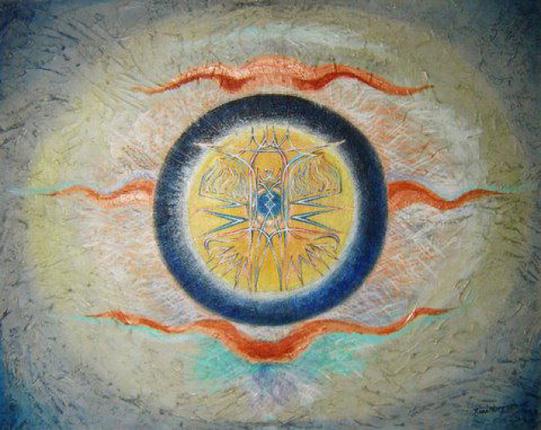
A painting by Rani Pooviah now finds a place in the K.C.S. Paniker Museum of the Madras Movement, thanks to a donation

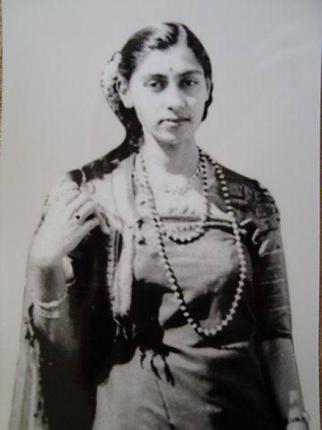
Over 50 years ago, a young artist named Rani Pooviah lived in Chennai, and taught at the Government College of Fine Arts. One of very few women in the field at that time, she was a gifted artist, a beloved teacher, and an integral part of the group of visionary artists, led by K.C.S. Paniker, who founded Cholamandal Artists’ Village in the 1960s.

A tragic accident cut short her life and her career, but not before she had made a significant contribution to the Madras Movement. That contribution was in danger of being forgotten, but now, her legacy has been enshrined in the K.C.S. Paniker Museum of the Madras Movement, in the form of a painting donated by P.M. Belliappa, in association with the Coorg Association of Madras.

One of Rani Pooviah's works / Special Arrangement / The Hindu
One of Rani Pooviah’s works / Special Arrangement / The Hindu

GLARING OMISSION

“I’ve been working at finding her works for some time,” said Belliappa, who knew Rani and her family personally. “Last year, I finally did. It had been haunting me that her paintings weren’t a part of the Museum. It was a glaring omission, a serious lacuna.”

“Rani and I both come from the area of Kodagu in Coorg, and she’s the only artist of such distinction to have come from there,” he adds. “So this donation was meaningful to me in more ways than one.”

For S. Nandagopal, who runs the museum, seeing this painting was a journey back in time. “When I joined the college as a student, Rani was teaching History of Art,” he says. “I remember, the first thing she said in class was that we weren’t going to talk about Greek or French art history, but about what some of our own great artists such as Janakiraman had done. That was a wonderful thing.”

Both men recall her being a vivacious and beautiful woman. “She was so exuberant, and she talked to us about a lot more than just art,” says Nandagopal.

After nearly a decade at the College, she got married and left for the U.S. That was where tragedy struck — Rani was in a car accident that left her in a coma for 13 years, never to recover.

“Her husband sent us some slides of works she did in the U.S.,” says Nandagopal. “They were incredible. If only she’d lived, she would have done some truly great work.”

The painting that has been donated to the Museum is one done by Rani in 1962, and captures her own particular style.

“When you look at her paintings, you see pure art, not bogged down by commercialism,” he says. “How sad it would be if younger artists never even knew who Rani was.”

Making sure the work of the Madras Movement artists is not forgotten is the purpose behind the Museum. “We’re in the process of acquiring more and more older works to try and fill the gaps and document the Movement completely,” says Nandagopal.

Thanks to the generosity of Belliappa, one important gap has been filled, and the memory of a pioneering young woman artist, captured for posterity.

source: http://www.thehindu.com / The Hindu / Home> Features> Friday Review> Art / by Divya Kumar / Chennai, March 29th, 2013

Robin Uthappa’s IPL 6 lifeline

It’s that time of the year when cricket finds a new definition. From ‘city moment of success’ to ‘maximums’, IPL’s ‘bus dekhne ka nahi’ slogan has caught everyone’s imagination and interest, but besides all the razzmatazz, excitement and thrill, for quite a few cricketers this IPL 6 outing is a moment of truth.

Some are seeking redemption, for others it’s a launch pad and for quite a few discards this is another chance of making a comeback into the Indian side. Even though domestic performers are now being rewarded by this new selection committee, consistent scores in front of packed stadiums in the IPL helps the selectors in their decision making.

While there are a number of cricketers that fall under this category, there are three batsmen who find themselves at different crossroads of life – Robin Uthappa, Unmukt Chand and Ambati Rayudu. They’re three brilliant batsmen with extraordinary, smashing talent. First up, I’ll focus on Uthappa.
RobinKF10apr2013

Cut back to April 2006. A 20-year-old walks out for the very first time to open the innings alongside Rahul Dravid against England in the seventh ODI at Indore. By the time he walked back to the pavilion, Uthappa’s 86 runs underlined his impact in the middle. Twelve fours and a six in his 96-ball knock was an indication that runs flew from his bat, much like how time has flown in the last seven years for one of Indian cricket’s impact players.

Uthappa made his Twenty20 international debut in 2007, played eight games that year, then one-off game in 2008, 2011 and 2012. Such has been his story. While almost all cricketers from the 2007 ICC World Twenty20-winning squad have had consistent opportunities since then – Rohit Sharma, Piyush Chawla and Dinesk Karthik to name a few, only Uthappa has been ignored with alarming consistency. Uthappa has been denied a tremendous amount of cricket in the last seven years ever since his debut in 2006. At 21, he won the World Twenty20 and at 27 he has only played a handful games for India – 38 ODIs in addition to 11 T20Is.

At a juncture when Indian cricket is showing faith in performing and under-performing youngsters, Uthappa rightfully deserves a long call into the Indian limited-overs set up. There came a time in his career, when his flexible, unconditional and versatile batting approach meant he would become a floater in the Indian batting line-up. He made his debut as an opener in his first ODI and would bat at No. 7 in his last ODI for India in July 2008. Between this period, he featured in all batting positions, from one to seven, only for him to realise he had failed to slot himself into a designated role that he would have like to fulfill for India. Not surprisingly, the 27-year-old by his own admission is now a designated opener and a tidy wicketkeeper, an option India can always bank upon.

Uthappa’s promising start combined with his selfless and unconditional approach needed to be nurtured; however, selection policies in India often come without any warning and his exclusion from the side meant the right-hander hasn’t featured in an ODI in close to five years. He has had to struggle throughout his journey in the Indian cricket set-up and in IPL 6 he may just find opportunity in adversity. Time has come for the selectors to keep a watch on this young man who lost out on his peak time on. If Rohit and Ishant Sharma can be persisted with despite average performances, why not show more faith in India’s World Twenty20 winner?

Talent banks on nurturing and opportunity. While Uthappa has been fortunate to find the right tutoring, training and teachings since his formative years, the opportunities have eluded the hard-working cricketer. His impact in the middle remains his biggest strength as a batsman. It’s not just the runs he gets, but the rate at which he gets them. Without drawing any comparisons, his approach is much similar to Virender Sehwag. It’s about scoring quickly only to ensure the strike rate compliments their healthy average.

Continuous effort is the key to unlocking potential and Uthappa’s hard yards in the middle is an indication of his preparation. Thanks to the IPL, this Indian discard is not a forgotten hero. Even though his performance reminds the cricket fan of his belligerence in his batting, it has unfortunately failed to ring the door bells of the selectors.

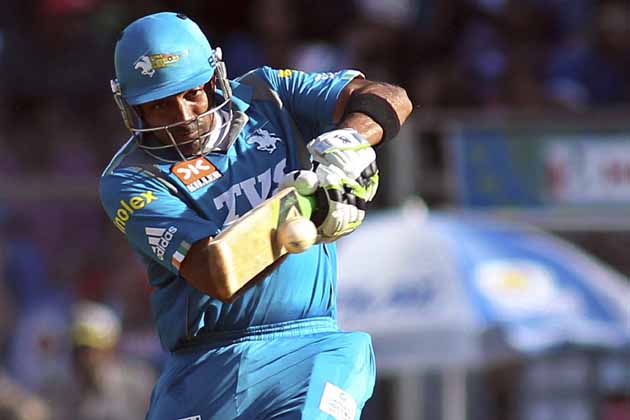
Uthappa’s IPL innings has helped the batsman realise his strength, understand his potential and evolve as a cricketer. His desperation is likely to translate into runs. While representing Royal Challengers Bangalore, he was able to make a great impact but sadly, ever since he has been with Pune Warriors, his constant shuffling in the batting order has meant he has been without a defined role.

Uthappa will be aware of the importance that IPL 6 holds for him. This isn’t his last chance but clearly this is his best chance. Thanks to the IPL, Indian cricket has reached a phase of unparalleled competitive balance and every season produces quite a few finds, reason enough for most of the discards to impress with their consistency. Uthappa finds himself in make or remake situation.

He may not have set the stage on fire this season in the domestic circuit, but he has produced some decent performances. He finished with 683 runs in nine Ranji Trophy games with five fifties and one hundred at an average of 45.53. More importantly, his seven games in the Vijay Hazare Trophy fetched him 445 runs, which included two centuries and two fifties at an average of 63.57. In the process he topped the run-getters’ list as well this season.

Time has come for the selectors to keep a watch on a batsman who has consistently translated his talent into runs. Uthappa remains an asset and his result-oriented and effective batting style can turn into a match-winning option for the Indian cricket team.

source: http://www.ibnlive.in.com / Home> Cricketnext> Blogs / by Mikkhail Vaswani / Tuesday, April 02nd, 2013

Kodava hockey fest inaugral on Apr. 14

Punjab XI and Kodagu XI to play first match

Virajpet :

Fixtures for the Madanda Cup Kodava Families Hockey Festival, 17th in the series, to be held in Balugodu village near here from Apr. 14 onwards, was formally released yesterday by the Madanda Family Sports Committee Conveners Thimmaiah and Sudhir Ganapathy.

After the inaugural match between Punjab XI and Kodagu XI on Apr. 14, six matches will be played on each of the two grounds per day; with 225 Kodava family teams vying for the trophy, said Thimmaiah.

“Quarter-final matches will be played from May 10 and the final match will be on May 12 at 10 am. Various cultural programmes will be held at Kodava Cultural Centre, located close to the tournament venue,” he said.

“The State Government has released Rs. 25 lakh for the grand event and another Rs. 5 lakh is expected,” said Thimmaiah, adding that KSRTC buses will be arranged from Virajpet town to Balugodu, to ferry hockey-lovers. Buses from Bittangala junction will also be provided.

Meanwhile, the Thathanda family members have urged the Kodava Academy to accord them the honour of hosting the 18th Kodava Families Hockey Festival 2014.

source: http://www.starofmysore.com / Star of Mysore / Home> Sports News / April 05th, 2013