Vivanta by Taj – Madikeri, Coorg opens October 2012

Vivanta by Taj – Hotels & Resorts is pleased to announce the opening of Vivanta by Taj – Madikeri, Coorg on 15th October 2012. Adding to the rapidly expanding Vivanta portfolio, this hotel will be the 25th property to open since the brand was launched in 2010. Situated at an altitude of 3,800 ft. within 180 acres of subtropical rainforest, the hotel is set to be the ultimate retreat for nature lovers. Located seven kilometres from the charming hillstation of Madikeri in South-Western India, the hotel offers panoramic vistas of the Western Ghats and imposing mountains that Coorg is famous for.
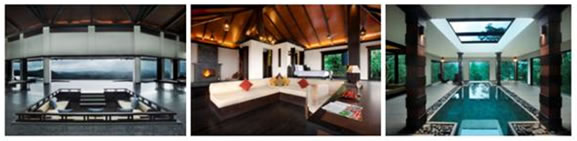
Vivanta by Taj – Madikeri, Coorg’s luxurious 63 rooms and villas have been built within an eco-conscious context to ensure the property is unobtrusive and respectful to the natural beauty of its location. Luxury abounds with spacious villas offering exquisite design, impressive views and memorable touches such as fireplaces in each room.

The hotel will house a 30,000 sq. ft. Jiva Grande Spa. The 30,000 sq ft Spa is located in the main lobby block, which delves down 3 levels of the rainforest. It offers stunning views of the landscape which lends a mystical aura from every treatment room. The expansive spa & wellness space sports private treatment suites with their own steam & showers; a relaxation deck; Dew – a wellness café and the signature Jiva experience – the wood fired Gudda bath that draws from the local ethos of Coorg and is found in traditional households of the region.

Discover Vivanta
Work hard and play hard. Relax and energize. Ideate and confer. Evolve and transform. Revel in a spirit that presents the normal with an unexpected twist. Stylish and sophisticated, Vivanta by Taj delivers premium hotel experiences with imagination, energy and efficiency. Currently comprised of 24 hotels and resorts in India and the Indian Ocean region, Vivanta by Taj is represented across key metropolitan capitals as well as popular holiday destinations like Goa, Kerala, Rajasthan, Sri Lanka and the Maldives. Vivanta by Taj offers an imaginative, vivacious and stylish take on ‘cool luxury’. With innovative cuisine, energetic spaces, unique motifs, the smart use of technology and experiences that seek to constantly engage, invigorate and relax, it appeals to the cosmopolitan world-traveler immersed in a sensory lifestyle.

Source = Taj Hotels Resorts and Palaces

source: http://www.etravelblackboard.com / Home> Hospitality News / Wednesday, October 03rd, 2012
Karnataka explores cloud seeding to increase water in Cauvery

Bangalore, OCT. 2:

The State Government is exploring cloud seeding method to increase water inflow in the Cauvery basin.

“Cloud seeding has been planned in Cauvery catchment areas – Kodagu and Hassan,” Water Resources Minister Basavaraj Bommai told reporters.

“The government has already set aside Rs 5 crore for this and will shortly call for both technical and financial bids,” he added.

The State is taking the assistance of Indian Institute of Tropical Meteorology (IITM), Pune. The institute is to offer technical assistance. Water Resources Development Organisation (WRDO) has been roped in to be the nodal agency to coordinate the cloud seeding project. Earlier in July, the State government had decided in favour of cloud seeding in the Cauvery basin, but abandoned it as the catchment area experienced good rains.

“Since the State is in a precarious position now due to the Supreme Court and the Cauvery River Authority (CRA) orders, we have revived the cloud seeding project,” Bommai said.

Water inflow into Krishnaraja Sagar (KRS) is 10,000 cusecs and outflow is around 9,000 cusecs.

Current storage level at KRS is estimated at 68 TMCft. Bommai said, “For drinking water and irrigation needs in the Cauvery basin we need around 150 TMCft.”

anil.u@thehindu.co.in

source: http://www.TheHinduBusinessLine.com / Home> Industry & Economy> Government & Policy / The Hindu’s Bureau / Bangalore, October 02nd, 2012

A tale of resistance & rewards

Heritage:

Three years after the British took over Kodagu, a rebellion against the rulers erupted in the region. Among the rebels was Guddemane Appayya. C P Belliappa charts the chronology of events immediately after the rebellion was quelled.

In 1837, three years after the British take-over of Kodagu, a rebellion erupted against the colonisers. This uprising is popularly known as ‘Amara Sulya da Katakai’. The primary reason for this revolt by some of the peasants in Sulya was their objection to the British collecting land tax in currency instead of in kind as was the practice during the reign of the rajas. There was also a rather mysterious individual named Kalyanaswamy who proclaimed himself a descendant of the Haleri rajas and claimed the throne of Kodagu.

The rebellious peasants rallied round him. Guddemane Appayya took command of the rebels. The entire uprising was not well organised and there was a great deal of confusion. However, it soon spread to Puttur and then right up to Mangalore, where some of the establishments of the East India Company were ransacked. Emboldened by their success, the rebels made a bid to attack Madikeri, the capital of Kodagu.

Three years of British administration had brought peace and stability in Kodagu and a majority of the people did not want this disturbed. Compared to the misrule of Chikka Veerarajendra, the administration was streamlined and there was equitable law. People-friendly policies were implemented in various fields. The alarmed British enlisted the support of Kodavas to quell the rebellion. The two dewans, Apparanda Bopanna and Chepudira Ponnappa, mustered the Kodavas, and within days the insurgency was put down. The British did not want any repetition of such revolts against their rule. Harsh punishments were meted out to those who took part in the rebellion. Amongst those executed were Kalyanaswamy and Guddemane Appayya.

After this operation was completed, a large amount of booty was collected from the rebels. The British offered the spoils of war to the Kodavas for having helped them. To the surprise of the British, Kodavas rejected sharing the war booty.

Awards for quelling rebellion

At the time, Colonel Mark Cubbon who was posted in Bangalore was also the Commissioner of Kodagu and Captain Le Hardy was the superintendent. It was Colonel Mark Cubbon who recommended to the then governor-general Lord Auckland that the gallant Kodavas should be suitably recognised for their distinguished service in quelling the rebellion. On Mark Cubbon’s recommendation, the following awards were presented: gold medals with gold chains worth Rs 400 to the two dewans, 12 gold medals with chains worth Rs 200 to subedhars and principal chiefs, 20 gold medals without chains for parpatigars and others of equal rank, 10 gold medals worth Rs 50 for peasants who supported the British, 200 silver medals worth Rs 10 for lower ranks and peasants.

Several bronze and copper medals were presented to the foot-soldiers. All these medals were two inches in diameter. They were cast in the same moulding with a Kodava warrior on the obverse and a trophy of Kodava arms on the reverse. Weights of the gold medals were adjusted by varying the thickness.

In addition, there were grants of land, Pegu ponies, fowling pieces (guns), shawls, clothes, turbans, etc.

But there was a 70-year-old subedhar named Monnaiah (spelt Moonien by the British) who rejected all that the British offered. He was crestfallen, because during the operation, he had lost his prized sword which was a gift from Dodda Veerarajendra. He wanted nothing other than replacement of the sword!

Mark Cubbon immediately acted on this request and had an exact replica made and presented to the subedhar. I wonder if this sword exists somewhere in one of the Kodava homes. Likewise, none of the gold and silver medallions are with any of the Kodava families.

However, I have one of the bronze medals, which was very kindly gifted to me by A Franklin, an avid art collector in Bangalore.

Franklin is also the proud owner of the autographed Bible that Queen Victoria presented to her god daughter Princess Victoria Gowramma of Coorg in 1852.

History has nevertheless come full circle. Recently an imposing statue of Guddemane Appayya on horse-back has been installed at the entrance to Madikeri town. He is recognised as one of the earliest freedom fighters.

source: http://www.DeccanHerald.com / Home> Supplements> Spectrum> Heritage / October 01st, 2012

BJP candidate is Kodagu ZP president

B. Shivappa of the BJP, who represents Abburkatte constituency in Somwarpet taluk, and Biddanda Usha Devamma, also of the BJP, representing Cheyyandane constituency in Madikeri taluk, were unanimously elected president and vice-president respectively of the Kodagu Zilla Panchayat at the elections held in Madikeri on Monday.

The post of the president in the second term was reserved for Scheduled Caste candidate and that of the vice-president for Woman (General). Mysore Regional Commissioner M.V. Jayanti, who conducted the elections, received nomination papers only from Mr. Shivappa and Ms. Devamma.

She declared them elected unanimous. Both are first-time entrants to the zilla panchayat.

They will hold the office till June 6, 2014.

Contender

K. Sundara of the BJP, who represents Kantur-Murnad constituency, was a strong contender for the president’s post, but the party leadership favoured Mr. Shivappa.

Mr. Sundara was absent during the elections.

Though other women members in the BJP, including Kanthi Belliappa, Mani Nanjappa Beena Bollamma, had expressed their willingness to be considered for the vice-president’s post, Ms. Devamma got the nod from the party leadership. The 29-member zilla panchayat comprises 21 BJP members, six Congress and two JD(S) members.

The zilla panchayat members congratulated the new incumbents.
———————————————————–
B. Shivappa will hold office till June 6, 2014

Biddanda Usha Devamma of BJP elected vice-president
———————————————————–
source: http://www.TheHindu.com / Home> National> Karnataka / by Special Correspondent / Mysore, October 02nd, 2012

Quinoa Akki Roti

My latest experiment with quinoa – quinoa akki roti. I tried this recipe by making quinoa flour in the blender. Then I added a little rice flour and proceeded the same way as the regular akki roti by add the onions, grated carrots, cilantro, curry leaves in the dough.

Ingredients:
Quinoa flour – 2 cups
Rice flour – 1/2 cups
Carrot – 1 small grated
Onion – 1 medium chopped
Curry leaves – 2 strings
Coriander leaves – 4 tbsp chopped
Cumin seeds – 1 tsp
Green chillies – 2 chopped
Salt to taste
Olive oil – few tsp to cook

Hot boiling water – to mix

Method:
1. Mix quinoa and rice flour with grated carrots, chopped onion, chopped curry leaves, corriander leaves, cumin seeds, chopped green chillies, chopped and salt.
2. Add just enough boiling water to this and knead.
3. Make it to tennis size balls.
4. Flatten the dough on a plastic sheet with your hand
5. Gently transfer the flattened roti to a cast iron griddle or skillet
6. Add a tsp of olive oil around it and cover it
7. Cook on medium flame till done
8. Serve with chutney.

source: http://www.rice-n-spice.blogspot.in / by Nutan Dodbele / September 28th, 2012

Administrators are feared by athletes: Nandan Kamath

Nandan Kamath wears many hats, including that of sports lawyer and trustee of GoSports Foundation, a non-profit organization supporting young Olympic and Paralympic talent. The 35-year-old Bangalorean, a graduate of NLSIU Bangalore, Oxford University and Harvard Law School, advised Rohan Bopanna and Mahesh Bhupathi when the duo took the All India Tennis Association to court for banning them from representing the country for two years. Kamath explained the stand of the players who were penalized for not agreeing to partner Leander Paes in the 2012 London Olympics and on player rights in the country.

What impact will the Bhupathi-Bopanna case have on treatment of sportspersons in India?

I wouldn’t blame an outsider for seeing the players’ behaviour through the Olympic selection controversy as petty and self-centred. However, if you get beyond the superficial perceptions, it is apparent this was a failure of sports administration and player management — nothing more, nothing less. The players were left with the binary choice of either accepting this or standing up for what they believed in, and they chose the latter. While it is inappropriate to get into specific details of the case as the matter is sub judice, suffice it to say that if the players feel forced to take their federation to court, it is indicative of the breakdown in the administrative machinery.

It’s a first step in dealing with arbitrary conduct by sports administrators unaccustomed to having their decisions questioned, least of all by players they “govern”. It is an important precedent and I am sure all sports federations are keeping track of the proceedings which could have a direct bearing on their functioning.

Sportspersons have rebelled against associations in the past. What makes the Bhupathi-Bopanna case different?

Tennis players are fortunate in that their careers are not under the exclusive monopoly of the national tennis federation. They play on professional circuits and don’t require selection by their federation. As a result, exposure to the whims and fancies of sports administrators is limited to the Davis Cup or Fed Cup and multi-discipline events like the Asian Games, Commonwealth Games and the Olympics. Consequently, Rohan and Mahesh were better equipped to stand their ground in this situation.

What kind of a precedent does this case set for aspiring athletes and for sports federations?

We are seeing a self-confident young Indian athlete today. Young people in India take little at face value now and are ready to stand up for their own rights. The generation gap between athletes and governing bodies is likely to come to the surface more frequently. There is a strong movement to regulate sports bodies closely. There is an equally good argument to deregulate and democratise the sports industry, as has happened with the IT industry. If we can release sport from the federation raj and open it up, either partially or fully to competition and professional management, you never know what can be achieved.

Are player unions the need of the hour?

Player unions are not solutions in themselves. The entire sports ecosystem needs to grow and more stakeholders must be engaged. Sports agents are now playing more important roles across disciplines . The press has played a key role in holding federations and selectors accountable. Former sportspersons are making their views widely known. Even courts are increasingly willing to intervene. As the famous saying goes, ‘Sunlight is the best disinfectant’. If we are able to bring more information into the public domain about the talent that abounds in our country, give it sustained opportunities and platforms to show its worth and reward it meaningfully, then it will be very difficult for anyone to suppress it.

What kind of an influence do associations have on careers of athletes?

Most times, influence of the associations is absolute; be it funding, training opportunities or selections, athletes are fully dependent on their federations. Only in a few other professions are the full-time careers of some so completely in the hands of others. There is a great fear of administrators among athletes. We need to move more fully towards a model where administrators are recognized as mere facilitators of sports talent in their quest to connect with opportunities to perform and, ultimately, with sports fans. It is not clear whether increasing professionalisation of sports management will automatically bring about the death of ‘command and control’, though that should certainly be one of the prime objectives. While we need good, qualified professionals running Indian sport, there is no point transplanting them into allpowerful positions lacking structured checks and balances.

source: http://www.articles.timesofindia.indiatimes.com / Home> Sports> More Sports / by Prajwal Hegde, TNN / September 30th, 2012

Govt will release Rs 50L for Madikeri Dasara

Madikeri:

A delegation led by the Dasara committee president and the city municipal committee president H M Nandakumar and minister Appachu Ranjan met chief minister Jagadish Shettar, who has promised Rs 50 lakh for this year too, just as last year.

A demand for an increase in funds was not sanctioned due to the present drought condition in the state. The Dasha Mantapa Samithi conducted a meeting at Madikeri and elected Kundurumotte committee representative T P Rajendra as the new president for the Dasha Mantapa Samithi this year.

The president will be responsible for presenting the views of the Samithi before the Dasara committee, appointing judges for deciding the best mantaps and also carrying out other traditional works. A new logo was released by the Dasha Mantapa Samithi.

The Dasara committee has accepted to release Rs 1.75 lakh to each Mantapa Samithi, subject to the condition that the representatives do not misbehave themselves during the distribution of prizes for best performances.

Nandakumar, the Dasara committee president, has strictly communicated this message to all the mantap representatives. Every year, the losing Mantapa Samithis have expressed their ire by not accepting the consolation prize and by raising slogans against the main Dasara committee even though the judges are selected by the Mantapa committees and the main Dasara committee has nothing do with it.

source: http://www.articles.timesofindia.indiatimes.com / Home> City> Mangalore / TNN, September 23rd, 2012

Charming Cauvery


In this piece of paradise called Coorg, river Cauvery is born. Snaking through the splendid hills and valleys, it enhances the beauty of the land. On the banks of this stunning river, is a forest called Dubare. And on the edge of this forest, I had a unique holiday — interacting with the elephants and exploring the graceful Cauvery in coracles.

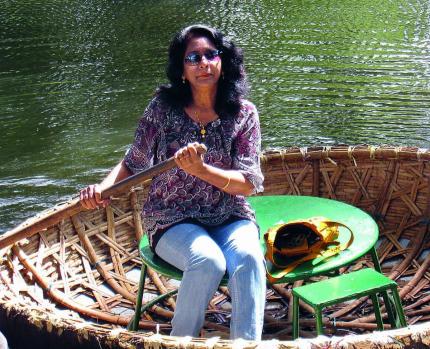
Coracle is a small, lightweight, round boat, which is steered with an oar. It moves at a gentle pace, with an inviting melody of water that sounds more like a soft lullaby. Each ride on coracles feels utterly blissful.

On day one, Kusha, the boatman, took me in his coracle; showing many birds during the ride. He is well informed about the flora and fauna of the area. Passing through the densest woods, we reached coffee plantations entering through bushes. On the water route, he also showed me kingfishers’ nests. The river has many islands and close to the water, these birds makes holes in the mud to make perfect round nests.

Next, we went to the ancient Nanjundeshwara temple on the other bank. The temple is 840 years old and looks charmingly aged and ancient with its stone structure and pillars. The outside walls and the gopurams seem freshly whitewashed. The inner sanctum, the huge Shiva linga, and the oil lamps, add to the beautiful ambience, except for a couple of florescent lights that actually ruin its appeal.

Next morning, I went on one more coracle ride, this time with Suresh, a veteran. In fact, he is called Coracle Suri. He taught me how to row the boat. At one point of time I was very scared. What if the boat topples and I fall into 50 ft deep water? And moreover, there was a male crocodile in the river. Leaving aside the worry for a while, I enjoyed the ‘spins’ where the boat twists round and round and make you feel dizzy.
Like the previous day, Suresh also showed me some rare and interesting birds. We went to the Island Rock where the crocodiles bask in the sun. I sat there and posed for photographs, but all the while in trepidation. What if a crocodile suddenly decides to reclaim its favourite seat? But I returned safe.

The day before leaving, I decided to take one more coracle ride early in the morning. These boat rides are addictive. I again wanted to see huge mango trees, laden heavy with bunches of small mangoes, bend onto the river, some of the branches almost touching water. Soft ripples making infinite circles, the cool breeze and the chanting coming faintly from the ancient temple across the river. Beautiful Cauvery in all its loveliness beckoning. To me, nothing can be more enchanting.
Coracle Suri was ready. But before getting into the boat, I wanted to make sure it wasn’t crocodile time. “No… No crocodile here… very far… after four miles.” But can’t crocodiles swim four miles? He reassured again, “More water it will come… now no rains no?” That sounded logical. Anyway, I was so keen on the coracle ride, I decided to ignore the crocodile.
We set out and Suri showed me wagtails, brahmani kite, white-breasted water yam, cormorant, grey heron, purple heron etc. He was reeling out the names of the birds like he was reciting nursery rhymes. So much avian knowledge for an illiterate boatman!

As we were looking at swallows, I asked Suri to show me a swallow’s nest. He obliged and showed me a nest on the mango tree branch that had curved onto the river. It was like a cup attached to the tree. Suri said, “One month no swallow… empty.” Later, Nagendra (naturalist) told me that he had seen the same swallow nest sometime back with the chicks, and they flew away a month ago, leaving the nest empty.
After this trip, I can say — if you love water, boat rides and elephants, then Dubare is the place. You will come back with wonderful experiences of all the three.
The writer is a documentary filmmaker

source: http://www.asianage.com / Home> Life & Style> Travel / by Vijaya Pratap / September 23rd, 2012

Puneet croons for ‘Ale’

Sandalwood is filled with many talented actors who can sing as well. One such is Puneet Rajkumar, who has lent his voice to many of his films, much like the way his late father, Dr Rajkumar, used to sing songs in his soundtracks. Puneet has recorded a song for the upcoming film Ale.

Ale, starring youngsters Thanush and Harshika Poonacha in the lead, is slated for a year-end release. An excited Harshika put up a status on her Blackberry messenger about Sandalwood’s Power Star singing a song for her upcoming film. Puneet had previously sung for his brother’s films, like Mylari, but his participation in films of youngsters shows his support for Sandalwood’s gen next and has encouraged the team.

Previously, Harshika had worked with Puneet in the hit film Jackie, where she played a youngster from Puneet’s village who gets trapped in a flesh trade racket and the film is about how the protagonist rescues her.

source: http://www.articles.timesofindia.indiatimes.com / Home> Entertainment> Regional> Kannada> Film / by Sunayana Suresh, TNN / September 24th, 2012

‘KER ready to give free meals during Theerthodbhava’

Deputy commissioner’s nod is awaited, say KER office-bearers.

The office-bearers of Kodagu Ekikarana Ranga (KER) said that they are ready to distribute free meals during Theerthodbhava if the DC grants permission.

Addressing a press meet, office-bearer B S Thammaiah said that the people of the district have been urging to allow Kodagu Ekikarana Ranga and other organisations to distribute meals to the devotees. “If the Deputy Commissioner gives us the permission, then we are ready to distribute meals within 24 hours.”

“We had started distributing meals to the devotees way back in 1991. In fact, Talacauvery did not have any facilities during 1991. Since, then we have been distributing meals to the devotees with the help of donors,” he said and added that “Kodagu Ekikarana Ranga had filed a case against Assembly Speaker K G Bopaiah in connection with the laying of Kadamakal Road. In turn, we have been asked not to serve meals during Theerthodbhava since last year.”

In fact, several organisations had pressurised Kodagu Ekikarana Ranga (KER) to distribute meals to the devotees last year.

“However, we did not want to enter into any rift in the holy place. Hence, we did not take part in meal distribution programme last year,” Thammaiah clarified.

The regulations of the Muzrai department clearly states that various organisations should be allowed to distribute free meals if they wish to do so in temples. However, the temple administration committee has violated the rules and has kept KER away from the meal distribution.

Office-bearer M K Appacchu said that a committee which had distributed meals last year had shown the expenses as lakhs of rupees.

“We have not shown such an expense.The committee would have swallowed the money,” he alleged.

source: http://www.DeccanHerald.com / Home> District> Madikeri / DHNS, September 25th, 2012