Wildlife film fests to showcase Maharashtra’s biodiversity

Nagpur:
At a time when coal mining and other detrimental projects are posing a severe threat to forest and wildlife, state forest department has decided to promote its rich biodiversity and wildlife through film festivals.

This will be for the first time wildlife film festivals will be organized in cities by the forest department with the help of Nature Walk, Pune. The proposal has already been approved by principal secretary (forests) Praveen Pardeshi. The schedules and detailed programme will be worked out at a meeting to be held in Mumbai on Thursday.

R R Sahay, additional principal chief conservator of forests (APCCF) for information and technology and policy, said, “It’s an attempt to give impetus to forest and wildlife. We have asked our officials to coordinate with Nature Walk.”

The festivals will be organized not only in cities like Aurangabad, Solapur, Nashik, Kolhapur and Nagpur as proposed by the Nature Walk, but in other places too, Sahay told TOI. Nature Walk has a collection of around 900 films that showcase wildlife, forest and biodiversity of our country. “We in Pune hold wildlife film festivals that are highly appreciated by the common man. There is huge viewership of wildlife on channels like Discovery and National Geographic, but these channels don’t promote much about our region,” said Anuj Khare, honorary district wildlife warden of Pune.

Khare feels these festivals will not only help create awareness but will help brand building. The publicity wing of the forest department will help with auditorium or a school hall of a capacity of at least 500 people with a good audio system. The forest officials will also help in making other arrangements.

“Plan is to hold such festivals on Saturdays and Sundays where Nature Walk team will screen the films. The films will be first introduced and then a post-screening discussion will be held. We can also have a morning nature walk on one of the days. This will help build goodwill of forest department,” Khare felt.

source: http://www.articles.timesofindia.indiatimes.com / Home> City> Nagpur / by Vijay Pinjarkar, TNN / September 27th, 2012

Government creates new buffer zones

Madikeri:

The Karnataka government has declared 562.41 sq km area in Kodagu and Mysore districts as buffer zones. This was officially announced by the forest, ecology and environment department undersecretary Umadevi through a notification dated August 14, 2012.

Kodagu wildlife deputy conservator of forests K T Hanumanthappa said that there will be no restriction on villagers who live near buffer zones. This notification is mainly to protect tigers in the tiger zone. If it is an eco-sensitive zone, some restrictions will be imposed. The buffer zone allows wild animals to move in the limits of the buffer zone, he explained.

Planters fear that the creation of buffer zones will affect coffee and pepper cultivation. Nagarahole range forest officer Mandanna said that the safari has already been stopped following the Supreme Court order.

Hunsur wildlife A C F K D Belliappa has directed residents living around buffer zone areas not to graze their cattle in the restricted area and not to collect firewood as the wildlife act applies in these areas.

The declared buffer zone areas include 24.74 sqkm in Periayapatna taluk,109.09 sqkm of Hunsur thaluk, 228.01 sqkm of H D kote taluk in Mysore district covering a total area of 361.84 sqkm in Mysore district. The buffer zone coverage in Kodagu district is 200.57 sqkm.

source: http://www.articles.timesofindia.indiatimes.com / Home> City> Mangalore> Mysore / TNN, September 27th, 2012

Impact of agro-forest management on animal diversity in Kodagu district

Bangalore:

Traditionally coffee in the Western Ghats, as in other tropical regions, is grown under the shade of non-native trees.Such plantations ensure ecological continuity, providing habitat for many species outside protected reserves.

A study by Ayyapan Narayanan of the Department of Ecology, French Institute of Pondicherry, conducted in three different habitats, evaluated the impact of agro-forest management on animal diversity in the Kodagu district of Karnataka. The study was conducted in the preserved forests, coffee plantation with native trees and coffee plantations with non-native trees. Researchers said the objective of the study was to evaluate the impact of the agrosystems in comparison to the forest on local singing animal diversity by employing a passive acoustic method. For each habitat type, four locations were sampled using automatic acoustic recorders.

The acoustic data was then analysed using two indices without using species identification. Differences among habitat types were assessed by comparing the acoustic activity level with non-parametric tests and by including acoustic dissimilarities into multivariate analyses.

source: http://www.m.timesofindia.com / City> Bangalore / by Saswati Mukherjee / September 26th, 2012

Bill to regulate homestays ready

After Mangalore homestay attack case, the tourism department in the state seems to have woken up to regulate their activities . The state government has prepared the draft Karnataka Tourism Trade Facilitation Act-2012, according to which it will be mandatory for the owners to register the homestay before starting the operations. The draft Act also states that the owner of the homestay must display license certificate, facilities available in the premises and maintain all necessary records.

It is not only homestay owners, the proposed Act also puts riders on travel agents, tourist guides, adventure sports bodies and others. Once the Act comes into force it will be necessary for tourists guides to seek necessary license from the authorities like Archaeological Survey of India and other government institutions.

Addressing the delegates at a workshop on the proposed Bill, principal secretary of the tourism department G Latha Krishna Rao said that in the backdrop of several unsavoury incidents in the recent past, it was felt that regulations on home stay and adventurous sports was necessary considering the safety of tourists visiting the state.

There is ample opportunity to run home- stays especially in areas close to heritage spots. “At present home stays are concentrated in Kodagu. There are ample opportunities to run homestays in heritage spots and in coastal belts also . Tourists visiting the tourism spots would like to stay in a place which has nativity ambiance. In the interest of tourist visiting the state, regulations will be put in place safeguarding their interests.”

Citing an incident reported in the Bannerghatta National Park where a techie was killed by elephants after he went missing, the official said that the government felt the need of imposing rules and regulations through the proposed Bill. As per the draft rules, adventure sports operators have to follow emergency and rescue operations guidelines, should obtain license, permission from forest officials before entering the activity area, they should have suitable insurance policy, operators shall have a firm or company, established in the place of business for a minimum period of two years, operators shall buy the equipment tested and certified by United International Alpine Association/ European standards. The adventures activities include trekking, mountaineering,rock climbing, mountain biking, bungee jumping and others.

The Bill states that owners of homestay, tourist agents, guides and others who fail to get license from the authorities are liable to pay a fine which may exceed to Rs10,000. For repeated offence there are provision for imprisonment as well as the penalty. The state government will also make provisions to inspect travel agents if necessary.

source: http://www.dnaindia.com / Daily News & Analysis / Home> Bangalore> Report / by DNA Correspondent, Place:Bangalore, Agency:DNA / Friday, September 28th, 2012

Over a cup of evening tea: A Ballad from a Village Belle

By Dr. K. Javeed Nayeem, MD
My association with the Kodavas, the people from the hilly neighbourhood district of Coorg, now Kodagu, is almost as old as I am. Ever since my early childhood we have had Kodava managers and writers in our coffee plantation in distant Chickmagalur. Their choice as overseers of our coffee growing enterprise was a natural one as they are themselves age-old coffee growers, with the art simply running in their blood. Two of them who grew very close to me as I grew up were P. M. Pemmaiah and K. K. Ganapathy both of whom joined duty within days of one another, even as they themselves were both young lads, barely out of their teens.

While the former, an absolute teetotaler, with a very quiet temperament, retired after many decades of faithful service and left to look after his own family holdings, the latter, a hard-drinking meat-eater and boisterous merry-maker but no less faithful, somehow retired into an ashram, becoming a sanyasi of sorts, completely shunning liquor, his first love and becoming a total vegetarian. During the daytime they would teach me to use a catapult with deadly effect and also to speak their native dialect Kodava thakk. In the even-ings they would feed me with interesting nuggets from the fascinating folklore of Coorg and spell-binding stories of the valour of the Kodavas, a warrior tribe.

When I arrived in Mysore to commence my education, at the turn of the sixth decade of the last century, this smattering knowledge of Kodava thakk and the folklore of Kodagu,stood me in good stead in my interaction with the many Kodava boys and girls who happened to become my schoolmates. Many of them continue to be my closest friends even to this day. With good English schools being very scarce in all the Malnad districts, it was then common for most children from well to do families to be put in schools either in Mysore, Bangalore or Ooty.

While I then used my Kodava thakk only to impress the girls in my school, as some of them might still remember, or at least recollect as they read this, I now use it only in elusive bits and pieces, thanks to a lack of practice, only to converse with my most elderly Kodava patients. I do this, not to impress them, because they are long past their impressionable ages but only to calm and reassure them as the bondage that the use of any language establishes with its speakers is instant nd very strong.

There are not many books, at least in English, about Kodagu and the Kodavas themselves and I have read almost all those that exist, including some of the ones that are now out of print. While all of them are very interesting and informative, I think none of them can make up for what I just finished reading just two days ago. It is a book that is unfortunately not yet available in print but one which I hope will soon find a ready publisher and many readers consequently.

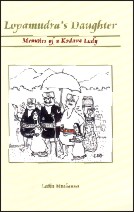
Authored by Dr. Latha Muthanna, a close friend and a fellow physician, who is settled in Mysore, it is a first person narrative in the words of her recently deceased mother Malavanda (Biddanda) Gowramma Achaiah, a well-known social worker who was born in the year 1920 and who spent much of her married life in and around Chickmagalur. It was first written by her in Kannada script in Kodava thakk which lacks a script of its own and later expanded and rendered into English by the daughter who seems no less of a writer or historian herself.

Written in a style and language which I never knew my friend was capable of, despite our close friendship (and intense professional rivalry) over more than thirty years, the book is immensely readable with an ample sprinkling of humour and is therefore ‘unputdownable.’ It has a very apt and fitting title: Lopamudra’s Daughter, with Lopamudra being one of the main tributaries of the Cauvery, a river which we all know is holy to most Hindus in general and the Kodavas in particular.

While the book deals mostly with the lives of a cluster of close relatives from a few families of Kodagu spanning over four generations, it throws much light on many little known but very significant nuggets from the history and folklore of the land and its people. That is what is likely to make it very unique and also perhaps render it a keepsake for anyone interested in the history of Coorg or simply in a bygone era. To the uninitiated however, keeping track of the various protagonists in the narrative, especially with their tongue-twisting family names, may seem a slightly daunting task.

While the book has interesting cartoons by the well-known Kodava cartoonist Ponnappa,I feel the final print edition would do well with some photographs related to the many places that find a mention therein. The visit of Gandhiji to Coorg and his impact on the freedom movement there, the travails of the ordinary women who would without exception unfailingly turn into extraordi- nary home-makers immediately upon exchanging marriage vows, the poignant and recurrent tragedies brought on by the lack of health care facilities in a land tormented by rain and storm for a greater part of the year, are all there in vivid detail to stir the feeling heart.

Since I also happen to be from the Malnad hinterland where life is not very dissimilar from what it is in Coorg I could instantly recapitulate, visualise, smell and even taste the sights, smells and tastes that the writer talks about when she describes the traditions, the weddings, the festivals, or even the seasonal delicacies like mushrooms, honey and bamboo shoots, that come and go with different times of the year.

Reading the book was like finding the key that suddenly unlocked the door of nostalgia to my own past and childhood. I am sure it will do the same to the others who happen to read it too.

source: http://www.StarofMhysore.com / Feature Articles / September 21st, 2012
MLA’s village stay is a big hit in Kodagu

Appacchu Ranjan visits Kotnalli.

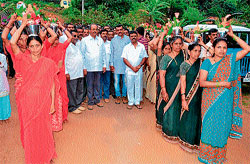
Kothnalli is a non descript village in Somwarpet taluk. The village was in a festive mood to welcome MLA Appacchu Ranjan, who as part of his village stay programme visited the village and listened to the woes of the villagers and stayed in a house.

The village with a population of 400 is mainly dependent on agriculture for livelihood.

They grow coffee, cardamom and paddy. Even with the region receiving heavy rainfall, the villagers continued to be haunted by the acute shortage of water during summer.

The villagers are yet to get electricity connection and the roads need to be developed.

The villagers accorded a warm welcome to the MLA. He was taken out in a procession for two kilometres. The MLA stayed in the house of D S Poovaiah.

The residents poured their woes in connection with the lack of electricity supply, acute shortage of drinking water and lack of maintenance of road.

Villagers said that the electricity connection was given to the village under Rajiv Gandhi Rural Electrification Scheme. However, there is disruption in power supply. “We are finding it difficult to carry out our activities in the evening,” they said. This village, which did not have streetlights, sudden had tube lights lighting up the streets. A day before MLA visited the village, Chescom officials visited the village and installed the street lights.

The MLA should visit the villages at least once a month to make the officials work, said the villagers adding that there is no bus facility. A private bus plies to the village in the morning and evening. The villagers are forced to walk for several kilometres. The KSRTC bus should be introduced, they demanded.

Welcome move

The MLA said that villagers from various parts of the district are inviting him to visit their village. To a query, he said that he will visit villages in Madikeri taluk as well.

Poovaiah said “I am very happy that the MLA stayed in my house. We had prepared rice, sambar, beans curry, and payasam for the MLA. In the morning, Chow-chow bath was given to the MLA.”

To a query on what was his demand, he said “my son who is working as driver in Bangalore needs a job. At the same time, my daughter, who is studying BBM needs job too.”

source: http://www.DeccanHerald.com / Home> District /
Srikanth Kallammanavar, Kothnalli (Somwarpet), May 1 2012, DHNS:

55 pc posts reserved for women in GP polls

The State government has announced reservation for post of president in each gram panchayat.

Accordingly, 55 per cent of posts are reserved for women in the district. Last year, 32 per cent posts were reserved for women.

There are 98 gram panchayats in the district, of which, the posts of president in 53 Gram Panchayats are reserved for women.

This includes SC/ST, general and woman category.

According to the documents, the post of president is reserved for women in 12 gram panchayats in Madikeri taluk, 22 gram panchayats in Somwarpet and 19 gram panchayats in Virajpet taluk.

The post of president is reserved for SC candidates in 10 gram panchayats, of which, six are women. This includes one in Madikeri taluk, three in Somwarpet taluk and two in Virajpet taluk.

The post of president is reserved for Scheduled Tribe in seven gram panchayats, of which, five are for women.

The post is reserved for Backward class A, B category in 30 gram panchayats, of which, 16 are reserved for women. Under general category, as many as 26 posts have been reserved for women.

This includes six in Madikeri taluk, 11 in Somwarpet taluk and nine in Virajpet taluk. Meetings of the taluk elected representatives will be convened on September 24, 25 and 26 to decide on the reservation.

The meeting will be held at Mahila Samaja near old taluk office in Virajpet on September 24 at 10.30 am, at Okkaligara Kalyana Mantapa in Somwarpet on September 25 at 10.30 am and at Old Fort hall in Madikeri on September 26 at 10.30 am.

The elected representatives of the gram panchayat should attend the meeting.

source:http://www.DeccanHerald.com / Home> District / Srikanth Kallammanavar, Madikeri, Sep 22, 2012, DHNS :

Indian coffee consumption rises in 2011: ICO

Coffee consumption in India rose by 3% to 1.06 lakh tons in 2011, compared to 1.03 lakh tons in the previous year, according to the International Coffee Organization (ICO).

The intergovernmental organization said that the consumption of the brew in the world’s sixth largest exporter grew at a compound annual growth rate of 5.7% during 2001-2011.

However, the per capita consumption remained unchanged in 2011 at 0.1 kg per person per year since 2008, reported The Hindu Business Line citing ICO data.

ICO was quoted by the newspaper as saying, “However, there is clearly much potential for growth, particularly in countries with large populations such as India, Indonesia and Mexico.”

Compared to the global rate, coffee consumption growth in India is still higher.

Global consumption of the brew grew 1.7% in 2011 to an estimated 137.9 million bags against the 135.6 million bags in 2010.

On the other hand in India, coffee consumption was up to 1.08 lakh tons in 2010, an increase of 6%, compared to 1.02 lakh tons in 2009, the government-run Coffee Board of India said

source: http://www.hotdrinks.drinks-business-review.com / Home> Hot Drink News / By DBR Staff Writer / September 17th, 2012

Gulshan Devaiah: Working with Sanjay Leela Bhansali is a dream come true


The Shaitan actor is gung ho about working in the Ranveer Singh-Deepika Padukone starrer, Ram Leela. And no, it is not the role everyone thinks it is!

Thanks to his unusual choice of roles, actor Gulshan Devaiah has earned himself the moniker of ‘Bad Boy of Bollywood’. His performances in Shaitan, That Girl In Yellow Boots and more recently Hate Story have been appreciated. And now he has bagged a role in Sanjay Leela Bhansali’s Ranveer Singh-Deepika Padukone starrer, Ram Leela. Gulshan is reportedly playing a negative role in the film. But he himself has a different story to tell.

Though excited about doing a Sanjay Leela Bhansali film, Gulshan seems rather irked by the rumours about him playing a baddie in Ram Leela. He explains, “Though I can’t say much about my role in Ram Leela at this moment, it is not a negative role, as reported in the papers. Everyone has grey shades, be it the hero or heroine. It is an important part and the role just fell into my lap. I didn’t have to audition for it. I used to think that some day I will work with Mr Bhansali, but I didn’t know my dream would come true! I have started shooting for the film and it feels great to be working with the biggest director of India.”

While we like this gung-ho attitude, we are still curious. Sure, he is not the bad guy and no one is all white or all black, but what will an actor of Gulshan’s calibre do in a film that has commercial hot-shots Ranveer and Deepika in it? We wonder…

source: http://www.bollywoodlife.com / Home / by Keyrun Rao / September 20th, 2012

Fight Your Battle @XYZ ’12 (Part I)


On 13Th and 14Th of September several ancient Tribes got together and fought their battle in St. Andrew’s College. The theme for XYZ 2012 this year was, The Ultimate Battlefield and all the participating colleges were allotted each tribe as their contingent. Colleges across Mumbai participated in the Battlefield and fought the battle for their place.

The ancient tribes seen in XYZ 2012-The Ultimate Battlefield were The Spartans, Comanches, French Musketeers, Samurais, Ninjas, Pirates, Rajputs, Persian Immortals, Gorkhas, Viet Congs, Aztec Jaguars, Celts, etc. I know you must be wondering how chaotic and fierce the atmosphere in St. Andrew’s College would have been; but the OC team had managed to set the right atmosphere for the participants and also kept the competitive spirit alive in each participant.

The XYZ Team co-ordinated with all the contingents very efficiently, from the administration desk in the morning to the auditorium in the evening. The main events included the radio event- Bol Bachan which was judged by Nikhil Chinappa, the famous VJ from MTV and RJ Glen. Besides this, all the auditorium events i.e. Band, Fashion Show and Dance were a great hit. The main event XYZ is very famous for and a very apt event for this year’s theme was the Treasure Hunt. The Ninjas were successful in exploring Bandra and winning their Treasure Hunt battle.

Pratika Prabhune, Treasure Hunt event head said “At first I didn’t know if the whole idea of having the treasure hunt with a new level of difficulty would work and I was terribly nervous because I was getting word that somewhere in the first round no one had figured out clues at all. But the Ninjas were fast enough to complete the first round in an unexpected half-hour’s time. Then I thought the game is working after all. My junior, Kieth from FYBMM really made some of the best clues, without which the hunt would have been nothing. At the end of XYZ, Treasure Hunt was one of the most talked about event and that’s what made me extremely proud.”

The other events happened in the Ultimate Battlefield will be continued in the next article. The Ultimate Tribe will also be revealed in the coming article. Keep your fingers crossed!!!

source: http://www.coolage.in / Home> Featured Events / From St. Andrew’s College, Mumbai / by Diana Fernando / September 19th, 2012