Painting expo at BVB, Madikeri

One of the paintings of Mathoorji on display.
Madikeri,, Apr. 23

A fourday painting exhibition organised by Kala-bharathi opened at the Art Gallery of Bharathiya Vidya Bhavan (BVB) here yesterday.

Inaugurating the expo, senior journalist G. Rajendra opined that a painter should be able to appreciate beauty to evolve art piece. He pointed out that the natural land- scapes inspire an artist.

Welcoming the gathering, Art Teacher of BVB, Prasanna Kumar said that under the banner of Kalayatre, art exhibitions were being held at three taluk centres of the district from 1986. However, he regretted that fewer artists were evincing interest in Kodagu but art lovers were aplenty.

The expo showcases water, oil and acrylic paintings featuring village life, fruit vendor not to exclude a couple of modern paintings. The master-strokes of the brush are learnt to be executed by Prasanna Kumar, Jayaram, Praveen, Ananthashyana and others.

source: http://www.StarofMysore.com / General News / April 23rd, 2012

‘Indian hockey team is strong’

Indian hockey coach Michael Nobbs said the Indian team will emerge stronger by 2016.

Speaking to press persons after inaugurating Kodava Hockey Utsav, he said: “Indian team is getting ready for the Olympics in London.

We will enter the best six teams category. The team will work hard to get a gold medal. We will not change our playing style. However, we will increase our speed through few techniques.”

The six players who played for Coorg Eleven against Indian Hockey team have all qualities to qualify for the Indian team, he said.

source: http://www.DeccanHerald.com / Home> District / DHNS, Madikeri, April 22nd, 2012

Poovamma clinches 400

Kunhumohammed wins men’s 400M, Jithin tops in high jump

MR Poovamma came up with her personal best performance to win the women’s 400 metres on the second day of the 16th Federation Cup athletics championships here on Sunday.

Having won both the Indian Grand Prix meets earlier this month, Poovamma was the favourite for the event and she obliged in fine fashion.

The 21-year-old from Karnataka, who is representing ONGC, timed 53.70 seconds, bettering her previous best of 53.87 set at the Kolkata Nationals last year, to finish ahead of Debashree Majumdar of Bengal who clocked 55.45.

P Kunhumohammed, representing Chattisgarh, emerged champion in the corresponding men’s race, timing 46.67 seconds. Kunhumohammed had clocked his personal best of 46.58 in the second Indian Grand Prix at the same venue a few days back but he couldn’t replicate that form on this day.

In the absence of Mayookha Johny, the women’s long jump turned out to be a damp squib. Expectedly, MA Prajusha won the gold but fouls marred her performance on the day and she could produce only a 6.13M effort for the top spot.

Jithin C Thomas of Kerala had a career-best effort in high jump, winning the gold with a clearance of 2.20 metres.

Results: Men: 400M: P Kunhumohammed (Chattisgarh) 46.67 seconds, 1; S K Mortaza (Bengal) 47.77, 2; Bibin Mathew (Jharkhand) 47.87, 3.

1500M: Sandeep (Haryana) 3:46.71, 1; Ravinder S Rautela (Uttarakhand) 3:47.17, 2; Hamza C (Kerala) 3:47.25, 3.

High jump: Jithin C Thomas (Kerala) 2.20 metres, 1; Hari Sankar Roy (Jharkhand) 2.05, 2; Chethan B (Karnataka) 2.05, 2; Jagdeep Singh (ONGC) 2.05, 2.

Decathlon: Vijay Kumar (Haryana) 7152 points, 1; Vinod PJ (Kerala) 6488, 2; Chandrahas Kushwaha (Uttar Pradesh) 6420, 3.

Women: 400M: MR Poovamma (ONGC) 53.70 seconds, 1; Debashree Majumdar (Bengal) 55.45, 2; Rattandeep Kaur (Punjab) 56.01, 3.

Shot put: Patwant Kaur (Punjab) 13.67 metres, 1; Smritikana Manna (Bengal) 13.41, 2; Manjit Kaur (Punjab) 13.09, 3. Long jump: Prajusha M A (Kerala) 6.13 metres, 1; Shraddha Ghule (Maharashtra) 5.94, 2; Neena V (Kerala) 5.91, 3.

source: http://www.DeccanHerald.com / Home> Sports / Patiala, DHNS, April 22nd, 2012

Stories Kodagu’s tombs tell

Kings and their legacies have always captured popular imagination. While some have faded into the past, some survive in our memories. C P Belliappa narrates the story of the brave rulers of Kodagu and the significance of the beautiful mausoleums they built.
By 1791, Dodda Veerarajendra had consolidated his position in Kodagu and had successfully moved on from the Tipu Sultan era.

Dodda Veerarajendra started rebuilding his kingdom after years of conflict with Hyder Ali and Tipu Sultan. He had recaptured the important fort at Madikeri, and had constructed a modest palace in Nalaknad in the southern part of Kodagu.

At the time, Dodda Veerarajendra and his royal consort Nanjammaji had an eight-year-old daughter named Rajammaji. The raja wished for a son to inherit his throne. In accordance with rajneethi he could marry a royal consort once every twelve years.

After a long search for a suitable bride, he decided on a matrimonial alliance with the beautiful sister of his Kodava revenue official, Karanika Subbaiah. The bride was given the name Mahadevammaji.

In February 1796, Dodda Veerarajendra had a grand celebration at Nalaknad palace to commemorate the twin events of his coronation and marriage to Mahadevammaji in a specially built mantapa which stands well-preserved to this day.

However, much to Dodda Veerarajendra’s disappointment, Mahadevammaji whom he adored immensely, gave birth to three daughters in the ensuing ten years. In 1806, she was pregnant again and the raja fervently hoped he would have a son to carry forth his legacy.

He conducted several poojas, havans and homas to please the Almighty in hopes that he may be blessed with a male-heir. By then Mahadevammaji had become very weak and sickly.

Dodda Veerarajendra was aware that this would be the last chance for Mahadevammaji to endure child-birth. His worst fears came true when he had a double whammy on May 17, 1807. Days after his royal consort gave birth to their fourth daughter, a debilitated Mahadevammaji died leaving the raja totally heart-broken and deeply disappointed.

Eternal love

The grief-stricken raja chose a spot over-looking the town of Madkeri as the final resting place for his beloved wife. He named that part of the town as Mahadevpet in memory of Mahadevammaji. This name continues to this day.

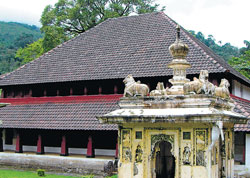
Dodda Veerarajendra also started the construction of a grand tomb for his wife, the design of which had some likeness to the Taj Mahal. In his will, he gave detailed instructions that he would like to be buried next to Mahadevammaji when he would meet his end.

Dodda Veerarajendra had three sons, but they were born to his minor wives. He was now totally obsessed with who would succeed him after his demise. His first choice was his eldest daughter Devammaji born to Mahadevammaji. In 1808, when Devammaji was barely nine years old, he arranged her marriage to a young Kodava who was renamed Mallappa.

In his elaborate will, the raja wanted Devammaji’s yet-to-be-born son to be named after him and declared his successor. If Devammaji did not have a son, the eldest son born to one of her three sisters was to inherit the throne of Kodagu.

He further stated in his will that in the event his four daughters failed to produce a male-heir then the fittest amongst his three sons: Rajashekara, Shashishankara and Chandrashekara, from his minor wives would ascend the throne to continue his legacy.

In order to ensure his will was executed, Dodda Veerarajendra requested Arthur Cole, the British Resident at Mysore to be the executor of his will and also be guardian to his minor daughters.

Arthur Cole brought this to the notice of Governor General Lord Minto. Lord Minto wrote a letter in April 1809 recognising the raja’s will.

He also gave his assurance that the East India Company would ensure the will was implemented.

Dodda Veerarajendra’s health had taken a heavy toll, and on June 9, 1809 he breathed his last aged 46. In spite of all his efforts, his young daughter Devammaji could not hold on to the throne of Kodagu.

Dodda Veerarajendra’s wily brother, Lingarajendra, usurped the throne in 1811 with tacit support from the British. Lingarajendra completed the tomb of Dodda Veerarajendra and Mahadevamma.

Loyalty

There is another interesting story of a very able army commander – Biddanda Bopu – who served under Dodda Veerarajendra and took active part in their military campaigns against Tipu Sultan. After Tipu was ousted from Kodagu, Dodda Veerarajendra asked Bopu to name the reward he would like for having fought so gallantly against the enemy.

Everyone in the raja’s court expected Bopu to ask for large tracts of land, gold, silver and live-stock. But to everyone’s surprise Biddanda Bopu made a humble request: on his demise to be buried in the same premises as his beloved raja!

This Biddanda Bopu’s wish was fulfilled when he died in 1808. Years later, Bopu’s son Somaiah rose to the same rank as his father, during Chikka Veerarajendra’s reign. When Somaiah died in 1879, in deference to his wishes, the British Chief Commissioner permitted his mortal remains to be buried next to his father’s tomb. Both these tombs are intact.

When Lingarajendra died in 1820, an identical mausoleum was built by his son Chikka Veerarajendra on the right-hand side of Dodda Veerarajendra’s tomb. Another smaller tomb was built in 1834 on the left-hand side where the royal priest Rudrappa is interred.

This locale is known as Gaddige. The mausoleums are well-preserved, and currently the entire area is being landscaped and refurbished.

source: http://www.DeccanHerald.com / Home> Supplements> Spectrum / April 24th, 2012

Kodava Academy prepares Rs 1.02 cr action plan

The Kodava Sahitya Academy has prepared an action plan for Rs 1.02 crore for the year 2012-13, to take up various activities.

Addressing a press meet here recently, academy president Addanda Cariappa said a ‘Kodava bhashe kaliyiri, kalisiri’ (learn and teach Kodava language) campaign will be started in all government offices to create awareness about the language.

“Camps on Kodava language and programmes on Kodava culture will be organised. This includes poets meet on ‘Male-bole’ and paddy harvesting,” he said.

He said the academy will hold a seminar on ‘Ain mane’ (ancestral house). A booklet on all temples of Kodagu will be brought out. An awareness programme on Kodava folk culture, Devara Kaadu will also be held, he added.

Efforts will be made to introduce literary works of I Ma Muthanna. Staging of plays, translation of books, release of CDs on poems, drama contest for students on Haridasa Appaccha Kavi, camp on Kodava plays will be organised.

Kodava, Hindustani and Karnataka music festivals will held in memory of Chakkera Appayya, who is known as Coorg Star. Janapadotsava, literary meet in the name of writer B D Ganapathy, Kodava musical concert in Madikeri Fort and Rajara Gaddige, felicitation to Kodava artistes, Kodava-Kannada poets meet are some of the programmes planned for the year.

Cariappa said a state-level Kodava literary and cultural utsav will be held in December. The academy will observe the birth anniversary of Field Marshal Cariappa, General Thimmaiah, Nadikeriyanda Chinnappa, I Ma Muthanna, B D Ganapathy and others.

Plans are afoot to screen Kodava movies, organise drawing competitions. The best literature available in other languages will be translated to Kodava. ‘Academyra Palame’ a tri-monthly will be brought out to inform the activities of the academy to the public.

Measures will be taken to distribute folk musical instruments. All help will be provided by the academy for construction of Kannada Samskrithika Samucchaya Bhavana. We will try our level best to include Kodava language in the eighth schedule of the Constitution, he said.

Academy members Kasturi Govindaiah, Chermanda Poovaiah, registrar N Shantamma and treasurer H V Indiramma were present.

source: http://www.DeccanHerald.com / Home> District / Madikeri, DHNS / April 19th, 2012

Kodava Hockey Utsav from tomorrow

Aichettira family to host the event

The very unique hockey match of the State, Kodava Hockey Utsav, that takes place between the Kodava families every year, will begin on April 21.

The 16th annual Kodava Hockey Utsav will be inaugurated by Assembly Speaker K G Bopaiah.

The members of Aichettira family who are hosting this year’s Hockey Utsav are eagerly waiting for the festival to begin, which will be held for 25 days, till May 13.

The grand hockey festival will witness over 217 teams representing different Kodava families fighting for the prestigious cup.

Speaking to Deccan Herald, Aichettira Hockey Cup Utsav President K Anil said that national and international hockey stars like S K Uttappa, V R Ragunath, S V Sunil and M B Aiyappa are going to be the show stealers for this year.

The inauguration, first match, semifinal and final matches will be held at Ammatthi High School grounds.

A huge gallery with a seating capacity of 25,000 is being built at the school grounds to enable spectators to watch the matches. The preparations are going on in full swing as only one day is left for the Utsav to begin.

The place surrounding the ground has been cleaned, drainages have been laid and drinking water facilities have been made for the purpose. LCD screens have been installed at three places in the ground for comfortable view of the match.

Special attraction

The special attraction of this year’s match is a special match that has been arranged between the Indian hockey team that has been selected for the forthcoming Olympics and the Coorg XI team.

The match will be held soon after the Utsav inauguration.

Aichettira family head I P Kuttappa informed that Indian hockey coach Michael Nobbs too will be present during the match.

The State government has granted Rs 30 lakh for the Hockey Utsav and several private companies too have come forward to sponsor the programme.

In addition, Cabinet Minister S M Krishna has granted Rs 12 lakh from his MP’s fund due to the effort of Prema Kariyappa who is also Aichettira family member.

The money has been utilised for the construction of toilets near the ground. The trophy and cash prize will be given to the winning teams from all categories. Aichettira K Anil said that cash prize of Rs five lakh will be given to the winners of the festival.

source: http://www.DeccanHerald.com / Home> District / by Shrikanth Kallammanavara / Ammathi (Madikeri) / DHNS, April 19th, 2012

Stop by the woods

Pics: Harishvara Venkat.

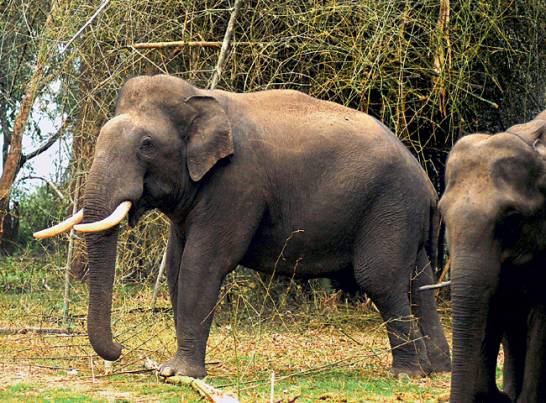
My father told me that he first took me to the jungle when I was six months old. It was then that my love for wildlife took root.

Ever since, I have been visiting wildlife sanctuaries in southern India. I would say wildlife is now a part of me.

I realised that after taking up wildlife photography seven years back. One of the best wildlife sanctuaries that I have visited is the Nagerhole National Park on the banks of Kabini River in Karnataka.

One gets to see leopards, tigers, elephants, dholes, Indian gaur, sambar deer and many other mammals and birds there.

After I started photographing wildlife, I developed a better understanding of the animal habitat and most importantly animal behavior, which in turn helps me predict what I can expect of a particular animal in a particular environment.

One of the finest moments I’ve had in Kabini was in June last year. It was my first trip to Kabini after I upgraded to a professional camera.

This time our naturalist spotted two leopards — a mother and cub — on a tree. For the next two-and-a-half hours we saw them devour a deer, play with each other climb up and down the tree, rest and eventually doze off.

Kabini has been a very promising place for me and has never failed to impress even in summer months when there is a drought.

During the hottest part of the year the Kabini River shrinks in size allowing all animals to come over to the riverbank for water, which is a treat to watch from a boat.

I still get to learn so many new things every time I visit the jungle. It’s been a pleasure doing this and it’s so invigorating to get out of the so called civilized world and live with the most organised living beings on earth.

Flashback

The city of Nagarhole was once ruled by the Lingayat kings of Kodagu till 1850s. The British took control of the city after defeating Tipu Sultan.

The presence of derelict irrigation tanks suggests that there were agricultural enclaves within the wooded landscape.

The forest department in 1860 was established by the colonial administration with an authorization to restrict forest burning, control farming, avert agricultural encroachments, and carry out sustainable reap of timber and to raise teak plantations.

Click away

After navigating two kilometres from the confluence of Panamaram river, Kabini forms an island called Kuruva Island, spreading over 520 acres with all kinds of flora and fauna.

It also forms Kabini reservoir bordering Kerala and Karnataka. Between Kabani reservoir and Kuruva island Kalindi River joins Kabini. This area is a photographers delight and a lot of travel enthusiasts go there to enjoy the nature.

Food

The Honey Comb resturant in Kabini is named after the honey gathering Jenu Kuruba tribe. They offer a platter of the cream of international and regional cuisine.

He ambience adds to the entire feel and for all you know, you would want to reach there an hour early for your dinner just to enjoy the location. The resturant is veru popular among tourists.

The beautiful ranges of Baltistan

Travelling Lens is organising a a trip to Baltistan. After almost 25 years of being closed to visitors, the proverbial doors to this ancient area of the Himalaya have been opened.

The area is tucked away in the far corner of the Nubra valley at the base of the Karakoram Range.

Three of the most celebrated award-winning photojournalists, Ami Vitale, Andrea Bruce and Maggie Stebber, will be conducting a Masterclass Photography Workshop during the course of travel. They will lead a group of photo enthusiasts on a one-of-a-kind, experience.

Also on the charts for the summer are our signature Basic Photography Workshops in Ladakh and our Guided Photo-Tour of Zanskar.

For further details about the workshop, log on to: http://travellinglens.net or call 044-42300478 or +91-9790770679

(The writer is a wildlife photographer and a travel enthusiast)

source: http://www.DeccanChronicle.com / Home> Channels> Lifestyle> Wanderlust / by Harishvara Venkat / DC, Chennai/ April 19th, 2012

Yarchi Nad Kanne: Coorgi Mutton Curry

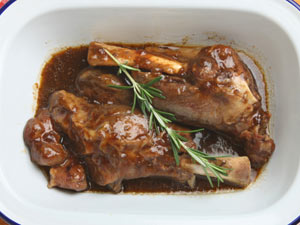
Coorg a district in the North of Karnataka is well known for its mutton curry. Mutton curry here is made with bones with a slim layer of meat. It is called Yarchi Nad Kanne. The mutton curry has the flavour all the aromatic home grown spices.

Being a hilly area, the spices in most Coorgi recipes are fresh and play a vital role. Yarchi Nad Kanne too makes it spiced with fresh pepper. An innovative twist is added to this Indian recipe for mutton curry. Yarchi Nad Kanne is cooked like a broth of bones instead of a meat curry.


Ingredients For Mutton Bone Curry:

Mutton bones with little meat (ribs and leg pieces) 300 grams

Onion 1 (chopped)

Garlic cloves 7-8

Tomatoes 2 (chopped)

Freshly ground pepper 2 tbsp

Cumin powder 1 tbsp

Cinnamon sticks 1 inch

Cardamom seeds 10

Mint leaves (optional) 3-4

Oil 2 tbsp

Salt as per taste

Procedure For Mutton Bone Curry:

Heat oil in a pressure cooker. When it sizzles, add cinnamon stick, cardamom seeds and onions.
Saute the onions till it turns golden. Add the garlic and stir it for a minute or two.
Add the mutton bones to the cooker. Reduce the flame and let them fry for 2-3 minutes.
Add the tomatoes in the end. Sprinkle salt on it and let it cook in its own juices for 4-5 minutes.
Sprinkle all powdered spices, namely, pepper and cumin powder here. Fry it for 2 minutes before adding 4 cups of water.
You can add a few twigs of mint to the watery curry before fixing the lid.
Cook the broth for at least 5- 6 whistles. The bones need to melt in your mouth and the marrow needs to seep into the broth.
Serve this mutton curry with melted bones as a side dish for steamed rice with special Coorgi meat pulav.

source: http://www.boldsky.com / Home> Cookery> Non-vegetarian> Mutton / Tuesday, April 17th, 2012

Bank’s trust to open 10 centres in State

The Gramina Abhyudaya Financial Literacy and Credit Counselling Trust, sponsored by the Corporation Bank, plans to open 10 centres in the State.

Managing trustee of the trust T.V. Bhat told presspersons on Tuesday that the centres would come up at Channapatna, Magadi, Kanakapura, Belur, Periapatna, Jamkhandi, Savadatti, Ranebennur, Jagalur, and Tirthahalli. During the current year, the trust would focus on providing financial education in rural areas with the help of government departments and banks. It would also provide preventive counselling on loans up to Rs. 1 lakh for new borrowers.

The trust had opened district-level financial literacy centres at Chikmaglur, Madikeri, Ramanagar, and Udupi. It had opened block-level centres at Amethi in CSM Nagar district of Uttara Pradesh, Gonikoppa, Sagar, Honnavar, and Somwarpet in Karnataka. In all, nine centres had been opened, he said. The Corporation Bank was presently meeting the expenses of the trust. The counsellors of the trust counselled 2,085 borrowers about the proper use of loans . As per the directions of the Reserve Bank of India (RBI), each FLCC trust had to open centres in all the blocks of the lead districts. This trust was the first in the country to open FLCC centres in all blocks of Kodagu , Mr. Bhat said.

source: http://www.thehindu.com / News> Cities> Mangalore / by Hindu Staff Correspondent / Udupi, April 18th, 2012

Madikeri: ‘Omkara Sadana’ Inaugurated in Omkareshwar Temple Precincts

Madikeri: Temples and religious centres had a major role to play in creating awareness and social commitment among citizens, said state assembly speaker K G Bopaiah here on Wednesday.

He was speaking at the inauguration of the new ‘Omkara Sadan’ built on behalf of the department of religious endowments and the temple management committee, in the precincts of the historic Shri Omkareshwara temple here.

“Our country comprises a variety of faiths, castes and sects and in this backdrop, the religious centres are functioning to create unity and a firm civil society. Hence the government has been giving generous grants to these centres. Therefore the benefits should be available to people of all faiths and communities,” he stressed.

He pointed out that in the modern set-up, the middle-class and low-income groups were being forced to spend heavily at the time of their children’s marriage. Hence he urged that ‘Omkara Sadan’ be made available to the poorer classes at very reachable rates, without allowing any commercialism to creep in.

He added that religious centres and temples had their own unique place in the society and they should be carefully conserved. They should remain hallowed places of worship and should not merely function as tourist spots.

Madikeri MLA Appachu Ranjan inaugurated the dining hall. MLC T John said that the Omkareshwara temple had a deep historical significance and expressed happiness over the improvements in facilities. While saying that the facilities should be available to the general public, he assured of a grant of Rs 2 lakh from his legislator’s fund.

Temple management committee president K S Ramesh Holla presided over the function. Former president K S Devaiah and contractor Ravindra Rai were honoured on the occasion.

Zilla panchayat president Shanteyanda Ravi Kushalappa, TP president Hosamane Kavita Prabhakar, former MLC S B Medappa, ZP members S N Raja Rao, Ballaranda Mani Uttappa and Beena Bollamma, APMC president Bellu Somaiah, M P Sunil Subramani, renovation committee member G Rajendra and other committee members were present on the occasion.

C N Somesh compered the programme. Arun Kumar welcomed the gathering. Shraddha and archak Subrahmanya Holla made an invocation. Sharada Mandappa thanked everyone.

source: http://www.mangalorean.com / Team Mangalorean- Madikeri / by Ashwini Appaiah with Vartha Pics / April 12th, 2012