Captains, coaches named for WSH teams

New Delhi, Nov 26 (PTI):

India’s top midfielder Sardara Singh has been appointed the captain of Bhopal outfit, while former India coach Jose Brasa of Spain is all set to train the Chennai team in World Series Hockey to be held from December 17 to January 22 next year across several cities in India.

Besides Brasa, world’s leading coach Roelant Oltmans will also be seen imparting his knowledge to Lucas Vila-led Delhi while former India skipper Jude Felix will coach Bangalore, to be captained by Arjun Halappa.

Meanwhile, former Pakistan captain Rehan Butt will be leading the Chandigarh outfit.

The appointments were made at a franchise workshop held today and the Yannick Colaco, COO of Nimbus Sport said that the franchises are happy with the appointment of the captains and coaches.

“The franchises are delighted with their appointment of the captains and coaches. The dynamic combination of the world’s most explosive players and the best coaches will provide inspirational leadership to the respective teams,” he said.

The WSH will involve eight teams, consisting of 200 leading players — Indian and international — who will showcase their talent in 61 matches. It will be a multi-city franchise-based League.

source: http://www.deccanherald.com / Home> Sports / Sunday 27th, 2011

CNC welcomes move to set up central varsity

The Codava National Council (CNC), spearheading the movement for creation of an autonomous Kodava homeland for Kodagu, on Sunday, welcomed the proposed move of the State Government to write to the Centre recommending establishment of a Central University to Kodagu.

CNC president N.U. Nachappa said in a statement on Sunday that the credit of the decision should go to the CNC, which had been submitting memorandums to the Centre and the State Government through the Kodagu district administration over the issue for many years now.

Mr. Nachappa quoted a report appearing in a section of the press in Bangalore on November 17 which said that following the proposal made by the CNC for a separate Central University dedicated to the study of Kodava ethnic culture, the Karnataka State Higher Education Council had resolved on November 16 to write to the Centre recommending the establishment of a Kodagu Central University, similar to the one in Gulbarga. However, Minister for Higher Education V.S. Acharya had said it would not deal with Kodava studies only. “We do not want to restrict it to just one subject. We will write to the Centre for a Central University in Kodagu region,” Mr. Nachappa said quoting the report.

He said the CNC was happy to know that the State Government was taking the lead in forwarding the recommendations made by the Deputy Commissioner, Kodagu, based on the several memorandums submitted by CNC, seeking the establishment of Central Kodava University and World Kodavology Study Centre. ‘The CNC is grateful to Mr. Acharya for having considered our legitimate claim with judicious perspective’, he said.

Census

Mr. Nachappa appealed to the Kodagu Deputy Commissioner to direct the caste census enumerators to enlist the Kodava people separately under the columns of the ‘Kodava’ caste, and not as ‘Kodagaru’ or ‘Kodaga’ or ‘Coorgi’ in the census sheets. The census was set to begin in the last week of this month.

Kodava Day

The CNC would be observing the annual ‘Codava National Day’ on November 24 at the Gandhi grounds in Madikeri, Mr. Nachappa said. It would mark the 20th year of the struggle of the CNC. The CNC would reiterate its stand on the creation of an autonomous Kodava homeland.

source: http://www.thehindu.com / National> Karnataka> Mysore, November, 22nd, 2011 / by Staff Correspondent

Lavazza brews big plans for India

The Italian coffee chain may find the going tough in an already crowded market.

To appeal to the crème-de-la crème, Italian coffee roaster Lavazza is here with a new format Espression. The first of its speciality format recently unveiled in Delhi, will be gradually extended to Bangalore and Mumbai. The company is targeting 30 such stores over the course of three years. Unlike the company’s other international retail formats like Caffe di Roma (Spain), Onda (Bulgaria) and Barista (India), with Lavazza Espression the ambition is to develop a global coffee retail brand.

In India, Lavazza Espression will continue to co-exist with Barista Lavazza and its premium extension Barista Crème. Capuano dismisses any cannibalisation with Barista’s premium format. “Unlike Crème, with Lavazza we will not adapt the taste to the Indian audience as we want to provide a truly international experience,” says Attilio Capuano, Asia and Pacific Director, Lavazza. With Espression, the offering in India will be similar to the menu in its 30 stores across the globe, and prices will be 15-20 per cent higher than Barista Lavazza. To ensure a consistency in taste, Lavazza will train staff at the Fresh & Honest (its coffee vending business acquired by Lavazza in 2007) training centre in Chennai.

According to Capuano, the most critical part of the Lavazza Espression strategy is to identify the right location for the retail footprint. Upscale locations within the metros and zones like international airports will help target expatriates and Indians who are exposed to coffee culture in the West. This will be significantly different from the locations of Barista Lavazza, who is primarily targeting youth. Technopak analyst Purnendu Kumar agrees location is key for premium coffee retailers. “Such retailers who are targeting the office going crowd need to be in close proximity to where the consumer is as these people do not prefer to walk a distance to pick up a cup of coffee,” he says.

For the Turin-based company, increasing retail presence is one of the ways Lavazza is trying to establish ground in India. Today, 65 per cent of the business in India comes from its Fresh & Honest, while 45 per cent comes from Barista and Barista Creme. However, with the new format, the revenue split might get skewed towards the retail business, believes Capuano.

However, making its presence felt is not going to be easy. For one, the market is already crowded with several players expanding their presence. While Tata Global Beverages is bringing the Seattle coffee giant Starbucks to India, the ambition of homespun chain Cafe Coffee Day with a network of 1180 cafes in the country is no less ambitious. It is experimenting with upscale coffee outfits like Coffee Day Lounge and Coffee Day Square. There are international chains like Costa Coffee, The Coffee Bean & Tea Leaf, Java Coffee and Gloria Jean’s Coffee which are ramping up presence in India.

Also, Barista’s track record in India, also might leave us hesitant. For one, the company has changed hands a few times, leading to an inconsistency in management policies. Founder Amit Judge of Turner Morisson sold 65 per cent to Sterling’s promoter C Shivasankaran and the rest to the Tatas. Later, Tatas too exited the business handing over the entire ownership to the NRI businessman Shivasankaran.

“The other worrying factor is that the company shut down close to 40 Barista stores across India, perhaps because they were not doing well,” notes an industry insider who does not wish to be named. “Barista Crème too has not done well, given the differentiation from the base chain was hardly there,” he adds. So, bringing in this new format, where there is higher level differentiation could perhaps put their past behind them.

Lavazza, on its part, is serious about India. This is evident in the fact that it is setting up a new production facility in the country, which will be up and running by 2012. At an investment of 120 crore, the facility, which will be the first one outside Italy, will allow the company better margins which will translate into price advantage for the consumer. Currently, there is 100 percent import duty on green and roasted coffee.

Once the manufacturing facility is up, the plan is to develop 100 per cent Indian coffee blends which can be sold through Fresh & Honest, and later exported to other markets.

source: http://www.business-standard.com / Home> Mgmt & Mktg / by Preeti Khicha & Dilasha Seth / Bangalore, New Delhi / November 23rd, 2011

3 more ICH in Thiruvananthapuram

THIRUVANANTHAPURAM:
Some things endure, like the Indian Coffee House (ICH) and its grand, turbaned bearers. Tough competition from slicker, medium-sized restaurants notwithstanding, the ICH is on an expansion mode here.
In the city, the India Coffee Board Workers’ Society – which operates ICHs – is planning to open three more new outlets in the immediate future. Two are to be opened shortly, at Peroorkada and at the General Hospital. A third one will target Technopark, and will come up on the Kazhakkoottam Bypass next year.

ICH has 11 outlets in the district now, counting the ones at the Kerala Legislative Assembly, the Secretariat and the Corporation. For some time now, as part of a survival plan, ICH has been preferring highways and suburbs as locations for new outlets. Two of the newer outlets are at Venjaramood, for instance.

“We’re moving out to the highways now. If you have an ICH near a busy place such as a hospital, you get a decent crowd. But small families are patronising our outlets more and more and they prefer a place with parking space. One reason why we are moving to the highways,’’ says V T Varghese, society secretary.

Loss-making outlets are readily closed down or shifted to a more profitable location in the same region. For instance, the old outlet in Attingal town was shifted to the nearby highway the other day.
ICH has also approached the government for alternative space at Shanghumugham Beach after the much-patronised open-air restaurant in the Sports Council building was shut for renovation. But it’s feared that the ICH will not be reinstated here once renovation is over.
ICHs offer up to 60 dishes, from ‘desi’ ‘masala dosai’ and ‘vada-chutni’ to carefully-trimmed sandwiches and double omelettes. And that strange dish which only ICHs seem to offer; beef omelette. But experimenting with newer dishes is not on the cards – at least for now, says Varghese.

“Recently, some of our canteens began giving yellow ‘masala’ for ‘poori’ since other restaurants offer it. But the customers made such a ruckus, we immediately moved back to the beetroot-red curry.’’

source: http://www.ibnlive.in.com/ Express News Services, The New Indian Express / Thiruvanthapuram, November 23rd, 2011 /

The healthy choice

Some simple steps that can help provide 
affordable, quality health care anywhere in India
By Dr Kavery Nambisan
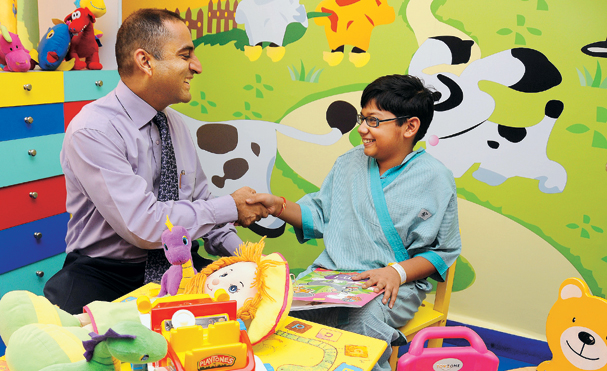
Healing bond: Dr Anupam Sibal with a patient at Indraprastha Apollo Hospitals, Delhi. Among the essential qualities of a doctor is the ability to empathise / Photo: Arvind Jain

Medical care in our country is like a patchwork quilt: a few small segments sewn with lovely silk while the rest are frayed and falling apart. Millions of Indians are deprived of basic medical facilities because they are too expensive. Well-to-do Indians have the right to be healthy. The rest simply suffer or die. We like to boast about the richness of our culture and about the billionaires who figure prominently in the news but when it comes to human development, we are paupers.
The imbalance in health care, the dreadful state of most government hospitals and the exorbitant fees charged by private doctors are common knowledge. How shall we redress these?

Like several of my colleagues, I have spent most of my surgical career working in rural areas, in south and north India. In many such places, being the only qualified surgeon, I had to handle all types of cases. Rural folk are hard-pressed for money and cannot spend too much on any illness. My experience and that of my colleagues shows that quality medical care that is affordable can be given anywhere in India (or any other country) by following a few essential steps.

As medical students we spend five and a half years learning the art and science of medicine. But we are not sensitised to the unique nature of a profession that has to deal with pain and suffering all the time. Mere moral lectures will not do. One way to sensitise young minds is by introducing humanities into the medical curriculum as is being done in many countries. It will help produce more rounded personalities, better equipped to take on the high-pressure job of a doctor while retaining human values.

For a young doctor, there are riches to be had from working with an experienced senior, especially in a hospital where the resources are not plentiful. He will learn to adapt and innovate, use his clinical judgment and will not be easily tempted to do too many investigative procedures like blood tests, X-rays and scans. He will be an all-round doctor rather than one with narrow experience. We certainly need specialists and super-specialists for the treatment of certain problems but for the majority of ailments, an efficient MBBS doctor is all you need. He can learn multiple skills by working with a senior who is willing to pass on his experience and knowledge.

A surgeon working in a small town or village should be able to do a hernia repair, mend a broken forearm, manage prostate trouble or do a caesarean section. He should be able to handle common medical problems like chest infections, skin allergies, diabetes, angina and high blood pressure. A multi-skilled doctor can handle 85-90 per cent of all patients walking in or wheeled into the hospital.
Doctors must have the ability to empathise. This quality can be developed by any doctor who is able to put herself in the patient’s place. She is then more likely to come up with the right mode of treatment.

A part of this process is telling the patient why he fell ill, explaining the disease and teaching ways of preventing future problems. This is an essential part of a doctor’s job but is totally neglected for two reasons: patients never ask questions like “What caused this illness?”, “What exactly is diabetes/blood pressure/eczema?” or “How do I protect myself in future?” Most of us prefer to fall sick and then be cured after suffering the pain and agony. This is silly, because learning how to prevent future problems is far better for health. Instead we are grateful when the doctor gives a few minutes of her precious time to prescribe medicines.

We doctors like to think that we have too much to do and little time to talk to patients. By readjusting our priorities and the way we work, it can be done. The rewards are tremendous, for both patient and doctor.
Small, well-run hospitals are much more efficient than large ones. It may make good business sense to have 1,000- and 2,000-bed mega-centres with hundreds of doctors and thousands of paramedics, and the main objective of making a profit. This usually results in diminished quality of care. The ideal in-patient capacity for a rural or a small-town hospital is 60 beds. In a city, it could go up to 100 or, because of multiple speciality departments, 200. In such hospitals, the doctors, nurses and other staff get to know each other. They meet and talk every day, not just as medical professionals but also as ordinary human beings. This makes it easier for them to work as a team and it boosts their morale. They are less stressed and more caring. For the patient, a well-managed small hospital with efficient doctors and staff is a real boon.

A good hospital will say ‘no’ to unnecessary gadgets. A hospital should have only those machines which are in regular use, with the exception of certain life-saving emergency equipment which are essential. Before any new purchase is made, its usefulness and running expenditure must be carefully looked into. Some hospitals buy equipment the way a fashion-crazy youngster blindly follows the latest style, without stopping to consider if it will suit her. The running expenses for rarely used equipment will be very high, and patients will be made to go through needless investigations in order to recover the money.
Most illnesses require fairly simple treatment and very little in the form of investigations and tests. An efficient doctor and nurse can do far more than any gadget. In many peripheral hospitals, seriously ill patients (like those who have suffered a heart attack or undergone major surgery) are being cared for perfectly well by giving intensive nursing care without the use of a multitude of gadgets. When more sophisticated methods are absolutely essential, such patients can be referred to a higher, multi-speciality centre. This will be psychologically better for the patient, and the medical bills will be a fraction of what one would pay in a fully-equipped ICU.

Choices such as these—of keeping the treatment simple and effective at all times—have to be made by those who run small hospitals. Any patient who cannot be treated without sophisticated gadgetry and/or by super-specialists should be referred to the appropriate centre at the earliest. In the vast majority of cases, this is not necessary.
For a doctor (or nurse or any hospital staff), there is no greater joy than that of seeing a patient cured and happy before going home. If more doctors can come together with this purpose in mind, we can do much more for the health of our nation than by blindly applying our knowledge. The knowledge is very important. But without genuine caring, it is at best cosmetic. And from experience, I know that a good living can be honestly made without chasing money.

Can doctors fulfil the real needs of patients? We need to make the right choices. The rest is simple.

Nambisan is a surgeon and novelist. Her most recent novel, The Story That Must Not Be Told, is shortlisted for the DSC South Asian Literary Prize.

source: http://www.week.manoramaonline.com / Cover Story / THE WEEK / Saturday, November 19th, 2011

Karnataka keen on central varsity in Kodagu

Higher Education Minister VS Acharya has said that the state government is keen to set up a central university in the Kodagu region, similar to the one currently in Gulbarga.

At a press conference regarding agendas in higher education on Wednesday, the minister said the state would soon write to the Centre in this regard. Acharya said the Koduva National Council had made a proposal that a university to study ethnicities of the Koduvas be set up. He added that the proposed university should focus on culture, language and other aspects. He said it would be called Karnataka Koduva Central University.

Scholarships
He said the knowledge commission has suggested that the number of scholarships be increased. “The principal secretary will discuss it with the knowledge commission. Right now, only government colleges are providing scholarships, which we want to increase. We are looking for donors for this cause, who will be exempted from paying tax. We will write to the university of social justice and UGC regarding this. We are also looking at a public-private participation model for this,” he said.

The minister hoped this would encourage students to take up college education. The scholarship would come under the Karnataka scholarship scheme. Acharya said that at present, Rs12,000 crore is being spent on education, including on the university, infrastructure creation, expansion etc.

Grading system
Acharya said that a committee of vice-chancellors would decide on equalising international rules. “Coming out with a merit list is difficult since different colleges/ universities follow different grading systems. Hence, for equalising (converting grades into marks and vice-versa) the committee will help,” he added.

With regard to the opening of sectorial universities, Acharya said permission should be sought from ICAR before starting them.

This will be implemented in the coming days, he added. It was also mentioned that regulations must be standardised in the BT-finishing schools. Currently, there are 12 of them in the state.

source: http://www.dnaindia.com / Home> Bangalore> Report / by DNA Correspondent / Thursday, November 17th, 2011

You never know what the future holds

Says model Dayana Erappa, who bagged the title of ˜Miss Photogenicâ™ at the ˜Miss India 2011™ pageant

Like many young girls, even Dayana Erappa, a Bangalore model, dreamt of taking part in the ‘Miss India’ pageant.

Her grooming started when she entered college and her principal saw the potential she had in the glamour world. Before she knew it, Dayana was on her way to take part in the ‘Miss India 2011’ pageant. She even won the title of ‘Miss Photogenic’ at the pageant.

Speaking to Metrolife during the ‘Beyu Fashion Show’ held recently, the model expressed how she would have loved to bag the crown. “Not winning the contest was a little disappointing. But I am happy about the ‘Miss Photogenic’ title. At the end of the day, it’s the experience that counts. For a young girl like me, it was a huge thing to work with some of the biggest names in the industry,” she says.

The grooming and expert advice she picked up from the pageant are things that she applies during her work. At the same time, Dayana says that there is no denying the heavy competition that surrounds her. “It’s all about how each one perceives it. There are so many newcomers entering the modelling industry every year but if we start worrying about that, it will kill the fun part of the job. I feel we, as models, must stick to giving our best, that is to show the hard work of the designers in the best way possible,” adds Dayana, who dreams of walking the ramp for Roberto Cavalli.

Apart from modelling, Dayana is also interested in acting. So getting into the film industry is definitely a part of her agenda. Ask her who she would like to be cast opposite and she gives a list of names. “But I would love to act with Suriya and Vikram.

They are my all-time favourites. I do plan to act but not right now. My concentration is on modelling. But you never know what the future holds,” she signs off.

source: http://www.deccanherald.com / by Megha Shenoy / Home> Supplements> Metrolife> Beauty Speak / Friday, November 18th, 2011

Dash of creativity gives secondhand stuff the edge

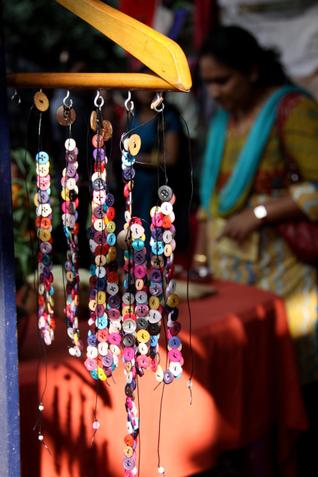
In keeping with Bangalore’s ongoing celebration of all things recycled, the Flea Market at Jaaga fit the bill.

The event was organised by Second to None, a group that encourages people to buy and sell used products.

The flea market organised in Bangalore by the NGO Second to None encouraged people to buy and sell used products. Photo Ashwini N. The Hindu
“The idea behind the flea market was to provide a space for people to sell and buy secondhand material without going to the trouble of marketing or advertising. With different choices, customers buy items at a lower price than a new one, and which are in just as good a condition,” explains Anu Gummaraju, a founders of the organisation with Reena Chengappa and Shilpa Kamath.

The atmosphere was informal, yet the event created awareness among visitors about the simplicity of turning ‘waste to wealth’. Angad Gummaraju, a 14-year-old, took great pleasure in teaching kids — and grown-ups — how to make jewellery boxes and lamp holders in fifteen minutes through origami.

How did he learn to make these trendy accessories? “YouTube,” he quips, demonstrating just how easy it is to be ecofriendly and resourceful while having fun.

About thirty participants were seen exhibiting their wares at the stalls. Belaku, an NGO, had brought in bags, notebooks and trendy jewellery made out of recycled paper by disadvantaged village women.

Papier-mache artiste Rabi Ratnakar’s lamps and vases were a crowd-puller. “These are completely safe and extremely kid friendly,” he says.

Taantra Cakes sold preservative-free cupcakes. “This makes them more durable. The taste of the cakes gets better and they are healthier even without refrigeration,” explains Taantra Cakes owner Chaitali Singh.

Old books, clothes, bags, even photographs, found space in shoppers’ bags. Second to None is hoping to make every third Sunday ‘flea market Sunday’ so that more people can participate in the “recyclathon”.

source: http://www.thehindu.com /by Madhavi Shivaprasad / News> Cities> Bangalore / November 17th, 2011

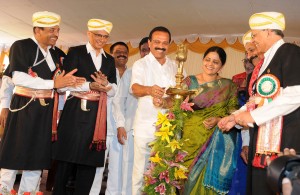
CM inaugurated Centenary Celebration of Kodava samaja

Chief Minister D V Sadananda gowda inaugurated Centenary Celebration of Kodava samaja. Speaker KG Bopayya, High Court Judge Bopanna, M C Nanayya MLC, Dati Sadananda Gowda seen in Picture.

Chief Minister D V Sadanada Gowda inagurated Centenary Celebration of Kodavasamaja.Speaker K G Bopayya, High Court Judge Bopanna, M C Nanayya MLC, Dati Sadananda Gowda seen in Picture

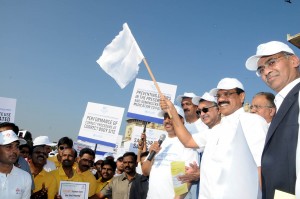
Chief Minister D V Sadananda Gowda Flaged off of Marathon Run by Quality Control in Health Management. Rajiv Gandhi University of Medical Sciences Vice Chancellor Dr Sheeprakash seen in Picture

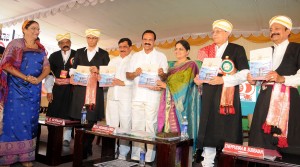
Chief Minister D V Sadanada Gowda Released Smarana Sanchike for Centenary Celebration of Kodavasamaja.Speaker K G Bopayya,High Court Judge Bopanna,M C Nanayya MLC,Dati Sadananda Gowda seen in Picture

source: http://www.sandanandagowda.com / Sunday, November 13th, 2011

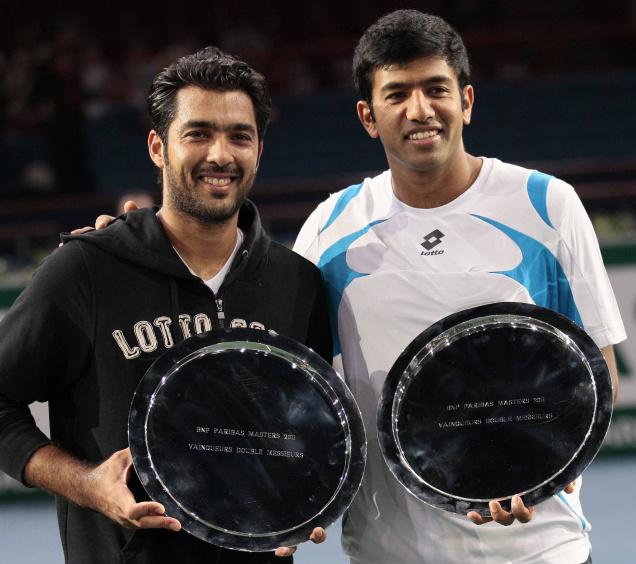
Bopanna & Qureshi win

A LANDMARK WIN: The triumph in Paris is Asiam Qureshi’s and Rohan Bopanna’s first Masters title. AFP
PARIS, November 13th, 2011
Maiden Paris Masters for Roger Federer

Rohan Bopanna and Aisam-ul-Haq Qureshi won their first ever ATP Masters tournament beating Julien Benneteau and Nicolas Mahut 6-2, 6-4 in the final here on Sunday.

The seventh-seeded pair took just 65 minutes to see off the French wildcards and pocket its third title of the season. Bopanna and Qureshi had won the Gerry Weber Open at Halle and the Stockholm Open before this event.

Bopanna and Qureshi broke in the third and fifth games to open up a 4-1 lead.

They were twice 0-30 on serve, but held on to close the set out.

Benneteau and Mahut, who had shocked top seeds Mike and Bob Bryan en route the final, gave a better account of themselves in the second set.

At 4-4, Mahut’s double-fault offered Bopanna and Qureshi a break point, which they gratefully accepted.

They then served the match out in the next game despite a few anxious moments.

One-sided final

Meanwhile, Roger Federer won the singles title for the first time here by defeating Frenchman Jo-Wilfried Tsonga 6-1, 7-6(3) in a one-sided final.

It was the Swiss star’s third tournament win of the year after Doha in January and his Basel hometown event last week.

It was also his 18th Masters title win, second only to Rafael Nadal who has won 19 times, and the 69th title of his career.

“This is the realisation of a dream for me and it’s been so long that I have been waiting for it,” said Federer, after receiving the Paris Masters trophy from French basketball star Tony Parker.

“Honestly, I am surprised myself at just how well I am playing.”

The win makes Federer just the second player after Andre Agassi to win both the French Open at Roland Garros, which he took in 2009, and the Paris Bercy title.

The results: Final: Roger Federer bt Jo-Wilfried Tsonga 6-1, 7-6(3).

Semifinals: Jo Wilfried Tsonga bt John Isner 3-6, 7-6(1), 7-6(3).

Doubles: Final: Rohan Bopanna & Aisam-ul-Haq Qureshi bt Julien Benneteau & Nicolas Mahut 6-2, 6-4.

source: http://www.thehindu.com / AGENICES / AFP/ Sports> Tennis/ November 1th, 2011