For the Kodavas, hockey is where the heart is

It is no secret that playing hockey comes naturally to the Kodavas. The national sport is a passion for them and many of the great Indian players hail from Kodagu. MP Ganesh, MM Somaya, CS Poonacha, AB Subbaiah, BK Subramani, PK Kalaiah and KK Poonacha are some among them.

Even now, Kodagu continues to produce hockey players in large numbers and there is always representation in the Indian team. But what attracts Kodavas to hockey? Former Indian captain and coach Ganesh explains: “Kodavas have a strong tradition of serving in the armed forces from the British era. Hockey was popular in the army then. At that time, only the army got to represent the country. So, our community has a strong liking for the game.”

Like many other players, Ganesh says he is what he is because of hockey.

“Hockey is life for me. I am known and recognised, thanks to this great game. It has taught me a lot of values in life,” he says. Having played for India in the World Cup and Olympics when the country was at its best in world hockey, Ganesh is not happy with the current state of the sport in the country. The number of players from Kodagu in the national team has come down slightly and he urges more kids to play hockey seriously.

When families become teams

The Kodava Hockey Festival is a unique tournament that is conducted in the district every year. It is a big tournament in which families enter as a team. The highest participation has been 281 teams in an edition. This event has even made its way into the Limca Book of Records.

The inaugural edition was held in 1997 and the man who started it was Pandanda Kuttappa, a hockey referee. The idea was to have a platform where all families can meet. After the inaugural tournament, the Kodava Hockey Academy was started to regulate and oversee future events.

The tournament has grown over the years and so has the prize money, which is currently about `1.5 lakh for the winning team. Apart from the cash prize, motorcycles and cars are given away as special awards for player of the tournament, highest goal scorers, fairplay trophy etc.

The 2011 edition of the tournament (15th edition) was held at Ponnampet and was hosted by Machamada family. A total of 228 families took part this time. In 2012, the Iychetira family will conduct it.

One can only imagine the festive atmosphere at an event as big as this. Apart from the sport, there are a lot of other activities like dog shows, helicopter rides, army bands performing, and laser and cultural shows. Food courts are also set up.

Former India goalkeeper AB Subbaiah, from the Anjaparavanda family, has played in the tournament 11 times. He says, “It is a different experience. All families assemble there and there is an audience of about 30,000 to 35,000 or even more. We get to meet a lot of our friends and current and past players. It is a great occasion.”

For the future, a large plot has been identified in South Kodagu and there are plans to set up the Kodava Tradition and Heritage Centre. It will have two international-standard hockey grounds, a heritage centre and museum.

source: http://www.dnaindia.com / by Vivek Phadnis / Home> Bangalore> Report> DNA / Monday, Nov 14th, 2011

Kodavas of Coorg: Bold, beautiful and brainy

That its men are brave and the women beautiful is an oft-remarked blanket statement about Coorg. The British called it the Scotland of India when they fell in love with this cool nook in the Western Ghats and its warm people.

The Kodavas or Coorgis are an ethnic minority. But unlike other minority communities, the Kodavas are largely privileged. In fact, a pleasant colonial hangover stays with the people who enjoy a good life with evening drinks, golf, and hockey.

Although a Hindu community on paper, their language, customs, and traditions are distinct.“Easily one of the most martial cultures in the country, these are a people who ritually worship their guns and swords. Interestingly, till a few decades ago, the birth of a male child was marked with a gun shot, announcing to the world the arrival of a warrior,” writes Pattamada Sundar Muthanna in a coffee table book on Coorg tourism, brought out by journalist PT Bopanna.

Thanks to the outstanding contributions of this community to the country’s defence sector, Coorg is also called the Land of Generals.Field Marshal Kodandera ‘Kipper’ Madappa Cariappa, the first Indian Chief of Army Staff of the Indian Army, was a Kodava. General KS Thimmayya was another brave soldier, who led the army during crucial conflicts with China and brought laurels to his homeland in the hills.

“The people’s right to carry arms was originally granted by the Kodagu kings, who did not maintain a standing army, but called on the people to fight when an invasion threatened. This right was formalised by the British when they exempted the Coorgis from the Arms Act. Today the Coorgis and a few other communities have the right to own guns without having to go through the process of getting a licence,” said Muthanna.

Characteristically, Kodava weddings are not exempted from the martial element either. The bridegroom, wearing his smart traditional costume— the knee-length kupya (similar to the Scottish kilt )—would chop banana trees with their carved daggers called pichekathi and odi kathi, symbolically to portray the duels he fought for the bride. The pichekathis are a part of the groom’s wedding gear, stylishly tucked into the cotton cummerbunds that hold their wraparound cloaks together. The ceremonies are tribal in nature more than Hindu, and are devoid of any Brahminical rituals. There is no chanting of mantras and slokas, and family elders direct it.

Like the Scots, Kodavas too stress upon their clan lineage. Their surnames indicate their clan, and inter-clan marriage is forbidden. Another distinguishing characteristic of this community is the high status given to women. According to the Gazette of Coorg, compiled by G Richter, published in 1870, “Young persons under 16 years of age are not married in Coorg. Exceptions from this rule are very rare. It is to be hoped that the Coorgis will ever be preserved from the misery of child marriages.” Dowry is forbidden, and widow remarriage is encouraged. Probably owing to the cool climate and the secluded terrain, the Kodava community is known for its liberalised outlook to alcohol consumption.

“Alcohol is offered to gods and ancestors during ceremonies. Children who have come of age enjoy a drink or two with parents,” said Muthanna.

A main festival in the Kodava calendar is called Puthari. It is an annual fest to celebrate the first harvest of paddy. Under full moonlight, stalks of paddy are cut and joyous gunshots mark the occasion.

The Kodava language is a mix of its geographical neighbours with many surprises thrown in. Malayalam, Tulu, and Kannada influences can be easily spotted, but the language is also unique as its people.

source: http://www.anhourago.in / DNA www.dnaindia.com / Home> Bangalore> Report / by Malavika Velayankkal / Sunday, Nov 13th, 2011

Centenary celebration of B`lore Kodava Samaja from Nov. 11 to 13

Mysore, Nov. 9:
The centenary celebrations of Kodava Samaja, Bangalore, will be held from Nov. 11 to 13.

Day One: Pooja rituals and cultural programmes will be held at the Samaja`s premises in Vasanth Nagar, Bangalore, on Nov. 11 at 4 pm. Mallengada N. Dada Belliappa, President, Federation of Kodava Samajas, Bollera Jaji Mandanna, former President, Kodava Samaja Bangalore, Kodira M. Appaiah, former President, Kodava Samaja, Bangalore and Berera M. Shambu Aiyanna, former President, Kodava Samaja, Bangalore, will be the chief guests. Cheppudira M. Thilak Subbaiah, President, Kodava Samaja Bangalore, will preside.

Day Two:
On Nov. 12, at 10 am, the stage programme will be held at the White Petals in Palace Ground, Bangalore. Governor H.R. Bhardwaj will be the guest of honour. Central Social Welfare Board Chairman Iychettira Prema Cariappa, Hatti Gold Mines Managing Director Avaremadanda K. Monnappa, Bangalore City Deputy Commissioner Muruanda K. Aiyappa and Brigadier Kodandera Arjun Muthanna will be the chief guests.

Day Three: The following day (Nov. 13) at 8.30 am, main function will be held at White Petals, Palace Ground Bangalore with Chief Minister D.V. Sadananda Gowda, Assembly Speaker Kombarana G. Bopaiah, MLC Meriyanda C. Nanaiah, MLA Mandepanda Appachu Ranjan and High Court Judge Ajjikuttira S. Bopanna as the chief guests.

Free bus from Mysore

Mysore Kodava Samaja has arranged a a free bus service from city to Bangalore on Nov. 13. The Kodava members intending to attend the function on that day may contact their area`s Association President or the Samaja Secretary.

The bus will leave the Samaja at 6 am.

source: http://www.mysoretrendz.com / source here: http://www.starofmysore.com

Tale of a forgotten World War II Hero

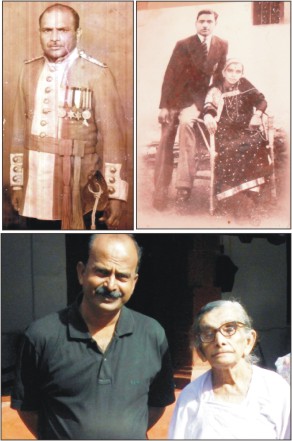
Late Subedar B.M. Uthaiah was a Prisoner of War for 5 years in Malaya


Caption: 1) Late Subedar B.M. Uthaiah. 2) For KEEPSAKE: The Uthaiah couple. 3) The author Ex-Sgt. M. N. Subramani seen with Subedar Uthaiah’s widow Dotty Thangamma at her native village in Virajpet.

By Mandetira N. Subramani, President, VeKare Ex-Servicemen Trust, Mysore.

Late Subedar Baltikalanda Medappa Uthaiah was born in Virajpet taluk, Kodagu District, on 13th November 1908. He did his schooling in Virajpet. After completing his SSLC , he took up a job in a Co-operative Society in Mysore.

A good sportsman and a brilliant hockey player, he used to actively participate in various athletic meets and hockey tournaments. His brilliance in sports and games got noticed by the then Mysore Land Force Officers and offered him a job in the Mysore Infantry as Havildar. Thus late Sub B.M. Uthaiah joined the first Battalion of Mysore Infantry in 1932 and went on to become a World War-II hero in his own right.

As a young combatant soldier, Uthaiah married Kodira Mandanna’s eldest daughter K.M. Dotty Thangmma in April 1940 while he was a Jamedar and at the time when the II World War had started. Jamedar Uthaiah became part of Indian Army as First Battalion, Mysore Infantry, which merged with the British Indian Army.

In Dec. 1940, that is within six months of his marriage, Jamedar Uthaiah proceeded to Bhopal in Madhya Pradesh for additional training in preparation for participation in the World War-II. After completing his training at Bhopal, he along with other members of Indian Army were shipped directly to Malaya from Bombay without even getting a chance to meet his wife and family for fighting against Japanese Army which was marching towards India through Burma.

As soon as the ship berthed in Malaya, the Indian soldiers were engaged in fierce fighting with the relentlessly marching Japanese Army. However, after a few days of fierce fighting for quite some time, the entire Indian battalion in which Uthaiah was fighting was surrounded by the Japanese Army and Jamedar Uthaiah was taken as Prisoner of War (POW) by Japanese Army. He along with other members of battalion were taken to Japan and put in a POW camp which was more like a concentration camp rather than POW camp.

Jamedar Uthaiah was subjected to severe torture and ill treatment by the POW camp authorities who were well-known for their ruthless brutal treatment to their prisoners. Since the prisoners were not permitted to communicate with any one outside the camp, Jamedar Uthaiah’s whereabouts were not known to any one in India including his Army Unit. His wife and family were totally distraught without any news of Jamedar Uthaiah.

His father Baltikalanda Medappa passed away in 1943 because of the sufferings of separation of his son and non-availability of any information about the son’s existence. The relatives and well-wishers of Jamedar Uthaiah and his wife Thangamma had concluded that he had become the war casualty and started preparation for re-marriage for Thangamma.

However, Thangamma was adamant and stood firm against re-marriage. She instead tried to find solace and comfort by visiting various temples in Coorg to pray for her husband’s safe return. Even after the end of World War-II, the whereabouts of Jamedar Uthaiah were not known and there was no communication from any quarter regarding his existence. During October 1945, after a gap of five years, the family members were informed regarding the arrival of Jamedar Uthaiah at Bangalore through a telegram which was received from Malaya via Colombo.

Immediately after arriving at Bangalore, Jamedar Uthaiah had to face a trial by British Army for possible involvement in Indian National Army (INA) activities. Finally, in December 1945, he was permitted to meet his wife Thangamma in Bangalore, who was very sick by then due to emotional suffering. He was subsequently posted to Bangalore till 1947.

He had to once again rush to Hyderabad in 1948 along with his unit to tackle the Razakars and to take part in the Hyderabad liberation which was successfully completed. However, he was very frustrated by all the treatments that he received from the British Indian Army in spite of all his sufferings and sacrifices. He finally took voluntary retirement in 1950 from the Indian Army and went back to his native district Kodagu. Subedar Uthaiah died on September 25, 1978, at the age of 69 like a true soldier unsung, unheard. His widow Thangamma, who is 92 years of age, now lives in Arji Village, Betoli post near Virajpet along with her youngest son, Bopanna. Uthaiahs were blessed with two daughters and four sons.

Late Subedar Uthaiah’s sufferings as a combatant soldier and a POW at Malaya during and after World War-II did not demoralise him in his life and he never thought ill of careers in Armed Forces when his son decided to join the Indian Air Force. True to the tradition of martial race to which he belongs to, as a Kodava, he encouraged his son, who was born after he returned to India from Malaya, to join the Arm-ed Forces in independent India. His second child B.U. Chen-gappa, an Engineering graduate, took commission in the Indian Air Force and went on to become a highly decorated Air Marshal in IAF.

Air Marshal Baltikalanda Uthaiah Chengappa, PVSM, AVSM, VSM retired in early 2000. Before his retirement, he held the appointment as Air Officer Commanding, Maintenance Command IAF.

Like father so is the son. A real chip of the old block. Air Marshal Chengappa went on to prove that Kodagu is indeed a cradle of mighty Generals, Air Marshals and valiant soldiers.

source: http://www.starofmysore.com / Features / November 10th, 2011

1971 Bangladesh Liberation War memoirs

When the Pak envoy was on the mule trail

The declassified 1971 war papers narrate a curious story of the Pakistani ambassador to Argentina fetching up an hour-and-a-half late for his farewell dinner. B K Sanyal, then India’s ambassador to Argentina, in a 1969 note to New Delhi found this amiss but said the Pak ambassador had not acted irresponsibly. “In my view, the ambassador did not act irresponsibly, but went away with a brigadier to visit mule breeders who are chiefly located in the Cordoba and Pampas areas.”

Before the 1971 war, Pakistan bought mules from Argentina to beef up its logistics capability in Kashmir. The Pak ambassador’s conduct triggered a chain of communications. K Sankaran Nair, then joint director, R&AW, wrote on Septemer 24, 1969, to C B Muthamma, joint secretary (Americas): “The Pakistani army has raised four mountain regiments and are likely to raise four more. These have mountain guns carried on artillery mules over hilly terrain. Eight mountain regiments would require 3,000 mules. The regiments are meant for use in PoK.”

How US responded to the signs of war

The 1971 war papers document how the US mission in India packed off confidential documents to secure places during the conflict, asked its banks to be ready to close accounts of American citizens and discussed the possibility of the war being a long affair.

A letter written at the peak of the Indo-Pak war by the then IB chief gives an insight into the mindset of the US mission in India during the 1971 war. “Sensitive documents with various US missions in India have been sealed under instructions from the US government. Thereafter, the documents are to be sent partly to Colombo and partly to Kuala Lumpur,” Atma Jayaram, director IB wrote on December 13, 1971.

Jayaram wrote that the “First City National Bank and the Bank of America in Madras were contacted by officials of the local US consulate and advised that they should prepare to close the accounts of American nationals and arrange for their transfer to places (presumably outside India) at a short notice.”

source: http://www.articles.timesofindia.indiatimes.com / by Josy Joseph / TNN / November 06th, 2011

Bopanna, Advani named `Global Shapers`

Bangalore:
Davis cupper Rohan Bopanna and ace cueist Pankaj Advani have been inducted into the `Global Shapers`, an exclusive community of exceptional youth in their 20s, established by the World Economic Forum (WEF).

Although Bopanna is 31, an exception has been made in his case, it was clarified. Advani, 27, has seven World titles to his credit.

According to the release, the community comprises of a selected band of exceptional youth from across the world, possessing unique qualities and extraordinary achievements that set them apart from the mainstream.

Representing all walks of life, these individuals are highly committed to developing their leadership potential towards serving society and adhere to the highest standards of moral and intellectual integrity, it added.

“We are becoming increasingly aware that solutions to our global challenges must purposefully engage youth, at all levels — locally, regionally, nationally and globally. This generation has the passion, dynamism and entrepreneurial spirit to shape the future,” Professor Klaus Schwab, WEF Chairman said.

IANS

source: http://www.zeenews.india.com / by IANS / Tuesday, Nov 01st, 2011

Chikka grabs Western India Golf title

MUMBAI:

Seenappa Chikkarangappa, the reigning National champion completed a comprehensive 11-shot win over fellow Bangalore player, Khalin Joshi in the LIC – Western India golf championships at the BPGC on Friday.

Chikka, who was having a less than satisfactory last few weeks, carded a five-under 65, and totaled a whopping 20-under 260. Khalin shot one-under 69 in the final round and finished at 271, 11 shots behind the winner.

Completing a 1-2-3 for Bangalore golfers was Udayan Mane (68), who added another good finish to his recent win on the IGU circuit. Mane totaled 274.

Chikka’s win fetched him 50 points towards the IGU order of Merit, while Joshi took 40. Dominic Foos (65, 279) and Angad Cheema (73, 279) tied for fourth at 279 and the sixth place was taken by Manav Das (71, 280).

source: http://www.articles.timesofindia.indiatimes.com / by TNN / November 05th, 2011

What is the need for post-party party and why you are not invited?

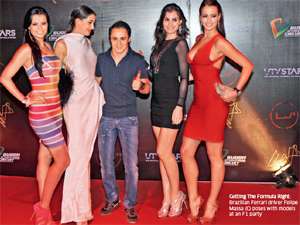
How do you know that a trend has caught on? It’s when the lowest common denominator, namely us, starts following it. Recently, a friend had an after party for her birthday party which incidentally was at Delhi’s swanky nightclub The Love Hotel at Ai, owned by the man who probably single-handedly fanned the after-party culture in the capital, AD Singh. It was Singh’s and actor Arjun Rampal’s co-owned nightclub brand Lap, Rampal’s Chasing Ganesha along with Jaypee Sports International ( JPSI) that powered the F1 after parties, which took five months to plan. “Large sporting events have visitors from all over the world and good after parties offer a chance for everyone to let their hair down,” Singh explains the raison d’etre of after parties.


If F1 put India on the world map, the after parties showed that Indians can throw a mean party. Even Lady Gaga went a little gaga, tweeting her pic with Rampal and pal SRK. And everyone from Bollywood glam to fashion biggies to society majors walked the red carpet to the F1 after party. “It’s a status symbol to be part of the after-party guest list. While the event is open to everyone who can buy the tickets, the after party is an exclusive privilege. And that’s what makes them coveted,” says Harmeet Bajaj, director of Smokehouse Room, a new nightclub in Delhi by Impresario – a group where Bajaj partners with Shiv Karan Singh and Riyaz Amlaani.

Gatecrashers are always a big problem at such events. “One gentleman pretended he was Mark Weber (the F1 driver) to get in,” Singh says. The after-party culture started with fashion weeks. The fash frat has always been known for it’s proclivity to partying and when it became a business event, the need was felt for a forum to let their hair down. Bajaj says: “The week has a very formal format where you sit on benches and watch show after show. Designers felt the need to socialise informally.” And after party was born. Soon, IPL started its ‘infamous’ after-match parties and now every sport and society event has one, even wedding receptions.

The Guest List
Who’s invited is the single-most important factor about an after party. Bangalore-based image consultant and fashion choreographer Prasad Bidapa who managed the after-match parties – all 30 of them – for IPL4 along with DNA Networks, says the after-party culture feeds on the “we are a children few” mentality referring to the feeling of privilege it brings to be part of the A list. “It creates a feeling of endless excitement too,” he comments.

But most after-match parties during IPL drew a lot of flak for not giving time for the cricketers to rest. In fact, even MS Dhoni had commented that too many “after parties are taking a toll on our energy levels”. While South African cheerleader Gabriella Pasqualotto has another story about the energy levels. In her tell-all blog on behind the scenes at the IPL the 22-year-old had said that: “The music pumps, the drinks flow and the cricketers come and go… But the real fun happens in the VIP rooms where the players and night owls can cause scandal!” After parties by very nature are more risque.

“If sport meets glamour sparks will fly unless you grew up in a convent,” says Bidapa. But not only sparks but even liquor -and the best one at that – flies off the shelf. “An after party has to have the best of decor, food and definitely liquor to live up to its guest list,” says Utkarsh Bansal of P3party.com and organiser of a many farmhouse and private after parties in Delhi. Bansal has seen a literal 100% surge in the demand for an after party from the friendly BYOB (Bring Your Own Booze) get togethers to the real heavyweight parties that require a velvet rope at the entrance. The high demands he has
noticed are for liquor, decor and now foreign hostesses.

We Like to Party

The unwritten rule for IPL parties is that the top stars need to show up. Reportedly, sponsors demand that stars turn up at least for a photo op and they do oblige. For smaller players of IPL, it’s a platform to network – after all, they also know that they won’t be getting an in into this world post the season. “After parties are the best networking platform there is. It’s the right mix of people – from fashion to films to bureaucrats and industrialists,” says Bajaj, enough contacts to fill your Rolodex.

The entertainment quotient at an after party is fairly minimal – maybe a ten-minute fashion show or a stand-up comedy routine. “It’s the whole feeling of living vicariously that this culture feeds on, it’s the same way I would read a piece on Maureen Wadia’s house,” Bidapa says and adds that an after party is now planned as a part of the whole event. It’s a media-created event which feeds the Page 3 and growing number of news and lifestyle TV. Bajaj says people have a guest list that’s divided into A lists, B lists and C lists. And everyone wants to be in the first one.

source: http://www.economictimes.indiatimes.com / by Nupur Amarnath / ET Bureau / Nov 06th, 2011

Smashing serves

Despite star players giving it a miss, the Karnataka Badminton league holds promise


Ashwini Ponnappa

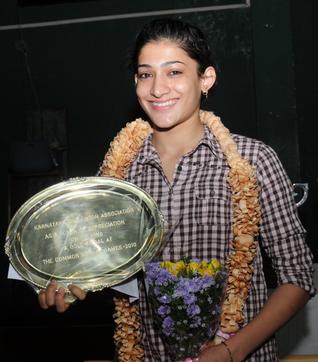
Ashwini Ponnappa commanded a price. The Commonwealth Games gold medallist (in the women’s doubles alongside Jwala Gutta) has star value and provided the glamour quotient to the inaugural edition of the Karnataka Badminton League (KBL). She fetched a whopping Rs 2.5 lakh for her appearance in the first week of the league, which runs from November 5 to 19.

“She has a star value and will keep the rest of the team motivated. That is why we bid for her,” says Vishal Vincent Tony of the Aratt Fighters, the franchisee that successfully bid for Ashwini. “Her presence in the team, even if it is only going to be for the league stages (Ashwini leaves for the Hong Kong Super Series on November 12) should do wonders to the morale of youngsters in the team. She is only participating in the mixed doubles category. We have also bagged Jacqueline Rose Kunnath, who commanded the second highest bid of Rs 1.06 lakh to play the women’s singles, there is no reason why we cannot do well,” says Vincent.

Beside the two women stars, Rohan Castellino was picked to provide the thrust in the men’s singles.

If Aratt Fighters spent huge sums on women players, franchisees such as Fly Power Warriors and Li Ning Lions did not invest on big names and instead opted for a balanced team. “This being the inaugural year, there was a lot of apprehension and uncertainty. We chose a couple of young guns to deliver for us and hopefully they will,” says Choudhary, a member of the Fly Power Warriors, for whom Rajas Jawalkar and Sindhu Bharadwaj will lead the singles challenge in the men’s and women’s categories respectively.

P. Kumar of Kumar Sports, owner of the Li Ning Lions, said: “Li Ning is the leading shuttle-cock manufacturer in China and is making its presence felt in the Indian market. This league could provide the perfect platform. We are happy with the team.”

Agarwal and Bhandari joined hands to form the AB Chargers and picked the top ranked men’s singles player, Mohit Kamath, alongside women’s player Mahima Aggarwal and doubles specialist Vineeth Manuel. “There were some hiccups but overall, I am quite satisfied,” says Bhandari after the players auction that lasted nearly six hours.

With Aditya Prakash and Prakash Jolly going to White Peacock and K2 Smashers respectively, one felt the Hennur Banaswadi Cosmopolitan Club (HB Challengers) were the ones to lose out, with just Rishiket Yeligar and B.S. Phalgun leading the challenge in the men’s singles. But Srinivasan (Secretary) and Krishna Kumar (coach), who once formed a strong doubles combination with George Thomas in the ’90s, felt the players would deliver. “We win some and lose some. It is a learning curve for us. We will be better equipped next time,” says Manjesh, who represented the K2 Smashers.

“There were too many caps,” was the general feeling and the phenomena resulted in active players like Poorvisha Ram and Ruth Misha going unsold. On the flip side were the withdrawal of the eighth team, Team Victor, from the fray and some internationally renowned names like Aravind Bhat and Anup Sridhar giving the league a miss for varied reasons.

source: http://www.thehindu.com / MetroPlus> Life & Style / by Avinash Nair / November 02nd, 2011

Thal and puttu

Community cuisine has entered the food scene in a big way, with restaurants promoting traditional flavours to attract customers.
After international cuisines — Chinese, Thai, Mexican or Italian — have dug their heels into the country’s metros, it is now the turn of community cuisines to capture the imagination of the eating-out population.

And instead of the usual State-centric fare like the Gujarati thali or the Kerala sadya, it is Bohri, Coorgi, Mudaliar, Kayastha cuisines that are in the limelight.

“Community cuisines capture the culture, tradition, geography, history and the quirks that regional influences bestow on the taste,” says Rajkamal Chopra, Executive Chef at WelcomHotel Sheraton. He and his team have been researching traditional cuisine in different communities, and flying in specialised chefs to promote those regional dishes.

Take South India’s Mudaliar community, which was one of the first to be showcased. Traditional kal chattis (mud pots) and vadakam (a mixture of onion, garlic and other spices) were used for that distinctive flavour of the community’s famous fish dish, Meen Kozhambu. For vegetarians, Vazhaipoo Vadai — vadas made using banana flower, Bengal gram and coconut — and yam dish Karnakazhangu Varuval were chosen. The non-vegetarians were treated to traditionally spiced lamb, Attu Kaal Kozhambu, and a host of other dishes.

To recreate the Dawoodi Bohra kitchen, Chef Ismail Khan was flown in from Mumbai. With the community’s roots in Yemen, the cuisine has many Arabic and West Asian influences. Bohra khichda (a delicacy made from mutton, wheat and pulses), kheema khichdi (minced meat pulao), Lagan ni seekh (layered minced meat made with onions, bread and topped with eggs), kheema samosa, mutton kaari-chawal (spiced coconut milk-based stew served with fragrant basmati rice topped with fried onions) were some of the specialities.

For the vegetarians, Dal Chawal-Palida was the main dish. Toor dal sauted with onions and tomatoes accompanies the basmatic rice and Palida is made from the stock of the cooked toor dal, along with either drumstick, bottle-gourd or sweet potato.

SHARING THE THAAL

Before adopting modern dining methods, Bohras would eat together from a large, round plate or thaal which was served with all the dishes placed on the shining platter. The diners – eight to a thaal– sit on the floor, and the circular thaal signifies that all are equal before Allah. This practice is followed even today during marriages and other celebrations. The thaal is placed on a round, elevated metal ring called the tarana, and each meal begins with a grain of salt, which is believed to clear the taste buds and allow better relishing of the flavours. The first, though not the only, item is a sweet and during feasts it is common to have as many as three desserts. No one can leave the thaal till every member has finished; else it is considered disrespectful not only to the rest of the diners but also the food.

The Bohras have many traditional sweets. Malida (sweet made with wheat and jaggery), Lacchka (cracked wheat halwa, usually made on the first day of the Bohra calendar), and Kalamdo (rice mixed with yoghurt, cream and sugar). Sancha ni ice cream (hand-cranked ice-cream) is a coveted dessert for special occasions.

Bohras also make a variety of soups to accompany the rice dishes. Some are cold, such as Kacchi Sarki (made with toor dal and garnished with cucumber, tomatoes, spring onions and beaten yoghurt), while the hot soups include Sarka (made from toor dal, groundnut and coconut).

PUTTU PARADISE

The Coorgi community too is known for its love of food and boasts a vast choice of traditional dishes. Largely rice eaters, they love a fragrant local variety — sannakki.

Rice dishes here come in multitude forms. Breakfast means an assortment of puttus (steam-cooked dishes). While Kerala puttus are of two-three types, the Coorgi ones include Kadambuttu (ball-shaped puttus), Thaliya puttu (flat puttus steamed on plates), Paaputtu (cooked with milk and shredded coconut), Nooputtu (noodle-like thread puttu), Od puttu (baked on a flat mud pan), Nuch puttu (made of broken rice), Madd puttu (made using a medicinal leaf), and Koovale puttu (made with ripe bananas or jackfruit and steamed in folded Koovale leaves or banana leaves). Wow, now isn’t that a massive variety of breakfast options?

Coorgis are essentially non-vegetarian. Pork is a hot favourite, cooked as Pandi curry and served with rice. Meat, chicken and fish are the other musts which are usually fried, roasted, grilled or made into curry. Meat and fish are also pickled by salting, smoking and drying, or turned into spicy chutneys that accompany rice. Just like in Mizoram, here too dried meat and fish are used during the long monsoon season, when people are mostly homebound.
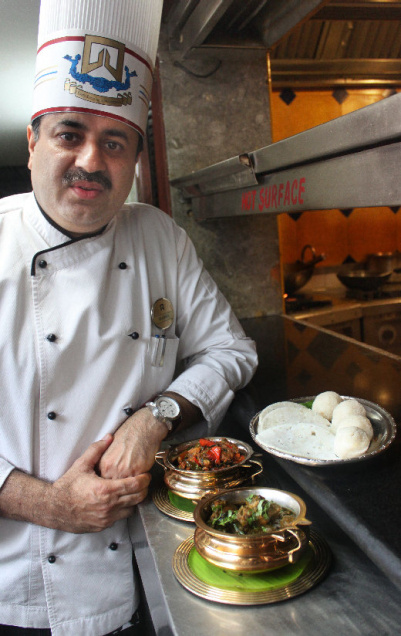

Chef Raj Kamal with Coorgi food

Coorg’s vegetable dishes largely owe to the abundance of forests in this fertile region. Baimbale curry is prepared from tender bamboo shoots, Kumm curry from wild mushrooms, Chekke curry from unripe jackfruit, Chekke Kuru curry from jackfruit seeds, Baale Kaamb curry from the stem of the banana plant, Kemb curry from the leaves of the colocasia plant, and Maange curry from raw mangoes. The basic ingredients in any traditional Coorg curry include coconut, ground with onion, garlic and a selection of spices.

NUTTY DELIGHTS

Food from the Kayastha community, on the other hand, is characterised by the generous use of ingredients such as almonds, cashew, and saffron. Rich as it may be seem, its reputation for being the most secular food in the country has given it high acceptance among foodies. Specialities of the Mathur community, this cuisine consists of dishes such as Badam Pasande (flat pieces of lamb cooked in an almond gravy), Takey Paise (besan rounds, that are fried and then curried), Yakhni Pulao, Kacche Kheeme Ke Kofte and Shammi Kebabs stuffed with mint and onions. The cuisine typically consists of red meats, an assortment of masalas, and lentils.

WelcomHotel Sheraton in the Capital, in fact, has made community cuisines its USP. While its Dakshin restaurant has been showcasing cuisine from South India, Bay Watch, its buffet square, has been experimenting with food from the North, East and West of the country. Delhi’s Rajdhani restaurant too prides itself on its community cuisines from the West.

A recent innovation is the use of SMS alerts for community cuisines. Often enough, messages pour in offering doorstep delivery of Kashmiri Muslim fare or Chettiar specialities. “And this is going to take the popularity of community cuisine to the next step,” says a die-hard foodie.

source: http://www.thehindubusinessline.com / by Preeti Mehra