How to carry off coloured denims with style

Photographer: Rakesh Ravindran

Denims are a definite fashion must-haves! But it has come a long way from being the traditional blue. And we’re not even talking about them taking one step up and being available in blacks and whites; denims today are available in absolutely radiant colours including mustard, green, orange, red and pink. And while these coloured denims are only getting popular by the day, there are a few dos and don’ts that need to be kept in mind so that you don’t end up looking like a circus tent. DNA gets model Karan Medappa to demonstrate the look…

Karan is been modelling for nearly three years now and has been part of several advertisement campaigns as well. “The theme for this week’s shoot is pretty cool as I wear quite a bit of coloured denims myself. I loved the styling by Shaggy and it suited the overall theme perfectly. Overall, I had a great time shooting for the column,” says Karan.

Accessorise me

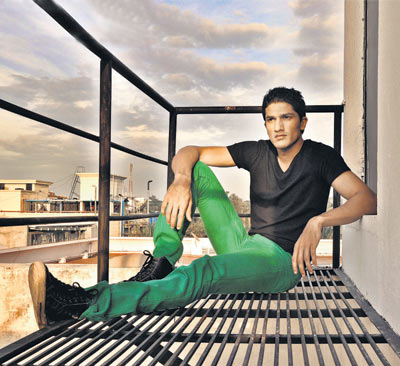
Too many accessories would spoil the show, and Karan was already aware of that. So he decided to go simple. He picked up a pair of trendy shoes that went with the entire look and strapped on a leather belt to complete the ensemble.

Check that outfit
In order to keep the look casual and yet stylish, Karan went with a pair of dark green denims and paired it with a black tee shirt so that it doesn’t look too dressy. In fact, a black T-shirt is apt when you’re wearing coloured denims.

Contour my face

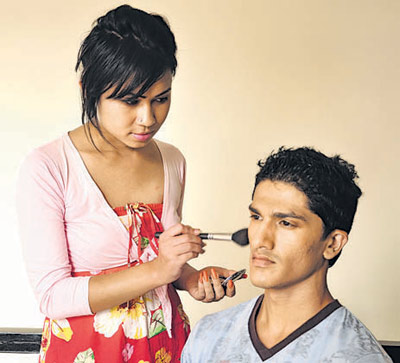
The only thing a casual look requires is a clean face. So, Shaggy first cleansed his face to remove excess oil. He then used a concealer and followed it up with a foundation. After that, he contoured Karan’s face in order to highlight his features.

Style that hair
The theme requires a funky hairdo and that’s exactly what Shaggy gave the model. To start with, he ironed Karan’s hair and followed it up with spikes. And to set the look, he used hair spray and gel to make sure the style lasted the whole evening.

Pics: Rakesh Ravindran
Make-up and styling: Shaggy Khuman


source: http://www.dnaindia.com / Home> Lifestyle / by Sharnaya C R / Monday, Sept 12th, 2011

On a bitter trail

India is now the third largest exporter of coffee in the world. So why can’t you find a good cup to drink?

A nondescript row of provision stores in New Delhi’s Lodhi Colony can be distinguished by the bittersweet aroma that envelops it. The culprit is a single source—one that other store owners know as the place author Arundhati Roy visits once a month, as do a sundry list of the city’s intellectual and artistic cognescenti, the likes of Upamanyu Chatterjee, Roshan Seth and Anjolie Ela Menon. It’s the only place in the Capital that sells fresh coffee—roasted, ground and packed on site.

From bean to cup:  Coffee varieties on display at Devan’s. Photo by Priyanka Parashar/Mint

From bean to cup: Coffee varieties on display at Devan’s. Photo by Priyanka Parashar/Mint


Keshav Dev, who runs Devan’s South Indian Coffee & Tea, a retail outlet started by his father in 1962, says his clientele is typically above the age of 35, comprising a small number of south Indian traditionalists, expatriates and “well-travelled” Indians. When Aman Rai, a retired civil engineer, walks in, he only has to say “three kilos” to have Dev send one of his employees to a back room with a large vintage grinder. “We have a small and dedicated clientele,” says Dev. “I know what most of them buy.”

According to New Delhi-based research and consultancy firm Technopak Advisors, around 1,000 of roughly 1,500 cafés in India have opened in the past five years. Meanwhile, international chains such as the UK’s Costa Coffee and Australia’s Gloria Jean’s have set up shop. By 2012, American coffee giants Starbucks and Dunkin’ Donuts will both enter the Indian market.

Dev believes his clientele will remain unchanged, though. “Cafés are mushrooming across the country because the young crowd needs a place to meet. We have no coffee culture to speak of,” he says.

Across the country, closer to the coffee-growing south, Peter Philips of Philips Coffee & Tea, a 70-year-old Mumbai establishment, echoes this. “People come over all the time and complain that our coffee didn’t ‘mix’ well. They think all coffee is instant coffee!”

Green beans being washed. Photo by Prashanth Vishwanathan/Bloomberg

Green beans being washed. Photo by Prashanth Vishwanathan/Bloomberg


Partly to address his own irritation, Philips, who hails from Kerala, started stocking coffee-brewing equipment, including south Indian metal coffee filters, a decade ago. He stopped in 2007 because of low sales, logistical wrangles and what he calls “too much effort for too little sales”.

What Philips does concede is that his customer base has widened. For a long time, it was only Mumbai’s large south Indian population, a few Parsis and diplomats, apart from hotels and restaurant chains. “Now, there are more locals…the curious ones.”

Cup of contention

Despite the brouhaha over Indian speciality coffees in the heavy coffee-drinking Scandinavian countries, India isn’t branded as coffee-literate. In The Devil’s Cup: A History of the World According to Coffee,a 2003 book that was translated into six languages, American author Stewart Lee Allen calls the instant coffee available in most parts of India a sickeningly sweet, piping-hot milkshake. He is particularly peeved by the addition of milk and calls Indian coffee “the world’s most consistently vile cup of joe!”

llen possibly never had a cup of Monsooned Malabar—India’s top-notch speciality coffee—during his travels. The heavy-bodied coffee has a musty, chocolatey aroma and notes of spices and nuts. It is called “monsooned” because it is exposed to monsoon winds, which make the beans swell and the coffee less acidic.

Coffee berries being plucked at a plantation in Kodagu.  Photo by Prashanth Vishwanathan/Bloomberg

Coffee berries being plucked at a plantation in Kodagu. Photo by Prashanth Vishwanathan/Bloomberg


The story of its genesis is the stuff of legend. The Dutch, and then the English, were exporting coffee from the Malabar Coast to the Norwegian coast of Europe from as early as the 17th century. The humidity of the wooden shipping boats and the sea winds combined to cause the coffee beans to turn from green to a golden yellow and lose their original acidity, resulting in a sweet and syrupy brew. When transportation was modernized in the early 20th century, the beans were much better protected from the elements.

In 1972, after repeated complaints of a quality drop, the Coffee Board of India, which is run by the Union ministry of commerce and industry, developed a process to replicate these natural “monsooning” conditions. Coffee beans were exposed to the monsoon winds in season—from June through September—in the port city of Mangalore.

Sunalini Menon, founder and CEO of Coffeelabs Pvt. Ltd, a Bangalore-based coffee consulting firm, calls this move a pioneering effort for the Coffee Board. “When they went for this ‘branding’, the world was yet to discover speciality coffees. It was far before gourmet varieties such as Colombian Supremo were coined,” says Menon.

Today, Monsooned Malabar has something in common with champagne. In 2008, it acquired a Geographical Indication (GI) tag, which is awarded to products that have characteristics traceable to a particular region. Less than 160 products have this distinction in India, some others being Darjeeling Tea and Banarasi brocade.

But as a coffee drinker in India, rarely does one get a taste of the best. Almost all of what a premium estate such as the Athikan Estate in BR Hills in Karnataka produces, is exported. Coffee beans from the 130-year-old estate won the “Best Arabica” award in Flavour of India—Cupping Competition 2011, an annual event conducted by the Coffee Board to boost planter quality. S. Appadurai, who owns Athikan, sells his green coffee beans via weekly auctions to coffee-roasting companies around the world. Prices average Rs260 a kilogram. This year’s harvest, for instance, went to the US, Australia and Korea.

While around 80% of the coffee produced in India is exported, almost all of its prized Monsooned Malabar goes out of the country. “There is no taste or demand for it here,” says Menon.

Meanwhile, India’s coffee trade is growing at a phenomenal pace. From being the sixth largest exporter of coffee between August 2009 and July 2010, India became the third largest in July this year, trumped only by Brazil and Vietnam.


Most of India’s coffee is grown in Karnataka (which accounts for 53% of the production), followed by Kerala and Tamil Nadu. It was in Chikmagalur in Karnataka—where apart from family-run businesses like Appadurai’s, India’s largest café chain Café Coffee Day owns plantations—that coffee was planted for the first time in India.

The story goes that it was introduced in 1670 AD by a Sufi saint on his return from Mecca. The Arabs, who had started cultivating coffee in the 15th century, had imposed a ban on the export of fertile coffee beans, but the Sufi saint had been able to carry seven seeds back.

Due to its early development of plantations, Chikmagulur continues to take the top spot as India’s coffee centre. It even hosts the laboratories of the Central Coffee Research Institute and a coffee museum.

India does have a strangely wrought relationship with coffee. The International Coffee Organization, a London-based inter-governmental body, acknowledges that India was the first place that coffee was cultivated outside the Arab peninsula (well before tea was introduced in the 1820s). Still, general awareness about coffee is low—only a few outside of trade circles would even know of the Monsooned Malabar.

The perfect brew: Keshav Dev with his coffee roaster. Photo by Priyanka Parashar/Mint

The perfect brew: Keshav Dev with his coffee roaster. Photo by Priyanka Parashar/Mint


Menon lists other premium coffees branded by the Coffee Board: Mysore Nuggets Extra Bold, Robusta Kaapi Royale. She should know; she named them. Before setting up her own lab in 1996, she served as the director of quality control on the Coffee Board for 20 years. She set the quality standards for Mysore Nuggets—the highest grade of Indian Arabica coffee, which she describes as sweet with a complex aroma and a hint of spice.

Menon believes Indian coffee is especially flavourful because it is shade-grown, unlike other parts of the world. In Kodagu in Karnataka, plantation owners grow intercrops such as guava, jackfruit, cardamom and pepper. The fruits and spices planted alongside coffee bushes lend an incomparable flavour to the coffee bean. Wine drinkers would be better equipped to discern these nuances. The description of flavour notes—terms like fruit finish, bouquet, spice notes—borrows from the vocabulary of wine.

Indian coffee growers are only now capitalizing on these nuances. With the Union government managing the coffee trade till the liberalization of the Indian economy in the 1990s, there were no incentives for farmers to improve quality or individually brand coffees. A majority of what was produced was exported as low-quality “filler” coffee, while the better coffees were being used in blends by companies such as the Italian gourmet coffee brand Illy—without ever being branded as “Indian”.

New grounds

Initiatives such as the Araku Valley Coffee Project of the Naandi Foundation, an autonomous public trust with interests in fair trade and development, are striving to change this status quo. Manoj Kumar, CEO, Naandi Foundation, says their project started out with 1,000 tribal farmers in 2001 and has empowered 15,000 farmers today to grow and market organic coffee in Andhra Pradesh’s Araku Valley.

Sunalini Menon. Photo by Aniruddha Chowdhury/Mint

Sunalini Menon. Photo by Aniruddha Chowdhury/Mint


In 2009, David Hogg, the bio-dynamic expert who directs Naandi’s coffee operations, started an annual coffee award called Gems of Araku, in collaboration with Menon, to incentivize farmers to grow better coffee. By inviting buyers from around the world on the award panel, the event also encourages a wider sampling of these coffees.

Hogg explains that India’s regional differences—soils, climatic conditions and the variety of shade trees—have the potential to produce a range of nuanced speciality coffees. “Indian coffee has huge advantages in its favour if it is grown the right way. It won’t be long before we have GI tags for many. Let Vietnam mass-produce filler coffees…for India, the future lies in quality,” says Hogg.

Jennifer Murray, an international cupping expert who was a jury member for the June edition of Gems of Araku, believes Indians coffees will be making a strong statement in years to come. Murray herself purchased a sizeable amount of Araku’s 2010-11 crop for Five Senses, an Australian roastery. “I think we have only seen the tip of the iceberg of what India has to offer,” she says. “The real challenge,” according to Murray, “is to overcome the years of low-quality coffees that have been exported and made available internationally. It’s tainted the reputation of Indian coffee in the speciality market.”

A robust marketing campaign has to be an integral part of India’s ascent to the gourmet coffee league. In the 1980s, the Brazilian government invested close to $25 million (around Rs117.5 crore now) to publicize Brazilian coffee both domestically and internationally. “Brazil is a world leader but 40% of its coffee is consumed domestically,” explains Hogg. “India needs to develop its domestic demand. Quality will follow.”

Plantation workers in Kodagu drying coffee. Photo by Prashanth Vishwanathan/Bloomberg

Plantation workers in Kodagu drying coffee. Photo by Prashanth Vishwanathan/Bloomberg


There are reasons to believe that domestic demand is on the rise. Though far behind tea in terms of absolute consumption, the Coffee Board estimates an increase of 5-6% in coffee consumption annually, especially in north India, which is traditionally a non-coffee-drinking region. The demand for coffee is growing such that new areas for developing coffees are being tried out, like the Eastern Ghats and the North-Eastern states. New varieties are also being researched, and a new Arabica variety called Chandragiri was released for commercial use in India in 2007.

Overall coffee awareness is on the boil as well. Bru, the largest brand in the conventional coffee market in India, entered the premium segment with the Exotica range this August. Bru Exotica offers three international coffee varieties: Brazil, Colombia and Kilimanjaro. Priced as high as Rs590 (100g), its entry signals significant consumer insights. Arun Srinivas, general manager, beverages, Hindustan Unilever Ltd, which owns Bru, says the endeavour is to offer the world’s finest coffee experiences “best suited for Indian taste buds”.

At Devan’s too, Dev will soon introduce Brazilian, Colombian and decaffeinated coffee because customers have been making inquiries. At least three more international coffee chains are set to enter the Indian market by 2015: London’s Coffee Republic, Australia’s The Coffee Club and France’s Alto Coffee.

Last month, the North Eastern Tea Association urged the Union government to declare tea the country’s national drink. Now more than ever before, coffee needs to stand its ground.

source: http://www.LiveMint.com / Culture / by Anindita Ghose / September 16th, 2011

 

Kodava Samaja hits a century

In 1911, a few families came together and formed what was called the Coorg Association.
Pretty women: Kodava women dressed in their traditional attire at the annual day and felicitation programme organised by Kodagu and Dakshina Kannada Gowda Samaja at Palace Grounds on Sunday. DH PhotoThe association grew into being a strong force named the Kodava Samaja with more than ten thousand people from the Kodava community becoming a part of it and celebrated its hundred years of existence here on Sunday. 

A majority of the women wore sarees draped in the traditional Kodava way, while the younger generations wore jeans and t-shirts.

B A Muttanna, Deputy Commissioner of Police (Traffic) East, who spoke on the occasion said that the history of the community should not be oral alone.

Till now there is no library which can help the young generation learn about the Kodava community. The Samaj must set up a library in Bangalore where books on the history of the community must be made available.”

The Kodavas regard their female folks highly and that is a matter of pride.

M Boppaiah, member of the Samaj said even during marriages, Kodavas do not depend on any priests.

Instead, the older lady of the house performs the rituals. This is to symbolise that they are respected most.

With special Kodava meals served for lunch, people from the age of 10 to 80 were seen relishing what they miss in the urban environment.

“The food took me back to my village near Virajpet,” said P Muthanna, a retired government employee.

source: http://www.DeccanHerald.com / Home>City / DHNS / September 11th, 2011


Gear up for soul sante this sunday

Bangalore:

This Sunday escape into a world of arts, crafts, music, fashion and a whole lot more as Kingfisher Premium presents the Sunday Soul Sante, which is currently in its fourth edition. The Kingfisher Premium Sunday Soul Sante is a mid-day to mid-night festival bringing to the city an exciting, day long carnival with flea markets selling paintings, pottery and all kinds of quirky and creative merchandise. The Sante bazaar will take place at Tripura Vasini, Palace Grounds. The festival is organised to bring together and showcase diverse cultures under one roof.

Kingfisher Premium Sunday Soul Sante promises oodles of fun with friends and family. Adding to the excitement, Bangalore’s fashion guru Prasad Bidappa will be putting together a high on style fashion capsule, witness electrifying performances by bands like Bicycle Days and Psychophonic. The evening promises to end on a high note with the closing performance by DJ Ivan. Entry fee is Rs. 49/- for adults and free for senior citizens and children below twelve.

source: http://www.ibnlive.in.com / Express News Service, The New Indian Express / September 11th, 2011

Unsung heroes: Fate of lost PAF aviators uncovered

Karachi:

When Squadron Leaders Shabbir Alam Siddiqui (pilot)  and Aslam Qureshi (navigator) did not return from their third bombing mission on the night of September 6, 1965, details regarding their fateful mission remained obscure for decades.

Consequently, they were declared missing in action by the Pakistan Air Force (PAF) and never decorated for their valiant service. Their wives, Shahnaz Alam and Parveen Qureshi, both new mothers in their early twenties at the time, lived with an anguishing lack of disclosure.

It took Shahnaz more than 40 years of undying love and relentless determination to uncover facts about her loving husband’s fate. She was finally able to draw attention of the Indian Air Force (IAF) in 2006 through help from Air Commodore (retired) Najeeb Khan, himself a decorated war veteran and a colleague of the lost officers.

In a historic gesture, then IAF Chief Shashi Tyagi responded compassionately and ordered exclusive research into the fate of this dauntless crew. He officially invited Shahnaz to India and informed her that the PAF B-57 bomber from Mauripur (Masroor) Base in Karachi had reached over its target Jamnagar Airfield shortly before dawn on September 7, 1965. After dropping two bombs it was in circuit to drop the remaining load when it was hit by anti-aircraft (AA) fire and crashed. The pilot and navigator were killed on impact and buried in nearby fields.

IAF revelations therefore cleared the various misconceptions regarding this fateful mission, which had accumulated over the decades. PVS Jagan Mohan, renowned Indian military historian and author of the highly-acclaimed book The India-Pakistan Air War of 1965, points out that, “The impression about this B-57 crashing into the sea en route was incorrect as the IAF had claimed shooting down the bomber in 1965. It seems due to the atmosphere of hostilities and distrust, the PAF may not have believed the IAF claim.”

Further research into Indian accounts of the war revealed that this crew had bombed the enemy airfield at a very critical time, when aircraft of the Indian Navy Air Squadron were preparing for a massive raid against PAF bases at dawn on September 7. Their daring mission annihilated the planned Indian assault.

Rear Admiral Satyindra Singh of the Indian Navy states in his book Blue Water – Indian Navy 1961-1965 that, “Had the eight aircraft at Jamnagar bombed the ‘seeing-eye’ of the PAF air defence establishment at Badin, the war would have been over much quicker…”

Five years after these crucial revelations from India, their families are hopeful that the President and PAF chief will at last honour these unsung national heroes.

“My family and I have never sought any financial reward that accompanies a decoration. All I have longed for nearly 50 years is the gallantry award acknowledging my husband’s valour and sacrifice alongside celebrated war heroes of 1965,” says Shahnaz.

There are numerous examples of delayed gallantry awards the world over. Squadron Leader AB Devayya of IAF, who was lost in aerial combat over Sargodha in 1965, was decorated with a posthumous Maha Vir Chakra during the 1980s when details of his last mission were revealed over two decades later. In May this year, US President Barack Obama awarded the Medal of Honour to families of two soldiers killed in 1951 during the Korean War.

Another example is of Sipahi Maqbool Hussain of Pakistan army who was taken as a prisoner of war by the Indian army in 1965 and tortured for decades. When released few years ago, he managed to reach his regiment where his amazing saga was revealed and he was awarded the Sitara-e-Jurat.

Parveen requests authorities to also try and bring the remains of these officers home, so they can be buried in their own soil. A cited example is that of Mati-ur-Rahman, the Bengali pilot who was killed while attempting to hijack Pilot Officer Rashid Minhas’ aircraft in 1971. His remains were excavated from a graveyard at Masroor Base and handed over in 2006. Rahman is a recipient of Bir Sreshtho, Bangladesh’s highest military award.

Published in The Express Tribune, September 10th, 2011.

source: http://www.tribune.com.pk / by Haris Masood Zuberi / September 10th, 2011

Food, fusion and flavours

Food to him is pleasure, understanding and expression. And when it comes to Indian cuisine, there are few things that set his imagination on fire like it.

British Australian food critic and TV presenter Matt Preston, says, “I have always found Indian food fascinating. I’ve been playing with various flavours for long and I’ve been eating it for even longer.”

MasterChef judge Matt Preston.

Preston, who was in India recently to promote the third season of MasterChef Australia with a live cook-off, says, “I love the sumptuous richness of Mughal dishes, and the sharpness of coastal cuisine from Goa and Kerala. I have become quite fond of Coorg style cooking too, ” says the MasterChef Australia judge, whose fascination with food began when he was hardly four.

Preston whipped up a watermelon, cucumber, mint and feta salad dressed with limejuice and raw nuts, perfectly poached egg on a toasted English muffin, served with roasted corn, avocado and smoked NY style mayo.

“I wanted to do brunch dishes that reflect Australian flavours without relying on meat. The mayo was something that I learned on our trip to film MasterChef Australia in New York, where I also purchased the smoking gun that I used to infuse the mayo with a hickory smoke flavour,” he adds.

Talking about emerging  food trends, he says, “Street food is going to be a hit. One would also see increased use of unique local, heritage or foraged ingredients.” And what makes a great dish?

“It’s always the three Ts — texture, taste, technique, topped up with lots of creativity,” he says. However, poor seasoning, cooking
without keeping the customer in mind, and chefs not tasting their own food enough are spoilers, he says.  “Indian food scores full marks for fusion, whether it’s the Goan vindaloo or the presence of originally Persian ingredients like apricots or almonds or Latin American ingredients like chilli and capsicum. When fusion works it is delicious. But when fusion fails, it’s like a failed Dr Frankenstein experiment! I’m not a fan of galangal in a Mexican salsa,” says Preston.

source: http://www.hindustantimes.com / by Shara Ashraf, Hindustan Times / New Delhi September 03rd, 2011 / Lifestyle > Food.


A Club of Aces

Aditi Ashok 

Aditi Ashok

No matter how crazy a cricket fan you are, or how frenzied football makes you, the dignity and style associated with golf has never failed to impress.

Bengaluru’s talented young golfers like Aditi Ashok, Trishul Chinappa, Khalin Joshi and Shruthi Shenoy are creating waves in the golfing arena.

Shruthi Shenoy, 12, played at an international championship

Shruthi’s tryst with the game began with a plastic golf set. She became so enamoured that her father bought her a real one. Suffering a fracture early on, she was determined to improve her skills. She practices all week, after school and never misses a session.

“I played at the World Championships in Indonesia two months ago. It was fantastic meeting players and learning from them. My best moment was when I beat a senior player by just one shot.”

Khalin Joshi, 17, Bronze medallist, Nomura Cup

At just four, Khalin watched his uncle play golf and decided to become a professional golfer. This 17-year-old plays every week at various tournaments, corporate competitions and club events, and has become a force to reckon with among junior golfers.

He has won many international championships in Bangladesh, Malaysia and Philippines, but his most memorable win was in Philippines when his team bagged a bronze for India, “I can play for hours on end without feeling tired because I love this game. I will pursue golf professionally.”

Trishul Chinappa, 17, Gold medallist, Asian Junior Championship

Coorg boy Trishul Chinappa’s love for golf began at the age of three. He would try to hold a heavy golf stick and often stumble! At the age of 11, he played his first junior tournament and there has been no looking back. This 17-year-old Jain college student feels the mantra to good golf is fitness.

“You need tremendous amounts of mental stability and physical strength. I indulge in a three-way intake of proteins, carbohydrates and fat to fire up my metabolism.”

Trishul’s proudest moment was when he and his team won the gold medal for India at the Asian Junior Team Championship in Malaysia. He says, “My biggest inspiration is my father, my teammates Chikka and Khalin, and my love for the game.”

Aditi Ashok, 13, youngest golf pro in Bengaluru

“I know I’m as good as other players, so I am unfazed being the youngest. This time, I played under power consistently and it was a wonderful feeling to defeat experienced golfers.”

A student of Frank Anthony Public School, Aditi has a strong support system in her teachers, friends and parents. She has travelled to USA, France, Scotland and Thailand but feels she performed her best in USA and France.

“The beauty of golf is that it is an honest game. You are completely on your own and your dedication shows.”


source: http://www.deccanchronicle.com / by Sindhuja Balaji / Tabloid / DC/ Bangalore/ September 05th, 2011

Back to the roots

Shoot in progress

Shooting in Progress

Fox History gave students a chance to present their culture on film.

Ayush Ganapathi, a Std VI student of Coorg Public School at Gonicoppa in Kodagu, has made it big. He is one of the five students picked by the Fox History channel in the country to depict the rich and unique culture of Kodagu district.

Many partcipants

More than one lakh students from over 60,000 schools across the country wrote an essay on the theme “My City and My History,” highlighting the cultural and historical aspects of their region.

Ganapathi wrote an essay on Puliyanda, a Kodava family’s origin and existence, following which he figured in the list of 12 students who were called to Delhi for final interview. The students were asked to speak and explain their themes and Ganapathi was one of the winning five.

Fox History had organised the event in association with the Indian National Trust for Art, Culture and Heritage (INTACH). The channel team visited COPS and a few select places in Kodagu for a shoot.

The traditions of Kodagu, mainly cultural, were shot in the COPS premises, apart from shoots in other locations such as Talacauvery, Nalknad Palace and the Ain Mane (ancestral houses) of the Puliyanda family. A mock show of Nari Mangala (wedding of a slain tiger), a practice that was in vogue in Kodagu in the past, was also shot on the occasion.

Fox History proposes to make a documentary for telecast some time later. The teachers and staff of the COPS, who interacted with the Puliyanda family, should be complimented for bringing laurels to COPS, says M.D. Nanjunda, senior Principal of the COPS.

source: www.thehindu.com / Life & Style > Kids / by Jeevan Chinnappa / March 21st, 2011

Rani Belliappa , Obituary

Rani Belliappa (75), wife of M.B. Belliappa, Executive Vice-Chairman of the Bharatiya Vidya Bhavan-Kodagu Vidyalaya School (BVB-KV) in Madikeri, died at a private hospital in Bangalore on Monday morning, family sources said.

She was the daughter of the Speaker of the erstwhile Coorg State, B.S. Kushalappa.

source: http://www.thehindu.com / National>Karnataka> Mysore / June 28th, 2011

Coorg – The Scotland of India

Coorg located on the Western Ghats around 180 miles from the hi-tech city of India Bangalore, in the state of Karnataka is admired for its enduring beauty. The recorded history of the area says that it was ruled by the Lingayat Rajhas who established their capital at Madikeri where they built a mud fort. The inhabitants of Coorg, Kodavas agitated the Mysore ruler Hyder Ali and Tipu Sultan in the course of random rebellions.

Eventually Tipu marched into Coorg with a large army in 1785 AD and overcome to their little kingdom. But just after four years, with the British assistance, Coorg take back their Kingdom and Raja Veerarajendra set about the task of reconstruction. Yet in 1834 AD, the British captured the Coorg and prosecuted the last Raja Chikkaveera Rajendra and expelled him. With its foggy mountains and opaque jungles, Coorg give the impression like a little corner of to the British and adopted a name as the Scotland of India.

The British left a legacy behind that is still an imperative source of national capital. The well laid coffee plantations by them in Coorg account for almost half of Karnataka’s coffee production and the state goes on with to be the major producer of coffee. Talakaveri, the origin of the River Kaveri is situated in the Brahmagiri hills of Coorg and this area is about 4,500 ft above the sea level. Hence, it is one of the scenic spot in Coorg. A temple and a big tank have been built near the kundike at Talakaveri; the pilgrims’ take bath in the tank prior to praying at the origin of the river.

There are two famous Hindu Temples dedicated to lord Shiva and lord Ganesha and both the temples are open to visitors. Coorg has many verdant hiking routes in the midst of forests and hills, and it’s better to visit in the months from October to February. Misty hills, lush forest, acres and acres of tea and coffee plantations, orange groves, undulating streets and breathtaking views are what make Coorg an unforgettable holiday destination. You can accompany cheap flights to India for exploring this marvelous destination that is definitely going to manage your travel budget in a way you will be able visit much more places of interest.

A breathtaking attraction of waterfalls known as abbey Falls is located at a distance of around four miles from Madikeri town, approaching this attraction is itself an excellent ride experience as the path that you drive on is very narrow with countless turns and twists, ups and downs with a ebullient mother nature greets you at each turn. This famous falls, situated on a private property, attracts a large number of tourists around the globe. There are other famous waterfalls to be explored such as Iruppu Waterfalls, Mallalli Waterfalls and the Chelavara Waterfalls. A nature lovers paradise Nisargadama, an ecological park, this romantic 64-acre island is reachable through a hanging bridge offering immense pleasure to all the Nature and Fun loving tourists to wander around the park. You can also visit various stunning attractions like Nagarahole, Dubare Forest, Harangi Dam, Chiklihole Reservoir, Omkareshwara Temple, Coffee Plantation Farm, Raja’s Seat and Madikeri Fort.

source: http://www.CheapFlightHouse.co.uk / admin> News> / August 28th, 2011