‘My hard work paid off’

RobinUthappaKF22mar2015

Robin Uthappa emerged the highest run-getter in the country this Ranji season with 912 runs at 50.66 with two hundreds and five fifties. But that hardly makes for news. Uthappa has always been expected to score runs on his each visit to the crease. This season there was this unmistakable calmness about him, determined to make every outing count.

Uthappa spoke about the new angles of his batting and his role in the Karnataka dressing room in an interaction.

The highest run-getter of the season, your thoughts on a successful season?
It’s been good, But for me, I had set up a goal for myself of which I’ve fallen a few hundred runs short. I think I let myself down in a few innings. I got four zeroes this season and that kind of proved costly. But I’ve performed at a time when the team needed it and they have been important performances, so I’m happy. I am pretty happy to be the leading run-scorer in the Ranji Trophy. It’s something that was definitely a goal that I can strike off.

Now, do you feel settled as batsman after a few experiments last season?
Absolutely. I brought (Pravin) Amre sir three years ago, but now the batting is definitely settled. And that’s why I’m able to focus on wicketkeeping and put my energies in different areas and aspects of my game. I feel pretty confident about my batting and I just think it’s going from strength to strength. I just need to keep working, with my game and my skills. The focus has been to improve on aspects that are finer and I’ve been working on them. I think my work ethic has really improved over the last couple of years. I work pretty hard with my batting and my skills, and I spend a lot of time batting. Now, I put a value on my wicket.

Have you made an effort to understand the science of your batting?

It’s been a conscious decision to understand what I do when I bat. I want to understand what the method is to my madness. I think I’ve done that and I’ve figured out what my method is. I’ve spent time understanding that science. If I’ve made a mistake I know exactly where I’ve made a mistake. Sometimes I don’t even need to look at a video to understand what I’ve done wrong. You learn as you pay attention.

Is it good to analyse that deep or be more instinctive for someone who is a strokemaker?
See, I don’t over-analyse my innings. But I try to understand what went wrong and what I need to improve. If you want to remain consistent, you need to understand your batting and I think that’s what I’ve done. I’ve been pretty flexible. When it comes to T20s I play a lot of shots, when it comes to one-day cricket I monitor the way I go about the innings and I think I’ve kind of cracked how I want to approach four-day cricket.

So, how do you feel being part of two successive Ranji Trophy triumphs?
Last year was special because we won it after years. There was a little more pushing needed. This year, we were a lot more sure of our abilities and a lot more confident about winning. We knew we wanted to defend it and prove to ourselves and the other non-believers that it wasn’t just a one-off victory. So, I think we’ve got that stuff now. This bunch of boys, we have it in us to win domestic tournaments for a good five-seven years.

What is the guiding force behind this team’s success?
This team is like a family. We have each others’ backs. You will have 16-17 guys after your life if you say one thing to us. I think you got an example of that in the league match against Mumbai. When Siddhesh (Lad) threw the ball on C M Gautam, we had 15 of us standing there and said: ‘you just come in and bat, we’re going to eat you up.’ That’s the kind of unity we have in our side. We care for our unit. We’ll protect it no matter what. Staying together is what makes this team really successful.

source: http://www.deccanherald.com / Deccan Herald / Home> Sports / by G. UnniKrishnan / DHNS / March 14th, 2015
Deepika in ‘sakkath love’

A sprightly heroine from hilly region of Coorg district Deepika Kamaiah has missed one but gained another. She was chosen for ‘Ugraksha’ but she accepted ‘Sakkath Love’. Such a scenario was found earlier too in Deepika Kamaiah career. She was picked for ‘Kolara’ Kannada cinema but her stay in ‘Big Boss 2’ snatched that role.

Deepika of ‘Chingari’ and ‘Auto Raaja’ is playing lead role with Sandeep Shetty. The story of ‘Sakkath Love’ impressed her immensely.

Deepika Kamaiah most expected movie to come is ‘Neene Bari Neene’ in Deepak Thimmaiah direction for Ashok Kheney production.

source: http://www.indiaglitz.com / IndiaGlitz / Home> Watch Movies / Friday – March 13th, 2015

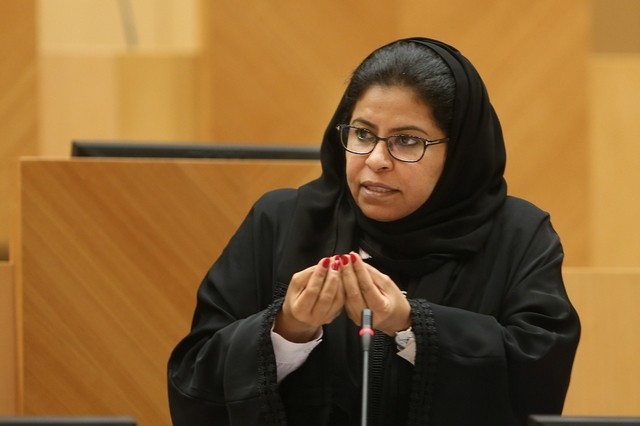
Women of the UAE: Dr Mona Al Bahar, the champion of the vulnerable

Dr Mona Al Bahar speaks passionately at an FNC session in Abu Dhabi. Delores Johnson / The National

Abu Dhabi :

Determination has been a major drive in Dr Mona Al Bahar’s career.

As a freshman at UAE University in the 1980s, she was keen to join the social services sector to help revive a profession where there was little or no enrolment of Emirati women.

And at age 18 established a society to assist Emiratis with special needs in Sharjah. Later she became the first Emirati social worker with a doctorate from a US university.

“There is a very negative view in the western world of Arab and Gulf women,” she said.

“They view women as opinionless and weak. I first felt this [while studying for her doctorate] at Ohio State University at the social service college.

“I felt they were all questioning if I could compete with other students as an Arab and a Gulf woman. Some asked me ‘Do you feel you can compete and continue?’ That was a big challenge and I took a decision to be an example and to prove not only myself, but the Arabic, Emirati women.”

In 1997, Dr Al Bahar obtained her doctoral degree and was awarded the Morris Cornell Distinguished Researcher Award. Her name was engraved at the university’s entrance alongside those of other winners.

Once back in the UAE, Dr Al Bahar returned to UAE University, where she worked as an assistant professor for several years.

Later, she returned to her home emirate of Dubai, where she joined the Dubai Foundation for Women and Children, which provides refuge and support to the most vulnerable.

In 2011, Dr Al Bahar then received an unexpected phone call. Sheikh Mohammed bin Rashid, Vice President and Ruler of Dubai, chose her as a Federal National Council member.

She is now one of the most vocal women on the council.

“Entering the FNC was a turning point in my career,” she said.

“It widened horizons and provided experience I would not have gained in any other entity or job.

“Working in the FNC carries its own challenges. And I, in all honesty, am thrilled with this experience because it helped me to discover sides of myself and my abilities I would not have been introduced to without this experience.”

She was one of the first to ask to join the council’s education, media and youth committee, where she was later elected chairwoman.

She also supported the country’s first children’s rights legislation and pushed the council to pass a controversial clause in the law allowing specialists unprecedented power to remove children from their homes if found to be in imminent danger. With the public, she has repeatedly tried to keep herself available to those who need her, even taking part in a public majlis to allow as many Emiratis to approach her as possible. As much as her profession has helped her in the FNC, her former students’ words serve as a testament to how important her decision to join her field was all those years ago.

“When a student comes to me and says ‘Thank you doctor, you changed a lot in my life’, I consider that a crown,” she said. “It is a drive and reassures me that my profession was the right choice.

“When I see a positive change in these students, either in their thinking or their personal life, that makes me love my profession more.” With her four-year term of office near its end, she is unsure of what life post-FNC will bring, but is confident it will involve academia and coffee.

“My passion for coffee drove me to establish a coffee museum with a few friends in Dubai,” she said.

“This project was an idea and a dream. With work, the dream became a reality.”

The museum is the first of its kind in the UAE and the second in the Middle East, in Al Fahidi, Bur Dubai, where visitors can learn about the origins of coffee.

source: http://www.thenational.ae / The National / Home> UAE> Arts & Lifestyle / by Ola Salem / March 07th, 2015

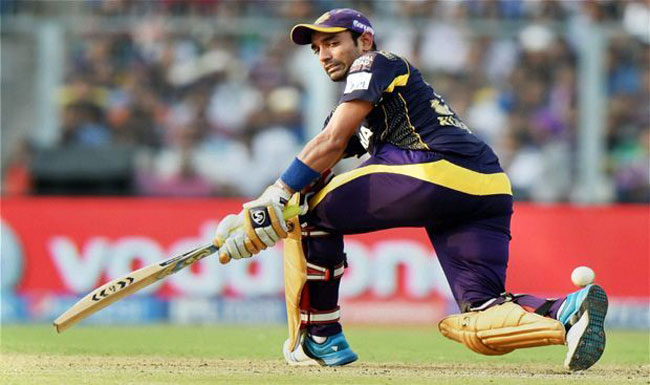
Team India motivated from losses before World Cup: Robin Uthappa

Robin Uthappa (Photo: PTI)

It seems Robin Uthappa knows a thing or two about playing World Cup cricket since he has been a part of two dramatically different ones within a single year. From the ignominy of a first knock out round in West Indies to the joy of being crowned champions of inaugural T20 World Cup in South Africa, he has experienced it all at the age of just 21.

A year into international cricket, Robin went on to play in the two World Cups in 2007. He subsequently lost touch and his India’s place but now attempts to get his chequered career back on track.

From being this season’s Ranji top scorer with 912 runs averaging above 50 to leading the run scoring charts in last year’s IPL with 660 runs averaging 44, Robin is churning down numbers everywhere.

Uthappa is so determined to earn back his Team India cap that donning the gloves in test match cricket is also a possibility he doesn’t want to discount. “Keeping has been a lot of fun and I have been enjoying it. MS has just retired. So I am fancying myself there. Never know what comes in. I believe I have the kind of fitness that is needed to play at that level. I am hopeful my performances would be taken note of,” he says.

Till he makes a comeback Robin is keeping his fingers crossed for Dhoni’s men who are on a roll in Australia. If 2007 was forgettable, 2015 promises to be a year to remember, much like 2011. “It’s important to take the defending champs tag off your back which they have done. India is doing great, growing from strength to strength. To see the bowlers bowling so well and the bowlers fielding so well is fantastic. They are playing well as a team with MS leading beautifully as usual. It is also great to have Shikhar back in form at top of the order,” he analyses.

And Robin isn’t surprised with the team’s resurgence after the drubbing they received earlier in tests and the tri series in Australia. “Whenever you have a dampening sort of tournament before World Cup this can happen. In 2003 we had a dampening tour of New Zealand just before the Cup and the boys picked themselves up. Cricketers motivate themselves from losses. Our bunch of boys have desire to win and excel. Hopefully it will be good enough to win back the trophy. So three more games and we should have it back here,” he speaks with infectious optimism. India waits with bated breath for Robin’s prophecy to come true.

source: http://www.indiatoday.intoday.in / IndiaToday.in / Home> Sports> World Cup 2015> Updates / by Rasesh Mandani, Mumbai / March 16th, 2015

A Museum That is a Repository of the Past

Bengaluru :

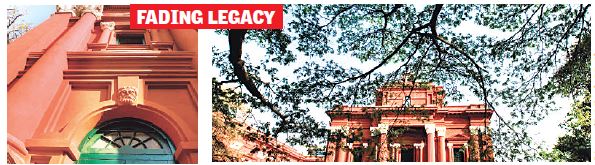
Is it enough to preserve the past or do we also need to maintain its particularities with informed respect?

museum01bf24feb2015

Architect and restoration expert H C Thimmaiah, who is part of The Indian National Trust for Art and Cultural Heritage (INTACH) in Bengaluru says, “It is heartening that we are at least talking about Bengaluru’s heritage but we must be careful with how we maintain it. The Government Museum is a beautiful building. The brick red colour of such classical buildings must not be tampered with. The museum has very specific features right from the details on its pillars to its windows that have been maintained well but all old structures require an understanding of historical and architectural context. And sensitivity towards just how they must be painted, how the flooring, ceilings, the facade must be treated.”

Restore with sensitivity

As the debate about the need to retain and maintain heritage structures in Bengaluru warms up, we are told by a source that The Bowring Institute was considering a facelift sometime back. Thankfully, the plan to replace the original flooring with marble was met with some resistance within the circle of influential members who asked for Attangudi tiles or something more contextual considering it is hard today to reproduce the classic mosaic from the past.

museum02bf24feb2015

Thimmaiah, who built a house in Kodagu with upcycled elements taken from destroyed old homes, is passionate about authenticity and recalls, “A few years ago when Bangalore Club was being repainted, a paint manufacturer scratched the walls to take a sample of the signature greyish blue paint and recreated it for a fresh coat. He later told me that the paint colour would be called Bangalore Club Blue from now on.”

Prominent buildings like the Bangalore Club and the Government Museum may be better off but the architect wishes that INTACH was more active in the city for the sake of other structures. After the death of convener H R Pratibha, INTACH has been keeping a low profile. He says, “Today, bodies like INTACH and The Archeological Survey of India (ASI) must come together to guard even the lesser known aspects of our heritage and not just the showpieces. In Bengaluru, you won’t find even a single space like Mumbai’s Dadabhai Naoroji Road.”

Are private spaces not our heritage?

Architect and urban planner Dyan Belliappa is happy that the city is looking with fresh appreciation at buildings like the Government Museum and says, “The interest in Bengaluru’s public buildings post the Balabrooie Guest House debate is welcome but the city also has a built heritage of private structures some of which were a lot older than the Guest House and have been demolished with nobody even coming to know about them. While we will probably continue to revere a Vidhan Soudha, there are private structures in the Ulsoor area, around Majestic which are going with not one voice raised in protest.”

To the right of the new Airport Road, he shares, there was a fantastic old structure built with stone masonry. He says, “That kind of stone masonry will be hard to find or duplicate and yet it was destroyed. In Begur, there is a temple linked to a lake. The temple may outlast change but will the lake be treated as part of our heritage too? Even the Malleswaram Market is a heritage sprawl but will BBMP treat it as such? One building or two or just a few are not our heritage. Our lakes were our heritage too but they were just treated as water bodies and so many are gone, as are our trees.”

He adds, “Mumbai has a structured approach towards the preservation of spaces. Some private buildings cannot be touched. Others can be modified but with sensitivity. The fact that an independent body like the Bangalore Urban Art Commission was dissolved in 2001 says a lot. Today the BMMP reflects what we value in our city but our heritage was our way of life. How does one codify that or our memories? How does one resist the haste to acquire and sell land and knock off structures because they get in the way of ‘urban development’? Our priorities are misplaced and we need to rethink the meaning of heritage.”

Contextualise the past

Organic architect professor A R Jaisim has the last word, “The Bengaluru Museum is a beautiful building. Attara Kacheri has been beautifully preserved too. Our city’s present must make space for its past because if the past is erased, we will have no memories. Heritage must be contexualised and included in the present because without it, we have no stories to pass on to the next generation.”

Trivia

The Government Museum on Kasturba Road is a reminder of Bengaluru’s colonial heritage. In 1851, after the Madras Government Museum was established, Bengaluru got its own museum in 1865 and is today, the second oldest in South India. E G Balfour, a medical officer of the Madras Army, came to Bengaluru in the 1860s and with his support, the Chief Commissioner of Mysore State, L B Bowring established the Government Museum or the Mysore Government Museum on August 18, 1865. The museum was originally housed at the Cantonment’s jail building but then a site in Cubbon Park was selected. Col R S Sankey, the Chief Engineer of Mysore planned and built the museum in 1878.

Fun facts: The museum was once known as ‘Thamashe Bungalow’. On Mondays, women in purdah visited the museum and men were not allowed.

Collections: The museum has two exhibition floors which are divided into 18 galleries covering sculpture, natural history, geology, art, music and numismatics. It has a collection of archaeological, geological artefacts and artefacts belonging to the Neolithic period.

Timings: 10 am to 5 pm (except on Wednesday when it is closed)

source: http://www.newindianexpress.com / The New Indian Express / Home> Cities> Bengaluru / by Reema Moudgil / November 03rd, 2014

Several developmental works kicked off

MLA K G Bopaiah opined that everybody’s cooperation is needed for overall development of villages.

He was speaking at a programme held in Payaswini Sahakara Sadana, after initiating various development works in Sampaje Gram Panchayat limits recently.

He said everyone should get basic amenities. The work of providing electric connection from Madikeri, which was sidelined from many years, has been completed.

He told BPL card holders to avail electrification benefits under Deendayal Upadyana electrification scheme.

Sampaje Gram Panchayat President Anitha Chandrashekhar presided over the programme. Vice President Kumar Chidkar, Payaswini Sahakara Sangha President Balachandra Kalagi and others were present.

The MLA performed ground breaking towards various development works at Sampajebail, Arekall, Aramanethotabhaga, Kuntikana, Mangalapare, Guddegadde, Kuvekadu, Ambatekaje, Chadavu, Koyanadu guddegadde, Kallala, Chittekana, Mundadka and other parts in the limits of Sampaje. Also ground breaking was done towards bridge on Kootelu Tekkitadka stream.

Meanwhile, Drinking water tank and public toilets were inaugurated.

source: http://www.deccanherald.com / Deccan Herald / Home> District / Napoklu , DHNS / March 11th, 2015

Can’t spread my arms like SRK: Gulshan Devaiah

Gulshan Devaiah in ''Hunterrr
Gulshan Devaiah in ”Hunterrr

New Delhi:

Being a good-looking romantic actor – a la Shah Rukh Khan or Salman Khan – was not what Gulshan Devaiah was aiming at when he stepped into filmdom. It was Manoj Bajpayee’s gritty role in ‘Satya’ and Ram Gopal Varma’s dark works that inspired him to be a performance-oriented talent.

Known for playing second lead but intense roles in films like ‘Shaitan’ and ‘Hate Story’, Gulshan said: “I was five or six years old when I thought of being an actor. I grew up imitating Shashi Kapoor, Amitabh Bachchan and Dharmendra.

“But it was after watching Manoj Bajpayee in ‘Satya’ and old films of Ram Gopal Varma that I decided that I wanted to be a performance-oriented actor rather than just be a good looking one or a romantic actor.”

The actor, who also looks up to the critically acclaimed Irrfan Khan, says what superstars like Shah Rukh and Salman do on the big screen, he can’t.

“I love Shah Rukh and Salman’s films. But I can never spread my arms and look cool. I wanted to do it, but couldn’t. So, I figured out my strength and started polishing it,” said the actor, who moved to Mumbai from Bengaluru in 2008 to follow his film acting dream.

He is content with his projects.

“I’m happy that I have a film career. I have films in hand and I’m happy living my dream,” said Gulshan, who has films like ‘Cabaret’, ‘Love Affair’ and ‘Junooniyat’.

In ‘Hunterrr’, which releases on March 20, he will be seen playing the protagonist. The film is about a sex addict and his lustful journey in life.

“As a protagonist, I have greater responsibility. It is an entertaining script and I hope it does well. But I don’t have unrealistic expectations from the film,” he said of the movie, directed by Harshavardhan Kulkarni, and which also stars Radhika Apte and Sai Tamhanka in important roles.

As much as he loves acting, Gulshan is sure that television is not the medium for him –at least not for now.

“Some people can do a lot of episodes. I like to work for 50 to 60 days and then move on to another project. I don’t think I have the aptitude for TV right now. Maybe in the future,” he said.

Till then, he hopes to entertain the masses with films that let him explore his versatility.

“I hope I get lots of variety in films that I do. I hope I don’t get slotted in one area. I am trying to experiment with my film career,” he said.

IANS
source: http://www.zeenews.india.com / Z News / Home> Breaking News> Entertainment News> Celebrity / Wednesday – March 11th, 2015

A cricketer’s challenge prompts nutrition venture

Two IIM-A, alumni start a company delivering healthy food at the click of a mouse after Robin Uthappa made a request for a nutritional plan

Tapan Kumar Das and Ryan Fernando were running a nutrition clinic, Qua Nutrition, in Bengaluru when one of their clients, cricketer Robin Uthappa, asked them to provide food based on a nutrition plan.

This challenge prompted Das, former vice-president (finance) of e-retailer Flipkart (2010-2011), and Fernando to launch iTiffin in September 2013.

Uthappa, who has played 38 One-Day Internationals for India and is the son of Venu Uthappa, a hockey referee from Coorg, is a fitness fanatic. As a client of Qua Nutrition, Uthappa managed to shed 20 kg in six months by following a strict diet.

This success inspired Das and Fernando to take nutrition to the doorstep of their clients. Fernando had some experience in the nutrition segment.

Another investor, who did not want to be named, said: “The iTiffin team represents a unique combination of management, nutrition, information technology and chefs. It serves balanced meals.”

He added there was a huge market for this and iTiffin, a pioneer, would have an edge over other players, with its strong research and development team.

The challenge, however, would be the central management. “Delivering meals at a longer distance would be time consuming. Setting up distribution networks would help run operations smoothly.”

A menu for success

A regular iTiffin meal – for lunch, dinner or midnight snack – comprises rice, roti, daal, subzi, salad and a sweet. It serves those undergoing a diet regime or fighting diabetes or even children whose parents what them to have a healthy diet.

The menu has north or south Indian cuisine as well as continental food. Both vegetarian and non-vegetarians are catered to by ordering through the iTiffin website on a monthly subscription.

Weekly prices range between Rs 500 and Rs 3,000, depending on the cuisine and nutritional needs of the customer.

On its board, iTiffin has 15 nutritionists. “We also have a tie-up with the University of Mysore to chart a healthy menu,” said Das.

Bengaluru-based entrepreneur Malini Deekshit has been a patron of iTiffin for nearly a year. Googling for a daily food service, she found iTiffin,

“Their pricing is okay and they are very efficient. They are always on time,” she said, adding the healthy brown rice on the menu was her favourite.

The road so far

From a family of teachers in Odisha, Das – the chief executive officer of iTiffin – moved to Bengaluru to start YLG, a salon and spa.

“I was the only commerce student in a house full of science graduates,” said Das, a chartered accountant. “But I finally made my dream to be an entrepreneur a success.”

With a Masters in food biotechnology and biochemistry, Das has a decade’s experience in marketing, finance and in developing health entities.

While Das and Fernando invested Rs 10 lakh, Uthappa, an international cricketer, put in Rs 1.5 crore.

Claiming to be a pioneer, iTiffin now has a 3,000 sqft kitchen and its own supply chain.

Innovation masala

But there are challenges aplenty, the most important being retaining customers beyond 180 days.

“Everyone knows how important a healthy diet is but few are willing to make it a habit,” said Das. “So, we must provide variety to cater to their palates as well.”

Variety poses challenges of its own – standardisation.

“Providing variety and quailty is a challenge,” said Das, “As is maintaining consistency.”

Recently, iTiffin launched unique meal packages for corporate employees. Keeping in mind their long hours and sedentary lifestyles, a study was conducted by a panel of experts to map the nutritional requirements of corporate employees.

The vegetarian meal, delivered to the patron’s office, balances carbohydrates with protein. Everything is cooked in olive oil, and adds to just 550 kilo-calories (k-cal), allowing the patron to stay well within 2,220 k-cal a week, recommended for men.

More on the plate

Now, iTiffin supplies about 50,000 meals a month in Bengalaru.

About 60 employees work at its kitchen in Whitefield. Das said the business has a 50 per cent gross margin.

In its first year, iTiffin had crossed the milestone of 100,000 meals, catered to 5,000 customers and had an average customer retention period of 60 days.

Over the next six to 12 months, iTiffin wants to touch 100,000 meals a month and expand its presence to 20 cities. As it expands, the number of employees is likely to go up to 200.

Besides own growth, iTiffin also plans to collaborate with others, and open franchisees.

The company is aiming at an annual turnover of Rs 30-50 crore, from the current Rs 3 crore. Das said to expand operations, iTiffin plans to raise $5-6 million of venture capital.

Beyond serving meals, the company wants to educate users in healthy diets and living.

FACT BOX

Area of business: Bengalaru
Founded: 2013
Funding: Tapan Das and Ryan Fernando invested Rs 10 lakh and cricketer Robin Uthappa put in Rs 1.5 crore
Total customer base: 50,000 meals a month
Revenue: Rs 3 crore

EXPERT TAKE

More and more Indian families need two or more earning members, and home-cooked food is a rare luxury. Metropolitan cities in India are following the trend seen globally, eating out or ordering food home.

The food and catering industry is more than $20 billion in size but largely unorganised. Home delivery is its largest segment, growing 20 per cent a year.

There are many “internet only” food companies that operate through mobile apps or portals. However, a model of regimented canteen food is tough to sustain.

Most customers would be unhappy with a one-size-fits-all menu.

So, iTiffin is trying to get institutional orders – from schools, companies and hospitals. The market is very competitive and it is very difficult to differentiate from competition. Margins are tight.

To make a mark in this segment, as iTiffin has done, is credible.

Going forward, its social media presence should be of a high quality. Also, customisation of its menu would allow people to be more flexible with their plans.

The food market is ripe for disruption – iTiffin has a good chance to be the leader.

Anand Lunia is the founder of India Quotient, which invests in start-ups that deal with needs such as food and health

source: http://www.business-standard.com / Business Standard / Home> Companies> Start-Ups> News / by TE Narasimhan / March 09th, 2015

Campaign on forest fires

Public awareness and local community support for prevention are the first line of defence in the fight against forest fires at Nagarahole National Park.

Wildlife First conducted 125 awareness camps on forest fire prevention in January and February. These were held around the borders of Nagarahole National Park in Kodagu district. As many as 23,000 students and 1,100 teachers residing around the national park and other forest areas participated, said Praveen Bhargav, trustee, Wildlife First.

He said two public rallies were organised, including one at Madikeri.. “During the course of the campaign, schoolchildren were told about the need to conserve forests and wildlife. Key facts that all forest fires are man-made and cause irreversible damage to wildlife and the eco-system were highlighted,” Mr. Bhargav said.

More than 30,000 pamphlets in Kannada were distributed with an appeal to alert the Forest Department in case of fire. Wildlife First is planning to put out radio and TV spots on AIR Madikeri Station.

source: http://www.thehindu.com / The Hindu / Home> News> National> Karnataka / by Special Correspondent / Mysuru -March 08th, 2015

Who’s a Linguistic Minority, Asks HC

Bengaluru :

The High Court on Thursday asked the Karnataka government to spell out how it grants a community linguistic minority status.

Justice B V Nagarathna observed that many schools were clamouring for minority status to escape the stipulations of the Right to Education Act.

Hearing petitions seeking linguistic and religious minority status, the court said although the National Commission for Minority Education Act of 2004 was clear about which groups constitute minorities, no guidelines were in place to define educational institutions claiming concessions.

The judge asked the managements of two schools not to fill the mandatory 25 per cent seats under the RTE free quota until the issue was resolved by the court, and directed the government to not take any ‘precipitative action’ against them.

Coorg Public School, run by the Kodagu Academy for Education and Culture in Kodagu district, had approached the court seeking linguistic minority status. Citizen School in Hosakote had claimed it was a school run by a religious minority.

Advocate General Ravivarma Kumar said a group constituting more than 15 per cent of the total population — but constituting the majority — was treated as a linguistic minority. The government would look at the 2011 census to brief the court, he said. The next hearing is on March 12. G R Mohan, advocate for one of the petitioners, said the schools were in a quandary as applications for religious minority status had not been processed by the Department of Public Instruction.

source: http://www.newindianexpress.com / The New Indian Express / Home> Cities> Bengaluru / by Express News Service / March 06th, 2015