From Bean to Cup

The Coffee Board of India serves as the friend, philosopher and guide to the coffee sector in the country covering the entire value chain

CoffeeBeansKF12mar2015

The saga of Indian coffee began on a humble note, with planting of ‘Seven seeds’ of ‘Mocha’ during 1600 AD by the legendary holy saint Baba Budan, in the courtyard of his hermitage on ‘Baba Budan Giris’ in Karnataka. For quite a considerable period, the plants remained as a garden curiosity and spread slowly as back yard plantings. It was during 18th century that the commercial plantations of coffee were started, thanks to the success of British entrepreneurs in conquering the hostile forest terrain in south India. Since then, Indian coffee industry has made rapid strides and earned a distinct identity in the coffee map of the world.

The Coffee Board

During 1940s, the coffee industry in India was in a desperate state due to the World War II resulting in very low prices and ravages of pests and diseases. At this time, the Government of India established the Coffee Board through a constitutional act – Coffee Act VII of 1942 – under the administrative control of the ministry of commerce and industry. The Board comprises 33 members including the chairman, who is the chief executive and appointed by the Government of India. The remaining 32 members represent the various interests such as coffee growing industry, coffee trade interests, curing establishments, interests of labour and consumers, representatives of governments of the principal coffee growing states and members of Parliament.

After pooling was discontinued in 1996, Coffee Board serves as the friend, philosopher and guide to the coffee sector covering the entire value chain. The core activities are primarily directed towards research & development, transfer of technology, quality improvement, extending development support to growing sector, promotion of coffee in export and domestic markets. The activities of the Board are broadly aimed at (i) enhancement of production, productivity and quality; (ii) export promotion for achieving higher value returns for Indian coffee and (iii) supporting development of the domestic market.


Research and Export Promotion

Organised research in coffee was initiated during 1925 by the erstwhile Mysore Government by setting up the Mysore Coffee Experiment Station near Balehonnur in Chikmagalur district. After formation of the Coffee Board, the research station was brought under its administrative control. Presently the Research Department of the Board with its headquarters at the Central Coffee Research Institute and five regional stations has a sanctioned strength of 113 scientific personnel and is involved in development of improved varieties with tolerance to major pests and diseases and standardisation of technology for improving production, productivity and quality.

CoffeeAreasKF12mar2015

After liberalisation in 1996, the marketing functions were deregulated. The Coffee Board plays the role of facilitator and promoter of Indian coffee exports. However, registration of exporters is the responsibility of the Coffee Board. Under the Export Promotion scheme, exports of value added coffees in retail packs and export of coffee to high value far-off destinations are incentivised to offset the transaction costs to some extent and enable the Indian exporters to be competitive in the export market. These incentives provide opportunities to expand the footprint of Indian Coffee in higher value destinations like USA, Japan, Canada, Australia, New Zealand, etc on one hand and reinforcing presence in traditional markets i.e., European Union/ Russia and CIS etc.

Besides, the Board regularly participates in leading coffee trade shows/ exhibitions held in major consuming countries to promote awareness about quality of Indian coffee to the overseas roasters, traders and consumers. The Board also conducts Flavour of India – The Fine Cup competitions to select fine coffees and expose them to the export market. It also promotes coffee consumption in the country through 12 India Coffee Houses located in major cities across the country.

In India, coffee is traditionally grown in the Western Ghats spread over Karnataka, Kerala and Tamil Nadu. Coffee cultivation is also being expanding rapidly in the nontraditional areas of Andhra Pradesh and Odisha as well as in the North East states. Coffee is predominantly an export oriented commodity and 65 per cent to 70per cent of coffee produced in the country is exported while the rest is consumed within the country. Indian coffee industry earns a foreign exchange to the tune of about Rs 4000 crore. In the international market, Indian coffees earn a high premium, particularly Indian Robusta which is highly preferred for its good blending quality. Arabica Coffee from India is also well received in the international market.

Arabica is a mild coffee, but the beans being more aromatic, it has higher market value compared to Robusta beans. On the other hand Robusta has more strength and is, therefore, used in making various blends. India is the only country that grows all of its coffee under shade. Typically mild and not too acidic, these coffees possess an exotic full-bodied taste and a fine aroma.

India cultivates all of its coffee under a well-defined two-tier mixed shade canopy, comprising evergreen leguminous trees. Nearly 50 different types of shade trees are found in coffee plantations. Shade trees prevent soil erosion on a sloping terrain; they enrich the soil by recycling nutrients from deeper layers, protect the coffee plant from seasonal fluctuations in temperature, and play host to diverse flora and fauna.

Coffee plantations in India are essential spice worlds too: a wide variety of spices and fruit crops like pepper, cardamom, vanilla, orange and banana grow alongside coffee plants.


Training courses in coffee culture and management

The Central Coffee Research Institute, popularly known as CCRI, has grown as an internationally recognised, state-of-the-art research centre for carrying out research on all aspects of coffee cultivation. CCRI is committed to introducing emerging technologies and sustainable package of practices to benefit the coffee farmers. It plays an important role in the development and growth of the coffee agricultural sector. CCRI has 133 dedicated scientists working for the development of newer technologies in close association with a number of international institutes, reputed national institutes and pure science and agricultural universities.

The CCRI, apart from the development of new technologies, is involved in imparting training on scientific coffee cultivation to the benefit of all the stakeholders since 1953. The institute is recognised as an international centre of excellence for training in coffee culture by the FAO, Rome. Candidates from several coffee growing countries are being sponsored for these training programmers by the world

CHART

Coffee regions of India

Anamalais (Tamil Nadu): Wildlife sanctuaries in this region are the abode of spotted leopards,while the plantations are home to fine, high-grown Arabicas, including the exotic Kents.

Araku valley (Andhra Pradesh):
Home to colourful parrots, it is not unusual to see a flock of chattering red and green birds, darting through trees in this scenic valley.

Bababudangiris (Karnataka): Bababudan brought seven ‘magical’ beans from Yemen and planted them in the lofty hills of this region. Deer is often spotted, grazing alongside plantations abundant with full-bodied Arabicas.

Biligiris (Karnataka/Tamil Nadu):
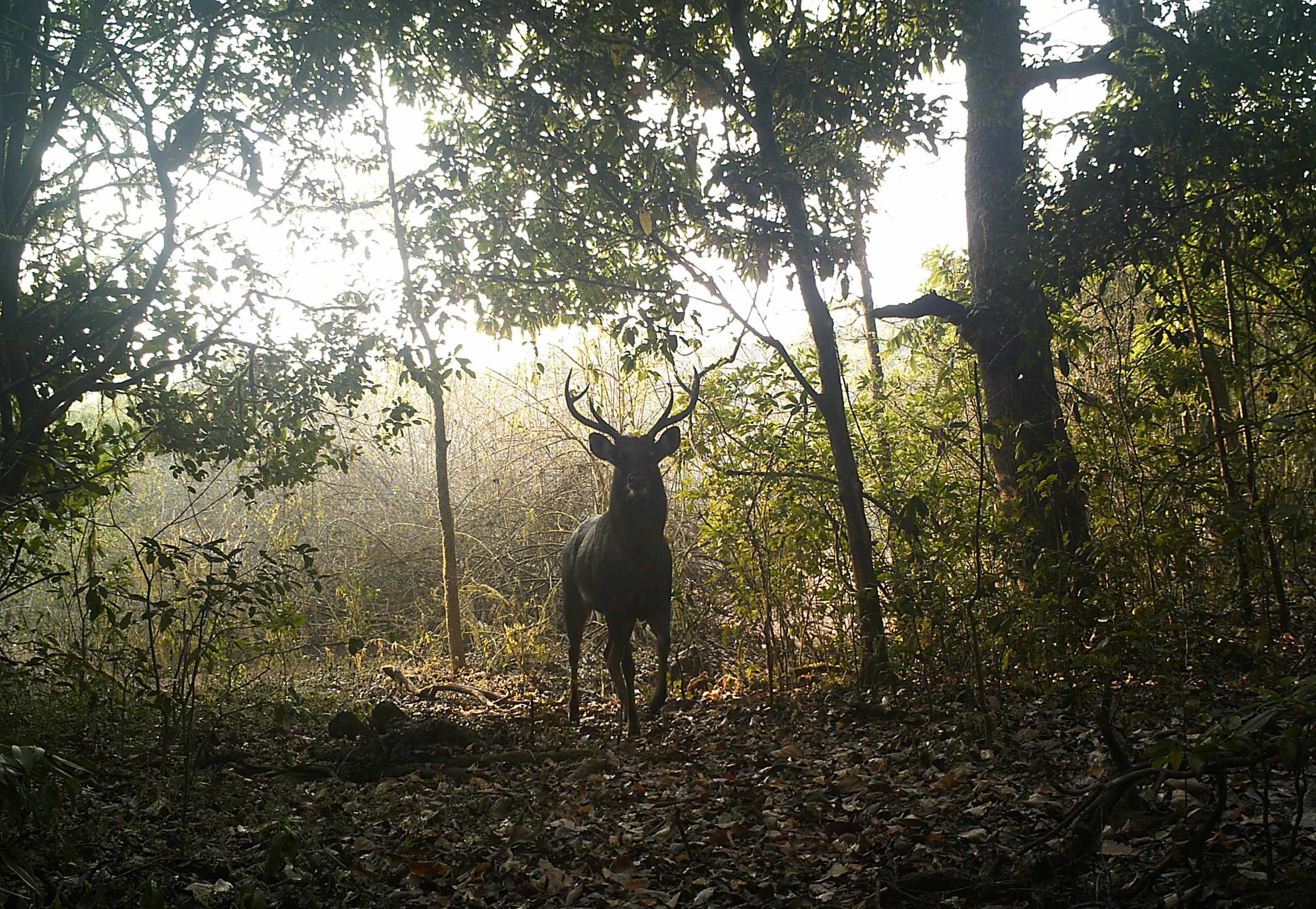
Besides full-bodied Arabicas, this region is noted for the sambar – the largest Indian deer with huge antlers.

Brahmaputra: The mighty Brahmaputra which flows through the North Eastern states is the lifeline of this region which is home to the one-horned rhinoceros. This sturdy animal is found in large numbers at the Kaziranga National Park in eastern Assam.

Chikmagalur (Karnataka): Chikmagalur’s forests and wildlife sanctuaries are abundant with beautiful peacocks, India’s national bird. The peacock loves to show off its colourful feathers, especially during its elaborate courtship dance.

Coorg (Karnataka):
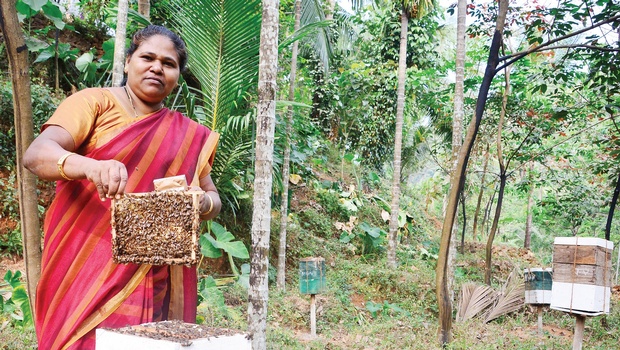
Lush coffee plantations are bustling with honeybees which yield the delicious Coorg Honey, collected by nimble-footed tribals

Manjarabad (Karnataka): Gentle sloping terrain with small streams and coffee plants provide a natural habitat for the jungle fowl. This yellow-headed bird with a red comb and multi-coloured plumage is generally seen in pairs, close to the coffee plantations.

Nilgiris (Tamil Nadu): The plantations are home to fine, high-grown Arabicas, including the exotic Kents.

Pulneys (Tamil Nadu): A well-known feature of this region is the bright, bluebell-like Kurinji flower that makes a dramatic appearance, once in 12 years. The high-grown Arabicas however, are a predominant sight, year after year.

Sheveroys (Tamil Nadu):
The magnificent Gaur or Indian bison is an embodiment of vigour and strength, much like the boldsized Arabicas grown here. This massive animal with its huge head and sturdy limbs grazes on the lower hill tracts of this picturesque region.

Travancore (Kerala): The national flower of India, the lotus symbolises purity and beauty. These bright, fragrant flowers with floating leaves and long stems, grow in shallow waters in this region noted for its Arabicas and Robustas.

Wayanad (Kerala):
Wayanad is home to the Indian tiger, India’s national animal – a symbol of valour and courage.

source: http://www.financialexpress.com / Financial Express / Food & Hospitality World / Home> Cover Story / March 05th, 2015

Ragamala Dance Company and Saxophonist Rudresh Mahanthappa to Perform ‘Song of Jasmine’ at the Museum of Contemporary Art Chicago

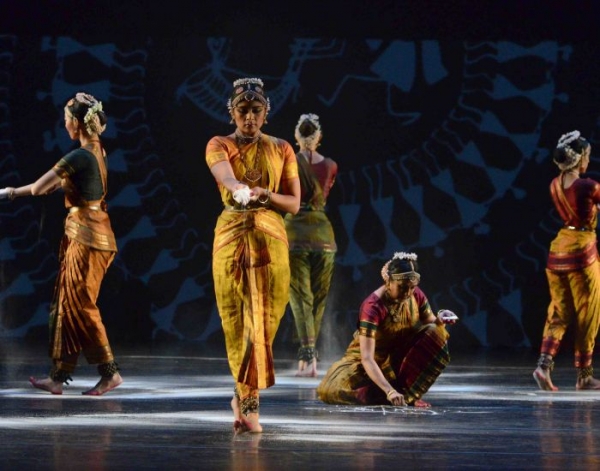
Ragamala Dance Company will be performing at the Museum of Contemporary Art Chicago. (Photo : Courtesy Grant Halverson)

The Museum of Contemporary Art Chicago will present Song of Jasmine, an experiment across the forms of Western jazz and South Indian music by the dance and music ensemble Ragamala Dance Company and saxophonist and composer Rudresh Mahanthappa.

Together, Mahanthappa and Ragamala are united and inspired by their shared bicultural identities as Indian-Americans. Song of Jasmine will explore the interconnectedness of three central themes in Indian culture: the spiritual, the sensual and the natural.

Co-directors of the show, mother-daughter team Ranee and Aparna Ramaswamy, look at important texts and interpret them through dance and music. The duo was guided by the writings of the 9th century Tamil mystic poet Andal’s Sacred Saying of the Goddess. Mahanthappa’s sound merges South Indian and Western forms with an emphasis on improvisation. The staging of the show is completed by a striking canopy of brand bells and costumes created in India.

This performance marks first-time collaborations for all involved. Ranee and Aparna Ramaswamy will perform with three dancers from their company alongside Mahanthappa, who plays with an assembled quintet of versatile jazz and South Indian musicians: Rez Abbasi (electric guitar), Raman Kalyan (South Indian flute), Rajna Swaminathan (mridangam/South Indian percussion), and Anjna Swaminathan (South Indian violin). Currently, the piece is touring nationally.

Based in Minneapolis, Ragamala Dance Company is recognized as one of the Indian diaspora’s leading dance ensembles in the traditional genre of Bharatanatyam and have toured extensively internationally. Mahanthappa is a leading jazz saxophonist and composer who creates hybrid sounds bridging progressive jazz with South Indian classical music.

http://www.classicalite.com/articles/18397/20150305/ragamala-dance-rudresh-mahanthappa-song-jasmine-museum-contemporary-art-chicago.htm

The performance at MCA will take place from April 10 to 12 in the Edlis Neeson Theater at the Museum of Contemporary Art Chicago. Click here to learn more about Song of Jasmine or to purchase tickets to the show.

source: http://www.classicalite.com / Classicalite / Home / by Jaime Prisco (j.prisco@classicalite.com) / March 05th, 2015

Kodagu readies for first-ever Mud Festival, Obstacle Racing

Obstacle racing, that pulsating mix of hyper-active adventure, rugged trekking, endurance walks through relentless woods is finally here. For the first time in this part of the world, the event will unfold as Earth Quest, a three-day Mud Festival in Coorg from April 17 to 19. A test of stamina, strength and skills, the race couldn’t have got tougher!

MudFestivalKF12mar2015

Running through rivers, ditches, hills, woods and open paddy fields, the race is inspired by the globally renowned Spartan Race. Devised by adventure travel buff Ricky Monnappa and wildlife photographer Uthaiah Cheppudira, the event has on its side, live music shows, art installations, flea markets and more.

For starters, obstacle racing has the contestants travel on foot and overcome a slew of physical challenges lined up as obstacles. Mud and trail runs are combined to make the races extremely tough to endure. The competitors are pushed to the limits of their mental and physical endurance.

Explained Monnappa, “Obstacles include, but are not limited to, climbing over walls, carrying heavy objects, traversing bodies of water, crawling under barbed wire, and jumping through fire.”

Many obstacles are similar to those used in military training, while others are unique to obstacle racing.

But why call it a mud festival? “For once, you are not actively trying to avoid the mud. Instead, you are told to go through it. Not only does traversing an obstacle course race while you are soaked with mud add a level of difficulty to your run, but it is downright fun. Admit it, your inner child comes out when there are giant mud puddles to splash in.” This is the Earth Quest rationale, as elaborated by Uthaiah.

Beyond adventure, the event is also designed as a platform for dynamic social gathering.
“The aspect of camaraderie within these races is the backbone of ongoing wellness. You can turn your training, your fitness, and your ‘working out’ into a social gathering, enabling a group of people to help you meet your fitness goals on an ongoing basis.”

The event has another key objective: Clean Coorg, a campaign to be executed jointly by the crew and participants. “Signboards with responsible tourism quotes will be placed all along the route. Travellers to the event will be educated on social media about responsible tourism. Recycled bins will be installed everywhere on the route map,” said Monnappa.

For more on the event, check the website: www.the-earthquest.com or log on to their Facebook page at: www.-facebook.com/theearthquest

source: http://www.deccanherald.com / Deccan Herald / Home> State / by Rasheed Kappan / DHNS – Bengaluru, March 05th, 2015

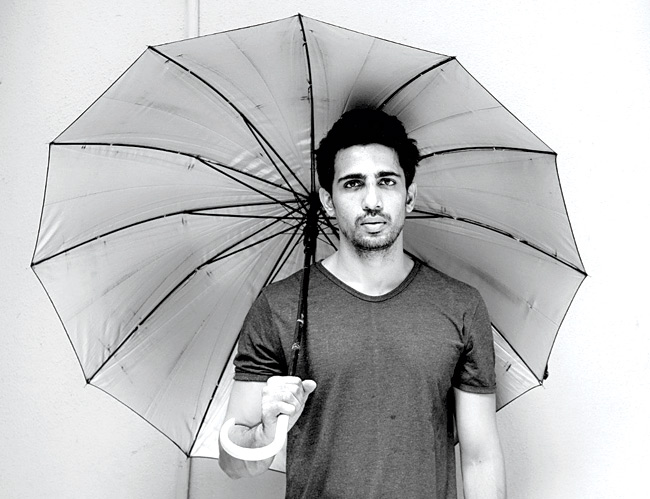
Gulshan Devaiah to do a cameo in ‘Junooniyat’

Gulshan Devaiah, who is busy promoting his upcoming film ‘Hunterrr’, has taken time out from his busy schedule to do a guest appearance for Vivek Agnihotri’s ‘Junooniyat’.

Gulshan Devaiah
Gulshan Devaiah

Gulshan Devaiah and Vivek Agnihotri’s bonding goes long time back, when Gulshan starred in ‘Hate Story’ which was directed by Vivek Agnihotri. A source reveals, when Vivek contacted Gulshan for doing a guest appearance, Gulshan immediately agreed to be a part of the film. Though Gulshan would be doing a guest appearance, he plays one of the pivotal characters of the film.

Commenting on the same Gulshan said, “I have a guest role in the film, something that I was very keen to do as I wanted to work with Vivek Agnihotri after ‘Hate Story’. But, the details about my character have been kept under wraps so I cannot reveal more,”

Gulshan is also excited and looking forward to the release of Phantom Films’ ‘Hunterrr’ directed by debutant film-maker Harshavardhan. The talented actor plays the lead character and the film is about a regular, ordinary looking guy who is a womanizer.

Apart from ‘Hunterrr’ Gulshan Devaiah will also be seen in Pooja Bhatt’s ‘Love Affair’ in which he will be playing a naval officer and is pitted opposite Kalki Koechlin and ‘Cabaret’ in which he is paired with Richa Chadha.

source: http://www.mid-day.com / Mid-Day / Home> Mumbai News> Columnists – Entertainment News> Bollywood News / by The HitList Team / March 03rd, 2015

Lecture on redefining India’s neighbourhood held in New Delhi

The India Habitat Centre and Delhi Policy Group organized a lecture series on ‘Redefining India’s Neighbourhood’ in New Delhi.

The conference was chaired by former diplomat Ambassador Leela K. Ponappa and was attended by senior government officials, and representatives of various think-thanks, civil society groups and NGOs.

The lecture highlighted how India constituted its presence as a neighbour as volatile situations is occurring in some of its neighbouring countries. Topics also included a discussion on the geo-political shift, the power shift from West to Asia, the rise of China, United States pervert and its policies towards Asia, Maritime issues and Islamic factors.

India’s role in Central Asia, especially Afghanistan, was also emphasized in the discussion.

“India and Afghanistan have had historical relations over many centuries and this has been in many areas of trade, people to people movement and there have been military movements and so on but today Afghanistan searches for peace and stability, India have been a very active partner in economic and social development through projects as diverse as helping with hospitals, with agriculture, with nutritional supplies to school children, with power lines, with road building,” said Ponappa, a former deputy national security advisor.

Ponappa said she believed that Afghanistan must take charge of its own security and economic challenges, but added that India will play its role to help the former in achieving its goals.

“The kind of destabilization of Afghanistan that has taken place essentially from Pakistan I think that is well known can come to an end and where there are commitments made, guarantees provided that Afghanistan will be left alone to handle its own peaceful development and rehabilitation after many years of War. So India is partner with many other countries on this while making commitments bilaterally over 2 billion USD to help Afghanistan with its development programme. It is entirely peaceful approach and I think it has been recognized by the people of Afghanistan as a very positive contribution,” said Ponappa.

India believes in peace and development and wants its neighbours to remain peaceful.

Afghanistan has been through a dreadful set of years, decades of war and whatever it requires in terms of rebuilding it self towards establishing peaceful and prosperous society that is something India has been doing in consultation with the people of Afghanistan on the Central and the local levels.

source: http://www.business-standard.com / Business Standard / Home> News-ANI> National / ANI / New Delhi – January 22nd, 2015

The Call of Coffee

Serving Indian and international clients its latest beverage equipment solutions, Vikram Khurana, CEO, Kaapi Machines, speaks about the company’s strength and brands it offers

KaapiMachinesKF07mar2015

Kaapi Machines, India’s first integrated beverage equipment solutions company, was started in 2007 as a joint venture between Mahlkonig GMBH, the master in grinding technology from Germany and McKinnon India, based in Coimbatore; an Indian manufacturer of green coffee processing equipment company to offer one stop solutions for coffee business. “We have earned a reputation for quality, reliability and professionalism,”says Vikram Khurana, CEO, Kaapi machines. He further adds, “Making a good coffee is a combination between good technology, quality coffee blend and the skilled hands of a Barista and we support our customers in achieving this combination right to serve a good cup of cappuccino at their cafes/ restaurants/ hotels.”

Serving our customers that include international and Indian hotel chains, café’s and QSR’s operating in Indian subcontinent, Kaapi Machines distributes and supports one of the largest range of coffee equipment brands available in India and the neighbouring countries. “Our portfolio includes traditional and automatic coffee machines, espresso grinders, retail and industrial coffee grinders, shop and industrial coffee roasters, coffee brewers, ice blenders and barista tools. Our company’s strength is its ability to offer a complete coffee solution and at the same time provide the highest level of customer service and equipment. the company has company sales offices/ demonstration centres in Bengaluru, Mumbai and New Delhi.

The company supports its customers with an effective after sales service that includes operational training and a one year warranty support followed by an AMC programme to ensure that the machines are always taken care by the right people. The company also supports customers in the following:

Blend development for Italian coffees (House blend)
Italian menu for hot coffees
Barista training on the following:
Understanding the grinder and your grind size
Brewing the perfect shot of espresso
Art of texturing the milk
Art of pouring the milk
Latte art techniques for making heart/ rosetta/ leaf on a cup of coffee.

Kaapi machines since inception has been actively engaged in coffee promotional activities including India international coffee festival, organising coffee programmes in different parts of India with coffee board of India to spread education on coffee cup quality using various brewing options.

Kaapi Shastra- a five day coffee education programme driven by coffee board of India in Bengaluru, organising and sponsoring the Indian Barista Championship under patronage of Coffee Board of India and recent achievement has been to set up India’s first dedicated Barista training academy for coffee lovers to learn professionally as how to make Italian espresso and cappuccino in 16 hours.

Kaapi Machines is the India exclusive distributor and/or service provider for the following brands: Probat, Astoria, WMF, Mahlkonig, Ditting, Anfim, Vita Mix, Bunn and Urnex.

Astoria

Since 1969, Astoria is a historic brand in the Italian tradition of professional Espresso machines. It offers different technologies from single boiler to multiple boiler machines for precision on espresso temperature stability, eco-friendly options and the recently introduced hybrid machines that suits customers’ requirements differing in capacity and price. Astoria has earned a reputation for delivering the machines with best performance to price ratio and the oldest Astoria machine installed in India is 24 years old and still operating well at an Italian restaurant in New Delhi.

Mahlkonig

For over 80 years MAHLKÖNIG is the world’s leading brand of quality professional grinders. The MAHLKÖNIG logo stands for quality leadership and innovation. Just under 90 per cent of MAHLKÖNIG products are used in the field of coffee grinding. The aim is to grind the coffee gently without loss of flavour and homogeneous with the outstanding quality to achieve a long life.

WMF Coffee Machines

WMF is the leading international manufacturer of professional coffee machines. This is due not least to the fact that even today they are only manufactured at the Geislingen site and thus can justifiably bear the ‘Made in Germany’ seal of quality. Certification of the WMF quality management system in accordance with DIN ISO 9001-2000 provides further proof of quality, efficiency and precision.

Vita Mix ice blenders

Built by hand in Cleveland Ohio, US, the ice blenders produced are well accepted by all the leading F&B retail chains due to its reliability, product engineering, total cost of ownership and extended warranty. Kaapi machines offers different Vitamix models that includes blenders with sound proofing, auto programming suitable for both beverage and food applications powered by 2 HP and 3 HP motors.

source: http://www.financialexpress.com / Financial Express / Food & Hospitality World / Home> Cover Story / March 05th, 2015
The Couple Who Bought Barren Land In 1991 And Transformed It Into A 300 Acre Wildlife Sanctuary

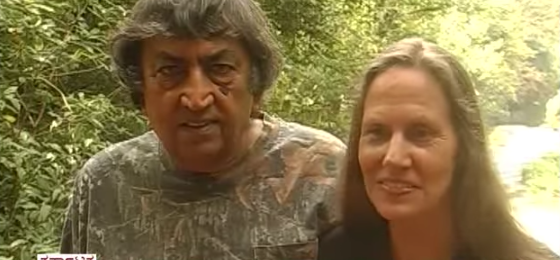
Pamela and Anil Malhotra bought 55 acres of land 23 years ago, and today they have converted it into a beautiful forest of over 300 acres. Here’s how SAI Sanctuary, the only private wildlife sanctuary in India, came to host animals like Bengal Tiger, Sambhar and Asian Elephants.

Wouldn’t it be great to wake up to the sound of chirping birds, with fresh air and splendid scenery around? In the busy lives of our cities when even house sparrows are fast disappearing, this seems like a dream. But a couple has converted this dream into a reality by creating a wildlife sanctuary of their own.


The couple, passionate about wildlife and nature conservation, bought 55 acres of land to plant native trees and protect the environment. Today, they are responsible for creating over 300 acres of wild life sanctuary that hosts animals like Bengal Tigers, Asian Elephants, Hyena, Wild Boar, Leopards, Sambhar, etc.

Dr. A.K. Malhotra and Pamela Malhotra, the NRI duo behind this amazing SAI (Save Animals Initiative) Sanctuary Trust first went to the Himalayas, but as the laws in the Northern part of the country have a land ceiling of 12 acres, they came down South to give shape to their dreams of preservation and protection of nature and wildlife.

Anil and Pamela Malhotra are responsible for a beautiful wildlife sanctuary.

“The problem is, we expect the government to do everything. Like-minded people, NGOs and other agencies should purchase land and do their own bit to conserve the wildlife,” says Pamela.

They bought around 55 acres of unused and abandoned land from the farmers who were not using it due to excess of rainfall in Kodagu district of Karnataka. “We chose Kodagu because it is the micro hotspot of bio diversity in the entire planet,” Pamela says.

The passion to expand the green cover grew stronger and they kept buying lands from farmers who weren’t using them. This way the land was used and also farmers got money to repay their debts as the land was anyway lying idle. Gradually the 55 acre forest cover became larger and today covers 300 acres of the land.


There were a lot of native trees that already existed there. The couple decided to retain those and follow three important rules: no chopping down of any tree, no human interference and no poachers.

And with this thought, the efforts to make a wildlife sanctuary started in 1991.

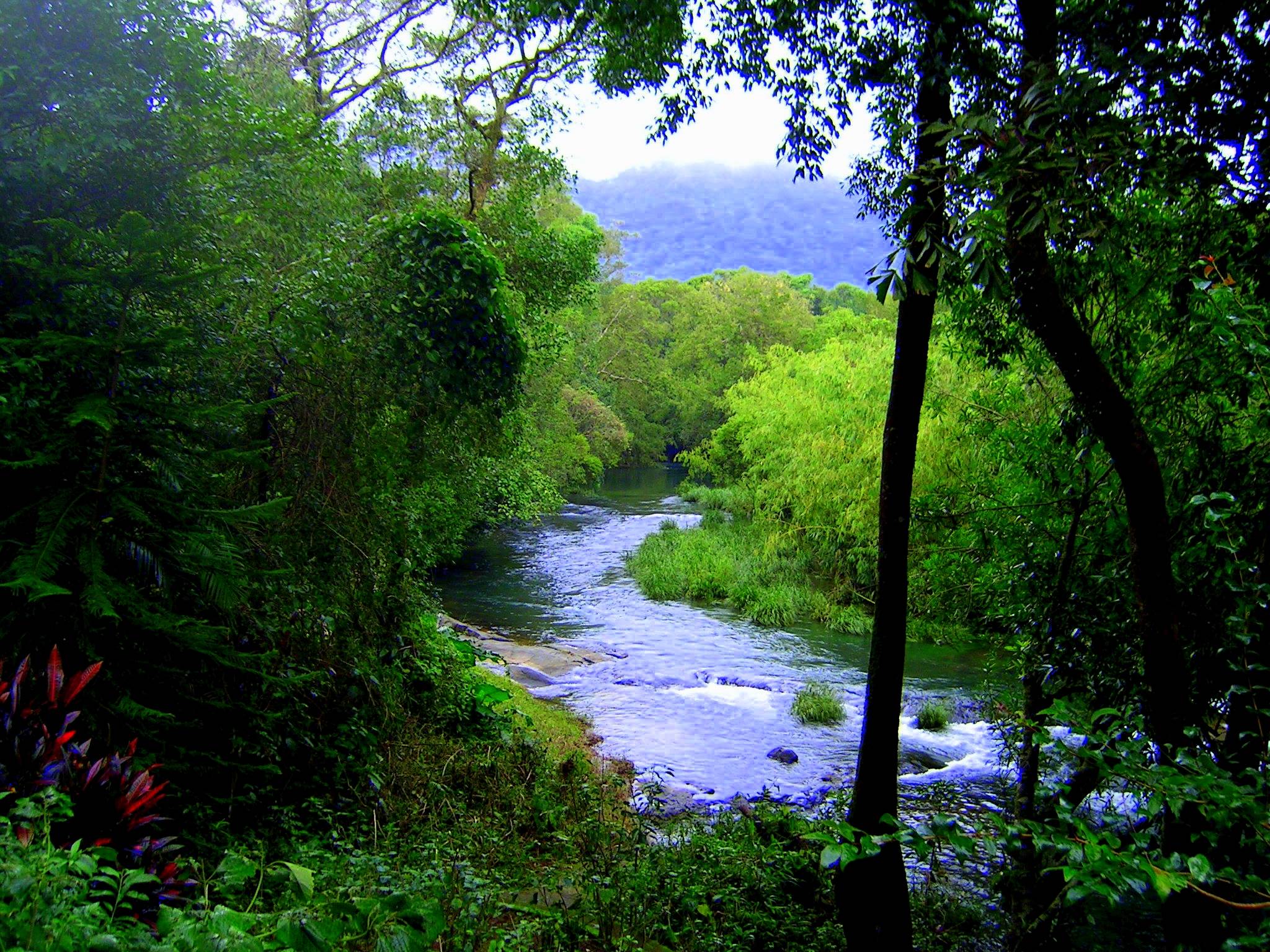
The sanctuary also has a river flowing in the heart which meets the water needs of the animals.

After 23 years, their unmatched passion for wildlife and nature has helped them transform the 55 acres of barren land in 1991 into a one-of-its-kind wildlife sanctuary spread over 300 acres, probably the only private sanctuary in the country!

The sanctuary also has a beautiful river in the middle that is home to several aquatic species like fishes and snakes, including the King Cobra.

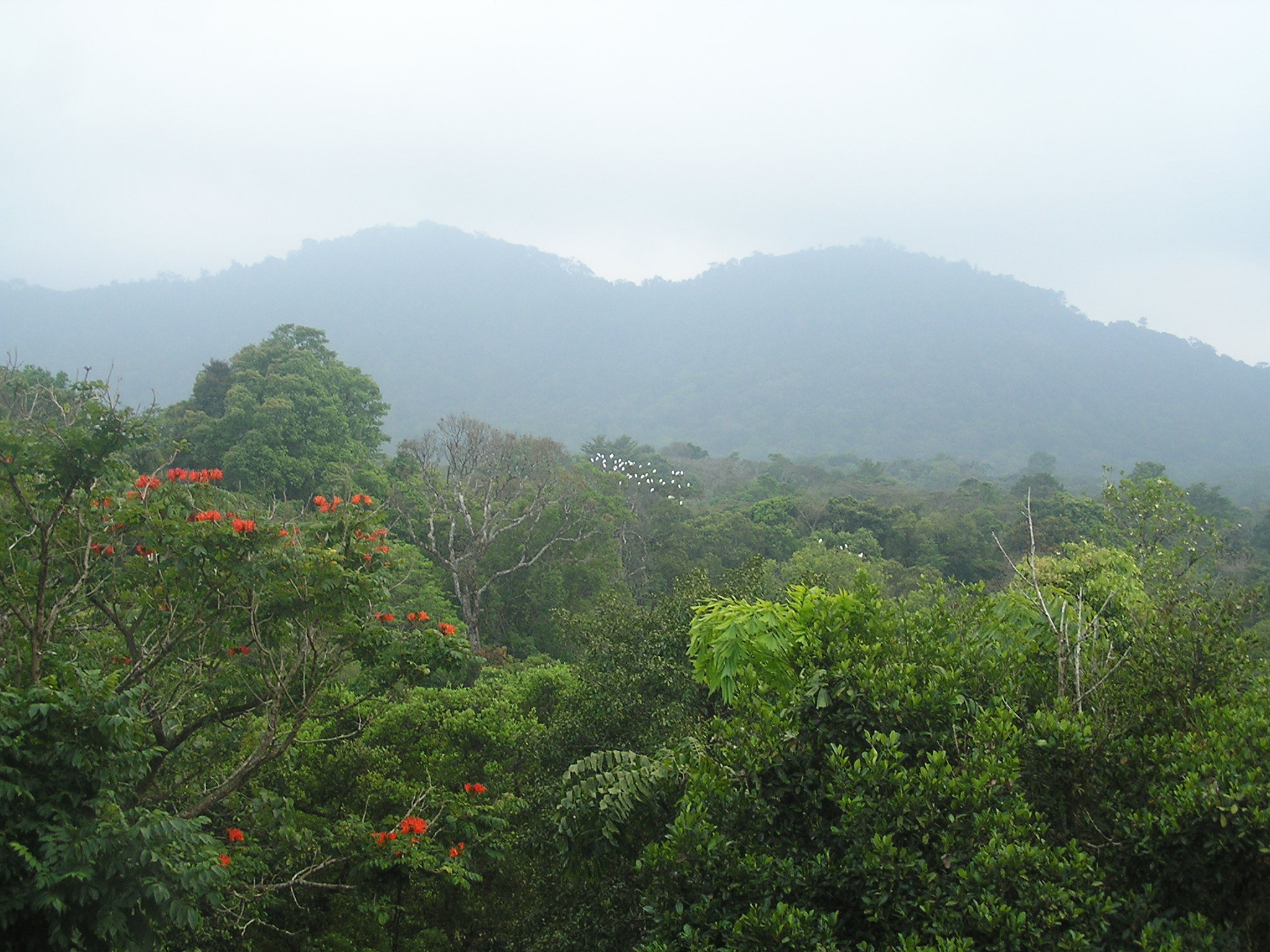
The huge trees and thick forest has also helped several birds like hornbill find their homes. There are over 305 species of birds that visit this sanctuary regularly.

The dense forest cover.

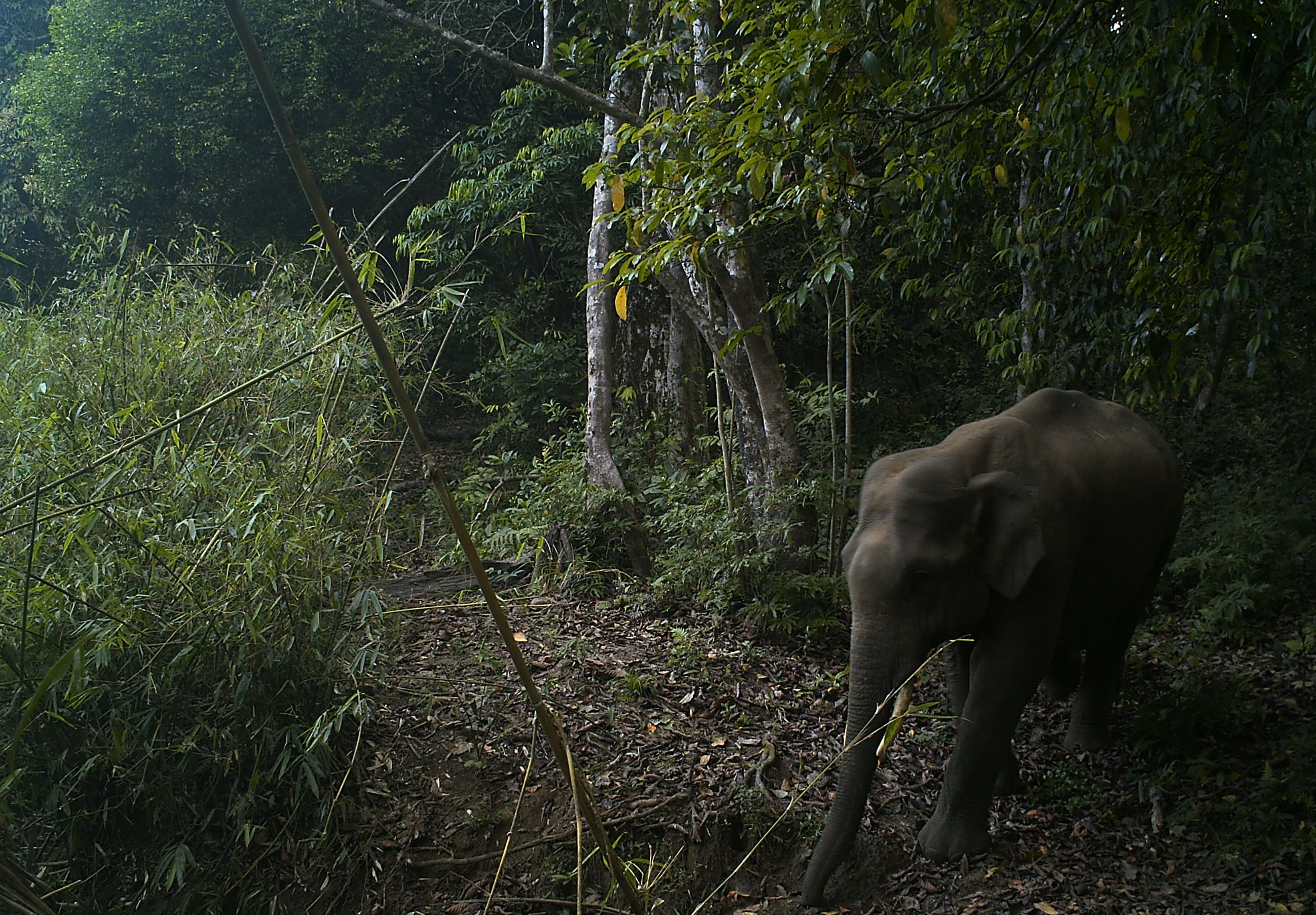
“We make sure that we don’t interfere with these animals. Elephants are very important for regeneration of the forests as they swallow the seed completely without breaking it, unlike other species. Around 30 species of trees totally depend upon elephants for regeneration,” says Pamela.

Several cameras are installed across the sanctuary to identify new animals and keep a track on poachers. “People think that animals need the forest. But the truth is, the forest needs the animals equally. While the forest helps animals in providing shelter and food, animals help forests in regeneration – they are both inter-dependent and we should make efforts to preserve both,” says Dr. Anil.

“A few days ago, I saw in the camera recording that a family of wild dogs and seven small puppies from that family were trying to attack a Sambhar just in front of my house gate. They were born a few days back and now had grown up. So, the fact that each puppy survived is commendable. That means the sanctuary is a good host to all these wild animals,” says Pamela.

When the Malhotra couple purchased the land, there were already native species of cardamom and other trees that were planted. They decided not to disturb those and planted more native trees around the existing ones.

As the green cover expanded, the animal and bird species increased too. The flora of this sanctuary includes hundreds of varieties of indigenous trees, many of which are of medicinal value.

“Our aim is to preserve the flora and fauna, especially the rainforests, for the future generation. We believe that when we die we should give back the same (if not better) Earth which we got from our ancestors to the next generation,” says Dr. Anil.

A family of elephants are frequent visitors of this sanctuary.

The duo makes sure that they do not interfere or disturb the existing eco-system. “Even the dead wood provides nutrition to the soil,” says Pamela.

The couple has grown 10-12 acres of coffee and around 15 acres of cardamom on the land. They are also involved in organic farming on the same land. The sanctuary, which offers a unique experience to the visitors, runs completely on solar and alternate energy. For days of heavy rainfall in the monsoon, the three small windmills meet the needs of providing enough electricity to the sanctuary.

“We also make sure that people who visit here are responsible tourists. We only take those people who are actually interested in exploring the beauty of nature. Smoking and drinking is not allowed as it disturbs the animals and the overall air which is so pure,” says Pamela.

When Malhotra couple started this sanctuary, they invested their own money. Now they are a registered not-for-profit trust which runs on donations which get tax exemptions.

Apart from funds, another challenge comes while patrolling the sanctuary. As the area is very large it is hard to keep track of the poachers. To counter this, they spread awareness about preserving wildlife and nature in schools and nearby villages.

The sanctuary also hosts animals like Hyena, Sambhar and Bengal Tigers.

“To avoid any mishap, we don’t allow people to walk alone here. There is always a guide or we accompany the visitors ourselves,” says Pamela.

The sanctuary also won the “Wildlife and Tourism Initiative Of The Year” award by Sanctuary Asia in conjunction with Tour Operators for Tigers in 2014.

In conclusion, Pamela has a thought she’d like to leave us with, “Overcome your fear and respect the animals’ power. The animal might not understand our words but they do understand our feelings.”

Pamela and Anil also advice people to be careful about the lifestyle they follow. Eating organic food, recycling things, using more energy-efficient devices are some of the basic things they advise everyone to follow.

“When I carried buckets of water in the Himalayas, I realized how precious it is. We should not waste it. It is only when we face problems we realize importance of things,” she says.

“For anyone who wants to bring a change, we advise them to set one single goal and believe that they can achieve it,” says the couple.

Watch the official trailer of a documentary on SAI Sanctuary being made by filmmaker Mellissa Lesh here:

This is an appeal that Pamela and Anil Malhotra have made to all wealthy Indians to save our forests, wildlife and fresh water sources. They are even willing to help anyone who is willing to try.

Want to know more about this sanctuary? Contact them at – saisanctuary@gmail.com

source: http://www.thebetterindia.com / The Better India / Home> Changemakers / by Shreya Pareek / February 23rd, 2015

Reigning Queen of Kerala Honeypots

Aleyamma Siby |Ratheesh Sundaram

It is 9 pm. Outside their house at Panathady in Kasaragod district in Kerala, Aleyamma and her husband Siby are hurriedly placing beehives inside a van. Later, they climb in and the van sets out towards the Coorg district in Karnataka, which is only 30 km away. Once there, they quickly place the hives in three-foot-high stands, below trees, at a distance of three metres. “We have to do this before the sun comes up,” says Aleyamma. “Because at sunbreak, the bees would want to come out in search of nectar and pollen. And if we keep the hives shut they will die of asphyxiation.”

Aleyamma is a breeder who practices migratory beekeeping. Once the honey is harvested at all the hives placed near her house from January to March, she sets off to Coorg and does bee farming there. “Somehow, the quality of the honey is far better there,” she says.

But there is a reason for that. In Kerala, the major source of nectar is from the leaves of the rubber tree. “This is called unifloral honey,” says Dr Stephen Devanesan, principal scientist, All India Coordinated Research Project on Honeybees and Pollinators, Kerala Agricultural University. “But in Coorg, the hives are placed in forests where there is diverse flora. So, the quality of this multi-floral honey is much better.”

However, the collection of honey is not an easy process. First the bees have to be warded off using smoke. Then the honeycombs are removed from the hive. With the help of a honey extractor, the honey is taken out of the cells and stored in containers. All this has to happen in less than an hour, before the bees start stinging the person.

“In the beginning, the stings used to hurt a lot and there would be swelling as well,” says Aleyamma. “But now, though there is pain, there is no swelling. This is my bread and butter, so I have learnt to tolerate the aches,” she adds.

The biggest problem with honey is that it crystallises and ferments. To avoid this, Aleyamma uses the double-boiling method. In this technique, she pours water into a large container. Then she places a smaller bowl, which contains honey, inside it, resting on three bricks. The bottom container is heated, so that the temperature inside the smaller bowl reaches 45 degrees centigrade. Then the honey is taken out, and put through a sieve, to get rid of wax particles, dust and pollen. Following this, it is reheated to 65 degrees centigrade for about 10 minutes. “After the honey cools, it is filtered,” says Aleyamma. “Once this is done, the honey will last for years, without going bad.”

Interestingly, Aleyamma is the only woman beekeeper in Kerala. Last year, she produced 40 tonne of honey, thanks to the 5,000 colonies of Indian and Italian bees that she has.

And thanks to this high productivity, Aleyamma was recently conferred the Stephen Memorial Award for the best beekeeper of 2014 by state Agriculture Minister KP Mohanan. This award has been instituted by the Federation of Indigenous Apiculturists.

To get a high productivity, Aleyamma depends a lot on the Tamil workers, who are experts at bee collection. “They are sincere, hard-working and not afraid of being stung,” she says.

Aleyamma also credits her success to a workshop which she attended. This was conducted by Devanesan, along with Dr K Prathapan, director of the State Horticulture Mission. Devanesan says: “I have imparted training to Aleyamma and other breeders on how to maintain the health of the bees, manage colonies, and do high-tech apiculture. Today, they are all doing well.”

Like most good things in life, Aleyamma came to bee breeding by accident. When she got married and went to stay at her in-laws’ home in Thodupuzha, she saw beehives for the first time in the backyard. In the mid-1990s, she and Siby decided to move to north Kerala to improve their economic prospects. They tried pepper farming and rubber cultivation.

“It did not do well,” she says. “That was when I thought about bee farming. And now, here I am, the only woman in Kerala doing this work.”

source: http://www.newindianexpress.com / The New Indian Express / Home> Magazine / by Shevlin Sebastian / February 28th, 2015

Coffee? Mr. President

OBAMA MENU: Jammu and Kashmir’s ‘Nadru Ke Goolar’; West Bengal’s ‘Mahi Sarson’; ‘Shatwar (Asparagus) Ka Shorba’; Sweet dishes ‘Gulab Jamun’, ‘Gajar ka Halwa’ and assorted fruits; ‘Shrimp Karavalli’ from coastal Karnataka; ‘Murg Neeza Kebab’ of the Mughlai cuisine; ‘Anannas Aur Paneer ka Soola’ — char-grilled cottage cheese with pineapple; ‘Nadru Ke Goolar’ (lotus stem kababs); ‘Kela Methi Nu Shaak,’ a Gujarati dish; Mixed Vegetable Kalonji; Gujarati ‘Kadhi’; ‘Matar Pulao’ and assorted breads; Bengali dish ‘Mahi Sarson’ and ‘Bhuna Gosht Boti’ — tender pieces of lamb cooked in tomato and onion masala; South Indian Coffee and herbal tea.

BallalKF0mar2015
by N.K.A. Ballal, Retd. Sr. Vice-President, ITDC

A look at the menu served to Barack Obama, the US President, on the eve of the official lunch hosted by Modi, our Prime Minister, at the Hyderabad House, made an interesting reading. If you glance at the last item on the menu, our own South Indian coffee was served to the President. Those of you, who are not aware, Hyderabad House is a palatial heritage building near India Gate where all the official sit-down banquets of visiting heads of States is held. The catering is always exclusively handled by ITDC through its Ashok hotel outlet from ages. The service is normally handled by junior executives and not regular waiters since it is imperative that the service should be soundless.

Talking about these State banquets, the invitations are co-vetted by all. The menu is designed keeping the preferences of the host and the guest. For example, if one has a look at the recent banquets after Modi has taken over, most of the times it will have a Gujarati flavour. These menus are planned at Ashok hotel and then sent for approval to the pmo. Some PMs like Indira Gandhi and Rajiv Gandhi were very particular about the menu. Rajiv Gandhi used to come to the venue half-an-hour in advance and check small details of seating etc. Even Vajpayee, who was fond of good food, used to scrutinise the menu to ensure that his choice of food was put up without fail. Otherwise it was left to some official in the pmo.

Most often the food is served once on the plate and refills are rarely asked for. On an average, two waiters serve five persons. Sometimes the meal is also served pre-plated and the entire service is strictly designed keeping in mind the preferences of the visiting head of the State. If he or she indicates that they have finished the meal, the plates of all others guests would also be removed, even if they were midway on their meal. These banquets are definitely not for foodies who relish and enjoy their food leisurely. The seating order is decided by the mea much in advance. Hence, a couple may find themselves sitting diametrically across.

Coming back to the story of coffee, it is said that coffee bean was brought to India by a Sufi mystic, Baba Budan, who smuggled seven beans from Yemen and scattered them on the hills of Chikkamagalur in around 1670 and the rest is history. The hills were later named after the saint as Bababudangiri. The history of coffee goes at least as far as the 13th century and it is said to have originated in East Africa, specifically Ethiopia. Some scriptures have indicated that the Arabs cultivated coffee in the 14th century but the earliest authenticated evidence of cultivation and drinking of coffee has originated from the Monasteries of Yemen. By 16th century, it had reached the rest of the Middle East, Persia, Turkey Balkans, Italy and the rest of Europe and finally to the Americas.

The word coffee is said to be borrowed from the Turkish “kahve,” which in turn is a derivative of the Arabic “qahwa,” which means “wine of the bean.” There are several legendary accounts of the origin of the brew itself which may or may not be true. But the story of one Omar, who was once exiled from the City of Mocha to a desert cave near Qusab, strikes a chord. Starving, Omar chewed some berries from a nearby shrub and found them to be very bitter. He then tried roasting the beans to improve their flavour and then boiled them and the resultant brew was consumed. This revitalised him so much that this brew became a miracle drug. Subsequently, it is said that he was made a saint for this discovery.

Anyway coming back to India, though there are about 30 strains of coffee all over the world, the two main varieties cultivated are arabica and robusta. As the word itself denotes, robusta is a very hardy plant and disease-resistant unlike arabica which requires a lot of attention. The robusta bean has much more caffeine but very less flavour and hence not preferred. 75 percent of the world’s production is arabica and only about 25 percent of the production is robusta. But more and more people are now cultivating robusta since it is economical, good for blending and used mainly by instant coffee producers. On an average, the productivity of arabica is about 810 kg per hectare and robusta about 1100 kg per hectare.

Why is there such a demand for Indian coffee? The reason is the monsoon-effect. Most of the crops in South India are dependent on monsoons and the beans develop a separate flavour, which is attributed to this. The bean would turn pale yellow and swell up and lose the original acidity resulting in a smoother brew, which is milder. This mellowing is called “monsooning.” Surprisingly, coffee cultivation at present is the main economic activity of many a country in the world, next to oil. Surprised?

Currently, Coorg is the largest coffee-growing district of India, an impressive 53 percent. The distinction for being the first British to start coffee cultivation at Coorg would go to Capt. Le Hardy. Many others followed him and by 1870, there were 134 British-owned estates in Kodagu. But the man who brought all the coffee estate planters together to form a consortium called Consolidated Coffee was none other than Ivor Bull.

Coffee growing is not restricted to Coorg alone. It is grown in two other regions of India, that is Kerala and Tamil Nadu too. The Coffee Board, located in Chikkamagalur town, oversees the production and marketing of all the beans cultivated in the country. But the biggest coffee grower of the world is still Brazil followed by Vietnam.

I do not want to bore my readers with much more stats but suffice to say that I felt very proud that our own South India kaapee was served to the US Prez. Many a connoisseurs swear by different combinations of beans for making of this kaapee. But the one taught by my father was 80 percent of arabica, 15 percent of robusta and 5 percent chicory, a root additive that gives an additional bitterness, which is liked by many a consumer. And one cardinal rule, never reheat the brew and the second rule, use cow’s milk. Do you agree?

[email:ananthballal@yahoo.com]
source: http://www.starofmysore.com / Star of Mysore / Home> Feature Articles / Thursday – February 26th, 2015

Plantation Trails -Tata Coffee celebrates the ‘joy of womanhood’ this Women’s Day

This Women’s Day, Plantation Trails by Tata Coffee gives you the perfect reason to escape from the hassle of the monotonous life. Plan a much deserved holiday in the heritage bungalows of the Plantation Trails and treat yourself to the exquisite luxury.

Indulge in the delicious Kodava cuisine along with a cook and butler service. Dive into the tranquility of the coffee plantations and spend some quality time with yourself at theReading Zone. Get a glimpse into the Planter’s Lifestyle in the Bun to Cup Tour, Safari Jeep Drive along with the Bird Watching & Photography Tours.

For all the men, this could be that one opportunity to make the women in your life feel special. Gift the lady in your life a relaxing and a rejuvenating holiday with special offers handcrafted by Plantation Trails.

TataCoffeeKF04mar2015

Gautam Prakash, Head- Plantation Trails says “Women, these days, are independent and unbelievably successful in various fields of work while being superlative at guarding their families. This International Women’s day, Plantation Trails by Tata Coffee takes the opportunity to salute the women for who they are and what they do.”

source: http://www.bollywoodhelpline.com / Bollywood Helpline.com / Home> News & Gossip / by Siddharth Dhongle / Tuesday – March 03rd, 2015