Monsoon in Coorg: Why Coffee Trails and Secret Waterfalls Make It Magical
‘Shodha’ web series review: Mildly intriguing thriller set amid breathtaking locales
MP asks board to develop new coffee variety suitable for cultivation in coastal belt
High temperature in the coastal belt is a challenge for cultivating coffee, says M.J. Dinesh, chairman, Indian Coffee Board.
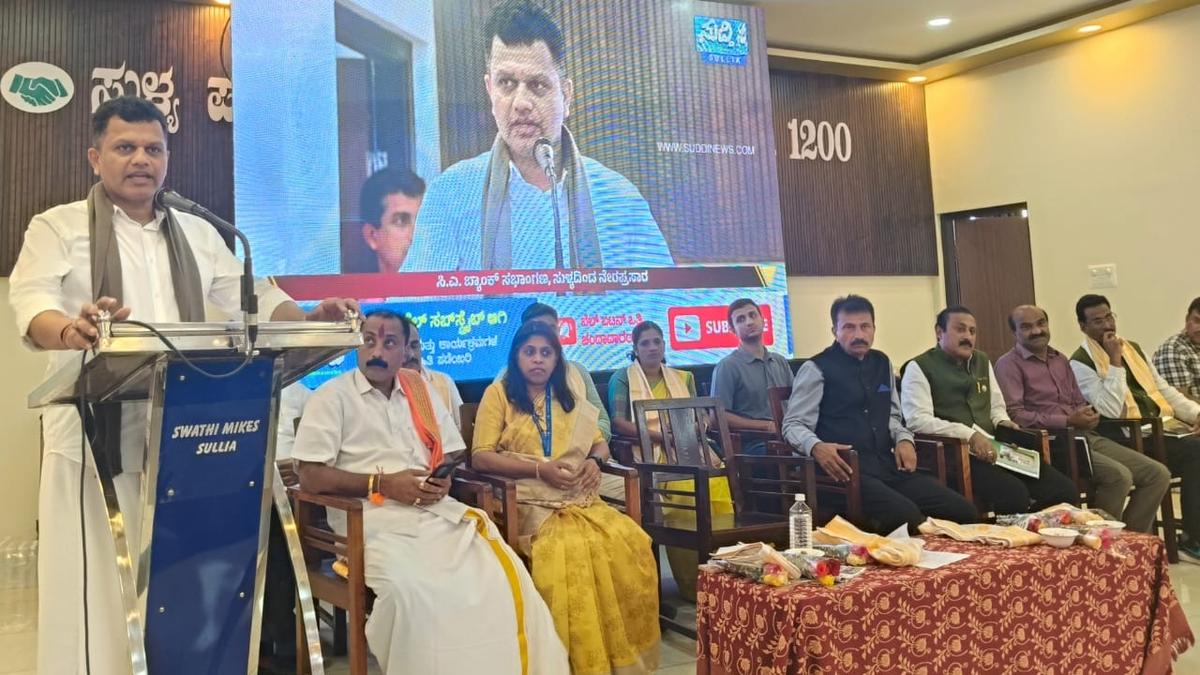
Capt. Brijesh Chowta, MP for Dakshina Kannada, speaking at the inauguration of ‘KaapiCo’ initiative in Sullia on Monday. | Photo Credit: SPECIAL ARRANGEMENT
Capt. Brijesh Chowta, MP for Dakshina Kannada, on Monday suggested that the Indian Coffee Board explore the possibility of developing a variety suitable for cultivation in the district or in the coastal belt.
Speaking at the inauguration of ‘KaapiCo’ initiative in Sullia to promote coffee cultivation with arecanut as a supplementary crop, Capt. Chowta said that the Central Coffee Research Institute (CCRI), Balehonnur, can develop a variety suitable for cultivation in the coastal belt.
The MP said that the coffee grown in the coastal belt can be marketed in a separate regional brand name.
Seeking institutional support from the Coffee Board for growing coffee in Dakshina Kannada, Capt. Chowta said recognition from the board to the coffee grown in the district will help farmers a lot in marketing.
“Farmers of the district are not looking for any financial support from the board. The local cooperative societies will help the farmers financially,” Capt. Chowta said.
The MP appealed to the Board to extend institutional support by providing training to farmers in the scientific cultivation and by arranging coffee plants. “The board should recognise Belthangady, Kadaba, Sullia and Puttur taluks as ideal for cultivating coffee,” he said.
Asking farmers not to go for coffee cultivation in a hurry, Capt. Chowta said that farmers should get themselves convinced of the scientific method of cultivation.
The chairman of the board, M.J. Dinesh, said that the board will promote a cropping model of combined cultivation of coffee with other crops. “Model blocks of combined cultivation of coffee with some other crops will be ready at the CCRI in about two months,” Mr. Dinesh said.
Mr. Dinesh suggested that coffee can be grown with fruit crops or with a combination of coffee, black pepper and arecanut. “A farmer in Wayanad has cultivated mangosteen with coffee. He has made a huge profit by harvesting mangosteen alone,” he said.
The chairman said that the CCRI is celebrating its centenary year, and a new coffee variety will be released during the three-day centenary year celebrations of the institute later this year.
He said that high temperature in the coastal belt is a challenge for cultivating coffee.
Mr. Dinesh said that the board has set a target to take the coffee production to seven lakh tonnes by 2047 and scale up India’s position in the coffee export from the fifth largest exporter to the third largest exporter by then. “Coffee is the second-highest traded commodity in the world,” he said.
source: http://www.thehindu.com / The Hindu / Home> News> Cities> Mangaluru / by The Hindu Bureau / August 25th, 2025
From missed opportunity to a movement: How Harapalli Ravindra built hope for Kodagu’s children
HIGHLIGHTS
Bengaluru:
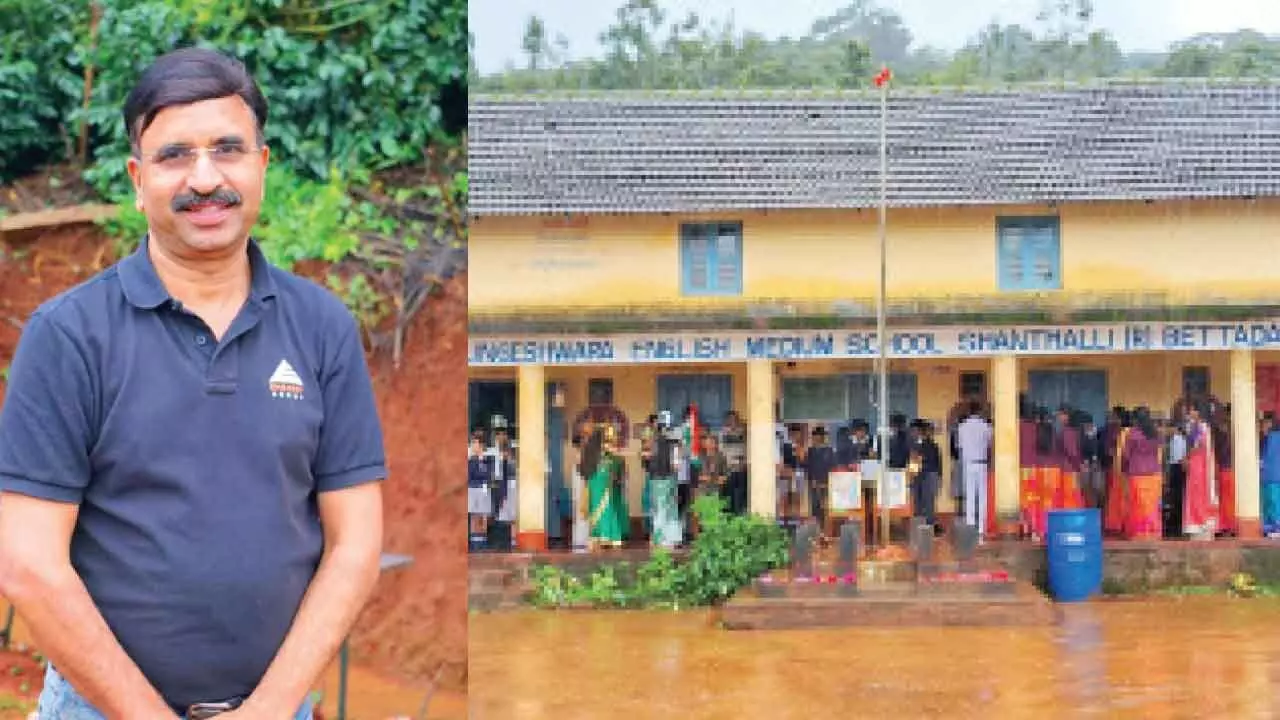
Harapalli Ravindra’s childhood in a tiny village Shanthalli in Somwarpet taluk, Kodagu, was marked by a quiet regret the absence of an…
Bengaluru:
Harapalli Ravindra’s childhood in a tiny village Shanthalli in Somwarpet taluk, Kodagu, was marked by a quiet regret the absence of an English-medium school. While children in urban areas had access to modern education, Ravindra was deprived of the same privilege. Yet his determination never faltered. He taught himself English, completed his PUC and degree in the English medium through a private college, and went on to build a successful career as a professional and later as an entrepreneur in Bengaluru.
Amidst his success, one dream lingered: to ensure that no child from his native region would suffer the disadvantages he once faced. “If I struggled due to the lack of English education, I didn’t want future generations to face the same fate,” Ravindra says. This thought became his mission.
In 2016, with the active support of his villagers, Ravindra founded Harapalli’s first-ever English-medium school. What began modestly with just eight children in Class 1 has now grown into a vibrant institution with more than 200 students and 15 committed teachers. To overcome the absence of public transport, Ravindra has arranged five school vehicles to ferry children from remote hamlets.
Ravindra has personally invested lakhs of rupees into this initiative, though he avoids dwelling on the details. “I don’t want publicity; I only want results,” he insists. His generosity, however, goes beyond infrastructure. Every year, he spends ₹8–10 lakh to provide free uniforms, textbooks, and waive tuition fees for children from Below Poverty Line (BPL) families across Somwarpet taluk.
His efforts are not confined to Shantalli alone. In Bengaluru , Ravindra has established a hostel for underprivileged children from Kodagu, providing accommodation and guidance for over 100 students annually. In his role as Director of the Rajya Vokkaliga Sangha representing Kodagu, he has secured more than 100 hostel seats for rural students, enabling them to pursue higher studies in the city.
He has also recommended the construction of a free ladies’ hostel at Somwarpet through the Sangha, further expanding educational opportunities for young women. Additionally, Ravindra has facilitated engineering and professional course admissions for deserving students, helping them build solid career paths.
For Kodagu’s children, Harapalli Ravindra is more than a benefactor he is a visionary who transformed his childhood hardship into a movement of hope and empowerment, ensuring generations to come will have the education and opportunities he once longed for.
source: http://www.thehansindia.com / Hans India / Home> News> State> Karnataka / by Hans News Service / August 27th, 2025
Medal winner in Master’s Badminton Championships

Madikeri (Kodagu):
Maleyanda Arun Poovaiah, a former International Badminton player, has won Men’s Singles title, Mixed Doubles Trophy and emerged Runners-up in Men’s Doubles Category at the PAN India Golden Master’s Badminton Championships held at Vardhan’s Vision Sports Club in R.R. Nagar Bengaluru recently.
Along with trophies, cash prize was also awarded.
A native of Nelji, Napoklu in Kodagu, Arun is presently based in Bengaluru and is involved in coaching budding Badminton players.
source: http://www.starofmysore.com / Star of Mysore / Home> Sports / August 25th, 2025
Kodava cultural fest held in Mysuru
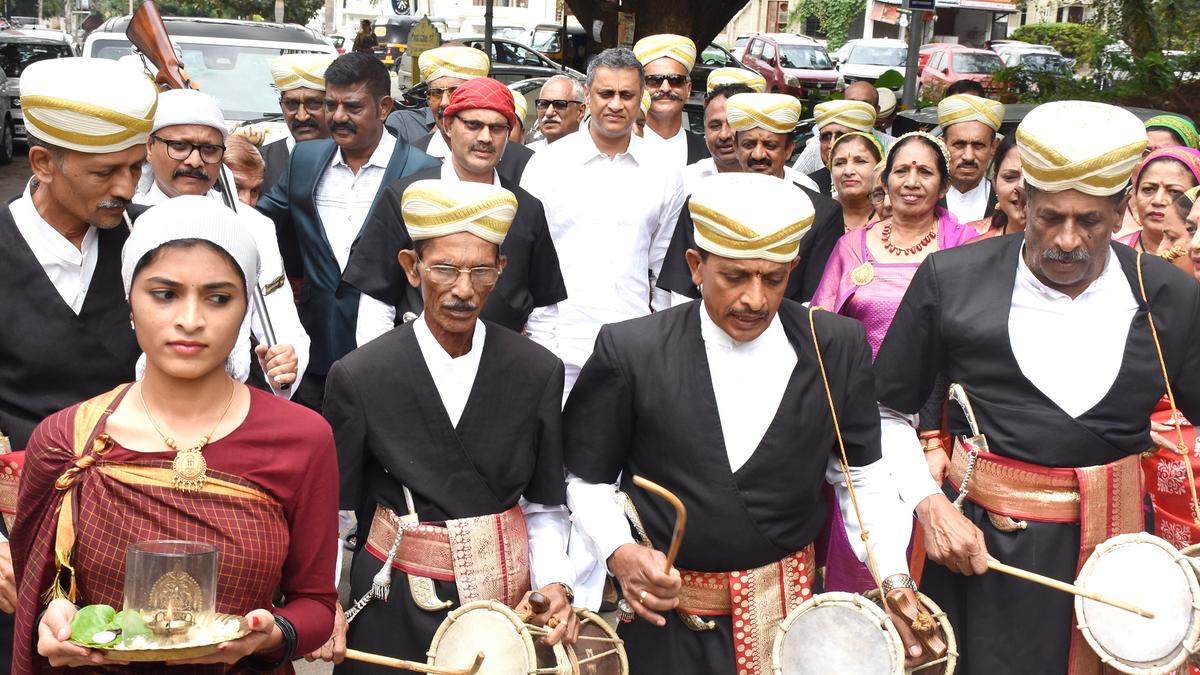
MLA for Virajpet A.S. Ponnanna being welcomed during the ‘Kodavameera Aara Bera’, a Kodava cultural festival, at Kodava Samaj in Mysuru on Saturday. | Photo Credit: M.A. SRIRAM
The Karnataka Kodava Sahitya Academy, in association with Mysuru Kodava Samaja, organised the ‘Kodavameera Aara Bera’ programme on Saturday at Mysuru Kodava Samaja.
The event was presided over by Ajjinikanda C. Mahesh Nachayya, president of the Karnataka Kodava Sahitya Academy.
Chief Minister’s Legal Advisor and MLA for Virajpet A. S. Ponnanna inaugurated the cultural fest by lighting the lamp in the presence of several dignitaries.
In his address, Mr. Ponnanna said the festival was intended to portray the richness of the Kodava language, culture, and traditions, and stressed the need to conserve and promote it for future generations.
The programme featured cultural performances, traditional dances, and a play highlighting the vibrant heritage of the Kodavas. An exhibition and sale of books published by the Kodava Sahitya Academy was also organised on the occasion.
source: http://www.thehindu.com / The Hindu / Home> News> India> Karnataka / by The Hindu Bureau / August 23rd, 2025
Coffee growers furious as forest department evicts 800 plants in Karnataka’s Somwarpet
The Madikeri Forest Division RFO confirmed the growers have encroached on the sacred grove, a notified forest area, leading to the eviction of his crops.
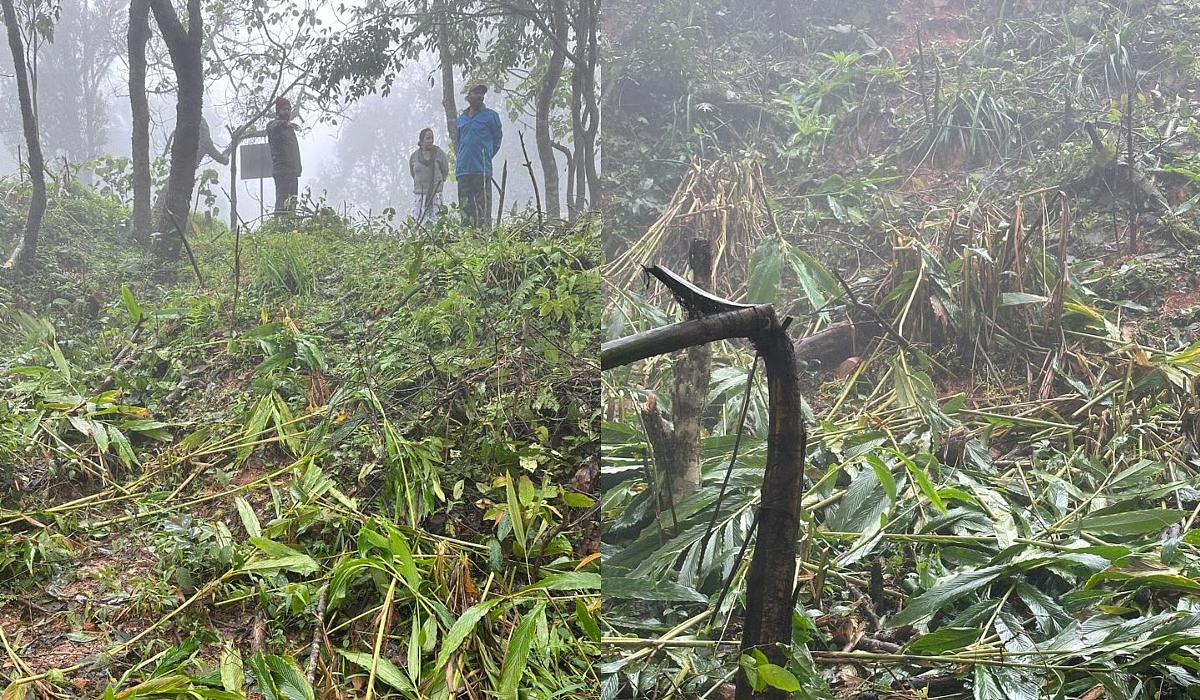
Uprooted cardamom plants in Somwarpet.(Photo | Express)
Madikeri :
Over 800 coffee plants and several cardamom plants grown across government land were evicted by the forest department in the Somwarpet region. The incident has evoked anger among the grower community in Somwarpet, who threaten to intensify their struggle against the forest department.
“Over 35 years ago, my father, Kaalachanda Naniyappa had cleared the paisari land of about three acres at Mukkodlu limits and had cultivated the land with coffee and cardamom. Recently, as several coffee plants had worn out, he took up re-plantation work and had sown new coffee plants,” explained Kaushi, daughter of 70-year-old Naniyappa.
She added that the estate was readied on paisari land, and the survey number does not fall under the forest department. “Despite the land being paisari and not forest area, over 10 people who claimed to be from the forest department trespassed into our estate and destroyed all the crops,” she alleged.
According to her, over 800 coffee plants, alongside yielding cardamom crops, have been destroyed. “My father’s hard work of over three decades has been razed within an hour by the department officials. No notices were served and we did not apply for any lease as the land is ‘paisari’ and not forest land,” she explained.
The elderly grower, who lives with his ailing wife, is now in a dilemma as he has suffered huge financial losses in the process. From labour charges to cultivation costs, he has lost his livelihood, which has evoked the anger of other growers in the region.
However, the concerned RFO of Madikeri Forest Division confirmed that the elderly grower had encroached on the sacred grove, which is a notified forest area. “The grower has cut several trees in the sacred grove area and we have to file a case against him. We had warned him not to cut trees. Despite that, he has cleared the sacred grove. Since he is an elderly person, we carried out only the eviction process and have not booked him for the same,” the officer confirmed. He added that the cleared area falls under Bellacchu Sacred Grove forest area.
As per the survey details given by owner Naniyappa, however, the RTC shows that survey number 33/2 in Mukkodlu region is paisari government land that has been granted to him.
Meanwhile, members of the Raitha Horata Samithi of Somwarpet taluk gathered at the evicted area and declared they would intensify their fight against the forest department, claiming that the department is snatching away the livelihood of small growers.
source: http://www.newindianexpress.com / The New Indian Express / Home> Karnataka / by Prajna G R / August 21st, 2025
Kodagu has immense potential in food processing sector: KAPPEC MD
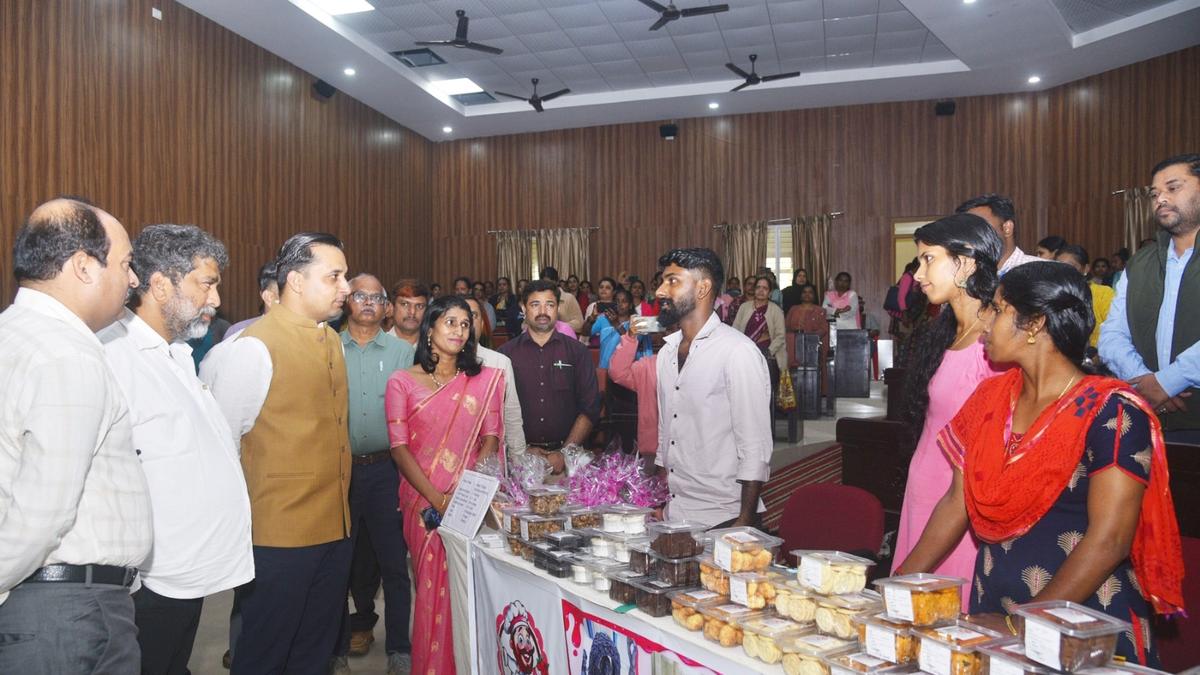
Deputy Commissioner Venkat Raja during his visit to an exhibition organised as part of an awareness programme on the PMFME scheme in Madikeri on Thursday. | Photo Credit: SPECIAL ARRANGEMENT
Kodagu Deputy Commissioner Venkat Raja has urged the people to make use of the support being extended by the Central and State governments for establishing small-scale food processing industries, after inaugurating an awareness programme on the Pradhan Mantri Formalisation of Micro Food Processing Enterprises (PMFME) scheme in Madikeri on Thursday.
Elaborating on the opportunities available under the Atmanirbhar Bharat Abhiyan, the Deputy Commissioner said that a 50% subsidy would help individuals start ventures even at their homes, and stressed the importance of branding and market linkages to ensure a wider reach for food products. Special emphasis was laid on encouraging women entrepreneurs, which he said, would boost the district’s economic growth and generate employment opportunities.
The Deputy Commissioner appreciated the exhibition of food-processing products like bakery items, coffee, mushrooms, spices, millet-based products, and chapatis at the event.
Shivaprakash, Managing Director of the Karnataka State Agricultural Produce Processing and Export Corporation (KAPPEC), said Kodagu district has immense potential in food processing industries such as coffee, pepper, cardamom, cocoa, arecanut, honey, and paddy.
Mr. Shivaprakash urged entrepreneurs to file more applications under the scheme, pointing out that the district could even secure GI tags for its unique products. Up to ₹15 lakh subsidy (50% of the project cost) is available for setting up new units or expanding existing ones, he said, adding that flour mills, oil mills, bakeries, banana-based products, turmeric and coconut processing, snacks, pickles, chapati making, coffee powder, masalas, chocolates, honey, fruits, and vegetable processing are among the units that can be established.
B.S. Chandrashekar, Joint Director of Agriculture, said that 160 applications had been filed from the district, of which only seven were rejected. Loans worth ₹15.2 crore have been sanctioned against a target of ₹18.13 crore, benefitting 89 entrepreneurs since the launch of the scheme in 2020-21.
In the 2025-26 State budget, Chief Minister Siddaramaiah announced the establishment of 5,000 small food processing units with an allocation of ₹206 crore. Kodagu has been given a target of 75 units.
Lead Bank manager Gangadhara Nayak, CFTRI Senior Technical Officer Raghavendra, NABARD representatives, and other resource persons spoke on the opportunities in value addition and market expansion at the event. On the occasion, the PM-FME scheme brochure was released by the Deputy Commissioner, and cheques were handed over to beneficiaries.
source: http://www.thehindu.com / The Hindu / Home> News> India> Karnataka / by The Hindu Bureau / April 22nd, 2025
A eulogy to… KBG
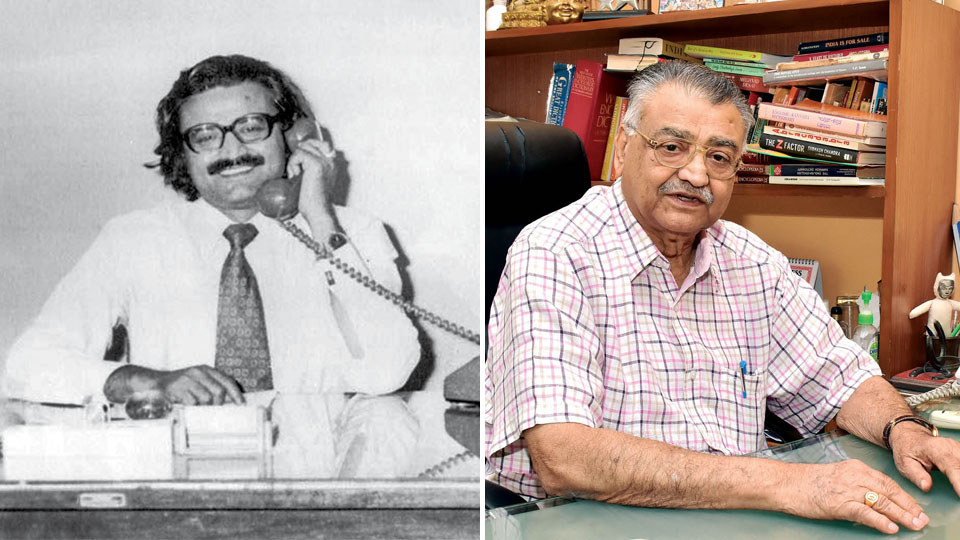

On Sunday, the 13th (of July), my father and the Founder-Editor of Star of Mysore and Mysuru Mithra, K.B. Ganapathy, passed away.
Knowing him, I think he would have got a kick out of it if he had kicked the bucket on Friday the 13th, popularly considered an unlucky day.
It feels odd to write about my father, but I feel I owe it to the readers of Star of Mysore, who have made this small newspaper from this small city into one of India’s most successful evening newspapers.
To not write about him would feel wrong. Especially because his life was not only well lived, but it was also wildly interesting.
KBG, as he was popularly known, never really spoke much of his early life with me until a few years ago, when I became a father and he, a grandfather. The stories were fantastic.
When you become one of the youngest lawyers in Bengaluru at a time when jukeboxes and dance halls were in vogue…
When you, as a nerdy, bespectacled boy from Coorg to have the audacity to move to Bombay to become an actor, then a scriptwriter, without knowing a word of Hindi…
When you rejoin College in Bombay to study journalism and are chosen to work under a legend like T.J.S. George…
When you launch your own advertising agency in Pune and help name the now-iconic moped, Luna…
When you move Osho Rajneesh from Juhu Beach into an apartment and handle his first PR campaign for The Illustrated Weekly of India…
When you finally pack it all up and return to Mysore to run a bill-book printing press… and then start your own newspaper… You’re bound to have stories. And KBG had a whole lot of them and he told them brilliantly…
From tales of quirky Bombay industrialists to the eccentricities of Osho Rajneesh, from the spiritual gurus he encountered in his career to dealing with political thugs he had confronted, his stories were always unexpected, always unforgettable.
Whether he was protesting at the Bombay Docks with George Fernandes or breaking ‘journalistic ethics’ by openly campaigning for H.S. Shankaralinge Gowda in Mysore, KBG lived with a conviction few dared to match and fewer still could argue with, though I often did.
What made him a good journalist was simple. A nose for news, a maniacal work ethic, and a fearlessness that bordered on charming arrogance.
KBG also had a quirk. He never wore a shirt without a pocket. Why? Because he always carried a tiny notepad and a pen. Even on the day he died, he had notes scribbled in his little notepad stuffed in his shirt pocket — observations and “news points for reporters.” He never stopped reporting.
KBG loved intellectual combat, and often our dinner table arguments ended with me yelling, “Youth may be wasted on the young, but wisdom is definitely wasted on the old !”
He would smirk and say, “Don’t flatter yourself. At your age, only Rahul Gandhi can be forever young.” Then, with a smile, he would ask, “Drink?”
That was KBG. You could argue with him, disagree with him, even mock him, but he always knew how to separate debate and decency.
That same spirit defined Star of Mysore. Even if you didn’t share his ideology, your voice still had a place in his paper.
Through Star of Mysore and Mysuru Mithra, he gave voice to countless civic warriors. Many of them eventually joined politics, but before that, they helped shape our city.
He encouraged service clubs like Rotary, Lions and MGP, believing they created a collective civic conscience to keep the Government accountable.
Though he had an irreverent side, he was also deeply spiritual.
On his 85th birthday, I asked him, “After all these years, what according to you is happiness?” He replied instantly, “Freedom from physical pain.”
Then, after a pause, added, “You can have all the money and status you want, but if your body is hurting, even if it’s a toothache, you’ll be miserable.”
I asked when he had this spiritual epiphany. With a mischievous smile he replied, “When I had piles.” We both laughed. I said, “Now you know how it feels to work with you.” He laughed and clapped, something he would do on hearing something witty. That bellowing laughter with clapping will be missed.
Since his passing, people have asked me how I’m coping. For now, I keep reading the note he would write on the first page of his diary every year for over 40 years. They are lines from the Bible:
“The race is not to the swift,
nor the battle to the strong,
nor does food come to the wise
or wealth to the brilliant,
but time and chance happen to them all.”
And then he would add, in his own hand:
“So do not despair, Ganapathy, for this too shall pass.”
And so, while we grieve, we carry on, for… this too shall pass.
On behalf of my family and everyone at Star of Mysore and Mysuru Mithra, Thank You, dear readers, for your love and loyalty. We hope to continue informing, entertaining and waking the activist in every Mysurean.
P.S.: After his passing, some have criticised the current State Government for not offering KBG State Honours like his peers got.
Honestly, it doesn’t matter.
What greater honour can a journalist ask for than the love of his readers?
That, for my father, was more than enough.
e-mail: vikram@starofmysore.com
source: http://www.starofmysore.com / Star of Mysore / Home> Columns, In Blace & White , Top Stories / by Vikram Muthanna / July 26th, 2025

