Minister in charge of Kodagu district N.S. Boseraju on Friday said that instructions have been issued to take up immediate repair works at 71 anganwadis and 406 schools in the district.
Speaking to reporters in Madikeri on Friday, Mr. Boseraju said 77 houses were damaged in rains in May and June, and compensation has already been distributed. Around 2,364 electricity poles and 22 transformers have been replaced.
Under the Shakti scheme, 500 crore women passengers have travelled across the State, with 1.20 crore in Kodagu district alone, he claimed. The government had borne an expenditure of ₹50 crore for the scheme, he added.
source: http://www.thehindu.com / The Hindu / Home> News> India> Karnataka / The Hindu Bureau / July 11th, 2025
Experience the flavors of Coorg at Hilton Bengaluru’s exclusive pop-up, “A Coorg Kitchen Story,” featuring Chef Anjali Ganapathy’s culinary delights by the poolside.
3 -Day Exclusive Pop-Up by Pig Out at Neer
Hilton Bengaluru Embassy Manyata Business Park is set to host a one-of-a-kind culinary pop-up, “A Coorg Kitchen Story,” presented by Pig Out, the acclaimed dining platform founded by Chef Anjali Ganapathy. Held at Neer, the hotel’s elegant poolside restaurant, this limited-time event promises to transport diners to the misty hills of Kodagu through a sensory-rich celebration of Coorg cuisine.
Chef Anjali Ganapathy, renowned for her immersive, narrative-driven culinary experiences, brings the soul of Coorg to the city through a menu deeply rooted in heritage, memory, and the wild bounty of the Western Ghats.
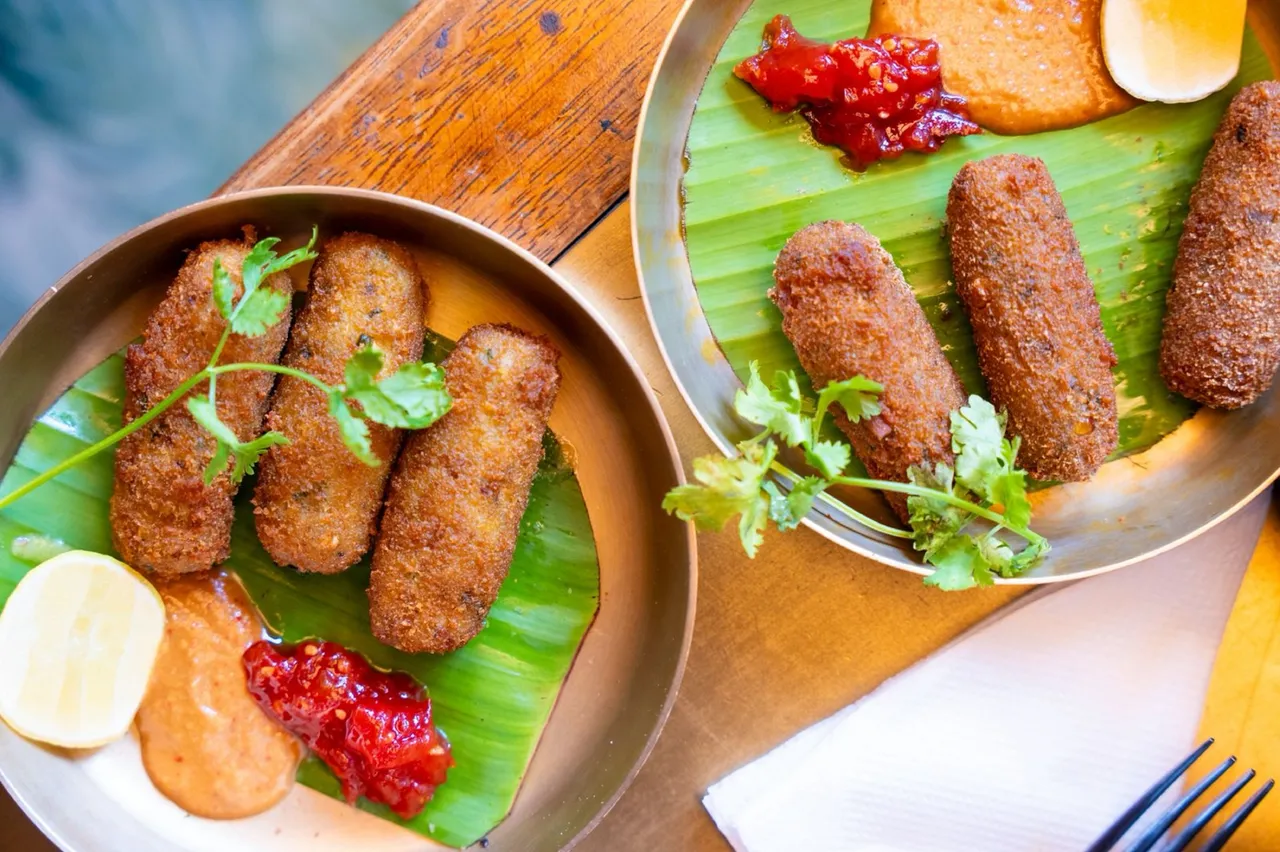
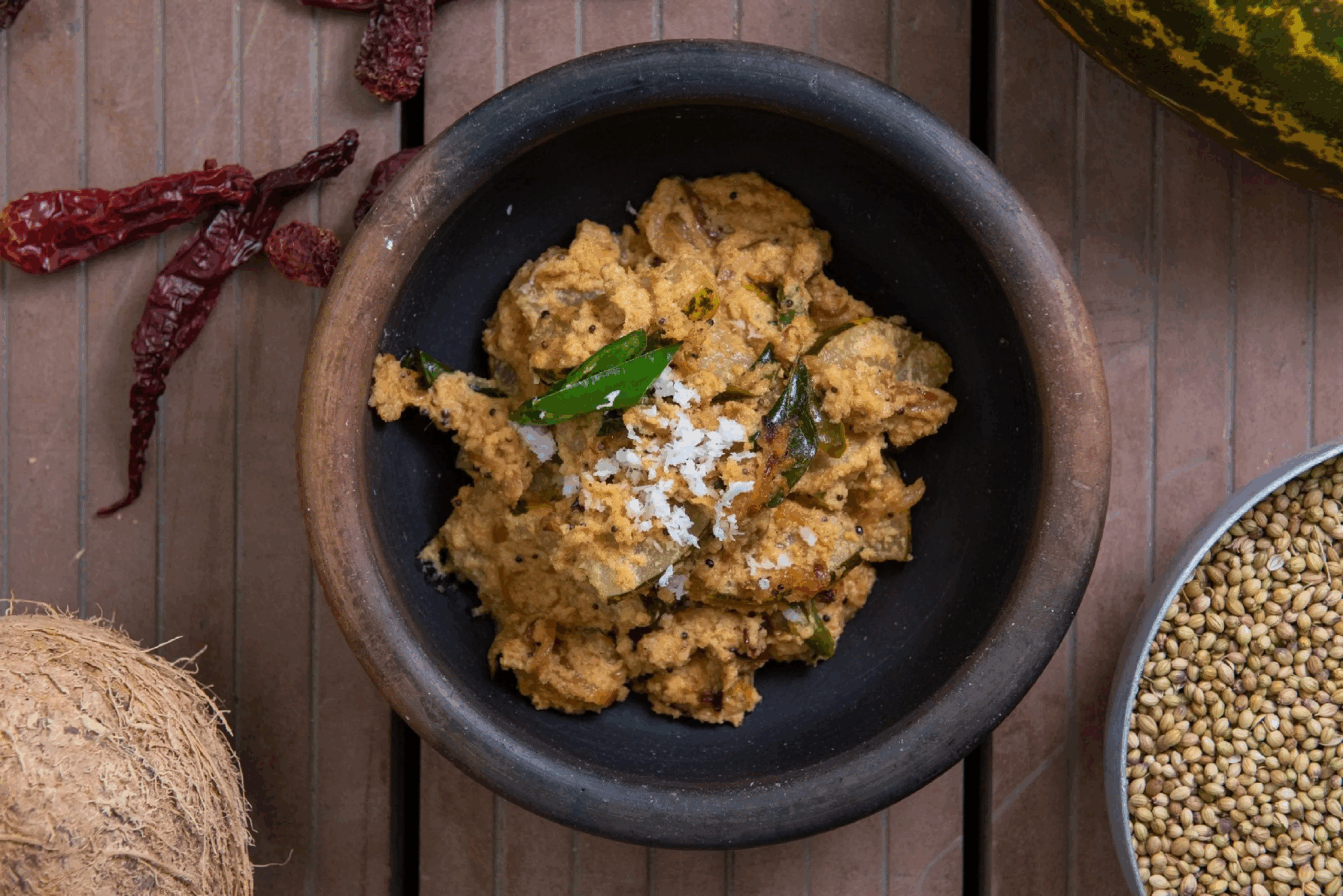
The menu promises bold, comforting flavors—from tantalizing Mathi Cutlet and Onak Erachi to vegetarian delights like Jackfruit Cutlet and Baimbali Stir Fry. Guests can savor iconic pairings such as Paaputt with Koli Curry and the soothing Kumbla Curry. Unique dishes like Kaipakai, Baale Thange and a vibrant assortment of curries—Kumm, Maange, Pandi, and Kakkda Njende—highlight the region’s culinary diversity. Hearty rice dishes such as Jackfruit Pulao and Erchai Pulao add depth, complemented by traditional sides like zesty Inji Pachadi, nutty Ellu Pajji, and the distinctive Baimbale Paara. Staple breads like Noolputt and Akki Otti round out the experience.
The pool side setting at Neer provides the ideal backdrop for this immersive journey. With its tranquil, tropical-inspired ambiance and curated beverage program, it enhances the rich, earthy narrative of Kodava cooking with understated elegance. This exclusive pop-up promises an unforgettable culinary escape into the heart of Coorg’s vibrant food heritage.
What: A Coorg Kitchen Story by Chef Anjali Ganapathy
When: 18th July 2025 to 20th July 2025, 7.00 PM onwards
Where: Neer, Hilton Bengaluru Embassy Manyata Business Park
source: http://www.hospibuz.com / Hospibuz.com / Home> Hotel Listicles> Hotel / by Hospibuz.com / July 11th, 2025
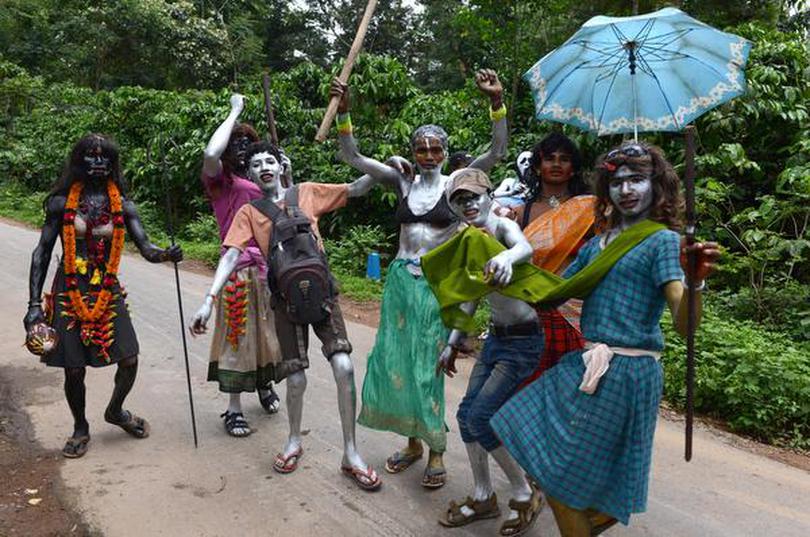
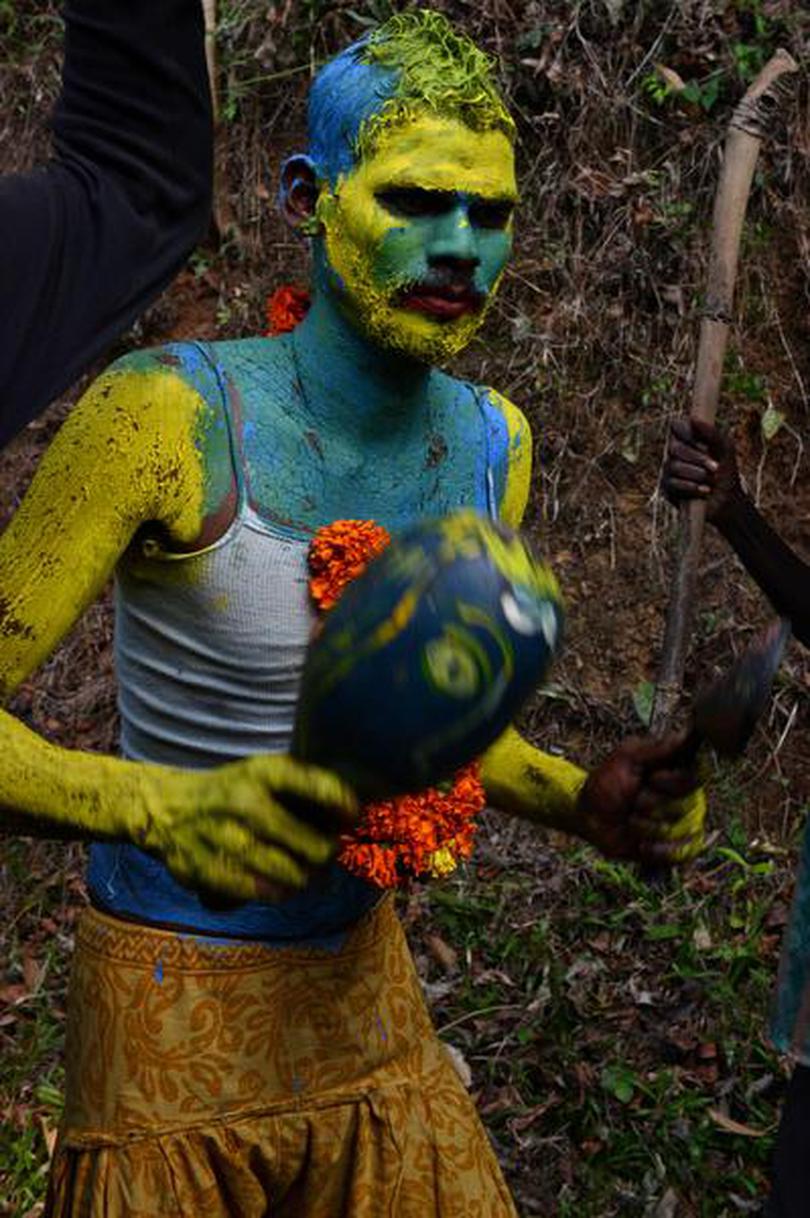
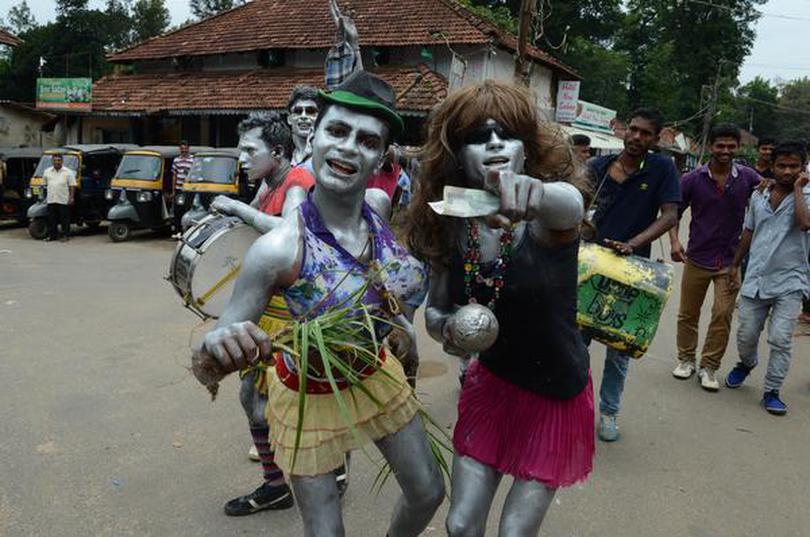
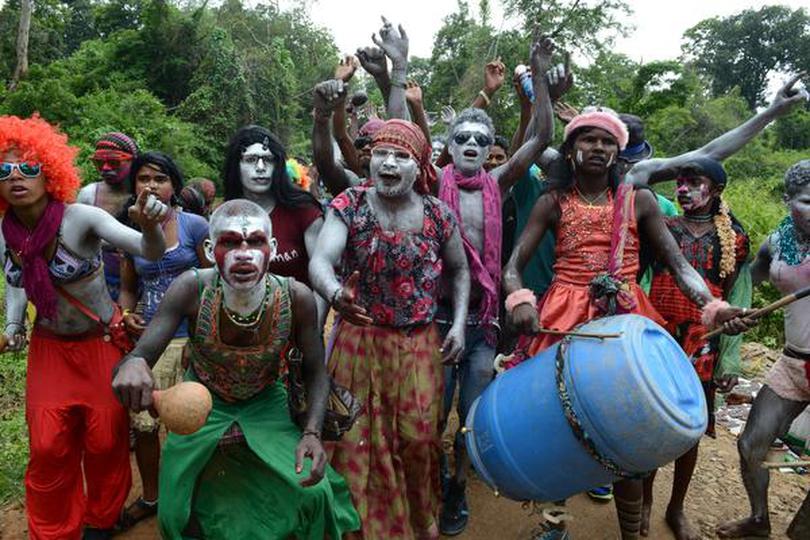
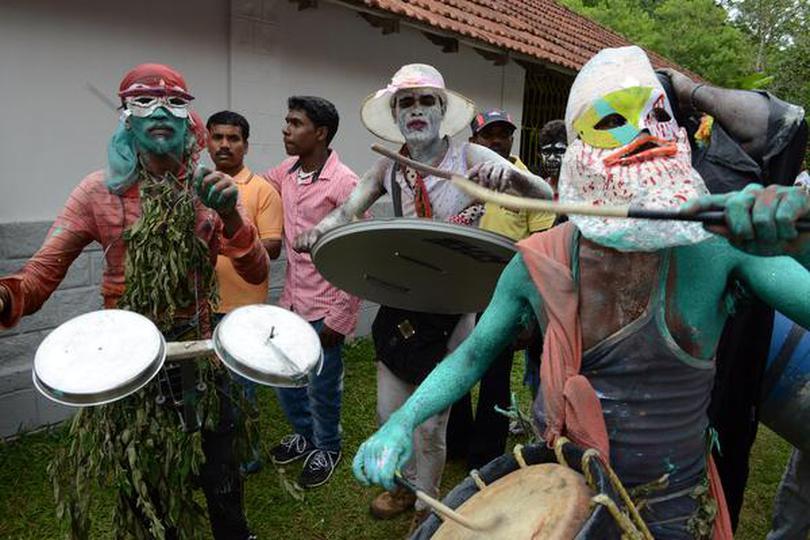
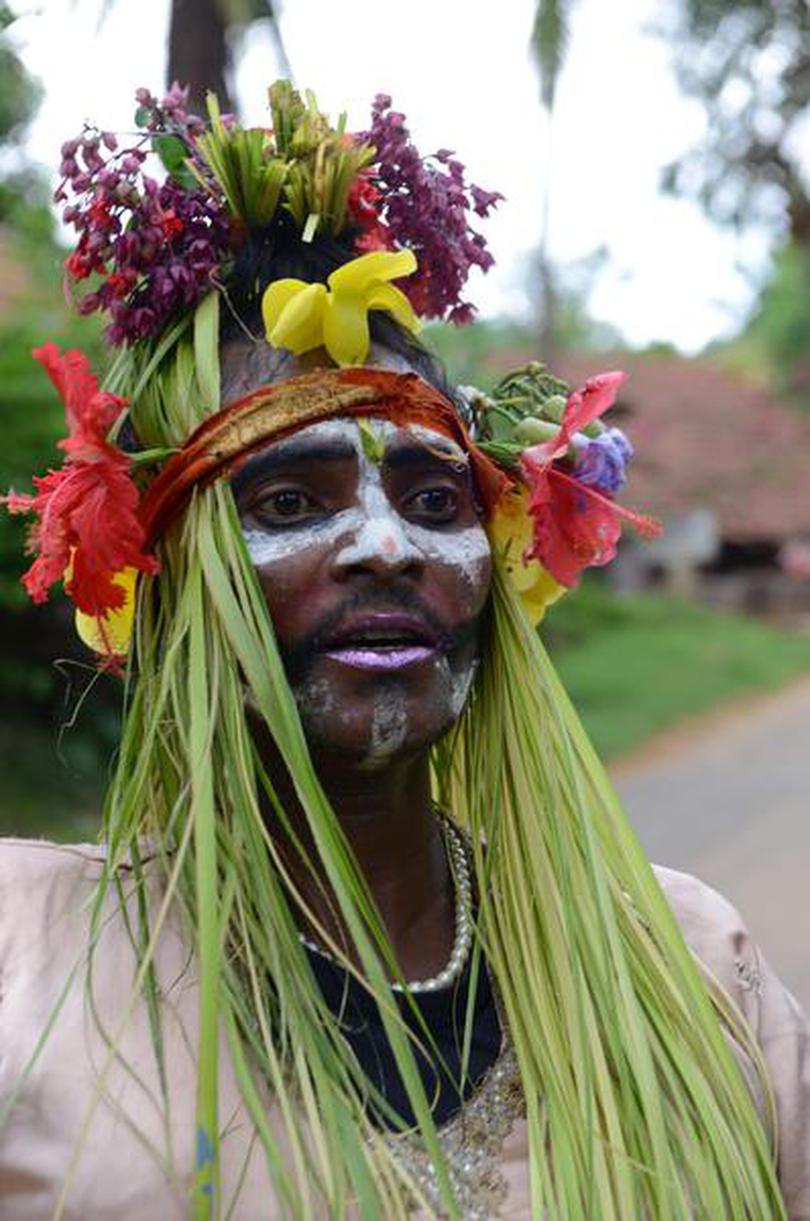
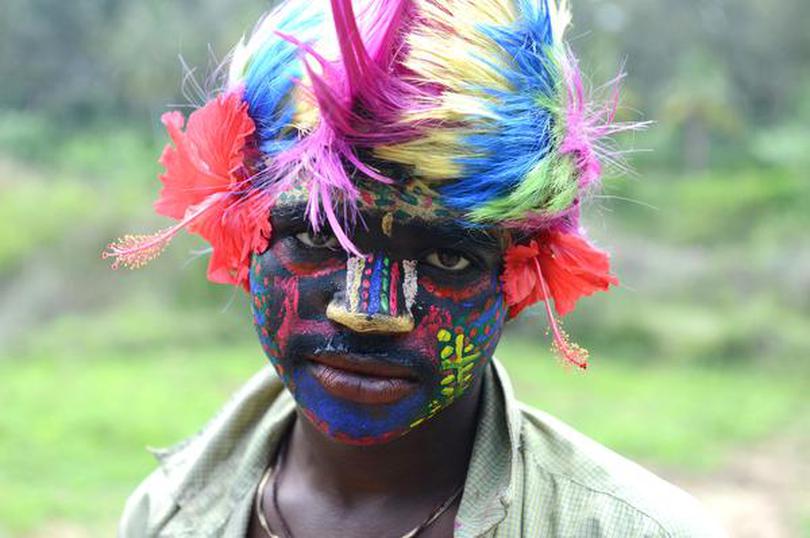
On the cool, green hills of Coorg, the Kunde festival is when Jenu Kurumba men, liberated by disguise and liquor, curse their gods, their employers and all passers-by.
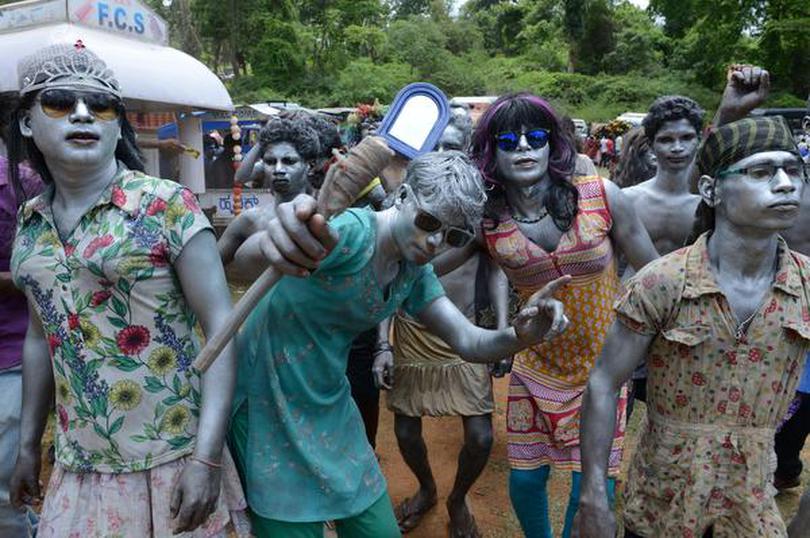
Once a year, the usual peace of the Coorg hills is rent by expletives and abuse, the staccato beat of plastic drums, and rhythmic chants and yells. Then, from the muted shades of green and brown foliage emerge the neon-yellow-silver-red Jenu Kurumba men. They are dressed as women, in a playful take on Western sexuality. They are walking to a forest temple to invert normality — they will not worship but berate the gods.
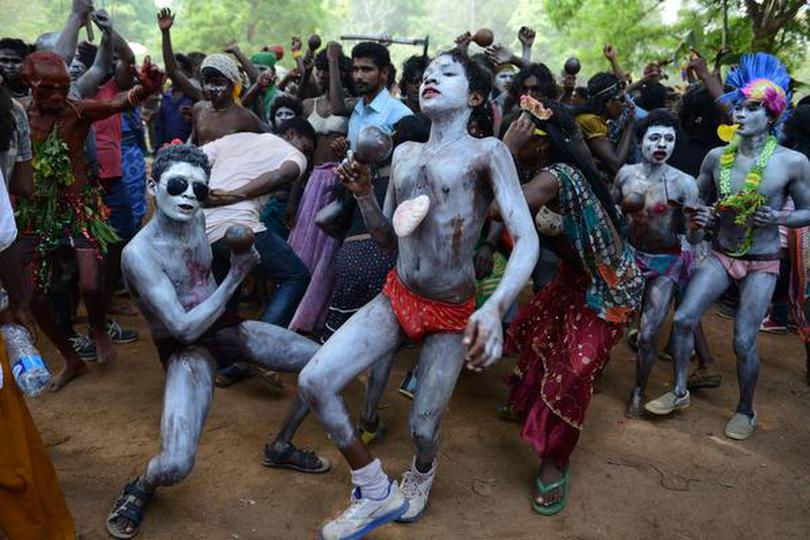
Liberated by disguise and alcohol, the Kunde festival topples the norms — gods, passers-by and plantation owners are all cheerfully abused by the labour force, as today they stand upright rather than bent over the coffee bushes. Kunde Habba in the local dialect means the festival of abusing god. Screams and laughter are in the air but this crazy carnival serves a purpose — it’s a social pressure cooker that allows everyone to let off steam. The static hierarchy of the hills is blown open for a day, which makes the rest of the year more bearable for those near the bottom.
The Kurumbas are seriously angry. They asked the god Aiyappa to go hunting with them, but he was far more interested in the beautiful goddess Bhadrakali, and abandoned them to the vagaries of the hunt. The god’s love is tested by this annual reminder of his duties, couched in a torrent of anatomically accurate abuse.
Today, the Kunde has modernised. The areca nuts, the leaf masks, the flowers and fruit layered over turmeric have been replaced with mass-produced plastic accessories, but what is still going strong is the casual immediacy of self-expression. The Kunde is more than a day of shattered inhibitions; it is carefully contoured chaos that obeys immemorial and invisible laws, granting the privileged observer a glimpse into another world and another time.
The Kurumba men, liberated by disguise and alcohol. Photo – Clare Arni
The Kunde festival is a carefully contoured chaos that obeys immemorial and invisible laws. Photo – Clare Arni
The Kunde festival is a carefully contoured chaos that obeys immemorial and invisible laws. Photo – Clare Arni
The Kurumba men, liberated by disguise and alcohol. Photo – Clare Arni
This crazy carnival serves a purpose — it’s a social pressure cooker that allows everyone to let off steam. Photo – Clare Arni
This crazy carnival serves a purpose — it’s a social pressure cooker that allows everyone to let off steam. Photo – Clare Arni
This crazy carnival serves a purpose — it’s a social pressure cooker that allows everyone to let off steam. Photo – Clare Arni
The Kurumba men, liberated by alcohol and disguise. Photo – Clare Arni
The Kurumba men, liberated by alcohol and disguise. Photo – Clare Arni
The Kunde festival is a carefully contoured chaos that obeys immemorial and invisible laws. Photo – Clare Arni
source: http://www.thehindu.com / The Hindu / Home> Features> Magazine / October 18th, 2016
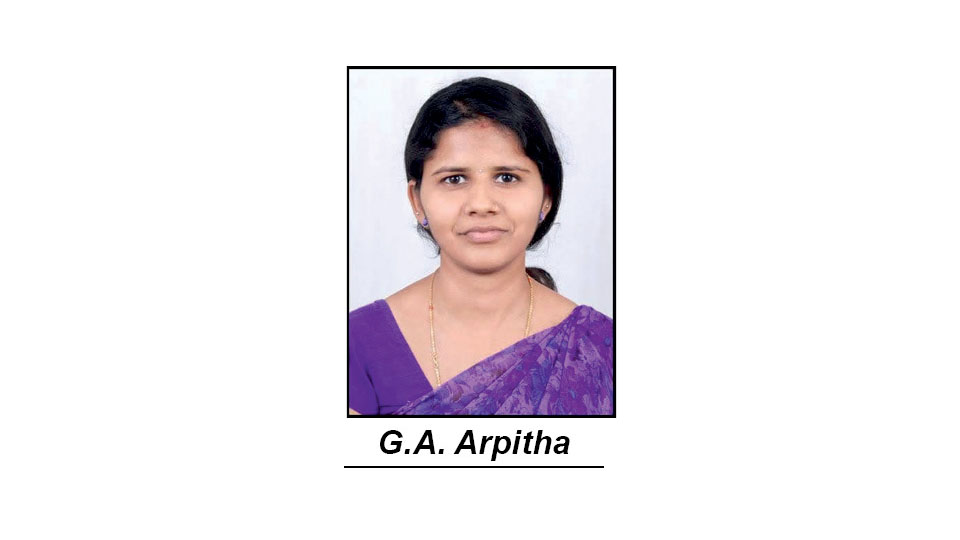
Visvesvaraya Technological University (VTU), Belagavi, has conferred the Doctor of Philosophy (Ph.D.) degree on G.A. Arpitha for her research titled “Landslide Susceptibility Mapping for Kodagu Region using Machine Learning Techniques.”
Her work was carried out under the guidance of Dr. A. L. Choodarathnakara, Professor and Head of the Electronics and Communication (E&C) Department at Government Engineering College (GEC), Karwar.
As part of her research, Arpitha developed a comprehensive landslide susceptibility map and a detailed landslide inventory for Kodagu district. The dataset has been made publicly available to aid future research and enhance disaster management efforts.
She is currently serving as an Assistant Professor in the Department of Electronics and Communication Engineering at Sri Dharmasthala Manjunatheshwara Institute of Technology (SDMIT), Ujire.
Arpitha is married to P.G. Yashavanth, a serving member of the Indian Air Force. She is the daughter of G.N. Achaiah, a retired BSNL employee and Vedavathi, a retired teacher.
source: http://www.starofmysore.com / Star of Mysore / Home> News / July 07th, 2025
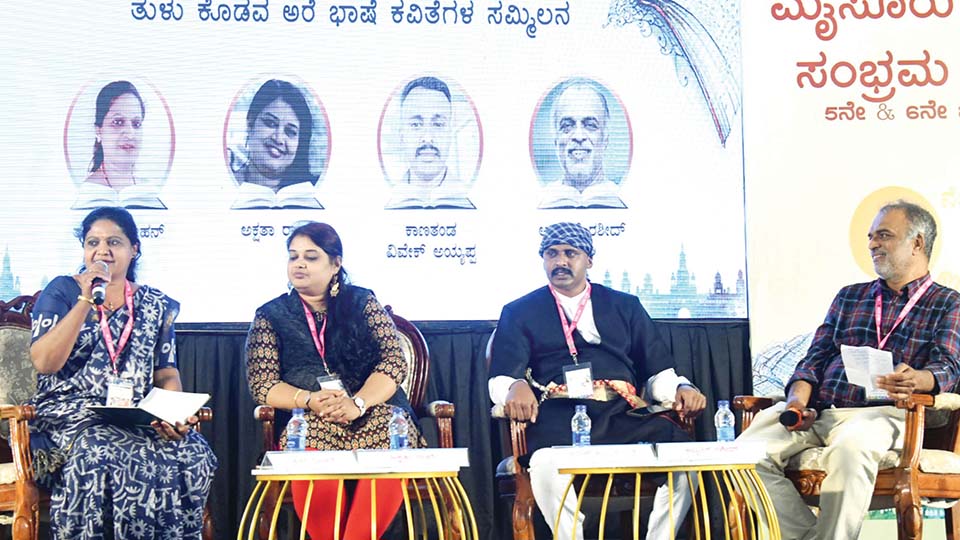
The fusion of Tulu, Kodava and Are Bhashe has added richness and depth to Kannada, underscoring the idea that within the Dravidian language family, there exists no hierarchy. Rather, only native expressions are rooted in their own soil.
This sentiment was at the heart of a panel discussion titled ‘Tulu-Kodava-Are Bhashe Kavithegala Sammilana,’ held as part of the Mysuru Literature Festival yesterday. The session featured Are Bhashe writer Tulasi Mohan, Tulu poet Akshata Raj and Kodava poet Vivek Aiyappa.
Each poet presented readings of their works in Kannada and their respective native languages, offering audiences a glimpse into the lyrical beauty of Kannada and its interconnected linguistic traditions.
Abdul Rashid, senior announcer at Mysuru Akashvani, observed that Kannada has taken root and flourished across various regions, and its flowers, he said, are languages like Tulu, Kodava and regional dialects.
He highlighted how, for Kodavas, exposure to multiple languages from birth fosters a deeper connection to Kannada and other native tongues.
He also noted that the Kannada script currently serves as the writing system for many of these languages, reinforcing Kannada’s foundational role in the broader linguistic ecosystem.
There was discussion about the growing momentum for officially recognising independent scripts for both Kodava and Tulu languages. If this recognition is granted in the near future, it would be a natural progression, speakers opined.
Akshata Raj emphasised the need to move beyond outdated ideas of linguistic superiority or inferiority. “Tulu, Kodava and Are Bhashe are not lesser. They are sibling languages to Kannada,” she stated, adding that all Dravidian languages deserve equal respect and recognition
source: http://www.starofmysore.com / Star of Mysore / Home> News / July 06th, 2025
Indian coffee often fetches poor prices due to lack of quality segregation. But the Climate Smart Coffee Project wants to change that.
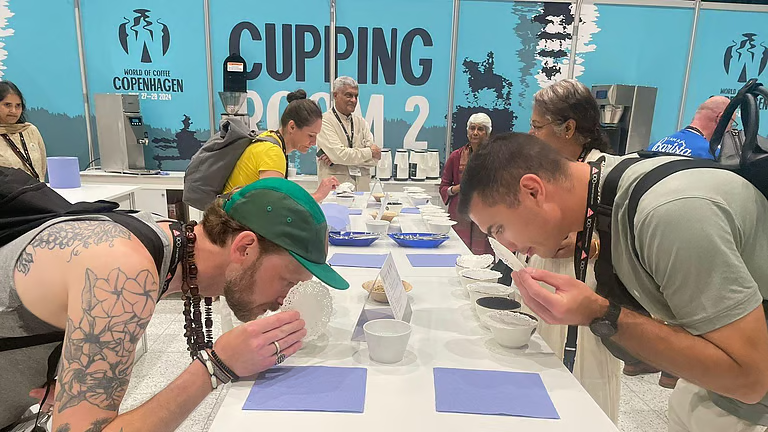
For the first time Wayanad specialty coffee was displayed at the World Coffee Conference at Copenhagen, Denmark, last year. It received good response from participants and coffee connoisseurs. (Photo | Special Arrangement)
Kochi :
It was a stunning beginning to a perfect brew. Aroma and all.
Two years ago when the Dutch team visited Wayanad, they took back two samples of coffee beans — One from Brahmagiri and the other from Biowin Agro Research.
“We gave them our best beans,” recalls a member of the Climate Smart Coffee Project.
“But we were stunned when the results came in. One scored 83 cup scores, the other 86. That’s among the finest grades in the world. Specialty coffee starts at 80. Normally, our coffee gets a 52 cup score,” the member added.
This led to the beginning of a cooperative-led coffee revolution.
With the Kerala government’s long-envisioned Wayanad Coffee Park finally coming to life, a bold new chapter is being scripted in India’s plantation economy — one that centres around smallholders, not estates; sustainability, not volume.
Early in its planning, the project toyed with the idea of two governance models: the famed Anand/Amul dairy cooperative model of Gujarat, and the public-private model of Cochin International Airport Ltd.
After detailed deliberations and field engagement, the team chose Amul model.
“We looked at what fits our reality,” explains G Balagopal, head of the Climate Smart Coffee Project. “Over 60% of Wayanad’s 60,000 coffee farmers are small, marginal or tribal. They don’t own estates like in Coorg, across the district in Karnataka. The only way they gain power is through aggregation. The Anand model does that.”
Groundwork and Governance
The cooperative structure is being built from the bottom up: Joint Liability Groups (JLGs) of 5–10 farmers feed into Farmers Interest Groups (FIGs), which are mentored by representatives from local dairy societies and the project, explains Prakash Madhavan, an advisor to the project. Above JLGs sit Farmer Producer Companies (FPCs) — six in total across Wayanad’s three taluks. Four are general-purpose, while two are reserved: one for tribal farmers and another exclusively for women.
An apex district-level federation will unify them, with a strong mentoring layer. Farmers will eventually gain shareholding rights in Kerala Coffee Ltd, a state government special purpose vehicle set up under the Plantation Department to lead the development of the Coffee Park.
Coffee Park: The Hub of a New Ecosystem
Spread across 20 acres in Kalpetta, the Coffee Park will house processing units, a cupping lab, a sustainability testing centre, and a coffee experience centre complete with a museum and café. At its heart will be a lake, around which tourists can engage with the coffee journey — from bean to brew.
An incubation centre for coffee startups, in partnership with NIT Calicut, is also on the cards. The goal? Spark youth and women entrepreneurship in everything from specialty roasts to coffee-based cosmetics and even textiles.
“It’s Not Just Coffee — It’s Climate Resilience”
“This isn’t a plantation revival,” says Madhavan, who is a retired joint Dairy Development Director, using his experience in the dairy sector to good use to bring together coffee farmers.
“It’s a coffee-centred agroforestry model that counters climate change.” He notes that coffee’s ability to thrive in shade and conserve biodiversity makes it ideal for Wayanad’s terrain — unlike tea or other crops, coffee plantations rarely suffer landslides.
The project originated from Meenangadi Panchayat, Kerala’s first carbon-neutral initiative launched during T M Thomas Isaac’s tenure as Finance Minister. When full carbon neutrality proved difficult for farmers, the idea evolved into “climate-smart agriculture” — with coffee as the flagship crop.
From Strip Plucking to Specialty Coffee
Wayanad’s Global Ambition
The global coffee market is volatile, with prices set on futures exchanges. Indian coffee often fetches poor prices due to lack of quality segregation. But the Climate Smart Coffee Project wants to change that.
“Wayanad produces about 50,000–60,000 tonnes of coffee annually, yet most farmers don’t know their bean’s cup score,” says Madhavan. “But we found that our Robusta parchment coffee scores 10 grades higher than expected. In fact, Robusta is now more profitable than Arabica due to its climate resilience.”
The long-term plan? Train 15,000 of Wayanad’s 60,000 coffee farmers in quality control, traceability, and value addition. Provide digital disbursement tools, climate advisory services, and establish a local processing ecosystem so that more than 90% of coffee’s value addition, which currently happens outside Kerala, stays with the farmer.
“The average farm-gate price is just 5–7% of the final retail price,” says consultant Ajit Mathai. “That must change. With quality-linked payments and proper processing, we can put Wayanad on the world map — just like Araku Valley did for Andhra.”
He adds: “This is not idealism. It’s already happening on the ground.”
In two years, the full Coffee Park will be functional. But training, aggregation, and branding are underway now. As one farmer recently quipped after a cupping session, “We didn’t know our beans were this good. Now we won’t sell them cheap again.”
And that may be the truest sign yet — that Kerala’s coffee revolution is not just brewing, but already pouring into the cup.
Farmers Engaged:
2,000 small and tribal farmers already onboarded
15,000 targeted in the next phase
Cooperative Structure (Amul Model):
—————————————————
Individual Farmers — Joint Liability Groups (JLGs)
The Kodagu district police held a meeting to discuss precautionary measures to be taken in the event of a natural disaster in the hilly district, which has been receiving heavy rains in the last few weeks.
Superintendent of Police K. Ramarajan, in a statement, said that the police officers have been instructed to rope in volunteers from each jurisdiction. They have been told to gather the details of operators of earthmovers, cranes, towing vehicles, jeeps, and wood cutters.
The meeting was organised in view of the rivers, lakes, ponds, and other waterbodies were overflowing following heavy rains the district received so far.
The public were advised to cooperate with the Police Department during natural calamities. Those who are willing to volunteer during emergencies can provide their details including their name, address, mobile number, etc., to the Kodagu district police on 82779 58444. They can also submit their details at the local police station.
In case of assistance and/or to report on untoward incidents, the public can contact the above-mentioned number.
source: http://www.thehindu.com / The Hindu / Home> News> India> Karnataka / by The Hindu Bureau / July 02nd, 2025
“There were only four girls in the film. In Whistle, there was a whole football team,” she laughed.
Walking into a forest full of snakes and scorpions isn’t most people’s idea of a film shoot, but for Thammudu, Varsha Bollamma did just that. The actress, known for her fun and quirky screen presence, took on a more serious role this time.
Speaking to reporters ahead of the film’s release, she shared what went on behind the scenes, some of it tough, some unforgettable.
“There were only four girls in the film. In Whistle, there was a whole football team,” she laughed. “But I still remember playing Gayatri in that one.” In Thammudu, she plays a young woman named Chitra. The team had warned her early on, this wasn’t going to be a typical shoot. Forest locations, action scenes, and a physically demanding role. Still, she didn’t think twice. She liked the story and was ready to give it her all, no matter how hard the shoot got.
The toughest part? Filming in the forest at night. “There were snakes, scorpions, and no proper lighting. We had to act with firecrackers going off near us,” she said. “There were kids and older people on set too, so we had to be extra careful.” Despite the tough conditions, she trained for the role, learning kickboxing just to look the part. “The role doesn’t involve fighting, but I had to look fit. That’s all.”
With no phone signals in the Maredu Milli forest, Varsha and Nithiin passed time the old-school way, talking and joking around. “He’s the same off-screen as he is on it. Polite, respectful never acting like a star.” As for her own career, Varsha isn’t chasing lead roles or screen time. “I don’t care if it’s a heroine role or not. If the part is good and I can do it well, that’s enough.”
source: http://www.english.tupaki.com / Tupaki.com / Home> Entertainment / by Tupaki Desk / July 04th, 2025
A newly identified fungal disease has emerged as a significant threat to ginger cultivation in Karnataka, prompting an urgent advisory from the ICAR–Indian Institute of Spices Research (ICAR-IISR). Researchers from the premier spices research institute have confirmed that the pathogen Pyricularia spp.—typically associated with blast diseases in monocot crops like rice and wheat—has, for the first time, been found infecting ginger crops in the Kodagu district.
The outbreak, which escalated rapidly during the 2024 growing season, has already caused an estimated 30 per cent yield loss in affected farms. The disease manifests initially as leaf yellowing with small dark olive-green to black lesions, progressing swiftly to defoliation and plant collapse. While rhizomes may appear outwardly unaffected, early leaf loss significantly hampers rhizome development, reducing both quality and weight.
The severity of the outbreak has been linked to specific weather conditions during August and September 2024, when intense morning dew in Kodagu created ideal conditions for fungal spore germination and field-level spread. Interestingly, other major ginger-producing belts in Karnataka and Kerala have not reported similar infections, suggesting the outbreak may be microclimate-driven. Researchers at ICAR-IISR’s regional station in Appangala played a critical role in field monitoring and sample analysis, though challenges in preserving infected tissue during transport slowed initial confirmations.
ICAR-IISR has issued comprehensive control recommendations to mitigate the disease and prevent recurrence. These include fungicidal seed treatment of rhizomes using either Propiconazole (1 ml/litre) or a Carbendazim-Mancozeb mix (2 g/litre), followed by storage in dry, ventilated conditions. For standing crops, preventive foliar applications of Propiconazole (Tilt) or Tebuconazole (Folicur) are advised approximately four months after planting. If early symptoms appear—particularly dark pinhead spots with surrounding chlorosis—immediate fungicide application is critical due to the pathogen’s rapid spread. Field observations have confirmed infections in fields up to 20 kilometers apart, indicating strong airborne mobility.
As an interim measure, ICAR-IISR has advised farmers in high-risk zones to suspend ginger cultivation until further assessments are completed. Ongoing research aims to better understand the pathogen’s adaptation to ginger, map its lifecycle triggers, and evaluate long-term solutions, including resistant varieties and sustainable biological controls.
The emergence of Pyricularia on a non-traditional host like ginger has raised new concerns among plant pathologists and agro-climatic researchers. It also underscores the urgent need for robust surveillance systems, climate-linked disease forecasting, and strategic extension services to protect India’s spice economy.
source: http://www.agrospectrumindia.com / Agro Spectrum / Home> Crop Protection / by Crop Protection / July 04th, 2025
WELCOME. If you like what you see "SUBSCRIBE via EMAIL" to receive FREE regular UPDATES.
Read More »