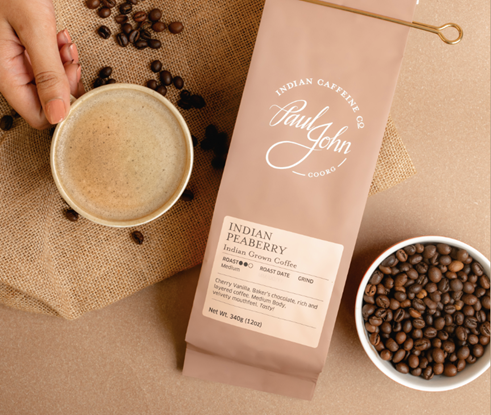
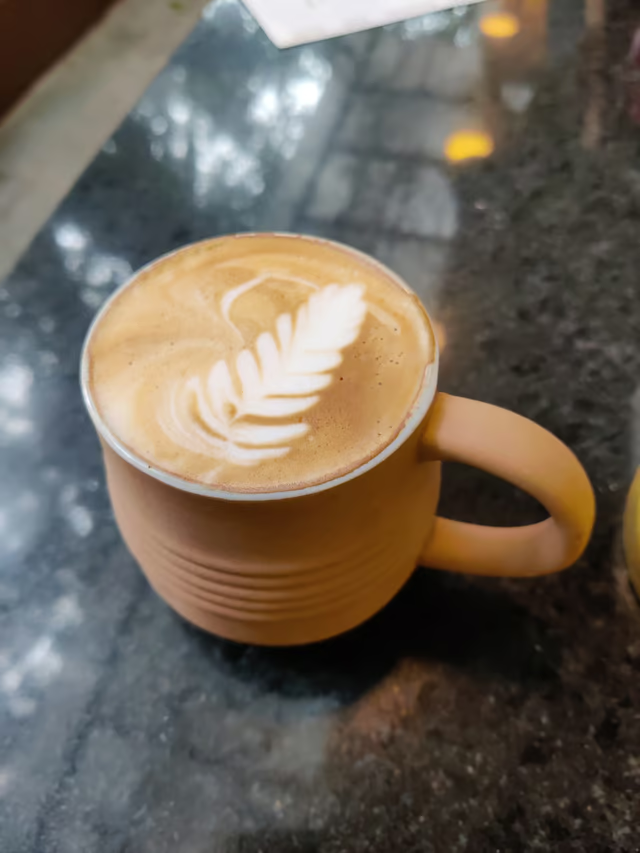
Paul John Indian Caffeine Company , renowned for its premium Indian coffee blends, is set to showcase its artisanal coffee offerings at The Winter Fancy Food Show in Las Vegas, NV, from January 19-21, 2025. Known for its meticulously crafted coffee blends, Paul John Indian Caffeine Company sources coffee beans directly from the lush plantations of South India and expertly roasts them in the United States, delivering an unparalleled global coffee experience.
Highlighted at the show will be the brand’s signature coffee blends, such as its best selling Smell of Rain and the nostalgic Indian Peaberry. These offerings celebrate the uniqueness of Indian coffee, producing the highest quality specialty grade arabica coffee from shade-grown select beans. Attendees can explore gift-ready options complete with a line of brass filters and traditional accessories that capture the essence of authentic Indian coffee brewing.
“We’re excited to bring the vibrant flavors of Indian coffee to the forefront of the global coffee industry,” says Shonali Paul, Founder of Paul John Indian Caffeine Company. “Our blends are a testament to India’s rich coffee heritage, offering both authenticity and modern craftsmanship.”
The Paul John Indian Caffeine Company is one of very few brands on the market specializing in Indian coffee. It produces the highest quality coffee from select beans that are expertly sourced predominantly from the luscious estates of Coorg and Chikkamagalur in Karnataka, India. Shade-grown Indian coffee beans develop a strong and robust flavor, due to their slow growth and maturation process — which allows them to have a highly complex flavor profile and low acidic content.
Visit the Paul John Indian Caffeine Company at Booth Number 3815B to experience these unique blends and learn more about the brand’s commitment to quality artisanal coffee. Wholesale pricing at 50% off of retail pricing for orders placed at the show, plus additional special show discounts.
About Paul John Indian Caffeine Caffeine Company Paul John Indian Caffeine Company is a Tampa-based brand specializing in premium Indian coffee founded by 28-year-old Shonali Paul. Every blend of Paul John Caffeine is inspired by Shonali’s childhood memories in India. With beans sourced directly from South India and roasted locally in the United States, the company brings the authentic flavors of Indian coffee to homes nationwide.
Specialty Food Association
136 Madison Avenue, 12th Floor / New York, NY 10016
source: http://www.specialityfood.com / Speciality Food Association (SFA) / Home> Member Press Releases / December 23rd, 2024
The river Cauvery, which is the lifeline of Karnataka, has a special temple dedicated to her in her birthplace Talakaveri in Coorg.
Photo Courtesy: Bindu Gopal Rao
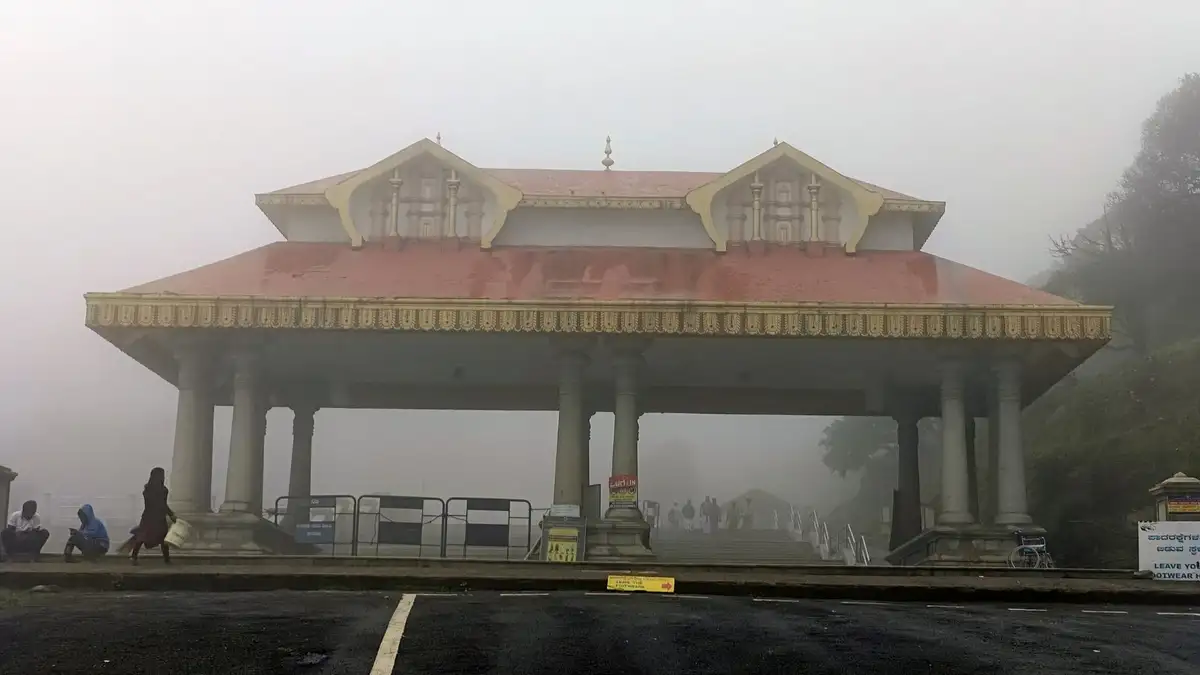
Driving along the stunning coffee-laden landscape of Coorg morphs from green into a thick blanket of fog as you near Talakaveri, located adjacent to the Brahmagiri Hills. Interestingly, the fog is only present here, and as you drive away, the landscape is clear!
Photo Courtesy: Bindu Gopal Rao
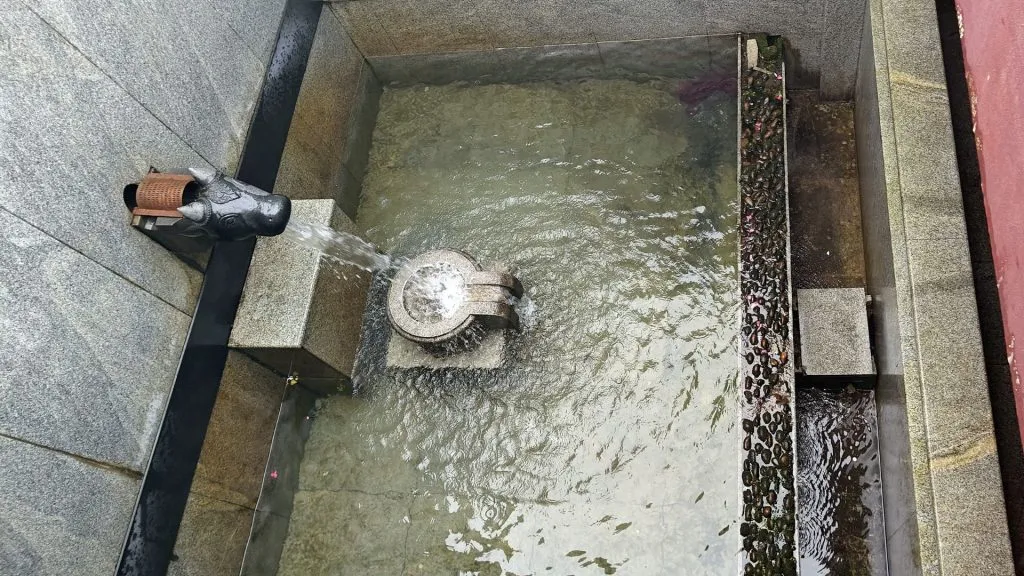
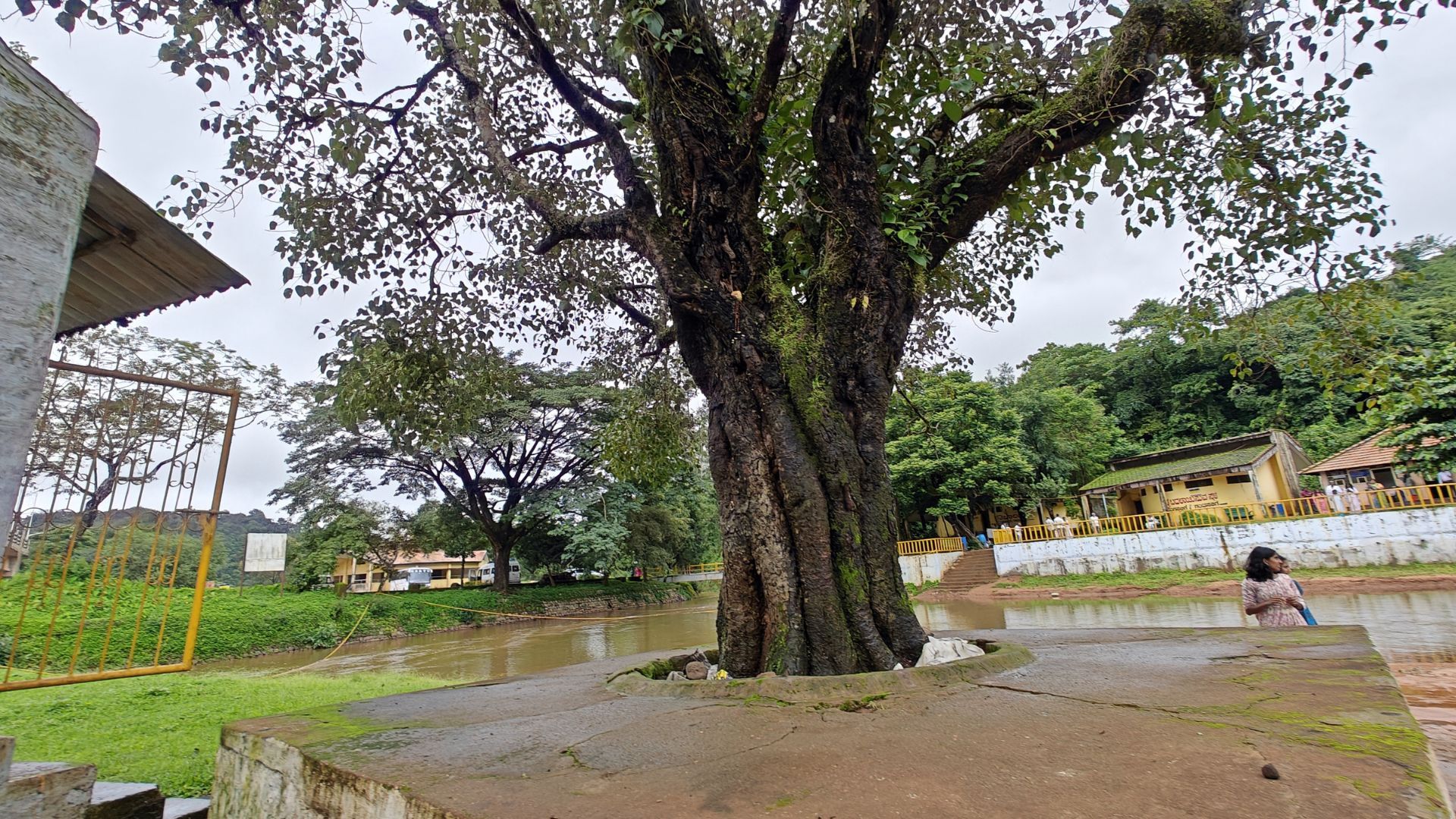
The uphill winding road takes you to the place swamped with a complex of temples accessible by a broad flight of stairs that is invariably covered with fog. It is believed to be the birthplace of the river Cauvery, the lifeline of Karnataka’s water source. Locals believe that the river originated from the hair of Lord Shiva, flowing forth to nourish the land. The temple here is beautifully serene and the fog adds a mystic aura as you go among the temples dedicated to Lord Shiva and Ganesha. In the middle sits a water tank, believed to be the Cauvery. Most people who pay obeisance here also carry home some of the holy water. “The Cauvery River, and by extension, Talakaveri, hold immense cultural, religious, and economic significance for the Kodava people, the indigenous community of Kodagu. The Cauvery River is an integral part of Kodava’s identity and culture. It is often mentioned in local folklore, songs, and literature,” says KD Bopanna Kaliyatanda, a native of Talakaveri.
More than a River
Photo Courtesy: Bindu Gopal Rao
For the Coorgis, the river is much more than that; it is an emotion. It is woven into the rites, rituals, and stories that every Kodava (a person from Coorg) has heard through generations, inspiring and guiding the community for centuries. Punyaa Poonacha Boppanda from Coorg says, “Cauvery-amme (Mother Cauvery), the river of my ancestors, has always been the heart of my home- Coorg. For us, she is more than just a river, she is the source of life. We Kodavas pray to three main Gods: our ancestors, Ighuthappa (the God of rice), and Cauvery. From a young age, we were taught to respect and honour Her. Even today, I visit Her every year without fail.”
But Boppanda admits that a lot has changed over the years. “The Cauvery I remember, full of life and flowing strong, has started to fade. She isn’t as vibrant and abundant as She once was. While the bond I have with Cauvery remains unbroken, Her fragile state serves as a reminder that we must nurture Her, as She once nurtured us.”
The Spring of Life
Photo Courtesy: Bindu Gopal Rao
The river is also worshipped by all Coorgis, and on October 17 every year, you can visit a stunning sight when Cauvery rises in the form of a spring, marking Tula Sankramana. The festivities typically include a ceremonial bath in the waters of the Cauvery River, believed to cleanse the soul and bring blessings. Prayers and offerings are made to the river goddess, seeking her blessings and protection. Traditional Kodava dances, music, and folk art are showcased, reflecting the rich cultural heritage of the region. A grand community feast is held, where people come together to share food and celebrate the occasion. A procession is taken out, carrying sacred idols and symbols, symbolising the river’s journey. Dhanya Podanolana Shrinivas — who lives in Kopatti, 10 kilometres from Talakaveri — says, “To me, the name itself is known to be a sacred place. Talakaveri has been a source of life to each one of us, be it for agriculture coffee estates or our survival. On Tula Sankramana wherever we are, we prepare dosa by fermenting rice batter and preparing delicacies that are special only for the day.”
Changing Vistas
Photo Courtesy: Bindu Gopal Rao
While Talakaveri and the Cauvery River have played a crucial role in the lives of the Kodava people for centuries, the region has undergone significant changes over the years. The rapid pace of development and urbanisation has led to concerns about environmental degradation and pollution of the river. Deforestation, industrialisation, and climate change have posed challenges to the river’s health. Over the years, however, the landscape and the river itself have changed.
“The natural beauty is under pressure due to growing tourism and environmental shifts. Forest cover in the region has reduced, and rainfall patterns have become less predictable, impacting the water levels of the Kaveri. In recent decades, the increased human activity around Talakaveri, especially during pilgrimages has also led to pollution and a strain on the ecosystem. Despite these changes, the river continues to be a focal point for our identity, even as we balance the old ways with the modern world,” concludes Ria Belliappa, Founder of Juny’s Bakehouse and a proud Kodava.
Fact File on Talakaveri
How to reach: Kannur International Airport is the nearest airport about 120 kilometres away. By road, you can reach Talakaveri from Bengaluru in under five hours.
Timings: 6:00 am to 6:00 pm
Where to stay: Madikeri is located about 43 kilometres away from Talakaveri. The small town has several hotels across budgets.
Good to know: A strict dress code is in place that requires all devotees to be fully covered while visiting this place.
Do More: When you visit Talakaveri, stop by the Sri Bhagandeshwara Temple in Bhagamandala about 8 kilometres away. See the Triveni Sangama, said to be the meeting point of the rivers Cauvery, Kannike and mythical Sujyoti.
Note: The information in this article is accurate as of the date of publication.
source: http://www.travelandleisureasia.com / Travel and Leisure Asia / Home> Destinations / by Bindu Gopal Rao / December 23rd, 2024
The country is celebrating the 75th year of our Republic and also the 75th anniversary of the adoption of the Constitution of India. There was also a debate in the Parliament on the “Glorious Journey of 75 Years of The Constitution of India” which was initiated by Defence Minister Rajnath Singh on Dec. 13.
As part of celebrating 75th anniversary of the Constitution, a first-of-its-kind museum was established at the OP Jindal Global University (JGU) in Sonipat, Haryana. The museum has a collection of memorabilia documents, photographs and artwork related to the history of India in general and drafting of the Constitution of India in particular.
The museum was inaugurated on Nov. 26, 2024 declared as Constitution Day. On the occasion, the museum authorities invited the descendants of the Framers of the Constitution to participate in the event at the Jindal Global University.
Coorg, now known as Kodagu, was a kingdom and later came under the rule of the British. After independence, Coorg was also represented in the Constituent Assembly.
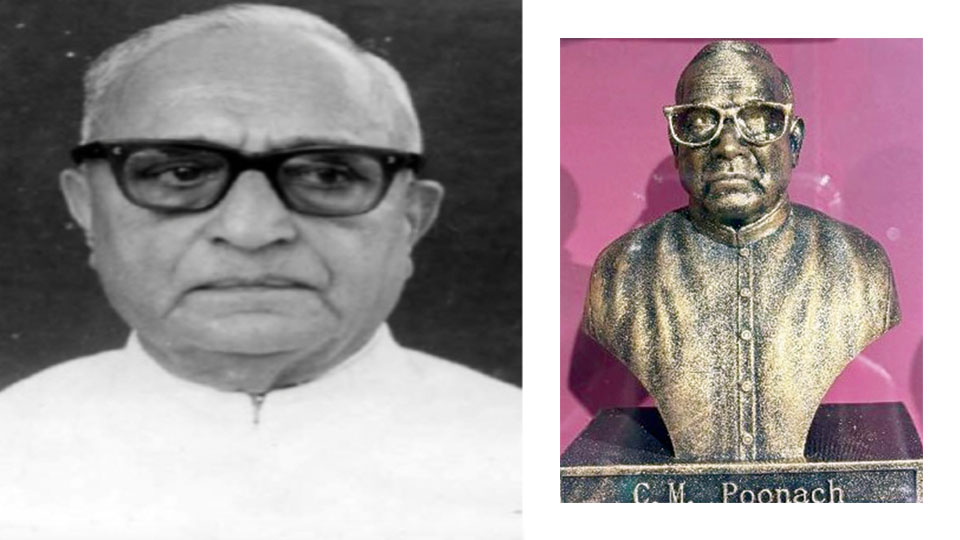
C.M. Poonacha, former Chief Minister of Kodagu, was in the Constituent Assembly as a representative of Kodagu.
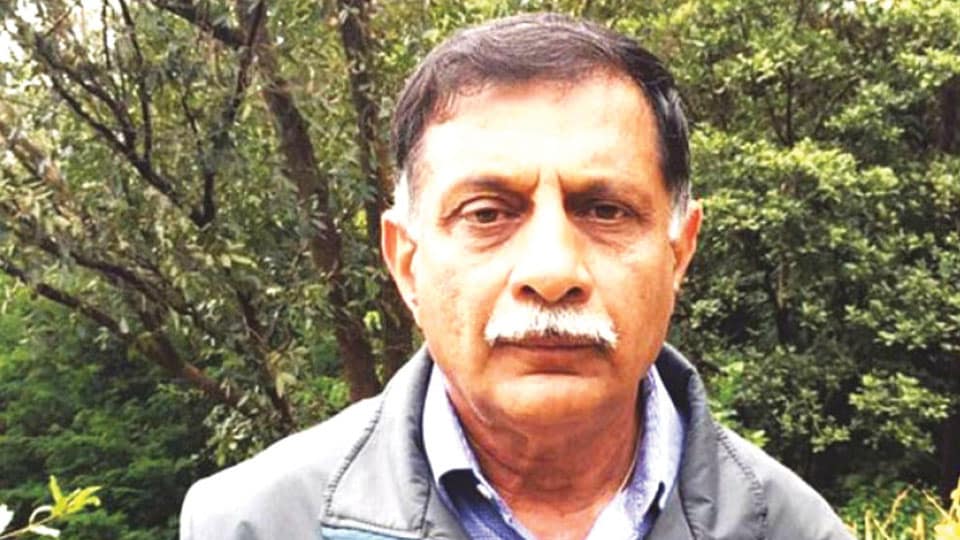
As children of C.M. Poonacha, the Museum authorities invited C.P. Belliappa and his sister Dr. Kavery Poonacha Nambisan to represent their father who was a Member of the Constituent Assembly and was one of the signatories to the Constitution.
C.M. Poonacha was probably one of the youngest members at age 36 to sign the national document — The Constitution of India.
It is noteworthy that the busts of 300 signatories to the Constitution are on display in the museum. Among them is naturally that of C.M. Poonacha (see picture). The museum has an AI generated image of Dr. B.R. Ambedkar, the Father of Constitution of India, which allows visitors to ask questions which Dr. Ambedkar answers.
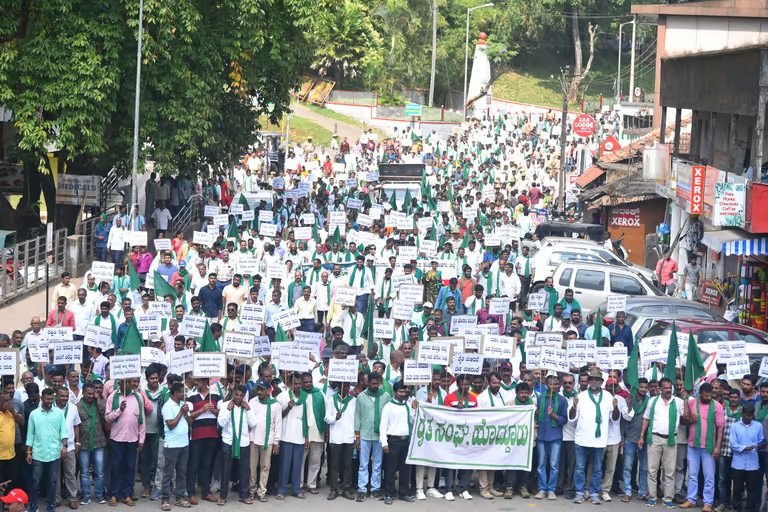
The farmers opposed the move of the governments in declaring the C and D cultivated land as Reserve Forest.
Over 3000 farmers from across the district flowed into the city to host the massive protest.
Madikeri :
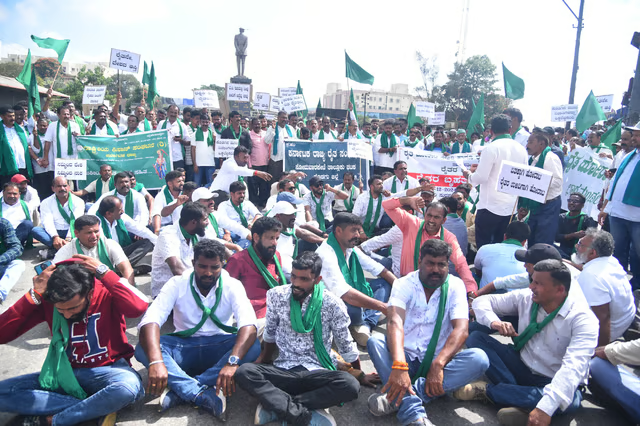
Madikeri was engulfed in white and green as thousands of farmers across Kodagu took to the streets to voice their anguish against the state and central governments.
Led by the Somwarpet Raitha Horata Samithi with support from numerous other organizations, the farmers opposed the move of the governments in declaring the C and D cultivated land as Reserve Forest.
Wearing green shawls and showing off their mighty power, thousands of farmers walked in protest and shouted slogans against the government. The slogans ‘Our land, Our right’, ‘Officers in AC Room and Farmers on the streets’ echoed clearly across the city as they demanded the government to withdraw the policy of declaring C and D cultivated land as forest regions.
Following the massive protest rally across the city, the farmers gathered at Gandhi Maidan and a formal meeting was addressed by the farmer leaders.
“The problem with the C and D land is not new. From during the framing of forest law, farmers are faced with the C and D land threats. The forest department is causing trouble for the farmers. We are ready to sacrifice our lives if justice is not served,” spoke K Manu Somaiah, the district president of Karnataka Rajya Raitha Sangha.
The other farmer leaders who addressed the gathering urged for the farmers to unite and fight for their rights.
The farmers garnered support from all the political parties as leaders from BJP, Congress and JD(S) joined in the protest demanding justice for the farmers. The party leaders shared that the problems faced by the farmers of Kodagu was a burning issue and required support irrespective of the political differences.
Former MLA Appachu Ranjan confirmed that the political leaders from all the parties will unite to oppose the implementation of Kasthurirangan and Gadgil reports.
Madikeri MLA Mantar Gowda, MLC Suja Kushalappa, former MLA KG Bopaiah, Congress district president Dharmaja Uthappa and other political leaders took part in the protest rally. Over 3000 farmers from across the district flowed into the city to host the massive protest.
source: http://www.newindianexpress.com / The New Indian Express / Home> Karnataka / by Express News Service / December 20th, 2024
Coorg’s enchanting landscapes, explore it’s fascinating cultural heritage, and witnesses its evolving agricultural narrative, writes GYANESHWAR DAYAL
As I packed my bags in Delhi, the Air Quality Index (AQI) read a staggering 430. The smog had blanketed the city, the air felt heavy, my eyes burned, and even breathing felt like an effort. Touching down at Kempegowda International Airport in Bengaluru brought instant relief—the air was breathable. Although the temperature matched Delhi’s, the journey to Coorg brought with it a refreshing change. The five-hour drive transitioned from rocky terrains to lush greenery, offering glimpses of fascinating sights, including the iconic Gabbar Singh’s den from Sholay. An elephant family awaited us roadside, and a snake crossed our path, reminding us of the natural harmony where every creature has its place.
Night had fallen by the time we reached our destination, a 140-year-old British bungalow—Taneerhulla in Ama Coffee Trail, now a Tata property. As we settled in, the Delhi smog seemed like a distant memory. The next morning brought a mesmerising view; Coorg’s foggy landscape greeted us, and the AQI had plummeted to a serene 43. Breathing deeply, I wished I could carry this purity back to Delhi.
Nestled in Karnataka’s Western Ghats, Coorg or Kodagu, as locals call it, boasts a rich history shaped by its spices and natural bounty. This picturesque region, home to the Kodavas, has been a cultural and trading hub since ancient times. Kodavas are known for their martial traditions, unique customs, and a deep connection to nature. Over centuries, South Indian dynasties like the Cholas and Hoysalas left their mark here through temples and forts, which narrate tales of its past.
In the 15th and 16th centuries, Coorg’s spice wealth drew global attention. While Vasco da Gama’s 1498 voyage opened India to the Portuguese, the British annexation in 1834 forever altered Coorg’s landscape. Recognising its fertile potential, the British introduced commercial coffee cultivation. Today, Coorg thrives as one of India’s premier coffee-producing regions, renowned for its Arabica and Robusta beans. Plantation tours reveal the journey of coffee from farm to cup, offering visitors both knowledge and stunning views of misty hillsides.
The Western Ghats, a UNESCO World Heritage Site, play a crucial role in Coorg’s ecosystem. Their dense forests, cascading waterfalls, and biodiversity make Coorg a nature lover’s paradise. From sandalwood to teak and wildlife like tigers and elephants, the Ghats teem with life. They also sustain the region’s agriculture, which is evolving with a new player: avocados.
Coorg’s journey from coffee to avocados is nothing short of revolutionary. Westfalia Fruit, a global leader in avocado production, has identified Coorg’s tropical climate as ideal for cultivating Hass avocados. Partnering with local farmers, Westfalia aims to diversify income sources while maintaining sustainable practices. Their nursery supplies premium rootstock, and initiatives like Avocado Ki Paathshaala, led by celebrity chef Sanjeev Kapoor, are educating Indian consumers on the fruit’s health benefits.
Avocados have already become a global superfood, and Coorg is poised to contribute significantly to this market. From guacamole to avocado toast, its versatility ensures a place in both local and international kitchens. For farmers, this crop promises to yield four to five times the income of coffee, heralding a brighter future.
Coorg’s unique blend of ancient traditions and modern innovation makes it a standout destination. Tourists can explore its heritage through colonial bungalows, temples, and forts while savouring its natural beauty. Must-visit spots include Abbey Falls, Dubare Elephant Camp, and Talakaveri, where the Kaveri River originates. As eco-tourism flourishes, activities like trekking and birdwatching have gained popularity.
As my time in Coorg ended, I couldn’t help but reflect on its charm. The clean air, lush landscapes, and aromatic spices offered a stark contrast to Delhi’s smog-filled reality. Before leaving, I gathered a treasure trove of spices, coffee, and, of course, avocados. Coorg isn’t just a place you visit, it’s a place that stays with you. The memories of its pure air and serene beauty will keep calling me back, sooner rather than later.
source: http://www.dailypioneer.com / The Pioneer / Home> Exotica / by Gyaneshwar Dayal / December 19th, 2024
Madikeri (Kodagu district): The Codava National Committee (CNC) marked its 14th Annual Public Gun Carnival Thok Namme on 18th December—coinciding with...
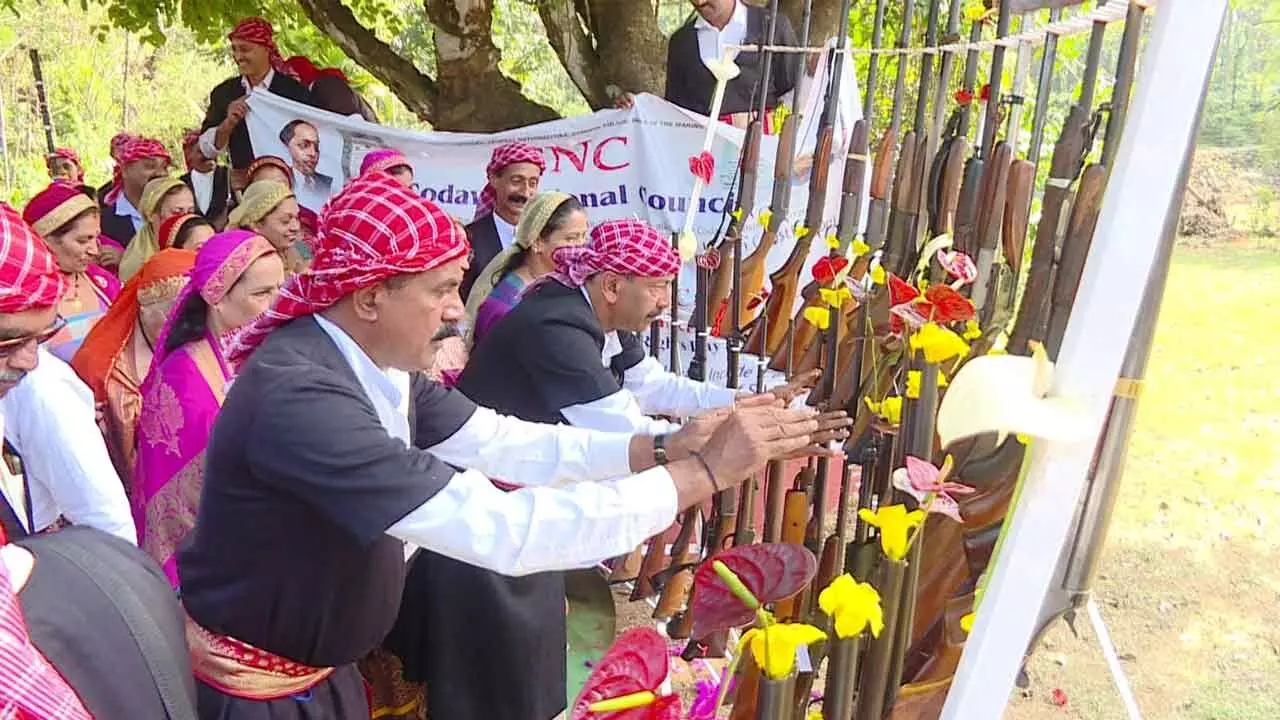
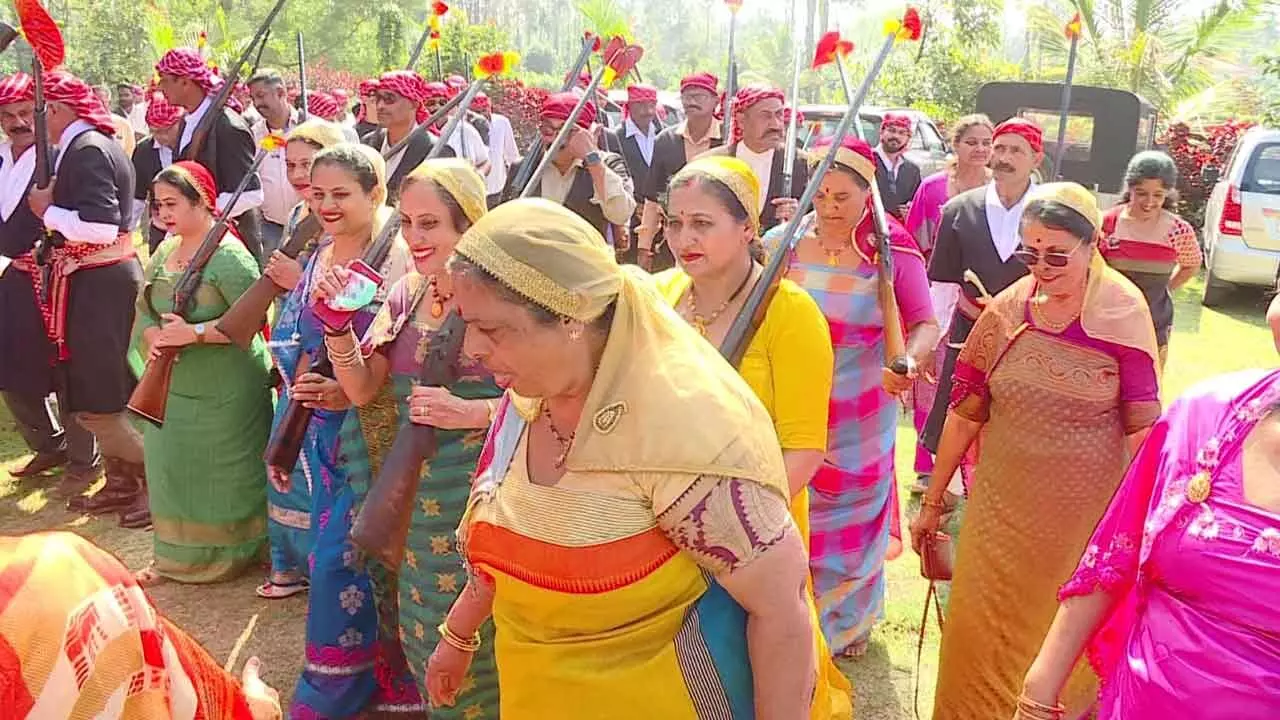
The Codava National Committee (CNC) marked its 14th Annual Public Gun Carnival Thok Namme on 18th December—coinciding with the United Nations’ “World Minorities Rights Day”—at Coffee Castle Coorg Resort near Munaad. The event, led by CNC chief N. U. Nachappa Codava, celebrated Codava traditions with vibrant participation from the community.
Guns, considered a religio-racial sacrament by the Codava people, were worshipped and adorned with flowers. Shooting competitions for children, women, and men highlighted the festivities. The event reaffirmed the Codava race’s deep cultural and historical ties to their heritage, encompassing Mother Earth, sacred woodlands, the divine river Cauvery, and their unique folk-legal systems.
CNC’s Key Resolutions Firstly, the CNC demanded that Codavaland be recognised as a self-governed autonomous region, with a restoration of indigenous lands. Secondly, the CNC advocated for constitutional recognition of Codava gun culture under Articles 25 and 26, akin to the Sikh Kirpan. Thirdly, it called for the implementation of gun training programs for Codava women to ensure safety in isolated terrains.
Additionally, the CNC sought the removal of administrative hurdles in issuing gun exemption certificates. Finally, it emphasised the need to revive traditional gun usage in cultural and religious ceremonies. Honours and Awards The CNC conferred the Codava Rathna Award posthumously to Sri Panje Mangesha Rao, Sri G. Yadumani, and Sri D. N. Krishnaiah. Furthermore, thirteen individuals received the Vibhushana Award for their contributions in various fields, including medicine, education, and social service.
Prominent speakers, including Karnataka Wildlife Protection Board Member Sanket Poovaiah, praised N. U. Nachappa Codava’s relentless efforts to preserve Codava heritage and called for collective support for CNC’s mission.
The event was attended by a large gathering of Codava leaders, community members, and well-wishers, all united in their commitment to safeguarding Codava identity and rights.
source: http://www.thehansindia.com / The Hans India / Home> News> State> Karnataka / by M Raghuram / Hans News Service / December 19th, 2024
The outdoor seating, shaded by a majestic tree, invites you to unwind while sipping on handcrafted brews.
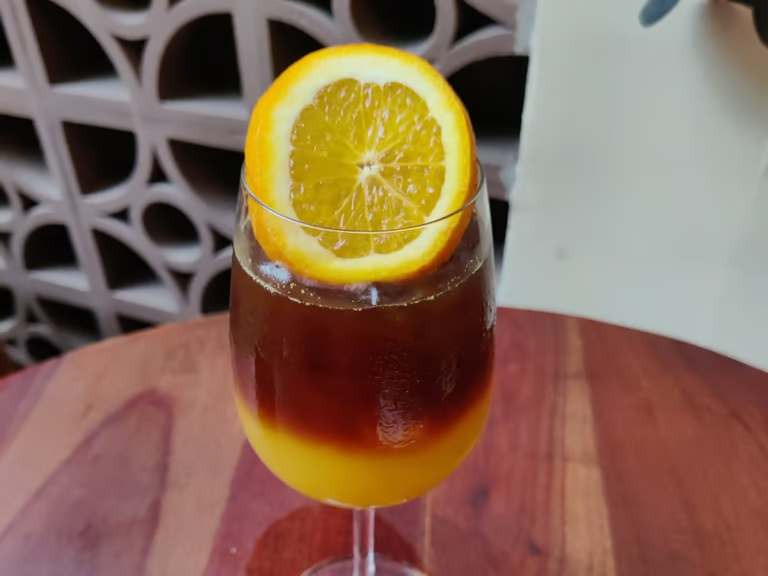
Sunrise fusion
Known as the Scotland of India, Coorg enchants with its misty hills, lush coffee plantations, and timeless charm. At its heart lies Madikeri, a land synonymous with the intoxicating aroma of coffee and serene beauty. To sip on its magic is to embrace its soul, and now, that essence has found a home in the city. Madikeri Craft Coffee brings this treasured taste to life, blending authentic flavours with a cosy café experience. Perfect for coffee aficionados, the café invites you to relish the rich brews. We recently indulged in their delightful offerings and were transported to Madikeri’s coffee plantations.
The space is a harmonious blend of comfort and nature. The outdoor seating, shaded by a majestic tree, invites you to unwind while sipping on handcrafted brews. Equipped with grinders and artisanal tools, the space promises an authentic coffee experience. Inside, the charm of Madikeri is captured through antique pieces, elephant inspired décor, vibrant paintings, and attractive mugs. Perfect for work, conversations with friends, or some alone time, the cosy ambience is matched by a menu brimming with delectable hot and cold beverages. Settling into a quiet corner, we began our culinary exploration.
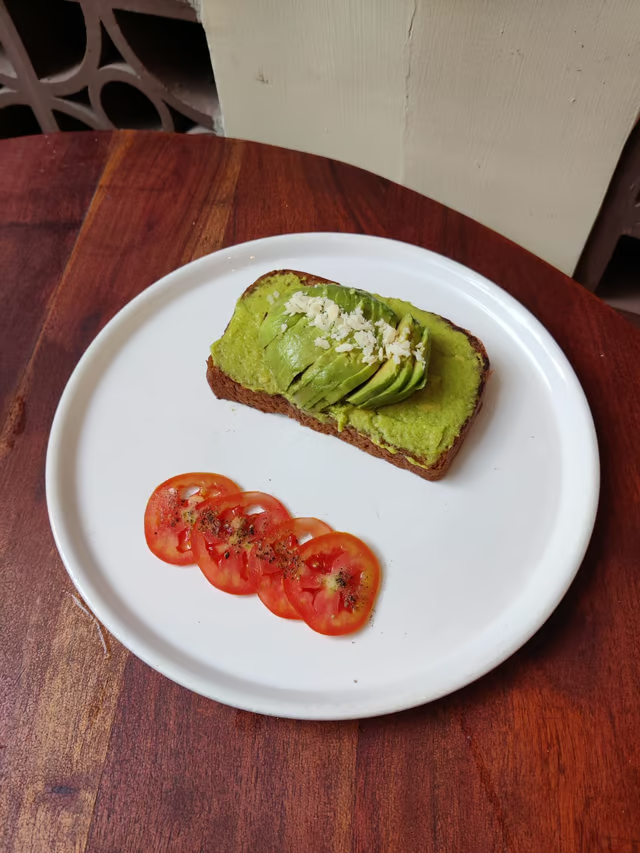
Avocado toast
Hazelnut Latte
We went for the classic Hazelnut latte, a comforting embrace on a chilly winter afternoon. The weather, wrapped in its pleasant charm, seemed to pair perfectly with the warm brew in our hands. To complement our coffee, we opted for the Avocado toast — a delightful offering beyond our expectations. The bread, beautifully glazed with creamy avocado spread, was crowned with delicate avocado slices and paired with tomatoes dusted in black pepper. A healthy and flavourful treat, it was just what we needed. Next came the Sunrise fusion, one of their signature cold brews. With its citrusy twist of orange zest and a slice of orange gracing the top, this drink was a result of precision and visual delight. Our culinary exploration continued with the Bhurji pav, featuring perfectly spiced egg bhurji nestled between soft pavs that screamed comfort in every bite. And just when we thought we’d reached the pinnacle, the GinEx stole the show. This inventive cold brew blended ginger ale and espresso, offering a refreshingly unique taste that we wholeheartedly recommend.
The owner Sarita Sarkar shares that her family owns a lush coffee estate in Madikeri, and her passion for sharing the region’s coffee magic inspired this delightful venture. Now, with a successful start, she envisions expanding her venture further, spreading the love for authentic coffee far and wide.
Rs 1,200 upwards for two.
At Jubilee Hills.
source: http://www.indulgexpress.com / Indulge – Indian Express / Home> Hyderabad / by Sakshi Kaithwas / December 13th, 2024
Westfalia Fruit is joining hands with farmers in the Western Ghats to grow Hass avocados locally. We visit a farm in Kodagu to know more about this beloved fruit and its many uses
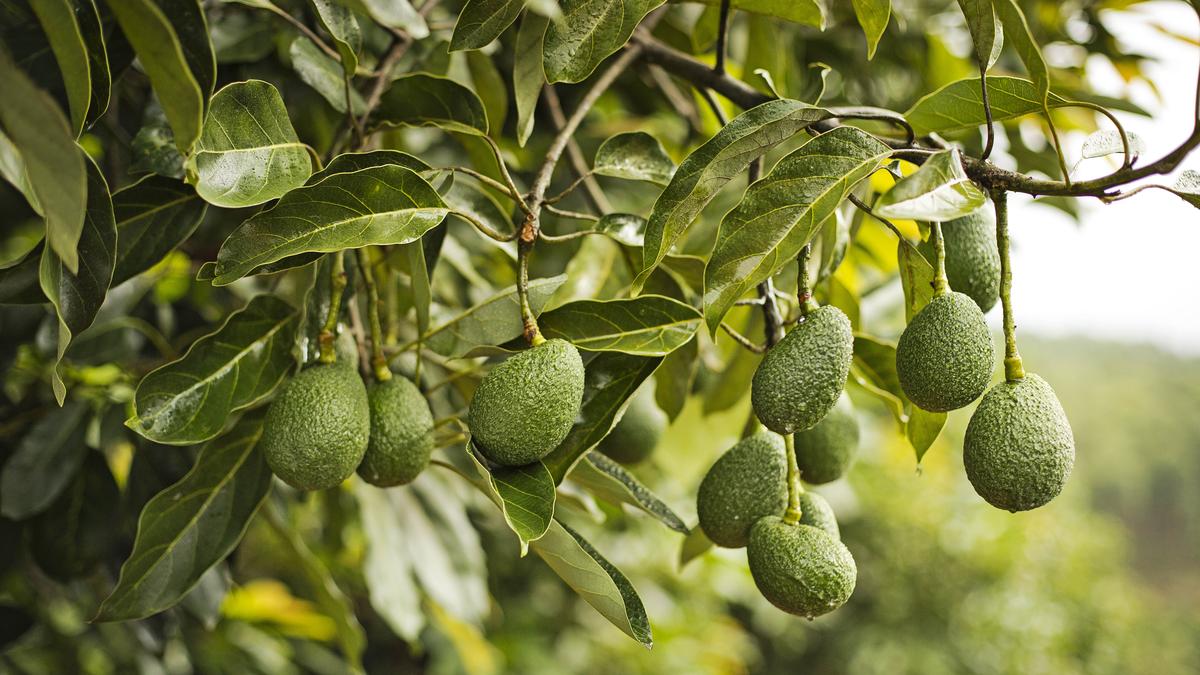
The avocado fruit on the tree
In 1925, an humble American mailman named Rudolph Gustav Hass put down all his life savings to buy a piece of land in California. There, he embarked on a horticultural adventure, planting many varieties of avocados trees and grafting together the different cultivars. After a lot of trial and error, a new fruit was born that was larger and creamier. It became so popular that Hass patented it in 1935. Today, the Hass avocado reigns supreme; a trending ingredient online, a millennial darling and a celebrity-endorsed breakfast staple.
In India, their growing presence on cafe menus and their nutritional value have made them much sought-after. But these coveted fruits remain a luxury. Currently most Hass avocados we get in India are imported from Tanzania, and some from Peru and Australia. A solution to make them more accessible may be right around the corner. Westfalia Fruit, a 75-year-old avocado company from South Africa, is joining hands with farmers and plantation owners in the Western Ghats to grow these varieties locally. I find out more at a Tata coffee farm in Kodagu.
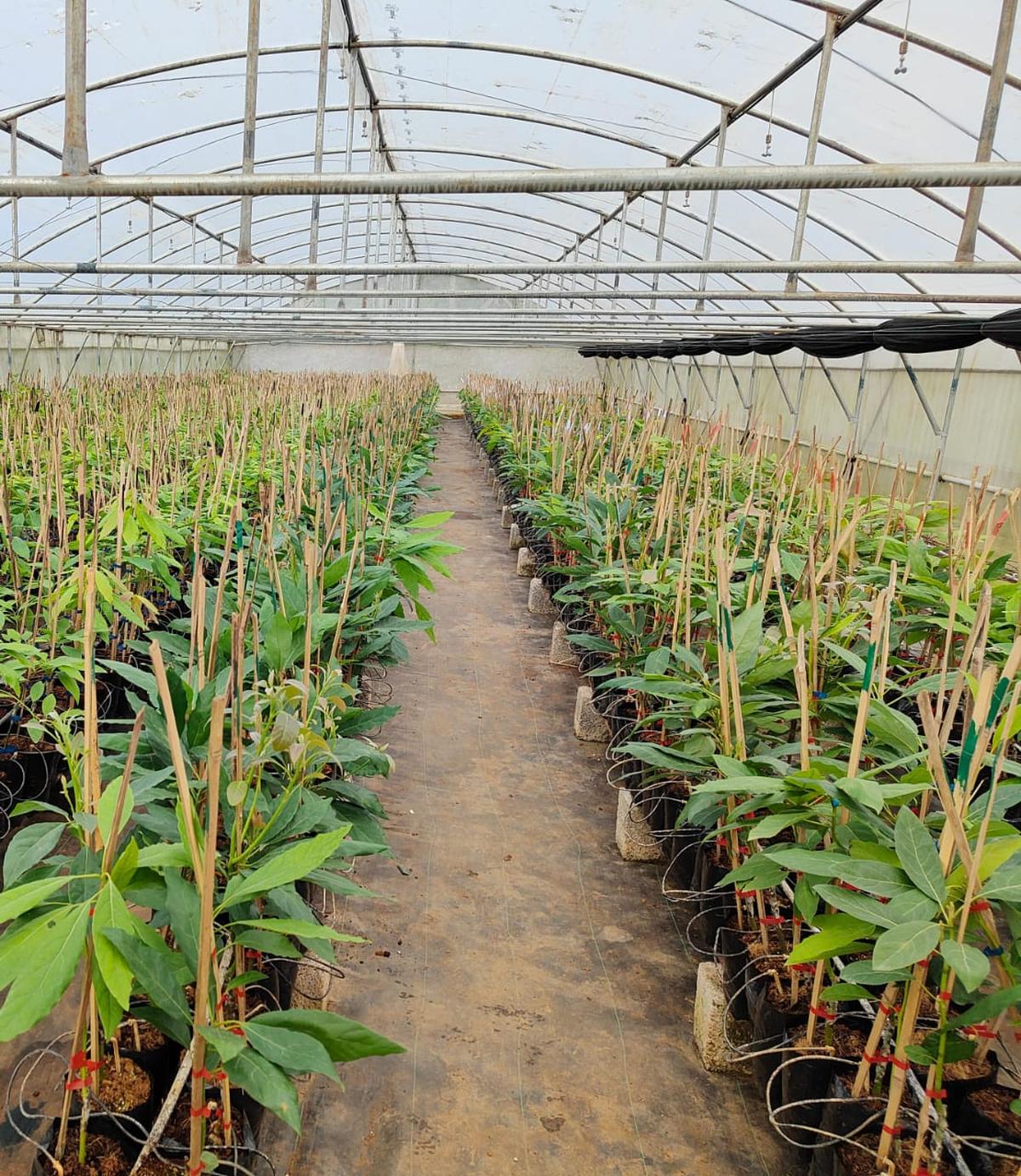
The avocado nursery in Coorg
The weather is delightful as a group of us arrive at the farm. This particular 50-acre plot is a model nursery. More than cultivation, the focus here is on experimenting for environmental factors, grafting, soil quality, fertilising techniques and other elements. The Westfalia team greet us with fresh and delicious avocado milkshakes, as we learn more about the fruit. General manager Ajay TG and South Africa-based farm consultant Cecil Hackney teach us more about the fruit, how it is grown, and its varieties.
What are Hass avocados, and how are they different from butter fruit?
To south Indians, the hooha over avocados in the mid-2010s was baffling. We have always had our butter fruit milkshakes in local juice shops, and the fruit can easily be purchased in grocery stores. Although this was not the case in the northern parts of the country. However, there is actually a difference between the local variety of butter fruit and Hass avocados.
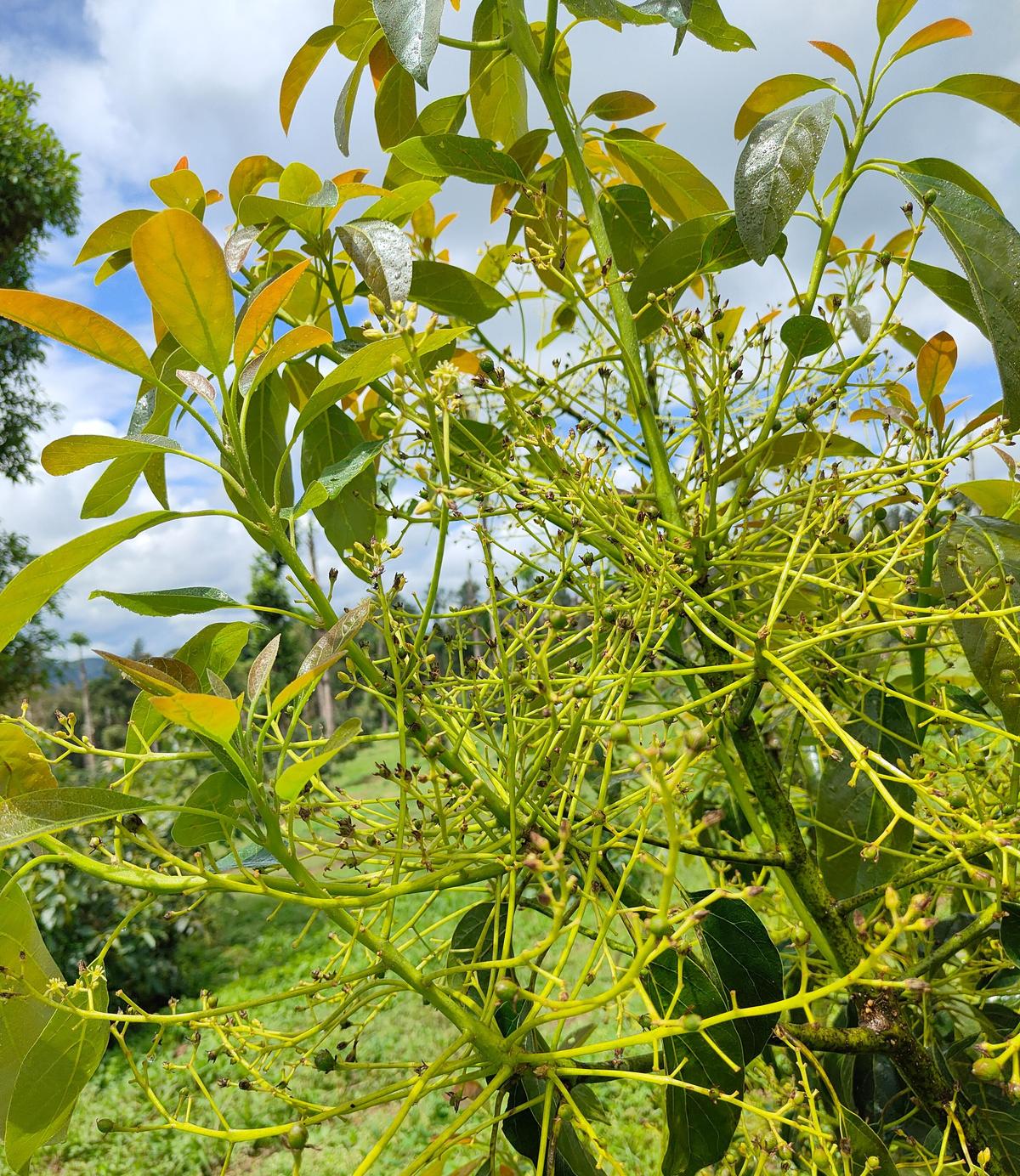
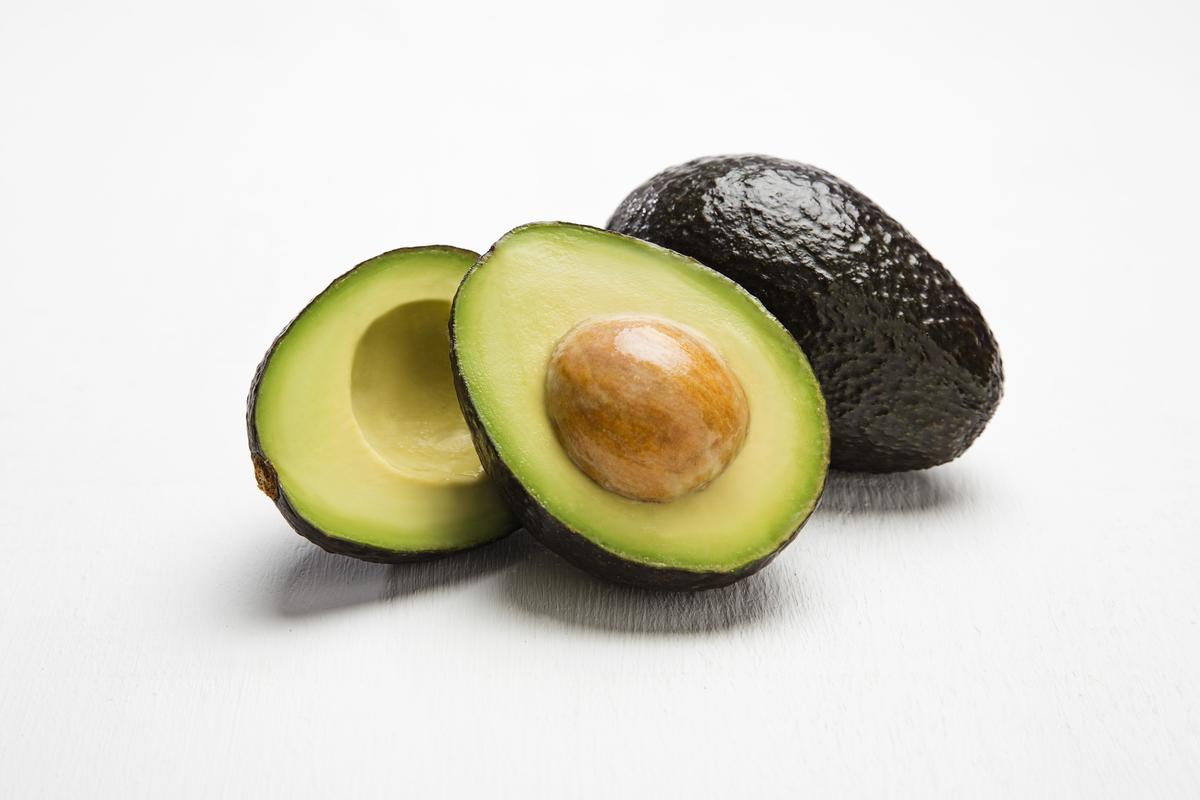
Originally hailing from Central America, the avocado fruit has been consumed for 9,000 to 10,000 years now. Butter fruit has a thin green skin, and a larger pit. It also does not ripen consistently and tastes less sweet. The Hass has more flesh, has a longer shelf life, is creamier and sweet, and has a dark black exterior. These also have a fat content of around 12 percent, making them tastier. Originally Westfalia tried to grow the indigenous variety, but it was not conducive to long distance transportation and exports, hence they decided to go with Hass. We take a leisurely walk through the nursery, getting glimpses of avo flowers, and fresh fruits on the trees.
A walk through the coffee and avocado plantation
Crop diversification in Western Ghats
The next morning, we visit a farm where the fruits are actually cultivated. The fruit trees grow among the coffee shrubs and pepper vines in this 300-400 acre of plantation. Over the region of Coorg, Wayanad, and Nilgiris Westfalia has partnered with many coffee farms. The climate needed for these plants are similar, and hence they grow in harmony on the same farms.
Farmers and coffee growers in the Kodagu region have been suffering due to unpredictable weather patterns and fluctuating prices. In such a situation, crop diversification comes to the rescue. It benefits the coffee plantations in the Western Ghats to mixed avocado trees in the land. By growing the fruits locally in India, the aim is to reduce costs and make it more easily available in not just tier one, but also tier two and tier three cities in India.
What can we use these fruits for?
All these lessons made us hungry for avocados. And the team had a feast prepared to showcase the many different uses of the fruit. Studies show that avocados have “good fats” and help lower cholesterol levels. They are also high in many vitamins. Avocado on toast and guacamole are the most common uses of avocado. But we were introduced to many other recipes. The dry fruit smoothie I had was a perfect start to the day. The avo ice cream was super creamy and delicious. And the salads and canapes made for great appetisers. I also learnt that one can also bake with avocado, because it is a good replacement for butter. We sampled avocado oil, made with the flesh of the fruit, that is high in vitamin E. The oil has a high smoke point so it is good for sauteing, and can also be used in skincare.
So will reduced costs and versatility make Indians adopt avocados as much as we have many other non-native fruits and vegetables? The potential for avocado cultivation in South India is significant, but the question remains whether India can successfully cultivate avocados on a large scale into the mainstream.
The author was at the farm by invitation from Westfalia Fruit
source: http://www.thehindu.com / The Hindu / Home> Food> Features / by Anagha Maareesha / December 18th, 2024
The Annual General Body meeting (AGM) of the Coorg Wildlife Society will be held at its office in Madikeri on Dec. 17 (tomorrow) against the backdrop of the expulsion of former President Col. C.P. Muthanna (Retd.) from the Society.
The Coorg Wildlife Society, now headed by K. A. Chengappa, has a rich history of advocating for protection and restoration of the district’s wildlife. It carries out wildlife conservation by collaborating with Government agencies and conservation organisations and influences the creation of effective laws to promote land management practices that support wildlife preservation.
At the Executive Committee meeting held last month, a unanimous decision was made to expel Col. Muthanna from the Society due to alleged misconduct and use of abusive language against a fellow Committee member.
Following a written complaint, the Committee issued three show cause notices to Col. Muthanna, in line with the Society’s rules and regulations, but he did not respond.
In November, the Executive Committee convened to discuss the incident and passed a resolution to expel Col. Muthanna with a more than two-thirds majority, in accordance with the Society’s bylaws.
Reacting to the development, Col. Muthanna told Star of Mysore that the charges of using abusive language were just an excuse to remove him from Society.
“Unfortunately, certain vested interests have taken over the Society now who want to bring destructive projects to Kodagu which I am against and I have filed many cases in the Courts. This is a ploy to weaken me and my stand to safeguard nature,” he said.
However, Society President Chengappa and Executive Committee member Naveen Bopaiah dismissed these claims, emphasising that the Committee acted strictly as per the law and Society regulations.
“We are also against bringing destructive projects in Kodagu. There are many issues like conflict of interest, funding and allegiance to other environmental bodies that do not come under the Coorg Wildlife Society. The issue is expected to be further discussed at the AGM tomorrow,” they said.
source: http://www.starofmysore.com / Star of Mysore / Home> News / December 16th,2024
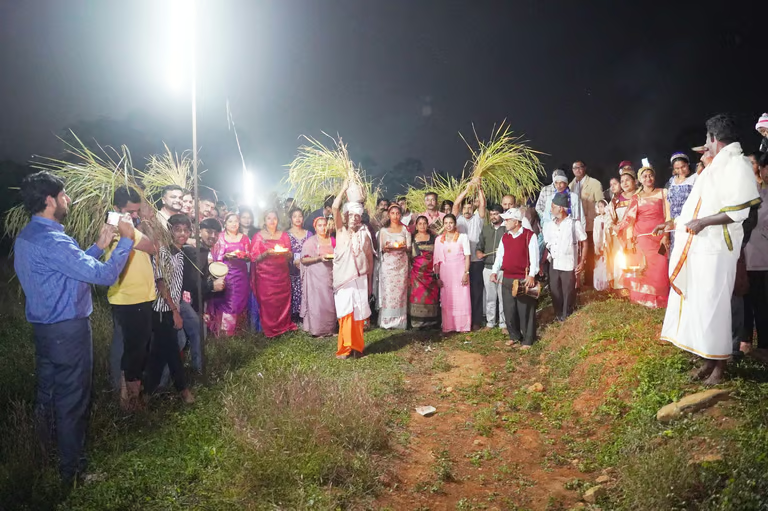
‘Puttari’ the festival of harvest, was celebrated with gaiety, pomp and splendour by Mysuru Kodava Samaja at Sri Cauvery Educational Institutions premises in Kuvempunagar here yesterday.
Marking the festival, members of the Kodava community paid obeisance to Igguthappa and Goddess Cauvery and prayed for prosperity and wellbeing of people and copious rainfall in the State.
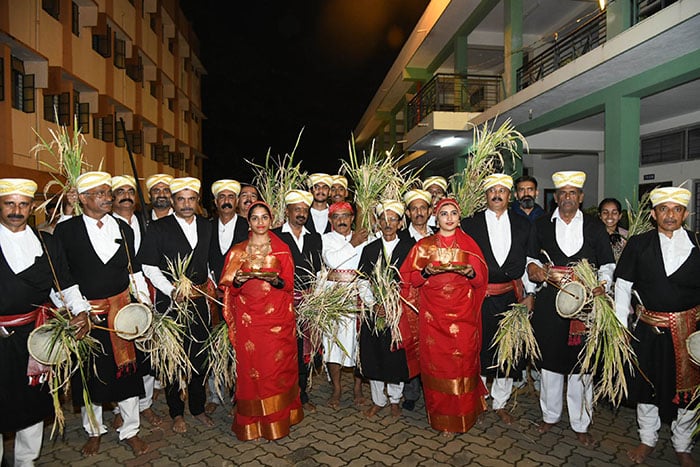
The members celebrated by doing Nere Katti in the paddy field and taking home the grain (Dhaanya Lakshmi). They also fired in air as a mark of celebration.
Earlier, the Kodava community men and women, dressed in their traditional attire, performed Puja to God Igguthappa and enjoyed the festival by singing songs and performing dance. While women wore red and green coloured sarees, men wore the traditional Black Kuppia (coat) with Chele tied around their waist. Young Kodava women presented an attractive dance performance to the tunes of the song Kodava Kula Devi Kaveri. Later, traditional Kodava dance forms such as Kolaat, Bolakaat, Kathiyaat, Baalo Paat, Pareyakali, Vaalagathaat etc. were performed.
Mysuru Kodava Samaja President Ponjanda A. Ganapathi, Vice-President Machimada P. Nanaiah, Hon. Secretary Ketolira A. Belliappa, Joint Secretary Ajjikuttira Diana Poovaiah, Treasurer Ittira G. Kashiyappa and other office-bearers were present.
source: http://www.starofmysore.com / Star of Mysore / Home> News / December 15th, 2024
WELCOME. If you like what you see "SUBSCRIBE via EMAIL" to receive FREE regular UPDATES.
Read More »