Land survey complete; process begins to hand over 140 acres in Kushalnagar
Kushalnagar:
A year after the Karnataka Government proposed airstrips in Kodagu, Dharmasthala and Chikkamagaluru to boost tourism, industry and disaster management, plans for a mini airport in Kodagu’s Kushalnagar taluk are finally taking shape.
Chief Minister Siddaramaiah recently reaffirmed in a social media post the State Government’s commitment to developing infrastructure projects, including the airstrip in Kodagu.
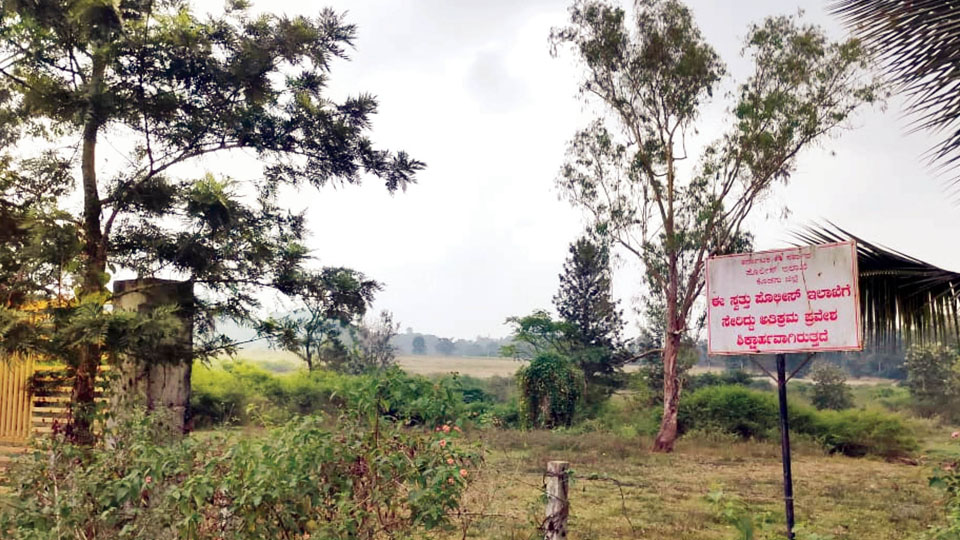
The Kodagu District Administration has identified 140 acres of Government land for the project, paving the way for its implementation.
The Karnataka State Industrial and Infrastructure Development Corporation (KSIIDC) has been designated as the nodal agency to oversee the development of airstrips across Karnataka.
Land identified after initial hurdles
The original proposal targeted a 49.5-acre site near Sainik School, Kushalnagar, in Doddathoor village, bordering Basavanathoor. It included a 950-metre runway, terminal, security post, and fencing. However, the Airports Authority of India (AAI) deemed the land inadequate during an inspection, prompting a re-survey.
Subsequently, the District Administration identified 106 acres of unused land previously allocated to the Police Department for Arms and Police Training School at Adanipura near Hebbale Chikkaaluvara. An additional 34-acre adjacent Government land was also added, bringing the total to 140 acres.
Speaking to Star of Mysore, Kodagu DC Venkat Raja confirmed that the land transfer process is well underway.
“The unused 106-acre Police Department land has been reallocated to KSIIDC (Karnataka State Industrial and Infrastructure Development Corporation) and alternative land can be provided to the Police Department for the training facility in case of future requirement,” he said and added that the airport is a priority and the formal RTC transfer request has been sent to the Revenue Department.
Future expansion feasible
The identified 140-acre site, shaped like an ‘L,’ is ideal for more than 1,000-metre runway and supporting infrastructure. If future expansion is needed, adjacent forest land could be acquired.
A minimum runway length of 1,200 meters and a width of 150 meters is essential to accommodate the landing of a 20-seater airplane. Additionally, the airstrip project requires a total of 140 acres of land for its complete infrastructure and operations.
Madhu, the Head of the Department (HoD) at the KSIIDC overseeing aviation infrastructure, acknowledged the earlier challenges in finding suitable land in Kodagu. “Uneven terrain and surrounding hills made previous sites unviable. The newly identified flat land meets our requirements and we are ready to begin project implementation,” he said.
Madhu confirmed that a technical team will conduct a site survey soon, followed by the preparation of a Detailed Project Report (DPR) once the land is formally transferred.
Kushalnagar Tahsildar Kiran Gowraiah and his team played a crucial role in identifying the site. The process began a year ago and has steadily progressed. Now, the Revenue Department has to secure a No Objection Certificate (NOC) for the 106-acre transfer from the Police Department to KSIIDC and all necessary documents have been submitted in this regard.
source: http://www.starofmysore.com / Star of Mysore / Home> News> Top Stories / December 01st, 2024
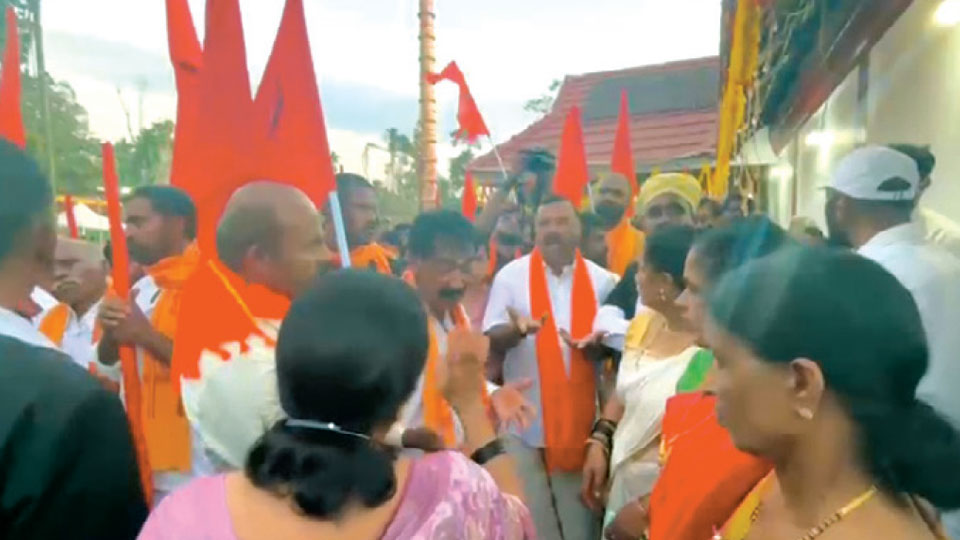
The unrest began after a few Kodava devotees were banned entry into the Mrityunjaya temple by the committee, including the majority of Gowda members, for wearing the Kodava traditional attire.
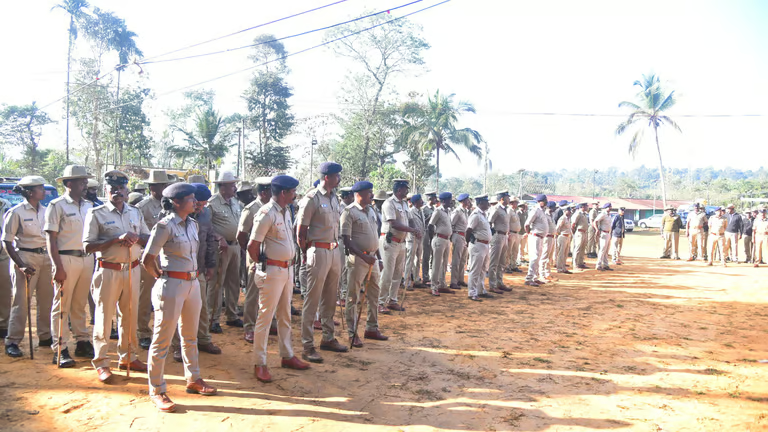
Police stand guard outside the Mrityunjaya Temple premises. (Photo | Express)
Madikeri :
Police stood guard at the Mrityunjaya Temple in Kattemadu even as BNSS 163 prohibitory order was imposed at the premises to control the anticipated communal clashes on Monday.
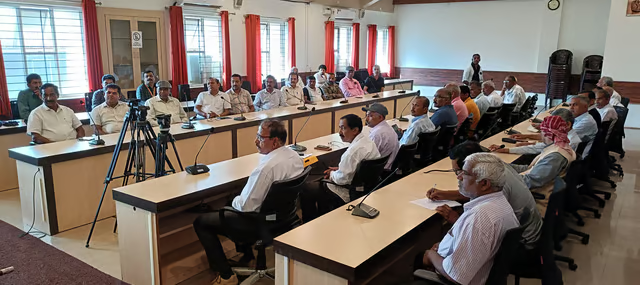
Meanwhile, the district administration called for a peace committee meeting with the leaders from the Kodava and Gowda community to arrive at an amicable decision.
The unrest began after a few Kodava devotees were banned entry into the Mrityunjaya temple by the committee (including the majority of Gowda members) for wearing the Kodava traditional attire.
“Following the unrest over the issue at Mrityunjaya Temple at Kattemadu, the administration called for a peace committee meeting. The meeting was attended by the Temple committee, Kodava Samaja and Gowda Samaja office bearers. After a three-hour meeting, the Temple Committee has assured to arrive at an amicable decision by January 6,” confirmed DC Venkat Raja addressing a press conference on Monday evening.
He explained that there might have been miscommunication or misinterpretation of the temple bylaw. “The Temple Committee has assured to hold a meeting and a decision regarding the Bylaw will be taken by January 6. Both the communities have agreed to cooperate and have assured to maintain peace,” DC added.
During the peace committee meeting at the DC Office in Madikeri. (Photo | Express)
Meanwhile, SP K Ramarajan cautioned against posting derogatory statements and abusive words against any community. “The temple committee has sought time and no protests will be allowed concerning the matter until then. Section 163 will be extended if required. However, stringent action will be taken against anyone who tries to disturb the peace. No abusive statements will be allowed across social media,” Ramarajan warned.
While the peace committee meeting was held during evening hours, preventive arrests were made by the police during morning hours to control any unrest.
As Kodava devotees were prevented entry to the temple for wearing the traditional attire, the members of the Kodava Riders Club and other Kodava community residents from across Ponnampet planned to ride to the temple wearing the Kuppiya Chale on Monday morning. However, they were arrested by police as a preventive measure.
Further, this arrest was opposed by the residents of Ponnampet, Hudikeri, Gonikoppal and Napoklu regions even as protests were held demanding the immediate release of the arrested Kodavas. The arrested members from the community were, however, released later.
source: http://www.newindianexpress.com / The New Indian Express / Home> Karnataka / by Express News Service / December 30th, 2024
The soldier, identified as Deevin Palangoti, hails from Alur Siddapura in Kodagu.
Deevin Palangoti / Credit: Special Arrangement
A 28-year-old soldier from Kodagu district in Karnataka succumbed to his injuries on Monday that he sustained after an Army vehicle, in which he along with others were travelling, fell into a gorge in Poonch district of Jammu and Kashmir on December 24.
The soldier, identified as Deevin Palangoti, hails from Alur Siddapura in Kodagu.
His lungs were critically damaged when the army vehicle fell into a gorge. He was admitted to a hospital in Srinagar for treatment. Divin’s mother, Jaya had reached the hospital.
Deevin was the only child of his parents and had joined the Army ten years ago. He was engaged to be married in February. In fact, he had built a new house for the family a year ago.
It may be recalled that three jawans from Karnataka – Subedar Dayanand Thirakannavar (44) from Belagavi, Lance Havaldar Anoop Poojary (33) from Kundapur and Mahesh Marigond (25) of Mahalingpur in Bagalkot district were earlier killed in the Poonch accident.
source: http://www.deccanherald.com / Deccan Herald / Home> India> Karnataka / by Naina J A, DHNS / December 30th, 2024
The rare plant can be found in a coffee plantation on the church grounds of the British-built CSI in Pallikunnu near Kuttikkanam.
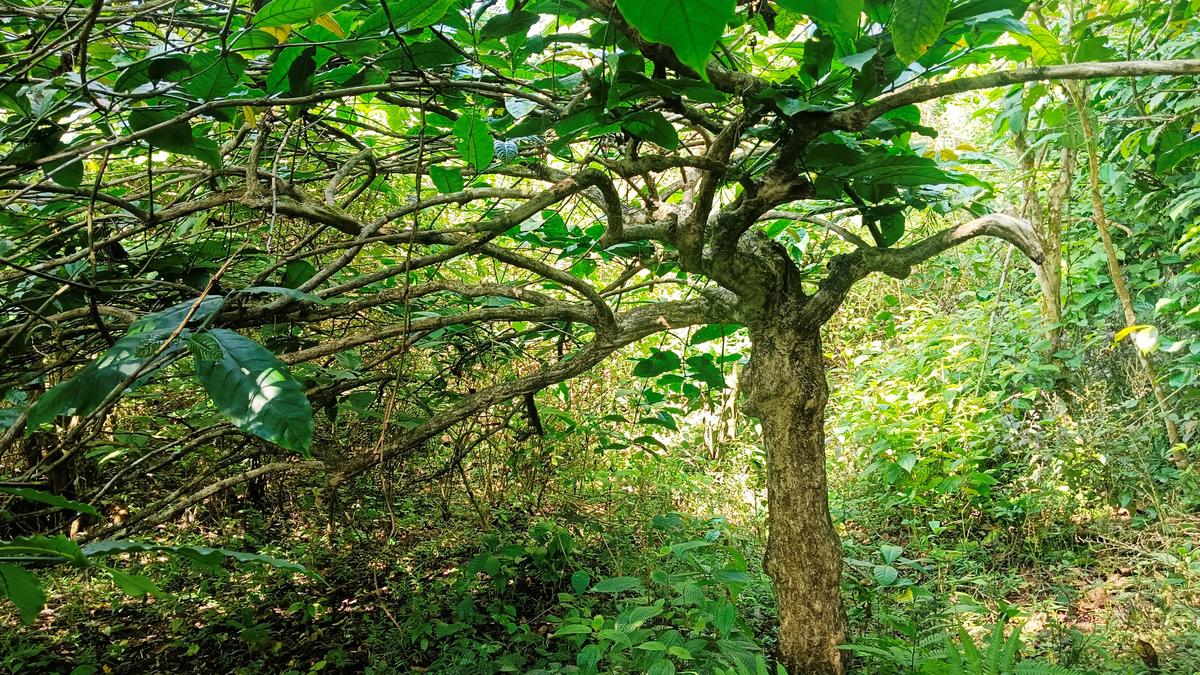
The 150-year-old coffee plant on the church grounds of Pallikkunnu CSI church in Idukki. | Photo Credit: JOMON PAMPAVALLEY
Those who visit the premises of the British-built Church of South India (CSI), in Pallikunnu near Kuttikkanam in the Idukki district, can see a coffee plantation on the church grounds. It is believed that the British planted coffee on the land owned by the church, which is over 150 years old, during the early period of the plantation industry in Peerumade.
The Church Missionary Society (CMS) constructed the cross-shaped church in 1869 on a 15-acre plot of land gifted by the then ruler of erstwhile Travancore. According to church authorities, the church plans to preserve the historically valued coffee plant in Pallikkunnu.
Pallikkunu St. George CSI Church Vicar Fr. Liju Abraham said that the plant is situated among a group of coffee plants on the church property. “Earlier, the church authorities contacted the Coffee Board officials to ensure the protection of the plant. Two years ago, the Coffee Board officials visited the church, inspected the plant, and assured support for its preservation. But the initiative came to a standstill after we failed to get a certificate from the church. The church aims to secure government support for the initiative,” said Fr. Abraham.
CSI East Kerala Diocese public relations officer Viju P. Chacko said, “The church needs to separate the 150-year-old plant from the group of coffee plants and create a special passage for visitors to view the rare plant. The plant could serve as a window for visitors into the plantation culture of Peerumade,” noted Mr. Chacko.
Kerala State Biodiversity Board (KSBB) district coordinator Ashwathi V.S. said that the KSBB can ensure the preservation of biodiversity-rich trees or plants through the Biodiversity Management Committee (BMC) in any area. “The concerned panchayat biodiversity management committee needs to submit a report to the Kerala State Biodiversity Board (KSBB) in this regard.” Additionally, Ms. Ashwathi recommended that the church authorities submit a letter expressing their willingness to preserve the plant.
Interestingly, during the initial period of the plantation industry in Idukki, coffee plants were the crop of choice. The book Above Heron’s Pool by Heather Lovatt and Peter de Jong, describing the plantation history in Peerumade and Vandiperiyar, sheds light on the change. “In 1875, a leaf disease caused significant damage to the coffee plants, prompting the planters to switch to growing tea instead. The book further states that Thengakal, near Peerumade, once achieved the highest coffee yield in southern India, producing two tonnes of cured coffee per acre,” said the book.
source: http://www.thehindu.com / The Hindu / Home> News> India> Kerala / by Sandeep Vellaram / December 29th, 2024
Virajpet MLA A.S. Ponnanna, who also serves as the Legal Advisor to the Chief Minister, Somwarpet MLA Dr. Manthar Gowda and Mysuru-Kodagu MP Yaduveer Krishnadatta Chamaraja Wadiyar have called for peace between communities in Kodagu following tensions at the Maha Mrithyunjaya Temple in Kattemad village on Dec. 27.
The incident occurred when over 20 Kodava community members, including women in traditional attire, were prevented from entering the Temple wearing traditional dresses by individuals from another community, claiming to represent the Temple Management Board.
Reports suggest that individuals demanded Kodavas either remove their traditional attire or leave the Temple premises. The altercation occurred on the final day of the festival at the Mrithyunjaya Temple. It was claimed that the Temple’s by-laws prohibit traditional attire, a contention that Kodava community members vehemently disputed.
The Police intervened to defuse the situation. Both groups filed complaints and counter-complaints at the Madikeri Rural Police Station. Footage of the incident, which has gone viral on social media, has drawn widespread criticism for causing disrespect to the Kodava community in their homeland.
MLA Ponnanna called upon everyone to uphold peace and harmony. “I appeal to the Temple management to revoke this by-law and allow traditional attire from all communities. Historically, traditional attire has been a vital part of the district’s cultural heritage, embraced by various communities,” he said.
MLA Dr. Manthar Gowda also expressed his surprise over the incident, noting that Kodagu is known for its communal harmony and peaceful coexistence among communities. He urged all parties to maintain peace and ensure that the situation does not escalate.
Mysuru-Kodagu MP Yaduveer Krishnadatta Chamaraja Wadiyar strongly condemned the incident and denounced acts of mutual hatred and disruptions to societal peace, emphasising that such incidents should never happen. He called for addressing differences through dialogue and fostering a harmonious environment.
In response to the incident, various organisations have announced plans for a massive march titled ‘Kodava Nadige Kattemadu Kade’ soon.
Virajpet Kodava Samaja’s Honorary Secretary Maletira Srinivas accused certain politically motivated individuals of attempting to strip the Kodava community of their rights and insulting Kodava women.
source: http://www.starofmysore.com / Star of Mysore / Home> News> Top Stories / December 29th, 2024
A dwindling population, dilution of tradition, and diminishing national presence have fuelled urgency within the Kodava community in Bengaluru and the neighbouring Kodagu region.
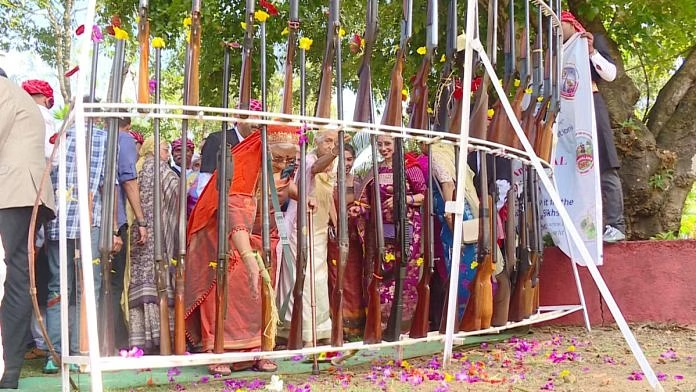
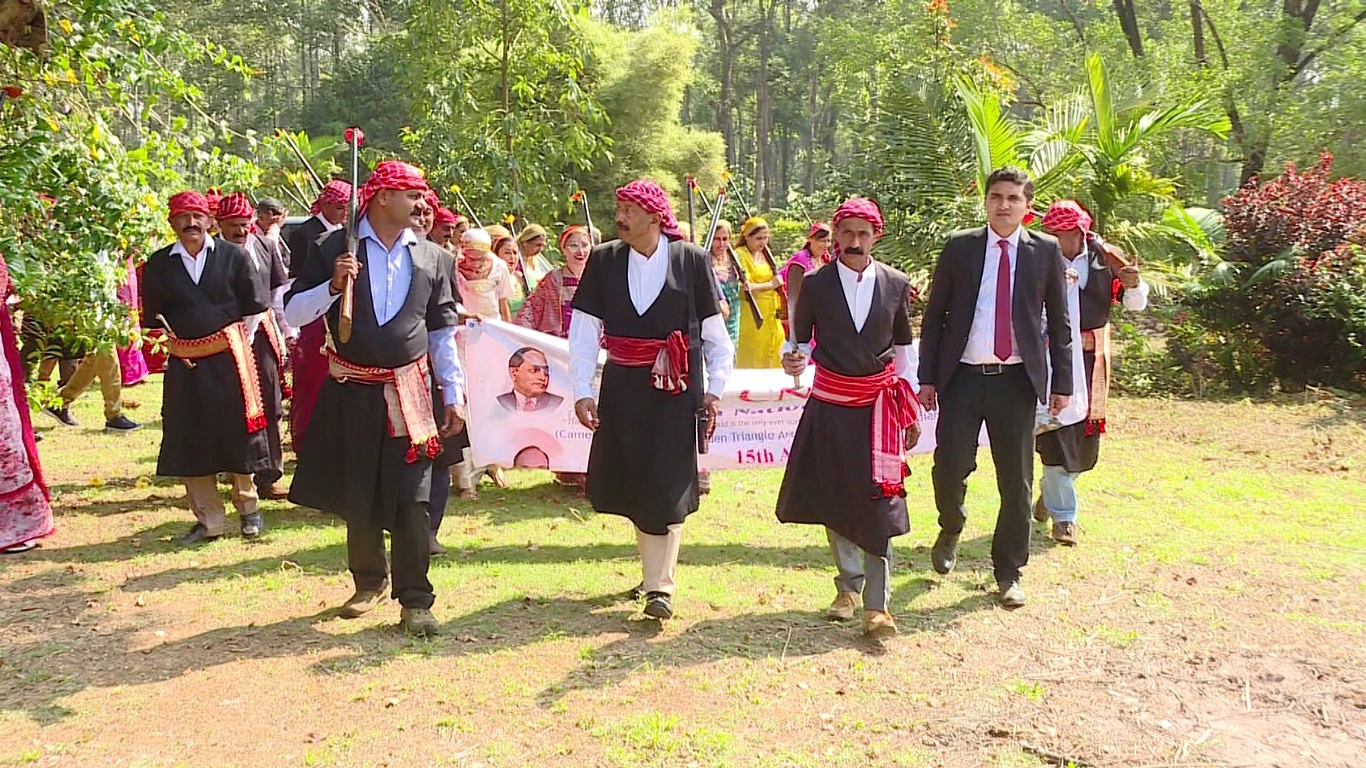
At the Thok Namme (Gun Carnival), organised by the Codava National Council, a Kodava group fighting for recognition of its unique identity and homeland | Photo: By special arrangement
Bengaluru:
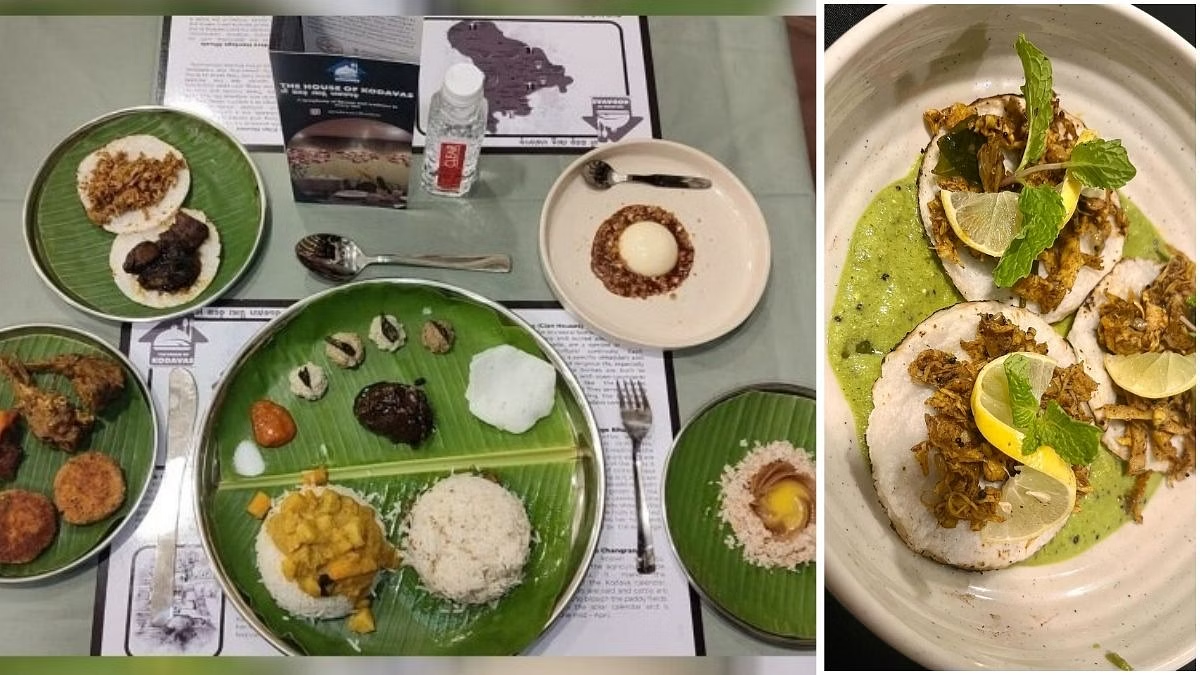
The lunch was a celebration of Kodava pride, heritage, and culture. Two batches of guests at The House of Kodavas in Bengaluru savoured shredded pork on akki-totti (rice rotis), mutton mince-filled ghee rice, and a vast menu of traditional Kodava cuisine like otti-pandi curry and beimbale (bamboo shoot), each given a contemporary twist. Even the table mats served as a dossier of sorts, detailing aspects of Kodava culture.
The Bengaluru restaurant is an initiative to “keep the [Kodava] clan together”. A dwindling population, dilution of tradition, and diminishing national presence have fuelled urgency within the Kodava community in Bengaluru and the neighbouring Kodagu region. Initiatives like the House of Kodavas seek to create a community-focused social and business network akin to those of the Parsis or Jains.
“We Kodava say that we are a clan of warriors and need to support each other. But I would definitely say we are lacking in this,” said entrepreneur Kallichanda Revathi, 43, who helped conceptualise The House of Kodavas initiative.
From community organisations to social media, Kodavas are using various platforms to infuse a sense of togetherness and align it with economic interests. The annual gun festival, field hockey tournament, and return to the Kodava script Lipi are all part of a concerted attempt to revive Kodava identity and raise awareness about the “existential crisis” facing this endangered ethnolinguistic minority group from southern Karnataka.
“Serving Kodava cuisine like a normal restaurant will make no difference to our business. This is about serving the same dish differently to help us get noticed. This will help Kodava entrepreneurs,” said Kalengada Bopanna who runs Umbak Entha, a cloud kitchen, and one of four entrepreneurs who organised the lunch.
Photo: @thehouseofkodavas | Instagram
But the enthusiasm attached to flaunting one’s Kodava lineage has not translated into practice, said elders of the community like N U Nachappa, the president of the Codava National Council, a group fighting for recognition of its unique identity and homeland. Over the years, Nachappa has made representations to every high office in the country as well as the United Nations to secure due recognition and protection for the Kodava community.
“Kodavas are literate but not educated. Our problem is that we have no political instinct. There is no assertion of our cause. And this allows everyone to take us for a ride,” he said.
‘Festival of guns’
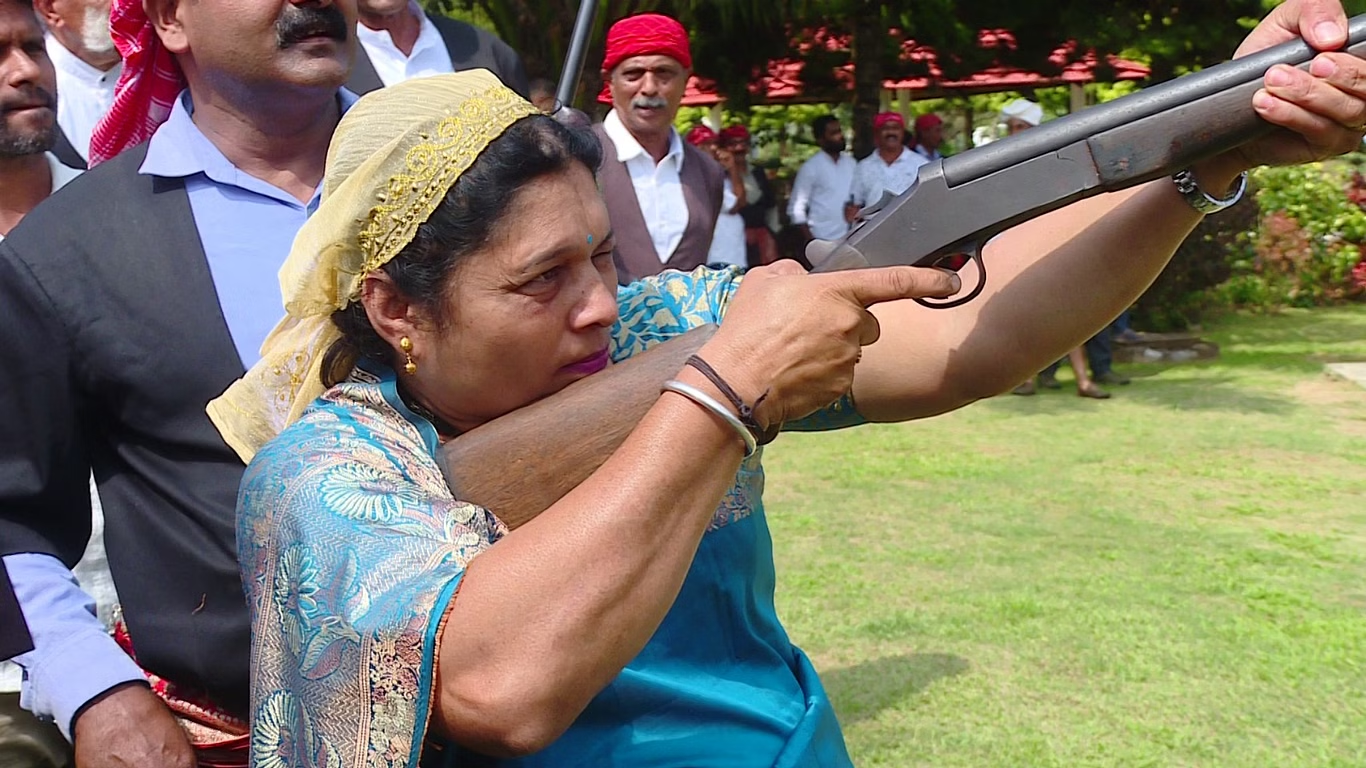
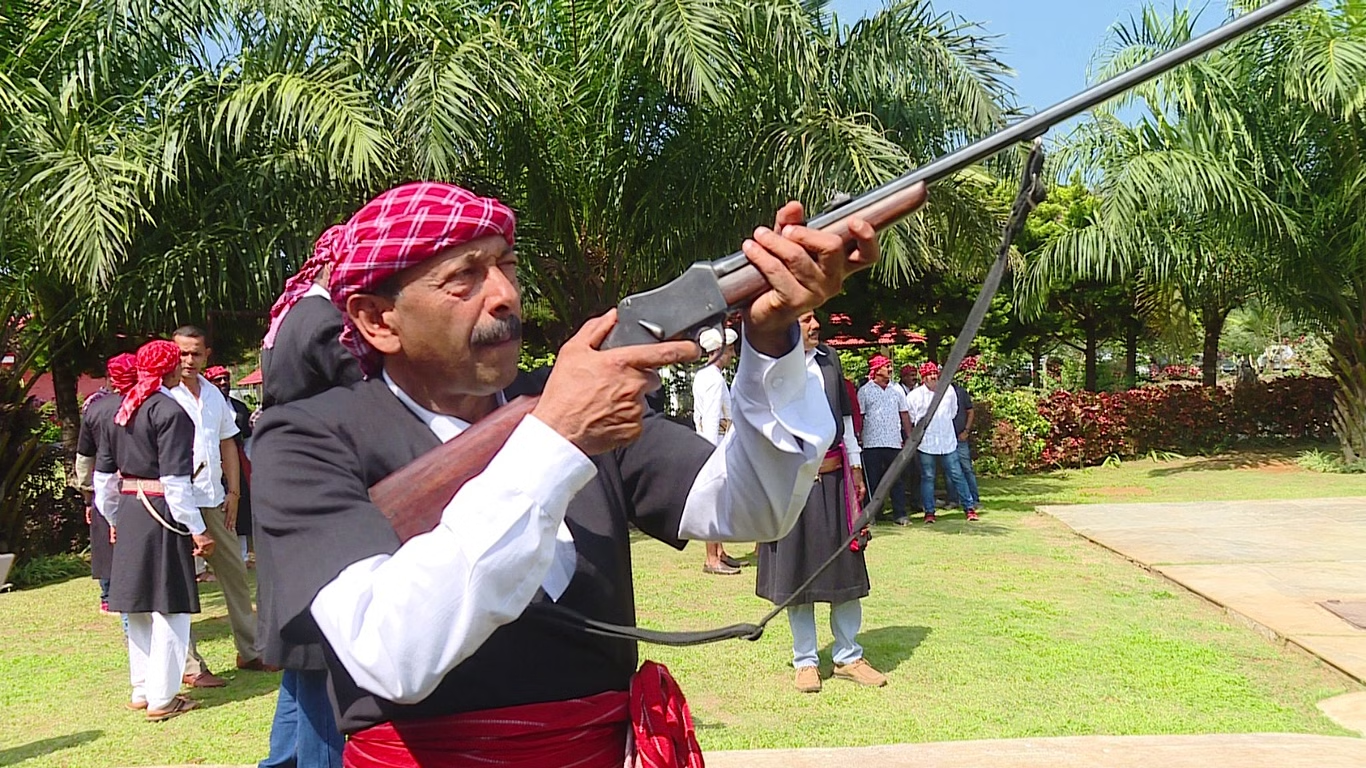
Around 50 people gathered in an open field at a private resort in Ballamberi village on Wednesday morning to celebrate the 14th annual ‘Thok Namme’ (gun festival). The women wore the full Kodava saree style and attire, and most men sported long handlebar moustaches, looking regal. The event began with an offering of prayers to guns, followed by shooting competitions for men, women, and children.
Kodavas have the freedom to possess weapons, a right dating back to the 1830s when the British exempted them from the Indian Arms Act for their contribution to the fight against Tipu Sultan. Though not part of any traditional festival, the CNC created the event to instill Kodava pride, revive ancient customary practices, and keep the movement active and thriving.
A Kodava woman at the Thok Namme (Gun Carnival) | Photo: By special arrangement
Photo: By special arrangement
Kodavas have made a name for themselves in sports, especially hockey, and for their service to the army. Field Marshal KM Cariappa and General KS Thimayya, along with athletes like Ashwini Ponnappa, have become icons not only in their respective fields but also as symbols of Kodava pride and resilience.
Unlike several other micro-groups that do not enjoy the same social capital, the Kodavas have evolved as one of the more successful and progressive communities. Their customs are distinct from other communities anywhere in the country. However, scholars and historians say that distinctiveness is eroding.
“The bigger threat to Kodava’s way of life is from within India, with more people adopting Hindu and brahminical practices,” said professor CC Sowmya Dechamma from the Centre for Comparative Literature at the University of Hyderabad.
During colonial rule, Kodavas were enumerated as a separate race until the 1941 census when they were merged under the Hindu religion.
Traditional Kodava marriages, for instance, do not have priests conducting rituals. It is the duty of the elders to conduct the ceremonies.
“We are nature and ancestor worshippers. But now, we are conducting Homas (sacred pyre) where Brahmin priests ask us to throw rice we grow into the fire. This is absurd,” said a Kodagu-based author and academic, who did not want to be named.
People who spoke to ThePrint added that this religious appropriation has also turned Kodava into a bastion of right-wing ideologies.
“This merging of [our] unique identity with that of mainstream Hindus has led to blind support [for] political parties that subscribe to such beliefs,” said Nachappa. He added that there is no incentive for political parties to take their demands seriously.
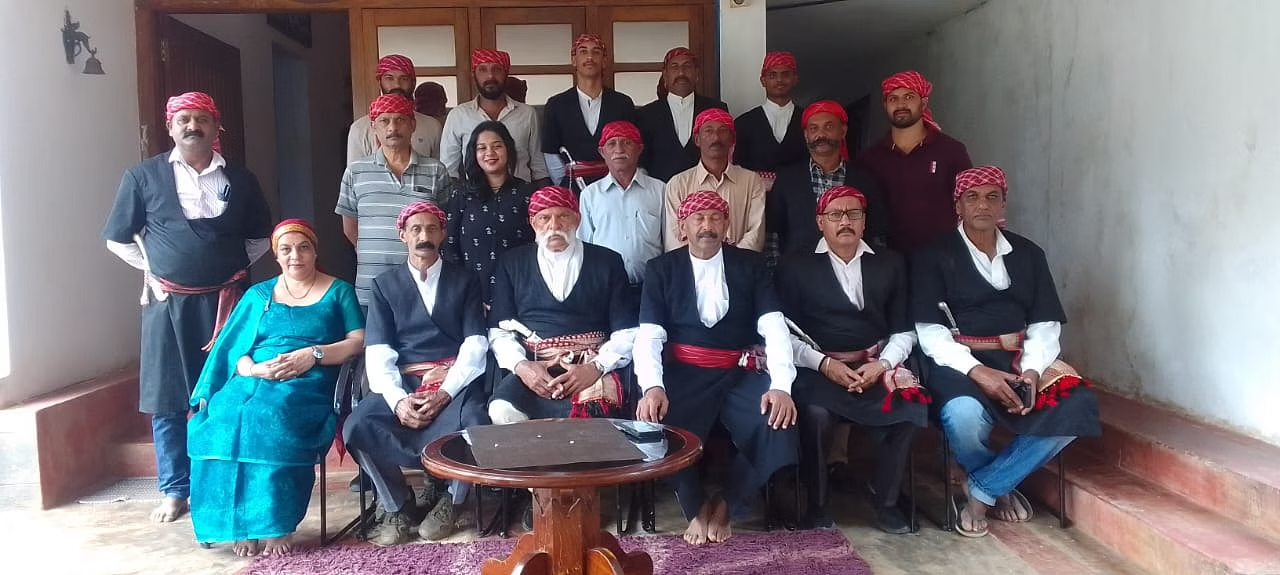
Members of the Kodava community in Karnataka | Photo: By special arrangement
‘Separate race’
Nachappa and the CNC have been fighting for the Kodavas to be granted Scheduled Tribe (ST) status. A section of community members cite the declining population as justification for this measure. The 2011 census indicates that the number of Kodavas decreased from around 1.5 lakh to around 1.25 lakh. According to Nachappa, the numbers are inflated.
Coorg, as it was formerly called, was a state for six years between 1950 and 1956 but was later absorbed into Karnataka, merging its identity. This continues to rankle community members, who are now seeking new ways to establish a separate identity.
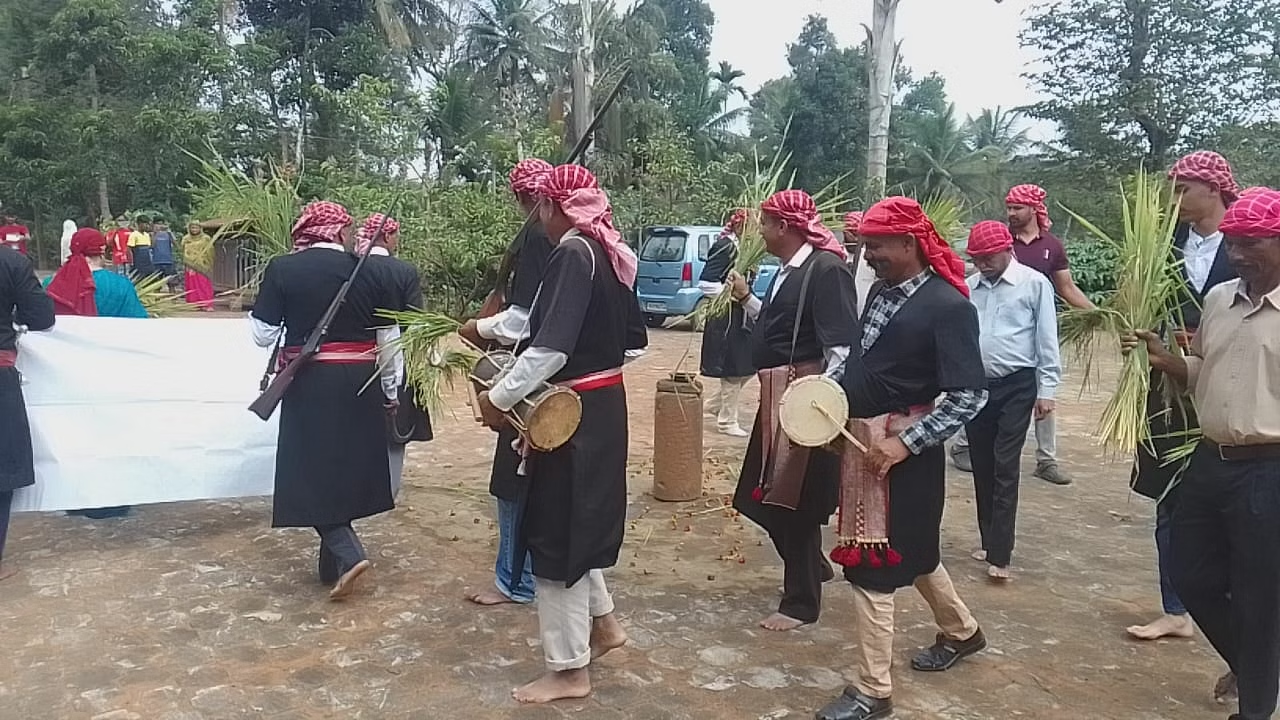
Efforts to preserve Kodava distinctiveness include popularising the Kodava script, ‘Lipi’. Though not officially recognised by the Karnataka government, a growing number of Kodavas have started using it on signboards for temples and commercial establishments.
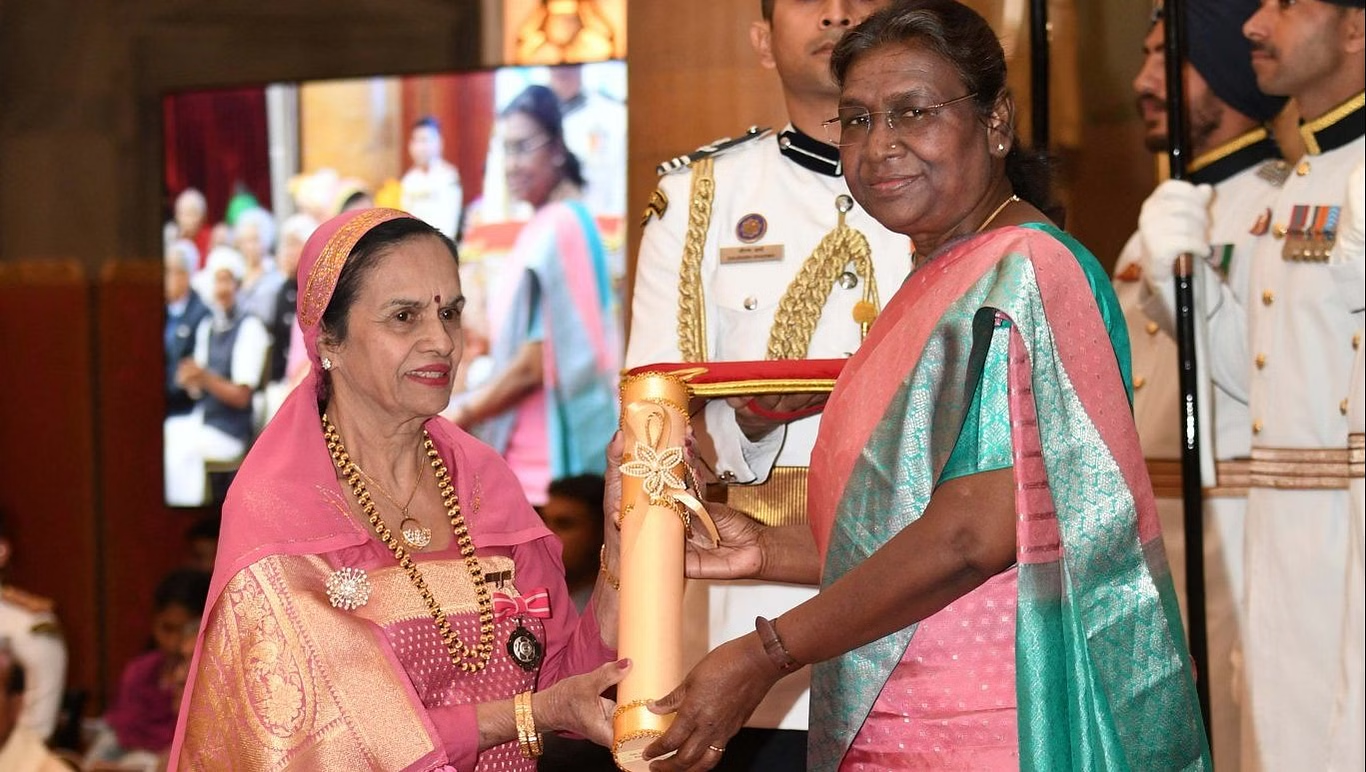
These efforts received a boost when folk dancer Rani Machaiah was honoured with a Padma Shri last year for her contribution to preserving Ummathat, the traditional Kodava dance, since 1984. As the former president of the Karnataka Kodava Sahitya Academy, she has encouraged Kodavas to promote the Lipi.
President Droupadi Murmu presents Padma Shri to Iymudiyanda Rani Machaiah for popularising the Ummathat dance art of Kodagu | Photo: @rashtrapatibhvn | X
Getting recognition as a ‘linguistic minority’ or ‘indigenous minority’ could help protect Kodavas from being marginalised and possibly reclaim land that was ‘illegally’ taken from them. This push for ST status is one step towards that goal.
“There is a constant assertion that Kodavas have lineage associated with Alexander, the Macedonian ruler. But this is to hammer the narrative to de-link Kodavas from asserting their rights to reclaim land that was forcefully taken from us,” Nachappa said.
Despite past government efforts, surveys to address the issue have failed to take off. ST status remains contentious even within the Kodava community. In 2016, the Siddaramaiah-led government halted an ethnographic and socio-economic survey of the community to assess their qualification for tribal status. This was after former MLC AK Subbaiah intervened, claiming the survey was anti-national and that Kodavas could not be compared to tribes like the Hakki Pikki.
Even now, there are tensions over whether Kodavas should be classified as a race or a tribe.
“These so-called progressive people acted as representatives of the community and said they did not want it [the ST status] since they were a prosperous people,” said a senior advocate and political leader who requested anonymity. “Most of the rich in Kodagu are big companies and people from other states who own large coffee plantations, while Kodava land holdings continue to fall sharply.”
On the other hand, a Kodagu-based author and academic argued that Kodavas “parroting” the ST demand fail to grasp its limitations.
“The very definition of Tribal is people who live in inaccessible and remote regions. We are very well educated and prosperous. By trying to get a tribal status, we are denying the same to Yeravas, Kurubas, and other communities who worked as labourers to help us get this prosperity,” the author said.
‘Carrots and sticks’
In April 2024, Guinness World Records officially recognised the 24th edition of the ‘Kodava Hockey Namme ’ as the largest field hockey tournament. This edition featured 4,834 players and 360 teams, hosted by the Kundyoloanda family as part of a month-long tournament.
This event has become central to Kodava culture, reconnecting family members scattered across Karnataka, India, and the world.
Kodava Samajas in major Karnataka cities organise cultural and sporting events, arrange marriages, provide support during funerals, and act as lobby groups to engage with the administration, keeping the community connected to its roots.
Members of the Kodava community in Karnataka | Photo: By special arrangement
Photo: By special arrangement
Other initiatives by Kodava Samajas and WhatsApp groups fuel a sense of community engagement among younger generations, who show reluctance toward having more children. In one Kodava-centric WhatsApp group, the admin recently conducted a snap poll asking, “Is pre-marriage counseling essential for Kodava Youths?” The answer was a resounding yes.
“Whether it’s marriage, naming ceremony, etc it was a collective affair. As the financial status improved, one by one [people] started building houses away from the Aiyn mane (clan house), it became a divided family and Western culture took over,” one user posted on behalf of her uncle.
She added that many were selling property to settle in Mysuru and Bengaluru, calling this shift a “man made tragedy” that was irreversible.
Such sentiments are common, with declining population narratives fuelling anxieties on various platforms.
Kabilira Harish from the T Shettigere Kodava Samaj offers a simpler explanation for the dwindling population.
“The previous generation had 8-9 children and this reduced to a maximum of three among us. Now, couples are happy with one child or don’t want to have any at all. This is a cause for alarm,” he told ThePrint.
To counter this, the T Shettigere Kodava Samaj announced incentives for Kodava couples, offering Rs 50,000 to families having a third child.
“We are not saying this money will help the family overcome any hurdles or settle the child for life…it’s only ‘Protsaha dana’ (encouragement),” said the 73-year-old.
He added that the association has sufficient funds and donors willing to support this initiative.
However, Revathi, a Kodava community member, noted that many Kodava children do not recognise their Kodava classmates at school, which adds to the widening generational gap.
While this incentive serves as the carrot, others use the stick. In 2021, Chotakmada Rajiv Bopaiah, president of the Ponnampet Kodava Samaj, banned cake cutting, champagne popping, and other ‘westernised’ practices and celebrations.
The Samaj also prohibits grooms from sporting beards and requires brides to wear their hair tied with a ‘Vastra’ during weddings.
Ironically, while Kodavas pride themselves on being polished and fluent in English, they resist ‘westernisation’.
“I don’t think this does anything except show our anxieties out in the open,” said Dechamma.
(Edited by Prashant)
source: http://www.theprint.in / The Print / Home> Ground Reports> The Fine Print / by Sharan Poovanna / December 26th, 2024
Many planters are seeing uneven ripening because of multiple rains and multiple blossoms.
A file photo of coffee beans in an estate in Kodagu district (Coorg) of Karnataka. | Photo Credit: MURALI KUMAR K
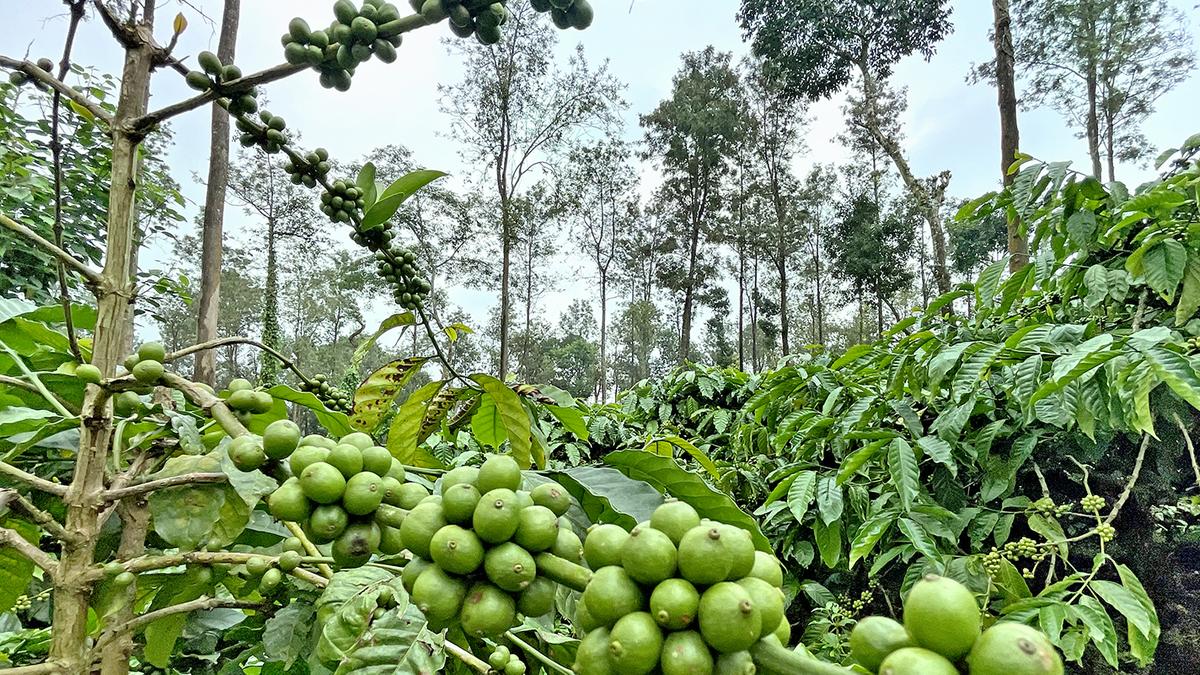
Coffee planters are a confused lot this year. On the one hand, coffee prices have hit a record high. On the other, vagaries of the weather through 2023 and 2024 have resulted in erratic ripening and a dip in yield this season. The Coffee Board is estimating an average 15% loss this season due to this.
Coffee is harvested between December and February.
Rain pattern
“We are estimating more than 15% loss in yield, mostly in Karnataka, because in other coffee growing regions such as Andhra Pradesh and the North East, they receive the northeast monsoon. This time, the southwest monsoon, which covers Karnataka, was heavier and not uniform,” said K.G. Jagadeesha, CEO and Secretary, Coffee Board, adding that the exact figures will be clearer after the post blossom survey in March-April.
The heavy rain was localised. Some regions received rain well into November. Yield is expected to be hit in the three main coffee districts — Kodagu, Chikkamagaluru and Hassan.
Explaining further, he said, “Last year, there was rain during November-December. Then this year again in January there was rain. Blossom showers during February-March is ideal. If it rains earlier, then uneven berry formation and ripening are observed. We expect a modest production of 3.5 lakh metric tonnes compared to 3.6 lakh metric tonnes last year.”
Naj Chengappa, a planter from Devarapura, south Kodagu, said, “Many planters are seeing uneven ripening because of multiple rains and multiple blossoms. In one coffee tree, we are seeing ripe, green and dried ones. Droppings (of berries) were also observed in high rainfall areas.”
This comes as bad news for planters as coffee prices have hit record highs owing to supply side disruptions in Brazil and Vietnam. “We get no clear information from them on restoration. So, the price may be high till that is restored,” Mr. Jagadeesha said.
Climate resilience
The Coffee Board has urged planters to adhere to best practices to shield themselves from weather variations.
“This year, there was heavy rain. Those who have invested in water conservation will have stored this water and used it for better yield. We have also started the research on climate resilient varieties. We recommend maintaining high carbon content, organic mulching, mixing organic and chemical fertilisers, good shade management and water conservation,” Mr. Jagadeesha said.
source: http://www.thehindu.com / The Hindu / Home> Sci-Tech> Agriculture / by K C Deepika / December 25th, 2024
WELCOME. If you like what you see "SUBSCRIBE via EMAIL" to receive FREE regular UPDATES.
Read More »