The verification process is still ongoing to confirm if the event has broken the previous world record.
Over 6000 people gathered to break the world record for the largest family gathering in Bittangala. (Photo | Special Arrangement)
Madikeri:
With an aim to create the Guinness World Record, over 6000 people from the Kodava community got together at Bittangala in Virajpet on Saturday.
They gathered to break the world record for the largest family gathering under a single roof and the initiative was organized by the Kodava Clan Portal. The initiative was called ‘Okoota’.
“Nearly 6500 people gathered under the same roof to prove that we all belonged to the same family,” shared G Kishoo Uthappa, the founder of the Kodava Clan portal. He explained that people from three generations gathered for the event and the same was monitored by the representatives of the World Record Association.
The verification process is still ongoing to confirm if the event has broken the previous world record.
The Kodava Clan portal was started to help the Kodava community connect with the ancestral lineage and the portal has succeeded in creating the largest family tree of over 21,000 Kodava individuals.
Through the portal, one can even find out how they are related to FMKM Cariappa or anyone else from the community. The portal had won the India Book of Records for the largest family tree and it has now attempted to break the Guinness World Record.
“We are now linking everyone who was part of the event to the family tree in the portal to find out if we all belong to the same family,” explained Kishoo. A total of 4514 people from the same family gathered in France earlier to create the world record for the largest family gathering and the Kodava clan aims to break this record.
Meanwhile, the event provided a platform to the Kodava litterateurs to exhibit their works and enabled sales of the same. Over 30 outlets in the vicinity promoted the Kodava culture even as various entertaining events including the ‘valagathat’, singing and other programmes were organized.
source: http://www.newindianexpress.com / The New Indian Express / Home> Good News / by Express News Service / December 25th, 2022
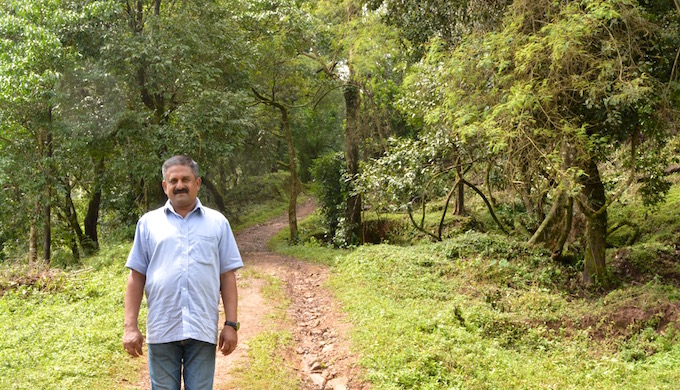
Suresh has harvested nearly 7000 kilos of ripened coffee beans from a total of 1220 dwarf varieties of Robusta plants.
Image used for representational purpose only.
Madikeri :
The coffee sector is not doing well. The reasons are many such as crop damage caused by incessant rains, disease outbreaks and overall changes in climatic conditions. However, a “progressive” farmer in Madikeri, Ponnachettira Suresh is doing well. Suresh has harvested nearly 7000 kilos of ripened coffee beans from a total of 1220 dwarf varieties of Robusta plants.
“A planter is also a doctor who treats the plants,” Suresh quips.
It was in 2020 that Suresh learnt about the dwarf variety of Robusta coffee from a friend in Kolkata. Always open to experimenting, Suresh availed five seeds of this dwarf Robusta variety and he developed them into seedlings.
“Out of the five seeds, one did not survive. However, from the four seedlings, I propagated 196 dwarf plants and I have now planted 1220 plants of the same species,” explained Suresh.
With 6 feet X 6 feet spacing, a total of three acres of land was developed with the dwarf variety of Robusta and Suresh planted Gliricidia Tree for the shade across the area.
“The plants are yielding after three years and I have picked 7000 kilos so far,” he said.
Suresh explained that the dwarf variety does not require any over-the-top maintenance. “The plantation was manured five to six times, irrigated in February and March with sprinkler irrigation and a chemical spray was carried out before monsoon to avoid dropping and rotting of the plants,” he added. He opined that the maintenance of the plantation varies and depends on the condition of the soil, weather and other variants.
“I do not use complex manure. Instead, I feed the plants with only the required amount of nitrogen, phosphorous and potassium. These nutrients are fed by hand as per requirement. While the labour charge might increase in this process, it will ensure proper health and growth of the plant as not all nutrients are required in equal amounts,” he shared. He provides the plants with nutrients depending on the weather condition, which has helped his estate flourish.
“However, the dwarf Robusta variety has not been certified by the Coffee Board and this might be due to the lack of interest in this regard. Nevertheless, I have marked five dwarf variety plants and I will be recording the yield of these plants for the coming five years. This data will be handed over to the coffee board,” he said.
Suresh has always been a “progressive” grower and he has a 400-year-old Robusta plant known as Robusta Peridenia, a 200-year-old variety known as Coffea Congensis and other rare varieties of crops that are still yielding. He is also an avid orange grower and has won a state award for best cultivation of Coorg Mandarin.
source: http://www.newindianexpress.com / The New Indian Express / Home> States> Karnataka / by Prajna GR, Express News Service / December 18th, 2022
Hosts Appachettolanda family expecting participation of more than 350 teams
Madikeri:
The Kodava Family Hockey or ‘Hockey Namme’ is back with a bang after a gap of four years. This time, the tournament will be hosted by the Appachettolanda family from March 20 to April 10, 2023 at Napoklu village in Kodagu.
“After 2018, the hockey festival did not see the light of the day due to natural disasters and the COVID-19 pandemic. We will be organising the 23rd annual ‘Hockey Namme’ in 2023 in a grand manner. The fest will be held at Napoklu General Thimayya Ground and more than 350 Kodava families are likely to take part in the tournament,” said Appachettolanda Manu Muthappa, the President of the Hockey Festival Committee.
Addressing a press conference in Madikeri recently, he said that in the last hockey tournament held in 2018, a total of 333 Kodava families participated in the Kulletria Cup Hockey and this time, they were expecting the participation of more than 350 families.
The festival is being conducted under the aegis of Kodava Hockey Academy.
It may be mentioned here that to prepare the family teams for the upcoming hockey festival, the Kodava Hockey Academy had organised the first Pandanda M. Kuttappa Memorial Cup rink hockey festival, in memory of the founder of the Academy and the hockey festival. It was organised from Oct. 27 to Nov. 6 at Ponnampet Turf Ground and a total of 114 teams had participated.
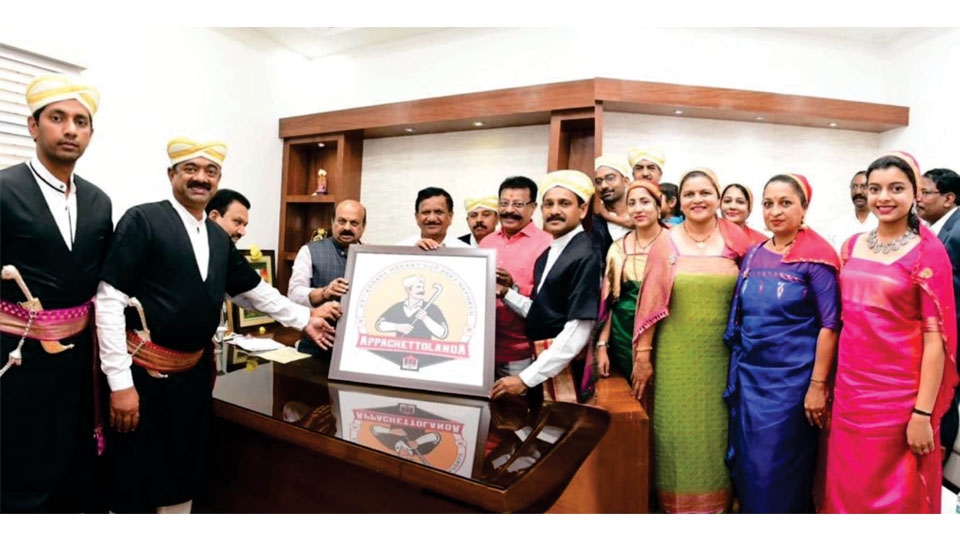
The logo of the Appachettolanda Cup family tournament was unveiled in Bengaluru recently by Chief Minister Basavaraj Bommai where a delegation of the family had called on the CM. Virajpet MLA K.G. Bopaiah, MLC Suja Kushalappa and the tournament-organising family members were present.
“The CM has assured us that a Rs. 1 crore grant will be released for the hockey festival for the first time and the CM has consented to inaugurate the tournament on March 20. In all, Rs. 1.50 crore will be spent for the festival and the remaining Rs. 50 lakh will be pooled-in by the family members and collected from donors. We are planning to invite and felicitate a host of national and international hockey players who have made the Kodagu district proud and hockey champions from all communities will be honoured,” Manu Muthappa said.
In all, three grounds will be utilised for the hockey festival and they will be also used as a back-up in case it rains. Kodava Hockey Academy President Pandanda Bopanna, who is the son of late Pandanda Kuttappa, will be one of the guests in the inaugural event. “It was his father who launched the first Kodava Family Hockey Tournament in 1997 and was organised by the Pandanda family, Manu Muthappa noted.
Secretary of the Hockey Festival Committee Appachettolanda Vasanth Muthappa, members Appachettolanda Harish Somaiah, Appachettolanda Ravi Monnappa, Appachettolanda Janath Kumar and others were present.
source: http://www.starofmysore.com / Star of Mysore / Home> News / December 13th, 2022
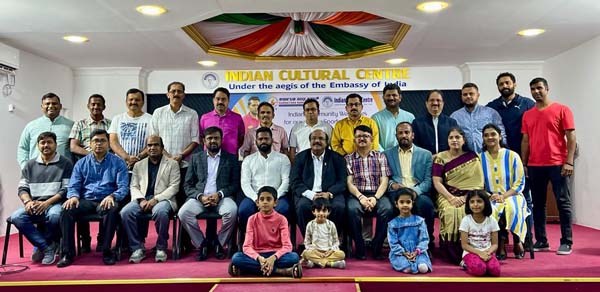
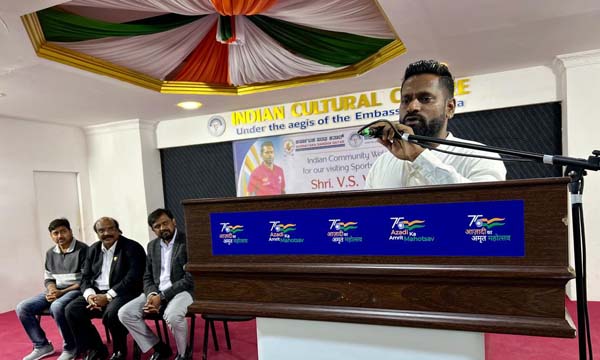
Karnataka Sangha Qatar in cooperation with Indian cultural Center hosted Indian Community.
Welcome reception to V S Vinay, ex Indian Hockey team player and current Hockey Karnataka Sr team coach and felicitated on December 6 at Ashok Hall Auditorium of Indian Cultural Centre.
Dignitaries present during this event was president of Indian Cultural Center P N Baburajan, vice president of Indian Cultural Center Subramanaya Hebbgelu.
The platform to this felicitation was created by Indian Cultural Centre to Honour the dignitaries visiting State of Qatar during the FIFA 2022 event.
Mahesh Gowda president – Karnataka Sangha Qatar welcomed the gathering and thanked V S Vinay for giving time for the reception and expressed confidence that under his mentorship many players will get trained and join Indian Hockey team and play for the country, also mentioned it is a proud moment that V S Vinay hails from Coorg district of Karnataka and which is know for producing world class players and won many medals for India.
Mahesh Gowda also thanked Indian cultural organisations for their invite and all Associated Organisations for felicitating the guest.
P N Baburajan in his address briefed the dignitary about Indian Cultural Center and how ICC is involved in the FIFA celebrations.
V S Vinaya thanked Karnataka Sangha and Indian Cultural Centre for felicitating him and people for there time to meet him, also motivated the parents to put their children in any sports and also briefed how their children get all the training facilities from the federation if they are really doing well in the sport.
The programme emcee was done by KSQ member Nithi Ramesh.
source: http://www.daijiworld.com / Daijiworld.com / Home> Middle East / by Media Release / December 10th, 2022
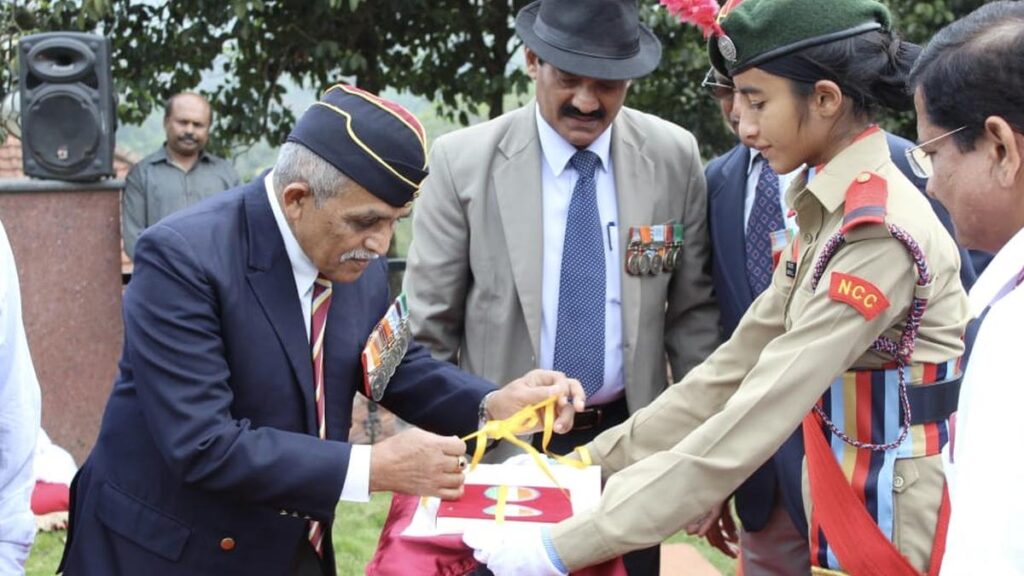
The Armed Forces Flag Day was observed in Madikeri in Kodagu on Wednesday. | Photo Credit: Special Arrangement
The Kodagu district administration and Department of Sainik Welfare and Resettlement observed the Armed Forces Flag Day at General Thimmaiah Memorial Bhavan in Madikeri on Wednesday.
Lieutenant Colonel (Retd) Mahaveer Chakra P.S. Ganapathy, Deputy Commissioner B.C. Satish, Superintendent of Police Capt M.A. Aiyappa, Air Marshal (Retd) Cariappa, Lieutenant Colonel Chacko, Kodagu Zilla Panchayat CEO S. Akash and other dignitaries were present on the occasion.
Every year, December 7 is observed as Armed Forces Flag Day throughout the country to honour martyrs and men in uniform, who valiantly fought and continue to fight on the country’s borders.
source: http://www.thehindu.com / The Hindu / Home> News> India> Karnataka / by The Hindu Bureau / December 07th, 2022
From 2000, Cheshire Homes India Coorg has been helping children & adults with intellectual disabilities.
Chairperson Gita Chengappa
Madikeri :
‘Save Soil’, ‘Swachh Bharat’, ‘Atmanirbhar…’ are not just grand slogans here. They are constants that motivate the functioning of Cheshire Homes India Coorg (CHIC), in Pollibetta of Kodagu district. An institution for the specially-abled, it caters to the needs of children and adults with intellectual disabilities – a majority of whom are from economically weak backgrounds.
Started in the year 2000, the centre has helped shape the lives of people with special abilities by providing special education and vocational training for free. Students are provided sustainable education and are involved not just in readying themselves to face a not-so-inclusive society but are also taught to lead a sustainable, eco-friendly life. Apart from special education, vocational training involves recycling plastic, clothes, paper and manufacturing eco-friendly value-added products.
“The institution is run under the umbrella of Cheshire National Council, but we are an autonomous body. The institution supports the strengthening of the National Council so that we have a stronger body for disability in India,” explained Gita Chengappa, chairperson of the institution.
The centre receives support from the state government. “The state releases Rs 19 lakh annually and supports us. However, on an average, the institution requires Rs 40 lakh to Rs 50 lakh, which is raised through various donors. The institution caters mostly to people from very poor economic backgrounds,” added Gita.
Community acceptance While most special schools are residential, CHIC is a day care centre. Each day, five school vans (hired on rent) leave the institution in five different directions. Designated pick-up spots have been drawn up and students are brought to these spots by their parents, where they are picked up and dropped back after school. “We spend over Rs 13 lakh for the van facility annually. Yet, we don’t want to make this a residential institution. We want the community, parents and society to be responsible for children with special abilities,” she opined.
The institution started off with just six students with special abilities. During the initial period, the institution involved itself in Community Based Rehabilitation (CBR) and travelled the length and breadth of Virajpet taluk. “We went door to door, looking for children with special abilities and convinced parents not to keep these children hidden but to admit them to the institution. It was then run in a small building in Pollibetta,” she recalled.
vice-chairperson Punita amaswamy and honorary secretrary Asha Subbaiah
The CBR programme was continued for eight years, and the institution currently operates in a spacious location with improved facilities, with 68 specially-abled students who are diagnosed with intellectual disabilities.
“After Covid-19, the number of students dwindled as many fell sick. But we continued to cater to their needs and are still providing them the required medication,” she said. The institution helps them avail of government schemes for the specially-abled. During the pandemic, the institution supported their families with provisions and monetary help.
Driving force The centre has six special educators. Shivraj, a specialist in visual impairment and mental retardation, heads the team as headmaster. Apart from the special educators, the centre has appointed vocational trainers. “The students are being skilled under different campaigns. While an inclusive society is still a distant dream, we are helping to skill them to earn a living within the boundaries of our institution,” she explained.
Single-use plastics, used papers and newspapers, used clothes and other recyclable plastic waste are turned into value-added products. Children with even severe impairment are involved in vocational activity which can help shape a sustainable, eco-friendly society. Used plastics are cut into pieces and woven (with help from a few women) into aesthetic mats. Used papers are cut into small pieces and processed into eco-friendly reusable paper, which is turned into paper bags and other items, and decorated with indigenous paintings.
From coasters to pillow covers, the talents of the specially-abled not just earn them a good living but help raise funds for the institution. The centre also has a ‘Jumble Sale Room’ where used clothes and other used items are stored and later sold. “We try unique methods to raise funds and build the institution,” explained Gita. The centre has a handloom unit operated by women from economically weak backgrounds, who are paid for their work. They also raise funds through handloom sales.Having addressed the needs of specially-abled people across Virajpet taluk, the institution is slowly expanding to the borders of Somwarpet taluk.
SPECIAL TOUCH
Institution equipped to support needs of specially-abled, has ‘tactile paving’ that helps guide the visually impaired
Toilets fabricated to meet the needs of specially-abled
Institution has full-time physiotherapist and psychiatrist
Helps recycle and upcycle plastic and paper waste, provides means of sustainable earnings to
the specially-abled
Centre has a ‘care unit’ where people with severe intellectual disabilities are cared for and nurtured
Projects of Central government are implemented to empower the specially-abled
source: http://www.newindianexpress.com / The New Indian Express / Home> Good News / by Prajna GR, Express News Service / December 04th, 2022
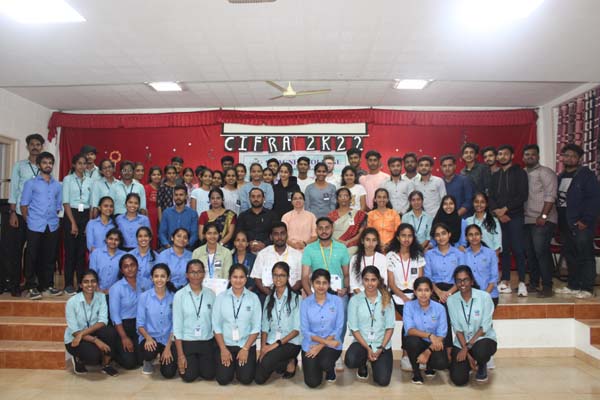
The PG department of Big Data Analytics at St Agnes College (Autonomous) Mangaluru organized an intercollegiate technical fest, CIFRA, on November 28. The fest was held in celebration of Big Data day and brought together a community of students and technologists. The fest was inaugurated by the principal Sr Dr M Venissa A C and the PG co-ordinator Sr Dr M Vinora A C.
Students from various colleges in Karnataka enthusiastically participated in the fest. The technical fest included three major events and each comprising three rounds.
The first event was based on the fundamentals of Computer Science and Data Science, the second event was a programming language-based event, and the third event was a technical quiz.
The participants had the choice of selecting a programming language for the event. The judges for the events were C G Thomas, Senior Software Engineer, Novigo Solutions, Mangaluru, and Akanksha Jadhav, Analytics Engineer, Riskonnect Services Pvt. Ltd.
The observers for the events were Seementhini Fernandes and Nelson Fernandes, assistant professors at St Agnes College.
The valedictory programme included felicitating the winners and the participants.
The first prize was won by the team from Field Marshal K M Cariappa College, Madikeri, the second prize by the team from Vivekananda Degree College, Puttur and the third place was secured by Vijaya College, Mulki.
source: http://www.daijiworld.com /Daijiworld.com / Home> Campus Beat / by Media Release / December 01st, 2022
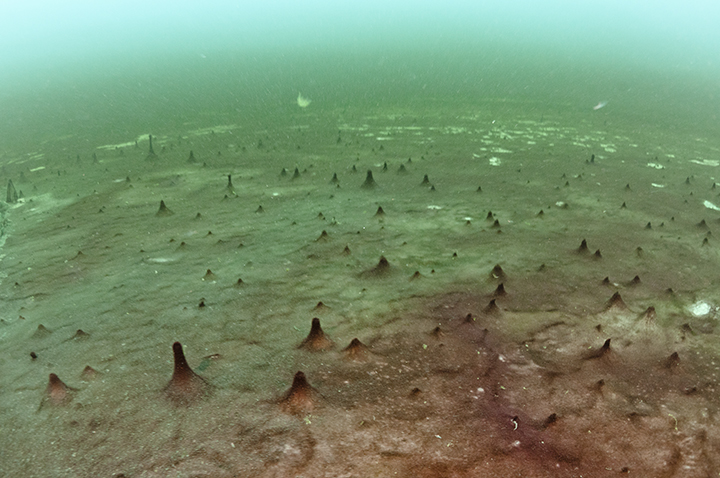
These microbial mats in a Lake Huron sinkhole have finger-like protrusions caused by a buildup of methane gas in small pockets beneath them. Image: Thunder Bay Marine Sanctuary
By Daniel Schoenherr
Special microbial mat systems in Alpena, Michigan, are helping scientists search for extraterrestrial life.
“It’s so different, and feels otherworldly,” said Stephanie Gandulla, a diver with the National Oceanic and Atmospheric Administration’s Thunder Bay Marine Sanctuary. She has sampled the mats near the sinkholes on the lake’s bottom.
You may have seen a microbial mat before — the green algae on wet rocks at the beach is an example.
Algae’s green color comes from chlorophyll — a substance that uses sunlight to turn carbon dioxide into energy. Carbon dioxide and oxygen support most of life on Earth.
But under special conditions, like those at three sinkholes just 2½ miles east of Alpena, primitive forms of microbes called cyanobacteria can survive without either of them.
These are white, not green, and they get energy from chemicals in the water.
“They are everywhere, but they are incredibly hard to find,” said Bopaiah Biddanda, a biologist with Grand Valley State University’s Annis Water Research Institute, who has been studying them for 20 years.
Such mats are normally found in ocean waters over 32,000 feet deep, but they can be found only 80 feet below the surface of what is known as Lake Huron’s Middle Island Sinkhole.
The sinkhole’s biologically extreme environment can help simulate sample collection in extraterrestrial worlds where life is based on similar chemicals. A new study by Biddanda models scenarios where robots could analyze material beneath the water of other planets. It’s based on the work in Lake Huron.
The study focuses on two methods: suction devices for soft mats and coring devices for hard mats.
Click on the photo below to watch a video about these mats:
The sinkholes near Alpena provide sulfuric, oxygenless groundwater that creates the conditions needed for the mats to grow. Filaments of cyanobacteria drift together, creating a wispy white-purple flow.
“It almost looks like a mirage,” Gandulla said.
It could be a long time before the experience from sinkholes in Lake Huron will be used to explore the potential of life on planets elsewhere, but Biddanda’s exploration is yielding other finds now.
Recently, for example, his team found an explanation for the mats’ mysterious ability to change colors overnight.
The purple and white cyanobacteria travel upwards to capture energy from the top of the mat, according to the study. During the day, microbes with color capture the small amount of sunlight reaching the seafloor with chlorophyll.
As the sun sets, the white microbes move to the surface of the mat to absorb chemicals in the sulfuric water for their energy. This continuous, vertical shift in microbes causes patches of the mat to change between purple and white in a daily cycle.
The microbial mats thrive off a special soup of chemicals in the groundwater, but changes in land use could disrupt it in the future.
The Thunder Bay sanctuary is constantly combating such threats to coastal ecosystems such as the one near Alpena.
“Development might choke off the water supply,” Biddanda said.
The marine sanctuary offers educational programs and tours to K-12 students and operates a welcome center year-round.
“We work together to protect it as a community,” Gandulla said.
Scientists hope to sample the oceans of Europa, a moon of Jupiter, for microbes with robots pioneered in Lake Huron. Image: NASA
The characteristics of Middle Island Sinkhole’s cyanobacteria could hold the key to much more than planetary exploration. They could lead to advances in other scientific fields, such as evolutionary biology and medicine.
“We have a library of pharmaceutical value here,” Biddanda said “This could help us down the road.”
And, he noted that they look cool: “There is something fascinating and mesmerizing about these colorful mats.”
A unique eco-certification initiative in Kodagu’s famous coffee estates offers fresh hope for preserving native rainforests of the Western Ghats.
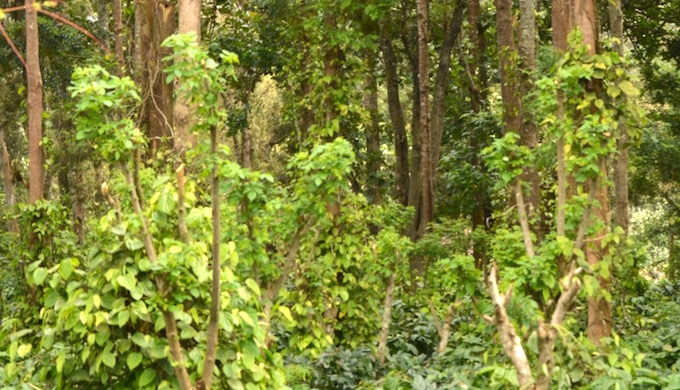
Growing coffee in the shade of evergreen trees in Kodagu. | Gopikrishna Warrier
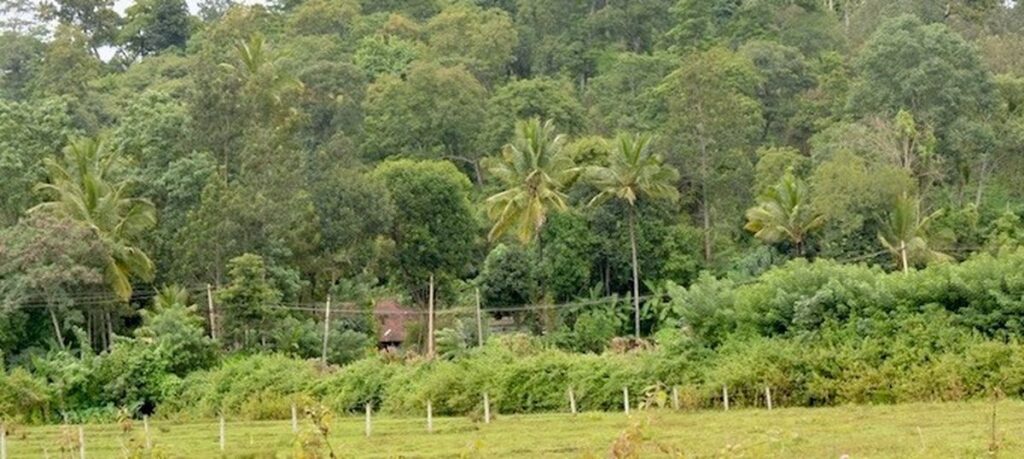
There was a time in the not-too-distant past when coffee farmers in Kodagu district of Karnataka grew their plants only under the canopy of evergreen forests they had inherited. Now they prefer to grow it under the sun, which has serious implications for the Western Ghats and on the waters of the Kaveri River.
More and more farmers are now letting trees such as Dadup (Erythrina subumbrans), Arecanut (Areca catechu), Balanji (Acrocarpus fraxnifolius) and Jackfruit (Acrocarpus heterophyllus) die so that the canopy can be opened up and they can grow sun-loving coffee varieties that produce more berries and beans, resulting in higher returns.
Instead of the big trees, they are now planting exotic Silver Oaks (Grevillea robusta), whose pole-like trunk can be used as a support for the climbing pepper vines, which help boosting incomes. The proliferation of Silver Oaks has made it one of the more common trees in some parts of the area.
This transition has a larger ecosystem cost. Kodagu, earlier known as Coorg, is located on the western edge of the Mysore Plateau, at an average altitude of 800 metres, as it lifts up to the crest of the Western Ghats ridge (altitude above 1,500 m) and then falls sharply westwards into Kerala. The plateau mainly slopes eastwards, with the streams and rivers joining to form the Kaveri River, which is the lifeline for millions of people in Karnataka, Tamil Nadu and Puducherry.
With insufficient rains over the Western Ghats during this year’s southwest monsoon, there is a shortage of water in the reservoirs across the Kaveri in Karnataka. This has led to the flaring of the water-sharing dispute with the lower riparian state of Tamil Nadu in recent days.
While this acrimony continues, payment for ecosystem services measures are being worked out in Kodagu district so that coffee farmers protect the forests under which they grow their crop, thereby preserving the water flow into the Cauvery. These measures also help to maintain the climate resilience in the river’s catchment and command areas.
With the forest-like mixed-tree canopy in coffee plantations disappearing, the torrential rains of the southwest monsoon flows quickly down the streams, carrying valuable topsoil away and causing floods followed by long dry periods downstream.
Paying for ecosystem services
The Kodagu farmers are being encouraged through payment for ecosystem services, in the form of eco-certification, to continue with their traditional coffee cultivation under the shade of mixed species of trees. This will help strengthen the ecosystem services they receive from the unique landscape of Kodagu, and also strengthen similar services and climate resilience of all those relying on the waters of the Kaveri downstream.
The concept of eco-certified coffee, whose certification process ensures that coffee is grown under mixed-species trees, has gained popularity in the district in the past five years. Close to 900 coffee farmers have converted to eco-certified coffee. Even with a conservative estimate of 10 acre per farmer, this means nearly 10,000 acres of eco-certified coffee. In addition, with Tata Coffee getting all of its 13 estates eco-certified, Kodagu district has at least 20,000 acres under coffee cultivation that aims to minimise damage to the environment.
As an incentive for protecting the environment, the coffee farmers get a premium above the market price for their coffee beans. Coffee is the major agricultural produce from Kodagu, with 33% of the district landscape under its cultivation. About 38% of India’s coffee production comes from the district.
Ecologically, Kodagu district has been identified as a micro hotspot of biodiversity under the larger Western Ghats region. Rightly so, since the western crest of the mountainous district is in the direct path of the southwest monsoon. The dark clouds heavy with rain dump much water over the district. While the western edge of the district receives above 5,000 mm of rainfall on an average, it reduces to around 1,200 mm in the east. Most of the water feeds into the Kaveri.
According to a reportby the College of Forestry at Ponnampet in Kodagu, natural forested ecosystems cover an area of 46% of the total area of the district. These include evergreen, semi evergreen, moist deciduous, dry deciduous and scrub forest types, and even the high-altitude shola-grassland ecosystem.
Traditionally, coffee is grown in the shade of these forests. Coffee estates in Kogadu have on an average 350 trees per hectare, compared with 270 in degraded groves and 640 trees per hectare in the nearby Brahagiri Wildlife Sanctuary, making these estates amongst the densest agro-forestry systems in the world.
“Very few landscapes across the world grow coffee in the way in which Kodagu does,” said C.G. Kushalappa, university head for forestry and environment sciences at the College of Forestry, Ponnampet in Kodagu. “We grow both Arabica and Robusta coffee under the shade of the trees. Our shade-grown Robusta fetch a premium price. When grown under the shade, the berries mature slowly and fill out better. They have good cupping (taste) quality.”
Coffee plants are increasing being cultivated under exotic Silver Oak trees. (Photo by S. Gopikrishna Warrier)
However, he needed scientific data to convince the coffee farmers and the district administration that there was strong ecosystem benefit in maintaining the traditional shade-growing methods. The opportunity for doing this research emerged when the College of Forestry was chosen as the lead institute in India to carry out the Coffee Agro-Forestry Network, or CAFNET study to understand the environmental services from this unique landscape.
Financed by the European Commission, the study was jointly conducted by the College of Forestry, the Coffee Board, the French Institute at Puducherry, CIRAD (the French national agricultural research system) and Bangor University from the United Kingdom between 2007 and 2011.
Rich local knowledge
The study noted that the multi-storeyed coffee agro-forestry system developed and sustained by the farmers based on their local knowledge is one of the most diverse production systems in the world. The traditional coffee agro-forestry system sustains diverse animal, bird, plant and microorganisms, and provide biodiversity, carbon sequestration and water-related ecosystem services. Since multiple crops such as pepper, mandarin oranges, vanilla and timber is also grown in these systems, they help provide resilience to farmers when they are hit by coffee price volatility.
The CAFNET report recommended that coffee farmers growing Arabica and Robusta under shade trees should be paid for the ecosystem services that their farms provide, so that they can protect biodiversity and therefore water in the Cauvery. Two methodologies for payment for ecosystem services suggested was eco-certification and geographical indications protection for Kodagu coffee.
Eco-certification of coffee farms in Kodagu started as a follow-up to this recommendation. Coffee farmer BB Thammaiah says his interest was piqued when students from the College of Forestry came to his farm to carry out biodiversity studies. “After the studies I was told about the uniqueness of the method in which I grow coffee, and I went in for eco-certification,” he said.
The two eco-certifications that have been popularly accepted are from the Rainforest Alliance and Utz. Coffee grower KK Naren in Kunda village near Ponnampet said the main benefit of the eco-certification process is that farmers are trained in good practices that have good environmental benefits and improve the working and living conditions for the workers.
“The economic benefit is not much,” he said. “It is more of training for us, which will be beneficial in the long run. The eco-certification process educates the coffee farmers about the environment.”
Importance of native trees
The most important lesson from the training relating to the eco-certification, according to Narenm was the understanding on the importance of native trees. “It is not that we didn’t know about native trees but we were not that keen on maintaining them,” he said. “The native trees do not give good financial returns, so we gave importance to silver oak.”
According to Naren, the Rainforest Alliance eco-certification process looks at whether native shade trees are present. The certifiers and auditors also look at labour management, whether the minimum labour wage is paid and the cleanliness around the labour quarters. They are very strict about not using child labour. “They also look at the way chemicals are used,” he said. “They are not saying no to chemicals but there are restrictions to some chemicals and the way the rest are used. They are keen that we should not use pesticides of chemicals near the rivers or tanks. They give importance to maintain local environment.”
Individual planters like Thammaiah and Naren got an opportunity, through the eco-certificaion process, to access the international market through a Swiss procurement agency that buys higher quality coffee. Both of them sell their eco-certified coffee to Ecom Gill, who procures the eco-certified produce for supply to Nespresso.
BB Thammaiah in his coffee farm where the plants are grown under the shade of native evergreen trees. (Photo by S. Gopikrishna Warrier)
For Tata Global Beverages Ltd and its production subsidiary Tata Coffee Ltd, the move to eco-certification of all of its 13 estates in Kodagu was an important step in the process to make its supply chain sustainable. According to Anurag Priyadarshi, global sustainability manager for Tata Global Beverages, one of the guiding principles that the group has adopted is to source sustainability. For this, all their estates in Kodagu have been eco-certified by Rainforest Alliance and Utz.
“Through the eco-certification process we are trying to ensure good management practices for the ecosystem, energy, water, waste, soil and agro-chemicals. We ensure the safety of the produce and also occupational health of the workers. Ultimately we want to prevent the impacts of climate change,” he said.
MB Ganapathy, head of plantations for Tata Coffee, said the company is aware about the fact that they are growing coffee in Kodagu, which is a biodiversity hotspot in the Western Ghats. “We have recognised this fact and that is the reason that our vision is to enhance the ecological wealth we have inherited. The eco-certification helps us safeguard the environment.”
Challenges remain
However, the rapid spread of the eco-certification process has also raised some hiccups which need to be overcome, states TR Shankar Raman, scientist at the Nature Conservation Foundation, whose organisation was involved with helping Rainforest Alliance with the certification in the initial years. The three points of concern, according to him, is the very rapid pace at which certification is being done; the relative absence of biologists and social scientists in the auditing process; and the dilution of conservation standards (like the requisite number of native species and canopy cover) in subsequent versions of the certification guidelines.
“While the rapid certification has more and more farmers being eco-certified, we hope the rigour of the process continues to be maintained, so that the end result of conserving the native vegetation is not compromised,” Raman observed.
With more farmers opting for eco-certification, there is a movement towards the protection of the traditional methods of coffee cultivation under the shade of mixed-tree species. For the process to strengthen the farmers should continue to get good economic benefit for their eco-certified produce.
According to Naren, if there is at least 10% more returns from the eco-certified coffee remains constant then there will be an incentive for the opting for opting for the process. At present the price at which procurement agencies such as Ecom Gill buy is linked to the international market price, plus a premium of Rs 60 to Rs 80 for a 50 kg bag of sun-dried cherries. The international prices fluctuate in relation to the local market prices, and as with the current situation can go below the domestic price.
However, Kushalappa says that in addition to the premium, there are other incentives and bonuses for producing good quality coffee beans. The average increase in price above the local market price was around 15% last year, which is well worth the effort.
If additional income for coffee farmers from eco-certification can help conserve unique agro-forestry ecosystem of Kodagu, then it will be the water flow into the Cauvery that would be conserved. Millions of people downstream, including the residents of Bengaluru and other parts of peninsular India, will thank the coffee farmers upstream for their drinking water and climate resilience.
As the son of an Indian naval officer, Bidanda Bopaya was born in Pune, has lived all over the Indian coastline, and was sent to a boarding school in Ooty at a young age. His wife, Louella, daughter of an Indian air force officer, is a psychologist in private practice.
The Bidandas moved to Pittsburgh in 1987 after graduate work at Penn State and have raised two children in the Burgh. Their daughter, Maya is pursuing a PhD in finance & economics after an early career on Wall Street, and their son Rahul is an engineering graduate from Pitt. The Bidandas live in Fox Chapel.
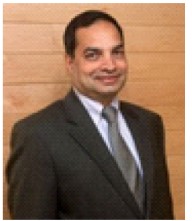
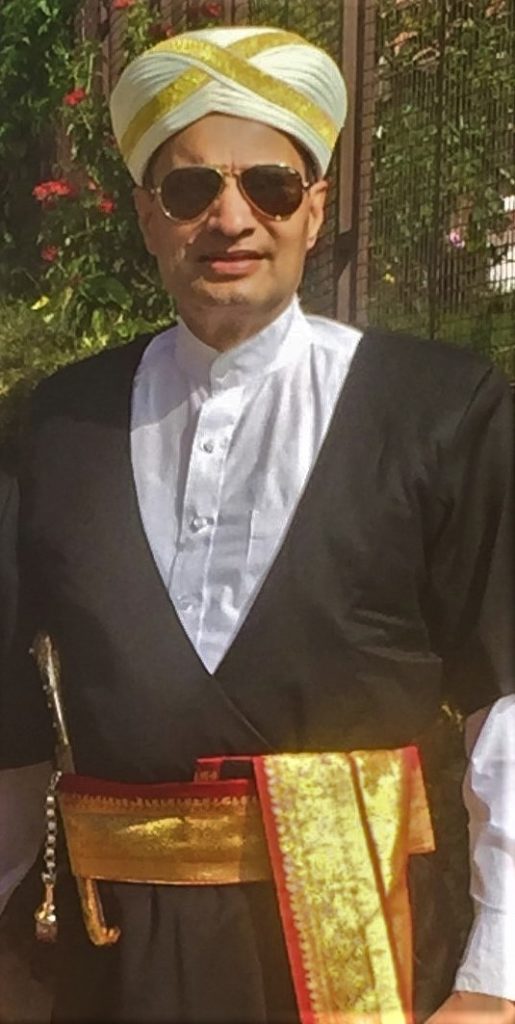
Bopaya, a professor of engineering at the University of Pittsburgh and President of the Institute of Industrial & Systems Engineers, has authored/edited 13 books in the subjects of his specialization. Here is Bopaya in his contemporary dress and also in the traditional Kodava attire.
Editor’s note:
My early childhood was in Madikeri (earlier name Mercara) in Kodagu District, earlier known as Coorg (population: over 500,000 people) in Karnataka State. Madikeri is the headquarters for Kodagu and the home of the Kodavas, a small, accomplished, and colorful community in the Indian social tapestry. Kodavas are ~20% of the population of Kodagu District, and have contributed disproportionately to India’s armed forces, sports teams, and other professions including as India’s first female ambassador, India’s first PhD in sports medicine, the founder of the National Institute of Sports in Patiala, and of course, India’s first Commander-In-Chief (Gen. Kodendera Subbayya Thimmayya), and India‘s first Field Marshal Kodendera Madappa Cariappa.
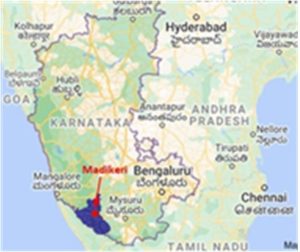
Location of Coorg District and Madikeri town in Karnataka.
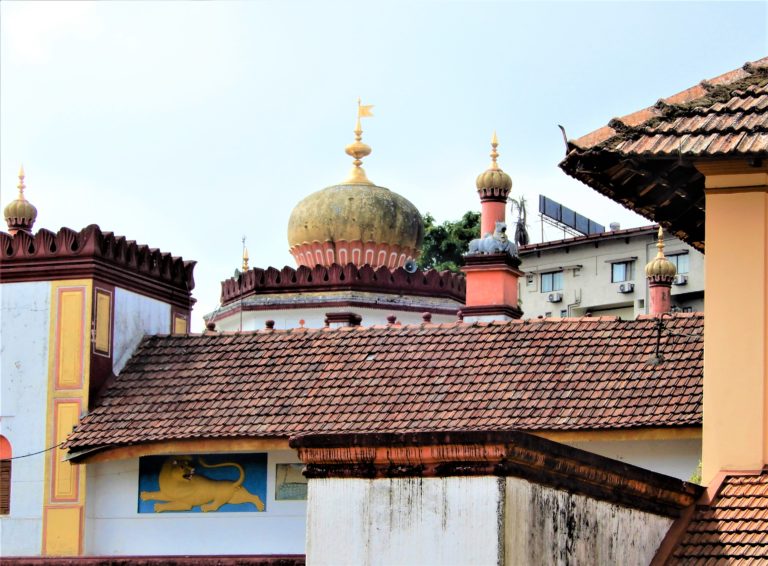
After sixty years, I chanced to drive through Madikeri. I had a vague memory of Omkareshwara Devasthana, a Shiva Temple there. Since it was the only temple I knew in my childhood, it made no impact then. When the driver showed me the temple from a mile away from the hills, I told him it looks like a mosque. His reply: was saar, iduve devasthana. (No sir, this IS the temple.) Stunned at the unique architecture for a Hindu temple with a typical Islamic dome including the four minarets, I stood in silence in front of the temple absorbing the ambience.
Then during the Patrika fundraising, I saw one Bidanda Bopaya as one of the on-line contributors. From the name, I recognized he is a Kodava (known earlier as Coorgis). I contacted him with my Madikeri roots, and one thing led to another in our exchanges, which finally culminated with Mr. Bopaya writing this article for the Patrika. – Kollengode S Venkataraman
The Omkareshwara Temple is a picturesque and unique place of worship in Madikeri, the heart of a salubrious and verdant hill station in Karnataka. Our family spent summers in Kodagu, and the place remained a well-kept secret because of the absence of a railhead. Now, it is a weekend getaway to Bangalore IT techies arriving in hordes.
Steep hills studded with vibrant homes surround the temple. Legend has it that the Raja of Kodagu, Lingarajendra II, built the temple repenting for some terrible act he committed. He was advised to build a Shiva temple that would awe people, as long as the sun and the moon are around! He commissioned the temple, consecrating it in 1820, with a Shivalinga brought from Kashi enshrined at the temple’s sanctum.
Omkareshwara Devasthana with its dome and four minarets
Omkareshwara Devasthana is the only known example of a Shiva temple for that matter, any Hindu temple built like a mosque with four turrets (or minarets) at each corner and a dome at the center. The rationale for this one-of-a-kind architectural style (Islamic with a Gothic touch) for a Hindu temple is not precisely known even though the temple is only 200 years old, given the frosty relations between the Kodavas and Muslims, thanks to Tipu Sultan (1750-1799), who repeatedly invaded and unsuccessfully tried to take control of the region. Search the web under Tipu Sultan and Kodavas to get multiple perspectives of this complicated relationship.
Given today’s strife-ridden global situation among all religions, it is inspiring that one Hindu temple integrated multiple styles of architecture into its place of worship two centuries ago. As children, we played hide-and-seek with our extended family around the temple.
The Rajaâ’s tomb located nearby, built in 1809, also has an Islamic architecture. My great-great-grandfather Bidanda Bopu was the Commander-in-Chief of the Kodagu Rajaâ’s army and is buried next to the Raja. Growing up, our family often celebrated festivals and visited the tomb to pay respects to our ancestors.
The Kodavas are proud people and maintain unusual traditions. Kodagu is often called the land of generals, beautiful belles, coffee, cardamom, pepper and honey, all because of its hilly terrain and suitable weather, honey, large number of military leaders, and charming and gracious women! Some interesting features of Kodavas
1)Are Kodavas Hindus? While Kodavas are governed by the Hindu laws, they are technically not Hindus, with the absence of a caste system; Kodavas are ancestor- and nature-worshippers. Most festivals are centered around agrarian and martial themes and traditions. However, many Kodavas have now adopted a Hindu lifestyle and traditions.
KODAVA FESTIVALS: Kodavas are rooted to their land as farmers and agriculturists. No wonder, all Kodava festivals are around farming.
2) Kailpodhu: After the paddy fields are transplanted in early September, Kodavas worship their weapons and tools, after cleaning and decorating them. This is followed by festivities (shooting competitions, athletic prowess, while feasting on spicy food and copious alcoholic beverages). Kodavas have the right to bear firearms and weapons without license.
3) Kaveri Sankramana: The river Kaveri originates in Kodagu District in a small natural spring in Bhagamandala, close to Madikeri. In mid-October, at a specified time, the sacred River Kaveri ” yes, for Kodavas in particular, and for all Kannadigas, Kaveri is sacred ” renews with new divine springs gushing towards a larger body of water. This is the birthplace of the river. People take dips in this holy water. Goddess Kaveri is then worshipped in Kodava homes with youngsters touching the feet of elders for blessings. Kaveri is perhaps the most common name for girls among Kodavas. This is the only meatless festival among Kodavas!
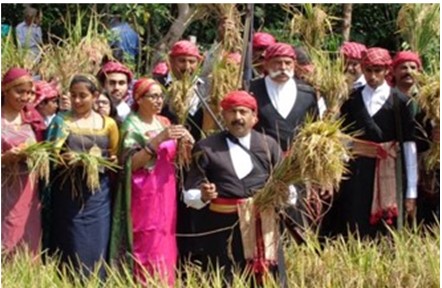
Kodavas in the field during the the Puttari Harvest festival
4)Puttari (meaning New Rice), is the traditional harvest festival, celebrated in early December when people gather in their traditional family home (ainamane) nicely decorated with farm motifs. Like Onam, Pongal, Lohri, Baishakhi, Bihu, and of course, Thanksgiving here, special culinary items are prepared. An important part of this festival is the matriarch of the family leading others into the fields for a symbolic first harvesting of rice paddies.
In addition to these, individual villages have temples that celebrate colorful festivals, including walks thru hot beds of coals. The best way to experience these is to be with Kodavas in their home during the season.
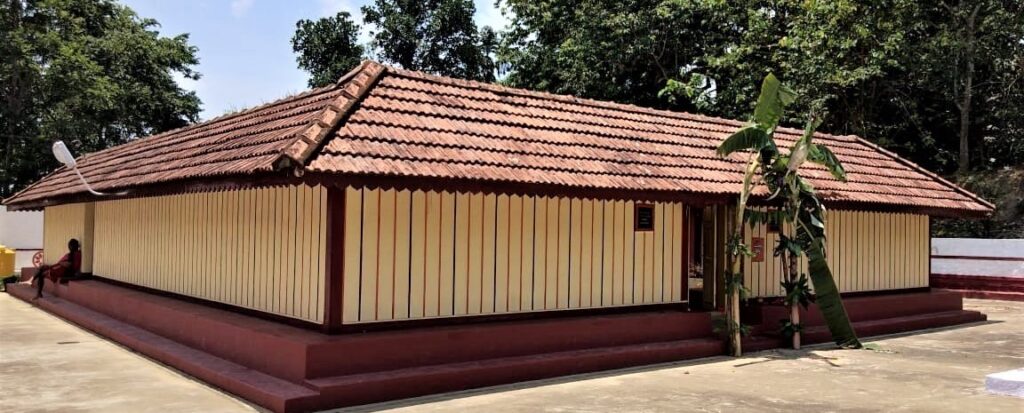
Pattaya, a traditional granary decorated for the Puttari harvest festival.
5)Is there a Kodava cuisine? Yes, of course. Kodava cuisine is replete with unique and fiery dishes including Pandhi Kari (pork curry cooked in a special vinegar), Baimble-Kari (bamboo shoot curry), mango paji (mango chutney), kuru kari (kidney beans, green beans, in a coconut gravy), akki rotti (rice chapattis) and the list goes on!!
7)Interesting fact: No priests at Kodava weddings. Family elders lead all the religious rites, with a frenzy of Kodava dancing, pandhi curry, libations, and ceremonies steeped in family traditions.
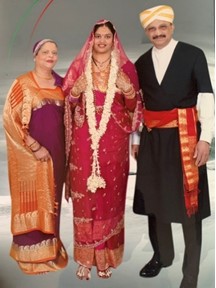
Drs. Palecanda and Nirmal Chengappa, longtime Pittsburgh residents, in traditional Kodava dress and jewelry at the wedding of their daughter Kaveri.
Websites offer a ton of information on tourism-related questions on Kodagu — places of interest, cuisines, lodging, what to do, how to reach, the best time to visit. One website is: www.coorgtourisminfo.com
source: http://www.pittsburghpatrika.com / The Pittsburgh Patrika / Home / by Bidanda Bopaya, Fox Chapel, PA / October 2022 issue
WELCOME. If you like what you see "SUBSCRIBE via EMAIL" to receive FREE regular UPDATES.
Read More »