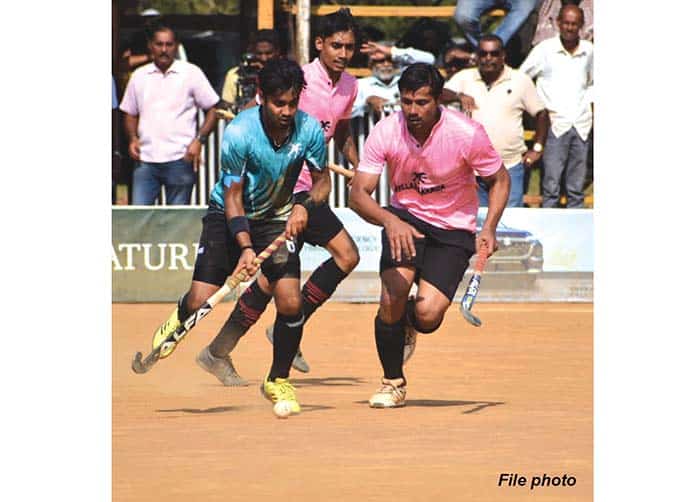
The Kodava Family Hockey Namme (Festival) celebrates its 25th edition this year, with the Muddanda Cup Hockey Tournament set to begin on Mar. 28 and continue until Apr. 27.
Matches will be played across three different grounds, with 370 teams already registered for the competition.
Addressing the media in Madikeri yesterday, Kodagu Hockey Academy President Pandanda K. Bopanna noted that while 360 teams participated in last year’s Kundyolanda Hockey Fest, this year’s registrations have already reached 370, with a few more days left for additional entries.
He announced that the inaugural ceremony will feature an exhibition match between Kodagu Hockey Academy XI and Karnataka XI.
Tournament Director Badakada Deena Poovaiah and Coordinator Muddanda Roy Thammaiah will oversee the event.
Cheppudira Cariappa will serve as the main commentator, assisted by Maletira Srinivas, while Kecchettira Prasanna will be in charge of match coordination. The inauguration will also include a special felicitation ceremony honouring the Kundyolanda family, which achieved a Guinness World Record last year.
Umpire training
Hockey Academy Working President Mekerira Ravi Pemmaiah revealed that a training programme for hockey umpires will be conducted on Mar. 19 and 20 at Cauvery College, Virajpet, urging young hockey enthusiasts to participate.
Academy Vice-President Kukkera Jaya Chinnappa stated that several dignitaries, including Virajpet MLA and Chief Minister’s Legal Advisor A.S. Ponnanna, Madikeri MLA Dr. Manthar Gowda, Mysuru-Kodagu MP Yaduveer Krishnadatta Chamaraja Wadiyar, MLC M.P. Suja Kushalappa, Rajya Sabha MP Ajay Maken, Kodagu Deputy Commissioner Vekatraja, and Kodagu SP K. Ramrajan, will attend the grand opening ceremony.
Kreeda Jyothi
Muddanda Hockey Festival Chairman Muddanda Rashin Subbaiah confirmed that matches will take place at Field Marshal K.M. Cariappa College Grounds and the Police Parade Grounds. As part of the festival’s silver jubilee celebrations, a special ‘Kreeda Jyothi’ (Sports Torch) marathon will be held, visiting the Ainmanes (ancestral homes) of Kodava families.
The marathon will commence at 8 am on Mar. 25 from the Ainmane of the Pandanda family in Karada village, the pioneers of the Kodava Family Hockey Festival.
It will pass through eight Ainmanes in Ponnampet and surrounding areas before concluding on Mar. 28. On the inaugural day, a rally carrying the sports torch will proceed from General Thimayya Circle to Field Marshal K.M. Cariappa College Grounds, flagged off by MLA A.S. Ponnanna.
To commemorate 25 years of the festival, a women’s hockey tournament has been introduced as part of the Muddanda Hockey Festival. So far, 30 women’s teams have registered, and more entries are expected before the Apr. 10 deadline.
The women’s matches will be played at the Police Parade Grounds in Madikeri. Star Indian hockey players Lalremsiami Hmarzote from the women’s national team and Indian men’s team captain Harmanpreet Singh will visit Madikeri during the tournament.
Matrimonial meet
The festival will also feature a thand-bendhu (matrimonial meet) and a quiz competition at the venue. A special cyclothon is scheduled for Apr. 26, and DJ music will entertain spectators from the pre-quarterfinal stage through the final.
An open ‘Maja Run’ from Field Marshal K.M. Cariappa Circle has also been planned as part of the celebrations. Parking arrangements have been made for 2,000 vehicles, and Bengaluru-based Vandana Trust will assist in waste management throughout the month-long event.
Additionally, a shooting competition will be held on Apr. 20 at Ground No. 2, featuring three categories: 50-metre .22 rifle shooting, 30-metre 12-bore gun shooting, and 15-metre air rifle egg shooting. A traditional coconut shooting competition will also be organised.
Muddanda Family President Muddanda B. Devaiah urged members of the Kodava community to participate in large numbers in the rally from General Thimayya Circle to Field Marshal K.M. Cariappa College Grounds, marking a significant milestone in the history of the Kodava Family Hockey Festival.
source: http://www.starofmysore.com / Star of Mysore / Home> Sports / March 16th, 2025
He joined the INA at the age of 17. His active involvement in the freedom struggle led to his imprisonment for eight months in Rangoon Jail from May to December 1945, officials said.
Indian National Army veteran R. Madhavan Pillai pays tribute at the National War Memorial at Kartavya Path in New Delhi on March 13, 2025. Photo: X/@adgpi
Lieutenant Rangaswamy Madhavan Pillai, a veteran of the Indian National Army (INA), celebrated his 99th birthday on Thursday (March 13, 2025) by laying wreaths at the National War Memorial and the statue of Netaji Subhas Chandra Bose on Kartavya Path.
The wreath-laying ceremony organised by the Army was attended by senior military personnel and the public. “Today’s wreath-laying ceremony not only honours the sacrifices of the brave men and women who fought for India’s freedom but also serves as a poignant reminder of the nation’s ongoing journey to break free from colonial legacies while upholding the spirit of their sacrifice,” an officer said.
Indian National Army veteran R. Madhavan Pillai pays tribute at Netaji Subhas Chandra Bose’s statue at Kartavya Path in New Delhi on March 13, 2025. | Photo Credit: ANI
Lt. Pillai was born on March 13, 1926, in the Swryan township of Rangoon district in Burma (now Myanmar). His father hailed from the Sivaganga region in Tamil Nadu. He joined the Indian Independence League as a civilian in 1942 under Rash Behari Bose. When Netaji arrived in Singapore, Lt. Pillai formally enlisted in the INA, also known as the Azad Hind Fauj, on November 1, 1943, at the age of 17.
After receiving his commission from the Officers Training School in Burma, he served as a recruitment and fundraising officer, according Army officials.
Serving as a recruiting officer and fundraiser, he mobilised support for the INA across 32 locations in Burma, including Hanthawaddy, Sawbwagale, Ywadanshe, Swryan, Yangon, and Mayongone. His active involvement in the freedom struggle led to his imprisonment for eight months in Rangoon Jail from May to December 1945, officials said.
Later, he served in the administrative branch at the INA headquarters in Rangoon under Major General K. P. Thimayya (elder brother of former Army chief General K.S. Thimayya). He was officially recognised as a freedom fighter by the Government of India on August 1, 1980.
On January 23, 2024, Prime Minister Narendra Modi felicitated him on the occasion of Parakram Diwas at the Red Fort.
The Azad Hind Fauj was formed by Mohan Singh in 1942 and later revived by Netaji on October 21, 1943. United by the war cry “Chalo Delhi,” the INA aimed to secure India’s complete independence from British rule.
Several volunteers, soldiers, and overseas Indians — from regions as far as Malaya and Burma — joined the force. Lt Pillai’s life story embodies the courage and unity that defined the INA, another officer added.
In 2021, on the 125th birth anniversary of Netaji, Lt. Pillai was awarded a silver medal for his role in the INA and India’s Independence movement.
source: http://www.thehindu.com / The Hindu / Home> News> India / by The Hindu Bureau / March 14th, 2025
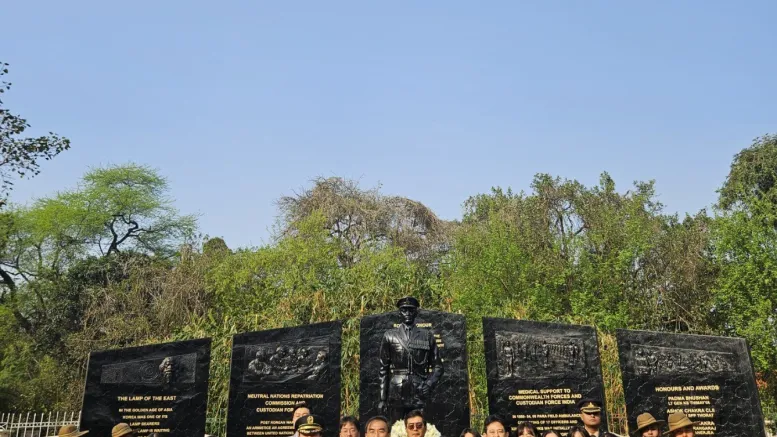
Lee Seong-ho, the Ambassador of South Korea in India, and other top diplomats on Friday visited the Indo-Korean Friendship Park in Delhi Cantonment, fondly recalling the contribution of Indian forces during the Korean War of 1950-53.
During their visit to the park, a symbol of strong ties between India and South Korea, the officials also paid tribute to late General K S Thimayya, a celebrated soldier who led the Indian contingent as Chairman of Neutral Nations Repatriation Commission (NNRC) in Korea headed by India.
“Ambassador Lee Seong-ho and his team visited the Indo-Korean Friendship Park on the 21st of February and paid homage to General Thimayya, who headed a UN unit dealing with the repatriation of prisoners after the Korean War,” the South Korean Embassy in India posted on X.
“We also recalled that India sent the largest number of medical personnel during the Korean War. Remembering the enduring friendship between Korea and India, the Korean Embassy will do our best to further develop our Special Strategic Partnership.” the post further added.
India’s First Indo-Korean Friendship Park was jointly inaugurated by Defence Minister Rajnath Singh and his Korean counterpart Suh Wook in March 2021.
The park, spotlighting India’s contributions as part of 21 countries which participated in Korean war 1950-53 under the aegis of the United Nations, was developed in joint consultation with India’s Ministry of Defence, Government of India, Indian Army, Delhi Cantonment Board, Embassy of Korea and Korean War Veterans Association of India.
Spread across a green area of six acres, the park has an imposing handshake artifact standing tall at the entrance bearing flags of India and South Korea besides a larger than life statue of General Thimayya.
South Koreans still remember General Thimayya, who was awarded a Padma Bhushan for his service in Korea, with gratitude and affection. General Thimayya also served as the Chairman of the Neutral Nations Repatriation Commission (NNRC) after the armistice and contributed to resolving the humanitarian issues arising out of the War.
India played an important role in the Korean peninsula after Korea’s independence in 1945, sending an army medical unit – the 60th Parachute Field Ambulance comprising 627 medical personnel, commanded by Lt. Col. A.G. Rangaraj – during the Korean War as part of the UN Command. The unit treated about 220,000 patients. During the Korean War (1950-53), both warring sides accepted a UN resolution sponsored by India and the ceasefire was declared on July 27, 1953.
India-South Korea diplomatic relations were elevated to a ‘Special Strategic Partnership’ in 2015 during the State Visit of Prime Minister Narendra Modi to Seoul.
Source: IANS
source: http://www.socianews.xyz / Social News XYZ / Home> Diplomacy / by Gopi / February 21st, 2025
Not many know that the birth place of Karnataka Milk Federation is a small town called Kudige in Kodagu district. The Hindu travels back to the roots of India’s second largest milk co-op.
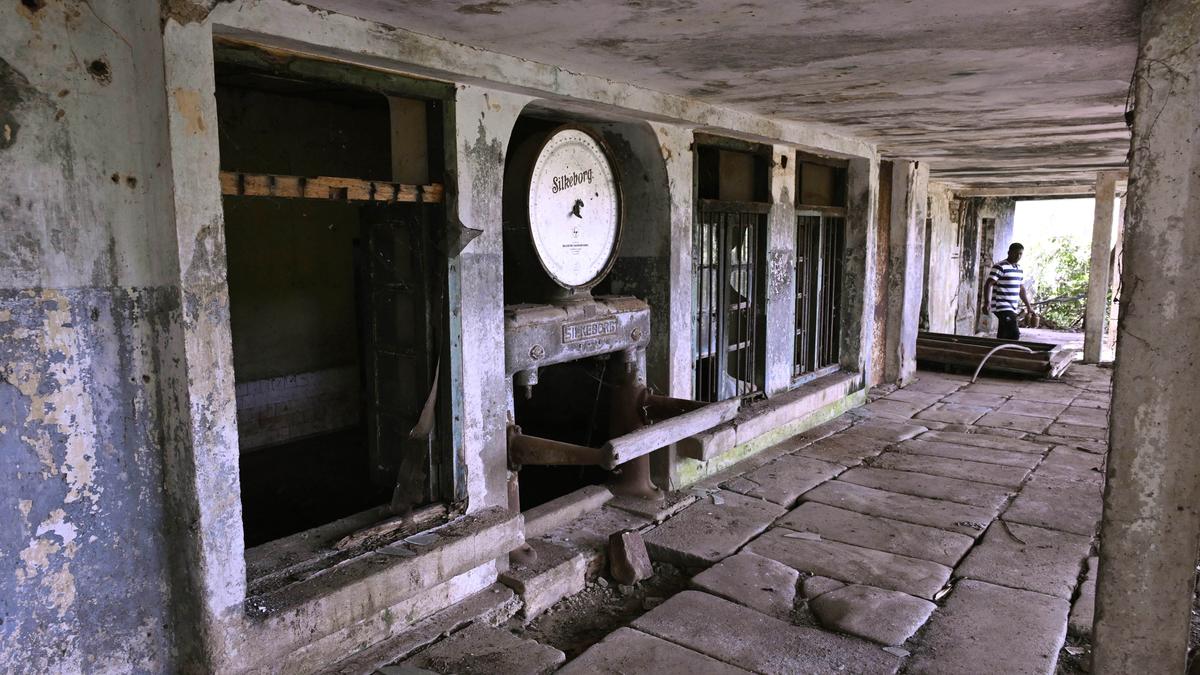
The old dairy facility at Kudige in Kodagu, the birthplace of Karnataka’s first dairy cooperative, long before the rise of the Nandini as a brand. | Photo Credit: K. BHAGYA PRAKASH
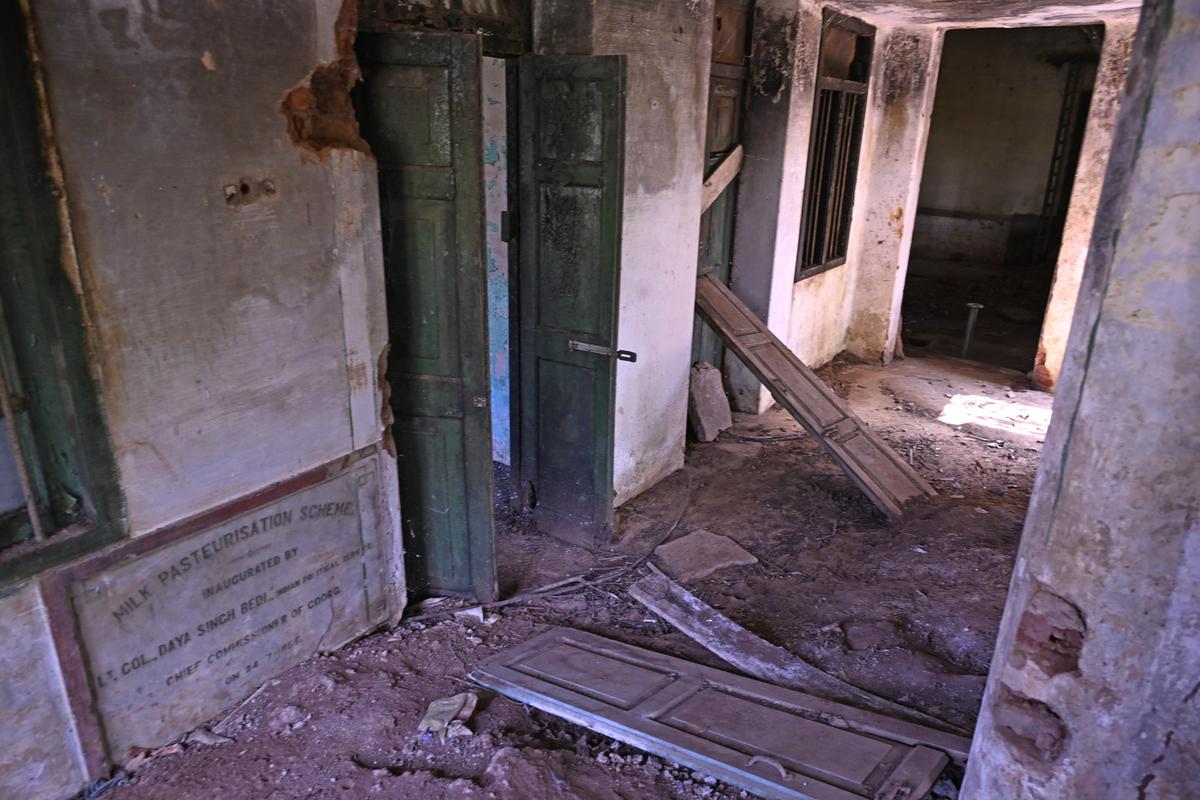
In the quiet town of Kudige in Kodagu, an old dairy facility stands as a reminder of the humble beginnings of what would become one of India’s most iconic dairy brands, Karnataka Milk Federation’s (KMF) Nandini. Once a bustling cooperative hub where fresh milk was collected from local farmers, the site now lies in decay, with weathered walls, rusting equipment, empty crates, and broken foundation stones.
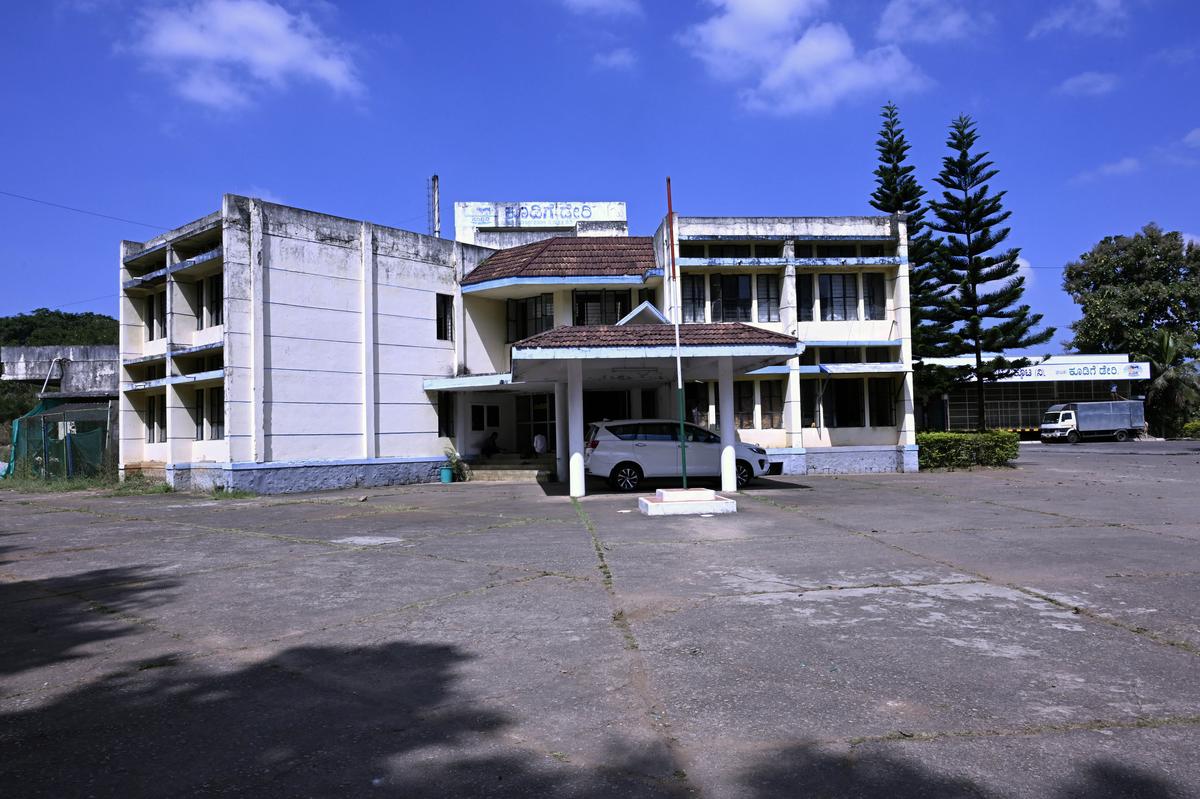
This reporter visited Kudige, the birthplace of Karnataka’s first dairy cooperative, long before the rise of the Nandini as a brand, and found that while the original building was in a dilapidated state, a modern, fully operational dairy facility now thrives 500 metres away.
Global recognition
Karnataka’s Nandini milk brand has grown into a globally recognised name, engaged in a range of activities from sponsoring Scotland and Ireland’s cricket teams during the ICC Men’s T20 World Cup last year to constantly launching new products to diversify its business. It has been exploring new markets across the country, competing with Amul, India’s largest dairy producer. However, the roots of this success story trace back to a modest beginning in Kudige back in 1955. The story of this humble origin has largely remained obscured.
Malavika, a long-time resident of Kudige, explained the historical significance of the site, guiding this reporter through the derelict structure. “I have been working here in the Animal Husbandry Department for the past 20 years. My father also worked in this dairy. Now that operations have shifted to the new building, the old one has fallen into disrepair,” she explained.
Inside the old dairy building, the inauguration plaque remains surprisingly intact. It bears the inscription, “Milk Pasteurisation Scheme inaugurated by Lieutenant-Colonel Daya Singh Bedi, then Chief Commissioner of Coorg, on 24 July 1955.”
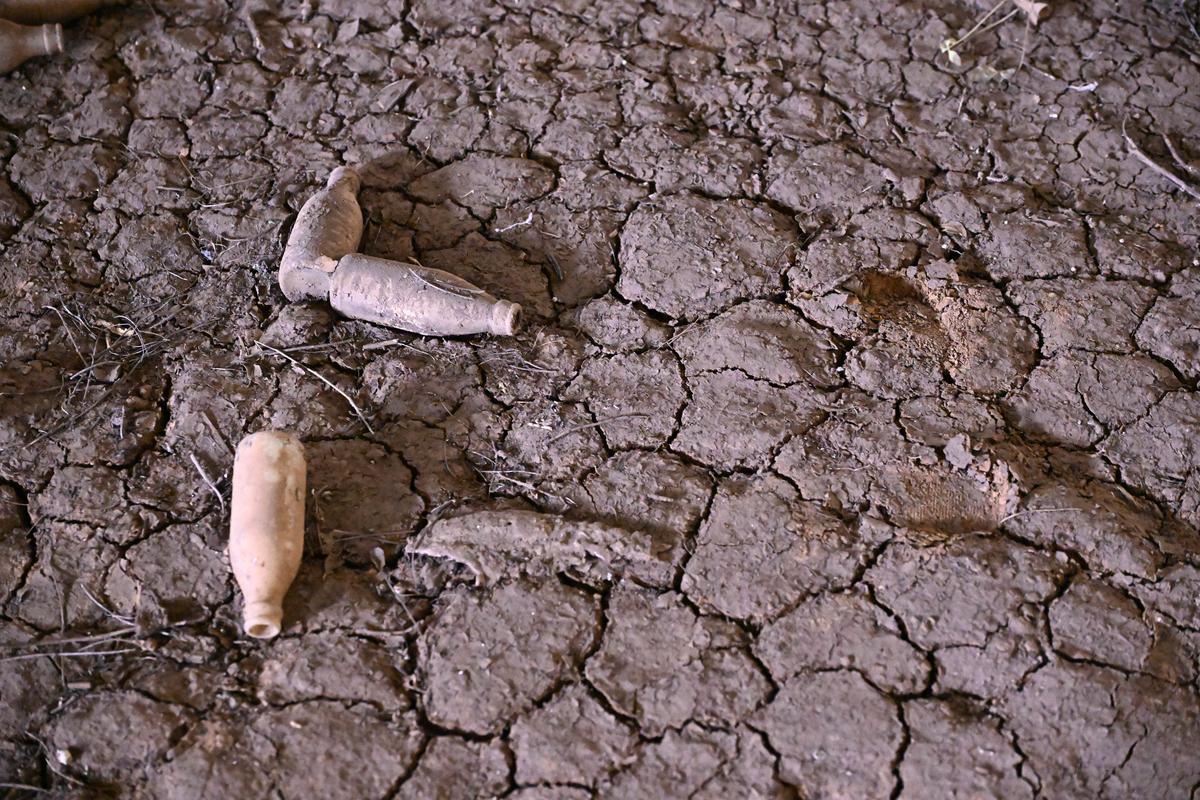
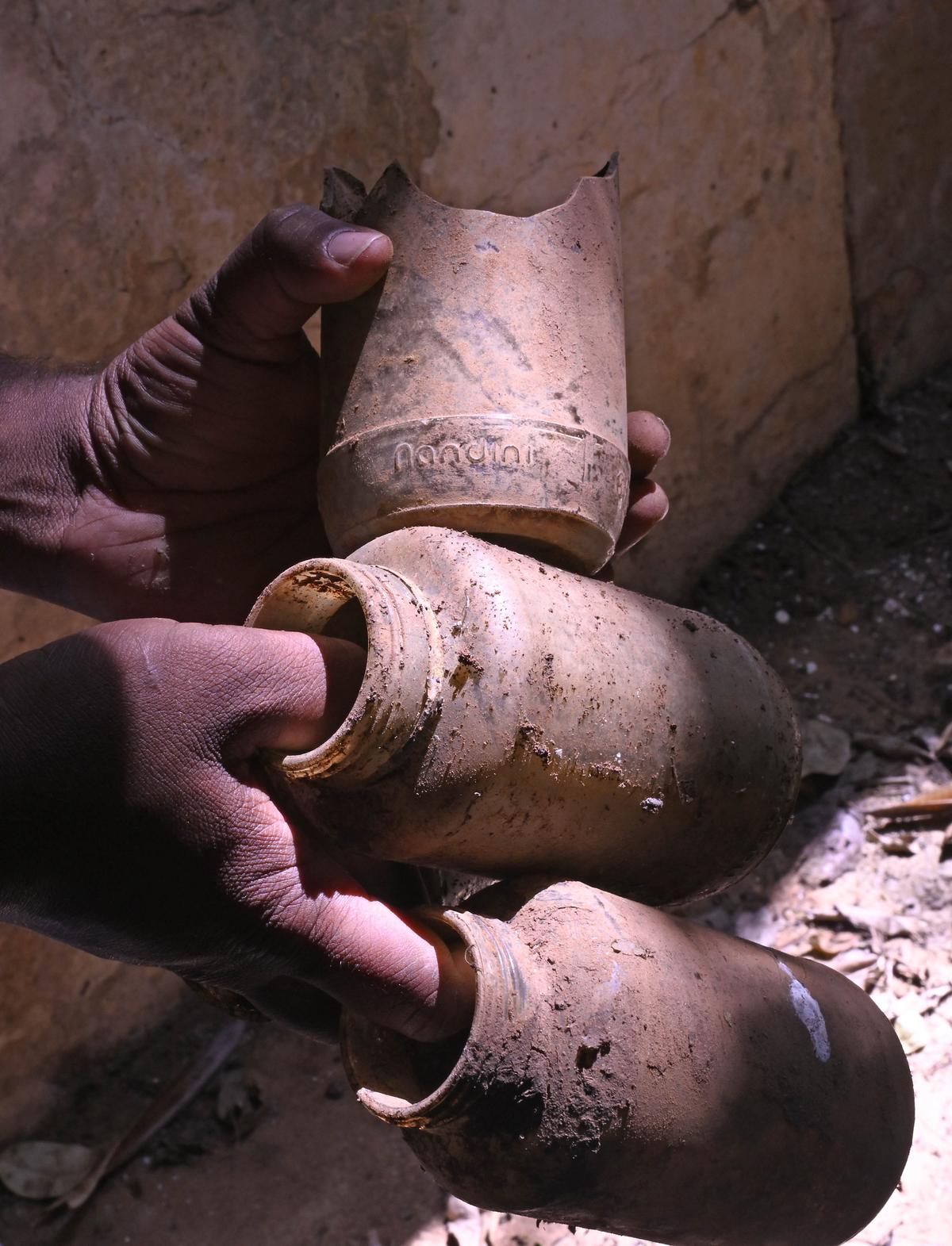
Malavika guided us through the premises, showing an old weighing machine, various dairy processing machinery, and even glass bottles that were once used to distribute milk. “From this dairy, milk was supplied to different parts of Kodagu, which was then a separate state called Coorg. My father often spoke about how local farmers would bring their milk here, which was then processed and distributed,” she recalled.
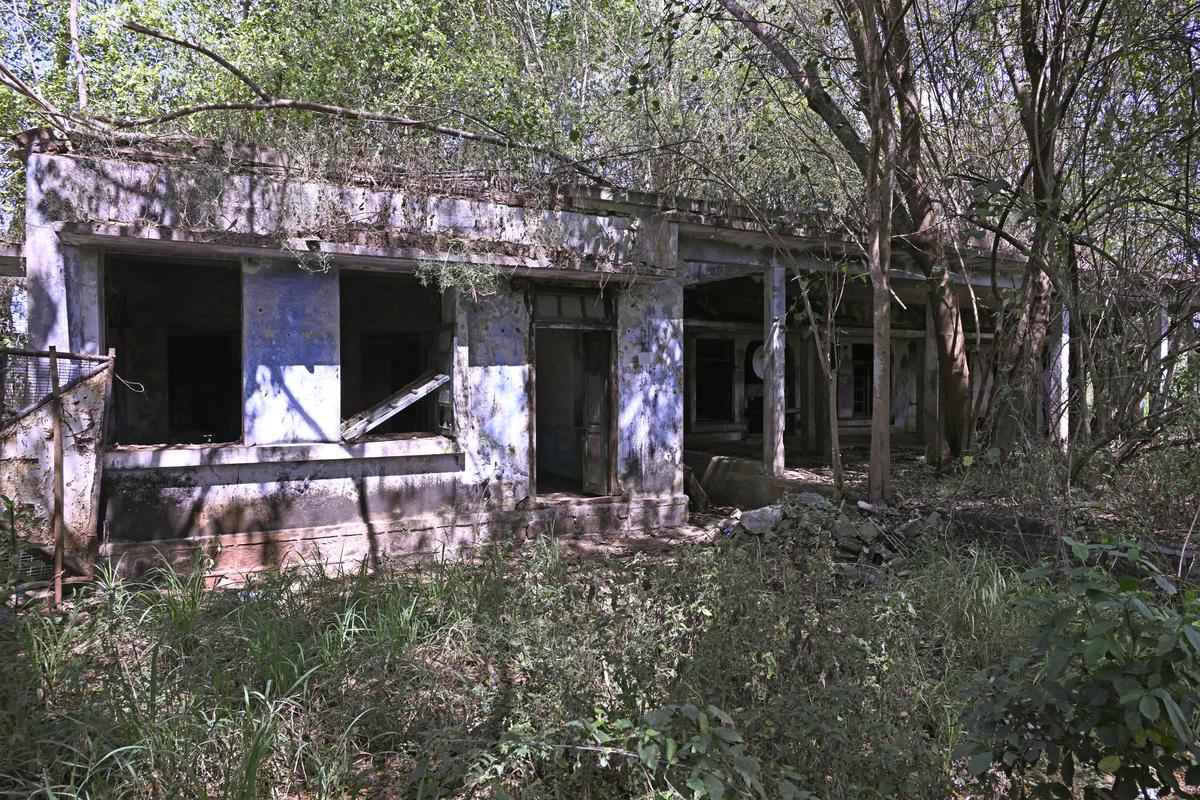
Despite its historical importance, the old dairy building at Kudige in Kodagu has been left in a neglected state. | Photo Credit: K. BHAGYA PRAKASH
Landmark neglected
Despite its historical importance, the old dairy building has been left in a neglected state. The site, currently under the control of the Hassan Cooperative Milk Producers Union (a part of KMF), has not received adequate maintenance. Local residents have raised concerns about its deteriorating condition.
Rudrappa K., a local farmer, expressed his disappointment. “The government should recognise the importance of this building and convert it into a museum or heritage site to showcase how the milk cooperative movement led to the creation of a successful brand like Nandini. Right now, the structure is in terrible condition. People throw garbage inside, and some even trespass into the premises. The authorities, either the government or KMF, should step in and restore this building,” he urged.
The transformation
Speaking to The Hindu, A.S. Premnath, former Managing Director of KMF, highlighted the historical significance of Kudige in Karnataka’s dairy industry.
“Not many people know that KMF had its origins in Kudige. The first dairy cooperative was established here in 1955. KMF itself was founded in 1974 as the Karnataka Dairy Development Corporation (KDDC) under a World Bank-funded project. It was later renamed Karnataka Milk Federation in 1984,” he explained.
KMF currently operates 15 milk unions across Karnataka, sourcing milk from Primary Dairy Cooperative Societies and distributing it to urban and rural consumers. The federation has approximately 28 lakh dairy farmer members across the State.
As Premnath points out, Kodagu is traditionally known for commercial crops like coffee, oranges, and cardamom, but not for dairy farming. This is probably why not many remember that it was also home to Karnataka’s first commissioned dairy plant. “The Kudige dairy was established in 1955. Later, in 1974, an integrated project was launched to restructure the State’s dairy industry on cooperative principles, laying the foundation for a new era of dairy development. With World Bank assistance, a dairy development project was initiated in 1975, initially covering Mysuru, Hassan, Tumakuru, and Bengaluru districts,” he said.
Premnath, who worked at KMF for nearly 40 years, was himself born and raised in Kudige. His father also worked at the dairy. “I have seen the journey of this Kudige from my childhood. The growth of KMF and Nandini is an incredible success story that started in this small village. I still remember how ghee was produced using firewood to boil the milk. ‘Coorg Ghee’ was a sought-after product back then, just like Coorg Coffee and Coorg Honey,” he reminisced.
The inauguration plaque that still remains intact. It bears the inscription, “Milk Pasteurisation Scheme inaugurated by Lieutenant-Colonel Daya Singh Bedi, then Chief Commissioner of Coorg, on 24 July 1955.” | Photo Credit: K. BHAGYA PRAKASH
Growth and expansion
In 2024, KMF recorded a 14% increase in milk procurement and a 10% rise in sales of milk and dairy products. As it continues to compete with other milk brands in South and West India, KMF has also expanded its presence in Delhi to further extend its footprint.
Of the nearly one crore litres of milk procured daily, KMF sells around 65 lakh litres as liquid milk, including UHT Goodlife and curd. About eight lakh litres are converted into milk powder for the Ksheera Bhagya scheme, which supplies milk to schoolchildren, while six lakh litres are used for producing milk-based products like ice creams and sweets.
KMF Chairman Bheema Naik spoke about the cooperative’s structure and its impact. “The Amul model of dairy cooperatives was introduced in Karnataka in 1974-75 with financial support from the World Bank, as well as Operation Flood II and III. The three-tier Anand Pattern structure — village-level dairy cooperative societies, district-level milk unions, and the state-level federation —ensures sustainable dairy farming. KMF is among the few cooperatives that have successfully transformed dairying from a secondary occupation into a full-fledged industry,” he said.
Milk bottles still found at the old dairy facility at Kudige in Kodagu. | Photo Credit: K. BHAGYA PRAKASH
Political controversies
Despite its cooperative structure, KMF has every now and then found itself entangled in the ups and downs of Karnataka’s politics, particularly during elections and milk price revisions. Ahead of the 2023 Karnataka State Legislative Assembly elections, a controversy erupted when the then-ruling BJP government allowed Amul to sell its products in Karnataka. This sparked allegations that Union Home and Cooperation Minister Amit Shah was attempting to merge KMF’s Nandini brand with Amul.
The move triggered widespread protests across Karnataka, with slogans like #SaveNandini and #GoBackAmul trending on social media. Protestors took to the streets, fearing that Nandini’s identity and autonomy were under threat. However, despite these challenges, Nandini remains a strong, homegrown brand that has significantly shaped Karnataka’s and India’s dairy industry, experts in the sector say.
The love for Nandini in Karnataka transcends business, holding deep cultural significance. Kannada cinema legend Dr. Rajkumar served as Nandini’s brand ambassador, free of charge, and even featured in the brand’s first and only television commercial in 1996. His son, Puneeth Rajkumar, later continued the legacy, signing an agreement with KMF in December 2009, again without any fee.
From a small village in Kodagu, Nandini has grown to become the second-largest milk cooperative federation in India. Reflecting on this remarkable journey, Premnath attributed KMF’s success to unwavering consumer loyalty, and the dedication of lakhs of farmers. “The strength of Nandini lies in its cooperative spirit and consumer trust. The farmers who contribute to KMF have made it what it is today,” he said.
Milk bottles still found at the old dairy facility at Kudige in Kodagu. | Photo Credit: K. BHAGYA PRAKASH
Challenges mount too
While the dairy brand has seen remarkable success, challenges persist as milk unions urge the State government to increase retail prices to ensure better remuneration to the dairy farmers. The farmers have been demanding a hike in incentives, even as KMF faces a glut in milk production.
In June last year, the KMF raised milk prices by ₹2 per litre and added 50 ml to every 500 ml packet. However, KMF officials argue that this increment is insufficient. The federation is facing mounting financial losses from an unsold stockpile of skimmed milk powder (SMP), adding to the strain on the dairy sector.
Amid this surplus, many of Karnataka’s 15 milk unions have reduced procurement prices by ₹2 per litre, triggering discontent among farmers. Currently, most unions pay ₹32.5 per litre to farmers, but in districts such as Kolar, Mandya, and Ballari, the rate has dropped to ₹30. Dairy farmers are also frustrated that the government’s ₹5 per litre incentive, introduced under the Ksheeradhaare scheme, has remained unchanged for over a decade despite increasing production costs.
The Ksheeradhaare scheme was launched in 2008 with a ₹2 per litre incentive, which was later increased to ₹4 per litre in 2013 and ₹5 per litre in 2016. However, since then, there has been no further revision, even as expenses for feed and maintenance have risen significantly. Adding to their woes, the State government has not disbursed these incentives for more than 10 months, leaving farmers struggling financially.
Farmers’ leader Kurubur Shanthakumar criticised the government, alleging that apart from withholding incentives, farmers are also being paid ₹1 less per litre for their milk. “There are approximately 38 lakh dairy farmers in Karnataka, and over 90% of them are women. The government speaks about women’s empowerment, yet it fails to ensure timely payment of their incentives,” he said. He further emphasised that the success of the Nandini brand is due to the efforts of farmers, and therefore, they deserve to be adequately compensated.
The new building of Karnataka Milk Federation at Kudige in Kodagu. | Photo Credit: K. BHAGYA PRAKASH
Consumers chose brand name ‘Nandini’
Interestingly, the name ‘Nandini’ was not chosen by officials at the Karnataka Milk Federation (KMF) but was suggested by the consumers who would go on to support and cherish the brand. According to A.S. Premnath, former Managing Director of KMF, in 1983, KMF decided to introduce a corporate brand identity for its milk and dairy products to strengthen its presence in the market. As part of this initiative, it reached out to consumers, inviting them to suggest a name for the brand. “The response was overwhelming, with a large number of consumers recommending the name ‘Nandini.’ Given the strong public preference for this name, KMF officially adopted ‘Nandini’ as the brand name for its dairy products,” Premnath said.
source: http://www.thehindu.com / The Hindu / Home> News> India> Karnataka / by Darshan Devaiah B.P / February 07th, 2025
Some section of Kodava community have also urged the state government to ban the movie in Karnataka.
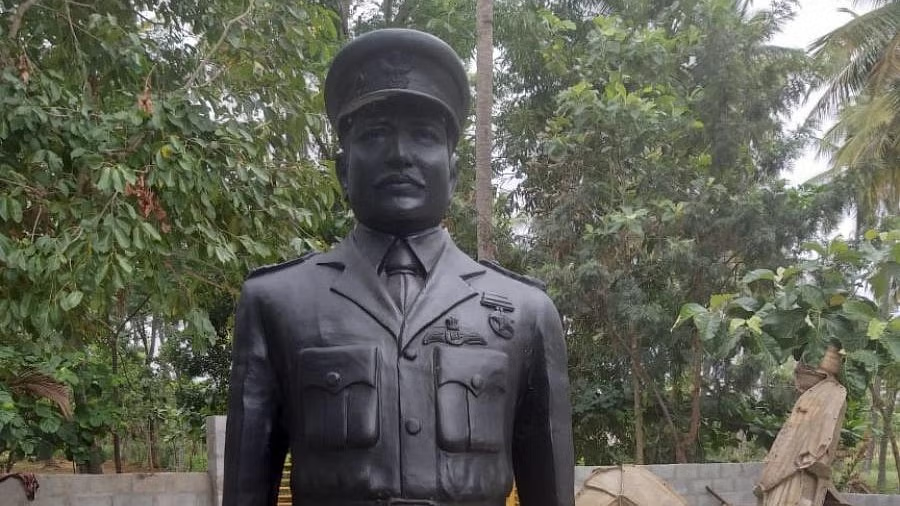
The bronze statue of Squadron Leader Ajjamada B Devayya
Madikeri:
The issue of portraying the character of Maha Vir Chakra awardee Squadron Leader Ajjamada B Devayya, as a Tamilian in the Hindi movie ‘Sky Force’, directed by Sandeep Kewlani has drawn the ire of people from Kodagu.
The move by the filmmakers has been criticised on social media. Tweeting about Ajjamada B Devayya, the people opined that even though the movie is based on him, his character has been misrepresented.
Some have also urged the state government to ban the movie in Karnataka.
The film was released on January 24 and is said to be inspired by the life of Ajjamada B Devayya and by his role in destroying a Pak aircraft during the Indo-Pak war in 1965. He was martyred during the fight.
Speaking to DH, Codava Makkada Coota president and publisher Bollajira B Aiyappa said that the real name of the patriot should have been used for the lead character in the film. Even though the character’s name is changed, the identity of him being Kodava should have been shown. The change of his identity as a Tamilian has hurt the sentiments of Kodavas. Kodagu has given Field Marshals, Generals and Squadron leaders to the country, he said.
Ajjamada B Devayya./ File Photo
“The movie makers had come to Kodagu to collect information about A B Devayya. The opening and closing credits of the movie have made a mention about the story being based on A B Devayya’s life, he said.
He further stated that a book has been published about Ajjamada B Devayya – ‘1965 ra Yuddha Hagu Kodagina Mahavira’.
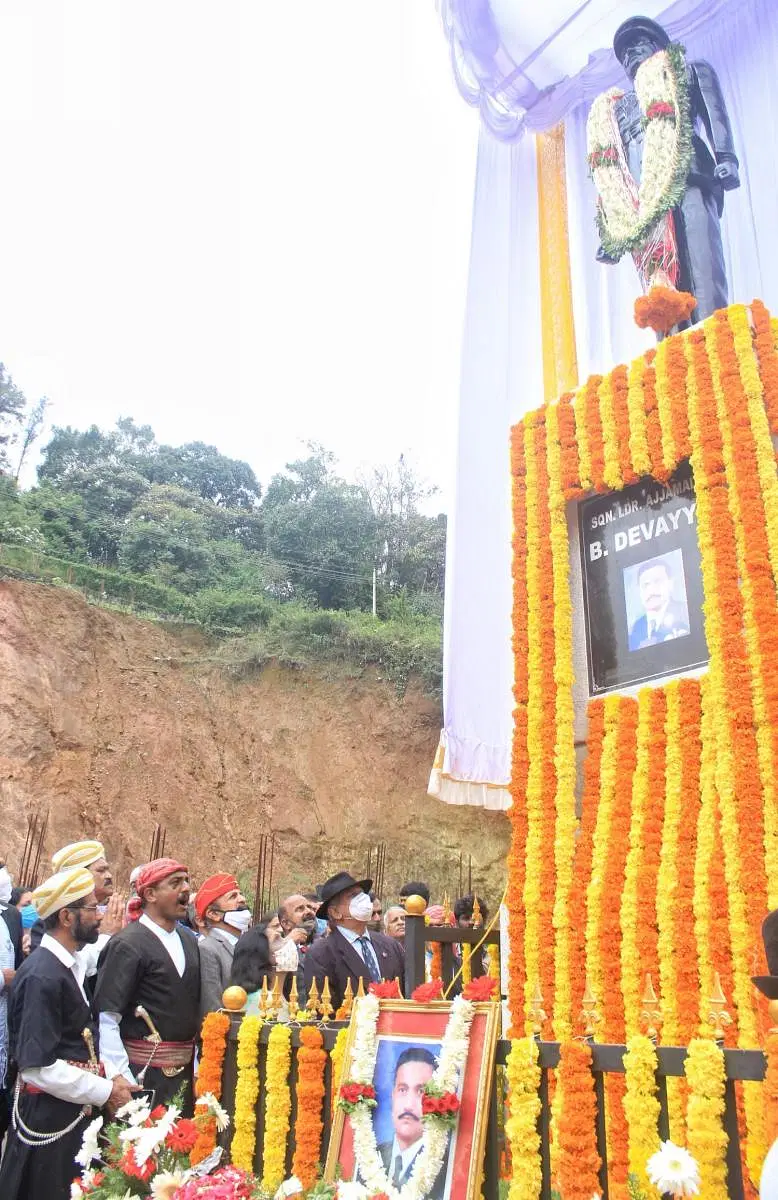
The Coota has been observing his commemoration on September 7 every year at A B Devayya Circle in Madikeri where the statue is situated. The statue is erected and is being maintained by Codava Makkada Coota, Aiyappa added.
source: http://www.deccanherald.com / Deccan Herald / Home> India> Karnataka / by Ashwani Kumar N K R / January 30th, 2025
On the 126th birth anniversary of Field Marshal Kodandera Madappa Cariappa, tributes poured in from across the nation this morning, honouring the first Indian Commander-in-Chief of the Indian Army.
The Indian Army took to ‘X’ on January 28, writing, “Remembering the Legend…On his 126th Birth Anniversary, the Indian Army pays homage to Field Marshal K.M. Cariappa, OBE.”
Union Minister Nitin Gadkari also shared his respect, posting, “Remembering First Indian Commander-in-Chief of the Indian Army Field Marshal Sir Kodandera ‘Kipper’ Madappa Cariappa.”
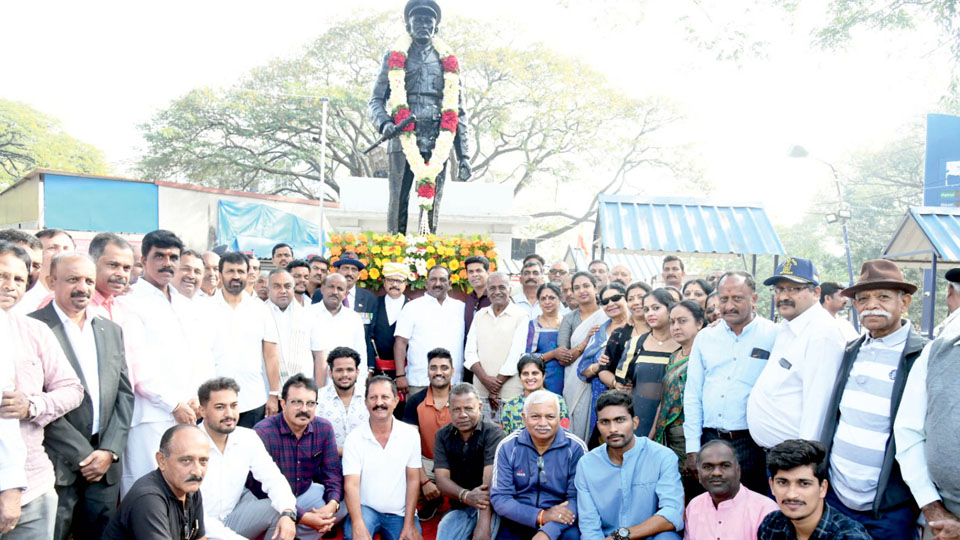
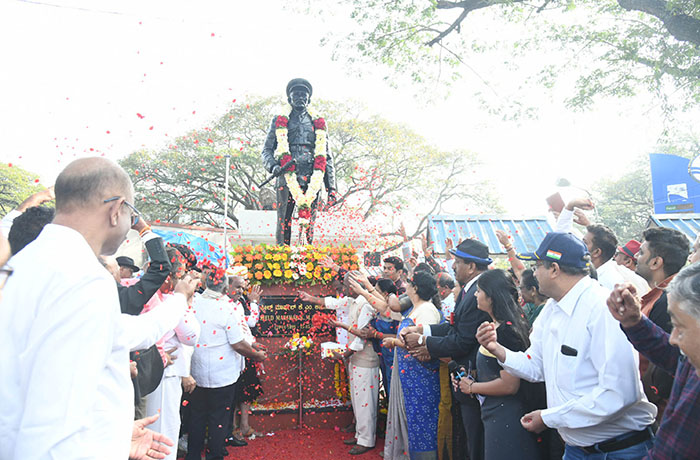
In Mysuru, as part of the celebrations, floral tributes were offered to the statue of the Field Marshal at the Circle named after him on JLB Road.
Chamaraja MLA K. Harishgowda emphasised that the name of Field Marshal Cariappa, whose contributions to the country’s defence are immeasurable, should be honoured as long as the Sun and Moon exist.
Stating that the annual commemoration of the Field Marshal’s birth anniversary is a fitting tribute, he highlighted that Field Marshal Cariappa was known for his discipline, dedication and determination.
The MLA also mentioned that the Mysuru Kodava Samaja had previously proposed the installation of a statue of another Kodagu warrior, General K.S. Thimayya. He announced that work has now begun on the statue, which will be installed at the Kodava Samaja premises in Vijayanagar, with funds allocated from his Legislator’s fund.
Kodagu’s contributions recalled
Krishnaraja MLA T.S. Srivatsa pointed out that Kodagu is likely the only district in the country where almost every household has at least one member serving in the country’s defence forces. He also lauded Field Marshal Cariappa for his pivotal role in shaping the post-independence Indian Army, as well as his involvement in Iran’s army structure. Srivatsa added that Cariappa also had a deep love for sports and music.
MLC C.N. Manjegowda stressed the importance of celebrating the Field Marshal’s birth anniversary, encouraging youths to draw inspiration from his legacy and consider joining the army.
Manjegowda, an ex-serviceman, urged the Government to ensure that Field Marshal Cariappa’s birth anniversary is celebrated as prominently as those of other great personalities.
City BJP President and former MLA L. Nagendra highlighted that Prime Minister Narendra Modi celebrates Deepavali every year with the Armed Forces at the country’s borders. He noted the renaming of Metropole Circle as Field Marshal K.M. Cariappa Circle in recognition of the late Commander’s accomplishments and called for it to be referred to by its new name.
Former Mayor M.J. Ravikumar suggested that the busy junction at the Circle be made safer by constructing a shelter that covers the entire area to prevent accidents from speeding vehicles. He also called for further development of the Circle.
Former Mayor Srikantaiah, former Corporators Maletira U. Subbaiah and Prameela Bharath, Kodava Samaja President Ponjanda A. Ganapathy, Kodava Samaja Cultural and Sports Club President Mukkatira C. Ashok, Field Marshal K.M. Cariappa Abhimaani Balaga President Nayakanda Thimmaiah and community leaders were present.
source: http://www.starofmysore.com / Star of Mysore / Home> News> Top Stories / January 28th, 2025
Retired IAS officer, Rathi Vinay Jha, has been selected as Coorg Person of the Year 2024 in a poll conducted by a news and tourism portal, www.coorgtourisminfo.com.
With her roots in Kodagu district in Karnataka, Ms. Rathi Vinay Jha, a former Union Tourism Secretary, had initiated several projects to “conserve Kodava culture and the martial traditions of the comunity, known for its contributions to the nation in the areas of defence and sports,” author P.T. Bopanna, who runs the portal pointed out.
He said Ms. Rathi was instrumental in setting up the virtual museum of Kodava heritage and culture, the project known as Sandooka — a treasure trove of information.
“The virtual museum is an interactive online space, brought together through material contributed by the Kodava community. Sandooka will be a living museum of Kodava culture and will be useful for future generations of Kodavas.”
“It was at the instance of Ms. Rathi, a model of Kodava ainmane (ancestral house) was inaugurated this October in Dakshinachitra Museum near Chennai,” Mr. Bopanna said.
Dakshinachitra is home to 18 traditional houses that depict the unique culture of South India. The ainmane project involved dismantling a structure built in 1852 in Kodagu and was transported to Dakshinachitra Museum, said Mr. Bopanna.
source: http://www.thehindu.com / The Hindu / Home> News> India> Karnataka / by The Hindu Bureau / January 01st, 2025
In my previous article, I featured an Ethiopian coffee export company who ran her business based on trust. This is factored in two ways; dealing with her farmers and clientele. In this day and age, we can learn a thing or two by understanding the wisdom behind why some people do the things they do, treading a harder path and not resort to shortcuts. They are in it for the long term, not focused on the short term gains. I have nothing but high regard for individuals like Medina.
Continuing a similar conversation, I have been focusing on what exactly is happening at the farm level by getting in touch with the producer directly. In this article, I talk to the owner of a coffee estate farm based in India. Sumaira gives us an insight about how her family’s coffee estate started in the late 18th century, processing techniques employed on her farm, the specialty coffee movement in India, and much more.
source: Rasulpur Coffee Estates
Can you tell me a bit about yourself and Rasulpur Coffee Estates?
I am Sumaira, the owner of Rasulpur Coffee Estates & Roasters . We are located in the Rasulpur village, Coorg district, in the hot spots of the Western Ghats, India. My entrepreneurship journey has had its shares of ups and downs. I took up a career as an interior designer and worked as a business head for a furniture empire in India. Later on, I moved to the UAE and explored the real estate industry and the coffee sector. I envisioned starting up something of my own, being from a family of coffee planters and having the self-confidence and determination to start my own business. Something clicked the moment I realized how the coffee industry is growing day-by-day.
To add, I am a fifth generation coffee planter who introduced specialty coffee at our estate. We introduced better equipments and techniques, and new processing and fermentation methods which I’ll get into a little later. A laboratory is set up for roasting and cupping to create different roast profiles and new blends at our estate. We believe in helping and encouraging our coffee community, especially the neighboring small and marginal coffee growers to analyze their coffees, and improve their harvesting and processing methods to fetch a better price for their coffee.
The journey of Rasulpur Coffee Estates started in the late 18th century when our ancestors migrated to the Western Ghats of India i.e. Coorg at the time of the British rule, as their main occupation was trading in coffee and spices. They travelled to different parts of Coorg, as they developed a liking towards coffee estates and the greenery, purchased plenty of estates, learnt the methods of coffee cultivation, and started exporting coffee to foreign countries. England was one of the major countries to which coffee was exported to from our estates in that period with the help of the Coffee Board.
We named the estate and brand ‘Rasulpur Coffee’ after the village, Rasulpur, which is on the banks of the Kaveri river in Kodagu district is named after Mr. Rasul Khan, our first generation planter. He cleared the land, started cultivation, built dams for irrigation, made the place livable and initiated agricultural works. Looking at his abilities and progress, the government named this village after him.
In time, our second, third and fourth generation planters purchased more coffee plantations and improved the methods of cultivation, processing, and introduced pulping and irrigation. An R&D team was also set up and a variety of experiments are conducted to this day. The goal here is to enhance the quality of the crops, and advance the processing and post harvesting methods. Our coffee is featured in auctions, supplied for projects, sold locally and exported to wholesalers, cafes, and restaurants. We also ferment micro lots as per requirements from our roasters and young entrepreneurs who are venturing into the coffee industry.
What kind of processing is done on the farm?
Processing on our farm is done in three different ways along with few specialty processing methods, all of which change the sweetness, body and acidity of brewed coffee. These are natural/sun dried, washed, and honey processed.
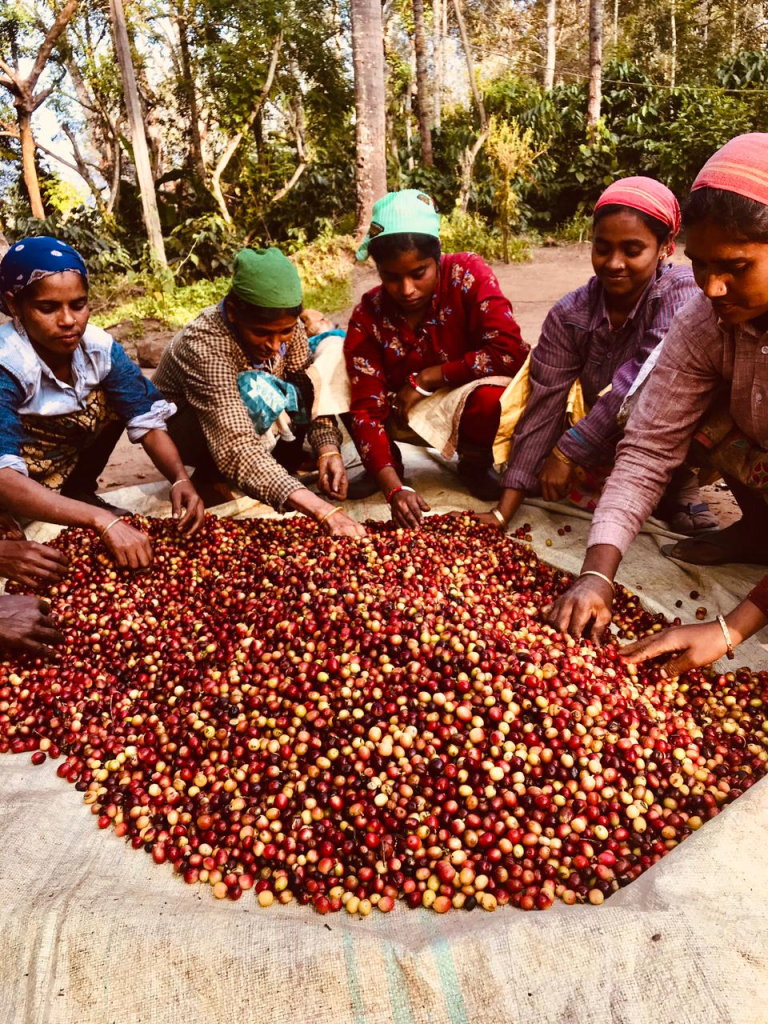
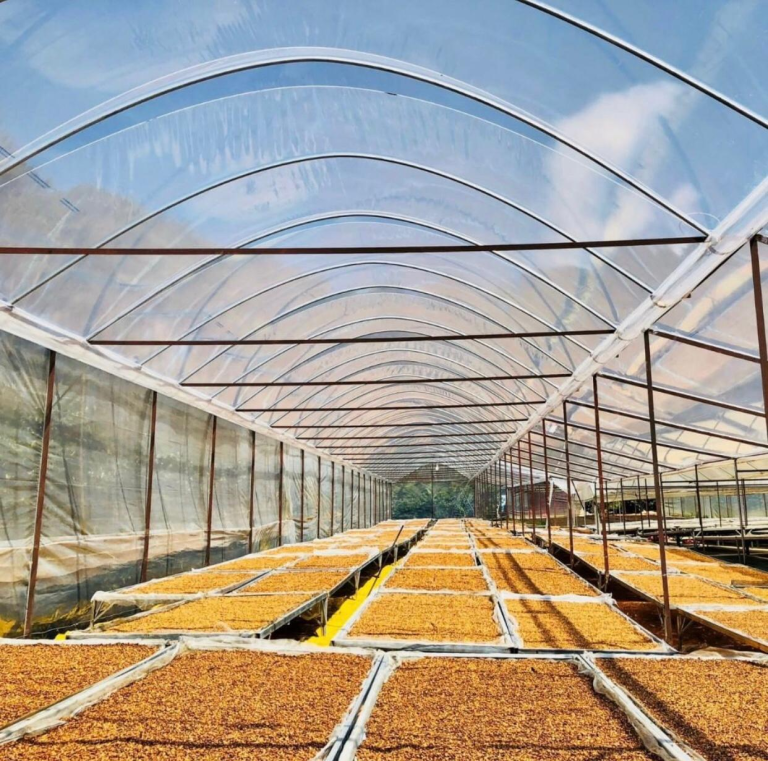
Natural/sun dried process. A natural processed coffee, also referred to as dry processed, is a traditional yet common way to process coffee today. Originating in Ethiopia, it involves drying out freshly picked coffee cherries with the seed still inside. To do this, we place the cherries on drying beds in the sun. These beds are either patios or raised drying tables. The cherries have to be rotated and turned to prevent mold, and takes about seven to eight days to ferment. During this time, the sugars and mucilage (the sticky substance that coats the seed) will latch onto the seeds, develop flavours and make them sweeter. Once the coffee is dry, a machine separates the pulp from the seed. Natural coffees are heavy bodied, and have deep, complex tasting notes. This development comes from the way the cherry ferments differently. Natural processed coffees can be difficult to replicate because of the inconsistencies in fermentation. However when done right, these coffees can also be some of the sweetest you’ll taste. It is juicy, syrupy and well worth the extra effort.
Washed process. Unlike natural, washed processed coffees are called the opposite, i.e. wet processed. In this scenario, machines called pulpers remove the seeds from the cherries before drying them. However, it is not just any cherry that gets the seed removal treatment. These cherries must have the perfect amount of ripeness to make sure they are sweet enough. To accomplish this, they go through a sorter and are segregated according to density. Once these pulpers remove the skin and pulp from the seeds, they are placed in tanks full of water. The water separates the rest of the mucilage and fruit caked onto the seed. Finally, the seeds are dried on the beds in the sun. Washed processed coffees have cleaner, and more crisp tasting notes when compared to natural processed coffees. The body of a brewed washed coffee is lighter. There is typically more brightness as well, because of a cleaner acidity that balances out the sweetness of the coffee. They are just as fruity as natural coffees, but the flavor notes are easier to differentiate.
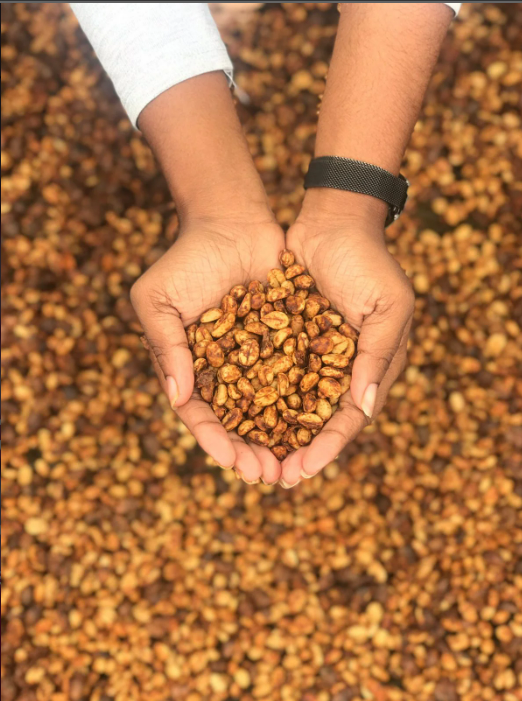
Honey processed. This method is a combination of both natural and washed. It is a rare and demanding method, and not as commonly practiced as the previous two. However, it produces a unique cup of coffee, with flavours similar to both of the previously described processing methods. During honey processing, a pulper removes the seed from the cherry before it undergoes a drying process. However, it does not go into washing tank to remove the mucilage. That mucilage, which is what the ‘honey’ refers to stays on the seed and is now dried in the sun. The amount of mucilage left behind determines the sweetness, and there are even machines to control the amount on the seed. Like natural process, the seeds are dried on beds. The flavor components of honey coffees are varied and complex. Like washed coffees, they have lighter body and are very syrupy and sweet. Acidity is present but more mellow when compared to washed coffees.
Specialty processing. This is an emerging field and we use unique methods like anaerobic, aerobic, natural fermented, and fruit fermented to name a few. We ferment our coffee in a temperature controlled environment, with or without oxygen, followed by controlled drying to bring out unique and funky flavors out of the coffee.
source: Rasulpur Coffee Estates
What is the current state of the specialty coffee industry in India?
The coffee culture in India has evolved over the past decades. The nostalgia-inducing coffee houses were popular meeting grounds until the 1980’s. In the 90’s, cafe culture took over the country and coffee became the trendy drink to try.
Cafes are becoming the primary hangouts for youngsters and coffee found an emerging and appreciative audience. In the past two decades, we have seen a surge of cafes all over the country. They have materialized as a central hub for meeting, whether casual or business, and also doubling up as co-working spaces.
The 2020 pandemic impacted the industry In multiple ways and its effects were manifold. Logistics of coffee exports are pretty bad even today. Traditional coffee plantation owners who supply heavily within India and export to Europe are left with excess stock of coffee that could no longer be shipped to international markets.
Coming to the Indian coffee space, in recent years, the spotlight is on specialty coffee. This movement is picking up speed with many brands and roasters setting up shop. Analysis gives us a deeper understanding on how speciality coffee has emerged as the current buzzword in coffee circles. Current generation and millennials have emerged as the major chunk of consumers of specialty coffee within India.
Increased awareness and interest about coffee augmented by growing exposure to worldwide trends due to rising international travel and social media saw many of them exploring specialty coffee and manual brewing techniques. Lockdowns put a halt to the possibility of exploring cafes and thus many coffee consumers in the country turned to home brewing.
Many retail specialty coffee brands saw skyrocketing sales in 2020 as consumers invested in manual brewing equipment ranging from French Press, Moka Pots, Chemex and Aeropress. The new generation of coffee consumers respect the people behind the product, want to better understand the ‘farm to cup’ journey and are willing to invest in educating themselves on all nuances of coffee.
A few years back, this was largely unheard of. Farmers were just one aspect of the coffee supply chain, but hardly ever found the spotlight on them. Now plantation owners are keen on sharing their stories and experiences, information on their crops and the work they put in to make that perfect cup of coffee.
One can safely say that specialty coffee will not just be a passing trend, but en route to becoming one of the mainstays of the Indian coffee space in the coming decade.
I think there is a lack of communication between the consumers and farmers. I know some of the consumers, including me, have started to pay attention to where exactly the coffee is coming and from which farm. What do you think can be done to fill this gap?
The missing ingredient is awareness. People need to be educated about Indian coffee. The new-generation farmers need to collaborate with the Coffee Board of India and conduct events to promote coffees originating from India within the country and internationally.
Joint efforts need to be made by all coffee enthusiasts to encourage the consumption of coffee by making people understand the benefits of drinking coffee. The government has to support and help promote farmers to come forward and establish their own brands.
Being honest and transparent ensures the consumers and clients knows about the past, present and the way you are going to build a future. Bringing credibility to the table builds trust factor for the brand with the consumers.
I know some of the issues the farmers are facing currently are the increasing production costs, what steps are you employing to change that? Have you increased the price of your coffee to reflect that?
Whether we like it or not, coffee is getting more expensive. It’s important to look at some of the reasons why this is happening, before you potentially do one of the following:
Buy less sustainable and ethical coffee because it’s cheaper or
Lay blame on the wrong people for higher prices.
There are many factors influencing the cost of coffee from climate change, disruptions to global shipping, consumer demand, and packaging cost. While the need to use more environmentally-friendly packaging for coffee cups and bags is real, so too is the cost for shops switching to compostable or recyclable materials. We have also witnessed fluctuating shortages of packaging stock forcing some companies to find more costly short term solutions to packaging which comes at a higher cost.
Lastly, coming to the cost of quality, producing coffee of higher quality simply costs more. Coffee must be cared, harvesting and processing is hard work. It requires time and physical effort if you want to achieve the highest quality standards. You can’t have it both ways.
source: Rasulpur Coffee Estates
What are your thoughts on transparency? Has it benefitted you in any way?
Yes, by ten-fold. Transparency has improved our overall trust factor in this industry. It solves many problems and even stops disasters before they happen. It expands relationships, increases productivity, strengthens innovation, and improved our revenue.
What is the future of specialty coffee?
By far, the most interesting and exciting coffee segment of the moment is specialty coffee. It is rapidly expanding in India and across the globe as consumers continue to seek out the best cup of coffee to enjoy.
When it comes to coffee quality, specialty coffee is the ‘cream of the crop’ and is likened to fine wines due to its distinctive characteristics and delicious flavour that can only be achieved under certain growing conditions.
In today’s market, specialty coffee has become an intricate science and a global phenomenon that is seeing rapid growth across all sectors. More estates are coming into this specialty game, that will give ‘Indian specialty coffee a lot of mileage.’
What do you do in terms of R&D on Rasulpur Estate
We are currently doing research on developing a hybrid plant which is resistant to white stem borer and leaf rust. These are the two biggest pests and diseases faced by all Arabica growers throughout the world. International Coffee Organization (ICO) is working with different countries to find a solution for this.
This R&D program has been ongoing for the past four years on a 40 year old, 30 ft tall, Arabica plant labelled by us as Rasulpur Arabica. So far, the results look promising and it is resistant to these diseases. We have propagated progenies of this plant by clonal cutting, seed and tissue culture, and cross-bred this plant with other varieties of Arabica.
source: Rasulpur Coffee Estates
About Rasulpur Coffee Estate
Rasulpur Coffee Estates & Roasters is based out of Rasulpur village in Coorg district in the hot spots of the Western Ghats, India. The Estate is run by Syeda Sumaira, a fifth generation coffee planter and entrepreneur.
Fun fact: Coffee farms are the best place to get first hand knowledge about the beverage, how it is grown, harvested and processed. Rasulpur Coffee Estates organizes coffee tours, get in touch with them to find out more.
source: http://www.fltrmagazine.com / FLTR / Home> Insight> People / by Naveed Syed / August 11th, 2022
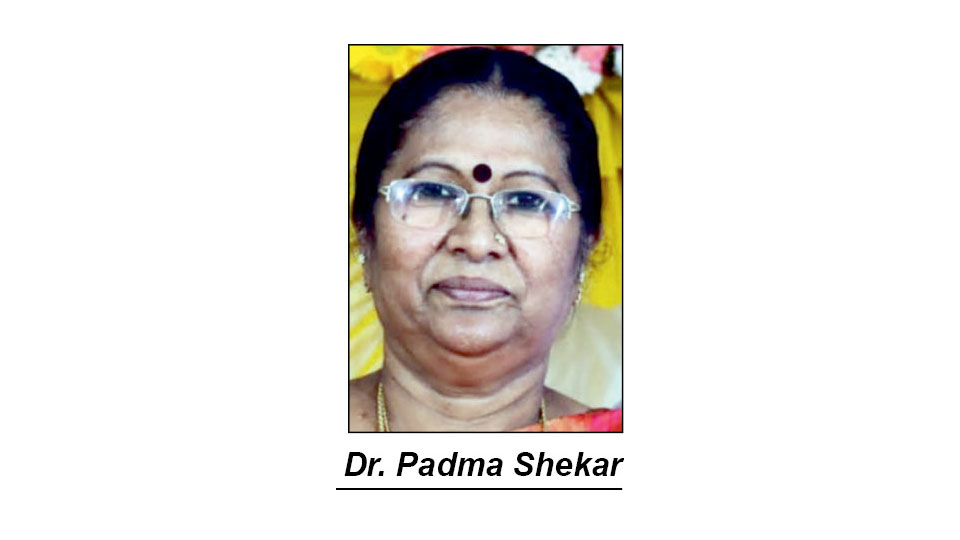
Dr. Padma Shekar, a native of Kodagu, a litterateur, education expert, researcher and retired Vice-Chancellor, is among 69 achievers chosen for this year’s Karnataka Rajyotsava Award.
Dr. Padma hails from Thorenur village, Kushalnagar taluk in Kodagu district. She has served as the Professor and Chairperson of Department of Studies in Jainology and Prakrit, University of Mysore, Director of Centre for Women’s Studies, University of Mysore and Chairperson of Department of Studies in Christianity, University of Mysore.
A recipient of several awards in the fields of research and literature, she is currently a resident of ‘Preeti Nilaya’, Vijayanagar Second Stage, Mysuru.
Elated by the decision of the State Government to consider her for the award, Dr. Padma Shekar said “I had been a recipient of several awards in the field of literature. Now, I have been awarded for the service rendered in the field of education, which is very close to my heart, that has brought immense joy and happiness for me.”
“I have worked in the field of education for 40 years and it was during my tenure in office that, Karnataka Sanskrit University and Department of Studies in Jainology and Prakrit, University of Mysore.
The Government has taken cognisance of all these achievements. I humbly recall all those who have nurtured my growth from a remote village to the level of a Professor.
I will especially thank former CM Dr. M. Veerappa Moily and Chief Minister Siddaramaiah and his Government. I was born in Virajpet, Kodagu, where I spent my childhood. I was also the Chairperson of 11th District Kannada Sahitya Sammelan,” said Dr. Padma Shekar, recalling her achievements with pride.
source: http://www.starofmysore.com / Star of Mysore / Home> News / October 31st, 2024
Yesterday I travelled to Kushalnagar in Kodagu to see a friend in an eye hospital, “Lopamudra Eye Care,” who was undergoing a procedure for cataract. While in the waiting area, I noticed a number of framed certificates, citations, testimonials and photographs about the doctor. Being a private, personal hospital, such displays are expected and understandable.
However, what interested me was a couple of framed displays that seemed unique and modestly appropriate for a doctor who is a native Kodava and the hospital is in Kodagu.
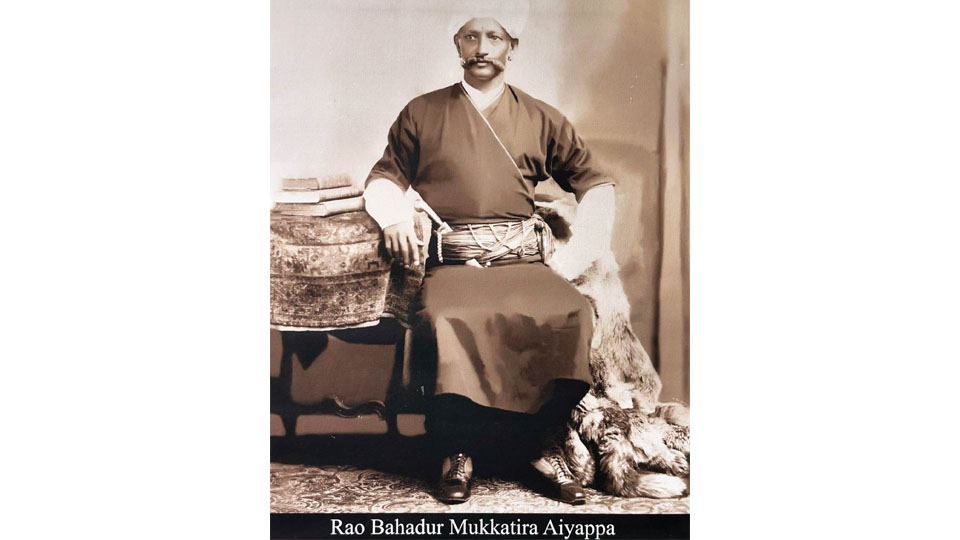
I took the photographs of some of these displays to study them later. There was a photograph of a native Kodava of the early 20th century in his ethnic ceremonial attire (see picture). He is the grandfather of Dr. M.M. Ponnappa of Lopamudra Eye Care. He was honoured by the British Masters of the Colonial days with the title Rao Bahadur. So, he is Rao Bahadur Mukkatira Aiyappa. Could be, his grandson, this doctor Dr. M.M. Ponnappa, is so proud of his grandfather, he chose to honour his memory by hanging his photograph in the front office area.
And, again most appropriately, the legend of this legendary coffee planter and a philanthropist of those days (who had, no doubt, cultivated the company of the British Officers in Kodagu) as written in a newspaper was also displayed. The text details about the great gifts of this Kodava man. Curiously the news must have originated from Karachi (now in Pakistan) and taken from the newspaper ‘The Madras Mail’ (which was published by the British from Madras, now Chennai).
Reading its contents I was thrilled. Let me reproduce it:
The Madras Mail
Pluck Office, Karachi
M. Mukkatira Iyappah
Devanageri Virarajendrapet
Virarajendrapet is now embellished with a clock tower, erected in front of the post office.
The foundation stone of the building was laid by Sir Hugh Daly, the Chief Commissioner of Coorg on 5th February, 1914, when he visited the town, during his tour in Coorg. It is the gift of Mr. Mukkatira Iyappah, a successful coffee planter in commemoration of the coronation of the King-Emperor at Delhi. lt has already proven to be a boon to the public.
Mr. R.K Ellis, I.C.S., the District Magistrate of Coorg, performed the opening ceremony on the 16th of January and handed over the building to Virarajendrapet municipality.
Mr. Mukkatira Iyappah has also gifted the outpatient block of the civil hospital of Gonikoppal and an inspection bungalow of Fraserpet (now Kushalnagara) which has immensely benefited the people and district administration of Coorg.
Those who visit Virajpet in South Kodagu could not miss to see the famous Clock Tower at the junction of three roads in the busy down-town area built in red-brick. By the way, history records the location of the Clock Tower was selected (in 1914) for the reason that it was the place where General Abercromby, the General who marched with his troops from Malabar via Kodagu (to reinforce the British and allied forces fighting Tipu Sultan in May 1799 at Srirangapatna), met the Maharaja of Kodagu Virarajendra Wadeyar and signed a peace treaty. The Kodagu Raja founded the city Virarajendrapet to commemorate the occasion.
Be that as it may, the Clock Tower was a gift of Mr. Mukkatira Iyappah (Aiyappa) in commemoration of the coronation of the King-Emperor at Delhi. The opening ceremony of the Clock Tower was held on 16th January (1915), just one year after its foundation was laid.
Iyappah had also gifted an Outpatient Block of Government Hospital at Gonikoppal and an Inspection Bungalow of then Fraserpet, now Kushalnagar.
It is said, what one gives often goes round and round and comes back multi-fold to the giver — or to his progeny. The same seems to have happened to Dr. M.M. Ponnappa and his brother Dr. M.M. Amrit Nanaiah, who is running the Lopamudra Medical Centre in Gonikoppal.
It is inscrutable that both these brothers are today successfully running their hospitals, one in Gonikoppal and another in Kushalnagar, the towns where their grandfather Aiyappa had generously built two valuable facilities for the good of the public. Vedic values and Sanatana Dharma are seen working in a mysteriously subtle way as reward for Mukkatira Aiyappa’s selfless service to his fellow men. Let it be.
But as I scanned the wall, I noticed two boards with closely written text which read like pedagogy and a lesson in morals. Let me produce them here for the benefit of those who are on the path of virtuous and even spiritual life:
Keep it simple
Beware of the person who has nothing to lose.
Don’t burn bridges. You’ll be surprised how many times you have to cross the same river.
Live your life so that your epitaph could read, No Regrets.
Never waste an opportunity to tell someone you love them. Remember no one makes it alone. Have a grateful heart and be quick to acknowledge those who helped you.
Visit friends and relatives when they are in hospital; you need only stay a few minutes. (Well, I guess I have followed this advice by visiting this hospital !)
Forgive quickly. Life is short.
Keep a note pad and pencil on your bed-side table. Million dollar ideas sometimes strike at 3 am (I agree, I do follow this even to this night!).
Send your loved ones flowers. Think of a reason later.
Count your blessings.
Wave at the children on a school bus.
Remember that 80 percent of the success in any job is based on your ability to deal with people.
Don’t expect life to be fair…
Have a firm handshake.
Look people in the eye.
Keep Secrets.
Never give up on anybody. Miracles happen everyday.
Avoid sarcastic remarks.
Choose your life’s mate carefully. From this one decision will come 90 percent of all your happiness or misery.
When playing games with children, let them win.
Be romantic. Become the most positive and enthusiastic person you know.
Don’t allow the phone to interrupt important moments. It’s there for our convenience, not the caller’s.
Be a good loser for your loved ones. Be a good winner of Hearts.
When someone hugs you, let them be the first to let go.
Be modest. A lot was accomplished before you were born.
And finally, a board with some information from the Indian Penal Code (IPC) with penal sections. I’m sure Dr. Javeed Nayeem, our weekly columnist, Over a Cup of Evening Tea, who was the President of MAHAN, an Association of Doctors and Hospitals, to protect themselves from the vandals, will love this.
Yes, protection to doctors and hospitals from people who attack them for different reasons, are there in the law books. But, in our too liberal a Democracy these laws are more often subverted, sabotaged and violated with impunity rather than enforced. Hence, this reminder of IPC to the patients. Examples are many, but the recent one is in the rape and murder of a duty doctor at the R G Kar Medical College and Hospital in Kolkata, West Bengal.
e-mail: voice@starofmysore.com
source: http://www.starofmysore.com / Star of Mysore / Home> Columns> abracadabra / by G.B. Ganapathy / October 10th, 2024
WELCOME. If you like what you see "SUBSCRIBE via EMAIL" to receive FREE regular UPDATES.
Read More »