Category Archives: Leaders

The Father of the Indian Army – Field Marshal K M Cariappa

Field Marshal Kodandera Madappa Cariappa, hailing from Kodagu district of Karnataka, is best known as the first Commander-In-Chief of the army of independent India. He has often been described as ‘The Father of the Indian Army’. He was born on the 28th of January 1899.

His Early Years

km-cariappaCariappa was one among the six children of Kodandera Madappa, who was an official in the revenue department. He completed his schoolingfrom Central High School at Madikeri in Kodagu. He later studied atPresidency College, Chennai.

Even at a young age, he was always up for challenges and he displayed tremendous determination in achieving whatever he put his mind to. As a student, he is known to have taken an active interest in academics, sports and debates.

Cariappa’s Military Exploits

At the age of 20, Cariappa was selected to be among the first batch of boys to be trained for commissioning in the British Indian Army. After a stint at Daly College, Indore, he was commissioned as an officer and posted to the second battalion of the 88th Carnatic Infantry in Bombay, to serve as a Second Lieutenant.

There was no looking back after that. He steadily rose among the ranks, and even had stints in places like Iraq, Iran and Syria.

During the period of Partition in 1947, Cariappa oversaw the division of the Indian army. During the Indo-Pak war of 1947-48, he led the Indian forces on the western front. Later in 1949, he became Commander-in-Chief of the Indian army.

Incidentally, it is a well-known fact that Cariappa had been nick-named ‘Kipper’ by his colleagues in the army. After serving in the Indian army for almost three decades, Cariappa went on to serve as High Commissioner to Australia and New Zealand.

Honors and Recognition

In 1949, Cariappa was conferred the Order of the Chief Commander of the Legion of Merit by Harry Truman who was the President of the United States at the time. In 1986, the government of India conferred him with the honorary rank of Field Marshal in recognition of the exemplary services rendered by him to the Indian army.

Personality Traits and Information

Cariappa was a tall man with a commanding personality, besides being a good conversationalist. He was admired for his dedication to his work, his courage and unwavering integrity and his strong sense of patriotism.

However, he was also a strict disciplinarian and had a quick temper.

His Final Years

Towards the end of his life, Cariappa spent much of his time in his estate Roshanara located in his native town of Coorg. He was involved in spreading awareness about pollution and environmental conservation.

He died in Bangalore in 1993, and he was 94 years old.

source: http://www.Karnataka.com / Home> Personalities


Appaiah Gowda Memorial to Honour Freedom Fighter

MADIKERI:

Freedom fighter Guddemane Appaiah Gowda, who led the “Katukai battle” (Amara Sullya Dange) against the British in 1837, is one of the greatest heroes Kodagu has produced, said Lt. Gen. (retd.) B.C. Nanda on Wednesday.

Unveiling a plaque to mark the construction of a memorial for Appaiah Gowda at the Nehru Park here, Gen. Nanda said Kodagu has produced many freedom fighters who fought against Hyder Ali, Tipu Sultan or the British, and all of them had great pride in the culture of the region. The “Beerakallu” (stone memorials) found in many parts of the district symbolised the valour of the freedom fighters of the past, he said.

The educationist and philanthropist Kurunji Venkataramana Gowda announced that he would donate Rs. 1 lakh for the construction of the memorial. He donated Rs. 50,000 as the first instalment to the Madikeri MLA, K.G. Bopaiah, who presided over the occasion. He also offered 27 acres of land at Mekeri near here for starting an educational institution.

Precedent

Appreciating the decision of the committee to erect a memorial to Appaiah Gowda, the educationist M.M. Chengappa said that the late freedom fighter had set a precedent for the freedom movement in the country.

The Deputy Commissioner, P. Subramaniam, hailed Appaiah Gowda as the “Father of the Freedom Struggle” in Kodagu. Gowda’s heroics should inspire the youth to develop patriotism and enlist themselves more in the armed forces, he said.

Stating that Appaiah Gowda was a symbol of patriotism, self-respect and pride for Kodagu, Mr. Bopiah said the ideals of the late leader still inspired all. Appaiah Gowda, who was hanged by the British in 1837 in front of the Madikeri Fort for leading protests against the colonial power, did not want outsiders to have a say over the affairs of Kodagu, said Mr. Bopiah.

Although a memorial for Appaiah Gowda was deemed necessary in the region from as early as 70s, it is good that it has materialised at least now, he added.

The working president of the Guddemane Appaiah Gowda Memorial Committee, T.P. Ramesh, and the former Madiker iMLA D.S. Madappa spoke

source: http://www.thehindu.com / Staff Correspondent / Karnataka – Madikeri / online edition / Thursday May 19th, 2005

First Woman IFS Officer Muthamma Passes Away

C B Muthamma, the first woman Indian Foreign Service (IFS) officer, died here on Wednesday. She was 85. 

She passed away in a private hospital where she was undergoing treatment, her family members said.

Chonira Belliappa Muthamma was born Jan 24, 1924, in Kodagu. In a career that began in 1949, she served as ambassador and high commissioner to a number of countries. She retired in 1982.

Muthamma had fought against gender bias in the foreign service and had taken the Indian government to court in 1979 for bypassing her for the coveted foreign secretary’s post.

Though the Supreme Court dismissed the petition, it noted that there was truth in Muthamma’s contention that there was gender discrimination in the foreign office.

Muthamma brought out in the form of a book essays she had written over the years. Titled ‘Slain by the System – India’s Real Crisis’, it was published in 2003.

She had also co-authored a book on Kodava cuisine.


source: http://www.bangaloremirror.com / IANS / Thursday  Oct 15th, 2009

Sahithya Sammelan Chief Dr. Padmashekar Speaks her Heart –

“Understand subject for creation of good literature”

Dr Padmashekhar who has been elected as the president of eighth district Kannada Sahithya Sammelan basically hails from Kodagu. At present she is the HoD of Jainism and Prakruth Study Centre of Mysore University.
Dr Padmashekhar 

The sammelan will be held on March 30 and 31. In an interview with Deccan Herald, she spoke on the growth of Kannada language, literature, need for conserving land and water in Kodagu.


* How do you feel being elected as the president of Sahithya Sammelan?


I felt happy. In spite of having worked in the literary field for long, I had to wait for so long to get the love of the people of my land.

* What do you feel on the growth of literary activities in Kodagu?

It is not satisfactory. Kodagu district has failed to get a permanent position to get interest in literature and reading habit.
All the written documents are not literature. Better understanding of a subject is essential for the creation of a good literature. Such a good literature has not been created in Kodagu so far.

* What is your opinion on the growth of literature in Kodagu?

Literature is a continuous process. The children should be made to develop interest in literature from childhood.

* In the backdrop of increase in love for English, how far Kannada sahithya sammelan have helped in the growth of the language?

More and more Kannada literary meets should be organised in border areas. The sammelan should be held in those places wherever the language has been affected. There is a need to create an awareness on Kannada. The fact that Kannadigas are liberal and not cowards should be made known to the people through such meets. We all should believe in unity. The united Karnataka was created due to the struggle by our forefathers. No one should come in the way of the unity of the state.

* Do you feel that Kannada has not developed in Kodagu owing to the British rule and migrants from outside the State?

Kodagu is a land with multi-culture. Kannada has not been affected in the land. Kannada language can digest any challenges.

The Kannada speaking people in Kodagu have not declined. Though people from Kerala have settled down in Kodagu, there was no strife between the languages. However, now we are worried over Kodagu property. Kodagu land and Cauvery river is the lifeline of the district. If our land is sold to the outsiders, then we may lose our relation with the land. Now the land and Cauvery has become a property. If this situation continues, what can we save for our future generation? What will happen to the primitives?

* How did you develop interest in Jain literature?

Kuvempu’s ‘Chitrangada’ motivated me to study Kannada. All the girls should read it. By reading Pampa, Ranna, I developed interest in Jain literature. In fact, even my research topic was on Jain literature.

source: http://www.deccanherald.com / Madikeri / DHNS / Mar 29th

K C CARIAPPA is the ‘Coorg Person of the Year’

Air Marshal K C Cariappa (retd), an environmentalist who took on the powerful timber lobby in Kodagu district of Karnataka is the ‘Coorg Person of the Year, 2009’.
K C CariappaAir Marshal Cariappa, son of Field Marshal K M Cariappa, topped a poll conducted by www.coorgtourisminfo.com, the first news portal of Kodagu, to select the Coorg Person of the Year. The others who were in the reckoning for the title, include another hardcore environmentalist and President of the Coorg Wildlife Society, Col C P Muthanna (retd) and New York-based novelist Sarita Mandanna, who has been given the largest advance by Penguin India ever paid to a debut novelist for her novel ‘Tiger Hills,’ set in Kodagu. 
Taking a pro-active role, Air Marshal Cariappa went beyond the ‘call of duty’ and approached the Supreme Court of India to restrain the timber mafia, backed by the Kodagu district administration and sundry politicians to prevent the formation of a road across the Pushpagiri Wildlife Sanctuary in Kodagu in the ecologically sensitive Western Ghats.

Following a public interest litigation filed by Air Marshal Cariappa, the Apex Court directed the Central Empowered Committee (CEC) to make an on the spot study of the situation and file a report. In a blatant violation of the law, the Kodagu district administration, backed by the two Kodagu MLAs, and supported by local villagers attempted to lay a road through the Pushpagiri reserve forest, amid opposition from Karnataka forest officials.

The controversial road is a seven km stretch between Madikeri and Subramanya near Mangalore in Dakshina Kannada district. Over 400 villagers from Galibeedu near Madikeri, deployed earthmovers to make the road. Their contention was that the road would shorten the distance between Kodagu and Subramanya.

In a mockery of justice, the villagers were provided ‘police protection’ to form the road by the district administration, headed by the then Deputy Commissioner Baldev Krishna. The top district officials, including the Superintendent of Police, went to the extent of publicly humiliating forest official Anil Rathan who protested against the road being formed through the reserve forest.

Air Marshal Cariappa was commissioned into the Indian Air Force in 1957 and he was shot down in the 1965 India-Pakistan war while carrying out attacks on enemy positions and taken Prisoner of War (POW). When President Ayub Khan of Pakistan, an old buddy of Field Marshal Cariappa, offered to release his son forthwith, the later famous said: “They (other POWs) are all my sons, look after all of them.”

After retirement from the Air Force in 1996, Air Marshal Cariappa has been living at Madikeri in Kodagu. He has been taking a keen interest in environment and was the President of the Coorg Wildlife Society for four years. Two years ago, Air Marshal Cariappa wrote the biography of his father, which brought out his literary talent as a writer.

Dr Jagadeesh Subbaiah Moodera, of the Massachusetts Institute of Technology (MIT), and winner of Oliver E. Buckley Prize, was the Coorg Person of the Year, 2008.
The past winners of Coorg Person of the Year include cricketer Robin Uthappa, researcher Dr Boverianda Nanjamma Chinnappa, and novelist Kaveri Poonacha Nambisan.


source: http://www.deccanherald.com / Madikeri / DHNS / Dec 31st


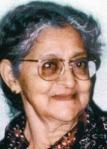
Country’s First Woman Diplomat Dies at 85

C B Muthamma

The country’s first woman diplomat (Indian Foreign Service (IFS) officer), Chonira Belliappa Muthamma, died at a private hospital in Bangalore on October 14, 2009,  following a brief illness, family sources said.  Muthamma (85) was born in a modest family at Virajpet in the hilly Kodagu district of Karnataka.

She had served as the ambassador to Hungary, the Netherlands and Ghana. She was also part of Indian diplomatic missions in several countries in Europe, Asia and Africa. Muthamma, the first woman to enter Civil Services in 1949 after clearing UPSC examinations, opted for foreign service and was posted as Third Secretary in the Indian Embassy,Paris.

She had also served in Indian Missions in Yangon and London, besides the Pakistan Division and American Division of the Ministry of External Affairs. The late diplomat was member of the special Non-Governmental Commission on Disarmament and Security Issues set up by Olof Palme, better known as the Palme Commission.


source: http://www.coorgnews.wordpress.com / Oct 22nd, 2009