In 2018 Kodagu was struck by a rain disaster never heard of or seen before causing landslides, devastating floods and destroying houses and properties of the people, specially in North Kodagu area of Madikeri and Somwarpet Taluks.
Thousands of people were homeless and had to take shelter in schools and public buildings turned into Gruel Centres (Ganji Kendras), where free food was provided. It was a heart-rending sight of hapless, suffering people.
The Government and many NGOs and social organisations rushed to help the victims of the disaster. Among them was also the Bharatiya Vidya Bhavan (BVB), Madikeri Kendra. September 2018 was the month, BVB launched its Bhavan’s Project Coorg to contribute its mite to help the victims of the great natural disaster. This month BVB is completing four years of its service to a section of the victims which is being continued successfully even now and will continue.
For the Bhavan’s Project Coorg initiative, BVB chose one village known as Kalur village which was badly hit with landslides resulting in loss of houses and cultivated lands — coffee estates and paddy fields. It was the worst disaster in the history of Kodagu.
Naturally, several families were in deep shock and limbo as their source of livelihood was completely destroyed. The future looked bleak. How long could they continue in the rehabilitation (relief) camp?
At such a dismal situation, BVB extended its helping hand to the women of Kalur village by taking them under the protective wings of Bhavan’s Project Coorg. It was an initiative to provide both psychological and financial stability to them.
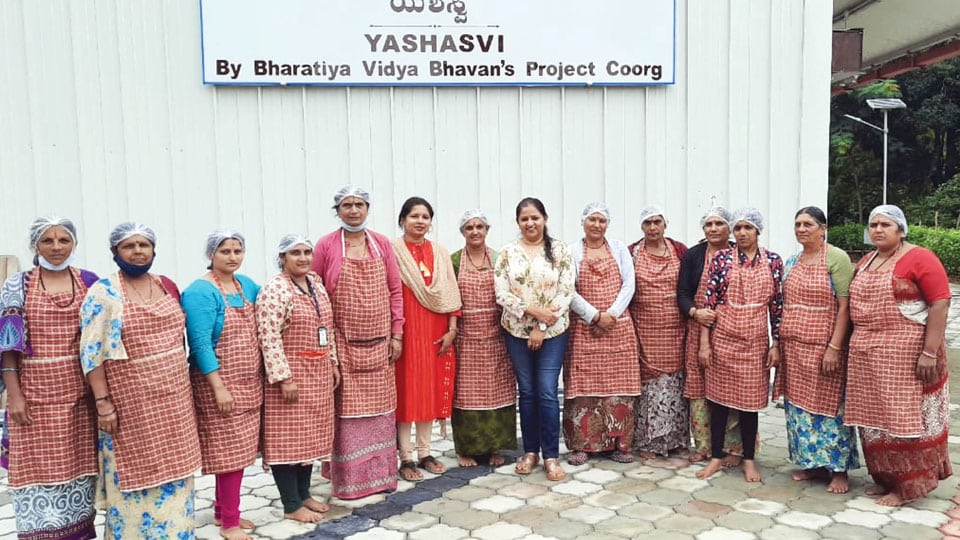
To begin with, BVB started skill development programmes by imparting training in food processing and tailoring to the agricultural women of Kalur village under a programme known as Yashasvi. BVB took 65 women of the village to train them in food processing and tailoring.
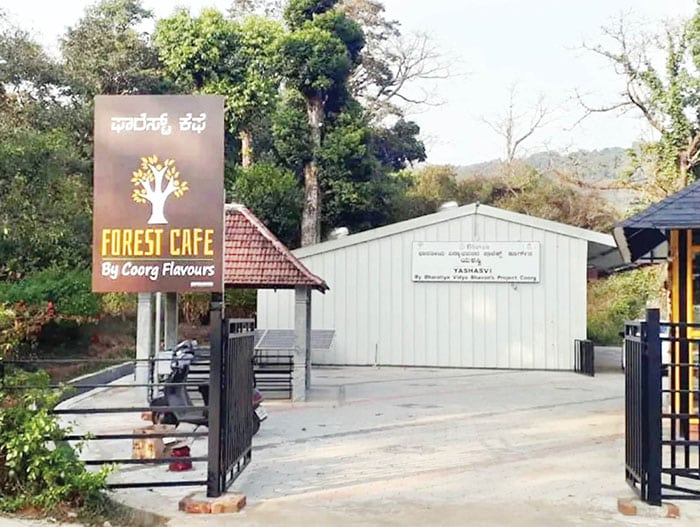
After training, they were provided work on a regular basis and they began to produce a line of packaged high quality masalas, apparently with a Coorg flavour, under the brand name, “Coorg Flavours.”
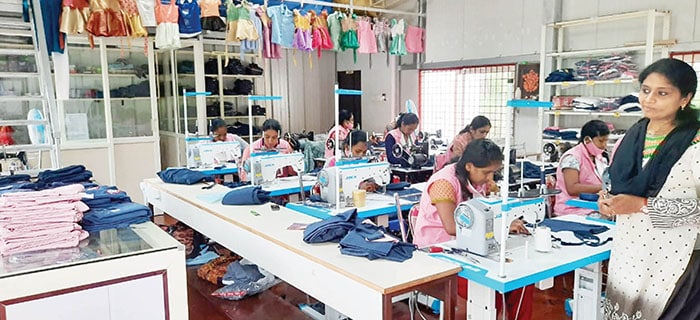
Simultaneously, Tailoring Unit was set up with sewing machines and required facilities, which now undertakes to produce school and NCC uniforms, uniforms required for Government Departments and private organisations. Every woman working here earns sufficient income because of BVB’s initiative.
Today, Food Processing Unit makes different products like home-made chocolates, masalas etc. BVB’s Project Coorg has two stores, which helps sustaining this project, at Madikeri, capital of Kodagu district. Thus BVB made self-reliance possible for hapless women.
Support from people is needed to make this initiative grow and sustain.
For more information, contact BVB Madikeri Hon. Secretary Balaji Kashyap on Mob: 98458-31683.
source: http://www.starofmysore.com / Star of Mysore / Home> News / By K.B. Ganapathy,Chairman, BVB Mysuru / September 15th, 2022
An advocate by profession, he guides candidates appearing for competitive exams
Mysore/Mysuru:
Mundanda Rajesh Ponnappa has cleared IAS by securing 222nd rank in UPSC exams, the results of which were announced on May 30.
Rajesh Ponnappa is the son of Jaya Poovaiah and Sudha (Thamane – Sadera). Hailing from Nelaji in Kodagu, they are now settled in Bengaluru. Sudha is an advocate while Poovaiah is a coffee planter. His younger sister Dhanyata is a journalist.
Ponnappa did his Schooling and Pre-University course at Army Public School, Bengaluru. He then completed B.E. in Mechanical Engineering from Visvesvaraya Technological University topping the Varsity.
He joined Karnataka State Law University again to top the University. He continued studying by completing Post Graduate Diploma course at National Law School of India University in Bengaluru. Presently, he is an advocate by profession in Bengaluru.
Ponnappa appeared for UPSC exams under the guidance of Dr. Arjun Bopanna of Namma KPSC Academy / Bangalore IAS Academy to clear with 222nd rank. He has also competed in Equestrian Sports at National-level. Under the guidance of his mentor and aunt Periyanda late Baby, wife of Appaji, Ponnappa has written and published three books on law. He writes articles for newspapers on how to prepare for competitive exams and guides candidates aspiring to appear for competitive exams.
source: http://www.starofmysore.com / Star of Mysore / Home> News / June 01st, 2022
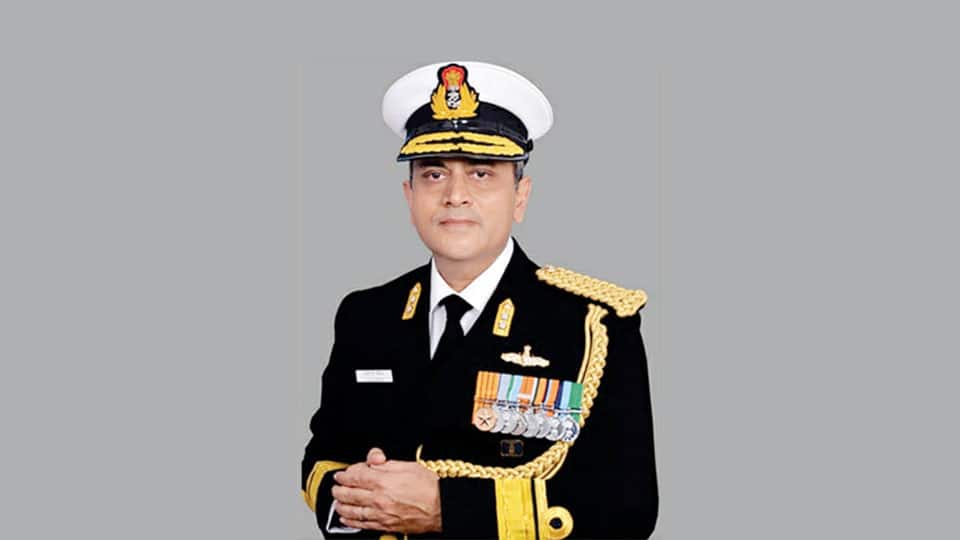
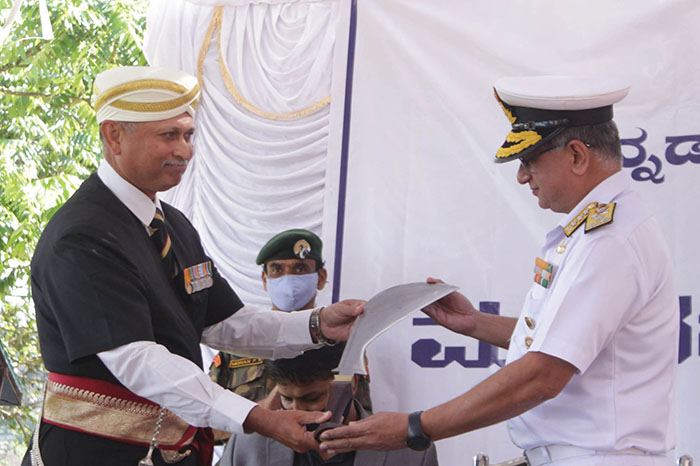
Rear Admiral Ichettira B. Uthaiah took over as the Admiral Superintendent, Naval Dockyard, Visakha-patnam from Rear Admiral N.M. Sreekumar Nair, on May 31 in Visakhapatnam.
Rear Admiral is a naval commissioned officer rank above that of a Commodore and Captain and below that of a Vice Admiral. On handing over the helm at Naval Dockyard, Visakhapatnam, Rear Admiral Sreekumar Nair would take over as Director General Naval Project at Visakhapatnam, on promotion as Vice-Admiral.
Uthaiah was commissioned into the Indian Navy in November 1987. He holds a B.Tech degree in Marine Engineering, an M.Tech degree in Mathematical Modelling and Computer Simulation and an M.Phil degree in Strategic Studies.
In his 33 years of service, the Rear Admiral has served the Indian Navy in various capacities, with appointments at the Warship Design Directorate, Training Academies, Naval Dockyard and at the Command and Naval Headquarters.
His key staff appointments cover areas of Warship Design, Building and Acqui-sition; Warship Operation, Maintenance and Repair, Officer Training and Project Management of a mega Marine and Civil Infrastructure Project. His recent operational and staff appointments include General Manager (Refit) at Naval Dockyard, Visakhapatnam, and Principal Director (Ship Production).
On being elevated to the rank of Rear Admiral, the officer was appointed as Additional Director General (Technical) at Headquarters, Project Seabird. The mega project involves the creation of a futuristic Naval Base at Karwar, with four self-contained townships, a Naval Air station and a 400-bed tertiary care hospital.
An alumnus of the Naval War College, he was awarded the Vishist Seva Medal (VSM) for distinguished service at Naval Dockyard and was instrumental in concluding major warship construction contracts with Russian and Indian Shipyards as Principal Director.
The equivalent ranks of Rear Admiral in the Indian military are Major General (Army) and Air Vice Marshal (Air Force). Uthaiah is the son of Ichettira M. Belliappa (Bollu) and Lalitha (Cheppudira). Belliappa was serving as an officer at the Housing Board in Chennai. After retirement, he came to Kodagu and settled in Makkandur.
Uthaiah is married to Ramya, daughter of Maneyapanda Ravi. The couple has two children. While their daughter is pursuing her legal studies, their son is an architect. Uthaiah’s brother I.B. Viju Bopanna is working as a Global Drive Officer with Coca-Cola in the US.
source: http://www.starofmysore.com / Star of Mysore / Home> News / June 02nd, 2022
Vice Admiral adds new Navy attractions to Gen. K.S. Thimayya Museum at Madikeri
Modules of INS Shivalik, Sindhughosh Class submarine and AK230 Navy gun mount
Madikeri:
The INS Shivalik (F47) ship module was declared open for public viewing at ‘Sunny Side,’ General Kodandera S. Thimayya’s house in Madikeri that has been converted into a Museum and a War Memorial.
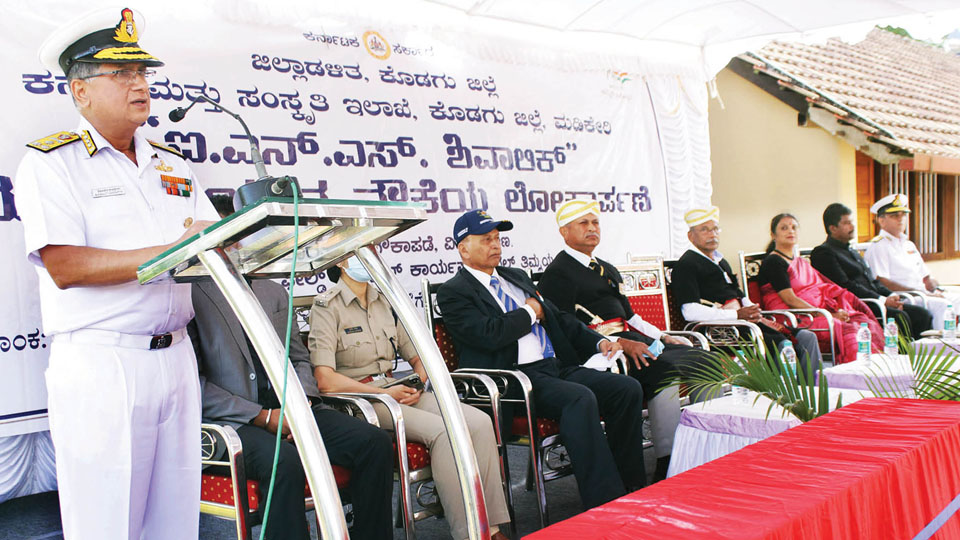
The 24-feet model, along with a Russian-made AK230 Navy gun mount (anti-aircraft gun) and a module of Sindhughosh Class submarine had arrived at the museum two weeks ago and they were dedicated by Vice Admiral Biswajit Dasgupta, Flag Officer Commanding-in-Chief, Eastern Naval Command yesterday. He was accompanied by his wife Roopa Dasgupta.
The modules were brought to Madikeri from Visakhapatnam Naval Base. INS Shivalik is designed to escape detection by normal radars and surveillance equipment and is one of the formidable stealth frigates in naval prowess. Apart from India, only the US, Russia, UK, France, Sweden, Japan, Italy and China have the capability to build stealth warships of this size and class.
Impressed by the museum and also the culture of Armed Forces in Kodagu, Vice Admiral Biswajit Dasgupta said that the district has emerged as an inspiration to thousands of youth to join the Defence Forces. He said that it was an honour for him to inaugurate critical exhibits at the museum.
On the INS Shivalik, he said that the frigate was built in India and is one among the many warships built by India. “Shivalik was built at Mazagaon Dock. India has four public sector Defence shipyards — Mazagaon Dock Shipbuilders Limited (Mumbai), Garden Reach Shipbuilders and Engineers Limited (Kolkata), Goa Shipyard Limited (Goa) and Hindustan Shipyard Limited (Visakhapatnam). The Cochin Shipyard is also capable of making warships and INS Virat was built there,” he said.
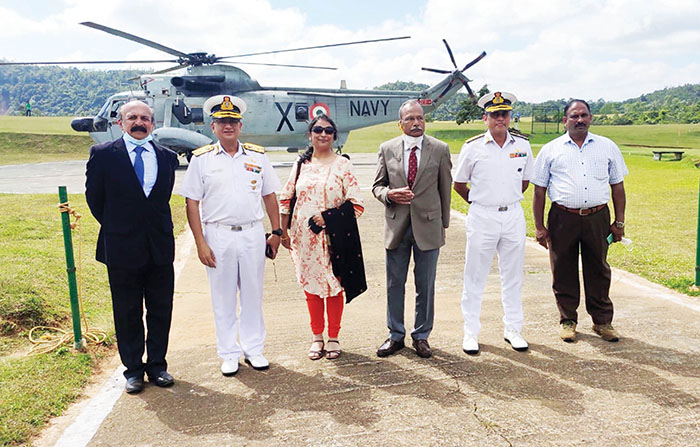
Field Marshal Cariappa and General Thimayya Forum Convener Major (Retd.) Biddanda Nanda Nanjappa (extreme left), Vice Admiral Biswajit Dasgupta, Flag Officer Commanding-in-Chief, Eastern Naval Command and his wife Roopa Dasgupta, Forum President retired Colonel Kandrathanda C. Subbaiah, Rear Admiral Iychettira B. Uthaiah and Madikeri Tahsildar Mahesh at the helipad in Madikeri when the guests arrived
‘Aatma Nirbhar’ Bharat
“The first indigenous warship was built by the Indian Navy in the 1960s where the concept of ‘Aatma Nirbhar’ Bharat was diligently followed. In the future, the Navy has plans to build 41 warships in the Indian Shipyards and 39 will be fully indigenous. Moreover these are the most advanced machines that have a formidable fire power that can shatter any other powerful ships of any country,” he said.
Giving a patient ear to the office-bearers of the Field Marshal Cariappa and General Thimayya Forum that played a pivotal role in converting the rickety house of the celebrated General that once housed the RTO office into a swanky museum, Vice Admiral Biswajit Dasgupta said that the dedication of the Forum, the respect shown by the people of Kodagu to the Armed Forces and also the dedication towards preserving heritage were commendable and inspirational.
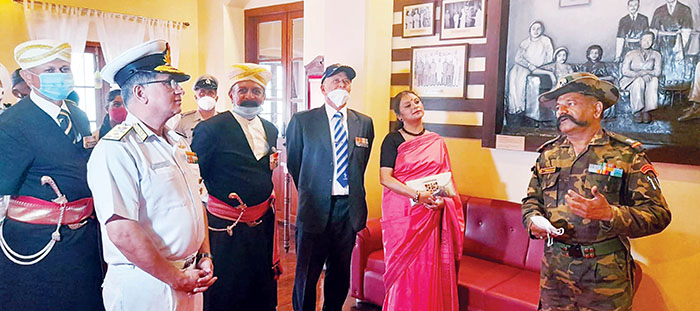
Picture shows the dignitaries inside the ‘Sunny Side’ Museum.
AK230 Navy gun mount
On the AK230 Navy gun mount, he said that it has been designed to engage air and surface targets, such as anti-ship missiles, aircraft, helicopters, other types of air strike weapons, as well as small-size surface ships. It can fire 2,000 bullets from its barrel in one minute. The Navy still uses such guns and also the advanced ones, he added.
He appreciated Rear Admiral Iychettira B. Uthaiah for his efforts in bringing in the Navy equipment to the museum. The module of the Sindhughosh Class submarine was unfurled by Rear Admiral Uthaiah who handed it over to Major General (Retd.) Kuppanda Nanjappa of the Forum.
CDS late Gen. Bipin Rawat remembered
Forum President retired Colonel Kandrathanda C. Subbaiah narrated the story of establishing the museum and recalled the contribution of late Chief of Defence Staff Gen. Bipin Rawat, late Lieutenant General Biddanda C. Nanda and former Army Chief General Dalbir Singh Suhag. A minute’s silence was observed in honour of Bipin Rawat, his wife and other officers and soldiers who were killed in the recent chopper crash at Coonoor.
Kodagu Deputy Commissioner Dr. B.C. Satish presented a ‘thook bolcha’ (traditional Kodava lamp) to Vice Admiral Biswajit Dasgupta and his wife while Lieutenant General Pattacheruvanda Thimmaiah presented ‘Odikathi’ (traditional sword of Kodavas) to Vice Admiral Biswajit Dasgupta and also to Rear Admiral Uthaiah.
Before dedicating the Navy war machine modules, the dignitaries paid respects to the Amar Jawan War Memorial. They later went around the museum and were impressed by the collection
Forum Convener Major (Retd.) Biddanda Nanda Nanjappa, officer from Visakhapatnam Naval Base Nishanth B. Badoria, Kannada and Culture Department Director Darshana, SP Kshama Mishra, Sainik School Principal Col. G. Kannan, Vice-Principal Lt. Col. Seemanth Tripati, Squadron Leader R.K. Dey, students of the school and a large number of uniformed retired soldiers were present on the occasion.
source: http://www.starofmysore.com / Star of Mysore / Home> News / December 14th, 2021
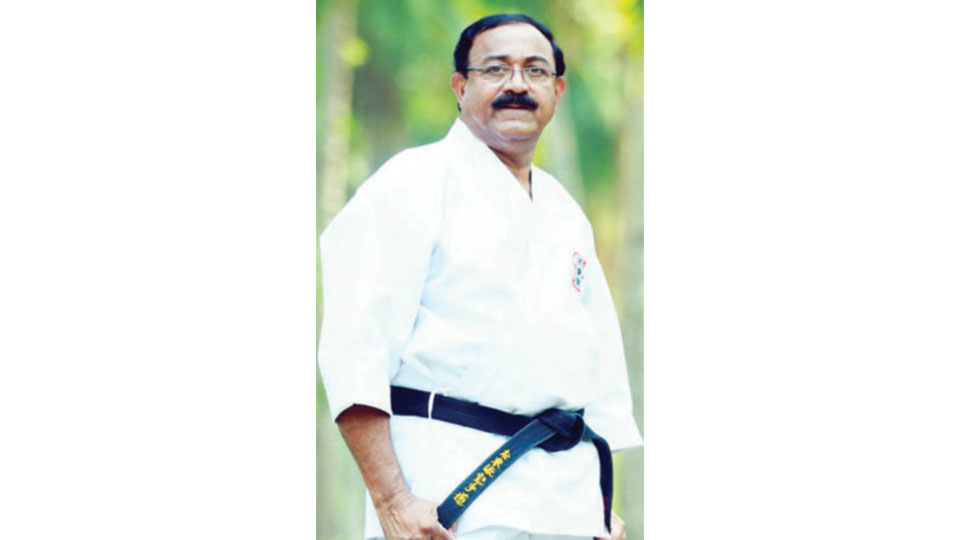
C.S. Arun Machaiah, former MLC, Hon. President of Mysore Karate Association, senior Vice-President of Karate India Organisation and President of Akhila Karnataka Sports Karate Association, is representing Team India at the 10th Commonwealth Karate Championship being held at Birmingham in London (UK) from today (Sept. 7).
The 70-member Indian Team of Karatekas, led by Arun Machaiah, left for London last Sunday. A total of 70 countries are expected to take part in the Championship.
Arun Machaiah has represented India in various International Karate Championships across the globe and has brought laurels to the country.
source: http://www.starofmysore.com / Star of Mysore / Home> News / September 07th, 2022
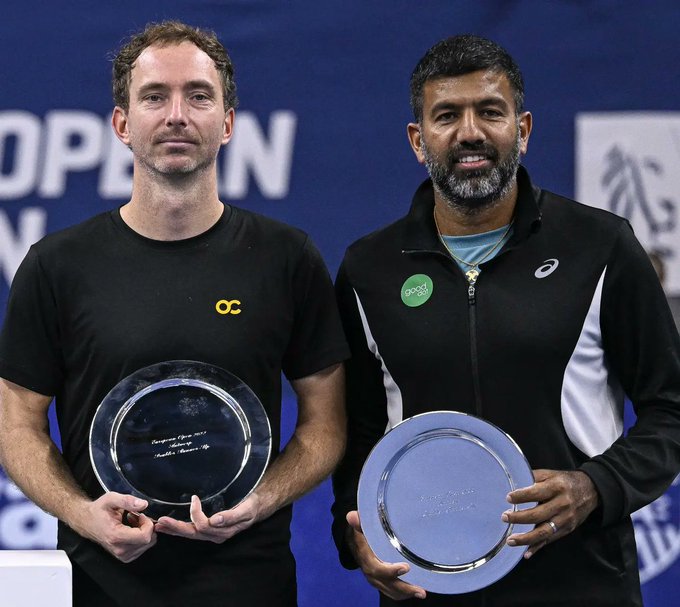
The second-seeded men’s doubles pair of Rohan Bopanna and Matwe Middelkoop finished as the runners-up at the European Open.
Rohan Bopanna(right) and Matwe Middelkoop / @Twitter
The second-seeded men’s doubles pair of Rohan Bopanna and Matwe Middelkoop, on Sunday, finished as the runners-up at the ATP 250 European Open. The Indo-Dutch pair went down 6-3, 3-6, 5-10 to the all Dutch pair of Tallon Grieskspoor and Botic van de Zandschulp in the a hard-fought final.
Bopanna and Middelkoop started well as they broke right in the second game of the first set. The Indo-Dutch pair then cruised to win the first set 6-3, but Grieskspoor and Zandschulp were too hot to handle for the remainder of the contests.
During the duration of the match, Bopanna and Middelkoop hit nine aces and converted 3 out of their 4 break points. They had earlier reached the final with a hard fought 7-6 (8-6), 2-6, 10-7 win over Sander Arends and David Pel in the semifinal.
Rohan Bopanna and Matwe Middelkoop had combined to lift the men’s doubles title at Tel Aviv Open earlier this month.
source: http://www.thebridge.in / The Bridge / Home> Tennis / by The Bridge Desk / October 24th, 2022
Colonel Chengappa and his wife were there to receive them outside their charming, colonial-era cottage, located on top of a hill and only a short walk away from the town.
Sketch of the characters | Illustration: Danesh Bharucha
The taxi was waiting for them at Coimbatore station for their early morning arrival. The 70 km ride to Kotagiri, located at about 1800m above sea level, offered stunning views of picturesque tea plantations dotting the road on either side, with a circle of misty blue hills wrapped in dense Shola forests enveloping the entire landscape. It is these mist-clad hills that had given the name “Nilgiris” to this range of mountains in South India, since ‘Nilgiri’ literally means “Blue Mountain.”
Colonel Chengappa and his wife were there to receive them outside their charming, colonial-era cottage, located on top of a hill and only a short walk away from the town. Colonel Chengappa was a tall and sturdy man with an erect posture that belied his seventy-odd years. He sported a thick, military-style moustache under a large, fleshy nose and a high forehead topped with a balding pate with straggly wisps of grey hair on the sides and on his temples.
A caricature of Colonel Chengappa. | Illustration: Danesh Bharucha
Standing by his side was his wife, a slightly plump woman in her mid-sixties, with a kindly, smiling face and a pair of glasses with circular frames that emphasized the roundness of her face. The house had a quaintly rustic air about it with its high sloping roof, flower patterned window curtains and red oxide tiled flooring. The two bedrooms had large, brass four poster beds with white mosquito net canopies and the snug coziness of the small sitting room was enhanced by ample leather armchairs around a brick fireplace and hearth.
At one end of the garden was a wooden shed that the Colonel had converted as his study. His study was his own private domain to which no intruders were allowed. The door of the study was kept permanently locked and only the Colonel had access to this exclusive haven where he isolated himself for long hours during the course of each day.
Inside the shed was a large roll-top desk with several drawers and cubbyhole compartments. One drawer was stacked with letterheads, envelopes and blank sheets of paper, whilst another was filled with medals and mementos. The small compartments on either side were crammed with fountain pens, ballpoint pens, pencils, paper clips, staple pins and other miscellaneous stationery items.
Next to the writing desk was a wooden bookcase with a sliding glass door containing row upon row of hardbound books, ranging from classical tomes and contemporary novels to volumes of the Reader’s Digest collection of condensed stories, books on warfare and military strategy, and self-help and do- it-yourself manuals.
The opposite wall was lined with two large wooden stands with several dust-covered shelves piled high with back issues of sundry magazines, sheaves of newspaper cuttings bundled together with string and a large heap of filed correspondence, both personal and official. Two shelves contained an array of sport trophies, collectables and souvenirs gathered from the Colonel’s several trips around the world, whereas the lowest shelf contained several tin boxes filled with old family photographs.
When they had moved from the city to their retirement home in the hills, the Colonel’s wife had suggested that they clear some of the clutter and get rid of some of the unwanted stuff. But the Colonel had been adamant. He was a hoarder and loathed discarding anything.
“These are my most valued possessions and I would never consider giving anything away,” he remonstrated with his wife. “Who knows – one day some of these items might come in use.” Knowing how stubborn her husband could be, his wife let the matter drop and the move to the hills was completed lock, stock and barrel, with nothing discarded or left behind. The Colonel’s precious possessions were left intact and found their new home in his den in the converted shed.
One morning the Colonel’s seclusion in his den was interrupted by an urgent summons from the town’s Municipal Council, of which he was an active member. He popped his head into the window to tell his wife that he was going down to the town, and left hurriedly, accompanied by the person who had come to fetch him. Lakshmi was helping her mother in her cake-making whilst young Shruti stood by waiting to lick the leftover batter off the sides of the cake bowl.
Twelve-year-old Aarti was pottering around in the garden, restless and angry with herself for having forgotten to bring along her favourite story books. She stomped around from one end of the garden to the other and stopped before her grandfather’s study. She was surprised to see that the door to the shed, which normally was always locked in the Colonel’s absence, had been left open. She hesitated, remembering her grandfather’s commandment that no one was allowed inside his study. But curiosity got the better of her and, opening the door a fraction, she quietly tiptoed in.
She stared wide-eyed around her in amazement at the wide assortment of objects that crowded the little room. Ignoring the writing desk, she walked towards the bookcase. Should she take one of her grandfather’s books? There were so many, surely he would not mind parting with one of them? She gingerly slid aside the glass sliding door and rifled through the stack of books on the lower shelf which she thought might contain an interesting story book. Her eyes settled on a book with a charming cover of a street scene with white snow-capped roof tops and gentle snowflakes falling on an old-fashioned street lamp. It was “A Christmas Carol” by Charles Dickens. She was sure she would like the story and closing the bookshelf she tucked the book under her arm and turned around to leave.
She passed one of the wooden stands and her eye was caught by a biscuit tin on the lower shelf with a picture of a fluffy looking grey kitten with a bright red ribbon around her neck. Aarti loved cats and this new discovery was too tempting to let by. She crouched low and opened the tin. It was full of old photographs and right on top of the pile she saw a familiar looking picture of a girl around her own age. She let out a squeal of delight as she realised that the girl in the picture was none other than her own mother. She was on the verge of going through more photos when she heard the sound of approaching footsteps on the gravel outside. She quickly shut the box of photos and stood up just as she saw her grandfather enter through the door of the shed.
Aarti had been caught by her grandfather on forbidden territory. Not just that, she had taken one of his books without his permission and she would now have to bear the consequences. However, not one to be easily flustered, she quickly gathered her wits about her and faced him boldly: “Grandpa, I was looking for something to read and since the door of your study was open, I came in and picked up one of your books. I am sorry. I hope you don’t mind.”
She was expecting to be severely reprimanded but to her surprise, her grandfather just glared at her and said:
“It’s OK. Just be sure you put it back when you have finished reading the book.”
Relieved, she mumbled a quick thank you and, her heart thumping, she rushed out of the shed and back into the house. At the lunch table that afternoon no mention was made of the morning’s incident either by the Colonel or by his granddaughter. But later in the privacy of their bedroom Aarti confided to her mother and related to her exactly what had transpired:
“I am sorry Mummy; it was wrong of me to have taken the book without asking. But Grandpa has so many books in his study. Wouldn’t it be nice for him to give some of them to us? Shruti is still young, but surely he must know how fond both of us are of books and reading. Do you know, he actually asked me to put back the book after I had finished reading it?”
Lakshmi tried to calm and sooth her daughter:
“Aarti, I know how upsetting this must be for you. But that is the way Grandpa is. Don’t let it bother you. Sometimes people do get a bit funny in their old age.”
“I understand, Mummy. But in his study Grandpa also has so many old family photographs. I saw a lovely picture of you when you were my age. I would like so much for him to share these memories with us. We could all sit together and enjoy seeing them. I am sure Grandma would like that too.”
“I will speak to him, Aarti, and we will try and get something organized. I know you would love to see some of his travel souvenirs too.”
Author’s Note: Will the Colonel be persuaded to unlock his past and share his memories and possessions with his family? You must read the full story to find out. Be prepared for a surprise !!! (Colonel Chengappa’s Legacy » is available in a collection of 15 illustrated short stories entitled « The Missing Tile and Other Stories » in Kindle and Paperback versions on all Amazon platforms worldwide.)
Bangalore-based writer, Saeed Ibrahim, is the author of two books – “Twin Tales from Kutcch,” a family saga set in Colonial India, and “The Missing Tile and Other Stories,” a collection of 15 short stories. Saeed was educated at St. Mary’s High School and St. Xavier’s College in Mumbai, and later, at the University of the Sorbonne in Paris. His other writings include newspaper articles, some travel writing, several book reviews and two essays for the Museum of Material Memory. His short stories have been published in “The Deccan Herald,” “The Beacon Webzine,” “Bengaluru Review,” “The Blue Lotus Magazine” “Borderless Journal” “Muse India” and “Outlook India.”
source: http://www.outlookindia.com / Outlook / Home> Outlook Weekender / by Saeed Ibrahim / September 13th, 2022
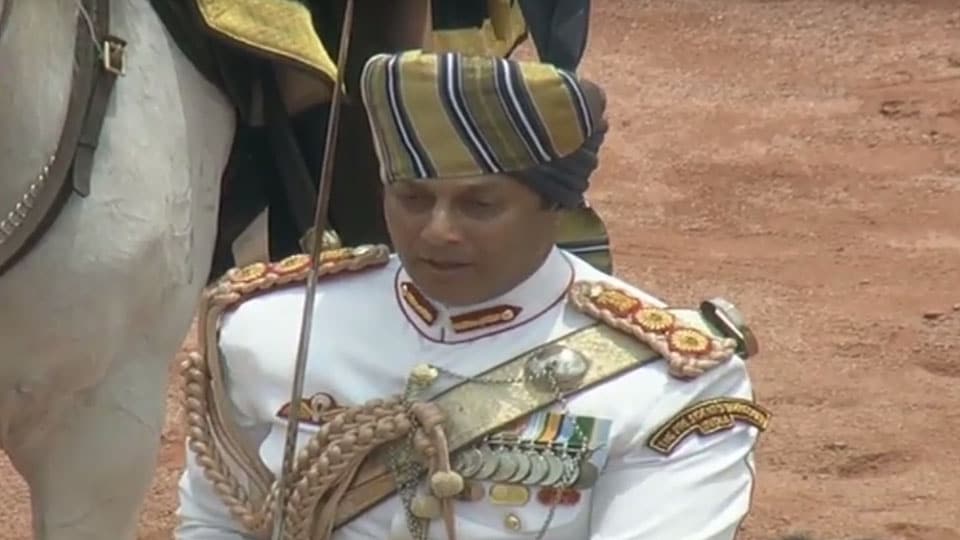
It was a proud moment for Colonel Bommanda Dhiraj Chengappa from Kodagu as he led a contingent of 46 horse-mounted Bodyguards and presented the National Salute to President Ram Nath Kovind.
The President’s Bodyguards also escorted Kovind to the Parliament House for the swearing-in.
Later, both President Kovind and ex-President Pranab Mukherjee were given an Inter Services Guard of Honour separately.
On conclusion of the Guard of Honour, The President’s Bodyguards escorted Mukherjee from the forecourt to the Iron Gate of the Rastrapathi Bhavan.
source: http://www.starofmysore.com / Star of Mysore / Home> News / July 25th, 2017
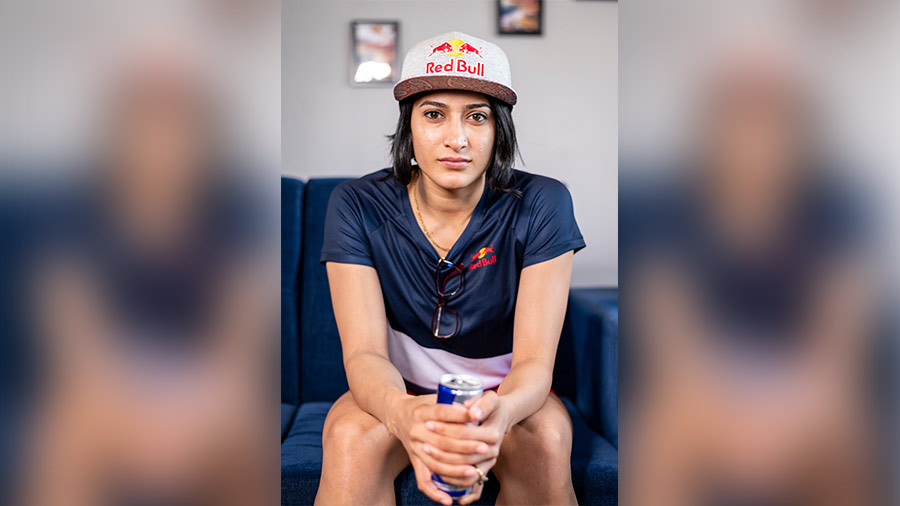
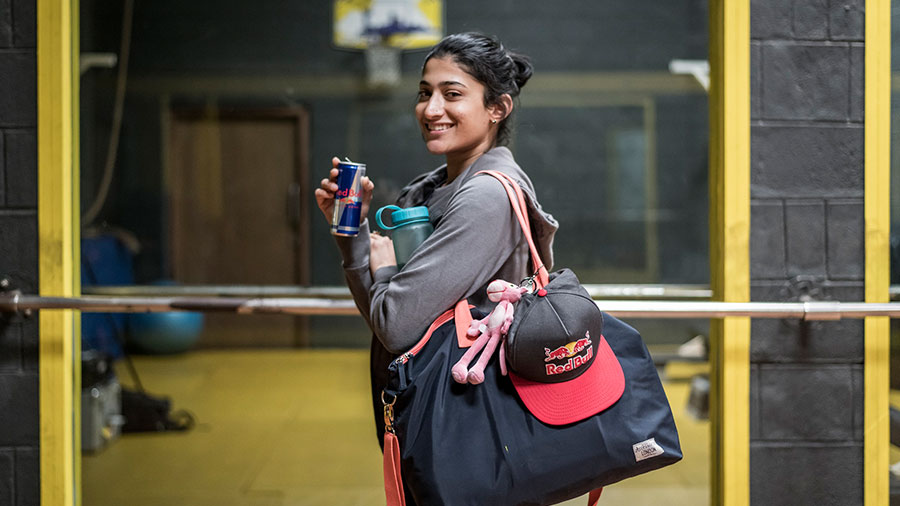
The ace shuttler opens up on her career, India’s position in badminton and Red Bull Shuttle Up
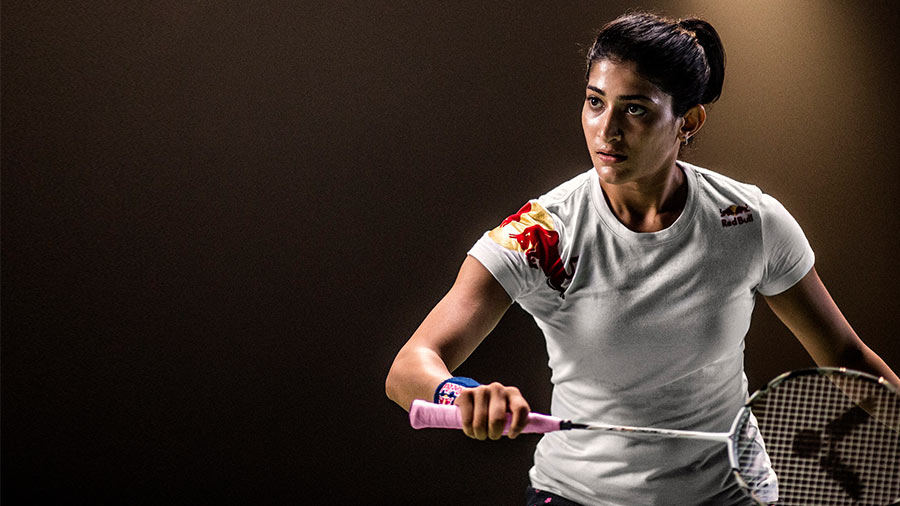
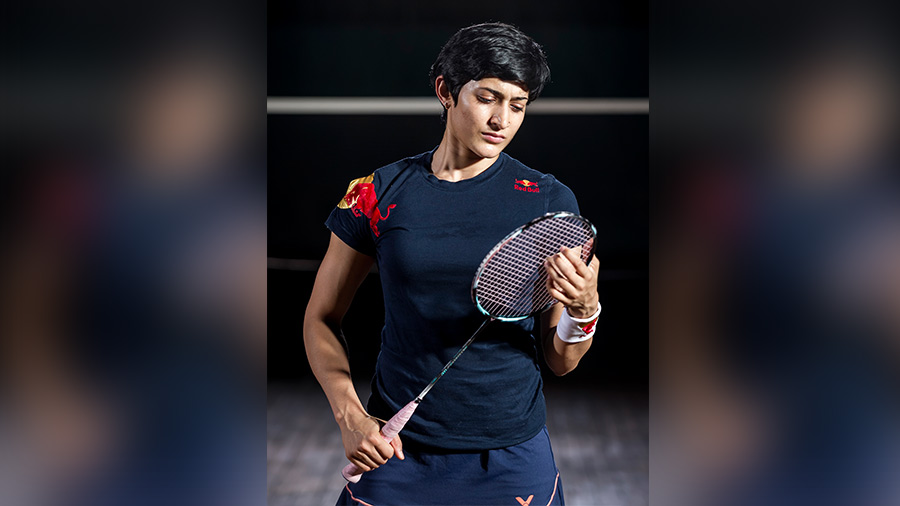
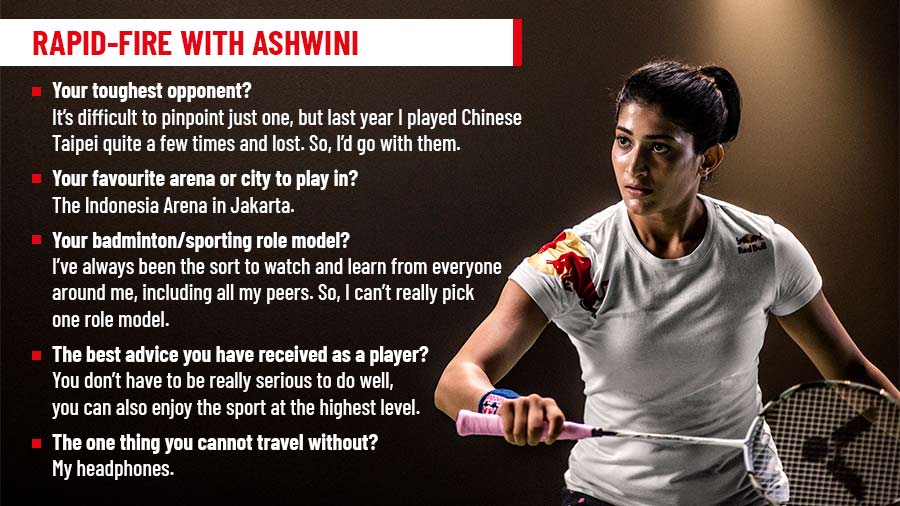
Ashwini Ponnappa has regularly been one of India’s highest-ranked women’s doubles players over the last decade Red Bull Shuttle Up
For more than a decade, Ashwini Ponnappa has been the gold standard when it comes to women’s doubles in Indian badminton. Whether as one half of a record-breaking pair with Jwala Gutta or later on with N. Sikki Reddy, Ashwini has endured as a beacon of consistency in a format that often gets overshadowed by the superstar culture around singles players.
In the midst of the fourth edition of Red Bull Shuttle Up, India’s first-ever exclusive women’s doubles badminton competition, Ashwini, who is also the face of the tournament, spoke to My Kolkata about her career, the disparity between men’s and women’s badminton in India, how Red Bull’s initiative is making a difference in women’s doubles and more. Edited excerpts from the conversation follow.
My Kolkata: When did you realise that you wanted to take up badminton professionally and what made you opt for doubles?
Ashwini Ponnappa: I got into badminton because of my parents. I was too young to make a decision myself, so my parents were the ones who helped me get into the sport. Ever since I started playing badminton as a kid, I haven’t played any other sport seriously. Growing up, I had a coach who was very strict and firm about the basics of the game. When I won my first national title in the sub-junior girls’ doubles category, I realised that I really want to take up badminton professionally. Once again, my parents’ support was crucial in making that decision. As for why doubles over singles, I’ve always done better in doubles and won more titles there. So, it was quite a simple choice for me.
Doubles is much faster and requires more smashing and forearm strength as well as better reflexes
Ashwini initially trained as a singles player for several years before switching to doubles Red Bull Shuttle Up
What are the most challenging aspects of playing doubles and how should one prepare separately for those challenges?
When I started playing doubles, most of us, especially the women, were singles players. We hardly had a specialised focus on doubles in India. Even when I trained at the Prakash Padukone Badminton Academy in Bengaluru, all the kids wanted to be singles players. Apart from Jwala (Gutta) and Shruti (Kurien), there were no other established female doubles players to look up to either. It was only in the junior category competitions that I was first part of doubles camps. Switching from singles training to doubles was quite difficult, as doubles is much faster and requires a lot more smashing and forearm strength as well as better reflexes. When you have two people on court on the same side, it’s not just about yourself. There’s a lot of coordination that goes into it, which is the most challenging aspect. You could be a great player by yourself, but if you can’t coordinate, you won’t succeed in doubles.
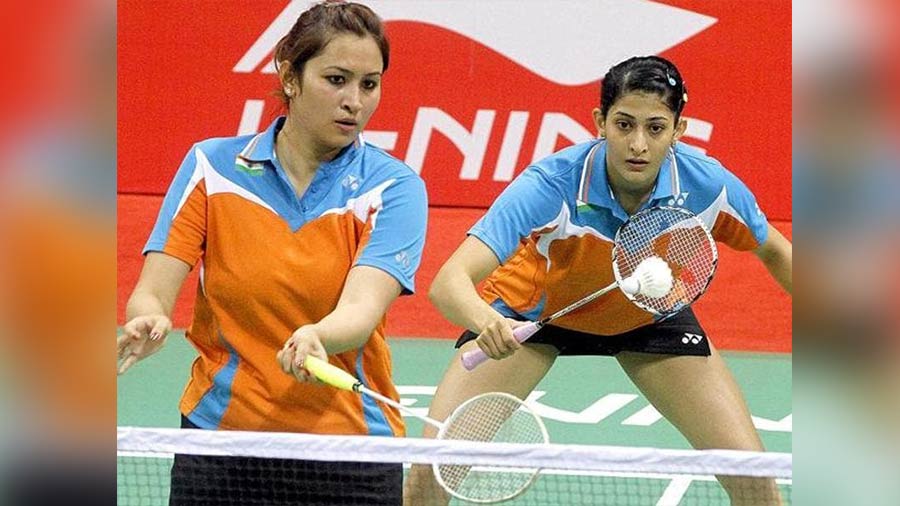
Jwala and I had a natural understanding of what the other person would do on court
Ashwini and Jwala Gutta are widely regarded as the best women’s doubles pair in Indian badminton history / BAI
What did you enjoy most about teaming up with Jwala Gutta for so many tournaments? What do you think set the two of you apart?
When I started playing with Jwala, I was a junior with little to no experience and she was already an established senior. She took a chance by deciding to play with me and I managed to rise to the occasion. Being able to match up to her standards was important and I’m glad I could do that. What made our partnership special and successful was the fact that our styles matched a lot, so we had a natural understanding of what the other person would do on court. We didn’t communicate a lot when we were playing, but managed to sync quite easily. At that point, we were also quite close off the court and she was extremely supportive, which made our team even more formidable.
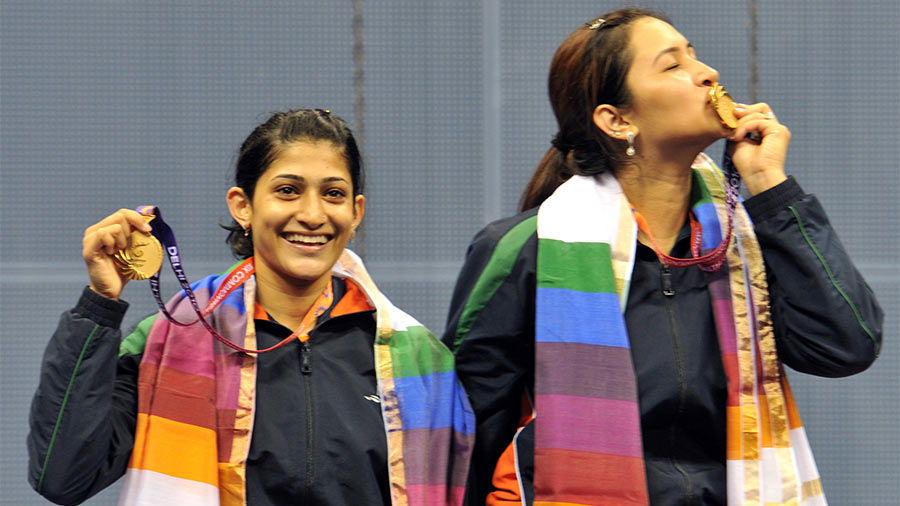
Ashwini and Jwala with their gold medals at the 2010 Commonwealth Games BAI
Was winning the gold medal at home in the 2010 Commonwealth Games (with Jwala) the proudest moment of your career or would you prefer your bronze medal at the BWF World Championships (also with Jwala) in 2011? Or something else altogether?
I’ll have to go with both, the Commonwealth medal as well as the World Championships one. Nobody had achieved either feat before. But more than anything else, what makes these two achievements among my favourites is that I had a great time while I played those tournaments. Often people go through a lot and sacrifice a lot to win, but don’t enjoy the process. I was lucky in that I had a blast while having my proudest moments on court.
The system at the 2012 Olympics was flawed
Do you have any regrets from your career so far, especially in relation to the Olympic Games?
The 2012 Olympics would definitely remain a regret. Given what happened (Japan had shockingly lost to Chinese Taipei in what was seen by many to be a deliberate defeat or an instance of “throwing a match” to secure an easier opponent in the next round, which, incidentally, also led to India’s elimination), it was disheartening, because we had played very well. Looking back, I think the system was flawed, they shouldn’t have let players know who was going to play whom in the next rounds. A month before the next Olympics in 2016, I had had a horrible bout of dengue. As a result, I wasn’t able to smash as hard and that had an impact on the result, which was also quite disappointing.
Red Bull Shuttle Up is trying to make badminton more inclusive
Ashwini has been pushing for greater focus on women’s doubles as the face of Red Bull Shuttle Up /Reb Bull Shuttle Up
Coming to Red Bull Shuttle Up, Simran Sanghi (a previous winner of the tournament) said that it’s “the perfect example of empowered brands empowering women… proving that women are the real matadors of society”. What do you make of Red Bull Shuttle Up and how it has been making a difference to women’s doubles?
The most important thing about Red Bull Shuttle Up is that it gives women’s doubles players an opportunity and a platform that belongs solely to them. This is really important because in India we have leagues that don’t even have the women’s doubles format, which seems unbelievable to me. That’s where Red Bull Shuttle Up is trying to make badminton more inclusive. The second aspect is about having fun. I’ve always believed that you play sport because you want to have fun and that’s something that Red Bull Shuttle Up manages to provide in ample doses.
We don’t see the sheer number of quality players in women’s badminton as we do in the men’s game
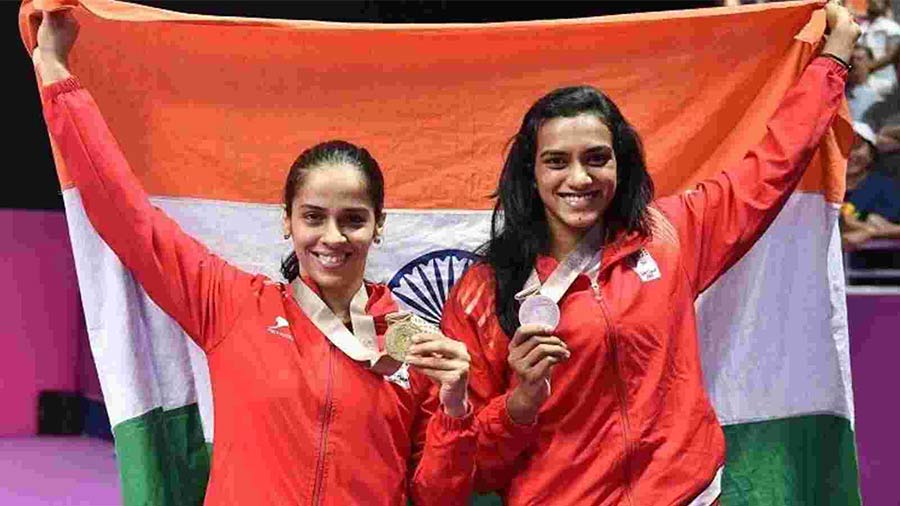
Ashwini believes that there is a big gap between Saina Nehwal and P.V. Sindhu and the rest of the field in women’s badminton /BAI
Looking at the larger picture, where does India stand as a force in badminton today? Are we a global power or are we still in the process of getting there?
The fact that we won the Thomas Cup in May speaks volumes about the strength in depth when it comes to men’s badminton. Beating powerhouses in international badminton like we did in the Thomas Cup is no joke. In that sense, we’re definitely a global power among the men. On the other hand, the women’s game still has a long way to go. We don’t see the sheer number of quality players in women’s badminton as we do in the men’s game, especially when it comes to doubles. Even if you take singles, there’s quite a bit of a gap between P.V. Sindhu and Saina Nehwal at the top and the rest of the field. There are a fair few young singles players who are doing well, but it’ll take them years to get to the levels of Sindhu or Saina. Coming back to the doubles, it’s the same problem I stated earlier. How can you expect doubles players to give you points in big tournaments when you don’t include women’s doubles as part of your domestic leagues? When it comes to women’s badminton, it’s not that we don’t have talent, but the talent that’s there isn’t being nurtured the right way.
Switching tracks, how do you relax and zone out? What are your hobbies and interests outside badminton?
Of late, I’ve enjoyed just chilling and watching dramas. I watch any and every kind, including Anime. I also watch a lot of YouTube content, especially motivational talks and conversations that pique my interest in general.
My most important goal is working on myself
Ashwini feels that she still has a lot of goals and dreams left to realise Red Bull Shuttle Up
What are the dreams and goals you are still chasing as an athlete?
I’ve still got a lot of dreams and goals, which is why I’m still playing! I feel like I’ve spoken a lot about them in the past and at the moment, I’d rather talk about my most important goal, which is working on myself. I’m trying to take a different approach with my holistic development on and off the court, and if that goes fine, the rest of the goals should fall into place.
source: http://www.telegraphindia.com / TelegraphIndia Online / Home> My Kolkata> People> Badminton / by Priyam Marik / October 17th, 2022
Indian designer Prasad Bidapa wants India’s hand-made khadi and handlooms recognised globally, saying that there are immense opportunities for foreign stylists to work with thousands of weavers across the country.
“We want to expose Indian textiles to the world and show every designer that they can come to India, work directly with the artisans and create something very original,” Bidapa told PTI after the show “Handlooms@75: Celebrating the Fabric of Freedom” here.
The designer urged truly conscious designers to work with Indian weavers at the grassroots level and help them create something new and fresh. “Something that the world has not seen before.”
“Prime Minister Narendra Modi has been a wonderful support. He wears so much khadi and handlooms that he has had the spotlight trained on the clothing,” said the designer after hosting the fashion show in Singapore on Saturday.
“We have thousands of artisans working on Khadi and handlooms skilled in block print, leheriya dyeing,” said Bidapa, adding that there were immense opportunities for foreign designers to work with thousands of weavers in India.
“We are trying to sensitise young people all over the world, trying to get them to understand the beauty of the handmade textile,” the designer stressed.
The designer also called on the Prime Minister’s Office to include skills of the hands, weaving, printing and dyeing in the national skilling programme.
Bidapa highlighted how Japanese fashion designer Issey Miyake created the label “HAAT” — all of which uses Indian Khadi.
The Saturday exhibition was held at the invitation of the Indian High Commissioner in Singapore, P Kumaran, and sponsored by the Global Indian International School, as well as micro, small and medium enterprises (MSMEs) from Karnataka among others.
The Bangalore-based Bidapa has hosted the exhibition in the Middle East and will be travelling with his fashion wears as well as 20 models to Japan and South Korea next. (PTI)
source: http://www.dailyexcelsior.com / DailyExcelsior.com / Home> International News / by PTI / October 18th, 2022
WELCOME. If you like what you see "SUBSCRIBE via EMAIL" to receive FREE regular UPDATES.
Read More »