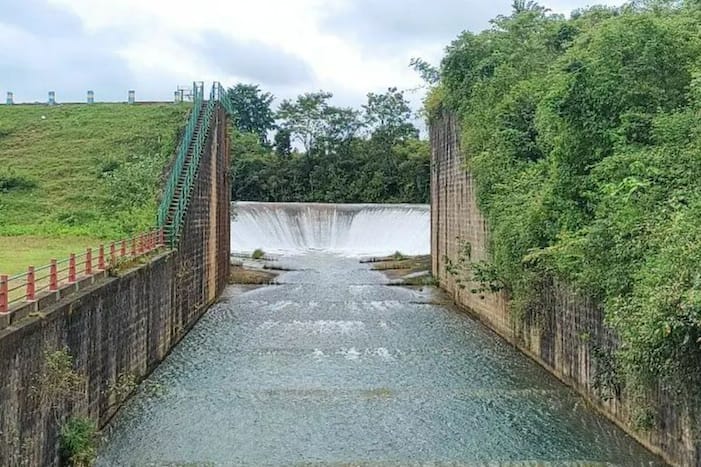
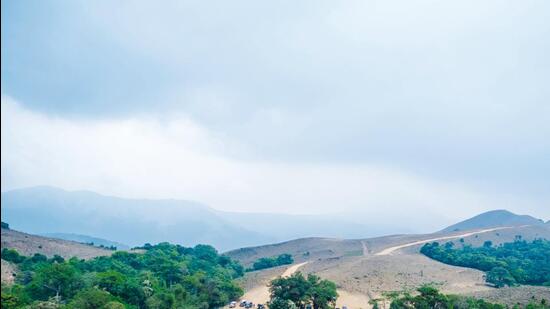
Chiklihole Dam, a modest reservoir in Coorg is located within Karnataka’s Cauvery basin. For those seeking some solitude and serenity away from the crowd, the hidden spot is the best choice!
Karnataka Travel: Heard of Chiklihole Dam in Coorg? Here’s Why It’s an Undiscovered Beauty That You Can’t Afford to Miss (Picture Credit: A_Lasting_Impression_43/Instagram)
Coorg’s Undiscovered Beauty:
Nature lovers that take the chance of travelling from distant locations merely to experience nature’s grandeur are drawn to the lush green surrounds, the freshness of the rain, and also the splendour of the waterfalls.
The Chiklihole Dam in Coorg, a man-made reservoir, is one of the undiscovered beauties in Karnataka’s Coorg.
Coorg is a captivating hill town in the Karnataka region that is home to expansive coffee fields, towering hills, and fascinating waterfalls. Coorg is situated in idyllic surroundings and presents countless opportunities to get personal with nature and its beauties. Coorg’s hidden gem – Chiklihole Reservoir is truly a sight to behold!
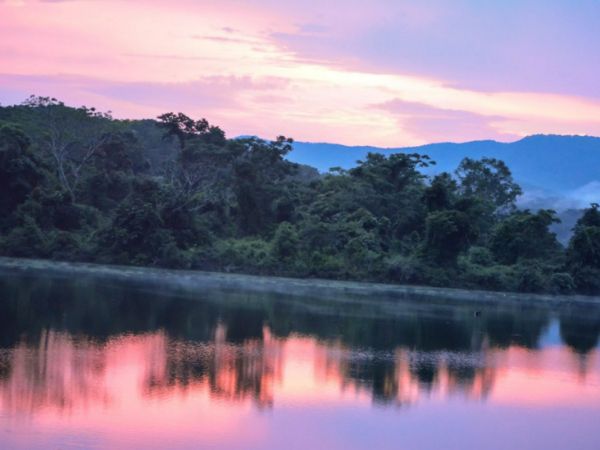
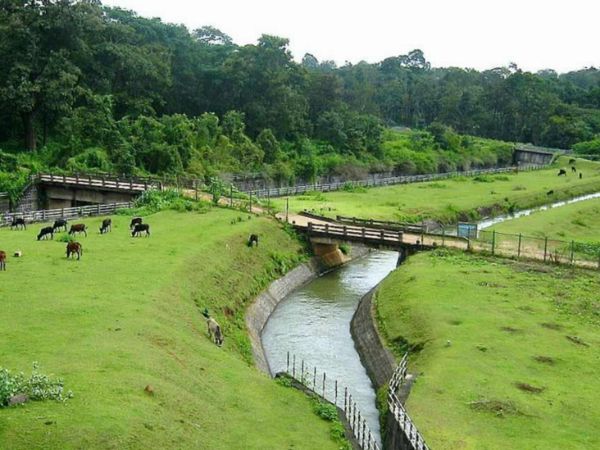
The Chiklihole Dam in Coorg is a great illustration of how natural and man-made buildings can coexist. The water reservoir is surrounded by lush vegetation on all sides, still water in the centre, and an enormous grand dam on the opposite side between Kushalnagar and Madikeri.
Chiklihole Reservoir is surrounded by gorgeous scenery, making it a delight to witness. (Picture Credit: Integrity Wellness/Twitter)
The dam is round in shape and has no crest gates. Travellers are drawn in by the dam’s distinctive shape alone. They are treated to an amazing sight as the water overflows like foam on the curved structures due to the increased input. This water body’s breathtaking surroundings are majestic and extremely pleasing to the eye. The reservoir has lush green woodlands on one side and a grassy meadow on the other, which adds to the area’s tranquillity.
Chiklihole Dam in Coorg, Karnataka, has breathtaking natural beauty. (Picture Credit: Sixth Element/Twitter)
Chiklihole Dam: Know The Ticket Price And Timings
Chiklihole Dam is Coorg’s undiscovered beauty that offers tranquillity from the hustle and bustle of the city. The location is rural, thus there are no shops. If visitors intend to unwind for a day or even a few hours by the dam, they should bring their own snacks and water.
Chiklihole Dam Timings: 8 AM to 5 PM
Chiklihole Dam Ticket Price: Free Entry
From the dam, you may enjoy a beautiful sunset view. Unfortunately, there isn’t a single store or business that provides amenities for tourists due to the location’s remoteness. The monsoon and winter season i.e from June to March are the greatest times to visit the dam since the weather is comfortable, the water level in the dam rises, and the scenery is beautiful.
Disclaimer: The views and opinions expressed in this article are those of the author and do not necessarily reflect the official policy or position of India.com. The writer is solely responsible for any claims arising out of the contents of this article. All the products are independently selected by the author. For any such reviews, please contact himanshu.shekhar@India.com
source: http://www.india.com / India.com / Home> Travel / by Travel Staff , edited Tanya Garg / September 11th, 2022
Mahouts, Kavadis unhappy as they are emotionally attached to pachyderms
Siddapur (Kodagu):
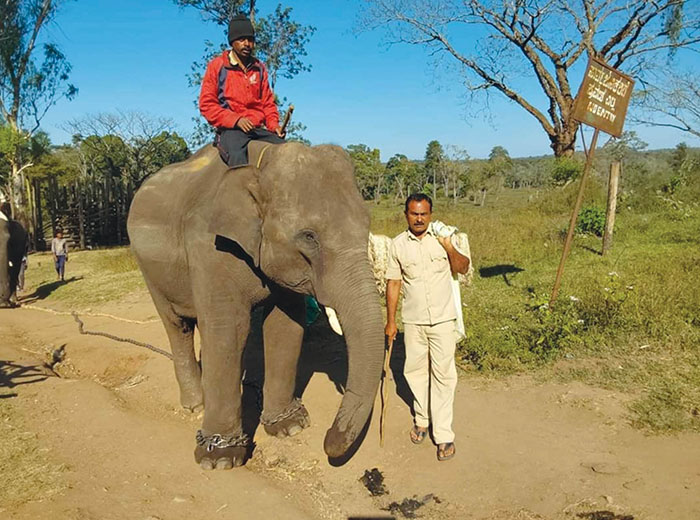
The Karnataka Forest Department has begun the transfer of 13 elephants in batches from various elephant camps in the State to Madhya Pradesh. The purpose is to assist the Forest Department of that State in reducing the human-animal conflict and also ease the pressure on the identified elephant camps of Karnataka.
The camps that are giving the elephants are in Mysuru, Kodagu and Shivamogga. Following a letter from the Principal Chief Conservator of Forests (Wildlife) and Chief Wildlife Warden, Madhya Pradesh, seeking transfer of camp elephants from Karnataka to Madhya Pradesh, the Karnataka Forest Department initiated the process to shift the identified elephants.
A team of Forest Department from Madhya Pradesh visited the elephant camps at Ramapura in Bandipur Tiger Reserve in Gundlupet taluk, Dubare Elephant Camp at Siddapura in Kodagu and Sakrebyle Elephant Camp in Shivamogga where they identified the 14 elephants (12 male and 2 female). Though 14 elephants were identified for transfer, one male elephant died, reducing the number to 13 — 11 male and two female.
Subsequently, they submitted a detailed report to the Madhya Pradesh Government for consideration of their transfer from Karnataka. Following up on the matter, the Karnataka Government sought the opinion of field officers who approved the transfer and later, the Union Ministry of Environment, Forest and Climate Change permitted the shifting.
The name of the selected elephants are: Krishna (21 yrs), Gaja (7 yrs), both male elephants, Marsiha (7 yrs) and Pooja (9 yrs), both female elephants — all four lodged in Ramapura camp of Bandipur Tiger Reserve; General Thimayya (8 yrs), Field Marshal (General) Cariappa (8 yrs), Valli (40 yrs), Lava (21 yrs) and Maruthi (20 yrs), all five male elephants from Dubare camp; Ravi (25 yrs), Shiva (6 yrs), Manikanta (35 yrs) and Bengaluru Ganesha (36 yrs), all four male elephants of Sakrebyle camp.
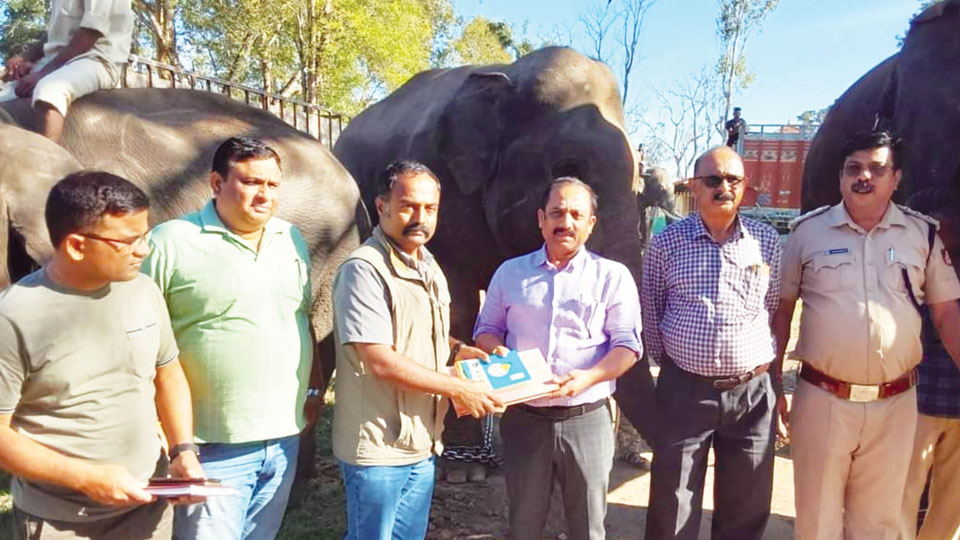
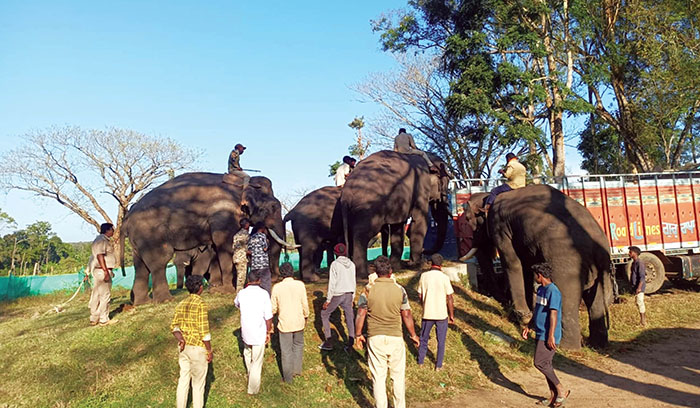
As per the agreement and the orders, yesterday, the five elephants were shifted from the Dubare Elephant Camp in trucks and the Madhya Pradesh Forest Department took possession of the elephants. They will subsequently reach Bhopal. The shipment includes Mahouts and Kavadis who will stay in Madhya Pradesh for some time till the elephants are acclimatised with new surroundings and new handlers.
The Ramapura camp gave four elephants instead of five as the male pachyderm Ganesha (17 yrs) that was identified to be shifted died due to illness. The remaining four elephants have already been sent to Madhya Pradesh.
Now with the shifting, the Ramapura Elephant Camp has been left with 14 elephants, Dubare Camp with 27 and Sakrebyle Camp has 15 elephants.
Kodagu Chief Conservator of Forests B. Niranjan Murthy said that there are elephant camps at Dubare, Harangi, Mathigodu, Bheemanakatte and Balle in Kodagu with a total of 70 tamed elephants and two of them from Mathigodu camp have been sent for capture and taming of wild elephants and other departmental purposes.
Mahouts, Kavadis unhappy
Even as the process of shifting began, the Mahouts and Kavadis have opposed it as they are emotionally attached to the elephants. This apart, they are scared of losing their livelihood as they will be left with no job after the elephants are shifted.
Pointing out that they are not permanent staff, Dobi, State Vice-President of Mahouts and Kavadis Association, said that it is the Mahouts who have captured and tamed these elephants in deep forests and their livelihood is now under threat.
Urging the Government to regularise their service and also to hike their wages, he wanted the Government to address the issues concerning daily wage Mahouts and Kavadis, who are serving the Forest Department for years without any job security.
source: http://www.staromysore.com / Star of Mysore / Home> News / December 23rd, 2022
Title : The Wild Cat’s Compendium / Author : Dr. Nima Poovaya Smith /Year : 2022 /Pages : 51 /Price : Rs. 449
(Kindle version)
Publisher: Caracal Publications, United Kingdom
Dr. Nima Poovaya-Smith (parental home Ammanichanda) has just launched a delightful book titled The Wild Cat’s Compendium, which is a collection of 45 brilliantly crafted verses on 45 species of wild cats as well as few of the domestic ones.
Composing poems is an art and Nima excels in succinctly portraying the feline species in all its glory. In a few apt words, the 45 poems read as fluidly as the graceful strides of the cats.
(Read the sample poem.)
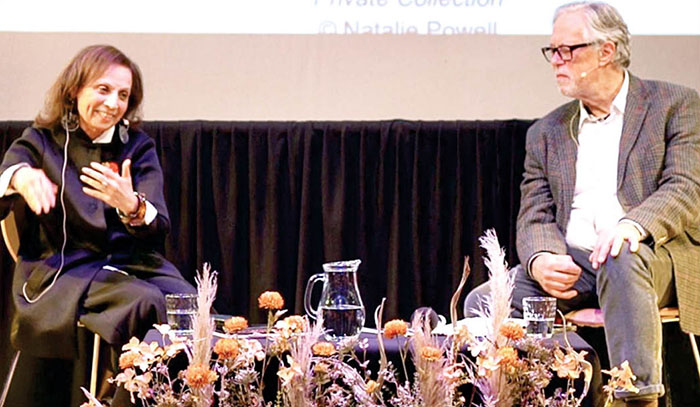
Nima Poovaya-Smith in conversation with David Lascelles, 8th Earl of Harewood, during the launch of her book.
Cats of All Tribes
Cats of all tribes major, middling, minor, inlaid menace and glamour, damascened suits of shadow armour.
Your coats boast such stylish motifs. Spots, dots, rosettes, stripes, flecks, spirals.
Draw breath, there is more, of this feline allure. Marbled, banded, clouded, streaked, stippled, brindled.
Your fur a lush canvas for lavish mark-making. Each unique striation etched with precision. Nature’s artful illusion.
The guile of the design, woven into the dapple of sun and shade, dissolving into air without hint or sign.
Seeing you without knowing we do, even when face-to-face. Our deepest, murkiest selves in plain view to that occult feline gaze.
African Golden Cats: By Joseph Wolf
What is remarkable about this compendium is the in-depth research that has gone into the lives, habitat, behaviour, and appearance of each variety of cat. Nima has been working on this book for quite a few years and has packed a great deal of information wonderfully crafted using her treasure trove of highly refined vocabulary. In addition, Nima has woven the grave threats these feline species face in the wild and that their primary detractors belong to the human species. In one of the poems, she has given a consciously chilling recipe for preparing tiger bone wine. Hopefully those who indulge in such shameful practices will realise and shun their superstition-ridden beliefs.
In the Introduction to the book, Nima mentions about her (and mine) maternal grandparents’ home (in Palangala village, Kodagu), where tigers and other wild cats roamed close to human dwellings. During our childhood days we have heard several tiger tales from our shikar-loving uncles. Over the years, those childhood memories have expanded in Nima’s mind to bring out this wonderful collection of poems.
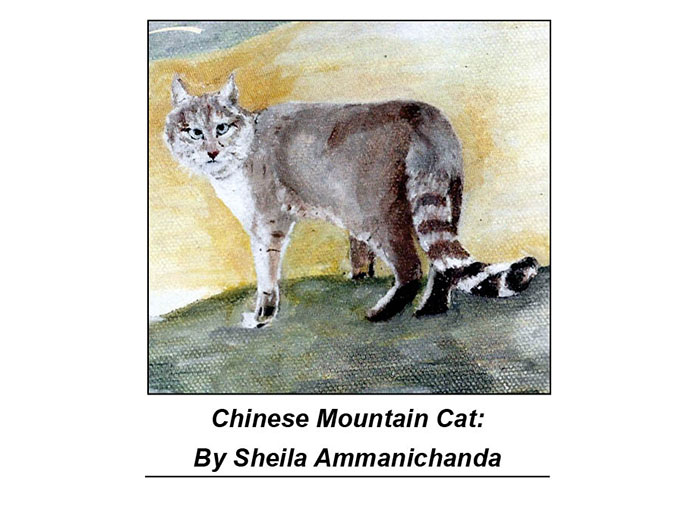
As a bonus, each poem is richly illustrated with paintings by several well-known artists. One of the artists is Nima’s brother Sunil’s wife Sheila, an alumna of CAVA, Mysuru.
Nima earned her Ph.D in English literature from Mysore University under the guidance of Prof. U.R. Ananthamurthy who used to mention that Nima was one of his best students. She went on a scholarship to University of Leeds to pursue her post-doctoral studies. She has been a curator of several museums in the UK. She was awarded the Order of the British Empire (OBE) in 2016 for her contribution in the field of arts and museums. She was appointed as Deputy Lieutenant of West Yorkshire in 2020, which entails interacting with the British royal family.
Chinese Mountain Cat: By Sheila Ammanichanda
Currently Nima is a Senior Visiting Research Fellow, School of Fine Art, History of Art and Cultural Studies, University of Leeds.
Wild Cats’ Compendium was launched at the Ilkley Literature Festival in October 2022. In the accompanying photograph, Nima is in conversation with David Lascelles, 8th Earl of Harewood (and second cousin of King Charles III), during the book launch.
Wild Cat’s Compendium is available on Amazon. However, currently only kindle version of the book is marketed in India: The Wild Cats’ Compendium: Cats of All Tribes eBook: Poovaya-Smith, Nima: Amazon.in: Kindle Store
Reading Wild Cat’s Compendium is an enriching experience. Every time you re-read a poem you learn something more. I rate this book as a Collectors’ Item.
source: http://www.starofmysore.com / Star of Mysore / Home> Feature Articles / by C.P. Belliappa / December 12th, 2022
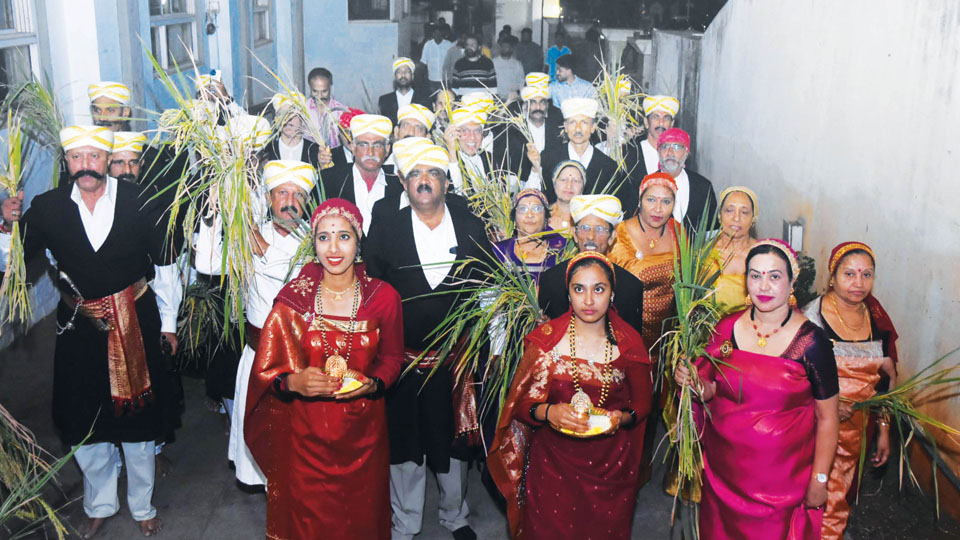
Mysuru Kodava Samaja celebrated Puthari-2022, the harvest festival of Kodagu, in traditional fervour and gaiety at the Samaja premises in Vijayanagar here last evening.
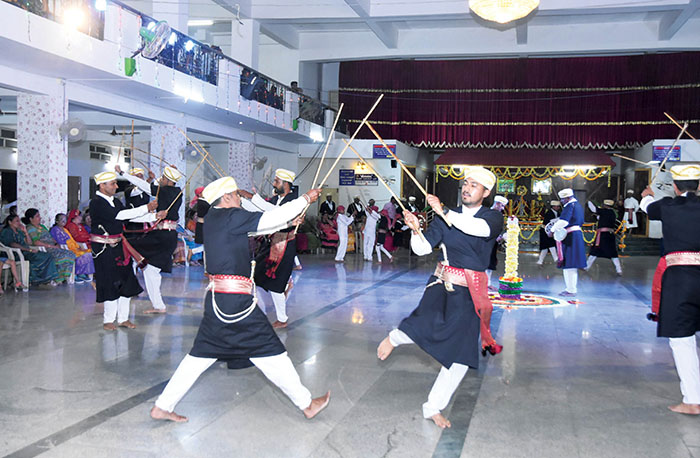
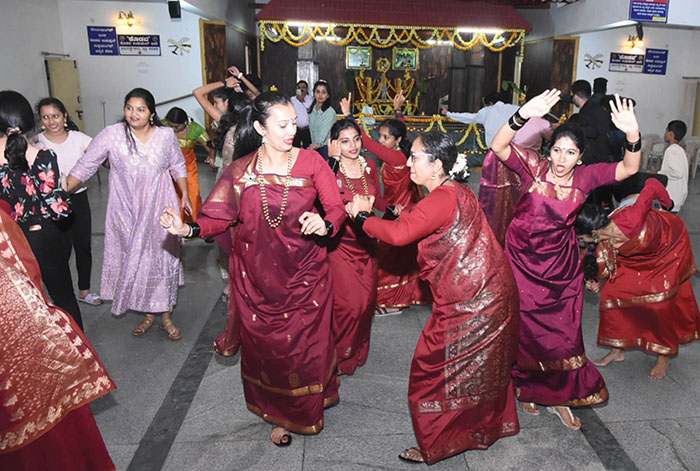
Hundreds of members of the Samaja, wearing Kodava attire, attended the celebrations. Kodava men and women presented traditional dances on the occasion which won the applause of all those present.
In the previous years, the festival used to be celebrated at Sree Cauvery School premises in Kuvempunagar. But this year the celebrations were held in the Samaja premises itself and arrangements were made to distribute kadh (new paddy crop) to all the members by the Samaja volunteers.
Picture shows Kodava men performing a traditional dance.
The festival marks bringing home the new paddy crop from the fields, a symbolic welcome to Goddess Lakshmi. Before harvesting, the members chanted slogans ‘Poli Poli Deva’.
As part of the tradition, after the paddy sheaves are brought home, a unique pudding thambittu is prepared out of ripe banana, coconut, jaggery, sesame, cardamom, ghee and roasted boiled rice flour. Some grains of newly harvested paddy are used to prepare the dishes at home.
Office-bearers and Management Committee Members of Kodava Samaja, Mysuru;
President Mechanda M. Shashi Ponnappa; Vice-President Malachira M. Ponnappa; Hon. Secretary Mukkatira B. Jeevan; Joint Secretary Appanderanda Tara Somaiah; Hon. Treasurer Machimada P. Nanaiah; former Presidents and a large number of community people, young and old, were present.
source: http://www.starofmysore.com / Star of Mysore / Home> News / December 08th, 2022
Large populations of wild elephants moved freely between Kodagu and Kerala states even as the Bramhagiri-Nagarahole-Wayanad forest was known to be an age-old elephant corridor.
Elephant image used for representational purpose only. (Photo | Special Arrangement)
Madikeri :
Elephants are migratory beings and tigers are known to be territorial. However, with forests depleting to make way for human-centric development, wildlife conflict is peaking, as is evident in Kodagu. Nevertheless, experts opine that the conflict can be addressed scientifically by not just establishing conflict-mitigation projects, but by connecting fragmented forest areas.
While humans are confined to district, state, national and international borders, the wildlife, especially elephants, migrate without borders. Similarly, a large population of wild elephants moved freely between Kodagu and Kerala states even as Bramhagiri-Nagarahole-Wayanad forest was known to be an age-old elephant corridor.
However, this corridor has now been fragmented and the Kodagu division of the Forest Department is keen on connecting the fragmented forest area to make way for the free movement of the elephants. This in turn will also create a large undisturbed forest area for the territorial tigers too.
“Over 150 acres of two private coffee estates has disconnected the elephant corridor and is disrupting free movement of the elephants. The department is in talks with estate owners to purchase the land and establish an elephant corridor,” said B N Niranjan Murthy, Chief Conservator of Forests of Kodagu division.
A huge gap between Bramhagiri and Wayanad forest area has forced the elephants to tread through villages and on roads to continue their migration. An estimate of Rs 25 crore has been drawn to procure private lands even as the department holds a vision to invest on a flyover in an area for vehicle movement.
source: http://www.newindianexpress.com / The New Indian Express / Home> States> Karnataka / by Prajna GR, Express News Service / December 07th, 2022
Coorg Coffee Festival and Expo will held at Raja Seat, Madikeri on December 10 and 11.
Kodagu as a whole is known for the wonderful nature accomplished with rains and mist, besides a galaxy of wild animals. The nature here is praised all over for the exciting seasons throughout the year and is even coined as the “Scotland of India”
Kodagu produces one of the finest Coffees under Western Ghats hot spots. which are marked as living ecosystems and ecologically sensitive areas, marching sustainably along with flora and fauna. Coffee growers in this region have imprinted world coffee lovers and engraved an image of best coffees in the Western Ghats.
To strengthen further and to make world to aware the instinct note of Coorg Coffee and Indian Lovers in particular, the District administration is organizing a “Coorg Coffee Festival and Expo” first of its kind on 10 and 11 at Raja Seat, Madikeri
The main objectives of the festival are to bring all the coffee stakeholders under one umbrella and to promote Coorg Coffee extensively among the Coffee lovers, tourists visiting Coorg from across the country and world also.
Disteict administration stated in a press release “private entities who are involved in the Coffee Value Chain are requested to take part in the festival and exhibit their products. In this regard, the Coffee Board and the Department of Horticulture will be the facilitating entities to carry out the above programme”.
All the communications related to exhibition stall including registration and remittance of stall charges will be on the coorgcoffee-coorgcoffeefestival2022@gmail.com
Rs one crore proposal has been forwarded to the state to improve the musical fountain in the area alongside establishing a rain shelter – with nearly 500 seating capacity – across the fountain.
Madikeri:
The Harangi Reservoir in Kodagu will soon witness beautification work to attract more tourists. The reservoir, meanwhile, wears a colourful look as the crest gates have now been equipped with LED lights.
Harangi Reservoir near Kushalnagar is one of the popular tourist destinations in the district and is visited by over two lakh tourists annually. A minimum entry fee of Rs 10 is being currently collected from the visitors. However, steps are now being taken to improve the reservoir to make it aesthetically appealing.
“The LED lights to the crest gates have been fixed using the Annual Maintenance Funds. More beautification works will commence shortly as several proposals have been readied for the development of the reservoir,” confirmed Chennakeshava, the system engineer of Harangi Reservoir.
Meanwhile, the newly appointed Executive Engineer, Puttaswamy confirmed, “Two proposals for the beautification of the reservoir premises have received approval and the work for the same will begin shortly.”
He explained that a Rs 98 lakh project has been approved to fix lighting across the reservoir area. “The garden, drainage gallery, crest gates and the surrounding areas of the dam will be fitted with improved lighting under the project,” he added.
Further, a chain link fencing will be installed across the musical fountain area in the reservoir “A conflict wild elephant had entered the reservoir premises a couple of times. To avoid this in future, Rs 90 lakh has been approved for the establishment of chain link fencing. The funds will also be used to equip the fountain with a diesel generator,” he explained.
Apart from the approved projects, Rs one crore proposal has been forwarded to the state to improve the musical fountain in the area alongside establishing a rain shelter – with nearly 500 seating capacity – across the fountain.
source: http://www.newindianexpress.com / The New Indian Express / Home> States> Karnataka / by Prajna GR, Express News Service / August 25th, 2022
We walked through meandering coffee plantations and around precarious corners that led up steep cliffs. “Most of these coffee farms belong to local families trying to make a living. They do most of the work themselves. It is difficult labor,” Aarush, the enthusiastic tourism manager at Mojo Plantation, explained. Eventually the forest ascended into open valleys overlooking thick, emerald rainforest below. “You see the mountainside there? There were huge landslides last year.”
Each year during the rainy season, torrential rains cause mudslides that destroy homes, villages, and farmland. Nonetheless, Coorg’s exceptional beauty alongside the promise of fertile land and the increasing boom of the coffee industry have made this slice of southern India an attractive destination to build a livelihood for centuries.
History of Coffee in India
India is a nation typically renowned for its tea. Chai wallahsare found on corners across India selling small cups of tea from roadside stands and carts. Grand tea estates and blossoming tea plantations cover hill stations across both northern and southern India. However, India also has a little-known coffee history that has blossomed into a flourishing industry in recent years.
History tells it that in 1670, a Muslim pilgrim named Baba Budan snuck seven coffee beans in his beard aboard a ship to India. Upon arrival, he planted these beans in the Chikmagalur region near Coorg in Karnataka. At this time, it was illegal to transport green coffee beans outside of Yemen, and the ports were strictly monitored in an effort to maintain a monopoly on local coffee production and trade.
Baba Budan was not only successful at sneaking them out of Yemen but also successfully planted them in Chandragiri Hills. Legend has it that the Baba had his friends carry the beans with them and plant them wherever they went, mostly in gardens and backyards. Coffee production prospered in Chandragiri Hills over the next century. However, the bean didn’t spread throughout other parts of India until the 19th century, when coffee started being exported for trade. Coffee now flourishes in Karnataka, where the slopes of the Western Ghats are brought to life with the fresh aromas of arabica and robusta plants.
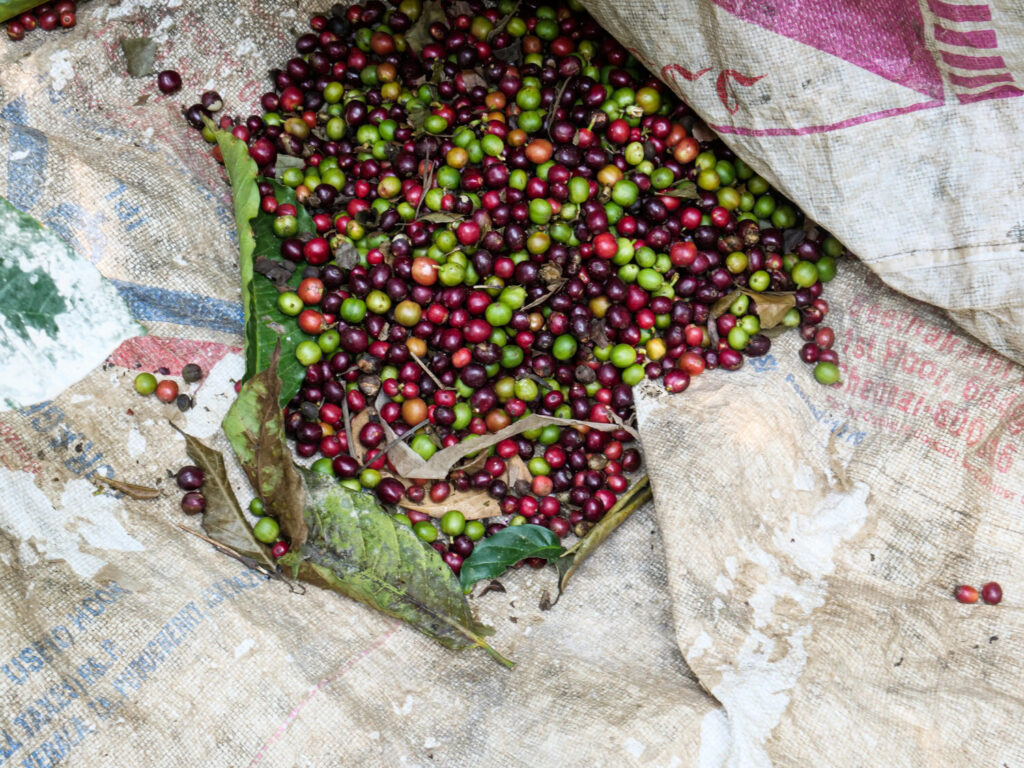
Coffee fruit.
Welcome to Coorg
Also known as Kodagu in the local Kodava language, Coorg is a district and hill station in southern Karnataka, a state on India’s southwestern coast. Coorg is rich with colorful folklore and a dynamic history.
“You know there are sacred forests in Coorg? People worship the forests and the species living in them,” Aarush mused. The original Kodava inhabitants were agriculturalists, still evident today in the protection of forests and the emphasis on agriculture in the region.
The undeniable natural beauty and abundance in Coorg—from rainfall and rice fields to fertile soil and diverse water sources—made the region a highly sought-after location to outsiders throughout history. Nonetheless, the Haleri dynasty, which ruled from 1600, withstood countless attempted invasions of Coorg for centuries, reigning strong and quelling outside attacks.
The last king, Chikka Veerarajendra, however, lost the support of his people and eventually the warriors who once propped up the Haleri dynasty also brought it to an end. Shortly thereafter, in 1834, a Coorg general named Apparanda Bopanna invited the British forces into the kingdom. Despite previous resistance to British influence, the partnership with the British beckoned in a period of peace and prosperity. The British introduced coffee cultivation on a mass scale, capitalizing on the coffee beans that were brought over some centuries earlier.
The first coffee estate was established in Coorg in 1854 by an Englishman named John Fowler. Soon, almost every family in Coorg began to grow the infamous bean that energizes people across the globe. This tradition has been carried through generations to present day, perhaps contributing to the nickname Coorg has acquired of being “the coffee cup of India.”
Contemporary Sustainable Farming
Coffee in south India is a competitive commodity to the infamous tea that dominates India’s northern states. Estates are plentiful in the southern Indian states of Karnataka, Kerala and Tamil Nadu. The plants grow beneath thick, natural shade in ecologically diverse and sensitive regions of the Western and Eastern Ghats. Coffee plantations simultaneously contribute to the biodiversity of the local ecosystem and to the socioeconomic development of these hilly, rural regions.
Coorg grows 40 percent of India’s coffee, and the local economy relies heavily on it. The majority of the uninhabited land is cultivated coffee farms, many of them still owned by families as they were when coffee estates first emerged in the mid-19th century.
Today, Karnataka yields 140,000 tons of coffee a year and is the largest producer of coffee in the country. As a whole, India produces 299,300 tons of coffee annually, according to a 2019-2020 census by THE COFFEE BOARD OF INDIA. India is the third-largest producer and exporter of coffee in Asia and the sixth-largest producer and fifth-largest exporter of coffee in the world. It accounts for 3.14 percent of the global coffee production. Seventy percent of India’s coffee is exported, and thirty percent is distributed and consumed domestically.
Spice Farms
Even though Coorg might be known as the coffee cup of India, the region has been renowned for its spices for centuries, long predating the introduction of coffee. Coorg pepper is particularly famous. Since ancient times, traders arrived at the Malabar Coast in bordering Kerala to purchase the treasured black spice grown in the emerald hills of Coorg. Cardamom, cloves and kokum, among other spices, grow abundant in Coorg and supplied the Malabar spice coast trade. Coffee hasn’t replaced the spice trade in Coorg, but rather complemented it. Today, on many estates, coffee and spices grow side by side and benefit from the diversification of the local eco-system.
Sustainable Tourism and Agriculture
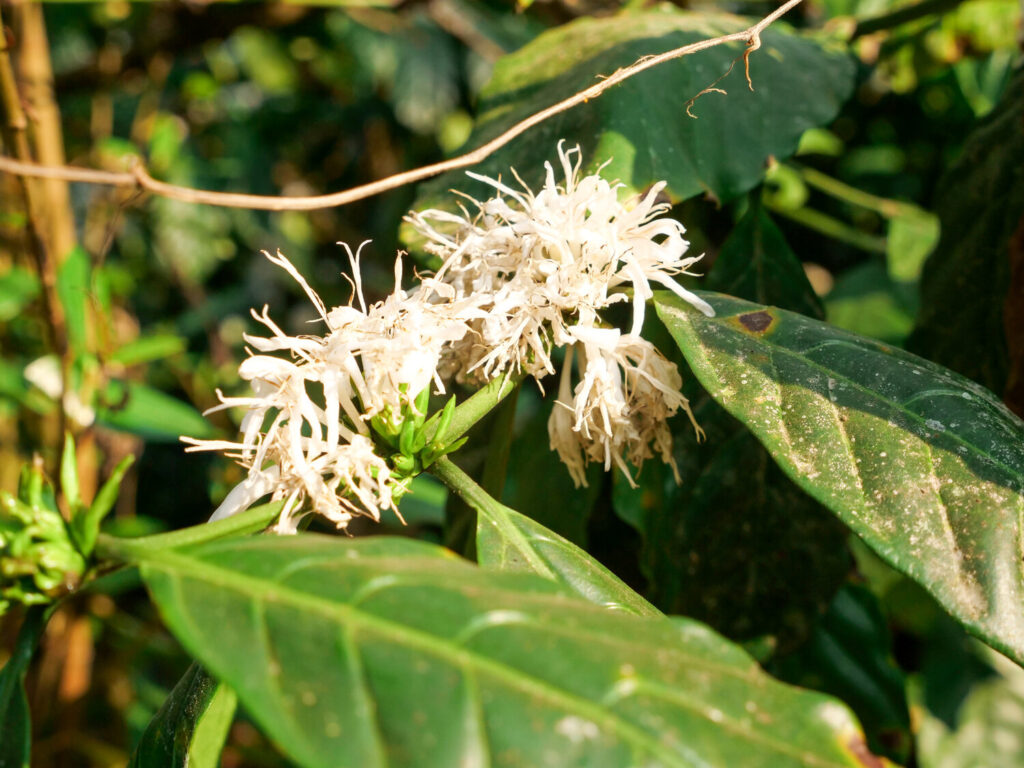
“Can you smell the flowers? Doesn’t it smell like jasmine?” Sunal, my guide at Evolve Back asks me. He is right. I notice a discernible scent of jasmine permeating the air as we walk through rows of blossoming coffee trees. “When the coffee trees are ripe, they have small, white flowers that smell like jasmine.” The rows of arabica and robusta trees hang heavy with burgundy-colored fruit and delicate white flowers. Interspersed among the blossoming coffee trees are ladders of pepper vines climbing into the sky.
There are two different climates in Coorg—rainforest and dry, temperate forests—both of which are friendly for coffee growing conditions. A region relatively far off the typical tourism track, the increasing focus on sustainable, organic farming alongside experiential travel has been monumental in encouraging intentional and experiential travel in Coorg. A handful of initiatives have developed sustainable, organic coffee growing, which is leading to a regionwide awareness around responsible agritourism.
Coffee flowers in bloom.
I started my time at RAINFOREST RETREAT, which is situated outside of Coorg’s main town, Madikeri, and offers an educational and immersive coffee-based tourism experience. This organic farm and guesthouse feeds into the concept of organic, sustainable agriculture. Set amid tropical rainforest, Rainforest Retreat and the adjoined Mojo Plantation are a deeply researched experiment in ecological farming. Understanding and playing to the strengths of the eco-system, the plantation focuses on “agro-ecology.” They encourage all forms of organic farming, including biodynamic farming, permaculture and traditional practices such as panchkavyaandjeevamruth, which all help to sustain healthy, living soils.
On Mojo Plantation, the coffee and spices flourish side by side amid the riches of the rainforest. During my stay, I spent hours each day meandering through thick growth of native trees, vanilla, turmeric, cinnamon, ginger, and black pepper crops; and coffee trees heavy with ripened arabica and robusta beans. The growth of the rainforest canopy is left natural, allowing for the fungi, spiders and insects native to the ecosystem to their important role in the ecological coffee and spice farming in this region. Mojo Plantation also produces the delicacy luwak coffee. The civet cat ingests coffee beans and the excrements are collected and processed into some of the most expensive coffee available on the market.
Mojo Plantation also runs an NGO, which offers workshops and trainings for farmers and agricultural businesses about organic, chemical-free practices, to encourage a continued shift and commitment to ecological farming as a method to grow organic coffee and spices.
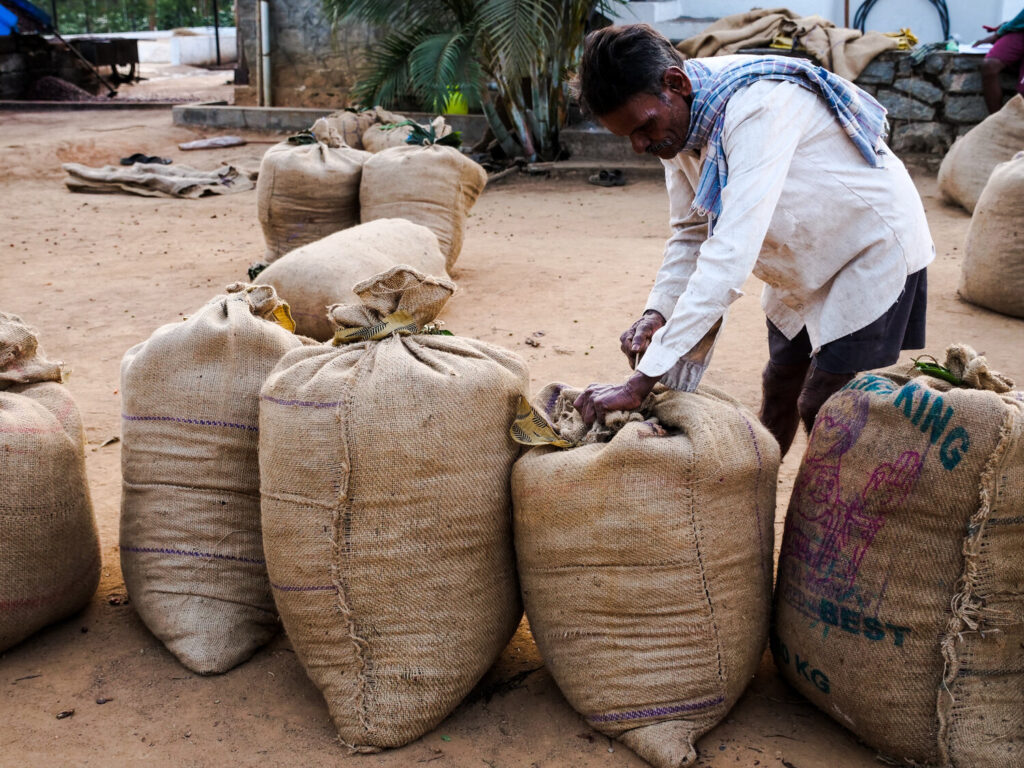
Beans are bagged and ready for market at Evolve Back.
From Rainforest Retreat, I traveled to EVOLVE BACK, which sits on the opposite side of Coorg in a more temperate climate. This family-run plantation and guesthouse dating back over a century stands as an example of the entwinement of mostly domestic tourism and the coffee industry in Coorg. Inviting guests to stay amid an organic coffee and spice plantation, Evolve Back offers a complete immersion into the ebbs and flows of work on a coffee plantation.
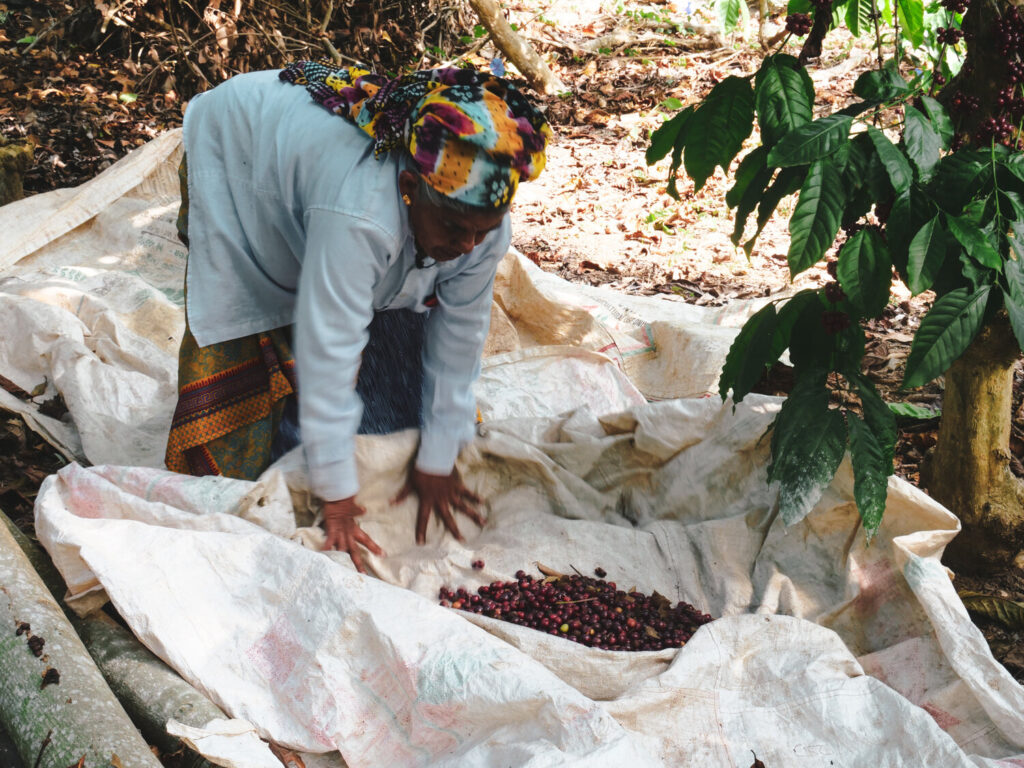
Each day a new experience that was immersive, sustainable and educational. I walked through the expansive breadth of the plantation, abundant in plant and spice varietals. I learned about and visited each step of coffee cultivation, from the fields, to sun-drying the beans, to processing the beans in the factory. I tasted surprisingly smooth coffee wine, a fermented drink made from remaining coffee juice after the beans were separated from their skins. I cycled through villages along the river Cauvary. On my final day, I joined farmers in the field to pick ripe coffee beans. At the end of an afternoon in the fields, I sunk my teeth into delightfully pink rose apples as the truck pulled away, leaving me with the sight of coffee fields receding into the horizon.
Local Consumption
At some point during the 19th century, South Indians began to adopt coffee drinking, and adapted it with their own style. They brew their coffee with milk and sweeten it with jaggery. While coffee remains a beverage mostly consumed at home across India, the southern states of Karnataka and Tamil Nadu are plentiful with street-side coffee stands, much like the chai stands throughout northern India.
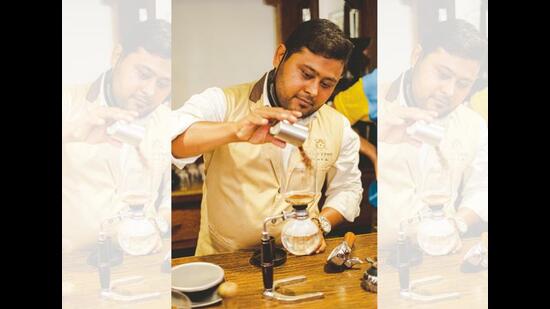
“We have saved the best for last: India’s infamous Kaapi coffee,” the barista at Evolve Back announced. Each afternoon Evolve Back hosts a coffee tasting for its guests to try different roasts and ways to brew coffee, from cappuccino to Vietnamese, and including India’s very own coffee, known as Kaapi. Amid the thick green coffee plantations and the stirrings of the surrounding jungle, the barista carefully pours steaming cups of Kaapi.
Also known as South India filter coffee, Kaapi is India’s most recognized coffee specialty. This brew requires boiling milk, to which coffee and sugar are added. The liquid is processed through a cylindrical filter. After the tedious filtration process, the frothy concoction is poured into a metal cup, known as a davara, which is served inside a stainless-steel tumbler.
After days of having to turn down coffee after coffee due to an inexplicable caffeine intolerance I have had for a decade, I couldn’t resist tasting the smooth, flavorful specialty. I savored the few sips I allowed myself to indulge in, drinking in the centuries-long history of coffee that its way into this unassuming forested region off the southwest coast of India.
**Note: Names have been changed for privacy purposes
source: http://www.whetstonemagazine.com / Whetstone / Home> Journal / by Alicia Erikson , Text and Photo www.journeywithalicia.com / September 14th
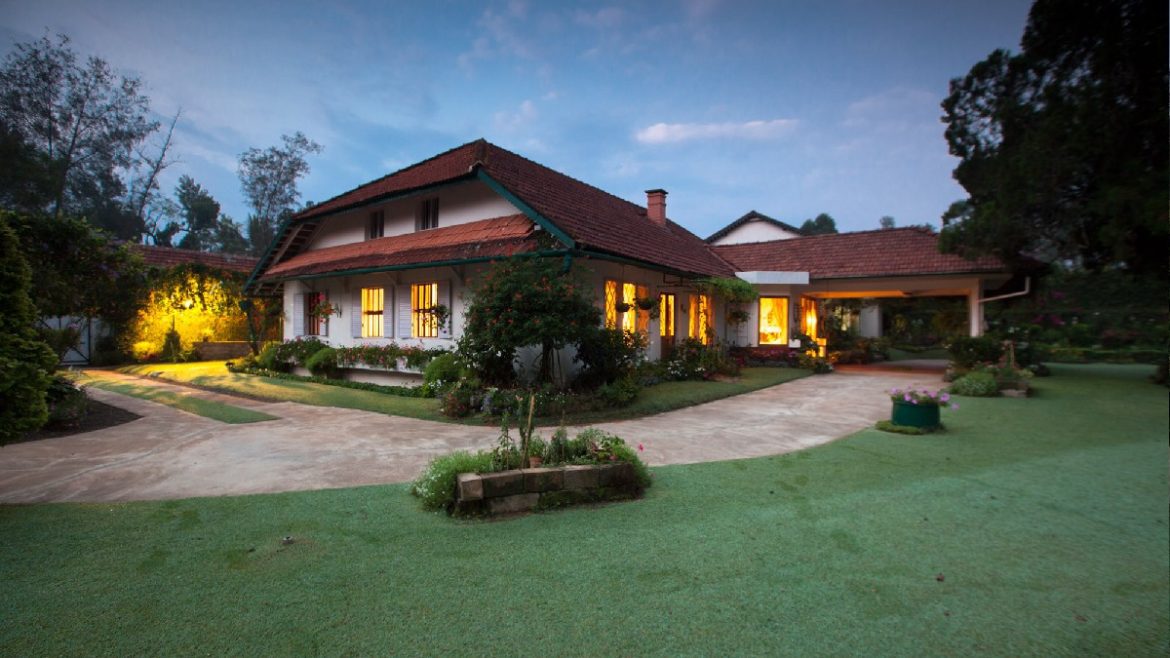
A 150-year-old bungalow in Coorg, which was once the residence of the German missionary Georg Richter, has now been converted to a boutique homestay. The School Estate lies amid the lush coffee and cardamom plantations of Coorg where you can have a tranquil stay, far from the clamours of the city. At the estate, you can wake up to the chirrups of birds and start your day with a cup of freshly brewed coffee.
Bungalow In Coorg Dating Back To 1878
The School Estate dates back to 1878 and is now run by the Aiyapas. Every element inside the plantation bungalow exudes an ancient charm. The century-old pool table inside the homestay has been converted into a quaint dining table. The traditional cottages at the estate are embellished with artefacts curated from different places visited by Mr. and Mrs. Aiyappa. In proximity to the estate, lies the Coorg Golf Links with an 18-hole golf course, surrounded by the verdant Western Ghats.
The estate has two charming cottages and a large family room. While staying at the homestay, you can take a stroll through the 200-acre farm dotted with coffee, cardamom and pepper plantations. You can also unwind on the hammock while taking in the aroma of coffee.
Dig Your Forks Into Traditional Kodava Dishes
At the School Estate, you can have an unforgettable dining experience in the lap of nature. The menu comprises traditional Kodava dishes prepared with ingredients sourced straight out of the farm. The estate also offers delectable English breakfasts and comforting cakes.
Handpick Coffee Beans And Play With Baby Elephants
During your stay at the estate, you can indulge in a plethora of experiences like handpicking coffee beans, fishing and golfing. You can also go on cycling tours to the nature trails nearby. The Thithimathi and Dubare elephant camps, home to the majestic Asian elephants, are also near the estate. You can play with the baby elephants here under the observation of the mahouts.
Transported to the estate already? To book your stay, click here.
source: http://www.curlytales.com / Curly Tales / Home> Discover> Travel> Travel Discovery / by Suchismita Pal / September 16th, 2022
Go to this picturesque coffee-growing region with an appetite for a unique cuisine and distinctive experiences.
From coffee to e-bikes and Victorian-style rosebushes and stately mansions, Coorg has it all (Airbnb)
Driving just five hours down a smooth highway from Bengaluru, I spent a long weekend in Coorg, interacting with some of its local entrepreneurs, signing up for off-beat experiences and enjoying some of the most beautiful roads in the southern peninsula. Far from the tourist throngs, I spent the weekend finding unique things to do.
#NowTrending
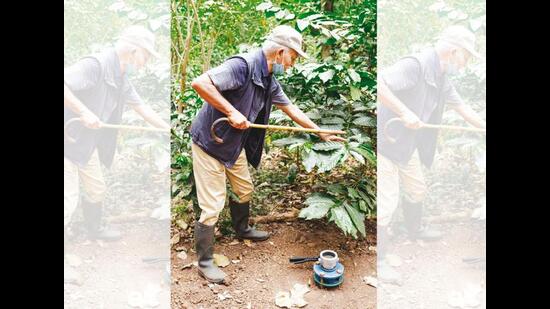
Walking through lush green coffee plantations with retired serviceman Ganapathy, I received an articulate explanation on the farm-to-cup process. The swashbuckling Ganapathy’s stately colonial mansion sits plum in the middle of a large family-run coffee estate, supplying beans to a larger chain of wholesalers and producers. For a coffee addict like me, this was a fascinating experience.
Later that morning, over a cup of freshly brewed Coorg filter coffee, I chatted with his daughter, Anjali, who runs the hugely popular Bengaluru-based Pigout Coorg Kitchen.
The swashbuckling Ganapathy’s stately colonial mansion sits plum in the middle of a large family-run coffee estate, supplying beans to a larger chain of wholesalers and producers (Airbnb)
“Kodava cuisine is unique and completely undiscovered in India, right from the ingredients and meat we use to the cooking styles,” Anjali said. “Through my food, our homestay and this coffee estate, we want to put Coorg on the map in the most experiential way possible.”
As Anjali laid out a spread of her famous pandi (pork) curry, pumpkin curry and rice (akki) rotis, I realised that the Ganapathys’ little universe is a destination on the verge of a major tourism revolution.
“Never before has Coorg been trendier,” Anjali said of the beautiful region in the heart of Karnataka, known for its flavourful food, gorgeous people and spectacular landscapes. While Coorg has always been popular among weekend roadtrippers from Bengaluru, it’s only recently that it has witnessed interest from discerning travellers across the country.
There are enough experiences in Coorg to set it apart from other destinations (Airbnb)
E-bikes and homestays
My initial impression of this place was just how stunning the roads are. You can spend hours meandering through coffee plantations, hillside roads and picture perfect villages. For a base, I chose the stylish Acacia Villa just off the main road. This massive three-bedroom villa, listed on Airbnb features an ultra-modern chalet aesthetic, blending perfectly with the forest around it.
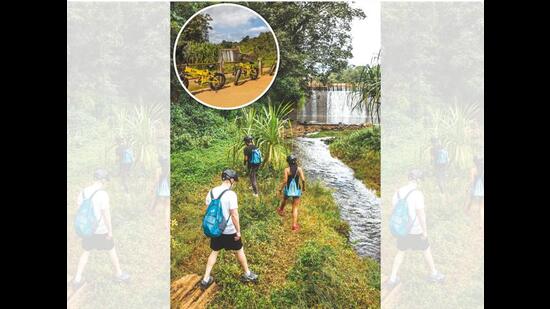
After a leisurely morning walk through the woods, I made a quick dash to Madikeri, for an e-bike experience. A homegrown startup, BLive, specialises in e-bike tours across different Indian destinations. After a quick briefing, my friends and I dashed up and down the slopes on our e-bikes, but not without a pit stop at a local coffee producer. The e-bike tour took us to some lovely spots, including a lake and the top of a hill. If you enjoy cycling, this is definitely recommended.
You can spend hours meandering through coffee plantations, hillside roads and picture perfect villages (Airbnb)
After all that physical exertion, it was time to discover one of Coorg’s oldest and most loved spots. The approach to Old Kent Estate was just wide enough for our car to squeeze through, which meant that it was truly cut off (read: no phone network) from the rest of the world.
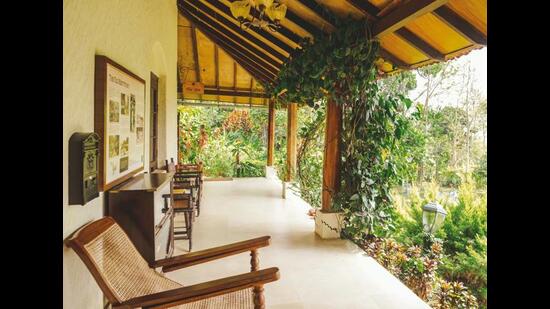
In the middle of Victorian-style rose bushes, coffee plantations and green slopes, I stepped into a gorgeous colonial mansion dating back to 1800. Once belonging to a British colonel and now family-run by the Thaikappas, the Old Kent bungalow is a treasure trove of antique furniture, centuries-old artefacts and beautiful decor, restored to perfection. Here, the young proprietor of the estate, Sadat, manifests his love for coffee in the form of a high-end coffee bar inside the bungalow.
There’s also a gorgeous colonial mansion dating back to 1800 once belonging to a British colonel and now family-run by the Thaikappas (Airbnb)
One too many freshly-brewed espresso shots down, I strolled around the Airbnb-listed estate and sat in the garden for a quick snack and a couple of pictures while Sadat told me that his clients tend to look for slow luxury, experiencing things like hikes, coffee tastings, village visits and cooking sessions.
Kodava charm
That evening, I hopped into an old open-top Mahindra Commander with some locals and off-roaded (not for the faint of heart) all the way to the top of Mandalpatti, to the panoramic sunset point. While the peak in itself is pretty standard, the trek up and down is definitely worth the trouble.
Coorg is home to large family-run coffee estate that supply beans to a larger chain of wholesalers and producers (Airbnb)
My last night in Coorg was at the stately mansion-cum-estate of Preet and Prem. The two manage their own estate and also run the gorgeous Udaya Homestay about 45 minutes away. “I drive 45 minutes one way every morning to deliver a homemade breakfast to my homestay guests, so it is as authentic as possible,” I was told.
I was introduced to Preet’s mother-in-law, the family matriarch, who regaled us with stories of elephants in her backyard and talked us through the cultural uniqueness of a Kodava wedding as we feasted on some more pork curry, local vegetables, biryani and rotis.
I was charmed by the subtle pleasures of Coorg. Here you find great food experiences, awesome coffee trails and places to sip a brew, trendy locals who are always willing to share stories and food, and hospitality entrepreneurs creating new experiences for travellers. Plan a trip to Coorg if you have a couple of days to spare and are hungry for unique experiences.
Riaan Jacob George
Riaan Jacob George is a luxury content and social media specialist
From HT Brunch, February 20, 2022/Follow us on twitter.com/HTBrunch / Connect with us on facebook.com/hindustantimesbrunch
WELCOME. If you like what you see "SUBSCRIBE via EMAIL" to receive FREE regular UPDATES.
Read More »