The longstanding human-elephant conflict in Kodagu has intensified over the decades, with elephant attacks claiming 33 lives in recent years.
Additionally, 53 people are grappling with various issues, including permanent disabilities. Despite continuous efforts by the Forest Department, the menace of wild elephants continues to escalate.
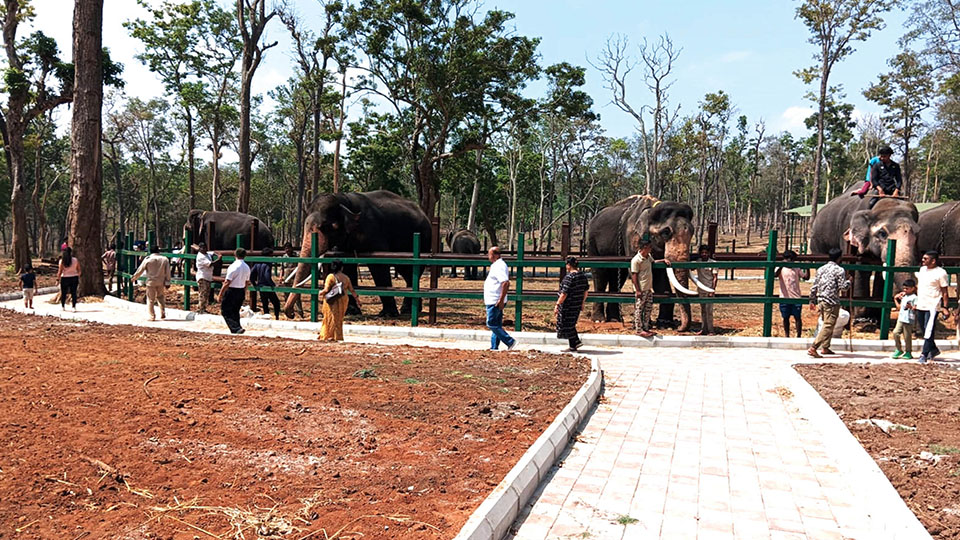
In response, the State Government is gearing up to establish an elephant sanctuary in Kodagu, drawing inspiration from the movie ‘Gandhada Gudi.’ The initiative aims to protect elephants while reducing inconvenience to the local population.
The intention is to strike a balance between wildlife conservation and the safety of local communities for a peaceful coexistence.
To facilitate this, 2,000 hectares of land have been identified in Kodagu, as part of a broader plan covering 12,000 hectares across the State. This land will be used to relocate elephants residing in human settlements back into the forest.
The plan also involves identifying elephants responsible for crop damage and human casualties and relocating them to the sanctuary. The Government intends to provide shelter for around 200 elephants that have settled in rural areas of the district.
During a State Wildlife Board meeting in January, attended by Chief Minister Siddaramaiah, Forest Minister Eshwar Khandre, Forest Department officials and Virajpet MLA A.S. Ponnanna, the relocation of rogue elephants was discussed.
The Government agreed to identify safe areas for this purpose and preparations are now underway. The sanctuary will be equipped with technology to monitor and control the elephants, preventing them from straying back into villages.
Since 2014, the Government has allocated Rs. 21 crore for repairing fences and railway barricades in the Virajpet forest range, covering Ponnampet and Virajpet taluks. This measure is part of a long-term solution to the human-elephant conflict.
Additionally, Rs. 4.72 crore have been swiftly disbursed as compensation to those affected by wild animals and Rs. 22 crore have been allocated for new railway barricades, with installation set to begin soon.
source: http://www.starofmysore.com / Star of Mysore / Home> News / Februaryf 23rd, 2025
The IBNII Coorg, an eco-luxury nature resort where sustainable living meets luxury, as the luxury of tomorrow, has announced the opening of Aarogyaa by The IBNII, an exclusive Ayurvedic healing sanctuary within its premises. Offering guests a transformative wellness experience, rooted in ancient Ayurvedic principles and eco-sustainability, Aarogyaa by The IBNII is designed to rejuvenate the mind, body, and soul through a multi-faceted approach to holistic well-being.
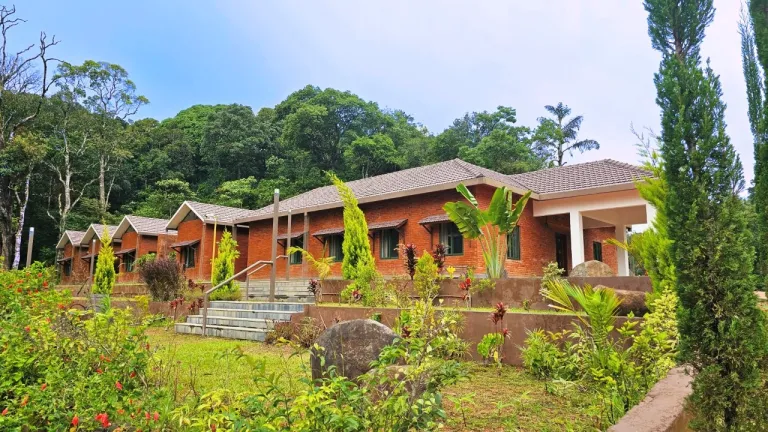
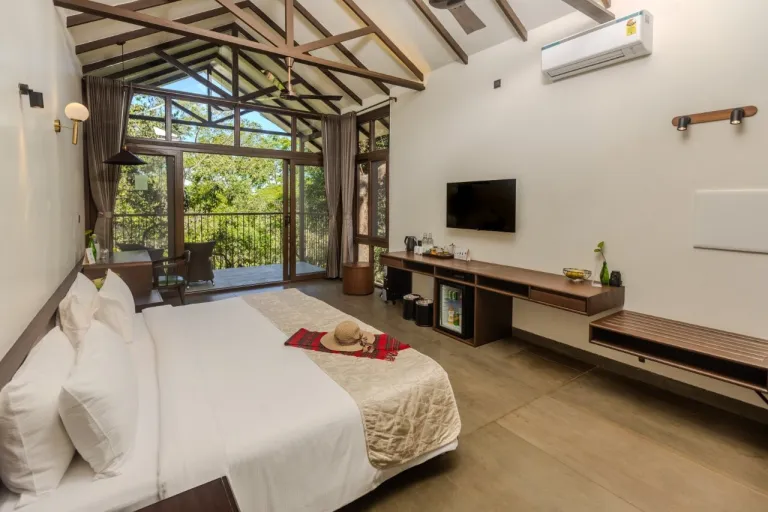
Aarogyaa by The IBNII is spread over 15 acres within The IBNII, which sits over a 125-acre lush premise. This dedicated Ayurveda sanctuary is located amidst three water bodies, with a dedicated kitchen and restaurant for preparing diet-based food according to each patient’s satvik requirements, a large yoga deck overlooking one of the natural ponds, an in-house Ayurvedic doctor with six male and female therapists, and dedicated eight new Ayurveda cottages.
Dr. Sherry Sebastian, Managing Director, The IBNII Coorg, said, “Opening an Ayurvedic Sanctuary was always part of our plan. Our approach integrates the wisdom of Ayurveda with the serenity of nature, ensuring a unique and rejuvenating experience for every guest to balance their doshas. This area also boasts of herbal trees, for the guest to heal through the herb-infused fresh air. At Aarogyaa, we invite our guests to embark on a journey of self-discovery, relaxation, and inner balance.”
An Ayurvedic wellness retreat, Aarogyaa by The IBNII Coorg integrates Ayurveda, Yoga, Pranayama, and therapeutic activities, providing guests with a well-rounded, immersive experience. By combining traditional healing techniques with modern relaxation therapies, the luxury retreat fosters a deep sense of inner balance and rejuvenation.
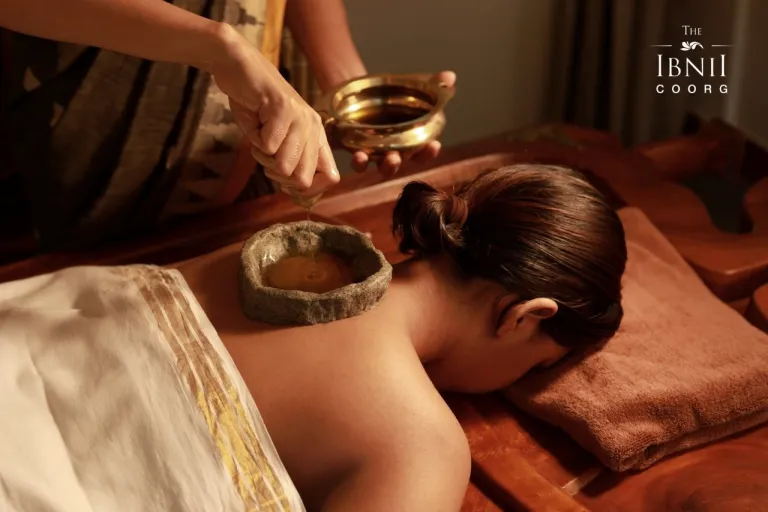
Ayurvedic Rituals: Drawing from India’s rich heritage, Ayurvedic therapies at Aarogyaa include specialized massages, herbal treatments, and personalized wellness programs aimed at restoring harmony between the body and mind.
Yoga and Pranayama: Guests can engage in guided yoga sessions to improve mobility and strength, while breath-control techniques (pranayama) enhance focus, reduce stress, and declutter the mind.
Therapeutic Activities: The retreat offers various therapeutic engagements, including painting, pottery, baking, and gardening—activities that stimulate the senses and promote mental well-being.
Eco-Sustainability Commitment: Consistent with The IBNII Coorg’s commitment to eco-conscious hospitality, Aarogyaa integrates sustainable practices to minimize environmental impact while enhancing the guest experience.
Muddappa Kuppanda, General Manager, The IBNII Coorg, said, “At The Ibnii, wellness is not just about personal health—it’s about creating a holistic, balanced connection with the environment. Aarogyaa, our signature wellness program is designed to rejuvenate the body, mind, and spirit and integrates all traditional wellness practices like Yoga, Meditation, and Ayurveda with modern healing therapies.”
At a driving distance of 5.5 hours from Bangalore Airport and 2.5 hours from Mysuru railway station, the IBNII Coorg is nestled amidst the lush landscapes of Madikeri.
source: http://www.voyagersworld.in / Voyagers World / Home> Wellness / by VW Bureau / February 11th, 2025
Where coffee, wilderness, and conscious living converge.
Blyton Bungalow
The road to Blyton Bungalow, tucked deep within the Poomaale Estate, winds through mist-laced hills, whispering forests, and the occasional burst of wildflowers. I knew, even before I arrived, that this wouldn’t be just another weekend retreat—it was a step into an untouched world where nature isn’t manicured but gloriously untamed, where birdsong replaces city sirens, and where life slows to the rhythm of the earth.
Nestled within the Beforest Collective, a community dedicated to regenerative farming and wilderness conservation, Blyton Bungalow isn’t a conventional resort. It’s an extension of the jungle—an old-world retreat designed to blend into its surroundings rather than conquer them. The journey here is part of the experience. There are no grand gates or ostentatious driveways. Just a winding path that slips deeper into the forest, each turn feeling like an unravelling secret.
A Home in the Jungle
The bungalow itself is a poetic ode to Kodava architecture, with sloped red-tiled roofs, airy verandas, and sun-warmed wooden floors. Six elegant suites open out into a world that is defiantly wild. Coffee bushes and jackfruit trees stand shoulder to shoulder, and somewhere in the distance, a Malabar giant squirrel bounds from branch to branch. It feels more like staying in a colonial planter’s estate—minus the excess—than a boutique stay.
As I sipped my first cup of freshly brewed estate coffee, still heady with its morning roast, I realised how removed I was from the world I had left behind. There was no beeping phone, no honking cars—only the meditative hum of cicadas and the rustling leaves responding to a passing breeze.
Hiking into the Wild
No visit to Poomaale is complete without stepping into the Western Ghats’ emerald embrace. Setting out just after sunrise, I hiked through the dense forest, the air thick with petrichor and the earthy scent of wet foliage. The jungle here isn’t tamed for tourists—there are no neat pathways, only trails left behind by elephants and deer.
I waded through knee-high grass, climbed over ancient tree roots that had twisted themselves into natural staircases, and followed the echoing call of a hornbill in the distance. The deeper I went, the more the modern world disappeared. Butterflies, in impossible shades of electric blue and sunset orange, flitted past me. A family of macaques observed me from a moss-covered branch, their heads tilted in curiosity.
Then came the pièce de résistance – a hidden waterfall tumbling down mossy rocks in a silken rush. It wasn’t marked on any map, and no signboard pointed the way. It was just there, waiting to be found. Stripping down to my hiking shorts, I let the cool mountain water crash over me, washing away not just the sweat and dirt from the hike but the last remnants of stress I hadn’t realised I was still carrying.
The Art of Slow Farming
Back at the estate, I walked through the organic coffee and permaculture farm, where agriculture isn’t a battle against nature but a collaboration with it. Unlike industrial coffee estates that clear-cut land and douse crops in chemicals, Beforest’s farming philosophy leans on natural balance. Shade-grown coffee flourishes under a canopy of ancient trees, and intercropping with native plants ensures soil fertility and biodiversity.
I was explained how the estate works on principles of food forests. Instead of monoculture, they plant multiple species – vanilla, black pepper, fruit trees—all creating a self-sustaining ecosystem. It was agriculture the way it was meant to be: not an imposition, but a dialogue with nature.
I ran my hands through raw, sun-dried coffee beans, still warm from the afternoon sun. Later, I tasted the results—single-origin, small-batch coffee that carried notes of dark chocolate and citrus, a world apart from supermarket blends.
Nights Under a Billion Stars
The true magic of Blyton Bungalow revealed itself at night. With no city lights to dim the sky, the stars stretched endlessly, a celestial tapestry I hadn’t seen in years. Fireflies blinked in and out of the darkness, their glow mirroring the constellations above.
Sitting on the open veranda, sipping a locally brewed honey mead, I listened to the jungle’s nocturnal symphony. The deep hoot of an owl, the distant trumpet of an elephant, the occasional rustling of leaves that hinted at some unseen creature slipping through the undergrowth. It was raw, unscripted, and completely unfiltered.
Leaving, But Not Really
As I packed up to leave, I felt a deep reluctance. Blyton Bungalow wasn’t just a place to stay—it was a place to belong. A reminder of what life could be when stripped of its unnecessary layers. A glimpse into a world where humans and nature coexist, not in conflict but in quiet respect.
I left with more than just memories—I carried the stillness of the jungle, the scent of rain-drenched earth, and the knowledge that somewhere, beyond the chaos of the city, this wilderness continues to thrive. And that, maybe, one day, I’d return—not as a visitor, but as someone who never truly left.
source: http://www.businesstoday.in / Business Today / Home> News> Lifestyle> Travel / by Pranav Dixit / February 06th, 2025
The Golden Temple at Coorg, better known as Namdroling Monastery, is a centre of Tibetan culture in South India.
The Namdroling Monastery Golden Temple at Coorg | Nitin SJ Asariparambil
When I first got to know about solo travelling, I was just a college student pursuing my higher studies in English literature. Back then, travelling alone to my college, 30 kilometres away from my house, was, in itself, a big leap; there was no scope for solo travel to an unknown place.
So I quietly and shamelessly brooded over the very romantic and challenging idea of solo travel for the time being, keeping my fingers crossed. But solo travel was always on my bucket list of wishes.
And I finally got to travel solo! The destination was the Golden Temple at Coorg, in Karnataka, better known as Namdroling Monastery, where I could find and feel the vibrant tapestry of Tibetan culture.
A few months after my marriage, my husband and I headed to Coorg. From Mysore to the resort at Coorg, we enjoyed the lush greenery of coffee plantations and sandalwood forests. As I sipped on a hot cup of Madikeri special coffee served in the evening at the resort garden, I hesitantly revealed my hidden desire for solo travel to my husband.
After listening to me, we discussed and came to a consensus. He suggested I head to the Golden temple situated nearby, where I can reach safely, spend time, relax my inner self and reflect on the spiritual and metaphysical absurdities and enigmatic realities of human life. Oh, that sounded crazy and philosophically heavy, but I somehow managed to reach there the early morning the next day.
While travelling in the taxi to the Golden Temple, I did not forget to research and arm myself with some information regarding its history and cultural significance. His Holiness the 3rd Drubwang Pema Norbu Rinpoche laid the foundation stone of the monastery in the year 1963.
His Holiness Dalai Lama visited there to consecrate it and bestowed the name Namdroling. Located in Bylakuppe of the Mysore district of Karnataka, it is the largest teaching centre of the Nyingma lineage of Tibetan Buddhism in the world. Wow! What a perfect place to go solo.
At the gate of the monastery, I stood like another statue, excited and embarrassed. I never expected such a divine radiance and silence lingering there. A well-maintained, well-landscaped place. It had a kind of special emotional connect even to the first visitors, I felt.
While standing at the gate, I got a feeling that the real world had ended outside the gate, and inside, it was another surreal world. The celebration of colours was evident in the paintings and architecture, and I was allured by its charm. There, I noticed the big picture of His Highness Penor Rinpoche, who is said to be an incarnation of Vimalamitra, an 8th-century.
The centre of attraction was the calmness in the surroundings. Though there were visitors wandering here and there, all were keeping silent, or better yet, they might be talking to themselves like they had never done before.
The Smiling Buddha statue warmly greets us, and we human beings feel so small in front of this 60-foot statue. At a glance, we get a bitter self-realisation that we are only this much, ripped of our petty ego and superiority complex.
The tranquillity entraps you, making you wonder if reached some kind of enlightenment. The beautiful interiors of the temple, with its shimmering gold and dark red colour palates, par excellence, and the meditative silence, were infectious.
I remember the curios and wall hangings were there for sale in the outlet; though not cheap, it was a worthy buy for its uniqueness. I still have with me an antique wind chime I bought from a monk, safely hung on the balcony of my flat. Every time I listen to its delicate musical notes, an ancient silence touches me, and I breathe in a kind of pristineness.
The memories of my first solo trip still remain fresh in my mind, and the Golden Temple was an ideal choice, with no regret. Yes, there are certain places where we can experience loneliness and estrangement. Being alone in a crowd is enough to get that absolute feeling, because the true communication between the self and the universe finds its grammar only in loneliness, I feel…
Riya Joy, the writer, works at the Malayala Manorama in Kochi.
source: http://www.theweek.in / The Week / Home> News> Tourism / by Riya Joy / February 02nd, 2025
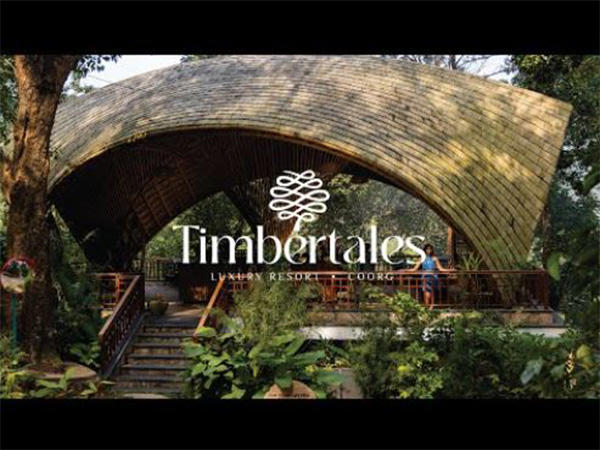
Timbertales Luxury Resort, nestled amidst the luah forests of Coorg, is delighted to announce its grand opening this January. This much-anticipated retreat with 71 villas, spread across 100 acres , is designed to pamper, soothe, and offer an oasis of serenity for those who seek an escape.
Timbertales is more than a resort. It is an experience where every leaf tells a tale. Designed by a noted architect Mr. Abdul Manan, the resort’s global architecture seamlessly blends eco-luxury with traditional local craftsmanship. All villas on the property are made with Laterite stone, with the structures blending harmoniously with the lush greenery, exuding an air of understated luxury.
The true essence of Timbertales comes alive with the extensive use of Balinese bamboo that reflects limitlessness. The design features open spaces and abundant natural light, making you feel part of the forest and seamlessly blending architecture with nature, creating a tranquil and immersive retreat.
Mr Prasad G P, Joint Managing Director and the visionary behind Timbertales, says, “Timbertales is not just a place to stay, it’s an experience that embodies the charm of Coorg while redefining luxury tourism in India. Our goal is to create a retreat where guests can reconnect with nature, immerse themselves in local culture, and indulge in personalized luxury”.
Wellness in Nature
Embrace wellness and tranquillity at Viyoma, where nature and tradition unite to rejuvenate your mind and body. The 27,000 sq. ft. centre, spread across three levels, has 25 therapy rooms offering Swedish, Balinese, Aromatherapy, and Ayurvedic treatments. Viyoma also offers the only Turkish Hammam in the region.
Guests can also relax in the panoramic sauna, which creates a calm environment with beautiful views of the surrounding landscape. Additionally, Viyoma includes specialized skin and hair care treatments designed to enhance natural beauty and rejuvenation. Understanding that wellness is a necessity in today’s fast-paced world, Viyoma expands its services to include wellness for kids, thoughtfully crafted to nurture their well-being and promote holistic growth.
Offering guided yoga and meditation sessions, the Vinyasa Yoga Deck is an atmosphere that offers calmness and vitality. Set against the backdrop of a vast 7-acre lake, it transports you into the embrace of nature and fosters an unmatched sense of tranquillity.
The Villas
Each of the 71 villas at Timbertales is designed with luxury and comfort in mind.
Windchimes Duplex Villa – This cozy yet luxurious duplex villa offers a unique experience where you descend to a beautifully designed room and wake up to an amazing nature view. Ideal for couples with distinct personas.
Riverstone Family Villa – Designed for families seeking togetherness and personal space, the villa has interconnected staircases that balance privacy and connection. The large balconies, invite you to spend time outdoors, offering a seamless connection with nature.
Mistwood Pool Villa – This villa is designed as a serene retreat, where the mist whispers ancient woodland stories to those who listen, offering a breathtaking view from its infinity pool, perfect for a young family.
Forestlight Luxury Villa – This villa is a world in itself, covering 3200 sq. ft. of luxurious space. It offers a truly unique experience, featuring an open living area, an in-house therapy space, an open-air shower, a jacuzzi, and an infinity pool overlooking the lake.
Timbertales offers luxury experiences priced between INR 40,000 and INR 1,00,000, where everything from meals to curated experiences is thoughtfully managed, embodying the essence of stress-free getaways.
The Dining Experience
Food is at the heart of any holiday memory. In line with this philosophy, the resort’s restaurant “Bamboo Buzz” offers over 250 curated dishes, lakefront views, and a unique ‘pan-to-plate’ experience. The ‘pan-to-plate’ concept emphasizes a fresh, immersive dining experience where guests can witness and ensure that each dish is as authentic and flavorful as it can be. “The Cellar Lounge Bar” awaits, where Winchester-style seating and an exquisitely appointed bar offer a perfect backdrop making it a must-visit destination.
“Twisted Basil” a plant-based culinary haven, features a dedicated vegetarian kitchen, private dining pods on a water body, and tropical surroundings with stunning panoramic views. Each of the curated set menus offer a luxurious 7-course meal, crafted to soothe any palate.
The Experience
At Timbertales, there is never a moment to get bored. Nature walks, aided by expert naturalists, wellness therapies, curated yoga sessions around the lake, kayaking, the infinity pool ‘Ripples’ overlooking the lake and equipped with a bar, and a lot more.
For children, the exclusive play area ‘Funky Turtle’ provides engaging activities that encourage them to step away from screens and enjoy interactive play. ‘The Modur Kaapi’: A Coffee Experience Centre offers guests a glimpse of the coffee-making process, as well as delightful choices in local brews. Guests can explore the entire process, from bean selection to brewing techniques, as part of the resort’s unique Bean to Brew concept.
Timbertales is situated 7 km away from the main city of Madikeri and can be accessed by road or nearby aerodromes. The resort offers one of the few helipads in Coorg for direct and convenient access.
About Timbertales Luxury Resort
Timbertales Luxury Resort, located in the lush landscapes of Coorg, is founded on the belief that nature is a storyteller. Here, luxury and the wild coexist in perfect harmony, offering guests an unparalleled opportunity to immerse themselves in the tales of the natural world. Designed with eco-consciousness at its core, Timbertales seamlessly integrates sustainability with opulence, allowing visitors to experience the soul of the forest while enjoying unmatched comfort.
source: http://www.msn.com / MSN / Home / by ANI news www.aninews.in / via PRNewswire / January 22nd, 2025
In a recent cleanliness survey conducted across 50 cities in Karnataka by a private organization, Madikeri has emerged as the cleanest city in India.
Leading in Clean Air and Sanitation Already renowned for having the cleanest air in the country, Kodagu district’s Madikeri has now added another feather to its cap with this prestigious recognition. The achievement is largely credited to the tireless efforts of the city’s sanitation and civic workers, whose dedication has made this milestone possible.
A Call for Citizen Responsibility Social activists have emphasized that maintaining Madikeri’s status as a clean city and preserving its pristine air is a collective responsibility. Citizens are urged to actively participate in cleanliness initiatives to ensure the city continues to shine as an example for others to follow.
source: http://www.thehindustangazette.com / The Hindustan Gazette / Home> News> Latest News / by The Hindustan Gazette / January 10th, 2025
Explore Nagarhole National Park’s wildlife, from elephants to tigers. Visit Kabini River, Iruppu Falls, and Brahmagiri Sanctuary for an unforgettable adventure!
Exploring the natural beauty and wildlife of Nagarhole National Park. (Image: Canva)
Nestled in the lush landscapes of Karnataka, Nagarhole National Park, also known as Rajiv Gandhi National Park, is a treasure trove of wildlife and natural beauty. Located in the stunning Coorg district, this 640-square-kilometer park is part of the Nilgiri Biosphere Reserve and is a must-visit for any wildlife enthusiast or adventure seeker. With its tropical forests, rolling grasslands, and serene swamps, Nagarhole promises an unforgettable experience for those eager to discover the heart of India’s wilderness.
Best Time to Visit Nagarhole National Park For the best chance to spot the park’s incredible wildlife, plan your visit between October and May, when the dry season takes over and the animals come out to play. The park remains closed during the monsoon months (June to September) due to heavy rains and the risk of flooding, so be sure to plan accordingly!
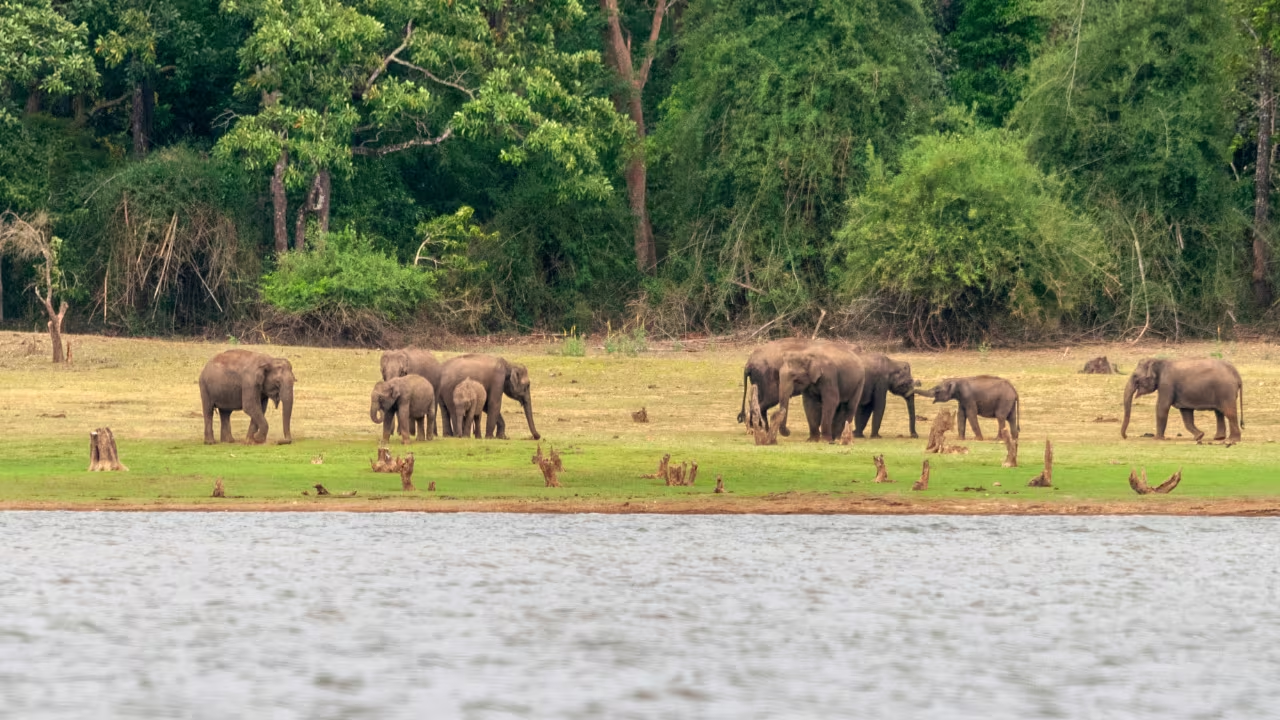
Elephants roaming the lush forests of Nagarhole National Park, showcasing Karnataka’s wild beauty. (Image: Canva)
How to Reach Nagarhole National Park
*By Air: The nearest airport is Mysore Airport, about 95 kilometers away, while Bangalore International Airport (220 km) is a convenient option with well-connected roads.
*By Train: Hop off at Mysore Railway Station, which is well-connected to major cities across India.
*By Road: Nagarhole is easily accessible by road from Coorg (80 km away), with several buses and private vehicles making the journey regularly.
What to Spot Inside Nagarhole National Park Step into the heart of nature at Nagarhole National Park, where the rich diversity of wildlife thrives in its lush landscapes. Keep your eyes sharp as you embark on a thrilling wildlife experience and look out for:
1. Elephants in Majestic Motion: Graceful Elephants roaming through the dense forests, an awe-inspiring sight that epitomizes the park’s grandeur.
2. Tigers and Leopards in Stealth: The elusive Tigers and Stealthy Leopards, whose silent movements through the shadows make every sighting a rare and unforgettable moment.
3. Indian Bison and Sambar Deer: Majestic Indian Bison (Gaur) and curious Sambar Deer, their imposing presence and calm demeanor adding to the park’s wild charm.
4. Sloth Bears and Wild Dogs: The elusive Sloth Bears, and the intelligent Wild Dogs, whose elusive nature and group dynamics make them exciting to spot.
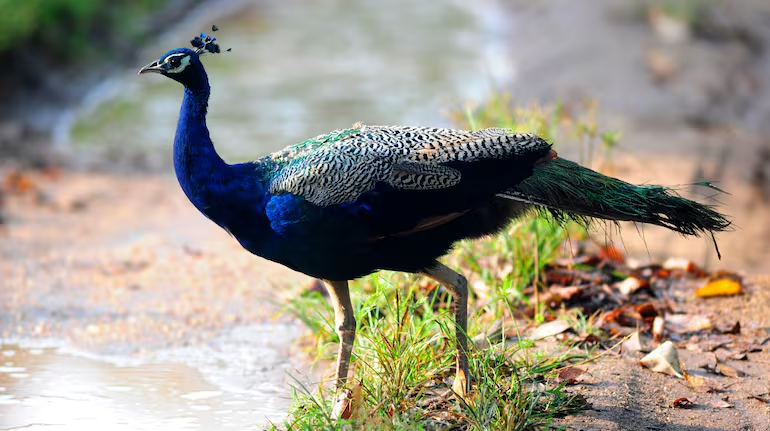
5. Birdwatcher’s Paradise: A birdwatcher’s haven, with vibrant species like the Indian Peafowl and Malabar Grey Hornbill filling the air with their calls, offering a spectacular birding experience.
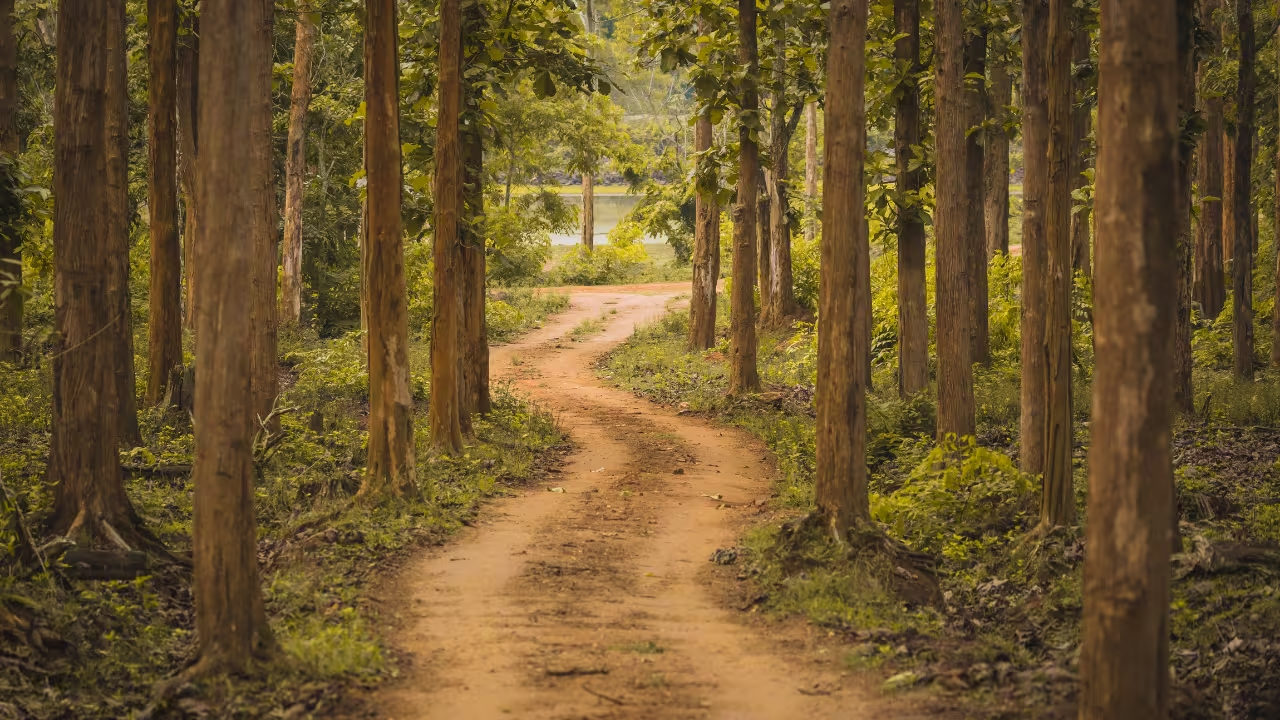
Immerse yourself in the lush greenery of Nagarhole National Park, a haven for nature lovers. (Image: Canva)
The diverse habitats within Nagarhole—from thick forests to open grasslands—create the ideal environment for wildlife, making it a photographer’s dream and a nature lover’s sanctuary. But the adventure doesn’t stop here—once you’ve immersed yourself in the wonders of Nagarhole, there are even more hidden gems nearby that will take your exploration to the next level.
Must-Explore Nearby Attractions While Nagarhole National Park offers incredible wildlife experiences, there are many more nearby attractions that will elevate your adventure to the next level. Extend your adventure beyond the park with these nearby gems:
1. Kabini River For a truly immersive experience, take a boat safari along the Kabini River. This peaceful waterway, lined by dense forests, offers glimpses of elephants, crocodiles, and a wide variety of bird species. It’s an intimate way to explore the wildlife of the region and capture unforgettable moments.
Iruppu Falls (Image: Canva)
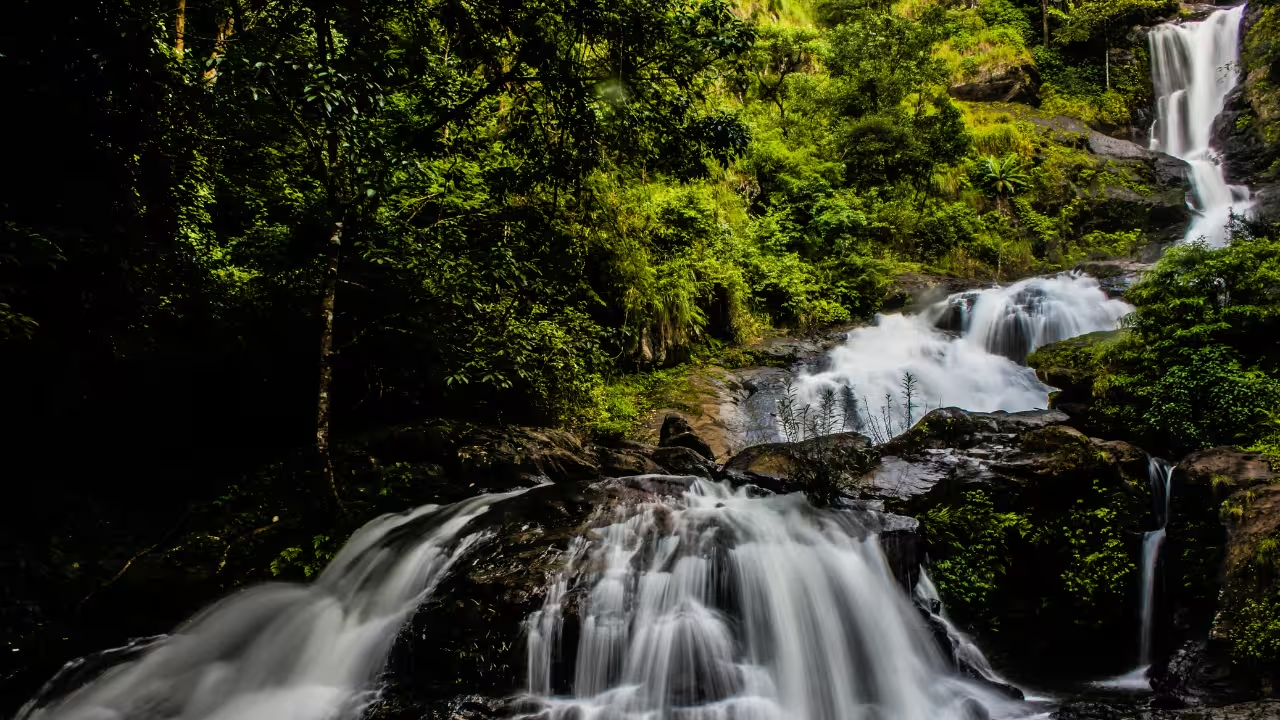
2. Iruppu Falls Situated in the Brahmagiri Range, Iruppu Falls is a stunning waterfall set amidst lush greenery. A popular trekking destination, this picturesque cascade is the perfect spot for a refreshing dip or a peaceful picnic. The journey to the falls is as rewarding as the destination, with breathtaking views along the way.
3. Brahmagiri Wildlife Sanctuary For a deeper connection with nature, explore the Brahmagiri Wildlife Sanctuary, located near the Coorg and Wayanad borders. Known for its rich flora and fauna, it’s a haven for wildlife enthusiasts and trekkers alike. The sanctuary is home to tigers, leopards, elephants, and a diverse range of birds, making it a great spot for a nature walk or hike.
Whether you’re on a thrilling safari, spotting the ‘big cats’, or simply soaking in the sights and sounds of the jungle, Nagarhole National Park offers an experience that will captivate your heart and soul. Ready to escape into the wild? This park is calling your name.
source: http://www.moneycontrol.com / Money Control / Home> Travel / by Priyanka Roshan / January 09th, 2025
Thomas Cook (India) subsidiary, Sterling Holiday Resorts, has expanded its presence in Karnataka with the launch of Sterling Brookstone Coorg. Located near Madikeri in the Western Ghats, the new property provides villa and cottage-style accommodations, combining modern conveniences with natural beauty.
Sterling Brookstone, a resort in Coorg, offers an array of amenities such as a swimming pool, banquet facilities, and an on-site restaurant. The Planter’s Kitchen caters to all palates, serving both local Kodagu delicacies and international cuisine. The resort also offers easy access to local attractions including Abbey Falls, Madikeri Fort, and Dubare Elephant Camp, positioning it as a perfect destination for leisure travelers.
Sterling Holiday Resorts, which manages over 3,000 keys across 57 resorts, hotels, and retreats in 48 Indian destinations, recently acquired a new property that aligns with its vision of providing memorable experiences at key tourist spots. The company, owned by Fairfax Financial Holdings, operates under two brands – Sterling and Nature Trails, serving various segments including leisure travel, Meetings, Incentives, Conferences, and Exhibitions (MICE), destination weddings, and group tourism. The acquisition of the new property is seen as a significant step in expanding Sterling’s footprint in India’s tourism sector.
Sterling Holiday Resorts has expanded its portfolio with the addition of a new resort in Coorg, demonstrating its commitment to providing exceptional hospitality experiences.
source: http://www.constructionweekonline.in / Construction Week / Home> Projects & Tenders / by Staff Writer / January 04th, 2024
Training sparks debate over elephant transfers toAndhra Pradesh; local Mahouts, Kavadis unhappy
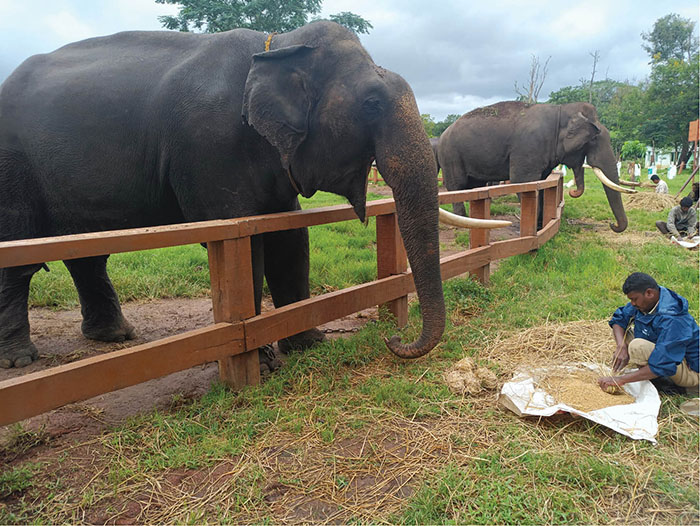
A team of 21 elephant handlers, including 17 Mahouts and four Kavadis from Andhra Pradesh, is undergoing specialised training in handling Kumki elephants at Dubare Elephant Camp in Kodagu.
The training, which began in mid-November, is set to conclude on Dec. 10, after which the team will return to Andhra Pradesh. Kumki elephants are trained to tackle wild elephants, safeguard human settlements and support wildlife conservation, including forest patrols and crop protection.
This training is part of a Memorandum of Understanding (MoU) signed in Vijayawada between the Andhra Pradesh Forest Department and Karnataka in September 2024. The agreement seeks mutual cooperation in addressing wildlife challenges and it was formalised in the presence of Andhra Pradesh Dy.CM Pawan Kalyan and Karnataka Forest Minister Eshwar B. Khandre.
However, reports suggest that Karnataka may be planning to transfer four to six trained elephants to Andhra Pradesh under the guise of this training programme.
Andhra Pradesh has an urgent need for Kumki elephants, with only two elephants — Jayanth (67) and Vinayak (54) — stationed at the Naniyala forest camp in Chittoor district and are reaching retirement age. This shortage has hampered efforts to protect wildlife, prevent the theft of sandalwood and red sanders trees, conserve forests and mitigate man-animal conflicts.
Sources informed Star of Mysore that the training might be a cover for relocating elephants to Andhra Pradesh. Mahouts and Kavadis in Dubare are unhappy with the move, citing Karnataka’s own shortage of trained elephants.
“It takes four to five years to tame and train an elephant to follow commands. We build a deep, familial bond with these animals through immense sacrifice and effort. Transferring them would not only sever this bond but also leave us jobless,” said one mahout.
Forest officials, however, denied any finalised plans, stating they have not received Government orders to shift the elephants. Some mahouts countered, claiming that a proposal was discussed months ago and that Karnataka is quietly laying the groundwork for the transfer.
Reports indicate that many elephants in Dubare have already been introduced to Andhra Pradesh handlers, who are being trained to manage them. The plan reportedly involves sending a specific number of elephants to support wildlife operations in Andhra Pradesh, with fears they might not return after their assignments and will be kept there for that State’s services.
Meticulous training on all elephant aspects
The training programme for elephant handlers from Andhra Pradesh at Dubare Elephant Camp focuses on understanding elephant behaviour and mastering specific cues to control and direct them effectively. Under the guidance of lead trainer J.K. Dobi, the training employs a range of techniques, including the use of specialised tools, handling chains and creating loud noises to ward off wild animals.
The handlers are trained with elephants Dhananjaya, Kanjan, Vidyashree, Vijaya and Rama in foundational skills such as touching, bathing and interpreting signals. They are taught commands in specific languages, methods for balancing atop elephants and techniques like tapping the elephant’s ear with their foot or patting its head for direction.
Additionally, they learn about elephant dietary requirements, including the cooking process, ingredients and feeding schedules.
To provide a comprehensive understanding, the team has been taken to other elephant camps across Kodagu and Mysuru districts, including Harangi, Mathigodu, Balle, and Veeranahosahalli. Here, they are familiarised with the unique conditions and challenges specific to each camp, ensuring their preparedness for diverse environments.
Karnataka must prioritise its elephant needs
According to Forest Department officials, Karnataka plans to send four trained elephants to Andhra Pradesh to assist in wild elephant capture and training operations only. Since 2013, Karnataka has handed over 59 trained elephants to various States. The Forest Department must be transparent and avoid concealing facts.
Andhra Pradesh initially requested 22 elephants, but the number was scaled down to eight after Karnataka refused. Even now, sending elephants to Andhra Pradesh is not the right move. We need elephants for Dasara, other tasks and as a tourist attraction at elephant camps. Our resources are already stretched with limited elephants in the State. To capture and tame an elephant it costs Rs. 14 lakh and to fit a radio collar, it requires Rs. 22 lakh.—Joseph Hoover, Conservationist & Wildlife Activist
source: http://www.starofmysore.com / Star of Mysore / Home> Feature Articles / by Joseph Hoover, Conservationist & Wildlife Activist / December 09th, 2024
The ambitious project to construct a hanging bridge over the River Cauvery at Dubare Elephant Camp in Kodagu is poised to further transform this popular tourist destination.
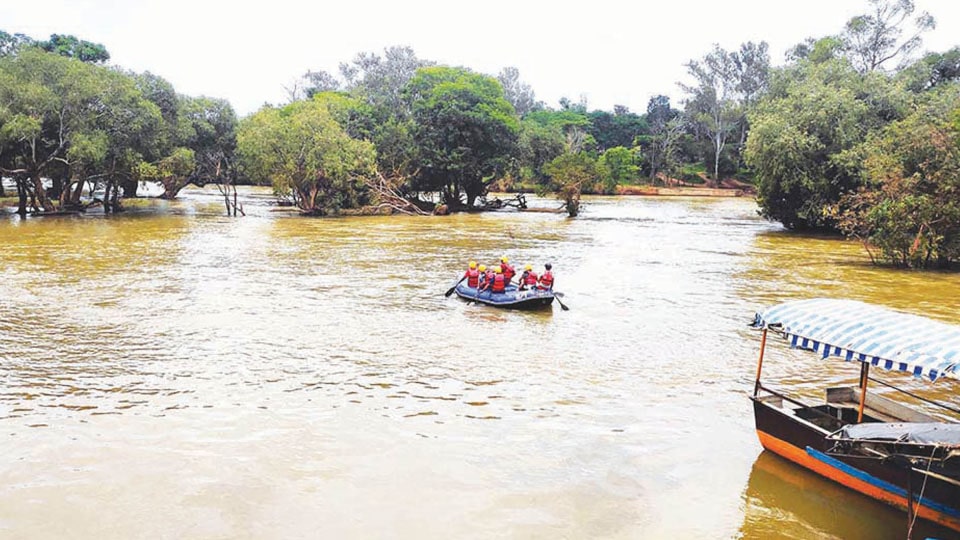
Dubare draws thousands of tourists each month and the addition of a hanging bridge connecting both riverbanks promises to be a significant attraction. Currently, one side of the river is managed by the Tourism Department, while the Forest Department oversees the opposite side, home to the renowned elephant camp.
Presently, tourists can only traverse the river via motorised boats. Due to the high demand for boat rides, many visitors risk crossing on slippery rocks — when the water level is low, leading to accidents and prompting criticism of the Forest Department.
The original hanging bridge plan envisioned a 110-metre structure supported by three columns — two at the ends and one in the centre — with an estimated cost of Rs. 3 crore.
Two poles instead of three
However, the new proposal extends the bridge length to 210 metres, supported by only two poles, eliminating the central column thanks to enhanced suspension wire technology. The revised design will be higher at the centre than at the ends for added stability.
This updated project is estimated to cost Rs. 6 crore. The bridge will have a walking width of 1.5 metres and will be constructed above last year’s flash flood level to ensure safety.
Hanging bridge expert Patanjali Bharadwaj has finalised the design, materials and total project cost, including labour. Unlike the previous proposal where land ownership was shared between the Tourism and Forest Departments, the new project will be built entirely on Forest Department land, streamlining the approval process.
Budget estimate of Rs. 6 crore
The design and location survey have been completed and submitted to the Public Works Department (PWD). A budget estimate of Rs. 6 crore has been forwarded to the Finance Department for final approval. Patanjali Bharadwaj has designed the bridge and calculated the material cost as per the PWD budget list and provided the cost estimate.
The State Government and the PWD have granted in-principle approval and the project has been included in the Forest Department’s Action Plan, receiving sanction from the Forest Minister.
Funding will come from the Kodagu Foundation, which pools entry fees collected at various parks, trekking spots and forest guest houses, supplemented by government funds.
The PWD will supervise the construction, with the tender process set to begin following financial clearance. If funding is timely, the bridge could be completed within six months, with an expected finish date in 2025.
Boating to be discontinued
Bhaskar, Deputy Conservator of Forests (DCF), Madikeri Circle, explained the project’s earlier challenges. “Previously, land issues stalled progress due to the split ownership between the Tourism and Forest Departments, complicating clearances under the Wildlife Act. This time, we selected land solely managed by the Forest Department, eliminating these administrative obstacles. We are committed to seeing the project through. Once operational, boating services will be discontinued, though river rafting will continue,” he said.
For context, Patanjali Bharadwaj is the son of Padma Shri awardee Girish Bharadwaj, known as the ‘Bridge Man’ for constructing over 100 suspension footbridges across India. Girish Bharadwaj founded ‘Rational Engineering Industries’ in 1975 in Sullia, Dakshina Kannada, now known as Ayasshilpa. Patanjali is continuing his father’s legacy with this new project.
Revenue boost
The Dubare Elephant Camp operates daily from 9 am to 11 am and 4 pm to 5.30 pm. Forest officials report that the site welcomes an average of 500 to 700 tourists daily and has four boats for river crossings.
“During festivals and weekends, when over 2,000 tourists visit daily, managing the crowds becomes difficult. Weight restrictions limit boat capacity, forcing many visitors to leave without experiencing the elephant camp. The hanging bridge will resolve these issues and is expected to boost revenue,” officials added.
source: http://www.starofmysore.com / Star of Mysore / Home> News / November 24th, 2024
WELCOME. If you like what you see "SUBSCRIBE via EMAIL" to receive FREE regular UPDATES.
Read More »