A weekend getaway at the Blyton Bungalow in the Poomaale Estate in Coorg is all you need to recharge yourself from the urban noise.
The six-hour journey from Bengaluru to the Poomaale Estate feels like a slow untwining of the city’s grip. By the time the car climbs the hills of Kodagu district—better known as Coorg—the traffic thins, the air cools, and the dense green folds of the Western Ghats begin to swallow the winding road.
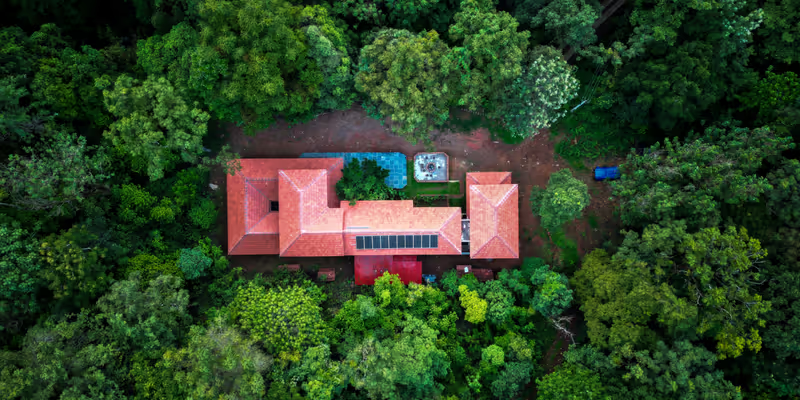
The final stretch feels enchanted: rain-slicked roads winding past tangled forests, a lone elephant crossing the road, and finally, the quiet approach into a 128-acre coffee estate that seems to have been built for retreat.
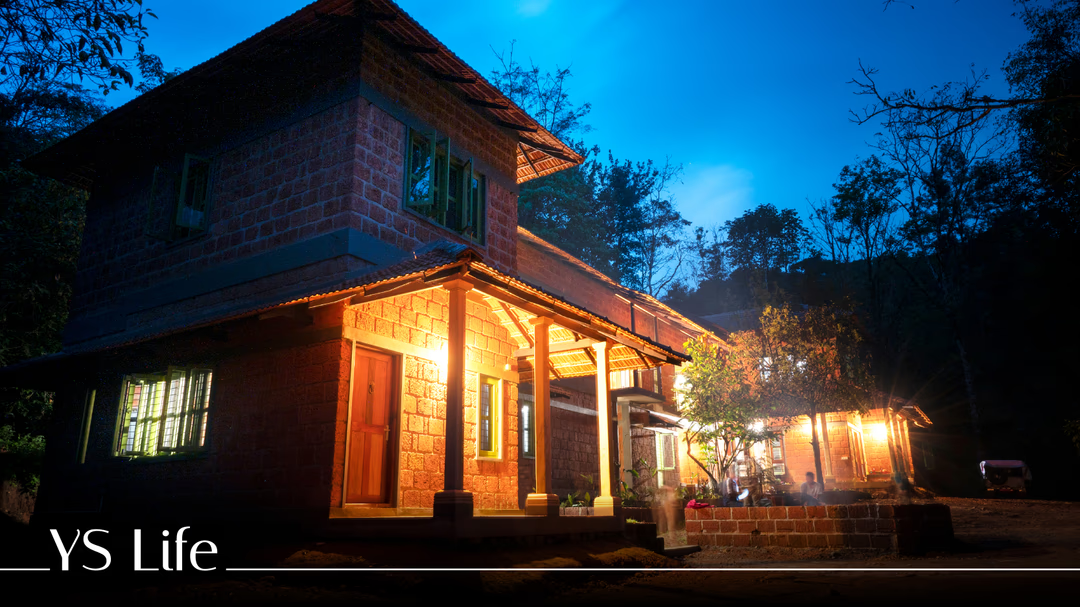
Nestled in the dense forests of the estate is the Blyton Bungalow. One can’t call Blyton a resort in the conventional sense; it encompasses the essence of Coorg’s diverse ecology and raw beauty.
The large, but homely, guesthouse is decorated with modest Mangaluru tiles, wide verandas, and wooden chairs, which build a perfect ambience for long hours of coffee and conversation, interspersed by the chirps of birds and a gushing waterfall.
We were welcomed with steaming cups of the estate’s brew, as Aranya Bagchi, the hospitality manager and resident naturalist, laid down some ground rules for our safe stay at Blyton, which is right in the middle of a dense rainforest.
No wandering outside alone after dark, as it may get dangerous.
Once the night falls, until early morning, the estate and its adjacent jungle become roaming grounds for wildlife movement, especially elephants.
And then, there’s the coffee.
Coffee at the source
Coffee is always better at its origin, and at Poomaale, it was earthy and robust, harvested, dried, and roasted just a few hundred meters away from Blyton. By the end of the stay, we lost count of the many cups we had consumed!
We just didn’t sip coffee, as part of the experience, we indulged in an hour-long session on various brewing methods. It wasn’t just a tutorial, but almost a ritual—one kindred to the Japanese tea ritual.
The nuances of grind size, the temperature of the water, and the patience of the pour. Coffee, in Bagchi’s telling, became more than a drink. It was a dialogue between soil, climate, and craftsmanship.
Walking the land
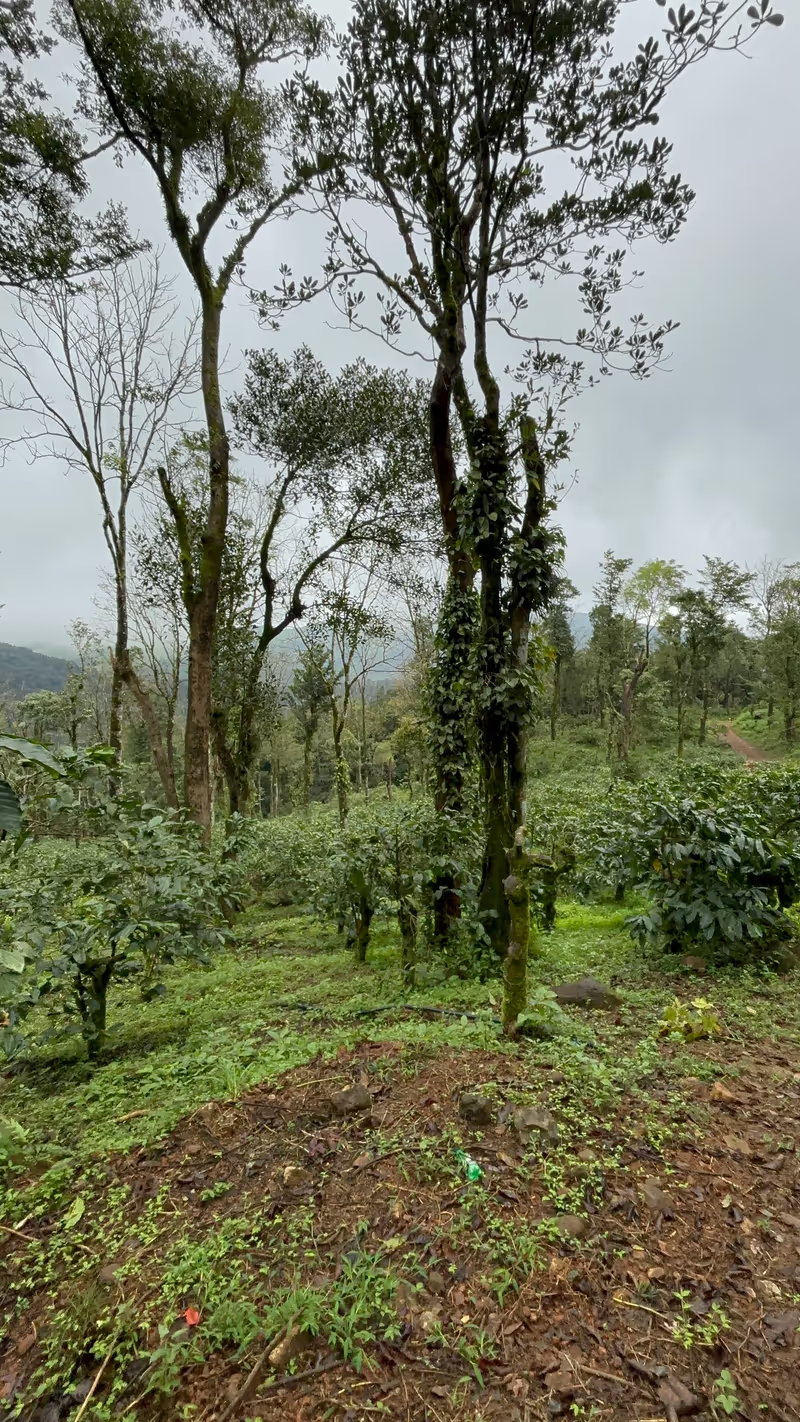
Poomaale Estate’s beauty best unfolds on foot. Sharan V, a budding researcher and a naturalist, guided us on a trek to a nearby hillside. On this hour-long trek, we crossed many coffee shrubs—most of them loaded with gestating green berries, while a few others were decorated with white flowers, rendering a sweet, almost jasmine-like scent.
Did you know? The gestation period of coffee is similar to that of humans; it takes nine months for coffee to mature from flower to bean.
Here, the trail was alive with fungi following the monsoon rains, as well as many fruit trees, specifically litchi, rambutan, and mandarins.
A small stream kept us company for much of the trail, and so did the patter of rain on leaves. By the time we emerged onto a grassland clearing, the hills of Coorg stretched before us, wrapped in mist. It wasn’t an arduous trek, but for sedentary city dwellers, the incline was steep enough to bring back to life muscles long forgotten.
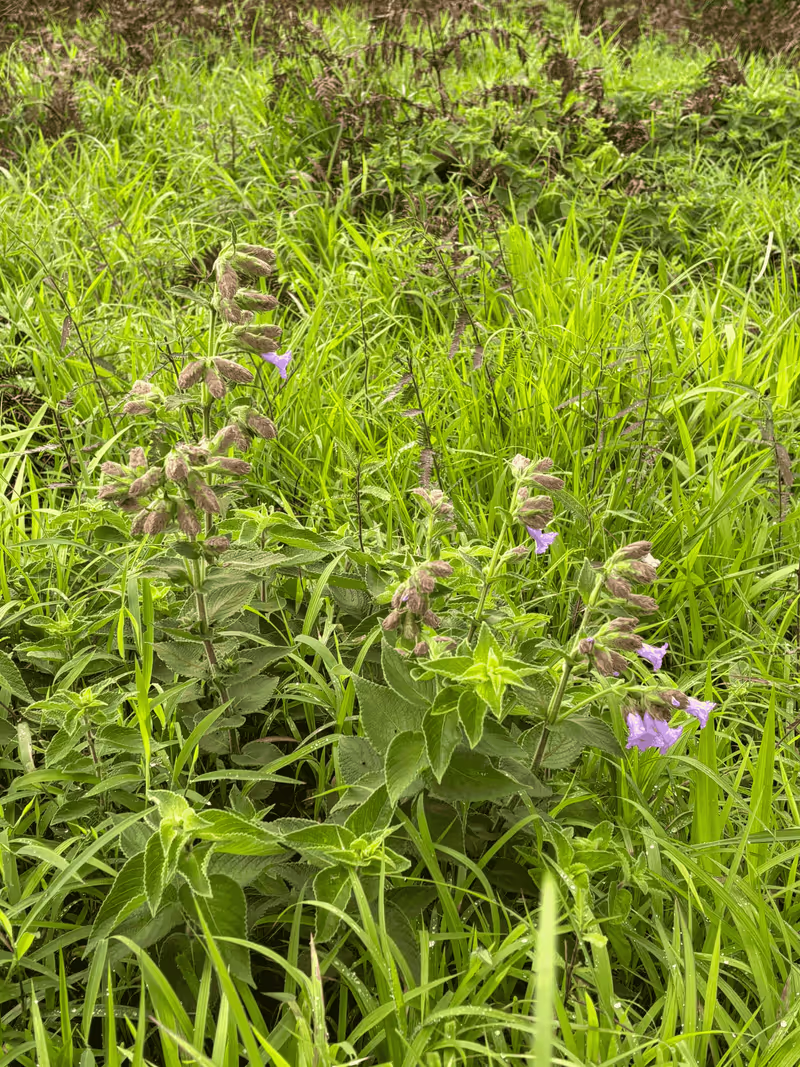
As we reached our destination, we stopped to check out a purple-hued, bell-shaped bloom called the Kurunji—not to be confused with the famed Neelakurinji of the Nilgiris, but equally rare, flowering once every four years.
To stumble upon it in bloom—surrounded by the dense green hills, partially covered in clouds—felt like being let in on a secret.
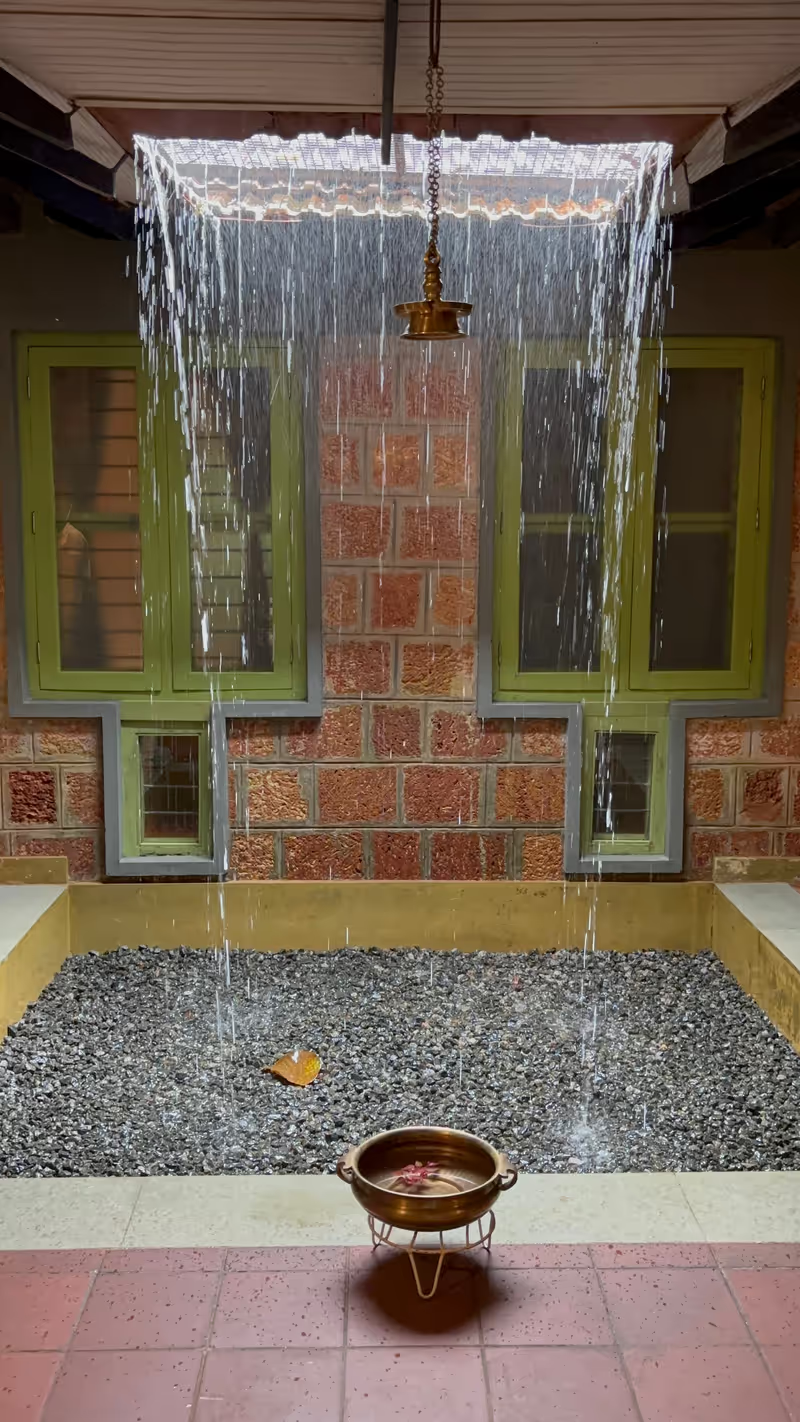
That night, rain lashed the windows, but our hosts were well prepared with hot water bottles, which were tucked into our bed for cosy comfort. The rooms were big, simple, but intimate. The laterite stone walls, iron-clad windows, rustic wooden doors, and high-rise ceilings reminded one of a village homestay, metamorphosed for a premium experience and comfort.
Encounters with the wild
Blyton offers a much-needed escape from the city’s ambient noise. The next morning, we were woken up from our deep slumber by an alarm bell, but not in the way one expects. The sound was the courtesy of the Malabar Whistling Thrush, also known as the Whistling Schoolboy; the bird is a daily visitor at Blyton Bungalow.
A morning walk, following a scrumptious breakfast, led us to several birdwatching points, where binoculars revealed flashes of scarlet and cobalt in the canopy. Sharan was quite excited to show us a tiger beetle, named after its distinct tiger-like patterns, indigenous to Coorg.
And then there was the waterfall. Swollen with the season’s rain, it roared with an energy that pulled you in. Standing beneath it, drenched and exhilarated, felt less like sightseeing and more like baptism—a cleansing of city fatigue.
PS: If you are in a rainforest, be prepared to encounter leeches and snails, among many other critters.
Food from the land
Meals at Blyton Bungalow were as much a reflection of the land as the treks. Every dish was sourced either from the Poomaale Estate itself or from one of its sister properties or “collectives” in Andhra Pradesh and Maharashtra, operated by their parent entity, Beforest.
Founded in 2018, Beforest is one of the first firms in India to carry out permaculture activities on a scale of 100+ acres in each of its collectives to reimagine a forest-friendly lifestyle.
Food at Blyton was homely, prepared by a local resident cook, Ishtak, who spun the forest produce into delicious meals. One evening, we were served a delicate dish made of young ferns, sautéed simply with local spices, their freshness speaking louder than seasoning. Try the wild mango curry—a sweet and tangy curry made with small mangoes from the estate’s orchards. We were also served the local rice, which had a distinct purple colour and was sweet to taste.
In fact, the estate has a cow shed that provides milk products for Blyton’s guests as well as manure for the plants. Behind the cow shed grows cardamom and pepper in the wild—the two spices that are cultivated at Poomaale besides coffee.
There was something grounding in knowing that every bite had a direct lineage to the soil underfoot. Nothing felt imported, nothing staged. It was food in conversation with the place.
A pause from the world
Blyton Bungalow is not about curated experiences or glossy perfection. Its magic lies in the authenticity of being away. The air carries petrichor and coffee blossom, the walls echo with bird calls, and the evenings settle into long stretches of rain and firefly glow.
Time slows here—not in the sense of boredom, but in the way that every moment feels fuller, layered with the textures of land, weather, and companionship.
When it was time to leave, the six-hour drive back to Bengaluru felt heavier, the city waiting with its demands and deadlines. But somewhere in the mind, the sound of the stream lingered, and so did the warmth of a hot water bottle pressed tucked in the sheets, and the image of a lone elephant, chalk-painted and solemn.
Blyton Bungalow isn’t just a getaway. It’s a reminder that retreating into nature is less about escape and more about return—a return to the quiet, the simplicity, a way of being that listens as much as it speaks.
Prices for two nights (inclusive of taxes):
Regular room: Rs 20,000
Suites: Rs 32,000
source: http://www.yourstory.com / Your Story / Home> YS Life> Travel & Leisure / by Suman Singh / edited by Kanishk Singh / September 20th, 2025


