Category Archives: Coffee Board, India (wef. Nov 17, 2021)

World Coffee Conference to take place in India in 2023

ico wcc bangalore 2023

The fifth edition of the World Coffee Conference is coming to India. The event is set to unite the global coffee industry on sustainable topics of discussion, including circular economy and regenerative agriculture. 

Since the 18th century, commercial coffee has been thriving in India. Over time, the country has evolved from a tea drinking nation to one with a strong coffee identity.

Coffee is traditionally cultivated in the Western Ghats, and is rapidly spreading to the areas of Andhra Pradesh and Odisha and the North East states. This year however, all eyes will be on Bangalore, the largest city of the southern Indian state of Karnataka, as it hosts one of the largest global events in the coffee sector.

For the first time since 2016, the International Coffee Organisation (ICO), a multilateral intergovernmental organisation for coffee, and its Members, will host the World Coffee Conference (WCC) from 25 to 28 September.

The event is foreseen in the International Coffee Agreement 2007 treaty, in which the organisation aims to host every four to five years. The WCC first took place in London, the United Kingdom, in 2001; followed by Salvador, Brazil in 2005; Guatemala City, Guatemala in 2010; and Addis Adaba, Ethiopia in 2016.

COVID-19 pressed pause on the last scheduled event, and now, the world is ready to unite in an Asian country for the first time.

“The renewed interest and commitment by India to organise this high-level event is exciting. It will not only be a forum to discuss critical topics for the global sector, but to be involved in a technologist exhibition, and technical workshops and a Growers’ Conclave run by the Coffee Board of India. We will see top-tier company representatives, government representatives, United Nations partners, and even Vietnam will be coming with more than 20 delegates. They see it as a huge opportunity to showcase the way they produce and trade coffee,” says ICO’s Head of Operations, Gerardo Patacconi.

The iconic Bangalore Palace Grounds will be the host venue for the international conference and coffee technology fair. The Government of India will host the WCC 2023, chaired by the Indian Minister of Commerce and Industry, Shri Piyush Goyal.

The WCC will be held in conjunction with the G20 Summit under the country’s presidency. It will also integrate the 5th CEOs and Global Leaders Forum, and the 136th Session of the International Coffee Council.

All 75 ICO member countries are ready to attend the WCC, with the conference expected to attract more than 1500 registered delegates and 10,000 business visitors from across the globe.

WCC 2023 will bring together representatives from government, the private sector, development partners, as well as civil society and academia, coffee producers and importers, leading coffee associations, global coffee experts, roasters and more.

They will gather to discuss and debate on coffee market trends, technology, and best practices for building a circular coffee economy, regenerative agriculture, sustainability through consumption, innovation and access to finance, with the goal to collaborate towards building a sustainable coffee industry from bean to cup.

Guest speakers will present on this year’s event theme, ‘Circular Economy and Regenerative Agriculture,’ addressing market trends, challenges, best practices, technologies, and strategic and financial solutions to build a resilient and sustainable future for the coffee sector, and production issues surrounding sustainability and cultivation, living income, and climate change, in compliance with the Sustainable Development Goals and Environmental, Social and Governance practices.

“On 1 October 2022, the International Coffee Day, ICO members decided on this topic theme. The reason is that there is a growing interest and opportunity at the different levels of the supply chain on circularity. This year we are also launching the Coffee Development Report on circular economy, and we are also looking into how to move circularity into action,” Patacconi says.

“There is huge opportunity for increasing jobs and income through circularity, so transforming waste, whatever form that takes, into a business opportunity is important, as is the work we match with living income for livelihood and prosperity of farmers. There are scattered, good examples, but we need to bring them together so that everybody can have access to this knowledge.”

Patacconi notes there are three levels of outcomes expected from this year’s high-level discussions at the “Davos of Coffee”. First, is a high level of engagement of both policy makers and industry around the event themes, including opportunities to discuss trends in the coffee sector, and changing regulatory framework.

The second is to determine practical solutions in terms of technology that could be made available, and third, is about access to financial resources, knowledge, and markets.

“Through the ICO we really want to promote the creation of a centre for coffee circular economy, which we are now advancing with the help of our members. We are also joining the Lavazza Foundation and United Nations agencies such as UNIDO (United Nations Industrial Development Organization) and ITC (International Trade Centre) for the creation of Coffee Circular Economy Hub to share knowledge and help implement win-win solutions from coffee farms to cup,” Patacconi says.

While it’s important that policy makers are engaged in this year’s WCC, Dr KG Jagadeesha, CEO of the Coffee Board of India, says it’s crucial to have participation from producers.

“It’s extremely important for everyone across the value chain to attend, including consuming countries. This event is exclusively dedicated to growers, and we invite growers from different coffee growing nations such as Vietnam, Brazil, Central and South America, and African countries to attend,” he says.

The international community is also invited to visit India’s exotic coffee growing estates from 23 to 24 September to appreciate the unique qualities of its thick, shade-grown canopy coffee.

“India is currently the sixth largest grower of coffee and fifth largest exporter in the world. We have half a million families dependent on cultivating coffee in India. Two million people are directly or indirectly involved in coffee value chain, and the coffee sector in India, especially domestic coffee market, is expanding. The percentage of youth who are passionate, dynamic drinkers is expanding. They are highly qualified, and their tech-savvy connection to social media and influence is driving the market.”

For a traditional tea-drinking nation, which is low-cost and easy to prepare, Jagadeesha says the renewed uptake of coffee consumption is impressive and a sign of development because living incomes and standards have improved, thereby allowing the younger generation to afford the luxury of quality coffee.

“The evolution of coffee in India is not just about access to coffee chains, it’s about offering an experience for the youth to gather and connect in urban areas, a place to unite and exchange ideas,” Jagadeesha says. “Bangalore, in particular, is the Silicon Valley of India. It’s home to a lot of technology parks and I.T companies, as well as the highest number of technical colleges. It’s the place to be for coffee. It’s a cosmopolitan city with a significant proportion of foreign nationals, and a large number of coffee chains, including Blue Tokai, Koinonia Coffee Roasters, and Third Wave Coffee have all made their mark here.

“This is a city worth exploring for coffee, and a country that invites the world to its doorstep and share its excitement for the future of possibilities.”

For more information, click here. 

source: http://www.gcrmag.com / Global Coffee Report / Home> Profiles / by Dominic Morrell / August 08th, 2023

Bitter Coffee Prices: A worldwide bean shortage is making coffee lovers sweat espresso bullets

Synopsis

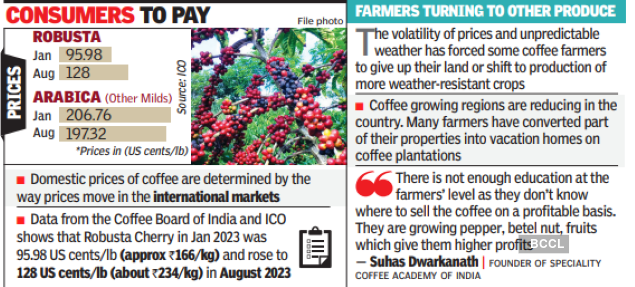
A shortage of coffee beans around the world, in particular due to weather problems in India and lack of supply from Brazil and Vietnam, has led to domestic market prices rising steeply. A well-known coffee trader in Pune, Gandhi’s Coffee, said he had to pass on a Rs50/kg price hike to customers.

Coffee istock

Be it the humbled pulses, vegetables or even exalted gourmet offerings, food prices are now steaming hot, singing consumers’ budgets and making policy decisions tougher for rate-setters while they perhaps sip on coffee. But halt, for even the world of coffee, that beloved elixir that often serves as the morning oracle, is now demanding a premium spot on the rate chart.

Hold onto your mugs, coffee enthusiasts, because it looks like your beloved brew is about to take you on a rollercoaster ride through the wild world of caffeine economics.

This increase in cost is attributed to a shortage of coffee beans on a global scale, particularly stemming from Brazil and Vietnam, coupled with unexpected rains affecting bean quality in India. This unfavorable situation has led to a surge in domestic market prices.

Coffee

Coffee traders, who usually acquire premium beans from Chikkamagaluru in Karnataka, have begun transferring this price escalation to their customers.

Latha Aravind, a resident of Mumbai’s Matunga, said that the cost of usual mixed coffee grounds – a blend of Robusta and Peaberry beans – has risen from around Rs 580/kg to about Rs 640 to Rs 650/kg.

“Prices have shot up and may keep rising,” she told Times of India.

Rajesh Gandhi, owner of Gandhi’s Coffee, a well-known coffee trading enterprise in Pune, said that he had to pass on a Rs 50/kg price hike to the end consumers, as Robusta beans have undergone an approximate 50% price surge, while Arabica beans area dearer by about 15%.

Ajit Raichur, a coffee trader from Kumardhara Traders, said that coffee prices are typically adjusted annually in January. However, this year witnessed an additional price hike of Rs 50/kg across all available bean varieties in July.

GM Dharmendra, a wholesale green coffee (raw beans) trader based in Bengaluru, said he lost 30% to 40% business over the last few months. “Many small coffee retailers in the area have shut shop or they are buying poor quality beans at cheaper rates. Many customers have shifted to instant coffee,” he added.

The coffee-growing region of Chikkamagaluru has borne the brunt of climate change impacts. Rohan Kuriyan, manager of Balanoor Plantations and Industries, reported a 20% decrease in yield due to untimely rainfall during blossom days, compared to the previous year. “The average cost of picking has also gone up. We ended up doing four rounds of selective harvesting instead of the usual two because of the uneven ripening of the cherries,” he added.

“With some positive news about better crop in Brazil, Arabica prices have started softening in the international markets. However, prices are expected to be a bit higher in the domestic market which is growing at double digits because of demand and less production,” Challa Srishant, MD of CCL Products (India) and member of the Coffee Board of India, said.

CCL Products, known for its ‘Continental’ coffee brand, has raised prices from Rs 280 to Rs 360 for a 200g jar within a year, with a further 10% increase planned for the next quarter. Observers in the industry have noted that the diminishing price gap between Arabica and Robusta has inclined consumers towards the smoother and sweeter profile of Arabica beans.

“For planters, operational costs have gone up – right from labour costs to fertilizer and pesticide costs. Coffee prices (Arabica) are a little lower now than they were last year but traders usually buy in bulk and therefore it appears like they are protecting their bottom line in case prices rise again,” Mahesh Shashidhar, chairman of Karnataka Planters’ Association said.

The harvesting season for Robusta beans is six-to-seven months away, and there is uncertainty about the next crop. Karnataka remains a dominant player, contributing 70% of India’s coffee production, while Kerala and Tamil Nadu also cultivate coffee. Industry stakeholders have collectively absorbed various price increases at different junctures. Although prices haven’t been adjusted yet, Amit Bhatta, founder of the specialty coffee brand Aeka Coffee, conceded that an additional 15% to 20% increase could prompt a shift of this burden onto the end consumers.

(with inputs from ToI)

source: http://www.economictimes.indiatimes.com / The Economic Times / Home> India> Business News > Industry> Cons Products> Food / ET Online / August 09th, 2023

Karnataka gives impetus to coffee with focus on sustainability

Karnataka gives impetus to coffee with focus on sustainability through circular economy and regenerative agriculture. The state is the indisputable leader and produces over 70% of the total coffee produced in the country. It produced 2.33 lakh metric tonne of coffee in the last financial year, which is the highest coffee production by any state in the country.

By focusing on sustainability through circular economy approach, the state is implementing practices that aim to minimise waste, maximise efficiency in resources, and encourage environment-friendly practices throughout the coffee production process. In addition, the adoption of regenerative agriculture can enable to restore and enhance soil health leading to a more robust and sustainable coffee plantation.

The key coffee producing districts known as ‘The Land of Coffee’ are Hassan,  Kodagu,  Shivamogga  and  Chikkamagaluru. From a national perspective, the key production areas of coffee are Karnataka, Kerala and Tamil Nadu, which aggregate a total production of 92% in the country.

Going by the capability and competence of coffee growers, the state government is looking to unlock access to global coffee markets and tap the promising opportunities. In this regard,  Bengaluru is playing host to the 5th World Coffee Conference (WCC) 2023 for the first time in Asia from September 25-28, 2023, at the Bangalore Palace.

The organisers are the International Coffee Organization (ICO), in collaboration with the Coffee Board of India, Ministry of Commerce and Industry, Government of India, Government of Karnataka and the coffee industry provides unparalleled business opportunities for global coffee stakeholders. For the four-day event, WCC has appointed Rohan Bopanna, India’s doubles tennis player & Arjuna awardee as its Brand Ambassador.

Evolving around the theme of the conference: “Sustainability through Circular Economy and Regenerative Agriculture,” the  event will feature  conference, exhibition, skill-building workshops, CEOs & global leaders forum, growers conclave and a myriad of networking events, all focused on advancing sustainability in the coffee industry.

It will also include producers, curers, roasters, exporters, policy makers, researchers and everyone passionate about coffee from 80+ countries to join at WCC 2023, with a 4-day intensive programme focused on building a sustainable coffee industry through discussion, debate, and collaboration, said the organisers.

During the unveiling of the WCC 2023 Logo and Theme- “Sustainability through Circular Economy and Regenerative Agriculture”, Dr S Selvakumar, Principal Secretary of the Karnataka Commerce & Industries Department, said that, Karnataka is undoubtedly the coffee capital of India. “There is tremendous opportunity for investments across the coffee value chain- from bean to cup right from equipment companies, coffee machines, soluble coffee brands as well as café chains. This in turn leads to increased employment opportunities for our talent from farm to cafes. Therefore, we are privileged to be the host state for this event.”

Dr K G Jagadeesha, CEO and Secretary, Coffee Board of India, said, “WCC 2023 holds great promise for the global coffee sector, specially the Indian coffee industry fostering growth and sustainable practices while showcasing its rich coffee heritage to the world.

WCC 2023 will host an impressive array of participants, including ICO member country representatives, coffee growers, coffee roasters, coffee curers, farm to cup industry, HoReCa, café owners, coffee nations, policy makers, start-ups, R&D and students.

Bengaluru awaits to host this extraordinary global gathering, which will showcase commitment towards sustainability and innovation in the coffee industry. Previous editions of the conference were successfully held in England (2001), Brazil (2005), Guatemala (2010), and Ethiopia (2016), receiving immense appreciation from coffee enthusiasts worldwide.

source: http://www.fnbnews.com / FnBNews.com , Food & Beverage News / Home> Top News / August 02nd, 2023

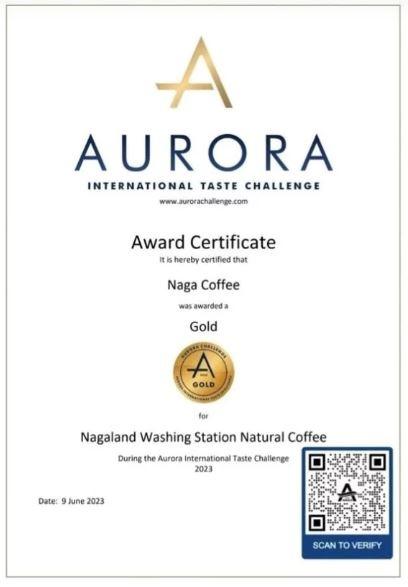
This Fruity, Citrus Organic Coffee Grown In Nagaland Hills Just Won Gold

Highlights

  • Naga Coffee was awarded Gold for Nagaland Washing Station Natural Coffee during the Aurora International Taste Challenge (AITC) 2023 held on 9 June in South Africa.
  • Local farmers from the state capital Kohima produced the coffee that entered the competition.
  • The Naga Coffee was experimented with a new drying process this year. Ripe coffee cherries were brought from a few local farmers and dried in a polyhouse during the winter season in Kohima.
  • The idea behind this is to promote homegrown Himalayan coffee with a natural citrus flavour and generate employment in the State.

__________

Naga Coffee was awarded Gold for Nagaland Washing Station Natural Coffee during the Aurora International Taste Challenge (AITC) 2023 held on 9 June in South Africa.

Local farmers from the state capital Kohima produced the coffee that entered the competition.

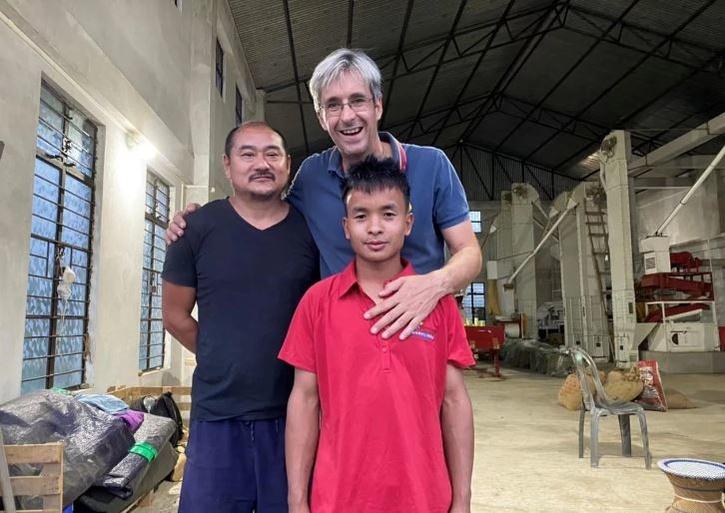
The Naga coffee team that processed the award-winning coffee consisted of Dr Pieter Vermeulen, co-founder, Kajiikho Ariicho and Ënga Antühü, the mill manager. 

The Naga Coffee team/ nagalandtribune.in

Held in South Africa this year, the Aurora International Taste Challenge was established to recognise and award food and drink excellence internationally while helping consumers confidently purchase award-winning, expertly-rated products. 

Unique process of coffee processing 

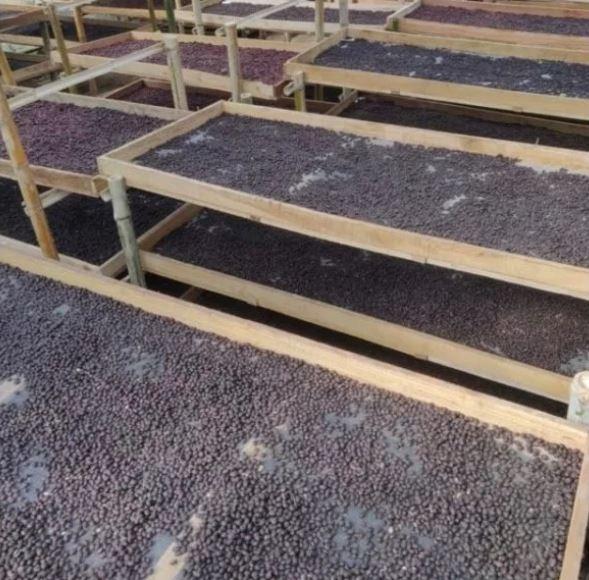
The Naga Coffee was experimented with a new drying process this year. Ripe coffee cherries were brought from a few local farmers and dried in a polyhouse during the winter season in Kohima. 

Before the final processing of the coffee, it was sundried for three days in Dimapur. This double-drying process produced a wonderful sweetness. 

Coffee beans being sundried/ nagalandtribune.in

This season, only 120 kg of this particular coffee was produced. But it was for the first time that Nagaland has produced a coffee that scored above 85 points on the Speciality Coffee Associations scale. 

Coffee production in India 

In the 2016-17 season, India had produced 5.5 million bags of coffee. Most of the country’s coffee is grown in the three southern states of Karnataka, Tamil Nadu, and Kerala, followed by Andhra Pradesh and Telangana. India processes coffee by the washed (or wet) method as well as the natural (or dry) method. 

But more recently, there has been a growing demand for premium and speciality coffees as consumers become increasingly interested in unique flavour profiles and high-quality products. Further, customers show greater interest in coffees that offer additional health benefits, such as antioxidants or energy-boosting properties. 

This is where Nagaland coffee comes in – grown in the forests in the mountainous areas of Nagaland. 

Coffee in Nagaland 

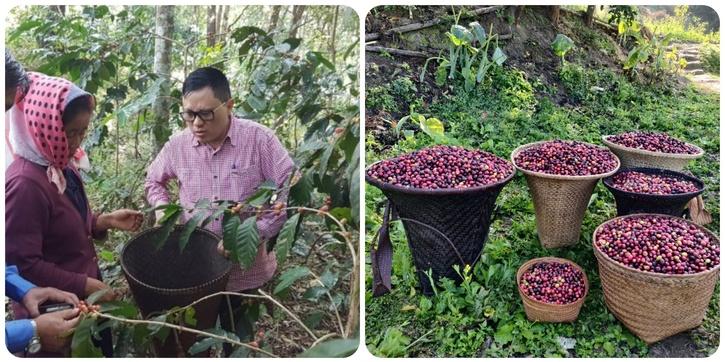
Various districts of Nagaland, like Zunheboto, Mon, Wokha, Khar and Boje, offer high-altitude speciality coffee grown in the natural forest shade. 

Coffee grown in Nagaland/ Nagaland government

This is part of Naga Coffee – a public-private partnership – which was formalised in 2016 as a Memorandum of Understanding between the Department of Land Resources, Nagaland and Noble Cause, a South African Company by Peter Vermeulen. 

The coffee seeds are procured from the Coffee Board of India and sent to small farmers to be planted. Later these coffees are roasted by the Naga Coffee team. The idea behind this is to promote homegrown Himalayan coffee with a natural citrus flavour and generate employment in the State.

source: http://www.indiatimes.in / India Times / Home> News> India / by Shristi B Dutta / June 13th, 2023

Barista Battle: Top Competitors Converge on Bangalore for National Championship

Tennis player James Blake

Bangalore (Karnataka) :

The National Barista Championship 2023 (The 21st Edition), hosted by the Coffee Board of India, Speciality Coffee Association of India, and United Coffee Association of India, is being organised from February 14th to 19th at Orion mall, Bangalore. With over 60 stalls offering more than 100 different types of coffee, the audience will be experiencing the largest collection of coffee ever under one banner. This year NBC is powered by Kaapi Solutions as the platinum sponsors along with Nescafe and SCAI (speciality coffee association of India) as the Gold sponsors) as the Gold sponsors for the event.

This year we have around 60 Baristas who would be battling it out for the Title of Champion. Making it the biggest tournament in Asia.

NBC is a prestigious annual event in the coffee industry where baristas from various regions of India come together to showcase their brewing skills and compete for the title of the National Barista Champion. All the best cafe brands such as Blue Tokai, Thirdwave, Lavazza along with many other speciality coffee brands all over India will participate in this unique event.

This year’s National Barista Championship is set to be the most competitive yet, as baristas push the boundaries of what is possible with coffee. A very strong committee has been set up where the volunteers under the guidance of Purnesh DM (President of the Speciality coffee association of India), Vikram Khurana (President United coffee association of India) and Srikanth Rao (Vice President United coffee association of India) who shares the same passion for coffee and have worked tirelessly to put this event together.

The event provides a unique opportunity for attendees to network with industry leaders, learn about the latest trends and techniques in coffee preparation, and sample some of the finest coffee blends from around the world.

“We are thrilled to host the National Barista Championship in Bangalore,” said Dr K G Jagadeesha, IAS, Secretary of the Coffee Board. “This city has a rich history and culture of coffee-making, and it’s an honor to bring the best baristas from top cafe brands, and specialty coffee brands from all over India to compete here. Last year’s event, held at Orion Mall in Rajajinagar, was a huge success with over 10,000 visitors, a multitude of coffee, 40+ stalls, and lively music. We look forward to welcoming both the competitors and the public to this exciting event.”

The competition, which will be held over 6 days – 14th to the 19th of Feb. This includes the preliminaries which will happen on the 14th -15th and the 16th post which 18th will be the semi-finals and it concludes on the 19th with the finals. The second day will feature the final round, where the baristas will be judged on their latte art and signature drinks. The winner of this highly regarded competition will then go on to represent India at the World Barista Championship 2023 to held in Athens, Greece.

The National Barista Championship is an annual event that brings together baristas from various regions of India to showcase their brewing skills and compete for the title of National Barista Champion. This coffee festival is a congregation of music, entertainment, a wide array of stalls and a whole lot of coffee and with some great jury to help make it a seamless judging process. NBC 2022 Had Ms Seonhee Yoon from Korea fly down to judge these world class brewers.

This story has been provided by NewsVoir. ANI will not be responsible in any way for the content of this article. (ANI/NewsVoir)

source: http://www.business-standard.com / Business Standard / Home / by ANI Press Release / February 15th, 2023

Famous For Its Tea, Assam Trying To Carve Its Name On India’s Coffee Map

Coffee cultivation is mushrooming in Assam following the growth of cafes, government-backed guilds and organic farmers in the northeast.

Famous For Its Tea Assam Trying To Carve Its Name on India Coffee Cultivation Map Famous For Its Tea, Assam Trying To Carve Its Name On India's Coffee Map
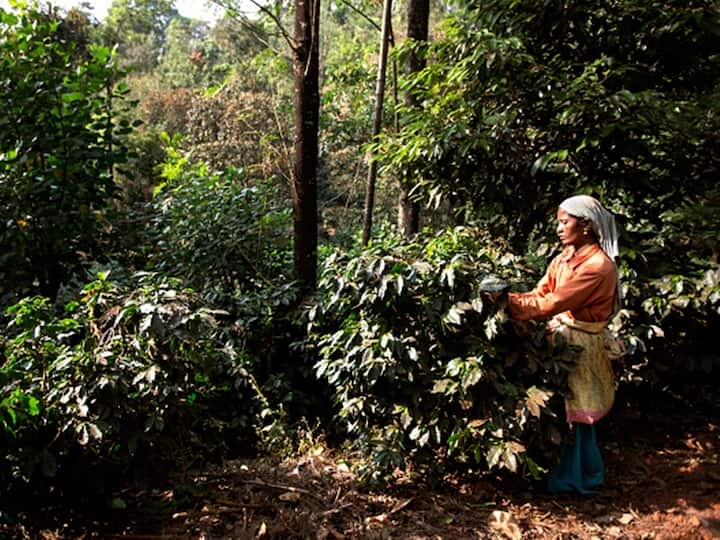
A woman picking coffee cherries on a plantation. About 4,700 acres are used for coffee farming in the Northeast. ( Image Source : Getty Images )

Guwahati: 

Assam, famous for its tea worldwide, is also making efforts to carve its name in the coffee map of India. With the growth of cafes, government-backed guilds and organic farmers in the Northeast, coffee cultivation is mushrooming in Assam. 

Navin Kumar Bahl Ryntathiang, Joint Director, Coffee Board (northeastern region), said they have put a lot of emphasis towards making coffee cultivation a major farm produce in the region.  

“We have a total planted area of 4,600–4,700 hectares of coffee cultivation. From all seven states combined, the average production has been around 150 MT. Coffee is a biennial crop that is grown on an alternative schedule. If it has a high count for the current year, it can have a low count the next year,” Ryntathiang told ABP Live.  

About 4,700 acres are used for coffee farming in the Northeast. According to data, coffee is cultivated on 479 hectares in Arunachal Pradesh, 429 hectares in Assam, 1,100 hectares in Meghalaya, 1,300 hectares in Mizoram, 932 hectares in Nagaland and  264 hectares in Tripura.

Arabica and Robusta are the two main types of coffee grown. Robusta is cultivated in lower altitudes (500–1000 meters above sea level) while Arabica is grown in altitudes 1000–1500 meters above sea level.

While there are only two-three regions where coffee is grown in Assam, it is majorly cultivated in Haflong in Dima Hasao district. Mostly Arabica coffee is grown in Haflong.

Robusta coffee is mostly cultivated in Assam districts of Karbi Anglong, Chirang, Bijni besides others. A coffee research center is also located in Karbi Anglong.

Both the Arabica and Robusta types are produced in Assam and Meghalaya.

Arabica is mainly cultivated in Mizoram and Nagaland’s steep terrain. Robusta coffee is mainly found in Arunachal Pradesh’s Dirang area in the West Kameng district.

“Main farming areas are in Meghalaya and Mizoram. When it comes to producing coffee, Assam leads the way, followed by Arunachal Pradesh and Meghalaya” Ryntathiang said.

source: http://www.news.abplive.com / abp Live / Home> News> India / by Pallav Bora / February 04th, 2023

Coffee Board refurbishes India Coffee House at its premises with old world charm intact

While the classic menu, existing staff members and the old charm of the Coffee Board cafe will untouched, a fast food menu has been introduced to attract the younger generation.

The ICH, set up in 1972, has been a favourite coffee joint for journalists, government officials and also the general public who visited the High Court, Vidhana Soudha and other government and private offices nearby.  | Photo Credit: MURALI KUMAR K

Coffee Board of India has renovated and renewed its cafe, India Coffee House (ICH), located at its premises in Bengaluru. It has also added a ‘sitting on the veranda and sipping a cuppa’ kind of experience to it.

While your favourite dosa, idli and vade, sandwich, cutlet, bread toast and coffee, existing staff members and the old charm of the Coffee Board cafe will remain, an additional fast food menu has been introduced, in association with social enterprise Mitti Cafe, to attract the younger generation.

The ICH, set up in 1972, has been a favourite coffee joint for journalists, government officials and also the general public who visited the High Court, Vidhana Soudha and other government and private offices nearby.

Coffee Board CEO and Secretary K.G. Jagadeesha said, “Even after the renovation, the classic, existing menu will remain untouched while a new menu has been introduced in collaboration Mitti Cafe to get more youngsters to the cafe.’‘

Rajesh Agrawal, Additional Secretary, Department of Commerce, Ministry of Commerce & Industry said, “The idea is not to get into the market and compete with Cafe Coffee Day, Starbucks and other cafes. This cafe will only be a catalyst for coffee in the country.’‘

Redoing other ICHs

Responding to a query on when the other ICHs in the country would be renovated, Mr. Agrawal added, “Let us see how India Coffee House is doing, before we start renovating other ICHs in the country. All these are historical coffee houses and they come with a unique legacy, we can touch them only with a lot of sensitivity, fully respecting the sentiments of the staff and customers.’‘

The India Coffee House (ICH) chain was started by the Coffee Cess Committee of the Coffee Board and the first outlet was opened in Churchgate, Bombay during 1936. During the 1940s, there were nearly 50 Coffee Houses all over British India which has currently reduced to 11 — one in Bengaluru, five in Delhi, four in Kolkata and one in Tirumala.

source: http://www.thehindu.com / The Hindu / Home> News> Cities / by The Hindu Bureau / January 09th, 2022

Sip like a king! Coorg Coffee Festival at Raja Seat on December 10 & 11

Kodagu: 

Coorg Coffee Festival and Expo will held at Raja Seat, Madikeri on December 10 and 11.

Kodagu as a whole is known for the wonderful nature accomplished with rains and mist, besides a galaxy of wild animals. The nature here is praised all over for the exciting seasons throughout the year and is even coined as the “Scotland of India”

Kodagu produces one of the finest Coffees under Western Ghats hot spots. which are marked as living ecosystems and ecologically sensitive areas, marching sustainably along with flora and fauna. Coffee growers in this region have imprinted world coffee lovers and engraved an image of best coffees in the Western Ghats.

To strengthen further and to make world to aware the instinct note of Coorg Coffee and Indian Lovers in particular, the District administration is organizing a “Coorg Coffee Festival and Expo” first of its kind on 10 and 11 at Raja Seat, Madikeri

The main objectives of the festival are to bring all the coffee stakeholders under one umbrella and to promote Coorg Coffee extensively among the Coffee lovers, tourists visiting Coorg from across the country and world also.

Disteict administration stated in a press release “private entities who are involved in the Coffee Value Chain are requested to take part in the festival and exhibit their products. In this regard, the Coffee Board and the Department of Horticulture will be the facilitating entities to carry out the above programme”.

All the communications related to exhibition stall including registration and remittance of stall charges will be on the coorgcoffee-coorgcoffeefestival2022@gmail.com

source: http://www.mysoorunews.com / Mysooru News / Home> Kodagu / Mysooru News Desk / December 05th, 2022

Acviss Develops Traceability App For The Coffee Board Of India

Acviss Technologies develops a “no internet” blockchain-based traceability application for the Coffee Board of India.

Brand protection and consumer engagement technology company Acviss Technologies develops a “no internet” blockchain-based traceability application for the Coffee Board of India. This app is designed to protect coffee production from counterfeiting. 

The Coffee Board of India has been working with marginalized tribal coffee growers to help them improve their farm productivity and quality. With the introduction of this anti-counterfeiting technology, farmers have been able to benefit from higher incomes in their farm produce.

In the last few years, the demand for differentiated coffees with traceability features has been increasing across the world and the differentiated coffees which can be traced back to their source can help obtain a premium for these coffee farmers. 

Commenting on this, Vikas Jain, Founder, of Acviss Technologies, said, “It has been a pleasure creating a solution for the Coffee Board of India, we’ve not only built something innovative but we’ve also tried to make it accessible and helpful for the common man, the app we have created is very simple and does not require Wifi for farmers to scan. It’s a very easy and user-friendly app created first and foremost for the benefit of farmers”

The blockchain-based traceability application by Acviss is an anti-counterfeiting solution that helps to reorganize the unstructured supply chain, provides transparency in transactions, and protects farmers from fraud and fake GI tag products with the help of quality evaluation. 

This app also helps farmers to generate stable income and protects them from any collateral damage with the help of automated payments, insurance, and financing as there is no middleman involved. For the end users, this app also helps consumers by providing authenticated certifications ensuring that the bought product is safe for consumption.

Talking about this implementation, the officials of the Coffee Board of India, said, “We have worked with Acviss to develop a blockchain solution that has been implemented in Karnataka and we have been very satisfied with the output. With this solution, the farmers have been able to gain benefits. Their incomes have gone up by about 43 per cent because of  this traceability app.”

Coffee has become an increasingly common target for food fraudsters, with low-quality ground coffee beans adulterated with filler ingredients such as corn, barley, wheat, soybeans, rice, beans, acai seed, brown sugar, or starch syrup. One of the main drivers has been a reduction in coffee bean output due to poor harvests in some key producers.

With this application, coffee procured by these tribal farmers can now be traced from the grower to the consumer. Coffee parameters like moisture, weight, type and outturn captured at source farms are mentioned. Along with this, certification data is also available for each sample collected. 

To build consumer confidence, this app also displays the farm locations and the farmer data. It helps in simpler transactions between farmers and the end consumer with the help of digitalization as every product packaged goes through an authentic signature. This digital signature cannot be tampered with and helps in easy tractions between the farmers, processing unit, warehouse, distributor, retail, and finally the consumer.

Coffee has become an increasingly common target for food fraudsters, with low-quality ground coffee beans adulterated with filler ingredients such as corn, barley, wheat, soybeans, rice, beans, acai seed, brown sugar, or starch syrup. One of the main drivers has been a reduction in coffee bean output due to poor harvests in some key producers.

source: http://www.bwdisrupt.businessworld.in / BW Disrupt / Home / by BW Online Bureau / December 03rd, 2022

Something new brewing in Huvina Hadagali: Farmer grows coffee; Coffee Board starts quality tests

Farmers in North Karnataka are now trying to grow coffee and if proven to be of good quality, it will be a game changer for the region.

Gaddi Guddappa, a farmer from Huvina Hadagali in Vijayanagara district, has cultivated coffee on his eight acres of land successfully.

Bengaluru :

When someone says coffee from Karnataka, three names immediately come to mind: Kodagu, Chikkamagaluru, and Sakleshpur in Hassan district. But something new is brewing in an unexpected corner of the State: farmers in North Karnataka are now trying to grow coffee and if proven to be of good quality, it will be a game changer for the region.

Gaddi Guddappa, a farmer from Huvina Hadagali in the Vijayanagar district, has cultivated coffee on eight acres of land successfully. Mr. Guddappa told The Hindu, “I bought the plants from Chikkamagaluru and Shivamogga four years back and this year, I have got the yield of 1,600 kg of coffee from my eight acres of plantation.”

According to him, the coffee which he had grown is the first in the district and also in the North Karnataka region. Many farmers in his district are visiting his plantation every day to learn about and see the coffee beans grown. “For me, it was a very new crop and I didn’t know the outcome of it. I learnt how to grow coffee by visiting Chikkamagaluru. Many people from my area who were working in the coffee estates there had told me about it. I bought Arabica-Chandragiri variety coffee from Shivamogga nursery and started to grow it,” Mr. Guddappa added.

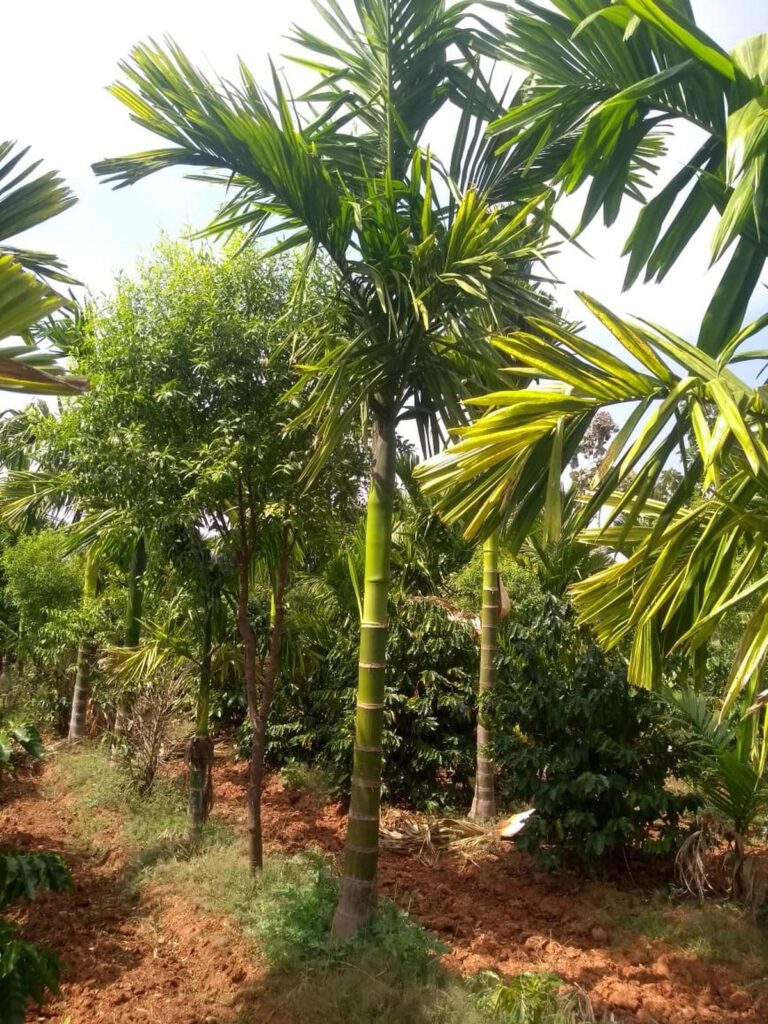
The farmer is using arecanut palms and a few other kinds of trees as shade for coffee plants

Initially, Mr. Guddappa was growing arecanut on his land. He then started to grow coffee in the middle of the arecanut farm, as traditionally, all coffee is shade grown. He is using arecanut palms and a few other kinds of trees as shade for coffee plants while growing pepper as intercrop. “I am the first person to cultivate coffee in this region. This year, a few farmers in Lingsugur in Raichur district and Bagalkot district have also started growing coffee,” he said.

Coffee Board testing it

Coffee Board officials recently visited Huvina Hadagali and collected samples of the coffee for quality testing. K.G. Jagadeesha, Chief Executive Officer and Secretary of the Coffee Board, told The Hindu, “Since we got the information that coffee is grown there, our officials have visited the village and taken samples. Only after proper analysis of the coffee yield and quality will we be able to comment. Testing is going on and it will take time to give our scientific analysis of the crop.”

According to Mr. Jagadeesha, coffee plants can be grown anywhere. However, the quality has to be met to the proper standard for the coffee to be marketable and drinkable. “We don’t want to recommend anything based on physical observation. We want to go by extensive testing of the coffee beans. As a responsible agency, we have to see everything, including long-term sustainability, but we are exploring,” he added.

source: http://www.thehindu.com / The Hindu / Home> News> India> Karnataka / by Darshan Devaiah B.P. / November 25th, 2022