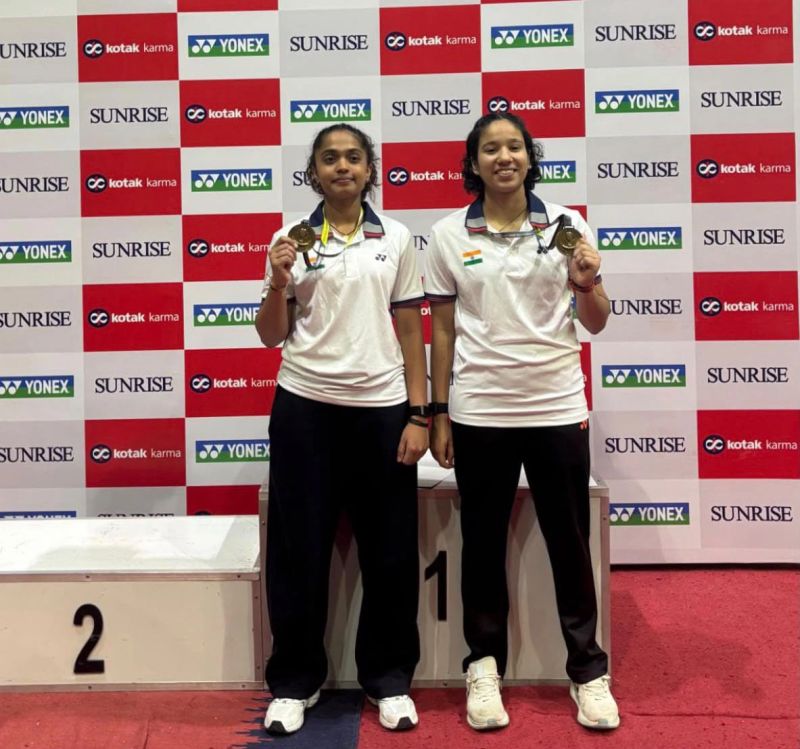
Second seeded pair Diya Bheemaiah and Baruni Parshwal won the Girls’ Doubles title at the Kotak Junior International Badminton Tournament in Hyderabad, defeating third seeds Lakshmi Devineni and Ananya Manikandan in a closely contested final.
Diya and Baruni won the match 21-18, 14-21, 22-20. After taking the opening game, they lost the second as Devineni and Manikandan levelled the contest. The deciding game went down to the wire, with Diya and Baruni eventually prevailing 22-20 to secure the title.
The victory marks another achievement for Diya on the junior badminton circuit as she continues her competitive journey. She currently is training at the prestigious National Centre of Excellence (NCoE) in Guwahati, Assam, under the tutelage of former All England champion and coach Ivan Sozonov.
Diya is the daughter of Boppanda P Bheemaiah and Kusuma K K (Thamane Kambiranda).
source: http://www.clnnews.in / CoffeeLandNews /Home> Sports / by CLN Newsdesk / August 24th, 2026
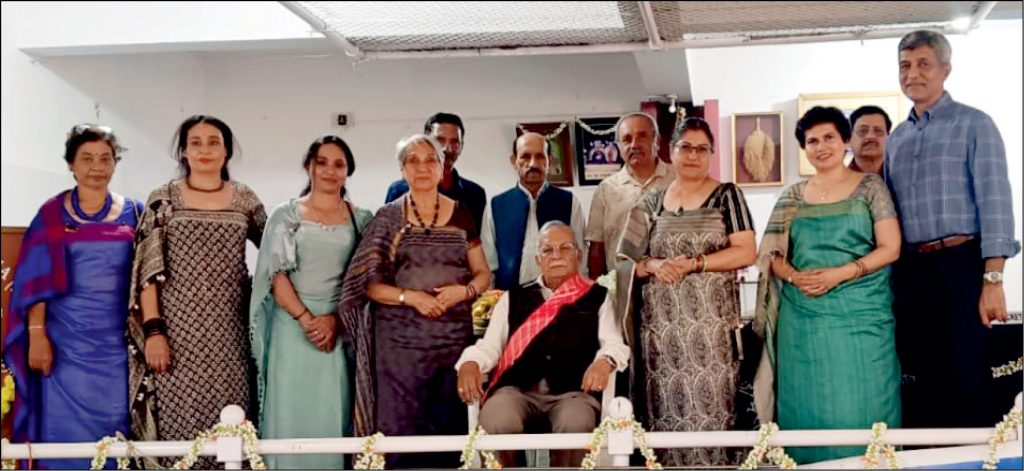
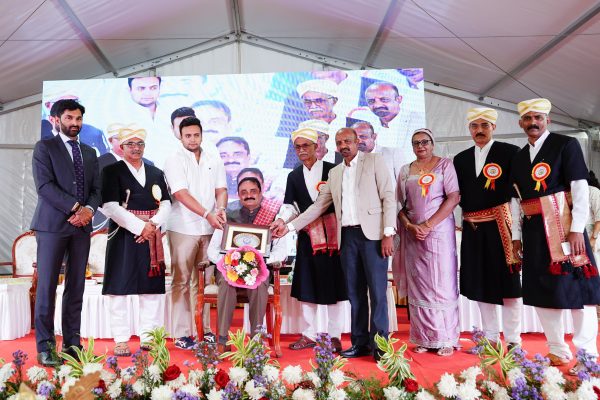
Aiyanna is seen with his wife Tulsi, daughters Priya and Preethi, son-in-law Ranjan Nanaiah and the Sangha members.
Gokulam Kodava Sangha honoured its senior member and past President Wing Commander Mundumada D. Aiyanna (retd.) at its AGM held at Kodava Samaja premises in Vijayanagar recently in recognition of his service to the nation and his achievements in golf.
A notable veteran golfer, he has won multiple trophies and prizes in golf tournaments hosted in Mysuru, including the 39th Edition of the Air Force Golf Cup 2025-26 (Stableford Net Senior Golf tournament).
Aiyanna is seen with his wife Tulsi, daughters Priya and Preethi, son-in-law Ranjan Nanaiah and the Sangha members.
Annarkanda Prathima Thimmaiah compered.
source: http://www.starofmysore.com / Star of Mysore / Home> Gallery> Photo News / August 19th, 2026
Sri Kavery Kodava Association, Mysore East, celebrates 25th anniversary.
Mysuru:
Sri Kavery Kodava Association, Mysore East, celebrated its 25th anniversary with traditional fervour at its Kodagu Model School premises in Vidyashankar Layout, Sathagalli, yesterday.
Mukkatira Punit Kuttayya, Deputy Commissioner of Income Tax, Hyderabad; Dr. Thithira Roshan Appachu, Chief Electrical Inspector, Government of Karnataka and Ex-Officio Additional Secretary (Licensing), Energy Department and Ponjanda Ganapathy, President, Kodava Samaja, Mysuru, were the guests of honour. Kademada Jaya Belliappa, President of Sri Kavery Kodava Association, Mysore East, presided.
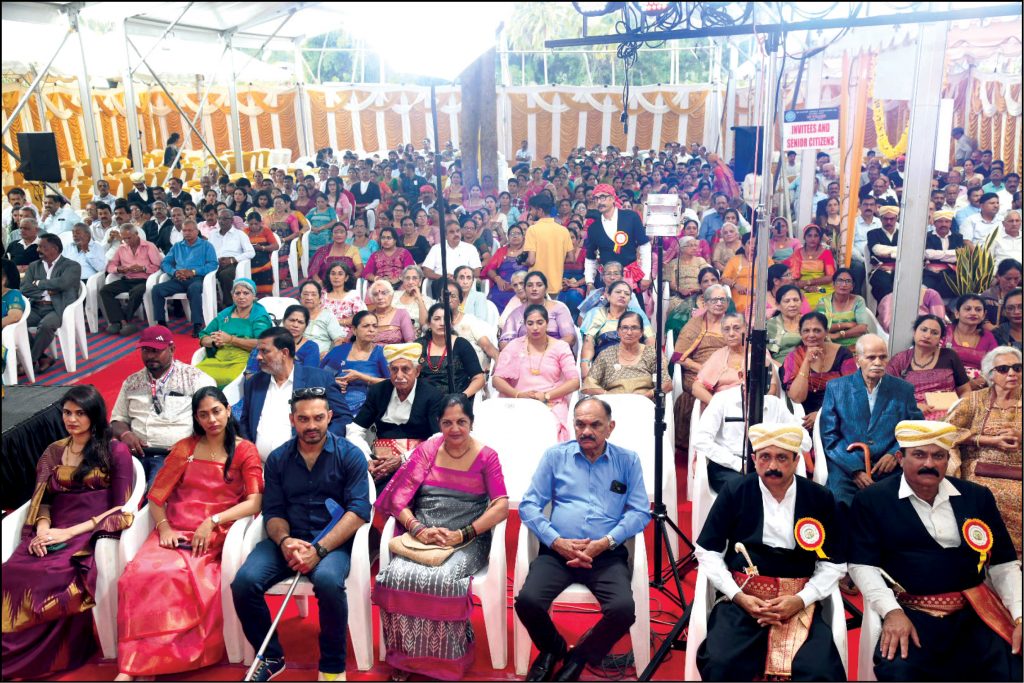
A section of audience
As part of the silver jubilee celebrations, cultural programmes were held from morning till evening, featuring traditional Kodava dances and other performances. Association members and their families participated in large numbers. A short documentary tracing the 25-year journey of the Association was also screened. Members showcased Kodava heritage through various traditional and cultural activities, highlighting the community’s customs and traditions.
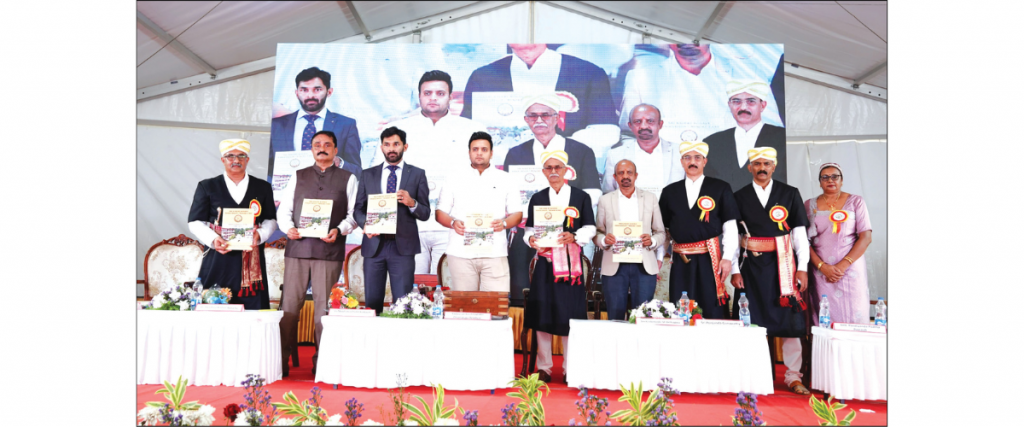
Mysuru-Kodagu MP Yaduveer Krishnadatta Chamaraja Wadiyar released the Association’s silver jubilee souvenir. Addressing the gathering, he praised the Kodava community for its unique culture and customs, describing them as exemplary.
He said Kodagu, nestled in nature’s lap, was not only a premier tourist destination but also a region of immense cultural significance. He appreciated the Association for preserving Kodava traditions over the past 25 years and passing them on to younger generations. He also commended the efforts of senior members and office-bearers.
Prizes were distributed to participants of the cultural events. The celebrations concluded with a variety of performances. Pandiyanda Padma, Vice-President; Pattada Sachin Devaiah, Secretary; Neravanda Sunil Muthappa, Joint Secretary; Pattamada Arun Cheramanna, Treasurer and others were present.
source: http://www.starofmysore.com / Star of Mysore / Home> News / August 10th, 2026
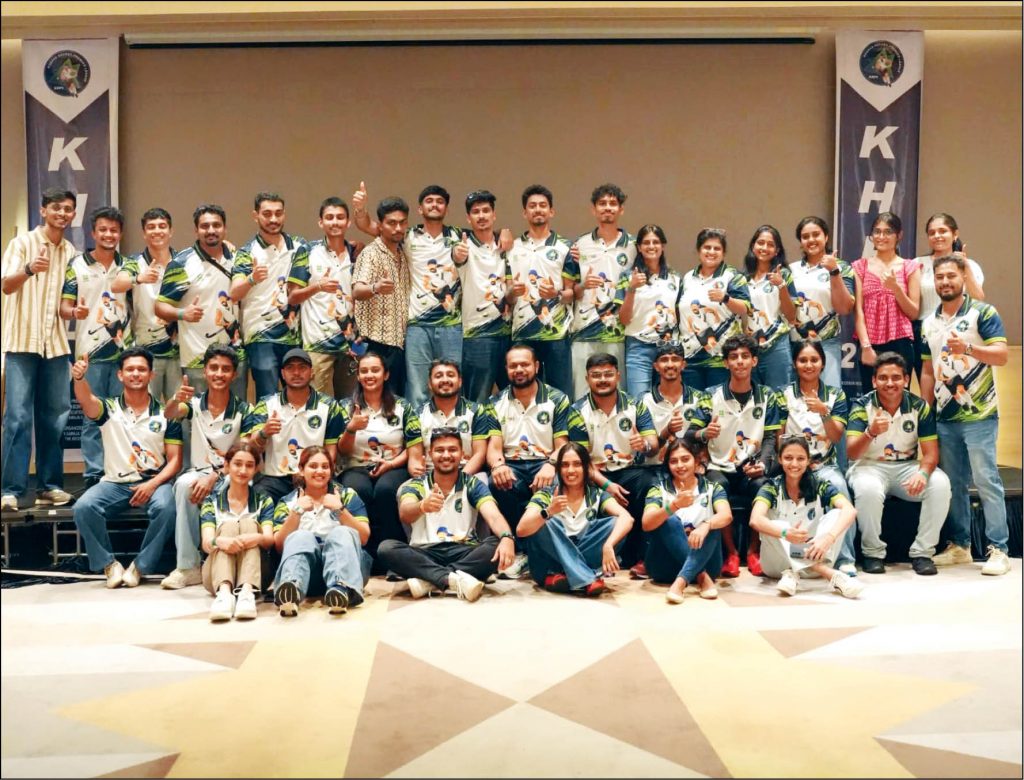
A group photo of the Mysuru Kodava Samaja Youth Wing team, who will be hosting the Kodava Hockey Premier League in Mysuru.
10 franchises take part in players’ auction, total
of 174 players drafted to various teams
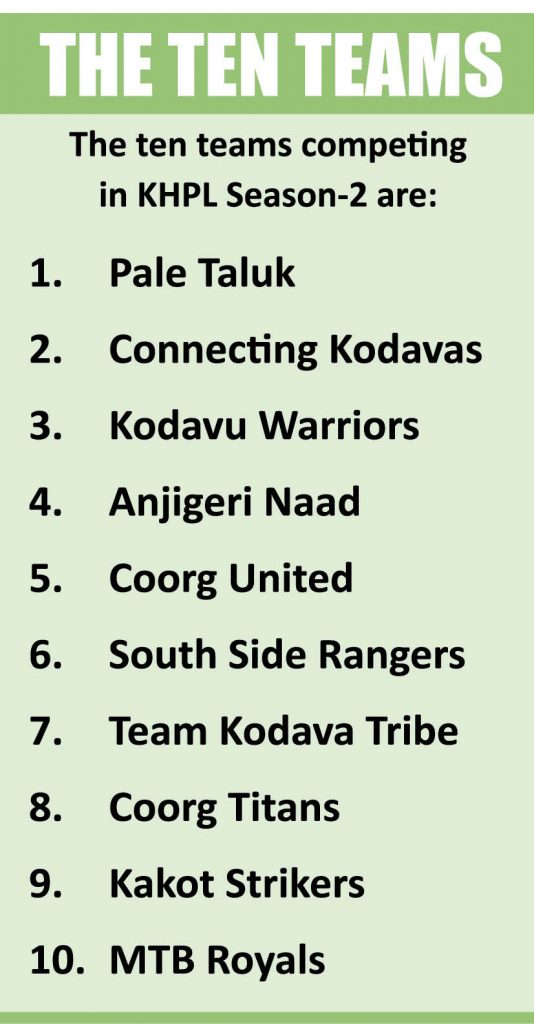
Mysuru – The stage is set for the second edition of the Kodava Hockey Premier League (KHPL), with organisers successfully conducting the player auction ahead of the much-anticipated tournament scheduled to be held from July 3 to 5 at the Chamundi Vihar Stadium Hockey Turf in city.
Organised by the Kodava Samaja Youth Wing Mysuru in association with Kodava Samaja, Mysuru, under the aegis of Hockey Mysore, KHPL has emerged as a unique franchise-based hockey competition aimed at promoting the sport while nurturing emerging talent from the Kodava community.
The player auction, held at a private hotel in city, witnessed enthusiastic participation from franchise owners, players, community leaders and hockey enthusiasts.
More than 268 players had registered for the league, from which 174 players were drafted across 10 franchise teams, while 30 icon players were retained by their respective franchises.
Every franchise squad comprises 18 players and is mandated to include two U-18 players and one woman player. The format provides young players with an opportunity to share the dressing room and playing field alongside experienced professional and national-level players, thereby gaining valuable exposure, mentorship and first-hand learning experiences.
The auction ceremony was attended by Kodava Samaja Mysuru President Ponjanda Ganapathy, Vice-President Machimada P. Nanaiah, Treasurer Kottangada Pemmaiah, Pandanda Bopanna and Muddanda Rashin Subbaiah besides several office-bearers and members of the Kodava community.
A symbolic highlight of the event was the ceremonial handover of the rolling trophy by Pale Taluk, champions of the inaugural edition, marking the commencement of another competitive season.
Organisers have confirmed that all matches of KHPL Season-2 will also be telecast live on YouTube, enabling supporters and hockey enthusiasts worldwide to follow the three-day tournament.
According to the organisers, KHPL has evolved into more than just a sporting competition, serving as a platform for youth empowerment, grassroots hockey development and community engagement. Several players associated with previous editions have progressed to higher levels of competition, underscoring the league’s growing contribution to the sport.
With an expected footfall of over 8,000 spectators and a projected digital reach exceeding 20,000 viewers through live streaming, KHPL Season-2 is expected to draw significant attention from hockey enthusiasts.
The three-day tournament promises high-quality hockey action, competitive rivalries and a celebration of the Kodava community’s longstanding contribution to Indian hockey.
For further information interested may contact Kodaga Samaja Youth Wing President Varun Nanjappa Hanchettira on Mob: 89519-49351 or e-mail: ksywmysuru@gmail.com
source: http://www.starofmysore.com / Star of Mysore / Home> Sports / June 09th,2026
Velavan Senthilkumar and Joshna Chinappa recorded a ‘double’ each in the 3rd National Doubles Squash Championships in Chennai on Saturday
Chennai:
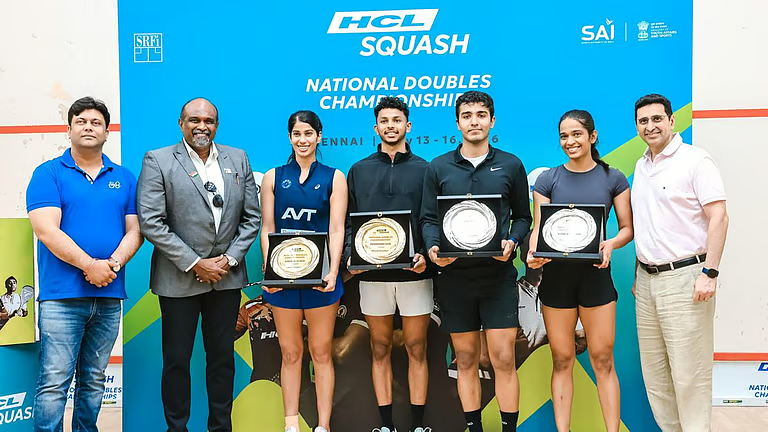
Velavan Senthilkumar and Joshna Chinappa recorded a ‘double’ each in the 3rd National Doubles Squash Championships in Chennai on Saturday, clinching the mixed title together after bagging the men’s and women’s doubles crowns with their respective partners. Senthilkumar-Joshna, the top seed, defeated second-seeded Abhay Singh-Rathika Seelan 11-7, 11-9 in a keenly-contested final at the Indian Squash Academy.
Earlier, Abhay and Senthilkumar, the top seed, won the men’s doubles crown for a third straight year, by beating second-seeded Rahul Baitha-Suraj Kumar Chand 11-8, 11-5 in the title-round.
In the day’s first match, top seed Joshna-Rathika beat Janet Vidhi-Pooja Arthi 11-8, 11-4 in the women’s doubles final. IANS
source: http://www.sentinelassam.com / The Sentinel / Home / by Sentinel Digital Desk / May 17th, 2026
Rida Tharana makes Coorg proud, picks Nikhil Gajare gown spotlighting Indian craftsmanship for her Cannes red carpet debut. See all the photos.
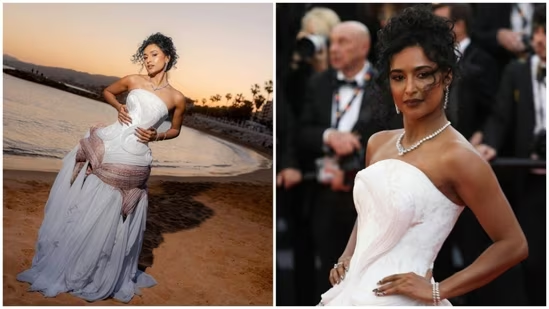
Coorg-born fashion and lifestyle content creator Rida Tharana officially made her red carpet debut at the 79th Cannes Film Festival on May 13. A day later, Rida took to Instagram to unveil a series of photos that showcase her look that seamlessly bridges the gap between avant-garde global fashion and the meticulous handiwork of Indian artisans.
Rida’s sculptural ivory gown at Cannes 2026
For her walk across the iconic Cannes Film Fetival red carpet, Rida Tharana chose a custom creation by Indian designer Nikhil Gajare. The gown is a striking example of contemporary couture, featuring a structured, strapless corset bodice and intricate curved paneling that flows across the torso, creating a 3D effect that mimics the organic lines of a seashell.
The rigid structure of the bodice gives way to a voluminous, multi-layered chiffon skirt, allowing for a dramatic twirl that captured attention. A unique, copper-toned pleated sash wraps around the hips, providing a metallic pop against the pristine ivory fabric and highlighting the fusion of different textile techniques. To complete the regal ensemble, Rida wore diamond jewellery by Sennes, with her hair styled in a high, textured, voluminous updo.
Rida’s candid post
Beyond the glamour of the red carpet, Rida shared a deeply personal message regarding her journey to Cannes. In her Instagram post, she admitted that her initial reaction to the invitation was to decline. “When I first found out I had the opportunity to walk the Cannes red carpet, I said no. I didn’t think I deserved it. I questioned myself every second,” she revealed
She credited her management team for pushing her beyond her self-doubt. Rida’s post touched on the rollercoaster of emotions — from the fear of public criticism to the eventual realisation that this was her moment to own. She also revealed that the choice of designer was deliberate. Having worked with Nikhil previously, Rida noted that the piece ‘felt like her’. She likened the experience to a childhood dream, stating that while she never had Barbie dolls growing up, the gown made her feel like a princess.
The debut marks a significant milestone for the creator, and by choosing to wear an emerging Indian couturier on one of the world’s most scrutinised stages, Rida reinforced her reputation as a cultural curator, proving that the journey from Coorg to Cannes is paved with hard work, authenticity, and a bit of self-belief.
“When I say this year is mine, I mean it. This year, and everything that comes after, is mine,” she concluded.
source: http://www.hindustantimes.com / HindustanTimes / Home / by Sanya Panwar / May 14th, 2026
Joshna Chinappa’s immediate target is the upcoming Asian Games in Aichi-Nagoya, Japan, while the Los Angeles Olympics is not on her radar at the moment.
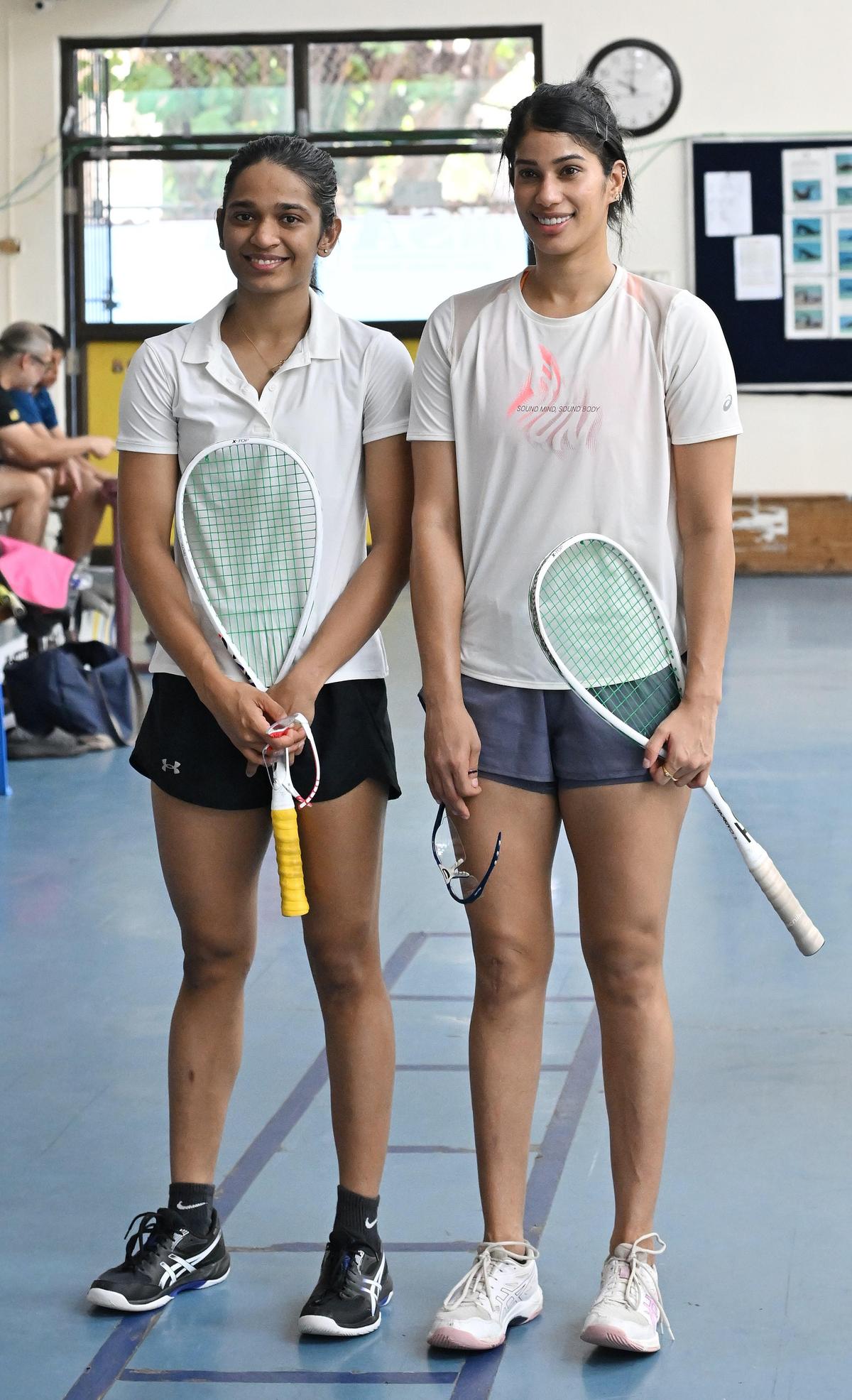
Joshna Chinappa reached the women’s doubles final alongside Rathika Seelan at the National doubles championships on Friday. | Photo Credit: VELANKANNI RAJ B
Having played squashsince the age of nine, Joshna Chinappacontinues to defy time and expectation. Now 39, she remains among India’s finest players, currently ranked World No. 71 and second only to Anahat Singh among Indian women.
Through dedication, discipline and an enduring love for the sport, Joshna continues to set new benchmarks.
So, after nearly three decades on court, what has changed? Joshna has found a different perspective.
“In the last couple of years, I’ve learned to be very detached from the outcomes. I ensure that I do what I need to do to be able to play and train and give it my best. If it doesn’t work out, it’s also okay,” Joshna told Sportstar after reaching the women’s doubles final with Rathika Seelan and the mixed doubles final with Velavan Senthilkumar at the National doubles championships here on Friday.
The results suggest that the shift in mindset has worked in her favour. This season, Joshna captured the Japan Open title, her 11th Professional Squash Association Tour crown and her first in a decade, besides finishing runner-up in two events at home.
The journey, however, has not been easy. Joshna has battled persistent physical setbacks, particularly after undergoing a second surgery on her right knee following the 2023 Asian Games. Yet, she has carried herself with remarkable poise and resilience, continuing to compete against opponents nearly half her age.
“I have not taken a break ever, except for the two knee surgeries. I always say it was the anaesthesia that kept me out. Other than that, I have always been playing back-to-back,” she said with a smile.
“I am also at the stage where it doesn’t excite me to play 12 tournaments a year.”
For now, the immediate target is the forthcoming Asian Games. The 2028 Los Angeles Olympics is not on her radar at the moment.
But beyond medals and rankings, Joshna understands the significance of simply being able to compete at this stage of her career.
“Any match or tournament that I’m able to play is a huge gift for me. To still do that, play at that level and compete with the best girls in the world, is very encouraging. For me now, it’s more about enjoying my game,” she said.
source: http://www.sportstar.thehindu.com / Sportstar / Home> Squash / by K Keerthivasan / May 15th, 2026
To represent India in the Asian Junior Championships
Mysuru:
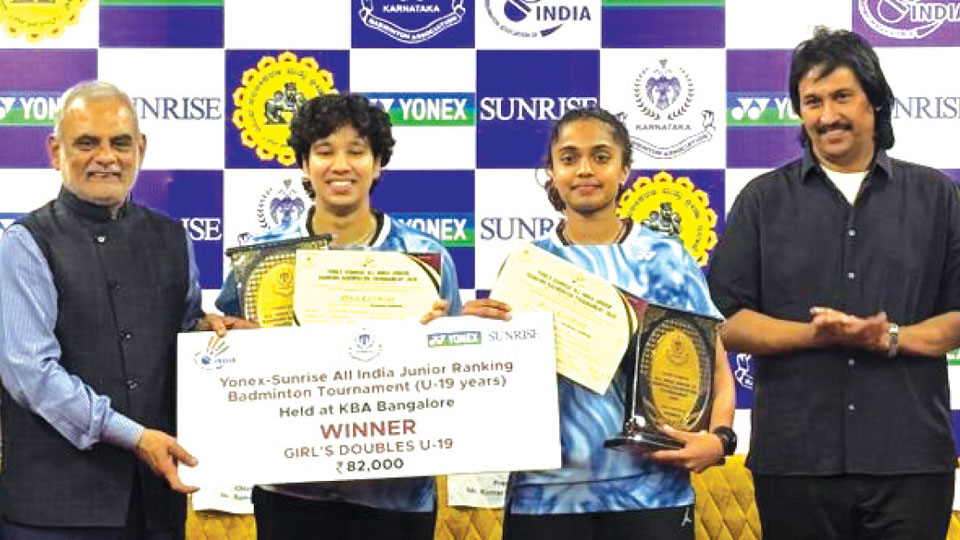
Diya Bheemaiah, a native of Kodagu and India’s top-seed junior player, secured the Girls’ Doubles title at the Yonex-Sunrise All India Junior (U-19) Ranking Badminton Tournament 2026 held at the Karnataka Badminton Academy in Vasanthnagar, Bengaluru recently.
Partnering with Baruni Paruswal of Haryana, Diya clinched the title by defeating the Tamil Nadu duo of A.S. Anushka Jennifer and Deeshitha Singha Gopinath Singh in straight-sets 21-10, 22-20.
This victory also earned Diya a direct spot to represent the Indian Junior Team at the upcoming Badminton Asian Junior Championships – 2026 to be held in Yatsushiro, Japan, from June 26 to July 5.
Furthermore, her performance has secured her a place in the selection process to represent the Indian Junior squad in the Mixed Doubles category as well. Diya is the daughter of Boppanda B. Bheemaiah, a badminton coach and K.K. Kusuma, a fitness coach, residing in Mysuru.
source: http://www.starofmysore.com / Star of Mysore / Home> Sports /May 13th, 2026
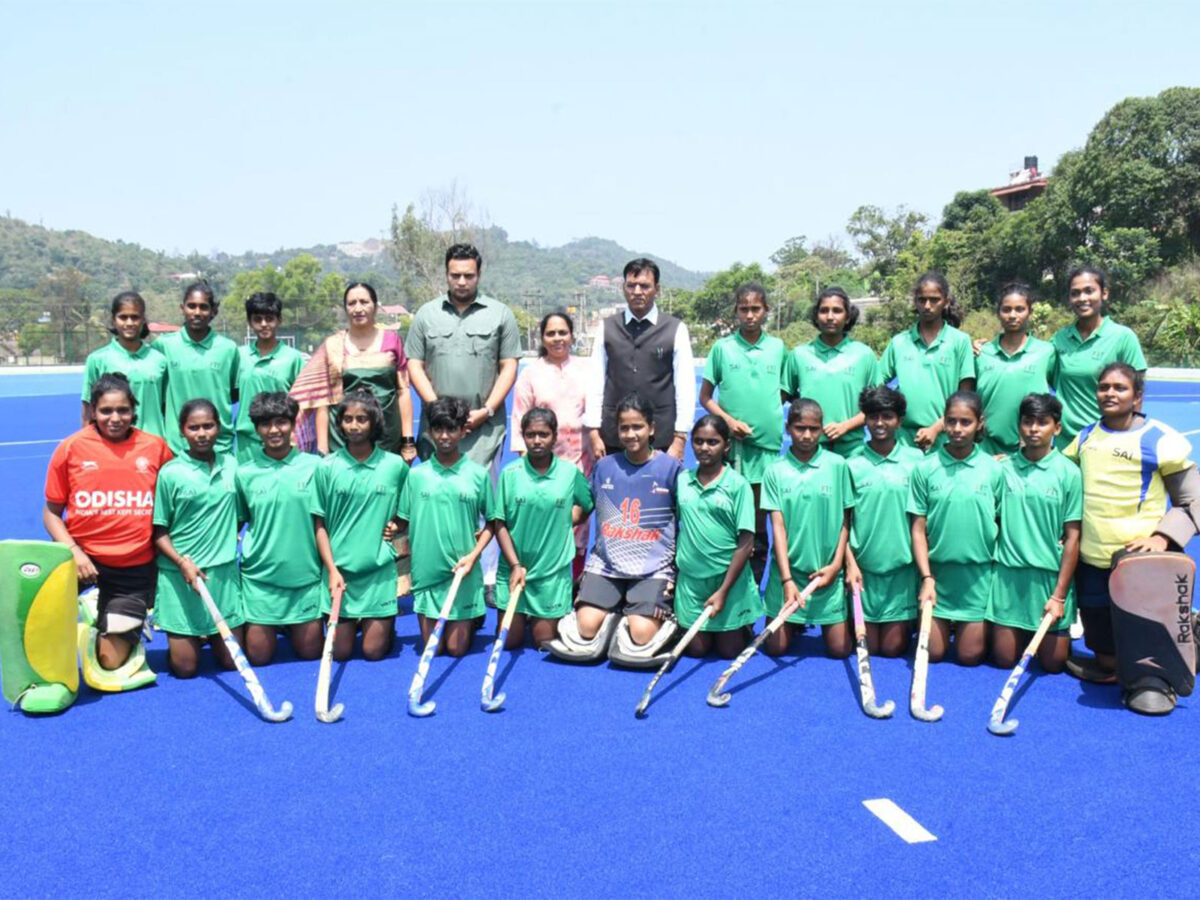
ANI Photo | Union sports minister meets women hockey players at SAI Madikeri Centre
Union Minister of Youth Affairs and Sports Mansukh Mandaviya visited the Sports Authority of India (SAI) Training Centre in Madikeri on May 2 and engaged with women hockey players from the Kodava community at the conclusion of a month-long hockey festival.
Mandaviya emphasised the importance of nurturing talent from across India to achieve the nation’s ambitions of becoming a global sports powerhouse. He highlighted the contributions of the Kodava community in promoting field hockey, noting that Kodagu district is considered one of the cradles of Indian hockey. Over 50 players from the community have represented India internationally, including seven Olympians such as P Govinda, MP Ganesh, MM Somaiya and CS Poonacha.
“Future Olympians in the making! Met with the rising stars of Indian Hockey from the SAI Training Centre (STC), Madikeri, Karnataka,” Mandaviya stated in a post on X.
The minister remarked that the Union Government is committed to developing a comprehensive sports ecosystem and identified the forthcoming 2030 Commonwealth Games in Ahmedabad as a positive step. He added that India’s rich talent pool provides strong prospects for sporting dominance.
“Taking inspiration from our Hon’ble Prime Minister Narendra Modi’s vision, the Sports Ministry is committed to nurturing the wide talent pool available across various parts of the nation. Unearthing and nurturing talent from different parts of the country can only ensure that we fulfil the dream of Modi ji. The bigger the talent pool, more the chances of us performing better in big ticket events. I am confident that both Indian men and women will register solid performance in the Commonwealth Games in 2030, where hockey is likely to make a return,” Mandaviya said.
The SAI Training Centre in Madikeri spans 5.49 acres in the hill station region of Kodagu District, approximately 1,100 metres above sea level. It operates as a feeder centre for 22 National Centres of Excellence (NCOEs) across India. Facilities include an artificial hockey turf, a 60-bed hostel, dining hall and kitchen. Around 50 girls from the Kodava community train there for various hockey events organised across Karnataka.
source: http://www.thenewsmill.com / The News Mill / Home> Sports / by The News Mill (with ANI inputs / May 02nd, 2026
WELCOME. If you like what you see "SUBSCRIBE via EMAIL" to receive FREE regular UPDATES.
Read More »