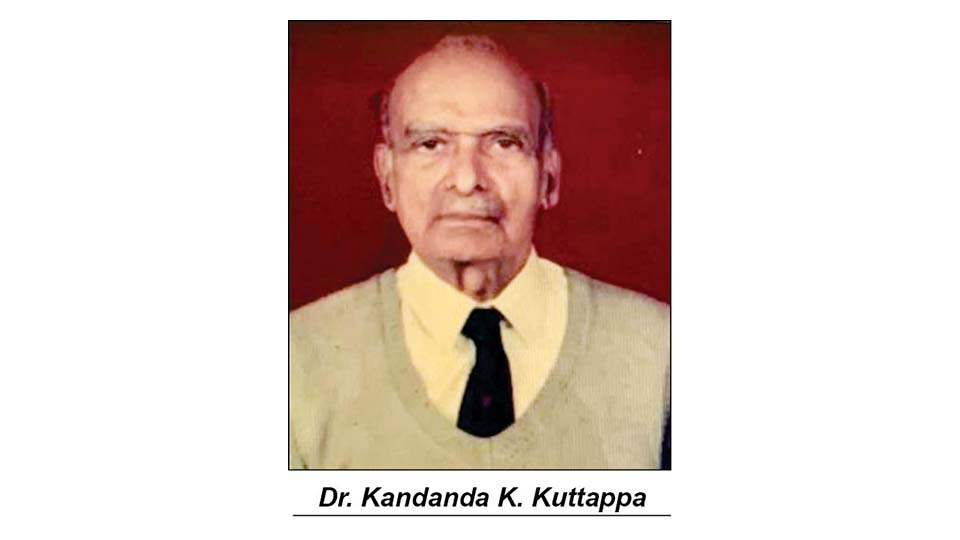
Dr. Kandanda K. Kuttappa (97), a World War II veteran and a resident of No. 952, 8th A Main, 10th Cross, Vijayanagar 1st Stage, passed away here yesterday morning. His wife Shanthi Kuttappa (87) had passed away on Sunday morning (Jan. 22).
He leaves behind his son Lt. Col. Ravi Ayappa, daughter Meera Madappa, daughter-in-law Lekha Ayappa, son-in-law Arvind, grandchildren, great grandchild and a host of relatives and friends.
Profile:
Dr. K.K. Kuttappa had served in Royal Army Service Corps (RASC) in Burma during 1941-45 after which he obtained his Ph.D in Psychology from Mysore University and served as a Psychologist in Services Selection Board (SSB) for almost three decades before retiring from SSB, Bengaluru, in 1983.
He had also served as a Professor at Armed Forces Medical College (AFMC) in Pune. Having known Gen. K.S. Thimayya personally in Burma and being a great admirer of the General, he had collected a lot of material on his life and had personally initiated the shifting of his grave to the Army Service Corps (ASC) Centre in coordination with HQ Southern Command. Dr. Kuttappa was also a social worker.
Last rites were held at Chirashanthidhama in Gokulam yesterday afternoon, according to family sources.
As a tribute to the departed soul, wreaths were laid by the representatives of the Chief of Army Staff and the Director General of NCC, New Delhi.
source: http://www.starofmysore.com / Star of Mysore / Home> News / January 24th, 2023
A State-level plastic surgeons’ conference will be held at Virajpet in Kodagu from February 7 to 9.
The Karnataka Association of Plastic Reconstructive and Aesthetic Surgeons (KAPRAS), which has more than 260 plastic surgeons, will be holding a three-day scientific conference to update knowledge and exchange ideas, said KAPRAS vice-president H.V. Satish, who is also a senior plastic surgeon at Apollo BGS Hospital in Mysuru.
Dr. Satish said a total of 160 plastic surgeons from different parts of the State are expected to attend the event.
“The topics include cosmetic surgery, reconstruction after cancer surgery, surgery for birth defects, complex limb injuries, nerve injury treatment, microvascular surgery, etc.,” noted a statement.
Also, international and national speakers of repute have been invited to deliver talks at the conference while two masterclasses have been organised to teach young post-graduates, the statement added.
source: http://www.thehindu.com / The Hindu / Home> News> India> Karnataka / by The Hindu Bureau / February 09th, 2025
The new Directors of Kodagu Sahakara Sangha, Jayalakshmipuram, were elected yesterday.
Among the total of 13 directors, two were reserved for women for which Nanjamma and Nirmala were elected unopposed.
For the remaining 11 posts, a total of 14 candidates had contested. Among them, K.G. Sudhir and A.A. Pemmaiah secured 88 votes each. Finally, K.G. Sudhir was elected through draw of lottery.
Others who were elected are M.K. Prakash (127 votes), Lovely Appaiah (119 votes), P.U. Girish (118 votes), M.G. Devaiah (108 votes), Byretira K. Ganapathy (108 votes), K.P. Pemmaiah (105 votes), P.K. Biddappa (96 votes), K.K. Bollamma (95 votes), K. Kavya Kuttappa (95 votes) and M.P. Belliappa (94 votes).
source: http://www.starofmysore.com / Star of Mysore / Home> News / February 23rd, 2025
The longstanding human-elephant conflict in Kodagu has intensified over the decades, with elephant attacks claiming 33 lives in recent years.
Additionally, 53 people are grappling with various issues, including permanent disabilities. Despite continuous efforts by the Forest Department, the menace of wild elephants continues to escalate.
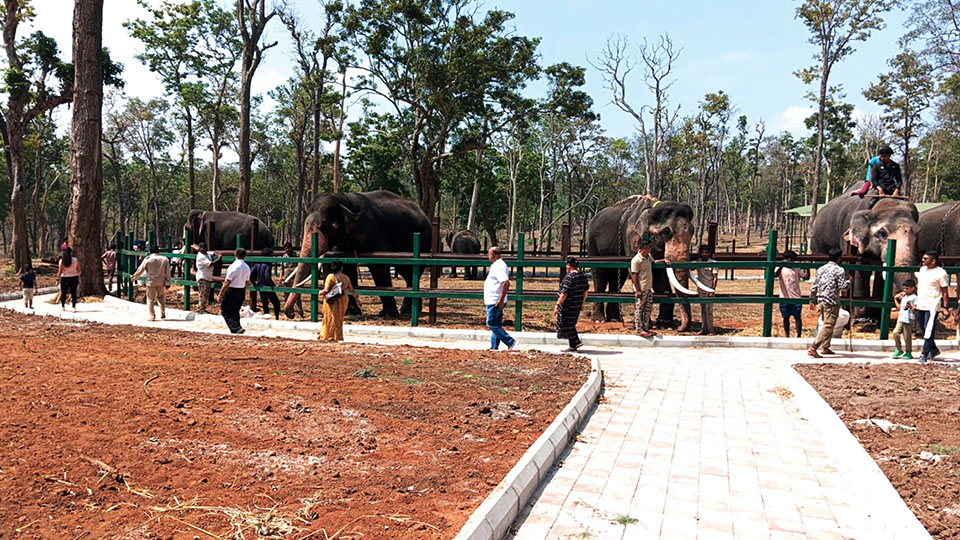
In response, the State Government is gearing up to establish an elephant sanctuary in Kodagu, drawing inspiration from the movie ‘Gandhada Gudi.’ The initiative aims to protect elephants while reducing inconvenience to the local population.
The intention is to strike a balance between wildlife conservation and the safety of local communities for a peaceful coexistence.
To facilitate this, 2,000 hectares of land have been identified in Kodagu, as part of a broader plan covering 12,000 hectares across the State. This land will be used to relocate elephants residing in human settlements back into the forest.
The plan also involves identifying elephants responsible for crop damage and human casualties and relocating them to the sanctuary. The Government intends to provide shelter for around 200 elephants that have settled in rural areas of the district.
During a State Wildlife Board meeting in January, attended by Chief Minister Siddaramaiah, Forest Minister Eshwar Khandre, Forest Department officials and Virajpet MLA A.S. Ponnanna, the relocation of rogue elephants was discussed.
The Government agreed to identify safe areas for this purpose and preparations are now underway. The sanctuary will be equipped with technology to monitor and control the elephants, preventing them from straying back into villages.
Since 2014, the Government has allocated Rs. 21 crore for repairing fences and railway barricades in the Virajpet forest range, covering Ponnampet and Virajpet taluks. This measure is part of a long-term solution to the human-elephant conflict.
Additionally, Rs. 4.72 crore have been swiftly disbursed as compensation to those affected by wild animals and Rs. 22 crore have been allocated for new railway barricades, with installation set to begin soon.
source: http://www.starofmysore.com / Star of Mysore / Home> News / Februaryf 23rd, 2025
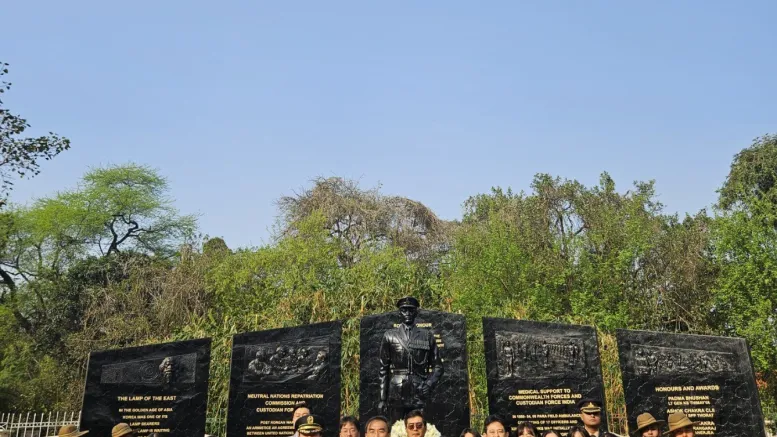
Lee Seong-ho, the Ambassador of South Korea in India, and other top diplomats on Friday visited the Indo-Korean Friendship Park in Delhi Cantonment, fondly recalling the contribution of Indian forces during the Korean War of 1950-53.
During their visit to the park, a symbol of strong ties between India and South Korea, the officials also paid tribute to late General K S Thimayya, a celebrated soldier who led the Indian contingent as Chairman of Neutral Nations Repatriation Commission (NNRC) in Korea headed by India.
“Ambassador Lee Seong-ho and his team visited the Indo-Korean Friendship Park on the 21st of February and paid homage to General Thimayya, who headed a UN unit dealing with the repatriation of prisoners after the Korean War,” the South Korean Embassy in India posted on X.
“We also recalled that India sent the largest number of medical personnel during the Korean War. Remembering the enduring friendship between Korea and India, the Korean Embassy will do our best to further develop our Special Strategic Partnership.” the post further added.
India’s First Indo-Korean Friendship Park was jointly inaugurated by Defence Minister Rajnath Singh and his Korean counterpart Suh Wook in March 2021.
The park, spotlighting India’s contributions as part of 21 countries which participated in Korean war 1950-53 under the aegis of the United Nations, was developed in joint consultation with India’s Ministry of Defence, Government of India, Indian Army, Delhi Cantonment Board, Embassy of Korea and Korean War Veterans Association of India.
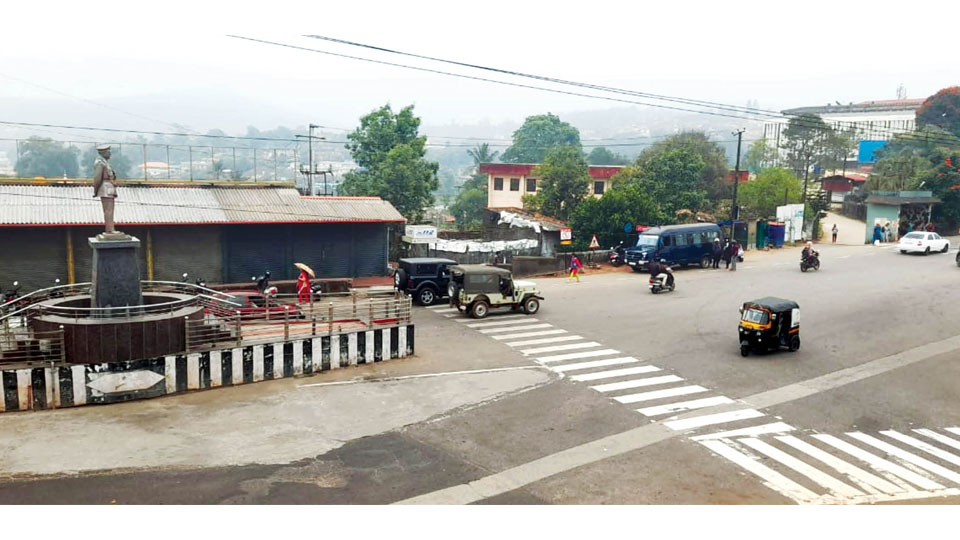
Spread across a green area of six acres, the park has an imposing handshake artifact standing tall at the entrance bearing flags of India and South Korea besides a larger than life statue of General Thimayya.
South Koreans still remember General Thimayya, who was awarded a Padma Bhushan for his service in Korea, with gratitude and affection. General Thimayya also served as the Chairman of the Neutral Nations Repatriation Commission (NNRC) after the armistice and contributed to resolving the humanitarian issues arising out of the War.
India played an important role in the Korean peninsula after Korea’s independence in 1945, sending an army medical unit – the 60th Parachute Field Ambulance comprising 627 medical personnel, commanded by Lt. Col. A.G. Rangaraj – during the Korean War as part of the UN Command. The unit treated about 220,000 patients. During the Korean War (1950-53), both warring sides accepted a UN resolution sponsored by India and the ceasefire was declared on July 27, 1953.
India-South Korea diplomatic relations were elevated to a ‘Special Strategic Partnership’ in 2015 during the State Visit of Prime Minister Narendra Modi to Seoul.
Source: IANS
source: http://www.socianews.xyz / Social News XYZ / Home> Diplomacy / by Gopi / February 21st, 2025
Kodagu Sahakara Sangha, Mysuru, will be holding its election to Managing Committee for a five-year term at its premises in Jayalakshmipuram on Feb. 22 from 9 am to 4 pm, according to Returning Officer K.L. Savitha.
source: http://www.starofmysore.com / Star of Mysore / Home> In Briefs / February 17th, 2025
It’s well-known that the British morphed Kodagu into Coorg and Madikeri into Mercara. The origin of the original name Kodagu is not very clear. It is said that Kodagu is a derivative of the ancient name Krodadesha. It could well be that the name Kodagu came from the word ‘Kodi’ denoting its high perch on the Western Ghats.
Madikeri, which was founded by Mudduraja in 1681, was named after the founder as Muddurajakeri. We are also told that Madikeri might have derived from the word ‘madi’, meaning clean. The place was once known for being neat and tidy. Recently Madikeri was ranked fifth in the country for having the best air quality.
There was a time in Coorg’s history when Ammathi was known as Colepet. This was sometime in the 1860s. The present-day Ammathi was part of Ammathinad, and this area was slowly developing from a ‘vonti-angadi’ (one shop) to a ‘multi-angadi.’
The name Colepet was given in honour of one of the popular British Superintendents of Coorg — Captain Robert A. Cole, known for his book ‘An Elementary Grammar of the Coorg Language’. Somewhere along the line, Colepet got named Ammathi.
At the time of the British takeover of Coorg, there was a busy hamlet in the southern part of Coorg known as Balelesanthe. Banana leaf was an important commodity then and Balelesanthe was the centre of this trade.
In 1866, Chepudira Madayya used his influence and renamed Balelesanthe as Ponnampet in honour of his illustrious father, Dewan Chepudira Ponnappa (my great-great-great grandfather). Ponnampet is now a busy hub of commerce and higher education. Recently, this erstwhile hamlet got elevated as a Taluk.
Santhe or the weekly market day, was very important during those bygone days. Quite a few places in Coorg got their name after the weekly ‘shandy day.’ So, we have Shanivarasanthe and Somwarpet. There existed a Sukravarasanthe, which was the present-day marketplace in Madikeri. The name Sukravarasanthe is no longer in vogue, but Madikeri continues to have its shandy day on Fridays.
The ruling family of the Lingayat Rajas named a few of the places. Virajpet, as we know, is the town founded by Dodda Veerarajendra in 1792. He also named Mahadevapet in Mercara after one of his favourite queens Mahadevamma.
Nanjarayapatna is another place named after a member of the ruling family. The Triveni Sangama at Bhagamandala got its name after the deity Bhagandeswara. The southernmost town, Kutta, is named after the forest goddess Kuttadamma. The closest settlement to Siddeshwara betta got the name Siddapur, a bustling town now.
Present-day Kushalnagar was apparently named by Hyder Ali. It was while he camped here that he received news of his son Tipu’s first military victory in another battle zone. However, Kushalnagar was renamed Frazerpet in honour of Lt. Col. J.A. Frazer who successfully secured Coorg for the British East India Company in 1834.
Stewart (Stuart) Hill near Raja’s Seat in Madikeri is named after Col. Stewart, one of the leading British officers who took part in the annexation of Coorg.
Murnad got its name from being the meeting place of three ‘naads’ and Nalknad is a conglomeration of four ‘naads’. Likewise, Nalkeri is the centre of four villages. Murkal has a landmark of three boulders. And Arvathokkalu is a hamlet of sixty ‘okkas’ or families. Likewise, there is Nalvathokkalu and Napoklu.
Sometime during the 1870s, the British administration opened a new housing colony named Ranipet near the rapidly growing town of Mercara. The name Ranipet was in honour of Queen Victoria.
Quite a few places in Coorg derived their name after the commodities they were famous for. We thus have Sunti-coppal (Ginger village), Goni-coppal (Goni is woven hessian used for making sacks), Balele (Banana leaf), Chettalli (village famous for beans) and Meenpet (fish market near Virajpet). Incidentally, Chettalli used to be popularly known as ‘Tenth Mile’ during British days since it was 10 miles from Madikeri.
We have a place named Bavali, which probably had a large rookery of bats. The place Kadanga is named after the famous defensive ‘kadangas’ (trenches) dug by the nayakas who ruled Kodagu before the Haleri dynasty.
However, I am not quite sure if the place Kurchi is known for making chairs. And then, if one had an axe to grind, I guess they went to Kodlipet!
During Tipu Sultan’s occupation of Madikeri, he rebuilt the Fort and renamed the area Jaffarabad. Dodda Veerarajendra recaptured the town in 1790, and mercifully, the fair name of Madikeri was restored.
‘Coorg’ has become an attractive and highly recognisable brand name. So, we have schools, colleges, homestays and resorts that retain the name Coorg. There are several local products such as coffee, spices, honey and wine prefixing the name Coorg.
I wish the town closest to where I live — Gonikoppal — had a better name. Several years ago, a young nephew of mine who was visiting us for the first time thought the name was ‘Gopigopal’. Now, ‘Gopigopal’ would be a much better-sounding name for a swaggering town that has the exaggerated moniker — Texas of Coorg.
[This anecdote is an updated version of the one in my book “Tale of A Tiger’s Tail & Other Yarns from Coorg”]
source: http://www.starofmysore.com / Star of Mysore / Home> Feature Articles> Top Stories / by C.P. Belliappa / February 17th, 2025
Kodavas and the Arebhashe Gowdas are two prominent communities in Kodagu, Karnataka.
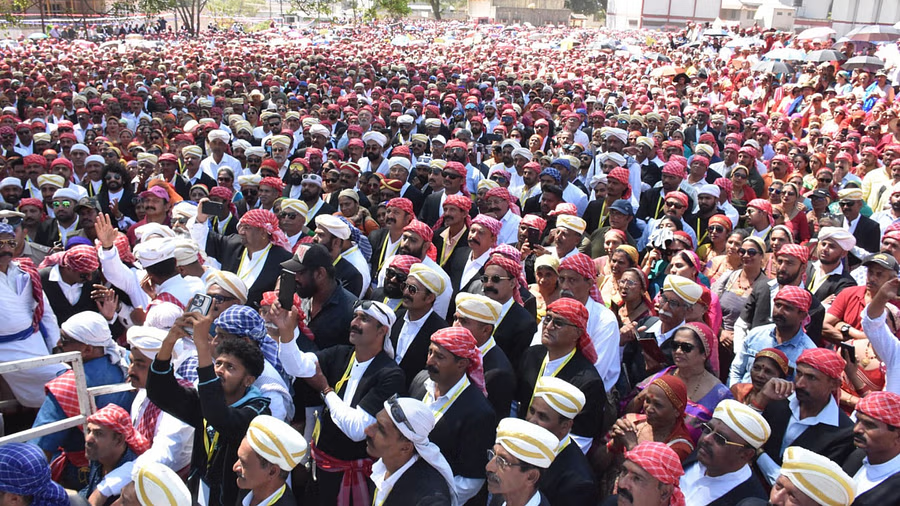
On February 2, thousands of Kodava men and women in traditional attire took out ‘Kodavaame Baalo’, an 82km, six-day peace march led by the Akhila Kodava Samaja (AKS) in Kodagu, Karnataka. They did so to reassert their distinct identity and to draw attention to the social, religious and political challenges their community faces.
The trigger for the march was a temple entry row that has pitted two prominent communities in Kodagu―the Kodavas and the Arebhashe Gowdas―against each other.
The newly built Sri Mrutyunjaya (Shiva) temple, in Kattemadu village near Madikeri town, is the epicentre of the dispute. On December 27, when some Kodavas turned up for the annual festival in their traditional attire, some Arebhashe Gowdas stopped them from entering the temple. The “common dress code” as per the bylaw did not allow Kodava attire.
The situation escalated with both sides sticking to their guns. They filed separate complaints and announced massive jaathras (marches) in protest, forcing the district administration to intervene and impose prohibitory orders around the temple. The Arebhashe Gowdas held a massive rally in Madikeri, which the Kodavas followed up with their march from Kutta to Madikeri. The run-up to the two marches was marked by a social media war with both sides uploading provocative videos and posts.
“The Kodava community will not take part in any peace process initiated by the district administration till the police identify and arrest those who attacked Kodavas and attempted to restrict their cultural attire at the temple,” said the memorandum submitted by the AKS to Kodagu Deputy Commissioner Venkat Raja.
Said AKS member J. Ganesh Aiyanna: “A few years before the Mrutyunjaya temple incident, we were prevented from entering Talacauvery during ‘Teerthodbhava’ (annual sacred event at the place where the Cauvery is believed to originate) for wearing our traditional attire. We will not tolerate the assault on our tradition and cultural identity.”
Harsha Kodagana, member of the Arebhashe Samaja, said they were just following the rules. “The temple was built at a cost of around 06 crore, which was collected from devotees belonging to all communities. The 43-member temple committee (which includes nine Kodava members) passed a bylaw with 13 points, including the common dress code. This is meant to build a sense of equality among all communities. Some committee members stopped those wearing the Kodava attire as it violated the bylaw. The temple priest was attacked. We want the police to take suo motu action against people posting derogatory posts on social media and making casteist slurs.”
The Kodavas, however, claim that this is not an isolated case. “Some people from a particular community have belittled our icons Field Marshal K.M. Cariappa and General K.S. Thimayya, who are India’s war heroes,” said Aiyanna. “The Kodava community has a long tradition of serving the Indian armed forces. People have also petitioned the courts to curb our gun rights but the court has restored it till 2029. The gun is revered in a Kodava family as it is an integral part of all our customs. We announce the birth of a baby boy with gunshots, and baby girl by beating brass plates. We have never used these weapons for violent purposes. We are nature and ancestor worshippers and are not involved in any politics. But the assault on our culture is growing.”
The memorandum submitted to the deputy commissioner said that the government must ensure a safe atmosphere for Kodavas to practise their traditions on their own land. It also urged the government to take steps to facilitate Kodava community participation in the Talacauvery rituals, extend constitutional protection for Kodava land, culture, traditions, religious practices and social security, and to curb “political oppression” by dominant communities.
The district administration has sought a report from the temple committee, but notably, the elected representatives―Congress MLAs A.S. Ponnanna (Virajpet) and Mantar Gowda (Madikeri), and BJP MP from Mysore-Kodagu Yaduveer Wadiyar―have kept a safe distance from the controversy.
Interestingly, when it comes to elections, the two communities have supported candidates without caste considerations. Previously, BJP leader Appachu Ranjan, a Kodava, had won the Gowda-dominated Madikeri assembly seat three times, while fellow party member K.G. Bopaiah, a Gowda, had won the Kodava-dominated Virajpet assembly seat thrice.
The temple entry episode is the latest incident that could galvanise the Kodavas, who for long have feared losing their identity. The 1.5 lakh-strong population has been dwindling; there has been fragmentation of families because of migration for education and employment, and inter-caste marriages. The community, under the banner of the Codava National Council, has been resisting the change in demography, loss of land and the alienation of the younger Kodavas from their language and culture. The long list of the council’s demands includes geo-political autonomy, inclusion in the scheduled tribe list, exemption from the Arms Act, inclusion of Kodava language in the Eighth Schedule of the Constitution, recognition of river Cauvery as a living entity, UNESCO’s intangible cultural heritage tag, inner line permit system to prevent demographic changes, and greater representation of Kodavas in Parliament.
The influx of people from outside, commercial exploitation of forests for tourism and massive infrastructure projects have resulted in water scarcity, landslides and floods, say locals. The people of Kodagu include Kodava, Arebhashe Gowda and 21 other Kodava-speaking communities who have lived in harmony despite the many challenges.
“After the backlash by Kodavas over Tipu Jayanti celebrations, the Congress government was forced to stop it,” said a local leader who did not want to be named. “But now, some vested interest groups are playing mischief to divide the Hindu community.”
source: http://www.theweek.in / The Week / Home> The Week / by Prathima Nandakumar / February 16th, 2025
This ‘journey by foot’ (kaal nadp) was called ‘Kodavaame Balo’ (‘May the Kodava way of living live on’). The participants walked through several towns over six days (from February 2 to 7).
Thousands of people at the march in Madikeri. / DH Photo by Rangaswamy / Credit: Special Arrangement
In the hills of Kodagu, a six-day walk was conducted, by Kodavas and other native Kodava speakers (Bhashikas), spanning 82 kilometres. Kodava is an endonym used by the natives of Kodagu, who were otherwise called ‘Kodaga’ in Kannada or ‘Coorg’ in English, and has two usages. One is for the language and culture followed by Kodagu’s indigenes and the other is for the most populous community among these people. Twenty one different communities speak the Kodava language.
People dressed in colourful attire walked from the southernmost town of Kodagu (Kutta) to the district headquarters (Madikeri). The men wore kuppya chele (a wraparound kurta and cummerbund) and mande vastra (head dresses). The women wore kodavathi podiya, sarees draped in the Kodava fashion. An incident at the Kattemad temple, where Kodavas in traditional dresses were denied entry, was the catalyst for the event.
This ‘journey by foot’ (kaal nadp) was called ‘Kodavaame Balo’ (‘May the Kodava way of living live on’). The participants walked through several towns over six days (from February 2 to 7). Lunch was provided by samajas (associations) along the route. At each village, the Kodavas and Kodava speakers such as the Ammas, Heggades, Kembattis and others, joined the procession from their homes. The Kodagu Muslims came out to greet and support the procession during the march.
The crowd was the largest on the final day. The main procession from South Kodagu covered 8.5 km from Kaggod until the Mand ground in Madikeri. Among those who walked from Kaggod was 82-year-old Maha Vir Chakra awardee Lt Col Puttichanda S Ganapathi.
Ajjinikanda Mahesh Nachaiah, president of the Karnataka Kodava Sahitya Akademi, walked along with me during the last day. He said, “A worldwide message has been sent that a community’s culture is their right which should not be hindered or opposed by others. An awareness has been created and this march will be remembered for years to come by our children and their generation.”
Historical and current significance
Even before the reign of the Haleri rajas (1600-1834), Kodava paddy agriculturists were living in Kodavu, now called Kodagu. They were employed in the army and the government. Some other castes employed in different professions also lived in Kodagu under the rajas. They spoke the same language and more or less followed the same culture.
During the 18th-century Anglo-Mysore Wars, Kodagu’s population was decimated. Many either died during the warfare or were deported as prisoners.
In 1834, the British took over Kodagu, renamed it Coorg, and made it a province. In 1947, it became part of independent India and, in 1950, it was one of the 28 states of the Indian Union. In 1956, Kodagu (Coorg) was merged with Karnataka.
The Kodavas speak a distinct Dravidian language. They worship their ancestors, nature, weapons and village deities such as Mahadeva, Povvadi and Ayyappa.
Kodagu lies between Kannada, Tulu, Tamil and Malayalam-speaking regions. Hence, along with the Kodagu distinctness, we see influences from these communities and cultures.
Key Demands
Bollajira Aiyappa, President of Codava Makkada Coota, who walked for two days, said, “This is the first time in history that all the Kodava and Kodava-speaking organisations came together. In the future as well, everybody should come together like this to solve problems.”
The event culminated with the President of the Akhila Kodava Samaja presenting the memorandum to the Deputy Commissioner, followed by lunch. On the final day, the organisers counted more than 30,000 lunch plates.
The main demand of the marchers was for the government to protect the Kodava identity, culture and constitutional rights.
source: http://www.deccanherald.com / Deccan Herald / Home> India> Karnataka / by Mookanda Kushalappa / February 13th, 2025
Not many know that the birth place of Karnataka Milk Federation is a small town called Kudige in Kodagu district. The Hindu travels back to the roots of India’s second largest milk co-op.
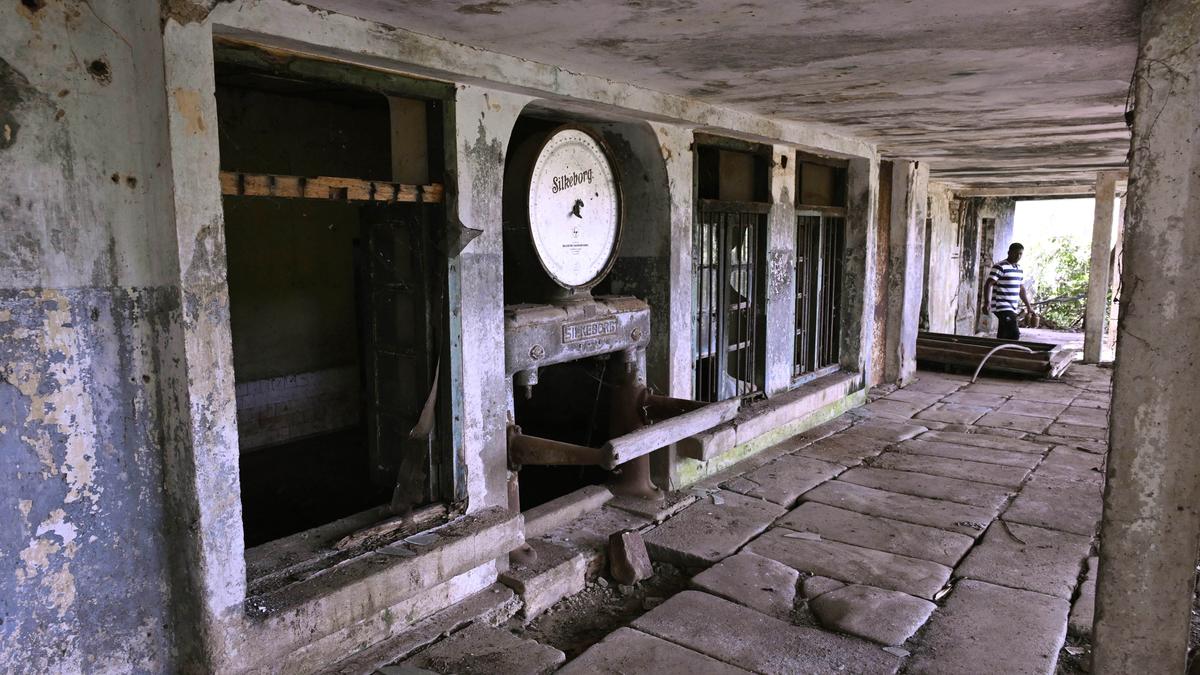
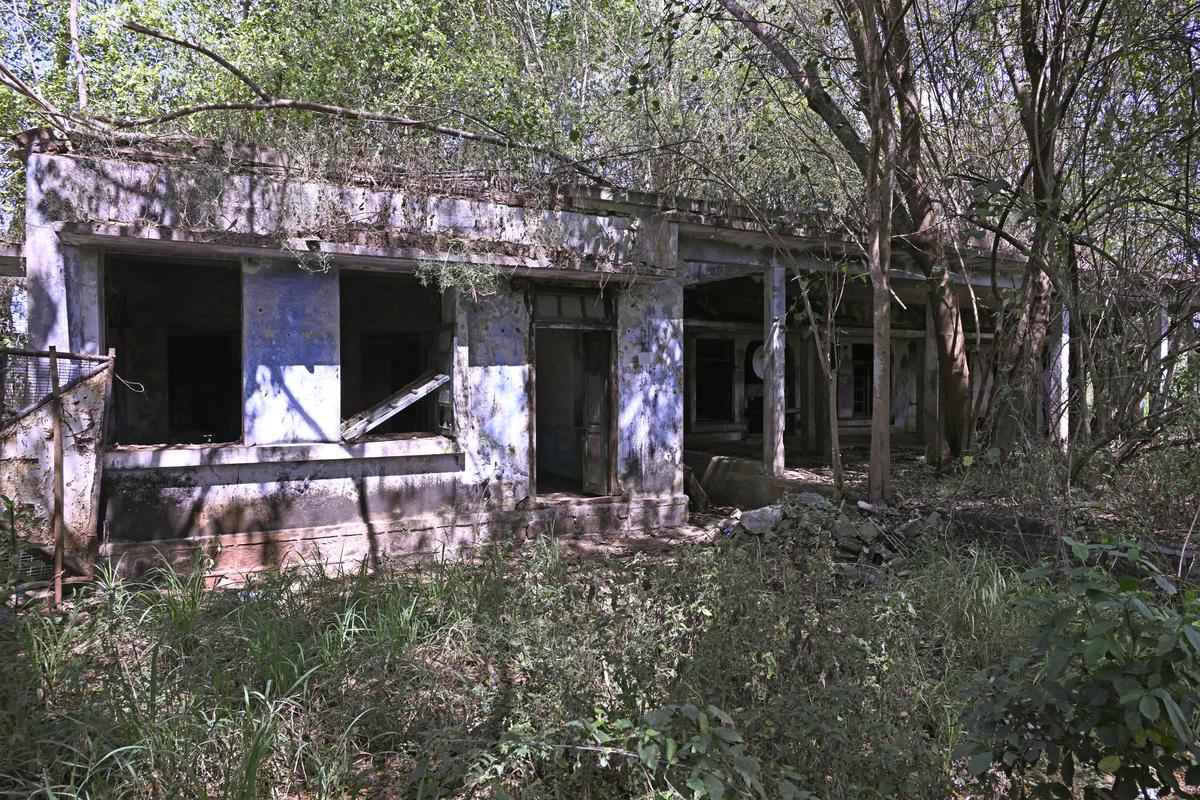
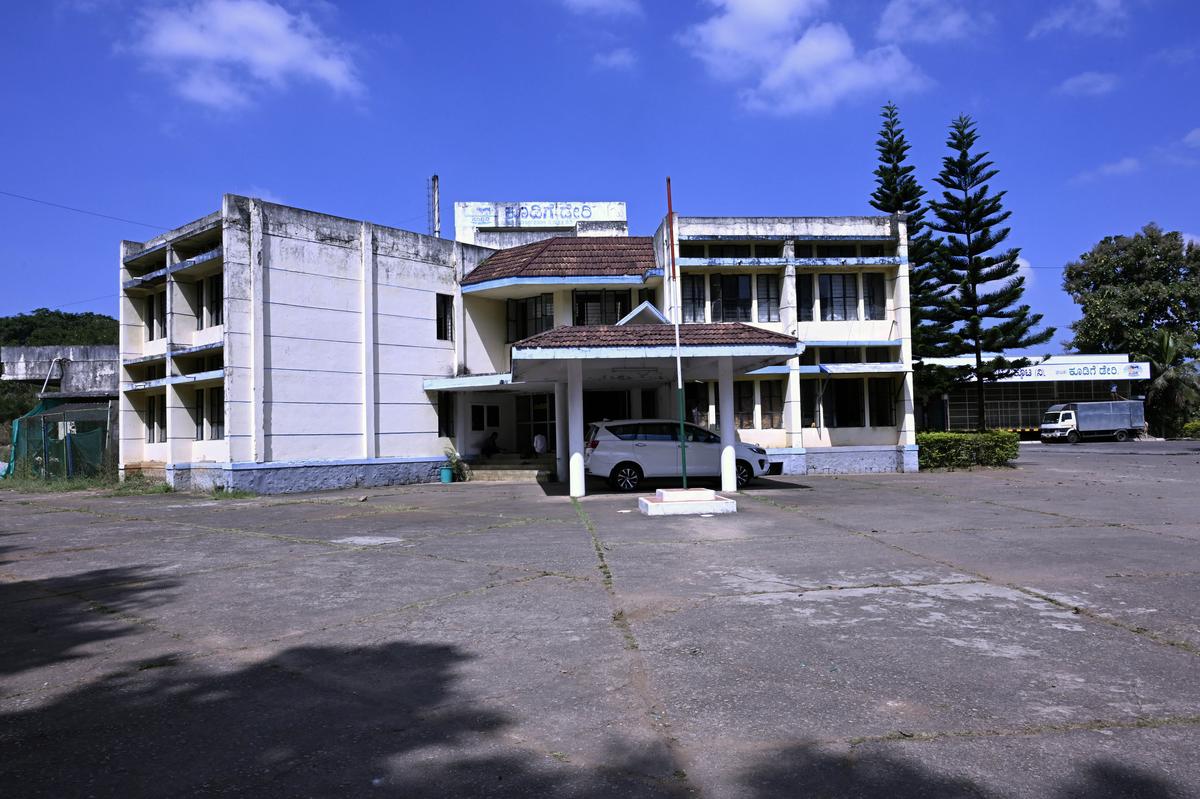
The old dairy facility at Kudige in Kodagu, the birthplace of Karnataka’s first dairy cooperative, long before the rise of the Nandini as a brand. | Photo Credit: K. BHAGYA PRAKASH
In the quiet town of Kudige in Kodagu, an old dairy facility stands as a reminder of the humble beginnings of what would become one of India’s most iconic dairy brands, Karnataka Milk Federation’s (KMF) Nandini. Once a bustling cooperative hub where fresh milk was collected from local farmers, the site now lies in decay, with weathered walls, rusting equipment, empty crates, and broken foundation stones.
This reporter visited Kudige, the birthplace of Karnataka’s first dairy cooperative, long before the rise of the Nandini as a brand, and found that while the original building was in a dilapidated state, a modern, fully operational dairy facility now thrives 500 metres away.
Global recognition
Karnataka’s Nandini milk brand has grown into a globally recognised name, engaged in a range of activities from sponsoring Scotland and Ireland’s cricket teams during the ICC Men’s T20 World Cup last year to constantly launching new products to diversify its business. It has been exploring new markets across the country, competing with Amul, India’s largest dairy producer. However, the roots of this success story trace back to a modest beginning in Kudige back in 1955. The story of this humble origin has largely remained obscured.
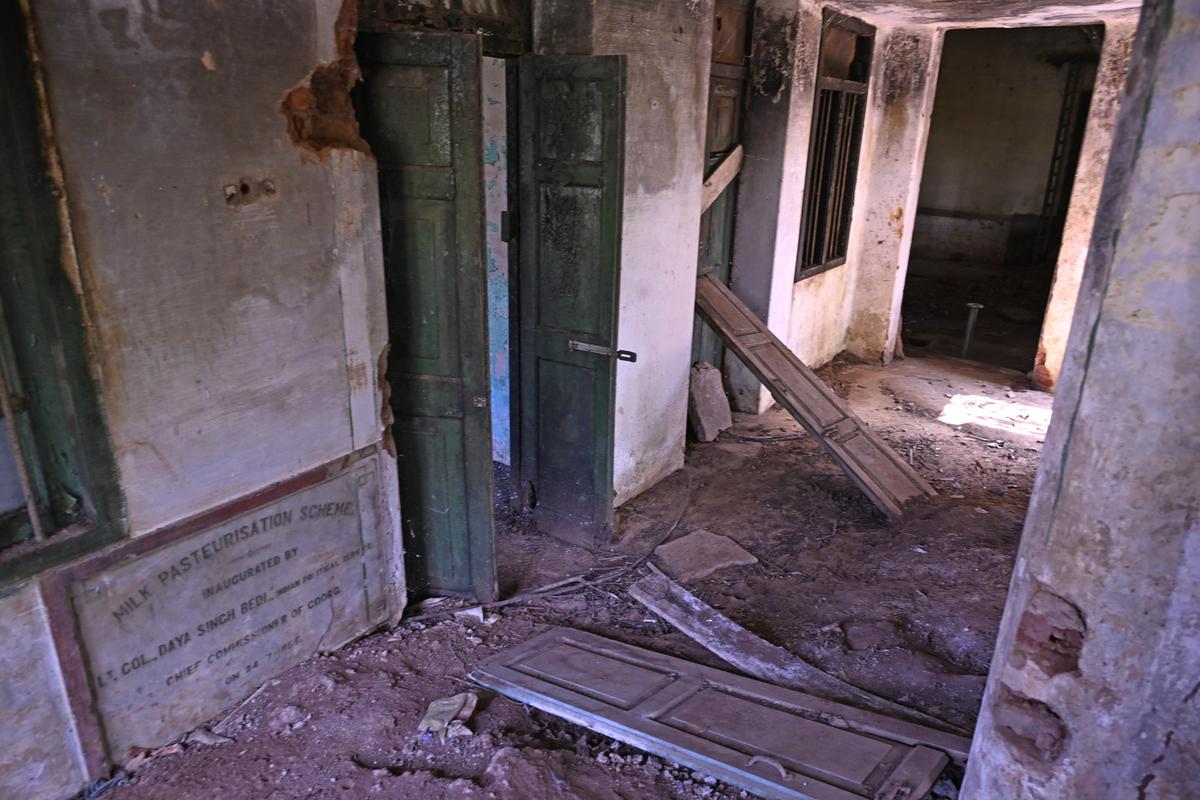
Malavika, a long-time resident of Kudige, explained the historical significance of the site, guiding this reporter through the derelict structure. “I have been working here in the Animal Husbandry Department for the past 20 years. My father also worked in this dairy. Now that operations have shifted to the new building, the old one has fallen into disrepair,” she explained.
Inside the old dairy building, the inauguration plaque remains surprisingly intact. It bears the inscription, “Milk Pasteurisation Scheme inaugurated by Lieutenant-Colonel Daya Singh Bedi, then Chief Commissioner of Coorg, on 24 July 1955.”
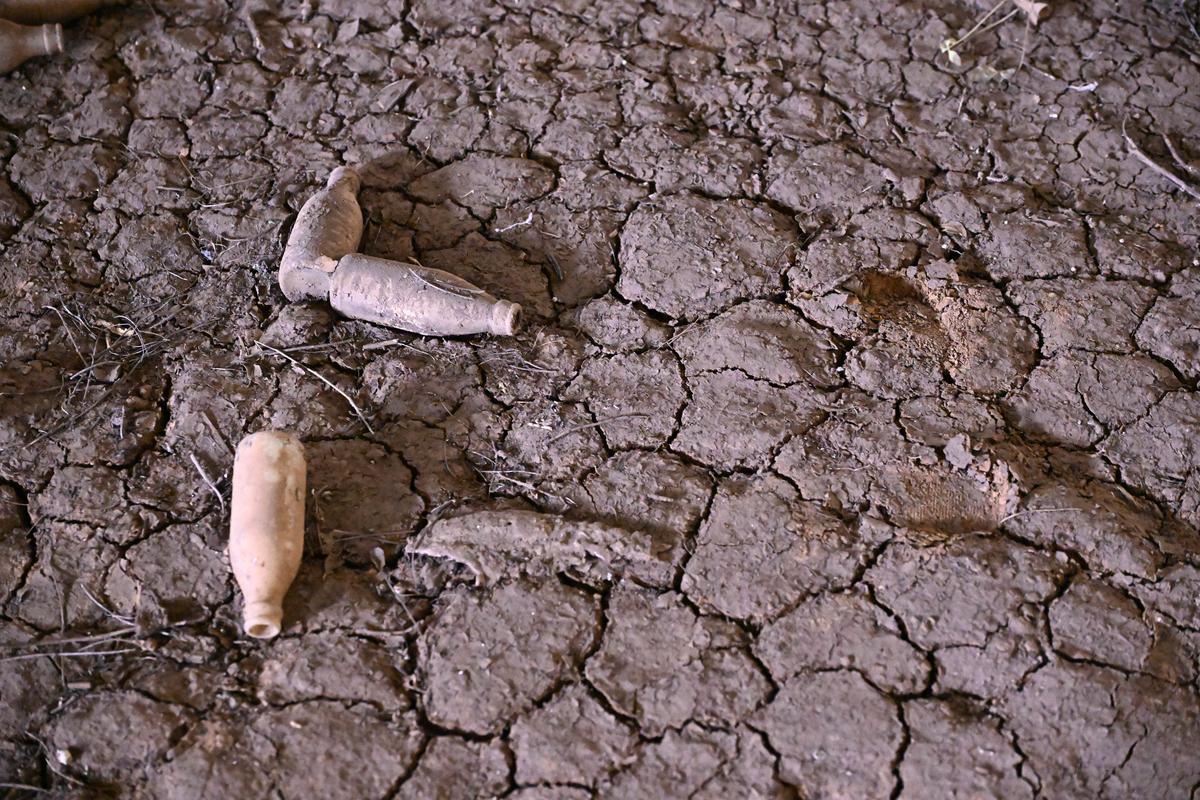
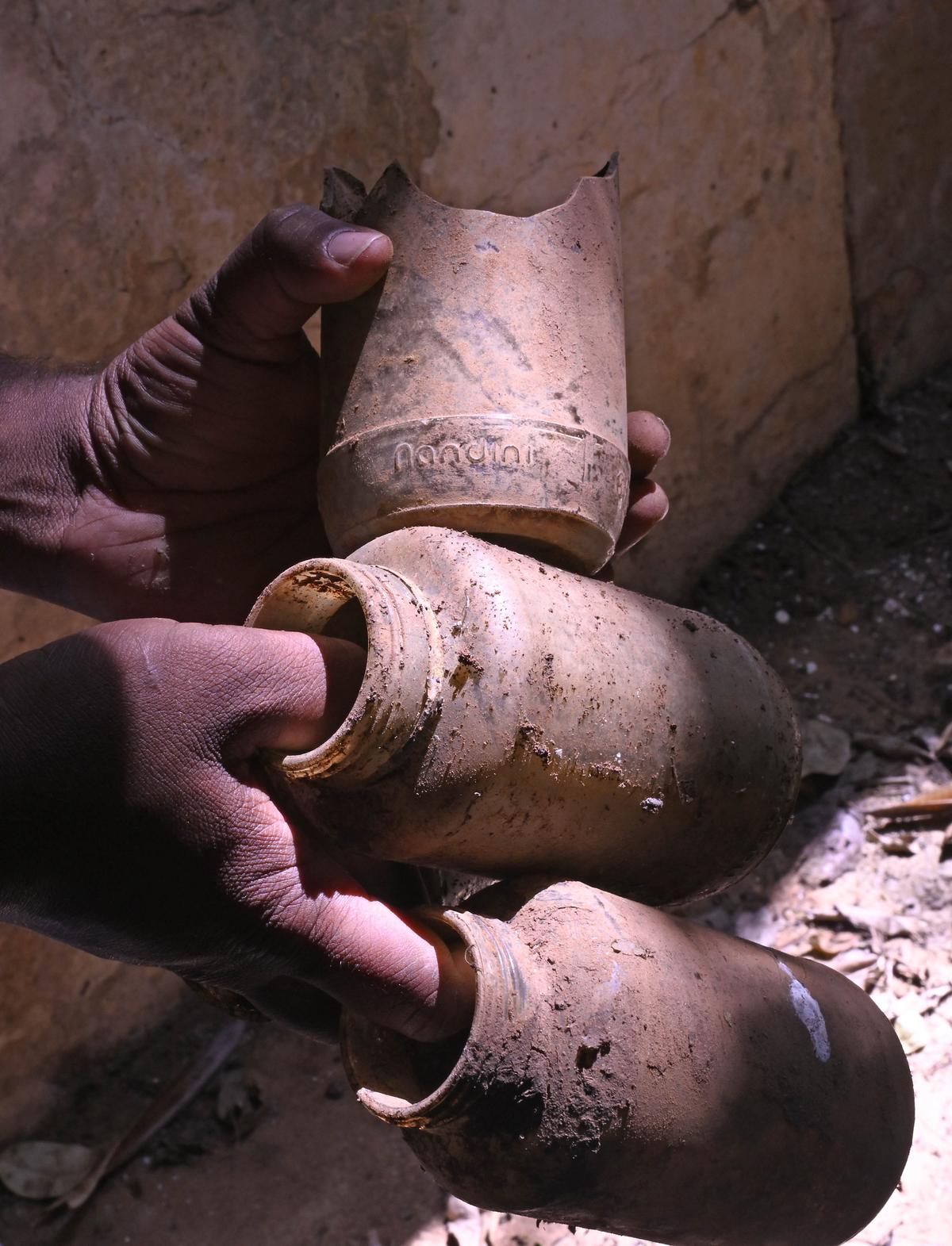
Malavika guided us through the premises, showing an old weighing machine, various dairy processing machinery, and even glass bottles that were once used to distribute milk. “From this dairy, milk was supplied to different parts of Kodagu, which was then a separate state called Coorg. My father often spoke about how local farmers would bring their milk here, which was then processed and distributed,” she recalled.
Despite its historical importance, the old dairy building at Kudige in Kodagu has been left in a neglected state. | Photo Credit: K. BHAGYA PRAKASH
Landmark neglected
Despite its historical importance, the old dairy building has been left in a neglected state. The site, currently under the control of the Hassan Cooperative Milk Producers Union (a part of KMF), has not received adequate maintenance. Local residents have raised concerns about its deteriorating condition.
Rudrappa K., a local farmer, expressed his disappointment. “The government should recognise the importance of this building and convert it into a museum or heritage site to showcase how the milk cooperative movement led to the creation of a successful brand like Nandini. Right now, the structure is in terrible condition. People throw garbage inside, and some even trespass into the premises. The authorities, either the government or KMF, should step in and restore this building,” he urged.
The transformation
Speaking to The Hindu, A.S. Premnath, former Managing Director of KMF, highlighted the historical significance of Kudige in Karnataka’s dairy industry.
“Not many people know that KMF had its origins in Kudige. The first dairy cooperative was established here in 1955. KMF itself was founded in 1974 as the Karnataka Dairy Development Corporation (KDDC) under a World Bank-funded project. It was later renamed Karnataka Milk Federation in 1984,” he explained.
KMF currently operates 15 milk unions across Karnataka, sourcing milk from Primary Dairy Cooperative Societies and distributing it to urban and rural consumers. The federation has approximately 28 lakh dairy farmer members across the State.
As Premnath points out, Kodagu is traditionally known for commercial crops like coffee, oranges, and cardamom, but not for dairy farming. This is probably why not many remember that it was also home to Karnataka’s first commissioned dairy plant. “The Kudige dairy was established in 1955. Later, in 1974, an integrated project was launched to restructure the State’s dairy industry on cooperative principles, laying the foundation for a new era of dairy development. With World Bank assistance, a dairy development project was initiated in 1975, initially covering Mysuru, Hassan, Tumakuru, and Bengaluru districts,” he said.
Premnath, who worked at KMF for nearly 40 years, was himself born and raised in Kudige. His father also worked at the dairy. “I have seen the journey of this Kudige from my childhood. The growth of KMF and Nandini is an incredible success story that started in this small village. I still remember how ghee was produced using firewood to boil the milk. ‘Coorg Ghee’ was a sought-after product back then, just like Coorg Coffee and Coorg Honey,” he reminisced.
The inauguration plaque that still remains intact. It bears the inscription, “Milk Pasteurisation Scheme inaugurated by Lieutenant-Colonel Daya Singh Bedi, then Chief Commissioner of Coorg, on 24 July 1955.” | Photo Credit: K. BHAGYA PRAKASH
Growth and expansion
In 2024, KMF recorded a 14% increase in milk procurement and a 10% rise in sales of milk and dairy products. As it continues to compete with other milk brands in South and West India, KMF has also expanded its presence in Delhi to further extend its footprint.
Of the nearly one crore litres of milk procured daily, KMF sells around 65 lakh litres as liquid milk, including UHT Goodlife and curd. About eight lakh litres are converted into milk powder for the Ksheera Bhagya scheme, which supplies milk to schoolchildren, while six lakh litres are used for producing milk-based products like ice creams and sweets.
KMF Chairman Bheema Naik spoke about the cooperative’s structure and its impact. “The Amul model of dairy cooperatives was introduced in Karnataka in 1974-75 with financial support from the World Bank, as well as Operation Flood II and III. The three-tier Anand Pattern structure — village-level dairy cooperative societies, district-level milk unions, and the state-level federation —ensures sustainable dairy farming. KMF is among the few cooperatives that have successfully transformed dairying from a secondary occupation into a full-fledged industry,” he said.
Milk bottles still found at the old dairy facility at Kudige in Kodagu. | Photo Credit: K. BHAGYA PRAKASH
Political controversies
Despite its cooperative structure, KMF has every now and then found itself entangled in the ups and downs of Karnataka’s politics, particularly during elections and milk price revisions. Ahead of the 2023 Karnataka State Legislative Assembly elections, a controversy erupted when the then-ruling BJP government allowed Amul to sell its products in Karnataka. This sparked allegations that Union Home and Cooperation Minister Amit Shah was attempting to merge KMF’s Nandini brand with Amul.
The move triggered widespread protests across Karnataka, with slogans like #SaveNandini and #GoBackAmul trending on social media. Protestors took to the streets, fearing that Nandini’s identity and autonomy were under threat. However, despite these challenges, Nandini remains a strong, homegrown brand that has significantly shaped Karnataka’s and India’s dairy industry, experts in the sector say.
The love for Nandini in Karnataka transcends business, holding deep cultural significance. Kannada cinema legend Dr. Rajkumar served as Nandini’s brand ambassador, free of charge, and even featured in the brand’s first and only television commercial in 1996. His son, Puneeth Rajkumar, later continued the legacy, signing an agreement with KMF in December 2009, again without any fee.
From a small village in Kodagu, Nandini has grown to become the second-largest milk cooperative federation in India. Reflecting on this remarkable journey, Premnath attributed KMF’s success to unwavering consumer loyalty, and the dedication of lakhs of farmers. “The strength of Nandini lies in its cooperative spirit and consumer trust. The farmers who contribute to KMF have made it what it is today,” he said.
Milk bottles still found at the old dairy facility at Kudige in Kodagu. | Photo Credit: K. BHAGYA PRAKASH
Challenges mount too
While the dairy brand has seen remarkable success, challenges persist as milk unions urge the State government to increase retail prices to ensure better remuneration to the dairy farmers. The farmers have been demanding a hike in incentives, even as KMF faces a glut in milk production.
In June last year, the KMF raised milk prices by ₹2 per litre and added 50 ml to every 500 ml packet. However, KMF officials argue that this increment is insufficient. The federation is facing mounting financial losses from an unsold stockpile of skimmed milk powder (SMP), adding to the strain on the dairy sector.
Amid this surplus, many of Karnataka’s 15 milk unions have reduced procurement prices by ₹2 per litre, triggering discontent among farmers. Currently, most unions pay ₹32.5 per litre to farmers, but in districts such as Kolar, Mandya, and Ballari, the rate has dropped to ₹30. Dairy farmers are also frustrated that the government’s ₹5 per litre incentive, introduced under the Ksheeradhaare scheme, has remained unchanged for over a decade despite increasing production costs.
The Ksheeradhaare scheme was launched in 2008 with a ₹2 per litre incentive, which was later increased to ₹4 per litre in 2013 and ₹5 per litre in 2016. However, since then, there has been no further revision, even as expenses for feed and maintenance have risen significantly. Adding to their woes, the State government has not disbursed these incentives for more than 10 months, leaving farmers struggling financially.
Farmers’ leader Kurubur Shanthakumar criticised the government, alleging that apart from withholding incentives, farmers are also being paid ₹1 less per litre for their milk. “There are approximately 38 lakh dairy farmers in Karnataka, and over 90% of them are women. The government speaks about women’s empowerment, yet it fails to ensure timely payment of their incentives,” he said. He further emphasised that the success of the Nandini brand is due to the efforts of farmers, and therefore, they deserve to be adequately compensated.
The new building of Karnataka Milk Federation at Kudige in Kodagu. | Photo Credit: K. BHAGYA PRAKASH
Consumers chose brand name ‘Nandini’
Interestingly, the name ‘Nandini’ was not chosen by officials at the Karnataka Milk Federation (KMF) but was suggested by the consumers who would go on to support and cherish the brand. According to A.S. Premnath, former Managing Director of KMF, in 1983, KMF decided to introduce a corporate brand identity for its milk and dairy products to strengthen its presence in the market. As part of this initiative, it reached out to consumers, inviting them to suggest a name for the brand. “The response was overwhelming, with a large number of consumers recommending the name ‘Nandini.’ Given the strong public preference for this name, KMF officially adopted ‘Nandini’ as the brand name for its dairy products,” Premnath said.
source: http://www.thehindu.com / The Hindu / Home> News> India> Karnataka / by Darshan Devaiah B.P / February 07th, 2025
WELCOME. If you like what you see "SUBSCRIBE via EMAIL" to receive FREE regular UPDATES.
Read More »