Category Archives: Sports

BAI website gives Jwala-Ponnappa WC bronze a miss

Badminton fans in the country cannot stop raving about the exploits of doubles stars Jwala Gutta and Ashwini Ponnappa, who created history last Sunday by winning a medal in the World Badminton championship after a gap of 28 years. While the two girls made news across the country, it seems the Badminton Association of India (BAI), or more precisely their official website, is completely unaware of their heroics.

Even after a week, the official website is completely oblivious to the performance of the Indian contingent in London and is more bothered about publishing the internal circulars and other mundane stuff like appointment of technical officials and other committees.

The attitude of those maintaining the website is no different from the overall approach of the sports administrators, who are happy holding on to their chairs rather than looking to be proactive to popularise the game.

Shuttlers Jwala Gutta (foreground) and Ashwini Ponnappa created history last Sunday by winning a medal in the World Championship after a gap of 28 years. Reuters


The last few years have been the best period for Indian badminton since the Prakash Padukone era. In fact, I would say the situation is even better than the 70s and 80s when Padukone was the lone flag-bearer of the country on the international stage. Today, there are many players who have been performing consistently at the highest level and there are at least three disciplines in which India can aim to win medals in major international tournaments.

Such a situation should be an open invitation for any sports administrator to try and popularise the sport and what can be a better way than to build the marketing strategy around the players, whom the fans and even the corporate world can relate to.

And the officials need not look beyond their very own Saina Nehwal, who has become a household name once she signed up with a sports management firm and the company began building her image around the “I will do anything to succeed” attitude.

Thankfully, almost all the top players in the country are very articulate and can connect to the masses very easily. But somehow, the ‘shuttler’ seems to be the least important entity in the badminton set-up in India and the badminton activities that are organised during a season are more out of compulsion than with a long-term plan for the benefit of the players.

The last concrete step for the development of sport was taken back in 2000, under the leadership of Padukone, when the prize money structure was introduced in the domestic circuit and a national ranking system put in place.

The BAI honchos made us believe that their endeavour to host major international events in the country since 2009 was an attempt to provide the players an opportunity to grow. But instead, in the first two years, they put restrictions on Indians participating in these tournaments under the pretext that “the image of the country” will be tarnished if players lost in the initial rounds.

Even after the Commonwealth Games, where India won two gold medals and a team silver, the association members indulged in the capital instead of arranging an event or a sponsorship deal as a token of appreciation for the players.

But what can one expect from an association which has still not bothered to put in place a basic mechanism of providing the media with the results of domestic and international tournaments, which is very important to keep the sport and sportsperson in public memory.

In these circumstances, expecting the association to promote the cause of players by building an interface between fans and sportspersons seems to be a distant dream. But the very least a player can expect is a mention of his/her achievement on the website and a word of appreciation from those running the sport.

source: http://www.FirstPost.com / blog > shuttle talk> / Aug 22nd, 2011

Independence Day Cup hockey honours shared

Goodwill:   Expat India XI Orange and Expat XI India White pose for a group photgraph along with the Indian Ambassador Anil Wadhwa and officials from the Friends of Naqvi Group before the game. – Supplied photo

Muscat:

Under the auspices of the Indian Embassy, Team Coorg in association with the Friends of Naqvi Group organised the third edition of the Independence Day of India Cup hockey match which was played on Friday at Oman Football Association Ground, Al Qurum, between Indian Expat XI White and Indian Expat XI Orange.

After a brief welcome address by Major Karriappa, a memento to bid farewell to Indian Ambassador Anil Wadhawa, was presented by P. N. Devayya, a senior member of the Coorg community living in Oman.

The match was inaugurated with old traditional bully between the chief guest Anil Wadhwa and Dr. Satish Nambiar the chiarman of the Indian Social Club, Muscat.

Keeping in line with Holy month of Ramadan the match started after the Iftar at 7.30pm and ended at 8.30pm.

The match was played in true festival spirit and ended in a draw with both the teams tied at 4 all and were declared joint winners. Moosa, Shakeel, Erappa and Maddappa scored one goal each for the Expat India XI White, where as Ganapatty scored two, Shakuntala and Javis one goal each for Expat India XI Orange.
The event was well attended by the all hockey lovers living in Oman including the Omani current and former players and OHA officials.

The vote of thanks was given by the veteran hockey legend SAS Naqvi who praised Kuttapa and Devayya for a well organised event

Zen and the Art of Indian Hockey’s Maintenance

New Delhi:

India’s latest foreign coach Michael Nobbs is a believer in karma. Sprinkling his analyses generously with Buddhist spiritualism, the 57-year old Australian realises the tediousness of the task ahead of him at the national camp underway at Bangalore. While winning the players’ trust is his aim, developing a workable roadmap for the sport’s resurrection in the country is his single-minded ambition, writes Uthra G. chaturvedi

‘When you lose, do not lose the lesson.’

The Dalai Lama has nothing to do withIndian hockey. With its lack of stars and success alike, the sport these days doesn’t even merit a recognisable name among its most devoted followers. Yet, the spiritual figure may well have been speaking of the team when he spoke those words. At least, Michael Jack Nobbs believes so.

As the newest coach of Indian hockey, Nobbs knows what he is up against when he walks out to the training ground at the Sports Authority of India’s Bangalore centre every morning — a long string of losses, a longer list of lessons. Armed with a five-year contract to pull Indian hockey out of the seemingly bottomless pit it has dug itself into, Nobbs is aware that how the next 60 months pan out will depend largely on what happens in the next six.

“The immediate target is the Olympic qualifiers, no doubts about that,” he says of the February 2012 test, even as the 48 probables – divided into two groups – who he will be relying on to achieve that, warm up and cool down in the background. “But I am a firm believer in karma. What goes around ultimately comes around. It’s a cycle that cannot be broken. If enough hard work is put in, the results are bound to come. When they do, is another matter. But success cannot be denied to those who seek it with full dedication,” he adds, striking a spiritual tone that’s more Indian than his native Australian.

In their first training schedule under Nobbs, the Indian hockey players are least bothered about the new coach’s beliefs. Sweating it out on the turf for an average of five hours every day, it is more important for them to get the basic facilities that will increase their performance and output in competition. And for that, they are wary, but willing to give Nobbs a chance.

Progressively cautious

The wariness is understandable. Nobbs is the fourth foreign coach to join the team in eight years and the tenures of each of the previous three have made players progressively cautious. If Gerhard Rach was the target of collective contempt, Ric Charlesworth was shooed away by the establishment even before the players could know what he thought. Jose Brasa walked into a welcome full of doubts, but he managed to make players comfortable. And by the time he left, most of them treated him as an elderly figure they could trust, both personally and professionally; and were eventually sad to let go.

Nobbs is as yet an unknown entity. His methods are yet to be clear to most players, and his plans are yet to be fathomed, or accepted. “We are happy that he has a long-term contract. But it’s been less than a month of training under him. It’s a two-way street. He needs time to know us and we need time to understand him,” says Arjun Halappa, among the senior-most players in the current squad.

There is also an uncomfortable feeling among several players that Nobbs’ appointment with Indian hockey had a lot to do with the backing he had from the Punjab lobby, and so he is perhaps closer to them. “There are many factors at work here at the moment. We will only know about how serious he is and how much of an independent authority he wields after the Asian Champions Trophy, the first tournament he will be in charge of. Till then, let’s face it, there will be doubts. The history of groupism in Indian hockey forces us to be wary,” a player says.

‘Show me the money’

Nobbs, though, knows where he wants the players – on posters, hoardings and magazine covers. “They are the public face of the sport. They sell the game, they bring in support, they bring in the fans and the next generation of players. They are the heroes. Most importantly, they are the ones who will bring in the money. And, let’s accept it, money is very important. Why would anyone play a sport if there is no money,” he asks. “I want the players to own the team. When you feel ownership of something, you work hard to preserve it,” he adds.

Unfortunately, this is precisely what Indian administrators have always tried to stifle. Making players into heroes is abhorrent to the hockey establishment in India. “I don’t think that will happen. If a player wants to go for a couple of days between training for a personal assignment, something that is legal, will raise the profile of hockey and help the sport in the long run and bring in public attention – I won’t stop him,” Nobbs says. Is that an allusion to IHF’s World Series Hockey? He refuses to say, but smiles lightly before adding, “Players like Sandeep, Sardar, Adrian are an asset to any team. I won’t want to lose them,” he says, hinting at a pro-player approach.

At the same time, he knows he will have to draw a line. It’s an easy trap to fall into — when players become stars, they sell the sport much better. But then, they try to hold on far too long because of the perks. “You cannot ignore them either because they are seniors. That kills a large part of the next rung. When they go, the third rung is thrown straight into the deep end. The team then starts losing and the sport’s profile goes down. It takes a few years to get back on top,” he explains.

That’s what happened to Australian hockey at one point. That’s what also happened to cricket in Australia. “When do we push the middle rung to the top and ease out seniors, striking that balance will decide who stays on top for how long,” he adds.

Emphasis on fitness

Irrespective of how they wield their sticks, strategically placed cones are what define every session during training — running around them, sprinting between them, touching base with them at various speeds. Nobbs’ emphasis on making fitness a priority has got a definite thumbs-up from the players.

Already, most admit to feeling better when they step on to the field. Exercise physiologist David John, specifically asked for by Nobbs, has profiled all the players and worked out training schedules for them. “Fitness needs to be upped. A lot of players have been complaining of being tired, and that’s a good thing. It means things are on the right track,” Nobbs says.

Likely to rejoin the camp over the weekend, John’s training methodology is spoken of highly by them. Sometimes, players are asked to try and hold back their training partners from running away – to build resistance. “The exercises he has designed do not get boring. At the same time, our agility has increased. The sooner he comes back, the better,” is the common refrain from all the players.

The skills aspect, though, is not being ignored. Players often play 3 or 4 to a side in a small area – less than a quarter of the turf – and are supposed to pass to their team mates without losing the ball. At last count, they had managed to hold on to it for 17 passes.

An Olympic dream

“Indian players are skillful, up to international standards. They don’t need to be told about the skills part. I am trying only to assess their individual levels,” he says as players wrap up the day’s session and head for a swim.

Before leaving, Nobbs wants to reveal his one wish. “One day, I want to see the Indian hockey team on the top of the podium in the Olympics, even if I’m not the coach,” he says.

“I want to experience Indian hockey’s triumph as a spectator from the stands and feel the satisfaction that I had a little part to play. And it will happen. Remember karma? If anyone deserves success for their hard work, it is these boys.”

In The waiting line

The National Championships in Bhopal may not have been the treasure trove of hidden talent that was expected, but the tournament did give a number of players a chance to be part of the national camp and try to impress the team management.

Banmali Xess: The youngster from Jharkhand was named the best forward at the nationals, and with good reason. His passing and ball control was unlike anyone else in the competition — including some of the biggest names — and there was hardly an occasion when he had the ball and failed to penetrate into the D. But inexperience meant he ended up muffing a lot of chances. His presence would push the seniors to look nervously over their shoulders, which is a good thing.

Prabhdeep Singh, Ramandeep Singh and Akashdeep Singh: Part of the Punjab team that finished with a bronze in Bhopal. The triumvirate were instrumental in Punjab’s advancement to the semifinals in the Senior National Hockey Championships. And even in a team that had several big names in its ranks, the youngsters managed to hold their own, impressing with their skills. Raw and still to develop, the big-match strength and temperament.

Chinglinsana and

Kothajit Singh: The Manipuris are the few remaining players from the state on the national stage that once gave Indian hockey some of its toughest players. But while Kothajit manages to hold up the mid-field play for his employers Indian Oil, Chinglinsana, with his immense speed and a gymnast’s agility, is a potential striker. At 21, Chinglinsana also has age on his side and so far during training, has managed to hold his own with the seniors.

Nithin Thimmaiah and Pradhan Somanna: Two exciting prospects from the traditional nursery of Coorg. Good on the wings and keen students of the game and quick learners. Need to add strength and stamina to their skills. Regulars for Karnataka at the age group level, both caught the selectors’ eye during the recently concluded National Championships. A fantastic attacking combination for the future, both are keen to hone their skills as flankers.

Dharamvir Singh: Once considered an exciting India prospect only to gradually fade away, the Punjab forward has managed to raise himself back into contention with decent domestic performances. He was the key to Punjab winning the bronze medal at the Nationals and despite the couple of years that he has lost, his intensity during training proves he means business this time around.


Kamaldeep Singh: No one in Indian hockey has made a comeback after being out in the wilderness for five years. That’s more than their entire international career for many players. But for someone who was always considered a talent, even if a little raw, Kamaldeep was banned for a year after a violent incident during the PHL. He perhaps owes this one chance to himself

source:http://www.expressindia.com / by Uthra G. Chaturvedi / Aug 14th, 2011

Nidhi Subbaiah is Ambassador for MM

Nidhi Subbaiah Ambassador for MM

The sprightly actress of Kannada cinema Nidhi Subbaiah is the ambassador to Mysore Marathon race that is kick starting on Sunday, October 2nd at Mysore as part of the Dasara Festivities.

It is at the world famous Dasara festival in Mysore this Mysore Marathon is taking place in which tourists to Mysore are allowed to take part says Shelesh Krishnan, Director. Life’s Calling Sports.

LCS is a sports management company is the promoter of ‘Celebration Run Series’. The avid sports enthusiasts are part of this event who hails from strong educational background.

The race management team has professional people who have conducted Marathon and Cycling Events in India and in the United States and look forward to bring in their expertise to the Celebration Run Series so as to give the Indian Sporting Community a truly world class running experience.

source: http://www.supergoodmovies.com / Aug 05th, 2011

Indian Cricket: Heaps of Money

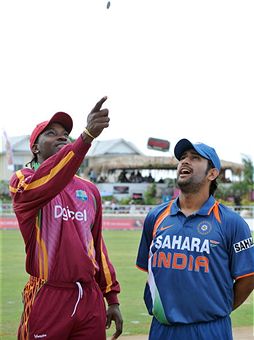
Cricket coin tossIndia’s cricketers have been deafened by howls of derision after their latest defeat by England in a four match Test series.

Sunil Gavaskar, a former Indian batsman, said his countrymen were playing like “schoolboys”. Geoffrey Boycott, a former English cricketer, called their performance more befitting Bangladesh than a team currently ranked No.1 in the Test tables.

Before we feel too sorry for India’s struggling cricket stars, we should remember that they are paid for success and vicissitude alike.

Research by the Times of India, a daily newspaper, shows that some of India’s top cricketers are paid as much as the world’s most richly rewarded footballers  while the annual, seven week Indian Premier League is in full flow.

By the newspaper’s calculations, during the IPL, Gautam Gambhir, an opening batsman who plays for the Kolkata Knight Riders earned more than Lionel Messi, the Argentinian striker who plays for Barcelona. Gambhir’s earnings during the tournament put him in pro-rata touching distance of Cristiano Ronaldo, the Portuguese and Real Madrid player.

Cricketers Yusuf Pathan and Robin Uthappa match the incomes of Fernando Torres and Yaya Toure.

India’s cricketers have been roundly criticised for prioritising the IPL over Test cricket, and losing Test match form by doing so.

Yet the financial incentive of high paying cricket is hard to resist. Their choice is to miss out on payday in front of adoring home crowds in preference for honour at Lords and Trent Bridge, famed cricket grounds in England.

The dazzling money made in Indian cricket is attracting attention, both on and off the field.

The Indian parliament’s Standing Committee on Finance has asked the Indian tax department and the Reserve Bank of India to investigate the finances of the Board for Cricket Control in India, the game’s governing body, and the IPL.

A report by the committee submitted to parliament this month complains that the game is “embroiled in transgressions off the field”.

It warns that the tax department has been too lenient to the Board of Control for Cricket in India, which benefitted from tax exemptions in spite of the growing commercial success of the game.

India’s cricket establishment faces a tough contest in England this summer at the hands of a formidable bowling attack; when it returns home it may find as greater encounter with the tax man.

source: http://www.blogs.ft.com / by James Lamont / Aug 05th, 2011

http://blogs.ft.com/beyond-brics/2011/08/05/indian-cricket-heaps-of-money-spins-heads/#ixzz1UH4s9Qnl

Joshna Chinappa in an Audio Launch

Joshna_Chinappa

It was a big surprise for both sports and film fields. Reason – the presence of ace Squash player Joshna Chinappa at an audio launch of a Tamil film.

The famous Squash champion was the chief guest of the audio launch function of ‘Puli Vesham’ that was held recently in the city. Industry was raising their eyebrows how they brought in Joshna, who always stayed away from films and film functions, to this audio launch. When quizzed, the champion said, “It is only for the director P. Vasu I agreed to be the chief guest and attended the function. I knew him as a famous director. His ‘Chandramukhi’ was one film that I enjoyed a lot. I hardly watch films, and this film is one of my favourites among those few that I have seen in my life”.

‘Puli Vesham’ features RK and Sadaa in the lead roles and directed by P. Vasu.

source: http://www.filmics.com / Monday Aug 01st, 2011

Eight State Players Find Place Among Probables

Bangalore:
Eight Karnataka players found a place in the list of 48 probables announced by Hockey India on Saturday for the next phase of the national camp that is currently underway at the Sports Authority of India campus here.
Goalkeeper Bharat Chetri, defender and drag-flick specialist VR Raghunath, midfielders Arjun Halappa and Vikramkanth, and forwards SV Sunil, Amar Aiyamma, Nithin Thimmaiah and Pradhan Somanna made the cut from the original number of 90. 

The national camp took off under new coach Michael Nobbs on July 3 while HI selectors AB Subbaiah, BP Govinda, Col Balbir Singh and Thoiba Singh conducted a three-day selection process from July 13 before announcing the shortlist.

The shortlist is further expected to be pruned to 18 by the beginning of next month at the conclusion of the first phase of the camp towards the end of this month. The second phase is scheduled to kick off on August 8. The 18 campers will continue to train at SAI until August 28 before flying to Ordos, China for the inaugural Asian Champions Trophy from September 3-12.

Newly-appointed coach Nobbs left for Australia on Saturday and is expected to rejoin the camp by the end of the month, provided he procures his work visa. In his absence, SS Grewal will oversee the camp.

The shortlist: Goalkeepers: Bharat Chetri, Adrian D’Souza, PR Sreejesh, Kamaldeep Singh.

Defenders: Rupinder Pal Singh, Sandeep Singh, William Xalxo, VR Raghunath, Harpreet Singh, Gurjinder Singh, Diwakar Ram.

Midfielders: Sardar Singh, Gurbaj Singh, Vikram Pillay, Arjun Halappa, Vikas Sharma, Vikramkanth, Bharat Chikara, Danish Mujtaba, Prabodh Tirkey, Vikas Pillay, Birender Lakra Jr,  Ravi Pal, Ignace Tirkey, Manjit Kullu, Kothajit, Manpreet Singh, Ajitesh Roy.

Forwards: Rajpal Singh, SV Sunil, Tushar Khandker, Amar Aiyamma, Mandip Antil, Shivendra Singh, Bikas Toppo, Sarvanjit Singh, Roshan Minz, Nithin Thimmaiah, Prabhdeep Singh, Banmali Xess, Akashdeep Singh, Gurvinder Singh Chandi, Pradhan Somanna, Prabhjot Singh, Yuvraj Valmiki, Dharamvir Singh, Chinglinsana, Ramandeep Singh

source: http://www.deccanherald.com / Home> Sports / DHNS / Jul 16th, 2011


Augustin retains Karnataka State U-25 Chess Championship


Master Augustin A, a fourteen year boy from kodagu retained the Karnataka State under 25 Chess Championship for the second consecutive year.
Augustin defeated top seeded Sriram Sarja in the sixth round and Balkishan A of Bangalore, third seed of the tournament on the way to the title. He scored a full eight points out of eight rounds. Sameer Ghotane of HDFC Bank scored six and half points and finished second.


Augustin and Sameer Ghotane  will represent Karnataka State in the National Under 25 Chess Championship 2011 to be held at Indore, Madhya Pradesh in August.

source: http://www. karnatakachess.com / United Karnataka Chess  Association

Star Athletes Inspire Students

Bangalore:

Olympian and Asian Games bronze medalist in heptathlon, Pramila Aiyappa, Indian Kabbadi women’s team captain Tejaswini Bai and hockey star Bharat Chetri inspired students of Venkat, St Ann’s and Venus Group of Institutions by their very presence at a Sports Carnival here on Saturday.
As the students of these schools gathered at the Sports Authority of India (SAI) to prove their mettle at the annual sports meet, the sports stars cheered them on. 

Pramila was highly impressed by the schools encouraging the students to excel in sports in such a big way.  “Sports should be encouraged at an early age,” she said.

Eminent hockey player Bharath Chetri, a gold medalist in Junior World Cup, silver medalist in the Commonwealth Games and bronze medalist in the Asian Games, said the sports carnival was an amazing experience.

Festivity was in the air as hundreds of students of Venkat, St Ann’s and Venus Group of Institutions participated in the events. The schools wanted to deliver the message that students should excel in diverse fields and not merely in academics.

During the march past, students who excelled in national and state level sports meets led their respective teams.

There were students who excelled in cricket, hockey, athletics and other sports at national and state level, including a student who played chess with world champion and grand master Vishwanathan Anand and ended the game in a draw.

The Chairman of the Venkat, St Ann’s and Venus Group of Institution T Balakrishna said the group believes in the overall development of the students and sports is an essential part of their curriculum.

source: http://www.deccanherald.com / Home> City / by DHNS / December 10th, 2010


An Indian and a Pakistani Fight Together for a Grand Slam of Fairy-Tale Coincidences

India’s UN envoy Hardeep Singh Puri shakes hands with Qureshi as Bopanna (second from left) and Pakistan ambassador Abdullah Hussain Haroon look on in New York. Jay Mandal/ On Assignment

Sept. 9: If there ever was a Grand Slam of political correctness, it will unfold tomorrow at Flushing Meadows.

Before you say “Yuck!” and turn the page, consider the conspiracy of coincidences.

• An Indian and a Pakistani will play in a Grand Slam final at the US Open on Friday.

• Forgot to mention: they will play on the same side.

• On the stands will be the Indian and Pakistani ambassadors to the UN. They were there on Wednesday night when the two stormed into the final.

• Sania Mirza, whose marriage raised the question which cricket team will she support, and her husband Shoaib Malik can finally support the same team. And they play her game.

• Finally, did you notice that the match is taking place on the eve of Id and Ganesh Chaturthi, which fall on the same day this year?

Rohan Bopanna and Aisam-Ul-Haq Qureshi may or may not win the US Open men’s doubles final on Friday.

But the 30-year-olds will add the taut thwack of the tennis racquet to the coliseum of sport diplomacy that so far has been echoing with the zing of the ping pong and the thud of the willow smacking leather.

For the good souls who refuse to give up and religiously light candles on the Wagah border each year, Bopanna and Qureshi, dubbed the “Indo-Pak Express”, may seem like a made-to-order dream come true.

Bopanna, who traces his roots to Coorg, and Qureshi, born in Lahore, first played together in 2003 but did not become devoted teammates until this year, when they played under the slogan “Stop War, Start Tennis”.

Both acknowledge the burden of expectations they carry. “It’s a great feeling to know that you can make a difference,” Bopanna said. “Hopefully, this will encourage a healthier relationship between India and Pakistan.

Qureshi concedes that the peace initiative has changed their lives. “I think what changed both our careers was when we became ambassadors of peace…. The first time we initiated our campaign about Stop War and Start Tennis, I think, was the main week everybody started to take notice of it,” Qureshi said.

Peace and Sport, an organisation in Monaco which promotes reconciliation through sport, supplied them with T-shirts and sweatshirts with the slogan: “Stop War, Start Tennis.”

Joë Bouzou, president and founder of Peace and Sport, said of the new Indo-Pakistan tennis alliance: “Their story of friendship through sport is a real inspiration for youngsters.”

But don’t take the bilateral bond too far. The two do not profess to be similar.

“We don’t have many things in common, to be honest,” Qureshi said. “He likes spicy food; I don’t. He likes to dance to slow songs; I don’t. He’s got a big game; I don’t.”

The pair’s advance has come at a time Pakistan is going though crises on multiple fronts: the war on terror has bitterly divided the country, floodwaters are ravaging its hinterland and the lone shining beacon of cricket is now caught in a “spot-fixing” scandal.

“I can’t thank Rohan enough for being my partner and playing with me. Pakistan has been going through a lot for the last two or three years from all the terrorist attacks and the flooding now for the last few months and the cricket scandal also,” Qureshi said.

Bopanna pointed to one tangible accomplishment. “We are glad that our journey is bringing people together and also having a positive impact,” he said.

Yes, they did make some twain meet. Among the spectators yesterday when Bopanna and Qureshi beat Eduardo Schwank and Horacio Zeballos to advance to their first Grand Slam final were the Indian and Pakistani ambassadors to the UN, Hardeep Singh Puri and Abdullah Hussain Haroon, respectively.

It was the first time that any two diplomats from India and Pakistan had sat together to watch them play. “It was a beautiful thing to see,” Qureshi said

Perhaps aware of the role chance as well as compulsions play in such pairings, Puri was somewhat circumspect. He merely chose to say that “this is sports, but it shows the great potential”. Haroon was more forthright: “Hardeep and I are in the New York area and we are always looking for avenues to open and this is a magnificent one.” 

But both will be aware that sport diplomacy — which mesmerised people in 1971 when an American team played ping pong in China in what was immortalised as the “ping heard around the world” — has set up false dawns in the past in the subcontinent.

The wily Zia-ul Haq twice scored brownie runs on the cricket pitch (see chart)but failed to pull India and Pakistan out of the rut of mistrust.

The tennis truce has come at a time Prime Minister Manmohan Singh is spearheading a peace initiative with Pakistan. It may appear ironic that Singh’s decision not to attend the UN General Assembly this month and risk another fruitless meeting in New York with the Pakistani leadership may actually help his cause of peace with Islamabad.

The high-decibel publicity for the Indo-Pak Express at the US Open this week appears to have resulted in an inevitability that the two countries must now make some progress towards tennis diplomacy to supplement their ongoing joint efforts for more people-to-people exchanges.

Some tennis buffs may feel that it is just as well, therefore, that the Prime Minister is excusing himself from the General Assembly and, instead, sending external affairs minister S.M. Krishna in his place to New York. Tennis is as close to Krishna’s heart as politics.

It may thus turn out that as it gets closer to another meeting between Krishna and foreign minister Shah Mehmood Qureshi, tennis may act as a guarantee against a fresh round of accusations of bad faith.

Among Americans who are never lagging in offers of overt and covert help in taking forward the India-Pakistan peace process, there are already whispers about the Bopanna-Qureshi tango and the presence of their respective UN ambassadors eventually leading to a match with a court on their volatile border.

But the Indians are acutely aware that like in almost everything else, in tennis too, it is not a relationship of equals between India and Pakistan. Pakistan simply does not have many top tennis players, so Qureshi turned to someone with whom he has subcontinental compatibility.

Forget such nitpicking for a day and let Sania have the last word.

Sania tweeted using Bopanna’s nickname Bofors (yes, the gun that helped beat back the Kargil invaders): “wooowwww!! U guys on fire:) well done bofors… Sports and love can bring ANYTHING together… who would have thought Indians and Pakistanis would be cheering for the same team to win!”

WITH INPUTS FROM NYTNS, ARCHIS MOHAN AND OUR SPORTS BUREAU

source: http://www.telegraphindia.com / Front page> Story / by K.P. Nayar / Friday Sep 10th, 2010