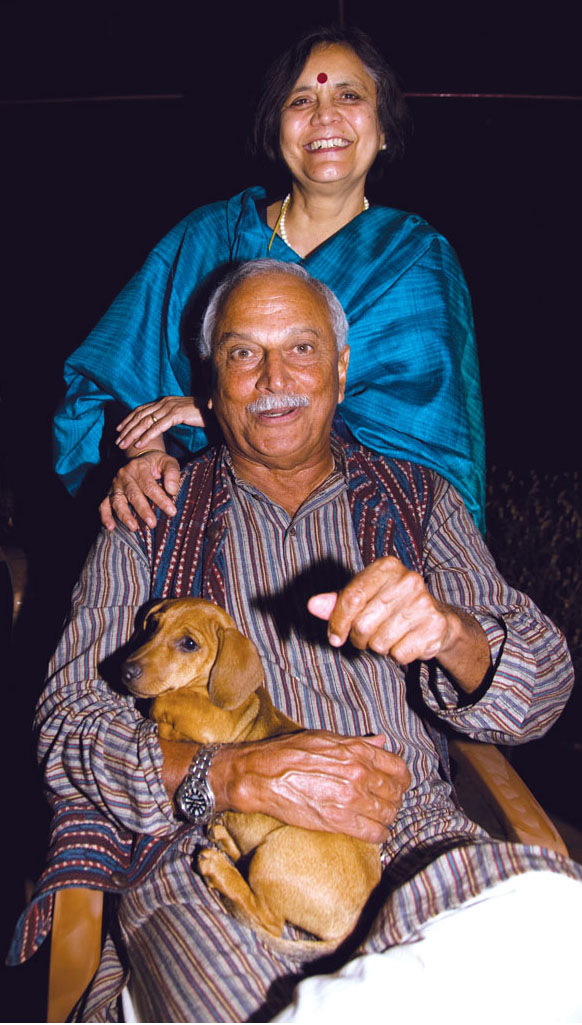
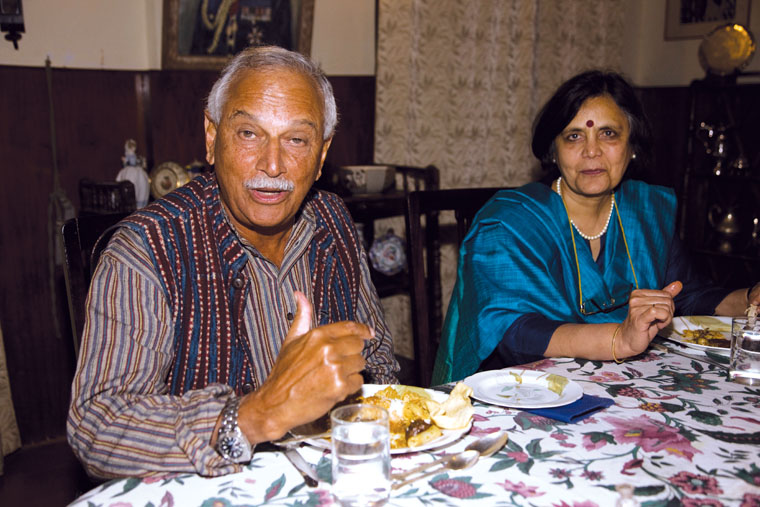
An invitation from Air Marshall K C Cariappa to join him and his wife Meena for dinner at his home was the highlight of my trip to Coorg.
There is something about the Air Force men that arouse feelings of awe, and this strapping man was even more special. Not only because he was the son of Field Marshall K M Cariappa, but a hero who was once captured as a prisoner of war (Indo-Pak, Sept ’65) My colleagues and I left Mahindra Resort, where we were staying, in good time to be able to reach Roshanara, the ancestral home of the Cariappas in Madikeri. The appointed hour was “10 minutes past eight”.
Driving in the daytime in the Madekeri hills is tricky enough with endless stretches of narrow tree-lined roads, so you can imagine how it was at night. The dark seemed darker and we got quite lost on the hilly roads. Trying to find someone on the lonely path, to ask for directions, was a task in vain. , , , .
We were feeling pretty rotten because you just don’t keep people like the Cariappas waiting. Punctuality is the norm with them.
When we did reach our destination, gracious as he is, the Air Marshall was more concerned about our predicament rather than the fact that we messed up with his idea of “an early dinner”. Brushing aside our apologies, he immediately put us at ease by introducing himself simply as Nanda and insisting we address him so. “Let´s get the drinks out of the way,” he said, “who is drinking, what?” he enquired, rubbing his hands.
The drinks order taken and quickly executed, he returned with a tray in hand and was leading us out the back door and into the back yard where chairs and tables were set, along with a two-seater metal swing under a fabric canopy, painted by his grandchildren.
“So! What brings you to Coorg, my Coorg?” he asked, eyes twinkling. I told him about the magazine and the popular UpperCrust Destination section that our readers look forward to, where we now planned to feature Coorg. But I didn’t tell him just then that I was hoping to include them too and that in my handbag I had a ´verrry´ serious camera.
Instead, I asked him when did he retire and how does it feel. “Oh, it’s been marvellous,” he said. “I retired on Jan 31, 1996 and drove down straight from Jodhpur, where I had given up charge. I reached Coorg on Feb 6 and have been here ever since. I hate leaving Coorg and do so only when I really have to. It’s strange, but just before you retire, you dread it, and now it’s been 15 years and I don’t know where they have gone!”
By and by as one conversation led to another, each of us felt more and more comfortable with the warmth that Meena and Nanda exuded. The night was chilly and we were sitting out in the open, under the stars which were shinning brilliantly in the clear skies. Pointing towards the sloping land and in the direction of the dark shadows, Nanda nonchalantly informed us that there could be wild animals right there. Brrr…
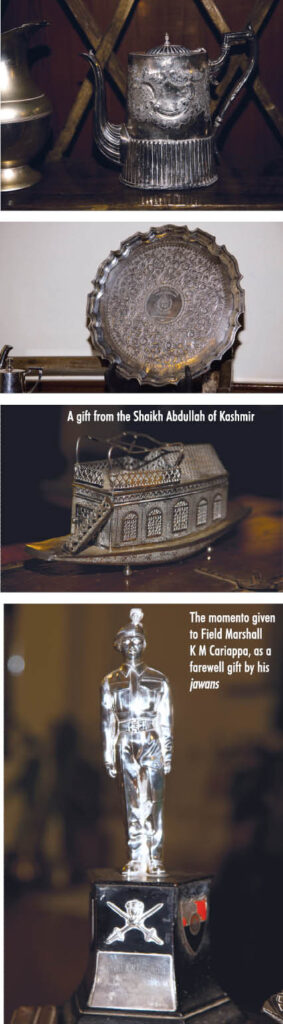
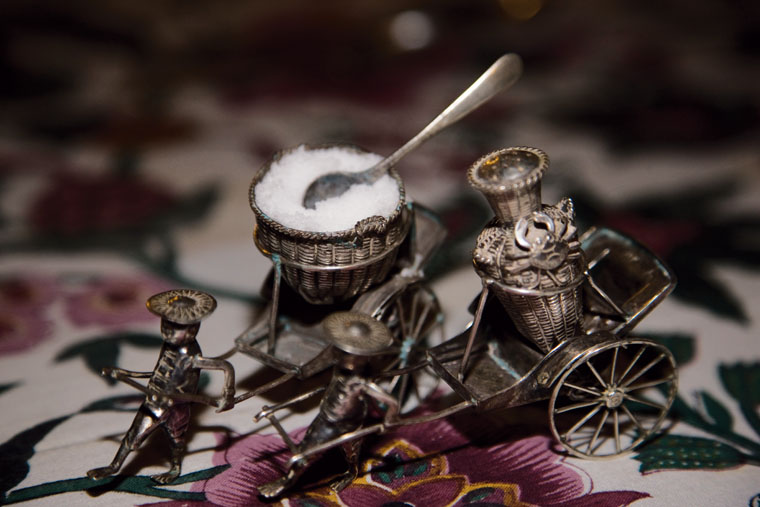
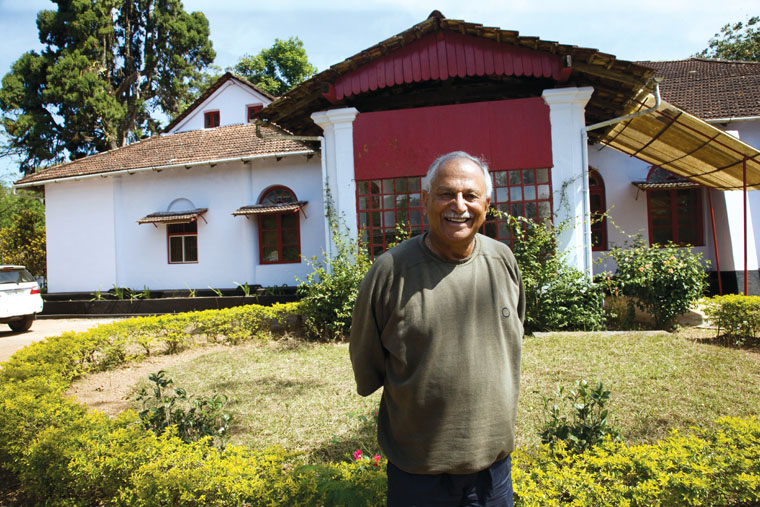
Roshanara is a house with character. Not a showcase kind of a house, but one which tells a tale. Where each artifact has a story to tell, a reason to be there.
I don’t normally ask for a tour of a house I am visiting, that too for the first time, but this one I was curious about.
“Chalo,” said Nanda Cariappa, when I asked if I could prowl around. And actually accompanied me. The anteroom was so rustic. Sports jackets and long coats, mufflers hanging on hooks, walking shoes and boots in another corner, hats, one with a feather stuck to it an a stand… not the kind of things we city people often see in homes. The large living room with a fire place “that works brilliantly and has never ever given us any problems” led to another sunken sitting room, painted a soft blue. The chandeliers, with delicate glass work were obviously antique, but then the house itself qualifies as heritage being 160-years old. “It’s been in our family since 1944. We have some nice drawings and water colours done by the different residents, it is a remarkable house. When Father bought it, it came with some 50-odd acres, but now after bequeathing some to my sister and other people, also the municipality, it´s down to 33, but it´s much more than enough,” said Nanda.
When I asked to be shown Field Marshall Cariappa’s favourite room I saw it was a modest room, opening to the garden and had many picture frames in it.
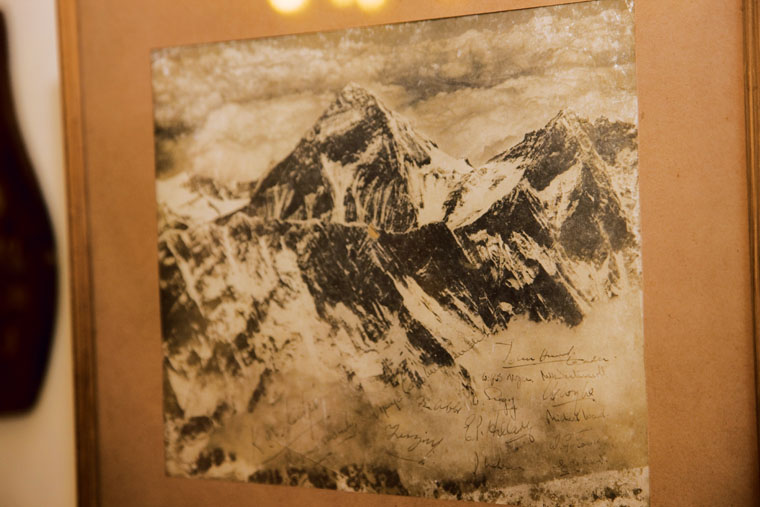
Again, each with a story. But one was extra special. An original black and white photograph of the Himalayan range with Mount Everest Massif with signatures of members of the first expedition, including those of Edward Hillary, Tenzing Norway and Capt John Hunt. It was then and with some trepidation that I checked if I could click some photographs. Nanda Cariappa looked at me, paused for just a moment and then said a quiet, ‘yes’ and I got to work as inconspicuously as possible. I respect people like Nanda who though fiercely private will not make a fuss about it. It was in that instant that I was reminded of another photo shoot, the very first cover story of this magazine, in 1999.
Co-incidentally it was with Air Marshall Idris Latif and Begum Bilkis Latif in their house in Hyderabad. Publicity shy as they were too, they could not refuse a request from Behram and I. Latif´s only plea was could we eat without interruption the Hyderabadi food which his wife had lovingly cooked. And could I shoot pictures of them and their guests, after we had eaten lunch?
Keeping that memory in mind, I put my camera away after taking just two pictures at the dining table. Some things we have to save in the memory chip of our mind’s eye.
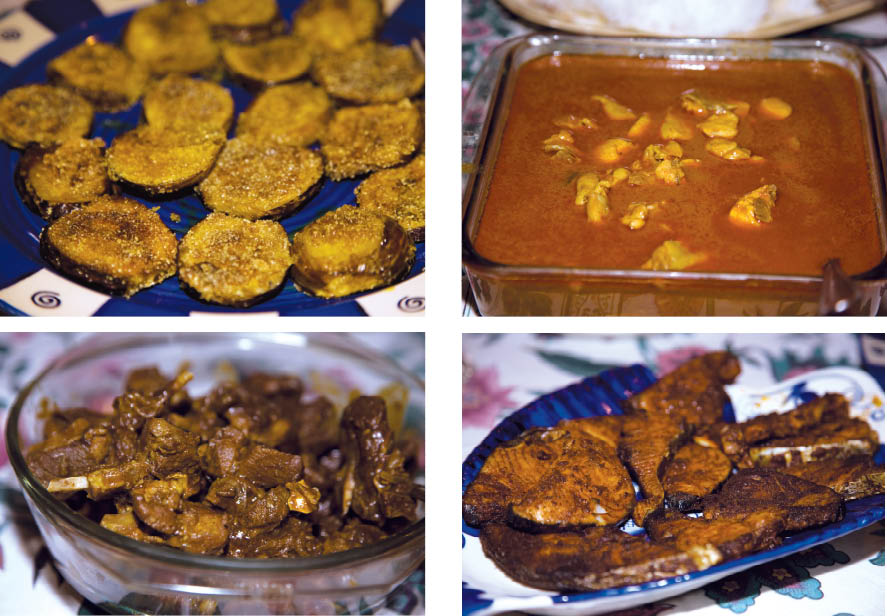
Dinner was typical Coorg fare. Meena is a good cook. Used to entertaining, she had set a good table and at such short notice. But she was apologetic. And invited us to come again when she would do better. Naw…
After dinner, with GJ (Gulab Jamun) nestling in the Air Marshall´s arms and Tojo at his feet, we again sat talking and discussing everything under the sun (moon, actually), like old friends. Life in Coorg, life after retirement, food, wine, music, travel, religions of the world.
Both Meena and Nanda love the quiet life in Coorg. They are happy to spend time by themselves and few close friends. Nanda enjoys his golf, and sometimes goes angling. He used to ride, but has now got himself a mountain bike, which he loves to ride. He likes wearing the traditional Coorg kupiya when he goes for weddings.
At home, at night they both love to listen to Indian Classical Music. Nanda writes a fair amount for journals on subjects like Wild Life, Environment and International Relations. He had in fact spent four months in the U.S. in 2001 writing a paper on ‘Confidence Building Measures’, between India and Pakistan, a collaborative exercise with a fellow Air Marshall from Pakistan. The paper, due to the many unfortunate events (read terror activities) that took place around and since that time, got shelved. A pity.
For the present, Nanda Cariappa finds solace in trekking. Which he says he discovered only after retiring. Every year he goes into the Himalayas for two weeks of intensive walking and climbing. The next one in August is already planned right down to the last detail.
Lastly, I learned that Nanda is pretty fascinated by two other religions, Islam and Sikhism. He reads the Quran in the ´Roman English´ version and its translation in English, going to the local mosque for clarifications from the maulvi, if he does not understand something.
He even recommended a book he was currently reading; Foundation of Islam, The Making of a World Faith by Benjamin Walker. He is so influenced by Islam, his speech is peppered by Insha’allah and Masha’allah.
Come to think of it, when we were leaving, he had said, Khuda Hafiz.
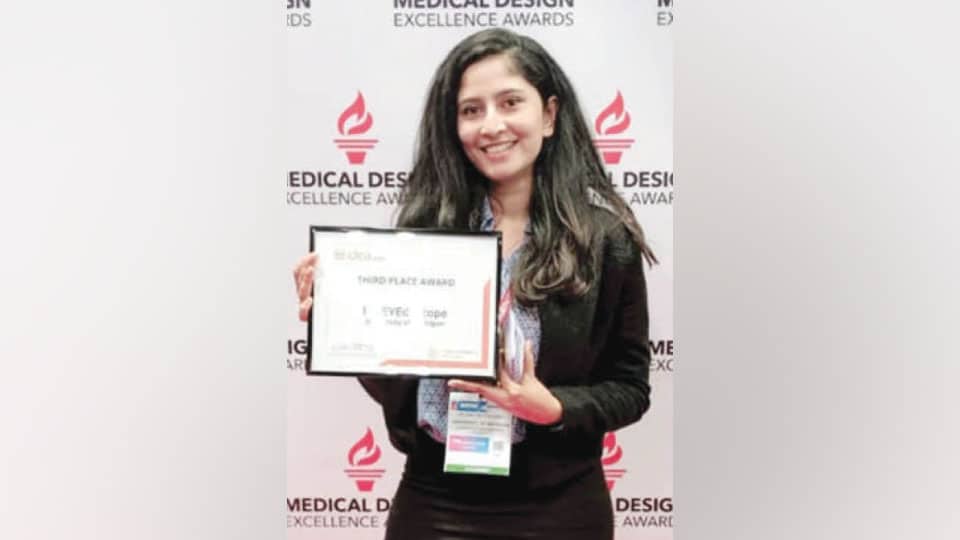
Palandira Vichal Muthanna has won the Medical Design Excellence Award-2019 with her team. The team stood third in national-level competition “BMEidea-2019” where teams across the United States with new innovative medical technologies participated.
The award ceremony was held at Jacob K. Javits Convention Centre, New York, on June 11. During her research at the University of Michigan, Vichal and her team developed a new device called ‘KalEYEdoscope’ to track the progression of a condition called ‘Age-related Macular Degeneration’
Macular Degeneration is the leading cause of blindness in the world and currently there is no device in the market to help track its progression on a regular basis. The award was in recognition of their work in the development of this innovative, simple and novel medical device and in support to further develop the same.
Palandira Vichal is an M.Tech in Bio-Medical Signal Processing and Instrumentation from BMS Engineering College in Bengaluru. Earlier, she had invented a device to monitor the vitals of both mother and child during labour. The device invented by Vichal not only monitored the vital parameters of both mother and child, but also raised an alarm in case of any fluctuations so that the doctors and medical staff can rush to the patient’s rescue.
Vichal completed her early education in St. Joseph’s Girls High School, Madikeri and higher secondary education at Vidyaniketan PU College, Gonikoppal. She did her engineering from Vidyavardhaka College of Engineering in Mysuru and M. Tech from BMS College of Engineering in 2015.
Vichal is the daughter of Palandira Jaya Muthanna and Mithuna Dechamma (daughter of Mukkatira Doremani Ponnappa) of Murnad in Kodagu district and grand-daughter of Karnataka Rajyotsava Awardee late Palandira Devaiah.
In her academics, Vichal was the co-ordinator for the Indian Society for Technical Education (ISTE) for 4 years from 2009-2013. She was the Branch Association (IMPULSE) Co-ordinator for two years in Vidyavardhaka from 2011-2013. She won the Gandhian Young Technological Innovation Award -2006 from Biotechnology Industry Research Assistance Council (BIRAC) – Society for Research and Initiatives for Sustainable Technologies and Institutions (SRISTI) for her project ‘Device for Intrapartum MaternoFetal Care.’
source: http://www.starofmysore.com / Star of Mysore / Home> News / June 21st, 2019
BP Govinda is very impressed by the Indian Men’s Hockey Team’s attacking unit.
New Delhi :
With less than 100 days to go for the FIH Odisha Hockey Men’s Hockey World Cup Bhubaneswar-Rourkela 2023, the anticipation to witness the world’s best hockey players at one of the world’s most preferred hockey destinations – Odisha, is only increasing by each passing day. While the Indian team carries out their preparations to end the medal drought in the prestigious event, it’s time for the hockey fans to relive the memories from India’s historic World Cup campaigns through Hockey India’s Flashback Series – World Cup Special.
Through these Series of articles leading up to the marquee event in Odisha, Hockey India will bring you thoughts, anecdotes and trivia from Indian Hockey Legends who ruled the world with their wizardry and panache.
Winner of the Silver Medal in the 1973 World Cup held in Amsterdam in Netherlands, and the Gold Medal in the 1975 World Cup held at Kuala Lumpur, the legendary BP Govinda recalls his memories from the years gone by.
One of the most crucial cogs in the system for the Indian Men’s Hockey Team in the 1973 and 1975 World Cups, it was BP Govinda who ensured a berth in the Final at Amsterdam with the winner against Pakistan in the Semi-Final. The former forward terms that semi-final as one the best games in what was a decorated career.
“The Semi-Final against Pakistan is one of the best matches of my life. We won that game by one goal, and I scored the winner. I reverse flicked the ball and the keeper didn’t know where the ball was going and it went and hit the roof of the net. It was regarded widely as one of the best goals, by my teammates and the media,” he recalled.
“People used to love watching India and Pakistan in hockey when we were playing, we had full stadiums.”
Unmissable on the field of play due to his stylish long hair, Govinda said that the Indian Men’s Hockey Team believed that playing as a unit would always yield results. “Our team always had the thought process where we believed, no matter how strong the other team is, if we play as a team, we can achieve anything. Whether it was a practice match or tournament, I always played to win.”
Speaking about his camaraderie with the Captain of the 1973 team, MP Ganesh, the former forward said, “As a Captain, he was very straightforward and he would ask the players to play according to the plan. He wouldn’t scold any one, but he would tell everyone to go all out for the win, all the games. He used to guide all the players.”
Turning his attention to the glorious 1975 World Cup campaign in Kuala Lumpur, Govinda, who was considered to be among the fastest players at the time, recalled the love the team received from the fans.
“We outclassed Pakistan in the Final and the stadium was full with plenty of fans. When we came back to India, people told us that commentators made them feel like they were in the stadium and not listening in another part of the world.”
“I remember landing in New Delhi, and the fans were there with drums and they carried all of us. I don’t know where we finally went and landed, but it was definitely well outside the airport. It was a reception that I will never forget. I remember coming out of the aircraft and then the fans took over, we hadn’t got a chance to get our baggage either.”
‘Indian Men’s Hockey Team Will Not be Easy to Beat’
A former national selector himself, Govinda is quite impressed with the Indian Men’s Hockey Team and noted that they would not make an easy opposition at the FIH Odisha Hockey Men’s World Cup 2023 Bhubaneswar and Rourkela. India have been drawn in Group D along with Wales, Spain and England.
“I think the current Indian Men’s Hockey Team is quite fit. And I think our forward line is playing well and I think the strikers have also improved a lot. It was nice to see the team scoring more field goals.”
“In the upcoming FIH Odisha Hockey Men’s World Cup 2023 Bhubaneswar and Rourkela, I think the Indian Men’s Hockey Team is not an easy one to beat. They will give a good fight to each and every top team who are taking part in the World Cup,” he signed off.
Link to video of BP Govinda taking us down memory lane –
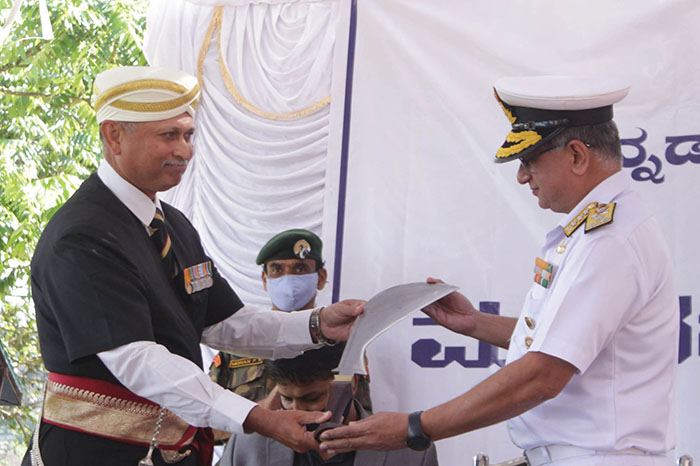
Vice Admiral adds new Navy attractions to Gen. K.S. Thimayya Museum at Madikeri
Modules of INS Shivalik, Sindhughosh Class submarine and AK230 Navy gun mount
Madikeri:
The INS Shivalik (F47) ship module was declared open for public viewing at ‘Sunny Side,’ General Kodandera S. Thimayya’s house in Madikeri that has been converted into a Museum and a War Memorial.
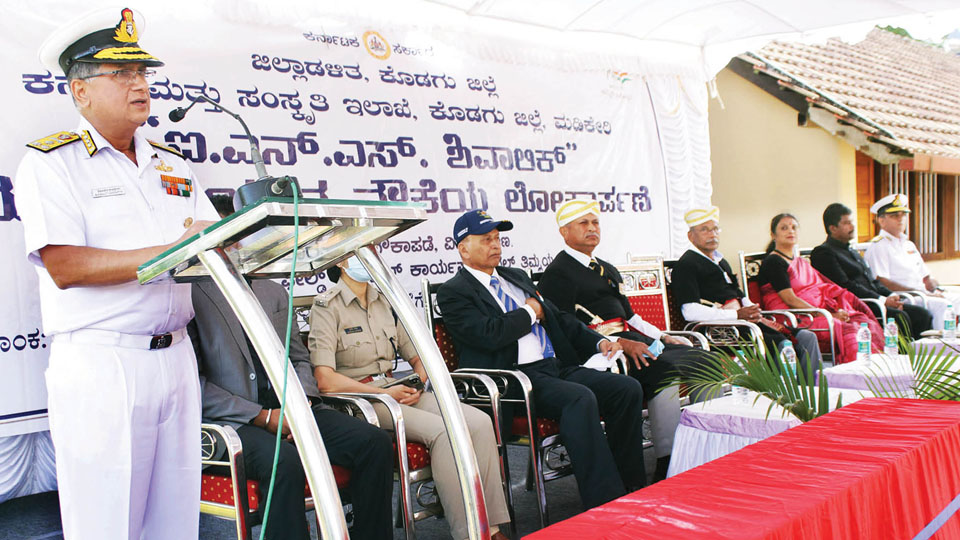
The 24-feet model, along with a Russian-made AK230 Navy gun mount (anti-aircraft gun) and a module of Sindhughosh Class submarine had arrived at the museum two weeks ago and they were dedicated by Vice Admiral Biswajit Dasgupta, Flag Officer Commanding-in-Chief, Eastern Naval Command yesterday. He was accompanied by his wife Roopa Dasgupta.
The modules were brought to Madikeri from Visakhapatnam Naval Base. INS Shivalik is designed to escape detection by normal radars and surveillance equipment and is one of the formidable stealth frigates in naval prowess. Apart from India, only the US, Russia, UK, France, Sweden, Japan, Italy and China have the capability to build stealth warships of this size and class.
Impressed by the museum and also the culture of Armed Forces in Kodagu, Vice Admiral Biswajit Dasgupta said that the district has emerged as an inspiration to thousands of youth to join the Defence Forces. He said that it was an honour for him to inaugurate critical exhibits at the museum.
On the INS Shivalik, he said that the frigate was built in India and is one among the many warships built by India. “Shivalik was built at Mazagaon Dock. India has four public sector Defence shipyards — Mazagaon Dock Shipbuilders Limited (Mumbai), Garden Reach Shipbuilders and Engineers Limited (Kolkata), Goa Shipyard Limited (Goa) and Hindustan Shipyard Limited (Visakhapatnam). The Cochin Shipyard is also capable of making warships and INS Virat was built there,” he said.
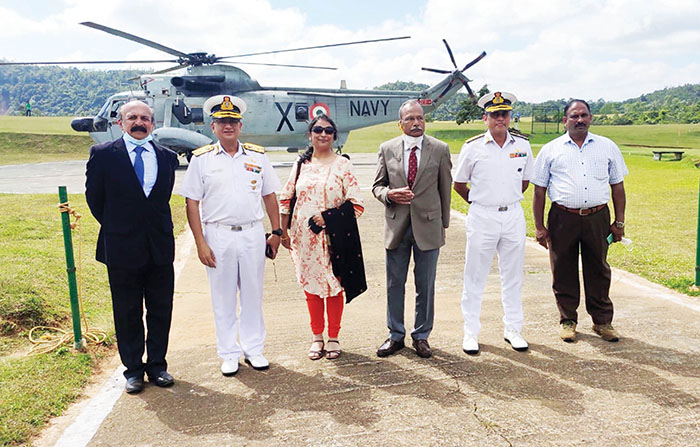
Field Marshal Cariappa and General Thimayya Forum Convener Major (Retd.) Biddanda Nanda Nanjappa (extreme left), Vice Admiral Biswajit Dasgupta, Flag Officer Commanding-in-Chief, Eastern Naval Command and his wife Roopa Dasgupta, Forum President retired Colonel Kandrathanda C. Subbaiah, Rear Admiral Iychettira B. Uthaiah and Madikeri Tahsildar Mahesh at the helipad in Madikeri when the guests arrived
‘Aatma Nirbhar’ Bharat
“The first indigenous warship was built by the Indian Navy in the 1960s where the concept of ‘Aatma Nirbhar’ Bharat was diligently followed. In the future, the Navy has plans to build 41 warships in the Indian Shipyards and 39 will be fully indigenous. Moreover these are the most advanced machines that have a formidable fire power that can shatter any other powerful ships of any country,” he said.
Giving a patient ear to the office-bearers of the Field Marshal Cariappa and General Thimayya Forum that played a pivotal role in converting the rickety house of the celebrated General that once housed the RTO office into a swanky museum, Vice Admiral Biswajit Dasgupta said that the dedication of the Forum, the respect shown by the people of Kodagu to the Armed Forces and also the dedication towards preserving heritage were commendable and inspirational.
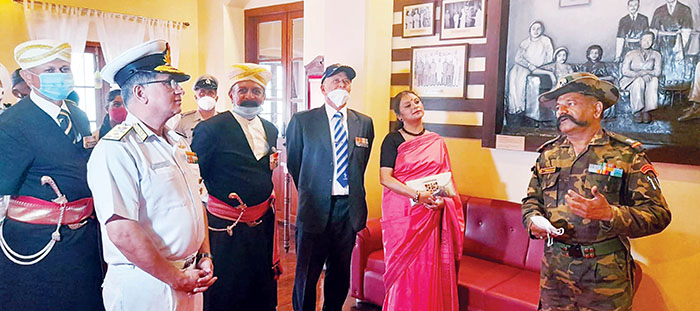
Picture shows the dignitaries inside the ‘Sunny Side’ Museum.
AK230 Navy gun mount
On the AK230 Navy gun mount, he said that it has been designed to engage air and surface targets, such as anti-ship missiles, aircraft, helicopters, other types of air strike weapons, as well as small-size surface ships. It can fire 2,000 bullets from its barrel in one minute. The Navy still uses such guns and also the advanced ones, he added.
He appreciated Rear Admiral Iychettira B. Uthaiah for his efforts in bringing in the Navy equipment to the museum. The module of the Sindhughosh Class submarine was unfurled by Rear Admiral Uthaiah who handed it over to Major General (Retd.) Kuppanda Nanjappa of the Forum.
CDS late Gen. Bipin Rawat remembered
Forum President retired Colonel Kandrathanda C. Subbaiah narrated the story of establishing the museum and recalled the contribution of late Chief of Defence Staff Gen. Bipin Rawat, late Lieutenant General Biddanda C. Nanda and former Army Chief General Dalbir Singh Suhag. A minute’s silence was observed in honour of Bipin Rawat, his wife and other officers and soldiers who were killed in the recent chopper crash at Coonoor.
Kodagu Deputy Commissioner Dr. B.C. Satish presented a ‘thook bolcha’ (traditional Kodava lamp) to Vice Admiral Biswajit Dasgupta and his wife while Lieutenant General Pattacheruvanda Thimmaiah presented ‘Odikathi’ (traditional sword of Kodavas) to Vice Admiral Biswajit Dasgupta and also to Rear Admiral Uthaiah.
Before dedicating the Navy war machine modules, the dignitaries paid respects to the Amar Jawan War Memorial. They later went around the museum and were impressed by the collection
Forum Convener Major (Retd.) Biddanda Nanda Nanjappa, officer from Visakhapatnam Naval Base Nishanth B. Badoria, Kannada and Culture Department Director Darshana, SP Kshama Mishra, Sainik School Principal Col. G. Kannan, Vice-Principal Lt. Col. Seemanth Tripati, Squadron Leader R.K. Dey, students of the school and a large number of uniformed retired soldiers were present on the occasion.
source: http://www.starofmysore.com / Star of Mysore / Home> News / December 14th, 2021
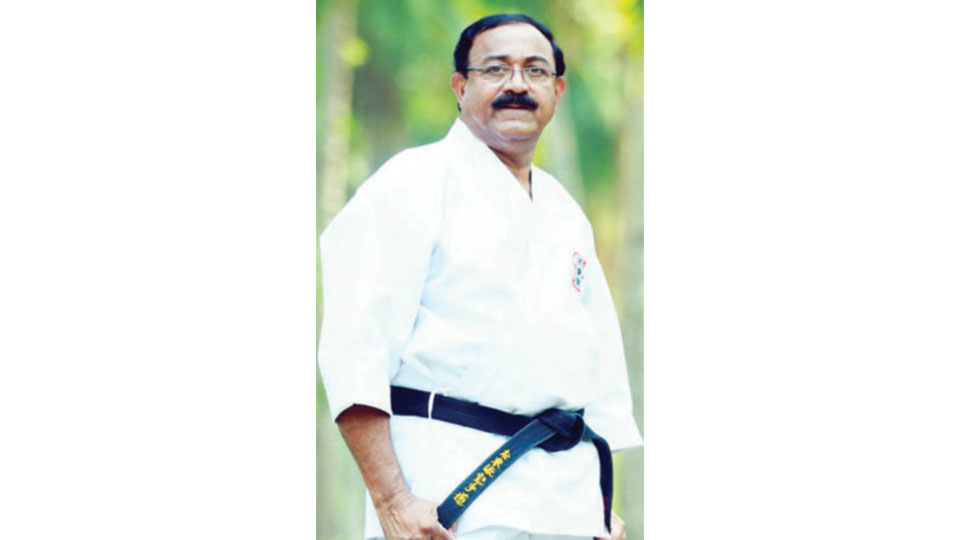
C.S. Arun Machaiah, former MLC, Hon. President of Mysore Karate Association, senior Vice-President of Karate India Organisation and President of Akhila Karnataka Sports Karate Association, is representing Team India at the 10th Commonwealth Karate Championship being held at Birmingham in London (UK) from today (Sept. 7).
The 70-member Indian Team of Karatekas, led by Arun Machaiah, left for London last Sunday. A total of 70 countries are expected to take part in the Championship.
Arun Machaiah has represented India in various International Karate Championships across the globe and has brought laurels to the country.
source: http://www.starofmysore.com / Star of Mysore / Home> News / September 07th, 2022
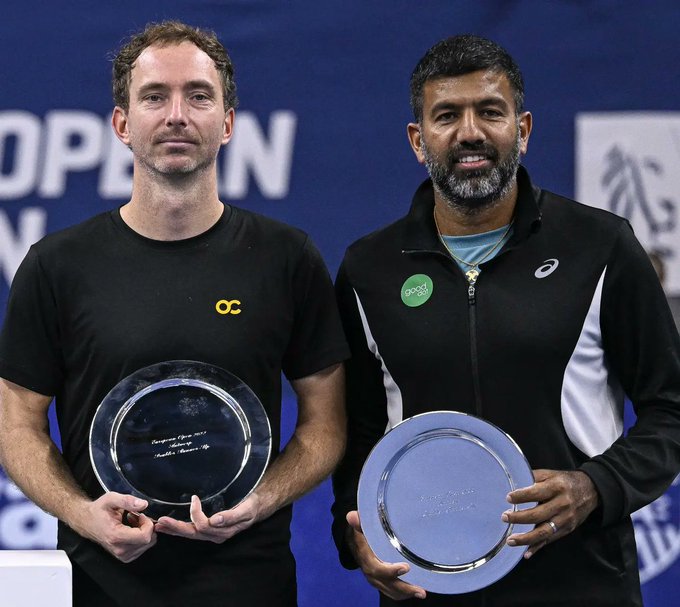
The second-seeded men’s doubles pair of Rohan Bopanna and Matwe Middelkoop finished as the runners-up at the European Open.
Rohan Bopanna(right) and Matwe Middelkoop / @Twitter
The second-seeded men’s doubles pair of Rohan Bopanna and Matwe Middelkoop, on Sunday, finished as the runners-up at the ATP 250 European Open. The Indo-Dutch pair went down 6-3, 3-6, 5-10 to the all Dutch pair of Tallon Grieskspoor and Botic van de Zandschulp in the a hard-fought final.
Bopanna and Middelkoop started well as they broke right in the second game of the first set. The Indo-Dutch pair then cruised to win the first set 6-3, but Grieskspoor and Zandschulp were too hot to handle for the remainder of the contests.
During the duration of the match, Bopanna and Middelkoop hit nine aces and converted 3 out of their 4 break points. They had earlier reached the final with a hard fought 7-6 (8-6), 2-6, 10-7 win over Sander Arends and David Pel in the semifinal.
Rohan Bopanna and Matwe Middelkoop had combined to lift the men’s doubles title at Tel Aviv Open earlier this month.
source: http://www.thebridge.in / The Bridge / Home> Tennis / by The Bridge Desk / October 24th, 2022
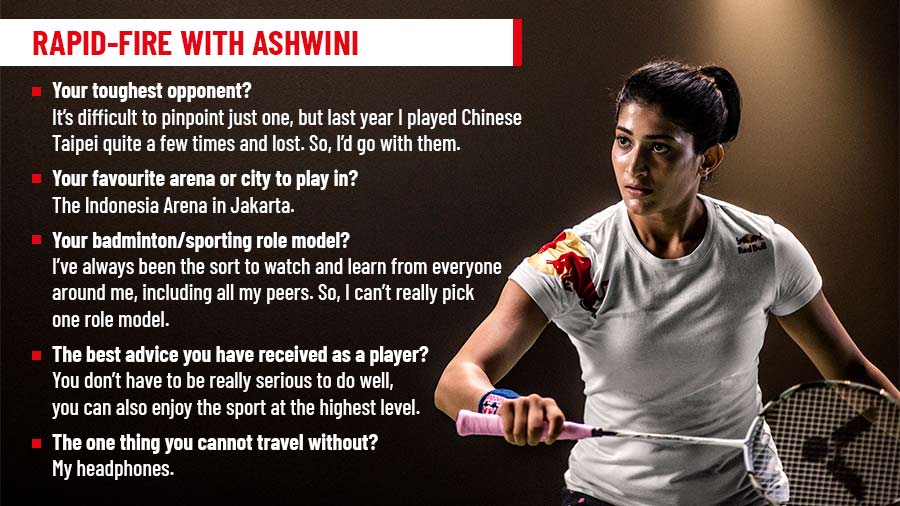
The ace shuttler opens up on her career, India’s position in badminton and Red Bull Shuttle Up
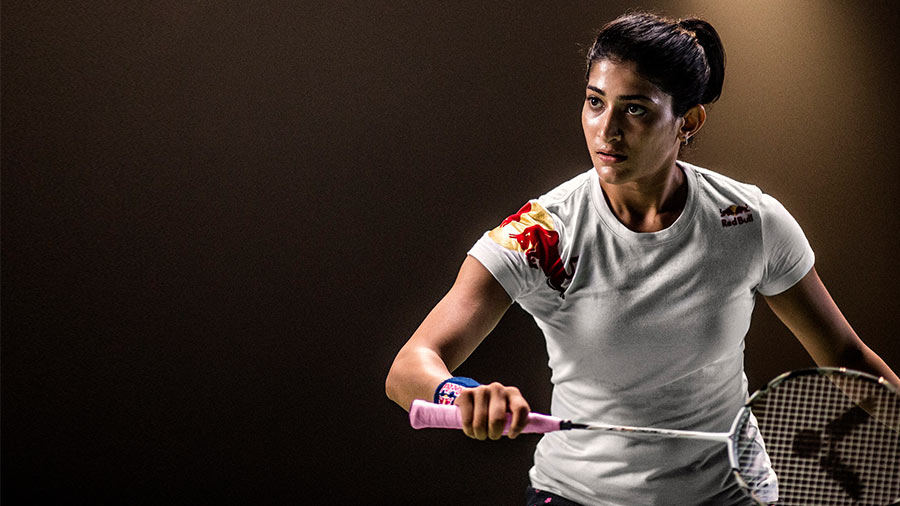
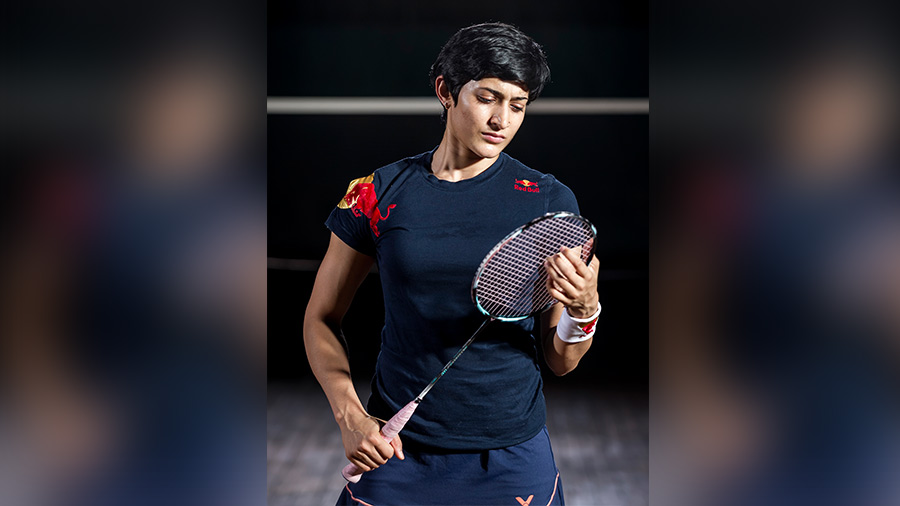
Ashwini Ponnappa has regularly been one of India’s highest-ranked women’s doubles players over the last decade Red Bull Shuttle Up
For more than a decade, Ashwini Ponnappa has been the gold standard when it comes to women’s doubles in Indian badminton. Whether as one half of a record-breaking pair with Jwala Gutta or later on with N. Sikki Reddy, Ashwini has endured as a beacon of consistency in a format that often gets overshadowed by the superstar culture around singles players.
In the midst of the fourth edition of Red Bull Shuttle Up, India’s first-ever exclusive women’s doubles badminton competition, Ashwini, who is also the face of the tournament, spoke to My Kolkata about her career, the disparity between men’s and women’s badminton in India, how Red Bull’s initiative is making a difference in women’s doubles and more. Edited excerpts from the conversation follow.
My Kolkata: When did you realise that you wanted to take up badminton professionally and what made you opt for doubles?
Ashwini Ponnappa: I got into badminton because of my parents. I was too young to make a decision myself, so my parents were the ones who helped me get into the sport. Ever since I started playing badminton as a kid, I haven’t played any other sport seriously. Growing up, I had a coach who was very strict and firm about the basics of the game. When I won my first national title in the sub-junior girls’ doubles category, I realised that I really want to take up badminton professionally. Once again, my parents’ support was crucial in making that decision. As for why doubles over singles, I’ve always done better in doubles and won more titles there. So, it was quite a simple choice for me.
Doubles is much faster and requires more smashing and forearm strength as well as better reflexes
Ashwini initially trained as a singles player for several years before switching to doubles Red Bull Shuttle Up
What are the most challenging aspects of playing doubles and how should one prepare separately for those challenges?
When I started playing doubles, most of us, especially the women, were singles players. We hardly had a specialised focus on doubles in India. Even when I trained at the Prakash Padukone Badminton Academy in Bengaluru, all the kids wanted to be singles players. Apart from Jwala (Gutta) and Shruti (Kurien), there were no other established female doubles players to look up to either. It was only in the junior category competitions that I was first part of doubles camps. Switching from singles training to doubles was quite difficult, as doubles is much faster and requires a lot more smashing and forearm strength as well as better reflexes. When you have two people on court on the same side, it’s not just about yourself. There’s a lot of coordination that goes into it, which is the most challenging aspect. You could be a great player by yourself, but if you can’t coordinate, you won’t succeed in doubles.
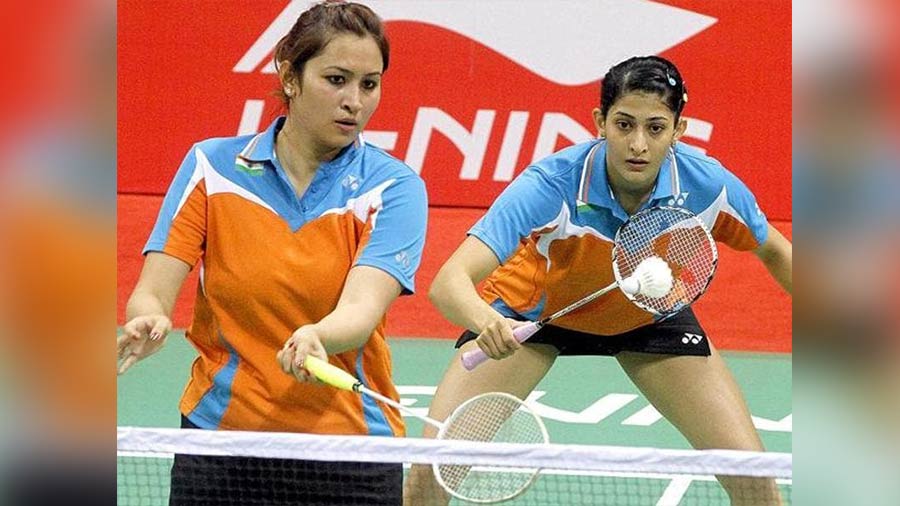
Jwala and I had a natural understanding of what the other person would do on court
Ashwini and Jwala Gutta are widely regarded as the best women’s doubles pair in Indian badminton history / BAI
What did you enjoy most about teaming up with Jwala Gutta for so many tournaments? What do you think set the two of you apart?
When I started playing with Jwala, I was a junior with little to no experience and she was already an established senior. She took a chance by deciding to play with me and I managed to rise to the occasion. Being able to match up to her standards was important and I’m glad I could do that. What made our partnership special and successful was the fact that our styles matched a lot, so we had a natural understanding of what the other person would do on court. We didn’t communicate a lot when we were playing, but managed to sync quite easily. At that point, we were also quite close off the court and she was extremely supportive, which made our team even more formidable.
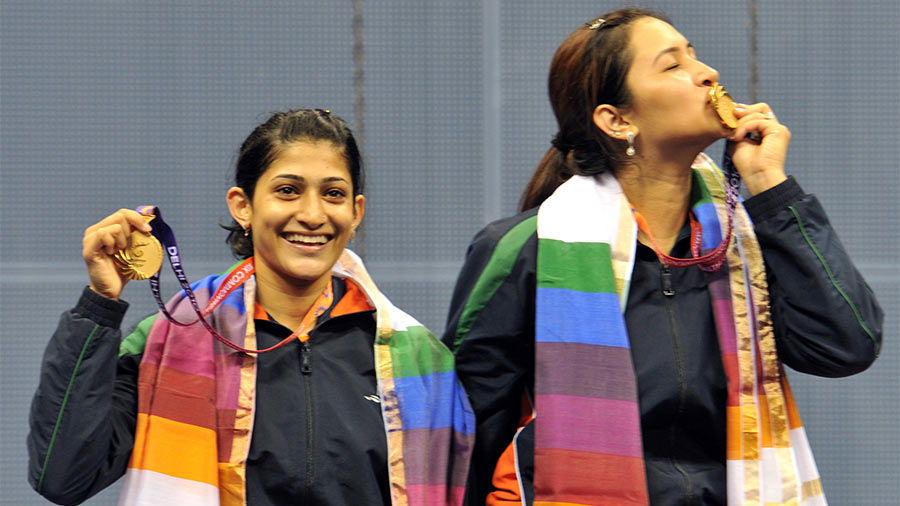
Ashwini and Jwala with their gold medals at the 2010 Commonwealth Games BAI
Was winning the gold medal at home in the 2010 Commonwealth Games (with Jwala) the proudest moment of your career or would you prefer your bronze medal at the BWF World Championships (also with Jwala) in 2011? Or something else altogether?
I’ll have to go with both, the Commonwealth medal as well as the World Championships one. Nobody had achieved either feat before. But more than anything else, what makes these two achievements among my favourites is that I had a great time while I played those tournaments. Often people go through a lot and sacrifice a lot to win, but don’t enjoy the process. I was lucky in that I had a blast while having my proudest moments on court.
The system at the 2012 Olympics was flawed
Do you have any regrets from your career so far, especially in relation to the Olympic Games?
The 2012 Olympics would definitely remain a regret. Given what happened (Japan had shockingly lost to Chinese Taipei in what was seen by many to be a deliberate defeat or an instance of “throwing a match” to secure an easier opponent in the next round, which, incidentally, also led to India’s elimination), it was disheartening, because we had played very well. Looking back, I think the system was flawed, they shouldn’t have let players know who was going to play whom in the next rounds. A month before the next Olympics in 2016, I had had a horrible bout of dengue. As a result, I wasn’t able to smash as hard and that had an impact on the result, which was also quite disappointing.
Red Bull Shuttle Up is trying to make badminton more inclusive
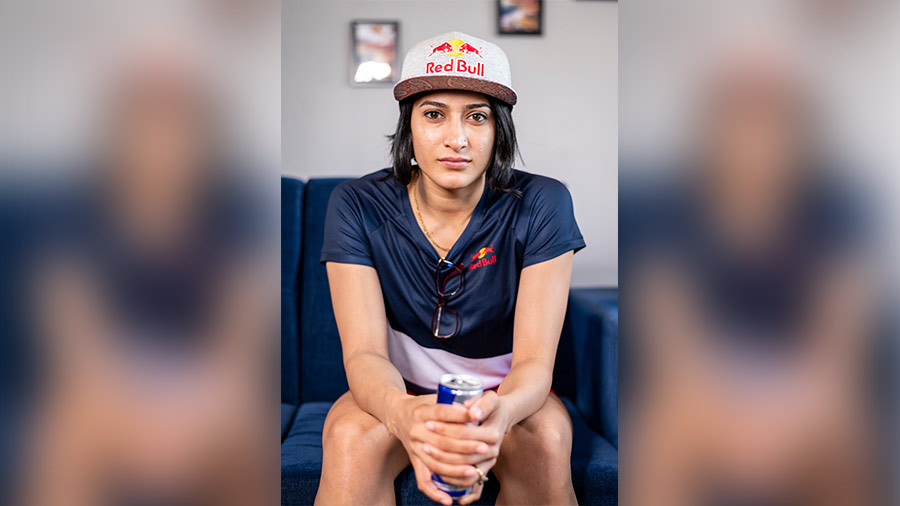
Ashwini has been pushing for greater focus on women’s doubles as the face of Red Bull Shuttle Up /Reb Bull Shuttle Up
Coming to Red Bull Shuttle Up, Simran Sanghi (a previous winner of the tournament) said that it’s “the perfect example of empowered brands empowering women… proving that women are the real matadors of society”. What do you make of Red Bull Shuttle Up and how it has been making a difference to women’s doubles?
The most important thing about Red Bull Shuttle Up is that it gives women’s doubles players an opportunity and a platform that belongs solely to them. This is really important because in India we have leagues that don’t even have the women’s doubles format, which seems unbelievable to me. That’s where Red Bull Shuttle Up is trying to make badminton more inclusive. The second aspect is about having fun. I’ve always believed that you play sport because you want to have fun and that’s something that Red Bull Shuttle Up manages to provide in ample doses.
We don’t see the sheer number of quality players in women’s badminton as we do in the men’s game
Ashwini believes that there is a big gap between Saina Nehwal and P.V. Sindhu and the rest of the field in women’s badminton /BAI
Looking at the larger picture, where does India stand as a force in badminton today? Are we a global power or are we still in the process of getting there?
The fact that we won the Thomas Cup in May speaks volumes about the strength in depth when it comes to men’s badminton. Beating powerhouses in international badminton like we did in the Thomas Cup is no joke. In that sense, we’re definitely a global power among the men. On the other hand, the women’s game still has a long way to go. We don’t see the sheer number of quality players in women’s badminton as we do in the men’s game, especially when it comes to doubles. Even if you take singles, there’s quite a bit of a gap between P.V. Sindhu and Saina Nehwal at the top and the rest of the field. There are a fair few young singles players who are doing well, but it’ll take them years to get to the levels of Sindhu or Saina. Coming back to the doubles, it’s the same problem I stated earlier. How can you expect doubles players to give you points in big tournaments when you don’t include women’s doubles as part of your domestic leagues? When it comes to women’s badminton, it’s not that we don’t have talent, but the talent that’s there isn’t being nurtured the right way.
Switching tracks, how do you relax and zone out? What are your hobbies and interests outside badminton?
Of late, I’ve enjoyed just chilling and watching dramas. I watch any and every kind, including Anime. I also watch a lot of YouTube content, especially motivational talks and conversations that pique my interest in general.
My most important goal is working on myself
Ashwini feels that she still has a lot of goals and dreams left to realise Red Bull Shuttle Up
What are the dreams and goals you are still chasing as an athlete?
I’ve still got a lot of dreams and goals, which is why I’m still playing! I feel like I’ve spoken a lot about them in the past and at the moment, I’d rather talk about my most important goal, which is working on myself. I’m trying to take a different approach with my holistic development on and off the court, and if that goes fine, the rest of the goals should fall into place.
source: http://www.telegraphindia.com / TelegraphIndia Online / Home> My Kolkata> People> Badminton / by Priyam Marik / October 17th, 2022
Indian designer Prasad Bidapa wants India’s hand-made khadi and handlooms recognised globally, saying that there are immense opportunities for foreign stylists to work with thousands of weavers across the country.
“We want to expose Indian textiles to the world and show every designer that they can come to India, work directly with the artisans and create something very original,” Bidapa told PTI after the show “Handlooms@75: Celebrating the Fabric of Freedom” here.
The designer urged truly conscious designers to work with Indian weavers at the grassroots level and help them create something new and fresh. “Something that the world has not seen before.”
“Prime Minister Narendra Modi has been a wonderful support. He wears so much khadi and handlooms that he has had the spotlight trained on the clothing,” said the designer after hosting the fashion show in Singapore on Saturday.
“We have thousands of artisans working on Khadi and handlooms skilled in block print, leheriya dyeing,” said Bidapa, adding that there were immense opportunities for foreign designers to work with thousands of weavers in India.
“We are trying to sensitise young people all over the world, trying to get them to understand the beauty of the handmade textile,” the designer stressed.
The designer also called on the Prime Minister’s Office to include skills of the hands, weaving, printing and dyeing in the national skilling programme.
Bidapa highlighted how Japanese fashion designer Issey Miyake created the label “HAAT” — all of which uses Indian Khadi.
The Saturday exhibition was held at the invitation of the Indian High Commissioner in Singapore, P Kumaran, and sponsored by the Global Indian International School, as well as micro, small and medium enterprises (MSMEs) from Karnataka among others.
The Bangalore-based Bidapa has hosted the exhibition in the Middle East and will be travelling with his fashion wears as well as 20 models to Japan and South Korea next. (PTI)
source: http://www.dailyexcelsior.com / DailyExcelsior.com / Home> International News / by PTI / October 18th, 2022
The 42-year-old Indian now breaks back into the top 20 rankings for the first time since August.
Rohan Bopanna and Matwe Middelkoop with thier first title together | Jack Guez / AFP
Rohan Bopanna partnered Matwe Middelkoop to win his third tour title of the year, when the pair beat third seeds Santiago Gonzalez and Andres Molteni 6-2, 6-4, in the ATP 250 Tel Aviv Open on Sunday.
With the doubles crown, the 42-year-old now breaks back into the top 20 rankings for the first time since August, currently placed 19. Earlier this year, he had partnered Ramkumar Ramanathan to win titles in Adelaide and Pune.
But this was the first title he won with his Dutch partner. The duo had reached the final at the Hamburg Open and semifinals at the French Open earlier this year. They also hold a 16-10 record this season.
The top seeds in Israel however, had to work their way back into each of the three matches they played before getting to the final.
They beat Hamad Medjedovic and Yshai Oliel 4-6, 7-6(4), 10-6 in the first round. In the quarterfinal they beat Denys Molchanov and Franko Skugor 4-6, 7-6(5), 10-5 before beating the all-French team of Sadio Doumbia and Fabien Reboul 4-6, 7-6(3), 10-8.
In the final though, they played their best tennis.
“I think those close matches, pulling through those you’re obviously having more court time, you’re trying to come through and fight some close battles,” Bopanna said to the ATP website.
“We were a couple of points or one point away from losing those matches, so sometimes those weeks make a huge difference for your confidence.”
This was Bopanna’s first event since the US Open. He was scheduled to compete for India in the Davis Cup World Group 1 tie against Norway, but pulled out because of a knee injury.
source: http://www.scroll.in / Scroll.in / Home> The Field> Indian Tennis / by Scroll Staff / October 03rd, 2022
Sqn Ldr Devayya’s heroics to shoot down a PAF Starfighter in 1965 are among IAF’s finest hours. But he wasn’t lucky like Abhinandan & perished with his Mystere.
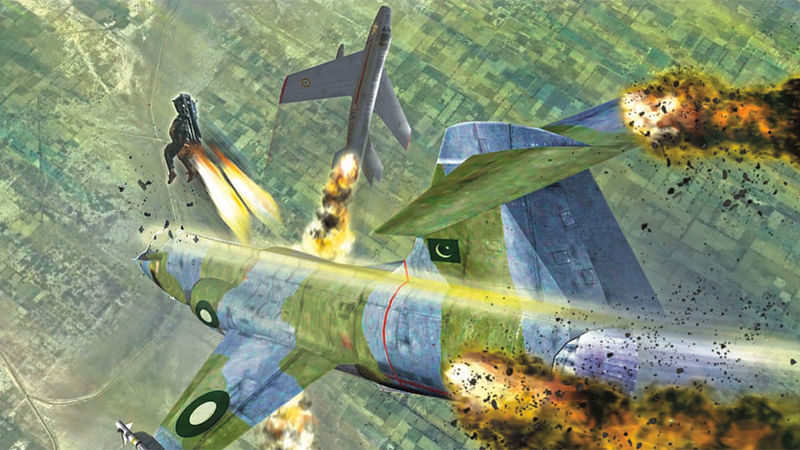
Flight Lieutenant Amjad Hussain ejecting from a Starfighter after being shot down by Squadron Leader Ajjimada Bopayya Devayya | Graphic: by special arrangement
The dogfight in the 1965 Indo-Pakistan War is counted as among the finest in IAF’s history. Squadron leader Devayya, who was on standby, was part of the mission that went in. When he joined the air battle, he was intercepted by an enemy F-104 Starfighter flown by Pakistani Flight Lieutenant Amjad Hussain.
What follows is the ensuing combat between the heavy and slow-moving IAF Mystere and the faster and more modern F-104 Starfighter from Pakistan.
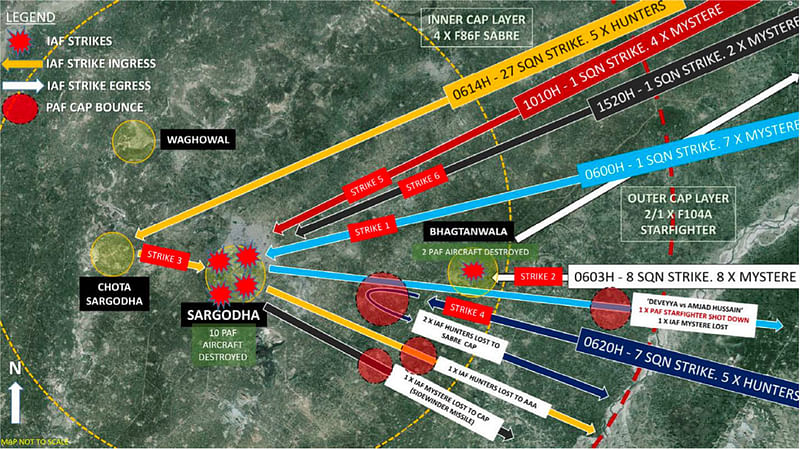
Late into the night of 6 September 1965, coded IAF Command tasking orders for authorizing multiple strikes against the PAF on 7 September were issued to the bases of Agra, Adampur and Halwara. The main components of the attack force were Canberra Bombers (5 Sqn) from Agra, Mysteres (1, 8 Sqn) from Adampur and Hunters (7 and 27 Sqn) from Halwara. In spite of the chaos relating to the Pakistan Army’s Special Service Group (SSG) paratrooper drops over Adampur and Halwara, as well as the incessant B57 night bombing raids over these airfields on the intervening nights of 6/7 September, these bases buzzed with activity during late night/early morning, preparing and arming their aircraft and holding elaborate mission briefs. Though the intelligence was limited on the PAF’s disposition, all air warriors at these bases were motivated and primed to hit back at the PAF. They wanted to pay them back in kind — tit for tat post the PAF’s strikes on 6th September!
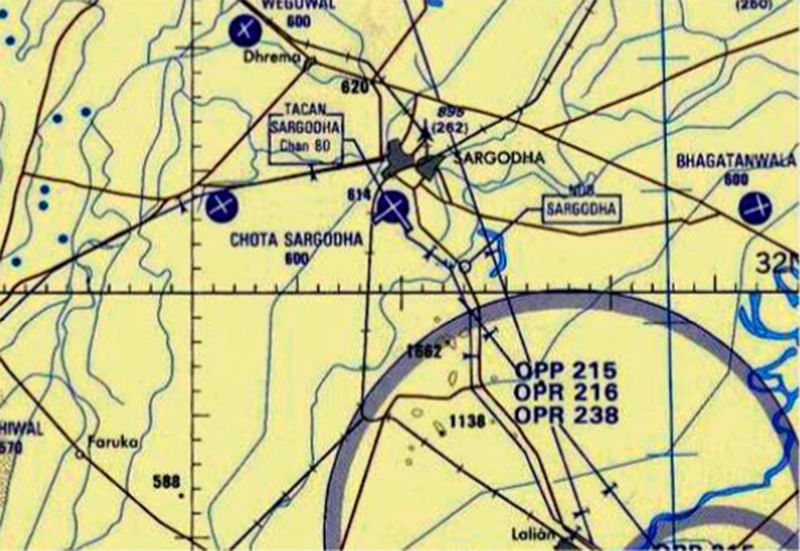
Their primary target was the Sargodha Complex!
The Sargodha complex of airfields shown on a wartime Pakistan Air Force (PAF) map | Courtesy: Sameer Joshi
Sargodha during those days, minus the bases inside the Soviet Union, was probably the most well defended target across Asia. The PAF knew that with pre-emptive strikes on 6 September, they had stirred a Hornet’s nest and the IAF would strike with vengeance at this most strategic base. However, it was confident, that with an advanced early warning and multilayered defensive capability, only the most diehard IAF strike elements would be able to get through to Sargodha. And there they would be blown away to smithereens by the high-density ack-ack.
The PAF had grossly under estimated the tenacity and resolve of the IAF fighter pilots who were ready to absorb a high rate of attrition to hit back at the PAF at Sargodha. The IAF hit the Sargodha complex all through the day with daring raids. Over ten PAF jets were destroyed on the ground during these strikes. On this day, the infamous and false claim of ‘5 IAF Hunters shot down in 30 seconds’ over Sargodha, by Sqn Ldr MM Alam of the PAF was propagated by the PAF as a propaganda twist to the events of that day. However, the most significant dogfight of the 1965 war was also fought between a PAF Starfighter and an IAF Mystere jet that day. The story of which is most inspirational and beyond belief.
20 miles east of Sargodha, Pakistan. 0530 hours PST, 7 September 1965
‘Eagle, this is Sierra Control,’ the strained voice of PAF’s GCI control at Sakesar, boomed loud and clear in the ears of Flight Lieutenant Amjad Hussain. Hussain was piloting a F 104 Starfighter of 9 Sqn PAF ‘Griffins’, holding in a racecourse orbit 25 miles east of Sargodha at 15,000 feet. ‘Eagle, Sargodha is under attack. Sargodha’s ‘Killer’ (Base Air Defence) control spots three plus IAF fighters attacking the airfield. We are vectoring ‘Vulture’ and ‘Hawk’ CAPs to cover the eastern exits of the IAF aircraft inside the inner defence ring. Proceed ten miles southeast and hold anchor at 15,000 feet. No joy with the enemy aircraft presently. Stay clear of base. Guns are free over the airfield. Over anchor point, change over to Killer Control and monitor progress.’ Sakesar GCI vectored the Starfighter (Eagle) and Sabres (Vulture and Hawk) CAPs at the pre-determined points on the defensive circles around Sargodha, just as the first wave of IAF Mysteres of 1 Sqn ‘Tigers’ was striking Sargodha.
‘Roger, Eagle copies that!’ Hussain acknowledged the call and turned hard right in his sleek Starfighter, the most potent aircraft in the PAF’s arsenal. He went to full afterburner to go to supersonic speeds. The fuel-guzzling J79 turbojet responded without any lag as high-pressure jet fuel was injected in the combustion chamber to burn in mere nanoseconds. This produced the obligatory thrust through the High Pressure turbine, propelling the Starfighter to a commanding Mach 1.2 within a short period. As Hussain arrived over the position advised by GCI control, he throttled back to 450 knots, returning to subsonic speeds. The sonic boom distracted the villagers from their daily chores at Kot Nakka near Pindi Bhattian.
He grinned at the prospect of winning a Sitara-e-Jurat, the PAF’s award for getting an air-to-air kill in the coming moments. After all, nothing could stand in face of the mighty One O Four!
Amjad Hussain settled down in an orbit at 12,000 feet and started visually scanning the approaches from Sargodha determinedly to spot the IAF aircraft well in advance. He changed his R/T frequency to ‘Killer’ control, the CAP controller at Sargodha airfield, who was relaying a continuous commentary on the IAF’s raid. Amjad’s stomach tightened as he heard the call from Killer control, ‘strike exiting towards south east.’ He put the Starfighter in a gradual dive, which gave him better visibility and put the armament master ON.
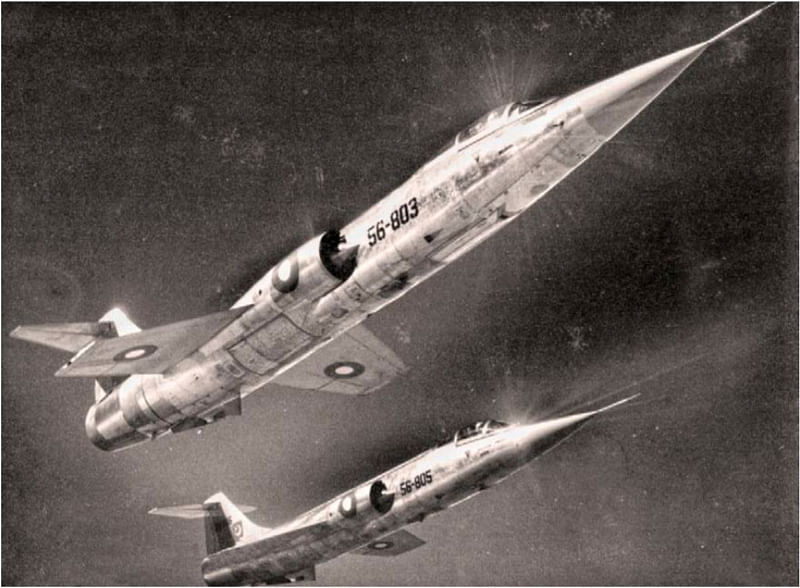
A F-I04A Starfighter was the deadliest aircraft in Pakistan Air Force’s fighter fleet | Courtesy: Sameer Joshi
In the 1965 conflict, the F104A Starfighter was the most advanced aircraft in the PAF service. It was superior to all aircraft in the IAF’s inventory. The F104A was a supersonic interceptor with a needle nose, short wings to aid supersonic flights and a ‘T’ tail to aid stabilization at those speeds. Its acceleration was superior than anything in the world and could climb to its operational ceiling of 50,000 feet in sixty seconds. The short wings were needle thin so as to have the least amount of atmospheric drag and the aircraft would easily reach its top speed of Mach 2.2 in a very short duration of time. The pilot in a Starfighter was literally sitting on a rocket engine due to this unmatched performance.
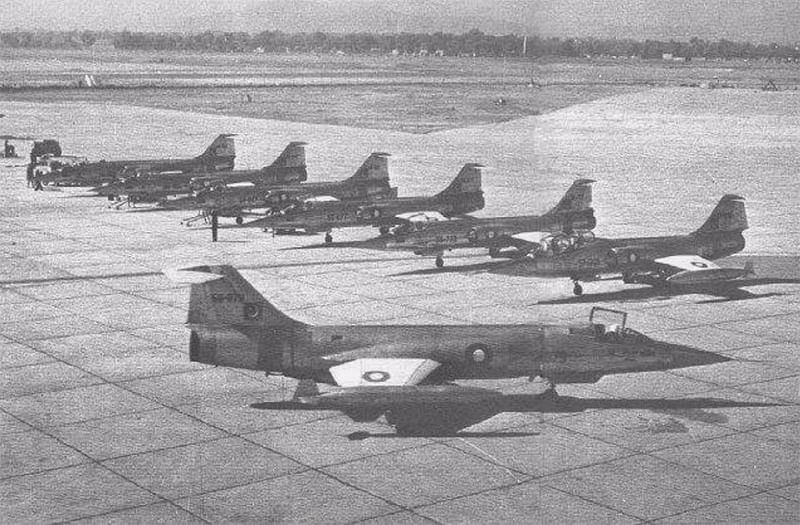
Pakistan Air Force’s 9 Squadron Starfighters in dispersal at Peshawar | Photo: By special arrangement
The Starfighter was armed with two Sidewinder AAMs and a six-barrelled Vulcan 20 mm rotary revolver cannon. The cannon, mounted in the lower part of the port fuselage, was fed by a 725-round drum behind the pilot’s seat, giving only a continuous 7 second burst of fire. The gun’s location was advantageous as the gun-flash was not in the pilot’s line of sight, therefore not robbing him of night-adjusted vision. An AN/ASG-14T ranging radar helped the Starfighter get an accurate range feed for its Gyro gun sight and the Sidewinders. The two AIM-9B Sidewinder air-to-air missiles were carried on the wingtip stations, which could also be used for fuel tanks. While the Sidewinder gave a definitive stand-off engagement capability, the Vulcan cannon was the most powerful gun on any airborne platform in the world.
15 miles South-East of Sargodha, Pakistan. 0534 hours PST, 7 September 1965 ‘Contact with single bogey on radial one two zero. It is hugging the ground,’ Amjad exclaimed excitedly on spotting a single Mystere aircraft. ‘Go for the kill and lookout for the remaining fighters,’ bawled the Sargodha CAP controller. ‘Roger Wilco,’ Amjad dived towards the low-flying Mystere. At 5000 feet and closing in 2000 yards behind the Mystere, he got an intermittent lock on the right Sidewinder and fired the missile. The missile missed the target and exploded harmlessly on the ground. Hussain continued to close in rapidly and switched over to guns. At 600 yards, Amjad opened up with the deadly six barrelled 20-millimeter cannon. The millisecond burst of the 6000 rounds per minute cannon sounded like a canvas being ripped and seemed to slow down the Starfighter in its mighty recoil.
” He saw the Mystere pass through the tracer line of his bullets. ‘Splash One,’ Amjad gave a victor’s war cry over the R/T and pulled out of his dive to turn right, attempting to pick up the other IAF aircraft.
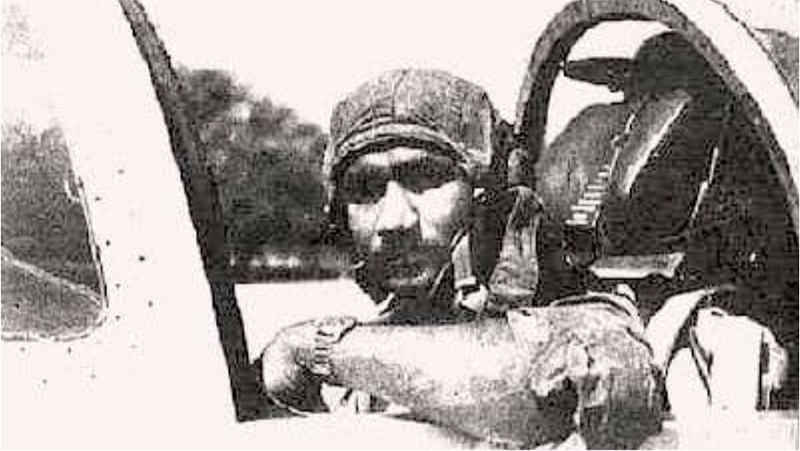
Flight Lieutenant Amjad Hussain | Photo: By special arrangement
Amjad carried out a slow roll and while passing inverted, hanging on his seat belt, he saw an IAF Mystere closing in rapidly behind him at roughly sixty-degree pitch at seven o’clock. ‘Contact with a second bogey. Engaging him,’ Amjad called out on R/T, while manoeuvring to neutralize the Mystere’s aggressive pitch towards him. He carried out a rolling reversal towards the Mystere and they crossed at a high angle off. Amjad Hussain reversed to find the Mystere cutting in rapidly inside his turn again.
He saw muzzle flashes from the nose profile of the Mystere and tracers passing too close for comfort. Hussain went to afterburner settings and pulled up in a yo-yo manoeuvre to zoom up and get a height advantage, as well as cut down his forward travel to maintain with his adversary. He dropped down on the Mystere, who again pulled up towards him, forcing Hussain to carry out another yo-yo. Dropping again, in his exuberance to cut inside the Mystere’s turn, Hussain went for a horizontal hard turn towards the Mystere. The wily Mystere pilot timely reversed towards the Starfighter and forced Hussain to get into horizontal scissors. The Starfighter was not made for low speed, high angle of attack combat and its short, negative camber wings were woefully inadequate to generate a meaningful lift at low speeds. Hussain’s Starfighter juddered near stall limits carrying out low speed scissors with a very skillful IAF Mystere pilot. The Mystere pilot had craftily trapped Amjad Hussain in a turning fight, where the Starfighter’s superior performance was progressively bled off.
‘Damn’, Hussain thought, ‘weren’t the IAF fighter pilots supposed to be dead scared of a Starfighter?’ The Mystere was manoeuvring very skillfully and managing to engage the Starfighter with vengeance. The IAF pilot appeared like a quintessential Teutonic Knight to Hussain, hell bent on dispatching him to Valhalla in the‘never say die’ code of a fanatical warrior!
As the two fighter pilots tediously battled it out over the village of Kot Nakka for their respective Air Forces in a classic one versus one situation, the question rattling Amjad Hussain’s brain continuously was, ‘Who the hell was this guy?’
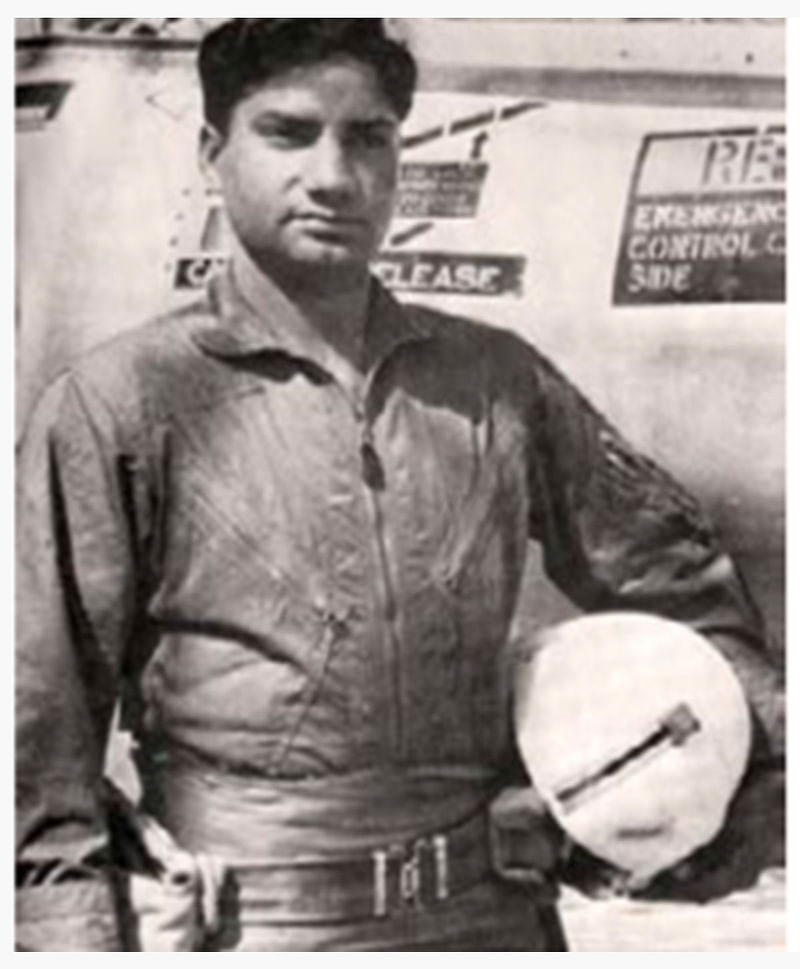
Amjad Hussain’s adversary was a bold IAF Squadron Leader by the name of Ajjimada Bopayya Devayya or ‘Tubby’ as he was christened in the squadron.
A fighter pilot, whose peers described him as an ‘unusual chap, one of those World War types’! A descendant of the humble Kodava warriors from Coorg in South India, Devayya was a true soldier who lived by the virtues of honour, integrity and persistent bravery. He grew up reading about the chivalrous dogfights of the bygone era and epitomized idols like Von Richthofen, Douglas Bader, Eric Hartmann and other knights of the skies. Hence, it was only natural for Devayya to become a fighter pilot in the Indian Air Force.
Squadron Leader Ajjimada Bopayya Devayya | Photo: By special arrangement
On that fateful day, Devayya, part of the IAF’s ‘Red’ formation made up of 1 Sqn Mysteres, was lagging behind Taneja and Verma when they were exiting in a south east direction at 200 feet.
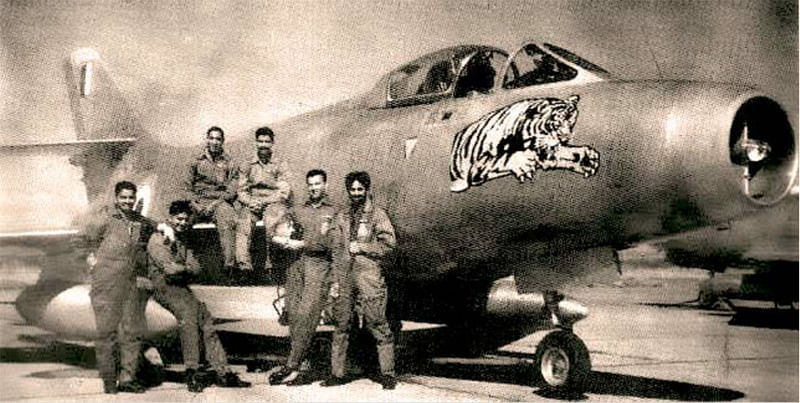
Pilots of 1 Squadron ‘Tigers’ standing next to a Mystere IV aircraft during the 1965 war | Photo: By special arrangement
At about 15 miles from Sargodha, he spotted Amjad Hussain’s Starfighter in a threatening dive, with his guns blazing. Devayya carried out a late ‘Rip’ maneuver to turn rapidly into the Starfighter, which saved him from certain death. However, a small proportion of the Vulcan’s rounds may have found their mark, destroying the VHF radio setup of the Mystere, amongst other unknown damage. His bête noire, the Starfighter turned away, blissfully unaware to the fact that Devayya had survived the attack.
Indian Air Force counter strikes over the Sargodha complex | Map: Sameer Joshi
At this juncture, nursing his engine at low levels, he could have easily continued towards India, as his aircraft was flyable. Also, a low fuel reserve prevented the Mystere from engaging in wishful air combat of any manner. Devayya spottedthe Starfighter commence a slow roll in search of his compatriots. He realized that the unsuspecting Taneja and Verma would be easy kills for the undetected Starfighter. With no radio, Devayya could not warn others of the evolving threat from the Starfighter. Only he stood between the Starfighter and sure shot destruction of his comrades. Devayya did not flinch as he hauled his stick hard in his stomach and went to max engine rating to reach for the Starfighter hawking about 3000 feet high.
‘Tubby’ Devayya knew for certain that whatever the outcome of the impending engagement, he would not be returning home!
However, as he closed onto the Starfighter, saving the lives of his comrades was paramount on the mind of this gallant knight of the sky. A fact made more remarkable when we compare the capabilities of the Mystere with the Starfighter.
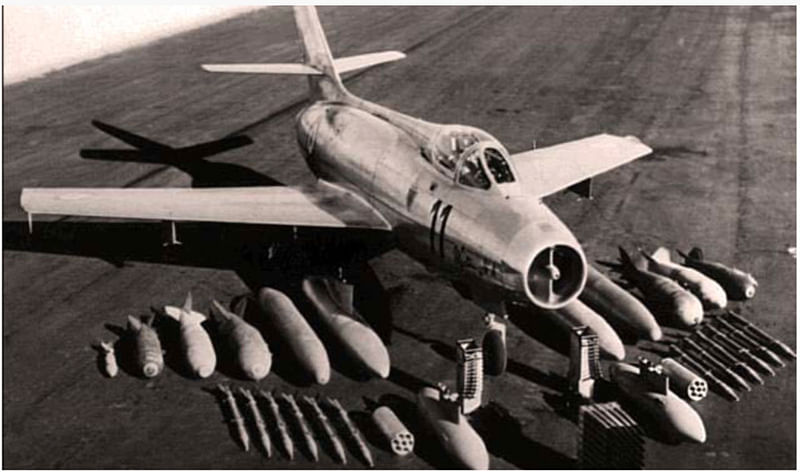
A Mystere IV displaying its complete weapon arsenal | Photo: By special arrangement
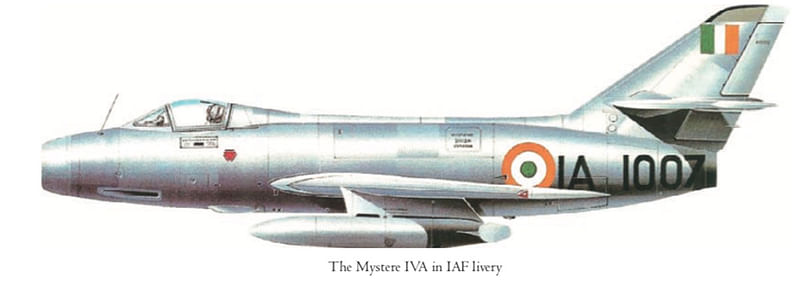
In terms of air combat capability, the Mystere was no match for the Starfighter. The Dassault Mystere IV was a subsonic fighter-bomber with a maximum speed of 690 knots at sea level and a combat ceiling of 49,000 feet. It had a 3500 kg thrust, Hispano Suiza Verdon 350 turbojet, with a first generation centrifugal flow compressor, which had a very sluggish engine response. Its rate of climb of 7500 feet per minute was nothing to be proud of.
In terms of performance, it was not suited for air combat operations. However, with two 30 mm DEFA cannons and an armament load comprising of retractable/ wing mounted 80mm SNEB/T 10 rockets and a bomb carriage capability of 1000 lbs under each wing, it was the perfect interdiction and strike aircraft. When flying at tree top levels at top speed, it could escape any PAF aircraft — except the Starfighter!
Village Kot Nakka, Pindi Bhatian, Pakistan. 0539 hours PST. 7 September 1965
Devayya successfully managed to engage the Starfighter flown by Amjad Hussain. He knew he could neutralize the Starfighter’s performance advantage if he could engage the Starfighter in horizontal maneuvering, where the Mystere would be able to ‘turn’ better than the Starfighter. After a couple of yo-yos, the Starfighter made the mistake that Devayya was waiting for.
The Starfighter pilot, in an attempt to get behind the Mystere, reduced his speed rapidly and carried out a turn in the horizontal plane to bore sight the Mystere for a gun solution. Grabbing this chance, Devayya turned hard into his adversary and managed to ‘force’ the Starfighter into horizontal scissors. Thereafter, with better handling and turning rate of the Mystere at lower speeds, Devayya began to reduce the angle required to get a shot at the Starfighter.
With each passing scissor, the fight moved to lower levels, increasing the difficulties of the battling pair! Devayya was gaining on the Starfighter, but was not there as of yet. He decided to gamble the last few knots of speed he possessed. As the Starfighter was coming for the next cross, Devayya turned hard into the Star-fighter, bleeding off his speed at a rapid rate, but was able to cut inside the turn of his adversary by his desperate action. Hence, when he reversed, he had the Starfighter within his gun sight. Devayya knew this was his only chance.
Point blank, at around 250 yards from the Starfighter, Devayya pressed the firing button. The 30 mm HE shells of the DEFA cannon caught the Starfighter in their spread some-where close to the vertical stabilizer at the rear part of the aircraft. The Starfighterwas terminally hit.
A shocked Amjad Hussain found his control jammed and the Starfighter plum-meting towards the ground. The Starfighter’s rear stabilizer was ripped away by the Mystere’s fire. Hussain ‘punched’ out. Hussain survived a harrowing low-level ejection from the doomed Starfighter and landed safely by parachute near Kot Nakka village. ‘Tubby’ Devayya’s last few moments of predicament will always remain a mystery.
After shooting down the Starfighter, his Mystere crashed close to Hinduana village, some distance away from Kot Nakka. Devayya had crashed with his stricken aircraft. It is possible, that after taking the shot at the Starfighter,Devayya was unable to eject out in the SNCASO ejection seat of his battle-damaged Mystere. Villagers found his body intact, thrown away from the burning wreckage of his Mystere by the force of the impact. Devayya was buried by the villagers in the nearby fields.
Amjad Hussain achieved what he so desperately sought that day, an award of Sitara-e-Jurat for shooting down Devayya’s Mystere. He, however, lived his life knowing that a gifted and very brave IAF pilot, while flying an inferior aircraft to his Starfighter, had got the better of him.
Unknown to Taneja and Verma, given the combat edge of the Starfighter, Devayya had saved them from certain doom. That Devayya stayed behind and managed to shoot down a supersonic, missile armed Starfighter, against all odds whilst operating a possibly damaged Mystere, speaks highly of the professional integrity, bravery and flying skill he possessed. Devayya amply substantiated the adage — it is the man behind the machine who matters most!
Taneja dejectedly reported Devayya as ‘missing in combat’ after Verma and he landed back at Adampur.
The story of this fantastic one versus one duel and Devayya’s heroism would have passed into obscurity, with Devayya’s fate remaining unknown, ironically, had it not been for the official publication of PAF’s history of the 1965 Air War with India in 1979, authored by John Fricker.
Aftermath 1979–88
Published in 1979, The Official History of the PAF in 1965 War was a book commissioned by the PAF to showcase the ‘comprehensive’ wins of the PAF over the IAF in the 1965 war as part of a dedicated propaganda effort to cloak the massive defeat suffered by the Pakistani Armed Forces. This obsequious tribute to showcase the larger than life role models like Sqn Ldr MM Alam and others, was biased in content to a great extent. However, John Fricker, the writer, did admit to the loss of a PAF Starfighter over Sargodha, which was reportedly shot down by an IAF Mystere on 7 September 1965. This may have been based on official PAF feedback after the loss of the Starfighter.
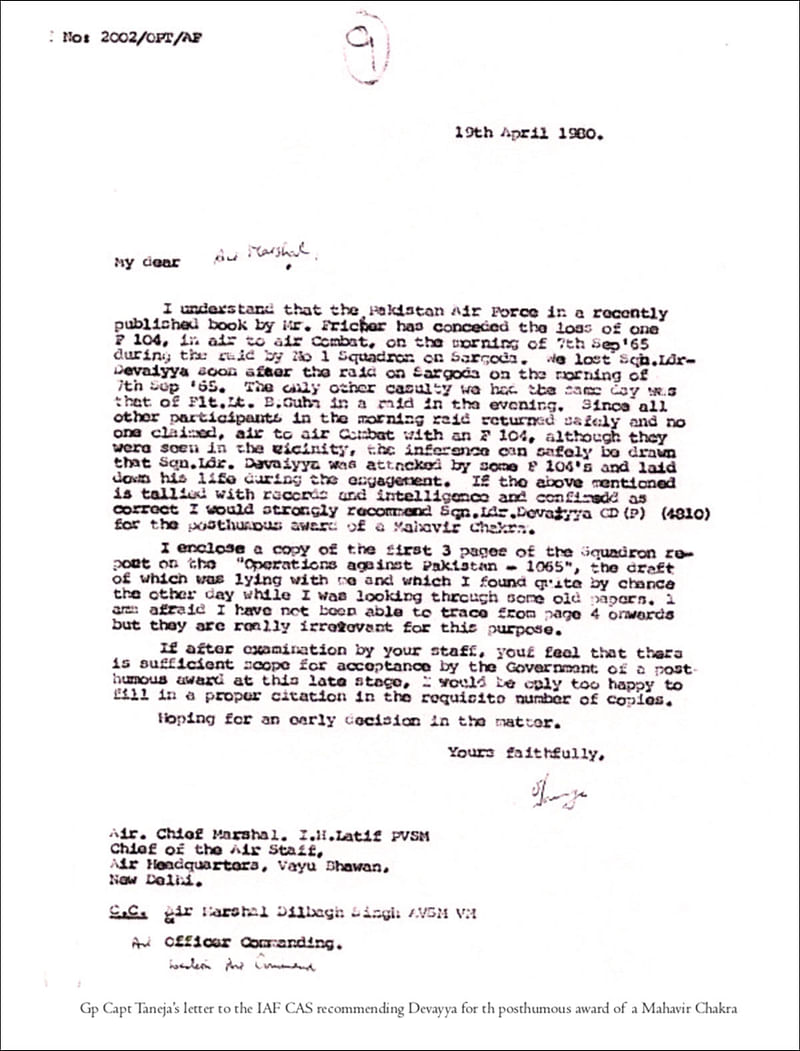
Letter recommending Squadron Leader Ajjimada Bopayya Devayya for the Mahavir Chakra
Now retired, Group Captain Omi Taneja, the 1 Sqn strike leader on that fateful day over Sargodha, happened to see this historical record and deduced that the Mystere pilot who had shot down a Starfighter, had to be A.B. Devayya. Flight Lieutenant U.B. Guha flew the only other Mystere lost by IAF on that day. A Sidewinder missile had unquestionably shot down Guha, which had been fired from a PAF Sabre.
Hence Devayya was the pilot who had shot down Amjad Hussain.
Also, Amjad Hussain was shot down again in the 1971 war against India. While interrogation as a POW, he recalled his fight with an IAF Mystere, admitting that he had ‘collided’ with the IAF jet. This provided the first clue to the inspirational dogfight between Hussain and Devayya.
In 1980, Taneja, after confirming the same details from various other sources, was left awed by this inspiring tale of valour and sacrifice. He reasoned that the Indian nation needed to know about the supreme gallantry and sacrifice of A.B. Devayya. He compiled Devayya’s story and wrote to the then IAF Chief of Air Staff, recommending Sqn Ldr AB Devayya for the awardof a Maha Vir Chakra, the second highest gallantry award of the Indian nation. Based on available evidence, the IAF was successfully able to convince the Indian government that A.B. Devayya had indeed shot down a F104 Starfighter.
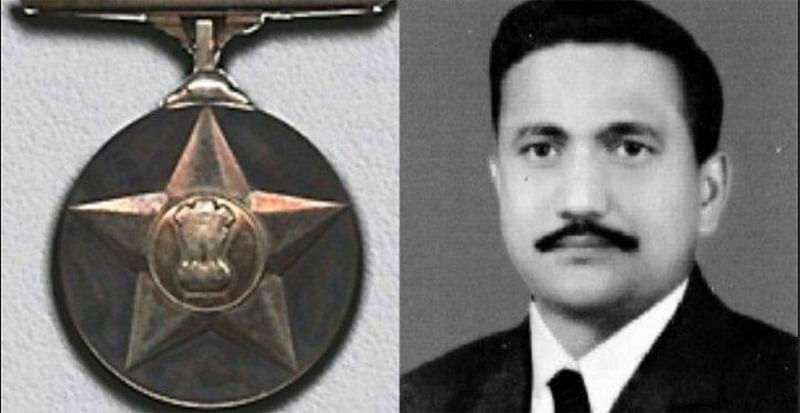
In 1988, about 23 years after his valiant tale of glory near Sargodha, Devayya’s widow, MrsSundari Devayya received the Maha Vir Chakra from a grateful Indian nation.
The Maha Vir Chakra was awarded to Squadron Leader Ajjimada Bopayya Devayya in 1988 | Photo: By special arrangement
For many decades this famous dogfight has confounded historians and air enthusiasts alike. Devayya’s story is highly inspirational! He lived and died a Knight’s death, buried in an unmarked grave somewhere in Hinduana village deep inside Pakistan, at the Valhalla of his choosing!
Rest peacefully now, O brave knight, may the clouds welcome you in their final embrace.’
— A quote on the grave of a famous WWII German ace
This article was originally published in the Medium.
source: http://www.theprint.in / The Print / Home> Defence / by Sameer Joshi / September 07th, 2019
WELCOME. If you like what you see "SUBSCRIBE via EMAIL" to receive FREE regular UPDATES.
Read More »