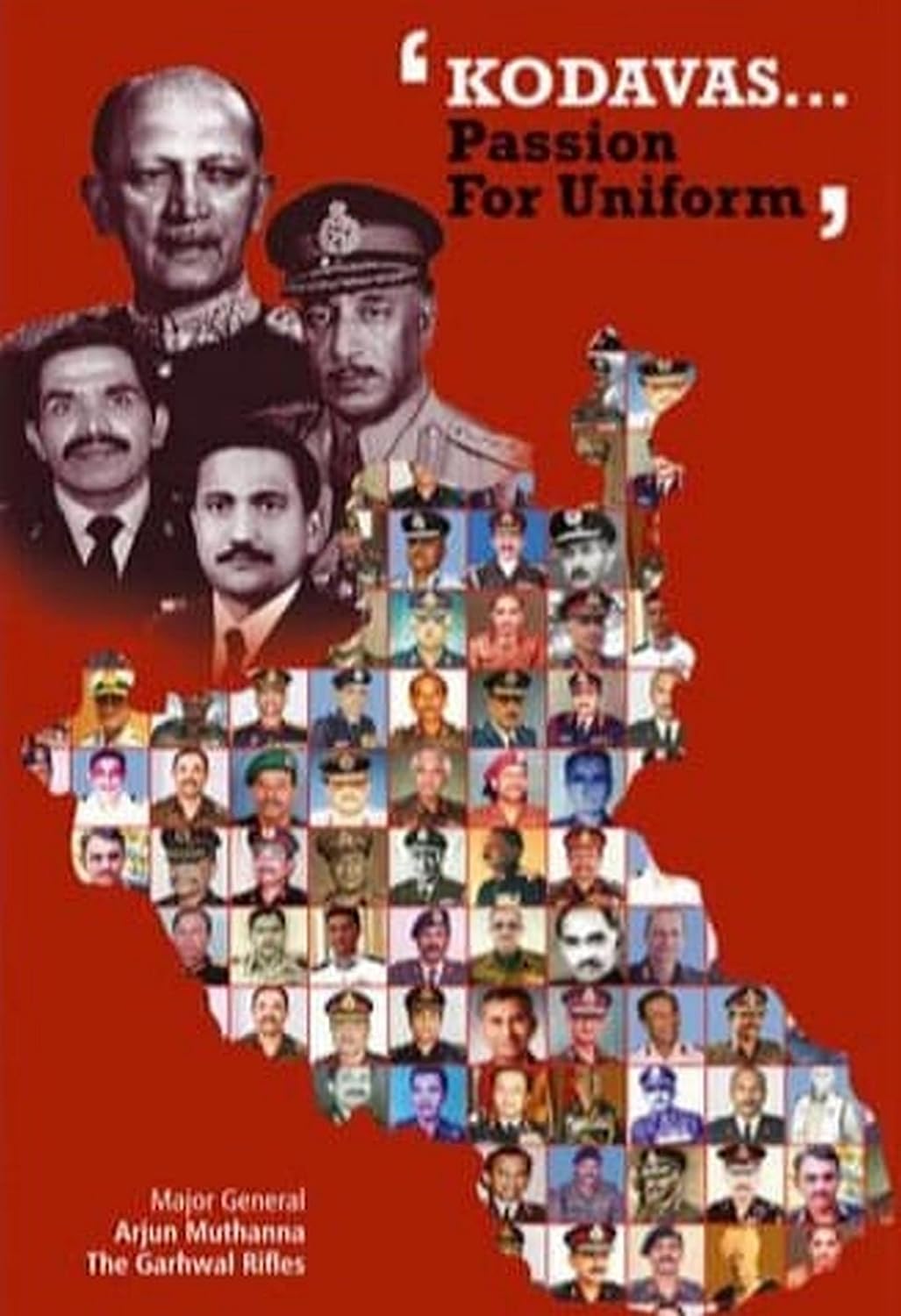
Kodavas are a unique race of people hailing from a small tract of mountainous and jungle area in the Western Ghats known as Kodagu.
The British called the area as Coorg and dominant class, the Kodavas, as Coorgs.
Today this land is a district in the Southern tip of Karnataka state called Kodagu. The terrain required extreme physical fitness and raw courage to survive the predators in the jungles and to defend themselves against any attacks by their enemies.
Families (okkas) lived jointly on their respective lands and looked up to the pathedar (head of the okka) for all decisions and to their ancestors (guru karane) for spiritual guidance and sustenance. Discipline and obedience to the Pathedar were implicit.
Rotary Mysore Midtown and Shrisainik Family had organised an event at Rotary Centre Hall on JLB Road last evening where the ‘Rotary Sainik Desh Rathna’ award was presented to Ballachanda Maj. Akshay Thimmaiah by Maj Gen. (Retd.) S.G. Vombatkere.
Akshay Thimmaiah is the son of Ballachanda Sudha Bopanna and Ballachanda Prakash Bopanna, residents of Kuvempunagar in city. He is married to Mundanda Nidhi Ponnamma.
Speaking on the occasion, Akshay Thimmaiah opined that the Indian Army always welcomed people with leadership qualities and communication skills. He added that serving in the military was a noble one. He contended that a soldier would always be an inspiration for the youth. Hence he asked the youth to join the military and serve the nation.
Continuing, Akshay observed that a soldier should have great patience and perseverance to reach a goal. However, he opined that the honour and respect given to soldiers should also be extended to their family members.
Rotary Mysore Midtown President Narendra Babu, Hon. Secretary Naveen Chandra, Shrisainik Family’s K.V. Bhaskar and G. Madhura, Akshay’s wife Nidhi and his family members were present.
source: http://www.starofmysore.com / Star of Mysore / Home> News / February 15th, 2018
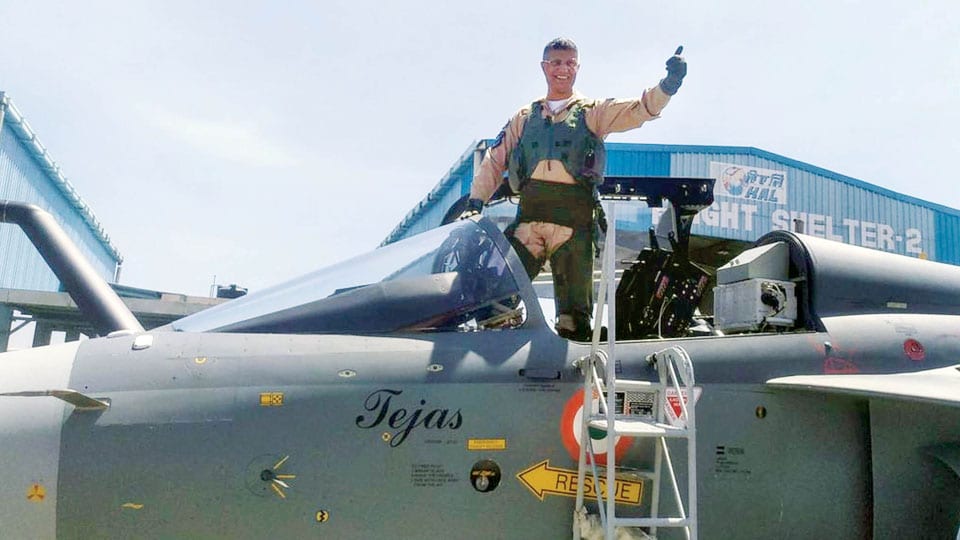
Air Commodore Kalianda A. Muthana flies indigenous fighter plane for 40 minutes
Bengaluru:
The first Light Combat Aircraft (LCA) Tejasin Final Operational Clearance (FOC)-Standard (SP-21) took to the skies for its maiden flight in Bengaluru on Tuesday last, the Hindustan Aeronautics Limited (HAL) said.
Piloted by Air Commodore Kalianda Appaya Muthana (Retd.), Chief Test Flying (Fixed Wing), the aircraft took-off from HAL Airport at around 12.30 pm, the Bengaluru-headquartered defence Public Sector Unit said in a statement. It was air-borne for 40 minutes.
This flight signifies exemplary team work between various stakeholders of the LCA Tejas programme such as HAL, Directorate General of Aeronautical Quality Assurance, Centre for Military Airworthiness and Certification (CEMILAC), Indian Air Force (IAF) and Aeronautical Development Agency (ADA), HAL Chairman and Managing Director R. Madhavan said.
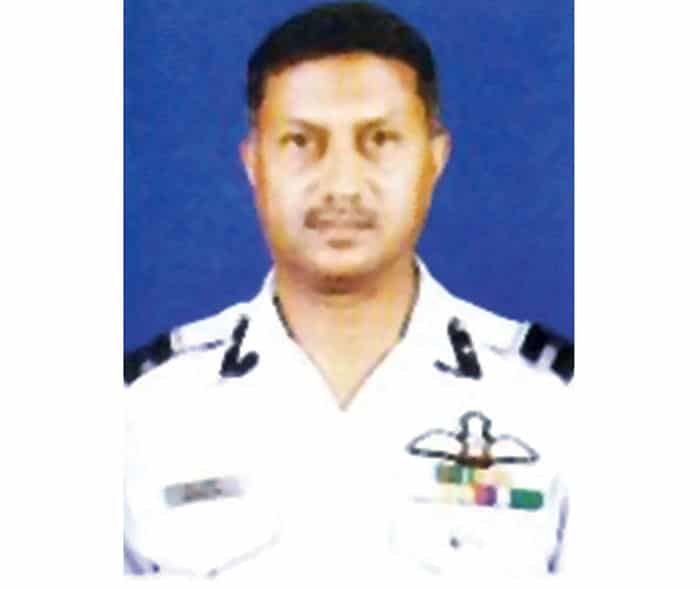
K.A.Muthana
15 fighters by April 2021
HAL is targeting 15 fighters by April 2021. The flight is the first step in a series of things lined up to enable the IAF raise a second squadron of Tejas in Sulur, Tamil Nadu. The first squadron of Tejas — Flying Daggers — is already operating from there.
“HAL achieved the momentous feat within a record time of 12 months after release of Drawing Applicability List (DAL) and SOP (Standard Operating Procedure) by CEMILAC”, the statement said. “This would pave the way for production of remaining 15 fighters from FOC (Final Operational Clearance) block, which are planned to be delivered during the next financial year,” it said.
Advanced features
The FOC aircraft are equipped with advanced features such as Air-to-Air refuelling and Beyond Visual Range (BVR) missile system. “It imbibes a lot of manufacturing improvements which were based on the operational feedback of LCA-IOC (Initial Operational Clearance) fleet with IAF”, HAL said.
On February 20, 2019, the IAF had finally agreed that the indigenously developed and built Tejas was combat-ready and received the ‘release to service’ certificate — which means the fighter got the FOC — from DRDO, whose lab Aeronautical Development Agency (ADA) designed the aircraft.
First conceived in 1983
The aircraft, which was first conceived in 1983, is being produced by HAL. Although it was conceived in 1983, the project was only sanctioned in 1993. The FOC and release to service happened close on the heels of the final DAL (Drawing Applicability Lists) of Tejas was released to HAL on Dec. 31.
The aircraft was named Tejas (meaning radiance in Sanskrit) by Atal Bihari Vajpayee when he was the Prime Minister.
The cost of the programme is estimated at Rs. 39,000 crore. Tejas will eventually replace the ageing fleet of MiG-21 planes. All squadrons of Tejas will be made up of 20 planes in total, including four in reserve.
source: http://www.starofmysore.com / Star of Mysore / Home> News / March 19th, 2020
Air Cmde Muthana got a ‘dousing’ reception as he got out of the TEJAS after the flight that landed it the Final Operational Clearance
As Muthu taxied back to the dispersal after the Final Operational Clearance (FOC) sortie of the TEJAS Mk1 SP-17, now with a tail number of LA-2017, on March 17, 2019, he was clearly surprised by the reception he got. The spontaneous celebration that involved some water-dousing and hoisting him on their shoulders by his Light Combat Aircraft team and the large group of HAL employees was heart-warming to say the least.
Air Commodore Kalianda Appaya Muthana has been probably among the few outstanding fighter pilots and professionals of my generation who did not rise to the very upper echelons of the IAF leadership. Reticent and soft-spoken, but with just a hint of swagger, he was a natural flier from the word go, and though I never served alongside him in any squadron, he was a highly rated fighter jock wherever he went.
No one knows this better than Air Chief Marshal BS Dhanoa (Retd) , the IAF’s previous chief and Muthana’s squadron-mate on MiG-21s in 29 Squadron (Scorpios). Dhanoa reminisces, “We were together for the first time in the early 1980s on the MiG-21 Type 96 in Sirsa, and then again as senior squadron leaders on the same type in Jamnagar, where I was the flight commander. The squadron was assessed very highly by the IAF’s inspection team and after I left, Muthu took over as flight commander – the good run continued, with the Scorpios winning the IAF’s marksmanship trophy called Ekalavya. He was free, frank, fair and fearless.”
After tick-marking all the boxes in his career, Muthu followed the traditional path of the creamy layer of fighter pilots as he transitioned from being a flying instructor to joining the elite band of test pilots, commanding a squadron and a fighter base. Chosen to lead the SU-30 upgrade project in Russia, he returned two years later to take charge as the Chief Operations Officer of Air Force Station Pune, home to the first SU-30 MKI squadron (20 Squadron).
After leading the National Flight Test Centre (NFTC), which was closely involved with HAL in pushing the TEJAS towards squadron induction, Muthu quit the IAF to join HAL. It was a time when the TEJAS project had taken off for sure but had not lit its afterburners yet! Though the first order for 40 aircraft had already been signed and production of the initial series had commenced, the project needed further credibility as it grappled with issues of maintainability and sortie generation rates in the first IAF squadron. It was an ideal transition and a win-win situation for both HAL and the IAF as there could not have been a better professional to steer the project from Initial Operational Clearance (IOC) to the recent FOC.
His fellow HAL test pilots on the programme, Harsh Vardhan Thakur, Subroto Chaki and Pratyush Awasthi highlighted two solid outcome-driven achievements during his stint as Chief Fixed Wing Test Pilot. He first managed to convince the MoD and the IAF top brass to back the ‘doable’ TEJAS MK-1A rather than the over-the-top TEJAS MK-II. It is now almost a done deal. The second was his initiative to create a formal practitioner and subject matter expert-driven strategic process within HAL that has resulted in the emergence of synergy between pilots, designers, engineers and management, and allowed HAL to communicate effectively with users and think big. The possibility of developing a twin-engine TEJAS, both for the Indian Navy and IAF, the Advanced Medium Combat Aircraft and a range of unmanned aerial vehicles are now all within the realm of possibility.
India’s TEJAS project has still some distance to go before it wins the complete trust of the IAF’s fighter pilots, with several of them arguing that even a futuristic twin-engine TEJAS MK-II will not match up to the Rafale in every domain. However, it now appears to be on a stable footing with complete government and corporate backing, and an excellent and committed team. A current TEJAS test pilot argues, “TEJAS now represents India in a big way – not just HAL anymore. TEJAS-bashing should get behind us, sooner than later.”
If HAL can ramp up its production rates, address reliability and maintainability in the field, the TEJAS MK-1A may well have triggered a renaissance in contemporary Indian fighter development, and Muthu, who retires from HAL today (March 31), can well be certain that he has been a major catalyst in this transformation.
source: http://www.indiandefensenews.in / Indian Defense News / Home / by Indian Defense News / March 31st, 2020
(further source: Deccan Herald / March 31st, 2020 / by Arjun Subramaniam, Retd Air Vice Marshal of the the IAF, a military historian and strategic commentator)
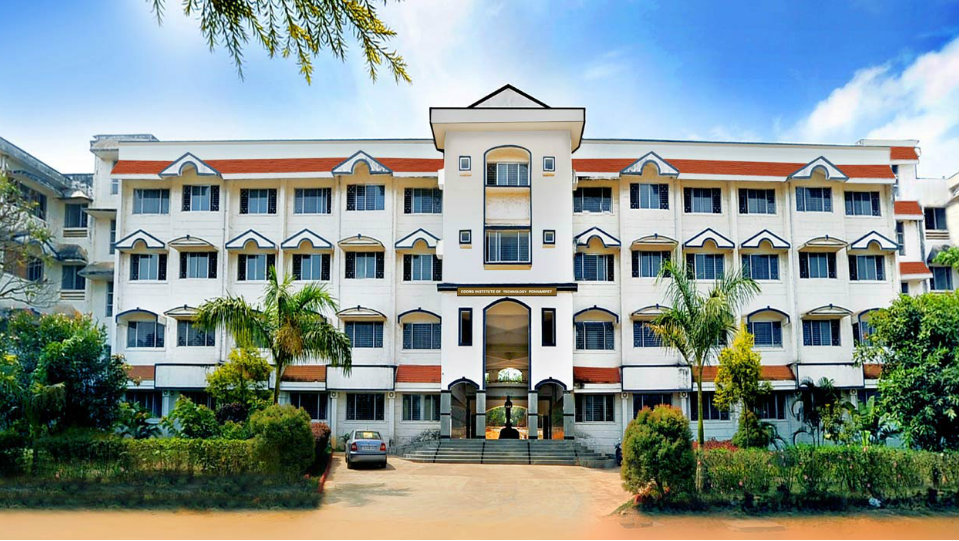
‘Enclave,’ the 18th College Day celebration of Coorg Institute of Technology (CIT), run by Kodava Education Society (KES), will be held at its campus in Halligattu, Ponnampet, South Kodagu, on May 13 at 10.30 am.
MP Pratap Simha and Maj. Gen. (retd.) K. Arjun Muthanna, SM, will be the chief guests. Dr. Deepak Poola Chandrashekar, Cloud Solution architect, IBM, Bengaluru and B. Akshaya Bojamma, Data Quality Analyst, Apple Care, Victoria, Melbourne, Australia, will be the guests of honour. The event will be presided over by C.P. Belliappa, Hon. President, KES.
International Conference
CIT has also organised an ‘International Conference on Emerging Trends in Science and Engineering (ICETSE-2017)’ on May 11 and 12 at its campus in Ponnampet. The Conference will be inaugurated on May 11 at 10 am. KES Co-opted Director Dr. J. Ponnamma Machaiah will be the guest of honour. KES President C.P. Belliappa will preside. Bhandari Srinivas Institute of Technology (Telangana) Principal Dr. V.S. Giridhar Akula will deliver the keynote address.
The valedictory will be held on May 12 at 2 pm. Dr. D.H. Manjaiah, Department of Computer Science, Mangalore University, Dr. C.P. Rakesh Poovaiah, Secretary, KES and C.M. Raja Nanjappa, Jt. Secretary, KES will be the special guests. Dr. M.C. Kariappa, Vice-President, KES, will preside. Dr. P. Mahabaleshwarappa, Principal, CIT, will be the Conference Convenor. C. Nanjan Biddappa, Asst. Professor, Dept. of Mechanical Engineering, CIT, will be the Conference Co-ordinator.
source: http://www.starofmysore.com / Star of Mysore / Home> News / May 08th, 2017
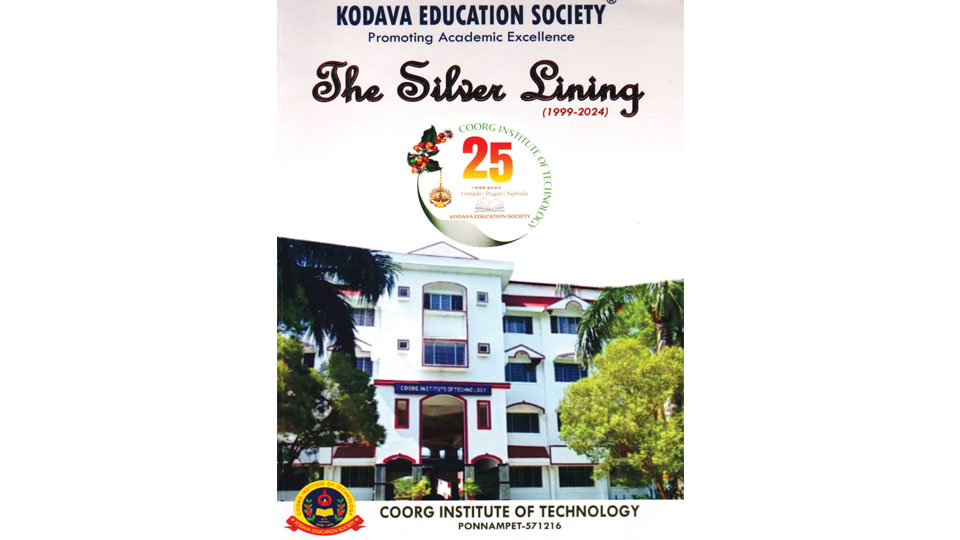
Kodava Education Society has released a souvenir titled ‘The Silver Lining (1999-2024)’ to commemorate the silver jubilee celebrations of the Coorg Institute of Technology in Ponnampet, Kodagu district.
The souvenir features messages from various VVIPs and dignitaries, including Governor Thaawarchand Gehlot, who has extended his best wishes to the management, students and the souvenir team.
Other notable messages include those from the Minister for Higher Education Dr. M.C. Sudhakar, All India Council for Technical Education (AICTE) Chairman Prof. T.G. Sitharam, Visvesvaraya Technological University (VTU) Vice Chancellor Dr. S. Vidyashankar, former Kodava Education Society President C.P. Belliappa (who served from 2007 to 2022), current Society President Dr. M.C. Kariappa, Hon. Secretary C.P. Rakesh Poovaiah, Founding Principal Prof. Chaluve Gowda, Principal Dr. M. Basavaraj and various alumni.
The Coorg Institute of Technology, established in 1999, has been a boon not only to the youths of Kodagu but also to engineering aspirants across the State. The souvenir acknowledges the contributions of Executive Committee members from 1997 to the present and philanthropists who aided establishment of engineering college over the past two-and-a-half decades. Additionally, the souvenir highlights academic and sports achievements of students and ialumni who have made a mark in various fields.
source: http://www.starofmysore.com / Star of Mysore / Home> News / July 09th, 2024
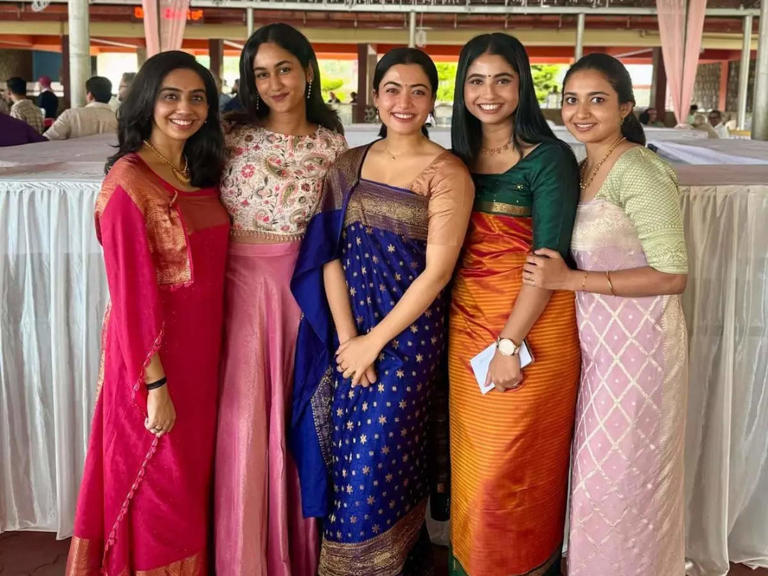
Rashmika Mandanna is no stranger to creating memorable fashion moments. Over the years, the South Indian star has cultivated a distinct style that sets her apart, effortlessly blending traditional and contemporary fashion. Her wardrobe is filled with everything from elegant lehengas to form-fitting evening wear. However, it’s her love for the simplicity and sophistication of saris that often steals the spotlight. Recently, Mandanna showcased her heritage with pride by donning a cobalt blue silk sari.
She wore this stunning silk sari for her best friend’s wedding in Kodagu, Karnataka. The sari, adorned with gold zari ornamentation, features intricate motifs such as circular butties and stars spread across the rich cobalt fabric, complemented by a statement border. This classic six-yard garment is not just a nod to her Coorgi roots but also a celebration of India’s diverse sari draping styles. Eschewing the Bengali and Gujarati drapes, Mandanna opted for the Coorgi or Kodagu drape, paying stylish homage to her hometown, Virajpet, in the Kodagu district. “Kodagu is where my heart and my history is at,” she expressed in a heartfelt post.
The traditional Coorgi sari drape is characterized by the pallu being neatly tucked over the shoulder, with the pleats tucked backward. According to mythology, this draping style originated from the story of Agasthya’s wife, Cauvery, who transformed into a river to serve the people. In an attempt to stop her, Agasthya pushed the pleats of her sari backward.
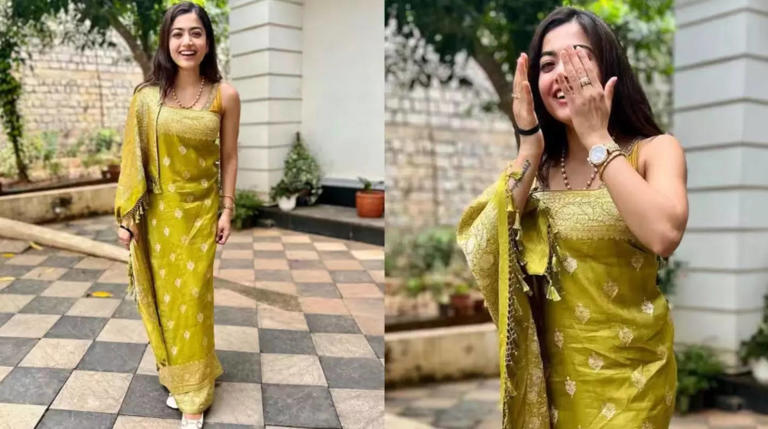
This isn’t the first time Mandanna has championed the Coorgi sari. In May 2022, she attended another close friend’s wedding in an olive green Shanti Banaras sari, also draped in the Coorgi style. This tussar georgette sari, bordered with tonal tassels, featured a blend of green and gold needlework, further emphasizing her love for traditional attire.
Later that year, Mandanna chose a glamorous midnight blue Nitika Gujral sari with antique zardozi work, once again embracing the Coorgi draping style. This unique drape not only highlighted her traditional roots but also offered a modern twist, giving the sari the illusion of a one-shoulder dress.
Rashmika Mandanna’s sartorial choices reflect her deep connection to her heritage and her ability to fuse tradition with modern elegance. Her consistent preference for the Coorgi drape showcases a stylish way to honor cultural roots while making a fashion statement. Through her thoughtful fashion selections, Mandanna continues to inspire and set trends, proving that traditional attire can be both timeless and trendy.
source: http://www.msn.com / Microsoft Start / Home> Entertainment / by The Times of India / Story by the TOI Lifestyle Desk / July 01st, 2024
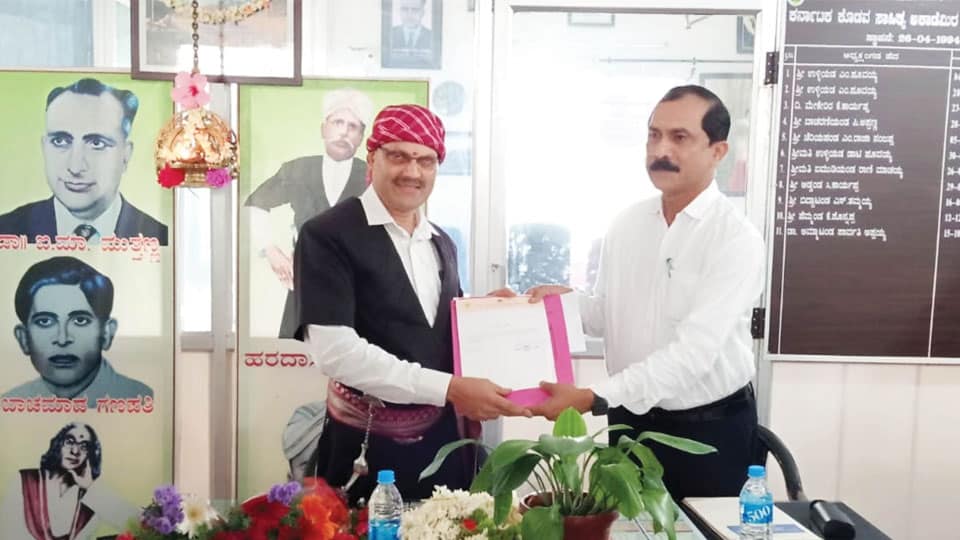
Ajjinikanda Mahesh Nachaiah took charge as the new Chairman of Karnataka Kodava Sahitya Academy at Madikeri on Saturday.
The Academy Registrar Ajjikuttira Girish handed over the Order letter to the new Chairman at the Academy Office here. Soon after he took charge, Nachaiah was greeted by the Academy’s past President Biddatanda S. Thammaiah, Ammatanda Parvati Appaiah, Bacharaniyanda Appanna, Kodagu Janapada Parishat District President B.G. Ananthashayana and others.
Speaking on the occasion, Nachaiah said that he would call a meeting soon after the appointment of members to the Academy and chalk out the future programmes of the Academy. He also said that the co-operation of everyone is needed for taking the Academy to greater heights.
Academy Registrar Girish gave a brief on the objectives and plans of the Academy.
Former Kodagu Zilla Panchayat (ZP) Standing Committee Chairman Maneyapanda Kanti Satish, Kushalnagar Kodava Samaja President Mandepanda Bose Monnappa, Kiggatnad Senior Citizens Forum Founder Katimada Jimmi Annaiah, Dikki Annaiah, Paruvangada Sunny Monnappa, Kenjangada Roshan Nanaiah, Hanchettira Manu Muddappa, Chenanda Girish Poonachha, Someyanda Bose Belliappa, Moovera Rekha Prakash, Ammanichanda Eshwari Gangamma, Machimanda Meena Vasanth, Bacharaniyanda Ranu Appanna and elderly personalities Lakshminarayan, Karnanda Bollamma Nanaiah, Aacheyada Gagan, Baleyada Pratish, Kodagu Janapada Parishat member Ambekallu Kushalappa, Sampath Kumar and others were present during the occasion.
Earlier, Mahesh Nachaiah was brought in a grand procession to the venue, with artistes of Mukkodlu Valley Dew team rendering Battepaat. Chamera Dinesh Belliappa tied the ‘Okkane’ and prayed for the success of the programmes and activities of the Academy.
source: http://www.starofmysore.com / Star of Mysore / Home> News / June 16th, 2024
A commentator, who once admitted to having suicidal thoughts, the athlete says his family is enjoying their new life in the city.
After facing several questions on the ongoing T20 World Cup with a straight bat at a press conference, Robin Uthappa was all smiles as he made his way to a private corner of an indoor sports facility at Al Quoz, Dubai, for an interview with City Times.
Hordes of super excited fans slowed him down, grabbing selfies with their mobile cameras; some even wanted to shake his hands and give a pat on his back.
It was not easy to know if any of them were loyal fans of Kolkata Knight Riders and Chennai Super Kings, teams with which Uthappa won IPL titles as a player.
But what was clearly visible amidst all that typical fan excitement was the bright smile that never disappeared from Uthappa’s face as he posed with them.
A member of India’s 2007 T20 World Cup-winning team, Uthappa then settled into a couch for a chat during which he opened up about what it takes for celebrities to share their mental health issues on public forums and why he decided to become a Dubai resident.
You are a Dubai resident now, you hold a golden visa. But why did you decide to move to Dubai?
It was more from the kids’ perspective. We wanted a really solid primary education and knowing how good Dubai is as far as education is concerned and also the safety, not just for kids, but also for women. That was a big priority for us because I am on the road seven, or eight months in a year, so it became a no-brainer. Also, since I am playing leagues outside of India, it makes more sense to live here.
Your family is enjoying the Dubai life…
Oh yes, it’s been 15-16 months now here in Dubai. And they are loving it. I think it was the best decision we made as far as our family is concerned.
You have two kids. They have settled in well…
Yes, my son loves it. He goes to Kings’ Al Barsha, my daughter is a little too young. She is in a playschool now. So yeah, we are loving it. And we are enjoying Dubai. In fact, last year we intentionally stayed here through the summer, because we wanted to experience the summer. So we stayed back, we didn’t travel anywhere. And it was fun, we really enjoyed Dubai now. It feels like home for us now.
You are also commentating on the T20 World Cup for two Dubai radio stations, Talk 100.3 FM and Big 106.2 How is the experience so far as a radio commentator? We normally don’t see international players doing radio commentary…
Wonderful. It’s different in the sense that you have got to describe the play. It’s a great prep for broadcasting for television as well. So it’s been a fun experience for me so far. And yes, very different from broadcasting on television.
It’s a good point you made about Dubai being such a safe city. This is what makes this city stand out in the world now. But since you are a sportsman and your wife (Sheethal Goutham) was also a former international tennis player, how nice is it to see the sports activities that are being promoted by the UAE government here in a bid to encourage the citizens as well as the residents to lead a healthy lifestyle?
It’s incredible, to be honest. I think there is a lot of focus on different sports, there is a huge variety of sports. In fact my son has been doing gymnastics from a very young age, so today he is here not just practising gymnastics, he has gone up a step further, he is playing three different sports at this point. So it’s incredible. Also, being a cricketer, I would love to see more organised cricket tournaments in this country. To have eight Test-playing nations as part of the expat population in the UAE, I think this country should be able to qualify for every cricket World Cup. I think it’s a huge talent pool. The UAE have the potential to become one of the leading cricket-playing nations in the world.
Of course, you spoke about sports and the importance of physical fitness. There is also the very important issue of mental health now. You had opened up about your struggles in the past, and you admitted to having suicidal thoughts. It’s obviously a very sensitive issue because a lot of people hesitate to open up about this. So how challenging is it for a celebrity like you to reveal what you have gone through and how you overcame your problems?
I think it depends on what the intention is. If the intention is noble and if the intention is pure then, there is no difficulty in expressing it. For me, I intended to, I just wanted to break the taboo associated with mental health issues because mental health issues are something we go through a lot in our lives, in one way or the other, in one point or the other, we experience it. I think that is something that needed to be broken, the taboo needed to be broken. The stigma attached to it needs to be broken. I think the more light you shed on something that is in the darkness, the less intimidating it becomes, the less scary it becomes, and the more normal it becomes.
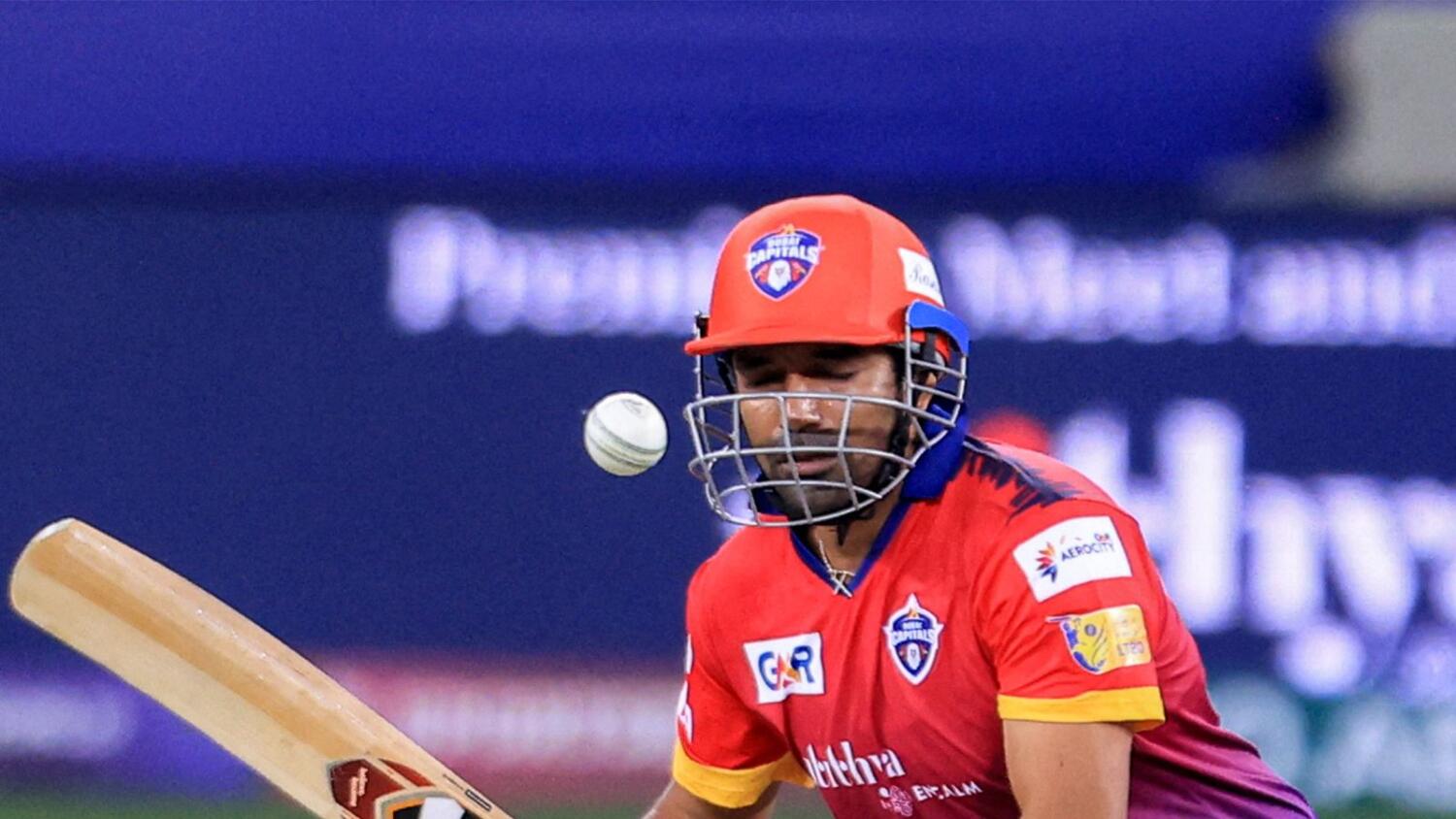
Dubai Capitals’ Robin Uthappa during the International League T20 (ILT20) tournament cricket match between Dubai Capitals and Gulf Giants at Dubai International Stadium
Another big issue in the world of sports is now social media trolls. If an athlete is not able to perform well, he or she faces brutal abuse on social media. We saw the kind of trolling the young Riyan Parag faced until the start of the 2024 IPL. He overcame that phase, silencing all of them with the sheer volume of his runs. What advice would you give young athletes on dealing with social media trolls? It seems nobody can escape that now. So how do they deal with it?
I think everyone has their own way of dealing with it based on how that personality is. Do what works for you. Be yourself and do what you feel is the best for you. I think Riyan is doing what works for him, different people will need to do what works for them. So do what works for you.
Finally a word on Hardik Pandya, please. He not only faced online trolls but he was harassed and booed by Mumbai Indians fans at the stadiums for replacing Rohit Sharma as captain. The fans’ reaction was extreme. How painful was it to see a fellow cricketer going through such a painful experience?
I think everybody has the right to their opinion. Having said that it was very hard for me to watch from the outside because for someone who has battled mental health issues to witness someone being put in such a horrible spot for choices that he made for himself was actually quite hard. There were a lot of moving pieces in the whole affair, and there were a lot of other people who were also involved, so there is empathy for all parties involved, but I don’t think it’s right for anyone to go through that level of criticism, that level of trolling. I think it was inhumane.
source: http://www.khaleejtimes.com / Khaleej Times / Home> Lifestyle> Entertainment / by Rituraj Borkakoty / pix Neeraj Murali / June 20th, 2024
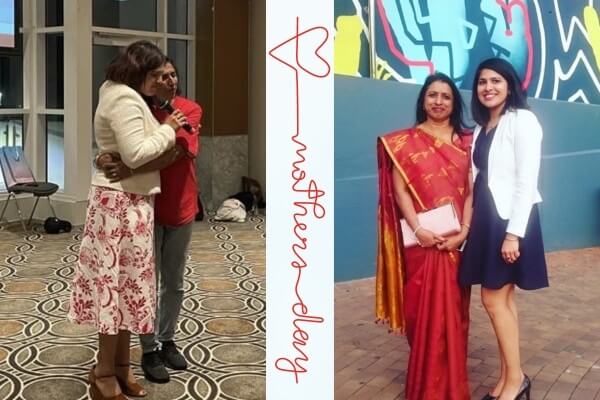
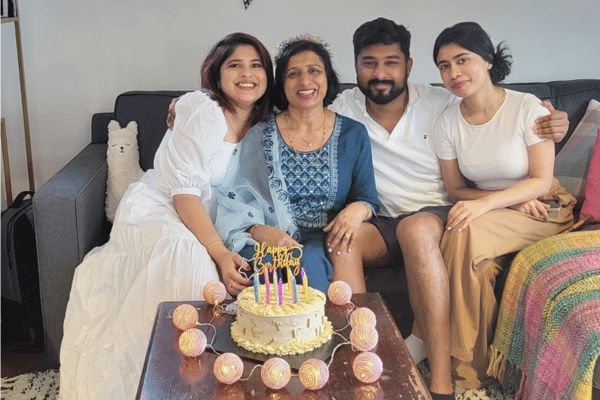
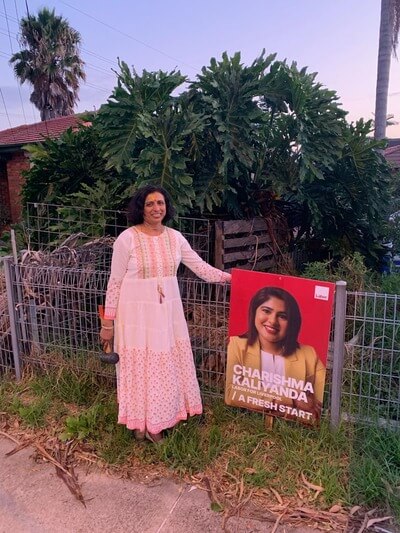
Charishma Kaliyanda, NSW MP for Liverpool, interviews her mother Bhanu Chottera, a former Indian Government architectural draughtsperson.
Our Mother’s Day series ‘My Mum in her own words’ pays tribute to our mothers, showcasing the intergenerational bond between mother and child. Here Charishma Kaliyanda, NSW MP for Liverpool, sits down with her mother Bhanu Chottera, a former Indian Government architectural draughtsperson.
Charishma Kaliyanda: What are your strongest memories of your mum?
Bhanu Chottera: My mum, known as ‘Baby’ to all, was the example of someone who gave unconditional love, she treated all her 5 children equally – no difference between boys or girls. You could never tell when she was unhappy or concerned, she was always bubbly and charming.
She always had the answers to our problems – and never refused when any of us asked for help.
Charishma Kaliyanda: She sounds a lot like you, actually! So what’s something your mum or dad used to tell you growing up that later turned out to be true?
Bhanu Chottera: They always encouraged me to study and stand on my own feet, regardless of being a girl. Education is the one thing nobody can snatch away from you and will make sure you can put food on the table. Dad always said, regardless of the situation, don’t hide away from your problems and don’t be afraid to speak out.
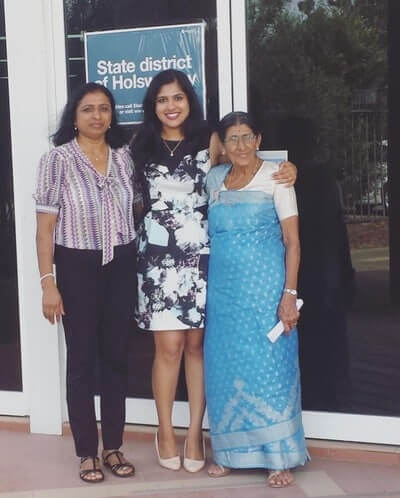
Charishma with her mother and grandmother (Source: Supplied)
Charishma Kaliyanda: How about Ammachi, what is the best advice your mum ever gave you?
Bhanu Chottera: Always be financially independent, and make sure you save some money as you never know when you’ll come across a rainy day when you need it!
Charishma Kaliyanda: That is definitely practical advice that we can all use. Tell me about the day I was born.
Bhanu Chottera: I felt blessed – but it was a lot of effort, because I was in labour for almost 22 hours with you!
I was so happy because I always wanted a girl. I grew up with two sisters so, in having a daughter, I knew I would always have someone to talk to, share experiences and develop a lifelong bond with.
The entire extended family was so pleased because my sister is the eldest and she was a role model for everyone else. You were also the first female grandchild on both sides of the family, and so your Thatha called you our ‘Lakshmi’.
Charishma Kaliyanda: That’s really cute, I didn’t know that. Tell me about the world events that have had the most impact on you?
Bhanu Chottera: The first event was the 2004 Tsunami in the Indian Ocean. I had never heard the word tsunami before and didn’t know what it was until I saw the devastation created that day – so many people died, there was so much destruction and across such a large area. It made me realise that things can change in the blink of an eye, anything can happen and life is short, precious and unpredictable. It made me really think about what I wanted from my life.
The other is COVID, of course. The whole period had a huge impact on me and reinforced that nothing belongs to you, so share what you have and show care to the people around you as much as you can.
Charishma Kaliyanda: Keeping those lessons in mind, what would you say are the best decisions you made in your life?
Bhanu Chottera: The first was keeping in mind my parents’ advice and getting an education because I got my dream job working for the Indian Government’s housing department as an architectural draughtsperson. I loved my work and my lifestyle and I made some amazing friends that I am still close with today.
The second was buying a home. After coming to Australia, starting a new life from scratch here, having a home of my own was a sign that I had some roots and could stand on my feet. It made me feel like I had achieved progress and independence, and I could nurture my family (and my own garden!).
Mum on the campaign trail (Source: Supplied)
Charishma Kaliyanda: Speaking of gardens, that’s probably the biggest difference between us, you’re in your element surrounded by roses, mulch and manure and you still won’t let me forget how I accidentally killed your choko vine when I was 14! How did you feel when I told you I wanted to get into politics?
Bhanu Chottera: It was actually a shock. Coming from a different cultural background, I thought you might find it difficult to be accepted. I also saw the demands of working in politics in the media and thought it would be really challenging. At the same time, I remembered the advice I had gained from my dad, who served in the army for many years and had even fought in a World War and knew I should pass it onto my daughter. You come from a long line of fighters, so I knew you would be alright.
Charishma Kaliyanda: So how did you feel on election night when results came in that I had won? What went through your mind?
Bhanu Chottera: Which election? There have been a few!
Charishma Kaliyanda: Look, that’s a fair call.
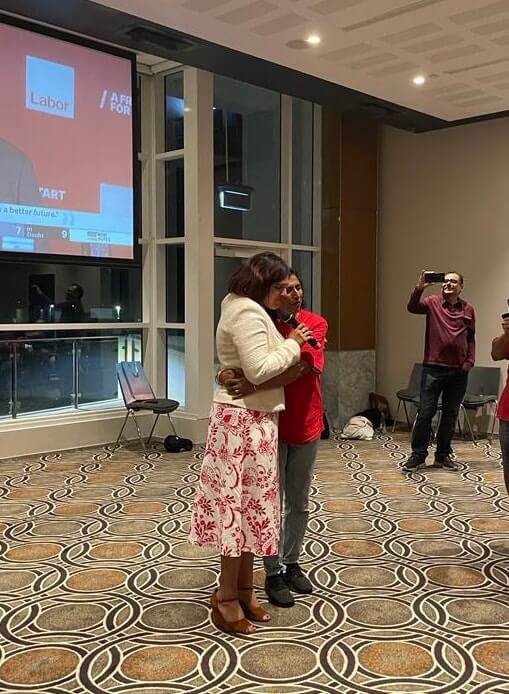
Bhanu Chottera: The first one was a bit disappointing but I remember clearly thinking “there’s always next time, this is only the beginning”. We’ve been on a long journey, with 6 election nights in total! On election night last year though, I thought, “this is the right time”. I have seen you develop the skills and temperament to balance things and to be able to make the impact you want to on the things you are passionate about.
With mum on election night as results came in (Source: Supplied)
Charishma Kaliyanda: How about on the day I was sworn in at Parliament ?
Bhanu Chottera: That was one of the most exciting and memorable days of my life. I felt my daughter had achieved something I never thought possible. When we became Australian citizens, I remember we had the ceremony at the Liverpool Council chambers and when you were sworn in as the youngest councillor at Liverpool Council in 2016, I was blown away. To see you become a member of the NSW Parliament was a real validation of our decision to seek a new life in Australia because we wanted better opportunities for our children. You made us proud, and all the challenges and sacrifices worth it.
Charishma Kaliyanda: What do you worry about most now, regarding me?
Bhanu Chottera: Look, like every parent I always worry about your health, happiness and safety. I know the hours you work and the travel you do, as well as the stress and responsibility you take on. So I try and encourage you to maintain a healthy work/life balance.
Charishma Kaliyanda: If by encourage, you mean, nag with great affection, you’re spot on! So what about your own self, what are you looking forward to?
Bhanu Chottera: I want to stay healthy as possible so I can travel, starting with Cambodia! I try and eat well, meditate, exercise and stay connected with my friends. I really enjoy being involved with charities and community work because I like helping people and I know that people have been there to support me when I needed it, so I pay it forward.
Charishma Kaliyanda: What the one lesson you want me to take forward?
Bhanu Chottera: Always listen to people, but believe in yourself and act according to what your heart is telling you.
source: http://www.indianlink.com.au / Indian Link / Home> India in Australia / by Indian Link / May 09th, 2024
WELCOME. If you like what you see "SUBSCRIBE via EMAIL" to receive FREE regular UPDATES.
Read More »